

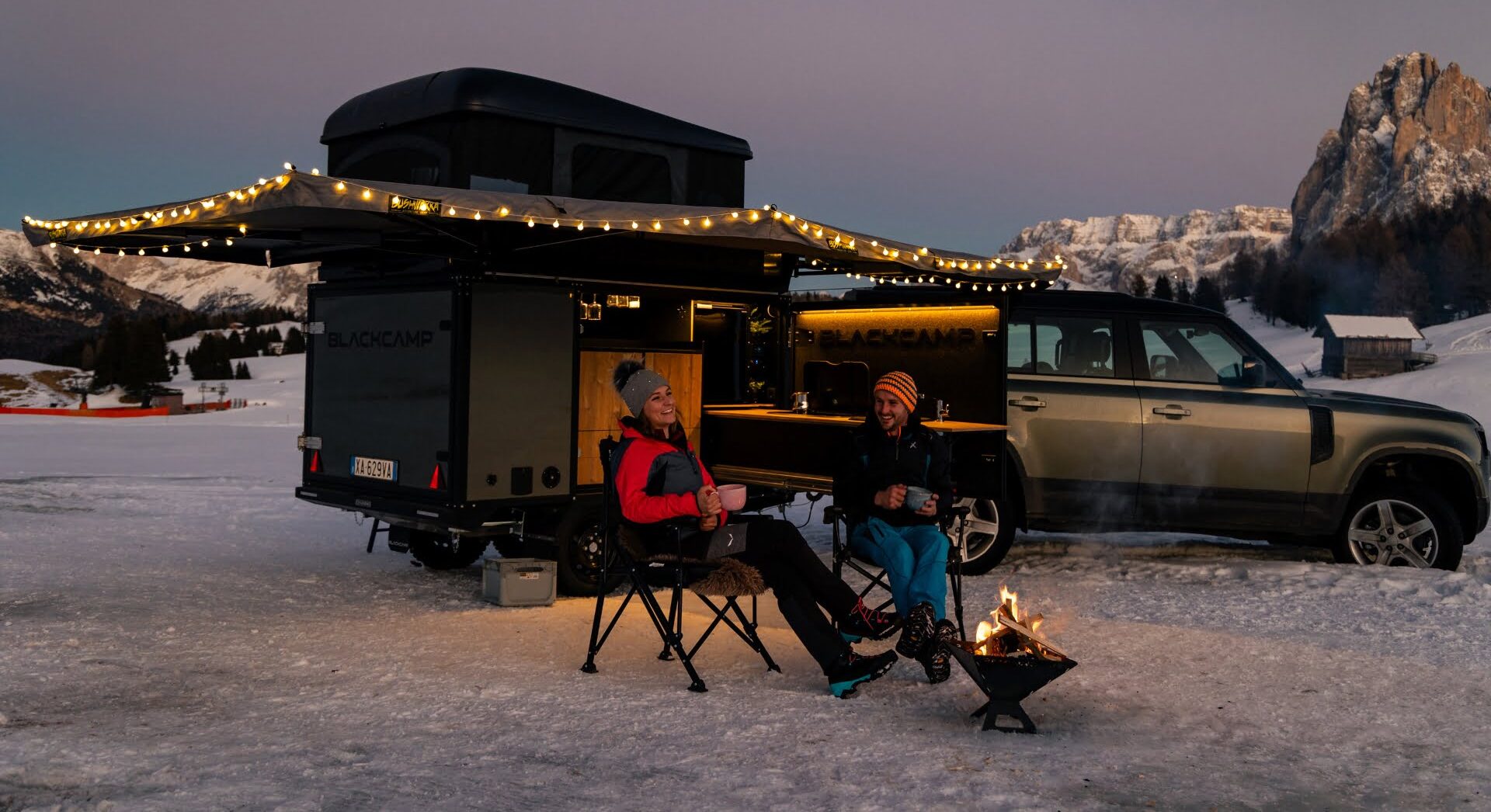
True innovation has become increasingly difficult to find, with many new products amounting to variations on existing ideas, differentiated only by incremental—if occasionally meaningful—design changes. The Blackcamp Freeda trailer stands apart from this pattern, combining a genuinely fresh approach to compact trailer design with a marketing strategy that is clearly as well considered as the product itself. The recipe for online success is one well-cooked by the Blackcamp team: take an innovative, compact trailer, add a charismatic, smiling salesperson demonstrating its various features, and finish with a sprinkling of a chart-topping song (plus a payment to Zuckerberg), and the result is viral reels reaching up to 12 million views.
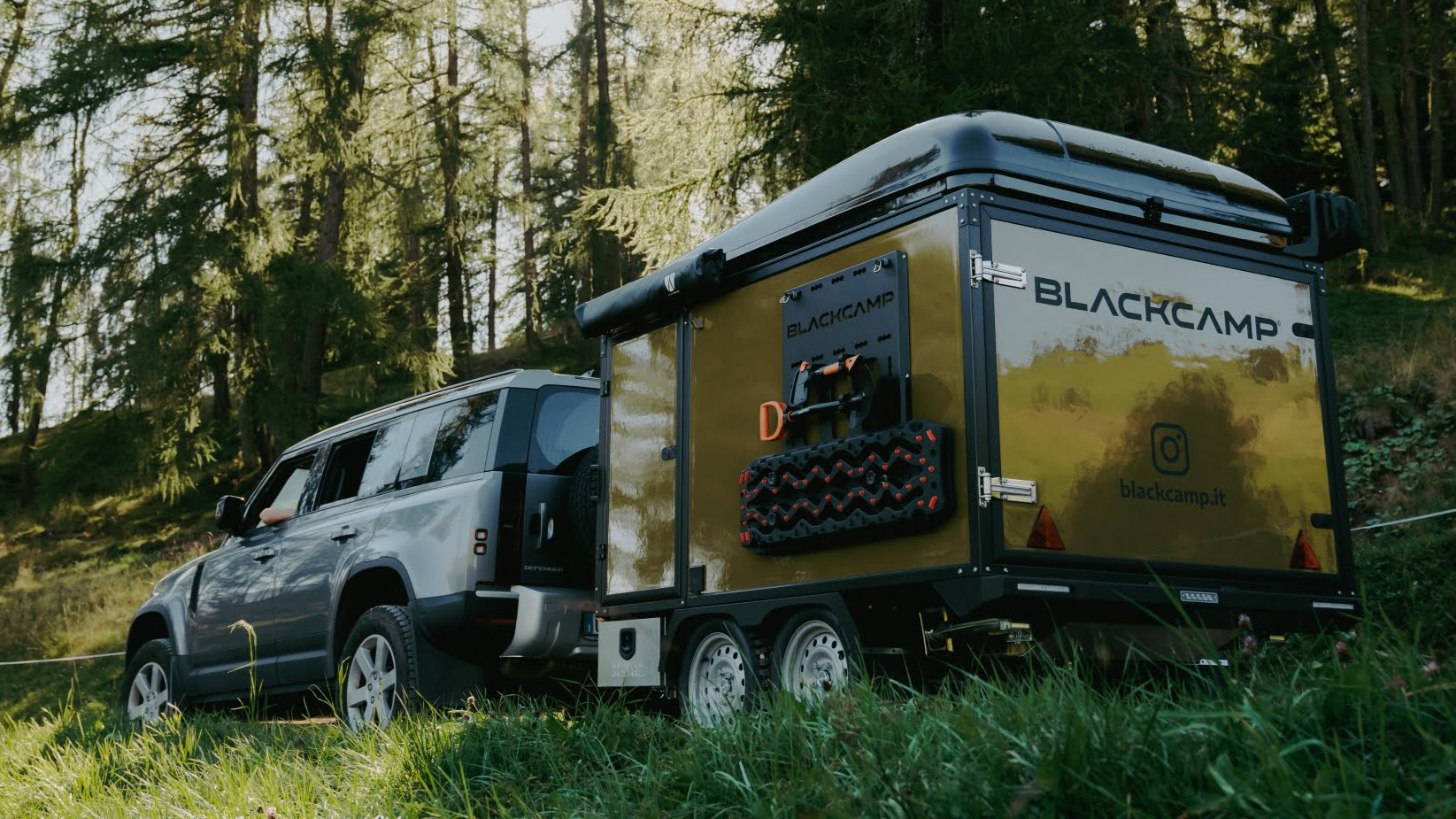
The Blackcamp Freeda camping trailer is a compact, modular platform aimed at travelers who prioritize mobility, gear capacity, and off-grid versatility over fixed interior layouts. Rather than competing directly with traditional teardrops or small caravans, the Freeda positions itself as a mobile base camp—one that can support a wide range of outdoor activities while remaining towable by most vehicles and adaptable to different styles of travel. It can be configured for couples or families by combining expanding living areas and outdoor living.
At first glance, the Freeda’s form is deliberately simple. The squared-off body measures just over 3 meters in length and roughly 1.65 meters in width, dimensions that allow it to remain manageable on narrow roads and forest tracks while also simplifying storage and transport. The trailer’s low overall height contributes to reduced aerodynamic drag and improved stability at speed, making it suitable for long highway transits as well as secondary roads. With a dry weight under 1,600 pounds in base configuration, the Freeda can be towed by many compact SUVs and wagons, broadening its appeal beyond owners of dedicated tow vehicles.
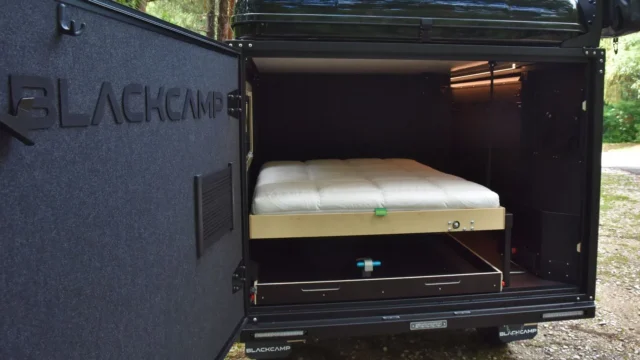
Construction centers on durability rather than ornamentation. The trailer rides on a welded, powder-coated-steel frame paired with AL-KO suspension components, a common choice in European trailers where longevity and serviceability are prioritized. The body is formed from insulated fiberglass-reinforced panels, offering a balance of structural rigidity, corrosion resistance, and thermal stability.
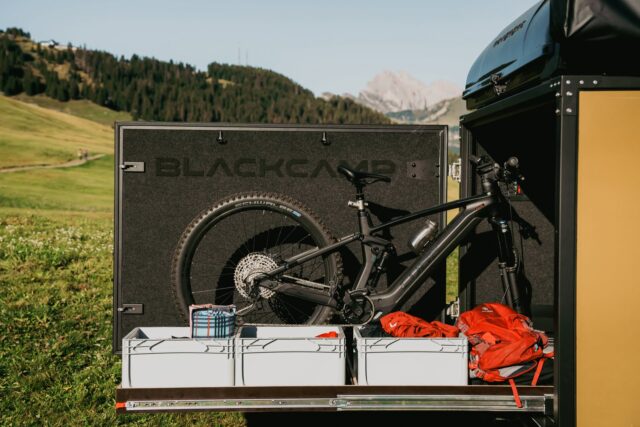
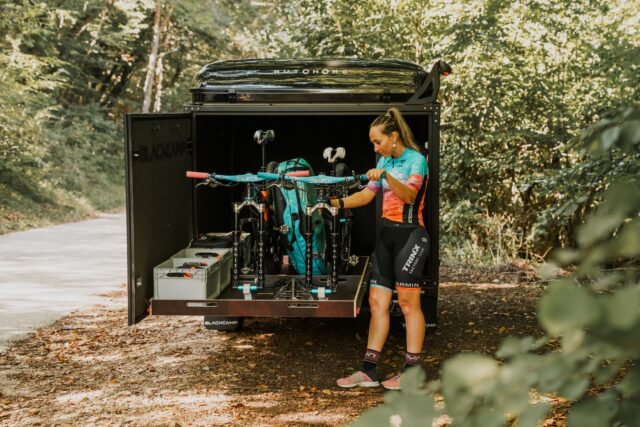
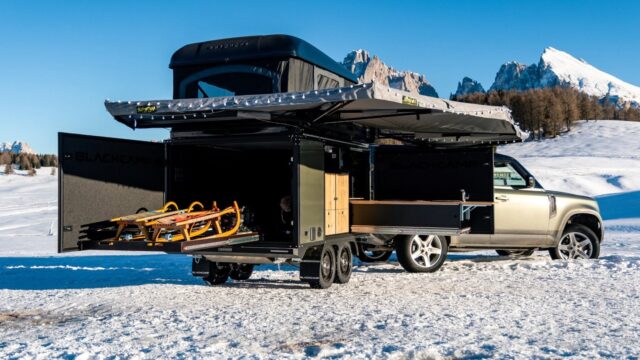
Unlike conventional camping trailers that dedicate interior volume to a finished sleeping cabin, the Freeda treats its enclosed space primarily as secure storage. The interior volume, exceeding 4,000 liters, is designed to accommodate bulky equipment such as bicycles, skis, climbing gear, or surfboards, with access provided by large side doors that open outward. This layout allows users to organize equipment efficiently while keeping living functions outside the trailer body, reducing clutter and improving flexibility at camp.
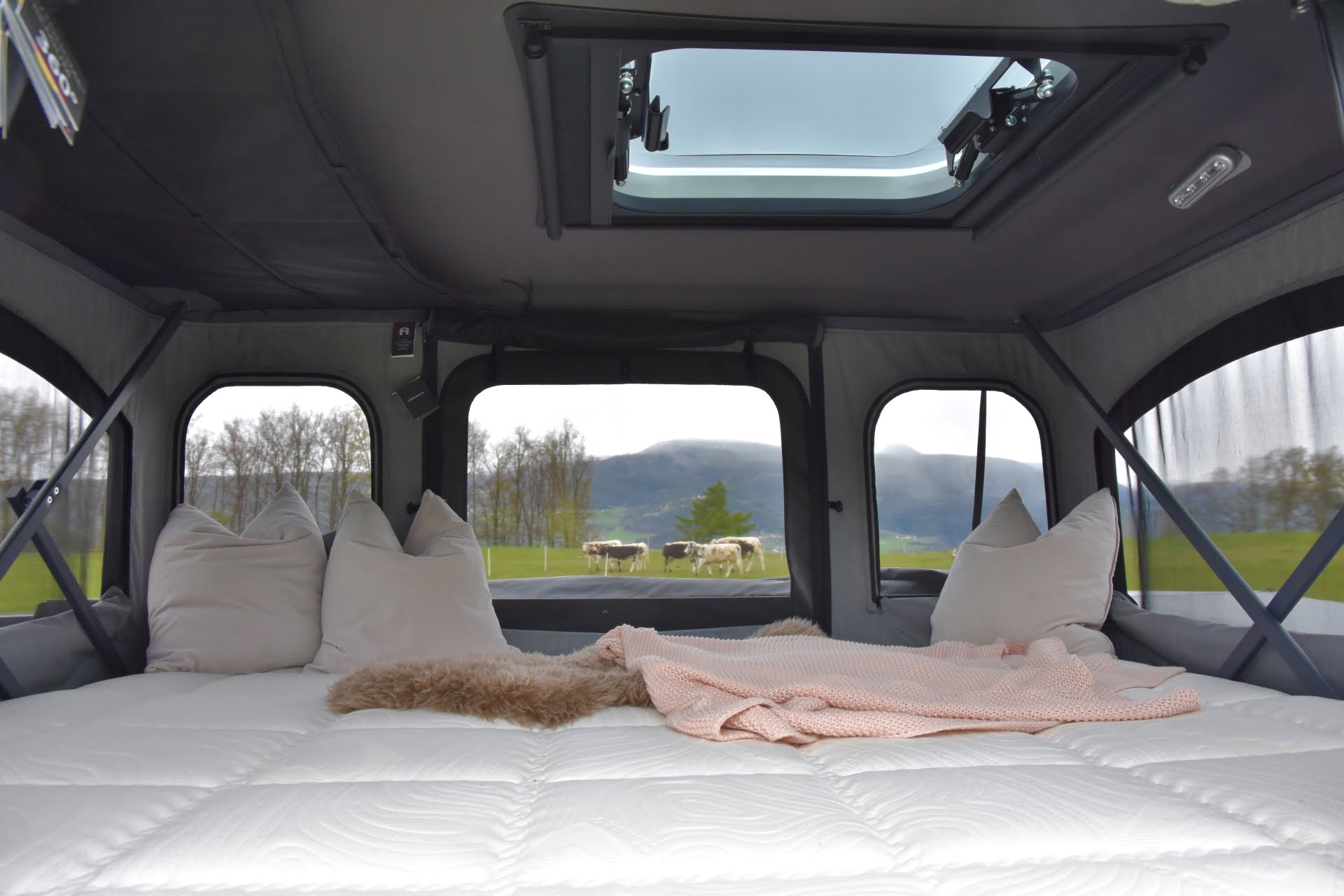
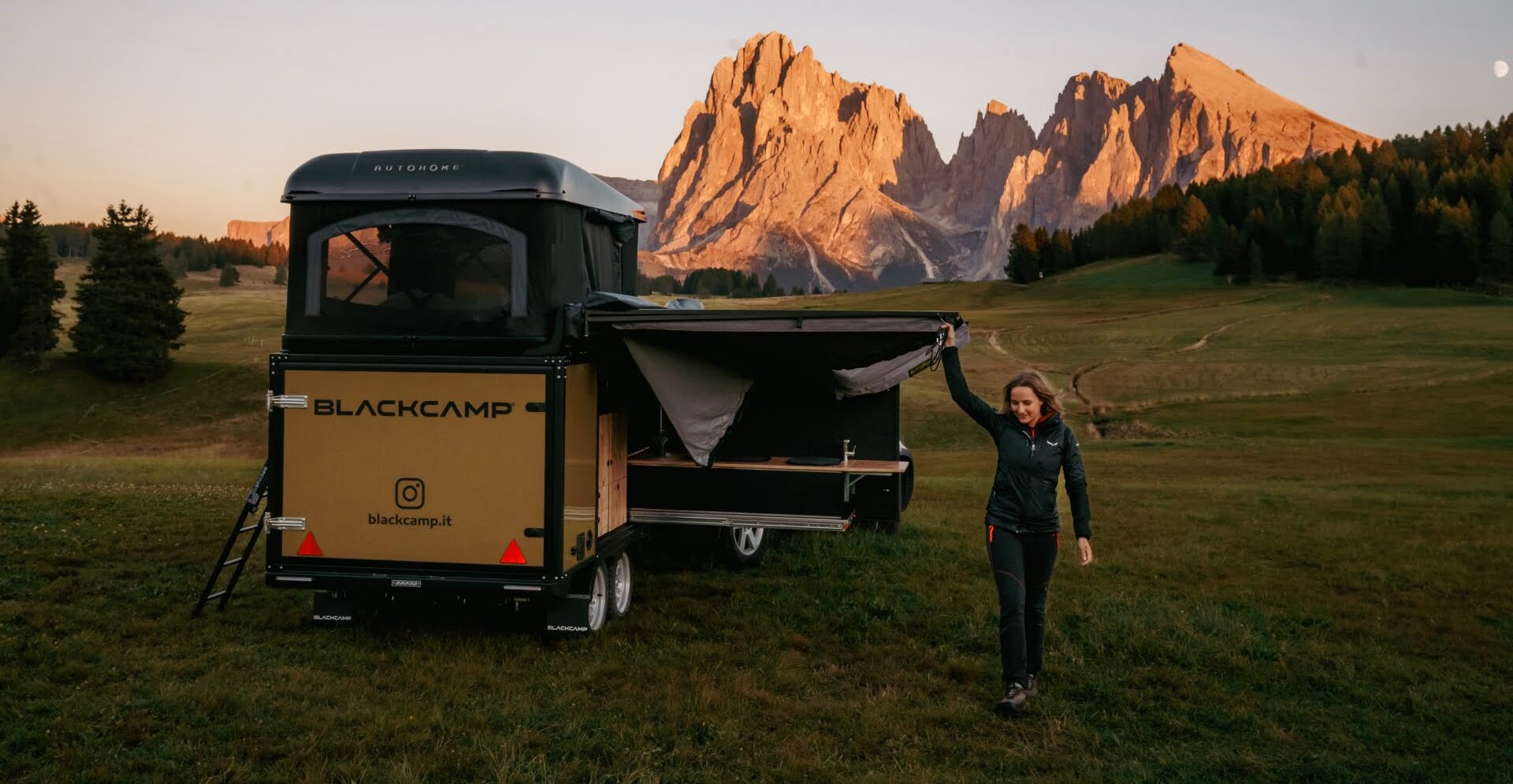
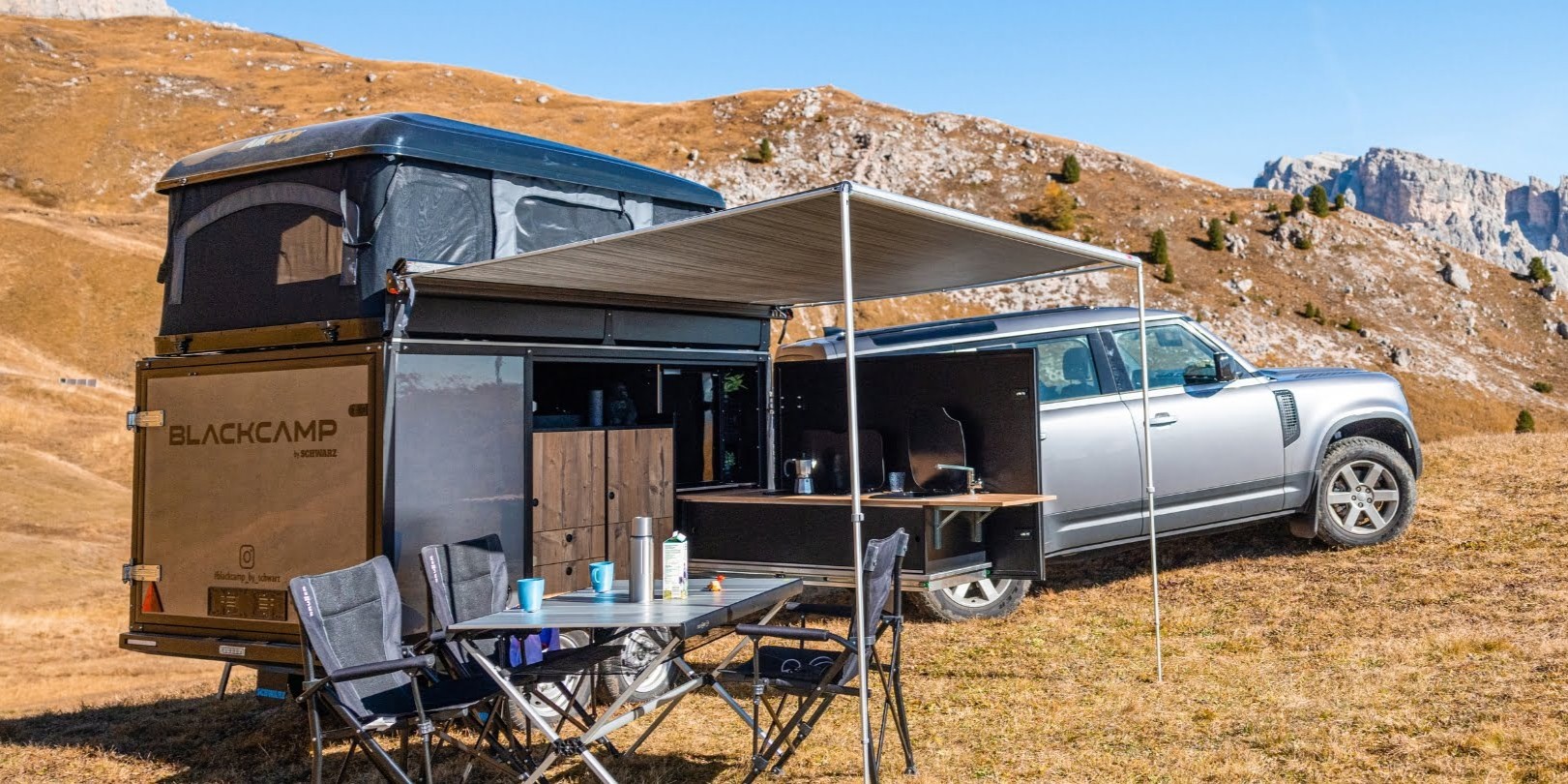
Sleeping accommodations are provided via an optional rooftop tent built into the trailer. When deployed, the tent expands upward to create a sleeping area for up to four people, separating rest space from storage and daily activity zones. Large windows integrated into the tent fabric improve ventilation and visibility, a feature that becomes especially valuable in warm climates or extended stays. By keeping sleeping quarters elevated and modular, Blackcamp avoids the compromises often associated with fixed interior beds in small trailers.
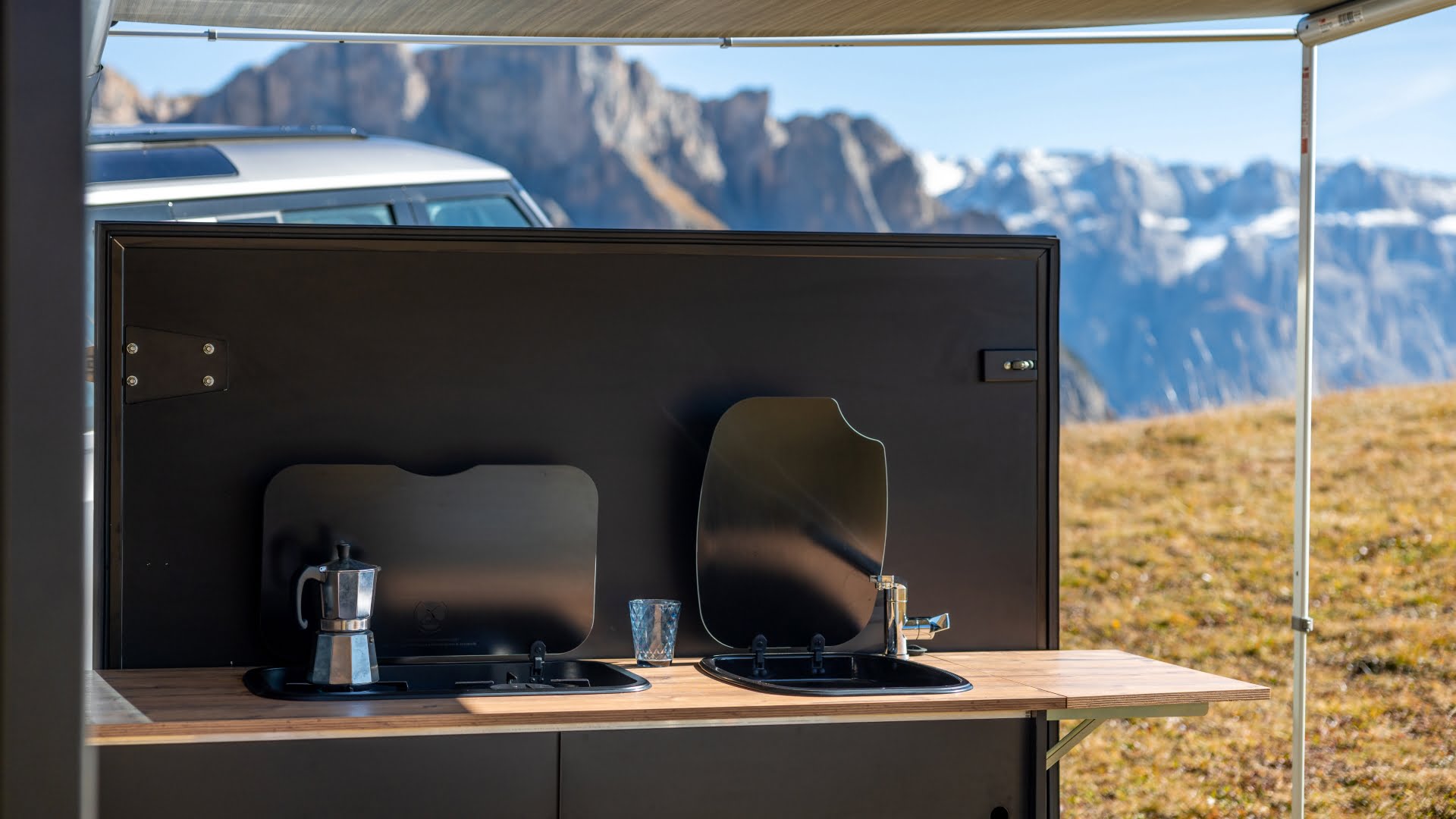
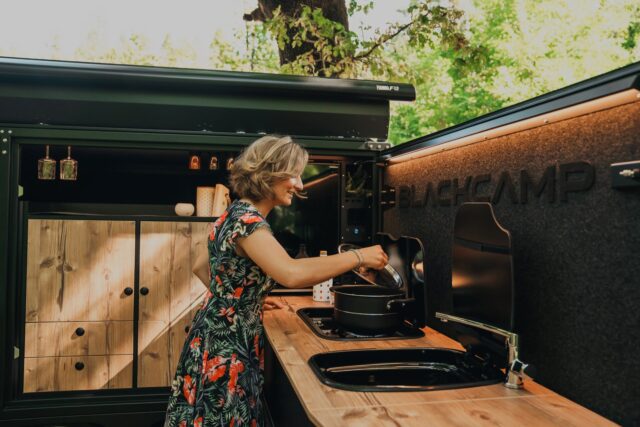
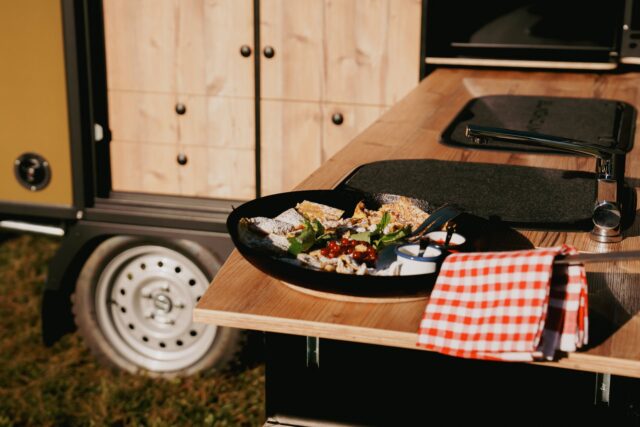
Outdoor living is central to the Freeda’s design, and this is most evident in its slide-out kitchen system. Integrated behind one of the large side doors, the kitchen includes a dual-burner gas stove, sink, wooden work surface, and a 63-liter refrigerator, supported by drawers and storage compartments for utensils and provisions. A 60-liter freshwater tank and 20-liter graywater tank provide sufficient capacity for short- to medium-length trips without reliance on external infrastructure.
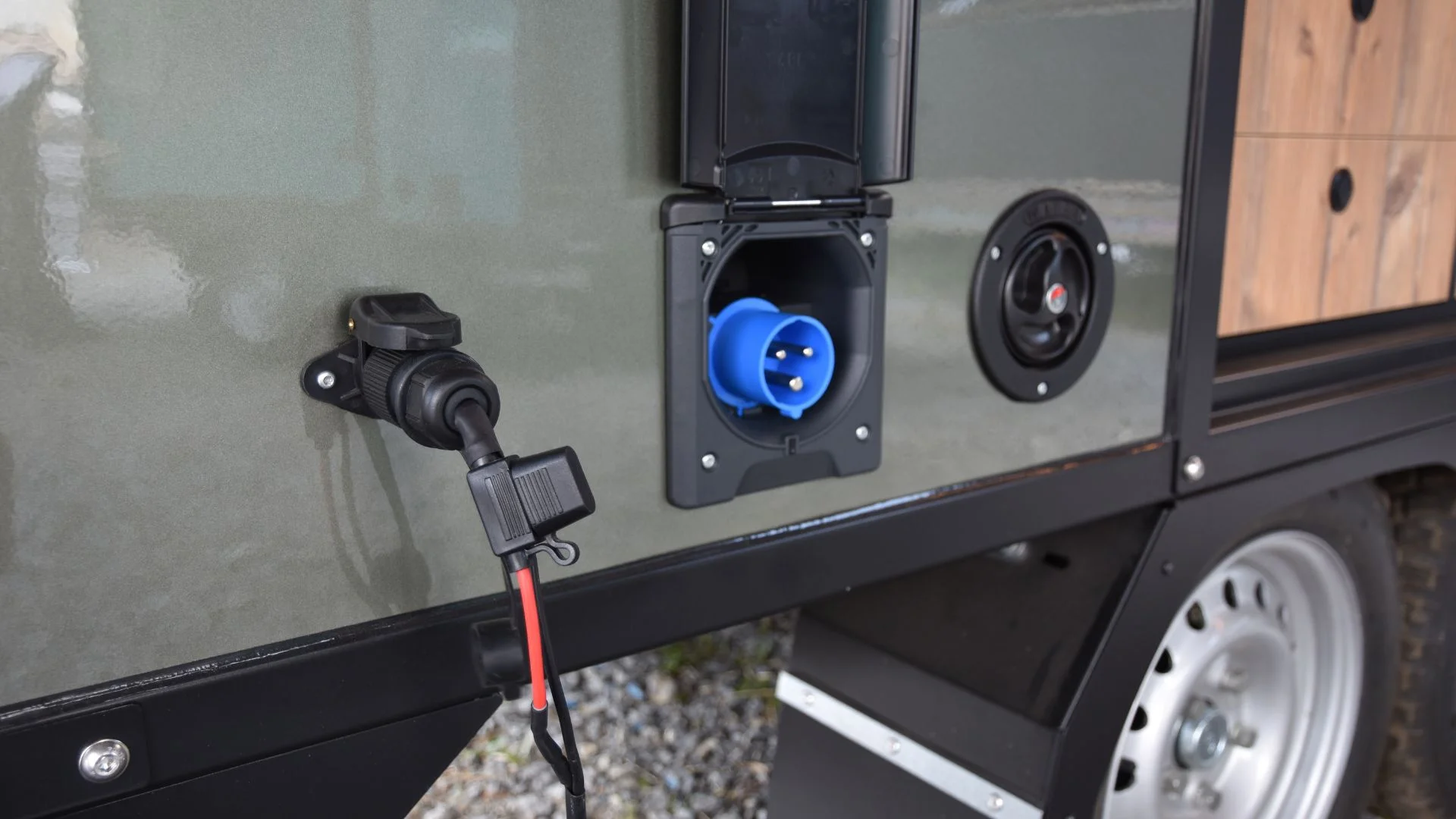
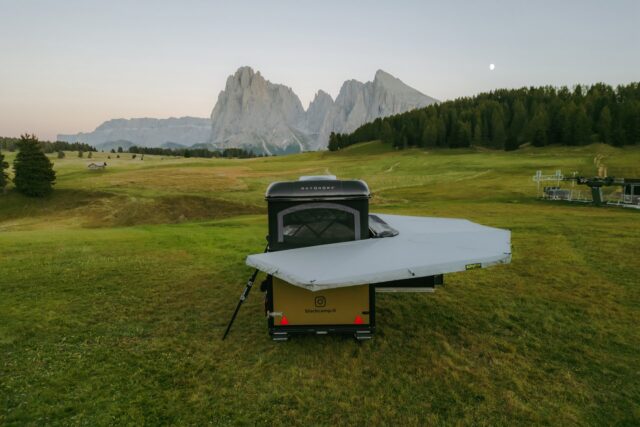
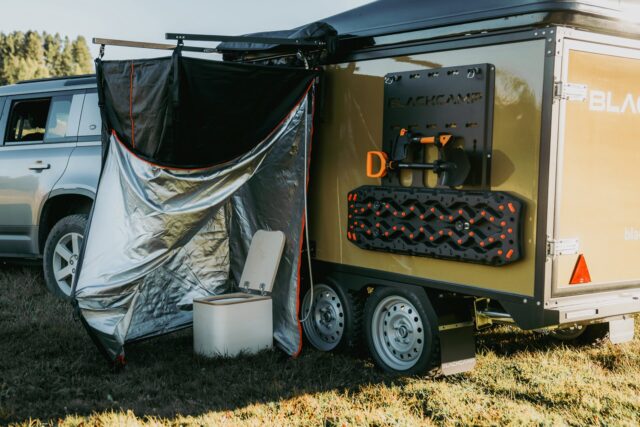
Electrical power is supplied by an onboard 95-amp-hour battery, supporting lighting, refrigeration, and auxiliary devices. The system accommodates both 12-volt operation and shore-power connection, allowing the trailer to function in off-grid camps or established campgrounds with equal ease. Optional accessories, including awnings, outdoor showers, and a portable toilet, further extend the Freeda’s usability without committing owners to a single configuration.
Pricing for the Freeda starts at approximately €23,900 (around USD $26,000 at current exchange rates), with costs increasing as optional equipment is added. This positions it within reach of buyers seeking a durable, European-built trailer that emphasizes adaptability and intelligent design over luxury finishes. Rather than imposing a predefined vision of how camping should look or function, Blackcamp has deliberately left much of the user experience open to interpretation, allowing owners to configure the trailer around their own travel style and priorities. While there is currently no official North American distributor, interest in compact, lightweight European trailers continues to grow, and it seems likely that US availability is only a matter of time.
Read More: Overland News of the Week
Our No Compromise Clause: We do not accept advertorial content or allow advertising to influence our coverage, and our contributors are guaranteed editorial independence. Overland International may earn a small commission from affiliate links included in this article. We appreciate your support.
