

Our friends Chris and Erin Ratay have been traveling for decades. They hold a Guinness World Record for the longest motorcycle journey as a team and, a few years ago, bought a Defender in South Africa and drove it to Europe. Chris has a no-nonsense approach to dealing with vehicle maintenance and breakdowns, and he is not afraid to intelligently throw money at a problem to solve it as quickly as possible.
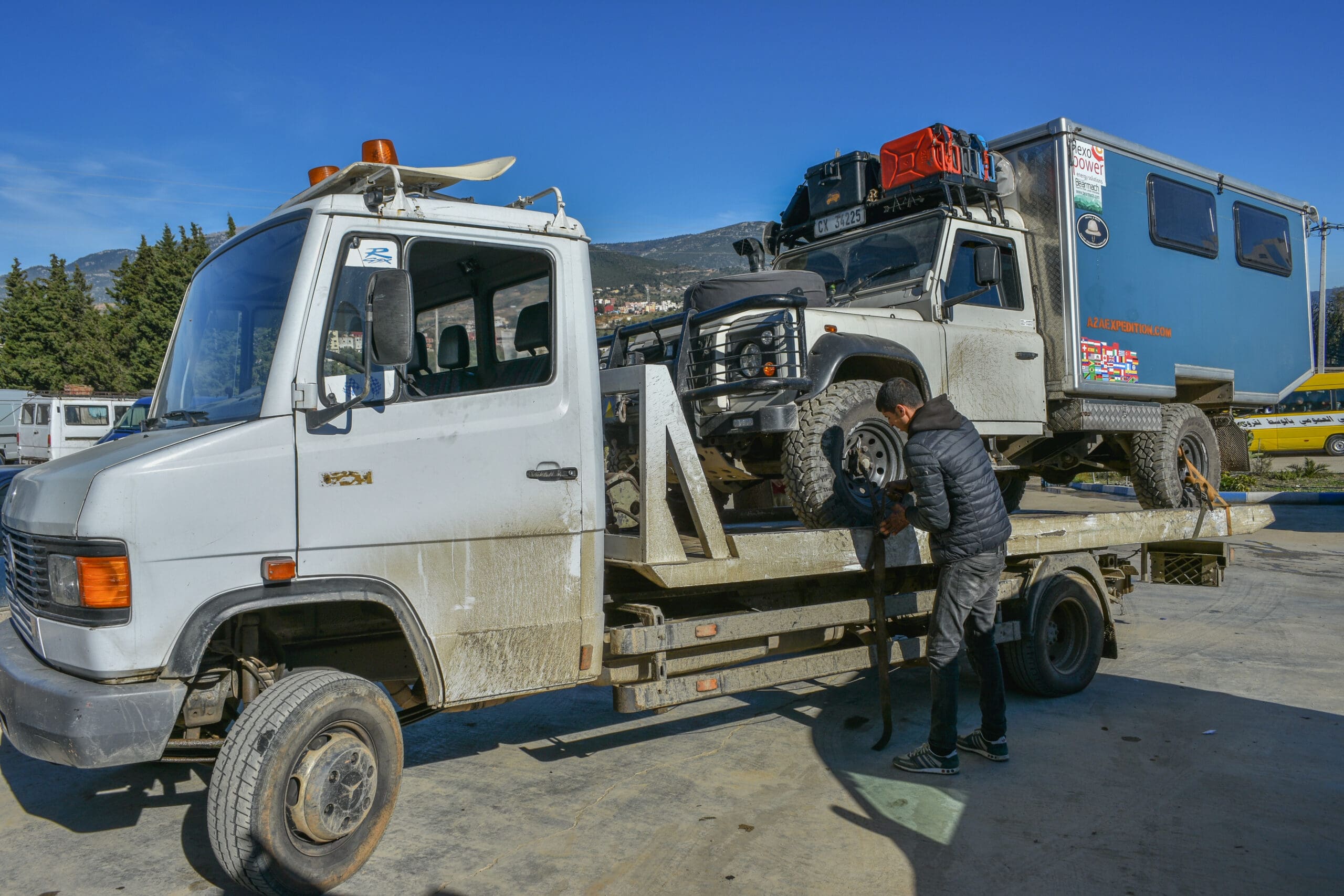
My approach is to try to do all the repairs myself, with the ultimate goal of saving money and being self-reliant; however, penny-pinching sometimes backfires. We once suffered a breakdown high in the Rif Mountains of Morocco. Our Defender 130’s clutch failed spectacularly at the end of a slippery, steep mountain trail, but it took a few days to diagnose the problem; we slept beside the road with occasional traffic and a mobile signal a mile walk away. I believed that I could get us running again but eventually had to give up and pay a local farmer $100 to brutally tow us down the mountain pass to the nearest large town, where we spent another $100 to have a diminutive tow truck tow us up another mountain pass, white-knuckled, to a campsite where we waited six weeks for our parts connection to have a clutch cleared through customs.
The campsite cost $20 per day, and we spent about $30 a day on food for a family of four: 42 days x $50 = $2,100. We had to pay $100 to have the $200 clutch kit cleared from customs, and were relieved to find that the labor to remove the engine and replace the clutch was a mere $120. I had intended to do the work myself, but at that price, I wasn’t going to argue. All told, the breakdown cost us at least $2,700 and six weeks of travel. The upside is we live on the road as full-time overlanders, and the six weeks spent camping above the blue city of Chefchaouen were mostly a splendid time wasted.
Economics aside, maintaining and caring for a vehicle can help avoid costly breakdowns, and having a breakdown strategy can prevent repair expenses from spiraling out of control and consuming precious travel time. We have paid the school fees and now have a more refined and well-practiced strategy.
Tip: Before departure, preferably in the morning, walking around the vehicle to ensure that the tires are not deflated and there are no leaks, obstructions, etc., is essential for a successful day on the road since it is better to identify a potential problem in camp than deal with it on the side of the road.

Regular Services and Maintenance
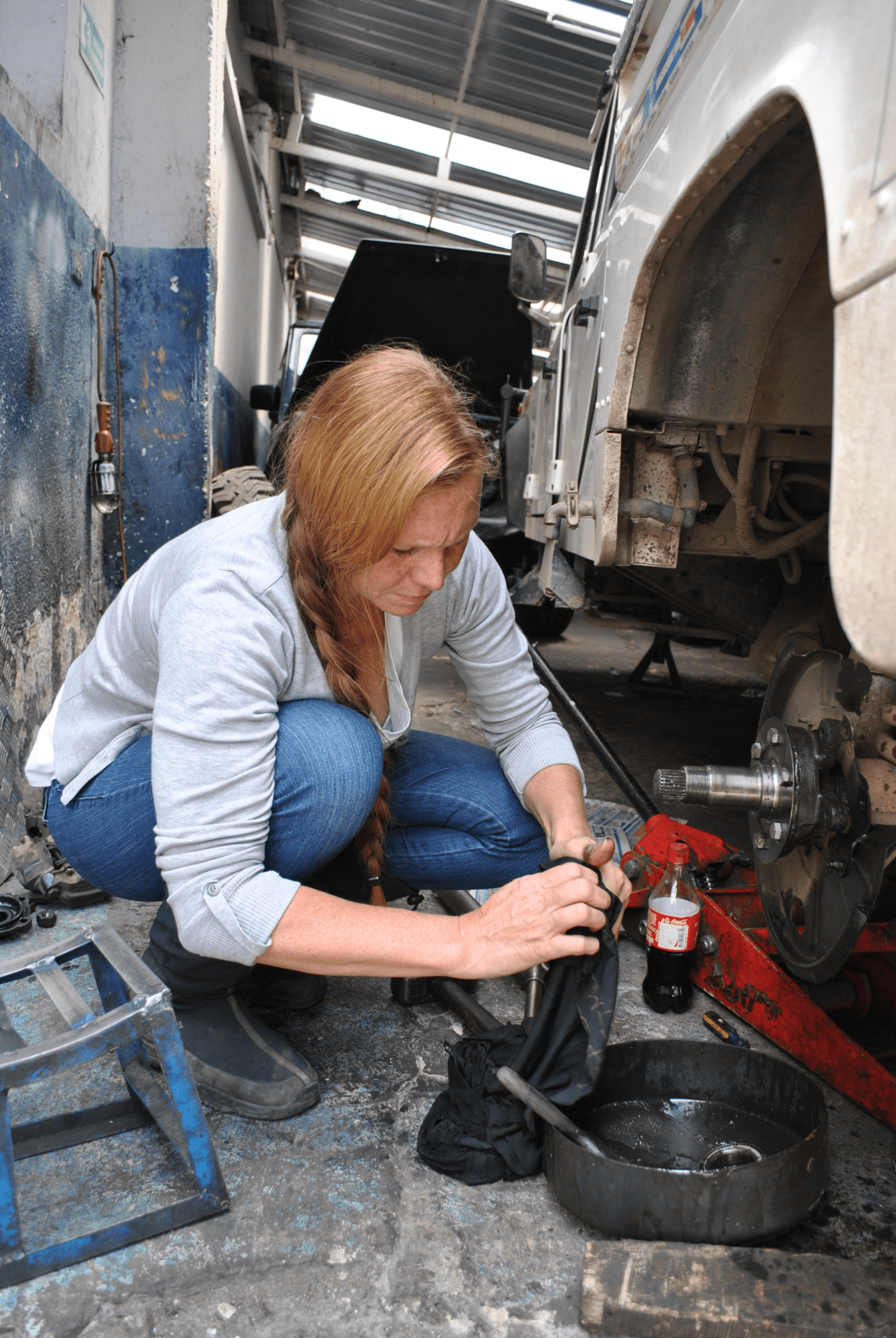
While the importance of regular maintenance and servicing is obvious to both experienced and less-experienced overlanders, there are certain rules of thumb we adhere to that extend engine life and reliability. The lifeblood of your overlanding machine is the various lubricants that keep it moving smoothly over hard ground. Our Land Rover Defender has 260,000 hard miles on the odometer, and the motor has never been opened, except to change injector seals (a task performed in a campsite in Turkey, and a pigeon flew over and pooped in cylinder 3—doh). I attribute the long life of the turbo-diesel engine to the regular replacement of the motor oil with the highest quality oil available, whether it is 15W30, 5W40, or 5W50, depending on the predominant climate. The intervals between oil changes depend more on the climate, terrain type covered, and how hard the engine has to work, as opposed to mere distance covered, since a few months in the Andes is, for instance, much more demanding on the vehicle than a drive from Buenos Aires to Ushuaia. However, the distance covered may be equal. If I am changing the motor oil, I will also check and top up the gearbox and transfer box oils, grease all grease nipples (we have never needed to change our universal joints due to this healthy habit), and do a back-to-front inspection of all moving parts, fluids, engine, gearbox and exhaust mounts, fuses, relays, batteries, etc. If it is important, it is checked.
Tip: Topping up the transmission is simple with a squeeze pouch fluid (such as the Valvoline 75-W90 FlexFill single-quart pouch) and a suitable hose. Keep the pouch clean and refill as necessary.
Basic Preparation of the Vehicle Pre-trip
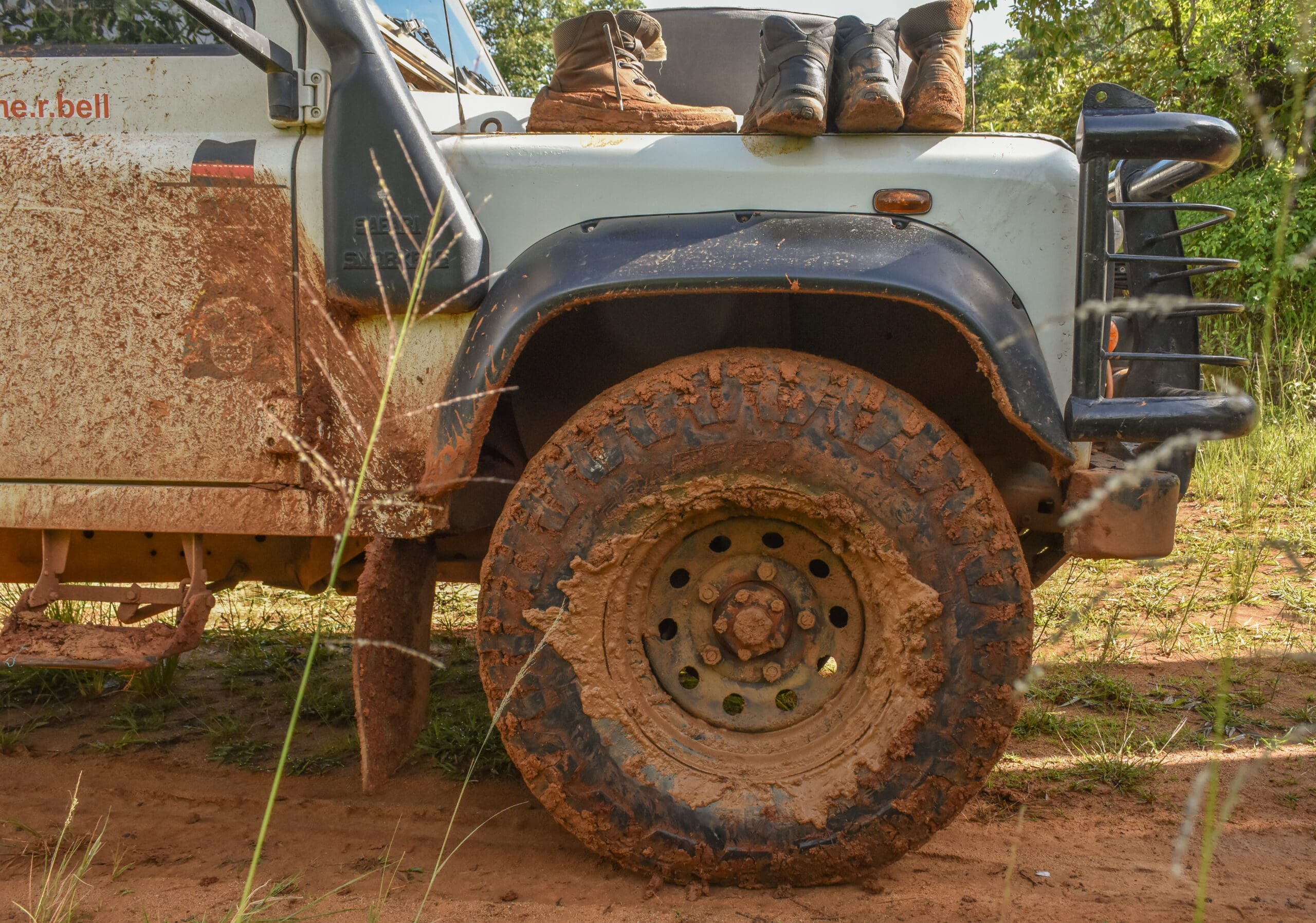
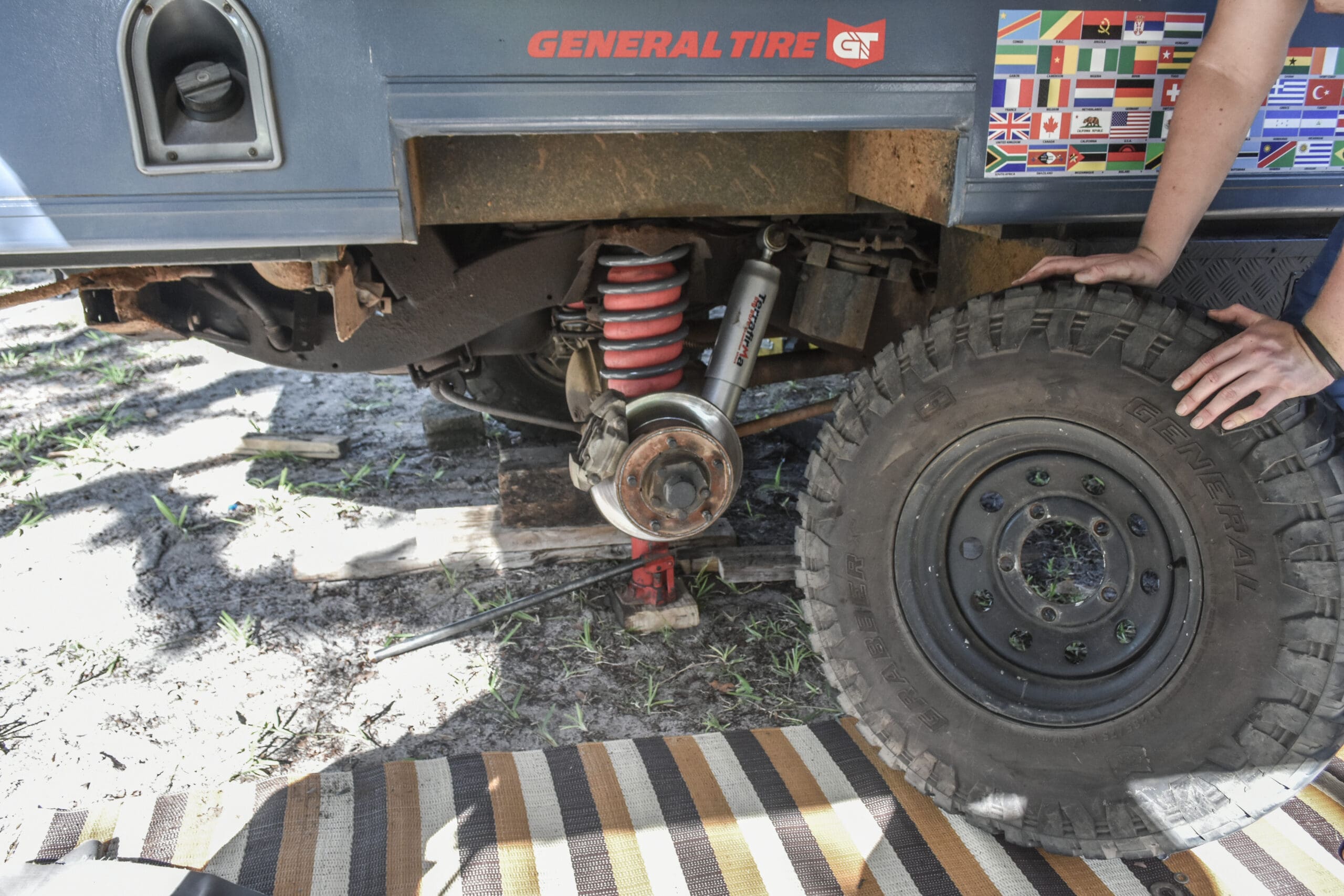
Aside from mechanical elements, the tires, suspension, and electrical system are essential for a safe and reliable journey. Tires should be close to the manufacturer’s specifications in terms of size, as oversized tires will put extra strain on the drivetrain and can lead to inconvenient wheel bearing failures while increasing fuel consumption. Over the years, we have used tall, skinny 750-16 tires, which I despised as they were useless off-road, albeit excellent for fuel economy. In contrast, I loved tall, wide 33/12.5R15s for their looks and off-road performance, but they were terrible for wheel bearings and fuel economy. I have settled on the General Tire X3 285/75R16 as the size is just perfect, and we have excellent on and off-road capability. As with tires, your vehicle’s suspension should be close to standard to avoid strain on various components. A 2-inch lift is okay; everything above that may be overkill for long-distance overland travel. Be sure to take care of the ball joints and tie rod ends; pulling to the side while driving long distances will not only be irritating but will also significantly reduce tire life. Lastly, the vehicle’s electrical system should be straightforward, accessories should be kept to a minimum, and repairs to the electrical system should be possible in the field. A couple of auxiliary lights are sufficient, as, ideally, you will not be spending a lot of time driving at night.
Tip: If you don’t understand the electrical system of your vehicle, be sure to take someone with you who does. I do; she does.
Getting to Know Your Specific Vehicle
Every vehicle has its own quirks. Our 2003 Defender has more than its fair share, but they are similar to other TD5s. I know that the TD5 injector loom has a habit of leaking oil into the engine control unit (ECU) located under the driver’s seat. I also know that there is a sensor behind the gearbox that is exposed and can shut down the vehicle, and that the crank position sensor can and will do its best to leave us stranded. Upon purchasing the vehicle, I bought an owner’s manual and scoured the internet for information about my type of vehicle and the problems to expect. I then planned accordingly, either through preventative maintenance or carrying relevant spare parts. I found a few good apples online who have guided me through diagnostics and repairs as I travel (thanks, Malcolm and Jakes), and I am also sure to repay the debt.
Tip: Download an owner’s manual to your phone, which will be available offline.
Gaining Mechanical Confidence by Doing the Smaller Jobs First
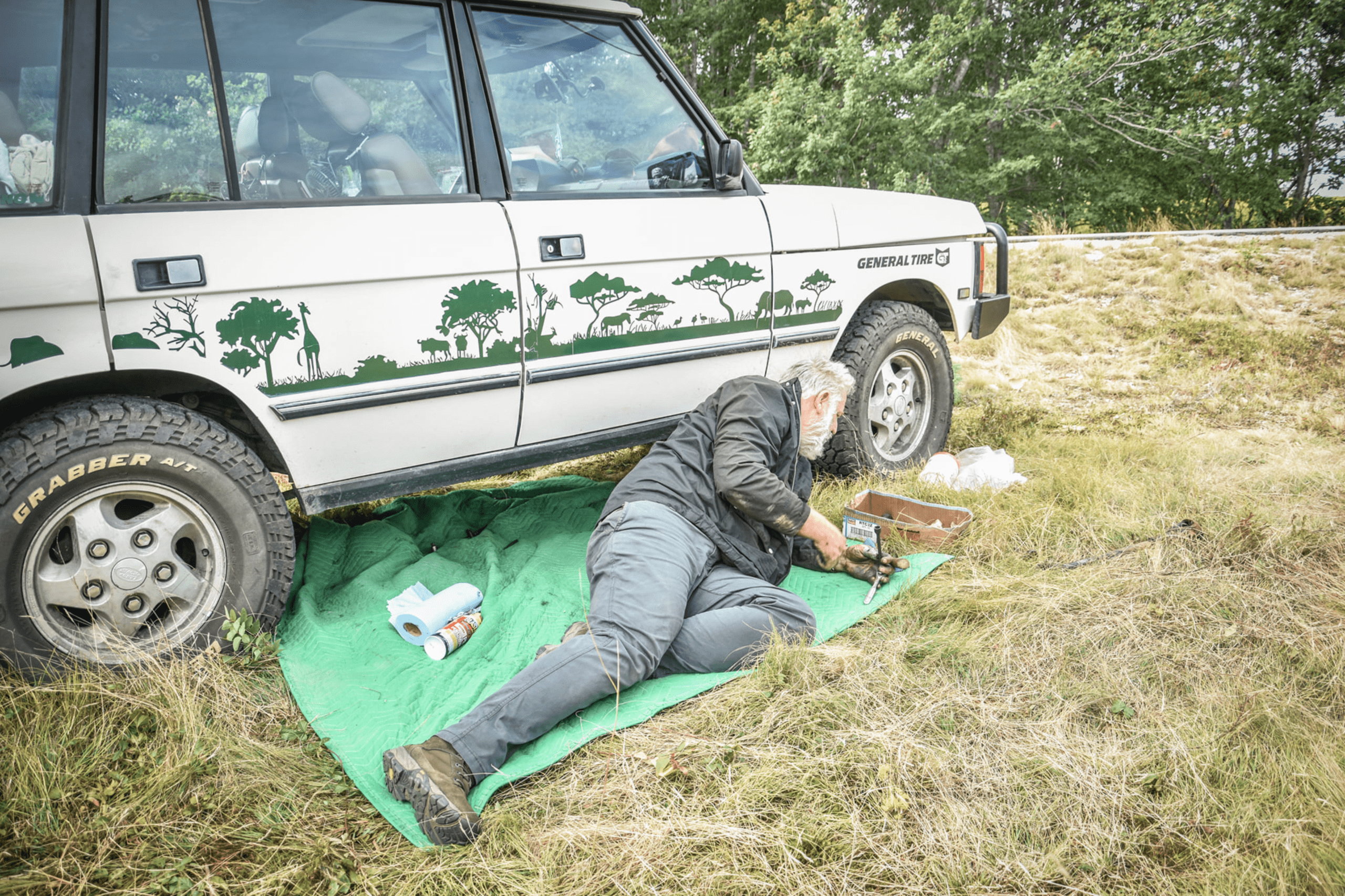
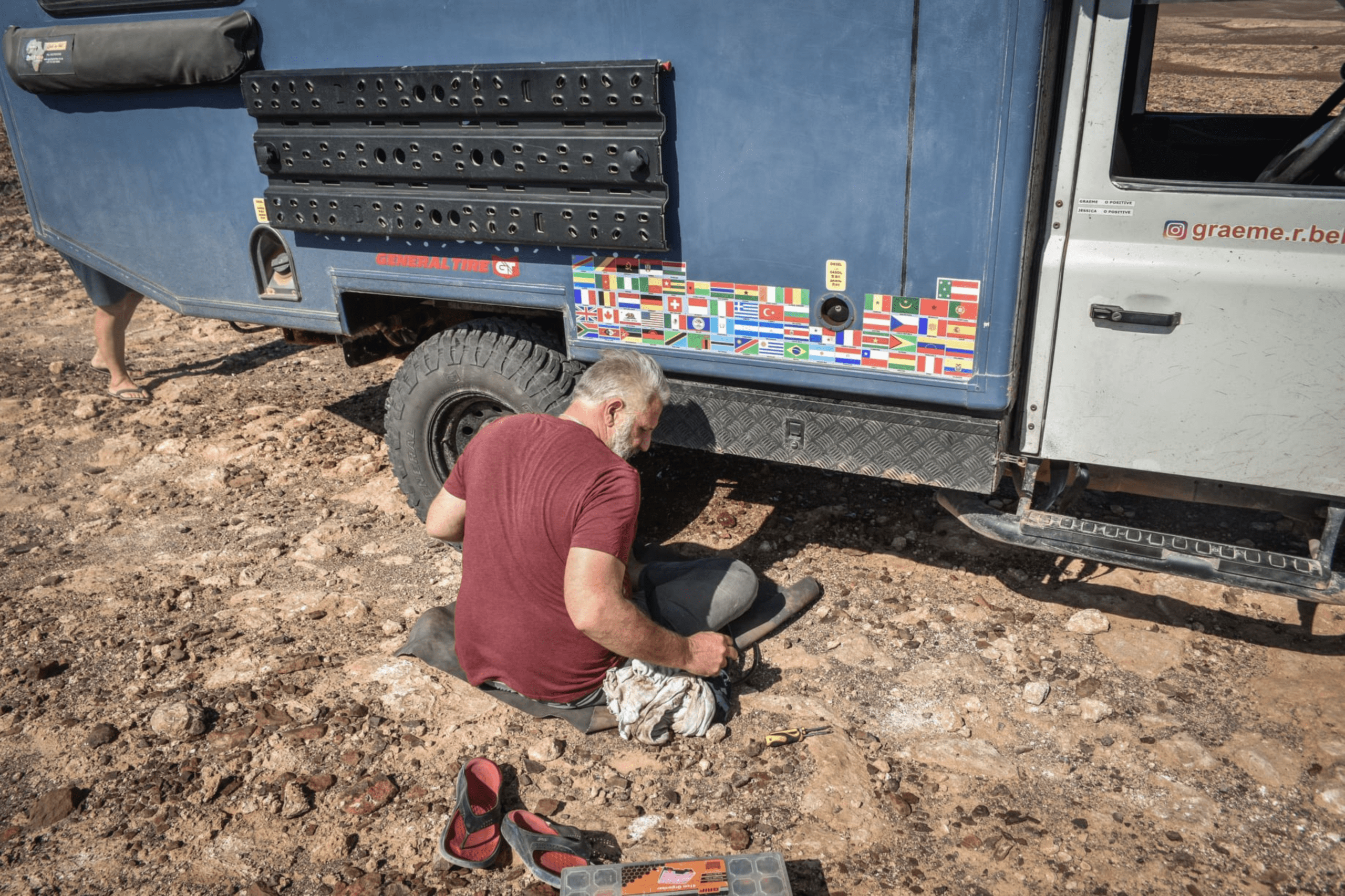
If, like me, you were not raised with wrenching culture, it may be difficult to motivate yourself to get stuck into a bush repair. Motivation is key. If I have to replace injector seals, remove a gearbox, or replace the alternator, I will always start the workday with small, easy, and rewarding tasks that help boost my confidence and reactivate my mechanical skills. Not putting off repairs and not ignoring new sounds and rattles helps to avoid side-of-the-road breakdowns, the worst kind. Do the repairs and maintenance in camp with a meal and a shower nearby, rather than in a pit beside the road with fire ants in your pants and no shade.
Tip: Always pack a work tarp in an accessible space.
Invest in a Set of Tools
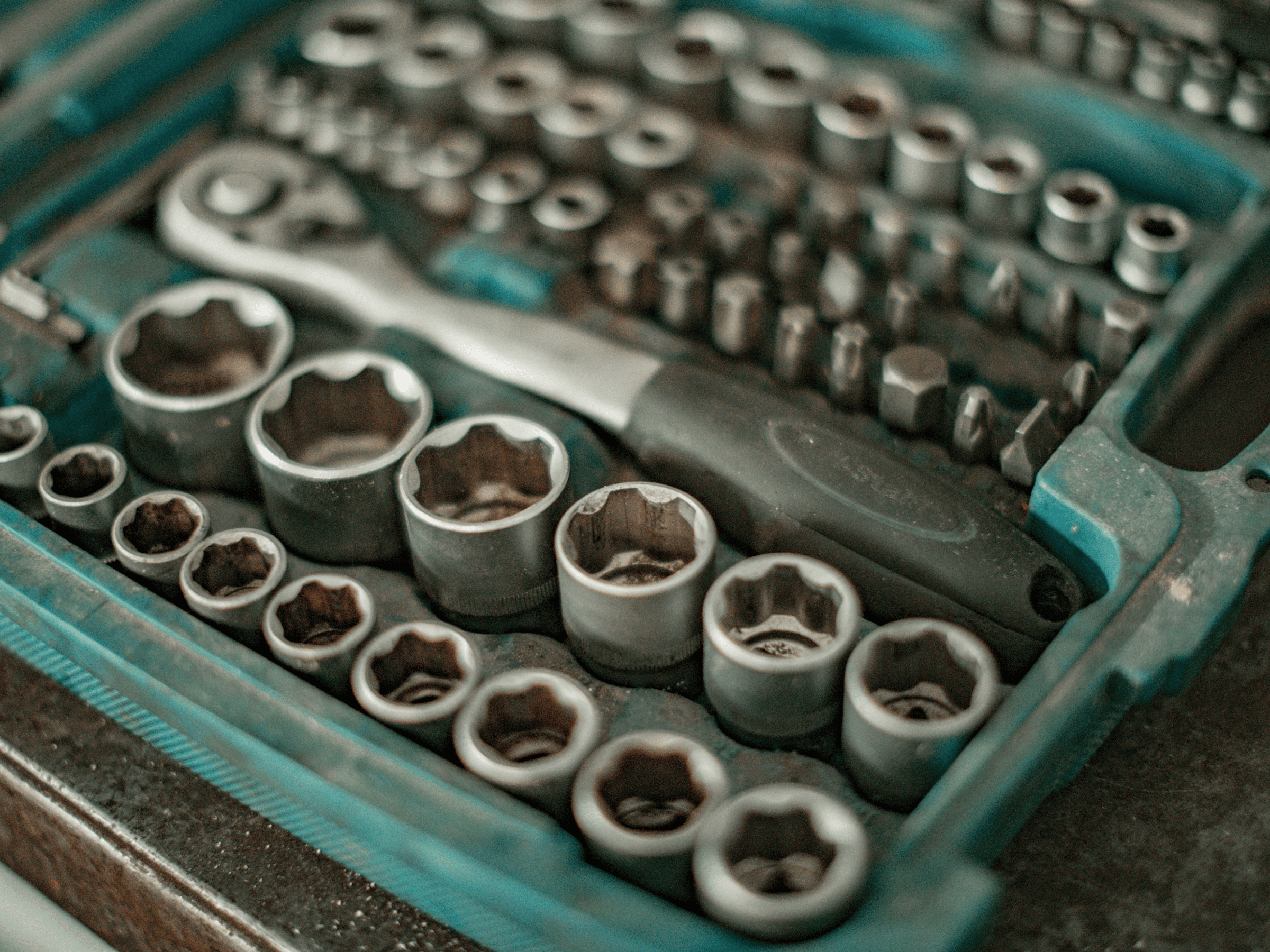
Remember, the more mechanically and geographically independent you intend to be, the more tools you must carry. A basic tool kit consisting of common spanners, screwdrivers, Allen keys, sockets, and a pliers set is the foundation of your tool arsenal. Carry a few special tools, such as fan spanners and a hub nut tool; by getting to know your vehicle, you will learn which ones you will need. Miscellaneous tools, such as a crowbar, mallet, hammer, cordless impact drill, compact axle stand, and circlip pliers, can be essential when the dwang hits the fan. Try to avoid carrying tools you have never found the occasion to use, which can be found at mechanical stores along your route, if necessary.
Tip: Two blocks of wood can be incredibly useful around camp when not used for jacking up a vehicle or knocking out wheel-bearing races.
Spare Parts to Carry
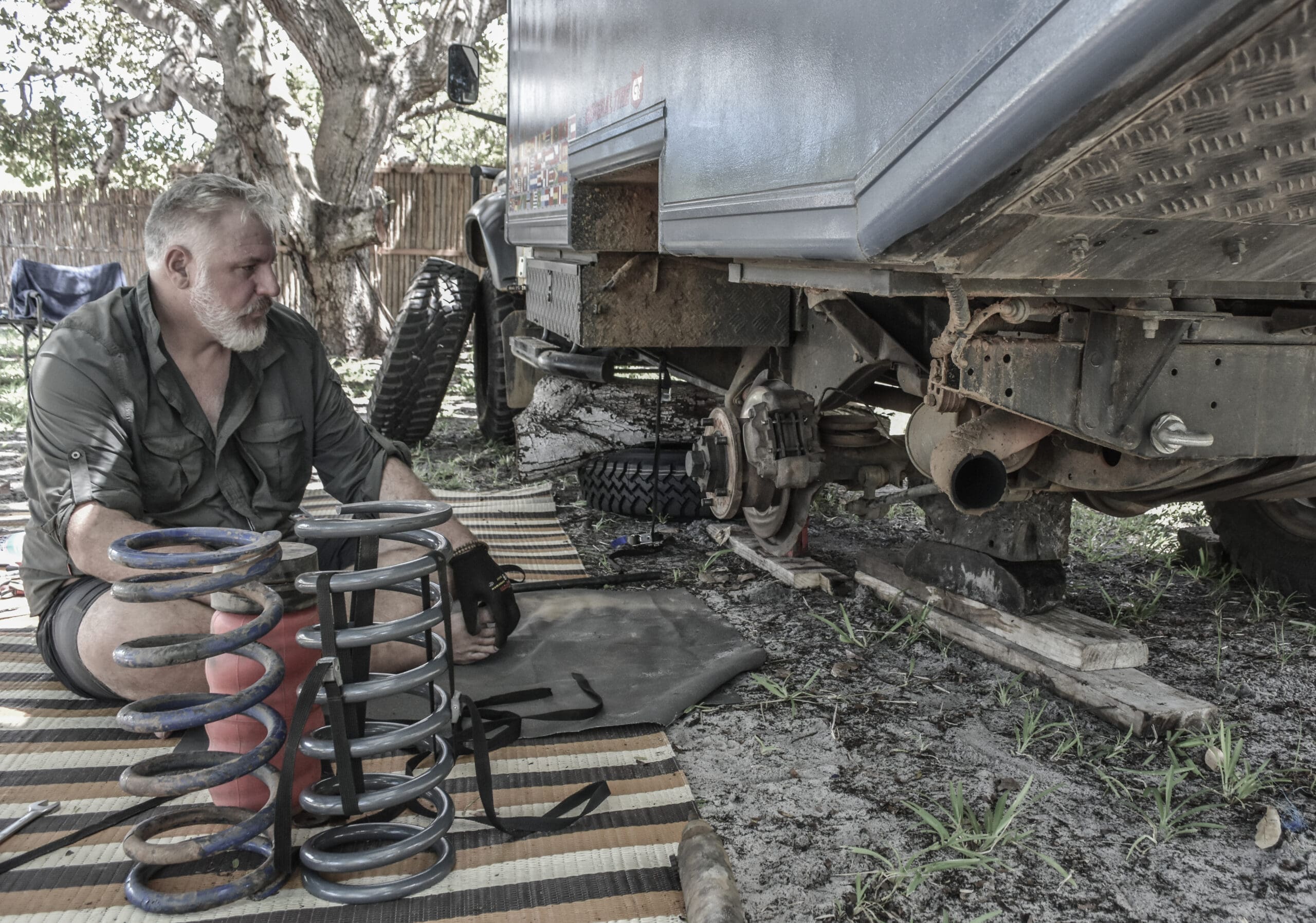
Not all spare parts are equal, and cheap aftermarket parts are often a false economy. Genuine Land Rover parts are mind-numbingly expensive, but when replacing a genuine alternator that has worked flawlessly for 20 years with an aftermarket part that fails almost immediately, you realize the value of the original part. That said, some aftermarket parts can be perfectly reliable (I am looking at you, Timken bearings). And sometimes, you have to make do with what is locally available and what your budget allows. Murphy’s Law dictates that the spare parts you carry will often not be the spare parts you need. Such is life. I carry essential parts, including a fuel pump, fuses, relays, a set of filters, wheel bearings, select suspension bushes, and various lightweight spare parts that I haven’t used in 15 years but carry regardless in the knowledge that if I don’t carry them, I will need them. Sourcing parts in remote locations deserves an entire chapter to itself. The modern reality is that any part you need can be sourced from anywhere in the world if you have the time and funds. As always, prevention is better than cure, and there will usually be signs that a failure is imminent; if you can’t hear the gremlin growing or see it leaking, you will often feel it in your butt (the ride); this is your sign to diagnose the problem and source the relevant parts.
Tip: Trust your butt.
Dealing with a Breakdown
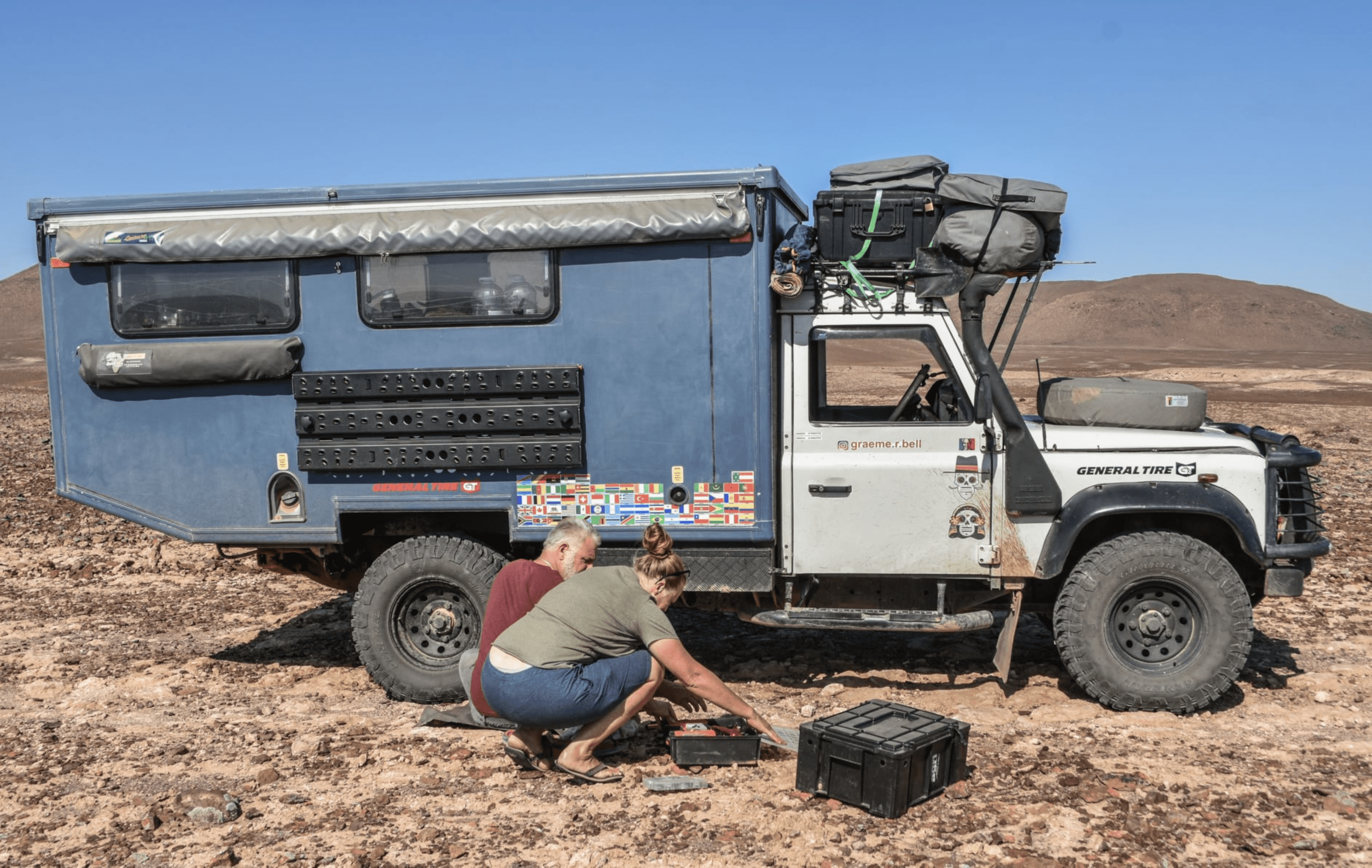
Stop, drop, and roll. Assess the situation, find safety, and connect to the internet. If you are sitting on the side of the road 100 miles from anywhere in either direction, you will need to do what you can to either get moving again or find a place to do the necessary repairs. Stressing or rushing a repair will often make the situation worse. Stay in control and accept the inconvenience. Our experience has been that, except for in highly remote areas, someone will eventually come along. Usually, they will offer a helping hand, a tow, or at least offer to send a tow truck when they get back to civilization. We have made some great friends during our breakdowns.
Tip: Memorize the road as you travel. When you are forced to stop, you will know what is behind (but not ahead): a gas station, pull-off, water source, etc.
How to Diagnose a Problem
Having done your research beforehand, you should have a good idea of what the problem might be. Having access to the internet will significantly increase your chances of confirming or disproving that initial diagnosis. Some breakdowns are obvious, but we have had many that were mysterious and difficult to diagnose—mostly related to fuel and electrics. Portable diagnostic tools are available for many vehicle brands; our Defender TD5 uses an expensive but essential Nanocom diagnostic tool that can read and clear faults and reprogram the ECU. Naturally, reprogramming an ECU requires a specialist skill set, and we have learned through trial and error how to use our Nanocom for diagnosis and tasks such as deactivating the immobilizer when it decides to go rogue. Depending on the type of breakdown, you will need to go through the process of diagnosis, research, and repair.
Tip: Traveling with Starlink has been a game-changer for us, and connectivity has given us the confidence to travel further solo.
When Not to Fix It Yourself
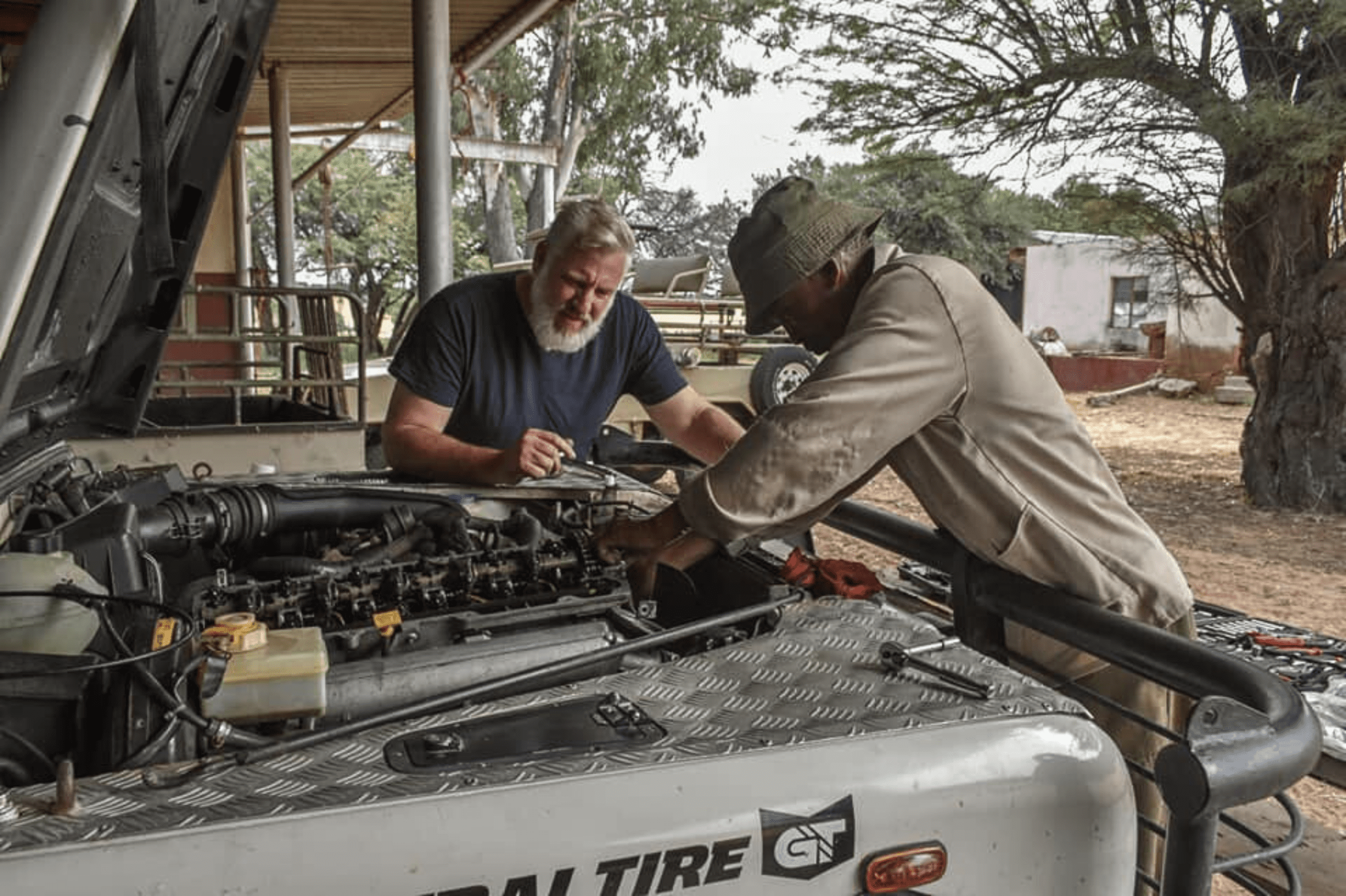
Sometimes, despite our best efforts, we cannot fix the Landy on the side of the trail. Complex repairs, such as clutch replacement or transmission repair, are best left to the professionals, with the caveat being that you first have to locate that professional. Affordable, reliable, local labor is not always available. However, thanks to apps like iOverlander, it is much easier to find a good mechanic or sparky (auto electrician) than it was back in the good old days. In all our years of travel, the Landy has only been on a tow truck once, and that was after the aforementioned breakdown in the Rif mountains of Morocco and after being towed out of the mountains by that unsympathetic tractor driver. As previously explained, we were delivered to a campsite where we paid a local mechanical crew $120 to remove the engine and replace the clutch. They did not do a great job (the pressure plate was installed incorrectly, and the motor had to be removed again), but the alternative, removing the transmission in camp, was far from desirable. When using local labor, it is best to observe their work and not be afraid to step in and intervene when it is clear they are not performing the repairs correctly.
Tip: Film the repairs if possible. Doing so proved our point when the Moroccan mechanic refused to accept blame (he was clearly at fault and was filmed telling his mechanic to put the pressure plate backward, despite protestation).
Ultimately, cost-effectiveness is a crucial consideration when deciding whether to do the repairs yourself or outsource to a professional. That said, being self-sufficient is priceless.
Bonus tip: Fit a coolant level sensor to the header tank of your cooling system. An aftermarket sensor’s warning that the coolant is low is much cheaper than (often too late) being warned that the engine is overheating.
Editor’s Note: This article was originally published in Overland Journal’s Gear 2026 Issue.
Our No Compromise Clause: We do not accept advertorial content or allow advertising to influence our coverage, and our contributors are guaranteed editorial independence. Overland International may earn a small commission from affiliate links included in this article. We appreciate your support.
