

As vehicle-based travelers, we have entered a renaissance for overland vehicles, with capability, capacity (towing in particular), and comfort reaching new heights. The best overland vehicles are constantly morphing with consumer interests and regulatory pressures, but there has never been a better time to choose your next adventure machine. With the growing popularity of overlanding, original equipment manufacturers (OEMs) have doubled down on suitable models, and in the case of INEOS, an entirely new car company has been created to support vehicle-dependent travel. Despite that, there are four areas of concern to consider in the current crop of sport utility vehicles (SUVs) and the forecasted offerings. In our testing, minimum targets, such as an 18-inch wheel, a rear locking differential, a payload of 1,543 pounds, and a range of 372 miles were taken into account. Shockingly, no single vehicle in the test met all of these benchmarks, but some come close.
For this review, there are more SUV models to choose from than we can actually fit in the publication, so we downscaled to more popular units within a typical purchase price. The testing took place over the last year (a bit longer for some models) and encompassed numerous terrain types, as well as different US states and international destinations. The competition is thick with suitable options, so the reviews are more critical than usual to help demonstrate the differences and let the best rise to the surface. Be that as it may, choosing the best vehicle for you is ultimately a highly personal decision based on your budget and travel needs.

Key Attributes
SUVs represent the most popular choice for overlanders and commuters alike. They are spacious and comfortable while providing a degree of utility for hauling and towing. Capability is relatively easy to find in this segment, although payload still tends to be elusive in the higher trim levels.
The following vehicle criteria comprise the most critical attributes of any overland platform, including motorcycles. Driver comfort is also important to reduce fatigue and is determined by the overall noise, vibration, and harshness (NVH) experienced by occupants.
Capacity Carry weight as measured by payload specifications and interior storage volume in the load area of the bed or aft of the front seats.
Reliability Operate without engine, electrical, or support system failures due to component malfunction or other quality errors.
Durability Travel for extended periods (years or decades) over rugged terrain while fully loaded without chassis or driveline failure.
Capability Traverse rocky, muddy, and cross-axle terrain, including deep water crossings, severe side slopes, and hill climbs and descents.
Ford Bronco Badlands
The Blue Oval delivers the ultimate modern-classic overlander.
1,120-pound payload | $59,760
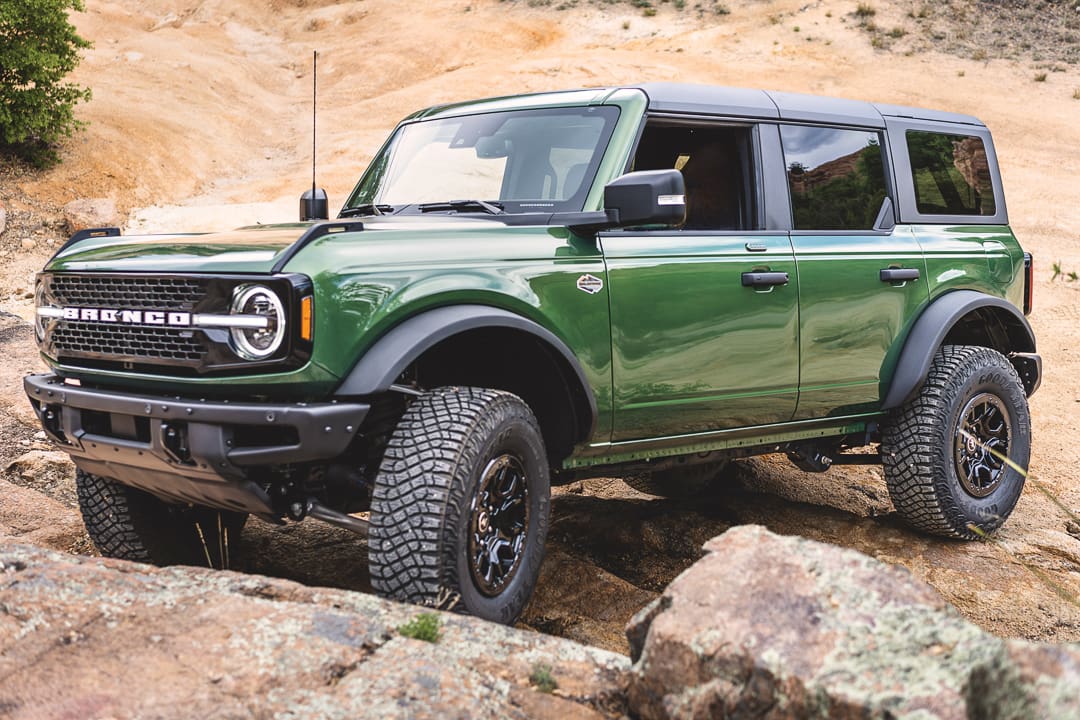
The Bronco is a welcome departure from the pack, featuring retro styling and extreme package options, such as the Raptor, which comes with 37-inch tires. With an aesthetic loosely based on the original 1966 Bronco, it is available in two- or four-door configurations and can be optioned from mild ($39,999) to wild ($91,245). The Bronco is notable for its robust, long-travel independent front suspension, which can be optioned with a front locking differential and sway-bar disconnect from the Sasquatch package.
While the configuration favors technical terrain performance, the Bronco also excels at most reasonable speeds on the dirt, including heavy corrugations, primarily due to the independent front suspension, as well as the wide track, long-travel, and available remote-reservoir Fox dampers. Total performance can be extended further with the Raptor model, although the track width and lower payload of that package ultimately compromise travel. The Bronco strikes an excellent balance between capability, comfort, safety, and precision that is rare in the category.
In low-speed technical terrain, the Bronco is impressive, with all three magic buttons a finger-press away at the top of the dash: disconnect front sway bar, lock rear differential, lock front differential. The low first gear (6.51:1 for the seven-speed manual), 2.72:1 low range, and 4.7:1 axle result in an impressive 83:1 crawl ratio that would make a Unimog nod in approval. The Bronco is confidence-inspiring, stable, and easy to drive over challenging obstacles, but even an amateur will notice how wide it is and how the short windscreen and broad hood make trail visibility a challenge (cue the spotter). For perspective, the Bronco’s track width is within a half inch of that of the full-size Ford Expedition.
The Bronco exhibits high-speed performance on corrugated roads, and the steering is predictable and direct, with minimal stepout from corrugations in a turn. The Badlands feels well-suited to any driving task while traveling. There are several limitations to overlanding, primarily related to payload, interior volume, towing capacity, and roof load capacity. For example, the roof load capacity is only 110 pounds, which would preclude the safe use of all but the lightest roof tents on simple crossbars. The interior material quality lags behind the others in the test, and a noticeable amount of wind and road noise is present.
While we tested the Sasquatch model for this comparison, the base four-door model is the most compelling. It can be optioned with a hardtop and has a sticker price of just over $40,000, featuring steel wheels (a win in my book), a 7-speed manual transmission, air-conditioning, 4WD, and more. Unfortunately, Ford does not offer a rear-locker-only option for the base unit (it pushes you toward an $8,000 Sasquatch package) like it does for most of its other 4WDs. This can be easily remedied with an ARB air locker. Even in base trim, the Bronco is more capable than most of the off-road packages in this test, and you can buy three of them for the price of the Lexus.
Pros
- Most capable vehicle across all trail speeds
- Available 7-speed manual transmission
- Expansive factory options to match most budgets
Cons
- Hardtop produces a lot of wind noise, squeaks, and rattles
- Base model lacks affordable rear-locker-only option
Ford Expedition Tremor
The Expedition finally matches its namesake.
1,360-pound payload | $83,025
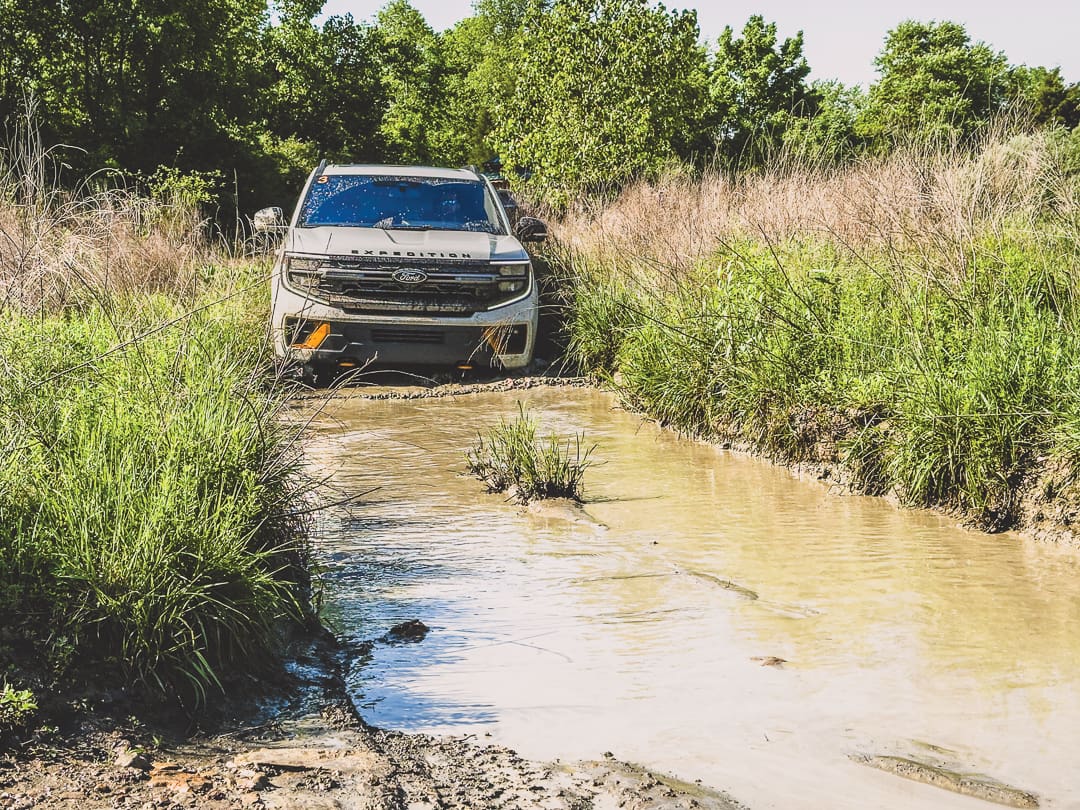
The Ford Expedition has been in production for nearly 30 years, initially known as the UN93 and based on the F-150 platform. Its sales peaked in 1999 at nearly 234,000 units, maintaining a respectable volume despite increased competition. Serving as a durable family hauler, it towed toddlers, boats, and trailers in quiet service until now. With the 2025 model year, everything changes with the introduction of the new Tremor package, featuring 440 horsepower and all the overland features a family might need. I traveled to Kentucky to see if the hype lived up, to take it on one of BFGoodrich’s Outstanding Trails.
The Tremor package provides the Ford Expedition with a strong foundation, featuring a body-on-frame build, a strengthened rear suspension, and a frame member that supports 9,000 pounds of towing and 1,360 pounds of payload. For overland applications requiring maximum payload, hundreds of pounds can be regained by removing the third- and second-row seats. It’s one of the most comfortable long-distance cruisers tested, rivaling the Land Rover Defender 130 for passing highway and dirt road miles. Noise, vibration, and harshness are minimized, thanks to redesigned body mounts, enhanced sound damping, and laminated glass. Blue Cruise 1.4 further reduces driver fatigue with hands-free driving on the interstate, lane-keeping assistance, and adaptive speed control. The 23-gallon fuel tank is welcomed in an age of vanishing range.
For international overlanding, its overall size is a limitation, especially in the colonial villages of Latin America. However, it drives smaller than specifications imply, due to its tight turning circle. Ford is one of the best domestic brands for international dealer networks, with their vehicles being sold in over 180 countries. If your overlanding includes towing, this model suits you with 7,000 pounds of towing capacity without an equalizer hitch and 9,000 pounds with additional equipment, ideal for any overland trailer and even the largest Airstreams or Bruder units.
On the trail, the Expedition, with its 122-inch wheelbase and 80-inch body width, surprises with its capability. The 33-inch tires, 10.6 inches of ground clearance, and a tight turning circle of 41 feet (identical to a Wrangler Unlimited) belie its size. The General Grabber tires excelled, and the rear locker helped navigate mud and rutted climbs. Skid plate contact in rocky sections showed no damage upon inspection. Left-foot braking and pedal modulation were excellent, providing smooth control in technical sections. The 440 horsepower provided ample wheelspin in muddy spots. While not a Bronco Raptor on 37s, it’s the best full-size, seven-passenger SUV on the trail. The oval steering wheel felt awkward in tight conditions, though it improved with time. Some journalists noted rear bumper contact, showing gaps or distortion in plastic covers. Departure angle and rear bumper integrity could be improved.
Ford continues to surprise with vehicle trail performance commitment. In recent years, the Ford Ranger Raptor and now the Expedition Tremor have impressed. Previously, I wouldn’t have considered taking an Expedition on the trail, but now I’m eager for a trip—maybe even a real expedition.
Pros
- Impressive trail capability, given its size
- Excellent ride quality on- and off-road
- Powerful and efficient 440 HP twin-turbo V6
- Proper General Grabber AT tires (33-inch on 18-inch wheels)
Cons
- Oval steering wheel is a challenge on the trail
- Departure angle and rear bumper integrity need improvement
- Payload lags competition
GMC Yukon AT4
GMC offers a small-displacement turbo-diesel for the win.
1,581-pound payload | $84,205
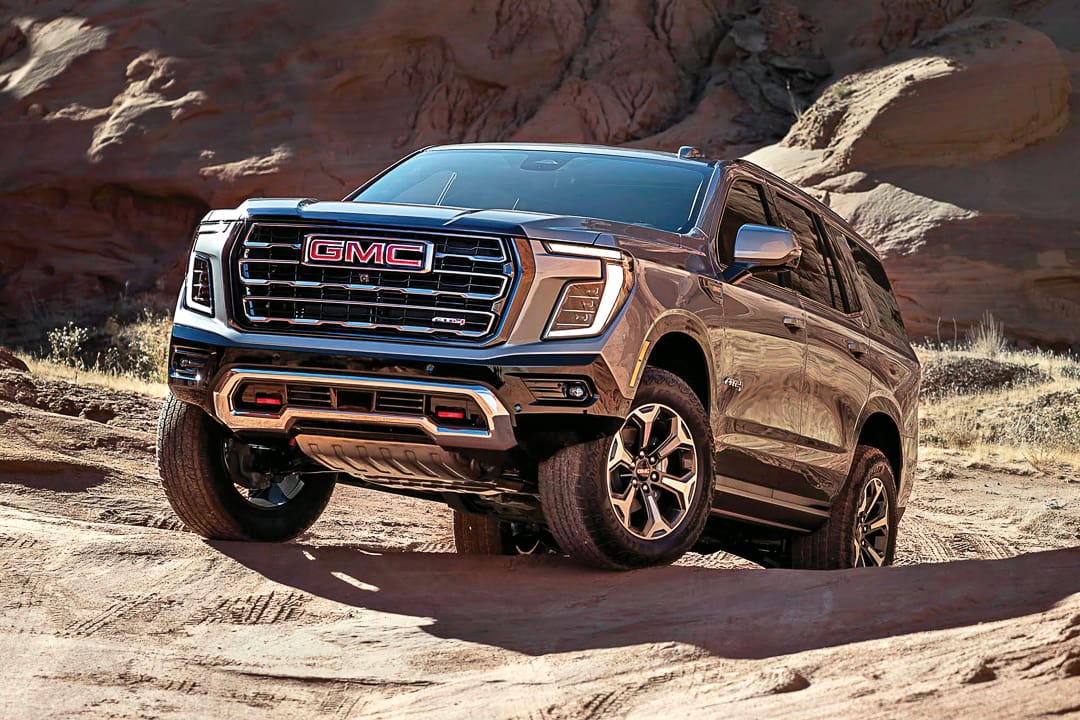
Testing the 2021 GMC Yukon AT4 in the beautiful red rock country of central Arizona was an enlightening experience. The Yukon is a well-known, reliable platform, favored by families and adventurers alike for accessing the backcountry. With the AT4 package, GMC has introduced a range of technological and physical enhancements that significantly boost its off-road performance.
The Yukon AT4 boasts a 32-degree front approach angle and skid plates, offering enhanced protection and capability on rugged terrain. The multi-height airbag suspension system offers four levels, including two dedicated off-road settings, allowing for improved ground clearance and adaptability to varying trail conditions. That said, the rear lower control arms have a low-hanging radius (for shock packaging) that compromises running ground clearance. The package is also hampered by the 20-inch wheel package, which is never suitable for a true off-road trim. The AT4 works well in most travel conditions, but the electronic limited-slip differential (ELSD) demands far too much wheelspin for either Tread Lightly or effectiveness standards.
Having reviewed the trail performance, the magic of the Yukon is all under the hood, with an available 3.0-liter Duramax turbo-diesel engine, which provides 277 horsepower and 460 pound-feet of torque. This engine is paired with a 10-speed automatic transmission, delivering power and efficiency for long-distance travel. It is one of my favorite motors available today, delivering over 24 mpg combined and reports of highway mileage approaching 30 mpg.
With a 1,581-pound payload, 8,400-pound tow capacity, two-speed transfer case, and massive cargo area, the Yukon AT4 shines on long-distance drives. When technical trails become more challenging, the Yukon AT4 starts to reach the limits of its size and equipment. With competitors like the Tremor, it is time for GMC to throw the parts bin at the Yukon and give us an AT4x with front and rear lockers, 18-inch wheels, and rocker panel protection.
Pros
- Best-in-class powertrain (3.0-liter diesel and 600+ mile range)
- Respectable payload at 1,581 pounds
- Four-position airbag suspension yields a 32-degree approach angle
Cons
- 20-inch wheels are not appropriate for the AT4 package
- Ineffective ELSD
INEOS Grenadier Trialmaster
A knighted overlander builds our dream SUV.
1,684-pound payload | $79,000
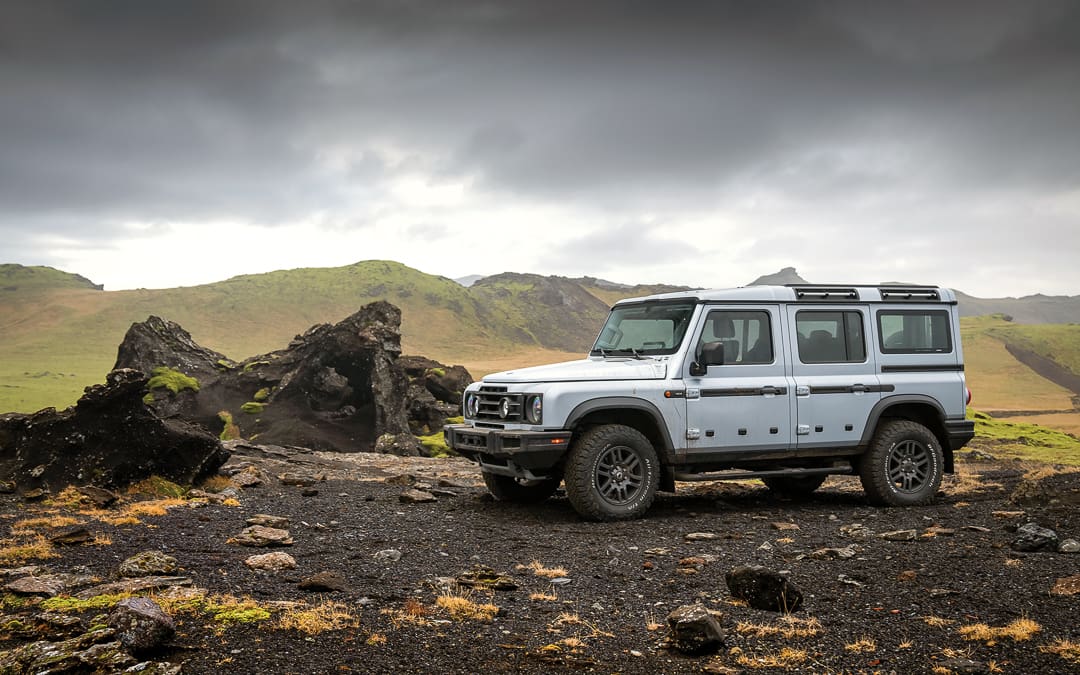
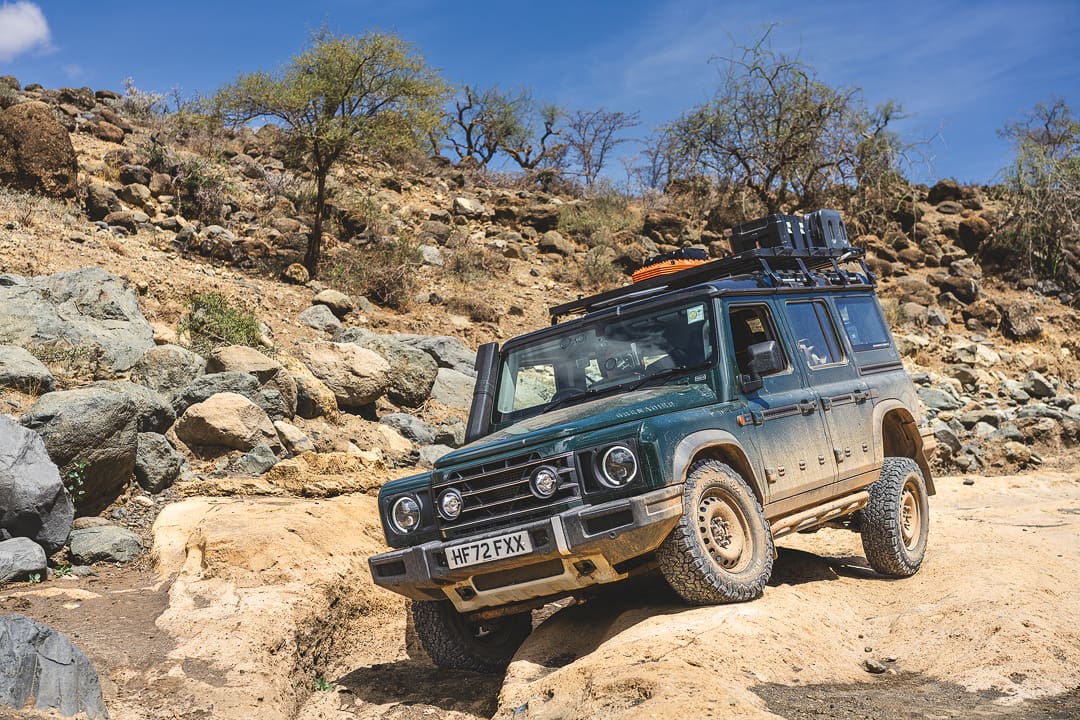
It seems like a fairytale that Sir Jim Radcliffe took his passion for Land Rover Defenders and exploration and combined the capabilities of his multinational petrochemicals company to do the seemingly impossible—start a new car company. Combining the best of pinnacle overlanders like the Mercedes G-Wagon and Land Rover Classic Defender (along with a 5-link long-travel suspension from the Wrangler and a BMW drivetrain shared with the Toyota Supra), the Grenadier checked most of the boxes a modern overlander would want in an SUV.
When the model first launched, I worked hard to secure a test unit for a cross-continent expedition. Surprisingly, the new car company took a risk and handed me the keys to an early production unit for a drive across Africa. (We received no compensation, and I needed to return the unit at the end.) Ultimately, I drove the Grenadier from South to North Africa along the east coast, including thousands of kilometers of dirt tracks and trails. The trip ended in Djibouti without a single failure and no warning lights on the dash. I was impressed, so much so that I shipped it to Greece and crossed the European continent all the way to John o’Groats in the north of the UK.
The Grenadier strikes an ideal balance between capability, comfort, capacity, and durability. In my 50,000+ kilometers in Grenadiers and Quartermasters, they have also proven to be reliable. The capability is accomplished with good approach and departure angles, along with long-travel solid axles and triple differential locks. On the trail, everything works as expected, despite some features not being intuitive to activate (such as the diff locks and off-road mode). The turning radius is poor, considering the wheelbase (a 20 percent wider turning circle than a Wrangler Unlimited).
As an overlander, the Grenadier is ideal, clearly made for the most remote and rugged roads on the planet. It has the best payload in this test, and it feels understressed even at the limits. The factory accessories also support overlanders with an available dual-battery system, snorkel, winch, roof racks, a rear ladder, and even prewiring for a rear cradle winch. The Recaro seats support long days on the trail and upright seating, and an expansive greenhouse of glass reduces driver strain. Some drivers report that the tall dead pedal is uncomfortable, though I have never noticed it, in both left- and right-hand drive variants. My most stinging critique centers on the steering, including a slow return to center, a wide turning circle, and overall poor responsiveness and predictability. It certainly wouldn’t keep me from buying one, but the steering deficiency is most noticeable because the rest of the vehicle is excellent.
The Grenadier has become the darling of the industry, with extensive aftermarket support on everything from portal axles to entire habitat modules (like from Alu-Cab). My strongest caution would be to leave the vehicle as close to stock as possible with only minor modifications. The Grenadier already works as designed for crossing continents, so spend the money on fuel in Tanzania, not on an unnecessary set of shocks that cost more than a container shipment to Africa.
Pros
- Robust chassis and drivetrain
- 1,684-pound payload
- Thoughtful overland features abound
Cons
- Fuel range falls just below standards (I have hit the standard with slower speeds)
- Steering experience falls below vehicle standard
Jeep Wrangler Rubicon
The original overlander keeps getting better.
Max payload 1,400 lbs | $52,745
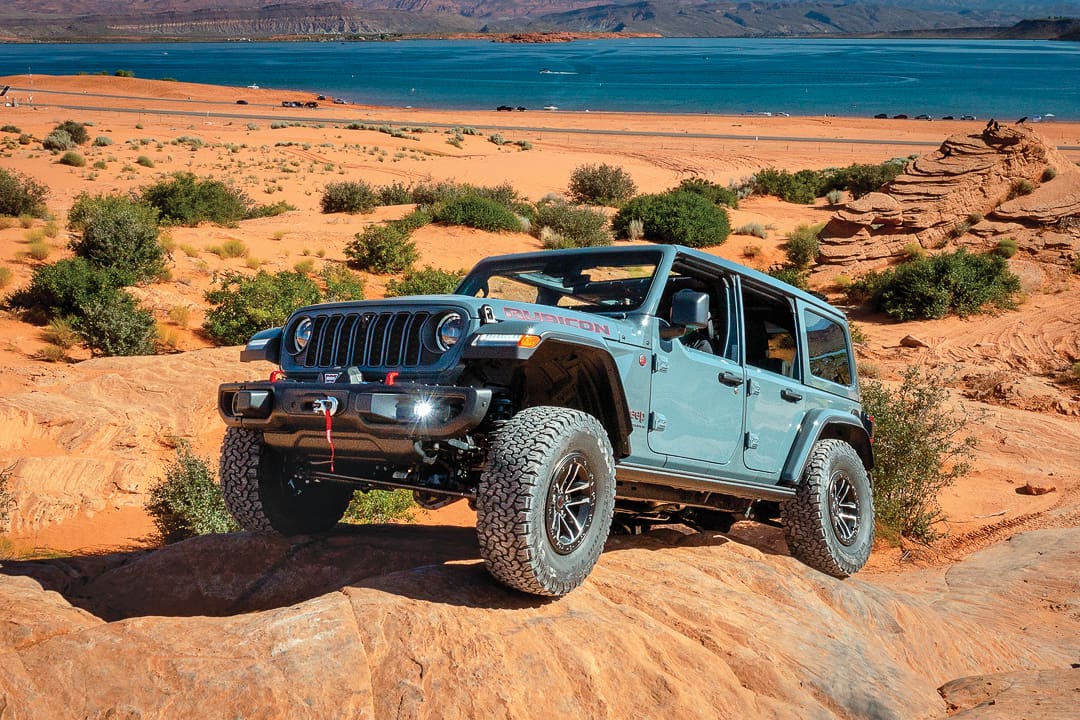
Despite the pedigree of the other brands in this test, Jeep remains the grandfather of vehicle-based overlanding, with models dating back to 1941 and the first commercially produced Willys-Overland MB. The MB was a lightweight military 4×4 transport that met or exceeded the US Army’s requirements during World War II. Even the name Overland has been a rich part of the Jeep brand lexicon since 1908. Since that first MB, Jeep has been a pioneer of capability in the consumer 4WD space, with the Jeep Wrangler Rubicon at the pinnacle of performance.
As an overland vehicle, the Wrangler has steadily improved, with the most notable changes being the launch of the Rubicon model in 2003 (enhanced capability), followed by the introduction of the Unlimited 4-door in 2007 (increased capacity), and the recent addition of a full-floating rear axle (capable of handling up to 1,400 pounds of payload). The Wrangler has never been more capable, comfortable, and had this much capacity. They have improved driver fatigue with lower NVH, along with luxuries such as heated/ventilated seats, a heated steering wheel, and even radar cruise control. While those options may feel at odds with an overland vehicle, we are always mindful of the effects driver fatigue has on safety.
The Rubicon has a payload that surpasses the Land Cruiser, and is arguably one of the most durable platforms in the test, featuring massive Dana 44 axles, a rigid steel body on frame, a robust ZF transmission (with even a manual option), and a 4:1 low-range New Venture transfer case. The upsides are numerous, as are the challenges, with the lowest available interior storage volume in the test, the most road noise, and the lowest towing capacity in the evaluation.
On the trail, the Rubicon is the most capable of the test—to a point. More specifically, low-speed technical terrain is the domain of the Wrangler, including rocks, deep mud, ruts, and cross-axle terrain. While some brand loyalists may cry foul that the Bronco, Grenadier, or GX is better, it simply isn’t close, and for two reasons: The track width is significantly wider than the body width; The total articulation of the Rubicon provides unprecedented traction and stability in extreme conditions. Not all overlanding is done at speeds of less than 5 mph, though, and the Wrangler’s capability falters once speeds increase, particularly when driving through large dunes or thousands of kilometers of corrugations. A solid axle will lack the line-holding and precision of an independent front suspension, along with the commensurate increase in harshness due to the lack of autonomous front-wheel movement.
I have owned many Wranglers, and currently have a 4Xe in my stable. The specifications may not always add up, but they are fun to drive, the top comes off, and they are easy to modify to any flavor. For me, the 4Xe variant is one of the most enjoyable daily drivers I have ever owned, as my errands and commute rarely exceed the 25-mile electric-only range.
Pros
- Class-leading technical terrain performance
- 1,400-pound payload with new full-floating rear axle
- Robust driveline and available manual transmission
Cons
- Limited interior storage
- Limited towing capacity
- A 4:1 transfer case is a liability in some reversing scenarios
Land Rover Defender 130 Outbound
The best of the modern Land Rovers has arrived.
1,800-pound payload | $85,975
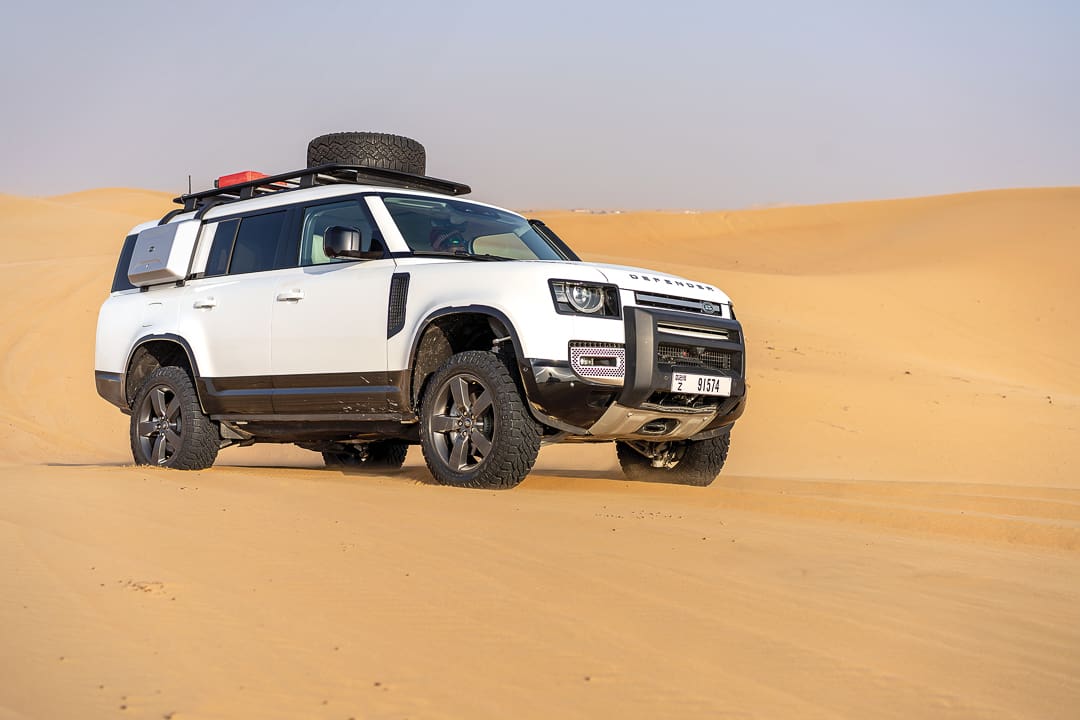
Land Rover has been supporting overland expeditions for over 75 years, including Barbara Toy’s circumnavigation in 1950, the 1972 crossing of the Darién Gap, and Tom Sheppard’s 1975 crossing of the Sahara. My first exposure to the Camel Trophy sparked my passion for overland travel, and I have since owned many Land Rovers. For this evaluation, I have been fortunate to spend significant time with the Land Rover Defender 130, traveling across the southeastern United States, through the Arabian Desert in the UAE, and most recently in California. Among modern Land Rovers, the Defender 130 Outbound model stands out as my favorite, offering an optimal blend of capacity, capability, and comfort.
On the trail, the 130 performs admirably, thanks to its longer wheelbase, 11.5 inches of ground clearance, center and rear locking differentials, and advanced traction control. As with any Land Rover, the Defender 130 makes the hard roads easy. Retaining a 119-inch wheelbase, with an added 13 inches of load space aft of the rear axle, it provides ease of sleeping in the vehicle (80 inches of length on a near-flat load floor), increased storage capacity (89 cubic feet of storage behind the first row), without adding roof weight, and improved weight balance. This balance is especially evident in extreme terrain, where the 130 articulates more effectively due to the additional aft weight, making it more settled and composed than even the highly capable 110.
While the 130 has some compromises, such as a reduced departure angle of 28 degrees, this is still better than some competitors like the Land Cruiser 200. Another consideration is the 20-inch wheels, as 18-inch factory steel wheels are not available due to brake diameter. Twenty-inch wheels are not suitable for remote travel, and this is the only specification that caused the Defender to fall short of our minimum standards. However, some specialized aftermarket 18-inch wheel options fit.
The Defender 130 Outbound is an excellent travel vehicle, daily driver, and family hauler. The turbocharged straight-six gasoline hybrid engine delivers 406 pound-feet of torque. The air suspension and quiet interior make it easy to make distance, and the Defender has one of the best interiors of any vehicle, and the roof load rating permits a roof tent. Modern Defenders have always exceeded my expectations when I’ve used them for my international travels.
The Outbound model is designed to maximize payload and interior storage with its five-passenger configuration. It boasts a class-leading 1,800-pound payload and a dynamic roof load capacity of 370 pounds. The 130 can tow 8,200 pounds. Land Rover’s misguided use of 20-inch wheels, as well as its ongoing reliability and supply chain issues, are the two biggest issues. It is particularly heartbreaking for me, as I have such love for the brand. But it is encouraging to see the 130 Outbound and the new 110 Octa reflect Land Rover’s commitment to its legacy of overland travel.
Pros
- Excellent payload and massive interior volume
- Class-leading roof load capacity
- Ideal balance of comfort, capability, and capacity
Cons
- Twenty-inch wheels
- Land Rover continues to be plagued by reliability and supply chain woes
Lexus GX 550 | EDITOR’S CHOICE
The closest to a perfect spec as we get in North America.
1,460-pound payload | $80,695
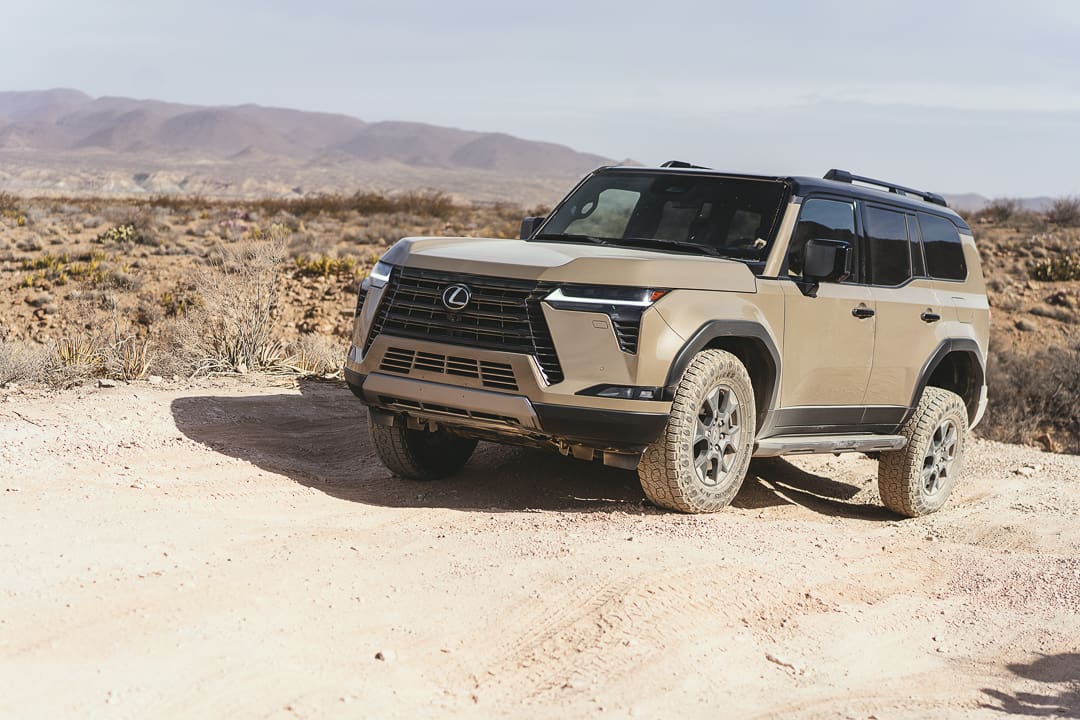
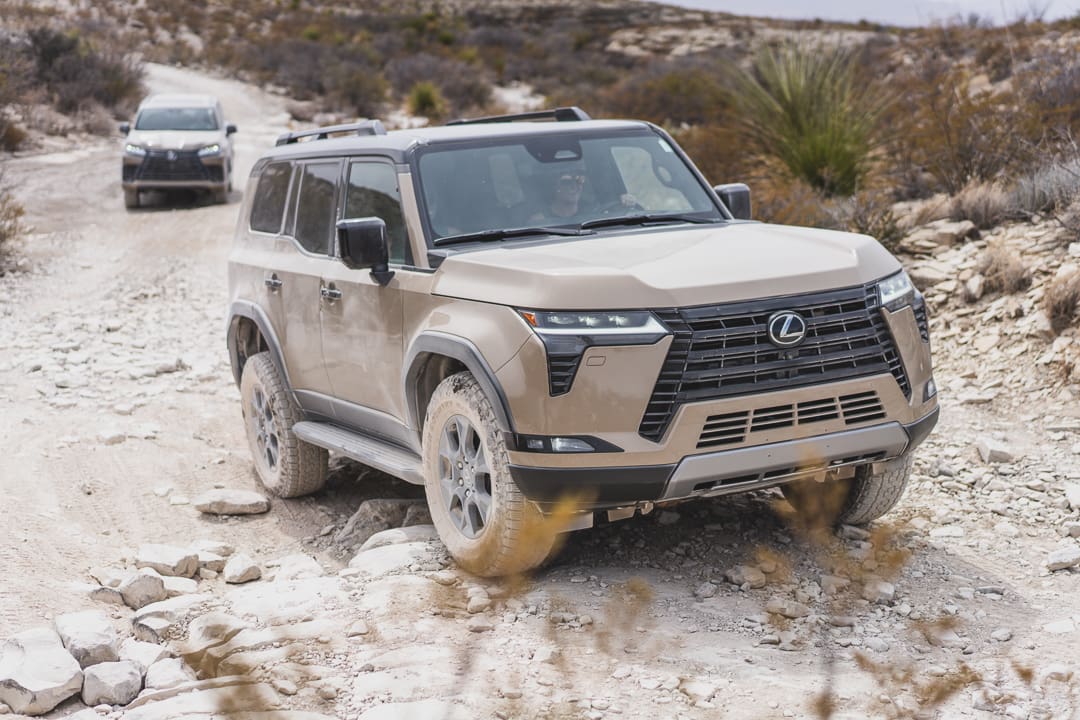
For the past two decades, Lexus has been selling one of the most effective international overland vehicles available to the North American market. Starting with the GX 470, they paired the Land Cruiser LX motor with a smaller, lighter chassis and even added a Kinetic Dynamic Suspension System (KDSS) for additional capability. The GX 460 came next, adding even more refinement while retaining the legendary Lexus quality and reliability. For 2025, Lexus has fully embraced the GX for overlanding, releasing the Overtrail and Overtrail+ models, specifically engineered to support the needs of the vehicle-based adventurer. It comes standard with a five-passenger configuration to improve payload, 33-inch all-terrain tires, 18-inch wheels, a center and rear locking differential, a turbo-charged V6, E-KDSS (an advanced electronic version), Crawl Control, multi-mode traction control, rocker protection, a 1,460-pound payload, and an astounding 9,000-pound tow rating with optional equipment.
On the trail, the GX is a joy to operate, with intuitive controls, a comfortable ride, and minimal head toss. Although it lacks the height-adjustable rear suspension of prior models, it gains variable damping and E-KDSS; this is an advantage, as the buyer can simply replace coil springs to match their desired load and ride height. The overall ride is stiffer than the LX, but it is on par with the higher payload capacity. The 550 responds well to left foot braking and continues to provide effective traction control even when operating both pedals. In most conditions, simply locking the center differential is sufficient, as the generous articulation and large-diameter, all-terrain tires minimize wheelspin. In the rare instance that a tire loses traction, the system responds quickly (within a fraction of a tire rotation) to maintain progress. In extreme conditions, the driver can lock the rear differential and engage rock mode (or a similar mode) to ensure maximum traction at the front wheels. The GX is ideal for all overland conditions, like muddy roads, cross-axle terrain, washouts, deep sand, and even large sand dunes. It has capability to spare, but it is still a big-body SUV with plastic bumpers, so care should be taken and spotters employed for more extreme obstacles. Fortunately, the Overtrail+ comes equipped with rocker protection and a higher clearance front bumper. The undercarriage includes a complement of skid plates, and the aftermarket has already responded with a broad range of bumpers, racks, suspensions, and more.
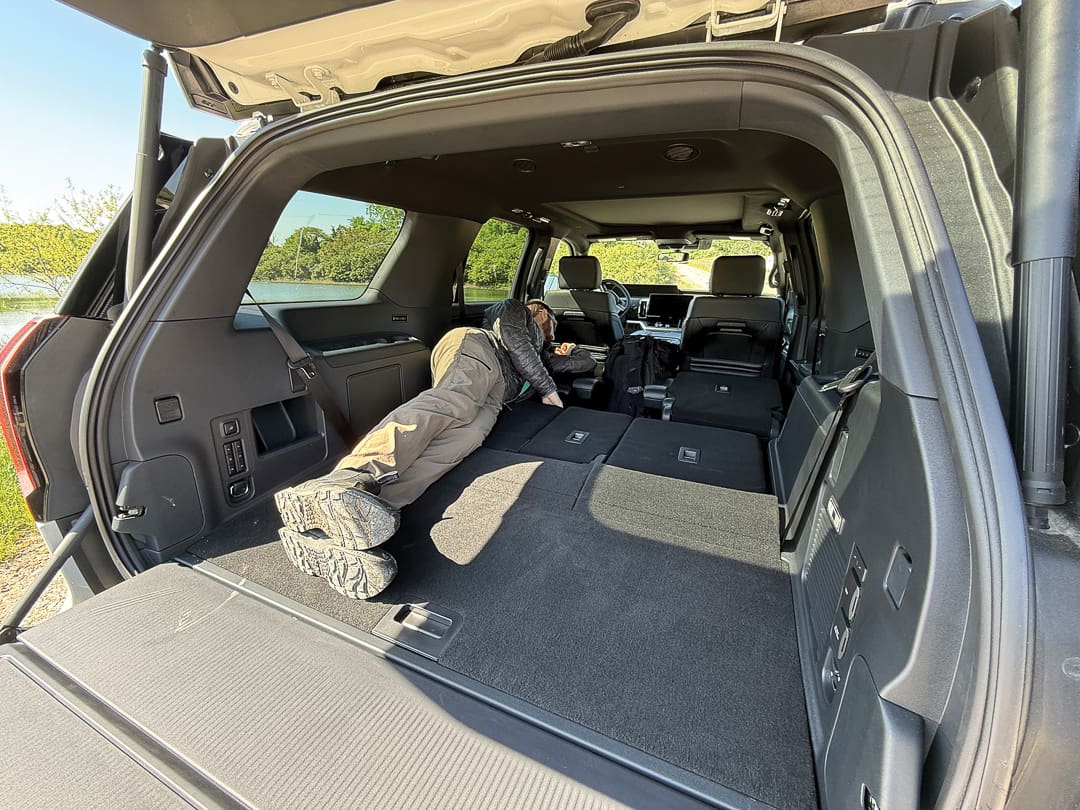
For overlanding, the GX is a joy to travel in, providing an ideal balance of interior space, capability, comfort, and reliability. Statistically, there is no other SUV sold in the USA with better reliability than an LX or GX, and if anything does go wrong, Toyota’s 250 platforms are sold in over 100 countries. The payload comes in at 1,460 pounds, which falls just short of our 1,543-pound minimum standard, but I am grateful it gets as close as it does. The GX has a massive rear axle (even bigger than the LX), so I have no durability concerns. The Overtrail’s five-passenger configuration removes unwanted weight and increases the interior storage volume to 71 cubic feet. It would be easy to add a rear drawer system and match the height of the second row folded forward, making for a comfortable sleeping surface. The GX 550 Overtrail is one of the most impressive overland vehicles brought to our shores.
Pros
- Turbocharged V6 engine (no hybrid system) equals simplicity and reliability
- Rear and center locking differentials, E-KDSS for enhanced off-highway capability
Cons
- Lacks the luxury ride quality of the LX 700h
- Could benefit from additional tech features found in more upscale models
- Availability is challenging
Lexus LX 700h
The Legend of the Land Cruiser lives on with Lexus.
1,322-pound payload | $116,000
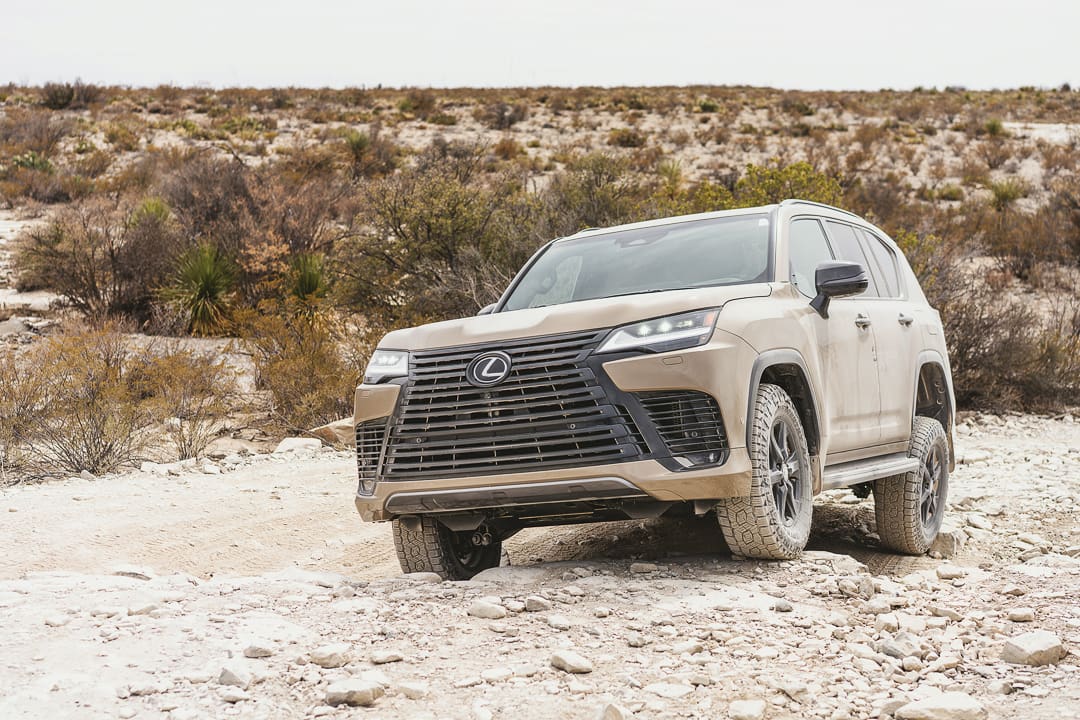
Few vehicles embody the spirit of overlanding like a Land Cruiser, known for its ruggedness, capability, and trustworthiness. In North America, Land Cruisers have been sold since 1958 and were the pinnacle overlander until the last Heritage Edition 200 Series left dealer lots in March 2021. This occurrence left a void and little hope the 300 Series would reach our shores in full overland trim—until now.
Testing new overland vehicles is part of my job, but it’s rare for a model to both surprise and delight me. That changed with the Lexus LX 700h Overtrail, the closest to a 300 Series GR Land Cruiser we’d see in the USA, with even some advantages over the Land Cruiser. I was thrilled to learn it also had triple differential locks (not available from Toyota in the US since 1997), a height-adjustable auto-leveling suspension, a five-passenger model, and multiple durability considerations for remote travel.
First impressions of the LX 700h can be misleading. Though the grill isn’t my favorite, underneath lies a lion of overlanding, with 18-inch wheels and 33-inch all-terrain tires. The suspension is among the best, retaining coil spring reliability while achieving height and payload adjustability through hydraulically adjustable spring perches, allowing for 1 inch of lowering and 4 inches of lift. An additional .5 to 1 inch can be achieved in auto-extract mode when grounded.
Coil springs improve durability and ride quality at higher ride heights, unlike airbags, which can reduce compliance and ride quality. The Lexus changes the spring position relative to the upper coil bucket, retaining comfort. It’s possible to swap coils for higher spring rates while retaining height adjustability.
Durability and reliability are key for overlanding, making Lexus well-suited to the task. Lexus has maintained a top position in Consumer Reports’ reliability rankings, with ratings over double those of Jeep, Ford, and General Motors. Durability stems from the J300-Series Land Cruiser TNGA-F chassis, axles, and transfer case, which are built to withstand a 500,000-mile service life.
The hybrid system includes redundancies for limp-home capability in the event of powertrain failure, such as a starter and alternator. The battery is housed in a water-resistant case with a water sensor, enabling the hybrid to maintain the same 27.5-inch wading depth as the LX 600. Lexus is sold in 90 countries, and Toyota is in more than 170.
The LX offers a payload of 1,190 pounds for the five-passenger model, which is sufficient for most travelers, but falls well below our minimum standards. The 17.9-gallon fuel tank also limits range, particularly in conditions like sand, where regen is nominally effective. A 90-liter fuel tank would be best practice.
The LX 700h offers supreme comfort, featuring supportive seats and luxurious amenities such as heating, cooling, and massaging. The ride quality is excellent, with low NVH even with 33-inch tires. The shocks adjust damping to control pitch and roll. The hybrid system even operates in electric-only mode at low speeds in low range, and the battery pack has enough capacity to provide silent operation for several miles. The LX 700h is one of the finest Lexus overland vehicles produced in the world today, and the Overtrail is one of the most capable overlanders ever brought to the US.
Pros
- Triple differential lockers
- Best suspension in the test
- World-class build quality and reliability
Cons
- Fuel tank (17.9-gallon) is the Achilles heel
- Payload (1,190 pounds) falls well below application standards
Nissan Armada PRO-4X
The international Patrol finally hits our shores.
1,444-pound payload | $76,940
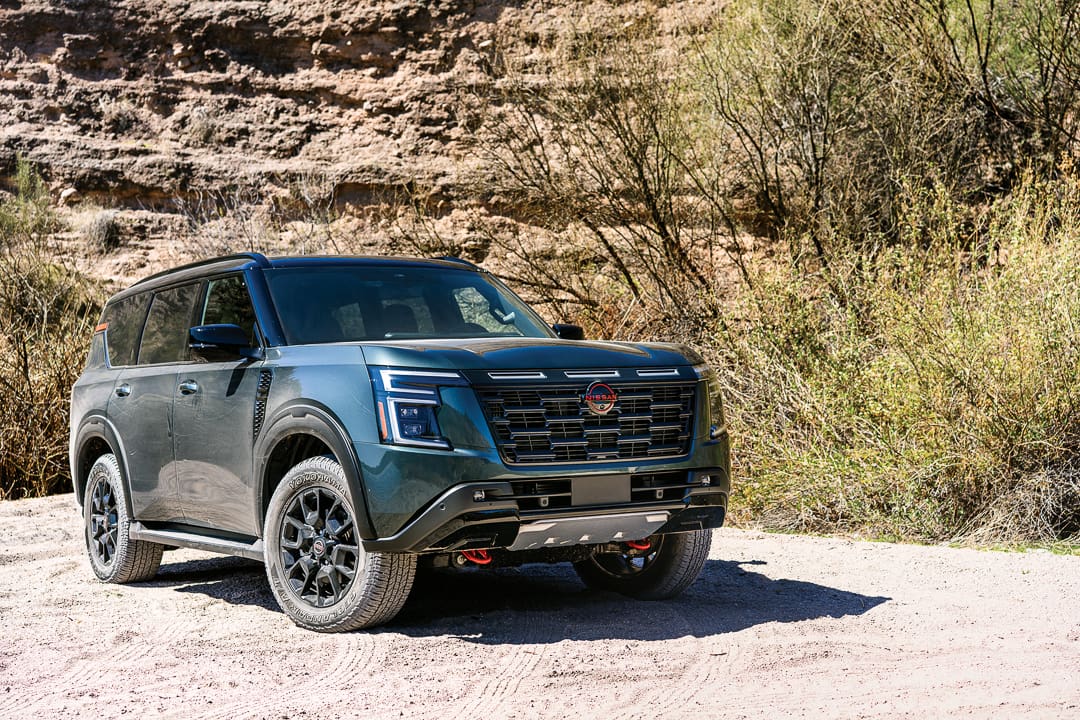
The Armada has long been regarded as a high-quality family SUV, boasting good tow capacity and reliability. But the capability always fell short of Nissan’s international version of the model, the Y62 Patrol. That all changed with the announcement of the PRO-4X model in 2024, which is a win for consumers, offering advanced 4WD systems, a 1,444-pound payload, and an 8,500-pound tow capacity. While it’s not the solid axle GU Patrol we have always wanted, this is certainly the best version of an Armada we have seen.
On the trail, the PRO-4X is a surprise, its capability belying its size, aided by a tight turning radius, 33-inch Yokohama Geolander tires, a rear locking differential, steel skid plates, and variable-height air suspension. With over 500 pound-feet of torque and a proper low-range transfer case, there is no shortage of power available on throttle tip-in. Once low range is selected, the air suspension automatically raises to the off-road position one and then accesses another even higher mode in the rock-crawl setting. As with most airbag suspensions, ride quality does suffer in the higher settings. I was able to test the Nissan in the mud of Tennessee and the rocky/sandy trails of Arizona, including loose climbs, crossed-axle obstacles, and rocks. The PRO-4X never struggled with any of it.
For overlanding, the flat load floor in the back is a highlight, easily accommodating two adults. The 3.5-liter twin-turbo V6 is no joke, producing 425 horsepower and 516 pound-feet of torque. And its performance is no surprise, as it’s is nearly the same motor available in the wicked GT-R. The 9-speed transmission is connected to a 2-speed transfer case featuring auto, 4H, and 4L modes, complemented by a multi-mode traction control system. This all results in an SUV that does everything well, from daily driving to long road trips, days on the trail, towing, and hauling. The vehicle does come standard with 20-inch wheels, but (thankfully) can be optioned with Nismo 18-inch units for better tire flotation and deformation. The roof load rating is 165 pounds, allowing some roof tents to be placed on simple crossbars. For international travel, the Y62 is sold in Oceania, Africa, and the Middle East, and Nissan is represented in 190 countries.
Overall, I found the Armada to be ideal for overlanding, and it is a perfect solution for many families where the SUV is tasked with endless jobs, such as hauling people, towing toys, and navigating a 4WD route to your favorite mountain bike trailhead. Nissan also has a solid reputation for durability and reliability, making it a good long-term investment. The PRO-4X is genuinely good at everything, but it doesn’t stand out in any one area as being exceptional. I would like to see the 18-inch wheels as standard. It is worth noting that Nissans typically sell for much less than the MSRP, so this model is even more affordable than the listed price would indicate. It is exciting to see Nissan make a well-suited model for overland travel.
Pros
- Robust turbocharged V6 engine
- Large interior space and a flat floor for sleeping
- Good at most travel tasks, including towing
Cons
- Poor fuel economy in most conditions
- Limited aftermarket support
Toyota Land Cruiser 250 | VALUE AWARD
The Land Cruiser North America needed.
1,100-pound payload | $63,275
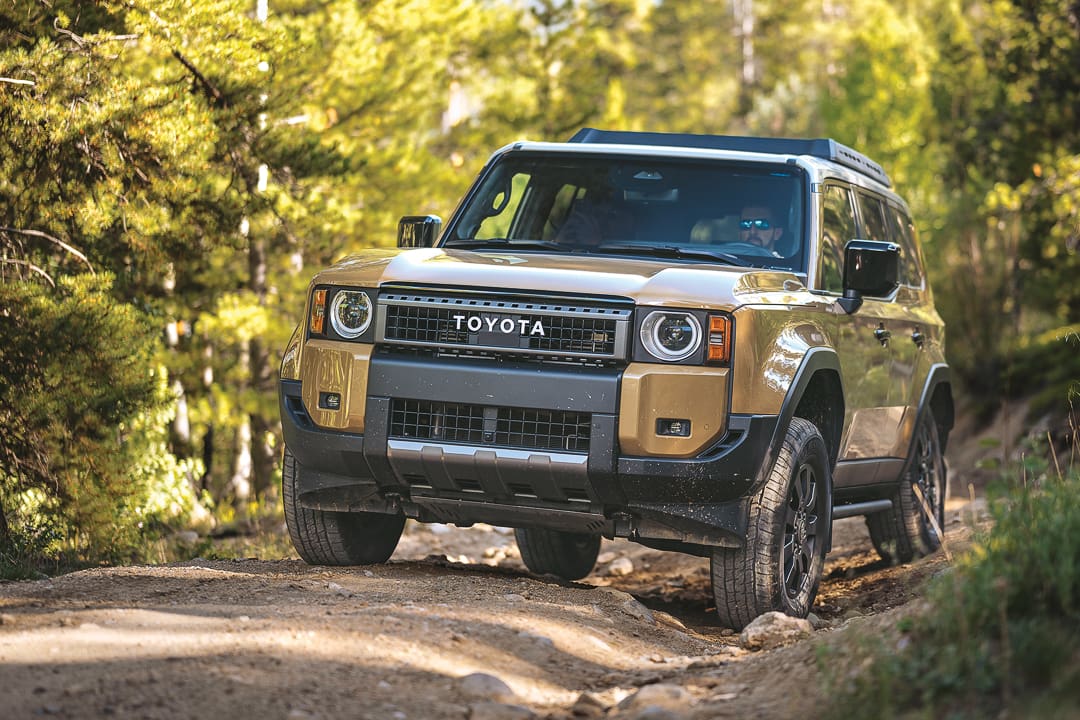
The Toyota Land Cruiser 250/Prado marks a significant development for overlanding enthusiasts globally. Building on the legacy of the 90, 120, and 150 platforms, this model utilizes the global TNGA-F platform, underscoring Toyota’s commitment to the overlanding community. While it’s not as robust as the 300 Series, the 250 stands as a Land Cruiser II in every respect, striking a balance between price, durability, and capacity.
For the trail, the new Land Cruiser emphasizes capability, featuring center and rear locking differentials and effective traction control. The KDSS has evolved into a driver-selectable front sway-bar disconnect, enhancing articulation by over 15 percent and improving occupant comfort. This was evident on the technical trails of the Rocky Mountains, where it kept tires on the ground, avoiding the notorious “Toyota pop.”
Equipped with nearly 33-inch tires on 18-inch wheels, the Land Cruiser delivers solid traction, even though the ground clearance of 8.7 inches is lower than that of some competitors. The approach angle is commendable at 32 degrees; the 22-degree departure angle requires some vigilance. Fortunately, trail protection is robust, featuring full-length rock rails, underbody protection, and recovery points at both the front and rear.
The 250 offers nearly 100 cubic feet of interior space when the rear seats are folded, making it viable for sleeping inside. The elephant in the room is payload, which doesn’t add up when you do the math. For example, the door sticker reads 1,100 pounds, but the GVWR is 6,725 pounds and the curb weight is 5,445 pounds, resulting in a 1,280-pound payload. While 1,280 pounds is better, it still lags behind even the Jeep Wrangler. The payload becomes even more confounding once the tow rating of 6,000 pounds is considered. A typical tongue weight for a single-axle trailer is 15 percent of the total trailer load, which is 900 pounds. That only leaves 200 pounds for all other occupants, camping gear, water, and modifications. The 17.9-gallon fuel tank also presents a concern, as overlanders typically require a 23-gallon capacity (which has been available in every Prado for decades) for extended range. During testing, the vehicle averaged 18.3 mpg, translating to a range of approximately 327 miles; this requires a mix of terrain that permits regenerative braking for the battery. In conditions where sand is a constant, or there are limited opportunities for regen, the range is insufficient.
Toyota’s reputation for durability is well-earned, particularly in regions with minimal infrastructure. For the international traveler, this new 250 Land Cruiser adds the benefit of being sold on every continent, save Antarctica; parts and service an easy affair if you ever need it. The new 250 Land Cruiser also highlights Toyota’s continued dedication to overlanding. With a starting price of $56,450, this model represents genuine value, offering significant improvements in fuel economy and capability over the outgoing Prado. The 250 is a testament to Toyota’s enduring commitment to producing reliable, capable vehicles for vehicle-based adventurers.
Pros
- Robust global 250 platform with center and rear locking differentials
- Sold worldwide
- Ideal size and wheelbase
Cons
- Fuel tank (17.9-gallon) is insufficient for many routes
- Ground clearance of 7.9 inches is limiting in technical terrain
- Payload (1,100 pounds) is well below standards, given the application
Conclusions
If manufacturers want to be successful in this crowded and desirable market, they need to meet the standards above. Nonetheless, while there is room for improvement, the SUV choices are better than ever before, which made it a tight race.
The Value Award is often the most coveted, particularly by our readers, as it represents the best overall value in the segment, striking the balance between quality, performance, and cost. For this evaluation, the standout values are the Jeep Wrangler Rubicon and the Land Cruiser 250. Arguably, the Grenadier should also be in the mix, as the combination of quality and content is so high for the price. Starting with the Jeep Rubicon, the content is off the charts, featuring front and rear lockers, a manual transmission option, front sway-bar disconnect, a full-floating rear axle, rock rails, and 33-inch tires. The Rubicon has a fuel range of 387 miles with the V6, features 17-inch wheels, and comes as close as ever to our payload milestone at 1,400 pounds. Yet the Jeep is estimated to depreciate by 55 percent over five years.
The Land Cruiser 250 is also content-rich, with a rear locker, front sway-bar disconnect, multi-mode traction control, and a hybrid drivetrain for better fuel economy. Where it suffers is in fuel capacity and payload. The 250 has 20 percent less payload than the Rubicon, but it does tow 42 percent more. There are many things I like about the Land Cruiser, and I have considered buying one myself. The aftermarket support is strong, and they can be built from mild to wild. What I like most is that it can be purchased and driven around the world in its stock form, with a global dealer network spanning 170 countries. The 250 has an estimated depreciation of only 32 percent after five years, which helps offset the MSRP difference when compared to the Wrangler. If taking the top off is your thing, then the Jeep is the easy choice; otherwise, the Land Cruiser is the best value in the test, just be careful not to overload it.
For the Editor’s Choice, I would like to have the quality, reliability, and suspension of the LX, the chassis and engineering of the Grenadier, the payload of the Defender, the motor from the Yukon, and the aftermarket support of the Rubicon. Oh, wait, that is a 300-Series diesel Land Cruiser, but I digress. For North American offerings in this lineup, the Editor’s Choice finalists are the Grenadier, GX 550, and LX 700h. They are all equally worthy of the title, and the GX would be the one I would most recommend to others, the Grenadier is the one I would drive around the world, and the LX is what I would drive in North America. The most exceptional vehicle of the three is the LX 700h, which is shockingly comfortable, capable, and reliable, built on the legacy of the Land Cruiser and featuring all the best technologies Toyota can muster. However, the fuel range with the hybrid system is a genuine concern, and the test unit’s payload was 1,190 pounds. The GX is the do-it-all option, with a 1,460-pound payload capacity, almost enough range, and a legitimate 18-inch wheel package featuring 33-inch tires and the E-KDSS anti-sway-bar system. This leaves the Grenadier, which hits nearly all of the sweet spots, and only comes up short (by a few miles) on range. In slower-speed conditions across Africa, I achieved a range of over 373 miles with the petrol model.
For my Editor’s Choice, all three of these options are worthy of the award, and I spent days vacillating, researching, and scouring my notes to find a clear winner, only to decide that here isn’t one. There is an Editor’s Choice that I can pick with the greatest confidence, and that is the GX 550 Overtrail+, which gets as close to our standard as the Grenadier does, but benefits from being the most reliable brand in the world, while also benefiting from a massive international Toyota dealer infrastructure, and a resale value that protects your investment. Not only that, but it can also tow an impressive 9,000 pounds and, thankfully, lacks the complexity of hybrid systems. The Grenadier was so close in the final tally that it could be considered a tie, so use that as you see fit. Perhaps for the next test, the Grenadier will feature an all-new steering system, and an LX 600 Overtrail will be introduced. One can only hope.
Editor’s Note: This article was originally published in Overland Journal’s Gear 2026 Issue.
Our No Compromise Clause: We do not accept advertorial content or allow advertising to influence our coverage, and our contributors are guaranteed editorial independence. Overland International may earn a small commission from affiliate links included in this article. We appreciate your support.
