

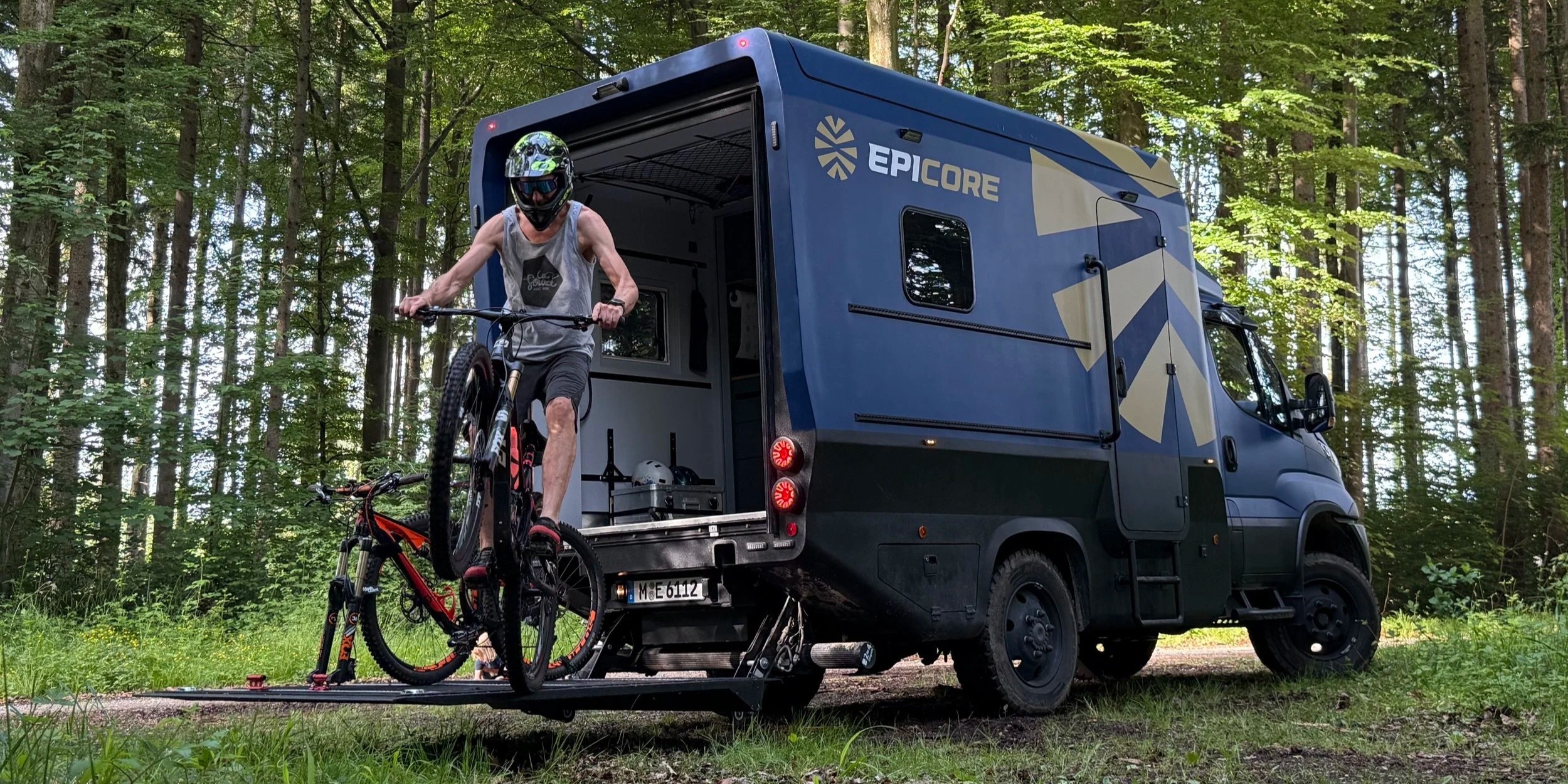
My friend Steve is a maniac—in the best possible way. When he isn’t saving the world, he’s climbing mountains, skiing remote Alaskan slopes, tearing across dirt trails on a bike, or doing cartwheels in the desert. Then there are my friends Leah and Steph, equally unhinged in their pursuit of adrenaline, happily hauling half a hardware store’s worth of climbing gear around the globe instead of packing anything that resembles basic comfort.
And then there’s me. I’ve recently rediscovered adventure motorbikes, and I now spend far too much time daydreaming about modifying the interior of my camper so I can roll a T7 or CFMoto 450 inside with ease—even if it means I end up sleeping on the floor. Mrs. Bell, understandably, is not on board. What Leah, Steph, and I really need is to step away from our Land Rovers for a moment and consider the alternatives. If we had not spent all our money on travel, the Epicore Sports Activity Vehicle (SAV) would be damn near perfect. (Steve drives Land Rovers, too, but he also keeps a Mercedes-Benz T2 van on hand for his collection of toys).
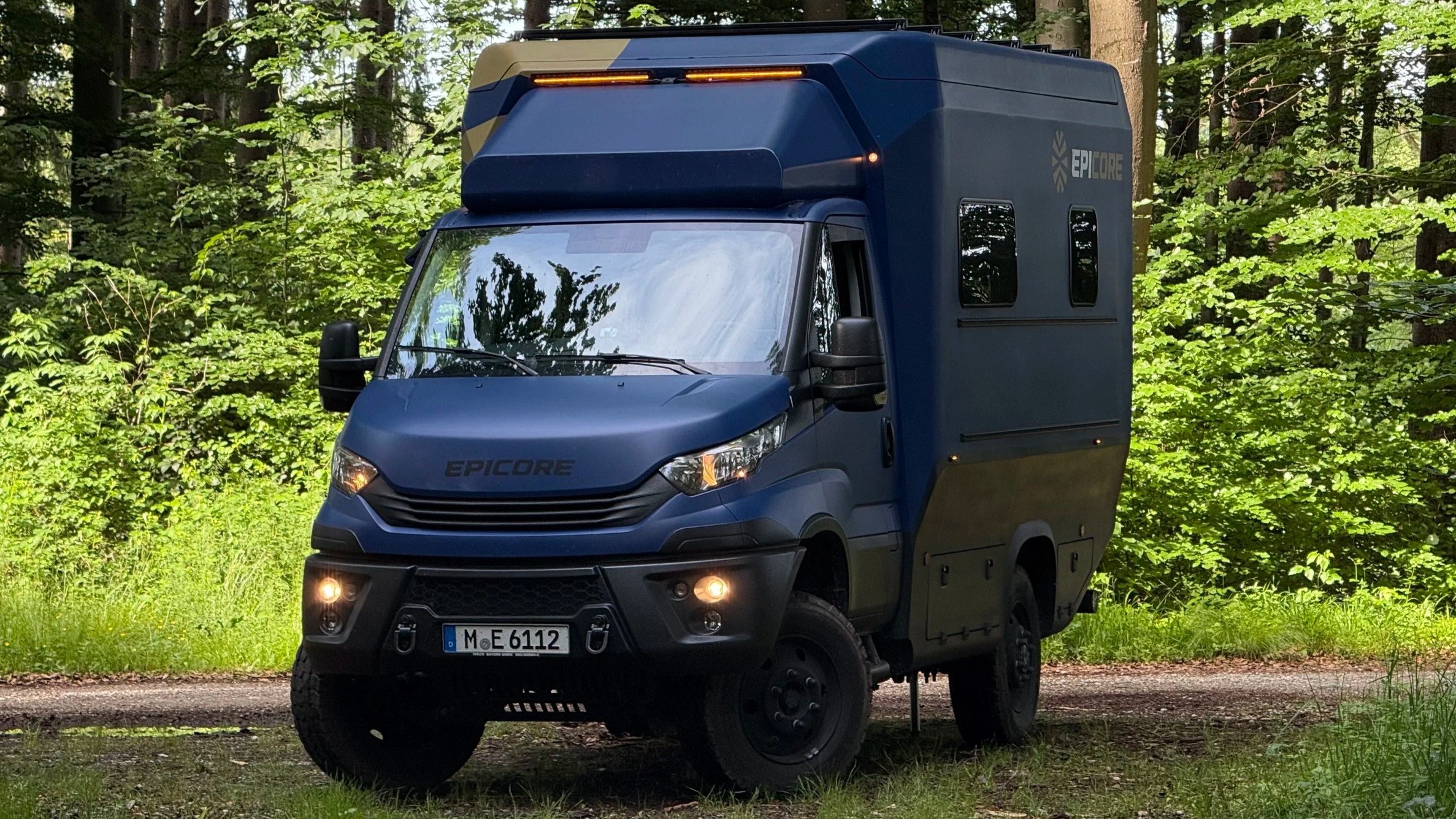
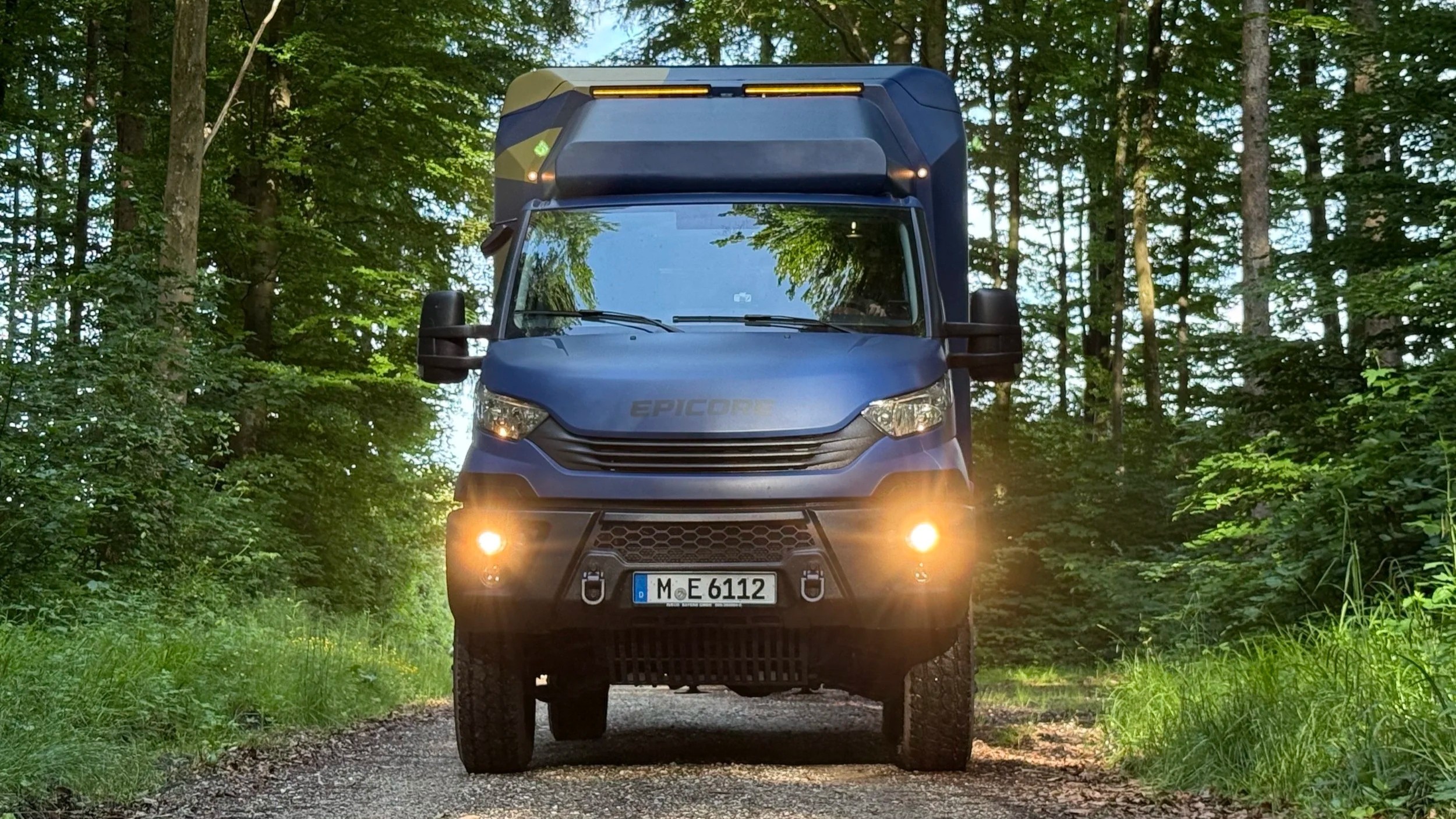
Epicore, an emerging European builder of expedition vehicles and adventure vans, has introduced the Epicore M—a purpose-built sports activity vehicle tailored to athletes, outdoor enthusiasts, and action-sports travelers seeking a “basecamp on wheels.” Rather than aiming for luxuries typical of recreational vehicles designed for weekend escapes, the company positions the Epicore M as a functional workshop, gear hauler, and transport solution for high-intensity outdoor pursuits.
The Epicore M is based on a 4×4 chassis from IVECO, specifically the Daily 4×4, and delivers substantial off-road capabilities. It is powered by a 3.0-liter diesel engine producing 180 horsepower, paired with an 8-speed automatic transmission. Both front and rear axle differential locks are fitted, along with off-road suspension consisting of leaf springs and Marquart shock absorbers, providing the chassis with the ruggedness expected of a genuine expedition vehicle.
The van’s bodywork consists of a full-length GFRP (glass-fiber-reinforced plastic) monocoque—a single, insulated fiberglass shell with 35-millimeter double walls, which integrates smoothly with the driver’s cab and provides the Epicore M with both durability and structural integrity. This construction, the company claims, reinforces the van’s suitability for demanding terrain and extended field use.
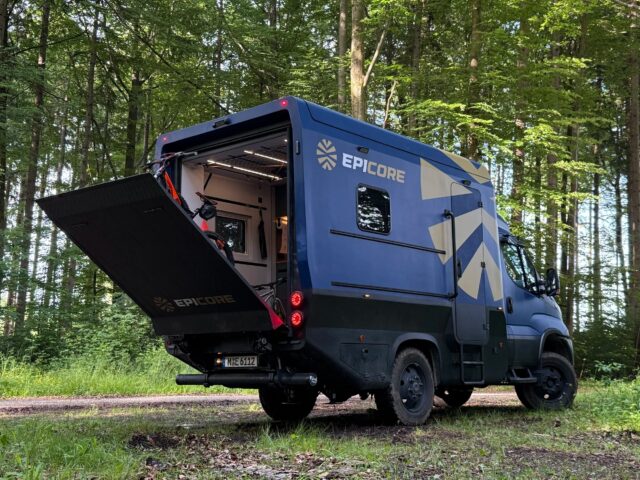
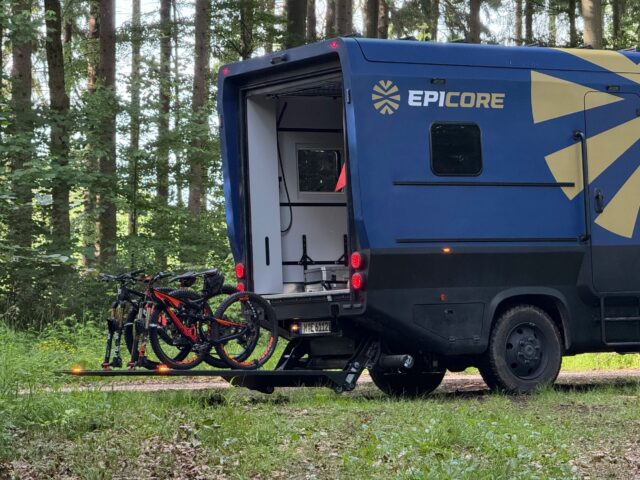
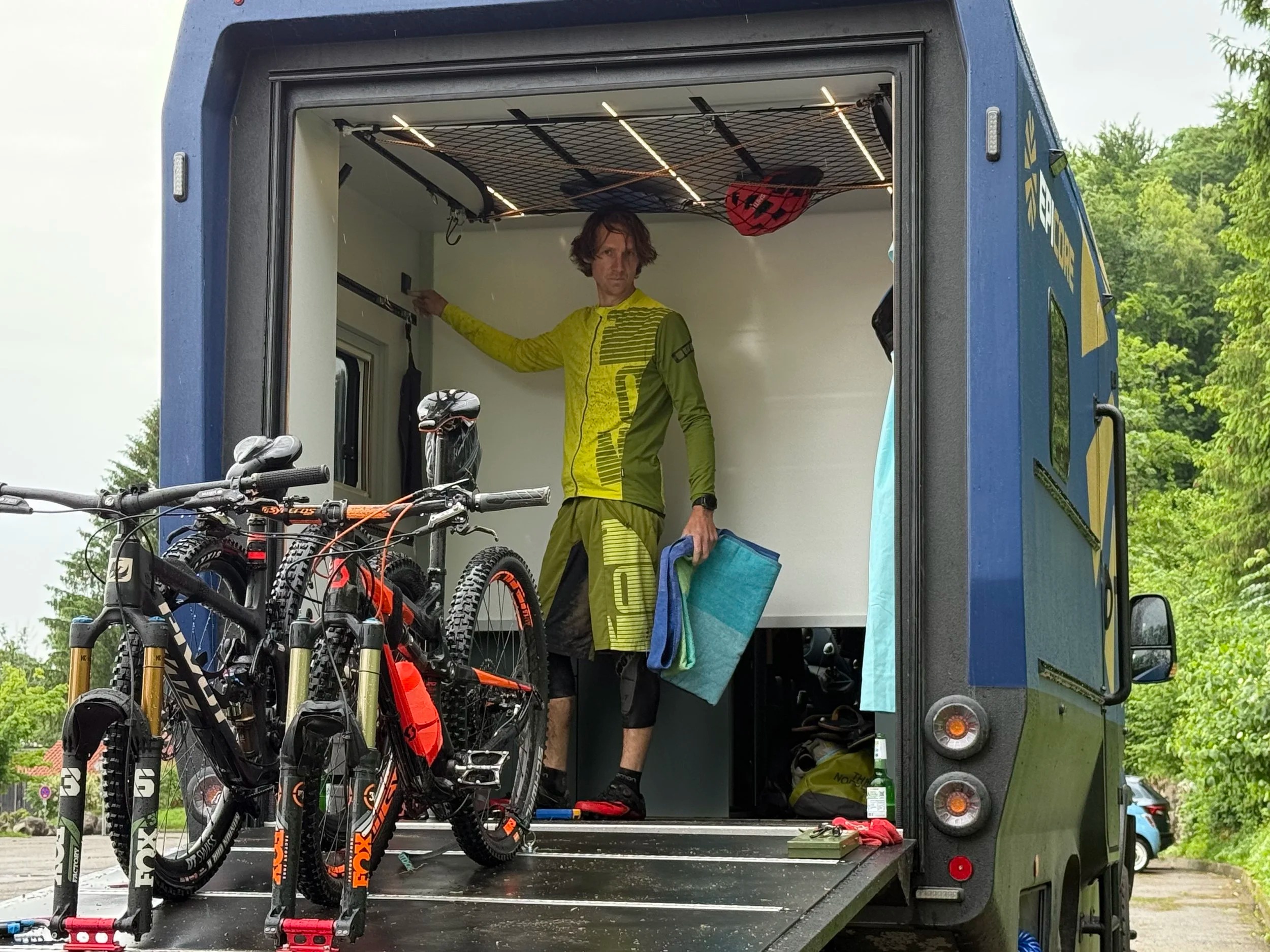
What truly distinguishes the Epicore M from conventional camper vans is its rear section: it features a hydraulic tail lift, rated for loads up to 750 kilograms, which doubles as a loading platform and an elevated terrace once the vehicle is parked. Gone are the days when your precious bikes have to be towed behind the vehicle to gather dust and diesel exhaust residue, and no longer do you have to struggle with loading bike racks. Money solves every problem. This hydraulic tail lift feature facilitates loading heavy equipment, such as mountain bikes, diving gear, skis, or surfboards, directly into the cargo hold. When deployed, it becomes a practical platform for accessing gear or simply relaxing off the ground. Epicore suggests that users could even park next to water and use the lowered platform as a makeshift dock.
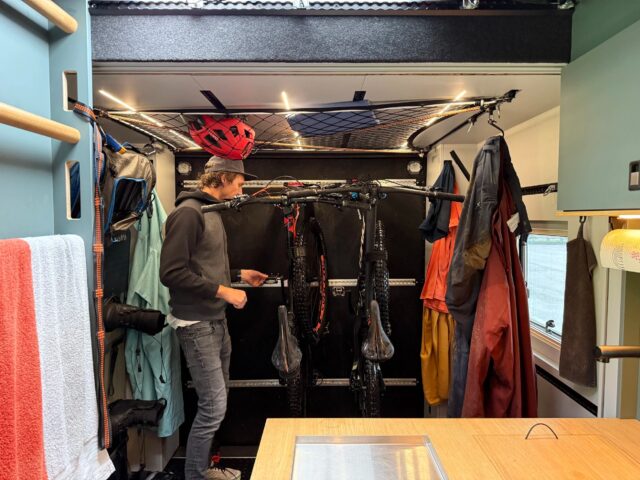
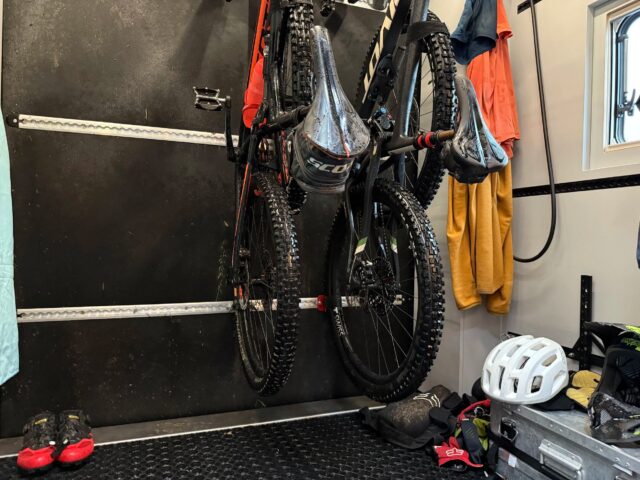
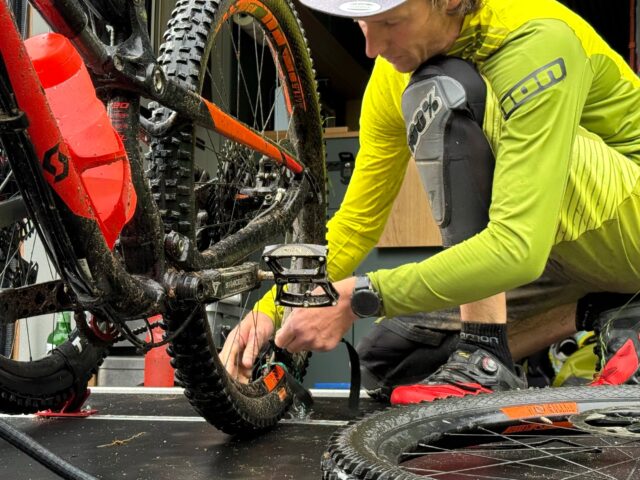
The rear “garage” is more than a storage bay. With over 6 cubic meters of capacity and at least 4 meters of loading length, it functions as an extended living area, a workshop, a drying room, and a gear maintenance area. Inside, stainless-steel trays, removable rubber mats, airline tie-down tracks along the walls and ceiling, and a drainage system allow washing, repairing, and storing muddy or wet equipment without dirtying the rest of the living quarters. A partition (with an electric roller blind) provides separation between the garage and the living area—an important feature when transporting gear such as wetsuits, ski boots, or climbing ropes.
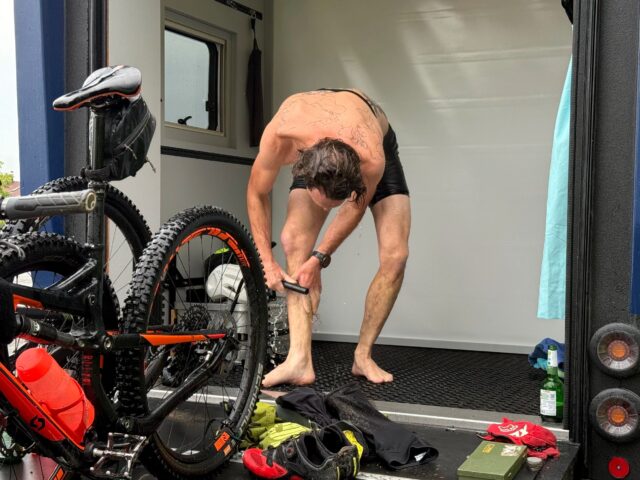
The van further includes a mobile dry-separation toilet stored in a dedicated compartment, so essentially, the rear garage is also a WC, and features a full-size shower zone (with an outdoor shower available as well), and water purification via an activated carbon/lime absorber pulse UVC module, enabling extended off-grid stays. What’s not to like?
Above the main cabin, the Epicore M offers a hydraulic pop-up roof tent that accommodates two mattresses (each roughly 135 × 200 centimeters), providing sleeping space for two to four people, perfect for retired couples and muscular moms and dads traveling with adventure groms. The pop-up roof, combined with the modular interior, gives occupants flexibility: the van can serve as living quarters, a workshop, a storage unit, and a mobile basecamp all at once, and the space can be adapted as your needs change. Inside, the finish uses durable birch multiplex with scratch-resistant HPL laminates and real wood veneer, creating a clean, utilitarian yet comfortable environment.
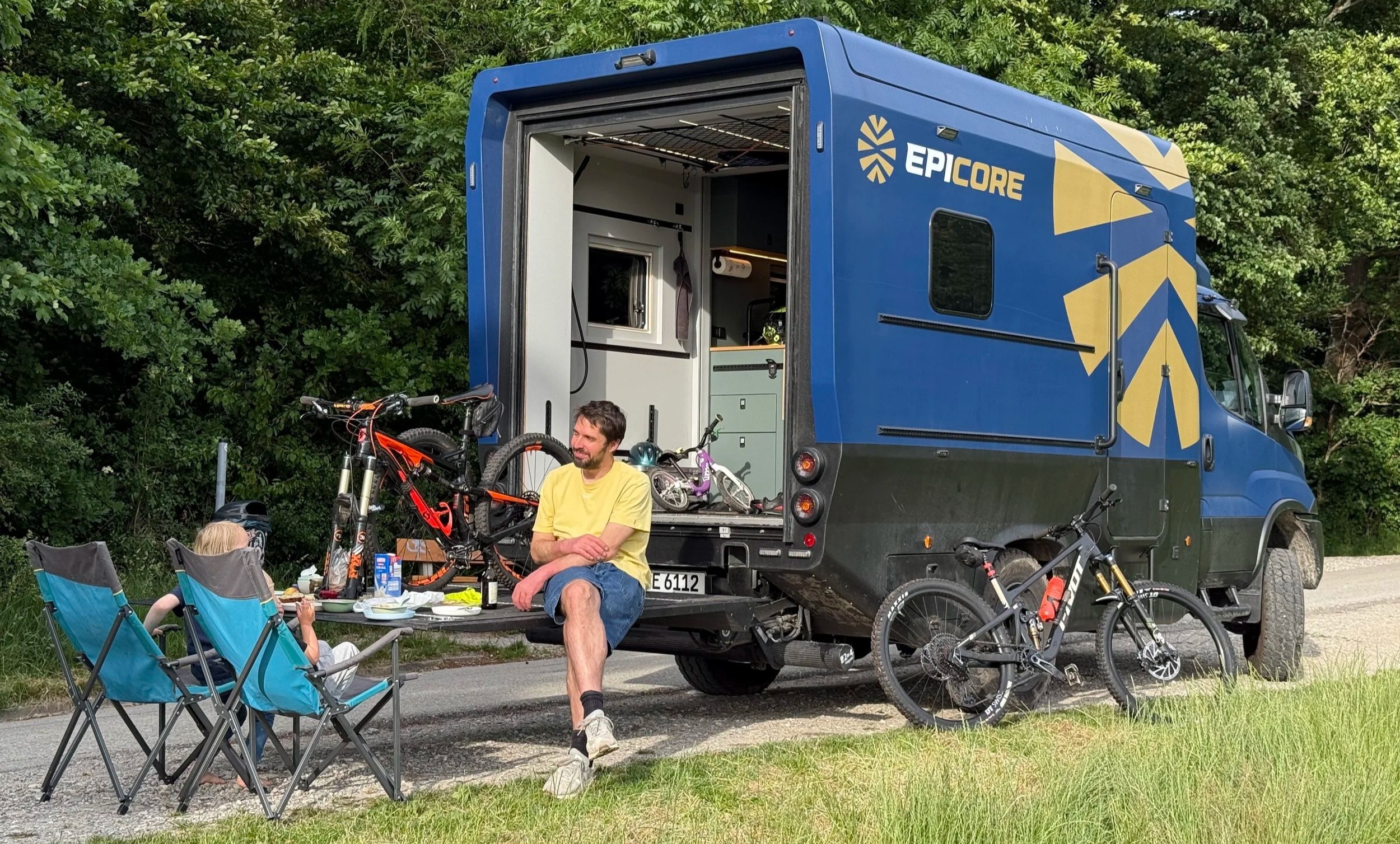
The trade-off—there always is one—is that this van is far less plush than others in its price bracket, and that is entirely intentional. The Epicore M is built as a practical gateway to adventure, offering the essentials for comfortable living without the burden of unnecessary luxury. Despite its size and presence, it is unapologetically focused on utility rather than indulgence. It isn’t marketed as a glamorous camper but as a purpose-driven machine for outdoor pursuits. Its combination of a roomy, durable chassis, a capable garage and workspace, ample storage, and all-terrain readiness positions the Epicore M lengths as an appealing choice for athletes, adventure travelers, and outdoor professionals who need to haul, service, and live alongside their gear in demanding conditions.
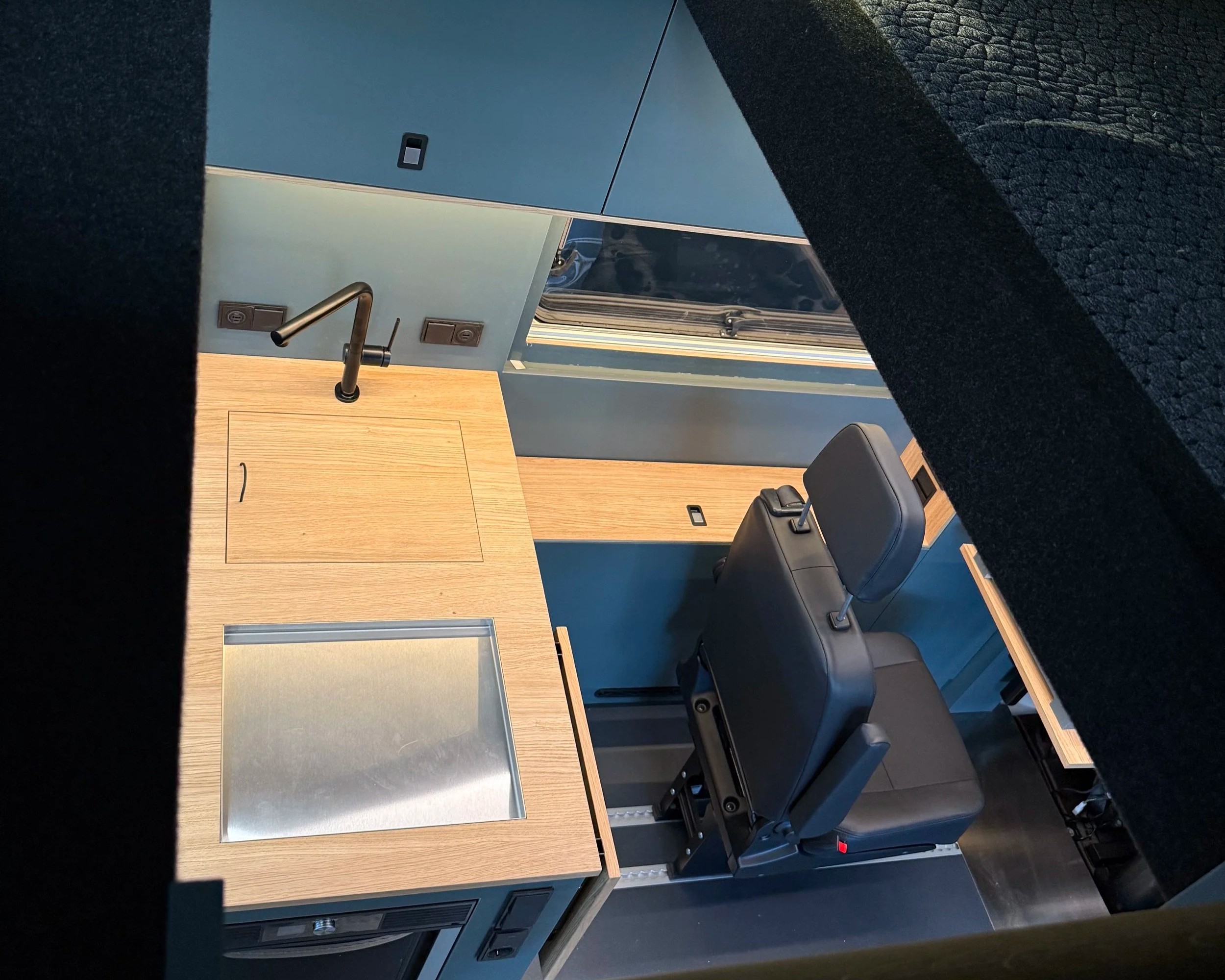
The living module includes a central kitchen/workbench block that can be accessed from multiple sides. It includes a stainless steel sink, a portable induction cooktop, fold-out tables to expand workspace, and a 70-liter compressor fridge (Dometic RC 10.4T). The kitchen area doubles as a workspace for gear maintenance or food preparation after a long day of activity. Water systems include a 220-liter freshwater tank and a 120-liter graywater tank.
Power and self-sufficiency are key design priorities. The Epicore M carries a 480-amp-hour battery bank, a 3,000-watt inverter (via Victron Energy), two 2-kilowatt diesel air heaters (perfect for post-cold-water surf and wetsuit dry; via Autoterm), rooftop solar panels (600-watt peak, via Tigerexped) with dual MPPT charge controllers, and a 220-amp alternator. LED lighting, interior and exterior power outlets (including USB-A, USB-C, and 230-volt), onboard Wi-Fi, and a central control system (via Revotion Smart Home, controlled via 10.9-inch tablet) allow the van to function as a self-contained basecamp in remote environments.
Epicore also provides custom configuration options. Clients can choose from three different lengths of the Epicore M to suit their storage, seating, or workspace requirements (I would choose the longer 4,175-millimeter wheelbase to fit my dream adventure moto). For those seeking a lighter and more manageable vehicle, Epicore is reportedly developing a 3.5-ton version of the van, based on a 4×4 chassis from MAN (the MAN TGE 4×4), which promises to deliver similar capabilities in a lighter package.
Behind Epicore M is the very Germanic-sounding Pichler Nutzfahrzeuge GmbH, a company based in Bolzano, Italy, just a stone’s throw from Switzerland, Liechtenstein, and Austria. So if you’re the kind of well-heeled adventurer plotting an action-packed journey across Europe, the Middle East, or the Silk Road, a visit to northern Italy might be a sensible place to begin—just be sure to pack a few hundred thousand euros along with your running shoes.
Read More: Buyers Guide :: Off-Grid, Off-Road Trailers
Our No Compromise Clause: We do not accept advertorial content or allow advertising to influence our coverage, and our contributors are guaranteed editorial independence. Overland International may earn a small commission from affiliate links included in this article. We appreciate your support.
