

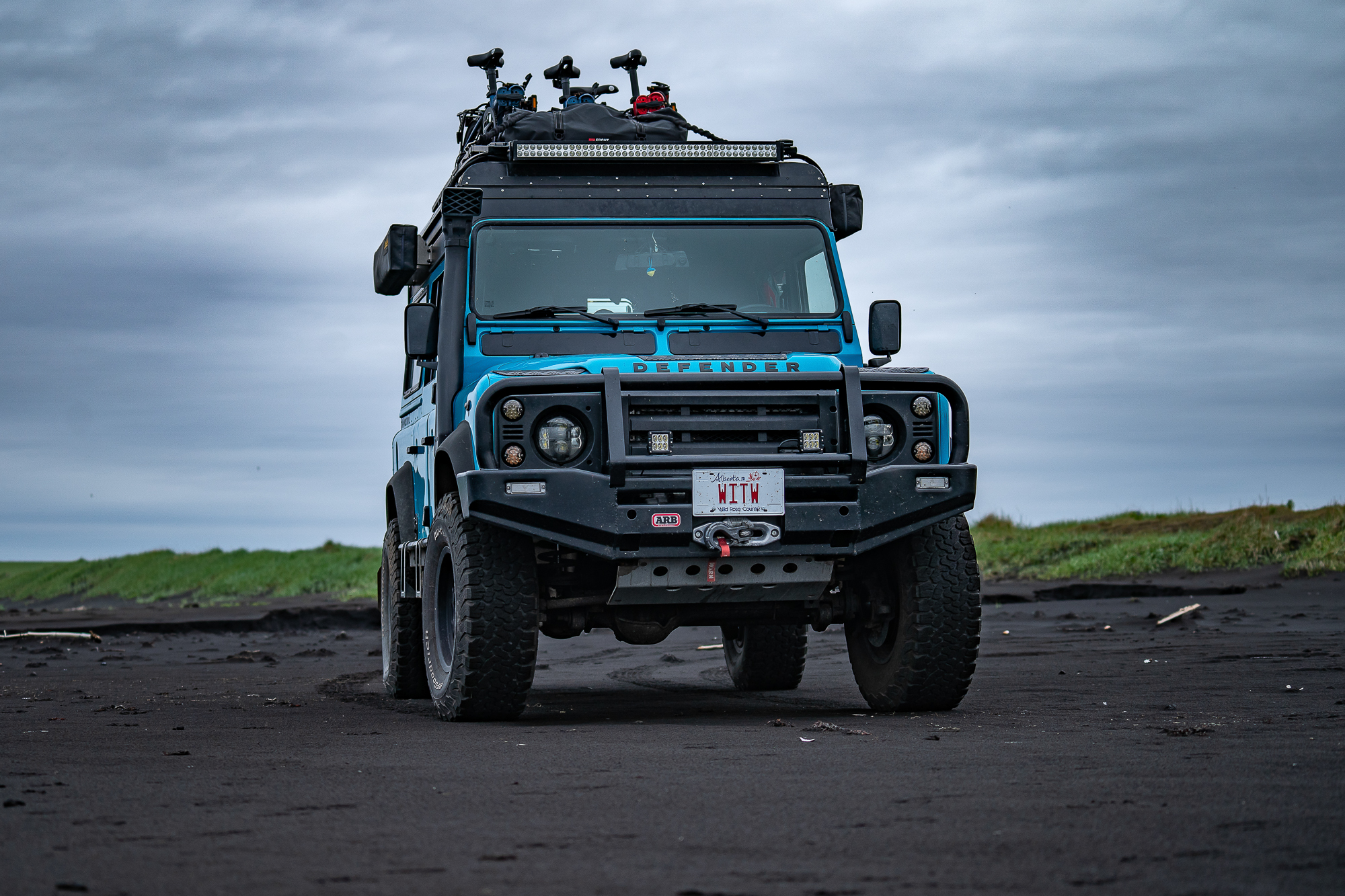
The idea of driving around the world as a family was one that completely consumed us once it took hold. We love exploring the world together, and some of our favorite experiences were when we had a rental vehicle. It was a liberating feeling, the freedom to explore where we wanted, when we wanted.
My first dream was to buy an old VW Westfalia, to which Randy said, “Absolutely not.” But at least it got the conversation started. Then, toward the end of our family gap year in 2018, we came across a couple from Brazil traveling the Pan-Am Highway in their Land Rover Defender 110 with a rooftop tent. That was a vehicle Randy could get behind. I liked the idea of the Defender, but a folding bed in a rooftop tent was a no-go for me.
Overlanding solo or as a couple comes with challenges, but vehicle design isn’t one of them. It’s easy to fit one or two people relatively comfortably into almost every vehicle option on the market. Fitting a family of four, however, is entirely different. Most families opt for a van conversion but limit their adventures to Europe and the Americas. We wanted a vehicle capable of taking us to the remote corners of the world.
After hours of research, we narrowed our options to a Toyota 78-Series Troopy and a Land Rover Defender 110. Both are compact enough to navigate narrow alleys in Europe and capable enough to overcome washed-out mountain passes. And they have plenty of market-ready customizations for overlanding, including the ability to convert the roof into a pop-up Alu-Cab bed.
Neither vehicle was available in Canada, so whichever we chose would be purchased abroad and imported. Each option had pros and cons, and they seemed so similar on paper that it was difficult to choose. The deciding factor was the Land Rover Defender 110’s 4-door design, from a safety perspective and ease of use.

The Purchase
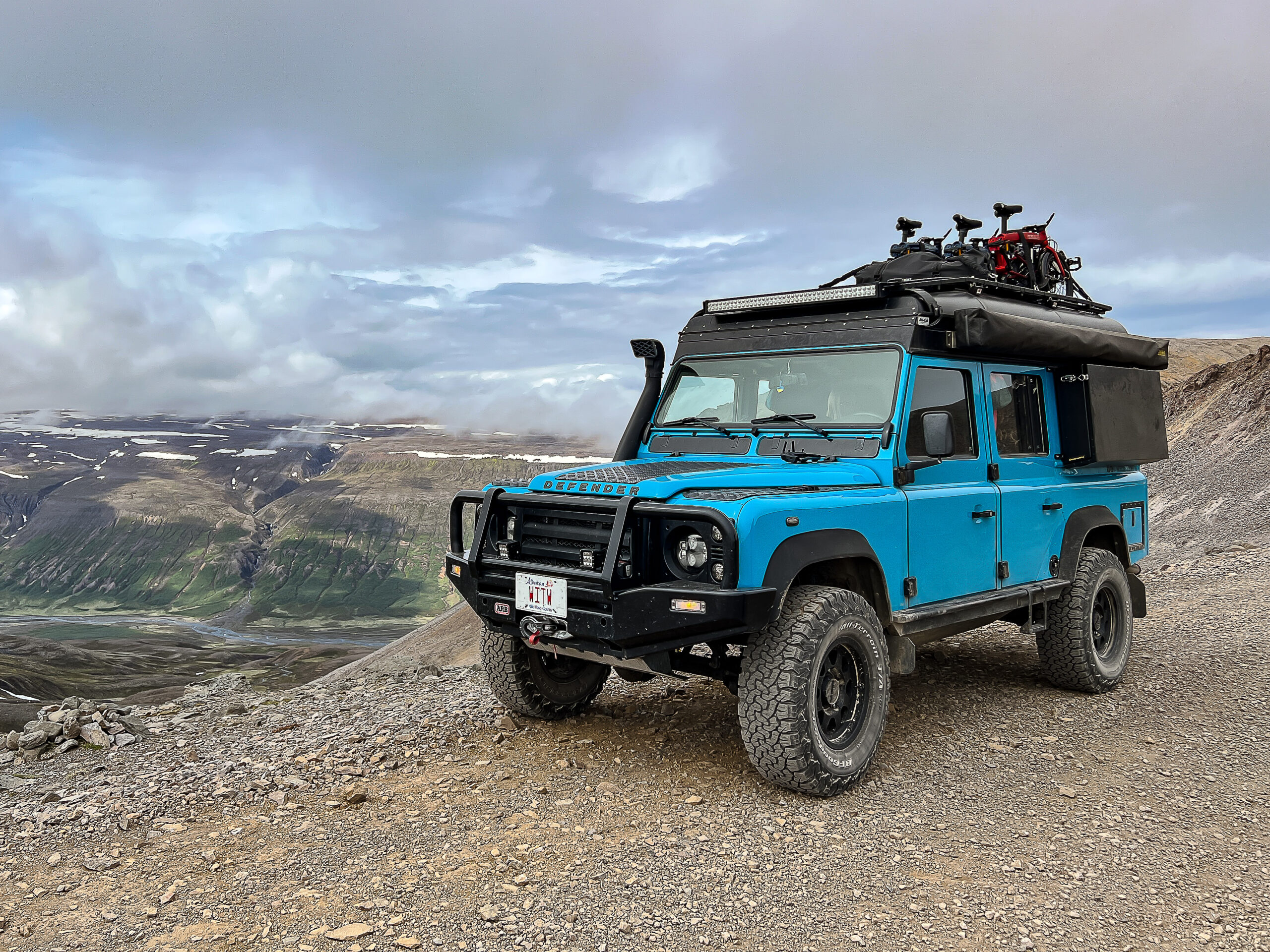
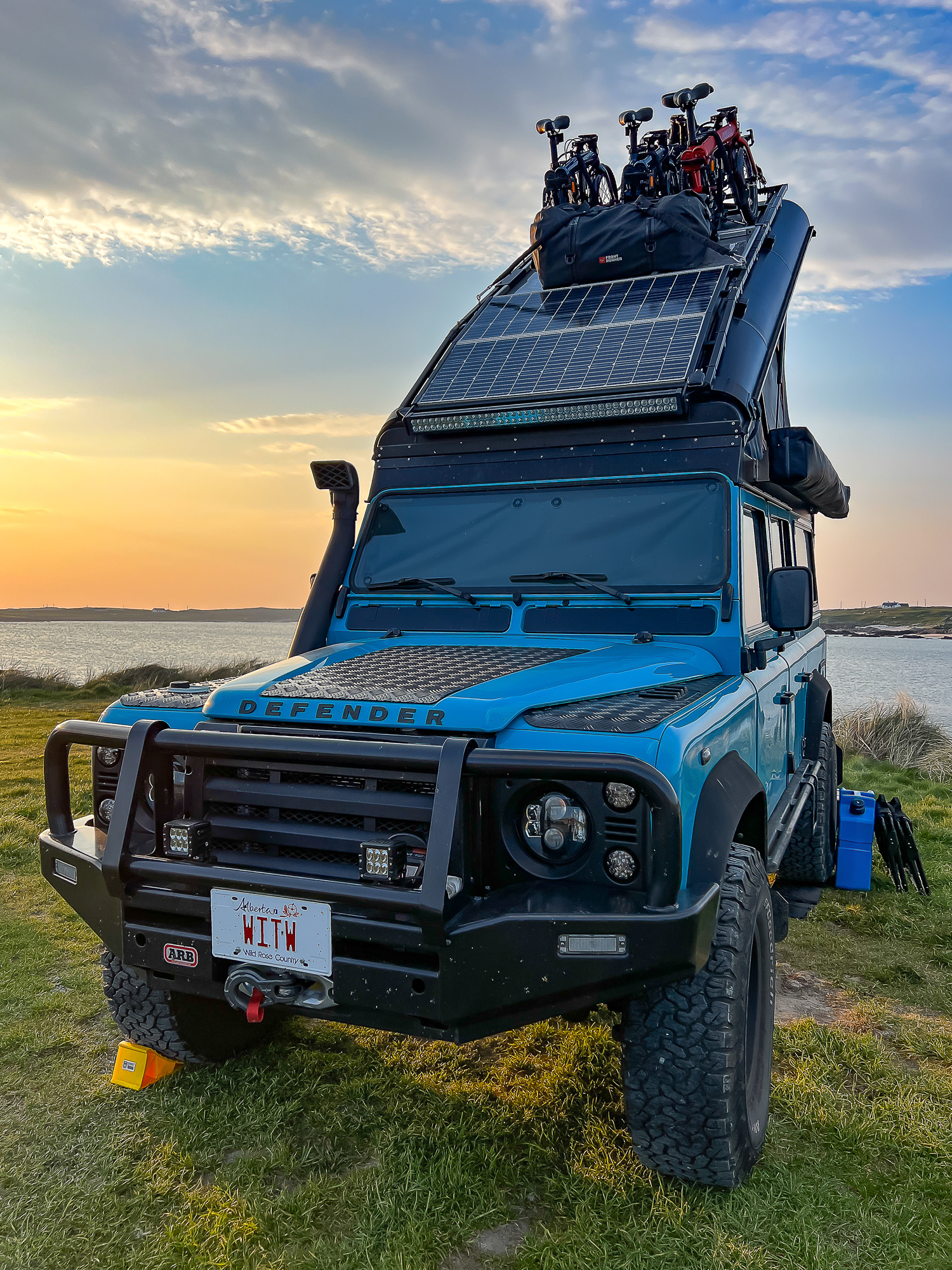
Gimli, our Defender, was purchased from Italy in 2018. It was exactly what we were looking for: left-hand drive, a 2003 TD5 (the newest we could import into Canada at the time), with only 93,000 kilometers on the odometer. Randy picked Gimli up in Edmonton, Alberta, and drove it home on April 16, 2019. The plan was to spend a year or two converting it into a family overlanding vehicle before leaving to drive around the world. Then the pandemic happened, which was both a blessing and a curse for our overland build. We had time to think through things, but also to come up with loads of customizations to spend money on.
The Interior Design
Our interior design started with the Alu-Cab Icarus roof conversion. The roof was the easy part. Figuring out where we would all sit when driving and where our kids would sleep was a bit more complicated.
After the roof was installed and we’d ripped out the interior, Randy and I would sit on the back wheel wells, drinks in hand, dreaming about how to make it work. We tossed around a handful of ideas but ultimately landed on one good enough to build a prototype with cardboard boxes, after which adjustments were made.
The final design has a top-open, 50-liter ARB fridge between the two back seats, allowing for separation and, in theory, less sibling bickering while we’re driving. When we’re parked, the second-row seat backs are removed, and storage cabinets are placed on the seats to create more living and sleeping space. This design was great when the kids were smaller, but it needs to change now that they’re growing up. The kids’ seats will be replaced with Exmoor Trim Premium high-back second-row seats, which will fold down to extend the sleeping platform. They’re sad about losing their storage boxes but look forward to sleeping without their feet hanging off the bed.
Load-Bay Cabinetry
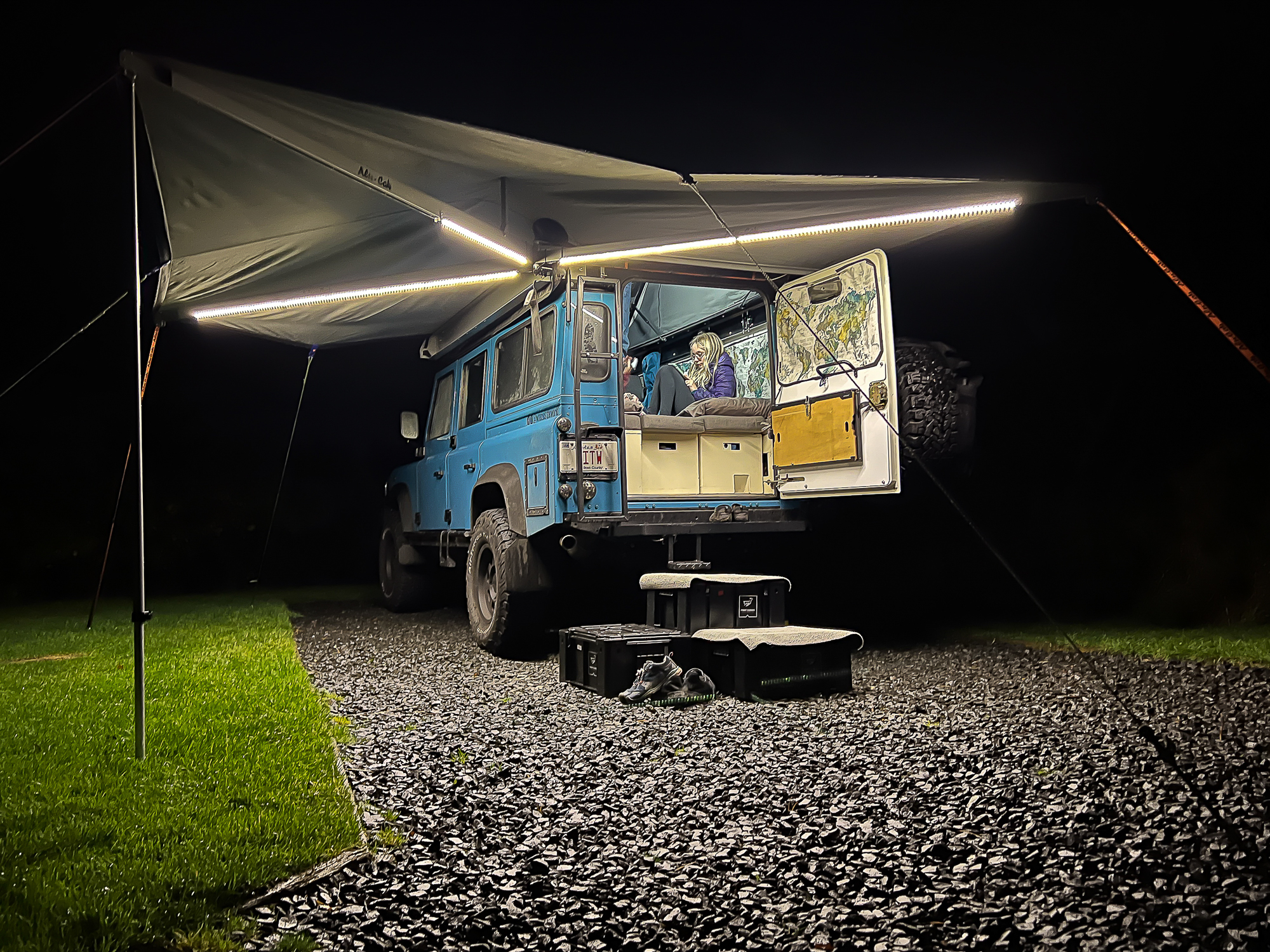
In the back, a 13-inch-high bench runs above the left-side wheel well and extends into the load bay. The top of the bench opens to provide storage space above the wheel well, and an access door at the rear of the vehicle gives us a place to store longer items, like our outside rug.
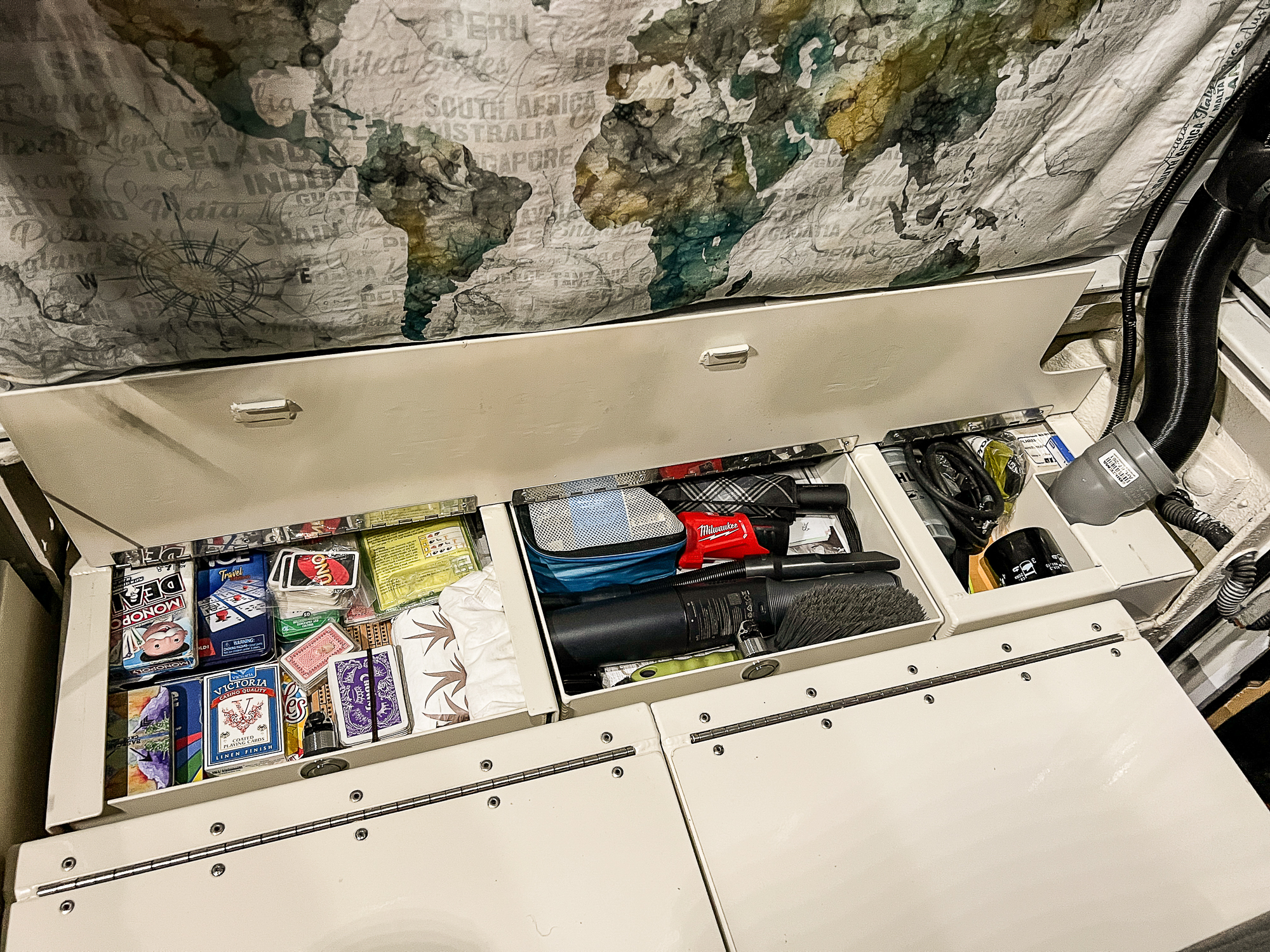
Along the right-side wheel well, a 4-inch fixed cabinet sits below four 13-inch-high modular cabinets that attach to the wall during the day. The modular cabinets can be easily detached to fit perfectly in the load bay, creating a 13-inch-high sleeping platform that spans the entire vehicle width. Unlike most Defender conversions, where only 2/3 of the rear width is available for sleeping, our design allows us to use the vehicle’s whole width, separating the kids while they sleep.
We chose to have the interior cabinetry fabricated in a local aluminum shop. Compared to plywood, aluminum decreases the weight while increasing durability, longevity, and water resistance. The aluminum design allows for substantially more space in the cabinet’s interior. The only piece of cabinetry built from plywood is the bench because we just couldn’t justify the added cost of having this simple design fabricated.
Since the cabinet interior must be accessible in both configurations, the 4-inch cabinet above the right-side wheel well has two pull-out drawers for easy access when the cabinets are in “day mode,” with the top hinging open to allow access from above when the cabinets are in “bed mode.” All four modular cabinets have hinged doors on the front and the top.
Knowing we would face every possible weather condition on our multi-year trip, inside living space was necessary. At the very least, we needed a table for schoolwork and, ideally, somewhere to eat. We added a drawer extender with a wooden top to the base of the top cabinets that pulls out to create a large table space that we can sit around in an L-shape.
Comfort
Defenders are not known for being comfortable, but a few modifications have made a real difference. Heated Scheel-Mann seats were fitted for the driver and passenger, and a larger locking cubby box replaced the factory version, which now doubles as an armrest.
A Ministry of Defender upgraded heating and A/C system was installed, which included a dash refitment to the Puma dash. The loss of our front flaps was a small price to pay for A/C, something we were grateful for during a heatwave in Spain. We added a Webasto Air Top 2000 diesel heater in the right-side wheel well. It keeps us warm at night, with vents running up the vehicle’s back corner, blowing in the girl’s sleeping area, and up through the foot opening into the rooftop bed.
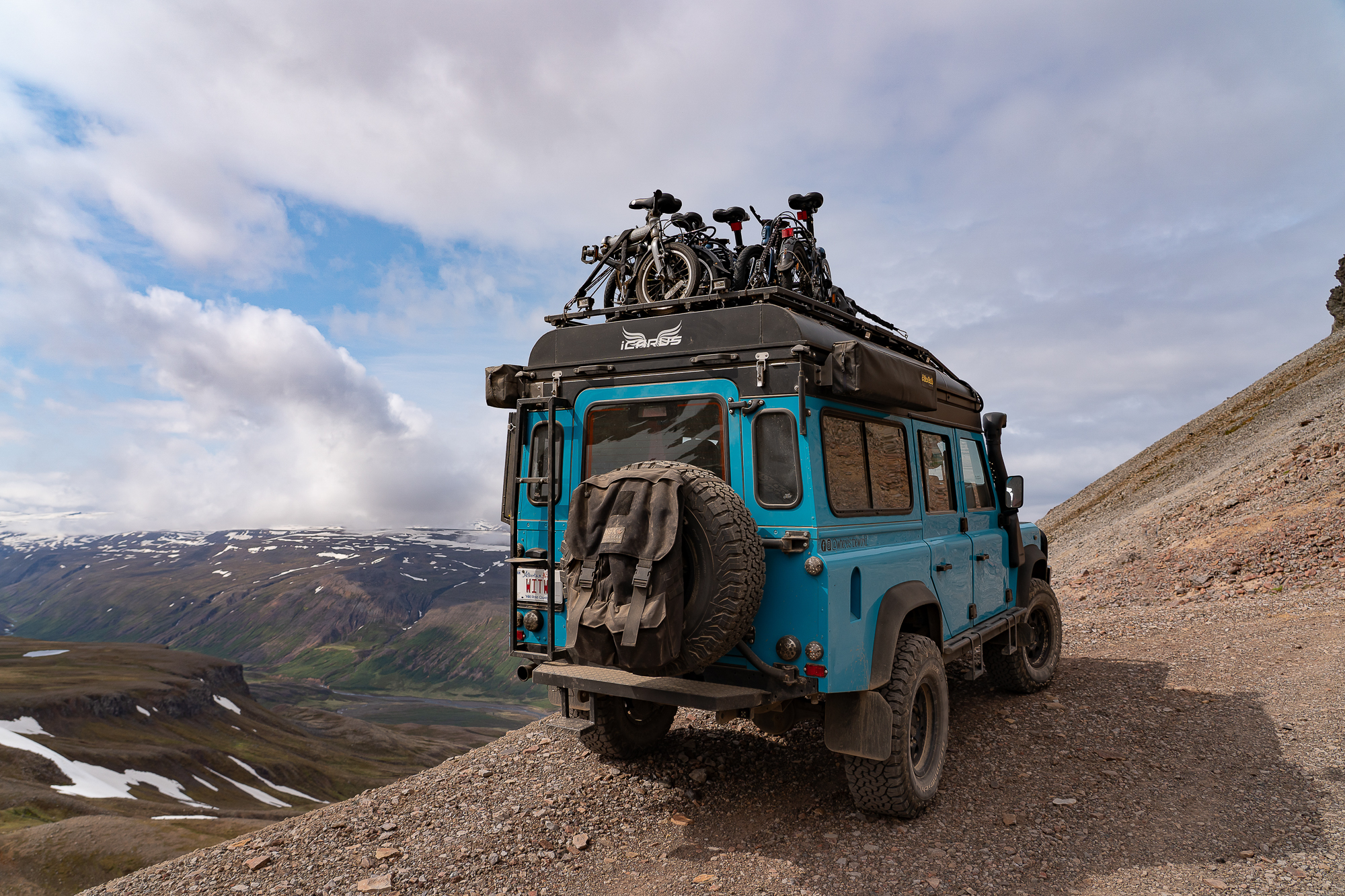
An OME BP-51 suspension replaced the basic OME suspension we initially installed to replace the factory suspension (yes, we’re on our third suspension). When we frequently encountered washboard roads in Iceland, Randy would soften the suspension, and we’d soon be comfortably floating along rather than bounding down them in a teeth-chattering grind.
Storage
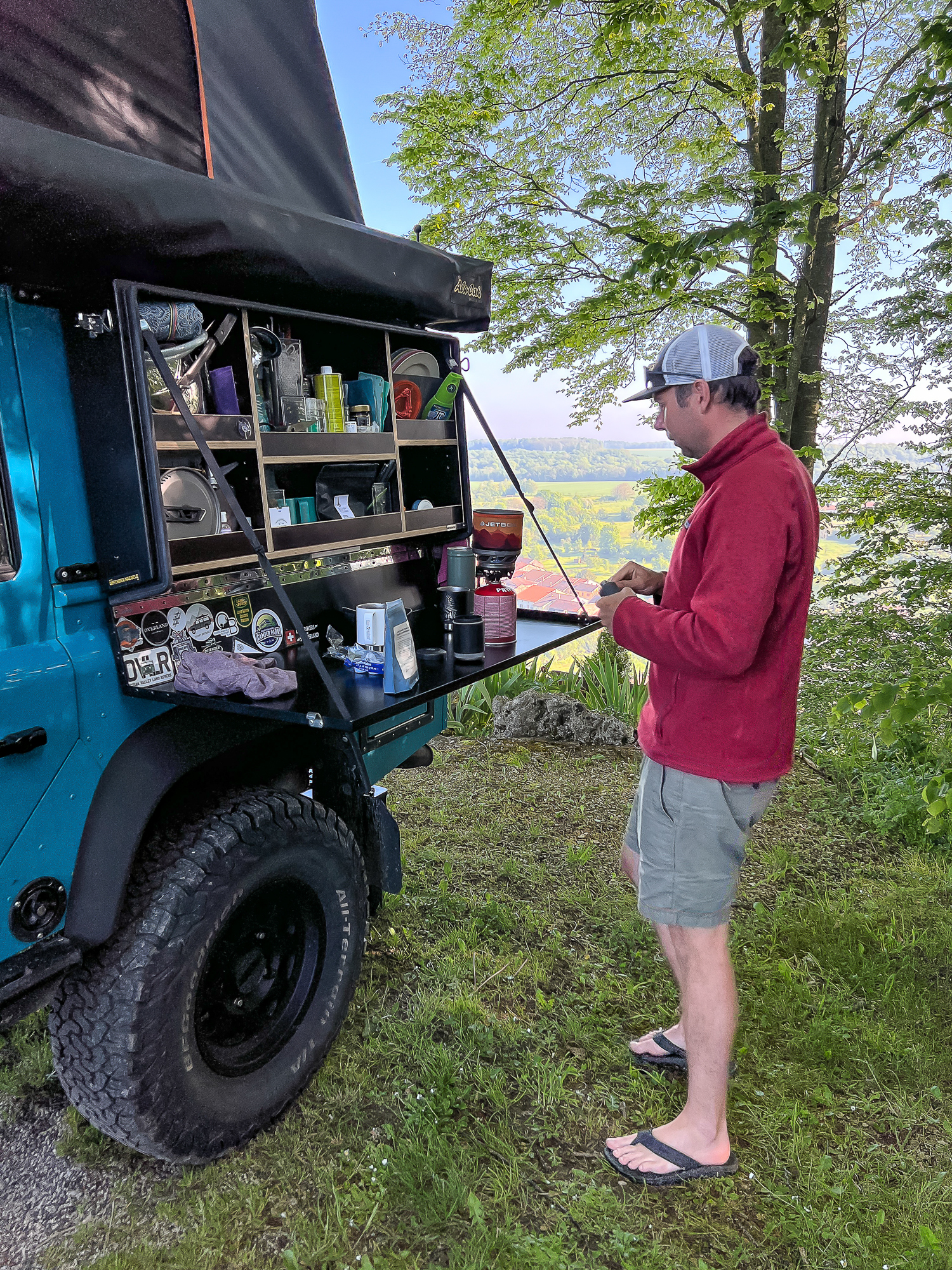
Storage is an ongoing struggle. In Germany, we added a Defender Nägele kitchen box to the outside of the vehicle. It has room for all our cooking gear and provides a convenient cooking surface. Recovery gear was initially stored in a Wolf Pack box in the load bay, but is now out of the way and readily available in a bonnet bag by Delta Bags. Other seldom-used items were stored in Wolf Pack boxes in the load bay, but now live on the roof in a Front Runner Typhoon bag and a Halite Kraken 140 Pro bag. Soft items such as jackets, towels, and everyday items like the first aid kit are stored in elastic cargo nets on the underside of the bed. Velcro secures the nets, allowing us to store items out of the way but keep them close at hand.
The unknowns of a multi-continent trip meant we were planning and building for many uncertainties. We added a 66-liter Safari Equip auxiliary diesel tank on the right side, increasing our range to around 1,200 kilometers. The fuel tank is balanced out with a 65-liter Safari Equip water tank on the left side, which, along with a custom 20-liter tank under the fridge in the rear footwell and a 20-liter Lifesaver jerry can, provides enough water for four to five days off-grid.
The power supply was an integral component in our build. Two 100-watt solar panels mounted on the roof charge a 115 amp-hour AGM auxiliary battery, which will be upgraded to lithium at some point. The auxiliary battery can, when needed, assist the starter battery in starting the Defender. It’s saved us a few times, as the starter battery seems to die periodically, especially when Gimli is in storage for a few months at a time. The learning curve of this lifestyle can be steep, though. We were once stranded in Northern Sweden in the snow when we didn’t realize the starter battery was dead and the auxiliary battery ran down overnight with the heater.
A Ctek 140A Off-Road System controls the entire electrical system, which may be Randy’s favorite part of the build. We chose not to install an inverter and instead run everything off 12V or USB/USBC, which decreases the load on the battery and is much more convenient. Finally, multiple USB ports were added along the sides of the vehicle, so no matter where you are, you can always plug in.
Compromise
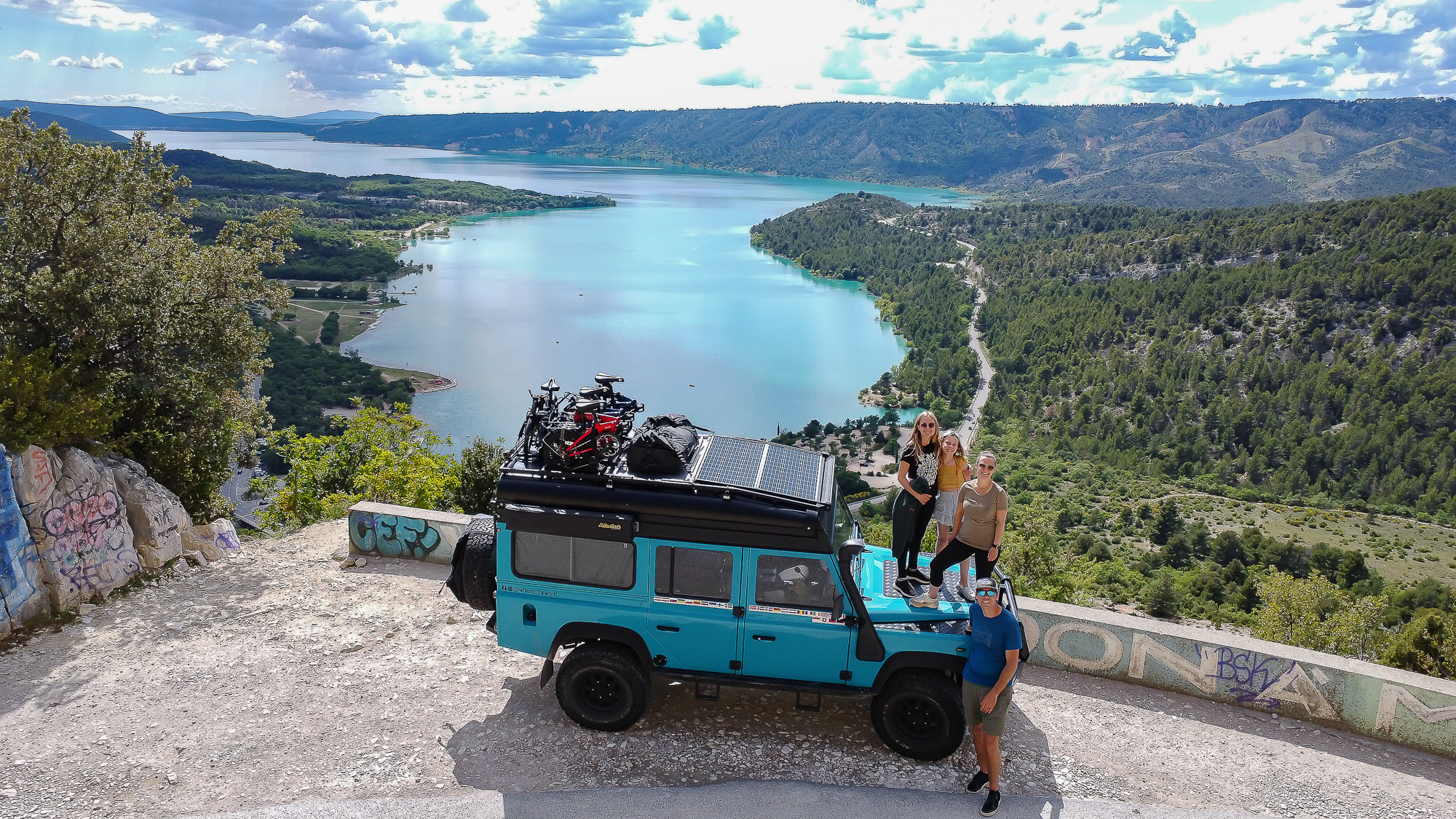
So far, we’ve driven through all 10 Canadian provinces and shipped from Halifax to Liverpool. We’re currently driving through every country in Europe, 90 days at a time. But our feet are itching for a bit more adventure and, some would consider, authentic overlanding experiences. The plan is to drive through Turkey to the Middle East and then turn south to Africa. We have no endpoint in mind and would like to drive through every continent except Antarctica, before eventually driving home via the Pan-American Highway.
While no design is perfect, we’re thrilled with our setup. The space inside is compact, and preparing the bed at night takes some time. But life requires compromise, and a bit of extra time each day is a small price for a space that allows us to travel the world as a family and be self-sufficient in our vehicle. As the kids get older and the journey evolves, our requirements change along with them. We’re always dreaming up new modifications, like an airbag suspension, so we’d never have to worry about leveling when we camp. We’ve learned that an overland build is never done—it is merely done for now.
Specifications
2003 Land Rover Defender 110
Power
TD5 2.5-liter diesel engine
5-speed transmission
Roamerdrive overdrive
Gwyn Lewis Mega double Cardan front driveshaft
Suspension
Old Man Emu BP-51 suspension
Wheels and Tires
BFGoodrich All-Terrain KO2 tires (285/75R16)
Method MF701 wheels
Recovery and Armor
ARB front bumper
Warn VR Evo 12S winch
GoTreads folding recovery boards/leveling blocks
Tree sliders
Diff bash guards
Viair 88P compressor
Electrical
Biltema AGM 12-volt starter battery
Auxiliary battery (115ah AGM)
Ctek 140A Off-Road power management system
Renogy 100-watt solar panels (2)
Roof-mounted 48-inch light bar
Bumper-mounted off-road lights
Accessories
Alu-Cab Icarus pop-up roof conversion
Alu-Cab 270 Shadow awning
Alu-Cab Shower Cube
Custom-built aluminum roof rack
Defender Nägele kitchen box
Webasto Airtop 2000STC 12-volt diesel heater, SmarTemp 3.0 thermostat
ARB 50-liter fridge
Safari Equip 66-liter auxiliary diesel tank
Safari Equip 65-liter auxiliary water tank
Custom-built 20-liter water tank under the fridge
LifeSaver 20-liter filter jerry can
Herculiner
NBX Gear G.A.R.B. 2.1 spare tire bag
Optimill Steering Wheel Boss with removable MoMo steering wheel
Editor’s Note: This article was originally published in Overland Journal’s Fall 2025 Issue.
Our No Compromise Clause: We do not accept advertorial content or allow advertising to influence our coverage, and our contributors are guaranteed editorial independence. Overland International may earn a small commission from affiliate links included in this article. We appreciate your support.
Read more: The Santa Barbara Series:: A Vintage Land Rover Event
