

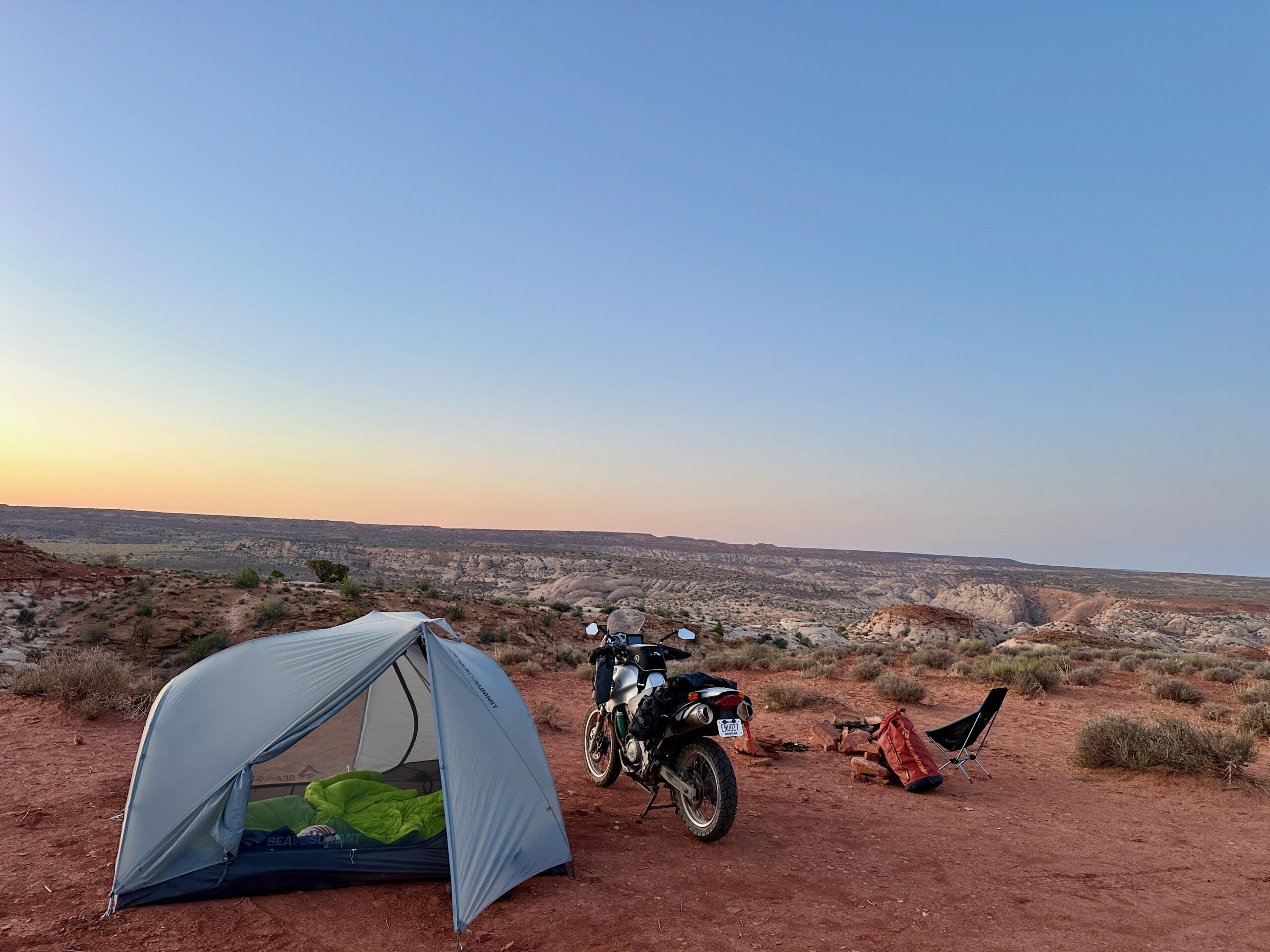
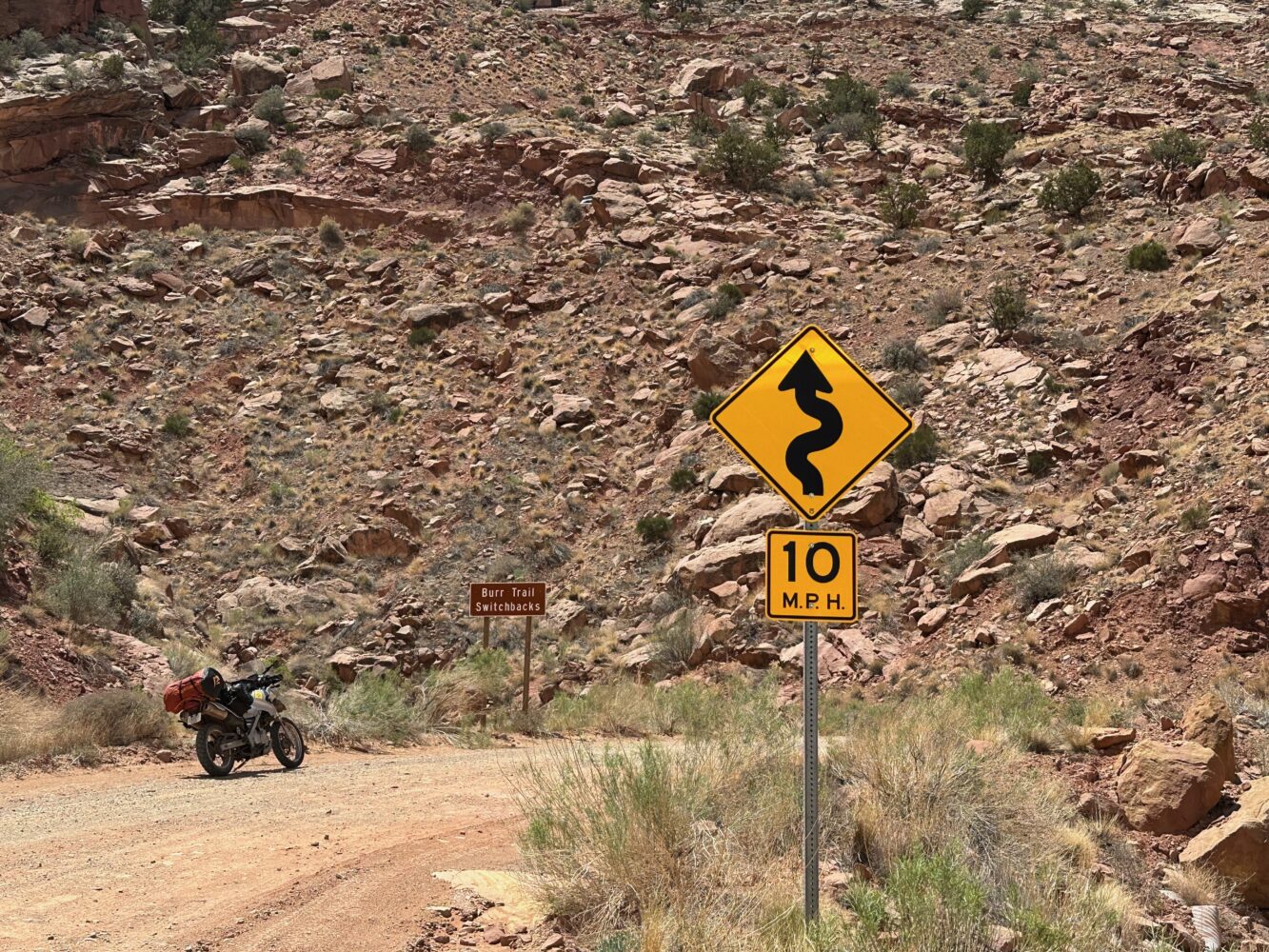
In May of this year, I embarked on my first long solo ADV adventure. I spent four weeks riding over 2,300 miles through five states from Albuquerque to my home in Missoula, Montana. As befits a springtime ride in the shadow of the Rockies, the weather was—shall we say—variable. I departed on my first day from the normally dry climes of central New Mexico in a monsoon that turned to snowstorms on the passes that crossed into Colorado. Utterly soaked on the bike, my soak in the hot pools in Pagosa Springs was well-earned. Also well-earned was a large plate of pad thai and a solid night’s sleep thanks to my Sea to Summit tent and sleep system.
Sleep is an underrated aspect of long-distance moto travel. The more rested your body and mind are, the safer you’ll ride, and the more fun you’ll have. Of course, you can bed down in hotels or vacation rentals, but to really put the adventure in an ADV journey, camping will be on the agenda. Assembling a sleep system that’s lightweight and doesn’t take up too much space is key, especially for a solo trip. I wanted my motorcycle and pack-out combination to be lithe enough that I could pick up the bike by myself when I inevitably dumped it on the ground somewhere far from help. But, I also didn’t want to skimp on my camping gear and end up uncomfortable and restless when it was time to switch off the headlamp. You should look forward to tucking in at night in a shelter that encourages sound sleep rather than grit-locked teeth and groaning about sacking out on the gravel.
As a backpacker for many years, I have honed my standard pack load down to the gram, but on a motorcycle, I could afford a little more luxury (no sawed-off toothbrush handles here). However, I didn’t want to tip the scales too far toward excess. So, I stuck with a backpacker’s mentality and looked for a tent and sleeping gear that offered maximum comfort across 3 seasons with as little weight penalty as possible. I carried the Sea to Summit Telos Ultralight 3-Person tent, and the Australian company’s Ascent 15-degree down sleeping bag, Camp Plus self-inflating sleeping pad, and Aeros Ultralight inflatable pillow.
Sea to Summit Telos Freestanding Ultralight 3-Person Tent | $524
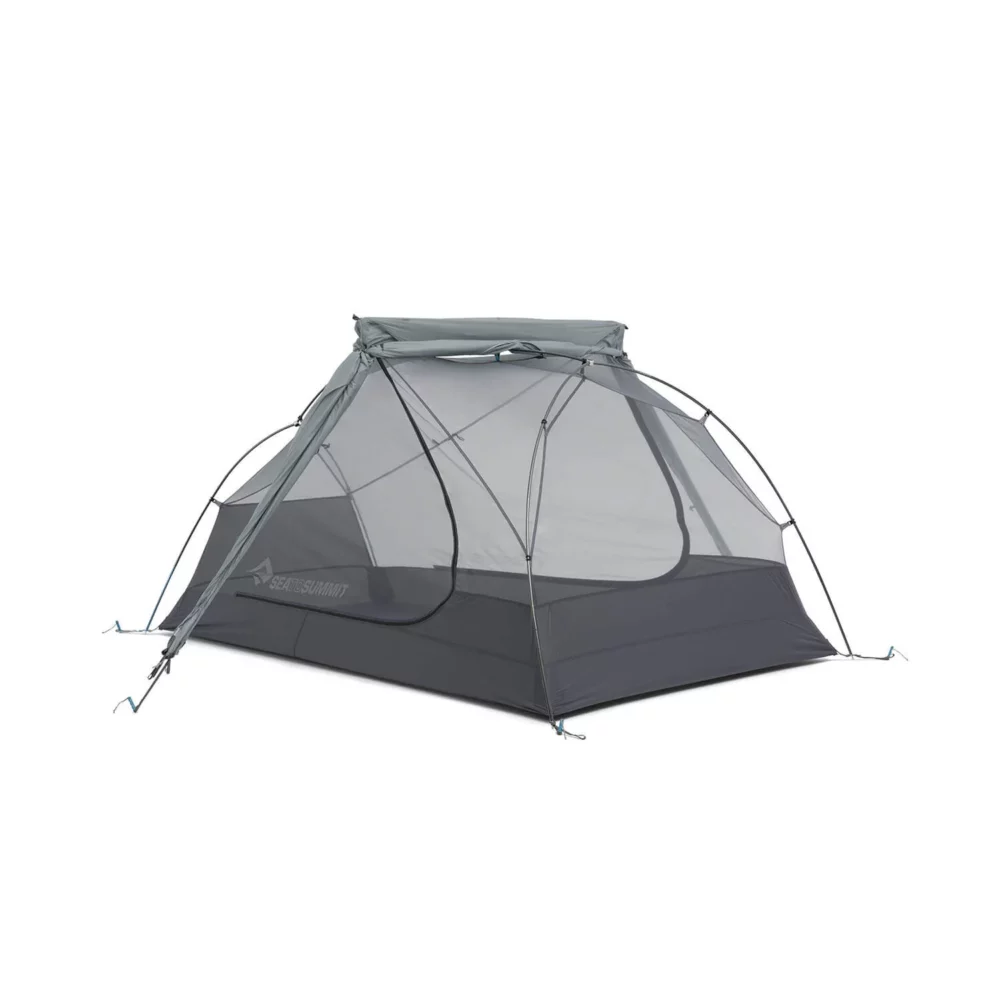
The Telos 3-person tent
Why carry a 3-person tent on a solo moto adventure? I have slept many nights in 1-person tents and almost always barely tolerate it. There is very little room to sit up or turn over, no space for gear, and just the overall claustrophobia makes single-person tents feel like the middle airline seat of the backcountry. Moto gear is bulky, lumpy, and weirdly shaped, and I didn’t want to have to leave my riding jacket, pants, and helmet out in the elements or on the dirt in a vestibule overnight, so extra shelter space was important. The bonus headroom and area to stretch out would contribute to the comfort factor.
The term “ultralight” is often casually bandied about in the world of outdoor gear, but the Telos delivers. At a mere 4 pounds 11 ounces, it’s admirably light for a shelter with nearly 40 square feet of floor space (the 2-person version comes in 1 pound lighter), and Sea to Summit’s FairShare storage system means the tent packs into three separate stuff sacks to split up the load. Traditionally packed tents end up with an awkward oblong shape that can be hard to stow, so this turned out to be a huge boon for loading my soft saddle bags, where I often needed to cram items into little corners to maximize space.
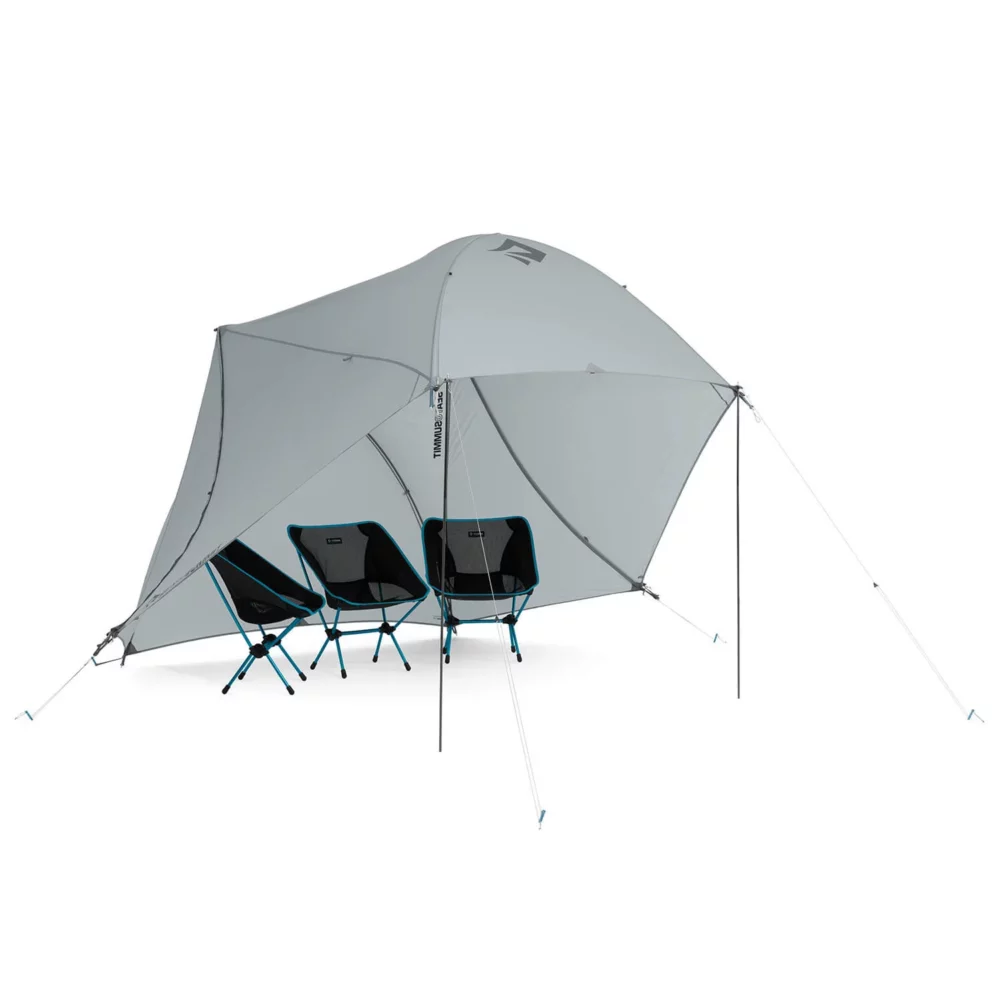
The Telos “Hang Out Mode” turns the fly into an open shelter with a couple of trekking poles.
The Telos sets up quickly with its proprietary “Tension Ridge” DAC NSL aluminum two-hub poleset and quick-connect pole feet. This is a single-pole system that also turns the rainfly into a stand-alone open shelter of its own in “Hang Out” mode. Because of the freestanding design, the fly can be set up independently of the tent for dry assembly and takedown in damp conditions. Sea to Summit credits the Tension Ridge with giving the Telos the best space-to-weight ratio in the category, and 52.5 inches of peak height and tall, easy-to-access doors confirm that claim. Much of this tent’s feather-weight character comes down to its overwhelmingly mesh construction, which was fantastic for catching even the slightest breezes on desert nights and for stargazing. The pole stores in a structured stuff sack with a built-in light diffuser that doubles as a ceiling lamp—just stuff your headlamp inside and snap it to the roof of the tent, and it illuminates the whole space with soft but far-reaching light. I used this fun and useful feature every night.
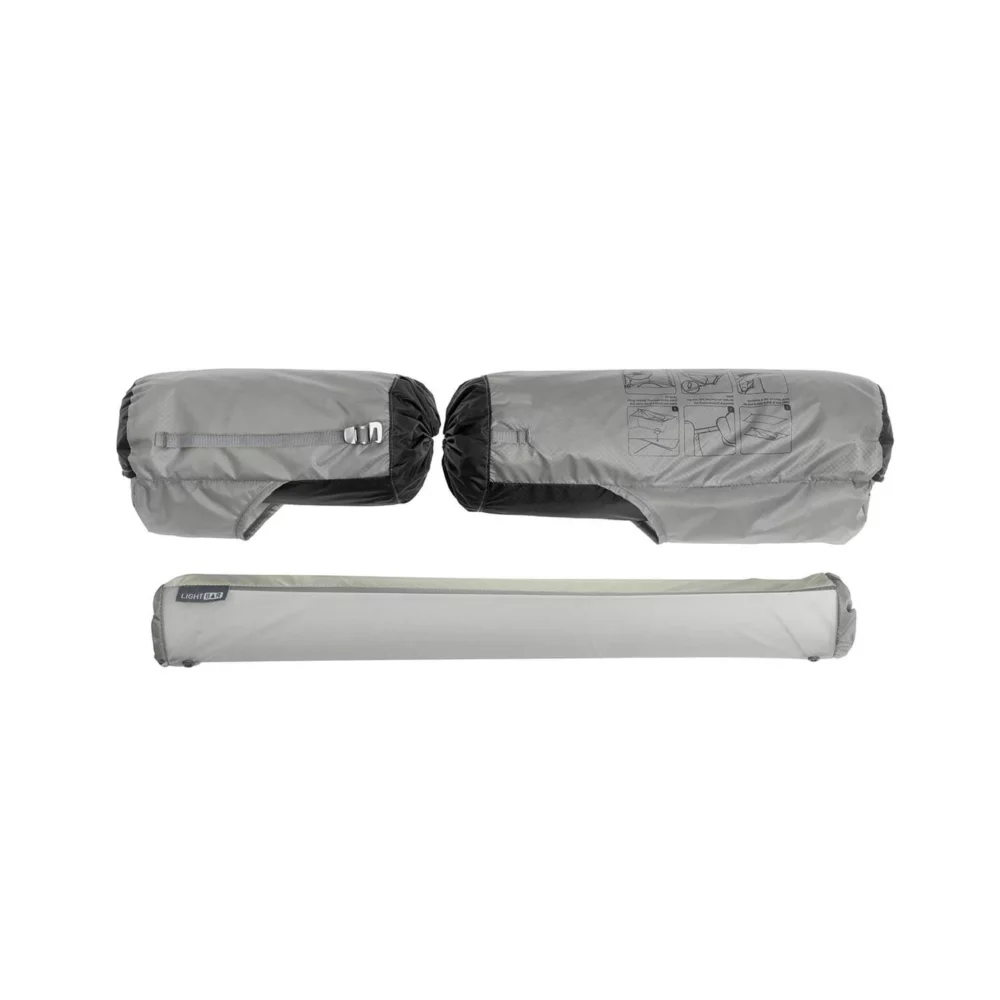
The Fair Share packing system breaks the tent into three smaller packages. The pole bag doubles as a tent light.
The big liability of ultralight construction is papery and potentially fragile materials, and because I neglected to get the Telos footprint ($51), I worried about the durability of the thin bathtub floor on more abrasive surfaces. It never tore or developed weak spots, but over the long term, it’s worth adding the extra layer of protection. I found the fly difficult to set up in windy conditions, but its impermeability was second to none when the rain and snow really started pelting down.
Sea to Summit Ascent 15-degree Down Sleeping Bag | $449
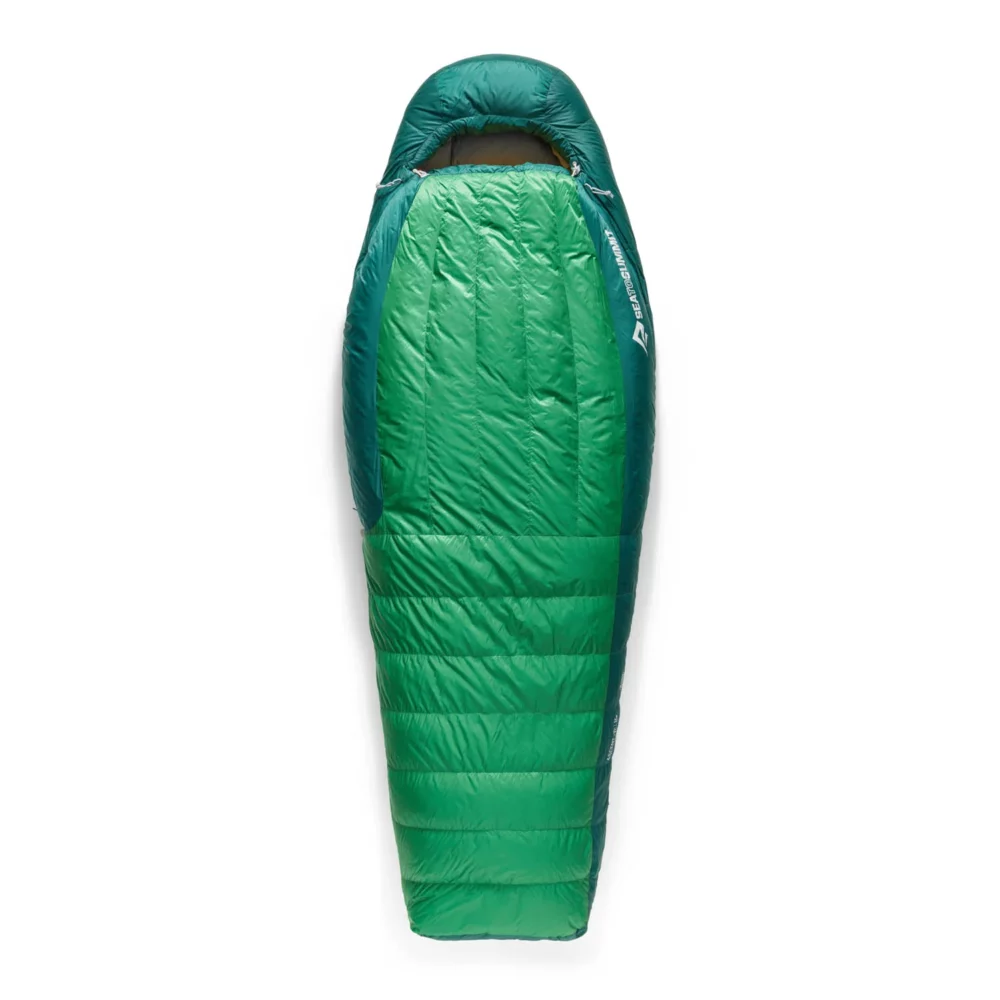
Ascent 15-degree down sleeping bag
Because I was traveling in the heart of spring at elevations up to 9,000 feet across Colorado, Wyoming, and the Utah high deserts, I needed a true 3-season sleeping bag to stay warm in potentially below-freezing temps overnight. But, I also wanted real breathability and light weight so I didn’t feel stifled should it never cool down. Compressibility was key for packing efficiency on the bike, too, so down fill was the only answer. The Ascent comes in two temperature ratings, 30° and 15°. To save needing a sleeping bag liner, I went with the colder rating in the regular size that features Responsible Down Standard-certified, 750+ fillpower goose down with a non-PFAS Ultra-Dry down treatment, while still staying under 2.5 pounds of total weight.
With the warmth factor dialed in, where the Ascent really shines is its versatility beyond what normal mummy bags offer. The FreeFlow zippered foot box lets you air out sweaty moto boot feet and increase head-to-toe ventilation, and the short side zipper, opposite the main zipper, frees up shoulder space. The technical hood fits a Sea to Summit Aeros pillow (more below), and for two-up travel, the Ascent can be zippered together with another compatible Sea to Summit sleeping bag or their camp quilts for even cozier nights. The stuff sack has integrated compression straps for cinching down the packed size (7.5 liters), again, a real benefit when space is at a minimum in moto luggage.
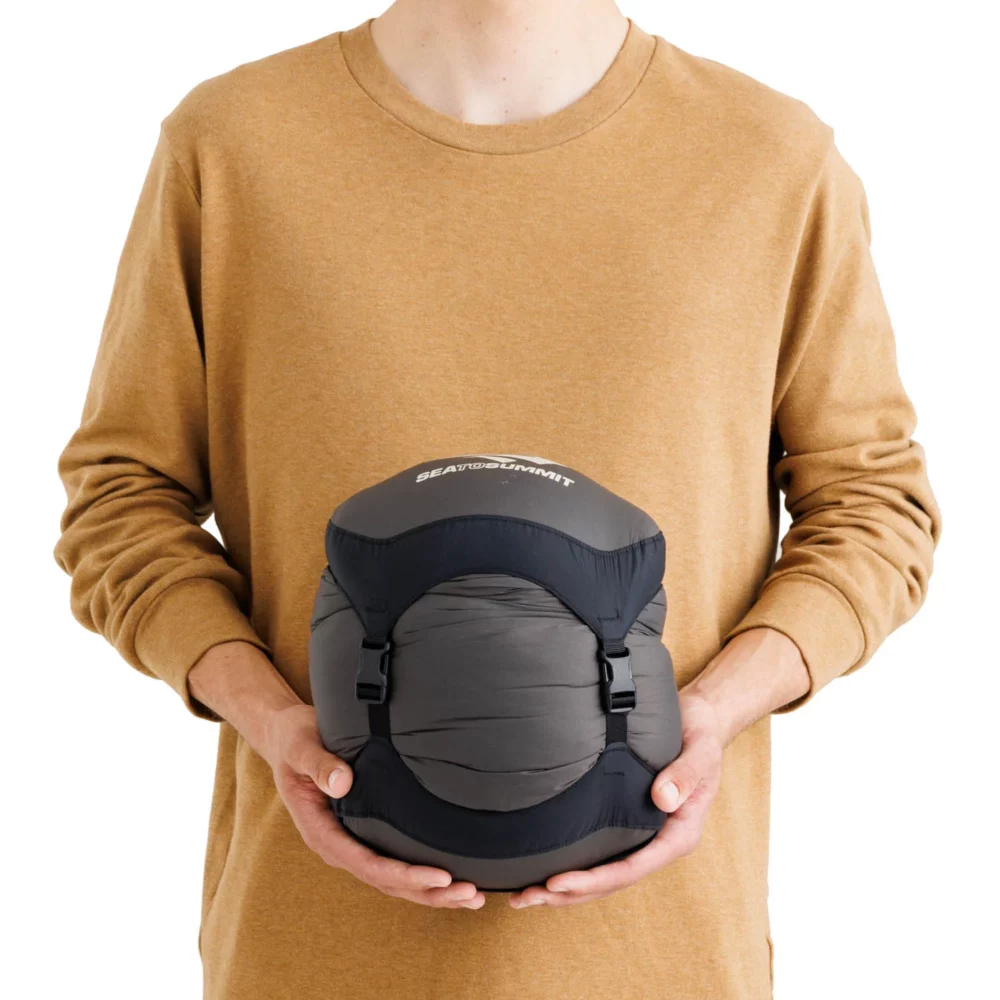
The Ascent compresses into approximately 7.5 liters.
All the myriad adjustability of the Ascent meant I could regulate temperatures no matter the weather, and it easily accommodated a range of sleeping positions. But because of all the zippers, it also felt fussy trying to get this bag dialed in, and they often jammed on the baffles, which sometimes meant flipping on a headlamp to free them—not great for getting my beauty rest before a long day in the saddle. And, of course, because of the down construction, it was imperative to keep the Ascent bone dry, which meant doubling up on the storage sacks with a separate dry bag in my luggage.
Sea to Summit Camp Plus Self-inflating Sleeping Pad | $99
Aeros Ultralight Inflatable Pillow | $50
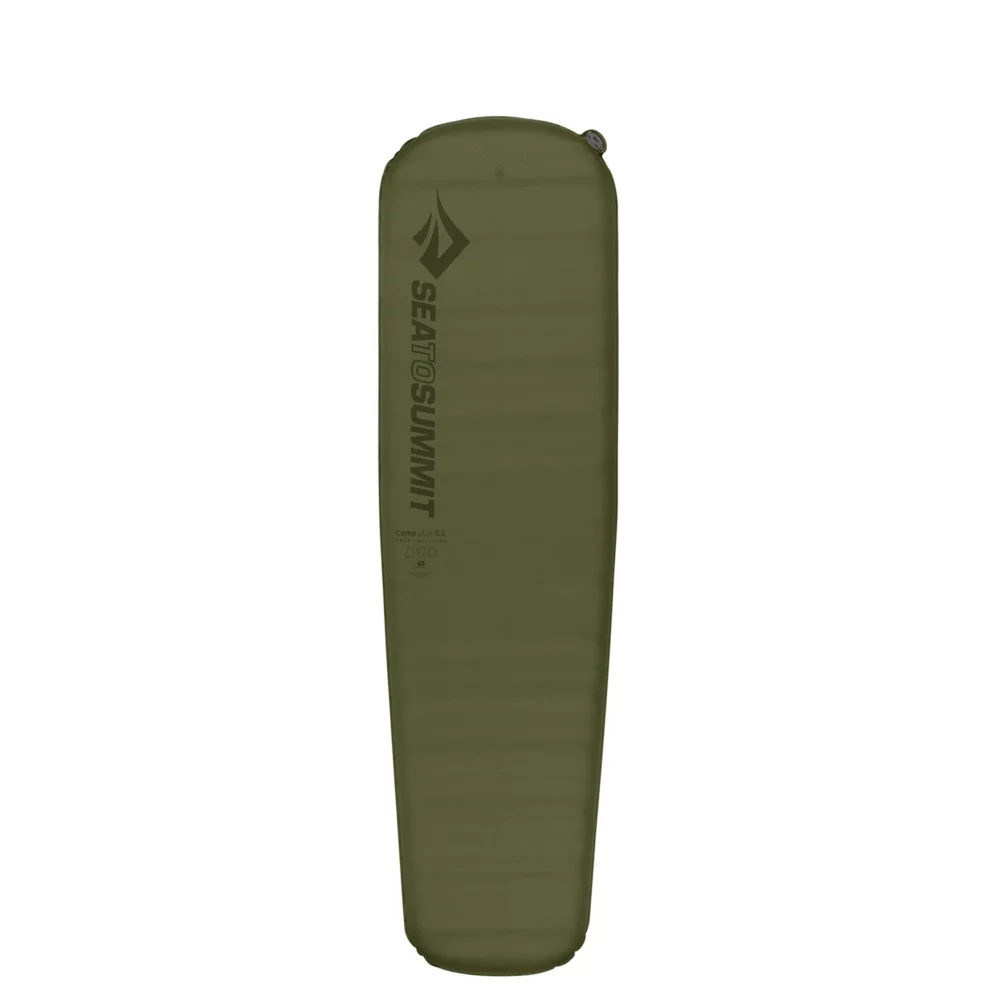
The Camp Plus is an insulated inflatable sleeping pad.
While the sleeping bag is the centerpiece of any sleep system, it’s also important to get yourself off the ground for maximum comfort and warmth. With my eye still fixed on keeping weight down, I paired the Ascent bag with Sea to Summit’s Camp Plus sleeping pad and Aeros pillow. The Camp Plus in the regular size comes in at a hair under 2 pounds and packs into its compressible stuff sack to an 8-inch x 11-inch cylinder. This is a little on the bulky side, but the trade-off is claimed 4-season use due to its 3-inch thickness and Delta Core foam-backed R-4.3 insulation value. The 75D polyester shell proved to be very abrasion-resistant when confronted with desert sand and grit (after nearly a month of travel, it still looks brand new), and the included patch kit added to my peace of mind in the field. The clever reversible one-way valve effectively squishes all the air out in the morning for quick packing, and the light-touch adjuster makes fine-tuning the inflation easy and accessible from the comfort of the sleeping bag.
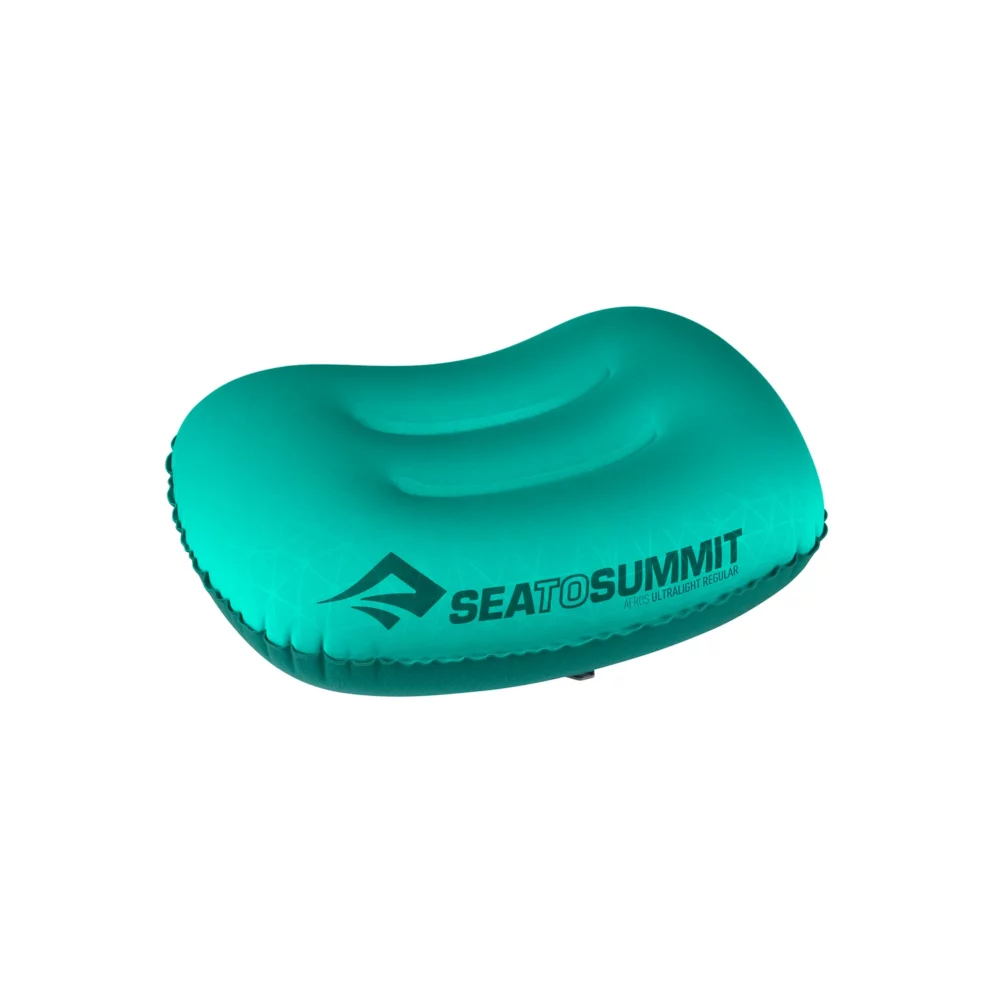
Aeros inflatable camp pillow delivers comfort in a small package.
Bolstering that comfort was the Aeros pillow. I’m not usually a fan of inflatable camp pillows, preferring to use a puffy jacket under my head. Many that I have tried over the years have had coverings that proved to be slick and clammy, were prone to sliding around or just rolling my head right off, and had loud and crinkly bladders. The Aeros, in addition to weighing just 2 ounces and stuffing into a 2-inch x 2.8-inch storage sack, suffered none of these problems. The quiet and internally baffled U-shape kept my noggin in place on the soft-touch polyester cover that wicked away sweat and hot breath, and the Aeros stayed firmly in place, clinging tenaciously to the PillowLock hook-and-loop system integrated into the Camp Plus pad. The TPU air bladder inflates with just a couple of puffs, and the same fine-tuning valve found on the Camp Plus allows for small adjustments without even rolling over. I might have wished for the large size, rather than the regular, for more snoozing real estate at a weight penalty of only four-tenths of an ounce.
Images: Stephan Edwards, Sea to Summit
Read More: The Moto Morini Vettore Is Another New Small ADV Bike
Our No Compromise Clause: We do not accept advertorial content or allow advertising to influence our coverage, and our contributors are guaranteed editorial independence. Overland International may earn a small commission from affiliate links included in this article. We appreciate your support.
