

Friends, as you know, there’s always that familiar nervous feeling of anticipation at the beginning of each new great adventure. The challenges of visas, money, equipment, kitting out the expedition Land Rovers—the list seems endless. Left to sort are carnets for the vehicles, first aid, basic food supplies, reference books and maps, letters of authority, GPS, bedrolls, tents, pots and pans, the old camp kettle, a wooden Zulu meat tray, tools, Hi-Lift jacks, binoculars, cameras, humanitarian supplies and, most importantly, a sense of humour, a passion for Mama Afrika, and that crazy zen of travel that’s allowed us to adventure to every single country in Africa, including her island states.
It’s taken much of a lifetime. I’ve had malaria more than 50 times, some hardships sure, but mostly exceptional memories of a wonderful continent that has stolen my heart and that of my son Ross and the rest of the band of delightful pilgrims that make these wonderful geographic and humanitarian adventures possible. But there was something still to do. Around many campfires, we’d talked about it for years: where is the beating heart, the geographic centre of Africa?
And so in 2015, we found ourselves on another world-first journey of discovery, this time to place a beacon deep in the rainforests of the Republic of Congo close to its borders with Cameroon and the Central African Republic—a journey we grandly called the Heart of Africa Expedition that would plunge us into the middle of the great ‘green lungs’ of the continent.
To make sure we got it right, The International Geographical Union (IGU) and the Department of Environmental & Geographical Science at the University of Cape Town applied the ‘centre of gravity’ method to determine our terminus, the same method used to determine the geographical centres of Australia and the United States of America. According to Professor and Secretary and Treasurer of the IGU Michael Meadows, the Geographic Centre Point of Africa is located at 17.05291°E, 2.07035°N, west of the Unbanji River and southeast of the Nouabale-Ndoki National Park.
Our research indicated that the Heart of Africa lies within 200,000 square kilometres of Congo rainforest, home to the world’s largest populations of great apes and endangered forest elephants and one of Africa’s most important strongholds for wildlife. Approximately 125,000 western lowland gorillas live here alongside buffaloes, hyenas, leopards, golden cats, chimpanzees, eight species of antelopes, and three species of crocodiles, many of which have never seen humans.
The expedition got a vibrant send-off as hundreds of Land Rovers escorted us to Lesedi Cultural Village, where a traditionally decorated goatskin gourd of water from South Africa’s Cradle of Humankind was handed over, together with hundreds of messages in a Scroll of Peace and Goodwill that we were to carry on the journey. Great African symbolism—even the big Landy Defender supply vehicle heavily loaded with humanitarian items was nicknamed Ndhlovukazi, the ‘Great She Elephant’.
Sand Tracks to the Heart
Into Botswana, ‘Shova Mike’ Nixon leaves at dawn on his mountain bike to follow a fence line across the Kalahari—he’s going to cycle to Africa’s ‘Heart’. A few hours later, we find him on the side of the track, forearm cut to the bone from a tumble. We stitch him up; it could be neater—looks like a croc bite, but at least it’s clean, and we pump him full of antibiotics.
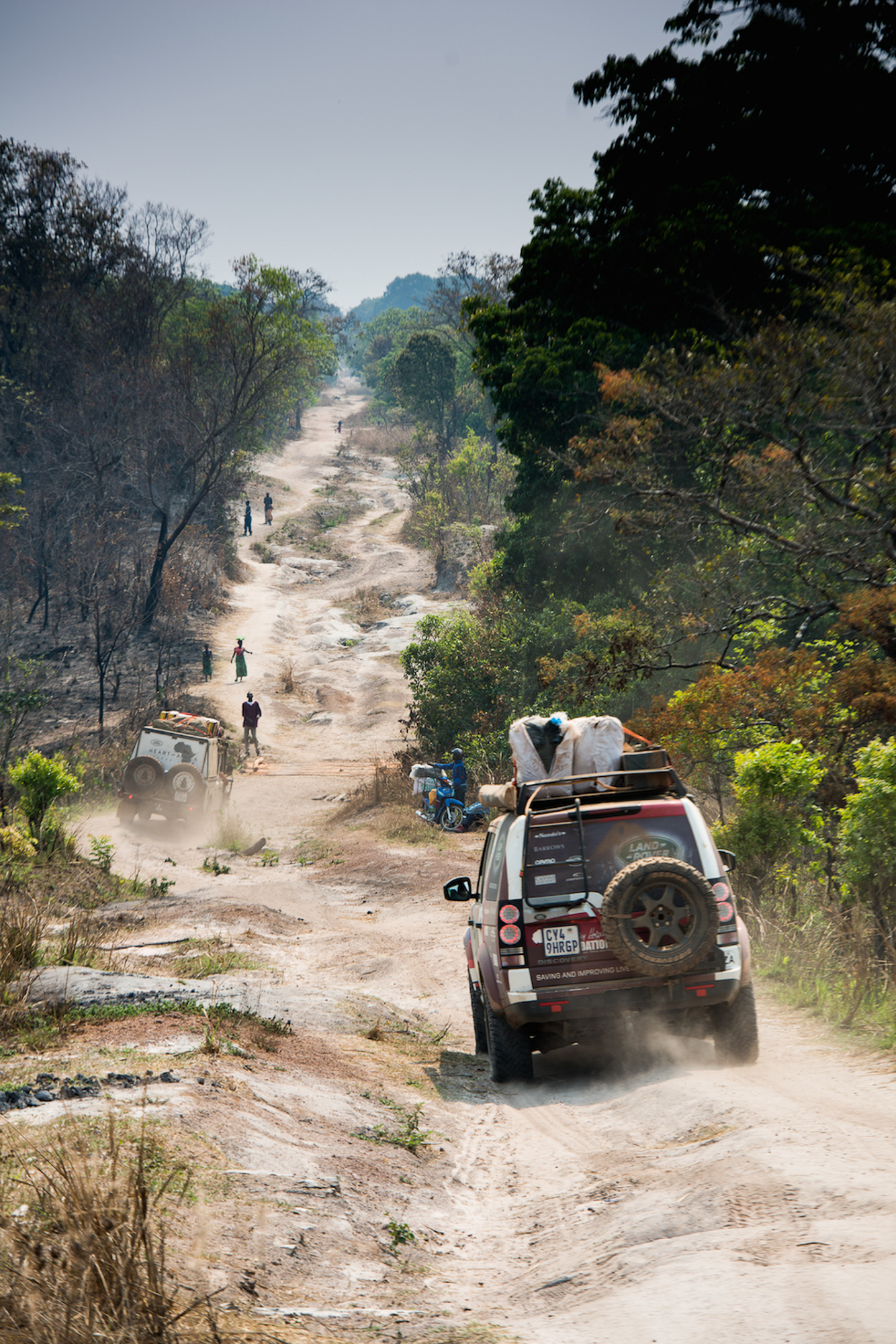
In Zambia, we cross the vast Kafue National Park from south to north. At 2,4million hectares, it is 500,000 hectares bigger than South Africa’s Kruger National Park. The powder-like sand track becomes really soft. Brad Hansen, the expedition’s naturalist, comes walking over: ‘Lion, leopard, and hyena tracks up ahead,’ he says with a big grin. We push on through beautiful Miombo Woodlands and open dambos to camp at Nazhila Pans, where two honey badgers raid our setup while elephants crack mopani branches as they feed around us. Red-bearded adventurer Bruce Leslie, a veteran of many expeditions, cooks up a great chicken stew as a distant lion roars from across the pan.
Tsetse Wars
‘Damn it,’ comes Mike’s scratchy voice over the radio. ‘I smacked that one so hard that I’ve cracked the windscreen. The little bastards—we’re under attack!’ We try and stop for a Landy tailgate lunch, but even before the bully beef tins are open, we’re forced to run like madmen, cursing and slapping as we race for the safety of the cabs.
The Tsetse Wars continue as they’ve gotten inside—more slapping as we go. Brad comes on the radio: ‘Be careful,’ he says, ‘If you pull their head off, be sure to throw it out of the left window and the wings and torso out of the right. Otherwise, it will reconstitute itself, and you’ll be in real trouble.’
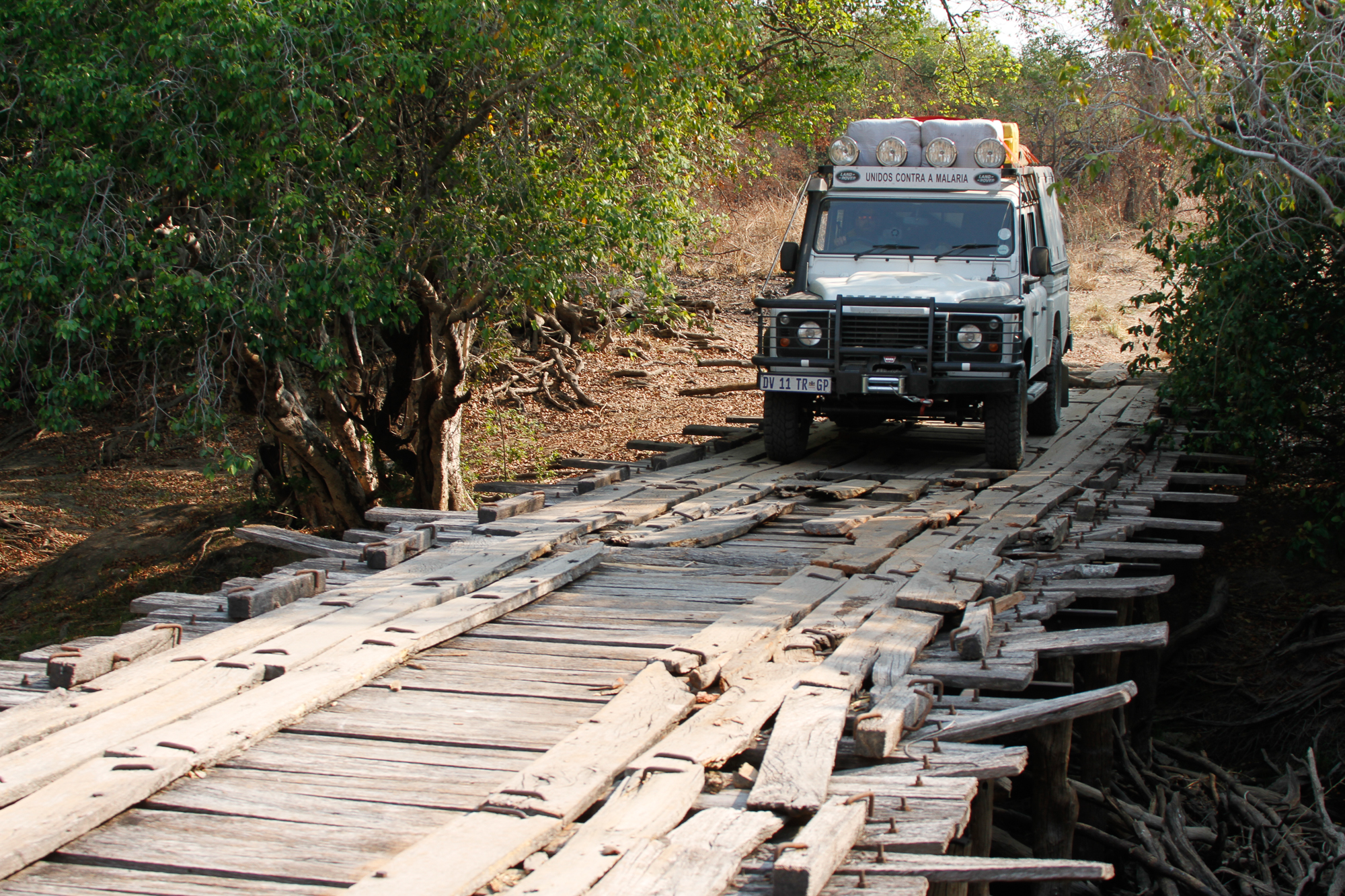
And so the humour continues as we cross a dangerously wonky plank bridge that takes us out of the north gate of Kafue National Park. We might complain about the tsetse flies, but truth be told, they are Africa’s best little conservationists; without them, many of the wildlife parks in Africa would be full of cattle and people.
Source of the Zambezi
It’s an exciting moment as we reach the source of the Zambezi River, a spongy little puddle of a spring, deep in the forests of north-west Zambia, close to the border with the DRC and Angola, which marks the start of the great river’s 3,540-kilometre, five-country journey to the Indian Ocean. We camp in a nearby forest clearing at beautiful Nchila and celebrate the successful completion of the first chapter of this Heart of Africa Expedition.
The following day, we cross the Jimbe River into a remote part of Angola. I’ve got some bad memories of this area going back to the days of one of our first journeys, the Zambezi-Congo Expedition, in open boats. Things became very grim indeed when UNITA rebels marched me off to their hideout in the bush, where I’d been interrogated for hours. But the zen of travel had been with us, as later, back at the boats and reunited with the rest of the team, the rebel commander said the only reason they hadn’t killed me was because I’d been so friendly.
Now, it’s time to enter the area again. We’ve been warned that further north in this remote region, we could be mistaken for diamond dealers and encounter other dangers: ‘Watch your back, don’t get highjacked, don’t travel at night. And be careful of unexploded landmines; there’s still some knocking about.’
Someone once asked what the most important thing was to have on an expedition. We believe it’s an empty seat so as to travel with locals; their knowledge and language, at times, have saved our lives. So we hire Jonathan Kasongo, a local Lunda-speaking man, to guide us through Angola. Shova Mike rides ahead on his mountain bike, leaving Ndhlovukazi, the big 130 Landy Defender loaded up with bales of mosquito nets and other humanitarian items to lead the expedition convoy.
Kissing the Tar
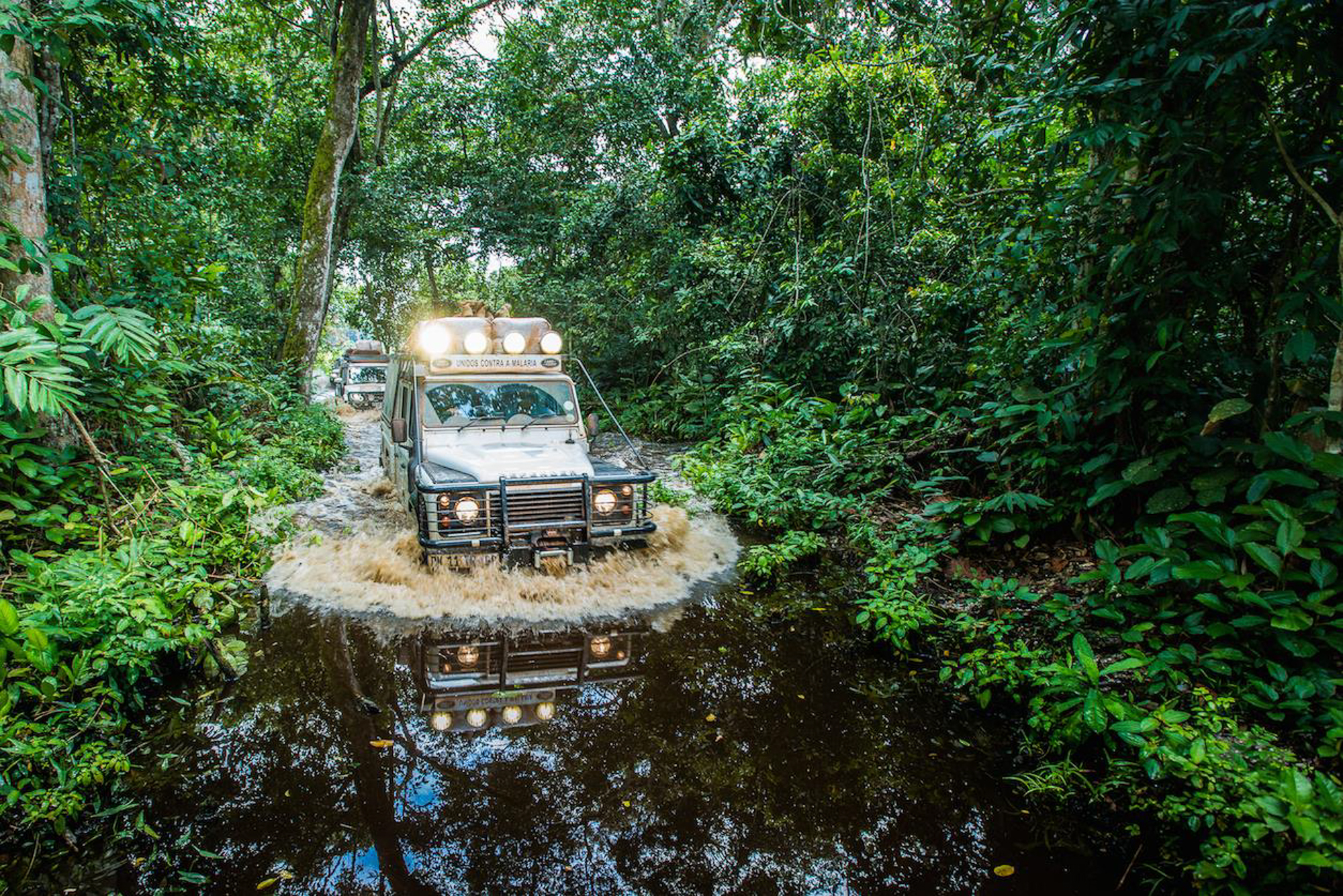
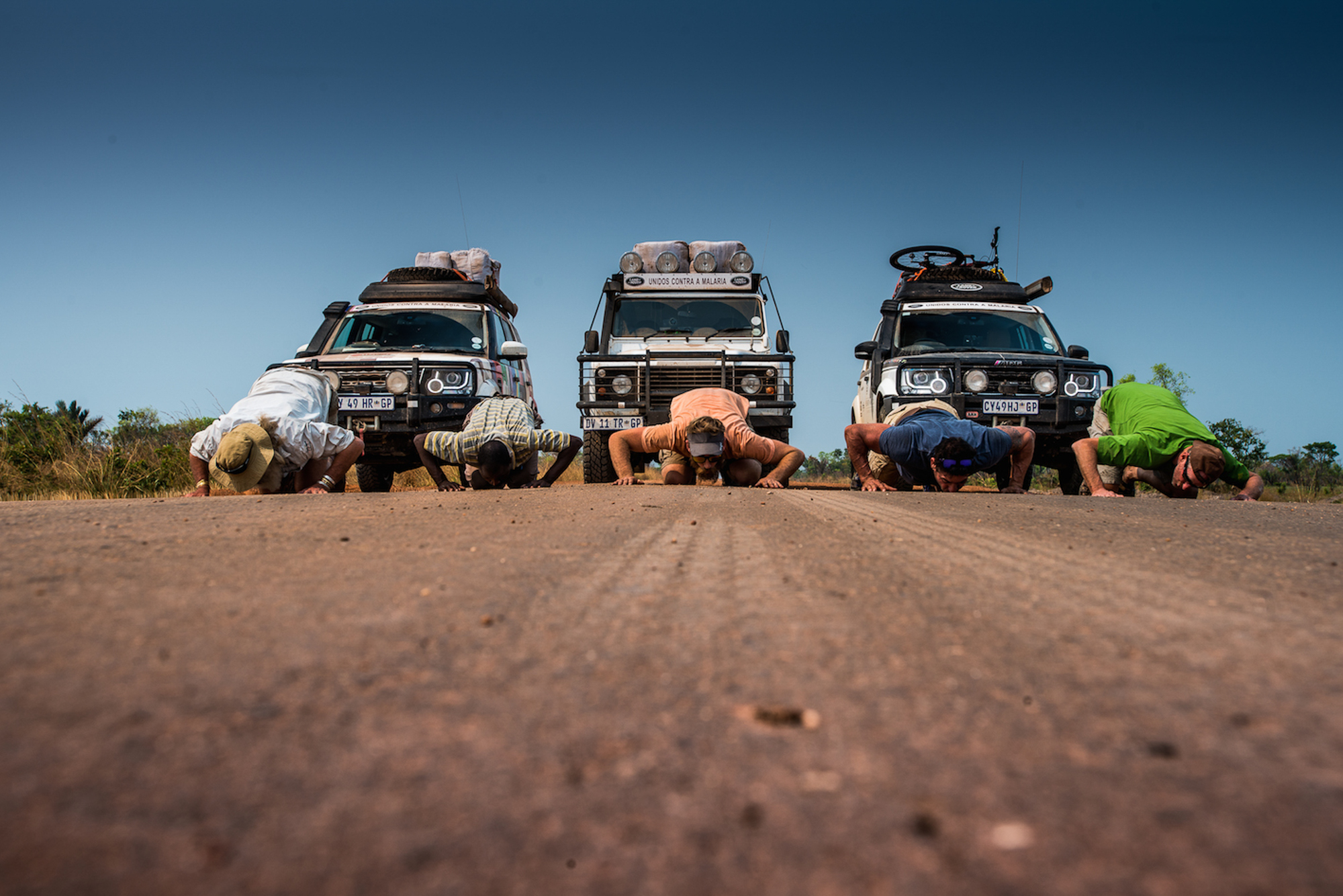
It’s an old expedition tradition that goes back at least 30 years. Imagine the scene as, with great relief, a bunch of unwashed, very dusty, ragamuffin travellers pile out of their similarly dirty Landies and kneel in a line on the road, whereupon—and generally amidst hysterical laughter bordering on the insane—make a great show of repeatedly kissing the tarmac. Don’t worry; we haven’t lost the plot. Not yet, anyway. The ceremony can only happen after we’ve been subjected to the hardships of extremely challenging bad road conditions that have lasted for days. This can mean goat tracks, no tracks, deep rivers, relentless ‘tree-to-tree’ out-of-the-mud winching, desert crossings, boulder-hopping, wash-away pole bridges, getting hopelessly lost, and sometimes, the fear of unexploded land mines.
This time, it happens in Angola. That’s because behind us is a supposedly six-hour road that became a three-day nightmare, with some tracks so deep that you could do a ‘no hands’ stunt on the steering wheel, leaving the Landy to follow the track on its own.
Kinshasa or Bust
We exit Angola and go into the DRC at Kimpangu. After scrutinising the body language of the DRC officials, it looks like it’s going to be a tough one. Left over from the past, a small, forgotten concrete sign reads Congo Belge (Belgium Congo). ‘You came all the way from South Africa to do what?’ says an incredulous Mr Big. I explain about our crazy Heart of Africa mission, but that doesn’t stop the paper shuffling. ‘Name of mother, father’s name, name of hotel in Kinshasa? Your profession?’
I choose to be a priest, my son Ross becomes a vet, and Bruce Leslie is now an astronaut. Thank the stars for Shova Mike’s schoolboy French, who is suddenly the expedition’s dentist. Six hours later and somewhat shell-shocked by a crazy night drive along a road that hasn’t seen a grader since ousted President Mobutu’s time, we get to an intersection that takes us along the nightmarish ‘Hell Run’ of the Matadi road. Here we find crabbing charcoal lorries with no lights, passengers hanging by their fingers from the outside of ancient, overloaded Peugeot minibusses, cops in the night waving us forward with dim flashlights, hundreds of bicycles and motorbike taxis bobbing and weaving, and unlit broken-down vehicles blocking the road.
It’s midnight by the time we crawl into the Hotel Béatrice, opposite the railway station in downtown Kinshasa, the sprawling capital of the Democratic Republic of Congo, and meet Papa Andre Kadimba, patron of the expedition’s Elephant Art campaign for children in the DRC. The next few days are a whirlwind of activity: the programme gives youngsters the opportunity to speak out against the slaughter of Africa’s elephants, and the appreciation for our Mashozi’s Rite to Sight distribution of reading glasses and malaria prevention work for mums and children amidst so much poverty is humbling.
Crossing the Congo River
Imagine the scene: two capital cities on either side of a great river—bustling wild-west Kinshasa on the south bank and across the mighty Congo River on the north bank is the more laid-back Brazzaville, capital of the Republic of Congo, a former French colony. Both cities are clearly visible to each other across the seven-kilometre breadth of one of the world’s greatest rivers. It’s taken us six countries and 33 days of hard travel to reach this point on a crowded river dockside on the Kinshasa side. Brazzaville, on the other side, is the real emotional starting point of this expedition, and we have to cross the Congo River if we are to succeed in our quest to reach the Heart of Africa.
Brazzaville, here we come, or so we thought. ‘But the government ferry, she is broken. Pas de chance! Hors service (out of service)’, says a smiling port official. We’re in trouble. Everything we’ve worked so hard for now hangs in the balance, and in the heat of the Congo basin, our patience wears thin as corrupt, greedy officials bunch around us like vultures, determined to extract as much as possible. It takes seven hours of negotiations and a massive dent in our tiny budget before we are finally allowed to cross by way of ‘special arrangement’ with a private barge owner.
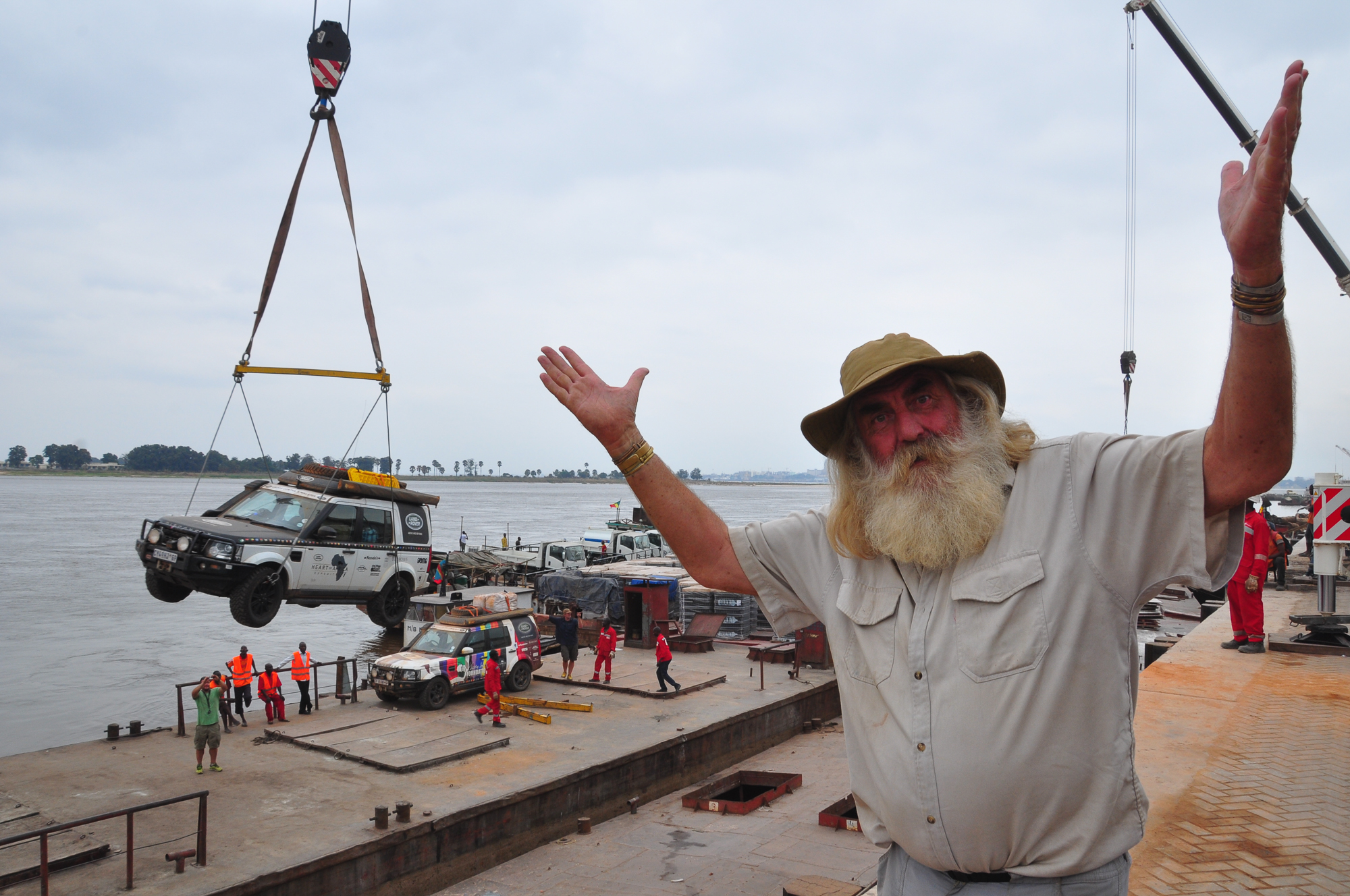
As a wonky old crane attempts to lower the three Land Rovers onto an ancient, rusty barge with an antique tugboat to push us across to Brazzaville, there’s a heart-stopping moment as Ndhlovukazi, the big Landy 130 Defender nearly tips backward into the swirling river.
It’s dark when we tie up amongst the flotsam and jetsam of old river boats and dilapidated, frozen-in-time cranes on the Brazzaville docks, only to be greeted by the words: ‘No unload crane, immigration closed.’ Over time, we’ve learned that whilst the Swiss might have invented the clock, it’s good old Mama Afrika that owns the time. So we throw out our tents and bedrolls on the hot metal deck of the barge that becomes home for the night. Out come the camp chairs, and we raise dented enamel mugs in a salute to the crazy. The heat is punishing: sweat pours, and the humidity is as thick as golden syrup. Sleep is almost impossible, and the next day, the tiresome bureaucracy continues—the only difference being that on the Brazzaville side, they’re more laid back and friendly.
Getting to the Heartland
Finally sprung from the clutches of the immigration authorities and with handshakes and wishes of ‘Bonne route!’ the three Landies enter the city of Brazzaville to meet with Amy Pokempner and her team from the Wildlife Conservation Society and Dr Paul Telfer of the Congo Conservation Company, both dedicated to conserving the vast area in which lies Africa’s geographic heart.
Amy buys into our adventure and gives us one of their best men, Nazaire ‘Naz’ Massamba, as our interpreter and facilitator. In the past, he’d accompanied Dr Brody Barr’s National Geographic Expedition in search of Mokele-Mbembe, the dinosaur-like creature said to live in the Congo swamps. In 1932, a British scientist had written about a frightening experience of seeing a giant serpent-like head emerge from the water. Dr Barr never found it, but rumours still abound, especially amongst the Ba’Aka pygmy tribes in the north, of a massive 20-metre-long, 5-metre-tall monster. In the 1960s, they’d even built walls around their villages to keep the beast away.
The maps show us that we’ll pass through more than 100 villages, head north across the Equator, then west, then back to the Equator, across the Sangha River, and then north towards the border with the Central African Republic where, in 200,000 square kilometres of swamps and equatorial rainforests, lies the Heart of Africa, our final objective.
We scoff down fried chicken and cold Primus beer in the backstreets of Brazzaville. The city is relaxed, friendly, and feels safe. The next day, we resupply with essential food and other supplies and head for the Heart; the most daunting part of the journey lies ahead.
A Stab to the Heart
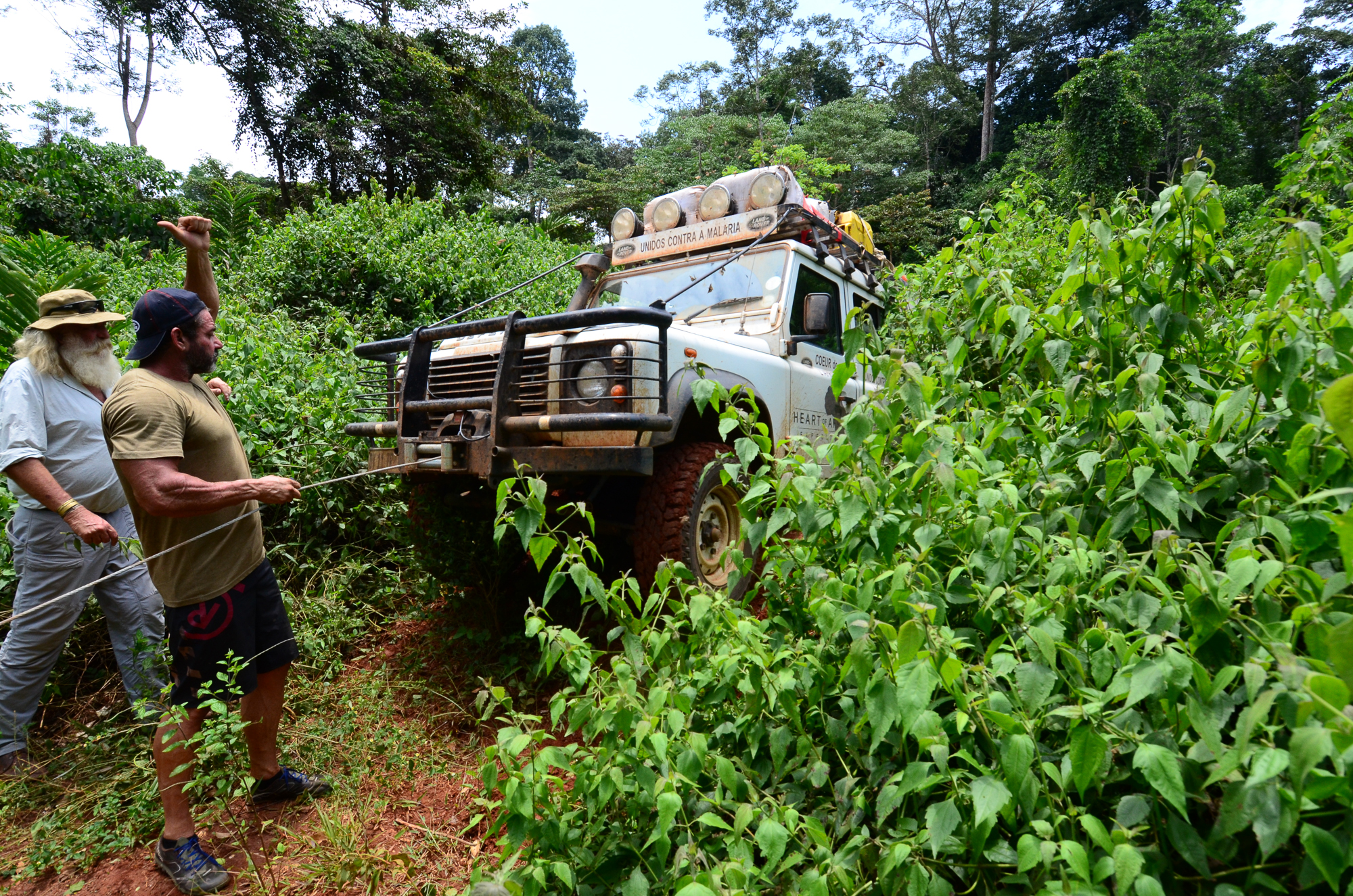
Deep in the rainforests days later, we hear about a track that could lead us towards the geographical centre of the continent called the Corridor des Elephants, an old forest elephant path. Wet with sweat, we cut, winch, dig, saw, and slash for hours, the sweat bees attacking us in droves. Big Deon Schurmann, who’s built like a baobab, slashes at the bush with his machete. He played club rugby in France and is as hard as nails but jumps sky-high as a huge snake slithers into the undergrowth. A giant silverback lowland gorilla races across the track in front of Ndhlovukazi.
The humidity continues to rise, and the hard work continues. ‘Can’t do it, we can’t carry on like this,’ says Brad eventually. We agree and, a bit despondent, turn the three Landies around, backtrack, and attempt another muddy path. Sunset comes, and we make camp surrounded by giant felled trees like poached elephant carcasses—dead behemoths that have fallen to the chainsaw as logging firms push deeper and deeper into the Congo rainforests.
Our wet, mud-covered clobber hangs over the Landies like a Chinese laundry. Ross sends up a drone. ‘Forest as far as the eye can see, and the GPS can’t pick up a signal—the canopy is too thick.’ He fashions a pulley system out of some towing ropes and hoists the GPS high into a tree, and we learn that we are just 27 kilometres as the crow flies from the GPS coordinates that mark the Heart of Africa.
But looking at the impenetrable forest, our spirits plunge. It could take forever. How are we going to cut a way through the thick undergrowth hemming us in? Our mission seems impossible. Then Naz comes up with the idea of enlisting the help of the Ba’Aka pygmy tribe to guide us on foot through the swamps and along forest elephant tracks. ‘They are the true forest people, the only ones who know this world of swamps, rivers, and following forest elephant tracks,’ he tells us.
The Heart of Africa or Bust
We park our ‘Braveheart’ Landies at the end of a forest track, pushing them hard to get this far in. Now, it’s on foot. Shova Mike has scribbled the words ‘Heart or Bust!’ on the map tube stuck jauntily into his backpack.
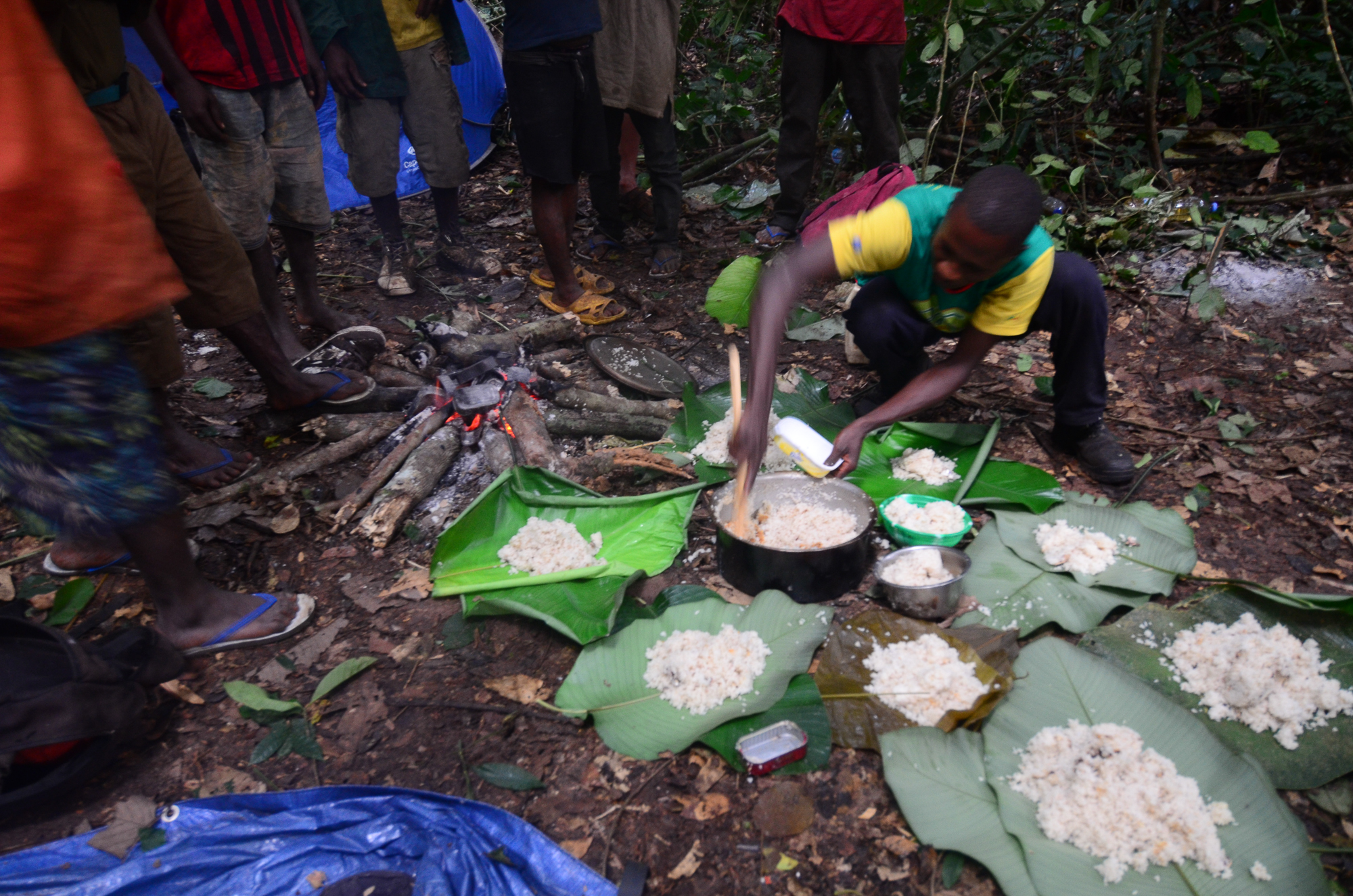
Around us sit 14 Ba’Aka porters, a pile of tents, canvas bedrolls, water bottles, two pots, five days of basic food supplies, porter rations of cassava, salt, tins of sardines, and a charged satellite phone. Then there are matches, the first aid kit, three GPSs, a journal, a roll of paper maps, the goatskin gourd carrying water from the Cradle of Humankind, and the Heart of Africa beacon in two sealed sections of plastic piping, each with a shoulder strap.
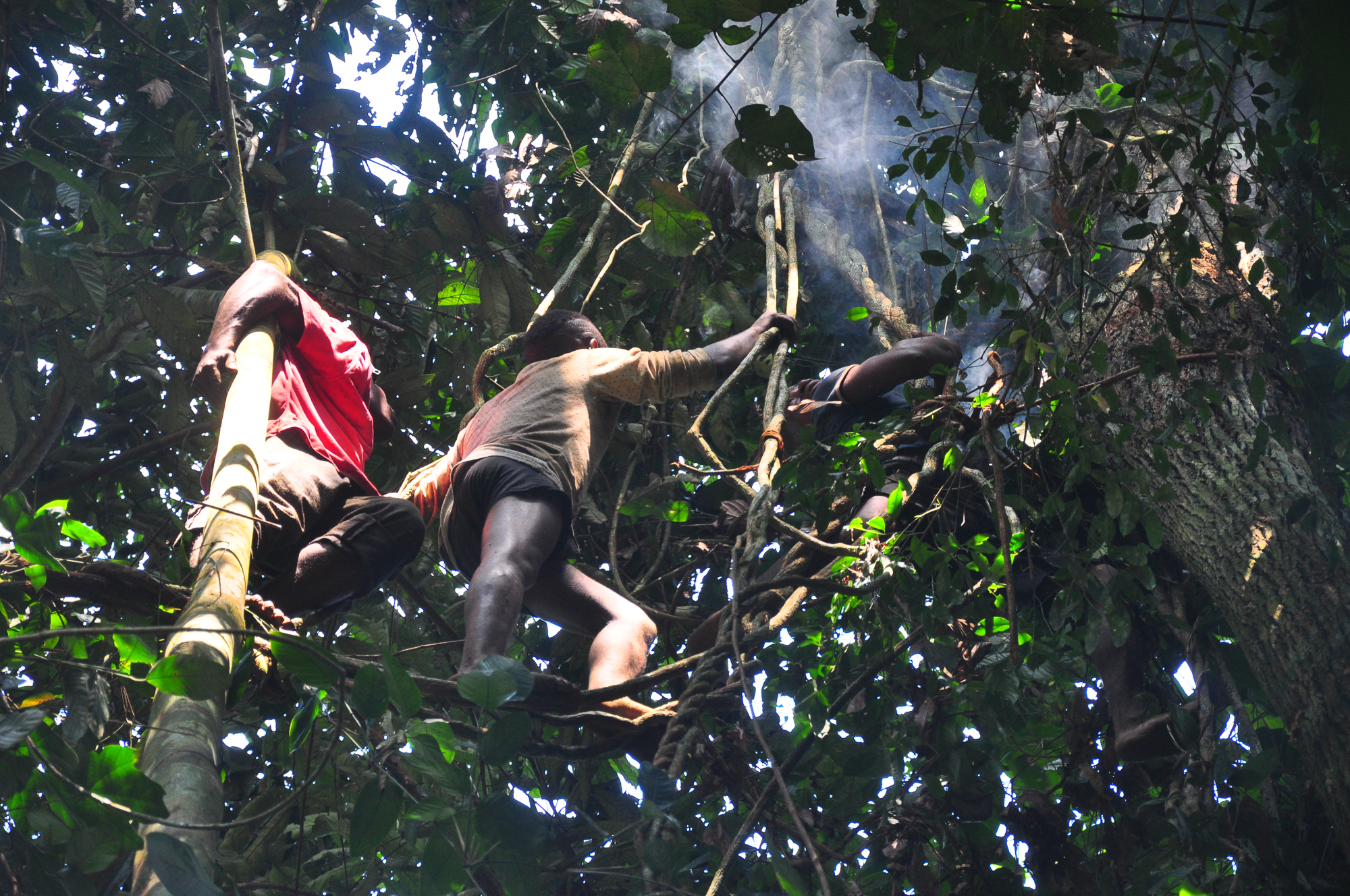
Our quest is what we are fired up to achieve, and as the ‘Greybeard’, it’s my time to talk. ‘Vivangkwako. I greet you Ba’Aka, men of these great forests and swamps. It is only with your knowledge that we can survive and cut a path to the Heart of Africa. My friends, we need your help.’ They grin and laugh in agreement; they are the most delightful little fellows imaginable. But through Naz’s interpretation, it soon dawns on us that whilst the Ba’Aka might have an incredible knowledge of the forest, they have little or no concept of what a map of Africa looks like, let alone a Congo map, nor do they understand the GPS coordinates. Only two of them had even travelled to the nearest town; scarier still, none of them had ever attempted to cross this area before. Still, they reverently place smouldering pieces of wood at the base of a massive tree, and then in the smoke, with much foot stomping, chanting, and rhythmically clicking bits of wood together, they shout for blessings from their God, Komba, and his son Todia, the one who’d brought fire to their tribe.
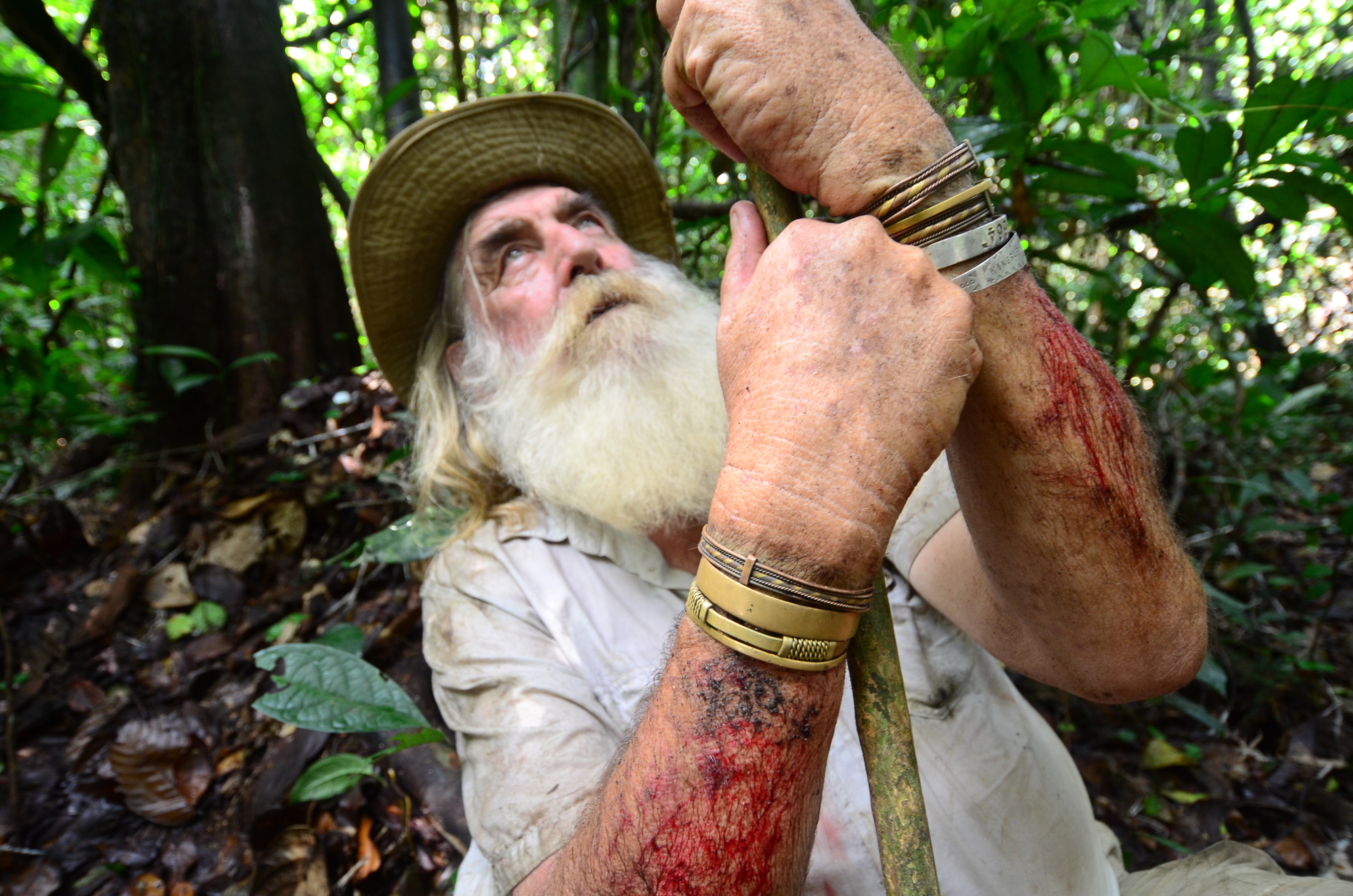
The sweat pours off our bodies, and bugs attack in swarms. Shova Mike is stung inside his mouth by a bee and begins spluttering. It’s his eighth sting of the day, and the poison too much for his system. We realize he’s in trouble as his left cheek swells and one eye begins to close. Brad jumps for the first-aid kit and jabs an EpiPen into Mike before his airway is blocked. A close call, and that’s just the start. We ask the Ba’Aka what three things they fear most in the forest. “Attack from big forest leopard, angry forest elephant, or the bite of Ndolo, the Gaboon viper for which there is no cure,” is the reply.
“Twende!” (Let’s go), shouts Ross in Lingala. The bush skills of the Ba’Aka are unbelievable; they cut thick liana vines into pieces, raise the end to your mouth, and out pours crystal-clear drinking water. Roots are used as bush potatoes to add to the cassava pot, and thin vines become strings to tie up the loads. Using fingers and toes and monkey ropes, they climb dangerously high to smoke out bees, allowing us to greedily suck out the energy-giving wild honey from waxy honeycombs. The beauty of the forest wonderland is unimaginable. A silverback gorilla crashes through the thick undergrowth ahead of us as we stumble in soft light under a canopy of ancient trees with giant buttress roots towering above us.
‘Dumi-Dumi (thunderstorm)’, shout the Ba’Aka, pointing to the sky as the rain begins to drum down relentlessly. Sopping wet, exposed skin torn by vines, we make camp in the pouring rain. It’s incredibly tough going, and after six hours of skirting deep swamplands comes the harsh reality that we’ve only made one kilometre as the crow flies, and that’s just the first day.
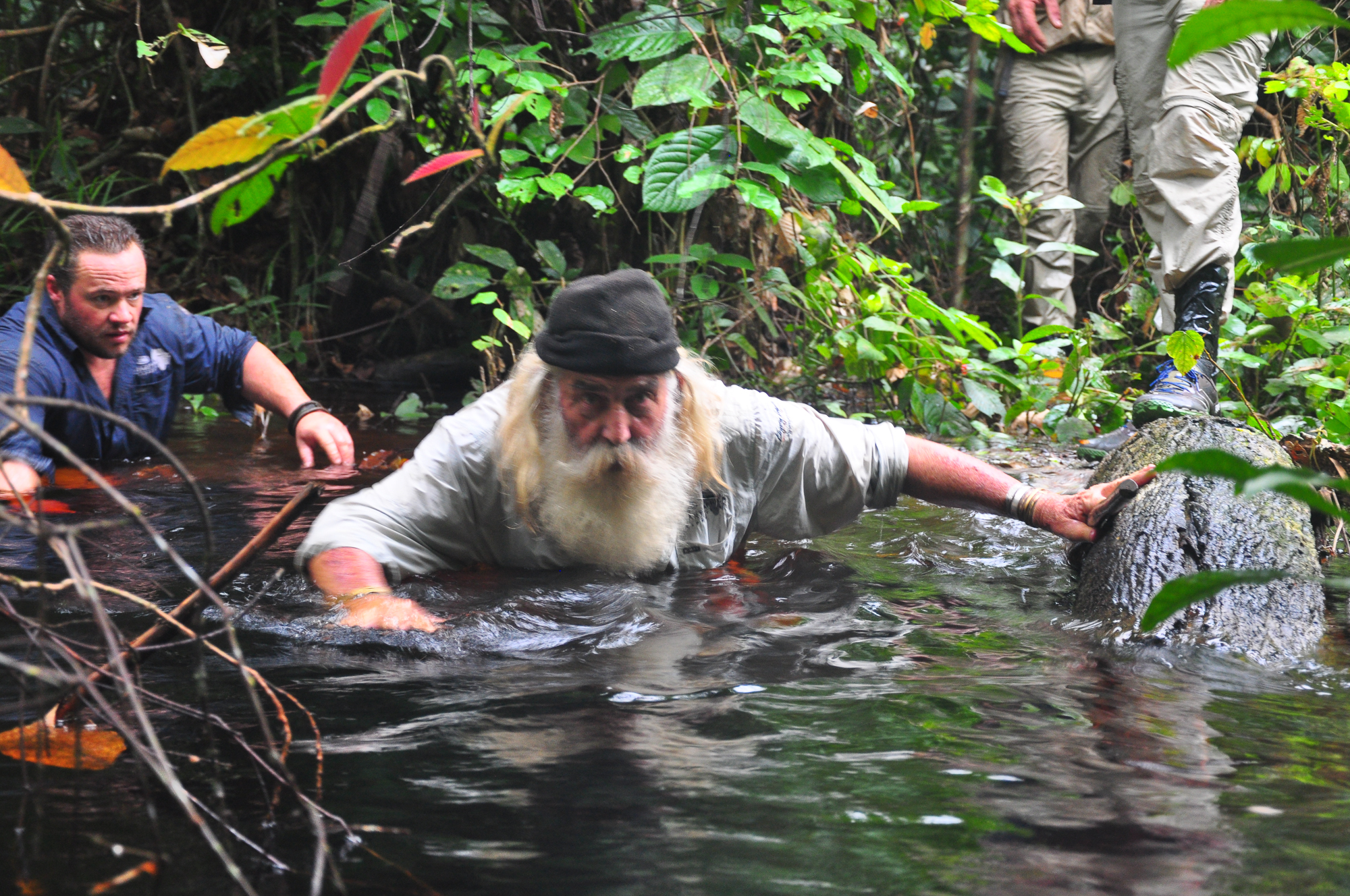
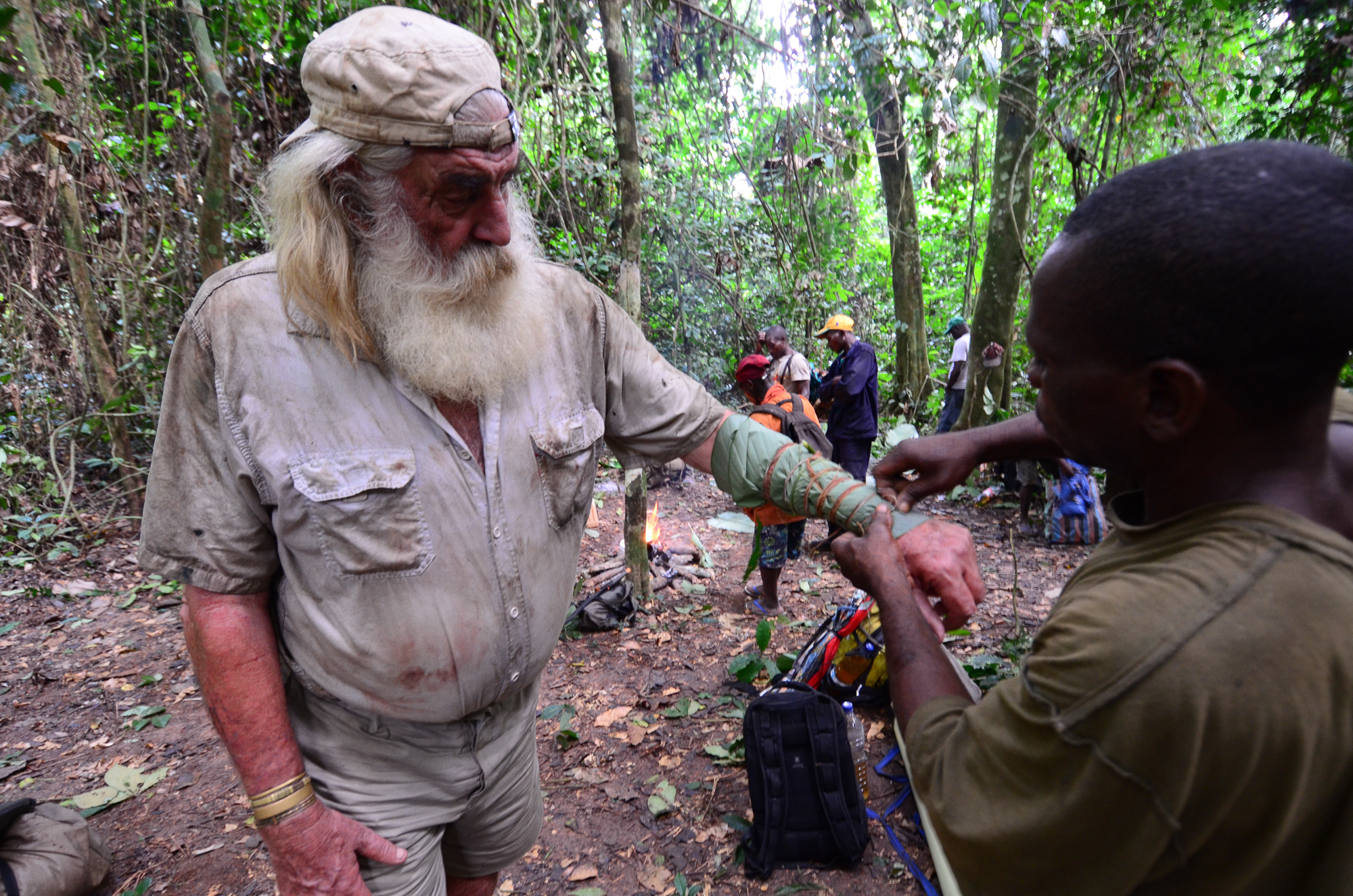
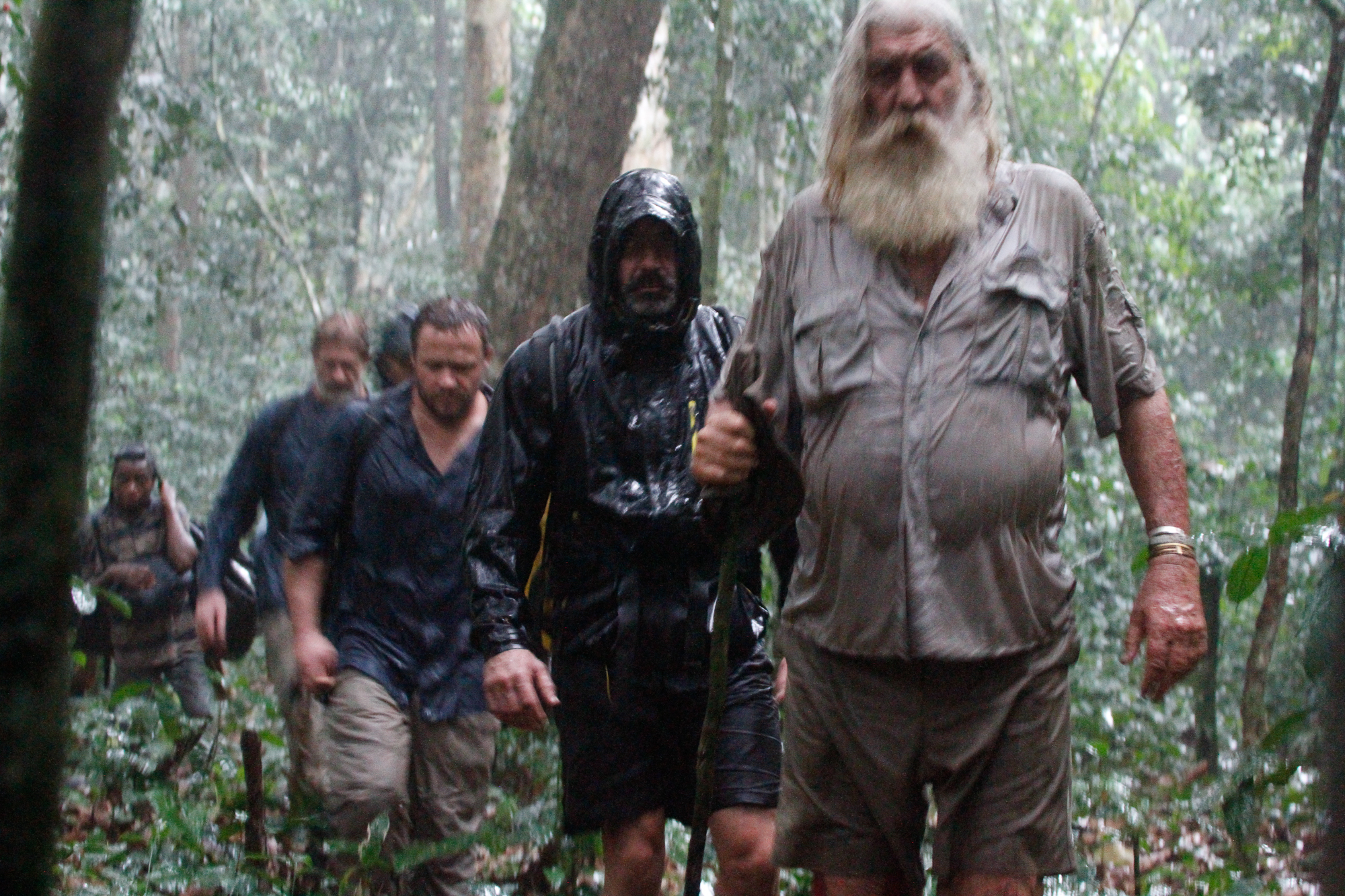
Who would have thought that after a Land Rover journey of over 9,000 kilometres, it would be the last 17.5 kilometres that would almost kill us? It becomes a physical and emotional nightmare of endurance that runs into the longest seven days of our lives: seven days of grabbing roots to pull ourselves on our bellies through muddy goo, constant deep mud wading, dragging, falling, and cutting pole bridges. Endless backtracking and detours to skirt impassable swamps. Swatting, cursing, and scratching, sweat bees crawling up our noses and into the corners of our eyes, enduring the stinging pain from countless army ant bites. Running low on food and barely sleeping. Blood pours from torn skin: one of the Ba’Aka takes to binding our shins and forearms with green broad-leafed Marantaceae leaves, favoured by the gorillas to eat and nest in. Soon, we’re all on strong antibiotics as infection moves in.
And then the moment of truth sets in. With just 1,7 kilometres of dangerous swamp ahead to reach the Heart, the Ba’Aka realize we have bitten off more than we can chew and begin turning back. I collapse my stinking, wet, aching body at the base of a tree that could well be over a thousand years old. One of which, if man has his way, will be felled and turned into furniture and ornaments one day, just like the rhinos and elephants that are slaughtered daily for their horns and ivory. Is this the end? I’m so exhausted I could give up and die. Naz is also ‘man-down’ and has been left behind at our last camp.
But Ross is having none of it. ‘We’ve come this far, and we will not fail’, he insists. So, using sign language and Big Deon’s French, we persuade the Ba’Aka to lead us on. Later, they told Naz that it was the wild determination in our eyes that they were touched by. Ross pulls me up by the hand, and the finest team of diehards I could ever wish to journey with gather around in support.
Seven hours later, in a daze of pain and exhaustion, we arrive at the coordinates. The hands of the Ba’Aka and the expedition team slowly screw the Heart of Africa beacon into the roots of an ancient tree. With some emotion, we pour out the symbolic water carried all the way from the Cradle of Humankind in South Africa.
On the beacon are the colours of the Republic of Congo flag, the words Geographic Heart of Africa, and the coordinates: 17.05291°E. 2.07035°N. On the other side is a small engraving of an elephant with the words: A tribute to Africa’s Elephants.
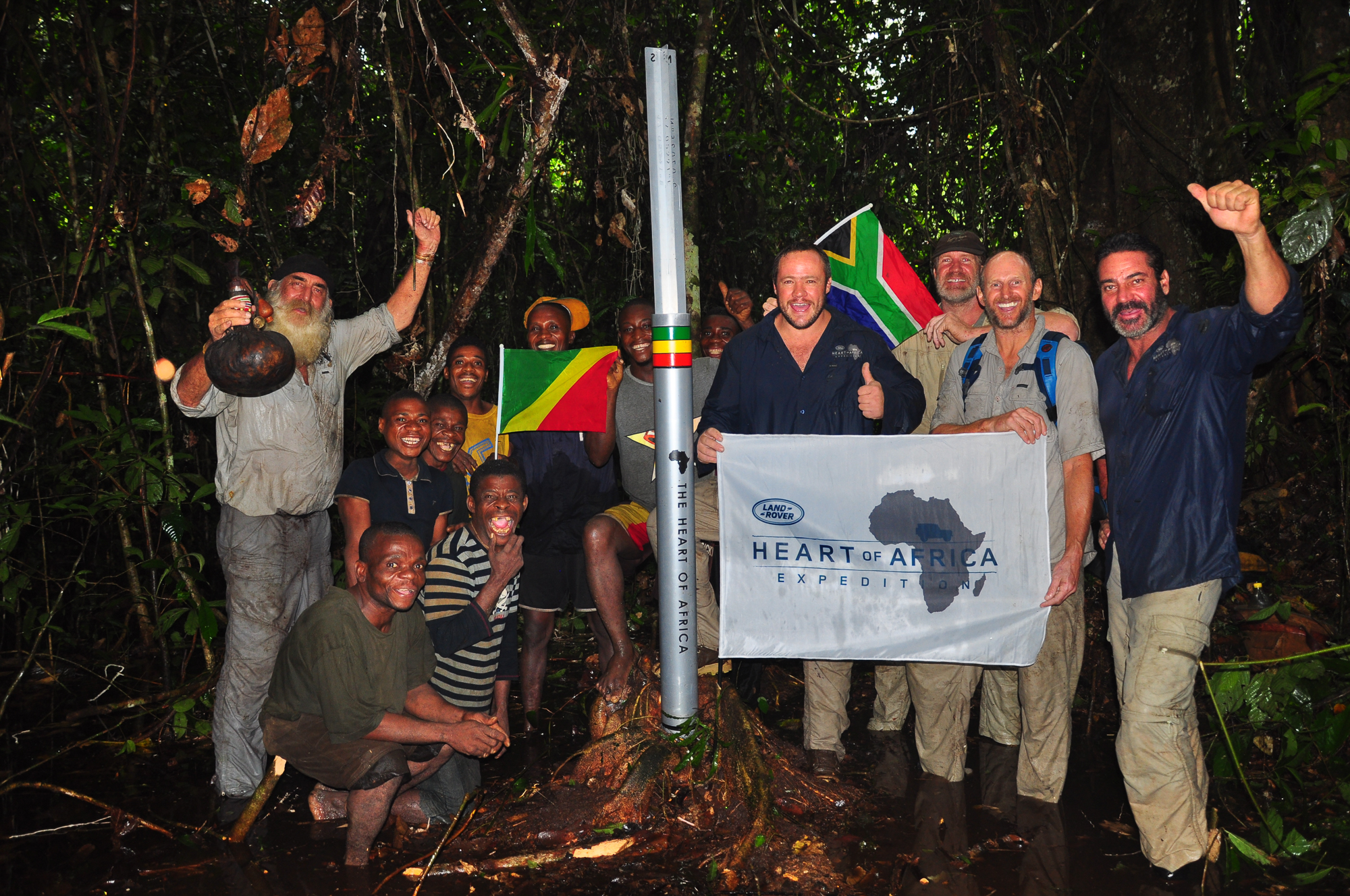
Days later, after more untold hardships, we complete the journey back to the Land Rovers, where after paying our Ba’Aka friends their wages, bonuses, and gifts, we ask them to each scribble their names and place a handprint into the Heart of Africa Scroll of Peace and Goodwill.
The spirit of the joyful Ba’Aka people will remain in the hearts of the team forever as the true, unsung heroes of the Heart of Africa Expedition. Thanks to them, a beacon that marks the geographic centre of the African continent now stands at the base of a tree deep in the swamps of the Congo rainforest, a vast area of pristine Mama Afrika that needs to be protected and treasured for future generations.
Editor’s Note: This article was originally published in Overland Journal’s Summer 2025 Issue.
For more on Kingsley Holgate’s expeditions, tune in to the Overland Journal Podcast :: Kingsley Holgate Shares his Lifetime of Overlanding Africa and Giving Back
Our No Compromise Clause: We do not accept advertorial content or allow advertising to influence our coverage, and our contributors are guaranteed editorial independence. Overland International may earn a small commission from affiliate links included in this article. We appreciate your support.