

Australia is a continent of contradictions, with crocodile-filled billabongs, ancient rainforests, and snow-dusted mountains. And it is vast, covering over 7.69 million square kilometers that include approximately 11,000 beaches. It features a desert (Great Victoria) nearly the size of France, and has more wild camels than anywhere else on Earth, along with a decent showing of snow in places during winter. For those with a love of remote roads and open skies, there’s nowhere quite like it.
When preparing for an overland trip across Australia, exploring some of the most remote places in this country of extremes, you need to be ready for anything. It’s a place where an epic road trip can quickly turn serious. The perfect setup doesn’t exist for such a diverse country. What could possibly work in the hot and humid tropical climate up north in the rainforest, and protect us from the Antarctic cold winds up in the mountains in Tasmania?
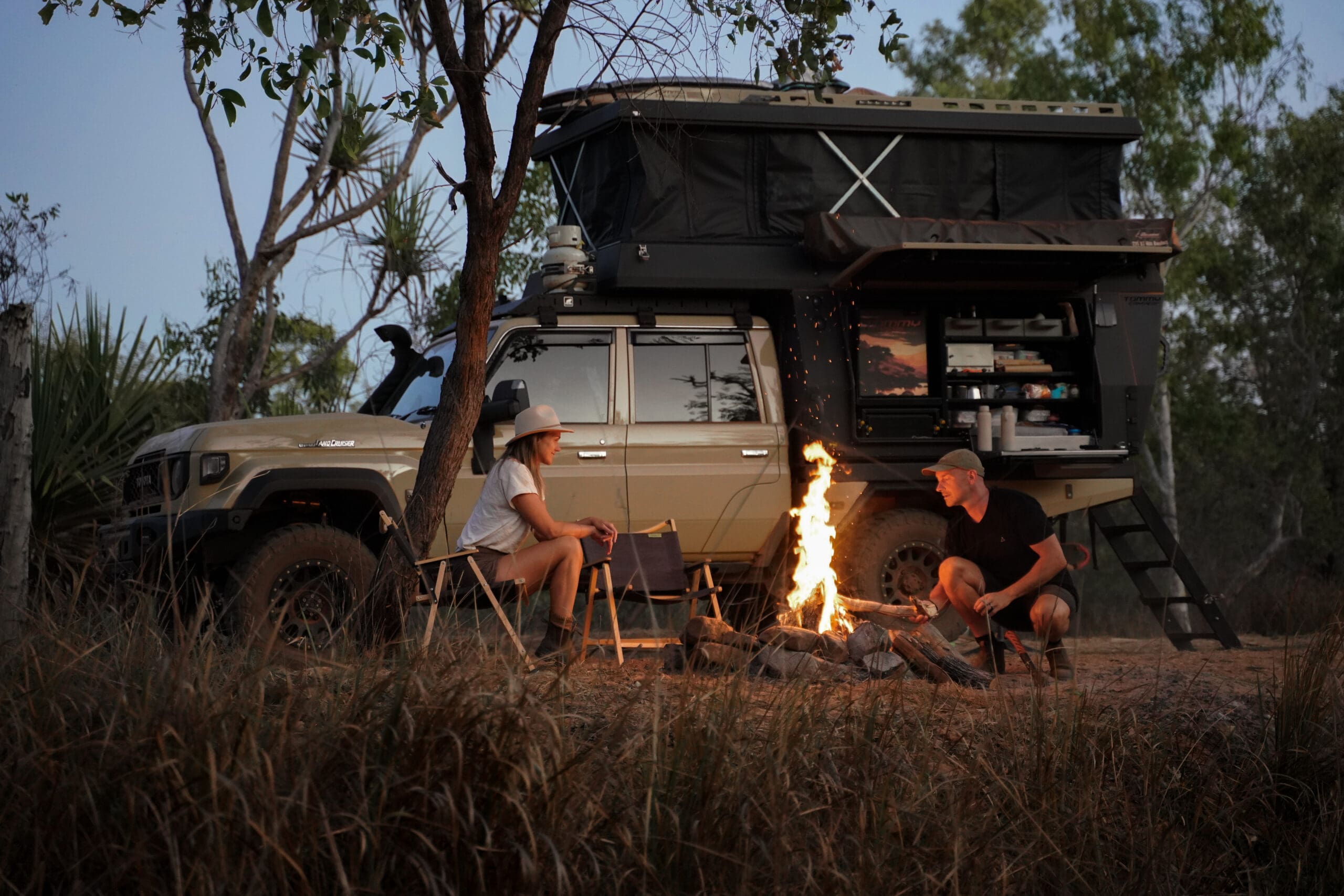
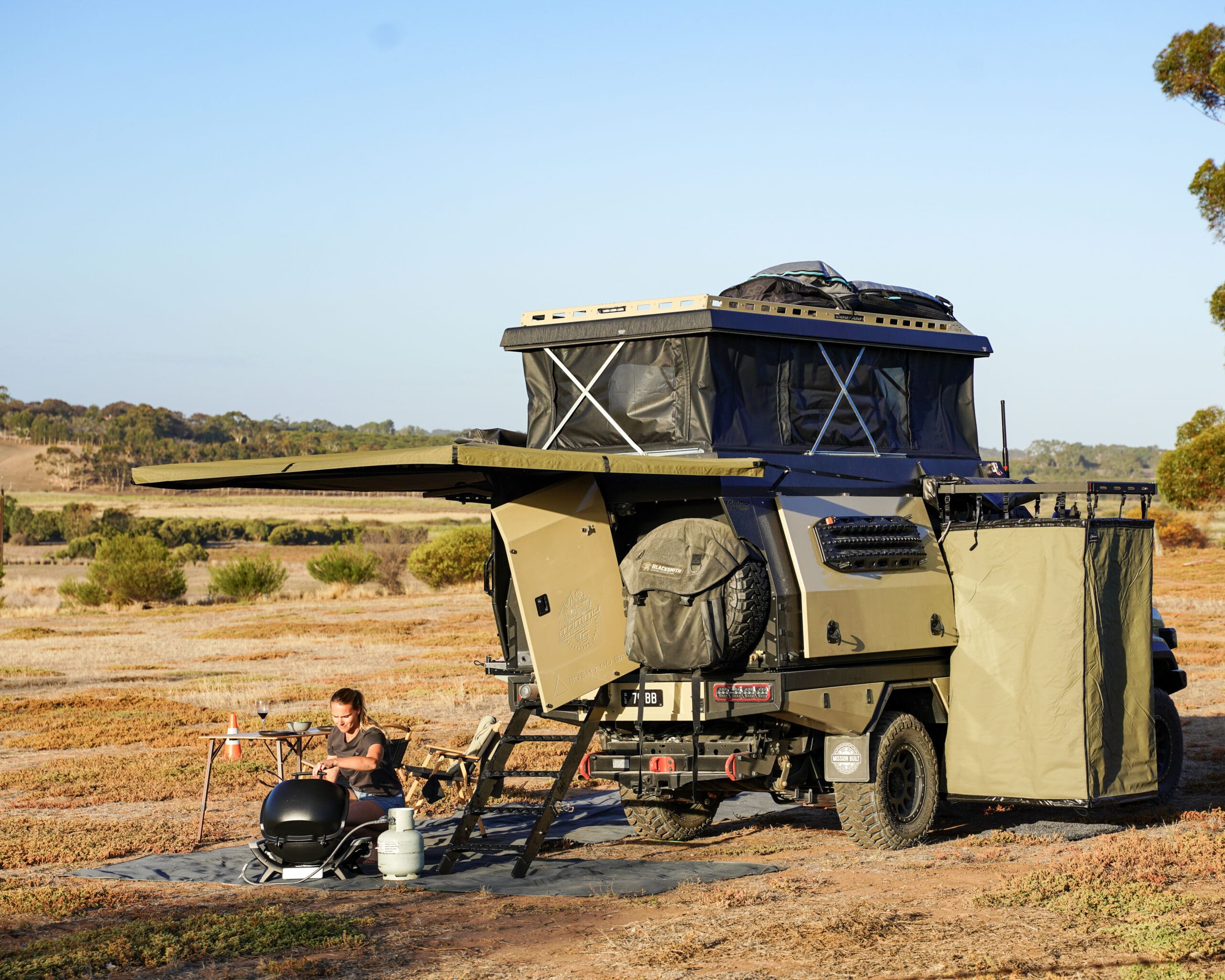
We moved to Australia in 2019 in search of more balance, space, and adventure. We didn’t grow up in four-wheel-drive vehicles hunting for the perfect camping spot. But somewhere along the winding roads and wide red tracks of this country, we found our rhythm. Over the course of three years and many off-road kilometers, that pattern evolved into a home on wheels: our 79-Series Land Cruiser with a custom-built Tommy Camper on the back, built for the kind of travel that gets dusty, wet, remote, and real.
Three years and 70,000 kilometers comprised our learning curve (while keeping full-time jobs) before figuring out the ultimate touring setup. Our overland journey to the perfect vehicle began in 2022, when we set out in a 2021 Jeep Wrangler towing a Patriot Camper trailer with a The Bush Company rooftop tent, taking short trips around Australia. We loved the freedom it gave us, but it wasn’t quite the full-time setup we were chasing. Even though we keep things simple, we’ve come to value a bit of comfort, especially in the middle of nowhere.
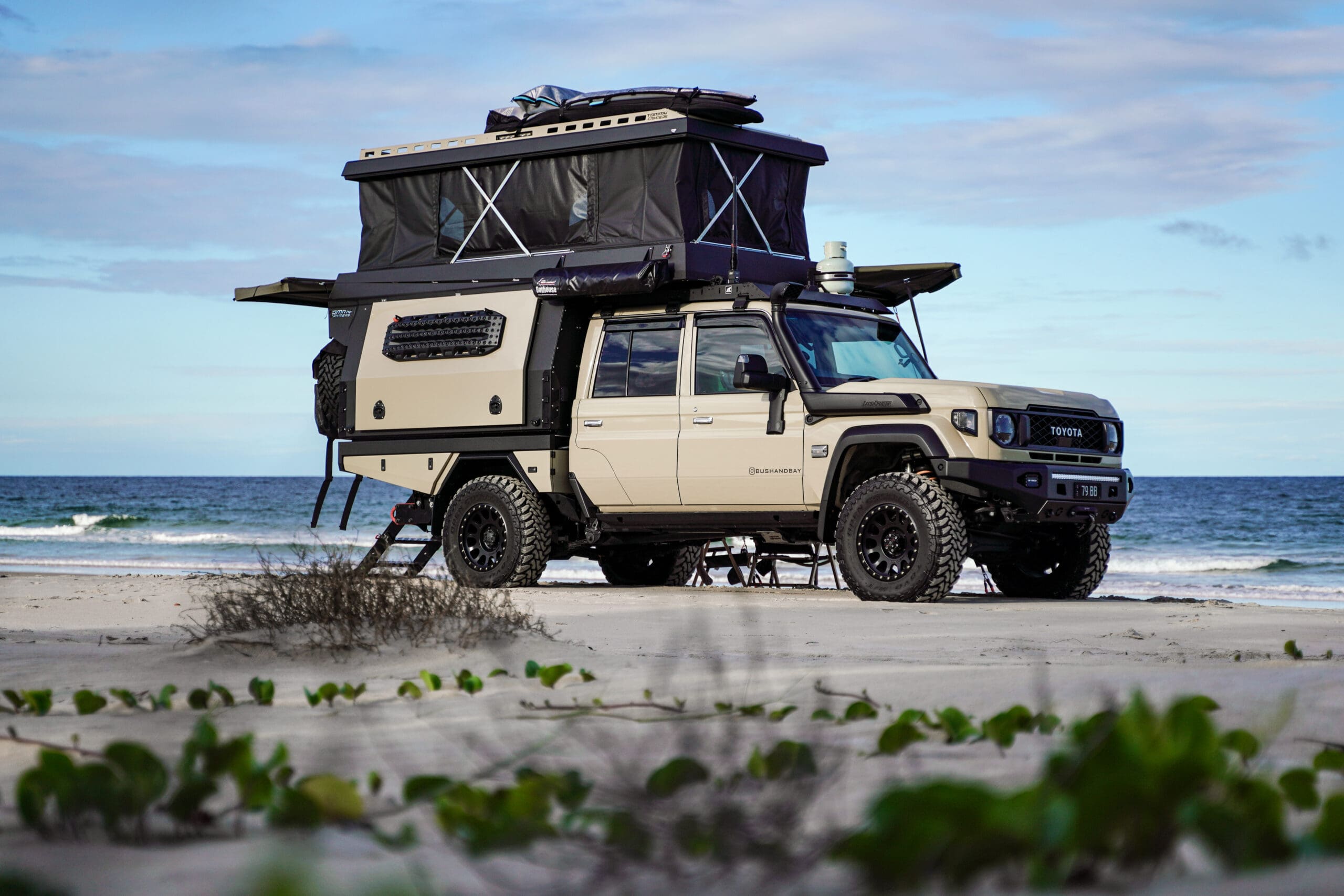
With a lack of four-wheel-drive experience but a passion for cars, my partner, Wim, worked for BMW in Europe for 17 years. From BMW to Jeep, and from Jeep to a Land Cruiser, is like going back in time. Why Toyota and why a 70 Series? We wanted something straightforward. Something we could live in, not just camp out of. So we made a wishlist, and towing wasn’t part of it.
First up: reliability. We needed a vehicle that could be trusted to take a beating. The Toyota 70 Series ticked that box. You can’t find many new cars being built with an old-school mentality that are made to last forever.
Second: fixability. Every bush mechanic knows a 70 Series. It is, and always has been, Australia’s most popular farm truck—a highly sought-after icon, especially in the Sandy Taupe colour. If you break down in the Outback, odds are any shop will have the tools and the parts to get you moving again.
Third: it had to be an automatic transmission. We couldn’t imagine driving that many kilometers with a manual. As luck would have it, 2024 was the year Toyota launched its first-ever auto option in the 70 Series, pairing the 2.8D engine with a proper 6-speed automatic. Our decision was made, and an idea came to life.
There were two options for us: a Troop Carrier or a truck. While a Troop Carrier had long been a fantasy of ours, living in one full-time did not seem realistic. A few traits were crucial, and interior space was among them.
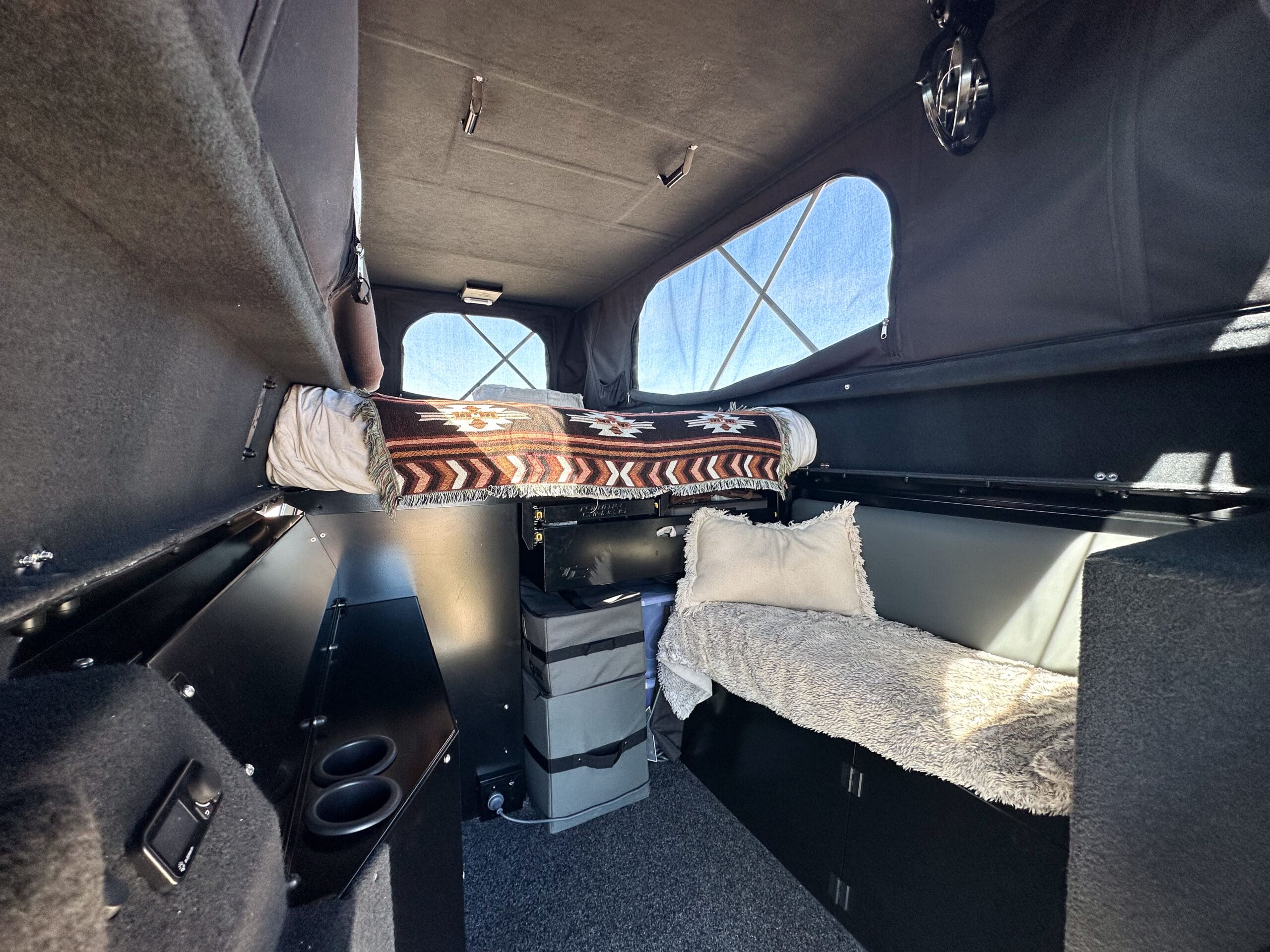
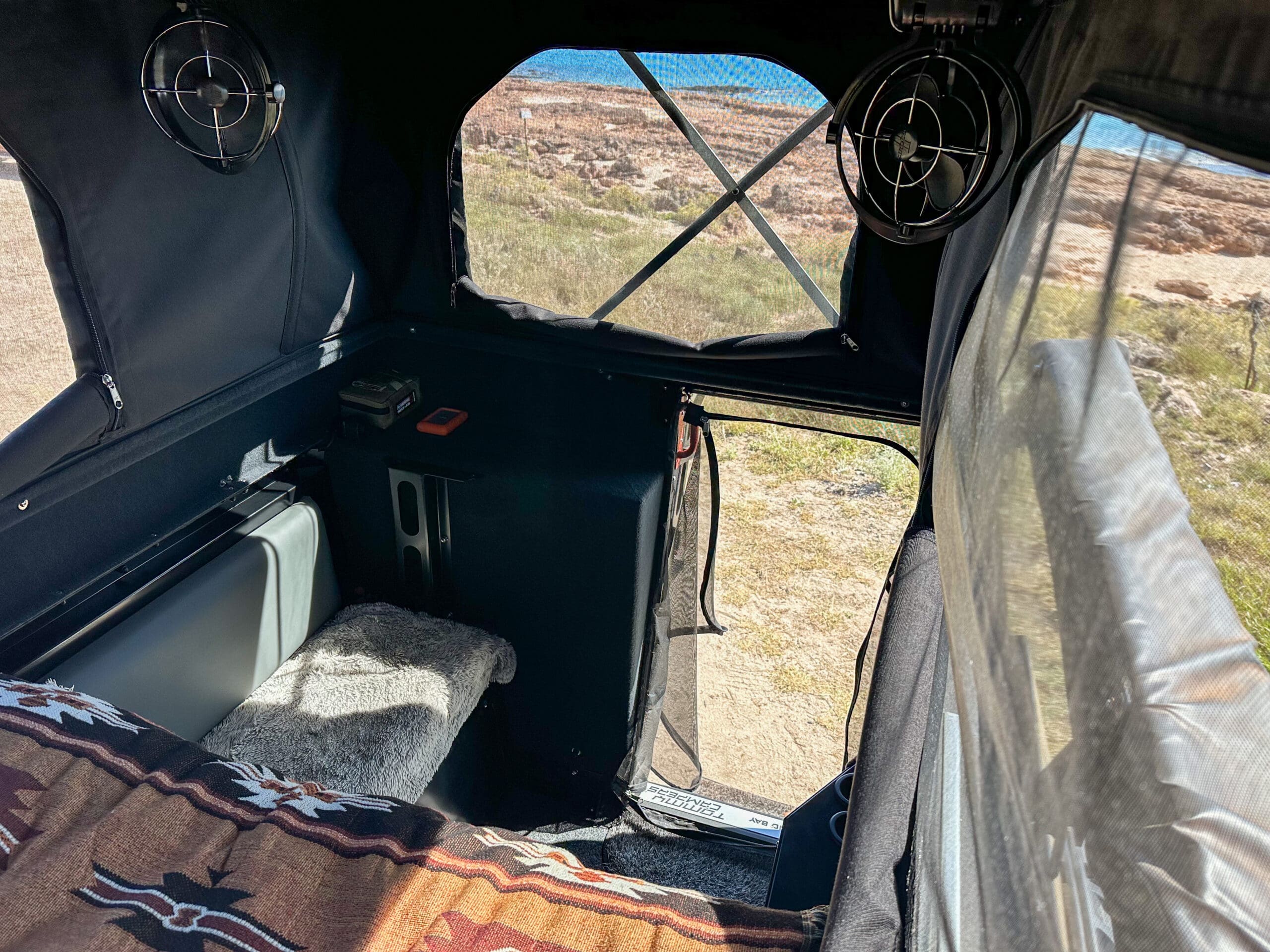
By coincidence, we stumbled upon Tommy Campers, an Australian business that has been building its own campers on the East Coast since 2015. Their tag line, “Born overlanding,” resonated with us immediately. It’s a slide-on, fully customizable camper that doesn’t look like one, built out of a 3-millimeter-thick aluminum shell with the same values as a 70 Series (simplicity being one), with the sweet surprise being the comparably massive interior space. While the kitchen area is still outside, which we absolutely preferred, this camper has a space inside where we can sit, work, and even use our own toilet in inclement weather.
After visiting their showroom on Queensland’s Sunshine Coast (the place we call our permanent home), we were sold. The possibilities were endless, and the list of options kept us awake for weeks, but to get started, we needed a truck capable of carrying 900 kilograms (fully loaded). We picked up a demo GXL dual-cab 79 Series from a Toyota dealership in Cairns, 2,000 kilometers from home, with the right specs and in the right color, and promptly ordered a custom Tommy Campers S6X for the back.
The camper’s lead time was four months, so we had four months to turn our stock GXL 79 Series into an overlanding beast that could not only handle the extra weight with ease but also navigate Australia’s rugged terrain. The list of upgrades was long, but we started with a 300-millimeter chassis extension, a 2-inch lift, and a GVM upgrade to 4.2 tons to carry all that weight (legally). Was a chassis extension necessary? Legally, no; for weight distribution, yes. We would say it’s part of why the truck handles so much better.
Unfortunately, a horrible turning circle is something that you have to live with. We picked manual-adjustable XGS Remote shocks from TJM, essential for the ever-changing road conditions, from heavy corrugations to soft sand. We paired the 2-inch lift with some 33-inch Toyo Open Country mud-terrain tires, our tire of choice for three years running—zero issues, minimal road noise, and extremely high off-road qualities.
To complement the upgrades, we opted for an Offroad Creative front bar with an integrated LED bar and a winch (essential when traveling solo in our opinion), protected from the elements. The side steps and roof rack from Offroad Animal completed the look.
The next step was to install a new rear differential for weight distribution (again) and to correct Toyota’s engineering mismatch. From stock, the rear wheel tracks don’t follow the front, which might be okay for farming, but less so for sand driving. We opted for Dwiz, an Australian business that offers 4WD excursions to the world’s largest sand island, K’gari (formerly Fraser Island). They created the perfect rear track correction kit for their vehicles out of necessity and now sell it. With this addition, we were ready to tackle soft sand with confidence.
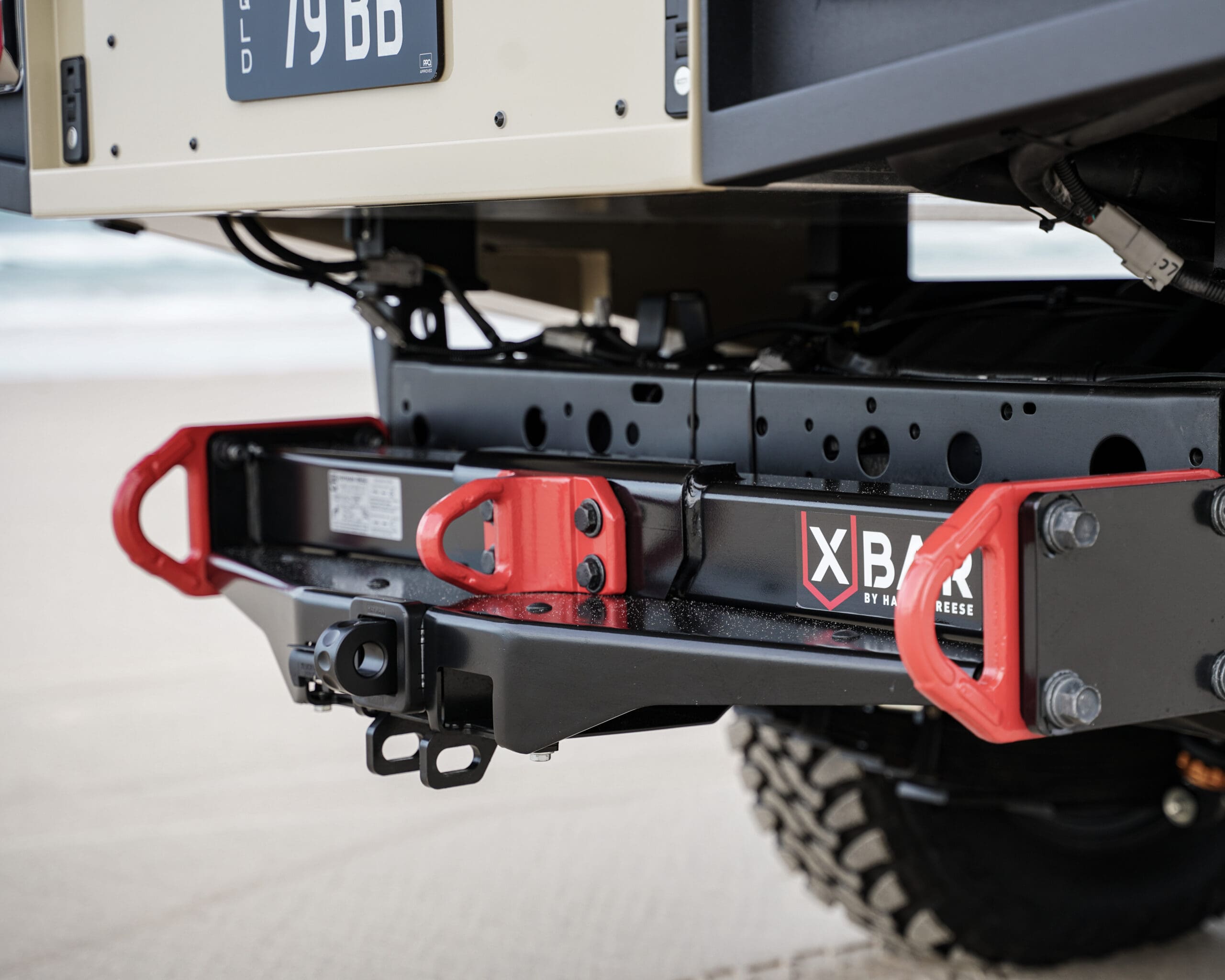
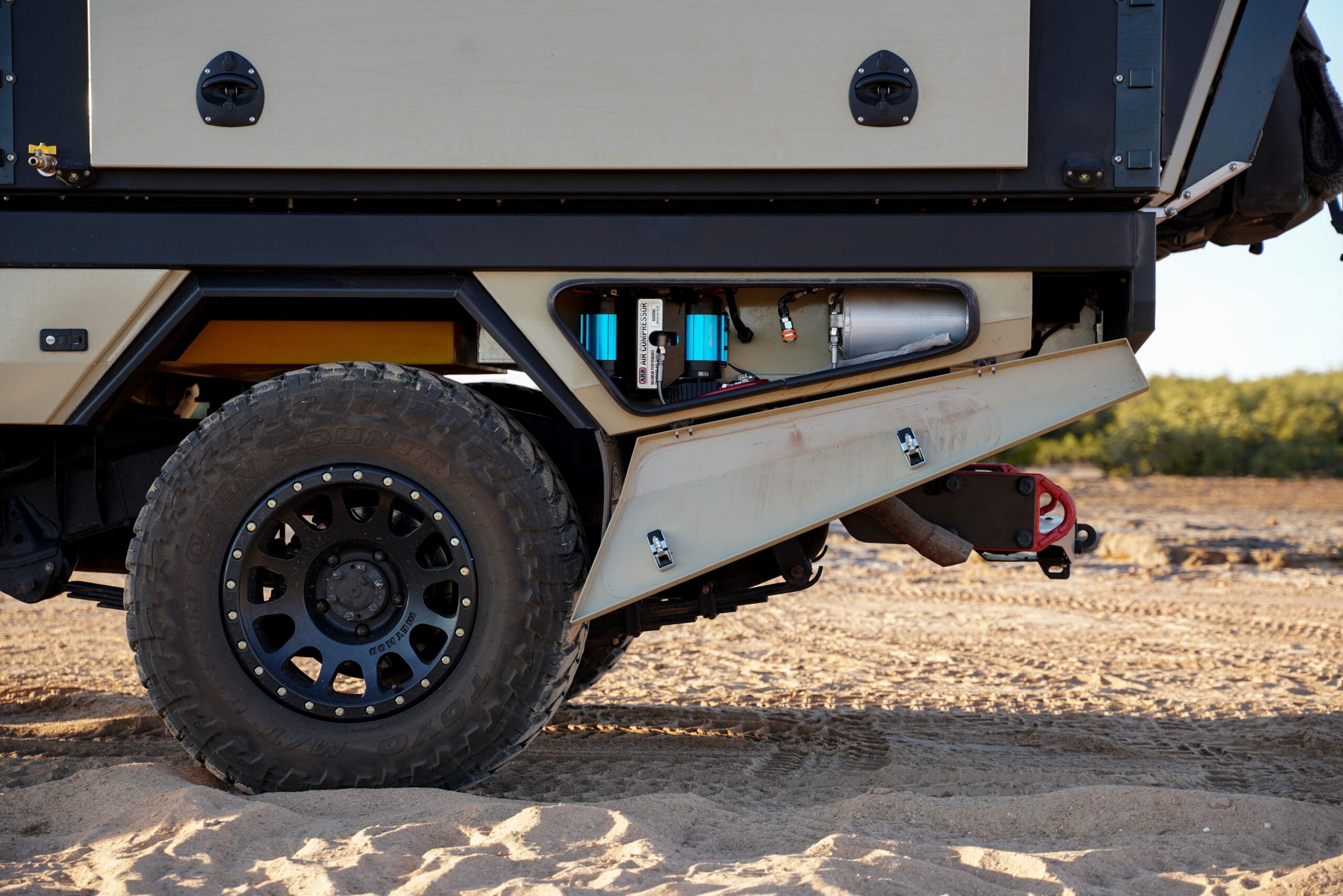
To make a 2,100-millimeter-long and 1,900-millimeter-wide camper fit a much smaller truck, a custom-built heavy-duty aluminium tray was essential. We color-matched the tray to our Tommy camper and removed the headboard, which, aside from the obvious benefits, also improves the camper’s appearance by making it look less bulky. We requested toolboxes, mounted our dual ARB air compressor in one, and included a rear trundle drawer for tools and an extra fuel tank. It’s the little things that make life on the road easier, like being able to inflate tires quickly or grabbing tools without unpacking everything.
There are two things we hardly touched: the engine and the interior. Under the hood, we added an extra fuel filter because Australia has some extremely remote, old little towns with dodgy diesel, and added some breathers for river crossings (as a snorkel isn’t the only thing you need).
The interior of a 70 Series looks straight out of the 1970s. I don’t think they changed much apart from a few additional charging points, a cup holder, and a touchscreen to connect your phone. It feels old-school, but in a good way, and that is fine by us. We did, however, ask the team from Cruiser Consoles for a few luxuries: a center armrest with cupholders, a roof console with storage, a built-in UHF radio, and an upgraded stereo system (replacing the two stock speakers with eight).
Finally, an 80-liter auxiliary fuel tank was installed under the tray, connected to the main tank via an overflow. The distance between fuel stops often exceeds 1,000 kilometers, which is the main reason to choose peace of mind with the extra fuel tank.
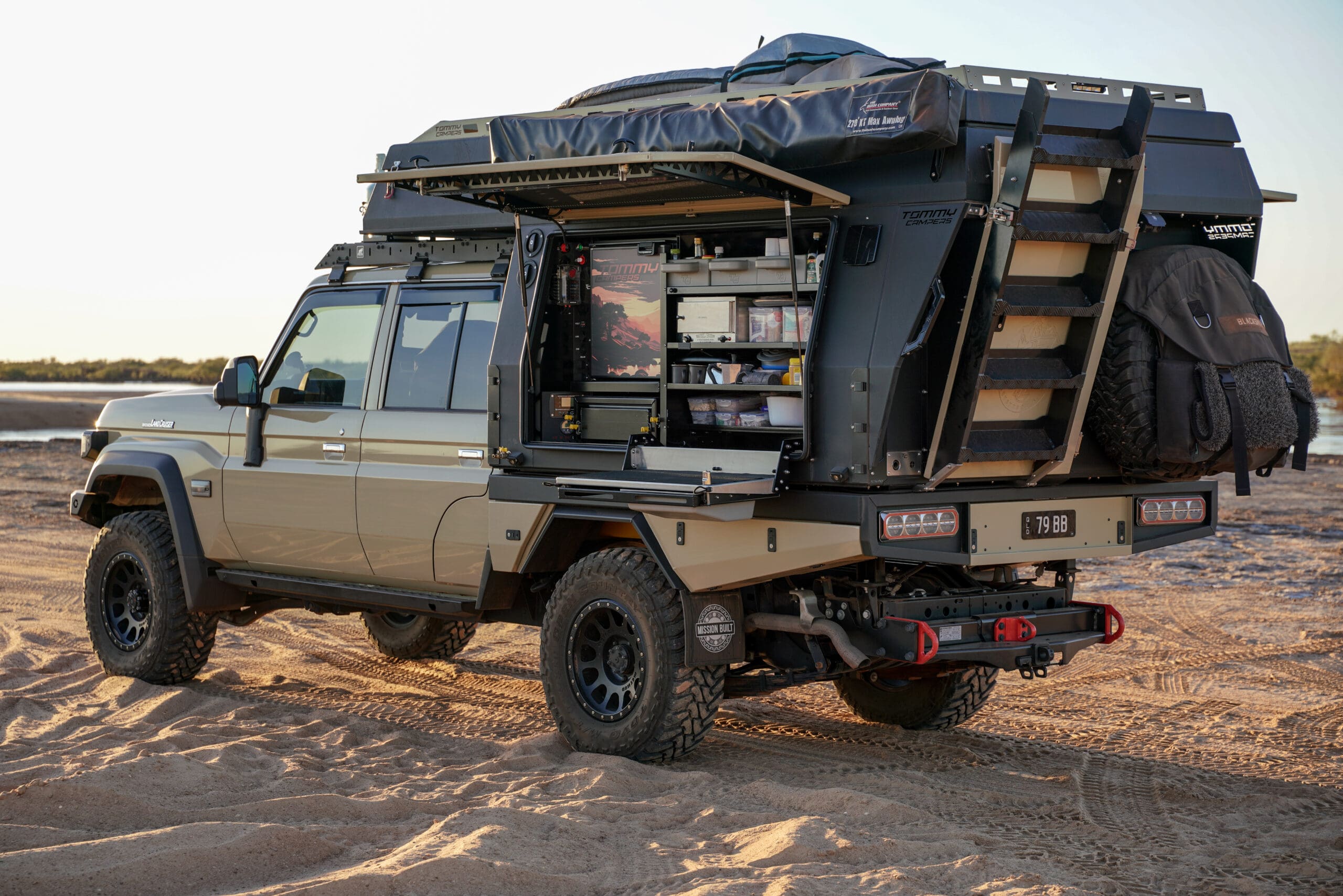
Five months after we started the build, the truck was ready for the Tommy Camper. Two thousand kilometers south of home, in the small town of Ballarat near Melbourne, the team from Tommy Campers had gone above and beyond to create our camper. It had color-coded gull-wing doors, a seating area with a slide-out table, and a full L-shaped outdoor kitchen inspired by Patriot Camper’s kitchen but tailored to our needs. There were integrated rock lights, a roof rack, and enough inside storage for two people to live, work, and hide from extreme weather. Our dream had become a reality.
Inside, a diesel heater keeps us warm for those single-digit nights, and there is a hidden chemical toilet for when nature calls and the weather’s rough (believe it or not, it happens a lot). While life on the road often looks amazing, it’s often harder than you think. The weather can make or break your day, which we realized after previously living and working in a rooftop tent for a few months.
A 200 amp-hour battery, 400 watts of solar, and a 2,000-watt inverter make working on the road a snap, easily powering all six of our cameras, laptops, and the rest of our toys. Two 75-liter water tanks can keep us remote for about a week; our Bushman 65-liter fridge usually runs out of food before we run out of water.
We travel fast, but we love a good meal in the evening. Our outdoor kitchen provides plenty of space, is quick and easy to set up, and feels like home, which is fantastic. The large 270-degree awning from The Bush Company covers our entire kitchen and rear door, making cooking much easier, especially in the rain. We also chose The Bush Company’s Outhouse shower tent (a hot-water shower is a luxury we don’t care to live without), which matches the style and quality of their awning.
A hot water system powered by our batteries heats 10 liters of water and maintains the desired temperature. We typically activate it while driving, so it doesn’t drain our batteries, allowing us to enjoy hot water instantly at any time of day.
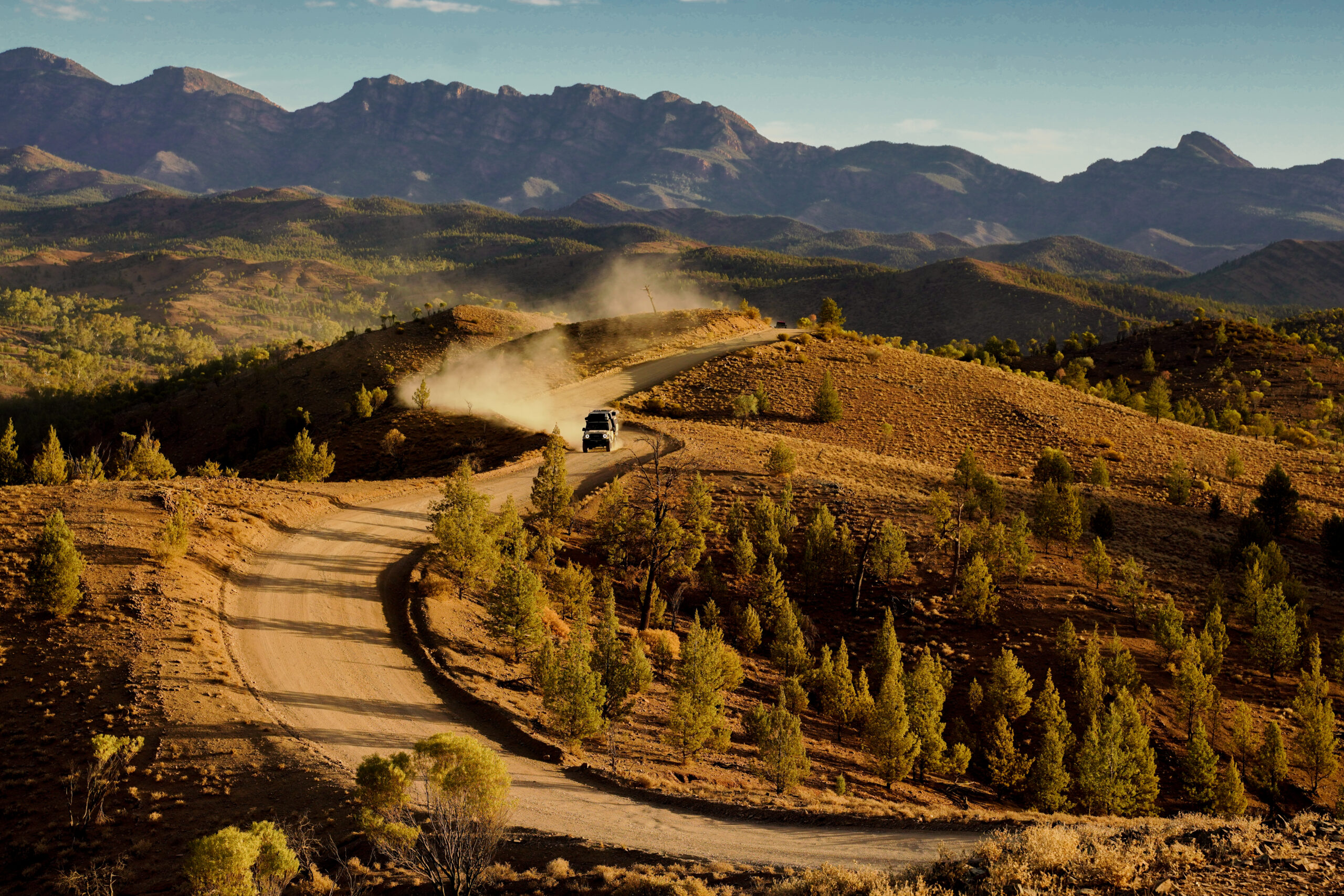
We won’t say we’ve built the perfect rig; that doesn’t exist. But we’ve built something that works for us—intended for overlanding, but also designed as our home on wheels for the next few years while exploring the most remote corners of Australia. We’re a few months into our Big Lap, chasing sunsets, muddy tracks, and quiet corners only a few people reach. The Land Cruiser growls along, and the Tommy keeps us sheltered. Out there, that’s what really matters.
Specifications
2024 Toyota GXL 79-Series Land Cruiser (dual-cab chassis)
Power
2.8-liter GD-6 turbo-diesel engine (150 kilowatts and 500 newton meters of torque)
Automatic 6-speed transmission
Suspension and Drive
4.3:1 final drive ratio
Front and rear diff lockers
Dwiz rear-track correction kit
TJM XGS Remote shocks, 2-inch lift
GVM upgrade (4.2T)
Wheels and Tires
Method Race Wheels in matte black, 17×8.5 305-HD NV
Toyo Open Country M/T 295/70R17
Recovery and Armor
Offroad Creative front bar
Carbon Offroad 12,000-pound winch
Offroad Animal rock sliders
Hayman Reese X-Bar
MaxTrax MKII recovery tracks
Saber recovery kit
Accessories
The Bush Company 270 XT Max awning
The Bush Company Outhouse shower tent
Stedi LED lights (front bar)
Stedi roof rack LEDs
Stedi rock lights
ARB twin air compressor and tank
Enerdrive power system, 200 amp-hours lithium, 2,000-watt inverter, 400 watts solar, AC/DC charger
Bushman 65-liter fridge
Duoetto MK2 electric 10-liter water heater
Offroad Animal Roof Rack
GME heavy-duty antenna
Hema Maps HM-CAM202 high-resolution, heavy-duty, dual-lens reversing camera
Hema HX-2+ GPS navigator
Cruiser Consoles interior roof console with storage and GME UHF radio
Cruiser Consoles center armrest
Cruiser Consoles Audio Upgrade
One Stone armrests
Muk Mats
MSA 4×4 side mirrors
Editor’s Note: This article was originally published in Overland Journal’s Summer 2026 Issue.
Our No Compromise Clause: We do not accept advertorial content or allow advertising to influence our coverage, and our contributors are guaranteed editorial independence. Overland International may earn a small commission from affiliate links included in this article. We appreciate your support.