

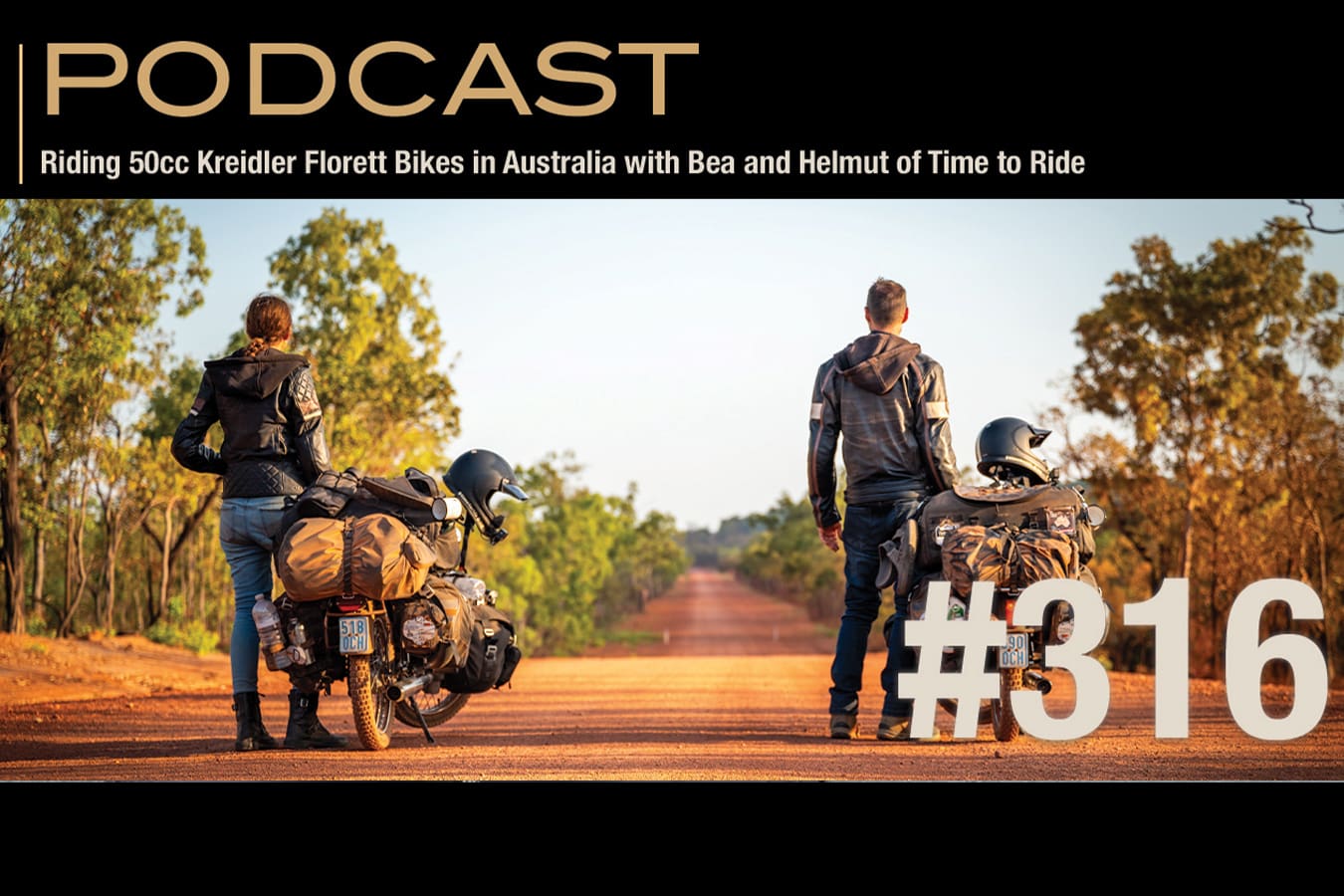
Overland Journal Podcast host Ashley Giordano welcomes Bettina “Bea” Höbenreich and Helmut Koch to discuss the impacts of returning to ADV basics, answering the question “How minimalist can you go and still function in expedition conditions?” Join us as Bea and Helmut share their incredible journey of traveling the world on vintage 50cc motorcycles, exploring Australia’s rugged landscapes, and the life-changing lessons learned along the way. Discover their tips on gear, logistics, and embracing simplicity for adventure. In this episode, Bea and Helmut share lessons learned from the past 20 months in Australia, riding two 50-year-old 50cc two-stroke Kreidlers.
Overland Journal Podcast Episode #316
New to Overland Journal and want to grab a subscription! Visit Overland Journal and enter code: overlandpodcast at checkout for 20% off. We thank you for being a subscriber.
Guest Bio:
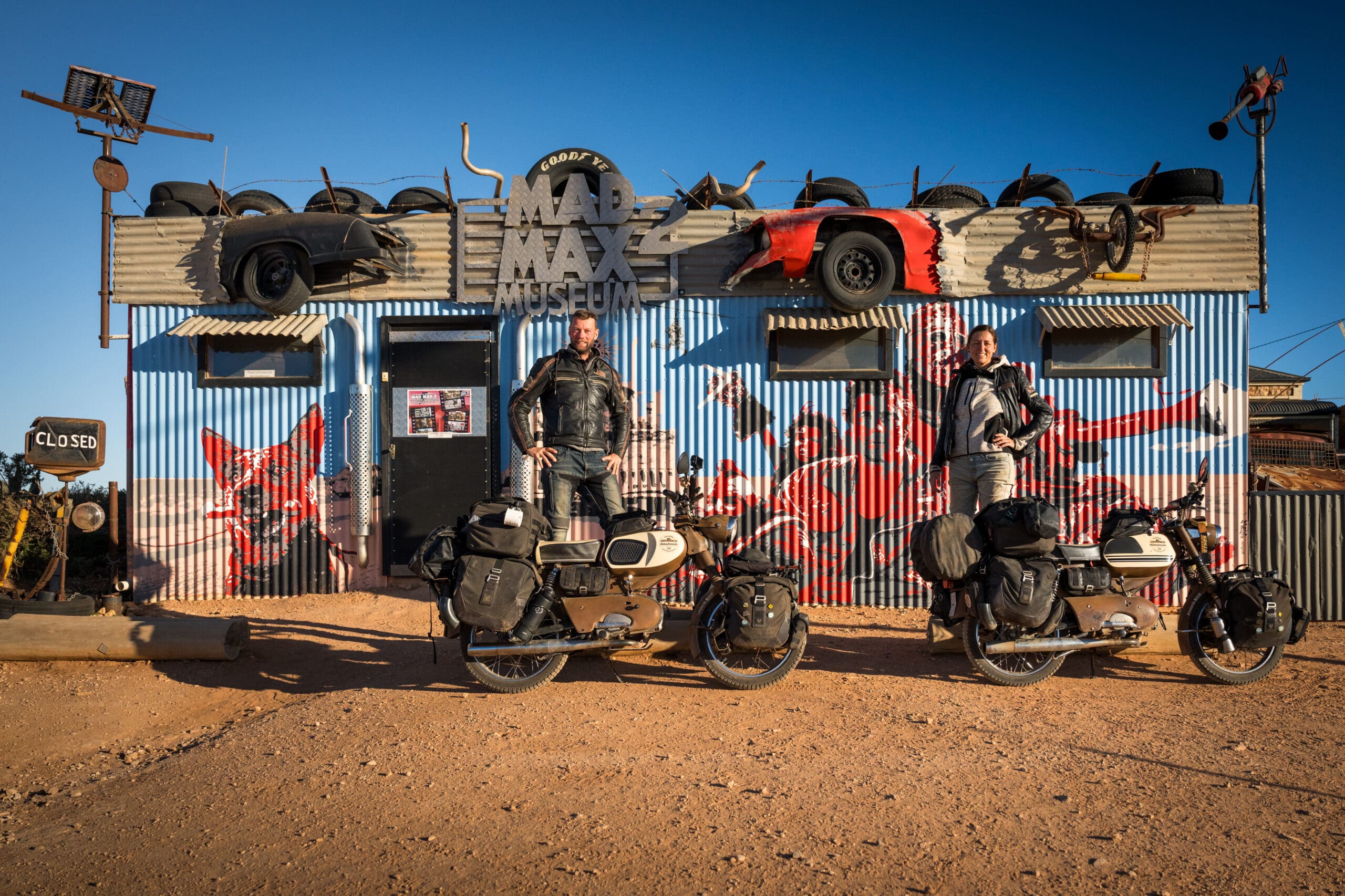
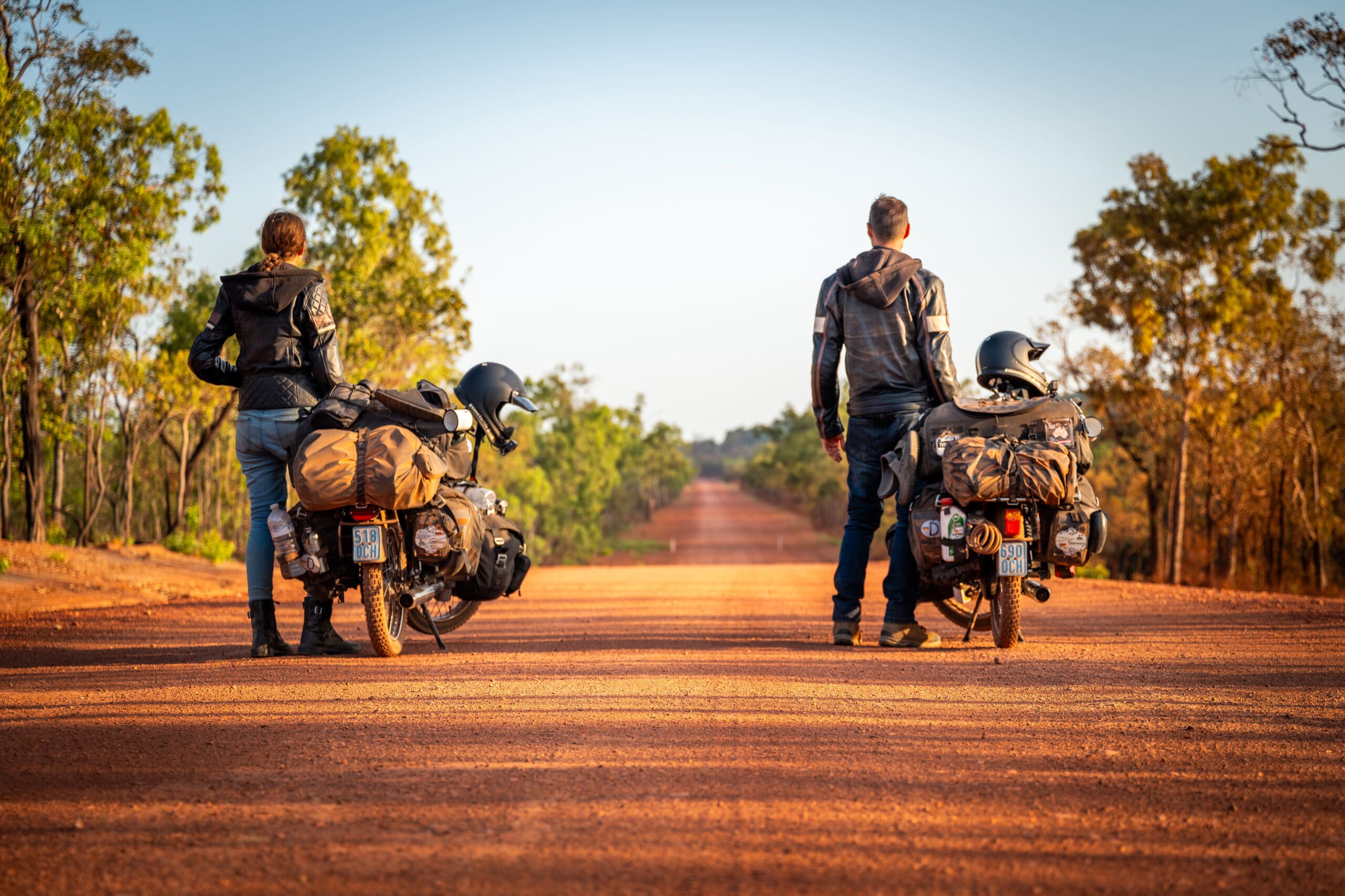
After circumnavigating the globe on Honda Transalps in 2011, Bettina “Bea” Höbenreich and Helmut Koch sought a new challenge: the 50cc Odyssey. This project strips overlanding to its basics to see if a minimal machine can handle real expedition conditions. For the past 20 months, they have traversed 30,000 kilometers across Australia on two 50-year-old, 50cc Kreidler Florett classics. This first leg of their cross-continent journey explores how extreme simplicity redefines adventure. By removing the comforts of modern machinery, they aim to discover the absolute minimum required for global travel and how such simplicity transforms the traveler’s experience.
Time to Ride: Website | Instagram | Facebook | YouTube
timetoride.de
Tune in Apple Podcasts | Spotify | YouTube
Host Bios:
Ashley Giordano
Ashley Giordano’s first foray into overland travel involved a 48,800-kilometer journey from Canada to Argentina with her husband, Richard, in their well-loved but antiquated 1990 Toyota Pickup. Currently cruising along the iconic Silk Road in a 2008 Toyota Tundra, her full-time navigator duties are rewarded with bowls of plov and lagman noodles, hikes in the Tian Shan, and countless cups of fragrant Tashkent tea. As senior editor at Overland Journal, you can usually find Ashley buried in a pile of travel books, poring over maps, or writing about the unsung women of overlanding history, including her enduring inspiration, Barbara Toy. @desktoglory_ash
Tune in Apple Podcasts | Spotify | YouTube
Our No Compromise Clause: We do not accept advertorial content or allow advertising to influence our coverage, and our contributors are guaranteed editorial independence. Overland Collective may earn a small commission from affiliate links included in this article. We appreciate your support.
Transcript
Ashley Giordano (00:00)
Hello and welcome to the Overland Journal podcast. I’m your host, Ashley Giordano. And today I’m joined by Bia and Helmet, adventure motorcycle riders of Time to Ride. Welcome to the podcast, you two. I’m so glad to have you.
Bea & Helmut (00:15)
Hello, Ashley. Thank you very much for having us. We’re quite excited. Yeah, absolutely. We’re very thrilled to be part of the podcast.
Ashley Giordano (00:23)
Where are you tuning in from today?
Bea & Helmut (00:26)
Actually from back home in Upper Bavaria right now. We are back home
Ashley Giordano (00:30)
nice.
Bea & Helmut (00:31)
with our families. We thought spring is a good time to do a short visit, sort of visit family, visit friends and so on. Well, after over 20 months now on the road, we felt like it’s time to go home and see, like I said, family and friends. And we have to organize a little bit of stuff and get some work done. And so it’s actually a nice combination of
Bea & Helmut (00:52)
Yeah, visiting and working some stuff.
Ashley Giordano (00:54)
Yeah, it’s really nice to have a reset once in a while so you can go back fresh and you’re just returning from an Australian trip. So we’ll definitely talk all about that. And I’m excited to talk about the bikes that you chose for the trip and the sort of mindset behind that and the places you went to in Australia. But the whole motorcycle adventure riding started in 2011 for you to take us back.
Ashley Giordano (01:20)
that time and your mindset back then when you sold everything and left.
Bea & Helmut (01:24)
Well, back then, it’s actually quite a while ago, I have to say. We thought it would be a great idea to visit Australia. Actually, was Bea’s idea. She wanted to travel through Australia, but not on a motorcycle mainly, but… Well, for me, my big dream was visiting Australia once and really traveling the country. And I told him about the idea and he was like, with a backpack, that’s not mine. And also with a van, I don’t see myself in a car.
Bea & Helmut (01:50)
I love motorcycle riding. We could do it with a motorcycle. And I had no bike, no experience on a bike back then. And I said, okay, if this is the only way of visiting Australia, let’s do it on a motorcycle. Yeah, and well, then shipping and flight costs and also our employers, they said, well, we have to quit if we want to do such a longer journey. And then we decided, well, for all the money and we’ve got time now, we could ride to Australia.
Bea & Helmut (02:16)
that started actually a trip around the world which was planned for two years but we ended up traveling five and a half years. So really the road
Ashley Giordano (02:24)
That’s funny.
Bea & Helmut (02:25)
became our home for such a long time even if we did not expect this journey to turn into a world trip at all.
Ashley Giordano (02:32)
Yeah, I hear that from lot of overlanders and can relate myself when you get going. You’re like, I know we’re going to do it in two years. And then all of a sudden you’re like, what’s happened? There are so many things to do in places to see. So it’s so wonderful. And I’m curious, what were you doing for work before you left?
Bea & Helmut (02:49)
I’m an environmental engineer and Helmut is mechanical engineer, which comes in quite handy because he’s really my… I don’t know, know I can rely on him and I don’t have to worry that we break down somewhere in middle of nowhere because he will fix it. That’s the only reason why I’m allowed to travel. Keep her warm in the night and picking up the motorcycle and fixing it. That’s my part. I know.
Ashley Giordano (03:16)
Those are really important skills to have, that’s awesome.
Ashley Giordano (03:19)
And then, so when you decided to leave, what was going on in your life at that time that you wanted to leave everything and travel?
Bea & Helmut (03:28)
Just been curious, curious to see the world. And like I said, back then, I was not so much into motorcycle riding that really came with the trip, which is kind of interesting. But I think we didn’t expect or we didn’t know what to expect from such a trip. We never traveled outside of Europe before. So we are completely new to this topic overland traveling at all. And but I think over the months we just
Bea & Helmut (03:54)
realized that that’s exactly what we want to do and where we want to be on the road somewhere in the dirt with the tents. you get this feeling you’re on the right place in the right time and it felt just right. So we absolutely enjoyed it. And well, first, we had a very German plan. We have to be there at that time, there at that time. We saved this and this money. So this allows us to travel such and such distance.
Bea & Helmut (04:21)
And over time, we recognized that it just doesn’t work like this fixed schedule. And then we also had the opportunity to work along the way. Like for Australia, we had, we’ve been young enough back then, we had a work and travel visa. So we worked there for a while and saved quite a bit. And so this allowed us to continue to travel. And at some point, when you became really interested in photography and we started a blog back then because
Bea & Helmut (04:48)
We’re talking about 2011, so back then there was no such thing as Instagram. think Facebook just started and you had a few blogs out there, but not so many information about traveling, about visa, about other requirements. we wanted to, all the knowledge we collected, we wanted to share with others and also keep our friends and family back home updated. So we decided to start a blog, but there was never in the beginning, I thought that this could turn into something professional, but…
Bea & Helmut (05:17)
Over time it just evolved. Life happened.
Ashley Giordano (05:21)
Yeah, I can totally relate to that. I would have had no idea when we first traveled that here we are now in 2026 and the world’s different and there’s so many opportunities and it’s yeah, it’s totally a different world now. So take me along
Bea & Helmut (05:35)
You
Ashley Giordano (05:36)
on your route on that trip. Where did you start? You started in Germany, obviously, but from there, where did you begin and where did that journey take you?
Bea & Helmut (05:46)
Well, back then we went east first, so through Czech Republic, Slovakia, Ukraine, Russia, Kazakhstan, Mongolia, to the very far east of Russia. Back then was actually planned to ship from there to Japan, but the Fukushima accident happened just a month or two before, so we had to skip the plan. And so we shipped around China to Southeast Asia.
Bea & Helmut (06:09)
traveled around Southeast Asia down to Indonesia. All the little islands. And from there shipped to Australia, eventually kept going after one and a half years to New Zealand and then South America to the very bottom. And then from there basically zigzagged up to Alaska. And from there we went back home. So only five and a half years later we returned back home.
Ashley Giordano (06:34)
And you took two Honda Trans Alps on that trip, right?
Bea & Helmut (06:37)
Yeah. Yeah.
Ashley Giordano (06:39)
Yeah.
Bea & Helmut (06:39)
Old ones back then, they’ve been already, let me think, 20, 25 years old, but they are basically bulletproof, cheap bulletproof. A bit like a tractor. As long as they have oil and water, they would run. They eat anything. we did roughly 155,000 kilometers. They had already like 50,000 on the clock when we bought and rebuilt them. So they never let us down.
Bea & Helmut (07:06)
absolutely great motorcycle and they still, we have them still and they are still running and 300,000 Ks on the clock now and but right now they are in the
Ashley Giordano (07:14)
Wow. Wow.
Bea & Helmut (07:16)
museum in Germany.
Ashley Giordano (07:17)
amazing. Cool.
Bea & Helmut (07:19)
So
Bea & Helmut (07:19)
they tell a little bit about this story, about the journey. we thought that’s a great idea. the Technik Museum in Sinsheim is an absolutely great museum. Even if you don’t like museums, this is one to go because there’s Technik from all sorts. From submarines to airplanes, there’s everything. And not only like watching it, but you can touch it, you can sit in it, you can…
Bea & Helmut (07:43)
And that’s a great place for those motorcycles to be. They don’t like rot in the garage now that we’re traveling again, but they are really somewhere where they can tell a story about traveling and about all vehicles being reliable. I mean, now we switch to even older bikes for the new journey.
Ashley Giordano (07:59)
Yes, I was going to ask you about that. So fast forward to this Australia trip. I’m so fascinated. You chose two 50 year old 50cc two stroke Cridler Florite classic bikes for this trip. How did the bikes you took on the five year journey lead you to those? Like how did your riding experience from the past inform the bike choice for Australia?
Bea & Helmut (08:23)
Well, it actually happened, you know, again, like same with our first decision with this world trip, beer was involved. So we had a couple of beers sitting around the campfire and we thought, well, we would love to travel again, but we need something different. Australia would be great. We haven’t seen everything there. We loved it. And, you know, we love these remote places and these quirky towns and pubs and all sorts of stuff they’ve got.
Bea & Helmut (08:49)
When you talked about something different, I imagined a nice four-wheel drive, finally with a fridge so can cook something nice for the evening. But you had a different idea. was a moped. I grew up with those things and I thought, let’s do it with a moped. That would be different. We both were instantly hooked with this idea and then we bought two of those, rebuilt them and prepared them actually for the journey. But the journey was planned.
Bea & Helmut (09:18)
2020, but as you know, with Corona things were delayed a little bit, let’s say it this way. So we had more time to test ride them and overthink our idea. That’s the right one. But yeah, we love it. Absolutely. It’s very different. Yeah, but it’s great. Well, we knew that riding such little bike comes with
Bea & Helmut (09:45)
Definitely different challenges. not only that they are not as comfortable as a modern bike. mean, they have very old suspension and also very little suspension. They have no ABS, no modern technology and they’re slow, very slow. Like we have 150 millimeter drum brakes. So every bicycle 30 years ago had better brakes. So the engine is power-wise not exciting, let’s say this way as well.
Bea & Helmut (10:15)
But it’s different and what we actually wanted to achieve with those bikes was basically back to the spirits of traveling and riding. Nowadays, you have so much technology and especially with our blog, we get a lot of, or we got a lot of emails from people who said, well, they bought the newest motorcycle and so on and now they can’t afford to travel anymore. And that’s why we said, well.
Bea & Helmut (10:38)
Let’s go back to like 30, 40, 50 years and people back then, just took what they had and they had the greatest adventure and memories. And that was basically the idea that kicked it off with those little notes. To see what’s possible on something really old, really basic. Just focus on the basic things and experience the adventure and create memories. And actually what happened then also surprised us. I mean, you were the mechanic in our team and you were quite…
Bea & Helmut (11:07)
sure that they would be reliable and tough enough to tackle the Australian outback. it was really some kind, in some way, a new way of travel because how the people reacted, even back then with the big bikes and all the luggage on it and all the stickers from the different countries, we had great encounters. But now with the little bikes, especially turning up somewhere in the middle of nowhere in the bush with 300 kilometers of
Bea & Helmut (11:33)
rough corrugated roads in both directions. People just wouldn’t believe that someone would turn up with a little bike like ours. And it was an immediate conversation starter and also riding these bikes, even if you maybe can’t imagine in the first place that it will be fun. We really enjoyed it. Also, we did some really tough roads, bumpy, sandy, deep river crossings, everything.
Bea & Helmut (11:59)
It was so much fun because they’re quite small and light and low and nimble. it was almost like riding a bicycle kind of going everywhere. And it was just fun. have to say it brings different challenges as well. Some parts are easier because of the weight, but other parts like deep sand where you need wide tires and power is really a struggle. And we had parts where we had like, I don’t know, 15, 20 kilometers, just deep sand. then
Bea & Helmut (12:26)
you’re just pushing with like 45 degrees of Celsius heat. You you’re just pushing and kicking and then all sorts of stuff. but that’s part of the challenge. That’s what we love.
Ashley Giordano (12:40)
Absolutely. I was very curious about this. Like how did you outfit the bikes to be as minimalist as possible? What did you choose for gear and storage to be able to use this platform?
Bea & Helmut (12:53)
Well, of course, I have to say you still get all the spare parts to rebuild it, which is great. That makes it easier. But of course you won’t get any accessories for those bikes. So you have to build everything on your own. We talk about luggage racks, I build a bash plate. We also have a luggage rack on the front because we can’t carry so much luggage in the back and we want to balance the weight a bit better.
Bea & Helmut (13:18)
because you have no big engine, no big tank, the bike gets really heavy in the back. So we figured out if we put a little bit of luggage in the front, you have to find a good balance, then it actually makes it more stable and even better to ride. Because a lot of people think that bags in the front would be a disadvantage. But actually, if you pack clever and balance it wisely, it makes it actually even better and more stable to ride. I modified, of course, the ignition, the leg.
Bea & Helmut (13:47)
electronics, we tweak the engine so it can handle the weight a lot better and especially the long distances in Australia, we carry different sprockets for different terrain. So we at least, know, like if you have a stretch of a thousand Ks of bitumen, we can do at least like 60 or 65 kilometers per hour. So that makes it a bit quicker, but still slow. We love slow. It’s
Bea & Helmut (14:13)
Kind of meditative. And very important, change to where we have a little battery now we can charge stuff on a USB port because we carry a lot of camera equipment to document the trip. So that was also important for us that we are able to recharge our equipment somewhere in the bush at least for a couple of days before reaching the next campground.
Ashley Giordano (14:34)
Nice. And how did you manage fuel range for the long distances in Australia?
Bea & Helmut (14:38)
The original
Bea & Helmut (14:42)
tank has 12 liters and it lasts for roughly plus minus 350 Ks, which is not too bad, but most of the time
Ashley Giordano (14:50)
Yeah.
Bea & Helmut (14:50)
it’s enough in Australia. You have to say when we met the other travelers somewhere in middle of nowhere and they mostly travel with this big four-wheel drives and they’re always surprised how we can make it to these places with the little bikes and then when we tell them, we have 12 liters and can do 300 something Ks with it.
Bea & Helmut (15:07)
They can’t believe it because they’re big trucks. They use 25, 30 liter per hundred. So they’re always, they’ve been quite impressed. But in case like if we had like more remote places, we just filled up a pet bottle we found in a rubbish bin at the gas station and or two or three, whatever. And that usually was enough. Even for the remote stretches.
Ashley Giordano (15:31)
Excellent. How much space did you need for electronics and personal items? Like did you have a bag?
Bea & Helmut (15:37)
I’m
Ashley Giordano (15:39)
Like how big were the things that you were bringing with you on the bike?
Bea & Helmut (15:44)
Well, we always say we have heaps of electronics and then there is space for three undies and three t-shirts and that’s not a joke. That’s really serious. Like, of course we carry tools, spare parts, a certain amount. I love to be basically independent. Like if you break down in the middle of nowhere, I can fix it somehow. That was important for me already on the world trip. So we have a bit of this stuff, but…
Bea & Helmut (16:08)
mostly it’s camera gear. Like we are doing an adventure reality documentation. It’s a show, ongoing show. We really love to, well, I really love to work with the cameras. We love to present, to tell those stories. So of course we need, or we like to use a lot of electronics and that’s basically most of our equipment.
Bea & Helmut (16:29)
And then of course we have a tent, have sleeping bags, equipment. Water filter. Yeah. Everything to be also quite independent when it comes to camping somewhere in the bush for a couple of days. Yeah.
Ashley Giordano (16:41)
Were there any pieces of gear that surprised you that you’re like, this is my favorite thing that we brought and I did not expect it? Or did you have enough experience from your past trip that you kind of knew what to bring and how it would perform?
Bea & Helmut (16:54)
Yeah, think so. Due to the world trip, we knew pretty well what we want to bring, especially the water filter was for us a real game changer. We traveled through Cape York area, for example, or telegraph track that’s really remote. And we’ve been off the grid for a couple of days and we only met, I think, three other cars in four days. So there was really no one on the track. So it was really great to stop in the evening, filter some fresh drinking water and then
Bea & Helmut (17:23)
cook something basic and just really be out there in the wild for a couple of days without relying on a campground or whatsoever. That really is important for us. Well, of course, I say the setup changed. Like the panniers on the motorcycles were way bigger, even though like on the small bikes, the bags, they might look big, but like the average pannier on our motorcycle had like 36 liters and the rear side bags on our little mopeds now they have roughly.
Bea & Helmut (17:53)
20 liters each, which is like half the size. So we had to rearrange everything, go even smaller, take even less. So that was for a start, it was one of the bigger challenges. By now, we’ve sorted everything out. And as I said, the camera equipment grew even more over time. People wouldn’t believe, I don’t know about you traveling, like if you go into a motel or hotel room.
Bea & Helmut (18:21)
and you unpack your basic stuff, it’s it’s a mess in this room. You can’t even get to the bed and people would say, where does this fit on the bike? know, it’s like, but everything has a spot and yeah, it works. It works. And it’s also interesting how little you actually need for your daily life. Even if you travel for so many months in a row like we did, you don’t need much.
Bea & Helmut (18:44)
We really don’t need much. And that’s also realization we had on the world trip already. Something we tried to also do when we are back home, that we don’t buy heaps of stuff, but really think about what do we really need? What do we enjoy? do we want? Do I really need this? If I do, buy something proper, something that lasts. And then enjoy it. That’s our philosophy in life in general.
Bea & Helmut (19:10)
especially with traveling even more because often you’re in the middle of nowhere and then you need to rely on the stuff you’re using. So it’s, think one of the bigger challenge was for sure food and water.
Ashley Giordano (19:22)
Hmm.
Bea & Helmut (19:23)
it’s in the remote stretches. If you’re traveling there, especially with the little mopeds, we can’t do these distances like you would do with a big motorcycle or car. So we have to like carry sometimes
Bea & Helmut (19:35)
big massive amount of water. And that is a challenge. wise and space wise. And I also, I
Ashley Giordano (19:42)
Mmm.
Bea & Helmut (19:43)
really tried to cook fresh every day if possible, but in a very remote stretches. Poor Helmut had five minute noodles for, I don’t know, a week in a row and porridge with water in the morning. But yeah, that’s also fine. I mean, it’s for a limited period of time and then it’s also fine.
Ashley Giordano (20:01)
For sure. I also think going back to the stuff comment, like a lot of times when you’re doing this, you just forget that you have things. And I’ve noticed that when I go back home, sometimes I’m like, I forgot I even had this. So does it mean that much to me? Or we go away and come back to the camper and I open it up and I’m like, I didn’t remember I had this. So like, that’s just a sign to me that maybe I don’t actually need it. But sometimes you’re like, actually, I forgot I had this and I love it. So.
Ashley Giordano (20:30)
Yeah, yep. Yep.
Bea & Helmut (20:31)
That’s right. Same experience here.
Bea & Helmut (20:33)
Now, when coming back home after 20 months, I have to start earlier even when we quitted our jobs and sold basically everything. We kept a little bag or a little box and there were these emotional things in there. I can’t sell this or I can’t give it away. I can’t throw it away. But then you’re gone for a year or six months or whatever and you return back and you haven’t even
Bea & Helmut (20:59)
you didn’t even remember that you had it. And that was quite often the part when I, I don’t need it. But as you said, sometimes you have things like, I love this.
Ashley Giordano (21:10)
Yes, absolutely.
Ashley Giordano (21:12)
So tell me more about how the simple machine changed the experience of your journey. You’ve alluded to a few different things, but I’m wondering, you went into it with a mindset of simplicity and what things surprised you coming out on the other end?
Bea & Helmut (21:29)
What things surprised us? Well, first we planned to travel around Australia with the goal of doing some of the toughest tracks the country has to offer. That was the main goal first for six months because we didn’t know if we would enjoy like thousands and thousands of kilometers of straight roads on these little bikes. So, but then we did. That was the first surprise. We absolutely loved it.
Bea & Helmut (21:52)
And of course they were incredibly capable of off-road as well. Like people would say, well, when we told them we do a KPO or a telegraph track and all that sort of stuff, they said it’s not possible with those bikes. And they absolutely loved it. We did as well. And third thing I would say, it’s how people react on the bikes. It’s not only like technical interested men, but also women and children.
Bea & Helmut (22:19)
You know, the two-stroke sound is very unusual nowadays. a bit like a normal. Yeah. If you turn up at the supermarket and there people walking in and out, everyone is staring. And then we have a bicycle bell because we don’t have indicators or any sort of electronics. So we only have a little bicycle bell and then you like, ding, and people are smiling. that’s, know, that’s international language. You instantly have a connection with all those people. And that is the very best part. Yes, apparently.
Bea & Helmut (22:47)
And also I would say we had some really funny encounters like on the old telegraph track. We mentioned it a couple of times now because it’s one of the toughest we did. We had the last river crossing, final boss, Nolensbruck, and it is rather long and almost hip deep with soft sand. And you have to say, I mean, you’re more technical, our air filter sits quite low, so Helmut built some kind of snorkel.
Bea & Helmut (23:15)
And we really wanted to give it a try and push it through. then just when we were about to start a group, a guided group of… Enduro motorcycle group turned up. They have like guided motorcycle tours up there. Very remote, but it’s it’s paradise for Enduro riding. And those guys turned up and they stopped and now where are you going? What’s the plan? And now you are loaded. And we said, well, we already four days on this track and they do it in…
Bea & Helmut (23:43)
I think in two days or one day even. And we absolutely enjoyed it. And it looks like an old lady and quite often because those little mopeds, they actually look quite grown up. So rather big people always say, they would stop and say, ah, it’s a 250. It’s a 250. No, it’s a 50. Ah, 250. No, it’s a 50. What a 50. Are you insane? It’s like, you know, and then was the same part. Like they usually are in a rush.
Bea & Helmut (24:12)
So they turned up, they quickly go through the water and keep going because they have quite a few miles to do. And they ask, ah, that’s a 250, no, it’s a 50. What a 50. And you are mad, absolutely mad. And then they took the time to first of all, watch us with the first go, but we absolutely drowned the whole thing in the river. And then they carried, they helped us out of the river and then they carried the second bike through the river.
Bea & Helmut (24:39)
That is just one of those moments. had so much fun with them and this was really ongoing that the people first they enjoyed watching us travel on these little bikes and also they very often they offered help or when we turned up on a campground really late after a tough day of riding some I mean the Australians are really like their colties in the evening as well like we Bavarians do and very often someone turned up and said you guys you look like you need a coltie now and then you say thank you that’s awesome and
Bea & Helmut (25:07)
This is just this little things. It’s just… It’s a very good river road. In the middle is a roadhouse and both sides like for, I don’t know, 500 Ks, there’s not much, or 400 Ks. And it’s just dirt, heavy corrugations, beautiful landscape. So we turned up at this roadhouse at sunset, off the sunset.
Bea & Helmut (25:28)
everything was closed, we were running out of fuel. So there were three men standing there having an evening beer. And they were like, we turned up and they were like, sort of what do you want at this time of the day? And we turned up and then told them if the gas station is still open, if we can buy some beer and so on. they said, no, it’s already closed, you have to come back tomorrow. And then they started like, what is this actually sort of
Bea & Helmut (25:55)
And I said, well, it’s a German bike, an old one. It’s a 250 and then we had the same conversation again. And from there on, like instantly, we were best friends, you know, like, and these were, they were running the roadhouse, like we stayed there for two days, they offered us a job and anything else we could just wish for. That’s just those things you miss when you… We have the feeling when you’re traveling in a van or a car, of course it has a lot of advantages.
Bea & Helmut (26:23)
But also you’re sitting inside your little cabin, you’re kind of enclosed. And if you close the window, you don’t need to talk to anyone. And with a motorcycle or bicycle, have to, you’re in the environment anyway. And with our little bikes, even more, you talk to everyone and that makes the difference, the different experiences with this journey, I think. That’s great.
Bea & Helmut (26:49)
And that’s why actually we shipped them now from Australia. That was never the idea. We shipped them now to Asia and we keep going over there and keep filming. I mean, you have to say, like I said before, we planned six months in Australia. Now it’s 20 months in Australia and we keep going still. So, yeah. And now with Asia, I think we’ll be very different because of all the scooters there, our little bikes will fit in there perfectly. And it will be quite.
Bea & Helmut (27:16)
Different the way of travel, but we’re really looking forward to that. We already missed them.
Ashley Giordano (27:22)
yeah, that would be such a great adventure to follow. Let’s talk about logistics. So you said you bought the bikes at home. Did you, I’m assuming you shipped them over to Australia. What is that process like for somebody who wants to send a bike?
Bea & Helmut (27:36)
Well, you can ship by container ship, for example, or by plane. Depends on price wise, big difference. Plane is a lot dearer and time wise plane is a lot quicker. That is the big advantage. So we flew them to Brisbane from Germany, which was price wise also okay because both mopeds are rather small. So we could fit them in actually one motorcycle crate. We went to our BMW dealer, got a big…
Bea & Helmut (28:00)
GS1250 grade and just fitted both in this crate. It actually just one box and from Perth we shipped them via ship to Malaysia. But same process, you have to create them, then it gets picked up and of course you have to do customs and so on. It depends on the country, as you probably know, if it can be difficult and time consuming sometimes.
Bea & Helmut (28:26)
but usually it always works out somehow. Yeah, I mean for Australia we needed a Canadian Passage, the special customs document and also for some countries in Asia now as well. But then again, due to the experience of our first trip, knew, I mean, rules and regulations changed over time, but some things are the same. So we knew more or less what to do and yeah, so therefore I think it was easier than on the first big trip.
Bea & Helmut (28:54)
But if someone is interested in shipping and so on, we’ve got quite a few things on our website. But mainly if you ship by ship, you always have to expect delays, like massive delays. Like we never had. In time, never. Never. We talk about weeks later. So if you… What’s the English word now? We are there. If you…
Bea & Helmut (29:24)
expect this, then it’s all good. Whereas maybe flying by plane is so shipping by plane is the better option.
Ashley Giordano (29:32)
Yes, expect delays. That’s a great way to prepare and buffer your timeline. you expect the delay. For Australia, you had a carnet, like you said, and what’s the tourist visa like for you there?
Bea & Helmut (29:47)
We actually have been quite lucky because a lot of people ask us how we can spend more than a year in Australia because back on our world trip we’ve been young enough for this working travel visa which you can extend for up to three years but now we’re a bit older so we needed a normal tourist visa and we applied for the longer one already so you can get a three months one, three months very easy online and the longer one, one year one you have to hand in some like
Bea & Helmut (30:15)
documents like bank statements and reason why you go back home just to make sure that you don’t stay there illegally and work and this kind of stuff. yeah, it was quite easy for us. And then this visa allowed us 12 months with multiple entries. every time you come back, now it gets a bit complicated, within the first 12 months, every time you come back, you get another full 12 months. So about 11 months into the first
Bea & Helmut (30:42)
12 months, we flew out of the country and came back after a couple of days and had another 12 months. So this allowed us to stay almost two years in Australia, which was quite awesome. And I
Ashley Giordano (30:53)
love that.
Bea & Helmut (30:56)
don’t know if it works for every passport because apparently they
Ashley Giordano (31:00)
Yeah.
Bea & Helmut (31:00)
do make differences, but for us at least it worked really easy with no problems at all. And well.
Ashley Giordano (31:06)
for sure. That’s
Ashley Giordano (31:08)
great. Yeah.
Bea & Helmut (31:10)
And
Bea & Helmut (31:10)
I mean, it’s a massive country you need this time. It’s like if you take your time and explore it, there’s so much to see. And we try to work on our YouTube videos on the go, which turned out to be not so easy because infrastructure in Australia is, yeah, in the remote areas. It’s not venture itself. Internet can be quite slow in times and also accommodations quite expensive.
Bea & Helmut (31:38)
When you sit in your tent, working on the videos is not ideal and you share the Wi-Fi with the whole, I don’t know, 150 other people of the campground. So that turned out to be quite challenging and it made us slower as well because we stayed in certain places for a while working on episodes and then kept traveling. But it’s a massive country so you can easily spend years there.
Ashley Giordano (32:01)
For sure. was wondering for you two, for trip planning, what are your interests and how do they dictate where you go and what you do?
Bea & Helmut (32:10)
Well, now the focus was a lot on the show we were producing. we actually want to, it’s not just about us. It’s not just about the adventure. It’s part of it. Of course, the writing, the challenges that brings it with it. But we also visit a lot of quirky places, pubs, towns, history. We bring in a lot of history. So landscape, wildlife, people we meet and their stories like, yeah, just to…
Bea & Helmut (32:35)
To give the viewer a greater idea about the country. What is it like? What can you do there? I mean, we personally also prefer also on the world ship, we don’t want to ride through a country and just tick off countries or just a certain route. We really like to immerse into the country when we meet people and have the chance that we maybe we are invited like in
Bea & Helmut (32:59)
White Cliffs, a little opal mining town, we ran into a guy and he lives in a duck out, which means an old opal mine. And he turned it into his home and he invited us. And then it’s great that you don’t have to say, my timetable doesn’t allow me to stay a couple of days now. But then we try to take the time, really meet the people and they show you around. You learn so much more about the place than you would if you would be normal.
Bea & Helmut (33:26)
Tourist visiting or what? For us it’s not only the riding, it’s not only doing a certain amount of Ks or seeing the road. We also love camping a lot. Bush camping, campfires, cooking and all that sort of Nature, Photography of course. Nature, animals. So it’s a big variety for sure. We are interested in.
Ashley Giordano (33:50)
Awesome. Which resources did you use in Australia for planning or logistics? And follow-up question, what were some of your absolute highlights in the country? Sorry, that was two questions at once.
Bea & Helmut (34:04)
No worries. for trip planning and research, I would say we can highly recommend the Hemo maps. They are an Australian brand and they have really very detailed maps, print and digital. And also for camping, used WikiCamps. It’s not for free. You have to buy it. I think it’s a one-time purchase, but it lists really a lot of campgrounds and it’s so-and-so because
Bea & Helmut (34:27)
I think having all these free campgrounds listed in an app can also be a disadvantage because so many people suddenly show up at one place that they start closing them down if they leave their rubbish or just don’t treat the places nice. That’s definitely something that’s a disadvantage with this modern apps. But on the other hand, it really helps to discover some really beautiful spots. we, I think we all try to sometimes it’s easier to have an app where you can
Bea & Helmut (34:56)
look up, okay, we can stay here and here here. makes traveling easier. it’s better. In fact, have an idea that there’s water somewhere in the desert and that helped us a lot, of course. But also we tried to find our own spots to camp that are not listed, not many others stay, just somewhere where we come a lot. It’s quite often very easy because it’s, you know, like, sometimes you’re in a, often you’re in a place like 500 Ks around you, there’s no home.
Bea & Helmut (35:24)
So it’s like you ride into the bush, pitch up the tent and it’s all for you. It’s great. Especially with the bikes, we are very flexible. We can just go off the road when it’s not private land and just pitch up the tent behind some bushes. But other than that, I would say tourist information. We like that as well because you talk to someone, know, like people working there, they have jobs and they are quite often enthusiastic about their area and they tell you the tiny little things.
Bea & Helmut (35:51)
So we’d love to go there and do some research and of course, internet like in general, whatever, know, read blog articles. Australia is quite a few travelers as well. Like they call it gray nomads, old people. They like when they’re retired, they travel through Australia for years and often have a blog or so. And then you discover great things there. Or videos, of course. Nowadays, of course, with YouTube, people make a lot of YouTube videos and then…
Bea & Helmut (36:17)
And when we research Australia, because like I said before, we wanted really to give it a go with some of the toughest tracks of the country. So we watched a lot of four wheel drive shows, Australian four wheel drive shows, four wheel drive 24 seven, one of our favorite channels. And they do crazy stuff. And we’ve seen like the old telegraph track before, gunshot, this is a five meter vertical drop. Crazy. when you see it.
Bea & Helmut (36:43)
When you see it on YouTube, it looks scary already, but when you stand there, really, and look down, you think, no, man, no way we can You need one of your free underpants. Already.
Ashley Giordano (36:55)
Hahaha!
Bea & Helmut (36:56)
So yeah, also… Exactly.
Ashley Giordano (36:57)
And then you have to find some water, find some water to wash those underpants, which may be a challenge too.
Bea & Helmut (37:05)
But yeah, water is another good thing to talk about because crocodiles are a major topic, especially in north and Australia and in certain areas they have more crocodiles than people, no joke. Mainly. And so you also have to be a bit careful with where you come close to water. Also with our water filter, we had situations where one was
Bea & Helmut (37:28)
like observing the water and the other one was quickly grabbing some water with a like a foldable bucket we carry. I left that job to her. She’s younger, she’s more delicious. So they can eat me. So there are certain things you have to keep an eye on or also wildlife sometimes, snakes, a big topic like poisonous snakes or spiders. And I think Australia has a reputation of having a lot of
Bea & Helmut (37:52)
poisonous and dangerous things. don’t really, we never encounter dangerous things. Like we’ve spent in total in our lives now three years in Australia, six-second camping everywhere, bush camping sort of. see, and that’s the great stuff about Australia. It’s quite often it’s like waking up in the zoo. You open your tent and there are a bunch of kangaroos just feeding outside your tent or emus. And like we camped on a riverbank and you know, you get up in the morning and there are five.
Bea & Helmut (38:20)
five meters saltwater crocodiles just some buffing 20 meters next to them. Let’s say net 20, let’s say 50 meters or so. Yes. So it’s like you sit there and you just watch them and it’s beautiful. Like we love this. So we never had a dangerous situation except for every now and then a kangaroo that jumps across the road or an anemone. That’s something different. other than that, it’s amazing. Wildlife wise, Australia, for sure one of my favorite.
Bea & Helmut (38:47)
I think that brings us to the second question. What was our favorite part or favorite parts of Australia? Well, would say Cape York, remote stretch, and northeast. Old telegraph track for sure was a big challenge. Great memories, Gibraltar Road. But there so many places like we really did love. Then we traveled.
Bea & Helmut (39:08)
all the way across the outback from Adelaide up to Darwin right through the center took the Odinadatta track and it was also a couple of days really just camping in the bush in the desert and they have amazing sunsets because it’s so flat and you can really see until the horizon and it’s just the sun the sky is different there and the sunsets is really spectacular and because you are out in the bush you have no light pollution during the night
Bea & Helmut (39:32)
and because you have no light pollution in the night, you see amazing night sky, the Milky Way, really clear, really bright. that’s amazing. Night photography is amazing. Really loved it. Also, I would say
Bea & Helmut (39:47)
west coast because it’s not so densely populated in the east it’s rougher also the the ocean is rougher and the coast is wider and it was it’s a really beautiful spots there camp right on the on the cliffs it was pretty spectacular there are many places actually but when i think back you miss the most
Ashley Giordano (40:07)
So great. It sounds like it ticked all the boxes with the challenges, nature, beautiful landscapes. Those are always the things. And the people, of course. And so what are some of the quirky places that you went to? You’re talking about how you love to hang out and check out some sort of different little quirky locations.
Bea & Helmut (40:29)
Well, like Australia has quite a lot of quirky pubs, know, like people left their bras and plates and course, like then they have often also quirky sort of self-made monuments somewhere. The big lobster, the big banana, the big, we climbed the big gumboot and we were sitting on the big bench and like they have a lot of like
Bea & Helmut (40:54)
big things sort of, but also like you drive down the road and then they have like a tree with teddy bears and then I don’t know, like it’s many, many quirky things there. And another cool thing in Australia is that they don’t have, especially in the outback towns and this pubs, it’s not like you have to be dressed in a certain way. You go there whether you are nicely dressed and you want to go out for a nice pub night.
Bea & Helmut (41:20)
Or you just come back from work from somewhere in the mine, you’re completely dirty, you also go there and just everyone enjoys himself. And that’s also great that they don’t care really about how they look. We had Friday pub evenings, like people are barefoot people, and shorts people are in suits, are in evening dresses. like dresses. All working clothes are filthy up until the hair. So it’s basically anything.
Bea & Helmut (41:47)
That’s something we do love as well. They’re easygoing. Australia is easygoing.
Ashley Giordano (41:51)
Easygoing where everyone can show up. I love that so much. Yay. And the big thing that’s so funny, like the big lobster, big banana, whatever. I feel like I see that in North America, like in Canada, like biggest hockey stick and things like that. But I don’t often see that
Bea & Helmut (42:08)
You
Ashley Giordano (42:09)
in Europe. So maybe it’s like more space or whatever. yeah, that’s a fun, fun addition to a road trip. The biggest banana.
Bea & Helmut (42:19)
Yeah. And I think Australia is not super popular with all our land travelers, maybe because they have quite a strict quarantine. So everything has to be really clean. And also with the Karnay and everything makes it a bit more difficult to enter Australia, but we really love it. And we think it’s worth to give it a try. It’s still one of our favorite countries in the world. That’s the reason why we came back.
Bea & Helmut (42:43)
after the world trip again to see it again. And someone had to ride a 50cc Chrysler through this country. Yes, I was up for the job.
Ashley Giordano (42:51)
Someone had to do it. Someone had to.
Ashley Giordano (42:57)
Fantastic. How do you think that
Ashley Giordano (42:59)
this experience on two bikes has changed you as people, if at all?
Bea & Helmut (43:04)
Mainly I would say the first trip, know, like traveling around the world, selling everything, living out of a couple of pennies, seeing actually, well, let’s say it this way. Like back then I watched a lot of motorcycle movies. Of course we watched Long Way Round and so on, which is like a must if you travel probably overland with a motorcycle. At least we did enjoy it. And for me it was always like the biggest freedom that
Bea & Helmut (43:31)
get sold to you, especially from Hollywood as well, is like riding a motorcycle down the road, the endless highway towards the horizon, towards sunset. You have no plans. You can go wherever you want. And that was always my idea of having freedom. But when we left Germany and started traveling on those motorcycles, I recognized that the biggest freedom actually came with just having so less things.
Bea & Helmut (43:55)
You know, like because I do not have to worry about so much stuff anymore. And that gave me the time to write down on the road towards the horizon and the sunset. And that was actually a big learning. And of course, seeing, well, meeting a lot of people like, you know, you have. We got invited, just picked up from the road somewhere in Russia, wherever in the world. They take you in and it’s like.
Bea & Helmut (44:23)
The whole family is there and then the next morning the mother is crying because you’re leaving again. They gave us food and medicine just in case something happens and so on. That touches you. You realize that actually people all around the world, want the same. They want to have a good life for the family and they want to be safe. They want to have enough food.
Bea & Helmut (44:48)
and it’s not about the religion or the culture. And I think we live in a very secure bubble and it was a real eye-opener for us to look beyond this bubble and see how life actually is in a lot of areas in this world and it looks very different to what we’re used to. And how privileged we are. Like not everyone can do this. So it’s for us, we appreciate this a lot and we try to give it back.
Bea & Helmut (45:14)
As I mentioned with the show we are producing, it’s like, it’s not about us. It’s about the people we meet, the country we’re traveling in and also every now and then we have some messages, some learnings in there. We try to give something back that we were able to or we learned along the way. And so, as I said, we are very privileged to do this. So, very grateful.
Bea & Helmut (45:41)
definitely changed our perspective of the world, but it also actually changed how we live now because our original plan was, like we said in the beginning, I am environmental engineer, Heimut is mechanical engineer. We wanted to travel for two years, have an adventure, then just come back home and get back in our jobs and live our normal life again. That was the plan, but that never happened because in this five and a half years on the road, so much changed.
Bea & Helmut (46:10)
inside us that we, like you, discovered your love for photography. And I really enjoy writing and telling stories. So we started not only with our blog, but also at some point, some motorcycle magazines approached us and asked us if we want to write articles for them because they like our photos so much. so slowly all this grew into a very different direction because we never planned to become trail authors or speakers or
Bea & Helmut (46:38)
or YouTube filmmakers or whatsoever, it just evolved over time and became our big passion and now our job. In short, we do something that fulfills us, that gives us a purpose and a sense in life. That is mainly something that changed a lot because when we grew up, it’s like you do this job and you do it until you’re retired sort of thing.
Bea & Helmut (47:03)
No matter if you enjoy it or not, that is not a question usually. And nowadays we follow our heart sort of thing. then, you know, like… It feels different. Even if we put a lot of effort in ours and work in the stuff, it feels different. And I think if you follow your passion, it opens a lot of doors you wouldn’t even imagine they would open. Like when we came back…
Bea & Helmut (47:28)
National Geographic approached us and asked us if we want to make a book with them. And first I thought, that’s spam because National Geographic, why would they write an email to us little Bavarian travelers? And what they did. And so we made a beautiful book with them and had other opportunities. And I think when we first started with the idea of traveling the world on motorcycles, we would have never guessed where it would lead us at the end of the day.
Bea & Helmut (47:55)
It’s not an easy path though, you have to say, as you probably know. Sometimes you don’t know where it will lead you, which is also the exciting part. Not everyone can handle this, I guess. We talked about it the other day. Quite often we don’t know where we are sleeping the night. You know what’s going on. We just have a direction. And that is quite, I would say, quite a few people are scared of this. And we really aren’t.
Bea & Helmut (48:21)
It’s like that’s the biggest thing for us. That’s we feel the most at home.
Ashley Giordano (48:28)
Yeah, I think that a lot of people need the security of knowing what the next day will bring. And I respect that 100%. And so I think that that this lifestyle, it can’t guarantee anything and everything’s kind of semi out of control all the time. And so if that’s something that you can’t handle, I totally get it. I totally get it. And I think it’s interesting too, because I am
Ashley Giordano (48:54)
I like control and I like to know what I’m doing and where I’m going. But I think that that part of myself eases up a little bit when I’m on the road because I know that there are things that I cannot control. And so it’s almost like that control freak side of myself just kind of lets the tools down a little bit, you know, because it’s just things will happen. You’ll have a plan. But as you said earlier,
Ashley Giordano (49:19)
the plan is going to be shot and you’re going to have to pivot. So yeah, that can be really ungrounding.
Bea & Helmut (49:27)
But in general, it’s a lot about trusting in life and the right things will happen at the right moment. And that’s what was one of our biggest learnings while traveling as well. You have a breakdown in Mongolia and you will say, well, that’s the end of the world, but it isn’t. You meet someone who knows someone and he can fix this, but in between, we’re going to have a meal with the family and the greatest evening ever sort of thing.
Bea & Helmut (49:51)
very often also unexpected things, things that you think at the first place are bad things or things like breakdown, a problem, very often turned out into something really great in the end. in this very moment, you don’t see it. But in the retrospective, you realize that this maybe had to happen because it leaded to something really great. But it’s not about traveling. It’s an ordinary life.
Bea & Helmut (50:18)
It’s the same case in everyday life. You need to trust in it and then everything will be. But then you have to say, we always have a plan B. I think that’s in our genes a little bit. Well, we don’t have. I don’t have.
Ashley Giordano (50:30)
Yeah. Yes. I think that’s fair.
Ashley Giordano (50:38)
Plan B is helpful for sure. Cool. Well, thank you guys so much for coming on the podcast and chatting. And it’s been such a pleasure. And I can’t wait to see where you go next in Asia and those 50cc bikes are heading around.
Ashley Giordano (50:55)
wherever you may land and I can’t wait to follow and how can we follow you online and watch your videos and read your articles and see what you’re up to.
Bea & Helmut (51:06)
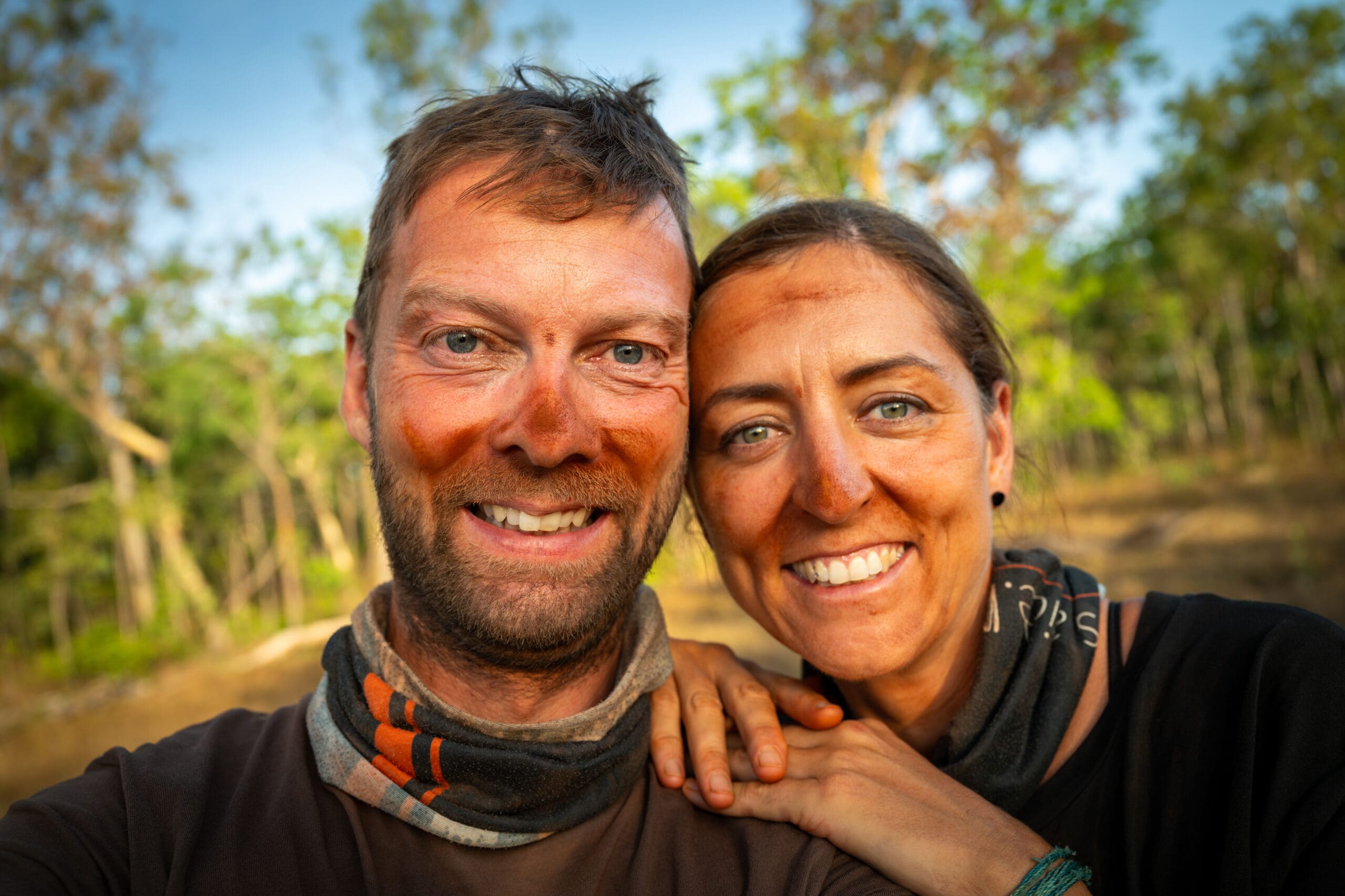
So the main thing that happens right now is on YouTube. So that’s time to ride underscore adventures. Two dirty red faces. That’s us. That’s us. On any channel, Facebook, Instagram. And we also have a website with that’s time to ride dot d with massive amount of information on overland motorcycle traveling.
Bea & Helmut (51:31)
around the world and in Germany and also lot of technical stuff, bike modifications, that’s heaps of stuff to read. Of course we have a book, I can show it here, but it’s in German of course, so I’m not sure if that’s helpful, but there lot of photos in there.
Ashley Giordano (51:50)
for our German
Ashley Giordano (51:51)
speaking listeners. That’ll be great. Or you can use
Bea & Helmut (51:53)
Yes.
Ashley Giordano (51:55)
Google Translate app for each page and just enjoy the photography.
Bea & Helmut (51:59)
But
Bea & Helmut (52:00)
you have to mention maybe YouTube is in English and our perfect Bavarian English dialect. So a lot of people said that we sound a little bit like Arnold Schwarzenegger.
Bea & Helmut (52:10)
I’m not sure
Ashley Giordano (52:10)
you
Bea & Helmut (52:11)
about that, but maybe. Yeah. The show is completely in English and all our posts on socials is everything is in English as well. So that’s not a problem at all. And it’s timetowrite.de or time to write wherever you go. And it’s always the dirty faces. So pretty easy to find.
Ashley Giordano (52:27)
We’ll make sure to include the links with this podcast so people can find you. Thank you so much again for joining and I can’t wait to see what’s next.
Bea & Helmut (52:39)
Thanks for having us. was really, really a pleasure. was good fun. I enjoyed the talk. And if someone has some questions, please just drop it underneath the video or send us a message somewhere. You can ask whatever comes into your mind about the 50cc’s or whatever.
Ashley Giordano (52:55)
Awesome. Thank you so much and a shout out to the Overland Journal podcast listeners for tuning into today’s episode. We hope you enjoy it and we’ll catch you next time.
Bea & Helmut (53:05)
Bye!