

Overland Journal Podcast hosts Scott Brady and Matt Scott welcome editor Chris Cordes and Brittany to discuss the intersection of overlanding and “van life.” Brittany shares her transition from weekend trips to living in her customized 2006 Sprinter, “Wayne the Van,” designed for gear storage and comfort. The conversation covers the realities of remote work, including robust internet needs and balancing a 9–5 schedule while traveling. They also explore financial planning, 2WD versus 4WD capabilities, stealth camping, and ethical advocacy like community cleanups. The episode wraps up with travel highlights from Baja to Newfoundland, along with gear and podcast recommendations for those considering life on the road.
Overland Journal Podcast Episode #12
The Overland Journal Podcast is brought to you this week by Overland Journal Magazine
New to Overland Journal and want to grab a subscription! Visit Overland Journal and enter code: overlandpodcast at checkout for 20% off. We thank you for being a subscriber.
The Allure of Van Life
Van life has skyrocketed in popularity, often depicted as a whimsical and carefree lifestyle, much like a modern “Zoolander” of the road. Brittany, an aficionado of this lifestyle, discovered van life while looking for a way to be more connected with nature. Her choice was driven by the desire for freedom and the ability to blend travel with daily life seamlessly.
Unlike traditional residences, a van offers flexibility—it’s a movable sanctuary that can change vistas with the turn of a wheel. Brittany emphasized that travel itself was the inspiration, allowing her a life closer to her outdoor passions like hiking and exploring.
Overlanding: A Different Journey
While van life often centers on living spontaneously and embracing the journey without a strict itinerary, overlanding sometimes aims for remote travel and specific destinations. Scott Brady highlighted the intention behind overlanding, noting that while both lifestyles involve exploration and adventure, the goal for overlanders is often to reach locations that are off the beaten path.
Chris Cordes added that overlanding can often have very specific objectives, such as traveling from Alaska to Argentina, contrasting with the more open-ended nature of van life, which prioritizes freedom and lifestyle over destinations.
Bridging the Two Worlds
Despite their differences, van life and overlanding share common grounds. Both require adaptability, a love of travel, and often, an innovative approach to living. Chris and Brittany’s approach to van life involves careful planning and resourcefulness, evident in their customization of a van named Wayne that accommodates an active outdoor lifestyle.
The podcast episode shed light on the practicalities involved, such as the importance of reliable internet access for those who work remotely. Brittany’s strategy of mixing technology with mobility allows her to manage responsibilities from anywhere, showcasing the compatibility of van life with modern professional demands.
Ethics and Responsibilities in Van Life
A recurring theme in the podcast was the ethical considerations for those traveling in vans. Brittany and Chris discussed the importance of respecting communities and minimizing the impact on the environment. They shared practices like leaving no trace and contributing positively to the places they visit, which is crucial for maintaining good relations with local communities and preserving natural spaces.
Guest Bio:
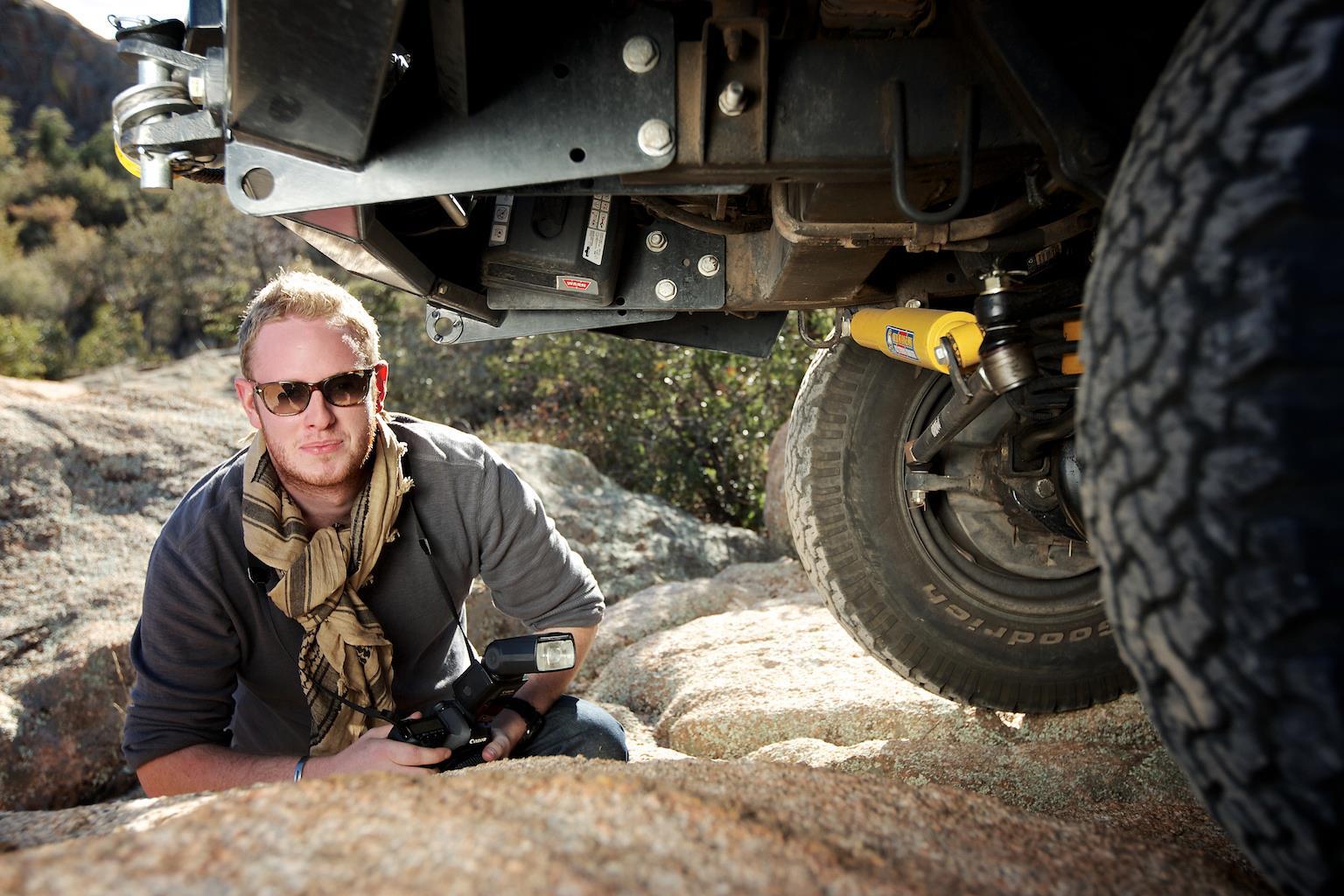
Chris Cordes
Chris was born and raised outside of Dallas, Texas, and didn’t receive a real taste of the overlanding lifestyle until moving to Arizona in 2009. It was there that he fell in love with four-wheel-drive vehicles and the great outdoors, quite literally altering the path of his life. Instead of pursuing his planned career in aviation, Chris accepted a position with Overland Journal and Expedition Portal, where he would hone his skills in writing, photography, and off-pavement driving. Over the years, he has lived full-time on the road, mapped trails from the Arctic Circle to Mexico, driven across Australia, and backpacked the Himalayas. He is currently an Airstream Ambassador and works for OnX Off-road, managing their Trail Guide community.

Host Bios:
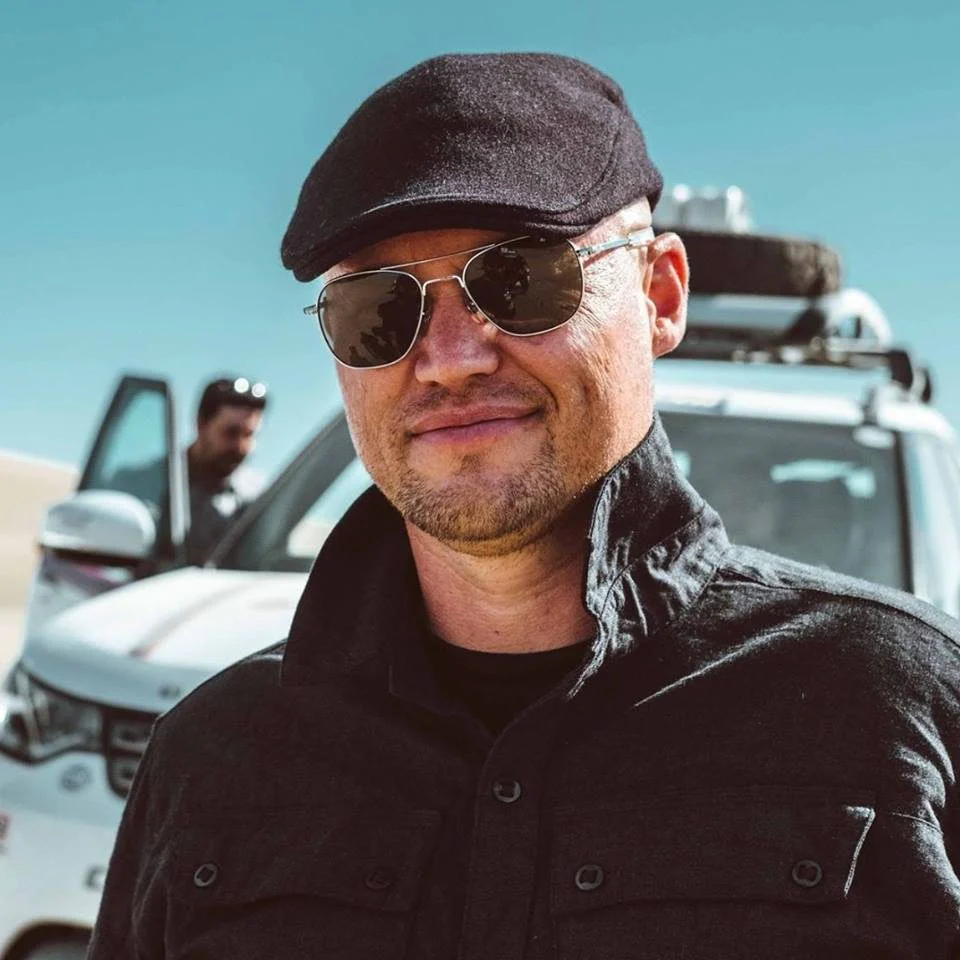
Scott Brady
Scott Brady is an adventurer, author, and publisher, and the first person in history to cross all seven continents. Brady is executive publisher of the Overland Collective, home to Overland Journal, the Overland Journal Podcast, and expeditionportal.com—the world’s largest vehicle-dependent adventure community. Scott wrote Overlanding 101 (Simon & Schuster) and is currently riding around the world on his BMW GS. He also led Expeditions 7, the first expedition to drive the same vehicle on all seven continents. Brady’s polar crossings include Antarctica and a south–north crossing of the Greenland ice sheet. Scott is a fellow of the Explorers Club and lives in Prescott, Arizona.
Matt Scott
Matt is a leading expert in automotive adventure. He has extensively explored the world’s most remote places by 4WD and is considered an industry authority on overland travel. He is the only American to ever become an editor of a major Australian 4WD publication and has over 15 years of competitive auto racing experience. @mattexplore
Tune in Apple Podcasts | Spotify | YouTube
Our No Compromise Clause: We do not accept advertorial content or allow advertising to influence our coverage, and our contributors are guaranteed editorial independence. Overland Collective may earn a small commission from affiliate links included in this article. We appreciate your support.
Transcript
Scott Brady: [00:00:00] Hello, and welcome to the Overland Journal Podcast. I am your host, Scott Brady, and I am here with my co-host, Matt Scott. And we’re gonna talk about something a little different today. What are we gonna talk about, Matt? Van life Van hashtag-
Matt Scott: It’s very trendy …
Scott Brady: hashtag
Matt Scott: van life Basically, if you were to take Zoolander and make it into overlanding, that would be van life.
It’s very trendy right now. Oh, I see. Very and very hot right now.
Scott Brady: I, I like that. I like that. You have a- you have your s- o- everybody’s got their own clothing, they’ve got their own version of sparkling water and-
Matt Scott: Everything is desaturated when
Scott Brady: you’re in a van E- everything’s desaturated. Yeah. Okay. I see.
Even the photography’s desaturated. Even the
Matt Scott: photography.
Scott Brady: And we’ve got some cool people with us. We’ve got Chris Cordes, who has worked with us for, for eight years. Started off as a, as an intern out of Embry-Riddle University here in Prescott and is one of our editors. Uh, he manages Expedition Portal, so all of that great content that you see on the [00:01:00] portal is, is curated by Chris.
He’s an authority on the overlanding subject and has traveled extensively around the country and many international trips as well. Uh, we’re very fortunate to have him on the team. A really, uh, master of his craft, and he, uh, he has also started traveling over the last couple years full time, and we’ll talk to him a little bit more about that.
And Chris, uh, who do we have with you today?
Chris Cordes: My girlfriend, Brittany, who’s probably a bigger expert on the van life than I could ever be. She’s been doing it for a while and is really integrated into the whole community, so…
Scott Brady: Yeah, we’re… Thank you for being with us, Brittany. When I first saw your van parked in the Overland Journal parking lot-
uh, probably almost a year ago now- Yeah … I was like, “That is such a cool van.” It’s one of the original- It’s
Matt Scott: very comfy.
Scott Brady: Yeah, it’s, uh, a- and it’s also one of those original style Sprinters. So it’s not the- Yeah … it’s not the super modern one. It’s the super cool one. And another thing that [00:02:00] makes that van even cooler for this podcast is it was actually where we rec- It’s where we started
yeah. We recorded the first three episodes of the Overland Journal podcast in Brittany’s van. So we all owe you a debt of gratitude. Uh, and thank you for being on the podcast, Brittany. Hey, you
Brittney: bet.
Scott Brady: So Brittany, tell us a little bit about what inspired you to live out of a van, and how long have you been living out of your van?
Brittney: Um, so I would say just travel in general is what inspired me to do so. Um, I lived in Southern California. I road tripped everywhere from San Diego on the weekends whenever I could, um, doing as much hiking and backpacking, outdoor activities as I could. Um, and to a point, you can only do so much within a two to three-day weekend.
Yeah. And I did everything that I wanted to do within about a eight-hour drive of San Diego. And so then I started looking at maybe I need to move, um, looking at other places to live, and then I stumbled upon this van life community who, [00:03:00] um, the premise of it is really just to get you closer to where you wanna be.
And that was kind of what started it and inspired me to do so, and-
Scott Brady: That makes a lot of sense. So, so you’re, you were already spending a lot of time outdoors- Yep … and the van allowed you to stay f- more connected with the outdoors- Right … on a daily basis.
Brittney: Yep.
Scott Brady: Oh, that’s very cool. A lot
Brittney: more comfortable than a Tacoma.
Scott Brady: Yeah, no doubt. Yeah. No doubt. And, and Matt and I have both traveled extensively out of wagons, and I think even about the Expedition 7 trip, and the vehicle was really only a place to sleep. It was not a place to live.
Matt Scott: No. Right. And- I think, I think that’s what’s so appealing a- about a van or about van life is you get to a point where you, you’ve been on the road for a while and you, you need that time to yourself.
You need to be able to, you know, shut the door on the world and kind of look look in or just, just get away from people and watch Netflix or read a book or something. And- Exactly. Yeah … the van is, is, is really perfect [00:04:00] for that.
Chris Cordes: I mean, if you talk to any experienced overlander, usually once they’ve been on the road for a year or two years, there’s always that endless pursuit of interior space.
Yeah. It’s the place to reset, to live your life when you need a break from everything else so that you can go back to enjoying the journey that you’re on.
Scott Brady: And Dan mentioned that. Dan Grech mentioned that- Yeah … that his next vehicle, he wanted to have more interior space. And, and I believe that he acknowledged that the sports mobile that was with him in Africa, it went everywhere he went in his Jeep.
It got essentially the same fuel economy ’cause it was a diesel, but it was literally a home that these people were able to have that respite, that, that- removal from the environment that when I think about my travels on a motorcycle or I think of my travels in a wagon, you’re in the environment all the time.
Yep. Mm-hmm. And, and that’s, that is a nice difference. And, uh, the intention of this podcast is not to say that there’s any difference between van life and overlanding. I think that the one thing that [00:05:00] might be a slight difference is that overland travel tends to include more remote travel, whereas there are a lot of people that travel as in a way of saying van life that they may never leave a paved road, uh, their vehicle isn’t suitable for that, or maybe they just, a gravel road.
For them, it’s the ability to live and wander and travel, whereas oftentimes overlanding by intention is the goal to get remote, and that’s where you can see that crossover occur. So this is when a van is also getting remote, getting off the grid, able to operate off the grid. That’s when you start to see that parallel.
Chris Cordes: And oftentimes- Yeah … I think that overlanding, when you’re, you have a very specific purpose or a very specific trip. It’s I’m driving from Alaska to Argentina or something like that. In van life, you may not necessarily have a destination or even a set amount of time. Overlanding is the same way, I guess, to a certain extent.
It can be,
Scott Brady: yeah. But
Chris Cordes: the van life thing is much more I’m choosing to live my life in a vehicle and [00:06:00] for the freedom that it allows me.
Scott Brady: Yeah, I think that’s a good, that’s a good distinction. Oftentime- I think of my own overland trips, they almost always have a destination in mind. Yeah. I’m trying to get to Zambia or I’m trying to get to the South Pole or-
Matt Scott: Or Indiana.
Let’s
Scott Brady: not forget- Or Indiana …
Matt Scott: Indiana.
Scott Brady: Exactly. Classic
Matt Scott: destination.
Scott Brady: Exactly. Well, so Brittany, tell us a little bit about your van.
Brittney: I think that Chris would honestly better-
Scott Brady: Okay …
Brittney: um, answer that question, but- Does
Scott Brady: it have a name?
Matt Scott: Yeah, I wanna know
Scott Brady: the name. Do, do, did you give it a name?
Brittney: So I’m not a person who names vehicles- I think that’s weird
and Chris is a person who names vehicles. He is. I think that’s bad. I think everybody should name their vehicle. And, um, he kept pestering me about it, and it came down to if you’re gonna make me name it, it’s gonna be something silly like Wayne.
Chris Cordes: Yeah. And so Wayne the Van it is. Oh. So party
Matt Scott: on, Wayne. Wayne, Wayne’s a pretty van life name.
It’s pretty, yeah, very much so. It’s very- Very hip, very trendy … very van life.
Brittney: It actually works out really great. Um, the first, when we left our very first trip, Wayne, you think of- Party on, Wayne … just the party [00:07:00] animal, party on, Wayne. And our very first trip we had taken, we got on the road and it started raining.
I turned the windshield wipers on, and the windshield wiper completely wrapped around the mirror, and then when I went to open the door to fix it, it completely snapped off.
Scott Brady: Oh, no.
Brittney: And it was kinda like, “Okay, well, this is party on, Wayne.” “Let’s keep going.” Yeah,
Matt Scott: I think one of the things with van life is that the van is, is more of a tool.
I th- I feel sometimes overlanders have a little bit more, um-
Scott Brady: Identity
Matt Scott: wrapped
Scott Brady: up in it …
Matt Scott: yeah, you know, they, uh, the- How do you say it? I think part of van life is being a little bit stealth, right? Yeah. Mm-hmm. Um, being able to stealth camp. But you’ve spent a lot of, a, a lot of time and care and effort on the interior on your van.
Right. That was one of the things that I noticed. Very livable. You, you, you did that yourself I wanna say, right?
Brittney: Partially. So I actually purchased the van in Phoenix, um, from a guy named Brad who works and builds and flips vans. Um, so I had seen his work done before. [00:08:00] I knew that it was gonna be good construction.
Um, so he had done a lot of the basics, and then when I purchased it, we took it back to my parents’ house, and my dad and I basically redid all of the cabinetry. I- my envision was to utilize every single centimeter of space that I could, um, and that required basically redoing the entire cabinetry. Yeah,
Chris Cordes: relocating electronics, relocating the fridge, adding new cabinets that weren’t there before.
Brittney: Right.
Chris Cordes: It was A re-redesign basically of what was already there.
Matt Scott: Yeah.
Brittney: Right.
Scott Brady: And what, what, what’s interesting over the last week or so in preparations for this podcast, I’ve been watching a lot of YouTube videos on van life. Mm-hmm. And you, you… It looks like you have an emphasis towards the bed being set up all the time, and then the big garage in the back.
Whereas I see other vans that tend to focus on this kind of aisle way, a long galley- Yep … and then a convertible table to a [00:09:00] bed scenario. Right. Uh, what led you to choose to have the, the full-time bed garage system?
Brittney: I have- Too
Chris Cordes: many toys.
Brittney: Yeah. I have a lot of friends who have chosen one or the other, and, um, there’s even a lot of conversions out there that are Murphy bed, so you can have both- I like that
a lot more easy than just the drop-down table. Our choice was that way because we have a lot of toys. Um, I love being outdoors, and a part of outdoor activities is that you have to have gear. Sure. So I have backpacking gear. We have snowshoes. We have snowboards. We have everything that we own.
Chris Cordes: Longboards, surfboards, r- uh, rock climbing gear.
You name it, we’ve basically stuffed it into the back of that van.
Scott Brady: That’s really
Brittney: cool.
Scott Brady: Yeah. And that wouldn’t really be feasible in that long galley style
Brittney: configuration. Right. When you have the couch and the table that drops down, you lose a lot of that storage space, and a lot of people end up running a roof box or something.
Chris Cordes: Yeah, which everybody sees the, the drop-down kitchen table bed, and they go, “Oh, [00:10:00] man, wouldn’t that be nice to have that seating area where you can hang out?” But when you’re literally dropping that down and recreating a bed every single day from morning to night, it gets old quickly, and you lose so much storage space.
Mm-hmm.
Scott Brady: Yeah. In my experience, uh, even around the Expedition 7 stuff, the more that you have to set anything up, it’s the reason why- Yeah … we actually n- didn’t run a trailer or a roof tent, is the fact that I could leave everything in the vehicle. It was kind of like that garage style, so they were high roof Land Cruisers where you could have all of your gear in the same spot and never have to mess with it.
And we actually le- left the beds set up in the back. So you get tired at the end of the day. Mm-hmm. You just crawl out of the driver’s seat, into the bed, and you’re And you’re camping, you’re sleeping. So that’s an interesting point, and I think it’s an important one for people to remember. In fact, I remember Alan Feld from Sportsmobile, who’s a long- that’s a longtime van company, one of the oldest from the 1960s, and [00:11:00] he told me that everybody wants to buy the g- the long galley aisleway style- Mm-hmm
but the one you want to actually live with is the one that has a permanent bed set up.
Brittney: Yeah, I mean, it really depends on your lifestyle when you’re choosing a layout. I mean, I have friends that love the table because they love to entertain, and they, they chase after meetups all around the country so that they can be within other people in this community.
And then they can all sit around the table and play cards or have dinner, have potlucks, things like that when it’s raining outside, and shove everyone in the van, and you have room for that. We don’t really have entertainment spaces because we have the bed, but for our life and the way that we do, it’s really only the two of us in the van.
Scott Brady: Although when we were at Overland Expo, we, we would have three or four people- You
Matt Scott: had quite a few people in there
Scott Brady: Yeah … in the van. And the way that you’ve got that passenger seat that turns around- Right … it, it gives a spot. And w- you work from the road. Uh, tell us a little bit about that.
Brittney: So I had traveled a lot, like I said.
I primarily three-day weekends, lots of road trips, [00:12:00] and that was because I had a full-time job. And for me, in order to live this lifestyle and just live in general, I need to have a job and a stable income. Um, I had already tried the whole let’s sell everything you own and just see how long you can last.
Um-
Chris Cordes: Yeah, you moved to, moved to Thailand, which is a pretty significant jump.
Brittney: Yeah. So I jumped and I traveled Asia for a few months, and eventually ran out of money and had to come home. And so I decided I wasn’t gonna do that again. So I do work remotely. I’m a program portfolio manager for a financial tech company.
We work primarily with software development and within that SAS space. I don’t, I’m not client-facing, I’m only internal, which makes it a lot easier to be on the road Um, a lot of my internal employees, they know that I live in a van so I don’t have to explain that on every call. But I do a lot of video conferencing calls and stay connected that way.
Matt Scott: Yeah. Yeah, very cool. I mean, I, I think one of the questions people always have about van life, about overlanding, about, you know, extended length travels [00:13:00] is how people are, how they’re affording to do it. I mean, obviously there is the, the method that is sell everything you own and, and keep going. Some people are just fortunate enough to either just, just to have the money.
I mean, w- when you go to these communities and when you go to these meetups that you talk about, w- what kind of jobs are, are commonplace with- within that, that s- that circle of people?
Chris Cordes: I mean, I would say that a lot of the jobs that people in the van life community hold are the same jobs that everybody else holds.
Yeah. Um, the difference is that technology these days has enabled people to do those jobs remotely. And while some people may just look at that as an opportunity to work from home, other people say, “I can do this job from anywhere in the world,” or anywhere in the US if you aren’t allowed to travel internationally for work- Yeah
and then be able to do it that way, you know?
Matt Scott: But, I mean, d- do you find that having to work while you’re on the road and while you’re traveling takes away from the experience? I mean, I know on some of my longer trips where I’ve, where I’ve [00:14:00] tried to, you know, work from the road, for example, I always… I don’t know, I always get really frustrated ’cause it’s like you wanna have the…
You know, you’re, you’re traveling so you can have the experience. Right. And you’re working so you can afford to travel, but then the working gets in the way of the experience- Right … and you end up- You know, I mean, I, I found I ended up just, like, sitting in coffee shops the entire time. Like, I’m, like, I’m very familiar Yeah
you know, w- with the coffee shops of the California coast kinda thing. Mm-hmm. Um. I,
Chris Cordes: I mean, I don’t wanna speak for Brittany here, but I would, I would definitely say that you have to look at it differently. Yeah. You cannot look at it as I’m traveling. You have to look at it as I’m living the same life that I would be at home.
The difference is that at 5:00 when I get off of work, my backyard’s a new place. I can go- Yeah … mountain biking, I can go explore the area. But if you really wanna experience a place, you’re not gonna be able to do it in the same amount of time that you normally would. You can’t take a week and go to the northern California coast.
Matt Scott: Yeah.
Chris Cordes: You have to spend a month at the northern California coast. ‘Cause you kinda,
Matt Scott: yeah, you kinda have to pace yourself, and [00:15:00] y- I mean, obviously you have to have internet. That’s the, the- Mm-hmm … the caveat of all of this. I mean, d- do you find that the internet connectivity is, is, is pretty good? Or I mean, do, do you use, like, a cellphone booster?
Do you have satellite internet? I’ve always looked at satellite internet as a solution. You name it, we’ve
Brittney: got it.
Matt Scott: Yeah.
Chris Cordes: Yes, in general. Yeah.
Matt Scott: Um,
Brittney: yeah, I mean, having internet is very key for primarily my job, but also for a lot of what Chris does. He could do his writing and his photography and whatnot from anywhere, which is what we primarily end up doing on the weekends.
But my job requires me to be logged in and available and ready to take calls.
Matt Scott: So you’re at a desk 9:00 to 5:00-
Brittney: Yeah … kinda,
Matt Scott: kinda scenario.
Brittney: Yep, I am on my laptop. Typically a lot of video calls. We use hotspots. We use a weBoost for cell signal.
Chris Cordes: I think right now we have an AT&T, Verizon, Sprint- Hotspot plus a Skyroam, which operates on various networks depending on- Yeah
what country you’re in, [00:16:00] plus a weBoost and- And a Netgear
Brittney: antenna … and a
Chris Cordes: Netgear antenna. Okay. So I mean, we’ve basically covered the spectrum on if one provider doesn’t have service, someone else most likely will. And it’s really not as expensive as you think it would be. It, I mean, it depends on what plan you go with.
Matt Scott: I mean, internet at home is expensive.
Chris Cordes: Right. Mm-hmm.
Scott Brady: Yeah, it’s- And, and you’re not paying a mortgage, which, I mean, there, there is gonna be things that will be more expensive living on the road full time and- Right … I mean, I think about when I’m traveling internationally, it costs me $10 a day to keep my cellphone connected in the same fashion that it does here, because I don’t swap SIMs.
So it is expensive. I mean, it’s, you know, over $300 a month just for me to keep my cellphone connected. You should
Matt Scott: switch to Google Fi.
Scott Brady: Yeah, I thought a- I, well, I had Google Fi. Well, you
Matt Scott: had it,
Scott Brady: yeah. I had it for a while. Doesn’t
Matt Scott: work for everybody.
Scott Brady: Yeah, I think it works great internationally. Uh, I don’t think it works that well domestically ’cause you’re, they only have the Sprint T-Mobile network, so.
Matt Scott: It’s perfect for me because I hate when people call me. “Sorry, my [00:17:00] phone didn’t work.”
Scott Brady: Yeah. Well, Chris, tell, tell the audience a little bit about what your typical work schedule looks like. And, I mean, y- you being a journalist, you really, and your job is a travel journalist, so it fits. It seems to fit perfect.
Chris Cordes: Yeah, I mean, I would say that my typical work week is pretty close to Brittany’s at this point. Um, I’m gonna spend most of my weekdays at the desk writing, answering emails, um, editing photos. But the weekends are when I get to go out, hit the trail, and capture all the content that, for the life that we live, whether that’s, um- Rock climbing or last weekend we went surfing in Baja.
Um, the exceptions obviously being we, we do media trips, so-
Scott Brady: Sure …
Chris Cordes: being able to find airports to fly out of, um, and try to schedule your life around that is always a crazy time.
Scott Brady: Well, and I, I mean, from my perspective as the publisher, I think that there’s a lot of upside to us for [00:18:00] you being on the road like that because you’re always interacting with new people, you’re experiencing new events that we would maybe otherwise not go to.
You are able to interact with companies that are located throughout the country that would be very expensive for us to fly people to. So there’s a lot of advantages that I believe that you provide to us as an organization, and I think that when people are starting to travel like this or looking at the van life is find a way to, to add additional value through your travels, and that’s one way, one way to make that happen, I think.
Yeah.
Chris Cordes: I mean, even the amount that I’m able to interface with our consumers, our readers, our listeners now has been fantastic. Uh, I met one man, um, when I was in Nova Scotia who just happened to be an Overland Journal subscriber, recognized the truck, and he and I ended up grabbing a beer and hanging out, and it led to a five-day trip that we did all throughout the interior of Nova Scotia on trails that I probably would have never found [00:19:00] without someone who had grown up there.
Um-
Scott Brady: Yeah, the power of local knowledge.
Chris Cordes: Yeah. It’s amazing.
Scott Brady: It’s amazing. Yeah, every, every time it surprises me ‘Cause we have our local trails that we love and that nobody really knows about, and then everybody else has got those too, and if you can interact with those folks. Yeah, for me when I travel, because I don’t travel as long as you guys do, I’ll, uh, you know, maybe couple months at a time, I do try to do three full days of work a week.
And when I mean full days, that’s like I get up at 6:00 and I work until 11:00 or midnight, and then I also work 70 hours a week typically when I’m home. That way I can allow for longer chunks of time to travel. So I think there’s a lot of different ways to do it. The important thing is, I believe, is to be reasonable about what you expect to do.
I, I think that a lot of folks expect to be able to translate their job towards travel without making adjustments, and they always expect they can get more done, or they don’t solve the technology problems [00:20:00] early on and it becomes very frustrating. If you want to be traveling and working, I think that that’s…
I don’t think that’s a reasonable expectation. I think if you wanna travel and- Yeah, I
Matt Scott: think that’s a recipe for disaster …
Scott Brady: it, I think it is. Yeah. I have found in my own life that that’s very frustrating to try to do that, so I make sure that I’m way ahead on everything when I leave, and then I, I literally stop what I’m doing-
Matt Scott: Just get into the
Scott Brady: experience
I, I get a hotel and I park there for three days and I work, and then I check out of the hotel and I get back in the vehicle, and then I go out and I adventure and I capture content, and I shift into a different mode.
Brittney: Right. The, the- And essentially that’s van life right there. Yeah. I mean, we are parked, we get our work done, and then at the end of the day, we’re where we wanna be.
Yeah.
Scott Brady: Yeah. That’s amazing.
Chris Cordes: The biggest thing that I would say for anybody who’s looking to transition to a van life or a life on the road in whatever vehicle they may choose is try it at home first. Get used to it. Get used to working from home and being away [00:21:00] from the office. It’s also an easier way to work with your employer to convince them to try out the working from home, working remotely thing.
If you’re productive and things are going smoothly, it’s gonna be a natural next step for you to be able to propose, “Why can’t I do this on the road?”
Scott Brady: That’s, that’s a great piece of advice, and, and that’s essentially what you did with us. You did it in smaller chunks first, and then more and more time away, and now we have good ways to measure your success that allow you to do it from essentially anywhere, which is, which is very cool.
Now, do you guys find that you guys recently took a vacation. Did you find that you, that you needed to take a vacation from van life?
Brittney: Oh, yeah.
Chris Cordes: Yeah.
Scott Brady: So- For sure … walk us through what that looks like.
Brittney: Well, the vacation we took wasn’t necessarily a vacation from van life. It was just a different version of it
Chris Cordes: Yeah.
I mean, we-
Matt Scott: Well, where did you go? I mean- Yeah … you
Chris Cordes: can’t lead
Matt Scott: into a vacation without saying where you went.
Chris Cordes: Yeah, so I wouldn’t necessarily call it a vacation. Right. So we, we don’t… I don’t know. I wouldn’t [00:22:00] say that we really take vacations. Our goal is to travel, and travel in a way that we couldn’t ordinarily do with our jobs.
And for this trip, that meant going to Nepal and going backpacking. So- Oh, cool … our goal was to- Oh
Matt Scott: yeah, you guys went to Nepal.
Chris Cordes: Yeah.
Matt Scott: I thought you were gonna be like, “Yeah, I went to Michigan. That wasn’t a vacation.” I’m like, “Okay.”
Chris Cordes: Well, I mean, that wouldn’t have been either, but- Yeah, we, uh, we went to Nepal, um, and we backpacked a portion of the Annapurna Circuit, and it was Wonderful and awful on certain days, and definitely a thorough travel experience, but I wouldn’t call it a vacation from van life.
Um, you’re still worried about where you’re gonna find water, um, where you’re gonna sleep that night, and you’re still sleeping, well, much less comfortably than we do in the van, I’ll say that.
Scott Brady: I think I’m in the same program. To me, the idea of, like, going and sitting on a beach in Hawaii, that literally sounds like torture to me.
Matt Scott: That sounds wonderful.
Brittney: It’d be great for, [00:23:00] like, a day.
Scott Brady: Yeah, I, I… And everybody’s different, right? When was the last time
Matt Scott: somebody delivered you a piña colada in a pool?
Scott Brady: Uh, I can’t… Yeah, I can’t think of when that happened. Yeah.
Brittney: To come to my dad’s pool party.
Scott Brady: But I do, I do find that when I take a vacation, I, I want to go somepl- Like, the, the Nepal one sounds perfect, where I’m out of my routine, I’m not using a vehicle, maybe I’m backpacking.
Uh, one of the trips that I’ve been looking at is doing some polar skiing stuff, because it would be so different. Right. Mm-hmm. And but also a challenge, where it is an escape. I find that when I can reset mentally from my job, that’s when that vacation effect happens. Yeah.
Chris Cordes: Yeah. I mean, our vacation effect, I guess, on this trip was the fact that we were so busy worrying about not dying because we were so out of shape for the, for the…
This was my first backpacking trip, I should say that.
Scott Brady: Sure.
Chris Cordes: Um, so I kinda dove in headfirst. Um- Yeah … and that disconnect from all social media, from all digital [00:24:00] technology, and then coupled with the only thing I can think about is making it up this 2,000-foot gain so that I can sleep tonight and not freeze to death on this mountain.
That’s cool, though. Um, it really, yeah, it resets the way you’re thinking.
Scott Brady: So it sounds like vacations and maybe even a time in a home, all of those things are just as important for someone that’s van lifing as someone who’s overlanding. I do find that it’s nice to just grab an Air- Airbnb. I love to camp, but I don’t wanna camp every single night.
It’s nice to come and reset, get connectivity, get work done. That allows me to travel. Uh, I d- I’m not in a position where I can just travel full time and, and not work. So I do find that that’s also a nice relief from being in the vehicle all the time. Which, which leads me a little bit to van life in general.
There, I did some research on the history of van life. Um, vans, in fact, it all came from caravan, which is a very old term. It’s been around as long as the English language. It’s, it’s this [00:25:00] idea of, uh, a group of camels, a group of travelers, a group of vehicles caravaning. That’s where van came from, was from caravan, and they actually, the first van that was ever made was made by Ford in 1917.
It’s a model TT Ford, which had this enclosed rear storage area. It had a heavier duty rear axle. It had additional payload. Uh, we’ll put a picture of it in the show notes ’cause it’s actually super cool, very cool looking, and you can see why If you look for, uh, images of the, the Ford TT for camping, there’s all of these cool camping accessories.
People added campers to it and they, they have tents coming off the side. So none of this stuff is new. They’ve been doing it since the first Ford was available that you could turn into a van. Yeah, that’s right. So I think that’s, it’s actually really neat, and, uh, this is not the first generation to do it either.
In the 1960s, Volkswagen vans, people lived out of them. They traveled- My dad was a
Matt Scott: van guy.
Scott Brady: Yeah. Yeah. They traveled around [00:26:00] in cool, in, like, bitchin’ Volkswagen vans and, and they, they camped out, and they hung out at music events, and they did a lot of the same things that are being done today. So, you know, it’s easy for us to say, “Oh, over- overlanding is this new thing.”
It’s not a new thing. It’s just become a very popular thing. Yeah. Van life is not a new thing. It’s just become a very popular thing in recent years, but people have been van life-ing since the first van came off the-
Chris Cordes: Yep …
Scott Brady: assembly line.
Brittney: That-
Chris Cordes: Yeah, that is true. We’ve run into our fair share. But I think, yeah, the, the biggest difference of van life then versus van life now is that modern technology has enabled working professionals to participate in that full time.
Yeah. I mean, we know-
Matt Scott: It’s, it’s no longer Chris Farley, van down by the river.
Chris Cordes: No, it, it’s financial advisors and people in $100,000 to $200,000 Mercedes Sprinter vans. It’s a whole different-
Scott Brady: And I actually run into those more often than I run into someone who is barely getting by in a van. I, ’cause I think it is still [00:27:00] expensive.
It’s expensive to put fuel in the ve- It’s really expensive, yeah It’s expensive to put fuel in the vehicle. It’s expensive to buy the vehicle to start with. Uh, even your van, Brittany, which is, what year is it?
Brittney: 2006.
Scott Brady: So it’s a 2006. It’s still a 35 to $40,000 van. Right. And, and which is much more expensive than most vehicles of the same vintage.
If you were to look at a 2006 4Runner or a 2006 Grand Cherokee, it would be a fraction- Yeah … of the price.
Chris Cordes: Well, and it’s, it’s 35 to 40 with everything built out.
Scott Brady: Sure.
Chris Cordes: Um, but, you know, it’s, that’s the stuff that you’re gonna need to go get out there.
Scott Brady: And a new van that has all-wheel drive or low range and other accessories that allow it to get remote, uh, those are 120 to 200,000 plus.
Chris Cordes: I mean, the, the base model, and correct me if I’m wrong, you might know, Matt, but the base model new Sprinters I believe are $63,000.
Matt Scott: I don’t know the exact price. I, I,
Scott Brady: I, I will say
Matt Scott: that-
Scott Brady: They’re close, [00:28:00] they’re close to 60 if they’re all-wheel drive, yeah.
Chris Cordes: Yeah.
Matt Scott: Yeah. I, I will say we’ve been looking recently at the Winnebago Revels.
Um, you know, some people will kinda comment, “Oh, it’s a Winnebago,” and quality, but I, I, I think that a lot of the components are there, and most importantly- You can actually go and you can, you can buy one and you can, you can participate in van life tomorrow- Right … if you want to. You know, a lot of these specialty van companies are booked out- Right, right
a lot of lead time, a year, two years for a lead time.
Brittney: Well, even if you’re gonna do it to yourself, it’s minimum of three months of work.
Matt Scott: Yeah.
Chris Cordes: Yeah. And I mean, we’re, we’re driving a, uh, mode four by four from Storyteller Overland right now, and that’s actually what we brought from California, and it was … We picked it up at a dealership, and it was ready to go, and it had everything that you could need in it, every system that you could need, hot water, and shower, and toilet, and-
Brittney: It is appealing.
Chris Cordes: Yeah.
Matt Scott: And what, and what do those cost? We dropped
Chris Cordes: it in low range and went off into the desert.
Matt Scott: What do those cost?
Chris Cordes: Uh, I believe they’re about 148.
Matt Scott: 140.
Chris Cordes: Yeah. That’s- And I think that they are [00:29:00] expensive without a doubt, but- When you look at the prices of RVs in general these days- Yeah … and then the financing options for them, it becomes relatively affordable very quickly for many people.
Scott Brady: Yeah, and I do think that’s an important identifier is that you can go buy a new van, and you can finance it. I would be very careful to ever recommend that someone do that. I think that people should always be buying what they can pay cash for. But if you, if you’re looking at, “I’m not gonna live in a home.
This is the life that I’ve always wanted, and I can get it at a low interest rate,” it may be something worth considering. But the other idea is maybe you start with a much less expensive van, which is like what you guys did, that allows you to save money, pay the van off that you’re in, and then use that to leverage up to newer, to newer models without having to, to pay the profits of a, of a much larger financial corporation.
So absolutely.
Brittney: Right. I mean, everyone always asks, “What does it cost to live in a van?” And that’s just such a, such a vague [00:30:00] question really. I mean, it really depends on your lifestyle and everything that you need for comfort and that you do normally. But if you have a van that you’ve already paid off, then I don’t know, you’re paying for gas and groceries.
Chris Cordes: Yeah.
Brittney: And so it depends on how much you drive and what you normally eat.
Chris Cordes: If you’re gonna, if you’re gonna buy an Astro van for $4,000 and build it out with the basics and you’re in, you know, another 2, $3,000 and then wander around the country, it’s gonna be really, really cheap.
Matt Scott: I secretly love Astro vans.
Totally. Like- Totally … they’re kinda, they’re kinda cool.
Chris Cordes: I don- I don’t know if you ever saw it, but Tim O’Neil did a, a video on- That was awesome … will it, will it drift in Astro vans- That was awesome … and it is fantastic.
Scott Brady: Yeah, that was … I think they, like, welded the rear diff or something cool like that. Yeah.
No, that was a, that was a great video. And I th- I think that because we always wanna be very transparent in our advice, I think it’s a mistake for people to go out and spend a bunch of money on something that puts them in [00:31:00] f- financial shackles again, like they had with a home. So that’s why I think what you’ve done, Brittany, is so notable.
You bought an affordable van that’s well within your capability to pay for it. Yeah. I do think that take advantage of the opportunity to get out of a mortgage, out of rent. Buy an inexpensive van. Also see if you like it because then- Right … you don’t have the depreciation of something new. If you, if you buy a new, a brand-new Sprinter with a full build-out for $160,000 and you decide a couple months later that it doesn’t work for you, you’ve taken a huge depreciation hit that-
Matt Scott: Yeah, you’ve just paid for somebody’s vacation house-
Scott Brady: Yeah
expense. Right. Ex- exactly. So, um, now this is a g- of course, I’m telling you my personal advice. But start with something that’s affordable, that while you’re making an income, you’re starting to put that money away. And then you take the van, you make some improvements- You sell it for a profit, and you take that profit plus the money you saved, and then you move [00:32:00] into a, a nicer vehicle.
I mean, what you guys have done is you ha- you have a vehicle that’s worth as least, at least as much as what you paid for it. Right. ‘Cause the van you have has gotten more and more popular, so it’s highly in demand, and then you guys are gonna leverage that towards your next build, which is gonna be what, Chris?
Chris Cordes: Uh, well, right now we’re currently rebuilding the interior of the Excursion, and It’s a little bit of a compromise on the interior space. It’s not as big as a van, mostly in the height. Uh, but it has the four-wheel drive capability that we’re looking for, um, and the range that we’re looking for, and it checks all the boxes for us to get further off the grid without, uh, paying a huge, uh, payment on a new vehicle like you’re saying, and without all the new vehicle- Yeah,
Scott Brady: you, you own the truck and you’re now reducing your vehicle expenses by half- Right
’cause you’ll be getting rid of a vehicle and you’ll be able to take that money, invest it, save it, and then eventually you take that plus your Excursion, which is gonna be worth a lot of money, they’re not making those anymore and they’re very popular, [00:33:00] and then you leverage up into whatever that next thing is.
So I think those that are listening, um, we don’t, we never wanna give the impression that you go out and spend a bunch of money on something you can’t afford. Um, I think that that’s always a mistake. I think people always regret it. There’s a momentary feeling of euphoria that you have this brand-new super fancy vehicle.
If you can’t afford a $150,000 vehicle, uh, cash, you probably shouldn’t be financing it.
Chris Cordes: Yeah, and I think that probably it’s a safe bet that a lot of our listeners are going to think that they need to get a four-wheel drive. Four-wheel drive vans, just even used ones, are very hard to come by. They’re very expensive right now and I would just, if you’re looking to get into van life, I would encourage you to consider looking at a two-wheel drive.
Plenty of people have driven around the world in two-wheel drive vehicles. Lord knows that the VW buses have been to every corner of the globe.
Matt Scott: Yeah.
Chris Cordes: And you look at travelers like, uh, Brad and Sheena from Drive Not To Drive who took a two-wheel drive Vanagon down to South America-
Matt Scott: Yeah, I mean, the world-
and they
Chris Cordes: had a great adventure …
Matt Scott: the world [00:34:00] runs on two-wheel drive vans. Right. I mean, think about it, e- every address- All the delivery vehicles too … every address that is capable of receiving packages, it comes in a Sprinter van.
Chris Cordes: Yeah.
Matt Scott: Pretty much. I
Chris Cordes: mean, we, we went down a, this crazy dirt road in Nepal, I would hesitate to even call it a road, and we were in a four-wheel drive, and we thought that we were pretty cool and that we were really, you know, challenging the vehicle, and sure enough, not two minutes later, a bus, two-wheel drive bus came down and did the exact same route.
And I think that when you visit other countries you’ll be able to see just how capable a two-wheel drive can be with the right driver.
Scott Brady: And, and I think I was, uh, chatting the other day around this idea that with each level of capability, it provides the, an access to a more remote location. Right. So, um, there are advantages to four-wheel drive and all-wheel drive.
So a two-wheel drive van will be able to get you a lot of places. It’ll allow, even allow you to get further away from other people that are boondocking, but there’s some risks [00:35:00] with that e- especially if you don’t have experience around self-recovery. The ad- the next advantage is an all-wheel drive van, which is how many of them are delivered now.
The Ford, new Ford Transit in particular is a good example of that. That allows you to get a little further, maybe down some sandy tracks, things that would challenge a two-wheel drive vehicle. It allows you to get out onto a beach- Yep … if you want to, which is also really nice. And the idea of adding that capability- is especially in a van platform, ’cause I don’t want anybody to be misled into thinking that these things are designed to do the Rubicon.
You’ve gotta get up into the, like the Eagle Haut con- conversions to be able to have capability that allows you to do remote technical terrain. So most of these all-wheel drive, four-wheel drive vans, what it allows you to do is get a little further off the beaten path, a little further away from the crowds, truly boondock, which lowers your expenses.
So there are definitely some advantage to the four-wheel drives, but I don’t want anybody to think, ’cause they’re still very low vehicles, they have very long wheelbases, terrible breakover angles Yeah,
Matt Scott: [00:36:00] I always- Yeah, they’re not ideally suited … I always, I always question when people are turning these things into rock crawlers.
Right. Like, when I see a Sprinter on 35s, I’m kinda like, “Why?” Yeah. Like, you have … You, you’re spending a lot of money to have something that’s less capable than, like, a stock 4Runner. Right. They still can’t articulate. They’re still very tall. They’re still very long. And a lot of the times, the conversions on these things cost another vehicle, you know?
Scott Brady: Yeah, the conversion- Um … like an Eagle Haut conversion, although it’s extremely well done, properly engineered, uses all Mercedes components, but it’s $90,000. So it costs more than the van and more than a two-wheel drive van, a brand-new two-wheel drive Sprinter, more than the van to get it converted to this low-range locking differentials type of 37-inch tires.
And that was the most capable of the ones that I’ve driven, but I did drive a, a stock, uh stock Sprinter a few years ago, and it struggled on even just a basic trail. It really struggled. A lot of tire spin, a lot of scr- scraping and, and a lot of spotting, and a lot of [00:37:00] very close paying attention. Uh, which you’ve got your house.
How much s- how much risk do you wanna expose your house to? Yeah.
Matt Scott: Right.
Scott Brady: So I think, I think it’s important to recognize that you’re not gonna create a Land Cruiser or a G-Wagon out of a van, that you may have to go something like what, what Chris and Brittany are doing with the Excursion to get that level of capability.
But if you’re in a van, I don’t think that all-wheel drive’s a bad idea, because if you like to go skiing, if you wanna go out onto the beach, I think that all-wheel drive’s a great solution. Yeah, like
Matt Scott: I, I, I love the idea of just the four-wheel drive Sprinter and- Yep …
Scott Brady: and
Matt Scott: keeping it relatively stock.
Scott Brady: Relatively stock, yeah. You know, put a- Put some good, put some good tires on it and…
Matt Scott: Speaking my mind.
Scott Brady: Yeah, there we go.
Matt Scott: There we
Scott Brady: go.
Chris Cordes: Yeah, it’s a vehicle that will force you to prioritize the travel and not the trail.
Matt Scott: Yeah, I, I think, I think vans are, you know, when they’re four-wheel drive equipped, I think they’re, they’re for getting you out of or getting you through soft surfaces.
I don’t think they’re really for much more than that.
Scott Brady: Yeah. I would agree. Mixed, mixed surfaces on established roads, and that established road could be a [00:38:00] secondary road that maybe has some, some erosion and other little issues- Yeah … and some sandy crossings, but that’s pretty much what you’re dealing with.
Valley of the Gods- Yeah … Moki Dugway, that kind of stuff. We, we had
Chris Cordes: some friends who were recently in Death Valley, and it, uh, it snowed while they were there, and the passes on either side became impassable for a two-wheel drive. Yeah. And that’s where the all-wheel drive, four-wheel drive van really is where it pays off.
Scott Brady: Well, and that kinda leads to a question. What would you consider to be the ultimate van right now? Like, if you guys, if I could give you a blank check and you guys could go buy any fully prepared van, not make it yourself, go write a check, which one would you-
Brittney: Not allowed to say vanagon.
Chris Cordes: No. Uh- … she knows that I have a Volkswagen problem.
It’s terrible. But, uh, no, I, I mean, I don’t think that even money is the issue that would prevent me from getting the van I want. It’s importation laws. Uh, the first generation Sprinters, the T1Ns, are remarkable vehicles. It’s why we have one. They were not available in [00:39:00] four-wheel drive in the US. Sure. And nobody’s really offering a factory-level conversion kit on them.
Matt Scott: So he gives you a blank check, and you wanna buy a ’90s Sprinter van.
Chris Cordes: Yeah, man.
Brittney: Love the van we have. I mean- You guys are, you guys are
Matt Scott: totally van lifers.
Brittney: Yeah. I mean, we love the van we have, and we definitely challenge it and, um, we did a full loop around the country this year, and we caravaned with the Excursion and- Yeah
with the van, and we pushed the van to get to as far as it would go. Yeah.
Chris Cordes: I mean, here’s the thing. If you’re, if you’re in a $200,000 Sprinter van or even $100,000 Sprinter van, Ford Transit, Nissan- Sure … whatever it is- There is a level of worry that is going to come with taking that vehicle down places it shouldn’t be.
Sure. There’s a level of worry- Yeah … that’s gonna be there when you take it down to Mexico. Um, when we went down to Baja, like, last week, we parked in the middle of Ensenada and we slept in the van overnight and nobody looked at it because it’s an early 2000 Sprinter [00:40:00] Van and it’s white. It looks like
Matt Scott: a delivery vehicle.
Chris Cordes: Right.
Matt Scott: Right. Okay, I take issue with, with this. So everybody thinks their v- it’s a delivery vehicle. Mm-hmm. Try living in Fruita like I used to- Yeah … and try living outside of Telluride. Or I’ve been in San
Brittney: Diego- Oh,
Matt Scott: yeah … for six years. It’s the same thing, but- Yeah, yeah. There’s, there’s so many… Like, I, and I guess my question from that is, i- is stealth camping still a thing?
‘Cause to me- Absolutely … it seems like the jig is up. Like, everybody knows, especially on the West Coast, in desirable locations, like- If you’re in Telluride and there’s a white van parked in the street- Right … the cop is gonna knock on the door. Right. Like, it’s- It’s- Like, that’s- It’s less of a- That’s ship has sailed
Chris Cordes: yeah, it- people, as soon as you see a white Sprinter Van now, it’s pretty much assumed that there’s somebody sleeping in it.
Matt Scott: It’s funny how I’ve, uh, at least my brain has been rewired where I used to be like, “Oh, okay, that’s a plumber- Right … or, or, or a carpenter or, or whatever-
Chris Cordes: Yeah …
Matt Scott: whatever
Chris Cordes: tradesman.” And people are creative with it.
I mean, I won’t throw this person under the bus and name them, but we know people who have traffic cones and construction hats that they put in the front seats at night so that people are convinced that it’s a construction van. Um-
Scott Brady: Or you could even put [00:41:00] some logos on the side, like- Yeah … Joe’s Plumbers or
Chris Cordes: Oh, yeah.
Right. Yeah. Yeah, that’s- I mean, there’s, there’s whole, uh, forum threads dedicated to creative signage that people put on vans, like magnets and stuff. Um- Oh,
Scott Brady: yeah.
Matt Scott: That’s kinda cool.
Chris Cordes: But it, it is interesting. I mean, we, we’ve kinda come to the conclusion that even though my Excursion certainly stands out, it’s not going to be the vehicle that people assume you’re sleeping in.
Matt Scott: Yeah.
Chris Cordes: So for stealth camping in cities, it’s actually a little bit more advantageous than the Sprinter Van. What comes to… What I, what I mean about the worry with the Sprinter Van is more theft than anything else. Yeah. The stealth camping isn’t so much an issue. But if you have a $100,000 van and you’ve got lights on it and a roof rack and surfboards, there’s a pretty good chance that you’re gonna get targeted for theft.
Yeah. And we, we saw that when we were down in Mexico last week. And Mexico, I would just say, is a very safe place, but-
Matt Scott: Yeah, I’ve never had any issues
Chris Cordes: down there. I mean- Yeah, we, we did have friends who, they parked their van, and they left it in the same place for 24 hours, which isn’t a good idea, and they were broken into.
Scott Brady: Yeah, that does happen.
Brittney: Yeah, it’s [00:42:00] just, the, uh… I think, yeah, it’s less to do with sleeping in the van and being stealthy. It’s more we like the van and the look of the van because it doesn’t have anything mounted on the outside that we have- Yeah … to worry about getting stolen.
Chris Cordes: And it’s the old-school drivetrain.
N- new motors, new diesel motors especially with the diesel exhaust fluid and ultra-low sulfur diesel, they struggle, um, especially if you’re leaving the US or North America.
Scott Brady: I think there’s a lot to be said for any older Mercedes platform. I mean, I think about how durable-
Chris Cordes: Well, you’re biased.
Scott Brady: Yeah. Yeah, I mean, I think about how durable my G-Wagon has been.
It’s been pretty amazing. I mean, it’s not that it’s always been reliable, but it has always been durable. Yeah.
Chris Cordes: And always been amazing.
Scott Brady: Well, I don’t know if it’s always been am-… For me, I love it, but yeah. Yeah. It’s, yeah, it’s a bread van kind of. Yeah. So well, that, that leads me to an interesting question.
So the, around this- Stealth camping and everything else, what ethics do you think need to be, people need to be keeping in mind around those things? What, as a, as a van lifer where you’re, you’re now [00:43:00] living out of your vehicle, what do you think are some of the things that you would like to see some van lifers take more responsibility towards, be more mindful of, be more respectful of?
Um, how do you… You now don’t have a mortgage, and you’re maybe taking advantage of a parking spot in front of somebody’s home. What are some of the things that you can do, um, or even camping remotely, what are the most important things that you think people need to be doing to give back and to make sure that they’re not creating a negative impact?
Chris Cordes: Well, I mean, I’ll start with the respectful part. We never park in front of somebody’s house. We are always looking for commercial districts that would otherwise be unoccupied spots that we can park. We are very careful about being in one area. We usually, well, we will never stay in the same spot more than one night in a row.
As soon as it’s 6:00 AM, we’re up, we’re moving the van, we’re going somewhere else. We come in after dark, and it’s not a big deal. We just want to have zero impact on the surrounding area. But to be honest, I think that Brittany is gonna be able to speak [00:44:00] more to this. She’s been heavily involved in the van life community, and especially the work that the Van Life app has been doing, uh, in the San Diego area dealing with a lot of these issues.
Not sure if you’re aware, but San Diego has been a hotspot for van life issues. The housing’s expensive there, and it’s become a very popular option, and a lot of the residents have noticed. So that’s been a big legal battle recently.
Scott Brady: And aren’t they als- they’re also dealing very much with homelessness now as well.
Right. So- Correct … I think it makes it a hot, hot topic. And that’s,
Brittney: that’s part of the regulations and the laws that they’re putting in place is that they are lumping this van life community with the homeless community. And there’s a, there’s a large difference between Those of us who are living in these expensive sprinter vans that we have put a lot of time and money into maintaining and respecting our vehicle versus someone who lives in their vehicle because they have to and they have it parked on the street for weeks at a time.
And from that, there’s [00:45:00] littering problems, there’s drug use problems that are all uprising within the San Diego community, and they’ve created laws that said, “Well, now you’re not allowed to sleep in your vehicle in the entire city.” Well, that lumps us in with those other people, and I think that the Van Life App is trying to bring awareness that people that are in their vans, which the type of vans and the way that we live are different from those other people.
And one thing that they do to, to give back is they arrange community cleanups, um, which are every other month, and they go out within the city of San Diego. We try to a- attend as many as we can whenever we’re in the area, and they just clean up the beach, and they make it aware that this van life community is different, and we do give back, and we do care about our environment, so.
Chris Cordes: Yeah, I mean, the van life community these days is not the people living in the van down by the river. Yeah. Um, they’re working professionals and people- Yeah … who are contributing to the local economy, people who are going to the breweries, the restaurants, buying fuel, people who often live and work in these [00:46:00] cities.
Scott Brady: Yeah, and I think, I think one of the challenges too is a lot of… I suspect that a lot of the, the folks that are displaced, many of them still work. They just simply cannot afford to live anywhere but in their vehicle. And you know, my- I certainly have a tremendous amount of empathy for that. I, I left Los Angeles at 19 years old ’cause I couldn’t afford to live there.
I went into the military ’cause I could not find a job that would pay me enough money to be able to live in that city. And it… You know, I think that that’s a real challenge, and I, and I’m wondering how the van life- Community can help not only support the local cities that they’re enjoying and occupying, but also to raise the l- the standard of living and the level of, of opportunity for the people who don’t have that choice.
Right. And you mentioned that, Brittany, earlier before we started the podcast, and I think it was a really important differentiator, is that someone who’s [00:47:00] living in van, doing van life is someone that has the choice to do that. Right. You could live in a, an apartment or you could live in your van. You ch- have the choice to do one or the other.
Uh, whereas I think a lot of people who are living in their car that are actually more, would be cla- classified as homeless, um, they don’t have a choice. And I wonder if there’s a way to really help in both direction. Help the community, and also help the people who don’t have a choice.
Brittney: Yeah, one thing that they are working on is, um, educating those people about being more respectful about their surroundings.
And Chris said, we always come late and we leave early. And if you have to live in your vehicle, that’s something that, that’s a public parking space. I don’t see the difference in that parking space being occupied by someone who’s in their vehicle or someone who parked there for the night and walked into their home.
The difference is, is are you leaving garbage around your vehicle? Sure. Are you using, are you self-contained and are you using- Yeah.
Matt Scott: I mean, has there been any advocacy for, like, some kind of self-contained [00:48:00] certification, you know, for van life people? I think
Brittney: that’s something that they would
Matt Scott: love to see. In, in New Zealand- Yeah
that’s, that’s a huge thing. We went down and we rented a sprinter van for a few weeks and, you know, one of the big things is that you had to be self-contained certified- Right … to camp in a lot of these places. They were fine for you to- Oh, to manage
Scott Brady: gray water, black water. Right.
Matt Scott: Yeah. Yes I mean, ’cause that’s, that’s the, you know, the unfortunate reality of, of, of living on the road, is that all of the excrement and the things that, you know, come out of you then have to go somewhere.
Washing dishes and everything, sure. Right. Yeah. And, and I know a lot of, a lot of communities have, have really struggled with that. The, the small town I lived in in, in Colorado, that was kind of the thing that would constantly get brought up is, “Yes, we recognize that there’s the, there’s the $200,000 sprinter with, uh, two $10,000 mountain bikes on the back that is really the people staying here.
But then there’s also the, um, the homeless people, respectfully.” You know, again, I empathize with the situation, but- There is so much gray area, I think, between that
Scott Brady: A- and I believe that that’s a challenge that both the van life community and the [00:49:00] overland community face. So, uh, trails that 10 years ago, like the Mojave Road, um, that were hardly ever driven, and I remember the first time that I drove the Mojave Road, I drove for hours without seeing tracks in the sand in front of me.
They had been blown clean in the weeks or days at least before someone else had driven across- And now
Matt Scott: it’s the Mojave Highway.
Scott Brady: It is, and there, there are clubs and there are organizations that will have hundreds of people, if not dozens of people, show up to go use a public road, um, that can’t handle that kind of abuse.
Uh, and then of, of course, you add on top of that excessive speed and low driver experience, and you end up with a lot of damage, uh, to the trail. I mean, we’re even familiar with some folks that have done trail damage to the Mojave Road because they were driving too fast, and those kinds of things happen.
So I think just like overlanders need to take responsibility of like let’s minimize our impact, let’s make sure that the size of the group is appropriate to the conditions, uh, I think the van life community can also [00:50:00] benefit from that And maybe an app is the way to do it. Maybe the app is the way to, to, like, you’re, you’re green, that area is green.
There’s not enough people staying there. There’s enough … We’re not creating too much of an impact. Like, kinda like Waze works for- Right … for driving. Right. And then it starts to get to yellow once there’s too many people hanging out in this- They
Brittney: have that on, uh, there’s a trucker app actually that, that does the exact same thing.
That’s clever. When you look at truck stops that are in the area, it will show you whether it’s green, yellow or red based on the number of spaces that are available- That’s perfect … at that
Scott Brady: truck stop. Yeah. Wouldn’t that be a great way to minimize the impact?
Brittney: Absolutely.
Scott Brady: And to show that the, that the community is taking responsibility for m- And then that just means, “Hey, I’ve gotta go over to this other spot- Right
where it is green, and there is space.” So that way we’re not overburdening the community. I, I just went hiking in Sedona just the other day, and I could not find a place to park for a popular trail to hike. It was down every single side street, parked in front of everyb- I, I don’t know why anybody would wanna live in Sedona now.
[00:51:00] It’s, you cannot, you can’t escape it. There’s, like, it’s overrun by tourists.
Chris Cordes: Yeah. Well, I think we’re seeing this explosion in adventure and outdoor activity popularity, and so hiking trails and off-road trails, all of it is just becoming extremely crowded, and we have to begin looking at, how do we manage this?
Scott Brady: Yeah, dis- disperse the impact. The secret is go to New Mexico. There’s
Matt Scott: no one
Scott Brady: there. That’s true. Yeah, that’s true. And it’s
Matt Scott: really pretty.
Scott Brady: It’s beauti- Yeah, it is. Yeah, it is beautiful. And that’s what’s gonna be, it’s people are gonna have to take responsibility for going to areas that, where there isn’t as much impact.
So without naming necessarily an exact spot, what’s been some of your highlights? Like, your favorite campsite, or what, what are some of the things that, now that you’ve had a few years in the van and you’ve stayed in places f- as varied as, you know, eastern Canada to, to now in Baja, what were some of the highlights?
What were your top two or three experiences, Brittany?
Brittney: This is always a really hard question. We love the [00:52:00] Pacific Northwest. I love waterfalls. I love red rocks. Anything… I grew up in Minnesota, so I grew up generally pretty outdoorsy, but I… Big waterfalls and red rocks are something that is just far from anything that I grew up with and s- spent time around.
So anytime that I can get in that type of landscape is what I’m looking for.
Scott Brady: How about you, Chris? What were some of the highlights?
Chris Cordes: Well, I think I love a lot of the places that everybody else loves. You know, Baja’s beautiful, the California coast, the Pacific Northwest. To switch things up, I would say one of my favorite spots that you don’t hear about very often was definitely Newfoundland.
Matt Scott: Newfoundland’s great.
Chris Cordes: Yeah. Newfoundland was spectacular. There’s not a lot of traffic up there. The ferry ride out there is awesome. It is very cool. Um, and there’s some insane campsites that, you know, you can camp on cliff edges overlooking the ocean or in between some really stunning mountains down in a valley on a lake, and there’s no one around.
Scott Brady: That’s funny, ’cause actually all four of us have been to Newfound- Yeah … like, which [00:53:00] is, like, just a place that not very many people go. Yeah. Yeah, Matt and I were there with the E7 years ago.
Chris Cordes: It’s a cool place.
Scott Brady: Yeah, it is a very, very cool place.
Brittney: Now you just let the secret out, though.
Chris Cordes: Yeah. It’s ruined.
Brittney: Along with New Mexico.
Scott Brady: You know what’s, you know what’s funny though is even though I’ve, I’m never gonna mention the truly special spots that are special to me, right, where I don’t, I don’t want a bunch of people to show up, but you’ll mention a trail that is relatively obscure and difficult to get to, and you’ll go back years later and there’s still nobody there.
I think that people look for accessibility and they look for good weather, and it just means that the Mojave Road’s gonna continue to get abused because people won’t drive the additional time it takes to get into the northern part of, of another park, um, or another area. Uh, they just don’t, they just don’t tend to…
Like Death Valley doesn’t see a lot of traffic ’cause it’s that much further away-
Chris Cordes: Right …
Scott Brady: um, than the Mojave Road is or Anza-Borrego or something like that. So- Yeah,
Chris Cordes: it’s the convenience factor.
Scott Brady: So l- um, mix things up a little bit, [00:54:00] why don’t, uh, you guys tell… What is some books that you guys have read the last couple years that you think that have been pretty definitive?
We try to ask guests that are on the show, like- What have been some impressive things that you’ve read?
Chris Cordes: You know, it has nothing to do with travel, um, or overlanding, but one of the books I enjoyed recently was The Book of Joy. Um, it has- Hmm … the Dalai Lama and Desmond Tutu. Yeah, it’s awesome. Yeah.
Scott Brady: And- Did you listen to it as an audiobook or did you read it?
Chris Cordes: Uh, I read it.
Scott Brady: Yeah, I’d also recommend maybe considering the audiobook, ’cause they, they hired actors that basically have the same accent as those two. Oh, really? It’s really great. Yeah. It is… That’s a beautiful book. I mean, it’s just- Yeah, that’s a great recommendation …
Chris Cordes: we live in such a time of contention and turmoil, and especially coming up on elections now.
Reading that book where you just have people from totally different parts of the world, different religions coming together and just talking about life and joy and laughter and sadness and-
Matt Scott: Mm-hmm …
Chris Cordes: just the experience that we all [00:55:00] go through. Um, it’s beautiful. Yeah,
Matt Scott: it’s a great book. I would agree. I’ll have to put that on the list.
How about you, Brittany?
Brittney: Um, I would say the last couple years definitely with the amount of road trips and things that I’ve gone on. I haven’t gone the audiobook route. I’m much more of a podcast person. Yeah. Um, so I like to nerd out on science podcasts and listen- Nobody listens to podcasts.
Matt Scott: What’s
Scott Brady: your fav- What’s your…
What’s your favorite podcast?
Brittney: Besides the Overland Journal podcast? Um, I really like Science Vs and Undiscovered. Just silly questions that get answered scientifically, which I think is really cool.
Chris Cordes: Yeah. Wild Ideas is a great one if you like the outdoors.
Scott Brady: Oh, cool. And I, I’ve started to, to listen to more also to, to learn how to be a better podcaster.
But one of the ones that I’ve, I’ve really started to listen to regularly is Dr. Peter At- Peter Attia. He’s a, a doctor that specializes in lifespan, so it’s not just about living to, to be 100. It’s about living as healthy- Hmm … for as long as possible. And he’s, he’s also a race car driver, and he has [00:56:00] a, a, a bunch of similar inter- He’s in- into watches and other stuff that I like as well.
And he’s a great host, and he brings on some really thoughtful, uh, like, thought leaders, medical thought leaders, and it’s a great podcast. I’d highly recommend people check it out. So how about you, Matt? What’s, what’s been your recent read or-
Matt Scott: Uh, uh, you know, I, I don’t really do many audiobooks, and I don’t do many podcasts.
I’m kind of a Luddite stuck in the ’90s that listens to grunge music. Um- You know, I, I have to say that I still really like paperback books. My, my life is so digital, my life is so connected that for me, I, I don’t wanna have the screen in front of me. I don’t wanna have the computer on at night. I still read books, and I, and I read travel books because they’re a great escape.
Right now I’ve really been on a, on a big Paul Theroux thing. S- some of you may know, Scott and I are going to Namibia next week. Africa theme, so I have, uh… Yeah, just, just finished reading The Last Train to Zona Verde. Cool. Um, Southern Africa, you know, travel journey [00:57:00] by Paul Theroux.
Scott Brady: Um,
Matt Scott: and I really-
Scott Brady: Great suggestion
Matt Scott: I, I, I really enjoy that for, for those of us that aren’t audiobook
Scott Brady: enthusiasts. And do you have a new gadget? We do our gadget of the week kinda thing. Anything that you’re digging on? Let’s, let’s
Matt Scott: start with you guys because I have been
Scott Brady: on a spending freeze. Oh, right.
Matt Scott: You know.
Scott Brady: Chris, anything recent that you’ve been digging on?
Chris Cordes: Based on living in a van, we, uh, we picked up this thing called an Omnia oven, and it’s basically this little donut-shaped pan that sits on top of your camp stove or any propane stove, um, and acts as an oven to cook things. So it’s gonna be- Yeah, those are
Matt Scott: really cool.
Chris Cordes: Yeah, we’ve really been digging it. We use it every day.
They can… You can get a silicone liner for it so you don’t really have to use much water to clean it Um, and we’ve cooked brownies, pizza, nachos, chicken wings- Cinnamon rolls … ci- oh, cinnamon rolls. They’re
Scott Brady: my weakness. I had, I had Brittany’s cinnamon rolls in, at Overland Expo East. That was amazing.
Chris Cordes: Yeah, we, we just served cinnamon rolls in, in Baja to the van group, and it was [00:58:00] definitely a crowd favorite.
Scott Brady: I, I
Matt Scott: would, I would like it to be noted that I did not receive any cinnamon rolls. Yeah,
Scott Brady: you do. There wasn’t very… I think there was only four or five of them that would fit in there, but that was really cool.
Chris Cordes: Yeah, we’ve, we’ve since devised new ways to double the capacity.
Scott Brady: That’s awesome. And Brittany, how about you?
Brittney: Um, you’d asked me earlier about something that we like in the van for kind of a van hack, and, you know, we have very limited space, and we keep all of our clothes in packing cubes and, uh, try to compress as much as we can in there, but then you have to put clothes on that are very wrinkly. And, um, we have a Dawn Wrinkle Release spray, and it is great, and it smells good, and, um, really works really well.
Scott Brady: So, so it’s made by the company Dawn, and you just, you h- kind of put it up the shirt or whatever on a-
Brittney: Actually, you just get dressed. Do you
Scott Brady: mean, do you
Matt Scott: put
Scott Brady: it on and then,
Matt Scott: then
Brittney: you spray each other? You get dressed, and then you stand like a mannequin, and you have Chris spray you. Oh, that’s awesome.
Scott Brady: Oh,
Matt Scott: that’s really funny.
Wait, does it actually work?
Brittney: Because I’m, I’m- Oh, it really does work. It’s
Matt Scott: great … I’m, I’m [00:59:00] always
Chris Cordes: wrinkly. Yeah. Yeah, that was my big thing. So I can’t stand wrinkly shirts. I used to iron even my T-shirts, and it’s actually done a really good job in keeping me sane.
Scott Brady: Oh, that’s cool. Yeah. You know, the, we have to laugh about the overland community, and one of the things that is funny about the overland community was LaCroix and, and any f-
form of, any form of, like, flavored sparkly water. But
Matt Scott: I- It’s like entry-level sparkling water
Scott Brady: Well, it is ’cause I have now found what might be the, uh, the Tom Shepherd grade.
Matt Scott: Okay, you, you tell me your sparkling water, and I will re- Okay … I will reveal my secret.
Scott Brady: Okay. So I found this company in Colorado, and the name of the sparkling water is Dram Apothecary.
And I am not going to disclose how much they cost each, um, because I would be embarrassed to do so, but they also make bitters and other things for, like, really nice cocktails. But it’s all botanicals, and they ta- they taste fantastic, and, uh, and they’re made in Colorado. [01:00:00] So Dram- It’s not like you’re- Dram-
Chris Cordes: It’s not like you’re drinking the ghost of a fruit?
Scott Brady: No, it’s, it’s like really flavor forward and all organic and really healthy for you. It’s just a way to, to have something that’s refreshing that isn’t filled with sugar, and that’s-
Chris Cordes: That’s really hard these days
Scott Brady: It is. And like sugar kills us. It’s as simple as that. So if we can, if we can avoid high-fructose corn syrup or even cane sugar in what we drink, but it, it be enjoyable.
Yeah, so Dram Apothecary, I’m digging it.
Matt Scott: Mine is also organic.
Scott Brady: Oh, nice.
Matt Scott: It’s from a, a boutique brand called Kroger.
Scott Brady: Kroger.
Matt Scott: Simple Truth Organics. It’s … I don’t even know how much it is. It’s cheap, it’s good. Orange vanilla.
Scott Brady: That’s the one. Yeah,
Matt Scott: that’s a good one. It’s the
Scott Brady: one. That’s the one.
Matt Scott: Yeah.
Scott Brady: Nice.
Chris Cordes: Yeah.
Awesome. I, I would be lying if I were to say that we didn’t have three cases of some sort of bubbly water in the back of the van. Yeah, it’s … You gotta keep it around. I, I,
Scott Brady: I … Currently I just have Pacifico Light.
Matt Scott: We’re on- We’re [01:01:00] officially on a water tangent here. Yeah. We should probably wrap this podcast up, but I would like to ask both of you a final question.
What is the best piece of advice you could give to somebody that is, that is on the verge of getting into van life? The answer can’t be, “Just do it.” Mm-hmm. Um, what was something- That, that was legitimately helpful that you would like to pass on?
Brittney: That’s a-
Matt Scott: Crickets. I-
Brittney: I have a couple, actually.
Matt Scott: Matthew
Brittney: Scott asking the hard questions.
One would be, um, l- uh, goes off of what Scott was saying about your expenses. I mean, really understand what your true expenses are today, uh, before you buy the van, and figure out what you’re willing to spend and what your lifestyle could be, and try to get a realistic view on that. Um, ’cause the van life is already bottom line.
It, it can be stressful. You’re worried about water and shower and where to sleep, and, um, you don’t wanna have the added stress of your financial situation as well.
Chris Cordes: Yeah. I would say don’t look at [01:02:00] van life as travel. I can’t count the number of people, including myself, um, who the first year they’re on the road, get out and they plan some huge trip around the coun- country or around all of North America or wherever they live, uh, with aggressive timelines, and they end up doing absolutely nothing but working and driving.
You have your whole life- Mm-hmm … on the road, and try at least for the first month to say, “All right, I’m gonna go one or two places in the first month that I’m on the road and just enjoy it.”
Matt Scott: So slow down. Slow
Chris Cordes: down. Slow down, plan less, just take it easy and let the journey take you.
Scott Brady: Yeah, that’s really great advice, and I think it does come back to what we talk about often on these podcasts, which is don’t overspend on the vehicle because then you’re completely beholden to it, then you have to work 50 hours a week-
Chris Cordes: Yeah
Scott Brady: or you have fewer options, or you start to stress about how am I gonna make this big payment on a $200,000 vehicle. Uh, and it steals [01:03:00] the joy that we should have from being able to be on the road and to experience the world. So buy something that you can easily afford, where even if your job conditions change, you have time to go get another job.
Right. You can keep your savings. Um, and if you’re planning on traveling and then reintroducing yourself to the workforce, plan for that too. Have money in savings that allows you to reintegrate with the workforce, put a down payment on a, on a home, or to g- put a first and last month’s rent on a, on a rental.
So plan financially for that. It’s, it’s something that Instagram promotes, um, lifestyles that are oftentimes out of reach, f- especially for the people who say that they do it every day. These, a lot of these folks are barely getting by, and they don’t, you don’t hear that. Right. So plan very conservatively.
Don’t overspend on the vehicle.
Chris Cordes: Yeah, and don’t think that every single day is gonna be the Instagram van life. It’s gonna be a Walmart parking lot or a truck- Yeah … stop parking lot every now and then- Yeah,
Scott Brady: or the toilet’s- … and that’s okay … or the toilet’s gonna [01:04:00] break, or you’re gonna get sick- Yeah … in the van, and, like, imagine throwing up in your, in your van.
Like, it’s, those are difficult days, and that happens. Oh,
Chris Cordes: yeah. Yep. We’ve been there, for sure.
Scott Brady: Well, thanks, guys, so much for being on the- Yeah, thank you … podcast. We really appreciate it. Yeah,
Chris Cordes: thanks for having us.
Matt Scott: See you, guys.
Scott Brady: All right, we’ll talk to you soon. Bye.