

Overland Journal Podcast’s Scott Brady and co-host Matt Scott discuss what “overlanding” means and why defining it matters as the hobby and industry grow. Drawing on conversations with experienced long-distance travelers and Overland Journal’s long-standing definition, they argue overlanding is an activity—vehicle-supported, self-reliant adventure travel—focused on travel, remoteness, and often cultural interaction, not on owning or building a specific vehicle. They caution against calling simple car camping, local off-roading, technical trail driving, or motorsport “overlanding,” and suggest questions to assess whether a trip qualifies: traveling remote, experiencing a unique culture, visiting underexplored regions, or traveling self-supported in unfamiliar territory for extended time. They also distinguish expeditions as purpose-driven, scientific or first-of-its-kind journeys, and critique industry marketing that rebrands unrelated products as “overland.”
Overland Journal Podcast Episode #18
The Overland Journal Podcast is brought to you this week by Overland Journal Magazine
New to Overland Journal and want to grab a subscription! Visit Overland Journal and enter code: overlandpodcast at checkout for 20% off. We thank you for being a subscriber.
What is Overlanding?
The essence of overlanding revolves around vehicle-dependent adventure travel. This involves exploring remote locations and interacting with diverse cultures. However, defining overlanding is not as straightforward as it might seem. The term is subjective and can vary based on personal experiences and cultural contexts.
Scott Brady emphasizes the importance of approaching the definition with humility and openness to diverse insights. Overlanding is not just about having a highly-modified vehicle; it’s about the journey, the experience, and the connection with the world around you.
Key Elements of Overlanding
- Vehicle-Dependent Travel: At its core, overlanding involves travel that is supported by a vehicle. However, it’s not about the vehicle itself but rather how it enables the journey into less explored territories.
- Cultural Engagement: Overlanding offers a chance to experience new cultures firsthand. Whether it’s connecting with locals or exploring historical sites, the cultural aspect is integral to the overlanding experience.
- Adventure and Exploration: The spirit of adventure is pivotal. Whether it’s navigating through remote trails or embarking on a new journey, overlanders seek exploration and the thrill of the unknown.
Defining Characteristics and Misconceptions
Overlanding should not be confused with other activities like off-roading or car camping, although they can intersect. The podcast discusses the importance of distinguishing these activities to maintain the integrity and value of the term.
The hosts highlight a common misconception: equating heavily-modified vehicles with genuine overlanding experiences. While modifications can enhance the journey, they do not define it. Overlanding is an activity, rooted in travel and exploration, not merely in vehicle modifications.
Four Key Questions to Define Overlanding
- Am I traveling remotely?
- Am I experiencing a culture unique from my own?
- Am I visiting an underexplored or under-documented region?
- Am I traveling self-supported in unfamiliar territories for extended periods?
If the answer is yes to any of these questions, you are likely engaging in overlanding.
The Importance of Context and Definition
Maintaining a clear definition for overlanding benefits the community by preserving its significance and ensuring it is used accurately. The growing popularity of overlanding has led to its commercial exploitation, which can dilute its meaning. As enthusiasts and industry members, it’s important to use the term responsibly.
Conclusion
Overlanding is more than just a term; it is a lifestyle and an approach to travel that emphasizes exploration, cultural engagement, and adventure. By understanding and defining overlanding clearly, we can foster a community that honors its core values and continues to inspire true adventure.
Host Bios:
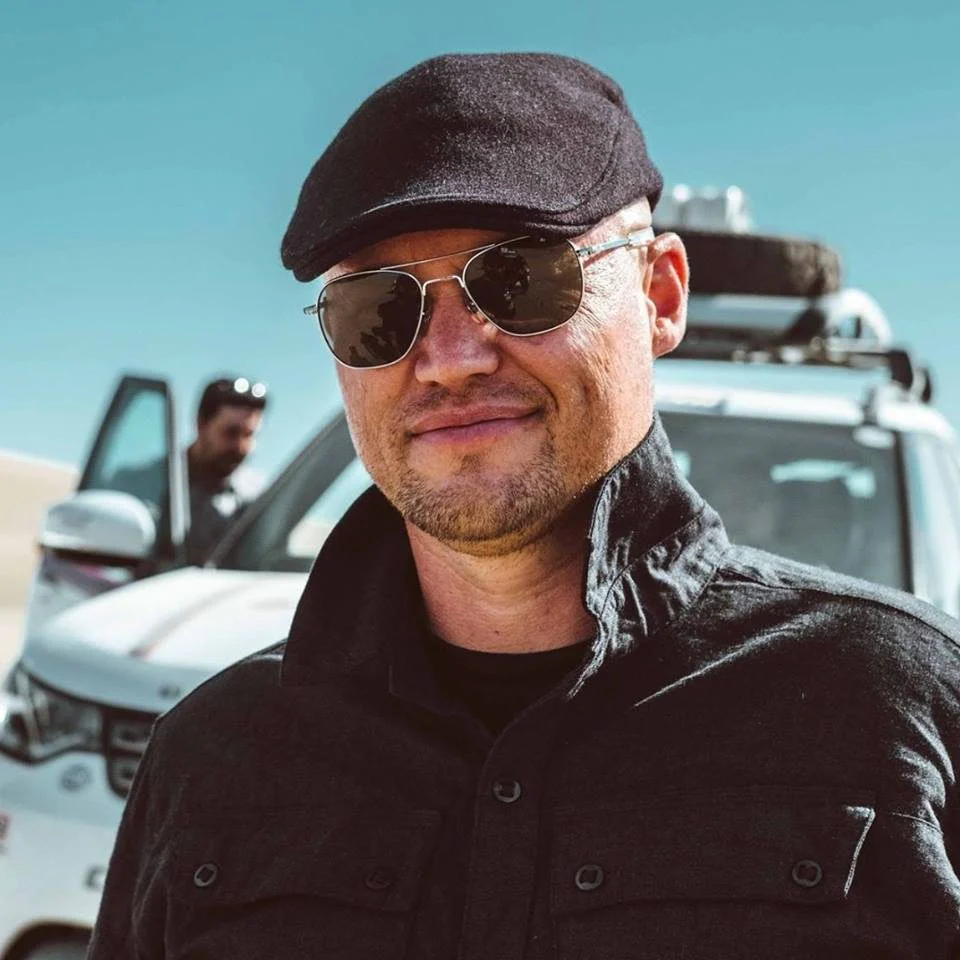
Scott Brady
Scott Brady is an adventurer, author, and publisher, and the first person in history to cross all seven continents. Brady is executive publisher of the Overland Collective, home to Overland Journal, the Overland Journal Podcast, and expeditionportal.com—the world’s largest vehicle-dependent adventure community. Scott wrote Overlanding 101 (Simon & Schuster) and is currently riding around the world on his BMW GS. He also led Expeditions 7, the first expedition to drive the same vehicle on all seven continents. Brady’s polar crossings include Antarctica and a south–north crossing of the Greenland ice sheet. Scott is a fellow of the Explorers Club and lives in Prescott, Arizona.
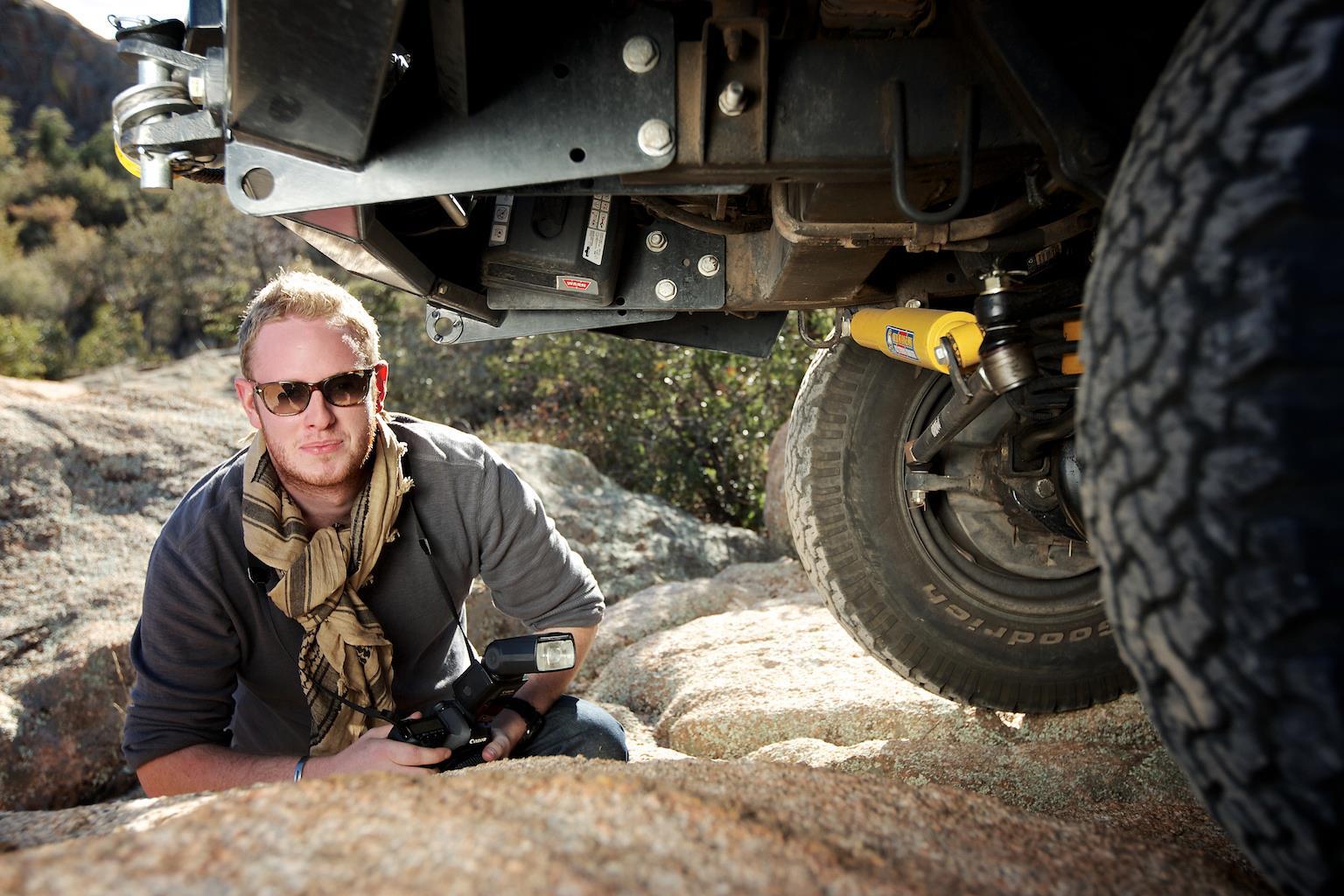
Matt Scott
Matt is a leading expert in automotive adventure. He has extensively explored the world’s most remote places by 4WD and is considered an industry authority on overland travel. He is the only American to ever become an editor of a major Australian 4WD publication and has over 15 years of competitive auto racing experience. @mattexplore
Tune in Apple Podcasts | Spotify | YouTube
Our No Compromise Clause: We do not accept advertorial content or allow advertising to influence our coverage, and our contributors are guaranteed editorial independence. Overland Collective may earn a small commission from affiliate links included in this article. We appreciate your support.
Transcript
Scott Brady: [00:00:00] Hello, and welcome to the Overland Journal Podcast. I’m your host, Scott Brady, and I am here with my co-host, Matt Scott.
Matt Scott: What’s going on, everyone?
Scott Brady: And talk about an interesting question, which is what is overlanding?
Matt Scott: Yeah. What, what is actually overlanding?
Scott Brady: And I think that now more than ever it is appropriate to talk about it.
When we first started defining that back in 2006 and 2007, we spent a lot of time polling the overlanders of the day, the people who had driven around the world and the people who had crossed continents and done major expeditions, to get their insights into what overlanding meant to them, and from that we curated our own, uh, definition from that.
And I think it’s most important to say two things before we even get started. First off, [00:01:00] I do not protest to know the answer completely to this question. And even though I have experience, I do not ex- I do not position myself as having all of the experience necessary to define this. This is as a result of lots of conversations with lots of individuals.
This is not a, a definition that I’m coming up to on my own or is Matt coming up to on his own.
Matt Scott: I mean, I have one on my own.
Scott Brady: Yeah. And we’re gonna hear Matt’s in just a minute. But I think that if we start from that position of, of knowledge, of trying to gain and understand knowledge, that’s where we were, uh, when Jonathan Hanson and Graham Jackson and myself worked together to create, uh, the definition that we had to overlandjournal.com for what is overlanding.
And as a result of that effort, it’s, it’s certainly the most popular page on the interwebs about the answer to that question. Uh, we’re… Again, we’re not saying that we’re the only definition, but the important thing is to recognize, uh, the two [00:02:00] things, which is- Overlanding is growing rapidly, and it’s changing rapidly, which means that in my mind, the definition does not change.
The description of it may change. How people describe their activity of overlanding may change. Uh, so that’s the first thing I think, is that the definition doesn’t really change. It doesn’t get gentrified. It doesn’t get reduced to something elemental just to appeal to a larger audience. The definition is what the definition is, just like any other word or any other saying.
There are definitions, and that’s important to have because it gives us something to work from. And it’s also important for me, at least personally, to, to come at this from a real place of humility, recognizing that I only know a fraction of what I want to know about the subject. So what we’re gonna talk about today is all of the information that we’ve gathered and also some things that can influence the way that people define it.
So just from the start, I want to make sure that any cognitive biases that I may [00:03:00] have are certainly laid out on the table. Uh, by me traveling around the world and crossing continents and doing it for months or years at a time, that can influence my view of the definition of overlanding, and maybe I make it sound too difficult or even, unfortunately, if it comes across this way, as elitist, which is not my goal.
But what I want to do is try to find a balance between the two. Questions that we can ask ourselves to define if we are actually overlanding, because it’s okay to say that, “Hey, we’re just camping,” or it’s okay to say, “We’re just four-wheeling.” So we’re gonna kinda come at it from that perspective. Um, when you look at just the general definition of overlanding or overland, it was used by the Australians a long time ago- Yeah, yeah
before there was even cars. Overlander
Matt Scott: 4X4 magazine going back to, man, the ’70s, I wanna
Scott Brady: say. That’s right, yeah. So those things have been around a long time, and the Australians called overland becau- called it overland because they were going overland with their cattle. Yeah. And that was really where the term [00:04:00] took on some general use, and it’s been used in many forms since then.
But we do need to understand those, those biases that can come into play, which means that we need to always assess the level of skills and the level of experience of the messenger. And Matt’s gonna talk about that a little bit when it comes to the industry, but I’m gonna talk about the specifically, if you read an article about what is overlanding, or you listen to someone talk about what is overlanding, first ask what is their experience?
Have they genuinely done long distance, multi-month- Yeah … or multi-year travel? And, and I
Matt Scott: think that that’s so important because when I, when I look at what is overlanding and I have this conversation, I mean, it is, it is the kind of conversation that most overland travelers end up getting to after 4.25 beers.
But what I’ve noticed is that people who have traveled internationally in vehicles often come to the same [00:05:00] conclusion as to what overlanding is a lot sooner than people who have not extensively traveled internationally- Right … with vehicles. When I have conversations with Dan Grech or Brian Door or any of these guys that are my friends and we’re hanging out and we’re just chatting, you know, the conversation lasts about five minutes, we move on and we say overlanding is travel.
Scott Brady: Yeah.
Matt Scott: Um, and I think that if you haven’t really experienced that international travel community, it, it may just mean something drastically different to you. It’s so, it’s, it’s such a subjective and internal definition, right? Because it’s cool right now. Overlanding is cool. Yeah, I don’t, I don’t know. I mean, y- you see some, like, random French couple that’s driving in a Citroen Deux Chevaux or something down the Par- Pan American Highway and an…
Again, this is where it separates. Like, I’m, I’m gonna look at that and be like, “Oh man, look at that overland traveler. Look at that person traveling. Look at- Right … look at that.” Where somebody here, uh, maybe in the United States, like maybe the, the, the, a, a newer overlander that hasn’t had the, the [00:06:00] experience of traveling overseas might just not even recognize that as an overlander- Right
because they’re not in a Tacoma. It doesn’t have big tires, doesn’t have suspension, it doesn’t have this. And I think that it’s important to recognize that overlanding is an activity. Um, it is something that you do, it isn’t something that you build. Right. The, the vehicle- Or own. Yeah … or own. Like, everything that makes me an overlander and everything that makes Scott an overlander, I mean- can’t be purchased.
Like, w- the vehicles we drive-
Scott Brady: They
Matt Scott: literally don’t matter … side of it, it, I, like, I- Don’t
Scott Brady: matter
Matt Scott: Like, I, I, I mean, I love vehicles and, and, and I’m a vehicle enthusiast, but the vehicle enthusiast side of me is different than the overlander side of me. The overlander wants to travel. The overlander wants to experience cultures.
The overlander, you know, wants to see the world. And I, and I, maybe I just don’t know what that portion of me that wants to- Yeah … lift the truck and do all of these, uh, modifications to them, i- is that overlanding? I, I don’t, I don’t know if that is even the essential part of it. I don’t know if that is the defining [00:07:00] characteristic.
Scott Brady: It’s the Jeep wave of overlanding, right? It’s the- Yeah … I mean, I recognize that within myself. When I first started, when I had traveled less, I tended to do more vehicle modifications. So my vehicles were far more modified and far more complex when I had not traveled a lot because I think I was planning for the eventualities that I didn’t know would or wouldn’t exist.
Yeah. So I think I, I over-prepared like the Boy Scout would do. And also there’s a, there’s a degree of, of being honest with ourselves of, like sometimes the vehicle is our Jeep wave. It’s, it’s the- Yeah … like, I’ve got a snorkel and I’ve got this and that, that defines me as an overlander, and I don’t know that there’s anything wrong with that- No, there isn’t
as long as, as long as people are honest about it. We’ve talked a lot about on this podcast of, of, um, needs versus wants. Matt’s really good about reminding us of that. And I think if you just say, “You know, I really want something that looks this cool.” Yeah. “And, and I don’t actually have a lot of time to travel yet ’cause I’m right in the middle of a [00:08:00] startup, and I’ll be lucky if I get to go for a weekend,” I respect that because the person’s being really honest.
Where we start to get concerned is where someone goes to the local campground f- for a night, and they say that they’re overlanding. Just say, “I’m going car camping- Yeah … with my family.” And, like, I go camping in Pre- in the Prescott National Forest all the time, and I would never call it overlanding. I’m just like, “I’m excited to go camping.
I’m gonna go car camping this weekend. I’m gonna set up a tent. I’m gonna make a fire. I’m gonna make some s’mores.” Yeah. And I’m just gonna call it what it is. If I go out, if I go out driving a technical trail for the day, I don’t say that I’m overlanding. I say that I’m four-wheeling, just because that’s actually what I’m doing.
It may be in my overland vehicle that I’m doing that, but- Yeah … I think it’s just really important to kinda call it- Yeah, yeah … call it what it is.
Matt Scott: Exactly. And you just hit on something. You can have an overland vehicle. You can have your North American spec Defender 110 that is the iconic. You can have the, the Tacoma that is the practical.
What- whatever you drive, [00:09:00] it doesn’t actually matter, right? Like, you can go car camping out of an overland vehicle. You can go road tripping out of an overland vehicle. You can go rock crawling out of an overland vehicle. Yep. In s- some regards, you can go four-wheeling out of an overland vehicle. Just because you’re driving something with a roof rack and a snorkel and a tent that may have overland modifications to it doesn’t mean- What you’re doing has to be called that,
Scott Brady: right?
I,
Matt Scott: I, I think that that’s just an important thing. Like, I don’t know how many overland influencers that I’m, that I’m friends with that, yeah, they haven’t even left the country and they’re scared to. Like, they won’t go to Mexico with me. And I’m telling these people, “Hey man, I will take you to Baja. Let’s get your toes wet.
Let’s do something.” And, and I actually… I, I have to say, what is the validity of calling yourself an overlander if you’re not interested in travel? I think that’s where I was going with that is, is if the goal for you isn’t travel, if the goal for you is conquering specific trails, if you’re an overlander, I think it, it [00:10:00] is travel, right?
Scott Brady: Yep. It really is. And, and that was kind of the, the definition that we came to, Jonathan did and, and Graham Jackson and, and myself, uh, over-
Matt Scott: Yeah, I mean, let’s just- … over a
Scott Brady: decade
Matt Scott: ago … let’s just read that. So two definitions, one and the same, right? So the simple definition is vehicle dependent adventure travel.
That’s, that’s so simple. It’s broad enough, but it’s specific enough. The thorough definition is vehicle supported, self-reliant adventure travel, typically exploring remote locations and interacting with other cultures, culture That is a big part of
Scott Brady: overlanding It, it really, it really is. And I think that either definition is okay.
The one that is a little more thorough I think helps provide some additional context, and that’s where the concern around saying something like vehicle-dependent travel and make that just be a definition. I think that can be descriptive, but it’s actually not a definition, ’cause it can’t be used outside of context.
So, like for [00:11:00] example, I’ve been saying vehicle-dependent travel since 2009, but I would never use it as a way to purely define overlanding in and of itself, because it needs to be within the context of overlanding. So that’s why I like to say vehicle-dependent adventure travel, because if it’s just vehicle-dependent travel, maybe you’re, maybe you’re just doing a road trip to go see your grandma
You know, I mean, if you think about it- Which
Matt Scott: you should be doing- Which you should be doing … as soon as this is all over and you’ve tested negative. So let’s talk about that. That’s right.
Scott Brady: Yeah, totally. Yeah, but I… There’s nothing wrong with a road trip, but call it a road trip. So I think that it’s, m- really important to have context and to make the definition as thorough as possible.
But what the definition that we tend to use, and we’ve used since 2009, is vehicle-dependent or vehicle-supported adventure travel, and I think that that works. It’s worked well for us, and our listeners, we would love your feedback. If you feel it needs to be something different, we would love to continue to e- evaluate and incorporate that quorum of travelers.
But in our conversations with Dan Grech, and, and with [00:12:00] Graham Bell, and, and Tom Sheppard, and Chris Scott, and all these luminaries of the industry, that was kind of what we came to as the, the most efficient definition of overlanding. Which I think kinda leads to a couple questions, and Matt and I talked about this, and we kinda worked it out.
Because some of the things are, well, now that I know the definition, how do I know that I’m act- still, how do I know that I’m actually overlanding? I think it’s kind of helpful to ask the right questions. So the first question would be, am I traveling remote? Which means, am I getting days away, potentially by vehicle, where the consequences of the vehicle stopping working, or if you get stuck and you need to walk out, you actually are starting to get remote.
You’re not within- Yeah … you, you don’t have cellphone coverage, and you can’t see-
Matt Scott: Yeah, like there’s a big difference between, you know, the Skeleton Coast where we were-
Scott Brady: Yeah …
Matt Scott: about a month or two ago, and Moab. Like Moab is a town that is in the middle of nowhere, but it, it is a town. There are [00:13:00] services there.
I mean, like- Yep … Hell- Hells Revenge is not overlanding, guys.
Scott Brady: But you can, from Moab, you can start heading towards Canyonlands- Oh, yeah … and you can get, you can get super remote. Lockhart Basin comes to mind as, as one. Beautiful trail. And you can get days away from help. Yeah. And in that case- San
Matt Scott: Rafael Swell is like Moab, but without people
Scott Brady: Without people, yeah.
So in that case, in my mind, you’re absolutely overlanding. So the next question is- Am I experiencing a culture unique from my own? So now each one of these questions can be independent. So that means you may not be remote, but you’re in another country and you’re experiencing a new culture. If you’re experiencing a new culture and you’re traveling by vehicle, then I would say that qualifies as overlanding.
What do you think on that, Matt?
Matt Scott: It’s an integral part of it to me. I mean, I travel overland for culture and for food.
Scott Brady: Yeah.
Matt Scott: Um, you know, that’s, that’s, that’s pretty much it. I mean, I love going to really remote places, but I kinda like to connect taco shops by the most- … rugged ways possible.
Scott Brady: In Baja- … that’s the way [00:14:00] to do it, totally.
That’s absolutely the way to do it. Uh, the next question, question number three, am I visiting an underexplored or under-documented region? And that’s a cool way to incorporate overlanding into your local area, um, where… Like a great example of this are the guys that have done a lot of the traveling in Vermont.
Uh, it’s really hard to get remote in Vermont. It’s really hard to experience a new culture. But you can find a new trail that connects two villages together, and you can do research, and you can go to the library, and you can patch these trails together to create something that is a genuine journey of new experiences and is underexplored or maybe under-documented.
Uh, and that’s a way to also incorporate overlanding into an area that’s more local. And then the next question is, the last one, number four, is am I traveling self-supported in unfamiliar territories for multiple days, weeks, months, or years? So for example, you may not be remote at all. You may be traveling for 10 years with your [00:15:00] family, but you’re traveling in that Duchavo, so you don’t really leave an asphalt road- Yeah
for the most part. Uh, but you’ve been traveling around the world for years. So you, you’ve added the element of time, and you’ve added the element of unfamiliarity, and you’re fully self-supported. Um, so that starts to also qualify for the definition of overlanding. So m- we’ll post these, of course, in the show notes, but those are great ways to say, “Am I overlanding on this trip?
Can I answer any one of these questions as a definitive yes?” Then most likely you are. And again, we’re framing this in a helpful way. We’re not trying to say that we know it all, uh, ’cause I do not know it all. I know only a fraction of what I hope to know. But these are some ideas that help frame the concept of am I actually overlanding.
Matt Scott: Yeah, you know, in, in a lot of ways it’s almost similar to the, the difference between a vacation and traveling.
Scott Brady: Yeah.
Matt Scott: Travel, to me, is, is more in-depth. It’s more meaningful. It’s more of a, a quest, more [00:16:00] of a search. Vacation, to me, is, um-
Scott Brady: Margaritas on the beach …
Matt Scott: margaritas on the beach. And there’s nothing wrong with that.
Which can also be overlanding. No. That’s the problem- Yeah … is that it’s hard to really tie-
Scott Brady: Yeah …
Matt Scott: this definition down because it, it is, it is designed to be inclusive, and- Right … and travelers are very accepting people, so nobody, nobody wants to really go to somebody’s face and say-
Scott Brady: You’re not an overlander Yeah.
Matt Scott: You know, and then, uh, the ensuing brawl begins, but
Scott Brady: Yeah, and I, and I, I guess really important, we don’t want anybody to take that away from this conversation. No. It’s literally just a conversation that helps provide some framework. I remember when I first started traveling by vehicle, I would call things that I was doing expeditions, and in hindsight, I realize I was completely incorrect.
I came from a place of ignorance. I came from a place of, of not having done really long, really remote travel to know the difference. So that is one of the definitions that I, that we will cover today, which [00:17:00] is, uh, vehicle-dependent expedition. Now, take all of the pieces of overlanding and then add a purpose to it, or when Tom Sheppard was the first to cross the Sahara, uh, those are expeditions.
These are firsts. These are major undertakings. Yeah. This is travel with a purpose or a scientific endeavor. Um, so it’s okay to not call your trip an expedition. I learned that the hard way myself. I made that mistake and called things that I did expeditions when they weren’t. Um, and now I don’t do that.
In fact, I would say that I’ve probably only done two real expeditions in my whole life.
Matt Scott: Yeah. For me, calling yourself An expedition leader or calling the trip that you’re doing an expedition, I mean, like, that’s pretty serious. Like- Yeah … that’s supposed to carry some weight with it. You know, and when I was at, uh, the Explorer, the event that I, you know, try and go to every year at the Royal Geographical Society in London, I was talking with Shane Windsor.
We kind of came to this idea that if it’s not something that can end up in their archives, if [00:18:00] there’s no scientific report, if there’s no scientific paper being published from it, if there’s no academic reason for the trip, it is not a, it’s not an expedition. If you, you know… Exploration, being the first person to cross Antarctica or whatever it, it may have been, um, and that surely that ended up in the, in the archives of the Royal Geographical Society or- Yep
some kind of university or, or, or higher learning establishment. Use that as an example. Yeah. I… That- that’s what- that’s my personal rule. I- if you’re not proving something for the first time, or you’re not doing something for the first time, or you’re not doing scientific or educational research, it’s probably not an expedition.
Scott Brady: And that’s just okay. And, and I recognize the allure of it because I made the same mistake myself, and I recognize the allure. And it, and at the time, I will say that when I, when I f- did my first trip through Copper Canyon when there was no GPS tracks, and it sure felt like an expedition to me. Yeah, yeah.
It felt terrifying and unfamiliar, and it felt like I was [00:19:00] conquering the world, when in a way I was really just conquering my own fears, and that doesn’t make it an expedition, but it sure felt like it to me at the time.
Matt Scott: Yeah. And, and I think the, again, the goal here isn’t to be arrogant and say what you’re doing is…
It’s not what it, what you’re saying it is or, or what no. That- that’s not what it is. I, I, I think it’s about properly classifying things. Yeah. So those terms have meaning. That’s right. And I’ll kinda, I’ll kinda get into the overland industry right now. One, we now have an overland industry. Like, that’s really cool.
It used to be a few guys and- Yep … and now it’s a, now it’s a thing. You have car companies that are actively recognizing it. But I, you know, when I see overland companies talk about overlanding at the Kinga- King of the Hammers, I’m like What? Yeah. Like, like, like really? These- You have cell
Scott Brady: coverage.
Matt Scott: You have cell coverage.
There’s- Yeah … there’s 2,000 fifth wheel RVs within a mile of you, and this is motorsport.
Scott Brady: Yeah.
Matt Scott: I mean, King of the Hammers is amazing.
Scott Brady: I think it’s super cool, yeah.
Matt Scott: Like, rock crawling is, [00:20:00] is like the, the things that these guys are able to make their vehicles do, you know, through engineering, through design, and the largest part through the skill of the driver, like, that’s cool.
We’re not, we’re not saying that that’s not.
Scott Brady: I think it’s very cool.
Matt Scott: It’s amazing, but it’s, it’s not overlanding.
Scott Brady: Yeah.
Matt Scott: Newsflash, the suspension kit that three weeks ago had, had the name Rock Crawler in it, but now has Overland kit in it, like I think that consumers need to kinda demand better from some of these companies.
Yeah. You know, overlanding is long distance. Overlanding is about being self-sufficient. It’s, it’s not about putting shocks on your vehicle that have to be rebuilt in, you know, 5 to 10,000 miles, or heim joints that have very short service intervals. You know, again, these people don’t have the experience to know what overlanding is.
It, it kind of goes back to that Dunning-Kruger effect that, that you’re talking about.
Scott Brady: Yeah, I think it’s the consumer, the consumer can be part of the solution, and that is by when you call up to [00:21:00] order that suspension, just say, “Hey, I’ve got a couple questions for you guys. Your engineers, have they done any long distance trips?
Have they traveled in the, in the vehicles loaded to gross vehicle weight? Have the vehicles been tested at gross vehicle weight, not unloaded? Have the people that are designing it, have they traveled themselves to know what some of the limitations or, or considerations are around it?” And if there are people in the industry that have that experience, and it’s really easy to find, and, uh, just spending a little bit of time looking at the CVs of the people who own the companies will really give you an idea of, of who has the experience and, and who doesn’t.
And I think that that’s important in the same way as it’s important to think about the information that you read, who’s writing it, what is their experience. If the byline is Dan Grech, then you can take it to the bank. Um, if the byline is somebody who was driving tuner cars three weeks ago, you may wanna question what [00:22:00] they’re saying because-
Matt Scott: Yeah, if you can scroll back far enough on their Instagram to, to, to, to figure out when this person was a WRX enthusiast, and then a 3 Series enthusiast, and then a Evo enthusiast- Yeah
or whatever it may be, maybe that’s not firsthand information. That’s not, that’s not… You know, anybody can really go read some stuff on the internet and then just, just repeat it. Yeah. Right? Like, how many of these people are actually presenting firsthand information that they’ve really learned? I think that that’s an important thing as well.
Scott Brady: Yeah, and, and starting with organizations like the Overland Expo that vet all of their trainers and the people that produce content for them, very experienced folks. We’ve talked a little bit about Brian Door and, and Dan Grech, and Graham Bell, and Chris Scott, and Tom Sheppard. Lois Price is another great example.
People who have earned their stripes by actually doing it. That’s where we wanna, that’s where we wanna get our information from, and that’s also what we wanna challenge manufacturers in the [00:23:00] industry to do, is to produce product as a result of experience There’s a couple other words, some terms, that I think add to it.
Matt, why don’t you kinda run us down that we’ve been
Matt Scott: thinking- Well, first I’ll start with four-wheel drive touring. Yeah. Um, that… You know, I, I used to run a magazine in Australia. I spent a lot of time there. Overlanding in Australia means you’re out of Australia. It means you’re s- an, an overlander there-
Scott Brady: Yeah
Matt Scott: you’re sending your vehicle somewhere. You don’t hear people say, “I’m going to overland” or, “I’m going to do an overlanding trip across the Canning Stock Route.” The term that they use there is four-wheel drive touring, and I think it is so appropriate and so- Yeah … concise, and I wish- And
Scott Brady: very honest.
Matt Scott: Yeah.
And very honest. I wish, I wish, wish, wish more people would use it. But yeah, so off-roading. What is off-roading? Simply, it’s recreational sport using a four-wheel drive. This is the local four-wheel drive trail that you’re doing. This is your local club. They’re going off-roading. That’s great. It’s fun.
Scott Brady: It’s super fun.
Matt Scott: Let’s go off-roading this weekend. Yeah. I love it. Car [00:24:00] camping. You know, that can be a minivan at a pic- Yep … on a picnic table at Yellowstone as much as that can be what I’m gonna go do this weekend out of my overland vehicle. I’m going car camping. Why? ‘Cause I’m going an hour away. Um-
Scott Brady: Yeah, so if you’re in a campground…
I think, I think Jonathan is the one who said this, but if you have a… If it has a toilet, if the campground has a toilet, you’re probably not overlanding. And now, that is not always true, ’cause I have been in some really remote campsites with toilets, but the case- It’s just
Matt Scott: a manage- a, a factor of managing that, that-
Scott Brady: That’s managing the waste, yeah.
Yeah. But… And again, another good example of that is in Africa. There are… Because there are animals that eat you there- Hm … um, when you go to a campground, even in the middle of the Kalahari, you’re, you’re actually, like, in a fenced area, and there’s a, there’s a little pit toilet. Yeah. So yeah, you’re absolutely overlanding, but it…
The reason why they have a campground is so you don’t get eaten during the- Yeah … which I think qualifies as overlanding in and of itself if you can get eaten.
Matt Scott: I like the electric fences.
Scott Brady: Yeah. Uh… Yeah.
Matt Scott: Um, so backcountry adventure. You know, one-day or multi-day [00:25:00] off-highway trip on a adventure bike, a dirt bike, four-wheel drive vehicle.
I mean, a backcountry adventure can be hiking, too, I guess.
Scott Brady: Yeah, and maybe that’s kinda what you’re talking about with the four-by-four touring. Yeah. Maybe that’s a better word for that.
Matt Scott: Yeah.
Scott Brady: Uh, you know, maybe we’ll update our, our definition page to reflect that. I actually like that a lot, Matt.
Matt Scott: Now we get into the expedition word.
A vehicle-dependent expedition is an organized vehicle-dependent journey with a defined purpose, often geographic or scientific in nature. That’s the one I’m a big stickler on is the- Yeah … is the expedition word. Um, expedition vehicle, a four-wheel drive vehicle or adventure motorcycle prepared for self-reliant travel over long distances through unpredictable weather and over variable terrain.
Scott Brady: Yeah, so that’s a cool thing. You can build an expedition vehicle and not go on an expedition, and that’s kinda fun. So you can incorporate, you can incorporate that passion or that desire for expedition travel by building a [00:26:00] vehicle that’s suitable for it, and maybe in the future you get to actually go do that, and you get to maybe work with your local college.
I, I was thinking about the trip that we did across Greenland. We had multiple points of scientific research that occurred, uh, during that trip because we were crossing an area of the world that scientists just simply didn’t have access to. So we were able to measure snow depths, and we were able to measure reflection off of the surface, which shows how much contaminants are in, in the surface.
We took samples of the snow to determine how clean it was, uh, et cetera. We, we did all of these, these surveys and all of, all of these tests along the way because we wanted to provide some support to scientists that would not normally be able to engage in that kind of effort.
Matt Scott: Yeah. You know, and, and I think there’s also, you know, a lot of, you know, citizen science open source projects where you can actually get involved and integrate science into your trips.
Um, there’s a lot of need for [00:27:00] microplastics research, for example, tree core sampling. You know, even sighting, sighting and recording where, where birds are. I mean, small things that you can be doing with, uh, you know, a little bit of research to kind of be giving back.
Scott Brady: Yeah, and it does start to give back, and I, and I like that a lot, Matt.
I… In fact, I think Laura, she’s done some of that, right?
Matt Scott: Yeah. Yeah, yeah, a lot of, um, when we did some fairly remote stuff in Australia, she did a lot of, I’m gonna call it bird stuff. That’s what I call it. So I don’t know th- I don’t know how to say it more, but- Yeah … she likes birds. She’s a, uh, she’s a… What do they call it?
A bird peeper?
Scott Brady: Yeah, maybe. I don’t know. I don’t know.
Matt Scott: Yeah, no, w- we’ve seen some really, really remote stuff with, uh, with the birds, and it’s cool. I don’t know. It ju- it just, it just adds something to it. I
Scott Brady: think it does. You know? It starts to feel bigger.
Matt Scott: I, I think, uh, let me ask you this. I mean, it…
Overlanding doesn’t probably give you the same butterflies in the stomach that it used to. I mean, there’s a lot of places that you’ve been. There’s a lot of places that you’ve seen. You’ve seen more than I have, but- [00:28:00]
Scott Brady: You know, for me, ’cause I’m gonna kinda summarize in my way, and then Matt will add his concluding thoughts, but if you are on a vehicle-supported or a vehicle-dependent adventure trip, then you are most likely overlanding.
Maybe ask some of those questions as a way to add some depth to that experience. Um, if you use overlanding and it doesn’t meet any of those definitions or any of those questions, I do not want anybody to think that I’m taking away that joy or that experience from you or even that definition from you.
Uh, you can apply it as you need to. I just feel like it is important as an industry that we say this is what the definition is so that it has meaning because otherwise, as this grows, as rapidly as it’s growing, it will be adopted in ways that are not consistent with its intention, and that’s the thing that we don’t want.
That’s the reason why we’re recording this podcast today is because we want for it to have meaning. We want overlanding to have some [00:29:00] definition behind it. So, um, that’s my thoughts on it.
Matt Scott: Yeah, I mean, the, the term overlanding to somebody in the industry only has value because it’s cool. The more you- Uh, exploit a term, uh, especially in a way that it could be misleading, I, I think that the power and the value of that term goes down.
So I, I think that by overusing this term, by integrating it into everything… I mean, if last week your company was like a off-road racing suspension specialist, and all of a sudden the same product is now an overland product, ask yourself if that’s ethical. Ask yourself if that’s, if that’s right. Have you actually developed something specific for this market?
But I do think it is important to recognize what overlanding is, to frequently discuss that-
Scott Brady: Yeah …
Matt Scott: like we’re doing. Yeah. I mean, I, I, I guess if, if you guys have any countering opinions or anything you’d like to say. I’ve had a lot of people lately that have been reaching out to me on Instagram. Yep. Um, so I’m [00:30:00] mattsexplore on Instagram, and you’re now scott.a.brady.
Scott Brady: That’s me.
Matt Scott: Let- let’s have a conversation about it. Um-
Scott Brady: I think that that’s important. Well, thank you all for listening. We really appreciate everyone’s support and questions and continued comments. And if you like the podcast, please subscribe and, uh, send us any comments or questions through Instagram, and we will talk to you next time.
Matt Scott: See you guys.