

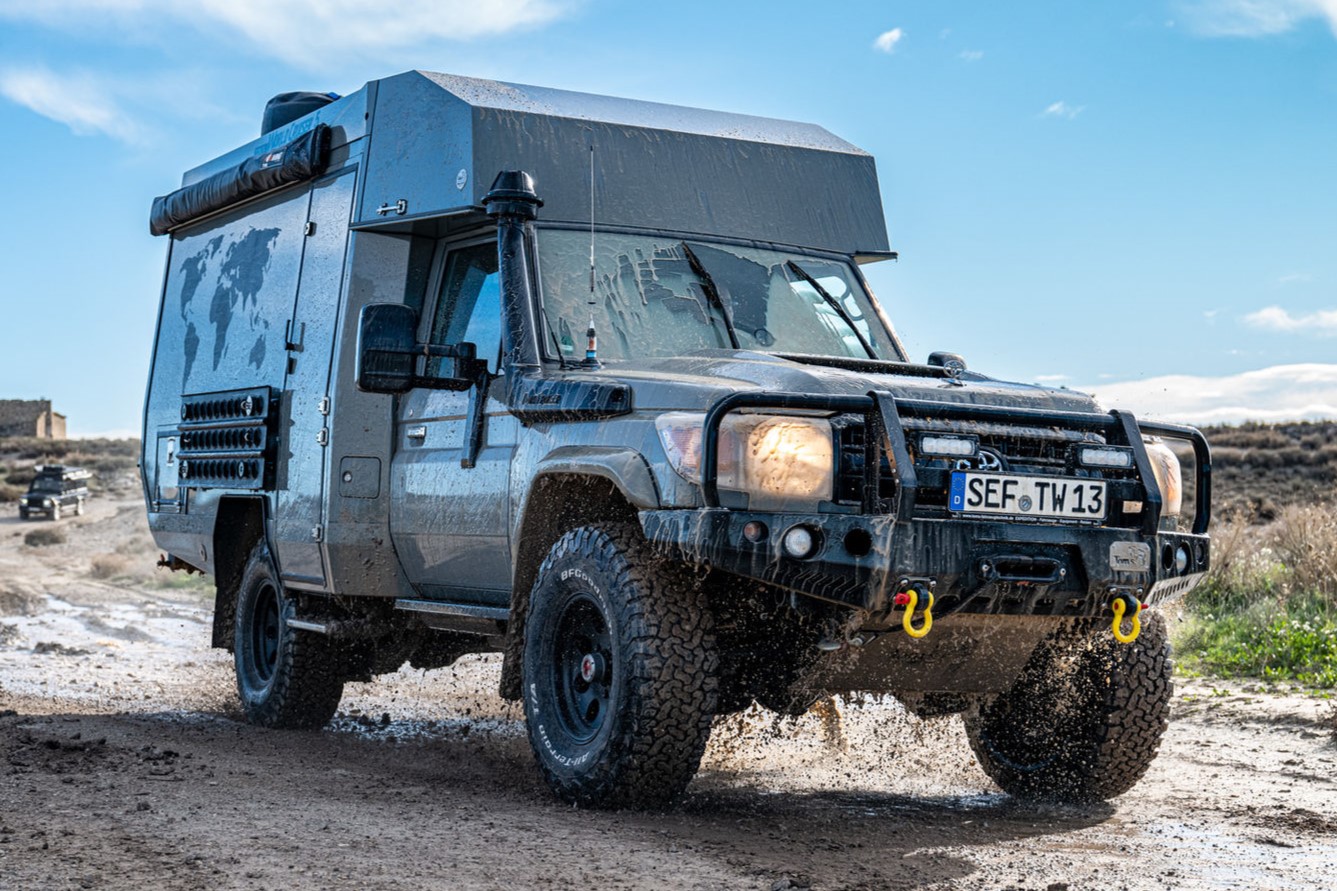
Cruising along the quiet backroads of Bavaria, my weathered overlanding family and I stumbled across Tom’s Fahrzeugtechnik and cooed at the sight of a row of glistening Land Cruiser WorldCruisers, waiting impatiently for their turn to travel the world. The year was 2017, and we were driving our old, self-built Defender 130 camper from a friend’s home in Nuremberg to the Abenteuer & Allrad overland event in Bad Kissingen. We instantly fell in love with Markt Bibart, the town where Tom’s is based, with its rolling green hills, ancient castles, and rural pace of life. There can surely be no better place for a global expedition vehicle to be born.
Later that week, we had the opportunity to visit Tom’s stand at the Abenteuer & Allrad and inspect the WorldCruiser vehicles up close. The salespeople weren’t too interested in us, with our old Craghoppers adventure gear and worn boots, as their trained eyes scanned the mingling crowd for the Fjällräven fox, blonde hair, and Greek tan. Tom’s clients are the top 1 percent, and those who know, know that a Tom’s WorldCruiser is the ultimate overland vehicle for travelers who value bespoke practicality and reliability above all else—and can’t wait to apply a Swiss or German flag to the rear body panel.

As you might have already surmised, Tom’s Fahrzeugtechnik (automotive engineering in English) is a specialist in designing and building expedition-ready vehicles based on the Toyota Land Cruiser platform. Founded in 2001 by master mechanic Tom Ramming, the company has grown from a small workshop into a globally recognized manufacturer of bespoke “WorldCruiser” expedition vehicles. Ramming brought several decades of experience working on Land Cruisers to the business, combining mechanical craftsmanship with a passion for 4×4 travel that laid the foundation for the brand’s enduring design philosophy.


In the early years, Tom’s Fahrzeugtechnik focused on service work and parts support for Land Cruiser owners. Ramming’s regular participation in travel tours, both as a leader and a scout, allowed him to test materials and systems under real expedition conditions. From this experiential laboratory emerged innovations such as custom intercooler installations and lightweight roof boxes, which would become part of the WorldCruiser vehicle concept.
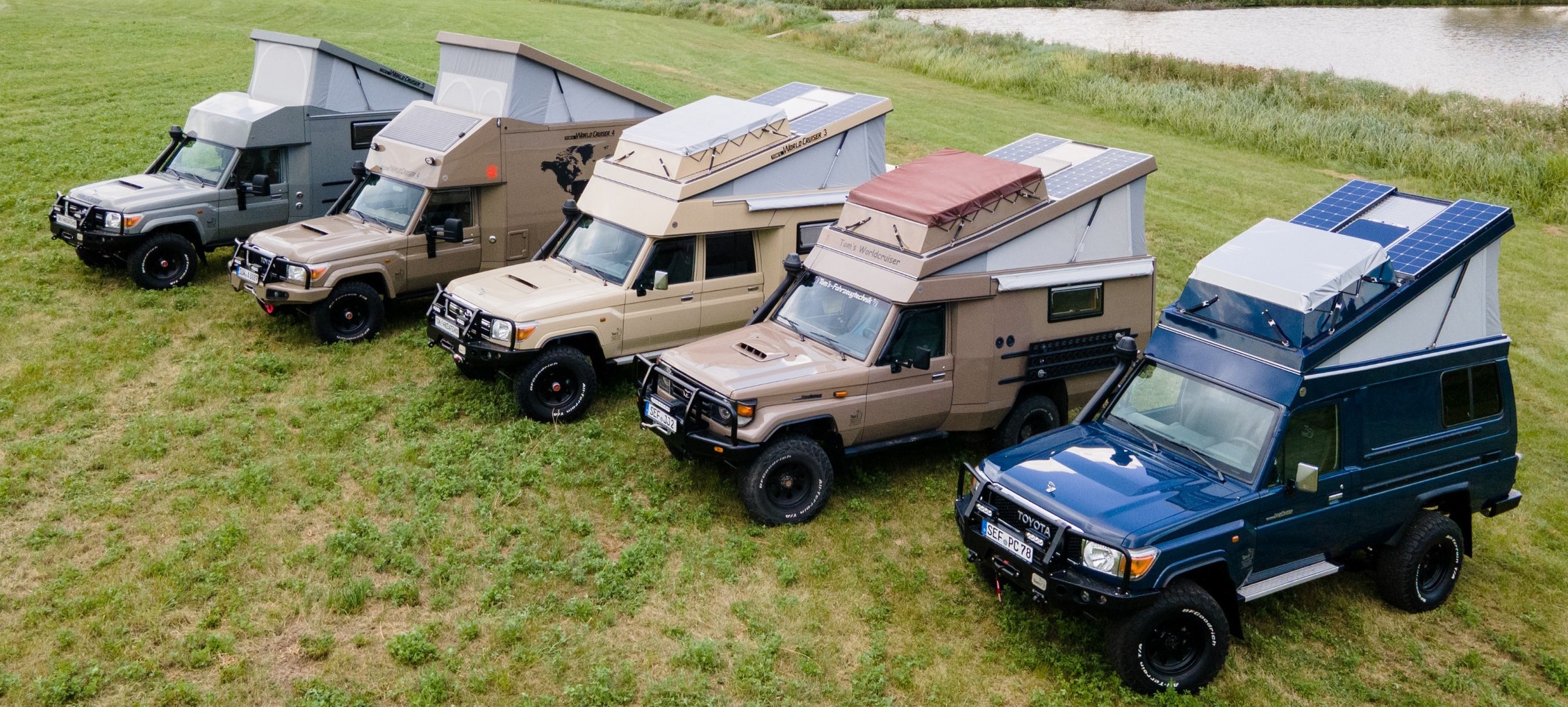
By the late 2000s, the firm had begun offering fully factory-assembled expedition modules on Land Cruiser chassis, branded as “WorldCruiser.” The WorldCruiser line evolved in successive iterations, each variant aimed at a different combination of passenger capacity, comfort level, and expedition scope. The basic idea was to provide an off-road capable “home on wheels” that could be customized to suit long-distance overland travel across continents. Customization is a central premise of the campers, and clients begin with a choice of model and basic configuration. The basic setup typically includes one or more seats, a cooker, a sink, and a cool box. From there, customers may choose from a range of upgrades, including insulation, heating systems, hot water boiler, kitchenette with drawers and storage, interior toilet and shower, and electrics tailored to solar or off-grid operation.

Each WorldCruiser variant shares a common technical foundation: rugged drivetrain and chassis systems inherited from the Toyota Land Cruiser, reinforced as needed for increased gross vehicle mass and equipped with the firm’s proprietary drive and chassis solutions. These systems ensure reliability even under heavy loads and multiple continents of travel.
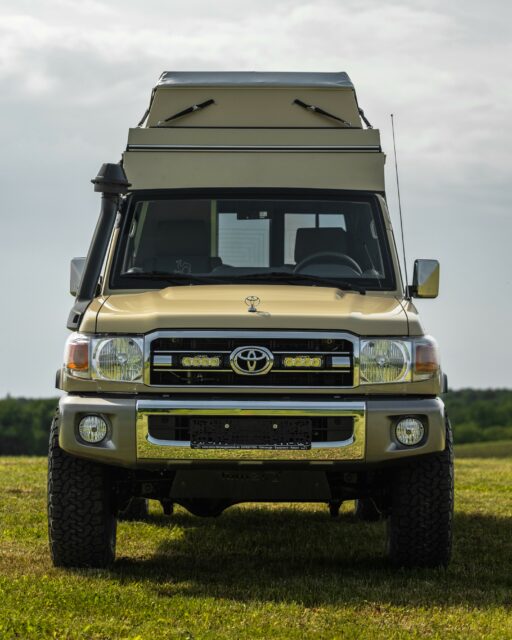

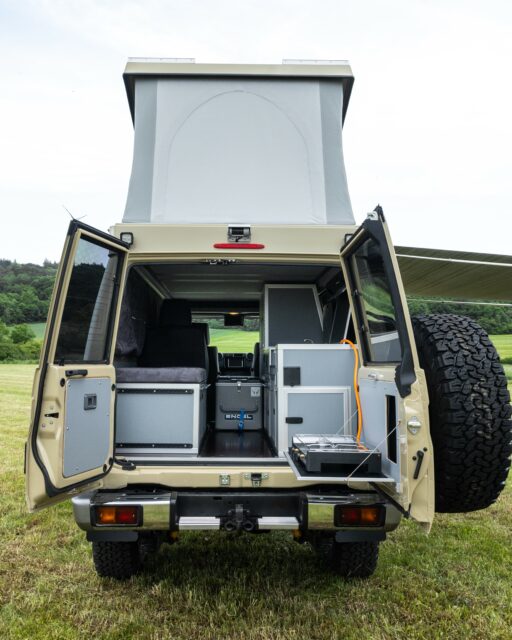
The first WorldCruiser model, WorldCruiser 1, was a compact version suitable for two adults or a couple with two children. It offered a basic but fully functional setup including sleeping space, cooking facilities, and storage, all integrated into a compact envelope, and pricing starts at approximately $125,000.
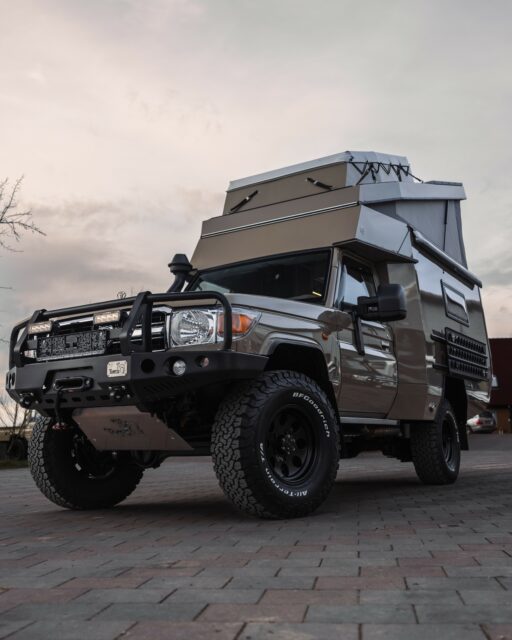
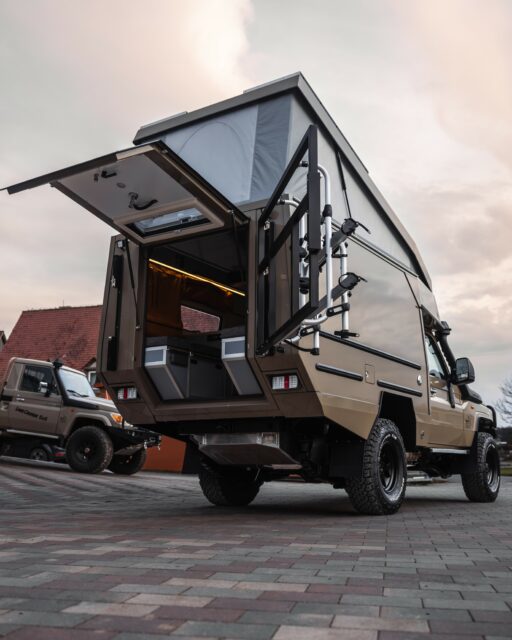
The next in the series, WorldCruiser 2, is designed specifically for couples. It provides ample living space beneath a folding, pop-up roof to allow standing room and a comfortable interior layout. Typical installations include a sink, cooking facilities, a cool box, and storage, with options to upgrade to include heating, hot water, a full kitchenette, an interior toilet, and an outdoor shower. Pricing for this model begins at around $162,000.
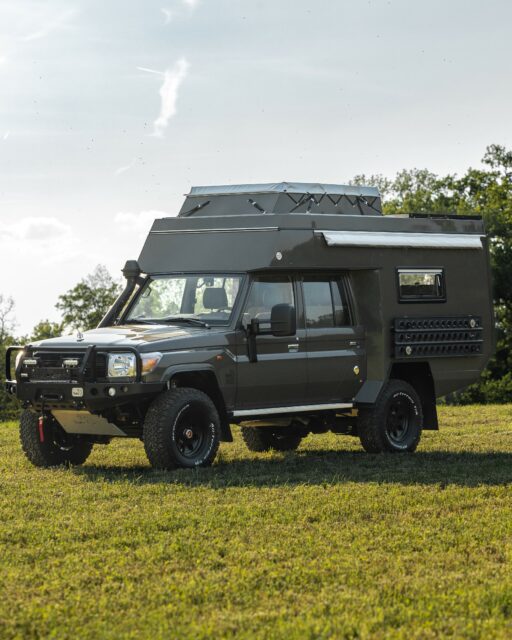
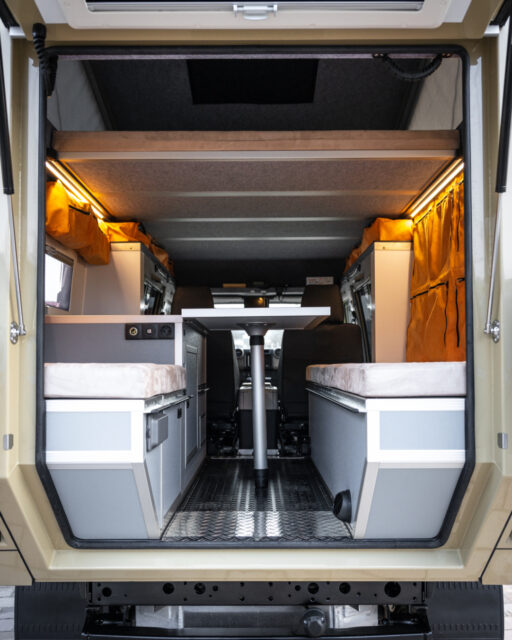
WorldCruiser 3 introduces a significant extension in the vehicle’s height and volume. With an aluminum HighCube body extension, it accommodates up to four people and delivers a more spacious interior. That model also starts at around $162,000 and targets families or groups seeking greater comfort while retaining off-road capability.
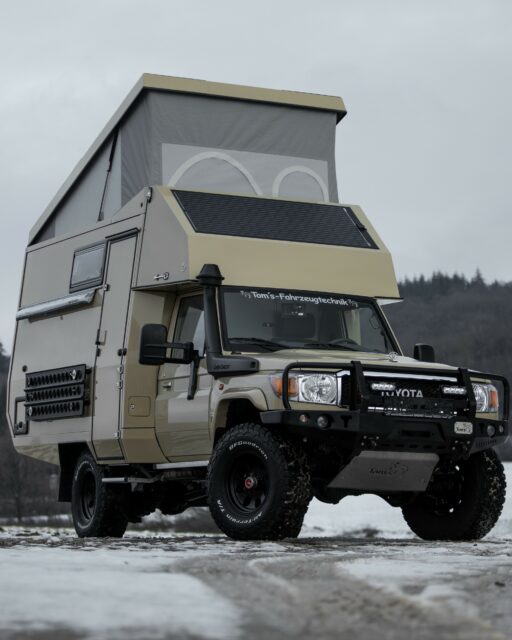

Where WorldCruiser 3 bridges standard and larger formats, WorldCruiser 4 closes the gap toward truck-based expedition vehicles. It delivers an XXL format on the Land Cruiser chassis. The more generous proportions result in increased interior volume and greater flexibility in layout, with a starting price at roughly $195,000.


Finally, WorldCruiser 5 represents the pinnacle of the series, combining lightweight aluminum construction with sophisticated engineering to deliver unprecedented comfort without sacrificing off-road performance. Like the four, it is intended for two persons and starts around $195,000.

In addition to vehicle construction, Tom’s Fahrzeugtechnik offers a range of services to support long-term travel customers. They maintain a spare parts service that supplies components for Toyota Land Cruisers and their custom-built modules. They also operate guided tours and scouting trips. On these trips, Ramming and his team test new developments and gather practical feedback, while prospective buyers gain firsthand experience of WorldCruiser vehicles under expedition conditions.
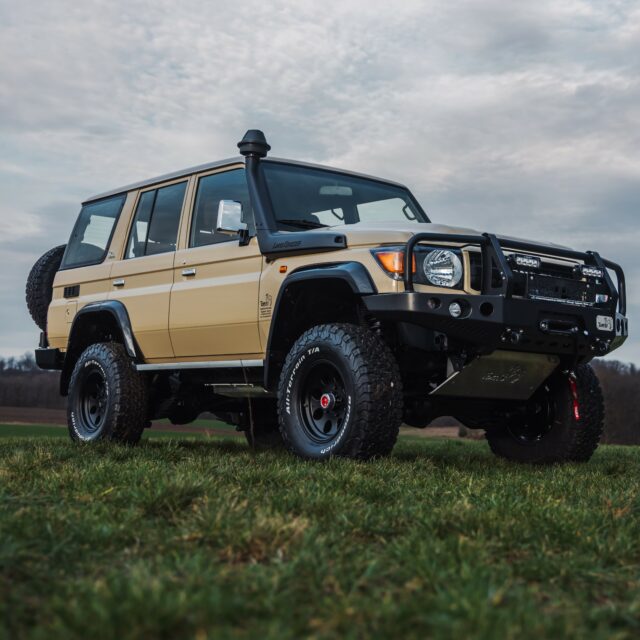
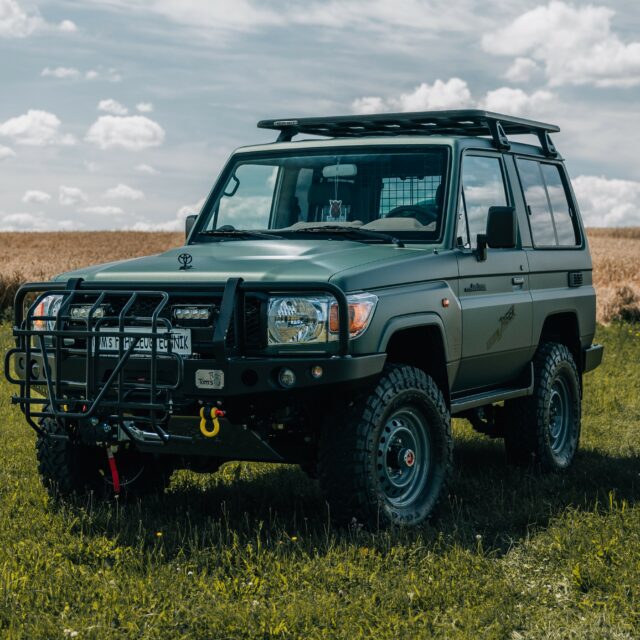

The company also sells other off-road vehicles beyond the WorldCruiser line. These include new Land Cruisers such as the recent 70-Series models (for example, GRJ71, GRJ79, GRJ78, and GR300), Hilux variants, and even the compact Jimny. They also build special vehicles tailored to niche uses: the MännerCruiser, JagdCruiser, JagdJimny, JagdHilux, and even 6×6 versions of the Land Cruiser configured for very specialized purposes.
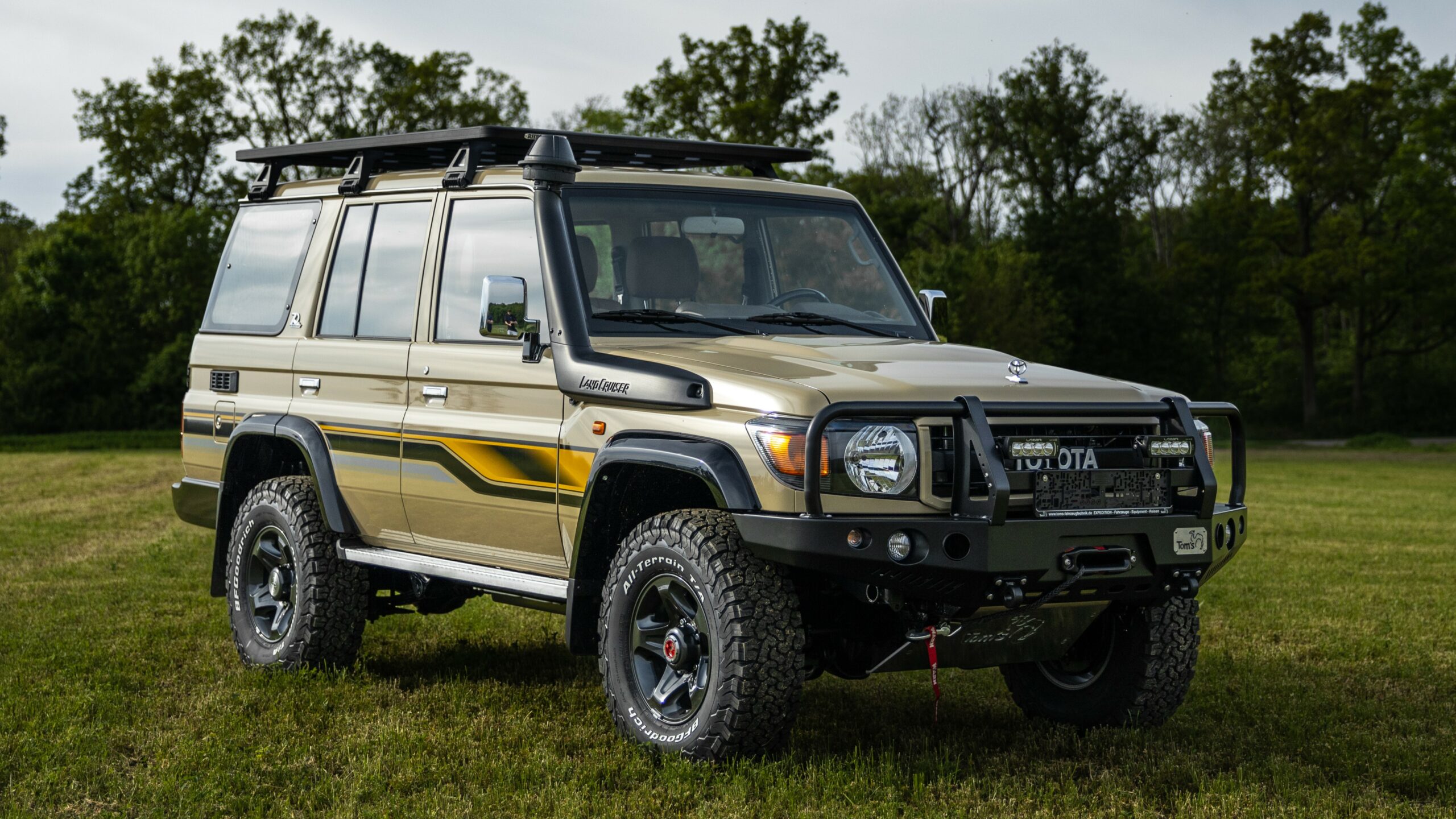
Tom’s Fahrzeugtechnik has established itself over more than two decades as a German specialist in converting Toyota Land Cruisers into expedition vehicles. While the builds incur premium prices and occasionally generate debate among purists (is anything ever perfect for everyone?), the firm’s methodical approach and iterative field-tested engineering continue to attract clients seeking a reliable long-distance travel vehicle built in Germany.
Read More: Overland News of the Week
Our No Compromise Clause: We do not accept advertorial content or allow advertising to influence our coverage, and our contributors are guaranteed editorial independence. Overland International may earn a small commission from affiliate links included in this article. We appreciate your support.
