

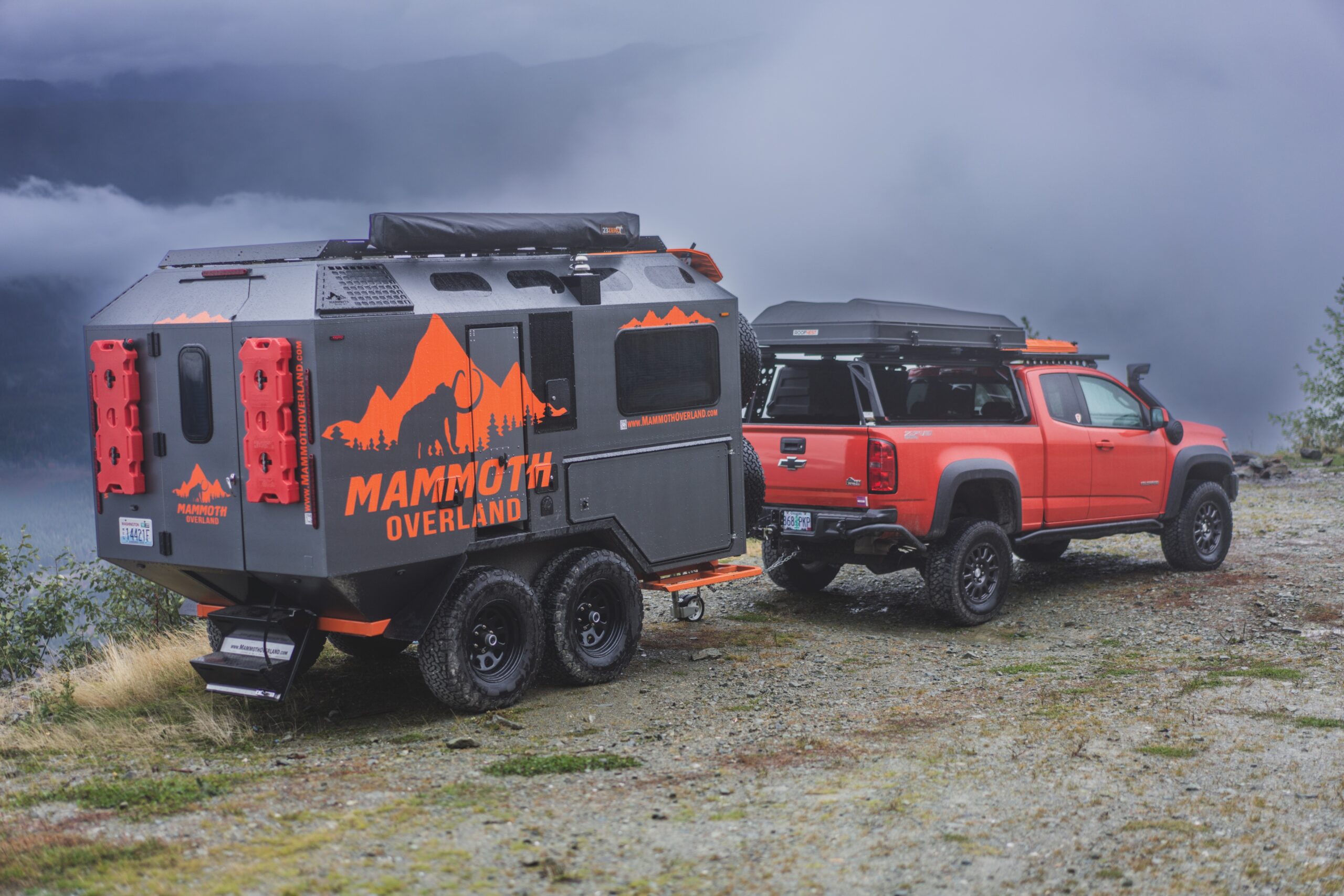
There are many overland trailers on the market, but few are born from the engineering prowess and quality controls of the aviation industry. There are even fewer that meet the core requirements of durability, light tongue weight (more on that in a bit), and the ability to stand up inside, shower, and use the toilet all within a compact, weather-tight shell. The one trailer company where all of those attributes reside is Mammoth Overland out of Washington state, a longstanding company with class-leading quality systems.
For years, we have beaten the drum that trailers must have a minimum number of features and performance specifications to make sense of towing one. If the trailer only has a roof tent on it, why not just put the roof tent on your vehicle? Outside of a few fringe use cases, we feel an overland trailer must be able to accomplish the following:
- Interior sleeping configuration
- Standup interior height (6’3” minimum)
- Four-season construction, heating, and cooling
- Ability to shower inside
- Ability to use the toilet inside and pack out the human waste
- Ability to cook inside
- Ideally, less than a 500-pound tongue weight
- Track width equal to the tow vehicle
- Length of the drawbar to the front trailer axle should match the tow vehicle wheelbase
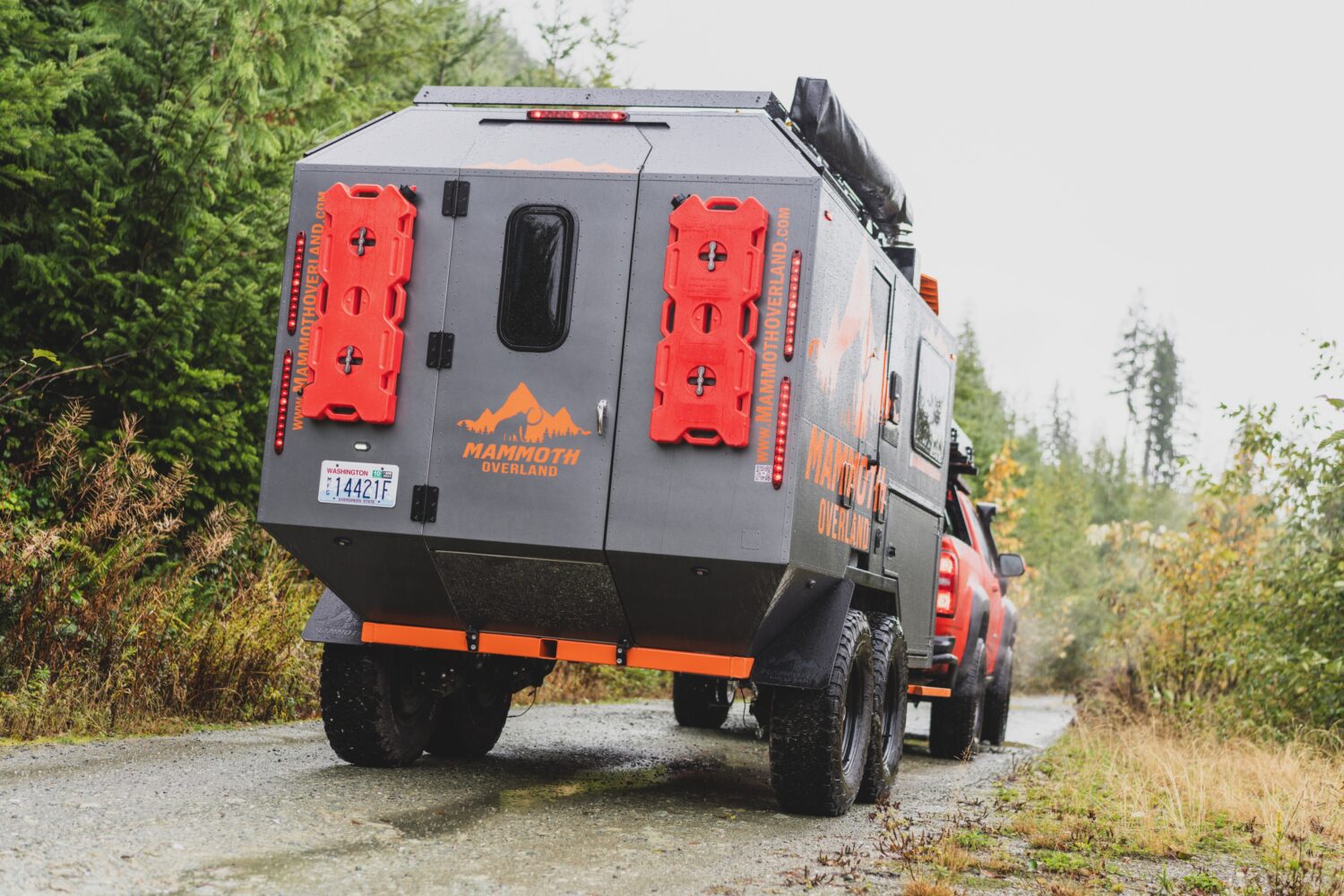
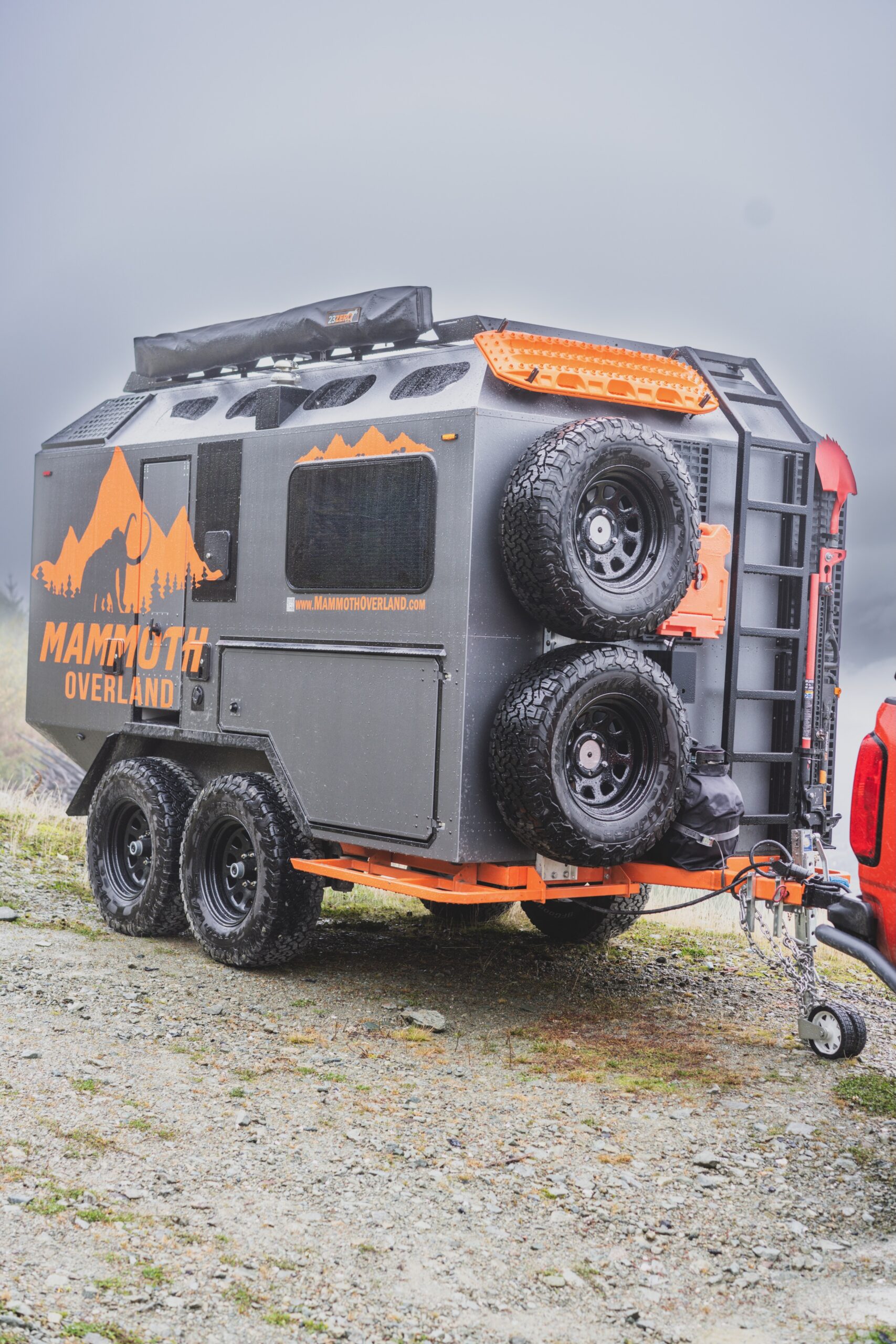
In the case of the Mammoth Overland TL, it achieves nearly all of these criteria and more, comfortably sleeping a family of four with a king-size main bed and two smaller bunks for kids or shorter adults. There is a lot packed into the 11-foot box and 16.5-foot overall length, including a shower, toilet, massive under-bed storage garage, a pull-out kitchen, and even dual axles for improved trail performance and a lower tongue weight.
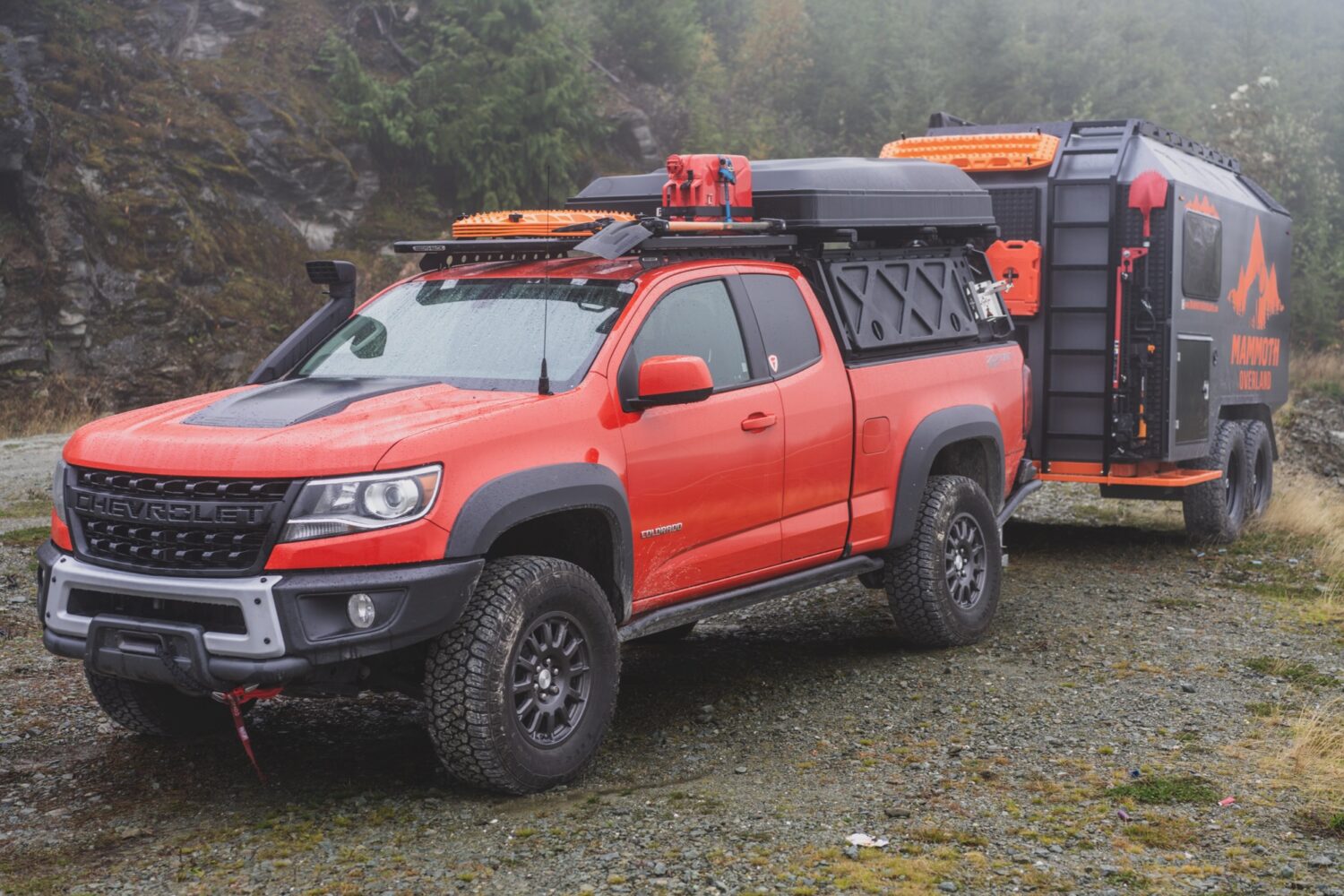
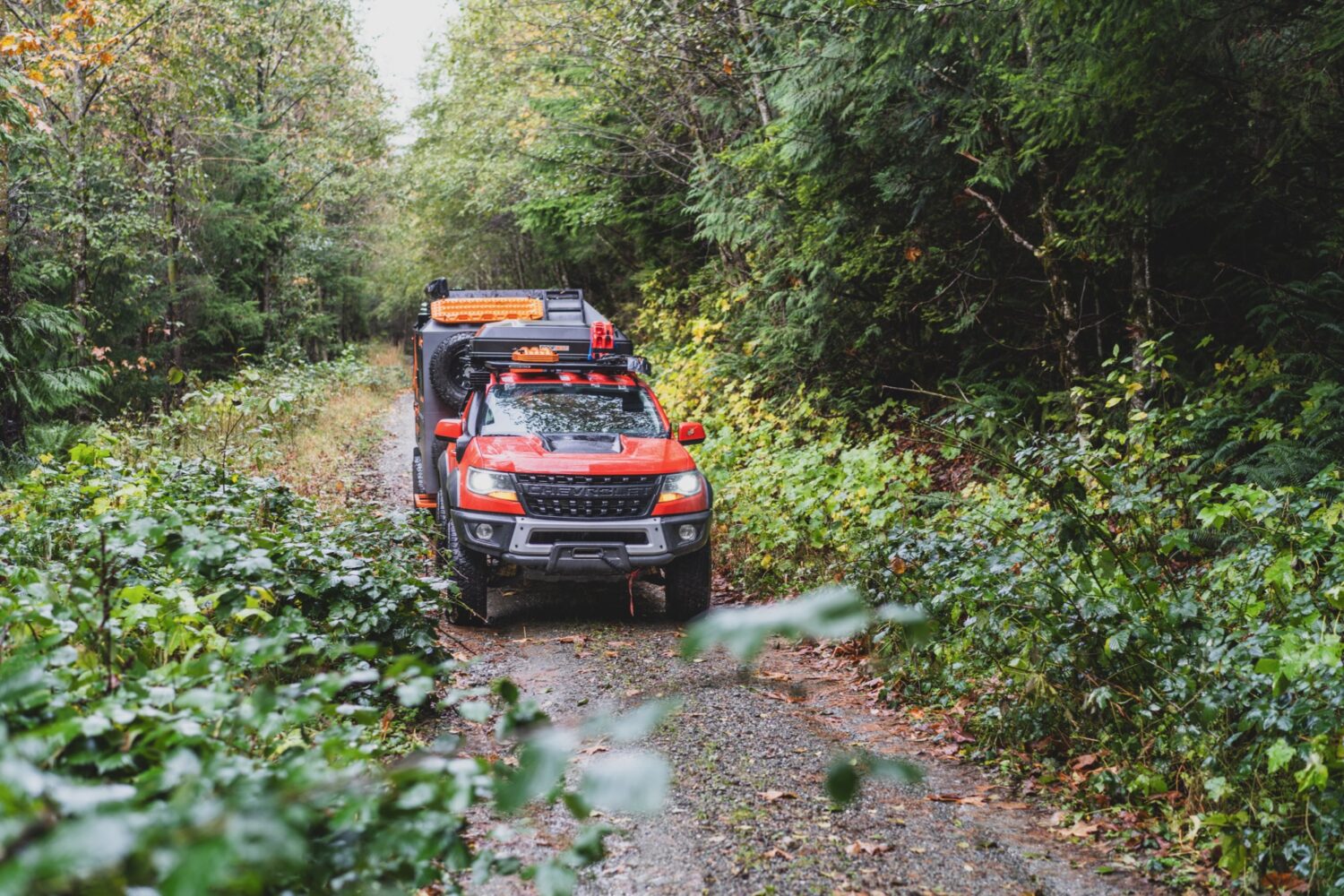
These specs, along with the growing interest in the brand, prompted me to hop on a flight to Seattle and visit its facility in Woodinville. The expansive workspace has two separate production lines: one catering to their Ranger aircraft models, and a second line supporting an efficient workflow for their TL, HV, and innovative new SKL (hard-sided rooftop tent) models. I grabbed the keys to their Chevy Bison, hooked up the TL, and headed north for some exploration high above the Skagit River, outside of Burlington. The series of tracks climbed steep switchbacks, made all the more challenging because of the pelting rain. The Bison never faltered, and the lighter weight and compact length of the Mammoth made every switchback possible on the first try (no Austin Powers required).
The track took me up to 2,300 feet and to an unlevel but wide pullout next to a mining adit. Using the drawbar jack and a few rocks, I was able to get the trailer leveled and settle in for a few days of serious Washington weather—no better place to test the four-season capability of a trailer than in the Pacific Northwest. The trailer setup is easy, and I was able to dive inside to get out of the rain in only a few minutes. Doing so did make the shape of the rear door a bit more apparent, as it is a multi-step process. The top part of the door opens first, with the shape of the door matching the angled profile of the roofline, which immediately lets in more rain than a typical vertical door would. It’s compounded by the fact that it is two pieces, with the lower part of the door also being the steps. The door system is nicely made and helps improve trail clearance both at the top and the departure angle, but it’s worth noting that it is not a single-handed process and takes up enough time that the elements (and bugs) get in.
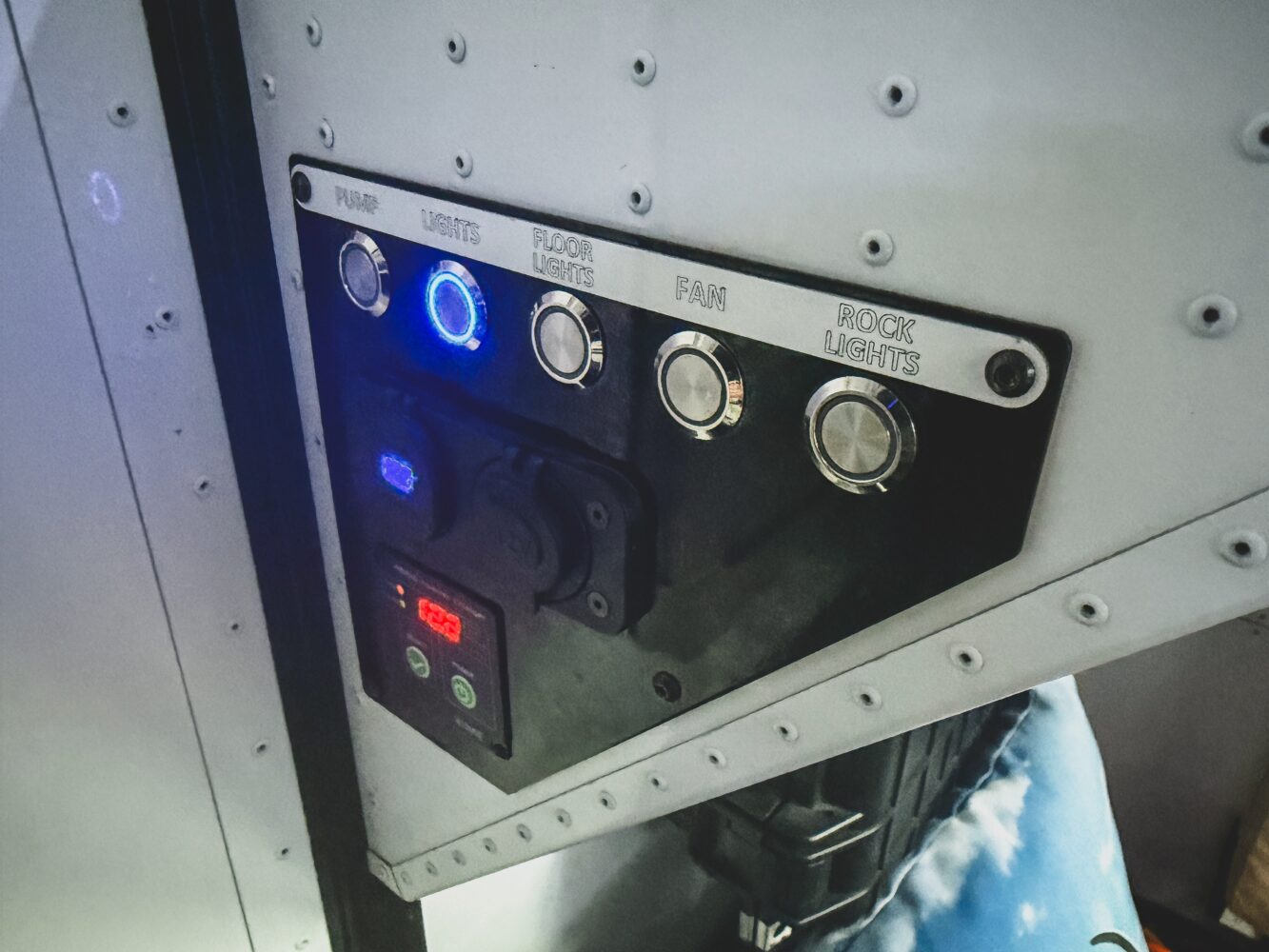
Once inside the trailer, it is packed with amenities, which can make it feel a bit cramped, but it only takes a few hours to fully appreciate how much is integrated into the space. Nothing warms up a weary traveler like a hot-water shower at the end of the day, followed by crawling into a king-size bed with a Dickinson fireplace flicking firelight around the camper. The rain pounded and the thunder roared for most of the night, yet I was comfortable and dry. My Oura ring even approved of the night’s sleep.
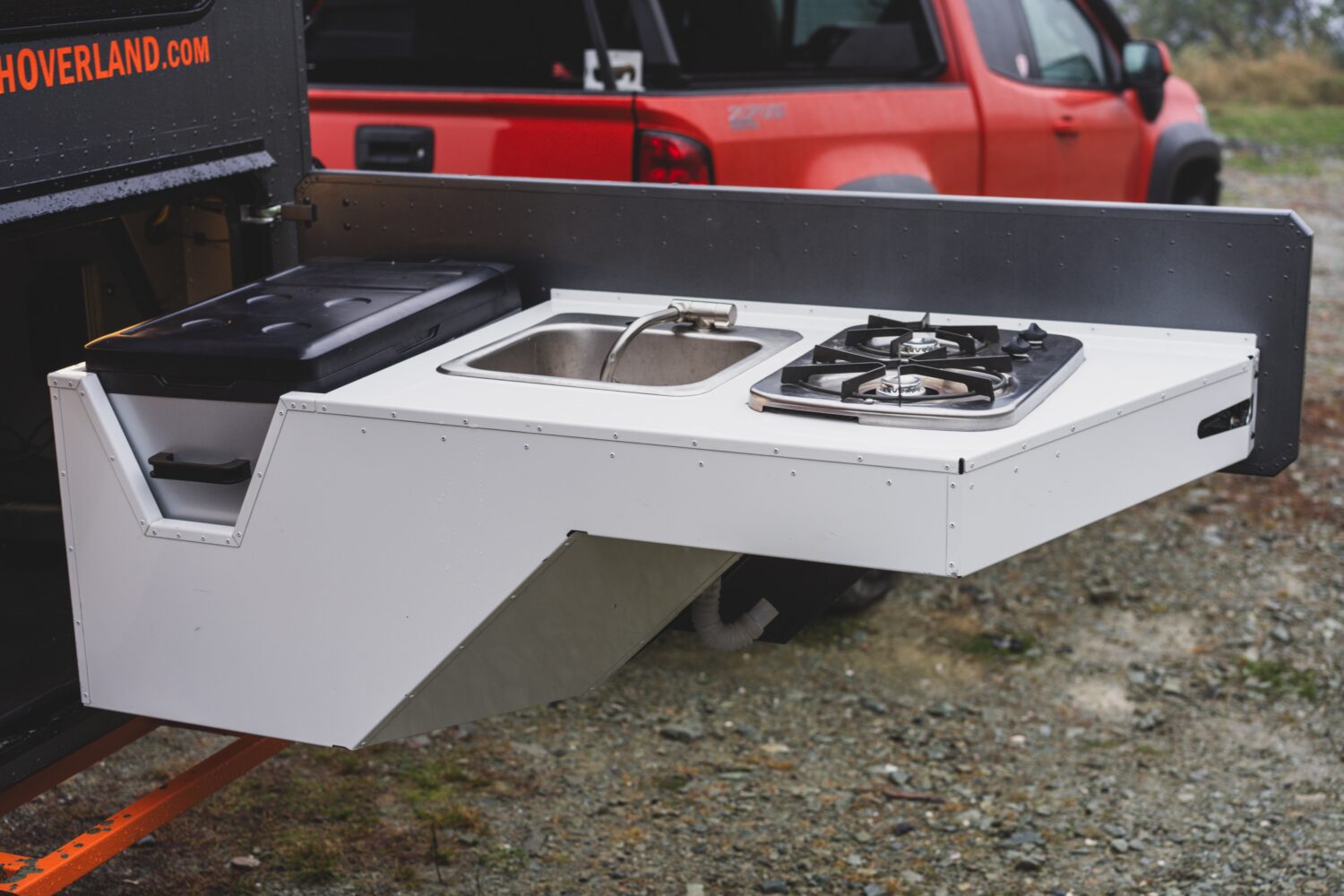
The cooking space is inspired by the Australian configuration of a swing-out galley that pivots open to the passenger side, revealing the fridge, sink, and cooktop. The range runs on propane, which is plumbed to a tank on the drawbar. My one criticism of the galley is that there should be an interior hatch that allows access to the fridge without needing to go outside. A large awning covers the cooking area during inclement weather, but it just misses covering the rear door.


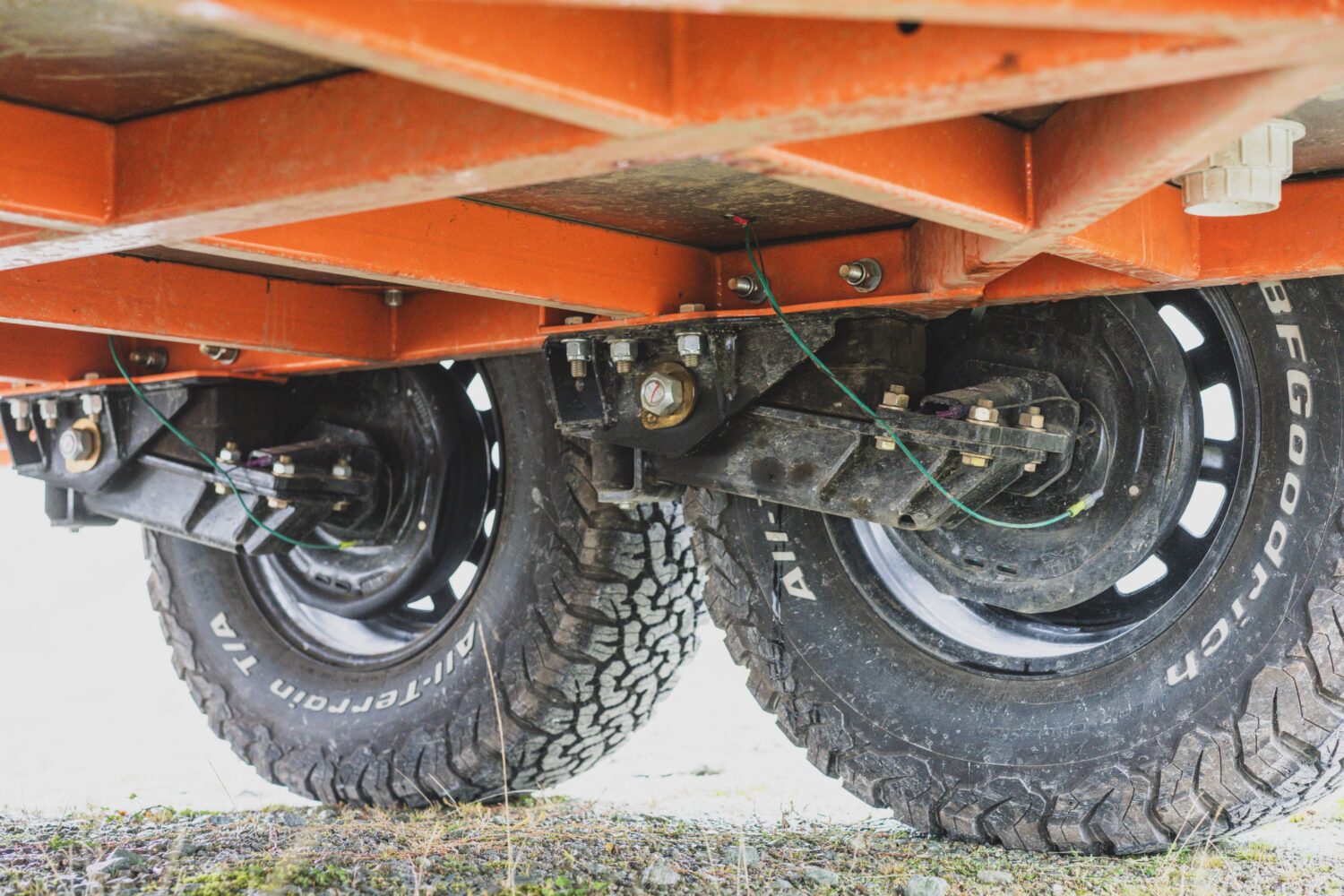
As an overland trailer, it hits most of the marks. For such a short overall length, the trailer also employs dual axles, which turned out to be a notable positive. The twin axles reduce tongue weight by about 40 percent, critical to modern half-ton trucks (tongue weight is calculated into available payload), resulting in a tongue weight of only 400 pounds, which can likely be reduced even further by removing the second spare tire and wheel (there is no need for two spares on a short double-axle trailer like this). It is also worth mentioning that the track width is wide—wider than a full-size Raptor kind of wide, which will make mud and sand travel a task for the tow vehicle. The 6-foot, 7-inch track width also adds additional complexity for line selection in technical terrain like rocks and ruts. It does come with the upside of increased interior space and that previously mentioned king-size bed. The suspension uses Timbren axles for all four corners, and their performance exceeded my expectations. The system does not use shocks and springs, but instead features specially tuned rubber compression and extension jounces. The combination of wide track and twin axles allowed the TL to eat up terrain as well as the Bison did.
Overall, the Mammoth TL is one of the highest-quality trailers we have tested, with premium construction and components throughout. The finishes are durable, if slightly industrial, but that all leads to better long-term serviceability. I appreciate the comfort and convenience packed into a smaller package, and the fact that it can sleep a family of four is a win for many travelers. I would like to see an option for a small dinette with a table and no top bunk (put cabinets up there instead). Much like its namesake, the Mammoth is ready to explore the far reaches of the planet.
$72,000 | mammothoverland.com/tl
Pros:
- Excellent build quality and durability
- Sleeping for a family of four
- Inside shower and toilet
Cons:
- Track width is wider than a Ford Raptor
- Lacks an interior dinette for eating or working
- Limited interior cooking options (a small induction cooktop works)
Read More: ADV Pack Out :: Sea to Summit Camping Gear
Images: Scott Brady, Mammoth Overland
Our No Compromise Clause: We do not accept advertorial content or allow advertising to influence our coverage and our contributors are guaranteed editorial independence. Overland International may earn a small commission from affiliate links included in this article. We appreciate your support.
