

Overland Journal Podcast host Scott Brady and co-host Matt Scott discuss the “10 Commandments” of modifying an overland (travel-focused) vehicle, emphasizing that overlanding differs from recreational four-wheeling and that simplicity, reliability, and intentional upgrades matter most. They argue complexity and weight are major enemies, and recommend starting with the right platform, limiting suspension lift, keeping engines largely stock for serviceability, and carefully planning and isolating electrical systems with proper fusing and documentation. They advise using high-quality, appropriately sized all-terrain tires, avoiding heavy roof loads, and prioritizing basic self-recovery gear and training. They also stress securing all cargo to prevent dangerous projectiles and following a “buy once, cry once” approach—spending more on travel and experiences than on vehicle modifications.
Overland Journal Podcast Episode #05
New to Overland Journal and want to grab a subscription! Visit Overland Journal and enter code: overlandpodcast at checkout for 20% off. We thank you for being a subscriber.
“An overland vehicle is not perfect when you have added the last possible modification, but when you have taken the last possible modification away. ” –our adaptation of Antoine de Saint-Exupery’s famous quote
After a few trips around the world and crossing all seven continents, these are the lessons we have learned (mostly the hard way) about properly modifying your overlanding vehicle for adventure travel.
1) Complexity is the Enemy: Keep the vehicle as simple and reliable as possible, minimizing the number of systems and variables that can fail in the field. Adapt only as required for the vehicle to perform in the environments and conditions expected in your route. Consider the engineering performed by the OEM manufacturer, and how all of the factory systems interrelate. The vast majority of failures we see to 4WDs ae aftermarket modifications, and of those, electrical and engine system modifications are the most prone to failure.
2) Weight is Also the Enemy Keep the vehicle as light as possible, removing heavy items that provide limited value, are purely aesthetic, or are never used. The goal should be to stay under 90 percent of GVWR, which will ensure the best performance in technical terrain, particularly snow and sand. “Stuff” is always a reflection of experience and training. The more experienced, well-traveled, and well-trained the traveler, the less stuff they carry, and the fewer modifications they need.
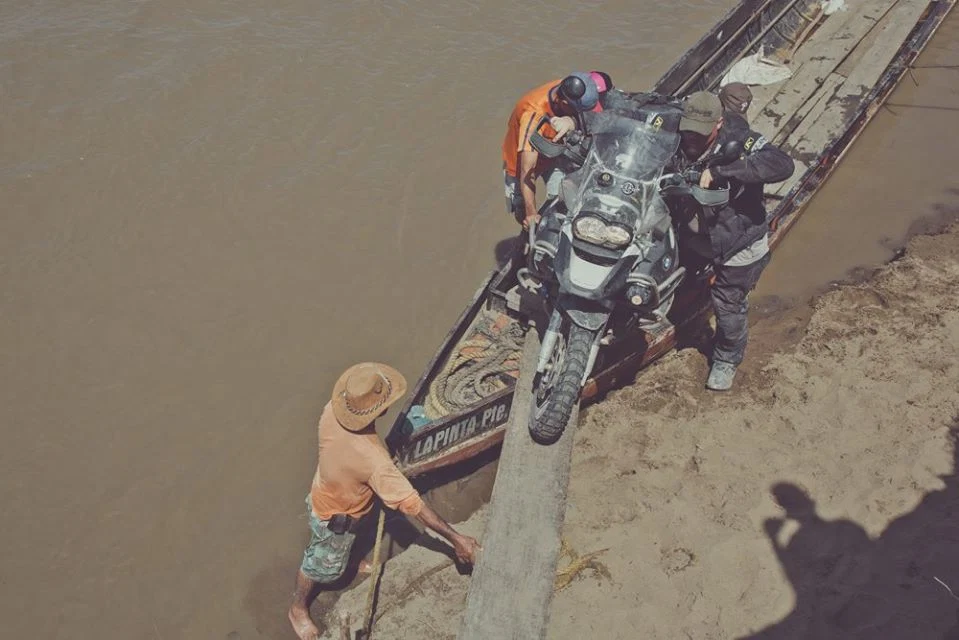
Nearly everything I have learned about minimalist overlanding has come from travel on a motorcycle. All of the gear I needed for months on the road fit in a few bags, less space than needed in the passenger seat of a traditional 4WD. Less is more.
3) Suspension Performance The suspension system, geometry, and handling with a load are a reflection of proper design. The vehicle must perform just as well on pavement as it does on the dirt. A suspension serves several critical roles, including emergency handling (think avoiding a deer or child that runs into the road), load carrying, and technical terrain performance. Who cares if you can achieve a 1000 in the ramp travel index if the truck rolls at speed on a dirt road. The suspension should also be robust, with quality shocks and durable components. Properly configured, a modern vehicle should be able to manage technical obstacles and also exhibit predictable and safe handling during high-speed dynamic inputs. Remember to tune the suspension to your travel load, including the spring rates and lengths, along with compression and rebound valving. This video shows what is possible with a lifted overland vehicle on 35-inch tires, fitted with a proper suspension.
4) Keep the Engine Stock This is the most common mistake we see with vehicle preparation: dozens of little modifications to the engine, including changes to the ECU, headers, cold air intakes, aftermarket turbochargers, etc. These all seem like a great idea until you need to repair one of those items in the middle of the Gobi Desert or find a replacement belt in Uganda. Certainly, there are proven or even mandatory upgrades that address known failure modes of the factory components, but otherwise, leave the engine mods to the tuner crowd. If the environment you are traveling in demands a certain amount of power (like sand) then buy the right truck with the right engine to start with.
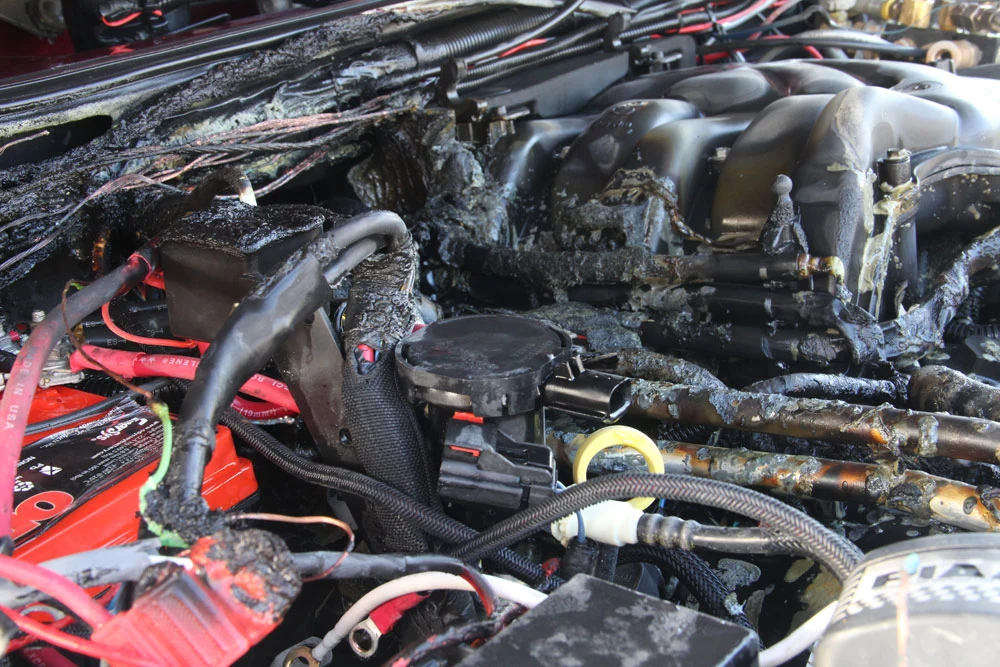
5) Isolate and Minimize All Electrical Modifications Electronics are the bane of all travelers, taking more time and requiring more “fiddling” than any other system. The reality is that most modern overlanders do use and often need electronics to enhance their experience, including digital cameras, GPS units, and tablets to navigate by and record their journey. However, miles of wiring, fuses, and connections are some of the most common failures. As a result, completely isolate all “house” electrical systems from the factory harness and use a dual-battery system and auxiliary battery to protect starting voltage. Spend the time or money necessary to ensure the wiring is 100 percent correct, including quality components, weather-tight connections, and proper fusing. Electronic gadgets are so appealing that they often waste volumes of time and create major distractions to the driver.
6) Use High-Quality Tires with an Appropriate Tread Pattern Tires are the most common failure item on a vehicle as they are always in contact with the terrain. Install a high-quality radial tire (for standard vehicles) in a conservative tread pattern for the terrain you are intending to travel. While the mud-terrain tire might look the part for your trips in the Desert Southwest, it is far from necessary and actually hinders performance. The tread should always match the intended use as should the tire size. There is nothing wrong with a huge tire if the conditions demand it, but the vehicle should still perform appropriately on the road. I needed 44-inch tires to cross Antarctica but only required a mild 30-inch all-terrain tire to drive the Silk Road. Buy a tire with a load rating above your GVWR and look for manufacturers with heavy-duty sidewall construction. Note: The mileage warranty is not necessarily an indicator of tire quality, as long warranties require a harder durometer compound to ensure long life. This often impacts adhesion, wet weather traction, and braking distances negatively.
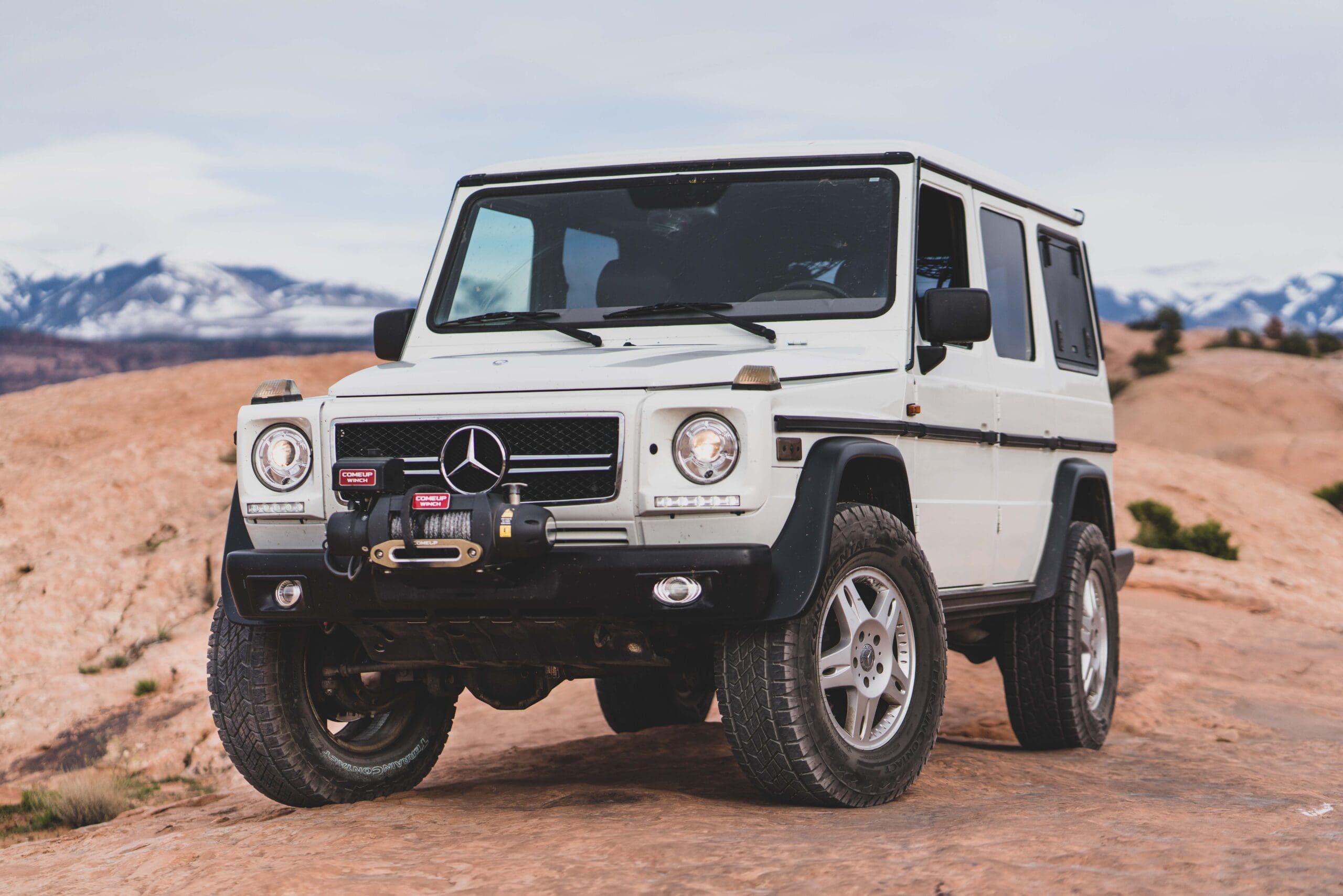
While a mild all-terrain tire may not satisfy the aggressive look many people want, they work exceptionally well for overland travel in mixed terrain and all desert environments. As a driver, there is the added benefit of increased fuel economy and lower driver fatigue. For our project G-Wagon, we have been testing the Continental TerrainContact with good results.
7) Avoid Roof Loads This is the most common mistake of the new overlander: packing everything and the kitchen sink on the roof. There is nothing wrong with a lightweight roof rack, but having a roof tent, spare tire, and six jerry cans is extremely dangerous. Even a basic understanding of physics will prove why that is such a terrible idea, and those types of loads create a litany of problems, including dangerous handling due to the raised center of gravity (COG), poor technical terrain performance, reduced fuel economy, and potential roof damage. Loads must be as low as possible and as close to the centerline of the vehicle (fore/aft) as possible. If all that gear needs to be on the roof, you probably bought the wrong vehicle. For most vehicles, the maximum roof load should be less than 120 pounds—I prefer less than 70, or ideally, a completely empty roof rack.
8) Self-Recovery Often overlooked, proper training and equipment for self-recovery are critical. So much attention is paid to lockers and suspension that self-recovery is usually an afterthought. In reality, self-recovery equipment and the skills to use it are more important than any other modification and should be the first consideration when leaving the beaten path. The reason for this is simple: everyone gets stuck, even with the best possible vehicle and most experienced driver. There will always be mud too deep, or a rock too large, or sand too soft. A winch can provide control and mechanical advantage that no 4WD modification can match. If your route includes remote, off-highway (off-road) travel, then consider a high-quality winch rated to 1.5 times GVWR, a ground anchor, comprehensive recovery kit with pulleys, line extensions, and related connections. We have also found traction plates/mats/boards to be essential for extreme bog conditions, and we now carry at least four. Mounting a winch often includes a quality bumper, which can also serve to protect the vehicle from an animal strike, low-speed accident, etc.

Our recovery kit evolved over time through trial and error, including a 14-hour stuck along the Canning Stock Route in Australia. Now we never leave home without a set of traction boards.
9) Secure the Load Take the time to secure all loose items in the cab, ensuring that proper lashing points are installed throughout the vehicle. This includes securing all soft luggage and in particular, all hard/heavy items. Even a big bump or ledge on the trail can cause items to shift forward in the cab, impacting passengers, or worse, the driver as they are attempting to clear an obstacle. In the case of a roll-over, those items can kill or seriously injure occupants. Install load mats and ratchet straps to keep items from sliding and bouncing. Watch items that can roll forward along the floor into the driver’s footwell and secure small items with a properly sized center console. Drawer systems can be quite convenient and also improve loading and lashing, but be careful with their weight.
10) Quality and Design Over Quantity Contrary to what we see on the web, it is not the truck that defines you, but your experiences. Experiences can be enhanced by thoughtful design and a quality product, but also easily end a trip with a broken aftermarket spring that saved you a few dollars over the proven brand. If price is a factor, then just leave the vehicle stock. We are far better off modifying our vehicle with slow and deliberate purpose than just checking off the list of things we think we “need.” A stock, properly maintained Land Cruiser can easily drive around the world and take on some seriously remote and rugged terrain along the way. So, make modifications only as absolutely necessary, and save all that money for gas, a good camera, and that 20-foot container shipment to Cape Town.
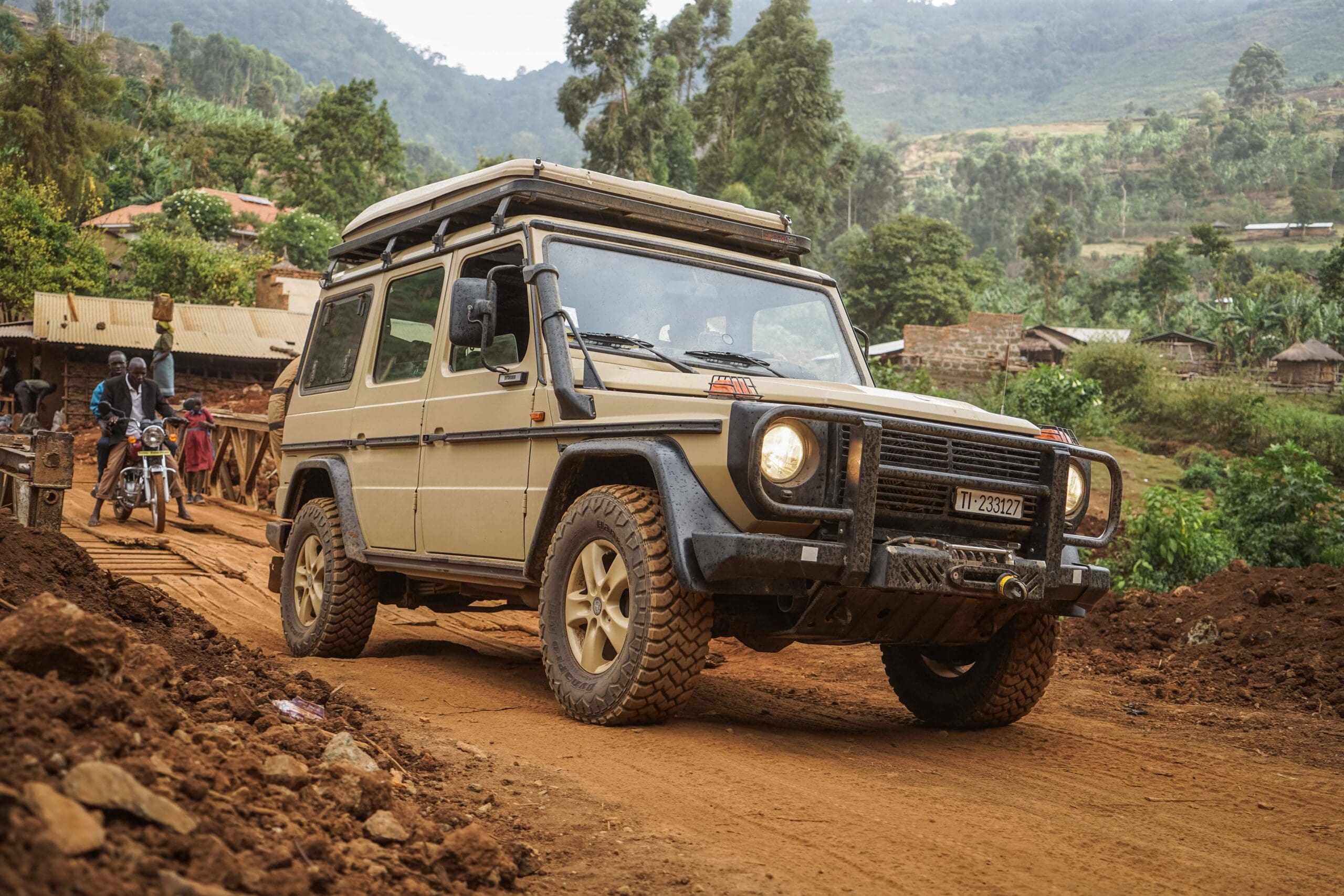
The Entdecker G-Wagen is one of the most exceptional vehicle builds ever produced, a partnership between Unicat and Front Runner using the G-Class Professional model. The roof tent is carbon fiber and the rack aluminum, keeping the roof load below factory limits. The vehicle is stock height and uses modest tires. We have driven this SUV in several African countries, including Kenya and Uganda, and never suffered a failure with the modifications.
Simplicity and reliability is the key to vehicle preparation for long-distance adventure travel.
A final thought to consider: I am often asked how much money someone should spend on modifying their vehicle. My answer is always “the least amount possible.” In fact, we should invest far more money in the actual experience of travel than we ever do on the vehicle. There are fake beadlock wheels that cost more than a few weeks in Baja. Stick with the stock wheels and go get some tacos on the beach (grin).
Host Bios:
Scott Brady
Scott Brady is an adventurer, author, and publisher, and the first person in history to cross all seven continents. Brady is executive publisher of the Overland Collective, home to Overland Journal, the Overland Journal Podcast, and expeditionportal.com—the world’s largest vehicle-dependent adventure community. Scott wrote Overlanding 101 (Simon & Schuster) and is currently riding around the world on his BMW GS. He also led Expeditions 7, the first expedition to drive the same vehicle on all seven continents. Brady’s polar crossings include Antarctica and a south–north crossing of the Greenland ice sheet. Scott is a fellow of the Explorers Club and lives in Prescott, Arizona.

Tune in Apple Podcasts | Spotify | YouTube
Our No Compromise Clause: We do not accept advertorial content or allow advertising to influence our coverage, and our contributors are guaranteed editorial independence. Overland Collective may earn a small commission from affiliate links included in this article. We appreciate your support.
Transcript
Scott Brady: [00:00:00] Hello, and welcome to the Overland Journal Podcast. I am your host, Scott Brady, and I am here with my co-host, Matt Scott. What are we gonna talk about today, Matt?
Matt Scott: So today we’re talking about something really important, maybe some stuff that you guys are gonna disagree with. We’re talking about the 10 commandments of modifying your overland vehicle.
Now, the key thing there is overland. We’re talking about vehicles that are being modified for travel as their, uh, you know, as, as their main purpose, right? I mean-
Scott Brady: Exactly. Yeah, people oftentimes think that, oh, that overlanding is recreational four-wheeling. There’s certainly some fun you can have while overlanding doing recreational four-wheeling things, but overlanding is vehicle-based travel, whereas four-wheeling is recreational sport.
It’s just important to understand the distinction in that we’re not really building vehicles across the Rubicon. If that’s what you wanna do, that’s great, but it, the Rubicon tends to not be, um, a de- a destination for travel. Tends to be a destination for recreational sport.
Matt Scott: Yeah. Just, just rent a Jeep if, [00:01:00] if- Yeah
if you if, if you wanna do the Rubicon, you know, the, I guess the, you know, the, the old quote That a, uh, what the jack of all trades is a master of none, right? Totally. You know, we’re, we’re specifically gonna be talking about vehicles for travel. Lightly modified vehicles that, you know, are, are essentially built to be durable and a little bit more refined because you’re gonna be spending a lot of time in these things, um-
Scott Brady: And we, and we want them to be simple because we don’t want the vehicle to be a distraction from the experience.
Exactly. We also don’t want to spend a bunch of money on the vehicle either. We talked about this in a previous podcast, but, uh, we always wanna make sure that we’re spending less money on the vehicle than we are on the travel itself. So when you go down through your expenses at the end of the year, if you spent four times more on the truck than you did on any of your travels, it might be worth reconsidering, “Well, maybe I’m just into building vehicles, and that’s my hobby.”
And that’s okay. Yeah. I’m not saying that there’s anything wrong with that. But if your, if your goal is to really be a traveler, if your goal is to really be an overlander, [00:02:00] make sure that that, that delta is different where you’re spending more money on fuel and going interesting places and, and, um, you know, getting access to that one remote r- museum or, or paying that border crossing fee.
Yeah. Make sure that you’re spending money on travel more so than you’re spending
Matt Scott: on the vehicle. Yeah. In- and invest into yourself, right? Um, and that, and that can manifest itself in a, in a bunch of different ways. Let’s say you only have a week of vacation. Well, spend the $2,000 that you were gonna, you know, put into a lift kit or, or, or whatever it may be, and take unpaid leave.
Find a new career. Teach yourself skills. Whatever, whatever it, whatever it is, right? Um, you know, if, if the goal is travel, I think that has to maintain- Yeah, make that the priority … that has to maintain priority, so.
Scott Brady: And, and you can f- This article that we’re talking about has been on Expedition Portal for years, and we recently, uh, updated it, and that’s what Matt and I are talking about today.
It’s called The 10 Commandments of, of Modifying Your Overland Vehicle, and it’s, it’s really important to know that the, the title is intentionally, um, uh, a- [00:03:00] aggressive. It, it sounds like we’re trying to tell you how to do things, and that’s not the case. It’s more of a way of gaining people’s attention to be mindful about how they modify their vehicles.
So these aren’t commandments. You can do whatever you want, obviously, with your own truck. These are the things that Matt and I have learned, um, many of them the hard way – Yeah … uh, by doing things exactly that Do you
Matt Scott: remember my first Jeep when I started working for Overland Journal? Oh, my
Scott Brady: God. I remember my first Jeep, which was- Oh
totally overloaded and, and problematic. I remember, yeah, I put a, a 289 V8 into a 1953 M38A1. No wonder it ended up being a total disaster Yeah. Total disaster.
Matt Scott: 10, 10 years ago, I thought the measure of a good vehicle is how much stuff was bolted onto it, and I quickly learned that the measure of a good vehicle is kinda almost how stock it is, right?
Yeah. I mean, look at, like- Or where it’s
Scott Brady: been.
Matt Scott: Where it’s been, right? Yeah, there you go. Um, you know, I, I’m more concerned with- properly aligned geometry on my suspension than I am that, the, the height of it.
Scott Brady: Yeah,
Matt Scott: for sure. Um, you know, I look at, like, AEV, for example. I think AEV does a really [00:04:00] good, um, a really good job of, of kinda getting to this first, this first commandment, as we’re calling them, is that complexity is the enemy, right?
Um, you know, the, the original manufacturer of your vehicle, um, put a lot of work into it, and I think people… You know, and I, and I know a lot of these head engineers of these car companies, and the testing, the, the, the hundreds of thousands of miles that these vehicles are proven, you are n- you are never gonna be able to recreate that a, a, you know, an aftermarket company.
Um-
Scott Brady: They’re designed for a specific task, right?
Matt Scott: Exactly.
Scott Brady: And, and maybe that’s the first question that we ask is why are you buying the vehicle that you’re buying? If you want something that has a, a good payload that’s designed to go around the world, you’re gonna be looking at a very small group of vehicles.
Uh, it doesn’t mean that you can’t drive around the world in a Subaru, but if you wanna cross the Canning Stock Route or you wanna do, or you wanna cross glaciers in Iceland, that’s not the right vehicle. It would require so much modification to make that possible.
Matt Scott: Yeah, [00:05:00] start with the right platform- Start with the right platform
’cause that’s gonna reduce complexity. It will. Um, let’s say you wanted to have a four-wheel camper. Great option, you know. Everything’s all-in-one. You can, you can ditch it, have your truck back during the week. Should you, should you start with a Tacoma?
Scott Brady: It’s not the right vehicle.
Matt Scott: It’s probably not the right vehicle- Yeah, the payload is too low
’cause then you’re gonna have to add complexity. You’re gonna have to add some fancy trick rear springs to support the weight, maybe some airbags, maybe some shocks, you know, that have insane compression rates on them so you’re not bottoming out all the time. Or you could just throw it in the back of an F-150 and- Be done
Scott Brady: Yeah, or a 2500 Dodge Ram- Or a 2500 or, or whatever it may be
or, or whatever where that’s designed to carry that kind of payload. So I think it just comes back to us being honest with ourselves of, like, what do we actually want to accomplish? What are we trying to… Where are we trying to go? Where are we trying to travel? And then buying the right vehicle to start off with.
If the goal is to cross the sand- sand dunes in the Altar Desert, then that 2500 Dodge with a four-wheel camper’s [00:06:00] probably not the best choice for that either. So thinking about where you wanna go and what you want to experience along the way. Some people love staying in cities, small villages, and they need to have a small vehicle.
They intend to… They don’t wanna camp out every night. Then buy the right vehicle for that, and maybe that is the Subaru that you’d choose for that- Maybe it is, yeah … for that type of travel. Um, but it’s really important to start off with the right vehicle. And, and when Matt talks about complexity, let’s remind ourselves that whatever we add to the vehicle is gonna be a distraction.
It’s gonna take away money that we could’ve used for travel. It’s gonna take away time because we have to install it or modify it, uh, do that modification ourselves, or we have to pay for someone else to do it. And then now we don’t know how to fix it ourselves. Um, so there’s a lot of consequences for anything that we add to the car.
Matt Scott: Yeah. I mean, I, I… Scott, I think you’d agree, um, erring on the side of, of being OE, um, not making modifications that can’t be fixed wherever you may be going, not adding a, a very obscure tire size that means you’re gonna be waiting for tires for [00:07:00] two weeks in Ecuador. Um, just, just thinking of the entire picture, right?
I mean, when you, when you add a larger tire size to your vehicle People don’t necessarily know all of that, all, all, all which it affects, right? I mean, you’re gonna be changing your braking distance, right? ‘Cause if your Land Cruiser came with a 31-inch tire, well, your braking, your stopping distance is based around that.
Um, you’re gonna be putting more strain on your U-joints. You’re gonna be putting more strain on your transmission ’cause it’s not gonna be in the right shift zone. Cooling, cooling capacity. Yeah. Cooling capacity. Like, there’s… Every action has a reaction, right? I mean, that is, that’s a law of the universe, I guess- Yeah
right? So it also applies to vehicles. So, so, so keep that in mind. Um, you know, for me, weight is just, is the biggest thing, right? On, on an overland vehicle, um, and this is, this is, I guess, our second point. It is. It’s
Scott Brady: our point number two. Weight is the enemy.
Matt Scott: Yeah, yeah. I mean, when, when we talk about cargo capacity, and I do think that that [00:08:00] term is almost misleading, that, that’s actually the vehicle’s capacity, right?
Right. That means if your 4Runner, which I wanna say is around 1,500 pounds, has 1,500 pounds of cargo capacity, that doesn’t mean the stuff that goes in the back. That means the stuff that goes in the front seat and the passenger seat. It means the stuff that goes in the fuel tank. Um, all of those things, they’re, they’re not included, right?
So figure two American males, 200 pounds each. There’s 400 pounds, so now you’re down to 1,100 pounds. Um, let’s say you have 10 gallons of water. A gallon of water is eight pounds?
Scott Brady: 8.33.
Matt Scott: Yeah, okay. So we’re just gonna call that a- You know, we’ll call that 100 pounds. Then you start talking fuel, that’s seven pounds, and you have a 25-gallon gas tank.
I’m gonna stop doing math here, but it adds up really quickly. It adds
Scott Brady: up really
Matt Scott: quick. Right? And then you start talking about your 200-pound sliders, and you put bigger tires on it, which means you have nowhere to carry your spare, so you have to put this 250-pound rear bumper on. And well, then you did a rear bumper, so [00:09:00] you have to do the front one.
And all of a sudden, your payload capacity is that of a very, very petite ham, ham sandwich. Um, so keep that stuff in mind. I mean, I, I don’t know, as a traveler, I guess I would rather fill that with, I don’t know, rosé or something. You know, something stuff that you’re gonna enjoy in camp. You know, I, I, I like to-
Scott Brady: Or the ability to, to pick up some hitchhikers as you’re going along.
I remember stopping and picking up these Tarahumaran Indians in, in Copper Canyon, and, like, I was driving a Sportsmobile van that was a one-ton capacity. Yeah. It had plenty of payload to carry additional people, plenty of space. So starting off with, with making that decision of I’m not gonna overload my vehicle past, uh, 90% of the gross vehicle weight, uh, which means that you’ve gotta have a little bit extra.
What if your vehicle that you’re traveling with, your, your travel partners that have another vehicle, what if they break down in the middle of the desert and you need to move them over to your vehicle? Do you have the room for that? Do you have an [00:10:00] unloaded open roof rack to take their equipment? Um, those are all consequences of us overdoing the vehicles.
Um, and we, we have to remember that so much of this comes from a place of insecurity. And I don’t mean just, like, that people are insecure, so they’re over- overbuilding their vehicles to compensate, which I think that that’s probably true in some cases. It’s actually this insecurity of if I break down, I wanna have everything that I could possibly have, or if I run into this really obscure situation in Africa, I wanna be able to overcome it with this one widget that I brought along.
The reality is, is that those things don’t typically happen. There’s normally locals driving around in their own Land Cruiser that can pull you out, or a, a village will un… You know, the whole village will come over to help push you out.
Matt Scott: Yeah, yeah,
Scott Brady: exactly. Or they’ll hook, they’ll, they’ll hook up oxen to the front of your car.
I mean, it’s… That’s part of the adventure is getting stuck, and part of the adventure is having issues that you may not be able to solve everything all at once. So making sure that you don’t over-plan and [00:11:00] overbuild the vehicle is a key to adventure. Yeah.
Matt Scott: You don’t need to carry the, you know, the portable welder to fix your frame when it fails if you don’t overload your vehicle and your frame doesn’t fail.
Scott Brady: Yeah.
Matt Scott: Right? It’s that self-deprecating cycle of
Scott Brady: Yeah, the only time I needed a welder, I mean needed a welder, was in the middle of Antarctica, and that’s because there was no other way to fix it. If you’re in the middle of Africa, I guarantee you that the next village has a welder.
Matt Scott: Mm-hmm.
Scott Brady: Um, and, and it doesn’t mean that you should- no one should ever bring a welder.
We’re not saying that. We’re not saying no one should ever put 35s on their vehicle. Do what works for you, but just make sure that everything is with intention, that you’re doing only the modifications that you really need to accomplish your goal. A
Matt Scott: lighter vehicle is always gonna be better to drive.
It’s always gonna be better. It’s gonna stop better. It’s gonna get better fuel economy. It’s gonna handle better. Um, just be considerate of where you are investing that weight, right? Um-
Scott Brady: And I think, I think Matt and I, um, one of the things that we’ve benefited most from is the fact [00:12:00] that we’ve traveled off of motorcycles.
Matt Scott: Yeah.
Scott Brady: Um, uh, I didn’t change my whole outlook on vehicle weight, and payload, and what I actually needed to bring along with me until I had a motorcycle and until I traveled across South America on a motorcycle. I didn’t have a winch with me. Yeah. I, I didn’t, I didn’t have a recovery kit. I didn’t have a… I had a s- very small tool kit.
I had the, uh, essentially all of the stuff on my motorcycle could fit in the front passenger seat of the vehicle that I drive every day. Yeah. I had nothing with me. And you know what? I was able to go through Peru, and Colombia, and Ecuador, and all these other, all these other countries without a problem.
You just don’t need that much stuff. And I think for those that maybe are dealing with this, um, stuff addiction or this too many modification addiction, take a trip in a stock vehicle- Yeah … or take a trip on a motorcycle and s-
Matt Scott: Rent a car and fly somewhere.
Scott Brady: Yeah, exactly. And, and see how it is to travel with nothing or almost nothing.
I think you’ll find it pretty liberating.
Matt Scott: Yeah. I mean, I don’t know. Stuff, stuff kinda weighs you down. I mean-
Scott Brady: It does, literally- And- … and [00:13:00] figuratively.
Matt Scott: You know, I think comfort has a lot to do with it, right? I mean, I, I know in, in, in our Jeep Gladiator build, “Oh, well, we could have a… We could have hot water.”
Okay, well, that’s gonna be, that’s gonna be 200 pounds between the heat exchangers, the water pumps, the custom tanks you’re gonna have to make, or, or you just stay in a hotel every once in a while, you know? Yeah,
Scott Brady: or you bring along a little solar- Yeah … shower bag. One of those NEMO-
Matt Scott: Yeah … Helio things. Yeah.
You know, there’s always, there’s always a, a different way of looking at it. Again, we’re, we’re, we’re assuming that this is for a vehicle based on travel, right? I think one of the biggest, you know, kinda hit-or-miss things people, people get is, is suspension. For sure. Right? So tha- that’s, that’s our, that’s our next commandment is it is very complex, and it is so easy to mess up.
Um, again, we, we, we kinda previously talked about complexity and how, you know, manufacturers spend all this time on durability testing. Well, you know, a lot of that testing is… I mean, it’s related to the, to the suspension. A, a, [00:14:00] a vehicle is bad if it doesn’t handle good. Um, you know, so again, taking some of that, that, that OE knowledge and, and being mindful and respectful of it, you know, I guess is,
Scott Brady: is a big thing.
And understanding that there’s a tolerance. So a great example for this, and it’s probably the best one to lead off with, is an independent front suspension. Um- These, the, the amount of total travel is, cannot be changed typically without significant modifications. So there is a total amount of up travel, and there’s a total amount of down travel.
When people lift an IFS truck, um, what they’re doing is they’re robbing down travel to gain up travel or, and also to gain additional ground clearance. Um, so it’s really important to recognize that you’re not actually improving the total suspension stroke of the vehicle. You’re just robbing Peter to pay Paul.
Yeah. Um, and that comes with real consequences. It comes with the ability if you, if you lift it too much, you can’t bring it back into alignment, and then you have [00:15:00] toe issues, and you have tire wear issues, and you have camber issues as a result of that. So understanding the vehicle that you buy and what is the tolerance that it has for a suspension lift.
Um, even the Arctic trucks that we u- we used to cross Greenland and Antarctica, they only had a couple inches of suspension lift. The rest was accomplished by a lot of body trimming because even the Arctic truck guys recognize that once you get those CV axles at a specific angle, they fail, especially with a 44-inch tire.
So understand what the limits are of your particular vehicle, and typically, I have found if I keep the lift, uh, between 30 and 50 millimeters, um, maybe with a Jeep Wrangler you can get away with a little more, maybe with a full-size truck you can get away with a, a little bit more if you’re on a solid axle vehicle.
But I typically like around 50 millimeters of total increased lift. That allows for a l- a slightly larger tire. It allows for a little more ground clearance. That makes clearing technical obstacles easier. That’s what I’ve got on my Mercedes [00:16:00] G-Class, 50 millimeters. Everything’s all within factory spec. It drives great.
Do you need it
Matt Scott: anymore?
Scott Brady: It drives great down the road.
Matt Scott: Yeah. You know, I- Man, it, it’s, it’s, it’s a complicated thing. I mean, long travel and overlanding right now, um, whatever overlanding’s become, long travel’s really popular. I love a good go-fast truck. Um, I like going fast. It’s very fun. But it has such a small place, I guess, you know, when it comes to actually traveling.
I don’t wanna service Heim joints, you know? I-
Scott Brady: And also, what’s the ru- what’s the rush?
Matt Scott: Yeah. Like, what, what, what, what- Aren’t you on vacat- aren’t
Scott Brady: you on vacation? …
Matt Scott: what’s the rush? We’re not saying that these things are bad. Yeah. We’re not saying that they’re bad products or anything. But just, like, do you actually need it?
I mean, if, if, if what you’re trying to do is you’re trying to camp and tackle really technical trails, um, I mean, that’s, that’s four-wheeling, I guess. Yeah. We’re, we’re gonna, we’re gonna make that call. Um, do you need the, uh, triple bypass King Shocks? No. I mean, if … Hey, listen, need versus wants. I want those.
I have them [00:17:00] on my truck. But, you know, I, I also recognize that when I eventually drive this thing to South America or we’re actually talking about driving across Russia, that means I have to find a place in Mongolia to rebuild my shocks. If I would’ve put a Bilstein 5100 or some kind of OE quality shock in there, I could invest that time into experiences.
And-
Scott Brady: Yeah, for sure …
Matt Scott: um, that’s honestly what I would, what I would rather do.
Scott Brady: You know, uh, the suspension is important, and it is the one thing that I, I do tend to modify most often on my vehicles. I wanna have enough fluid capacity in the shock absorber to be able to handle- long distances of corrugation.
Um, so that is something to be mindful of. It doesn’t mean that you need triple bypass. It doesn’t mean that you need long travel. But you should be aware of the diameter of the shock itself, how much fluid capacity does it have, what’s the quality of the seals, what’s the diameter of the shaft, um, how is the valving constructed?
Is it, is it constructed [00:18:00] in a way that favors a heavier load, or is it constructed in a way that, uh, which means that the rebound and compression valving is that for comfort? Um, if it is adjustable, what’s the service life of that adjustable feature? Um, a lot of the adjustable features on shock absorbers get gummed up and corroded over time, and then they don’t work.
Matt Scott: Yeah, like if you live in the Northeast- Yeah, big problem … uh, an adjustable suspension would be a-
Scott Brady: It’s a, it’s a real problem … terrifying. But I, I do like to have a little bit more fluid volume in the vehicle, and that can typically be- I
Matt Scott: mean, what did you have on the Expedition 7 trucks?
Scott Brady: We just did Old Man Emu.
Old
Matt Scott: Man Emu. Yeah. And did you have a single failure?
Scott Brady: Not a single failure.
Matt Scott: Did you have to service it?
Scott Brady: We didn’t
Matt Scott: at all.
Scott Brady: Yeah, that was- Yeah.
Matt Scott: There
Scott Brady: you go … uh, nearly 100,000 kilometers in the vehicle that I drove. Um, and the other vehicles had upwards of 70,000 kilometers as well. This is Canning Stock Route, crossing Australia, crossing Africa, uh, driving the length of Ruta Cuarenta in Argentina.
These are heavily corrugated, and oftentimes technical terrain, [00:19:00] um, and we never had a single suspension failure. But again, 50 millimeters was the suspension- Yeah … lift that we installed.
Matt Scott: And, and I think, I think one of the biggest things people overlook is they overlook spring rate. If you’re gonna have a very heavy vehicle, you need a spring that can handle that, so you’re not just compensating with a big shock, right?
Right. I see a lot of people do that, um, you know, these days. They, they … I mean, a, a, a big King shock is a beautiful thing, and it can mask a lot of, you know, other shortcomings. Um, but yeah, make, make sure that you’re actually getting the right, um, the right spring rate, right? I mean, I think that’s something that Old Man Emu does, does really well is they have- They do a
Scott Brady: good job.
Matt Scott: They give you options, yeah … they have several options. I mean, on my Land Cruiser, I had six or seven different, um, different options. I, I don’t know if I necessarily see people considering that these days. Maybe they just don’t have the options. Um, ’cause there’s really, I guess, nothing legally in the US that says you have to accommodate.
Scott Brady: There isn’t for the, for the springs, but- But I think it is, I think it is important. Um, and then [00:20:00] recognizing that As we lift the vehicle, it changes so many other things. It changes the roll center, it changes the center of gravity, um, it changes the way that the vehicle dynamics work on the whole because you’ve now changed the angles of the drag links, you’ve changed the angles of the radius arms.
And all of that can start adding, um, additional issues like vibra- uh, especially on an 80 series you can get front, front drive shaft vibrations-
Matt Scott: Yep …
Scott Brady: um, that start to become a factor as well. Um, so just being aware of the fact there’s a very small tolerance actually that you can lift or modify a vehicle, uh, before it starts to have a bunch of other negative effects.
So consider a lift if you need it for the terrain that you travel. I do like to travel on technical routes, um, and about a one-and-a-half inch lift is all I’ve really needed for anything I’ve ever done.
Matt Scott: Yeah, yeah. I mean a- again guys, invest in, invest in yourself, right? Get, get, get trained by a, a qualified certified four-wheel [00:21:00] drive trainer.
Um, y- you would be amazed at the, uh, the places you can take a completely stock truck. I mean, that’s one of my favorite things to do is to go to Moab, you know, get a manufacturer to give me some kinda completely stocked vehicle and-
Scott Brady: Yeah,
Matt Scott: it’s
Scott Brady: great …
Matt Scott: you, you, you, you drive a Range Rover, you know, up the waterfall on Poison Spider next to a guy that just spent like 20 grand modifying his JK so he could walk up it easier, and it’s just that, that very smug smile that you can give.
Scott Brady: Totally.
Matt Scott: So it’s quite
Scott Brady: nice. Or, or even the Rubicon Trail, I remember it was probably 2007 and I was, um, working for Jeep and I was testing the new Liberty, uh, the square, more square shaped Liberty, and they wanted me to take the Liberty across the Rubicon. And I’m like, “All right.” And they’re like, “Stock.” Um- Sure thing
and I said, “Is there, is there any way that we can put some like factory sliders on the thing?” And they’re like, “Yeah, we’ll send those.” And of course they didn’t send the sliders, but I’d still, I still remember driving into Rubicon Springs in a bone stock Jeep Liberty- Yeah … that had [00:22:00] just done the same trail as everybody else.
Um, and it’s not because I’m some four-wheel drive guru, that’s not the point. The point is, is that the vehicle, it’s… These vehicles are extremely capable and if you drive slowly and you get a spotter, and you gain some skills through additional training, um, it’s amazing where a stock vehicle would go. And there’s a lot of fun in driving-
Matt Scott: Yeah
Scott Brady: a stock vehicle.
Matt Scott: It’s a chess game. It is. That’s one of the things you taught me a long time ago. I mean, and, and you’re talking about a spotter. If, if you have a partner that you travel with, I mean- Whomever is driving or spotting or vice versa, I mean, I know with Laura and I, you know, half of the gnarly photos I have of my trucks, she’s the one driving, right?
Uh, make sure that everybody in the vehicle knows how to spot, that everybody knows how to drive. Because I, I will take a, a stock or a poorly modified vehicle and a great spotter over a bad spotter and a, you know, a JK on 40s or something, right? I mean- Absolutely … you know, we, we were just on the Rubicon [00:23:00] in stock Gladiators with the Jeep team maybe a month or two ago now.
And, um, yeah, it’s, it’s an interesting perspective to do a trail in a stock vehicle, and then to get off the trail and you have keyboard warriors telling you that your 37s aren’t enough. Yeah. And I’m like, “You guys are going down, like, the Mojave Road.” It’s funny. Like, you’re, you’re, you’re going to Alabama Hills and posing for photos.
Like, you don’t need any of this stuff. You
Scott Brady: don’t.
Matt Scott: Again, tell me you want it and I’m not gonna say anything, but tell me you need something, then there’s probably a reason you don’t.
Scott Brady: Yeah. So. Oh, there’s always gonna be a reason you don’t.
Matt Scott: Yeah. ‘
Scott Brady: Cause there’s always someone who’s done it-
Matt Scott: Yep …
Scott Brady: in a way less capable vehicle.
Matt Scott: Yeah. I don’t know. I … That, that, that gets me off more than the check riding does, so.
Scott Brady: Yeah. And, and I mean, how many times have we been in some remote place in Africa where you think you’re totally hardcore, you’re in low range in your G-Wagon, and then here comes a, a bunch of locals pushing a, a Toyota Tercel up the, up the hill?
I,
Matt Scott: I, I drove the majority-
Scott Brady: The same hill you just went
Matt Scott: up … of the Paris Dakar course in Morocco in a rented Dacia [00:24:00] Logan.
Scott Brady: There you go.
Matt Scott: That’s like a Czech-designed Moroccan-built Toyota Corolla. Yeah. It wasn’t that good. But it did it, and I had the experience. And, uh, if I spent the entire time- you know, trying to modify trucks or save up enough money to have this, have this, this item to go do this thing.
Eh, just, just go do it.
Scott Brady: Yeah. But- Just go do it.
Matt Scott: Yeah. Keeping the engine stock.
Scott Brady: All right, yeah. So we’re at number four on the list, and this one tends to be the most contentious because people love horsepower. Um, in fact, there’s a couple things that we’ve recognized through the years that people love.
People love power. They love things that transform, like a roof tent. They love that. Um, they l- And because it’s also like a tree fort at the same time. Oh, yeah. So it’s- Yeah … it’s pretty amazing the things that’ll, like, harken right back to our childhood . Like, what I really want is a tree fort on my vehicle.
It’s pretty funny. But the- I- But keeping- I’m
Matt Scott: failing to see the problem …
Scott Brady: Yeah . Keeping the vehicle stock is really, is really key. Um, it doesn’t [00:25:00] mean don’t change anything. Like, so for example, a famous motorcycle, Kawasaki KLR 650, uh, probably one of the most commonly used motorcycles to ride around the world.
Um, and there is an issue with the engine that needs to be addressed. It’s called the doohickey mod. Um, you go in there, you remove this factory plastic, uh, chain tensioner, and you replace it with something more robust, and then you never need to replace it again. Yep. Um, so it doesn’t s- mean that there aren’t things that need to be modified on your motor potentially, um, but it’s really important that you do it in…
only when absolutely necessary. If someone says, “Uh, my vehicle’s underpowered,” it usually means your vehicle is overloaded. Or if you say your… or vehicle- Or
Matt Scott: under-geared …
Scott Brady: your vehicle is underpowered, it may need to have a gearing change, or you just bought the wrong car for the application that you need.
If you live in Leadville, Colorado, you need a specific kind of vehicle.
Matt Scott: You want something with forced induction.
Scott Brady: That’s right. You want- Trust
Matt Scott: me.
Scott Brady: Yeah. You want a s- supercharger, or you want a turbocharger. You want something that addresses an [00:26:00] environmental consideration. Uh, but for the most part, uh, keeping the engine stock is critical because if you need to get it serviced somewhere, um, the only chance you’ve got, um, if you got that triple bypass super ECU with a double turbocharger…
Like, how in the world do you get that fixed in the middle of nowhere? The
Matt Scott: answer is you don’t.
Scott Brady: Yeah.
Matt Scott: Right.
Scott Brady: Now, you’ve done a couple things to your 80. T- tell me about what you did.
Matt Scott: Yeah. So, you know- I wanted to do some things, right? Um, so Land Cruiser 1HDT engine that’s in my, my 80, um, factory fitted. Um, I wanna say from the factory it ran six to eight pounds of boost.
Very, very modest. Now that motor would run forever and ever on that. But the same block, the same head, um, and, and now there’s probably a few small changes. In a Yanmar marine diesel engine, for example, um, that same engine runs at 24 psi [00:27:00] constant, right? Like marine engines run at a certain RPM, that’s what they’re designed for.
That’s great. So I ended up, you know, looking to Australia where they’ve, you know, they, they have data of, of, you know, thousands of these things being sold And I put a, an aftermarket turbocharger on it. Now, it’s the same style of turbo, the same size of turbo that, that, that it came with. I wanna say it’s a CT26 Toyota turbo.
Um, but when that engine was designed in the late ’80s as a, something that came out in, you know, very, very early ’90s, the technologies available to them are drastically different than the ones that were available today. So we’re talking it has a different, you know, it has a billet spinny fidget wheel in the middle that supposedly creates more boost.
Um, and we ended up doing a, a, a top mount intercooler, um, from a company called HPD as well. Um, you know, it was actually, wasn’t just made in a factory in China or something. It was made in Australia. It’s very good, very good intercooler, and that [00:28:00] turbo is from, from G Turbo. And that, that transformed the vehicle.
Now, I, I walked into that knowing this, this is probably going… Not probably, this is going to, you know, decrease the longevity of this engine. But I went through things like bottom end bearings. I made sure that the valves were in spec. Um, I made sure to replace all the seals. I, I replaced all of the, all the associated seals on the intake ’cause I knew I’d be running a higher boost.
You know, if you have a, you have a balloon that’s only used to being blown up so much over time and then you put an extra 10 pounds of pressure in it, maybe it pops. Um, so, you know, keep it stock. Um, make sure it’s serviceable, I guess, is the big thing,
Scott Brady: right? Yeah, I think that’s the key really, ’cause that, if you did have that turbo go out on you in South Africa, you could go to a Toyota dealership and order a replacement stock turbo- I could, it, it could
Matt Scott: just drop right in, right?
And you could drop right in. My intercooler requ- had no modifications to the vehicle. I took over the cross, took off the crossover pipe, put [00:29:00] this thing on. I have the parts sitting at home. You know, it, it’s, it’s easy. It’s great. I mean,
Scott Brady: intercooler is, it’s not a mechanical device. I mean, it’s just-
Matt Scott: Yeah, it was a holistic thing.
I mean, I could have not put the intercooler on that particular vehicle, but then my intake temperatures would be higher, my exhaust gas temperatures were higher. For sure. You just have to know what you’re doing. Um, you know, I mean, and, and there’s exceptions to the rule. Five, five, 10 years ago if somebody said, “Oh, I’m gonna do a cold air intake,” I’m like, “Well, why?
You’re gonna have this obscure filter that you can’t service.” And while I do not have cold air intakes on any of my stuff, there’s some interesting companies coming out with stuff now, like I wanna say S&B Intakes. Um, there’s a few others that do a fully sealed, you know- pulls from the factory location, but maybe is increasing the f- filtration element.
I, I think some of those things are okay. Um-
Scott Brady: Yeah, I think, I think they can be fine. You just wanna be able to service ’em in the middle of nowhere. When you’re, when you’re in Inner Mongolia and you need to order a part [00:30:00] that- Yeah … it isn’t that the turbo company’s like, “Oh man, we don’t have any of these on the sh- on the shelf.”
Matt Scott: Yeah.
Scott Brady: Or they send you the wrong one because they use a different one the next year. Um, I think the, the, the key is serviceability and reliability. If, if the modification is not likely to affect reliability, it’s probably worth considering. Can you service it in the field? Can you… Do you know which parts to order, or can you use factory parts in its stead?
Then I think that that’s fine. I, again, none of these things are, are hard and fast rules, but we, in general, we wanna be really careful modifying the motor.
Matt Scott: Yeah, I mean, like, I would be very hesitant, um, on an international vehicle to, say, put a aftermarket supercharger or an aftermarket turbocharger on there if the vehicle wasn’t designed for it.
Like I, on, on my Gladiator, I, uh, I struggle with that one because that car needs another 50 or 60 horsepower after it’s been built. Yeah. But I also realize that maybe that [00:31:00] all of a sudden becomes more of a four-wheel- Yeah … four-wheeling vehicle, right? Um-
Scott Brady: Or you decide to keep it in North America where you’ve got cell coverage and you can get things fixed.
Matt Scott: Yeah. Yeah, exactly.
Scott Brady: Now, you, you did change the gearing, though. Did that fix most of the problem?
Matt Scott: Yeah, I just came from a Ford Raptor and want more power. Let’s be honest here.
Scott Brady: Yeah.
Matt Scott: No, the, the gearing… And the cool thing with the gearing is that I was able to use fact- well, as close to factory as you can get.
So Dana Spicer, who obviously makes the Dana axles that are underneath it, you know, they had 488s off the shelf. I mean, quite literally same gear, different ratio, same testing processes, same manufacturing, same line. Um, I, I, I try to look for that kind of stuff.
Scott Brady: Um- I think that’s a good idea …
Matt Scott: you know.
Scott Brady: Companies that have good warranties, companies that have a strong reputation. Do some research on the products that you’re looking to purchase. Uh, what are other people talking about? There’s plenty of groups on Facebook. You can hop on the forums on various sites.
Matt Scott: Yeah, forums, huge resource. I mean, obviously Expedition Portal.
Um, but you know, then [00:32:00] the, the vehicle-specific forums and, and groups are-
Scott Brady: Yeah, that makes, that makes a huge difference in making sure that you’re not diving into an issue. Uh, what, what do we got for number five here, Matt? We got, uh, isolate and minimize all electrical modifications.
Matt Scott: Yeah, I, I think the- The things that actually scare me most on, on, when I’m shooting a custom vehicle feature or just shooting the breeze with somebody at a trade show, is the inevitable bird’s nest of wiring, um, that, that takes place.
There’s, there’s like zero excuse for bad wiring in, what are we, 2019? Right. Right? We have SPOD, we have Switch Pro, we have companies like Ford and Jeep that are building in, you know, device switch management a- at a factory level. Again, on my Gladiator, um, I, I can choose from four switches, and I can go into the, the screen and say, do I want them to be a momentary switch?
Do I want them to be a latching switch? Do I want it to be, you know, selectable even if the [00:33:00] vehicle’s off, right? Um, this is, this is easy, right? Yeah. This is, this is the easy thing and, and, and In, in, in today’s world, um, watch that wiring. I mean-
Scott Brady: Yeah, and the biggest one-
Matt Scott: How many vehicles- Yeah … have you seen burn down?
Scott Brady: Oh, yeah. I mean, we’ve seen videos on YouTube recently of vehicles catching on fire because-
Matt Scott: Yeah …
Scott Brady: of, of improper wiring. Um, one of the things that people make the most common mistake of is that they don’t fuse the right end of a wire.
Matt Scott: Yeah.
Scott Brady: So they’ll be… They’ll connect it to the battery, and then it’ll run 10 feet along the frame, and then it’ll have a fuse by the compressor.
That’s too late, man. It’s… There’s no fuse. You want the fuse at the power source, so that way if, um, that wiring, if the insulation gets chafed through and it starts to arc against the frame, um, that it doesn’t catch on fire, melt, and catch the whole vehicle on fire, that the fuse blows at the power source, which is the battery.
Yeah. Um, so it’s… And it’s also important to isolate, um, the house [00:34:00] systems. Now, when I say house systems, that’s anything that you’ve added after the vehicle at stock. So that’s, that’s gonna be solar panel, dual battery systems. It’s gonna be GPS units. It’s gonna be, um, subwoofers. Any of the stuff that you add after the fact, water pumps, all of that should be isolated to the house system so that way the stock vehicle wiring and the stock battery, the starting power, is completely isolated and not affected by those other sources, and you need to be able to disconnect the two.
So if you have problems with the house systems, uh, you can just, either with a mechanical switch or with a dual battery system with a disconnectable switch, you, you need to be able to isolate those two so you can always preserve starting power. Um, so I think fusing is really critical. Making sure that you isolate the house systems are really critical.
And I think the last thing that’s often overlooked is plan this stuff out from the beginning. It doesn’t mean that you need to buy everything right off the bat, but plan it out [00:35:00] from the beginning. Yeah. Sit down with somebody who’s knowledgeable about vehicle wiring, and think about all of the systems that you wanna, might wanna put on the vehicle, and plan from that from the very start, so that way you have the right number of positions on a fuse block.
Matt Scott: Yep.
Scott Brady: So that way you have… Uh, when you run wiring through the firewall, that you do it all at the same time. Even if that wire is not connected to the fuse block, and it’s terminated in, um, in some type of insulation, but run all of that wiring at the, at the start so that way you’re not- Putting wiring on top of wiring on top of wiring.
It’s all loomed properly. It’s all protected properly, isolated from hot sources like the exhaust or a turbo, um, in the engine compartment. It’s shocking the amount of wires that I see just laying on top of an engine- Yep … um, in people’s, uh, aftermarket installations. So plan that stuff from the very beginning, um, so that way when you- when your systems grow and they become, um, slightly more complex, um, that you’ve already considered that from the start.
Matt Scott: Yeah. [00:36:00] Yeah. A- again, on, on our most recent build, for example, and I was lucky with the Land Cruiser, it actually came with a factory dual battery system, so all I had to do was add a, you know, add a solenoid that disconnected those two at a, at a, at a certain voltage. Um, with the Gladiator I ran one single, I wanna say it was a four…
about a four gauge or eight gauge wire, ran that all the way back to the AT Summit that’s on the back. It immediately got a… I, I ended up not fusing it. I ended up going with a high amperage circuit breaker. Um, now what I really like about that, and I wanna say that’s from Blue Sea Systems, who also made the fuse block.
Um, if the vehicle’s sitting for a while, right, I know that all of my factory wiring is fine, right? Again, companies spend a lot of time on this. They don’t want vehicles burning down. I literally press a button and the entire, you know, that house system is, is isolated, right? Um, and [00:37:00] doesn’t have any, any drain in the battery.
It, it’s easy. It, it’s also a nice way to reset things. Um- Yeah, just spend time on wiring.
Scott Brady: Yeah. Make sure stuff- It’s really- Yeah … it’s really critical. And I, and I think that it’s probably the source of greatest frustration for most overlanders when it comes from modifications. I see people fiddling with electronics- All
Matt Scott: the
Scott Brady: time
nine out of 10 times it’s that their, their GPS isn’t getting power, or their iPhone can’t charge, or, um, you know, their, their auxiliary lights won’t turn on. It’s… 90% of the time it’s something related to electronics, and that’s usually because, um, 12 volt seems like a black art and people just kind of throw it in their vehicle.
Matt Scott: Yeah.
Scott Brady: Um, and it, it does take time and some thought
Matt Scott: and planning. And they don’t realize. I mean, they… It, it’s, it’s actually really simple, right? You, you just wanna you wanna wire the most amount of stuff with the most… with, with the fewest amount of appropriate connections, right? That’s
Scott Brady: right. That’s right.
Matt Scott: Um, keep it simple, [00:38:00] go from there.
Scott Brady: So… And then make sure you have a wiring schematic that you prepare at the same time, and keep it in the vehicle. Take a picture of it with your phone so you’ve also got a digital copy of it, so that you know what color wire this is that goes here and does this. That way if you need to isolate that or you- Yeah
need to trace it back, you can actually do that. So create a wiring schematic at the same time. Get a… Talk to a friend that’s an engineer or somebody who knows how to do that, and they’ll help you. But it’s really important that you’ve got that and that you keep a record of it with you in the vehicle.
Matt Scott: Yeah, and, and just one last thing on that. Make sure, you know, your, your f- your fuse block is accessible. You know, that was something I was really impressed. I, I, when I was doing the Gladiator camper, had intended to just kinda bury my fuse block somewhere back. And when I picked up the truck, AT Overland had actually, like, built a bracket and everything for my fuse block, and all I have to do is pull off this panel with no tools and I can visually see every fuse, every [00:39:00] wiring connection.
It’s so… Like, it’s, it’s really nice. But I don’t have any wiring issues, and if I do, it’s very easily fixed.
Scott Brady: Yeah. No, it makes a huge difference. Okay, so we’re on to everybody loves tires. Tires. Tires. Yes, tires. We got number six on our list. Use high-quality tires with an appropriate tread pattern
Matt Scott: So let’s just addre- address the, uh, the elephant in the room, mud terrain tires.
You know- I
Scott Brady: mean, they look great on a vehicle, they really do, and I think that that’s why people buy them 99% of the time is ’cause they look the part.
Matt Scott: Yeah. And you know- Huge compromise … some people make the argument like, “Oh, well I’d rather have more traction than less traction.” Some people say it’s like a race car.
You want the stickiest tire possible and I, I don’t know if I agree with that, especially for travelers, right? Um-
Scott Brady: Well, and a mud tire doesn’t work better in Moab than an all-terrain. A mud tire does not work better than an all-terrain in- Yeah … sand. It does not work better. Um, there’s… Every terrain has a different requirement, and mud tires are designed to work [00:40:00] in mud.
They’re designed to have a, a high void rate so that they can evacuate the mud as the wheels spin, um, which means that that high void rate means you have less rubber on- Yeah … the terrain in Moab, and you also have less rubber on the terrain, uh, when you’re on the asphalt. When you’re trying to stop in wet conditions, mud tires typically don’t have siping as well.
Mm-hmm. Um, so that affects ice performance in addition. So, uh, mud tires, they, they really are like the glam solution, but most of the time you don’t need ’em.
Matt Scott: Yeah. I mean, if, if, if you live in, you know, the East Coast as appar- you know, as compared to where we live in the, in the Southwest, I, I, I get the argument- Totally
for a mud tire. I mean-
Scott Brady: Oh, yeah. If you’re, if you live in a muddy environment, if you live in Alaska-
Matt Scott: Yeah …
Scott Brady: you’re gonna have mud tires. Y- Absolutely. If you wanna go anywhere. Y-
Matt Scott: you need ’em. Um, you know, for, for people that are traveling and for people that don’t live in muddy areas, I, I, I, I don’t… I mean, I haven’t owned a set of mud tires since I left miserable [00:41:00] muddy places.
Um, that’s Illinois. But- Some of these new all-terrain tires, like I, I’m a big fan of- They’re really good … the Falken Wildpeaks. That’s, um, I guess what, what came on the Gladiator stock. Mm-hmm. Um, you know, they’re, they’re quiet. They’re snowflake rated. I think that’s a big thing. That’s a big thing for me. Um, you know, having recently moved from Colorado, there’s a lot of times where the passes are restricted if you don’t have, you don’t have winter tires.
Um, Oregon, O- Oregon and Washington, a lot of those places, and you are not going to find a snowflake rated mud terrain tire. I mean, they are super sketchy in the winter. Um, I, I rem- remember the, the Trek Discovery- Oh, yeah … that Land Rover lent us for, for quite a while. I remember having that thing slightly off camber, and you know, typical rain, slush base with snow on top.
And man, y- you had like see-through on that tire, which I’m sure was great for, for mud. Um, but in the snow, oh my [00:42:00] God, that was-
Scott Brady: Yeah. It just, it’s- …
Matt Scott: not a fun- Slides sideways … experience to be in. Absolutely. Um, you know, y- you want durability, I think is the biggest thing. I mean, I guess that, that iconic, um, overland tire that you see on Defenders and, and whatever is the Michelin XZL.
Right. Right? Um-
Scott Brady: Yeah, it’s right behind us on the Defender … literally
Matt Scott: behind us on the
Scott Brady: Defender. About five feet from Matt right now.
Matt Scott: Very durable tire, but a horrible tire.
Scott Brady: They are, they are. I mean, the first time I did a wet, a wet traction stop with those things, um, I, I saw my life flash before my eyes.
They, they do not work in wet conditions. They, they do not work in ice. Uh, they barely work in snow. It needs to be powdery- Yep … loose snow. Uh, they work great in mud, and they also hardly ever, if ever, get punctures. Um, and there’s a lot of reasons for that. But, um, I run those tires on the v- on this vehicle ’cause they’re the appropriate tire for that vehicle.
Yeah, they
Matt Scott: look, they look right.
Scott Brady: Yeah, it’s just, it’s just a great- You’re,
Matt Scott: you’re not buying a Defender for- No … driving dynamics.
Scott Brady: No, you’re
Matt Scott: not. You know, the-
Scott Brady: You’re [00:43:00] not …
Matt Scott: the little bit of noise you pick up from the tire is- Yeah … thrown out the window, um-
Scott Brady: Yeah, I think it’s important to remember that a modern all-terrain is a very different tire from 20 years ago.
They have so much more technology in them. They, they typically have siping, so they work much better in wet conditions. They also, you can buy some all-terrains with a higher void rate. Uh, they call them oftentimes hybrid tires now. Um, so if you look at like a DuraTrac, for example- Yeah … these are a hybrid mud tire all-terrain.
Um, if you need something with a little bit higher void rate because you do tend to, to operate in, in wet or muddy conditions, you may wanna consider one of those. Uh, but an all-terrain will always give you longer tread life. It will also give you better performance on dry rock. It will give you better performance in the sand.
Um, you’re gonna end up with much better stopping distances. It’ll be a lot safer tire overall for the traveler. So we tend to recommend that people look at, uh, an all-terrain. BF Goodrich- K- K03 Yeah Um, great [00:44:00] tire. Cooper makes some great tires. Continental just came out with some really great-
Matt Scott: Yeah
Scott Brady: all-terrains that I’m running on the Mercedes. They’re- Yeah, the
Matt Scott: TerrainContact
Scott Brady: Yeah, there’s some really great tires
Matt Scott: out there now Super cool looking tire. Yeah. You know, I- again, the all-terrain tires are gonna last longer too. Um, if you, you know, if you’re, if you’re driving to parts unknown, how many times do you really wanna change your tires?
Yeah. And the, and the, and the thing on top of that is tire size is super important for overland vehicles. It is. You know, guess who doesn’t have 37s in stock?
Scott Brady: Yeah, most of the world.
Matt Scott: Most of the world. Yeah. Guess who doesn’t have 35s in stock?
Scott Brady: Yeah.
Matt Scott: Most of the world. Guess who doesn’t have obscure tire sizes, uh, you know, that allow you to have the largest tire on your particular vehicle, maybe due to brake setup and needing to run a larger wheel?
Probably not in stock, right? Stick to a available tire size because you’re… Y- you can’t predict that, right? Yeah. I mean, we can sit here and say, I mean, it’s kinda… W- I don’t think either of [00:45:00] us really have regular tire failures.
Scott Brady: No.
Matt Scott: No, I mean-
Scott Brady: I can’t… I mean, I, I had my first flat on a trip, uh, just last year in Australia.
Matt Scott: Yeah, I, I, I’ve had one flat, and I took my mom for a little drive in her Lexus GX when she was visiting in Colorado, where we used to live, and got a flat tire on one of her Michelins. And I had to change a tire. Like, that was, that was it. But you can’t- Yeah,
Scott Brady: modern tires are really good …
Matt Scott: you can’t rely on that, right?
Because you could be in Guatemala and you’re driving through a roadblock or something where they just burned a bunch of pallets and you run over a-
Scott Brady: Yeah,
Matt Scott: totally … few nails or… You, you, you can’t predict that, so you always want something that’s appropriate size that can be replaced, um, appropriate tread pattern.
If you’re in Guatemala, you’re- Yeah,
Scott Brady: in most of the world you’re looking at a 16-inch diameter wheel. All of Africa, all of Australia, Europe, you’re gonna find 16-inch wheels. Uh, it is starting to become more common to find 17s in various places, uh, but they tend to not be the larger diameter tires. So even in the middle of Mexico you can find a [00:46:00] 255/6516 tire, which is nearly a 32-inch tall tire.
You can find those all over the place because that’s what a lot of the GM vehicles came with stock.
Matt Scott: Yeah.
Scott Brady: Um, so just making sure that you, you’re not getting a super obscure wheel, super obscure tire. Um, or if you do, make sure you plan in advance, um, and have tires available for you in a country in the future.
Don’t, don’t get into Argentina and be like, “You know, I should probably change my tires” and expect something to happen quickly. Um, you may need to order those well in advance.
Matt Scott: Yeah. Yeah, exactly.
Scott Brady: All right. Now, now this is another elephant in the room for sure.
Matt Scott: Oh.
Scott Brady: So this is number seven, avoid roof loads.
Um, this one gets the most reactions out of anything other than the motor, the motor changes. Uh, and that’s because people want to put stuff on the top of their car. It’s like this giant canvas that invites, or like a magnet that invites- Mm-hmm … fuel cans, MaxTrax, roof tents, um, any numer- uh, innumerable [00:47:00] amount of things.
I mean, all the r- why, why is all the recovery kit on the top on the top of- Why is the
Matt Scott: heaviest stuff- Yeah … in the
Scott Brady: worst place? Um, and, and that’s because it, it seems like it’s not only a place to, to f- to flash some cool gear, but it also seems like a really convenient spot to stick things that you don’t typically use.
Um, that, those heavy items do not belong on the roof. Most vehicles have a roof load maximum rating of around 120 to 140 pounds, which is literally just a roof tent- Yeah … or just a rack and a couple minor accessories like a, like an awning, et cetera. It isn’t until you get into vehicles like the 200 series that you f- actually find a 200-plus pound payload for the roof, uh, and then the new Defender has a 360
Matt Scott: pound- Yeah, really significant.
I mean, they, they designed that with a roof tent in mind- They
Scott Brady: did …
Matt Scott: which is really cool. Really cool.
Scott Brady: Yeah, and that’s, and that’s the, that’s the highest roof load rating I’ve ever seen for a standard SUV. Um, but i- think of just basic physics. Once you start to add [00:48:00] that, that stuff on a vehicle that’s lifted already, um, and you add 200 pounds to the roof, uh, you’ve significantly impacted center of gravity, you’ve significantly imp- impacted performance on the trail.
If you need to do an emergency lane change at speed, um, all of those things, it’s gonna come back to bite you. Um, and then, then it also affects fuel economy, it affects wind noise. All of those things, um, are gonna be impacted by that heavy roof load. So what I like to recommend is put a rack up there, absolutely.
Maybe put a roof tent if you really like sleeping in roof tents. Uh, but other than that- Keep the, the roof empty. I like a rack because you may need to move equipment from another vehicle. You may have a, another, uh, vehicle in your party that breaks down, and you’ve gotta move some equipment of your own vehicle up top and from theirs up top in order to get people out, in order to get, uh, the folks out.
But for the most part, go with an empty roof rack. It’ll do you good service.
Matt Scott: Yeah, I, I have to think that that’s great advice, too. I [00:49:00] mean, I- I’ve gone through several iterations of this where I put a lotta, a lotta junk on top, and I’ve just found, like, I mean, like, why, why people put hi-lift jacks on, on their roof racks, I have no idea.
Um, you know, that’s 80 pounds in the worst absolute, absolute place that you could put it. Um, you know, what, what I use roof racks for the most and why I completely agree have an empty roof rack: firewood.
Scott Brady: Yeah.
Matt Scott: Like- Good
Scott Brady: place to stick firewood …
Matt Scott: like, you don’t wanna put firewood inside your vehicle. You’re talking bugs.
You’re talking grime, whatever. If you do, who cares? But I don’t know. When I’m, when I’m camping in the middle of nowhere, I often find that firewood doesn’t come in, um, you know, neatly cut, predetermined size bundles. Sometimes you have long sticks, sometimes you have big logs, whatever. Throw it up there, you’re done.
Um, move on. Yeah, not a popular opinion. Um- Yeah … also great for solar and awnings. Yeah. I mean, that’s all I have in mind is solar and an awning.
Scott Brady: I think, I think roof racks, they have their place. I like to s- I like to sleep up there every once in a while. I mean, if it’s a [00:50:00] beautiful weather and I don’t wanna set up a tent, I’ll just sleep up on top of the rack.
Uh, I’ve definitely run roof tents on vehicles that have the payload capacity for it, uh, because of convenience sometimes. Um, I do, I do use roof tents on occasion, but I always make sure that I’m under that 140, 150 pound, uh, total weight capacity ’cause it really does, uh, have an impact. Um- Yeah … now that we’ve talked about roof, roof loads, basically just avoid them.
Um, think long and hard before you put anything on the top of the vehicle.
Matt Scott: Yeah, and definitely stick to one of the m- the new modern roof racks, right? I mean, Front Runner, Easy On- Yeah … Rhino-Rack. Aluminum, lightweight … they’re extruded aluminum, very lightweight, very easy to, you know, to attach accessories to when you need ’em.
I always keep a few eye bolts on my Rhino-Rack roof rack, for example. Um, so you can just tie stuff down.
Scott Brady: Yeah, it’s easy.
Matt Scott: So.
Scott Brady: And, and it’s a good place to stick something like Maxtrax where you wanna be able to get- Yeah … access to them. Um, which brings us to number eight, self-recovery. [00:51:00] So, um, one of the things that is a reality of keeping our vehicles near stock or more stock and less modified is there’s a chance we’re gonna get stuck more often- Definitely
which I actually think is a bonus. I enjoy it when I get stuck. I actually… It makes for great stories. I
Matt Scott: hate it, but then I enjoy it.
Scott Brady: Yeah . Yeah, and you learn something new every time. You learn something about the people you travel with. Um, you end up with some great memories to share decades later. Um, and so self-recovery is something that we actually have to plan for with our vehicle modifications.
Uh, that could be a 12-volt vehicle-mounted winch. Um, it could be, um, a high-lift with a recovery kit. Um, if you have a very unlikely event of having to get, um, recovered, um, you know, you can use a Tirfor style winch, which, which is another hand, hand winch. Um, but most, for the most part, you wanna start off with, do I have a good shovel?
Do I have a good recovery strap? And then typically I recommend traction boards at that point. Um, and just in full [00:52:00] disclosure to the audience, uh, Matt does import the Maxtrax and sells the Maxtrax. I happen to use them, and I’ve used them for a lot longer than Matt’s been selling them. Um, but it is important for us just to disclose that.
But, uh, traction boards, especially from a quality manufacturer are what you should be looking for, um, because they perform a lot of service when it comes to recovery. The vast majority of my recoveries that I’ve completed in recent years has been easily solved with a set of traction boards.
Matt Scott: Yeah, I mean, you know, traction boards- They make everything easier.
And, you know, I guess it’s a, a bit of a challenge because everybody thinks they’re gonna be selling something. But I, I honestly, I haven’t been in a situation whether I’m winching, using a snatch strap, um, whatever kind of, you know, extrication of vehicle where, where MaxTrax haven’t made that a little bit easier, right?
I mean- It does … what, all you’re trying to do when you’re getting a vehicle unstuck, right? You’re trying to free stiction. You know, stiction is like as a kid when you put a glass under water and you fill it up with water and you turn it upside down and try and get [00:53:00] it out, right? It doesn’t wanna come out, right?
The same thing is happening to your vehicle underneath. It’s just mud or water or sand. You have all these different surfaces that are kinda keying together to prevent your vehicle from moving forward. And, um, you know, sometimes traction boards are really simple. They just, they give you enough traction to lift your vehicle up, which is the key thing that breaks that stiction, and then forward.
Um,
Scott Brady: yeah. And, and there’s a couple things I like about them. I can, I can remove them from the vehicle and put them in a different vehicle. Yep. If I come across a vehicle that’s stuck and I don’t wanna drive closer because I’m gonna get stuck- Mm-hmm … I can take the traction boards off, and I can walk to that stuck vehicle.
I can help, um, others. Like, if, if I’m feeling a little sketched out about who’s stuck, like maybe these people are gonna sue me if I try to pull them out- Yeah … with my winch, I can be like, “Hey, I’ve got these things. Um, you might wanna use those.”
Matt Scott: Yeah.
Scott Brady: Um, and- Yeah … and it kind of removes some of that liability as well.
Um, I do find that they, [00:54:00] they provide a lot of support even in very difficult stuck situations where it requires a 12-volt winch. Um, that could be building a road underneath. I remember being stuck for 12 hours in Australia in the middle of the Canning Stock, um, and we used 12 traction boards to get out.
We literally built a road of MaxTrax underneath the vehicles- Yep … uh, to get out, and that’s because we broke winch lines. We broke winches. Um, we were down to one functioning winch, uh, and 12 MaxTrax, and that’s how we actually e- eventually got all of the vehicles out. Um, but it’s… I think we have to start with anything vehicle relate- vehicle recovery related requires training.
Um, now re- training is not something you have to necessarily pay for. Find your local club. Yeah. Find another overlander with a lot of experience, um, somebody that you trust, and have them start to teach you those skills. Um, vehicle recovery is very dangerous. There’s a lot of components to it, um, that have high energy.
Um, it can be the 9,000 pounds that that winch can pull, [00:55:00] um, or it can be significantly more than that if you’re doing a vehicle-to-vehicle recovery using a kinetic energy recovery strap. Um, so, or a recovery rope. Um, all of those things have a lot of energy and dynamics to them, and they require training.
Yeah. So again, we talked about this in the beginning, but make sure that you s- seek out a great trainer, International Four Wheel Drive Trainers Association, um, guys like Bill Burke, um, people like, um, Overland Experts or
Matt Scott: Overland Training. Yeah, Bob Rollers is in Southern California. He’s great.
Scott Brady: Bob’s another great one.
Make sure that you get some training, uh, with these devices before you go out in the field because remember, we’re trying to make the vehicles light and simple, which means that they’re not always gonna have all of the gadgets that makes it less likely that you get stuck. So if you have the stuff that you need in order to get a recovery done properly and you have the training for it, that’s usually all you need.
Matt Scott: Yeah, and if you don’t have the training for it, just stop. Yeah. Honestly, I mean, if you’re stuck in sand or mud or, or whatever, what, what’s the worst that can happen if you just walk away? [00:56:00] I, I, I always, I always stress that to people that, that I talk to is- Let your heart rate come down. Yeah. People get very, very stressed in, in, in recovery scenarios, and it leads to-
Scott Brady: They feel embarrassed or whatever, yeah
Matt Scott: yeah, it’s- And they rush … whether it’s e- yeah, ego or, or whatever. Just, like, chill out. Like, take a second to breathe, calm down, and evaluate the situation.
Scott Brady: Yeah,
Matt Scott: for sure. You know? Um, and, and use common sense. So-
Scott Brady: Come up with a plan, talk about the plan with the people that you’re with. Um, make sure that the non-essential personnel are outside of the recovery area so they don’t get injured.
Matt Scott: Yeah. And, and, and don’t put a, don’t put a snatch strap or a dynamic strap on anything that isn’t rated. That’s right. If you don’t, if you don’t know what’s going on, um, don’t do it, ’cause then, then nothing worse can happen, right? Um, I always stress to people, never ever, ever, ever put a, uh, a dynamic snatch strap on a, on a, on a tow ball.
Yeah. I mean, that is a, turns into a cannonball. People die [00:57:00] from that every year. Yeah. I always… Whenever we’re talking about this stuff, I always bring that up. It’s something I, I feel pretty personally strong on. So-
Scott Brady: Yeah. A tow ball re- uh, is used for towing.
Matt Scott: Yep.
Scott Brady: Towing a trailer. Yep. Uh, it’s not used for anything else.
Pull that draw bar out of the two-inch receiver. Um, if that’s all you’ve got, pull that out, slide the strap in there, and then put, um, a cross pin in there for the recovery. That’s still not necessarily ideal, but it is a lot safer than looping a strap over a tow ball.
Matt Scott: Over a cannonball and putting 8,000 pounds of force behind it.
Scott Brady: Yeah. Not a good idea.
Matt Scott: So- All right. Well- Yeah, so
Scott Brady: securing
Matt Scott: the
Scott Brady: load … yeah, we’re on, yeah, we’re on number nine, securing the load. So this isn’t really a modification, but it is something that requires mindset. Um, we often see this in the field, is that people just e- especially after they’ve been traveling for a while-
Matt Scott: Yeah
Scott Brady: the back of their vehicle becomes an explosion.
Matt Scott: Oh,
Scott Brady: yeah, yeah. Um, and it becomes… And that explosion of stuff that’s not secured, that’s just thrown in the back of a vehicle, can become a projectile if you get into an accident. 100%. Um, and it can also lead to a lot of [00:58:00] frustration. It can lead to unnecessary damage to the vehicle, to the interior of the vehicle.
It can damage, uh, critical pieces of equipment that you’ve brought along with you, like your camera, for example, when that Pelican case falls on your camera and breaks, breaks the lens off the lens mount. Um, all of those things, again, Matt and I have learned a lot of these things the hard way. Um, making sure that you secure your load properly, which means you have to have rated lashing points within your vehicle.
Um, if they don’t have that, make sure you add them. Um, make sure that you don’t have stuff, um, just loose. Um, once you get- Yeah … into an accident, these are major projectiles. I,
Matt Scott: I, I, I find that there’s two, there’s two major, you know, violators of this. One is, you just said cameras. I mean, I, I have literally had cameras fly into my windshield.
Um, that, that would hurt if you all of a sudden were doing 70 mile an hour and- stopped, right? And also, I, people for some reason throw, like, these bow shackles, D-ring shackles, you know, in [00:59:00] little stretchy pockets that are in- Yeah … in, in, in their backseat or, um, you know, somewhere. That’s not, that doesn’t contain that.
I mean, that is, that becomes a missile. It does. I mean, I’ve seen photos, and I’ve talked to people that have had that stuff go through windshields.
Scott Brady: Sure.
Matt Scott: Right? Um, you wanna make sure that even the smallest things, that y- you just have a plan, right? I mean, how, how bad would you feel if, you know, you’re, you’re just trying to avoid…
Somebody pulls out in front of you, and you’re trying to avoid an accident, and, you know, your drawer system becomes unhinged and traps a kid in the backseat or, or, or something, right? Like, you, you have to have thought with these modifications.
Scott Brady: Yeah. We, again, as travelers, we have a responsibility. We have a responsibility for the people that are with us.
So, um, if you’ve got your loved one with you, and they ha- they don’t know how all this stuff necessarily works, and you haven’t tied things down and they get injured, that’s on us. It’s our responsibility to be mindful of that. Um, and also, those things are, that are loose, they can end up trapped underneath the brake pedal.
They can end up trapped underneath the accelerator. Um, they can [01:00:00] disrupt the driver while they’re driving. Um, so just keep this stuff secured properly, um, and it’ll also make for a more comfortable and relaxed trip for everybody. And th- and this leads us to number 10. It’s our last talking point.
Matt Scott: Yeah, I call it the buy once, cry once mentality.
Yeah,
Scott Brady: that’s right.
Matt Scott: You know, so quality and design over quantity. Um- Man, where do you start with that one? Um, I- it’s something that I’ve, I’ve lived my entire life by, right? I mean, I- I’m not saying I just go out and automatically buy the most expensive thing. There’s a lot of cases where the most expensive thing is not the best thing.
Scott Brady: Right.
Matt Scott: Um, do your research, um, and, and figure out not only what works for you, but what’s actually going to… What’s, what’s gonna last, right? Um, I see, I see this as a, a very dangerous thing in overlanding right now. I feel overlanding five years ago had a really strong sense of buy once, cry once, right? You, you, you had a group of people that, um- [01:01:00] Were actually traveling
were using the stuff and actually traveling, and, and, and they had… They really saw no other choice. Like, they couldn’t afford to buy something two or three times. And I think these days you’re… You know, man, I see it on Instagram all the time, and I’m not trying to vilify Instagram or influencers. I have a lot of really dear friends that are, you know, I, at least I call them influencers.
Scott, you’re probably an influencer.
Scott Brady: No, I hope not. Oh.
Matt Scott: Oh, God. Um, so no. But what, what I’m getting at is sometimes people do things just to have the look, right? Um, something I pay attention to, like these chintzy plastic Chinese recovery boards, right? They, they break the first time you use them, or, or they fade or they bake in the UV.
Why are you putting that on there? Um, you know, LED light bars, right? Yeah, you can get them for $20 from China now. Um, I, I, I think they’re quite useful, um, if you’re stuck in the Sahara Desert and you’re trying to use them to collect moisture in a survival situation- Yeah … ’cause they’re, they’re horrible. Um, you know, they, they, they blind the, the person that’s sitting behind them [01:02:00] more so than anything.
You know, do, do your research and, and, and if you’re on a budget, the odds are you, you probably… You don’t need a lot of this stuff to travel. Um, you know, if, if somebody can do it on a motorcycle without the refrigerator, without the roof rack, without the tent, without all this stuff, you can do it in a car,
Scott Brady: right?
Yeah. Think about Ted Simon traveled around the world for 10 years off of the same motorcycle he left with.
Matt Scott: Yeah.
Scott Brady: And most of the bags and panniers he had, you couldn’t buy them from Touratech at the time. He built them himself.
Matt Scott: Yep.
Scott Brady: Um, so it’s just, it’s just really important to, to acknowledge that if we’re going to buy something, it should be extremely high quality, and we should be intentional about it, and we should only buy, like, one thing at a time.
Be incremental in your purchases. Um, just going in with a credit card into the local four-wheel-drive shop and saying, “Hey, build me an overland vehicle,” that’s probably the worst way to go about
Matt Scott: it. Yeah, you can do that at 4Real Parts now, and they’re gonna throw a variety of stuff they’ve rebranded from, from Alibaba.
And I’m not gonna say that it’s [01:03:00] going to fail, but- A
Scott Brady: lot of times those things do fail- Yeah … they, they result in disappointment. And if you think about a North American overlander, we- we’re lucky if we have two weeks off a year.
Matt Scott: Yeah.
Scott Brady: So if we’re on our one two-week trip down to Baja, and half of the stuff that we bought that’s cheap or that’s, um, not reliable or that’s not durable fails, it takes away from that experience, and they end up in the garbage bin.
And maybe we could’ve gone three weeks if we hadn’t bought any of it.
Matt Scott: Yeah.
Scott Brady: Um, so I think, I think to summarize, and it really brings it all back to, um, modify as minimal as possible. Um, be very intentional about the things that you do change. Um, if you can, do a bunch of trips without doing any modifications at all.
Yeah. And find out what you actually need, what you really need. If you’re worried about getting stuck or breaking down, go with others. Go with other people, and they can help you out, um, if you have trouble. Um, but you… A, a stock Tacoma could go around the world three times without any modifications. Um, throw a [01:04:00] backpack into the backseat, and off you go, and spend that 30 or $40,000 that people will spend on their trucks to actually go see the world.
Matt Scott: You could travel the world for-
Scott Brady: 40 grand. You could.
Matt Scott: Yeah.
Scott Brady: You could… That would include all of your shipping. It w- you could circumna- circumnavigate the Northern Hemisphere, including seeing all of Europe, making a little side trip down to Morocco, going into Mongolia. You could do all of that for 40,000 bucks.
Um, and you’ll, you’ll have something that will change your life.
Matt Scott: Yep.
Scott Brady: Um, and I think that starting off by saying, “I’m not gonna modify my vehicle unless it’s absolutely necessary,” is the right place to start off with. Absolutely. And it doesn’t mean that modifications aren’t useful. They can be. And you may also just say, “Scott, Matt, I really just want this widget on my car.”
That’s cool.
Matt Scott: Go for it. We,
Scott Brady: we totally get that. Um, but people that make the argument that they need it instead of want it, that’s where we find the fallacy. That’s where we find the limitation in the argument. Start off with things stock, keep it simple. Buy the right vehicle to begin with, and [01:05:00] then you’re ready to go.
Matt Scott: Yep. It’s, it’s not that hard, right?
Scott Brady: Yeah.
Matt Scott: Just stop messing with it.
Scott Brady: Yeah. For sure. And that’s difficult. It is difficult. Um, again, uh, spend more money on the experiences than y- you do on the truck, and you’re well on your way to, uh, overlanding adventures.
Matt Scott: Yeah, and, uh, and, and to c- contradict myself, if it makes your experience better, by all means go for it, you know.
Just don’t make it too, uh… Don’t go too overboard.
Scott Brady: Yeah, that’s right. So- And simplicity and reliability is the key to vehicle preparation for long-distance overland travel. Uh, keep it reliable, keep it simple, and go have fun out there. Thanks, everybody, for listening. Really appreciate it. See you, guys. All right.
See ya.