

To honor the 20-year anniversary of Overland Journal, we are revisiting special heritage content in the upcoming 100th issue of the magazine. Originally published in Overland Journal’s Spring 2015 issue, this article is part of that celebration.
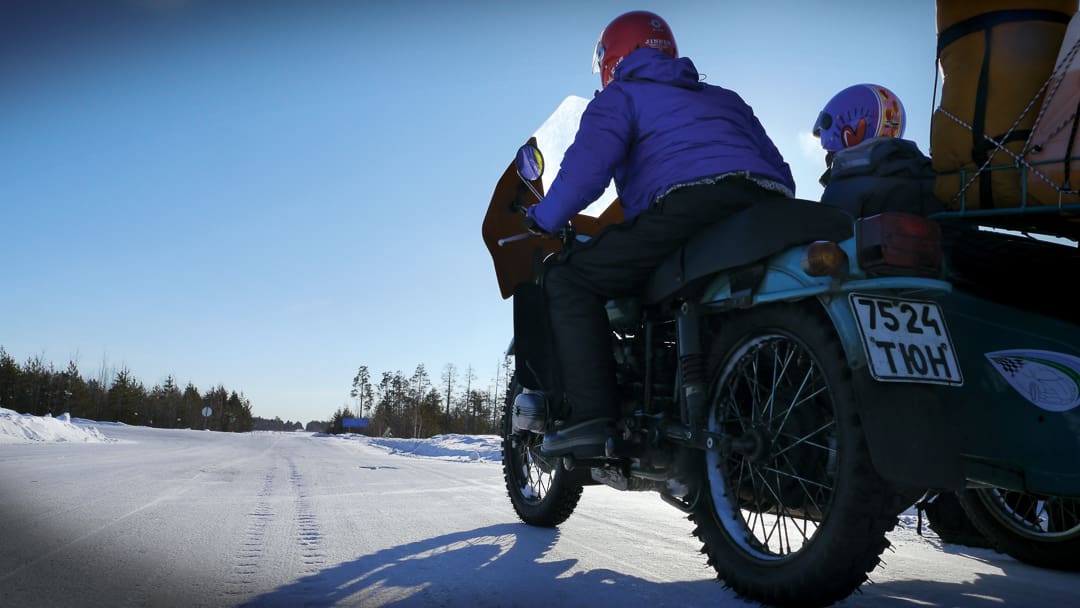
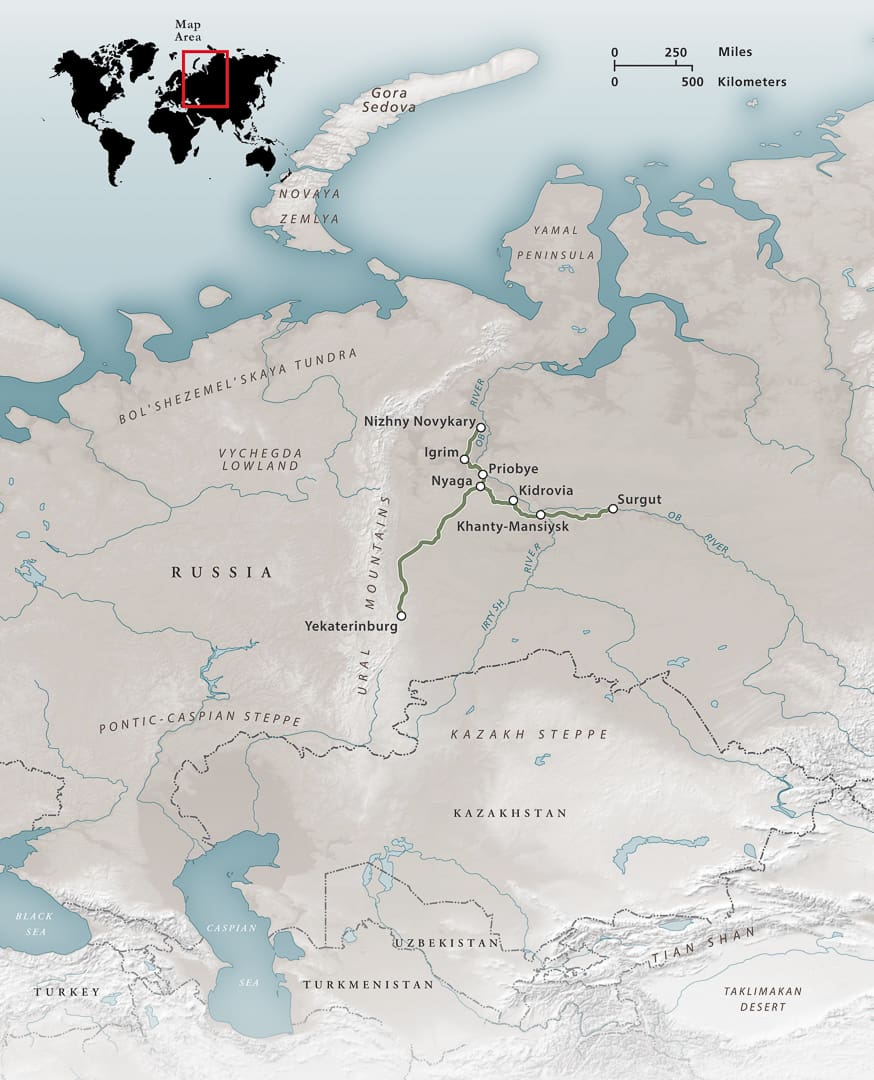
There are two basic prerequisites for a motorbike trip: a motorbike and the ability to ride one. We had neither. Instead, we had tweed, a tap-dancing comedian, and an industrial dose of determination. With little more than this potent cocktail of motorbike unsavvy, the three of us were on a train from Yekaterinburg, Russia, heading north to the icy wastes of Surgut. No one’s heard of Surgut, an oil and gas town in the armpit of the country’s Polar Ural region. Even most Russians have never heard of it. But on a freezing February day, we stepped off an icy train platform with a mission: to buy an old Ural motorbike and sidecar and ride it 1,000 miles up the Ob River to the Arctic Circle.
Tom, founder of adventure anarchists The Adventurists, has a unique talent for coming up with ridiculous ideas, muttered absent-mindedly over a dog-eared map and a cup of tea in the company’s Bristol HQ. Most of these proposals either make people snort with outrage and reach for the complaint form, or sell their offspring and re-mortgage their house in order to take part in the experience. Generally, Tom’s mutterings end up as hugely successful events that raise mountains of cash for charity (The Mongol Rally, Rickshaw Run, and Mototaxi Junket are a few examples), but even I doubted whether he’d pushed the adventure envelope too far with this latest Siberian idea. Old Ural motorbikes aren’t known for their reliability, and temperatures in Siberia in mid-winter are cryogenically cold. It was a limb-threateningly lethal combination.
Undeterred by such lily-livered protestations, Tom, the aforementioned tap-dancing comedian, Buddy, and I set off to Siberia in February to attempt the mission. On paper, none of us were exactly cut out for an Arctic motorbike adventure. Tom’s bike experience stretched to coaxing a recalcitrant mototaxi over the Peruvian Andes, Buddy’s was limited to several hours on an antediluvian Ural in Mongolia, and mine included passing my moto test in the UK six years earlier and barely sitting on anything other than a Honda Cub since. What we did have, however, was a joint pedigree in surviving outlandish escapades. Moreover, Tom, as well as having the determination of a charging buffalo, was a brilliant mechanic, and Buddy was the fearless idiot with a string of extreme TV presenting credits. I had the ability to film what unfolded and hopefully rein in the boys’ more extreme death-defying stunts. If we succeeded and returned intact, The Adventurists would launch a new event the following winter: The Ice Run. If we failed and lived to tell the tale, well, we’d just put it down to a jolly good adventure.
Our start point was Surgut, a mere dot on the vast ocean of Siberia. Founded 400 years ago as a fur-trading outpost, the town has recently exploded to a population of 300,000 thanks to an oil and gas frenzy. Frozen for more than six months of the year and a mosquito-infested swamp in summer, it’s hard to imagine a less hospitable environment. For our purposes, however, it was perfectly located on the banks of the Ob River, our planned conduit to the Arctic. Furthermore, via the wonders of the internet, we’d made contact with a group of bikers there who were keen to help our group of “crazy English people.” Since the main problem when we arrived in Surgut was the lack of a bike, help was exactly what we needed.
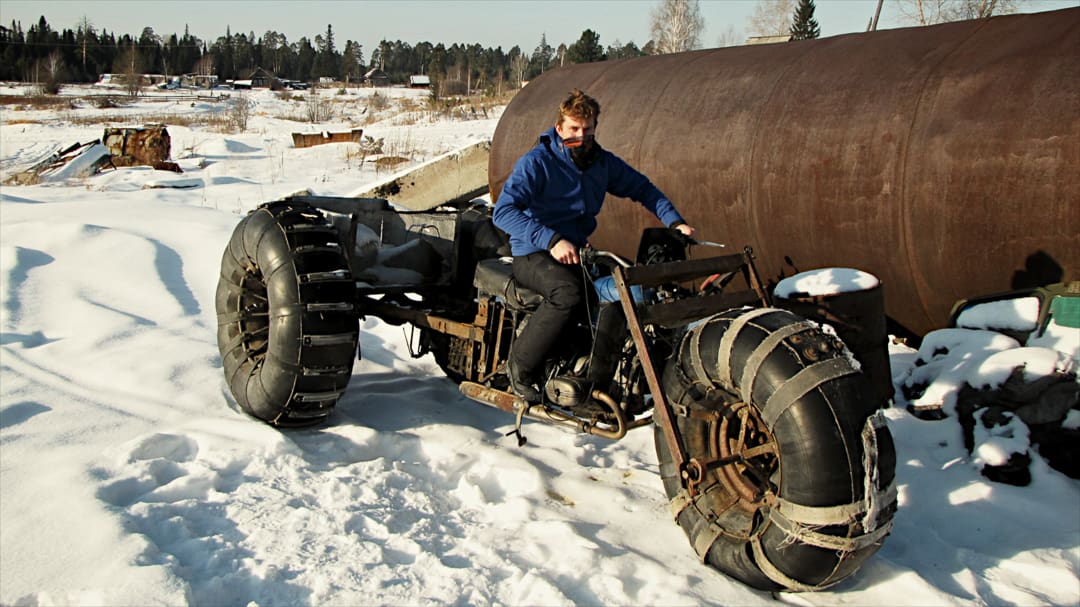
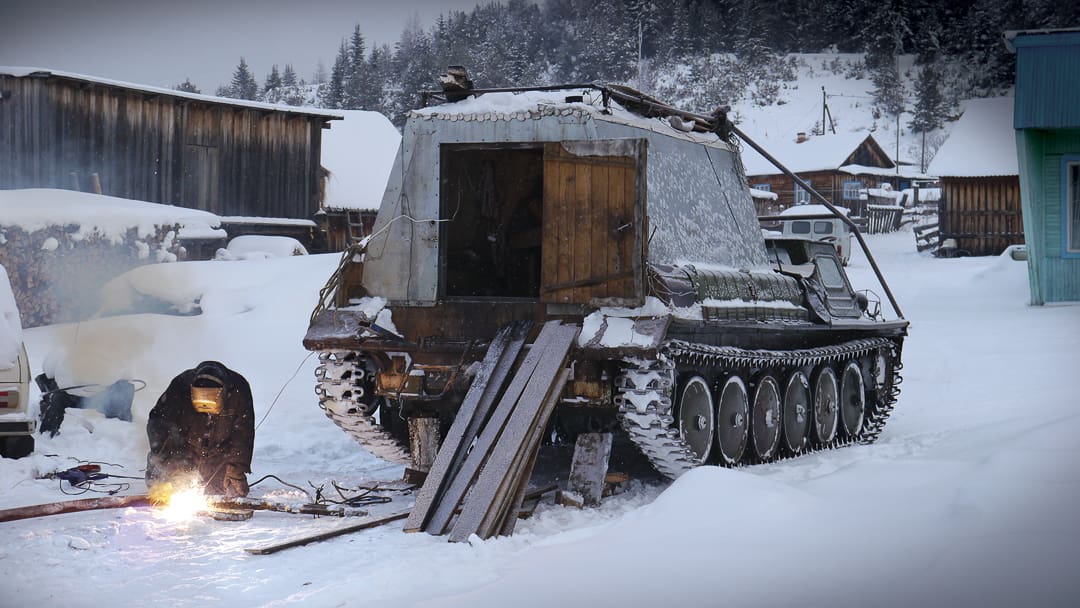
A man welds his homemade ATV, the ideal machine for crossing Siberia’s tricky terrain.
Roman and Alexei, our new Surgutian biker friends, were both ex-Spetsnaz (Russian Special Forces), giants of men who’d done several tours in Chechnya. They thought the whole venture was of the utmost hilarity, and soon word had spread through the whole Surgut biker community. Of particular entertainment to them was Buddy, the absolute antithesis of Russian machismo. Bespectacled, thin as a rasher of wind, and permanently garbed in tweed, every one of their biker cronies who appeared in Roman’s bike shop to ogle us would grab Buddy’s twig-like arms and collapse into laughter. One of them, a regional dirt bike champion, took great mirth in telling us how we’d either be eaten by wolves or freeze to death. “Would you like to come with us?” I asked him in jest. “Not for a million dollars,” he replied, before letting out a gold-toothed cackle.
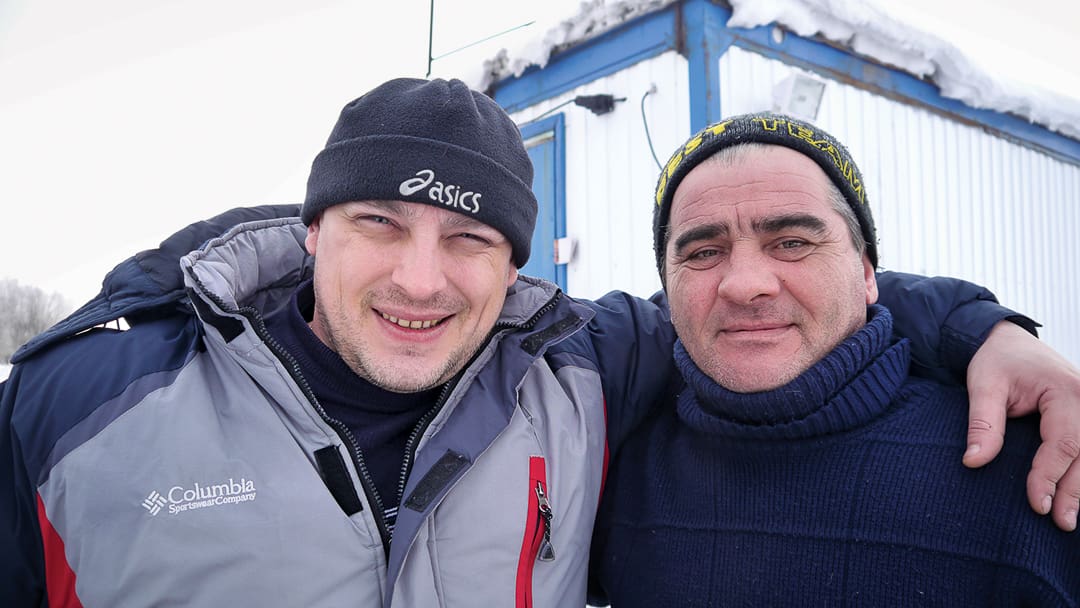
Our new friends: Vasily (on left), the self-appointed nanny to the group, and a Tartar man named Roman from the village of Kidrovia.
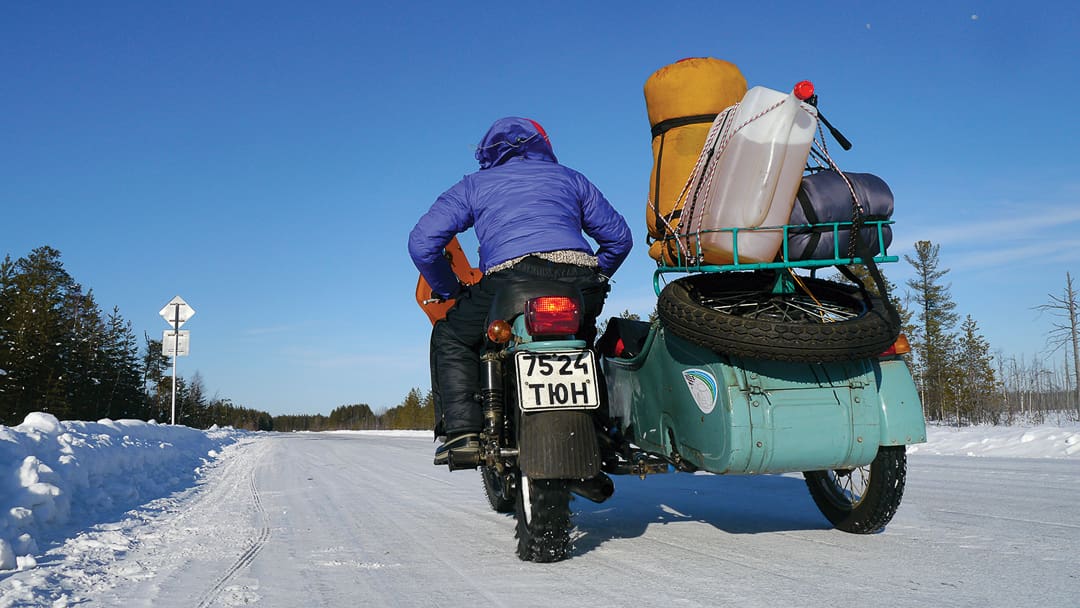
Despite their reservations, they did all they could to help, and two days later, we were the proud owners of a 1993 650 cc pale green Ural Tourist—bought for 30,000 roubles ($965 USD) from a wild-eyed ex-convict called Valody. Our bike had been manufactured a full decade before Ural underwent a buyout and major transformation in 2003, and looked and sounded every inch as if it had fought in the Battle of Stalingrad. It was fabulous.
Roman and Alexei didn’t agree. To us the old Ural was an icon. Its almost unchanged 1940s design, based on the BMW R71, was a thing of great beauty. To them it represented outdated, clunky Communist technology, a symbol of Soviet failure. Why not a nice, reliable Honda? We imagined speeding across the snowy tundra to the glorious put-put of a Soviet single-cylinder, goggles flying in the Arctic wind. Roman and Alexei imagined us freezing to death after having burnt every last inch of our Ural to keep warm. Hopefully our vision would prove the more accurate.
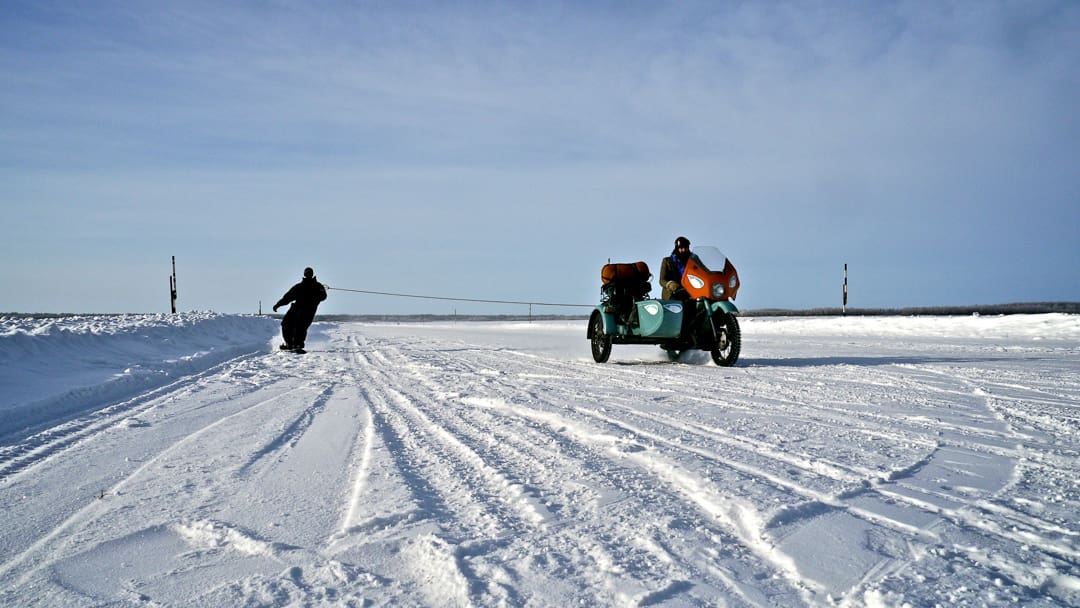
Since our rusty steed had been languishing in a sub-zero garage for a while, there were a few modifications to be done before the journey north. New soft-profile and knobby winter tyres were bought, an Odyssey battery, capable of working down to -80°C, was fitted, heated handlebar grips were connected, and snowmobile oil was poured into the engine to keep it from freezing. We also bought special snowmobile facemasks, local felt valenki boots, and an all-in-one down oversuit, designed for oil workers building pipelines in temperatures as low as -80°C. Dubbed the “fatsuit” by Tom, this would be worn by the driver, who’d get the brunt of the bone-chilling Siberian wind.
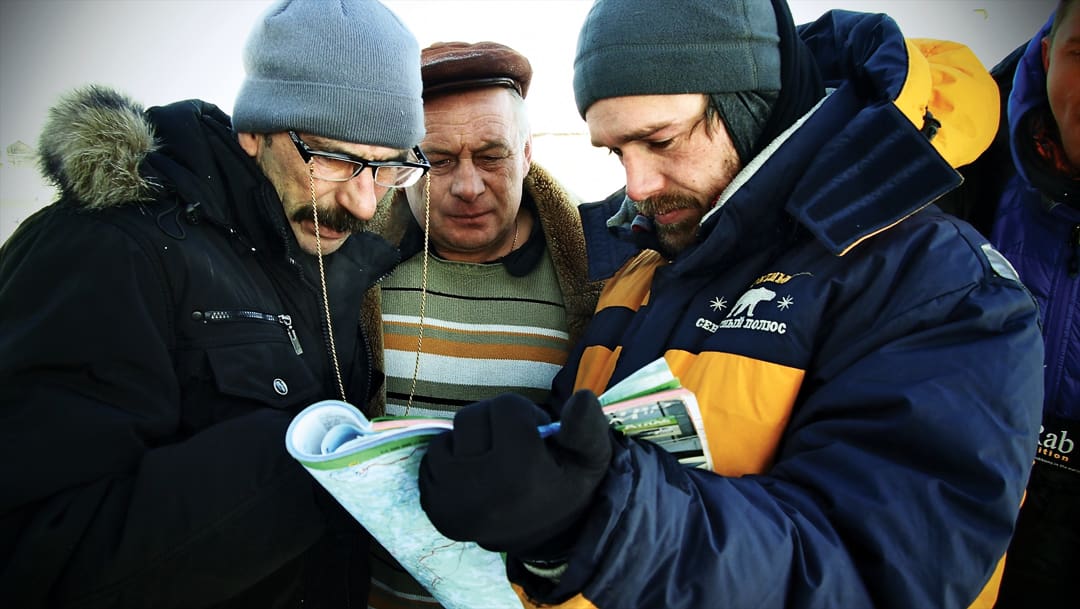
Before we left, Roman and Alexei announced that their good friend Vasily would escort us for the first few days. Not only were they concerned about bears, wolves, and bandits, but it was due to be -40°C the following week, the sort of cold that causes frostbite and hypothermia within minutes—a silent killer with no mercy. Before we had a chance to resist, Vasily appeared. He had piercing blue eyes, a wrestler’s shoulders and a wicked laugh, and didn’t look like the sort of man you should disagree with. “No problem, I have two guns,” he said in heavily accented English, pointing to his brand-new Land Cruiser with mischievously twinkling eyes. Vasily was going to escort us, and that was that. While he was with us, I would film and alternate between riding in the car and bike. Once he left, the three of us would squeeze onto the bike—jerry cans, sleeping bags, and all. With the mercury at -32°C we set off for Salekhard, waving goodbye to a small crowd of worried-looking bikers. To the amazement of our Russian entourage, the Ural made it the first 200 miles in a single 10-hour run to Khanty-Mansiysk.
The real adventure started as we turned north from Khanty-Mansiysk, steering off the icy tarmac onto our first zimnik, or winter road. Carved out of the packed snow and ice by mammoth snow ploughs, zimniks are the lifeblood of Siberia in winter. Without any actual roads between Surgut and Salekhard, zimniks and the mighty Ob are the only transport routes available to the remote villages that dot the region. Oh, the joy of hitting the snow! As far as the eye could see was a blinding blanket of white, broken only by the odd silver birch copse. The bike skidded and bumped along, her new tyres gripping the packed snow with remarkable effect, and her tractor-like engine rudely shattering the stillness. Fortunately, there hadn’t been a heavy snowfall recently. The surface was hard and relatively smooth, and we were propelled across the frozen tundra at a steady 30 mph. Heavy snow could spell trouble further north, where the zimniks were rarely cleared, and we would easily get stuck. For now we were in luck and progressed easily. The zimnik was empty, bar the odd Soviet-era snowmobile and a handful of lumbering oil and gas trucks.
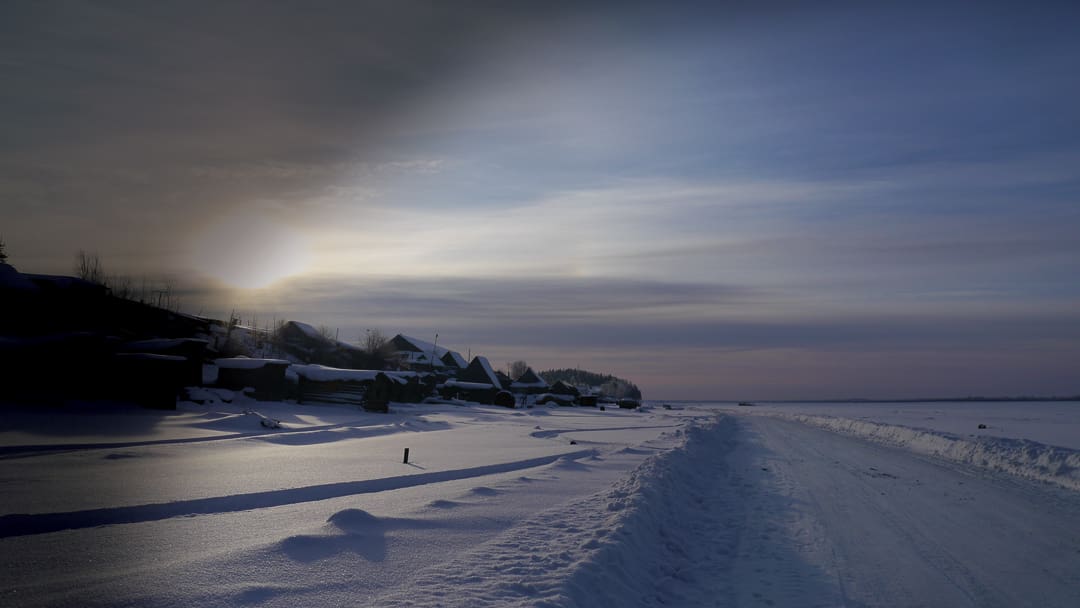
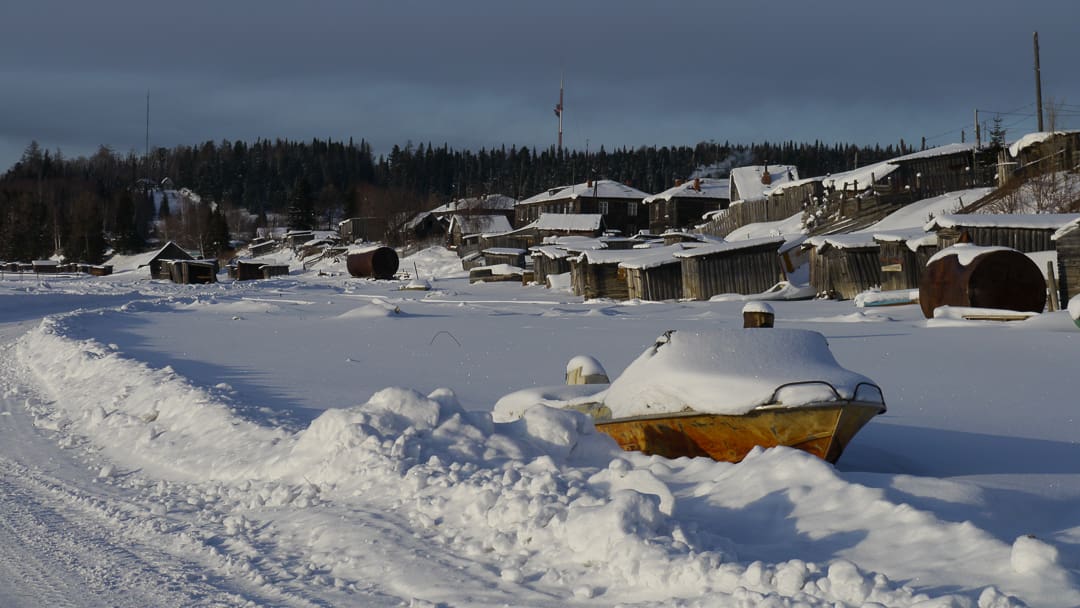
That night we stayed with some of Vasily’s hunting friends in Kidrovia, a medieval-looking wooden village on the banks of the frozen Ob. According to his friends, Roman and Nadia, we were the first foreigners ever to visit Kidrovia, and we spent the night downing vodka and eating fabulous local fish, cheese, and bread. Roman, a dark-eyed Tartar, had served in the Soviet Army in Mongolia, but Nadia had never met a foreigner. She spent the evening excitedly holding my hand and stuffing us with more and more food. Like our friends in Surgut and our companion Vasily, these were people whom we’d never met, yet whose kindness towards us was fathomless.
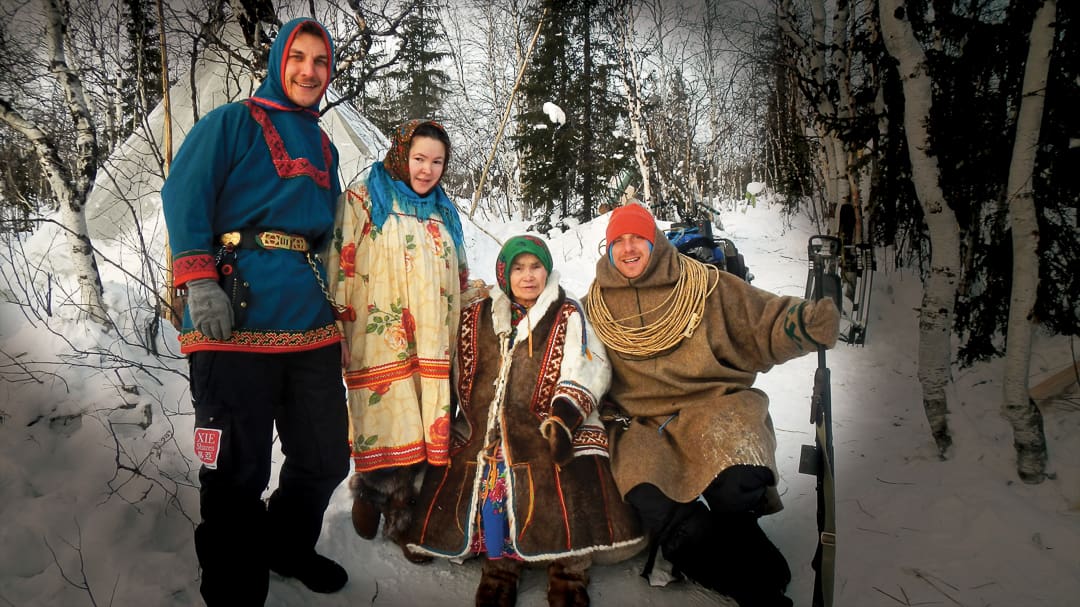
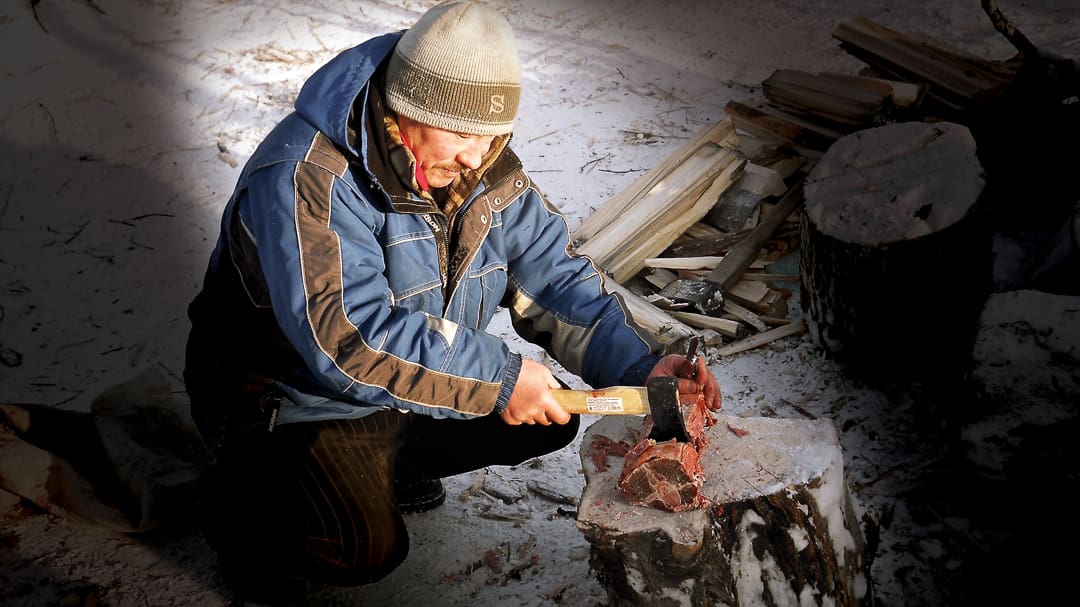
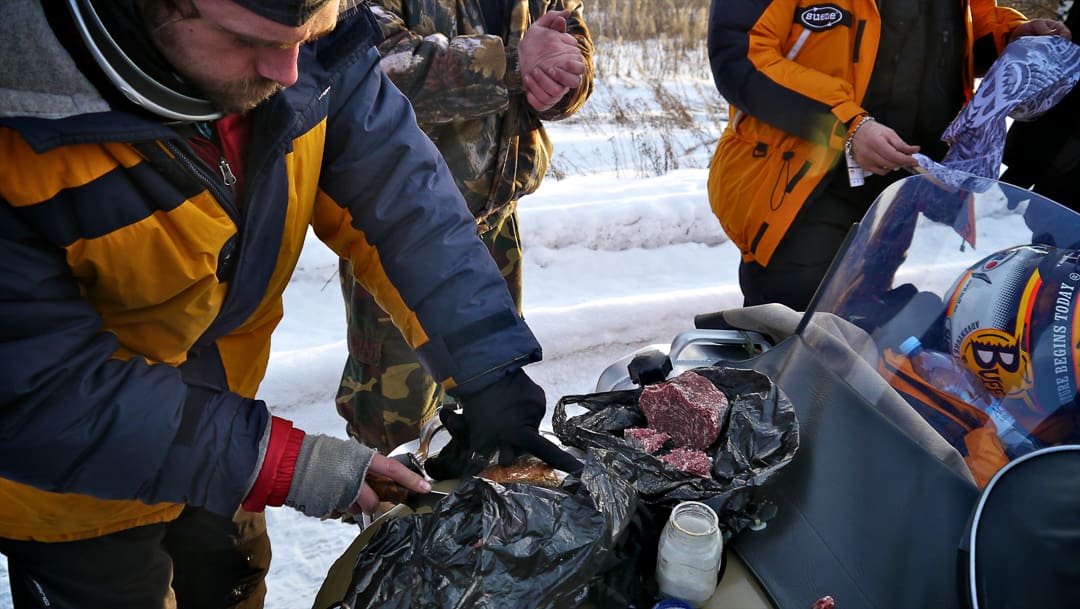
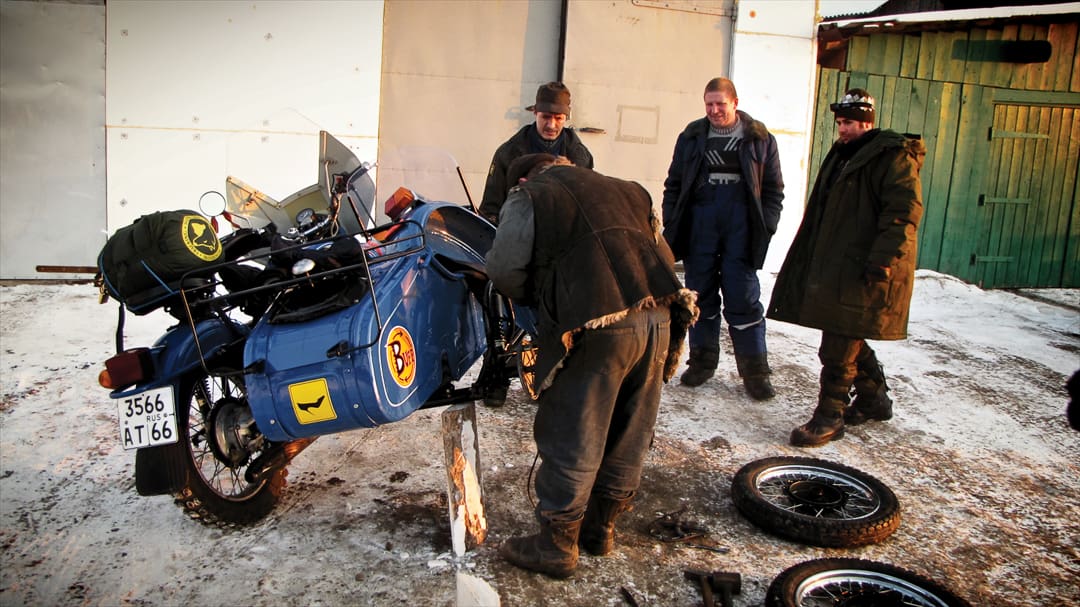
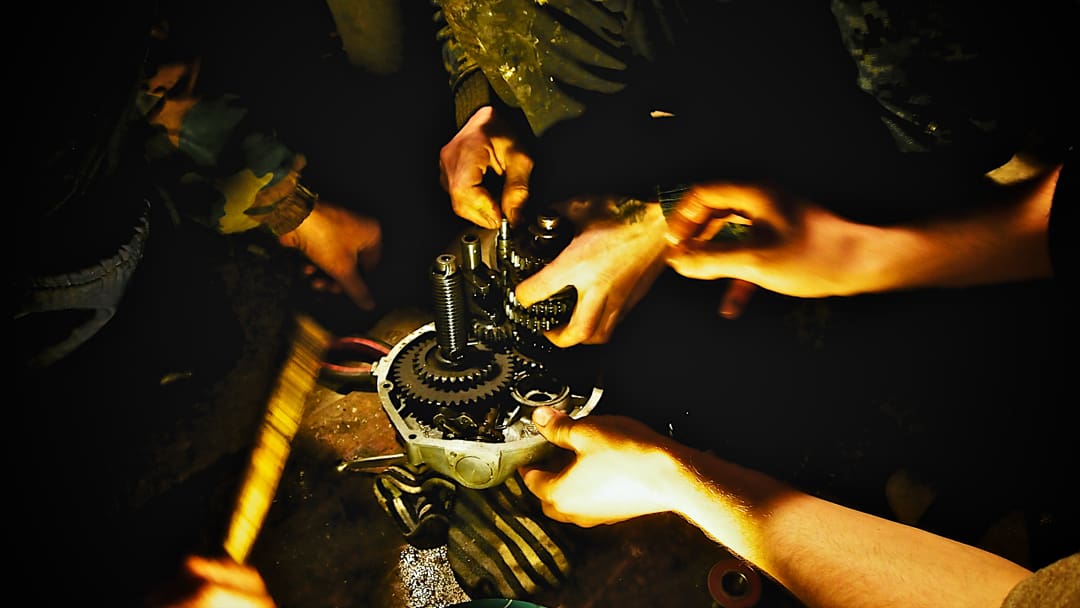
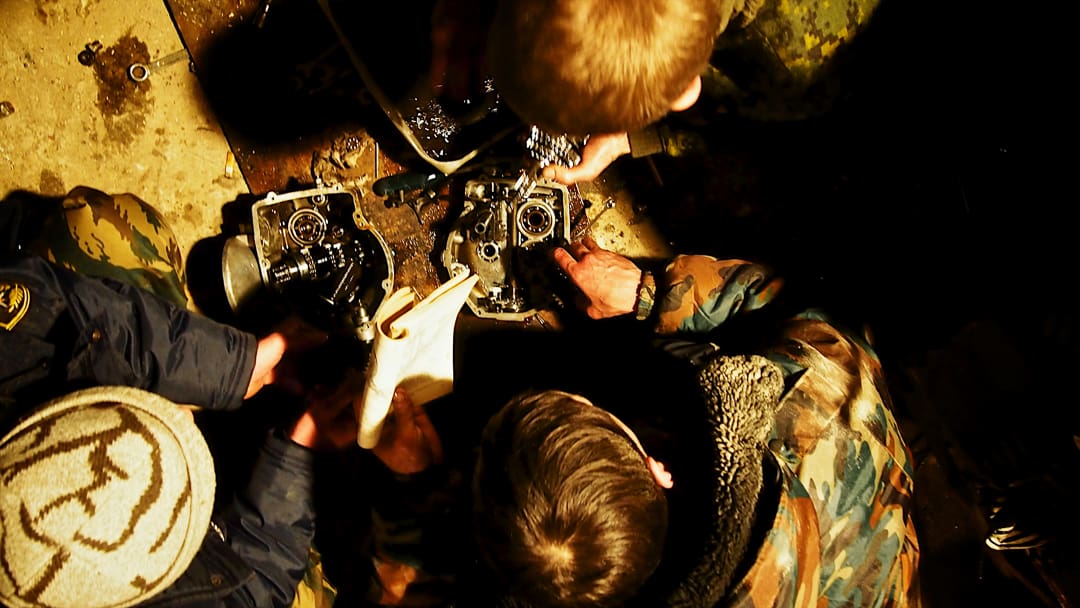
The Ural had clearly enjoyed her stay in Kidrovia too, for in the morning no amount of pushing, swearing, or new spark plugs could cajole her to start. Tom, normally able to fix any mechanical glitch, was flummoxed, as was the increasingly drunk crowd of burly men who appeared to lend a hand. The problem turned out to be the ignition timing, and it wasn’t until the shadows began to lengthen (and the bike had been pulled apart) that the engine finally choked to life. At least the delay had given us a chance to explore the village’s wooden houses, onion-domed church, and frozen fishing boats. We were given a tour of the local school, where we were paraded on stage like exotic animals; Buddy entertained everyone with juggling, dancing, and jumping in the snow. There’s a saying that laughter is the shortest distance between people, and having Buddy with us, always making people laugh, was a constant asset. Everyone should travel with their own personal comedian.
The next morning, under a cloudless winter sky, we said goodbye to Vasily and our hosts. Vasily’s eyes filled with tears as we hugged goodbye, and we promised to meet again. Nadia pressed hand-knitted gloves and freshly baked apple cake into our hands, and Roman enveloped us in bear-like hugs. From now on we were on our own. With Tom driving, Buddy folded into the sidecar, and me pillion, we set off north, skimming for a while over the smooth surface of the Ob. Fuel was going to be scarce from here on, so as well as sleeping bags, a tent, stove, food, filming equipment, and a spare tyre and toolkit, we also had a 15-litre jerry can filled with petrol. Since the Ural had a less than 60-mile range, and official petrol stations didn’t exist between Kidrovia and Salekhard, we were counting on being able to buy black-market fuel in villages along our route.
We were now around 500 miles from Salekhard, but with so much time lost finding and fixing the bike, getting there before our flight home was looking increasingly unlikely. Tom was absolutely determined we would make it, however, and that day we drove long into the night. Although the temperature was hovering around a fairly clement -20°C, the windchill was brutal, and keeping warm became our primary concern. The driver, aided by the fatsuit, heated handlebars, and the windshield, fared best, whilst the unfortunate soul in the sidecar came off worst. Riding in the sidecar was like being stuffed into a steel coffin, and one’s feet, which were wedged into the nose cone, rapidly froze. Every two hours we’d stop, swap positions, ram a chocolate bar down our throats, force ourselves to run up and down until we could feel our fingers and toes, and check each other’s faces for the telltale waxiness of frostnip. Generally, at these stops the bike would break down and we’d lose another 20 minutes changing spark plugs and pushing her until she started again.
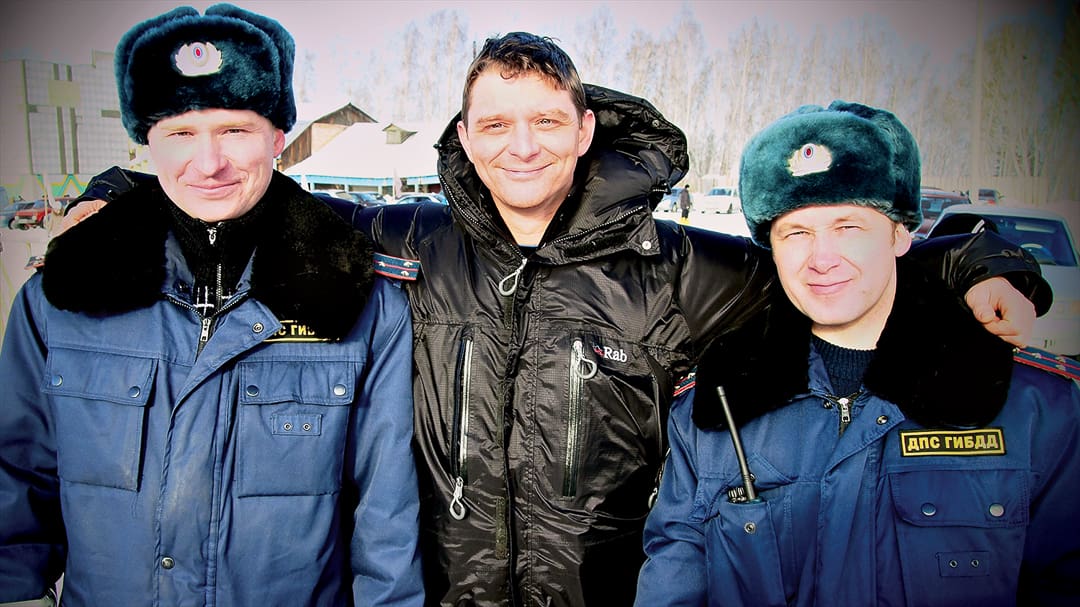
Russian policemen are good people to have as friends.
At Nizhny Novykary, a tiny settlement on the Ob, we finally gave in to the fact we weren’t going to make it to the Arctic Circle. Our flight home from Moscow was in two days, and the only way we were going to make it was to turn around and get a train from the town of Priobe, which was a day’s ride south. Salekhard was a mere 300 miles away, but with the bike developing more problems each day (one of the floats in the carburettor had now developed a leak), it was sadly out of our reach. Without doubt, though, The Ice Run was possible. If we could make it this far with so little preparation, such an old Ural, and with three of us on a single bike, then better-prepared teams would definitely be able to do it the next year. We’d have to leave the elation of getting to Salekhard to them.
The cold aside, what a feeling it was to ride through the Siberian night under that glittering star-lit vault. Snow and ice filled the horizon, and the sky was so vast it was as if we were swimming in a sea of stars. All we could hear was the growling engine of the Ural. Rarely have I felt so infinitesimally small in this world, and it was one of those experiences that will be etched in my mind forever.
As we turned the bike around and steered her south, an old man who had been watching us curiously flagged us down and pressed an enormous frozen fish into our hands as a gift, wishing us good luck. So touched were we at the man’s kind gesture that we carried that fish all the way back to Yekaterinburg. What a strange sight we must have been: three foreigners and a large fish heading into the sunset on an old Ural.
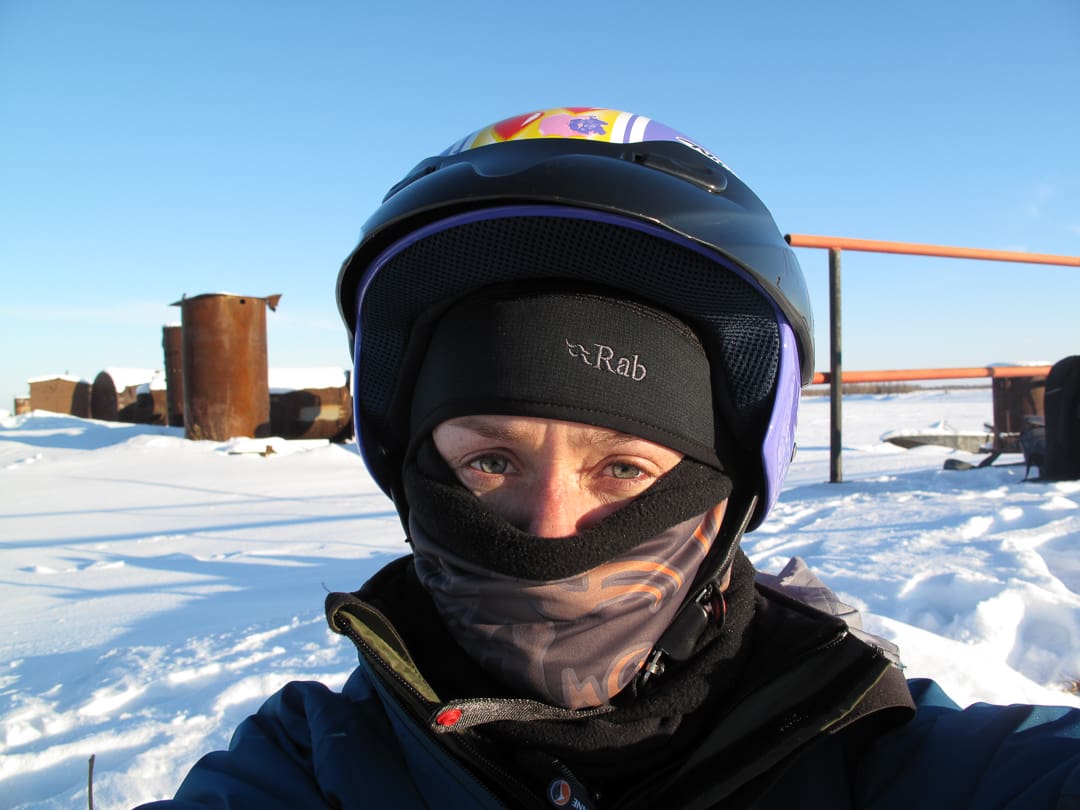
Ice Run Survival Kit
- Icebreaker merino base layers (top and bottom)
- Thick woolly socks
- Thick woollen/cashmere jumper
- Rab Pertex jacket (two)
- Down jackets (Montane and Rab)
- Oil workers fatsuit
- Snowboarding salopettes
- Hein Gericke motorbike trousers
- Silk liner gloves
- Rab Arctic mittens
- Russian fur mittens
- Sorel Caribou snow boots
- Local Russian valenki felt boots
- Hotties hand and foot warmers (essential!)
- Polar Buff Windstopper
- Rab skullcap
- Open-face helmet
- Ski goggles
- Oxford heated handlebar grips
- Odyssey battery
- Handlebar muffs
Follow Ants on @antsbk or find out about participating in her August 2015 Siberian adventure at theitinerant.co.uk. Her second book, A Short Ride in the Jungle: the Ho Chi Minh Trail by Motorcycle, is available now as an e-book and paperback.
Our No Compromise Clause: We do not accept advertorial content or allow advertising to influence our coverage, and our contributors are guaranteed editorial independence. Overland Collective may earn a small commission from affiliate links included in this article. We appreciate your support.
