

Overland Journal Podcast Episode #170
The Overland Journal Podcast is brought to you this week by Overland Journal Magazine
New to Overland Journal and want to grab a subscription! Visit Overland Journal and enter code: overlandpodcast at checkout for 20% off. We thank you for being a subscriber.
Guest Bio:
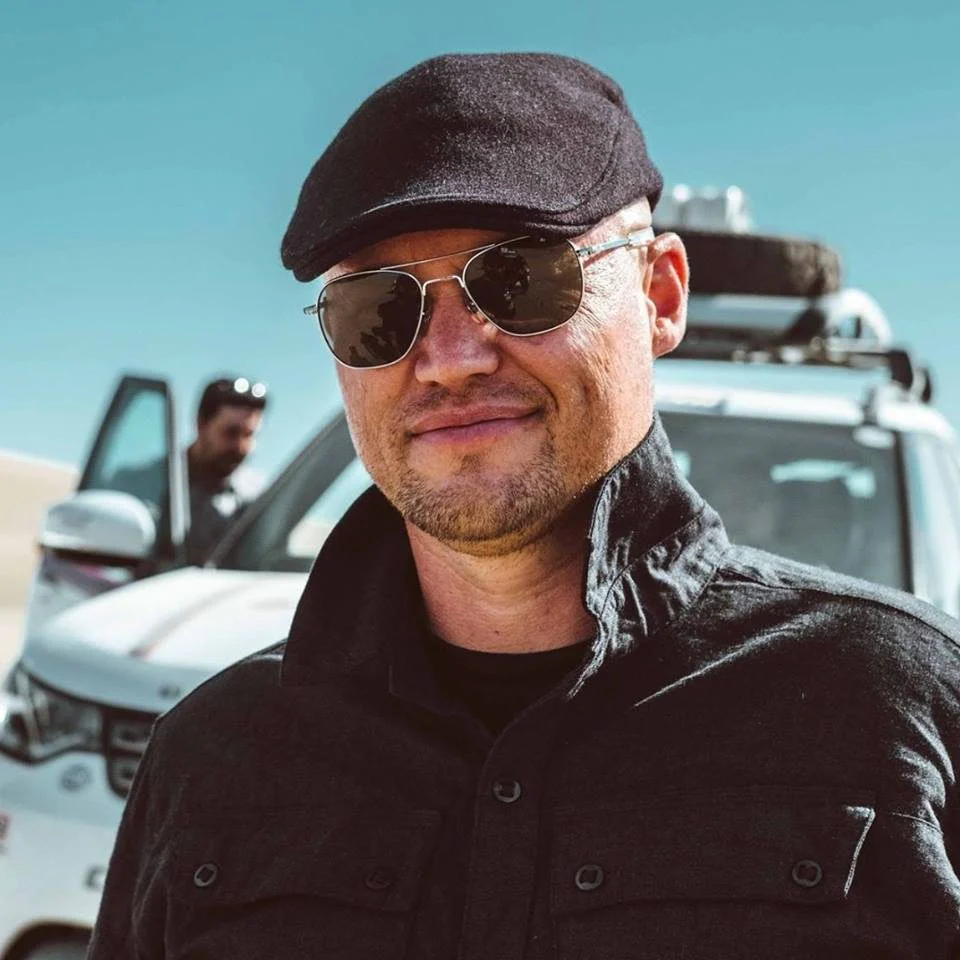
Brian McVickers
A Chicago native, Brian has lived throughout the United States and the Caribbean while traveling as much as possible throughout the world. An accomplished racing and ocean sailor, overlander, and general adventurer, Brian has accumulated over 45,000 nautical miles and well over one-hundred-thousand statute miles through his adventures and expeditions spanning from the deserts to the remote Arctic. His happy places are on the water or in the mountains, skiing, mountain biking, and fly fishing with good friends and his family. He has spent the last 27 years involved in the outdoor, mountain sports, automotive, and travel industries with magazines, newspapers, web, television, podcast, video, ad agencies, and storytelling.
Host Bios:
Scott Brady
Scott Brady is an adventurer, author, and publisher, and the first person in history to cross all seven continents. Brady is executive publisher of the Overland Collective, home to Overland Journal, the Overland Journal Podcast, and expeditionportal.com—the world’s largest vehicle-dependent adventure community. Scott wrote Overlanding 101 (Simon & Schuster) and is currently riding around the world on his BMW GS. He also led Expeditions 7, the first expedition to drive the same vehicle on all seven continents. Brady’s polar crossings include Antarctica and a south–north crossing of the Greenland ice sheet. Scott is a fellow of the Explorers Club and lives in Prescott, Arizona.
Tune in Apple Podcasts | Spotify | YouTube
Our No Compromise Clause: We do not accept advertorial content or allow advertising to influence our coverage, and our contributors are guaranteed editorial independence. Overland Collective may earn a small commission from affiliate links included in this article. We appreciate your support.
Transcript
Scott: [00:00:00] Hello, and welcome to the Overland Journal podcast. I am your host, Scott Brady, and I am here in the middle of Kenya. I’m actually just about 10 kilometers from the equator, having driven from Cape Agulhas in the south to this point in Kenya. Had about a 12-hour day today in the rain driving the Grenadier, but successfully made it to a place called Nanyuki, and it’s something that we, we don’t wanna miss a podcast, and Brian McVickers just attended SEMA.
Uh, this is the first SEMA in my memory, uh, that I haven’t attended so, uh, it- looking forward to having Brian on the podcast today and sharing some of his experiences from the show. Brian, thanks for being on the podcast.
Brian: Thanks, Scott. It’s good to see you. Hey, everybody. Uh, yeah, it was a good SEMA. Um, you know, I think we’re going on, you know, geez, nearly, nearly, uh, 18 years of [00:01:00] SEMA now, and the show just continues to grow.
If you have been to the show, um, you know, or if you haven’t been to the show in a while, they’ve, they’ve expanded it to a whole nother hall, um, that they, they built it a few years ago, uh, but it’s finally … Uh, it, it’s really starting to fill up with vendors too, uh, but it’s the West Hall. Used to be a parking lot.
I remember 10 years ago, we’d park there for 15 bucks. Um-
Scott: Yeah, that’s
Brian: right … but now you gotta … And now that whole area is a, a big, uh, a, a big building and, and, uh, parking across the street’s 50 bucks. So- …
Scott: it’s,
Brian: it’s all evolved a little bit.
Scott: And a special thanks to Kuat Racks for their support of this week’s podcast.
Their new Ibex has landed. It’s actually over-landed. This groundbreaking bed rack is effortlessly handling substantial loads both on and off the grid. Constructed from lightweight yet durable [00:02:00] aluminum, it boasts a ballistic black powder coat made for all the nature you can throw at it. It’s available in six different frame sizes to accommodate most truck models, and it’s equipped with telescoping crossbars, numerous T-channels, and a versatile full and half height configuration right out of the box.
This is the Ibex from Kuat. It is engineered for adventure. For more details, please visit kuat.com. Kuat, because you will absolutely love this bed rack
Brian: But it was a good, it was a really good show. Um, you know, I spent most of my time in, I’d say, the central and west halls, which have a little bit more focus on, on, uh, four-wheel drive and kind of the overland space.
Um, some of the other halls are, are more, uh, you know, kind of oriented towards tools and, and vehicle fabrication, things like that. So, uh, we had a really good time [00:03:00] walking the show. I, I was going through my notes, I think I met with 32 different companies over the course of two days. Um, so we, we got a lot of information to digest.
Scott: One of the things that I’ve noticed, Brian, over the last decade is not only a greater presence of overlanding within the hall, but now it’s actually kind of what they’re calling it is the overland space. And it’s because it’s, it’s really, um, evolved, not only in the scope, in the breadth of the products that are being covered, but in the number of companies that used to, to only produce off-road components that are now making accessories specifically for overland travel.
Brian: Yeah, that’s a good observation, Scott. And one of the things that I’ve noticed is about 10 years ago, uh, maybe a little bit sooner than that, there was a- almost this conflict between, you know, what’s four-wheel drive and what’s overlanding, and they didn’t quite know what to do. And now [00:04:00] in, in, you know, from my view, it seems that there’s, there’s plenty of space for, you know, four-wheel drive a- and, uh, and kind of, you know, setting a vehicle up to, to be a four-wheel drive as, as, uh, as far as that activity is concerned.
Yeah. And then there’s plenty of space for more of the travel-oriented overland space. And they, they’ve actually taken, uh, what, what they call the overland experience at the show. It used to be inside of the, of the west hall. Um, and they, it… That actually has grown so large as a dedicated area that they’ve moved it outside.
So they moved it outside into the parking lot, um, just to the side of the west hall. So inside the west hall is a little bit more four-wheel drive component-oriented, um, components and products. And then outside in the overland experience, you got to see complete vehicle builds and a lot larger builds. So you’re starting to see some of the, some of the big trucks, some of the big vans, [00:05:00] um, where they would be plenty of space to be outside, and you can walk around and walk inside of ’em and, and really get a good look.
Scott: Oh, that makes so much sense, especially since so many of the components that are sold at SEMA are assembled into those final expedition camper projects.
Brian: Right. And they’ve, they’ve tried doing it a few different ways. I remember several years ago, kind of, uh, tucked way out in the corner, it was kind of a back parking lot, they had some of the big trucks like Earth Cruisers and Earth Roamers and Global Expedition Vehicles, they would all gather there. But now they’ve really, they’ve formalized it into an organized space.
Scott: Yeah, I remember, I think the first time that I ever had a vehicle on display at SEMA was 2005, and-
Brian: It was a Tacoma, yeah …
Scott: it was. It was the, the White Expeditions West Tacoma. And just next to me, uh, was this huge [00:06:00] converted four-wheel drive van, which was the UJoin off-road van. So it’s just fun to see the number of companies that have been representing overlanding for a very long time.
And of course, ARB comes to mind. ARB, even well before I started doing anything at SEMA, was really representing vehicle-based travel. Uh, and there’s a couple other companies that come to mind too, but ARB was really one of the forefront organizations to represent overlanding at SEMA.
Brian: And ARB was there, uh, in full force, I tell you.
They had a, a fairly large booth this year. Um, and one of the highlights of their booth was the new, uh, Earth Camper trailer. Um, so that is a- What did you think of
Scott: seeing that in person?
Brian: It was really neat. I actually spent, um, I, I spent nearly an hour in that booth, um, crawling around, taking a look at the trailer.
So it’s a hard sided trailer. It’s kind of like this [00:07:00] monocoque construction. Um, and it’s got a… It has an active high pressure system where it has some of these ducts with an, with a filtration system that as you’re towing it, it pushes air into the, into the trailer and, uh, so then it kind of creates a high pressure zone inside the trailer to keep dust out.
Um-
Scott: Yeah, and a lot of people don’t know- And it’s very thought- … that on their own, on their own vehicle they can actually do that. If, if your vehicle has some kind of a HEPA filter, you can actually turn it off of recirculate and then turn up the fan speed to create some internal pressure inside your vehicle to keep a lot of dust out.
So when I’m on dusty roads, I make sure I do that. Um, like the Grenadier for example, has got a great HEPA filter, so I just crank the fan speed up with the doors closed and it keeps the dust out.
Brian: Makes a big difference dealing- Yeah … with bull dust and all and that- Totally … kind of powder [00:08:00] dirt.
Scott: Totally.
Brian: So, so it’s a nice trailer.
It’s very well thought out. It, it really has everything you need, um, from the, the kitchen to the interior space with storage, and it, it very much feels like a little studio apartment. I mean, it’s, uh, you know, really well done. Um, one of the things that I, I liked about it is that the, the entire trailer is, is built onto a frame that is continuous from the trailer hitch all the way through the chassis of the trailer into the upper frame that goes up and around the fiberglass shell is one, one kind of structure of, of steel tubing.
Yeah. Um, so it, it ties all the way in, so very well thought out in that regard. Great suspension system. Um, it has two or three different, uh, kind of modes if you will. So you can, you can do, you know, full [00:09:00] deployment where you kind of create this additional annex room off the back of it, but then they have a quick camp mode as well.
So if you just wanted to, you know, stop for the day, open the door in the back and crawl into the bed- Oh … um, you can do that without having to set everything up.
Scott: Or if you were in really cold conditions maybe.
Brian: Yeah, the cold conditions, that would certainly help. Um, the annex room is a fabric room. Um- Yeah
so the, the, the back door, here’s the trailer, the back door kind of falls down and then the, the rest of it is, is a, a fabric enclosure.
Scott: Cool. And it, that’s one of the things that I like, I’ve seen with trailers recently, and I’m a big proponent of if you’re gonna tow a trailer, you better be able to sleep inside of it.
Um, I, I’ve never been a huge fan of like stick a roof tent on top of a trailer, ’cause why not just put the roof tent on top of the car? Sure. But, but something like the ARB trailer, [00:10:00] you actually have the, like you said, this little studio apartment that you get to retreat into. You can keep it set up, ready to go with all of your gear, hook it up at the, you know, on a Friday afternoon and off you go to the weekend.
Brian: Yeah. Well, we did a, we did a 15-minute, uh, detailed walk around with one of their, with one of the folks from ARB, um, and they went into great detail on it, so we’ll be able to publish that in the next couple of weeks for everybody to take a close look at.
Scott: Oh, that’s awesome. Thanks for doing that, Brian.
What else did you see at ARB? I’m noticing that they’re coming out with a lot of their travel equipment, so like the k- slide out kitchen, the, the trailer. They just keep releasing more and more, uh, camping lifestyle gear.
Brian: They, they do, and I’m seeing that from quite a few different companies. Um, but the ARB kitchen is quite clever.
It slides out and then, um, so it’s, it’s, uh, one big slide out with a stainless steel surface, and then from within [00:11:00] that you have, it almost jackknifes out into a, into an L-shaped kitchen. So you have an electric, uh, burner, so an inductive cooking top, and then a, uh, a sink with, with running water. Um, and then that’s, that kind of, you know, slides out from the, the main part.
So you still have a whole lot of stainless steel countertop space. Um- Oh, wow … and then the cooking and the sink area is separate from the countertop space, so you’re not, you’re not, you know, giving up any, any, uh, real estate for that. Um, they also have, uh, two new bumpers. They’ve got the Zenith bumper and, uh, I think it’s called the Summit bumper.
Um, integrated lighting, um, r- really nice. Kind of a new design, uh, from what we’ve traditionally seen from ARB. And then they also have a whole new i- uh, lighting, uh, lineup. So they’ve got new lighting. Um, I think they just acquired a- another [00:12:00] lighting company and they’ve, uh, they’ve folded that into their product lineup as well.
Scott: Yeah, they just keep bringing more and more new products, which is so exciting.
Brian: Yeah, I know a lot of it’s that consolidation that we’re seeing in the marketplace. A lot of companies are, are kind of, uh, bringing in complementary products, uh, so that they can have a, a complete offering to the consumer.
Scott: Well, one of the things that you got to see that I so much wanted to see in person is Dave Harriton’s new single cab GMC AT four X heavy duty with the f- with the tray bed.
How was that?
Brian: That has got this presence to it that, you know, you, it, it stops you in your tracks. I’ve seen it twice now. I saw it out in Montana when they, when they first launched it to the public, and then, um, that was a bit of a limited viewing because the sun was setting as, as we got to see it. Uh, but then to see [00:13:00] it under the lights at SEMA, really got to take a more detailed look at it, and it is, you know, it’s one of those trucks that kinda, it gives you everything that you would want in a truck.
Um, it’s very utilitarian. That tray bed is brilliant. Um, and then the way the entire thing is put together, it, it’s got everything that you would want out of a truck. And one of the neat things that they launched at the, uh, at the show, um, was the new tire. So AEV has spent, uh, the last probably two or three years developing a tire with BF Goodrich.
Wow. Um, and this is a, this is a 40-inch tire that goes onto, I believe, a 17-inch wheel, and it’s an F-rated tire. And it’s, uh, a bit of a, um, it’s a bit of a hybrid. It, it, it presents as a very aggressive all-terrain tire. Um, but this is… And it’s, so it’s tall and narrow within its own proportions, right? So it’s a [00:14:00] 40-inch tire and it’s, I think, it’s 12 and a half inches wide.
Um- Perfect … I might be wrong. It might be 13 inches wide. But, you know, 13 inches is still pretty wide, but when you put it onto a 40-inch tire, it’s pretty narrow. Um, and so they made that tire specifically for the Prospector. And when- Wow … we first got to see the GMC, uh, truck at, uh, in Montana, um, at the XOVERLAND Ranch, it had a different set of wheels and tires on it.
So now at SEMA, it had the proper set of wheels and tires and, and, uh, I got to speak with Dave Harrington of AEV and, and he was really, that was probably what he was most excited about out of everything that they were displaying at SEMA.
Scott: Well, he has to be so proud of that, and it’s one of the challenges that we have in the marketplace is oftentimes these tires are just too wide for modern vehicle platforms, uh, because these, these wheel wells really require a very specific [00:15:00] width, track tread width, in order to fit up inside of the wheel well.
So I’m sure that that tire’s gonna be, like, hugely successful, not only with the GMC, but with their Ram base Prospector as well.
Brian: Correct. And it’ll fit both platforms, and it, it really looks great. They had it on the GMC, and then right next to the GMC they had a Ram platform, a Ram Prospector, um, and they had it on there too, and it, it just looks- Awesome
it looks very good on the truck.
Scott: Oh, that’s so cool. And I’m just such a fan of those regular cab trucks. And, and I’ve known about this flatbed forever, but I just couldn’t tell anybody about it . So it’s just so cool to see it come into light. And, uh, you know, Dave is, and his team just does such incredible work, and it’s, you know, it’s just such an honor to know all of them and, and to see the, the products that they bring to market.
Brian: They do. They put a tremendous amount of thought and know-how and [00:16:00] engineering behind everything that they bring to market. And, you know, one of the things I like about AEV is they are constantly looking ahead. So they’re working on projects six, seven years, eight years away. Um- That’s right … because it takes that amount of time, especially when you start having such integration into the OEM side.
Um- That’s right … they’re definitely forward-thinking and innovative
Scott: Ah, so cool. All right, so let’s talk about what was the next thing that you saw that you were excited about?
Brian: Well, let’s see. Um, you know, I’m trying to think. I’m walking myself around the show, right, in, uh, in kinda chronological order. Um, one of the next things after, after seeing, uh, seeing those was, uh, Winnebago.
Uh, so Winnebago’s got, um, you know, the next evolution of their Revel van. Um, so I think that’s- Yeah, the Revel’s
Scott: been hugely popular
Brian: It’s been great, and it’s, it’s getting [00:17:00] better, in my opinion. The very early versions, I think, had too much stuff underneath. Mm. Um, but they’re really starting to, uh, I would say, kinda clean up the, the functionality of that vehicle to make it more capable.
And then the really big news from Winnebago was that they have a new trailer. Um, so that’s their, their big offering for, for the next year, um, is they’ve got a, a new tow behind trailer. And-
Scott: What’s the, what’s the length on it? What, what’s the box length- All right … not the overall length? Is it like a 19- Yeah,
Brian: let’s, let’s check it out.
It is, the exterior length is 15 feet, 11 inches. Oh, nice. Dry weight is 3,200 pound. Uh- That’s great … hitch weight’s 444 pounds.
Scott: It’s a single axle then? So
Brian: a single axle. It is called the Hike- That’s perfect Yeah, it’s called the Hike 100 Flex Travel
Scott: [00:18:00] Trailer. That’s perfect. Yeah. I’m a huge fan of that, of that form factor, like the X 145 that we have from Imperial.
Uh, that one is, it’s just such an ideal size, ’cause you end up with a dry bath, and then you end up with enough space for sleeping and everything else. What’s the layout on the interior of this new Hike trailer?
Brian: It’s really efficient. So they’ve got two sofas that are about 64 inches long. Um, and then between the sofas, you’ve got a table.
So you can drop the table down, put extra cushions down, and now you’ve got this really 64 by 64 sleeping area, um, which is a nice size bed. Then you’ve got, um, you’ve got a closet and a dresser. Um, you’ve got a wet bath that has a standing shower and a separate toilet. Um, then you’ve got a pull-out counter- So a dry bath then Yeah.
Well, it’s a wet bath. [00:19:00] Um- Oh,
Scott: so the toilet’s inside the shower?
Brian: Yeah, the toilet is inside the shower. Um, but the shower pan, the shower area is separate from the toilet- Oh, cool … if that makes sense. Cool.
Scott: Yeah.
Brian: Yeah. Awesome. So you, you’re not sitting on a… You’re not… It’s not so small that you’ve gotta sit on the toilet to take a shower.
Scott: Sure,
Brian: sure. But, and that doesn’t sound like the way it sounds. Um, but yeah. Then you’ve got a, you’ve got a, a kitchen area with a refrigerator and a pull-out counter. Um, so it’s, it’s just big enough to have everything that you need, but it’s still nice and compact so that you’re not, you know, kinda towing a behemoth of a trailer.
Scott: My, the lights keep shutting off in the back of the Grenadier. I s-
Brian: I, I see that. I’ve watched that.
Scott: And then I- I couldn’t tell if you- And then I notice, I notice that I’m, like, this floating bald head- [00:20:00] in the scene. Oh, that’s funny. Uh, well, this is our first attempt at using the, using the Starlink to, to do a, a, uh, a podcast.
And the fact that we can do it- Right … from the middle of Kenya is just unbelievable.
Brian: You’re using the Grenadier as a studio.
Scott: Yeah, the Grenadier as the studio. And yes, exactly. Oh, that’s awesome. Oh, let’s see. Oh, cool.
Brian: What else do we have? Uh, Giant Loop has a new water bag. Um-
Scott: Okay …
Brian: I think it’s called the… I wanna…
I think it’s called The Cactus Bag?
Scott: Okay.
Brian: I think it’s called The Cactus Bag. Um-
Scott: Oh, that’s great … and so that’s a- Because they have those, they have those… Well, I don’t think they call them a fuel… Well, they’re, they’re, they’re… In Africa, you can use them as a fuel bladder. And I do. Right. And, and that’s what I use actually in the Grenadier for extra fuel.
I have two 20 liter jerry cans, then I have two [00:21:00] 18 and a half liter Giant Loop fuel bladders. Um, I think that there’s some challenge around using them in North America bec- or in the US because of EPA, but usually you need that kinda stuff in Baja or, or here in Africa or something, so.
Brian: Yeah, you’re talking about the…
So what you’re using is called the Armadillo bag.
Scott: That’s right.
Brian: Um, and they, they call that an expedition ready liquid receptacle or something.
Scott: Yeah.
Brian: They can’t call it a, a fuel bag. But then the other one that you’re thinking of is, uh, or that I was mentioning, was, is the, the… It’s called the Cactus Canteen.
Scott: Okay.
Brian: Um, so basically what happened is that they came out with the, the Armadillo bag, and people liked it so much that they said, “Man, we could, we could use this to carry water.” Um- Totally … and they re- they were requesting that Giant Loop do a, a, a, you know, basically a, a jerry can. [00:22:00] Um, so they- Right … used the same, you know, concept as the Armadillo bag, and they came out with the Cactus Canteen.
Little bit lighter weight, um, uh, kind of Cordura fabric on the outside, and then a, you know, a, a, a food-grade liner, uh, that’s the actual water bag on the inside. But they have it in, I think, one, two, three, and five- Wow … gallon, uh, bags. And they’ve got daisy chains on the outside so you can really strap ’em and secure them to wherever you might need.
Scott: They, those bags are awesome. I mean, they, they really work so well because, for example, when I’m on this trip, when I need extra fuel, I strap ’em down to the roof rack, um, and, you know, because it’s petrol. If it was diesel I wouldn’t mind putting it inside the vehicle, but from a safety perspective, I strap ’em to the roof rack.
Um, but then when you’re done with ’em, you just roll ’em up and you get all that space back. So with the water, it’s the same [00:23:00] way. And I’ve always used what’s called a Dromedary bag from MSR, but they- Yeah … they’ve always been too small, um, or they don’t have the right kind of accessories, or they don’t have the, the, uh, the loops on it for, for lashing.
So they just kinda slide around and they slide out from under however you’ve, you’ve, uh, strapped it down. So this new bag sounds really cool.
Brian: So, and with that strapping to the outside, they’ve got another new product. Uh, uh, the name escapes me, but it’s basically, uh, it’s a m- a panel that straps to your spare tire.
Um- Okay … or the, if your spare tire’s rear-mounted. Um, so it straps to a rear-mounted spare tire, and it’s got compartments and, and MOLLE panel and Velcro and, you know, daisy chains all built into this one kind of pl- you know, piece that goes onto your tire. And then with that, you can take all these different fuel bladders and water [00:24:00] bladders and other accessories like a medical kit or a tire repair kit, and you can strap that on to that otherwise unused space on the back of your spare tire.
Scott: Amazing.
Brian: So-
Scott: Yeah, Giant Loop has always just kind of pushed it with innovation, which is really cool. Always great to see.
Brian: One of the other ones was, uh… So Ironman 4×4 just seems to have more and more offerings into the space. It’s, um, when they came into the US, well, they’ve come into the US a few times over the past, say, 15 years, but when they came back into the US, um, most recently, they, they came with a limited offering.
Um, you know, in Australia they’ve got, you know, they’ve got the three-inch catalog of just about everything you would want.
Scott: Yeah.
Brian: And it seems like they’re bringing more and more product to the United States. [00:25:00] So they had, um, two display vehicles that were completely outfitted. They had a Ford F-150, um, that had everything was, was Ironman 4×4 from the lift kit, the front and rear bumpers, the side steps, the tonneau cover- Yeah
and Ironman 4×4 LED lights. Um, really like everything that you would want. Um, they’re, they’re very much kind of coming into that space of, of being competitive with ARB, if you will. Whereas ARB is one of those companies where you can, you can go in and outfit your truck from bumper to bumper from ARB.
Yeah. You can now do something similar with Ironman 4×4. Um, one of the things, they also had a Tundra on display with, again, everything was, was there. And then what I was really impressed with is they had a, they had a Toyota RAV4 that was [00:26:00] outfitted bumper to bumper for kind of what, it made it look like an off-road rally car, if you will.
Um, but it was, you know, it was a lift kit and front and rear bumpers and roof rack and lights and everything, but for a Toyota RAV4, which is kind of one of those sleeper crossover opportunities, right?
Scott: You know what, though? One of those with a lift, it actually looks pretty good. And believe it or not, today while I was driving through a tropical storm, a lifted RAV4 with Ironman suspension sticker on the back window tried to kill me.
Like, did like this full, this full on… I mean, it, like a typical Africa pass, which is there’s trucks coming and there’s motorcycles and there, and there’s like locals walking in the road and he’s like d- does this super dodgy pass and then, and then stops right in front of the, the huge speed bump. And I saw on his back window Ironman 4×4.
It was a lifted RAV4. Performance RAV4. It [00:27:00] was an older model. One of the things that I really like about Ironman is that they sell a lot of spring sets for kind of more obscure vehicles like a RAV4 or like some of the Subaru products. Um, and I believe Matt Frost is starting to work with them. Did you…
Was Matt there at the show?
Brian: Uh, I’m not sure if he was there. I don’t remember
Scott: Yeah, I think, I think Matt Frost that used to work with ARB is, is now working at Ironman, and Matt is a legend in the industry. He’s been at this for decades, and I’ve traveled with him in Australia. He’s super knowledgeable and, and un- and really understands overlanding.
He’s much more of a vehicle-based traveler, uh, than- Yeah … than sometimes a lot of the other executives, um, in Australia. So he really understands- Yeah, I got to sit down with- … the overlanding market …
Brian: I got to sit down with Fritz, uh, from Ironman 4×4 for a [00:28:00] little bit, and we kinda-
Scott: Cool …
Brian: we walked through all the new product offerings.
Um, another one that they have is a, it’s a kitchen, portable kitchen in a, in a big rotomolded plastic box, um, that has a lid. So it’s a self-contained kitchen with water and a sink and a little bit of a… I think it might even have a stove top in there too. Nice. Um, so it’s, it’s one self-contained kitchen box, which is not…
It, it’s kinda pop the lid and there you go. Yeah. Uh, whereas some of the other kitchen box we see is, you know, you… They’re kind of a storage for everything that goes into the kitchen. Um- Yeah,
Scott: one- the only product that I’ve worked with of theirs recently was a suspension. We, we installed an Ironman suspension on a 4Runner, and- Yeah
it was, it went in really easily, uh, which means that they had good tolerances and they had, you know, really taken their time to make sure the installation was easy.
Brian: Is that on a Subaru?
Scott: And it was just a [00:29:00] really, it was really good quality. And we also did one on the Subaru too And a special thanks to O3 Outdoors for their support of this week’s podcast.
The world is messy. That’s the price every outdoorsman pays for adventure. So when we need to keep things fresh, well, we at O3 Outdoors don’t just do things halfway. We turn to the same technology NASA uses to clean the space station, and we bring it down to our own frontier. You know the smells, the sweat, smoke, and fuel, the smells of a proper adventure, the stuff of a true outdoorsman knows firsthand.
Our technology here at O3 Outdoors eliminates bacteria and odors on gear or in your homes and on your vehicles. Our trekker bags allow you to pack, store, and carry your gear, cleaning it the entire time. Our portable overlander units fit in any vehicle, home, or RV. It’s the highest tech brought to you [00:30:00] to the outdoor experience, keeping your gear fresh from one frontier to another.
For more information, visit o-threeoutdoors.com. O3 Outdoors. Go explore.
Brian: So the other place that I spent a lot of time, uh, at the show was in the Toyota booth. And the Toyota, Lexus booth, um, you know, to… The neat, the neat part now is that they’re one of the few remaining OEMs that go to SEMA, uh, and really take advantage of that opportunity to showcase, um, kind of their thoughts and innovations during the SEMA show.
And, you know, I, the, I started over in the Lexus side. Um, they’ve got a, a huge… I don’t know how big it is. It’s gotta be one of the largest, uh, booth footprints at the SEMA show. Um, but [00:31:00] we started on the, on the Lexus side. They did a really neat thing for this year. They had three of their, of their own vehicles, um, kind of conceptual, inspirational builds.
Um, you know, they had a, they had a ’24 GX 550, which we’re all really excited about. And then they had
Scott: a
Brian: 2022, uh, GX 460, and an LX 600, and those were, you know, beautifully presented. Um, they used a lot of different kind of partner brands. They brought in CBI, Yakima, Pelican, and even ARB, and they did these really nice, thoughtful presentations of what they consider to be overland vehicles, and they really did a good job at it.
Um, they-
Scott: How did that LX 600
Brian: look? … they focused on functionality, I think. The LX 600 was, was beautiful. Um, it’s a, they had a really unique wrap on it. Um, [00:32:00] and one of the nice things about it is that they incorporated, I think they had a CBI roof rack and it had a Yakima, um, the Yakima tailgate kitchen on the back of it.
Um, so that was a, a nice add. Um, so they really tried to present each of these vehicles as kind of the more, the use case, right? Yeah. So, not completely built out where everything’s already installed in the vehicle. You know, the Ford, the GX 460, it had an ARB fridge and fridge slide on the inside. It had some Pelican cases on the top.
Um, and then, you know, the GX 550, that showcased the, I think it’s a CBI Prinsu roof rack, um, with the, with the Molle panels that come down on the, on the, on the rear, um, side windows. Uh,
Scott: and then some- And what do they call that? The Out- Outland edition?
Brian: It is. Yeah, it’s the [00:33:00] Overtrail edition.
Scott: Overtrail. Yeah, that’s right.
Brian: Yeah. Um,
Scott: so they- Trying to keep up with the n- with the names.
Brian: Yeah. They, they accessorize-
Scott: No, the, but the LX- … thoughtfully … and the, the LX 6- 600 is interesting because it’s actually the only genuine Land Cruiser that we get in America. So it’s, it’s the same platform as the, the 300 series Land Cruiser that, like, you would see all over Africa.
Um, but it’s nice to see that we still at least get that platform in the Lexus variant.
Brian: Yeah. It seemed to be I mean, they’re all luxury to me. Um, I think any of their, any of the Lexus platforms are, are very luxurious. Um, but I think that they, they did a good job kinda saying, “Okay, this one’s gonna be a little bit more, you know, the 550s a little bit more rougher use case scenario than to the, you know, the [00:34:00] 460, and then that 600 was a little bit more refined.”
They had it set up, for what they were presenting, they had it set up as a little bit more of a, an adventurous tailgater. Yeah. Um, you know, like a nice weekend family camping rig. Uh, whereas the, you know, the, the GX 550 was like the full-on overland offering. Um-
Scott: They’re, they’re gonna crush it with that GX.
I, I mean-
Brian: Yeah …
Scott: for somebody who wants to have a, a luxurious but capable vehicle, I mean, they’re gonna crush it with that.
Brian: Yeah. So then the neat part, so they had six vehicles on display. The other three vehicles were, they were consumer builds. So they went out, Lexus went out into the, into the Lexus community and found three representations of, of what the everyday general Lexus consumer is building their vehicles into overland [00:35:00] vehicles.
Scott: Wow.
Brian: Um, and so they, the neat part, they had these three vehicles. Um, I can remember that two of them were, uh, one was a 2009 GX 470. The other was a, a 2008 GX 470, and then there was a third one, I can’t remember what it was. Um, but those first two that I mentioned, they had the owners there. Um, so- So cool
uh, one, one was a guy named Chase Gardner. Um, I think his Instagram is Two Track Nation. And, uh, he’s, you know, built it, you know, walked me around the truck and showed me everything that he had done to it. Um, the other truck was, uh, the 2008 was a, a very nice couple who use their truck for, you know, overland travel.
Um, and they, they also use a trailer along with it, but the, the booth wasn’t big enough to have the trailer and the truck in there. So they just got- Yeah … to display the [00:36:00] truck. Um, but very nice people and it was really neat to hear everybody’s story of- why they picked that vehicle, what they started, how they modified it, and the thought process that went into it.
And it was just really neat to see Lexus kind of embrace that consumer side of how people are using their vehicles.
Scott: Yeah. You know, l- the whole Lexus team has just been super… They’ve been a real class act. They’ve really, I think, embraced the fact that people are using the Lexus platforms for overland travel, and they now are offering models that are ready to be accessorized and driven around the world.
Brian: Yeah, and I think they’ve taken a lot of cues from the consumer side of, okay, what are people doing with these trucks after the fact, and m- what can we do, um, you know, what can we do from the factory that addresses a lot of those changes that are already being done?
Scott: Yeah, nice. Oh, that’s fantastic.
Brian: Yeah. So then, so then we move over to the Toyota [00:37:00] side.
Um, and again, this is a big booth. They had 19 vehicles on display.
Scott: Wow.
Brian: Um, and so you had the Lexus section, and then in the middle you had a little bit more of the, uh, of the street side, um, some of their, some of their track cars, some of their, uh, some of their race cars, um, and kind of, you know, street performance-oriented vehicles.
And their whole motto for the, for the, for the show was from track to trail. So they had these more street performance vehicles up to the trail trucks. So then you got into the Tacomas and the Tundras, um, uh, things that, you know, we’ve all been very familiar with over the last six months. So, uh, now getting to see ’em again in person was, was a real treat.
They had a, a Tacoma that was… Really, it was slammed to the ground with spoilers all over it. Um, and they, they basically took a Toyota Tacoma and they, you know, they basically made a tuner truck out of it. [00:38:00] Um, there’s a lot more details involved than I’m, than I’m talking about right now. But they, they took it and made it more of a street-oriented, uh, performance truck, and that was for, you know, this group of people who they wanna have a truck, they wanna have the utilitarian, you know, truck bed for whatever it might be.
You know, you know, s- truck beds are great for on the weekend and going to the hardware store, and just, you know, doing all the, all the truck things. Um, but they didn’t wanna h- they don’t necessarily want a truck. They don’t want a pickup truck. They want a, you know, more of a s- performance street vehicle.
Um, and so they took the two and they put ’em together, and it l- it actually looked pretty neat.
Scott: That’s great. And then they, it looked like they had a, a Tacoma there that had been accessorized, too.
Brian: They did, yeah. they had the Tacoma, they had a Tundra. Yeah, and it was nicely, it was nicely done. I think that [00:39:00] might’ve been one that, um, I think Expedition Overland might’ve had some, uh, had some input on that, that build out.
Awesome. Um, kinda like they have in, in the last couple of years.
Scott: Yeah,
Brian: sure.
Scott: Um,
Brian: but then what really stole the show, I mean, they also had the, you know, the new Land Cruiser, um, on the Toyota side, and then- You know, what stole the show is they had this, this FJ45 re- RestoMod, um, that was just beautifully done.
And then they had
Scott: the-
Brian: I saw
Scott: that. I s- but they, they built that 15 years ago, and I think they brought it back.
Brian: They did, and it’s kind of been… I talked to a couple of guys and they were like, “Oh yeah, we’ve had it for a few months. It’s been living in a few different areas.” Um, but I think they ref- I think they ref- re- refreshed it a bit, so it had a brand new- Cool
leather interior. Everything’s very bespoke- Oh, cool … on it, and it’s kind of this cool, it’s like a titanium color. It was a, you know- That thing is… No, it’s- … a [00:40:00] really, really nice looking truck.
Scott: It’s awesome. It looks so cool.
Brian: But then the- Yeah, the iron pin, I love it … the thing that really, the thing that really stole the show was that, uh, they called it the FJ Bruiser.
Um, and I don’t know if you’ve seen pictures of it, but it was kind of, it’s, it’s this, uh, almost that old turquoise blue color. It, and uh, and I think it’s on 44-inch tires. Um, I mean, it’s a beast of a rock crawler, uh, rig, and it’s completely built up from scratch. They put a NASCAR engine into it. Um- ‘
Scott: Cause why not?
Why not?
Brian: Yeah. You know, so it’s got the NASCAR engine in it. It’s got the radiators, you know, mounted in the, in the bed of the truck with the blower fans and everything. Um, but
Scott: the neat part about it is- Yeah, ’cause I think Toyota, I think Toyota has to make, they have to build their own NASCAR engines because NASCAR has a specific, like a [00:41:00] specification.
So there, there is like a Toyota V8 that’s made for NASCAR that Toyota builds, hand builds.
Brian: And that’s what they put in this truck. Um-
Scott: That’s aw- that’s awesome.
Brian: So- And then they, it doesn’t have a winch. So instead of a winch, it has a, um, it, it has a, a big skid plate underneath that looks kinda like a, almost like a Teflon plastic- Yeah
material. Sure. And that skid plate goes straight into a, a tank tread. Um, so they basically took two snowmobile tracks-
Scott: Okay …
Brian: and they mounted, they mounted the snowmobile track in the center under- underbody, and it’s powered by an electric motor. So the idea is that you don’t have a winch, but if you did get high centered, um- Ah
or if you got stuck, you could engage the tank treads to drive yourself off of whatever you’re stuck on.
Scott: That’s clever. Um- And speaking, speaking of tanks, Toyota just [00:42:00] did a demonstration of one of their new electric vehicles doing a tank turn. So it had, you know, it was- Oh, no kidding … it was turning in its own, you know, length.
In
Brian: its own
Scott: footprint. Pretty amazing.
Brian: Yeah.
Scott: Yeah, that’s pretty amazing. That’s
Brian: cool.
Scott: Oh, it sounds like, it sounds like SEMA was a win. I mean, what were… Like, for you personally, what were the things that you, like, this is what I’d wanna take home? Were- did you have, like, a top three? You know, there was- What, okay, let’s start- I think that-
with your favorite truck. What was your favorite truck?
Brian: I think my favorite truck was that FJ
Scott: Bruiser, um- … just because- Because, because tank tracks.
Brian: Because of tank tracks, and- … and a NASCAR engine. And, you know, it just seemed very, it seemed like it’d be very practical on a day-to-day. Um-
Scott: Like, I think- You are having a midlife crisis, Brian.
That is totally- I
Brian: am. I
Scott: think- … Brian McVicker’s midlife crisis car.
Brian: This completely makes [00:43:00] sense. I need this truck. Um, so I, I think I did like that because of, I mean, it was just, it’s amazing everything, right? Um, and then from there I did, I did appreciate the AEV, I’m sorry, the A- the ARB, so everybody’s got an acronym.
The ARB, uh, trailer, uh, looked like it would be very usable, right? ‘Cause it wasn’t that big, but it really offered- Sure … an awful lot. Um, and then as far as other vehicles, I don’t know. I wound up taking a, I, I was taking pictures of a lot of sports cars, um, and sending them, texting them to, uh, to Max, my son, ’cause-
Scott: Yeah
Brian: I don’t know, we’re, we’re in the middle of the Fast and Furious, uh, franchise series. And I was like, “Look at this tuner,” you know, and I don’t know anything about him, you know? But, uh, like they had cool
Scott: paint jobs. I can see a, I can see a red convertible in your future, Brian.
Brian: [00:44:00] Yeah. But, uh- … no, I, I did, um… They had a Grenadier there.
They had a- I saw that … a Grenadier was- In
Scott: the EGR booth it looked like.
Brian: Yep, was in the EGR booth. Um-
Scott: Did they have an exhaust on it? And then- What did, what was the modifications to the Grenadier?
Brian: I don’t think they, I didn’t notice any modifications. Hmm. I think they had some accessories that EGR makes for that vehicle.
Scott: Cool. Yeah, I’d be curious- Um- … to see what they launch-
Brian: Yeah …
Scott: at the show.
Brian: And then I, I do think, not to keep coming back to the same companies, but I guess there’s a reason that we talk about them, um, because they have stuff that we really like. But I, I got, I lingered around the, the, uh, the AEV, uh, Jeep, uh, Wrangler a little bit and the, uh, and the Prospector.
Um, you know, I think that I’ve always liked the Prospector, the, you know, the RAM 2500 Prospector- It’s
Scott: perfect …
Brian: uh, build out. I mean, it just seems like such a, a great solution [00:45:00] to having a, a truck that can do just about anything you would want it to do, so.
Scott: And now that they- You know … now that RAM has the Rebel platform, you can get the Prospector now with a rear locker, which has been absent for a few years.
So I think the Rebel is just perfect build platform for the- Yeah … AEV components.
Brian: Yeah. But otherwise, there was a lot of little things, too. You know, Putco has, has some new, um, uh, grill badges. Uh, so like on the Bronco, you know, you’ve got the Bronco letters across the, uh- Yeah … across the front grill, and you can actually replace them with these LED letters so your Bronco now lights up.
Um, and they’re doing- Very soon … they’re doing that with… Yeah, they’re doing that with all the, all the OEM badges. Uh, you know- That’s clever … they have for Ford and, and a few others. It was really cool. They also had a- That’s clever … uh, a bit of a, it was a, a prototype, uh, a prototype [00:46:00] product, but it was a window film that, uh, you could project images onto.
So they, uh, imagine being at a tailgate football game and, and, uh, hanging out behind your truck, and you look at the, the, the window, uh, behind the cab, and you’re playing the football game, right? Um, so there’s a film that, that somehow you use a projector from the, from the back and it, and it puts a screen up there.
So little things like that, um, very innovative. You know what I’m gonna, I’m
Scott: gonna use that for? I’m gonna use that for the left lane bandits. I’m gonna say, “The left lane is for passing only.”
Brian: That’s right. You display little messages.
Scott: Yes, with a smiley face. Uh,
Brian: yeah. And then, uh, what else? I know we only have a few more minutes, but you know, Supertramp Campers was there, um, with, with
Scott: two-
Brian: Yeah, they have such a great camper
nice looking rigs. Yeah, they’re… What I like about, uh, the Supertramp stuff is when you get to talk to them, um, they’re really well [00:47:00] thought out. Um- Yeah … you know, they, the, the approach to what they’re doing, um, they, they put a lot of thought behind it around the focus of quality, um, product output, not just
Scott: product output.
Yeah, and I used- Like- I used that camper in Colorado, and I was, I was shocked with how much interior space it feels like it has because- Yeah … they do a really good job of not adding unnecessary cabinetry to it. So it has this huge L-shaped bench. Um, and there’s just not
Brian: a lot of- I might have locked up there, but, uh- What else did we see?
We saw Expedition One. Um, they have some really great, uh, accessories from roof racks to, uh, to front and rear bumpers. Um, incredibly well thought out. Got to talk with them a little bit about their manufacturing and design process where they, you know, they laser scan the vehicles, um, for 3D modeling, and then they’re able to, to create a fitment that’s, that’s, you know, [00:48:00] very well designed.
Um- That’s awesome … and they’re coming out with some, you know, innovative ideas that are providing solutions to, I think, some of the typical problems that you find with roof racks and, and front and rear bumpers. So it was good to see what they had going on. Um, there was Flated. They do, uh, they do those, you know, inflatable truck toppers, and now they’re doing, like, a, um, a…
It’s like an inflatable ski box, like a rocket box.
Scott: Oh, that’s
Brian: clever. Well, rock- Yeah, Rocket Box is Yakima’s, um, kinda branded name, but, like, you know a rooftop box,
Scott: right? Yeah.
Brian: Um, for extra storage. So Flated now has an inflatable one. Um-
Scott: That’s pretty
Brian: clever … so they’re taking that… Yeah, they’re, they’re, they’re doing a great job of taking that, you know, that dropstick, drop stitch technology that we see from the standup paddleboard industry, um, and incorporating it into, to vehicle products.
Um,
Scott: yeah. You’d think that [00:49:00] they could make an entire camper that would, you know, work on the back of a truck.
Brian: Yeah, I bet they could. Could make an en- an entire inflatable camper, I bet So, and then another standout I’d say was SeaSucker. Uh, SeaSucker was there. They do a, they do a, a suction mount that has a little purge valve on it, so it, it creates a really strong hold.
Um, so strong that they actually had a rooftop tent mounted to the top of a truck, uh, with, uh, with these suction cup mounts. Um, and they use it for everything from a rooftop tent to, uh, to bike racks, and a, just a standard camera mount. Um, so that was pretty neat to see how they’re taking that type of technology and repurposing it into a vehicle mounted system.
Um- That’s
Scott: awesome …
Brian: so that was, that was neat to see. Uh, Thule was there. Um, again, a lot of roof racks, a lot of storage solutions. Um, yeah. And then, uh, and then- Did you get to [00:50:00]
Scott: see, did you get to see that Kuat- truck rack or truck bed rack sides. Did you get to see that?
Brian: I did not. The IBEX. Um, yeah, the IBEX, and that, that was one of the things I missed in person, and that was, that was unfortunate.
Um, that was one of the places where the, the SEMA show in general, they’re really trying hard to reorganize things into kinda like-minded groups. But you’ll still get these, these, you know, kinda like random outliers that for whatever reason they had, you know, like Thule was in the four-wheel drive section, but then Kuat, I couldn’t even find them.
Um-
Scott: Yeah …
Brian: primarily ’cause they, I don’t think that they were in the two halls that I was in.
Scott: Yeah.
Brian: Um, and, uh, and s- but I have been talking with Kuat quite a bit about their new panel system for the IBEX, and it’s pretty clever. W- what it does is it, it [00:51:00] creates a fully secured topper, um, by using the IBEX, uh, kind of, you know, foundational rack system.
Exoskeleton.
Scott: Yeah.
Brian: Yeah. Um, so it- I, I
Scott: think it looks, it looks awesome. It looks awesome.
Brian: Yeah. And it’s all modular, so, you know, you can use the base IBEX system with the MOLLE panels on the side and the bike rack on the side, and then maybe, you know, when winter comes around or if you n- you need more secure storage, you can put that panel system on there.
And it’s really interchangeable, so you could have the entire setup and then just use it for whatever scenario you might need.
Scott: Yeah, or if you’ve got a longer truck, then you set it up for sleeping inside of it. So it’s just really clever. Right. Yeah. I like that. Yeah, that’s awesome. Well, I’m glad you had a good time, Brian.
My light, my light keeps shu- keeps shutting off here in Africa. It’s about, what is it? 8:30 here in Kenya.
Brian: 8:30 at night? That’s just about 10:30 here, so. Nearly, [00:52:00] probably about 10 hours difference.
Scott: Awesome, Brian. So. Well, thank you so much for the update. We appreciate you going to the show and keeping us informed of all these great new products that keep coming into the market.
Brian: You bet. Well, we’re gonna have Outdoor Retailer Winter Show next week, and, uh, we’ll have even more from that, so.
Scott: Yeah, we’ll do another
Brian: update from that. Appreciate you making the time while you’re traveling.
Scott: Yeah, of course. No, I, I love hearing the updates. Thank you, Brian. Thank you. And we appreciate you all for listening, and we’ll talk to you next time.
You still there, Brian?