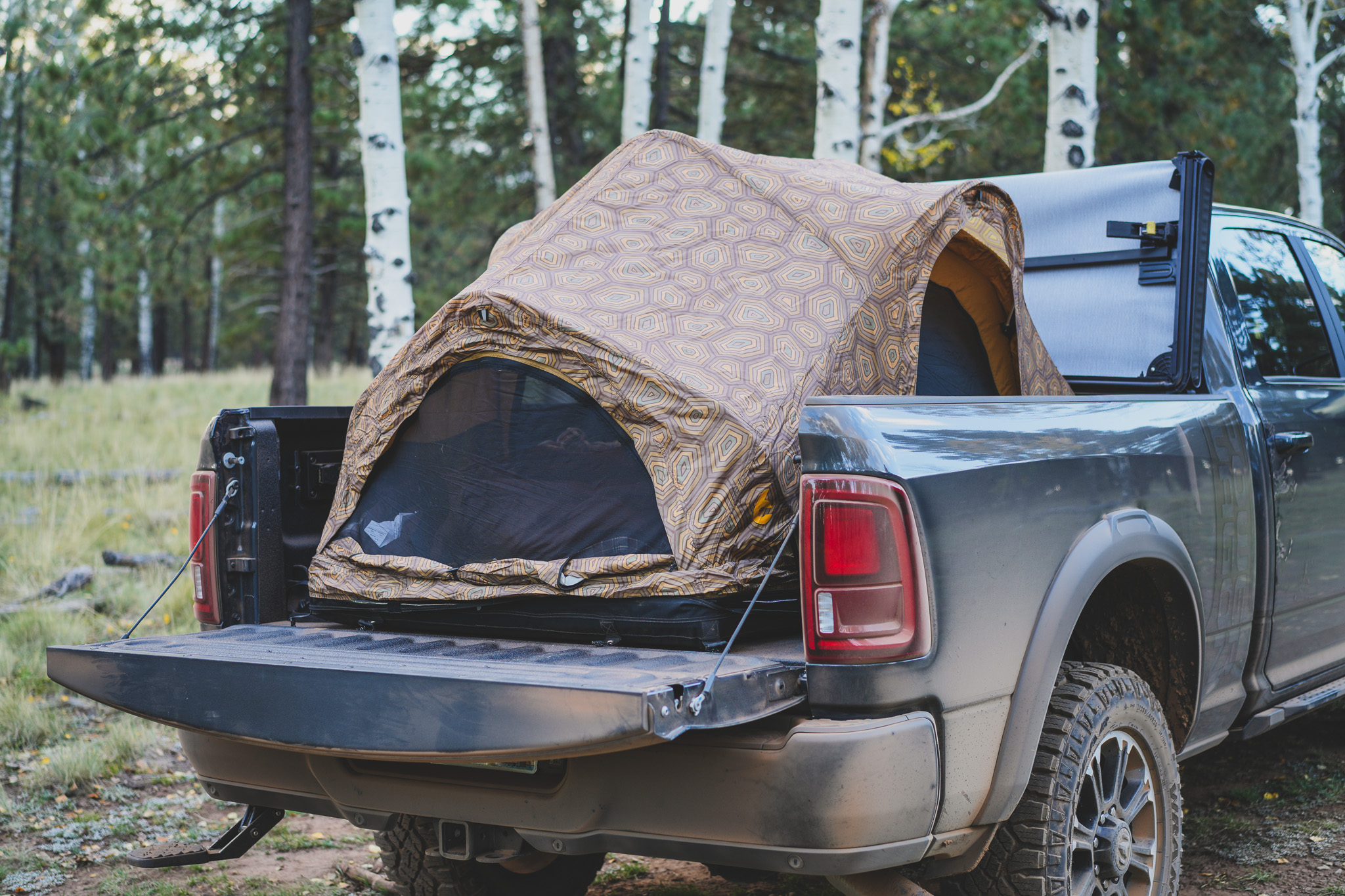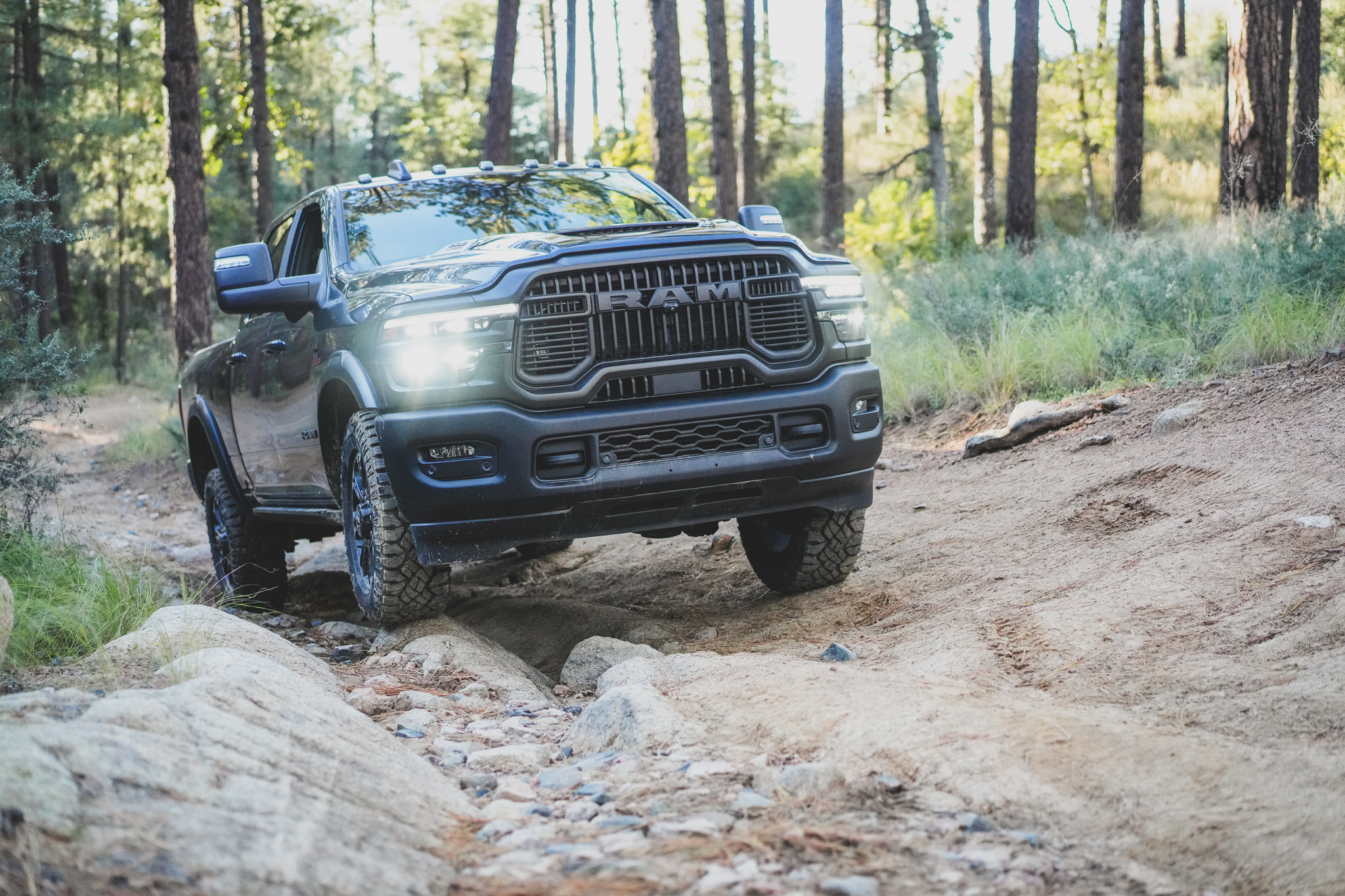

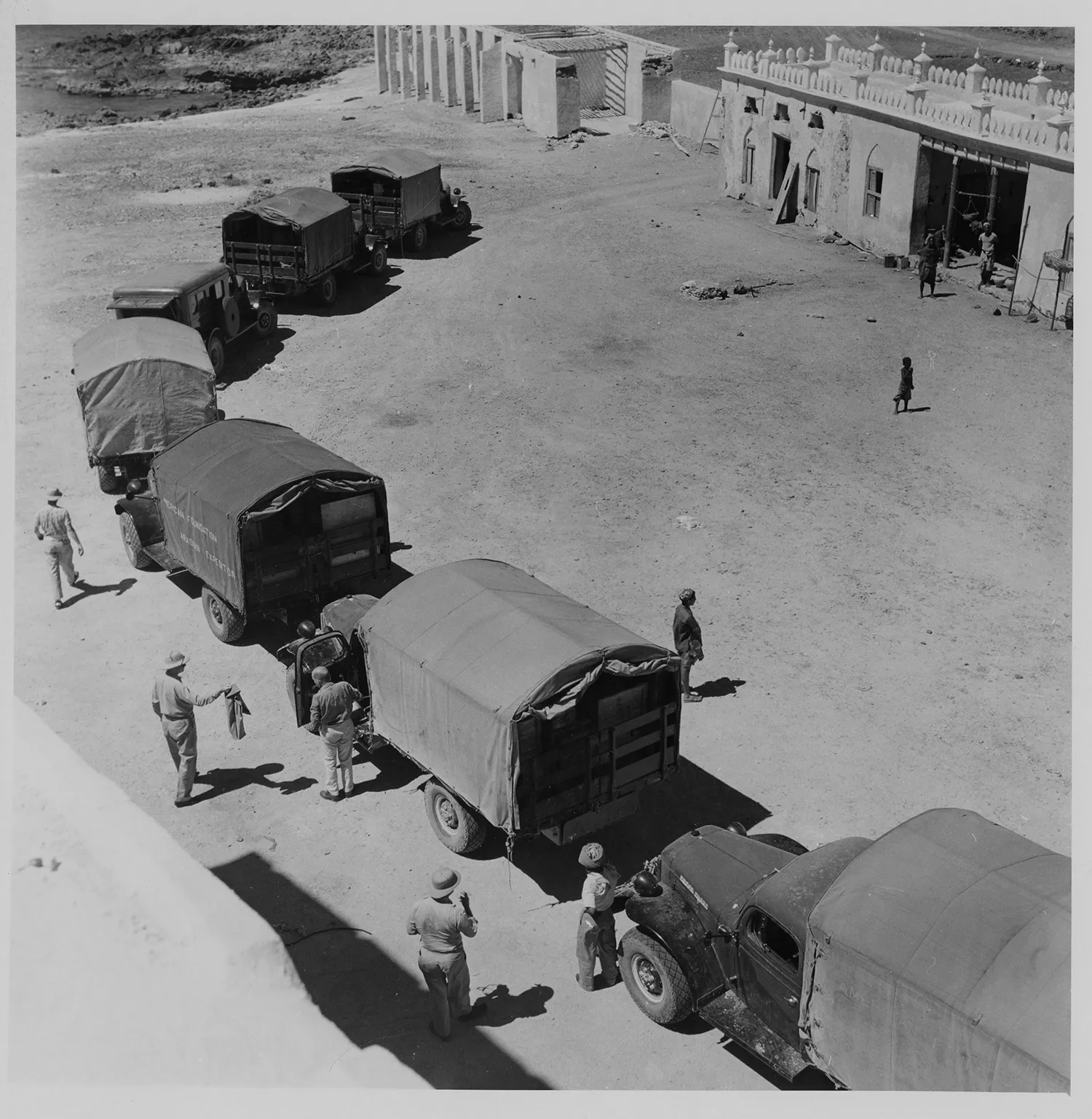
If there has ever been a full-size truck that best captures the needs of overlanders, it has been the Power Wagon. It was the confluence of capability, comfort, capacity, and durability, all on top of a heavy-duty chassis, solid axles, and posi-traction. The early Dodge units were also used for significant expeditions, most notably Wendell Phillips’ South Arabian Expedition (1950–52), where Chrysler President K. T. Keller donated over a dozen Power Wagons to explore and cross the 5,000-foot mountain ranges and dune fields to reach the Queen of Sheba sites at Marib. These were remote and technical routes without any of the modern conveniences of GPS or satellite imagery. The expedition transport chief, George Farrier, later reported “not a single problem with a Power Wagon the whole time.” Additional exploration occurred in the Empty Quarter of Saudi Arabia in the late 1960s, when several Power Wagons were employed for establishing remote oil sites.
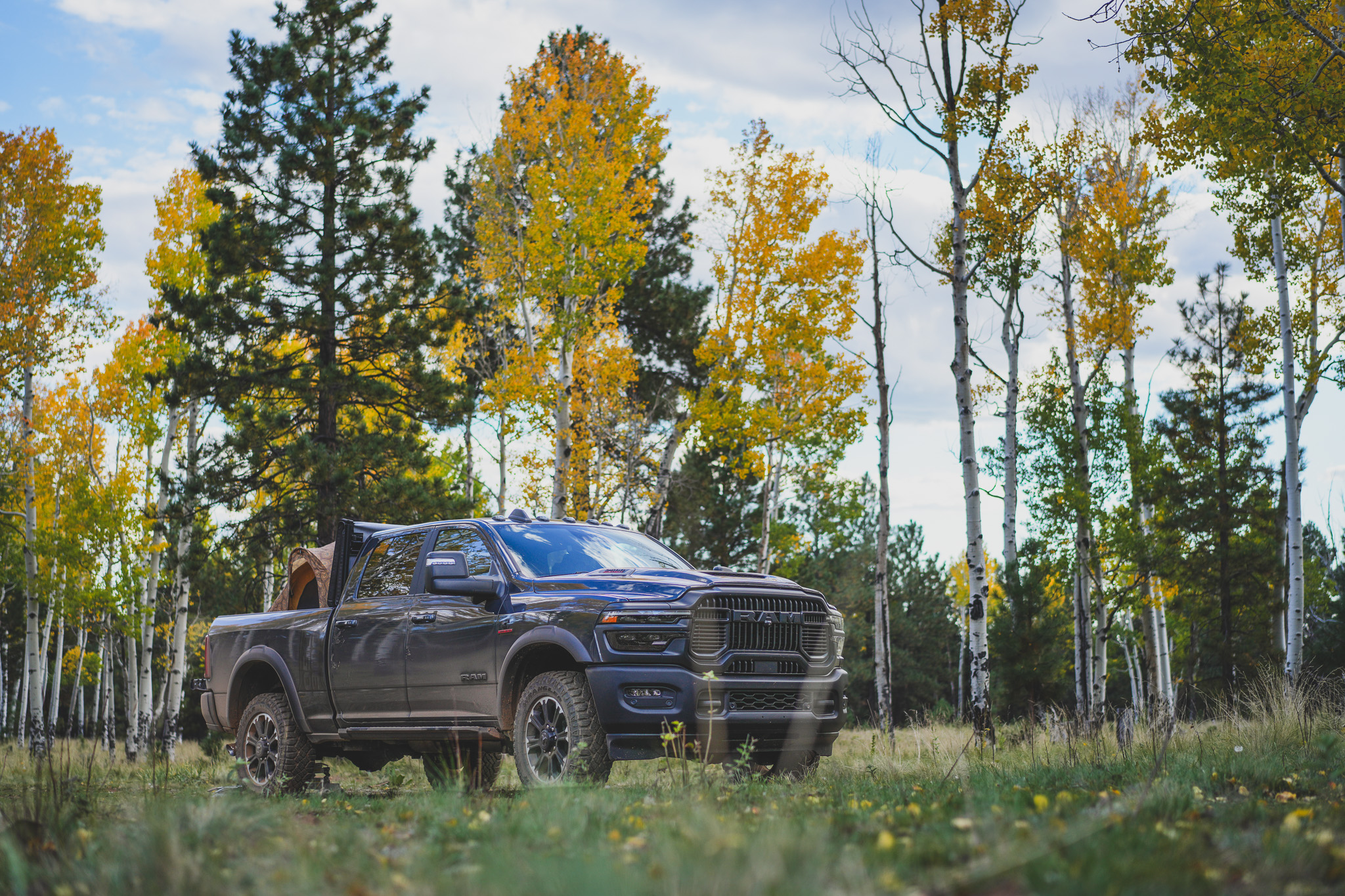
These trucks have always been workhorses, including running supplies in the early 1960s at McMurdo Station in Antarctica, fitted with 16.00×16 low-pressure tires to traverse the deep snow and glaciated terrain of the Ross Ice Shelf. This heritage continued with overlanders as they began fitting older models with campers and exploring further afield, and certainly in 2005 when Ram relaunched the Power Wagon with front and rear lockers, sway bar disconnect, and the factory 12,000-pound Warn winch. Unsurprisingly, it won Four Wheeler’s 2005 Pickup Truck of the Year. For 2027, the Power Wagon arrives with its most capable version yet, equipped with a 6.7-liter Cummins diesel, a 600-mile range, and the payload to outfit it with the entire AEV catalog and the backcountry camper of your choice.
On the Trail
While this might seem like the first diesel offered in a Power Wagon, the 1962 model came with an optional normally aspirated Perkins inline-six. Incredibly, the new 6.7-liter Cummins turbo-diesel makes just over four times the torque of that original offering, and it feels like it the first time you step on the “gas” pedal. To describe the torque as prodigious is an understatement, and I joked that any rain in the next county away would result in losing traction at the rear tires. It pulls hard from a stop through all eight of the gears, and I could hardly wipe the smile from my face.
The motor makes 430 horsepower and 1,075 pound-feet of torque, while achieving nearly 20 mpg if I could manage to keep my foot out of it. We all know the benefits of diesel, but it translates into so many other areas as well, like a range of nearly 1,000 kilometers and better torque and control in technical terrain. Impressively, the model includes a 2,400-watt inverter mounted in the bed, with auto high idle. I will admit to using it to make espresso every morning during the trip.
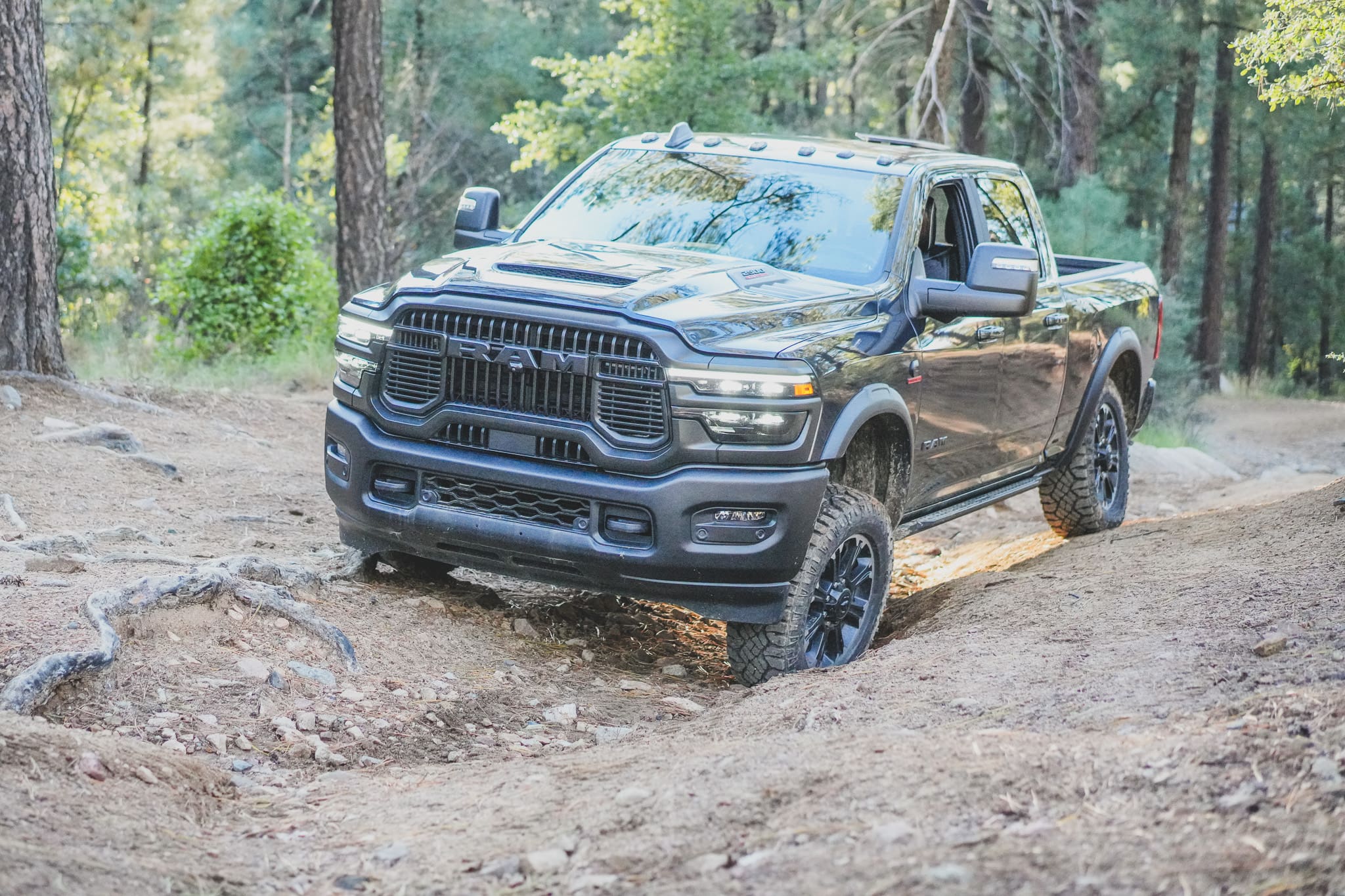
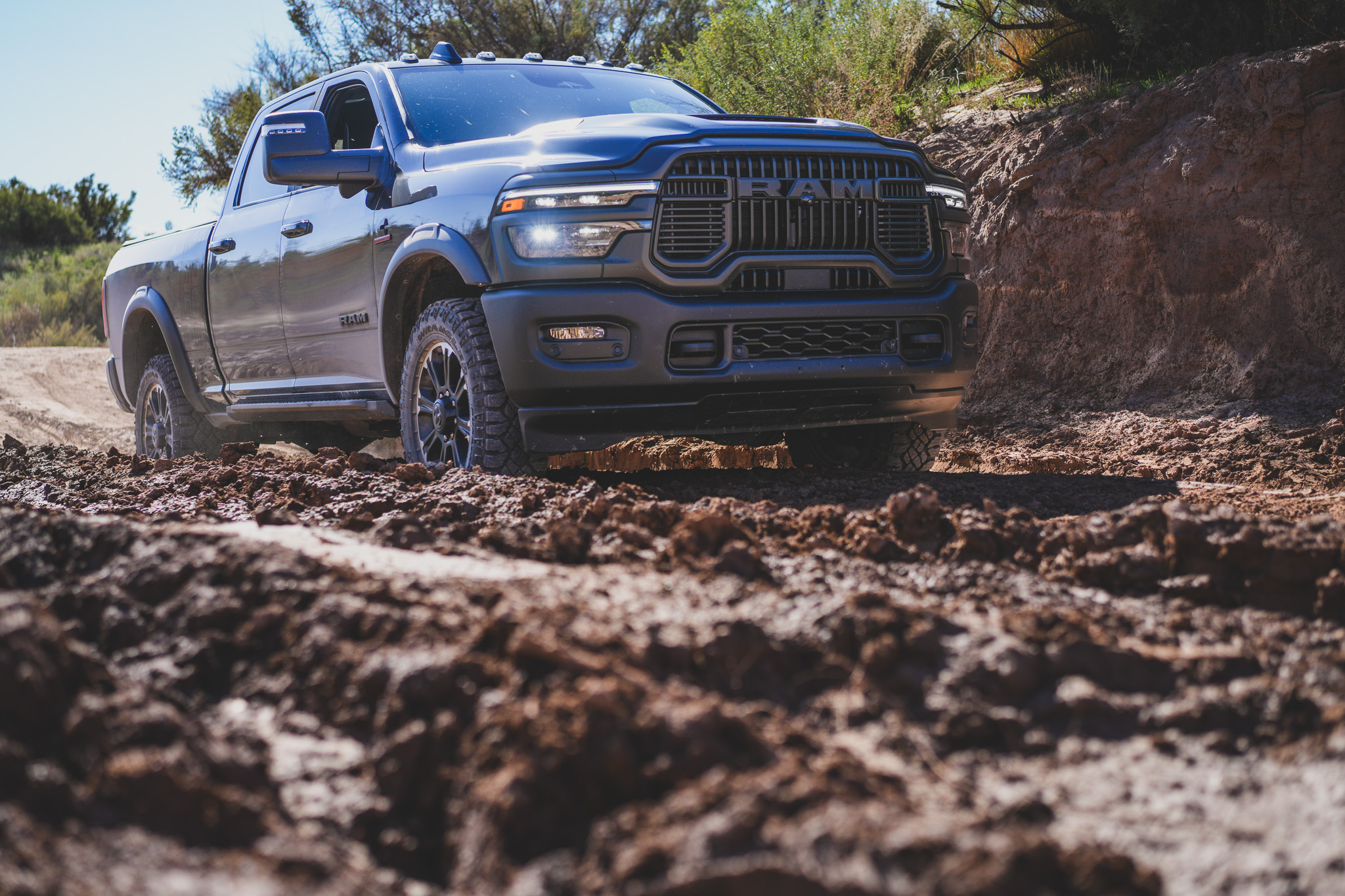
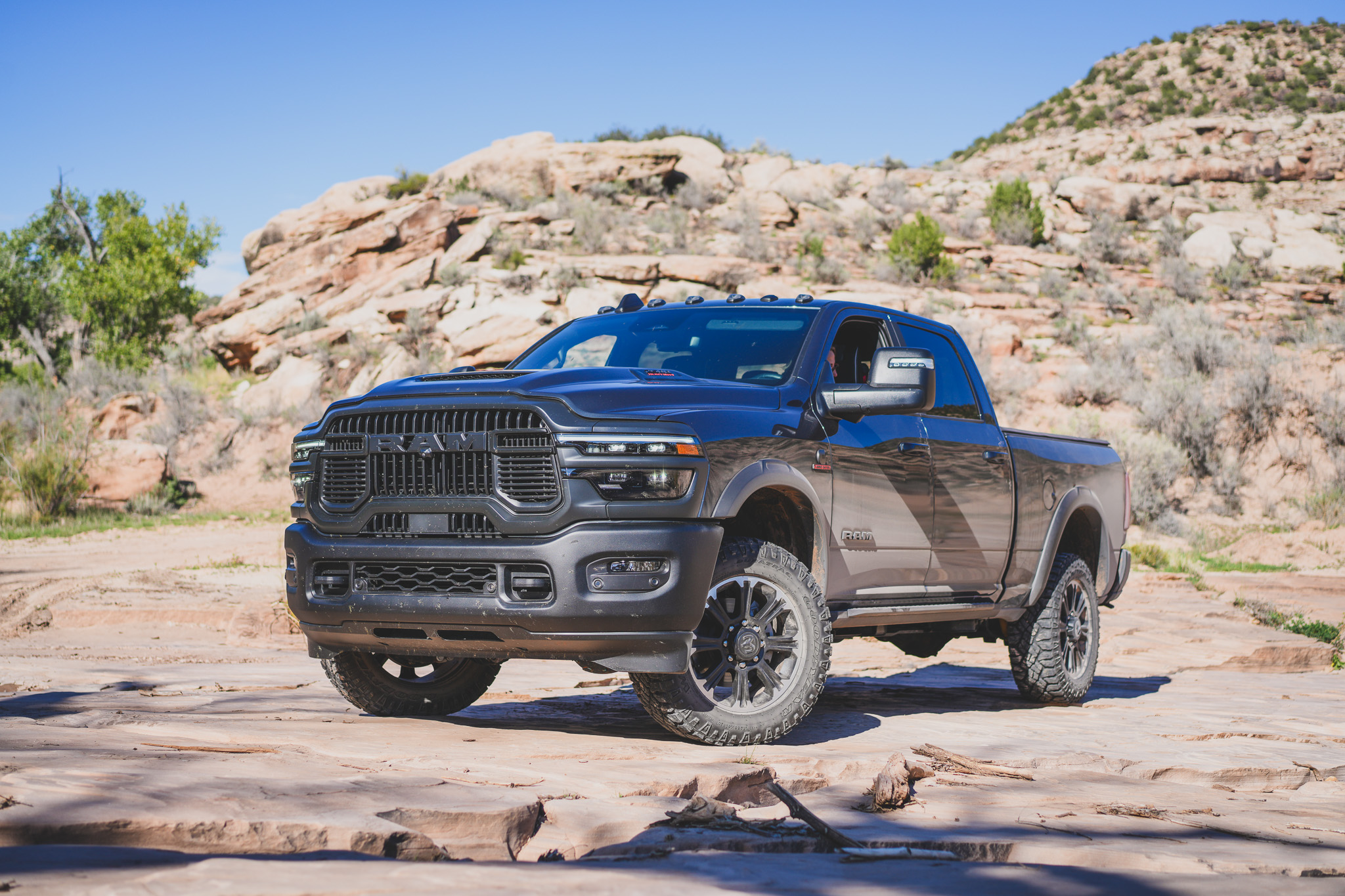
For our technical-terrain testing, I traveled to southern Utah during a 100-year flood (which seems to be happening a lot recently), where we traversed slickrock ledges, deep mud, and steep washouts. The truck never balked, and the Maxtrax stayed stowed in the back seat. In low range, the throttle modulation is excellent, particularly in the first third of the pedal travel. Throttle modulation always becomes a balancing act with a turbo, managing spool and available traction. This motor produces so much power that gentle pedal control is important to save the tires and the trail.
The diesel version uses a different front suspension architecture from the Hemi V8, shifting from a multilink to a radius arm. This is required to support the weight and power of the Cummins but does result in a small reduction in articulation. The compromise is worth it, and the sway bar disconnect remains, so cross-axle articulation is still excellent (all things considered). The disconnect also helps to reduce head toss and occupant fatigue, so I push that magic button every time I hit technical terrain.
Other benefits of the Power Wagon model include its rocker panel protection, which tucks tight against the quarter panel and acts as a minimalist step. There are additional skid plates for the diesel exhaust fluid (DEF) tank, fuel tank, and transfer case. Overall, the Power Wagon has capability to spare, really only limited by its dimensions. I was equally impressed by the ride quality of the truck, which approaches the best in the segment and is much less fatiguing to drive on the trail than most heavy-duty trucks. The rear multilink coil suspension is a big part of that, but it is also frequency-tuned to lumber comfortably through most conditions, especially if the front sway bar is disconnected.
Why 20-inch Wheels Are Problematic
The diesel Power Wagon has one fatal flaw: it is only available with a 20-inch wheel. Ram cites tow capacity as the reason, but if you run the calculations and even compare Ram’s existing lineup, it doesn’t hold water. Certainly, from a physics perspective, there is the argument for sway stability, but the SAE J2807 towing standard already tests for it, and sway control is more reliant on tire construction and pressure than a 2-inch difference in wheel diameter. The Ram 2500 Cummins HO in the Big Horn hits the 20,000-pound towing number with 18s and 20s. For the Power Wagon, a 20-inch wheel is the wrong fitment—full stop.
With the same 34-inch tire, dropping from a 20-inch to an 18-inch wheel increases sidewall height by 1 inch per side; the 20-inch wheel gives up more than 12% of that sidewall. The taller sidewall improves flotation and tire deformation by 6%–8% (patch length grows with the square root of deflection), while allowing for lower pressure ranges. At the limits of traction, that difference in tractive performance is significant. The 18-inch wheel also provides more deflection depth before a rock or sharp edge reaches the rim, and the larger 20-inch wheel sits closer to the ground with the same overall tire diameter, making it more susceptible to trail or finish damage. Fortunately, this issue isn’t a death knell, as the brake size allows for an 18-inch wheel, and likely a 17-inch with test fitment. Sell those 20s on Marketplace and replace them with a set from AEV.
Conclusion
Years ago, we defined the minimum requirements of an overland vehicle, which would include a 400-mile range, an 18-inch or smaller wheel, and a payload of at least 1,400 pounds. We went beyond that and defined the standards for a pinnacle overland vehicle, which would have a 600-mile (~1,000-kilometer) range, an 18-inch or smaller wheel, and a payload of at least 2,200 pounds (1 metric ton). Additional kudos are given for the diesel engine and locking differentials. Ram hits every mark with the exception of rim diameter, but thankfully the 18-inch size will still fit. This diesel Power Wagon is one of the few overland vehicles sold in the USA that hit every standard of a pinnacle overlander (with grace given because it will “fit” an 18-inch wheel), while also offering a diesel, dual locking differentials, and a front sway bar disconnect. The factory Warn winch is absent on the diesel model to retain cooling and towing performance, but there are many aftermarket bumpers that will allow the fitment of a 12 volt winch.
Ram took a big leap of faith offering the Power Wagon we have always wanted, so it comes with a challenge to our community. Since the 2005 model launched, overlanders have been begging for a diesel variant, and it is finally here. Like many of these special-edition vehicles, if we don’t communicate our appreciation (including with our wallets), manufacturers will stop offering them. So, if you have ever wanted a diesel Power Wagon, and you are in the market for a new full-size truck, at least consider buying one.
During the month I had the diesel Power Wagon, it reinforced its role as a multitool, being comfortable for daily driving, easily towing a boat, and then locking the differential on a challenging trail. I appreciated the deep well of capability this truck offers, giving me the confidence to explore our entire test track, even during heavy rains, across washouts, and over slick, rocky terrain. It is one of the most capable full-size trucks ever produced, while checking the boxes of substantial range and enough payload for a fully outfitted pop-up camper. Thanks, Ram. Christmas came early this year. ram.com
Specifications
2027 Ram 2500 Power Wagon Diesel: $89,560
Power
6.7L Cummins high-output turbo-diesel inline-six
430 hp at 2,800 rpm
1,075 lb-ft at 1,800 rpm
TorqueFlite HD 8AP1075 8-speed automatic transmission
31 gal fuel tank
Suspension and Drive
Part-time 4WD
BorgWarner 44-48 electronically shifted 2-speed transfer case
2.64:1 low-range gearing
3.42:1 axle gearing
42.5:1 calculated crawl ratio
AAM 9.25 in solid front axle with electronic locking differential
AAM 11.5 in solid rear axle with electronic locking differential
Three-link front suspension with coil springs and track bar
Five-link rear suspension with coil springs and track bar
Disconnecting front sway bar
Bilstein shock absorbers
Wheels and Tires
20 in Satin Black wheels
LT285/60R20 all-terrain tires
Recovery and Armor
DEF tank, fuel tank, and transfer case skid plates
Mopar rock rails
No factory-installed winch available on the diesel model
Electrical
220 amp alternator
Dual Group 65 starting batteries, 730 CCA each
2,400 W bed-mounted inverter with auto high idle
Dimensions and Capacities
149.3 in wheelbase
238.8 in overall length
83.4 in overall width
80.5 in overall height
76.3 in cargo-bed floor length
51 in between rear wheelhouses
57.5 cu ft cargo-bed volume
26.1 degrees approach angle
20.6 degrees breakover angle
26.0 degrees departure angle
2,930 lb maximum payload, configuration dependent (2,700 lb as tested)
19,630 lb maximum towing capacity, configuration dependent
Available Equipment
Automatic-leveling rear air suspension
Dual 220 amp alternators
Fifth-wheel/gooseneck preparation