

In an episode of the Overland Journal Podcast, Scott Brady and Matt Scott discuss various camping sleep systems for overlanding. Their review compares Australian-style swags, soft and hard-shell rooftop tents, interior vehicle sleeping, ground tents, and wedge camper solutions like Go Fast Campers and Ursa Minor. When selecting a setup, they emphasize evaluating comfort, setup speed, weather and privacy management, durability, cost, and vehicle impact, including roof load ratings, center of gravity, and fuel efficiency. Ultimately, they advise travelers to start with simple, budget-friendly options, prioritizing spending on the journey rather than expensive equipment. They encourage testing or borrowing gear when possible and choosing systems based on specific needs rather than appearance.
Overland Journal Podcast Episode #16
The Overland Journal Podcast is brought to you this week by Overland Journal Magazine
New to Overland Journal and want to grab a subscription! Visit Overland Journal and enter code: overlandpodcast at checkout for 20% off. We thank you for being a subscriber.
Examining Camping Options
Swags: The Traditional Yet Modern Choice
Matt introduced the swag, a staple in Australia, describing it as a “bear burrito.” A swag is essentially a compact, roll-up sleeping bag with tent features. While it offers simplicity and convenience, the swag does have limitations, particularly for those who sleep on their side or need additional privacy while camping in groups.
Swags provide a balance between ground tents and roof tents, offering good protection from elements and easy setup without attaching it permanently to your vehicle. For those willing to forego some luxuries, swags are an excellent budget-friendly option.
Roof Tents: Elevated Comfort
The discussion moved on to roof tents, exploring their benefits and considerations. Scott shared his preference for hard shell variants due to their ease of use and superior durability over soft shell models. Roof tents are championed for providing a secluded, comfortable sleeping area and their ability to set up quickly wherever your vehicle stops for the night.
However, one must be mindful of the weight these tents add to a vehicle and how it affects handling and fuel efficiency. Soft shell models often offer more space and can function as an awning, but they are less durable and more complex to pack away.
Sleeping Inside the Vehicle: Efficiency and Insulation
Scott mentioned his preference for setting up camp inside the vehicle itself. This option utilizes the vehicle’s own protection, insulation, and features to create a warm and secure sleeping environment. It requires consideration of factors like ventilation but offers unmatched convenience for frequent travelers who prioritize efficiency and mobility.
Ground Tents: The Traditional Approach
Ground tents often get overlooked in the face of modern camping gadgets, but they have their distinct set of advantages. Ground tents provide ample room for standing and moving around, a luxury in their own right. With countless variations available, they can be suitable for everyone, from the casual weekend adventurer to the seasoned explorer.
A significant advantage is their cost-effectiveness and ease of transport across different vehicles. For those conscious about budget, investing in a quality ground tent and accessories can stretch dollars further and provide versatility for various traveling types.
Habitat Tents: The Versatile Hybrid
The episode wrapped up with discussions about wedge campers or habitats, combining elements of both tents and camper vans. They provide enhanced living space while maintaining a compact setup that works with truck beds. Although slightly more expensive, habitats offer a balance of comfort and vehicle performance, making them suitable for long-term travelers seeking more space and utility without the heft of a full camper setup.
Host Bios:
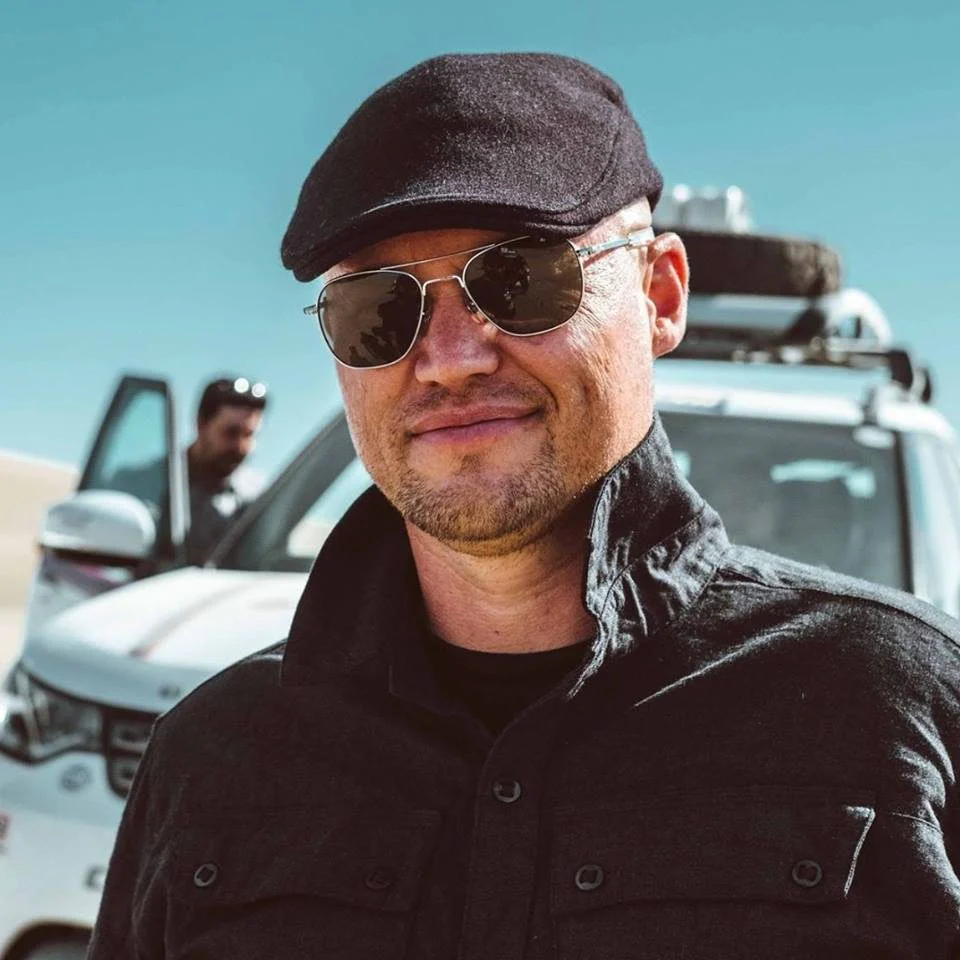
Scott Brady
Scott Brady is an adventurer, author, and publisher, and the first person in history to cross all seven continents. Brady is executive publisher of the Overland Collective, home to Overland Journal, the Overland Journal Podcast, and expeditionportal.com—the world’s largest vehicle-dependent adventure community. Scott wrote Overlanding 101 (Simon & Schuster) and is currently riding around the world on his BMW GS. He also led Expeditions 7, the first expedition to drive the same vehicle on all seven continents. Brady’s polar crossings include Antarctica and a south–north crossing of the Greenland ice sheet. Scott is a fellow of the Explorers Club and lives in Prescott, Arizona.
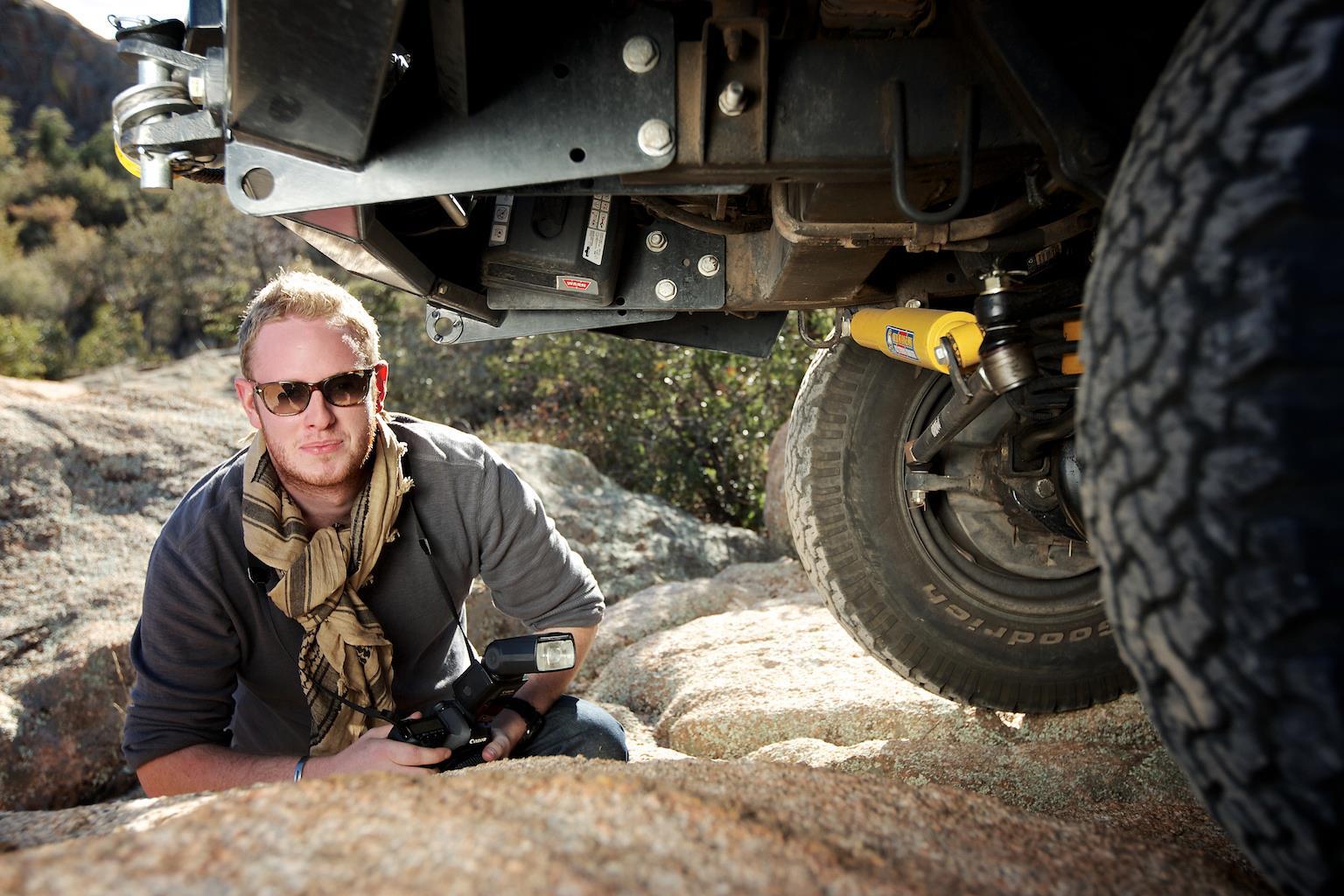
Matt Scott
Matt is a leading expert in automotive adventure. He has extensively explored the world’s most remote places by 4WD and is considered an industry authority on overland travel. He is the only American to ever become an editor of a major Australian 4WD publication and has over 15 years of competitive auto racing experience. @mattexplore
Tune in Apple Podcasts | Spotify | YouTube
Our No Compromise Clause: We do not accept advertorial content or allow advertising to influence our coverage, and our contributors are guaranteed editorial independence. Overland Collective may earn a small commission from affiliate links included in this article. We appreciate your support.
Transcript
[00:00:00] Hello and welcome to the OVERLAND JOURNAL podcast. I am your host, Scott Brady, and I am here with my cohost, Matt Scott, who’s called in because of the social separation that we’re all dealing with right now. How’s it going, Matt?
Matt Scott: Yeah, you know, it’s going pretty good, all things considered. Um, you know, just taking some time to, you know, sit back, relax, plan some adventures, and yeah, just do the right thing, do the responsible thing, and we’re trying to, I guess, just stay home and, um, let this thing pass.
Yeah, I’m in the same boat. I- I’ve moved the podcast system, all of my electronics that I need for, for my job, I’ve moved it all home, and, uh, we’re recording in this way because we think it’s important to continue to produce content. Uh, we’re getting some great feedback from everyone and we appreciate that, and we appreciate your support in listening to, uh, the topics that we discuss.
And of course, everybody that is in the overland community is on our mind right [00:01:00] now. Uh, many of us love being outside and exploring and traveling, and, and many of us are kept at home at the moment. We also have overland travelers, like for in Argentina, for example, who are locked in the borders. We know that there’s a large group of them that have kinda huddled together to get through this as a group, and we know that there are travelers throughout the world who, uh, were essentially stranded in those countries.
Uh, myself, personally, I was struggling to get out of South Africa after the- Yeah,
Matt Scott: you flew home, what, two
weeks early or something? I did. I did. And, and I, I was on my sixth travel itinerary by the time I finally got out of there. The day that I was supposed to fly out, South African Airlines shut down all international flights.
That was three and a half hours before my departure time. Uh, so while I was- Wow … while I was walking into the terminal and seeing all of the SAA customer service people were gone, they were… it was completely abandoned, I hopped onto the Delta app and I secured one of the [00:02:00] last remaining seats on the flight that went out that night.
So I, I do feel very fortunate to have been able to make that happen, so it was pretty challenging and, and I think that for me, that, that does add to the experience as a traveler. But I recognize that many people are separated from their families right now, or they’re in difficult situations, so our, our…
definitely our hearts go out to those folks.
Matt Scott: Yeah, it’s not an easy time and-
Yeah. We definitely- Um, here to talk
Matt Scott: about overlanding.
That’s right. We definitely don’t want to talk about this for too much, but we are also a prepared group. That’s one of the, the, the cool things that I’ve seen about overlanders is that- Totally
we are a prepared group. We’re used to being out in the field. We oftentimes have, uh, additional food and supplies, and ways of gathering food and, and making water and, and camping remotely. So we already have kind of a mindset of, of being a little more minimalist and a little more self-prepared. And so along that line, we’re actually gonna talk about camping in general with, uh, a- an emphasis on how do you [00:03:00] sleep at night?
How do you actually camp out and sleep at night? So we’re gonna talk about roof tents. We’re gonna talk about sleeping in the vehicle. We’re gonna talk about kind of a new class of pseudo camper, which is called a habitat. Uh, we’re also gonna talk about a ground tent, and then we’re also gonna discuss the swag, which is something that came out of Australia.
So maybe let’s start, start with the s- Something that
Matt Scott: I’m stoked about.
Yeah. Let’s, let’s start with the swag ’cause I think that’s an interesting thing to consider. So Matt, lead us off with that.
Matt Scott: Yeah. So basically a swag is a bear burrito. It’s something that you can crawl into inside of, and it’s like this nice canvas wrapping for, uh, animals to eat you in.
That’s a joke. Um, I guess that’s what some people call them. Um, you know, but a, but a swag, I, I always kinda describe them, um, as a roof tent for the ground. Now, the swags that have become popular are swags that have tent poles or, you know, they’re, they’re more tent-like than a, a traditional swag. Um, a traditional swag is literally just a bed roll, and we’re not talking [00:04:00] about those tonight.
I just spent a few nights in one of those in Africa, and I really don’t like them. Now, the swags that are more tent-like I do like. Personally, that’s my backup, I guess, is a swag. I love them because, you know, you roll them up. Think of a roof tent, right? And, and instead of having that traditional roof tent, soft shell roof tent, and instead of having that, you know, hard wood or metal base and folding over once, similar footprint in a way, but then they roll up.
And usually it’s kind of a, you know, some kind of, you know, rubber impregnated canvas bottom that runs up the sides maybe six inches. So they’re waterproof. They’re great in the rain. They’re, they’re just easy. Now, the thing that I really like about swags is that they, they’re kind of the- The most comfort you can get without having too many drawbacks on your vehicle.
I always approach roof tents with the idea, “Oh, yeah, I’m gonna take it off when I’m not gonna use it. That way the truck drives better, uh, around [00:05:00] town, the center of gravity is lower.” But you never end up doing that. You know, they realistically take two or three people to, to get down. Whereas swag, you know, you have similar levels of comfort.
You obviously are on the ground. But I, I like them. I mean, when I had a Ford Raptor, it was our, our sleeping system until we got that Go Fast Camper. And, uh, we would just throw it… When we were transporting it, we’d throw it in the bed of the truck, and when we were sleeping in it, we would just throw it in the bed of the truck with the tailgate down, and it worked pretty darn well.
Um, we had a Darche Dirty Dee, is what they call it. It’s about the size of a double bed width-wise, and, you know- Well, that’s really- … we, we loved the
thing. I- That’s really smart, Matt, to use it in a pickup and drop the tailgate. And because I’ve seen people set up traditional tents in a pickup bed, and that always looks awkward.
But I think a, a swag would actually work out pretty well, ’cause then you, you end up with that ease of setup, but then you’re also not on the rocks, and you’re not in the mud, and you’re not in the snow [00:06:00] or whatever that’s on the ground. You’re kind of, yeah, getting the best of both worlds. That’s an interesting idea.
Matt Scott: Yeah. It worked out really well. It meant for a very versatile vehicle. It also meant for a, a, a comfortable camping solution. Definitely better than, you know… It’s a step above a ground tent and a step below a, a roof tent. Some of the more name brand swags, um, I’ll use- Garsha, for an example, it’s actually their design, um, you know, has really easy-to-use poles.
I mean, the thing takes 30 seconds, if that, to set up. I mean, I know that there’s like these claim- these egregious claims that these tents are like, “We’re the ten-second tent. We’re the five-second tent. We’re the 60-second tent.” Yeah, they all, they’re all kind of still a pain. This thing literally you throw it out on the ground, you put two poles in it, you put another two poles lengthwise, and it’s, it’s good to go.
Yeah. Have you ever slept in one of them, Scott?
I, I had a few of them here at the office. So I used, I used them on occasion in Arizona and I- Oh, yeah,
Matt Scott: we had the ARB swags.
That’s right. Couple things that I’ve noticed about the swags is I sleep on [00:07:00] my side, and most of them don’t have a, a thick enough mattress to be comfortable for me on the ground.
Some of them do. Yeah. So like- That, that
Matt Scott: can be an issue …
the swag- I’m
Matt Scott: also a side
sleeper. Yeah. A, a Swagman that I’ve used had a little bit better mattress in it. It seems like it would lend itself really well to pulling out the foam mattresses that come with them and putting in an air mattress. I think that would make a lot of sense to me.
Matt Scott: I always thought that would’ve been a great idea.
Yeah. And then the, the other thing that I’ve noticed, particularly on the less expensive ones like you’re talking about, the, the kind of the ubiquitous Chinese models, is they never thought about the fact that you could be in the rain and need ventilation.
So you’ve gotta go to the- Yeah … the higher, the higher quality units to get these small little side vents that when the, when the swag is all zipped up, you still get some ventilation. Because the reality is, is it rains in the desert, which means it could g- it could be a warm, hot night, and you need some ventilation.
So most of these swags are [00:08:00] simply designed for the desert, and they kind of expect you to have the top unzipped and maybe the, the fly net or the, the bug net zipped up, but you’re getting some ventilation that way. So I think with the swag you have to make sure- That you get some cross ventilation if you have to zip it all up because of the rain.
Uh, the other thing that, that I noticed too is that you, you really are kind of inside this thing like a burrito. So if you wanna be able to stand up or even get on your knees to change or to… If you’re any- doing anything but kind of reading or sleeping-
Matt Scott: Yeah, it’s not happening …
um, it doesn’t really , it doesn’t really lend itself towards a lot of activities that may require more headroom.
So I think that that’s one thing that’s, that’s worth, that’s worth noting as well. And then the other thing is u- unless you’re… If you’re kind of in a campground or you’re in an area with more people, you don’t have any privacy really ’cause like, I mean, normally I’m out in the middle of the Australian desert.
No. I’m in the- It’s a place
Matt Scott: to sleep.
Yeah.
Matt Scott: Yeah.
I’m in the middle of the Australian desert, and I don’t care if I’m changing my underwear out, out with the kangaroos. But if you’re camping in groups or you’re in [00:09:00] groups, you have to recognize the fact that it’s a little more difficult if someone is concerned about privacy.
So that’s just another consideration as well. And they are a little bit bulkier than you’d expect, so they would be more bulky than a typical ground tent with sleeping bag and pad. A little bit more bulky than that, but they are very convenient. They’re super easy to set up. You can leave your, your sleeping bag in them.
Matt Scott: Yeah. So I guess that’s where we get into, get into the roof tent, right? Your compromise is that it’s essentially mounted to the vehicle. Front Runner makes those quick release mounts. Um, and I have to say, I don’t know why more people don’t use those. But Yeah. I mean, Scott, w- h- how do we transition into roof tents?
I mean, you’re not actually a huge roof tent guy.
I’m not. You’re,
Matt Scott: I mean, you’re a ground tent guy really.
Uh, well, I, I think even my preference more than that is to sleep inside the vehicle, and we’ll get to that in a little bit. And there’s, there’s some, there’s some reasons why I’ve ended up with that.
But I, I think for the roof tent it’s… Let’s talk about the benefits initially, is [00:10:00] you really have this comfortable place to retire at the end of the night, and th- they can be very dark so you can sleep in in the morning, which that could be a downside with typical ground tent. You’ve always got it all, on the vehicle so you can decide that like, “Hey, I’m, I’m doing a drive to California,” and you get a little tired, you can pull off on a dirt road, and it’s really easy just to, to pop it up.
I, I have found that in general, the hard shell tents are superior in almost every way to the soft shell tents, and the reason for that is ease of setup and ease of breakdown. I think people go into a roof tent with the misconception that they’re going to have ease of setup and stowing, and I have never experienced that.
No. I have never experienced that with a soft shell tent. Most of them today use a zipper for the cover, and those zippers when they’re brand new are a challenge. But once they get dirty- Oh, man … dirty and gummed up, and a little bit of use and abuse, they become very difficult to manage. Lots of extra straps.
So you can [00:11:00] actually spend 10 minutes putting away a roof tent. And if your vehicle is tall and you don’t have a ladder with you, or you’re not tall enough, or you don’t have a, a rock sliders to walk along… I mean, Jeeps are great for roof tents because it’s easy to transition from a rock slider to a tire to a rear bumper and all that, but not a lot of vehicles are that way, and these things are up way in the air, and I have seen more than a few- And the bags.
Yeah, they’re so… Oh. They can be very challenging. We have to remember that roof tents were originally designed for areas where Maybe extremely rocky terrain, muddy terrain where you don’t wanna set up a ground tent on the ground. They also are very popular in Africa for lots of reasons, ’cause there’s things that wanna eat you there.
So you can get up above- … above the black mamba snakes. You can get above the lions and the tigers and the bears, oh my, right? So that’s one of the reasons why people really like roof tents, and I think people in general love this idea of a tree fort, and it’s, that is kinda cool. It is neat to-
Matt Scott: It, [00:12:00] it is a really, it’s a cool tree fort.
I’ll, I’ll, I’ll take a differing point of view on this. I’ve had hard shell tents, I’ve had soft shell tents, I’ve had, you know, I have an AT Habitat now. I’ve had a Go Fast Camper. I mean, both Scott and I have had a lot of different things. We had a, we had a soft shell roof tent when we lived in Australia.
We had it mounted on top of a front runner rack on top of a, you know, lifted troop carrier, so it, it was very tall. So everything that Scott just said about, you know, being hard to, to put away, 100% accurate. We just ended up getting to the point, since it was a 70 series, we’d walk up on the hood and then up on the roof, and I, I’d actually have to be on top of the vehicle to, to effectively put this thing away.
And the bag that it goes in with the zipper horrible. Like, I mean, i- imagine a muddy day. All that mud and dust is getting thrown up everywhere on the vehicle, and you’re literally trying to scramble around this, this muddy, dirty truck to put… either to get ready to go to bed or after you have slept and you’re [00:13:00] all cleaned up, now you’re dirty again.
But I actually like them for longer, for longer trips. I think they do have more of a tree fort kind of feel to them. They, for two people or more, they are, they are way roomier. There’s days when you’re traveling where, “Oh, hey, this is a nice campsite. It’s by a beautiful river. Let’s hang out for a few days.”
And I, and I found that it was a nice space to kinda get away from everything and, um, especially w- with two people where you, you have to have some time to yourself. And, you know, Laura would go up and read a book or I’d read a book or you kinda had separate areas where I never felt that I wanted to be in the hard shell tent that we’ve had.
It, it was a place to sleep. It was very convenient to put up and to put down. But, you know, the, the soft shell tents have the benefit of most of them have a, what I call like a safari roof. They have that second layer of canvas that kinda takes that initial heat, uh, and UV and allows some airflow in between that and the main tent body.
I think they stay cooler. [00:14:00] You get a little bit of shelter underneath them. But they are, they are a pain to, to put away. So I guess it, it depends how you travel. If you’re traveling really long-term and you’re moving really slow and you don’t care taking the 10 to 15 minutes each morning to put the tent away, I, I think there’s some advantages to the soft shell tent.
Like, I really like… I would strongly consider one of the E-ZON, I wanna say Jazz. What, what are, what are the E-ZON-
Yeah, the
Matt Scott: Ja- … soft shell tents
named? Yeah, the Jazz is their lightest tent, and they’re also happens to be their least expensive as well. And then they-
Matt Scott: Yeah …
they have their traditional line, which, which is extremely popular as well.
And that’s, those are the tents that I have the most ti- time in. I probably have 200 nights in E-ZON soft shells- Yeah … in everything down to minus 57 degrees Fahrenheit. And they, they- Oh, yeah,
Matt Scott: you took one. That was your, your trip up north.
Yeah. That’s right, that’s right. And, and it’s amazing how much they endure.
Those, those tents never gave me the smallest bit [00:15:00] of problems, and they actually have a little bit of an advantage because the, the cover does not have a zipper. It has a- Oh … a ratchet sy- That’s why I brought that up It has a ratchet strap, which is way easier to stow. And you make a really good point about when you open up a r- a r- a soft shell roof tent, you end up with an im- improvised awning because of the way that it folds out.
So that’s, that’s a really good point, and you do end up with a lot more interior space. And there are options, like their Exclusive and, and others that Eze-On makes, where you can actually pull out an extension and then drop down these walls or affix these walls. That allows it to be a complete changing room, shower room.
So people who are, are maybe traveling a little slower or staying in camp sites for more than a couple days or more than a day, I, I think you’re right. I think that the soft shell does add a lot more value at that particular point. Again, th- this is really about- Yeah … understanding the pros and cons of each.
For me, the hard shell tent has a couple [00:16:00] distinct advantages for how I like to travel. It is extremely easy to set up. So, uh, for example, I did a trip a few years ago in the G-Class all the way down to Cabo San Lucas and back, camping almost every single night, most of the nights camping on the beach. And, uh, there was a couple latches, and you kind of give a little bit of a push up on the, on the upper shell- And then you’re good to go
and it, it’s set up immediately. And I didn’t even bring a ladder because the G-Wagon had a ladder affixed to the rear. So it was less than 15 seconds to set this thing up, which was pretty amazing. Now, the downside is it doesn’t have as much ventilation as the soft shell. It doesn’t have quite as much room as the soft shell.
Uh, it’s a little bit heavier than the soft shell as well, and quite a bit more expensive. So, um, in that regard, I did really appreciate the fact that it was so easy to use when I was camping almost every single night and moving all of the time. I think that the hard shells also endure long-term use a lot better because they’re in a hard shell, so they [00:17:00] handle the sun exposure and the UV degradation.
I see a lot of these soft shell tents, the covers just get really beat up from the sun, especially in Arizona.
Matt Scott: Yeah, real- And I think you brought up a point too with kind of ventilation. You know, if it, if it rains in a hard shell tent, you, you, you essentially have vertical walls. Now some of them, again like the Easy On Stealth and the Blade, they have the, you know, the little awning so you can at least have one window open.
Yeah, that helps. But you are going to lose a lot of airflow in these. Yeah, I like both. I, I see the advantages to, to the hard shell. I see the advantages to the soft shell. The other thing with the hard shell, and I’m not trying to be an anti hard shell guy, is the fact that, um, they take up a lot of room on a roof rack.
Sometimes I see what, what… You know, people will put an entire roof rack on a vehicle and then they’ll put a hard shell tent on top- Yeah, it doesn’t really make sense … when all they really needed was crossbars. Yeah, totally. Yeah. Seems like- And then they have an extra 100 pounds on their roof. But then you [00:18:00] really don’t have much storage.
Now with like the Alu-Cab, I wanna say they call it their Gen3 Expedition tent, they actually have some, some tracks on top. It’s, it’s like a, a, what do they call it? Diamond plate crosshatch finish- Yeah … on the, on there. So you can actually stand on it. You can put stuff on there. I think that that’s nice.
Yeah, really nice. But- Really nice tent. And then there’s now the, the iKamper Skycamp Mini.
Matt Scott: Yeah. I don’t have- Any experience with those? But I know you’ve, you’ve messed around with that product line.
I, I have, and, and we have a few of them for testing right now. In fact, for Overland Journal, we’re right in the middle of, of wrapping up a hard shell rooftop, uh, tent test.
And the iKamper Skycamp Mini, it takes up about the same footprint of a soft shell. It’s kind of a hybrid. So you open up the lid and it, and it pops up, and then you pull out this panel that extends the overall length. So it’s kind of a nice combination of the two, uh, but you do end up with lighter weight and less r- [00:19:00] less roof rack space.
If you really wanna have that, uh, for example, if you wanna have your sunroof and you really enjoy having a sunroof, it allows you to do that. Biggest thing about the roof tent in my mind is you’ve got to know what your vehicle’s roof load rating is. And every- we’ve talked about this in the payload podcast, but you’ve gotta know what your roof load rating is, and then you have to know the center of gravity.
So you have to be really mindful of that. A lot of these tents are heavier than the manufacturer’s rating for roof load, so that’s when you wanna start looking at if I really want a heavy hard shell roof tent, you might wanna buy a 200 series Land Cruiser ’cause that has 250 to 280 pounds, I don’t remember exactly, roof load rating.
Of course, the new Defender has, what, 370 pound dynamic roof load rating, so-
Matt Scott: Yeah, it’s crazy …
there are vehicles that have much higher roof load ratings that, uh, that lend themselves well to these heavier roof tents. So you really have to be mindful of the weight, um, up top.
Matt Scott: Yeah. Y- y- you gotta be careful on how you’re doing it.
Yeah, just go with the lightest weight tent you can. Go with a really lightweight tent, and [00:20:00] go with simple crossbars that keep the overall mass low. Uh, just be really mindful of that. You’ll notice it as soon as you get the tent up there. And then the other thing to consider with roof tents is the impact to fuel economy.
So we do need to always be aware of the fact that it’s gonna affect range. You may lose a mile and a half to two and a half miles per gallon, uh, with a roof tent on top of your vehicle. So those are all things to be aware of.
Matt Scott: Yeah. You know, I just looked into talking about, you know, dynamic and static roof capacities.
4Runner is a, you know, fairly ubiquitous overland vehicle in the US, has a roof load capacity of 120 pounds from what I’ve pulled up. An Alu-Cab roof tent, for example, is 194 pounds. That’s before you mount it. Um, so it is something that people do need to be a little bit more cognizant about. You know, I see people with 500 pounds on their roof by the time they do a tent, a rack, lights, solar panels, water, fuel, all this kind of stuff.
I would love to see that moose test done with [00:21:00] a roof tent on a- It’d be
a, be a
Matt Scott: quick- … on, on some of these cars …
be a quick test. Be a quick test.
Matt Scott: Yeah, it’d be really quick.
Yeah.
Matt Scott: So.
Yeah. It’s just something to be, it’s something to be aware of, to be mindful of. The roof tents are very, very beneficial in a lot of ways.
Just the whole story has to be considered when you make that purchase decision. So if you’re in Africa, I was just in A- Yeah … I was just in Africa, I was just in, in areas with the Big Five. I could hear lions waking me up in the morning when they roared, and I was really glad to be in a roof tent when that was happening, so y-
Matt Scott: So I was obviously just in Africa too, and Brad got the nice Alu-Cab roof tent and I got to sleep on the ground.
So, um, yeah, it’s nice to sleep on the roof, so.
Yeah. You know, he, he did a-
Matt Scott: Or sleep inside. I mean, that’s, that’s the big thing you’re on Which leads us to that, um- Oh, so I, that’s something that I’ve never actually done. Of all the vehicles I’ve built, I’ve never built a vehicle to sleep inside of, and, and I, and I really don’t know why.
It’s kind of the obvious- Solution. Well, I do know [00:22:00] why, ’cause I’m like 6’3″ and I don’t fit in most things. But if you do have the right vehicle, like Chris Cordes and his Excursion, for example, he has that thing set up to sleep inside with a heater and everything. He doesn’t even have to worry about a roof tent.
Those are… I think it’s a great option, and I wonder… I mean, I know why more people don’t do it, is the 4Runner maybe is just a little bit too short. The Jeep is just a little bit too short to really be comfortable long-term or for two people. Mm-hmm. Goose Gear makes such great options.
That can be the real challenge.
Um, you know, even me being 6’1″, I have to be mindful of the length of the vehicle. But all of the vehicles that I’ve bought in recent years, uh, that I’ve done this with all lend themselves well towards that. The G-Wagon, you just gotta roll the s- front seats forward a little bit, and I have a, a whole system that where the Front Runner drawers in the back, they match the height of the rear seats when they fold down.
And then I just stuff a couple Red Ox bags full of gear or whatever down into that hole between [00:23:00] the, the s- the front seat and, and the, the drawer system and the, and the seats. And then I just put up a quick air mattress and, and I’m, I’m sleeping easily. I probably have 200 nights or so in the Expedition 7 vehicles where we high-roofed Troopies, so that made a huge difference, a lot more room, and we could easily sleep two people inside those vehicles.
And w- I slept so many nights that way. And one of the real advantages of it is everything can stay set up. So the way that I had the, the Troopies configured, all of the gear was down below the bed surface in AT Overland drawer systems. And I had a sleeping pad set up and a sleeping bag, and I left it set up all the time.
So at the end of a long day of driving, I could s- just simply shut off the vehicle and crawl into the back. We also integrated in some Espar heaters into the vehicles, and we, we did some fancy wiring where we were able to… Without the engine running, the Espar diesel heaters would run, and then we would be able to turn on the, the [00:24:00] vent fan through the heater core of the dash, and we were able to keep the vehicles very warm, um, even in conditions like Antarctica.
So a very, very warm solution in any polar region and it, and it works out really well. So sleeping inside the vehicle for me, I think is very efficient. It takes advantage of all of the insulation that the car has. Think about modern vehicles and how much insulation they have. They’re totally weatherproof.
Yeah. They’re designed to- Yeah, they’re quiet … yeah. There are lots of challenges, though. So you’ve gotta deal with ventilation. So on the E7 trucks, we had these magnetic Bug nets that we would put on the metal that would allow us to crack the windows. Um, so you’ve gotta have some solution like that with a vehicle
Matt Scott: Yeah, I mean, there’s definitely considerations, but I think all of those, if you have the ability to do that, they all come at a, at, at a lesser compromise to the vehicle, how it drives, you know, and weight and everything that goes along with it than, than a roof tent or even a swag or, or a [00:25:00] lot of these things.
I mean- Yeah … if you get cold, and even if you don’t have an Espar or Webasto heater, you just turn the car on.
Yeah.
Matt Scott: You know? I don’t know how many times I’ve woken up shivering, and it would just be nice to Just to go to bed warm
Yeah
Matt Scott: And that’s easily done, you know, with this setup, so And you
have access, you have access to all of your charging ports, and you’re able to…
And you know, even when I was crossing Antarctica or crossing Greenland, we slept in the vehicles. Now it wasn’t ideal. We were literally sleeping in the passenger seats as the vehicles were bouncing off along over the- … over the surface. But, you know, way more nights I’ve spent sleeping inside a vehicle than in any form of a tent, just simply because it is a durable, completely weatherproof, much more insulated, sound-resistant, and more secure location to sleep.
If you’re traveling through Central America and it’s getting late in the day and you gotta rock up to a gas station, you can, you know, put over the- the screens over the windows so nobody can see [00:26:00] in, and next thing you know, you’re sleeping and you’re inside a locked vehicle, which I think allows you… And that, van people have been doing this forever.
It’s just a- a- a different kind
Matt Scott: of- Yeah, like the stealth camping thing has so many benefits. Um, you know, my buddy Brian Dorr of Exploring Elements is constantly ragging on about stealth camping, and in fact, but he has some- some really valid points. Like, you know, he’s doing a lot of adventure sport that puts him in places where maybe that is advantageous.
I don’t think there’s a huge advantage to stealth camping if you’re the kind of person that’s actively avoiding people. But I think for travelers that are going to be interacting and going to be in situations, I think stealth camping is essential. Like, uh, uh, the ability to not have to set up camp or anything, you know, as you said, you know, you’re transiting or- or whatever you may be doing, that’s- that becomes then the most ideal way of- of being able to sleep
in my opinion.
Uh, I- I think so, and I think, I think those that are listening, takeaway this concept, is make sure that your vehicle is capable [00:27:00] of being slept inside of, and then try it. Test it out, and then that way if you have a failure of your roof tent, like if it hits a branch and it gets destroyed, or you e- end up with a hole in your ground tent, or something gets stolen, or you need to do an impromptu sleeping situation…
I- I remember we were crossing Russia and we were at the River Aldan, and it was this crazy like Star Wars bar confluence of individuals where, I mean, there was bonfires, and people were shooting guns, and they were, they were very, very drunk. And- and it was nice to be able to just kinda like… Not that I was so much worried about personal security.
I was more worried about actually getting some sleep in this very cold, raining, crazy situation, and it was nice to be able to lock myself up in the vehicle and then turn on the- the fan and have the heater running, which gave some white noise. So I think those that are listening, just think about is it possible to set up your vehicle and configure it to sleep inside of?
It’s often much less expensive than any of the other solutions, and it does provide the [00:28:00] greatest amount of protection from the weather and otherwise, animals, et cetera, when you’re inside the vehicle.
Matt Scott: Yeah, it does. Should we move on to ground tents?
Yeah, let’s talk about ground tents because I think that they’re way underrated.
I think that people have dismissed, unfortunately, the ground tent when if you think about it, it’s the thing that’s probably been around the longest, and it’s had the most- Yeah … the most- And there’s some
Matt Scott: great ground tents out
there. Yeah, really, really good ones, and you can get them as durable and as canvassy and safari-looking as you want, or you can go ultra lightweight.
And o- one of the tents that I’ve loved sleeping in the most was Nemo Equipment for years made these air beam tents, and it was like the size of- Oh,
Matt Scott: those things are
great. Yeah, it was the size of a cantaloupe, and I just, I always kept it in the vehicle. In fact, I still have it in the Mercedes today because I always have it with me, and I also take it on the motorcycle trips.
It just stuffs easily into a pannier, and it has these air beams. And I’ve slept more nights than I can count in [00:29:00] the, in that tent with no failures, and it was very reasonable, and it’s lasted for well over a decade.
Matt Scott: Yeah, I mean, I, I have a Nemo tent that is your old Nemo tent. That I probably have 100 nights in.
Yeah.
Matt Scott: And you probably had 100 nights in. Yeah,
that’s
Matt Scott: right. Um, and I still have it to this day.
Yeah.
Matt Scott: Um, it’s actually really comfortable. Now, it’s a bit of a pain if it rains or whatever, but that’s what I started doing. When I, when I first started out overlanding and really getting into this, I didn’t have a lot of money.
I was, you know, 18 years old. I didn’t have this nice Nemo tent at the time. I had, you know, whatever, probably Walmart or, you know, sporting goods special kind of thing. And the nice thing is it allowed me to spend the money on travel, and I think that’s something that people fail to realize is they, they spend almost too much time and money optimizing their sleep setup when they can just get a ground tent, and they’re gonna be comfortable.
I mean, the camping pads these days, I mean, they’re, they’re multi-layer. Oh, yes. They’re insulated. They’re, they’re really great. You know, you can get those Nemo [00:30:00] pillows. They’re like a microfiber. They’re really nice, um, and they blow up with air, but they still have a little bit of memory foam in them. You know, and I know that the Nemo gear is expensive, but I think it’s, it’s essential.
It’s like one of those places that if you’re gonna do the ground tent thing, you have to get the right gear because you buy the cheap 20, $30, you know, sleeping pad, and then it has a hole in it, and it’s useless. You know, you buy the cheap tent, the pole breaks, it’s useless. The fabric, you know, a stitch, it rips.
They’re useless. You have to, you have to buy the good quality stuff. But still the best quality backpacking gear for a tent and a sleeping pad- What, I mean, what’s the most you could spend on that, Scott? I mean-
Yeah, way less than a
Matt Scott: hard shell rooftop Like, you could get very… Yeah, you could get very high quality stuff, full sleeping system out the door for $300 to $500.
For sure.
Matt Scott: Um, you know, the REI Skydome or whatever it is, just get that. I- i- think, think about how much you’re gonna use this stuff. If you are on a budget, um, well, we all are, if your budget doesn’t maybe al- [00:31:00] allow for it, I always say just get out. Like, go explore. Go see the world. You know, you can get a ground tent from Goodwill if you need it.
Yeah, and ground- So- … ground tents have a, a bunch of advantages. They have a lot of engineering behind them because they’re sold in such volume. There’s a lot of options to choose from, it from the colorway to the fact that most importantly you can stand up inside them. Some people just want to be able to- Yeah
stand up inside of a tent. Being able to l- retreat inside a tent like that is a real advantage, and you can easily move it from vehicle to vehicle. You don’t have it on the vehicle all the time, and you can grab it off of the shelf and easily stick it inside the car. And they are less expensive. You can buy a premium like Nemo or MSR, one of those premiums ground tents that you can use for backpacking and use for motorcycle trips and use for vehicle-based overlanding.
It can be used for all of that stuff, and it’s gonna cost you less than $700. So there are ways to, I think, optimize, uh, your budget using traditional camping equipment. [00:32:00] And part of the reason why traditional camping equipment is less expensive is because of the volume, because of the, the hundreds, if not thousands- Yeah
of, of units that they produce of these things, so that distributes that R&D cost over a much, uh, larger area. Now, the downside is oftentimes they’re, they can be fragile. So tents that are designed for backpacking or optimizing for weight, we don’t need to optimize for weight in the vehicle. So when you look for a tent, look for one that’s even positioned a bit as a car camping tent.
They’ll oftentimes be thicker. They’ll be… They’ll have better standing room. Um, they, they will be a little heavier.
Matt Scott: Yeah, I mean, I, I have a little… And I still have it to this day, I have a little Pelican case And that was from when I was testing, you know, new press cars and things like that, that had my stove, had my tent, had my sleeping bag, had everything I needed in it.
And it was maybe, you know, it, it was a, it was a decent sized case, but still something that could be checked on an airline if I was flying somewhere.
Yeah. Perfect.
Matt Scott: Like, that’s the great thing is, is I fly… I flew all over the world with this kit. It allowed me to just jump [00:33:00] on, do adventures with people, take a chance, go explore some stuff, and have all of my own stuff.
I was self-sufficient. You know, there are like the Oz tents too, which are a ground tent. They’re obviously more bulky. Realistically, you need like a roof rack or a truck bed to store them. But I actually, you know, you, you were mentioning Pacific Northwest. I, I camped a few nights in one of those, um, at the Northwest Overland Rally.
I had like randomly flown in. Um, ended up staying, uh, with Adventure Ready, had a few tents set up and had nice cots, and it was raining and it was miserable, but we were all hanging out inside of these Oz tents that had kind of been attached to each other, and that was really cool. Now, I wouldn’t wanna set those up every day.
Yeah.
Matt Scott: Um-
They’re really comfortable …
Matt Scott: but those things are… Yeah, they’re durable. They’re, they’re made from kind of a similar polycotton canvas, uh, as you would get from a roof tent. They’re pretty durable. I, I, I’ve actually broken one because I didn’t put it up right.
Yeah.
Matt Scott: Um,
but Yeah. I’ve, I’ve broken one.
I- But- Uh, most of the people that have them that I [00:34:00] know of have broken them either by not setting it up right because the way the hinges need to be deployed, or- Yeah … you get a gust of wind and those plastic joint, they can fail. So it’s good to have an extra joint or two with you. Um, not the joint that’s become popular in recent years, but the joint that goes inside the Oz tent, and, uh, that way you can repl-
that way you can repl- that way you can replace it easily in the field. So yeah, no, those are great. Yeah. And then should we talk a little bit about kind of the, the hybrid solution, the habitats?
Matt Scott: Yeah. I, I think we should start, you know, I, I, I call them wedge campers is what I think is, is the, is the catch-all term for them now.
You know, I think that the logical transition is like the Go Fast Camper. I think the Go Fast Camper is like a roof tent grafted onto a, to a truck bed. It’s still very utilitarian. It’s still very practical. It gives you a little bit more space. We, you know, they kind of have these panels that can come out.
You know, they’re relatively lightweight. They’re made in, they’re made in Bozeman, which is cool. [00:35:00] You know, nice guys. Graham over there is a cool dude. You know, but there are, there are some downsides. Like, that’s more of a … I, I consider the Go Fast more of a roof tent than I do a, a, a living conversion that, you know- Sure
if you’re, “This is actually Graham’s.” If I was to make a, a, like a little mini sailboat like I did out of my AT Summit, maybe I wouldn’t have started with the Go Fast. But I think that they are really nice. They’re a great starting point, and then you can kinda … You can go crazy with these wedge campers. I mean, you can get the 5010 system from Goose Gear that is…
I mean, how much are … Those things are they’re almost the price of a car.
Yeah, they’re real,
Matt Scott: they’re- Um, but they’re really cool …
they’re beautifully made-
Matt Scott: Um …
but very expensive, yeah. And they’re a total replacement- Yeah … so you remove the bed completely.
Matt Scott: Yeah. The, I mean, those are nice. I mean, what … You- you’ve slept in a few of these things.
I, I have. Um- In m- … w- what- In most of them. I, I do like them. I, I think the ones that I like uh, are, are the ones like the Go Fast or the AT Habitat where they’re as simple as [00:36:00] possible. Because otherwise I think you’re better off building a camper. You’re actually better off using a camper system where you can have all of those luxuries that come along with it.
I think the idea of- Yeah … letting it be the hybrid that it is and not overbuilding it, like, like what you’ve done with the Gladiator is a great example. You have some systems in there that make it more comfortable, like a heater, et cetera, but you kept the weight down. You, you didn’t, you didn’t overburden the vehicle with the weight of
It’s not designed to be a full camper. There are other solutions that I think are better for that. Yeah. But if you do, if you do keep it lightweight and simple, I think it is really beneficial. And then if you look at, like a company like Ursa Minor who makes a, a habitat system for the Jeep Wrangler, like, what a cool solution.
You end up with very ease, easy to set up. You can actually be inside the vehicle in bad weather and also sleep in this little elevated sleeping platform. Um, y- uh, we can see that one of the greatest testaments to that product is Dan Grech who t- who took it all the way around- Yeah … Africa. [00:37:00] And he really found it to be a good solution.
Now, by the end of it, he think, I think he wanted some more space, and he s- he could see the advantage of a van. But I think that something like that where you can end up with the performance of a Jeep Wrangler Rubicon with that kind of a sleeping system, that’s very cool, I think.
Matt Scott: It’s really cool. Yeah, yeah.
So that’s the Ursa Minor J30 if anybody wants to take a look at those. And I wanna say they just unveiled it for the JL as well. Mm. Both JK and JL. Obviously it has to be the unlimited. It’s not for the two-door, just the four-door. Yeah, there’s a lot of these pop-top things starting to come up. Yeah, I mean, I think we’re getting a little bit away from that, but there are, you know, if you’re looking at the roof tent game, I do think it, it warrants looking at one of these wedge campers, and I think that’s where the, the Go Fast is so attractive is let’s look really quick, Go Fast Campers I wanna say they’re, they’re 6 to $7,000.
Um, now I know they do have a pretty big, a pretty big wait list- [00:38:00] They do, yeah … um, because they are really popular. Yeah. So they make two different widths, but that’s, that’s where those things are nice is by the time you buy your bed rack for a Tacoma, and by the time you buy the roof tent, you’re not… step up into the habitat, which is a little bit more money and has insulation than-
Sure
Matt Scott: you know, maybe is something that’s worth putting a heater and whatever into. But then, then, then we’re getting away from roof tents, and we should get o- off that tangent, so.
Well, and I think that they are a good sol- Yeah … solution. They’re worth looking at. I think from my perspective in summary is, and we’ve talked about this so many times and, and it’s only because I have screwed up so many times in my life by spending more money on something or having more complexity than I needed that I can say this, but i- start with- Start with the- You and me both.
Start with the most simple solution possible and then go from there. I do think that if you’re just doing a couple weekends a year and you really want a roof tent, um, because you got maybe a family that… and you wanna have the sides and a s- and a shower enclosure and everything, there’s nothing [00:39:00] wrong with a soft shell because you don’t mind the time that it takes to set it up and take it down, and they tend to stay in a lot better condition when they’re not being heavily used.
I think if you’re setting up and you’re traveling every day, and you’re doing set up and tear down of, of camp, then sleeping inside the vehicle or having a hard shell is a great solution. Um, as is some of these habitat solutions. Definitely. I think if you, if you don’t know what vehicle you’re gonna be using, or you also like to go off of a motorcycle and you’re trying to keep things as s- as minimalist as possible, then a ground tent is a great solution as well.
I think if you live in the desert southwest, or you’re in Australia, or you’re in Southern Africa, then a swag is, is really a great solution. So I think the, the key is, and we’ll have all this stuff in the show notes, but the key is to go through these attributes of each one and just be really clear with yourself about what you need, not necessarily what maybe looks the coolest or, or presents a, a certain lifestyle that, that is important.
Yeah. Need- It’s, it’s really about what you need …
Matt Scott: needs versus wants.
That’s right.
Matt Scott: Yeah. [00:40:00] I guess my summary is fi- figure out what your budget is. Spend as much of that budget as you can on travel, and what’s left over, outfit your vehicle. You know, I, I started with a ground tent. I started with a really cheap ground tent with a really, really janky Land Rover Discovery-
and then had a nicer ground tent with a equally janky Jeep, but it got me out there- Yeah … and I think that’s the important thing. Just do what allows you to travel and what makes sense for you to travel. And I guess it echoes pretty much what Scott says, but there’s a… there are many, many solutions, and just because one of them may be better doesn’t mean that the one that is in your budget doesn’t get you out there and doesn’t work.
So I break it down into cost per night. I’m staying at the Aman right now even though I’m- You know, 60 nights in this thing. Um, you know, a, a roof tent is gonna be a Ritz-Carlton and then you can go, you can go down there. You have to use this stuff for it to make financial sense.
Yeah.
Matt Scott: So that’s the way I like to break it down.
And it’s just a funny, weird thing ’cause I’m a hotel snob, but break it down. Figure, figure [00:41:00] out what your cost per night is to stay in that thing. Is overlanding gonna be something that is a one-trip goal that you, you know, you wanna drive to Alaska? Well, figure out how many nights you’re actually gonna camp because you might wanna stay in some cities, and you might wanna stay at some lodges or some campgrounds.
And just look at your trips, look at how you travel, and then figure out a solution.
A- and, and don’t be afraid to borrow stuff. Ask… Start off with a ground tent. Ask somebody to borrow one and, and use it and, or rent a roof tent, uh, for a weekend and see how you like it. Those are great ways to, to determine what works best for you.
Set up a, a mock system of sleeping inside the vehicle and try it for a couple nights and see if you really like that, and then you end up honing in on what is the best solution for you. And despite all the advice that Matt and I give in these podcasts, everybody is different and they have different needs and, and expectations.
These are just the, the things that we’ve learned either through sleepless nights or unnecessary expense or, or, or even worse mis- Yeah … worse mistakes. [00:42:00] So yeah, I mean, I think, I think you get… Sometimes you end up, you know, on a motorcycle and the only solution on a motorcycle is, is a, uh, is a ground tent.
Matt Scott: Well, um, hopefully this provides you guys with some entertainment during the crisis that we’re having. Scott and I are gonna try and record, you know, more of these. We do apologize for, I, I guess a slight decrease in production value with having to do these on the phone, but we do, we do feel it is important to abide by what our country’s brightest medical minds are telling us to do.
Yep.
Matt Scott: Um-
Yeah. We thank you all for listening and it’s, it is something that is also enjoyable for Matt and I to do. Like we were talking before we started recording, this helps break the monotony of the day and talk about things that we’re passionate about. And we appreciate everyone’s support in listening and subscribing to the podcast and, and, uh, giving us feedback.
Matt Scott: Yeah, we’ve had a lot of people, I mean, at least I know myself and probably you too, Scott, reach out on Instagram.
Yep.
Matt Scott: Scott, you have a new Instagram handle now. I,
I
Matt Scott: do. You changed it, I wanna say, right?
I [00:43:00] did. I, I changed it. I have no idea w- why I decided on globaloverland. I think maybe it was just something in, in my long list of URLs.
But, uh, it’s now just scott.a.brady, uh, on Instagram, so it’s a little more personal.
Matt Scott: Yeah. And mine’s mattexplore. See my random ramblings on that. Um, yeah. Thanks for tuning in this week to the, uh, to the Overland Journal podcast. Hopefully you guys are doing well, and hopefully soon everybody’s out on the trail.
And we will talk to you all next time.