

When I was six years old, I proudly led my entire grade on the walk from Parkhurst Primary School in Johannesburg to my house, which was adjacent to the corner of the rugby field. There, I beamed proudly as I gave the children a tour of my family’s brand-new caravan; it was 1979, and this five-sleeper was the top of the range.
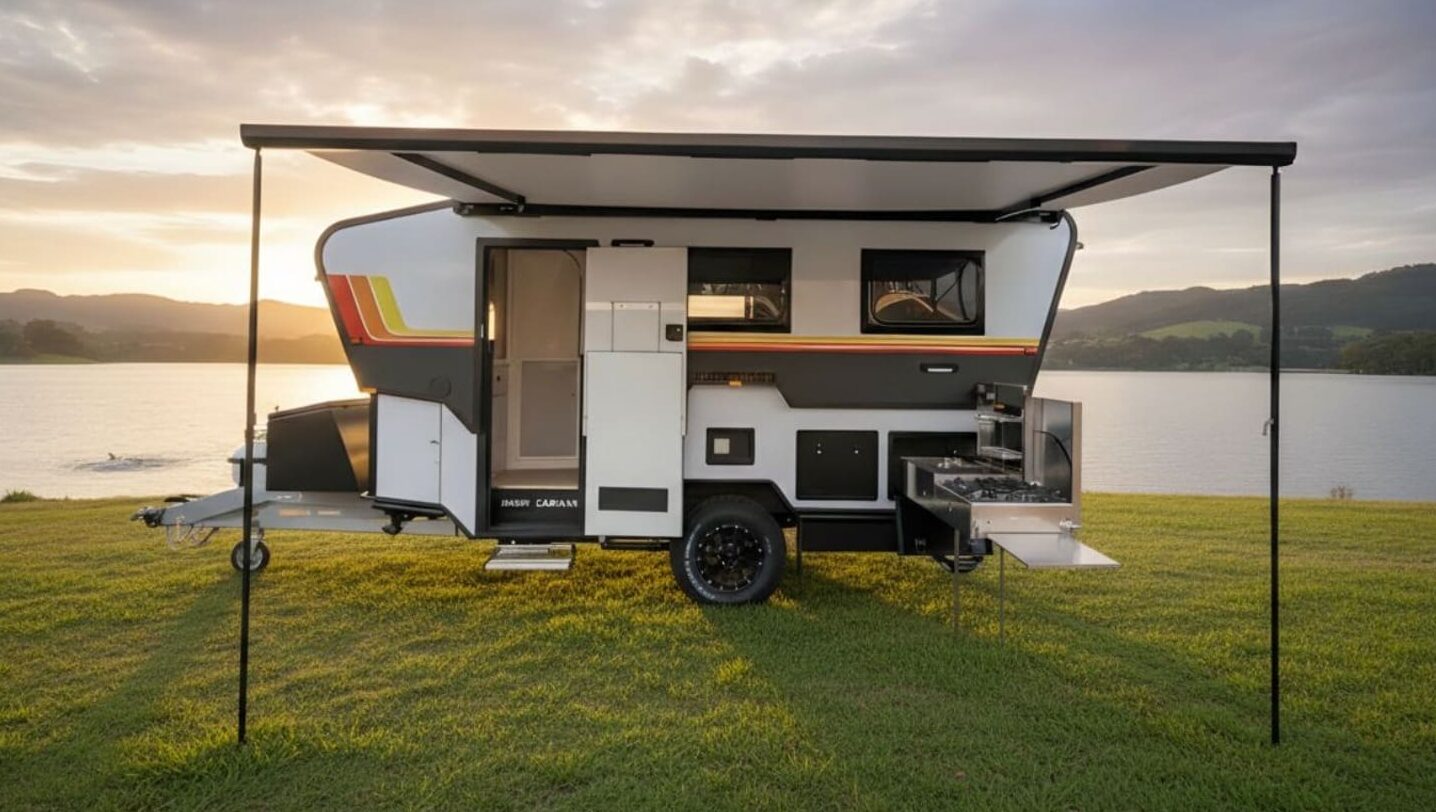
A month later, I would soil my shorts as I stood in the doorway of that same caravan, begging my mom—who was mad at my dad (he regularly won the Caravan Club of South Africa’s Bad Egg Award, category: Worst Husband)—to take me to the poorly lit ablution block. Top of the range though that Jurgens caravan might have been, a bathroom was obviously not a priority back in the late ’70s. Times have changed, and clever, practical use of space now defines modern caravans, including evolutions such as the Low Tow—a telescopic travel trailer that blends retro design principles with contemporary off-road capability and off-grid technology. Australian manufacturer Prattline RV has revived one of its most distinctive legacy products, originally introduced in the mid-20th century. The Low Tow concept has been re-engineered to meet current expectations for comfort, durability, and ease of use.

At the core of the Low Tow’s appeal is its telescopic hard-sided construction. The trailer utilizes a two-shell design, with the upper section nesting over the lower body during transit. This configuration lowers the center of gravity and reduces aerodynamic drag while towing. Once at camp, an electric actuator system raises the roof at the push of a button, transforming the trailer into a full-height living space with standing room of approximately 6.3 feet.
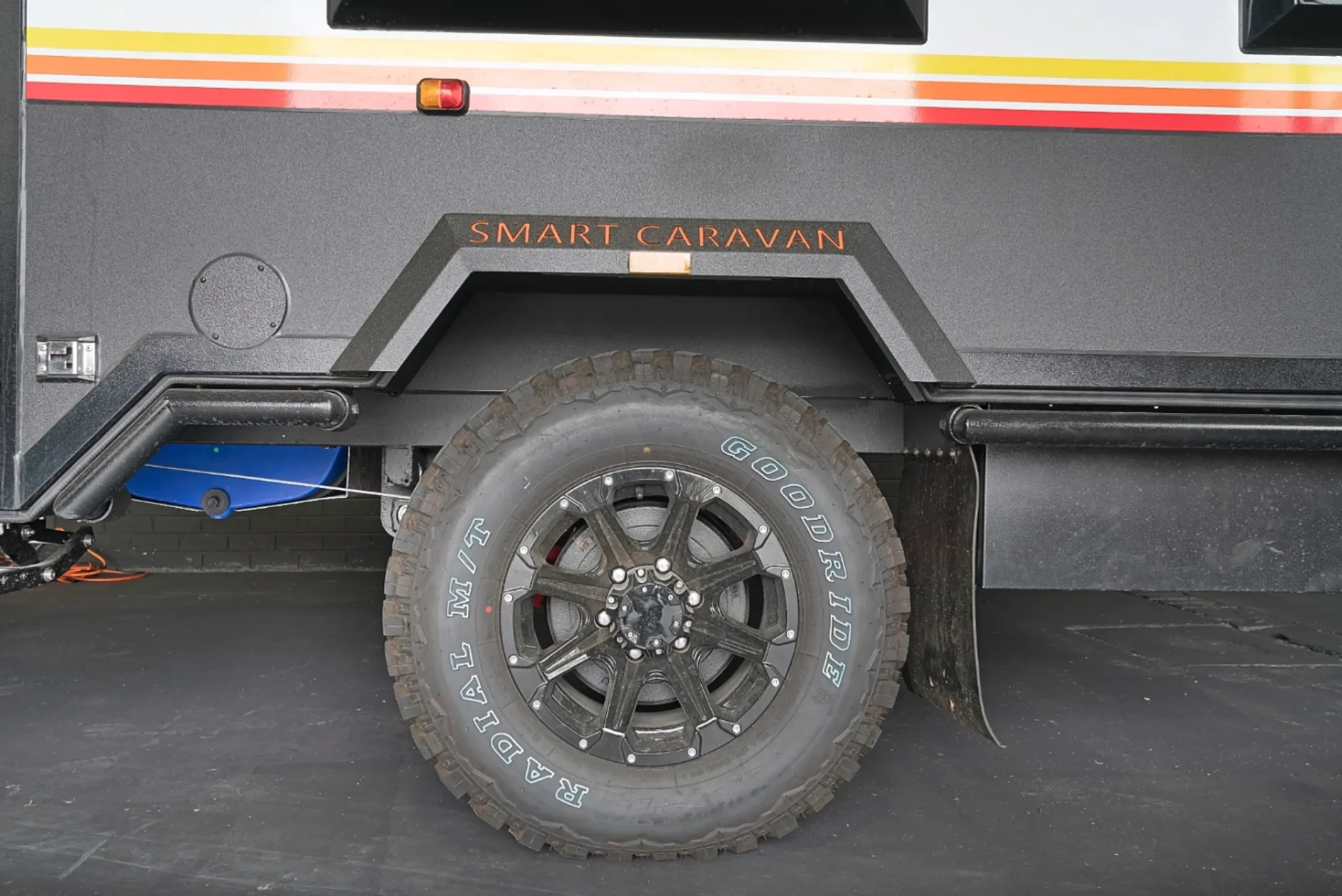
The new Low Tow has also been developed with mild off-road use in mind. Built on a galvanized steel chassis, the trailer features an independent coil suspension, dual shocks, and 16-inch wheels fitted with mud-terrain tires. This rugged underpinnings package positions the trailer closer to Australian-style off-road caravans than traditional highway-oriented campers. Ground clearance and durability appear to have been prioritized, suggesting that the Low Tow is intended for remote travel rather than campground-only use.
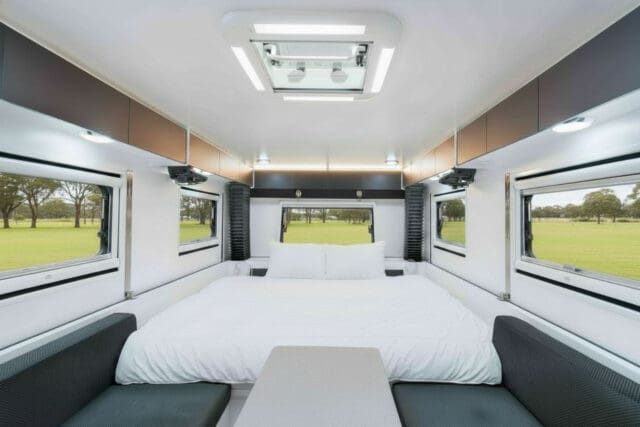
Despite its relatively compact travel profile, the interior expands into a surprisingly functional living space. The layout centers around a permanent island bed, complemented by a convertible dinette that can serve as a secondary sleeping area. This arrangement allows the trailer to accommodate couples or small families without requiring daily bed conversions.
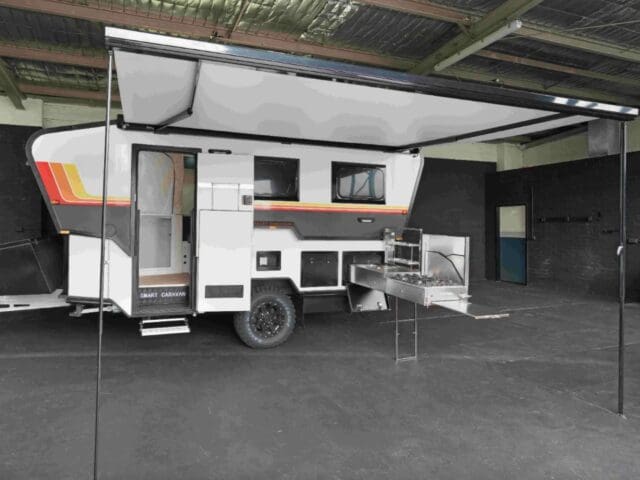
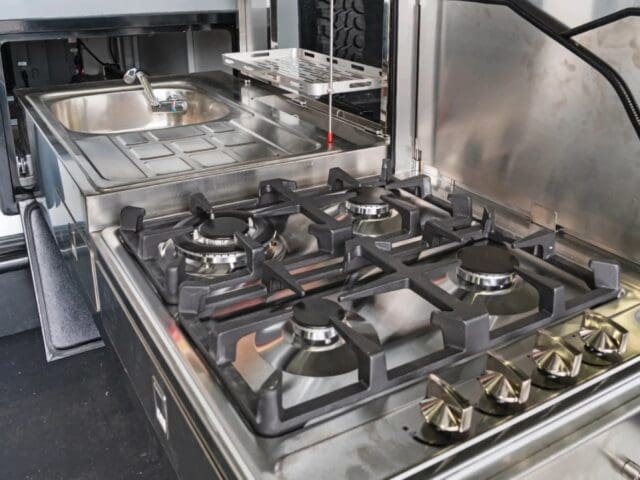
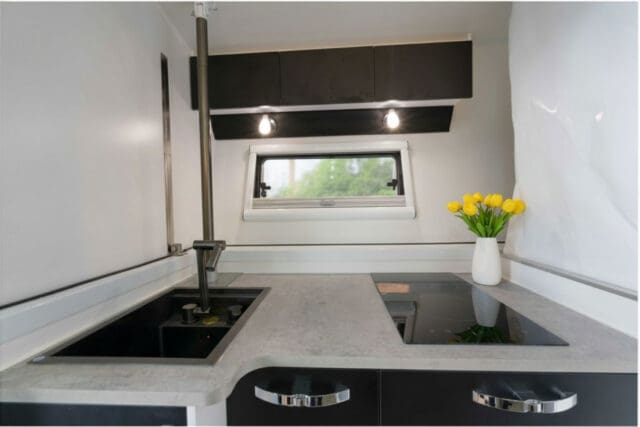
The kitchen setup reflects a dual-environment approach. An exterior slide-out galley includes a four-burner gas stove, sink, and expandable workspace, catering to outdoor cooking preferences common among overlanders. Inside, a secondary kitchen features an induction cooktop, sink, and compressor fridge, offering flexibility in poor weather conditions.
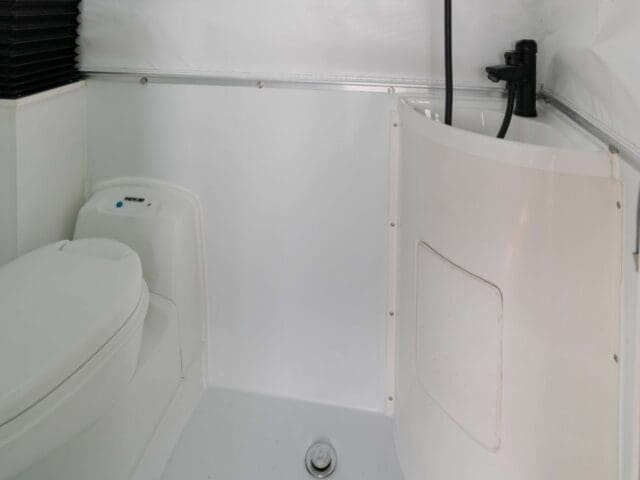
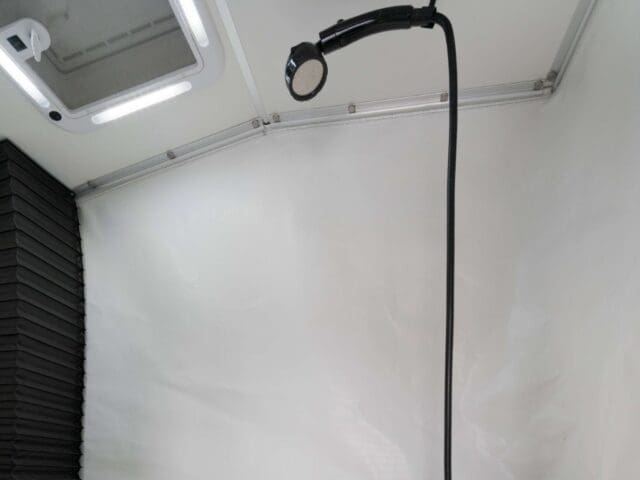
One of the more notable design compromises appears in the bathroom configuration, which little Graeme would have killed for. The inclusion of a fully integrated bathroom with cassette toilet and ensuite basin—along with water storage and an outdoor shower—places the Low Tow firmly within the category of self-contained touring caravans. To accommodate the telescopic structure, the wet bath incorporates a collapsible fabric upper section rather than rigid walls. While this allows the roof to fully retract, it may raise questions about long-term durability and insulation compared to conventional solid-wall bathrooms.
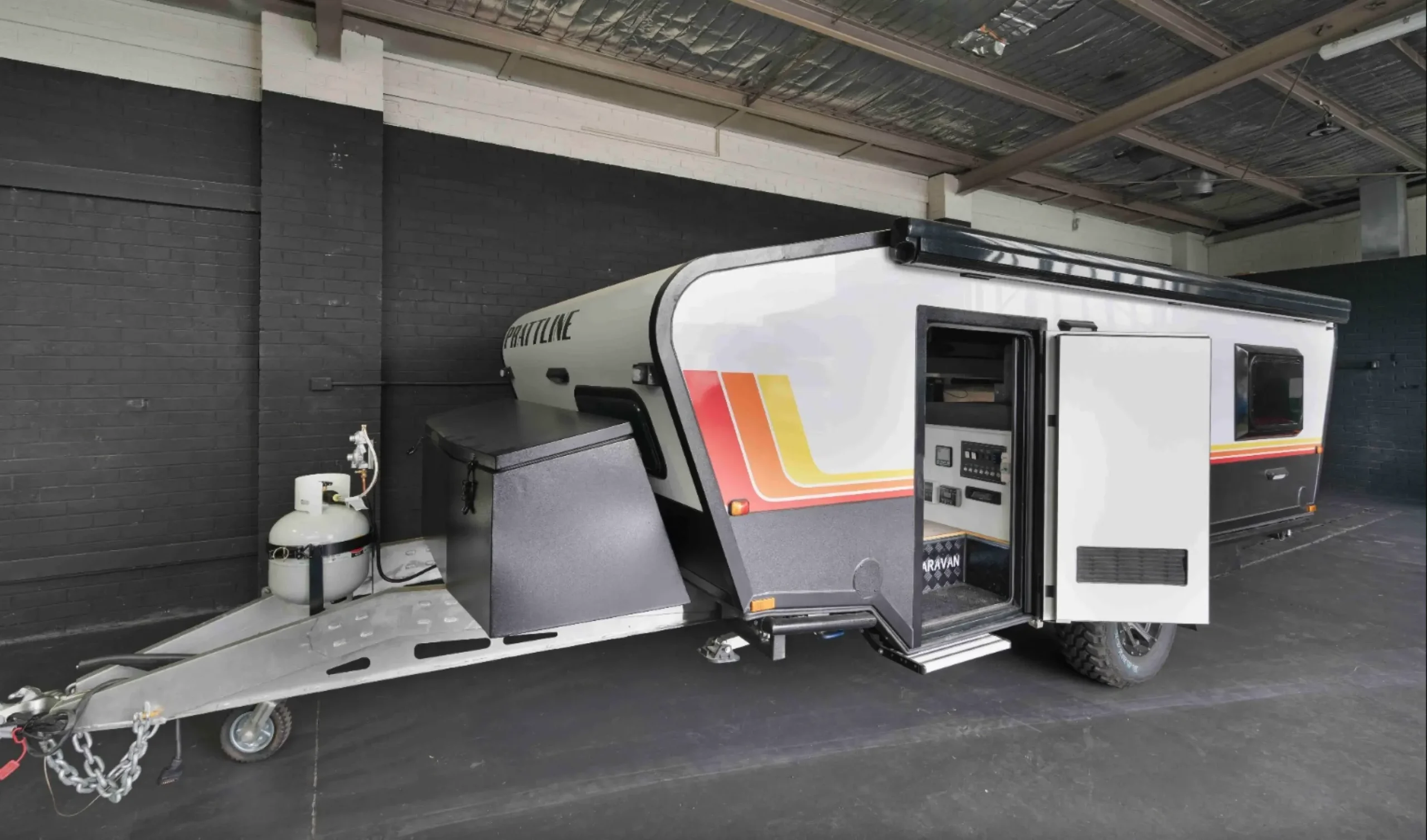
Power and off-grid capability are central to the Low Tow’s design brief. The prototype specification includes a substantial lithium battery system paired with solar input and an inverter, enabling extended аutonomous use. Additional amenities such as air conditioning, heating, and onboard entertainment systems suggest that the trailer is aimed at travelers seeking a balance between remote capability and modern comfort.
From a design perspective, the Low Tow retains its distinctive curved profile, a nod to earlier models, while also contributing to improved aerodynamics and interior volume. The updated construction incorporates modern materials, including fiberglass bodywork and a rot-resistant floor structure, addressing durability concerns associated with older caravans.
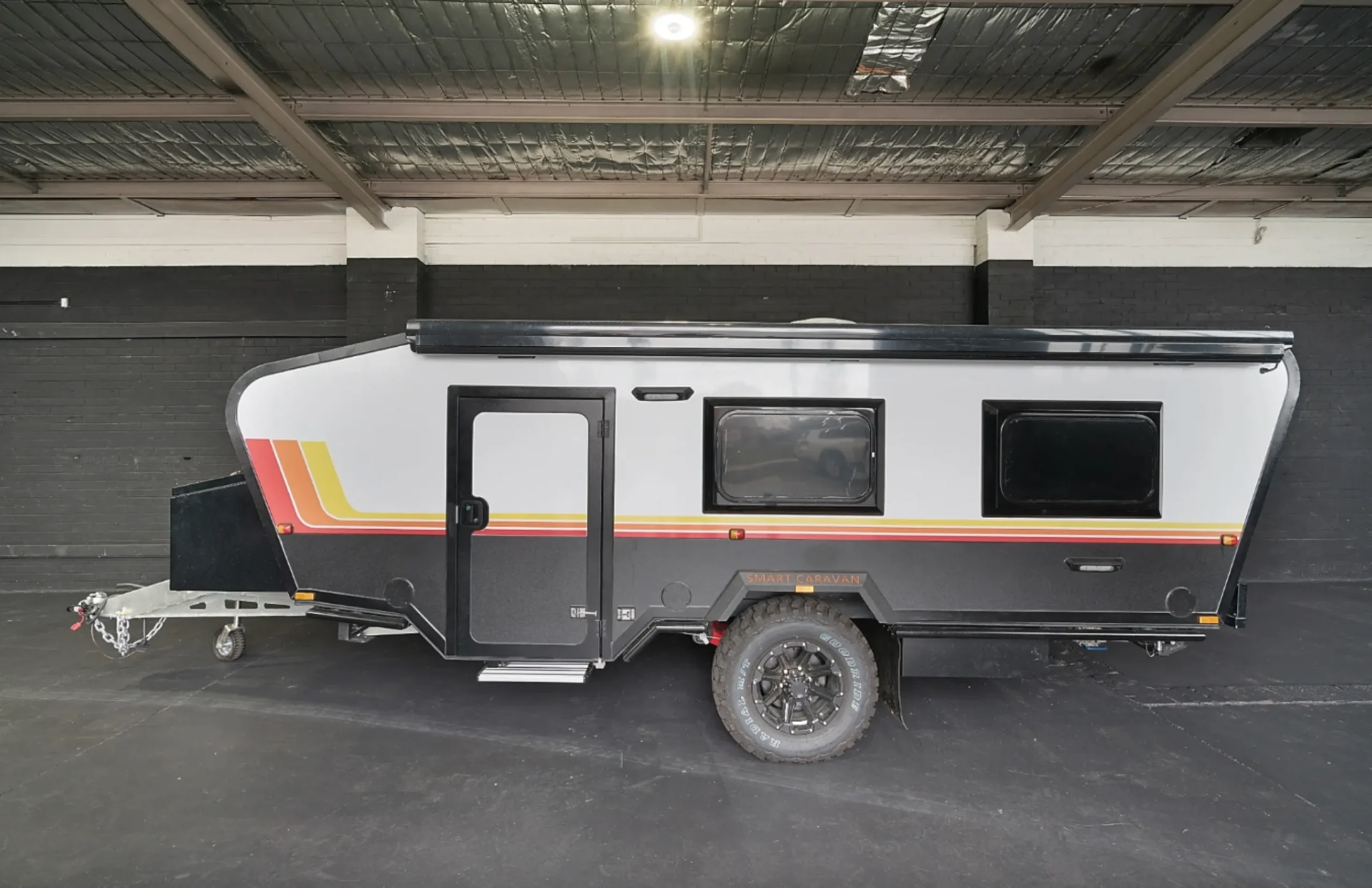
Pricing for the Low Tow prototype has been indicated at approximately AU$79,990 (around 55,000 USD), positioning it within the mid-to-premium segment of the off-road caravan market. While still in pre-production, the model has been showcased at Australian RV events, with the company signaling potential expansion into international markets in the future.
The only drawback of the Low Tow is that it is not designed for a family of five, but rather to accommodate a couple and perhaps a pair of small ankle biters—also known as children.
Read More: Overland News of the Week
Our No Compromise Clause: We do not accept advertorial content or allow advertising to influence our coverage, and our contributors are guaranteed editorial independence. Overland International may earn a small commission from affiliate links included in this article. We appreciate your support.
