

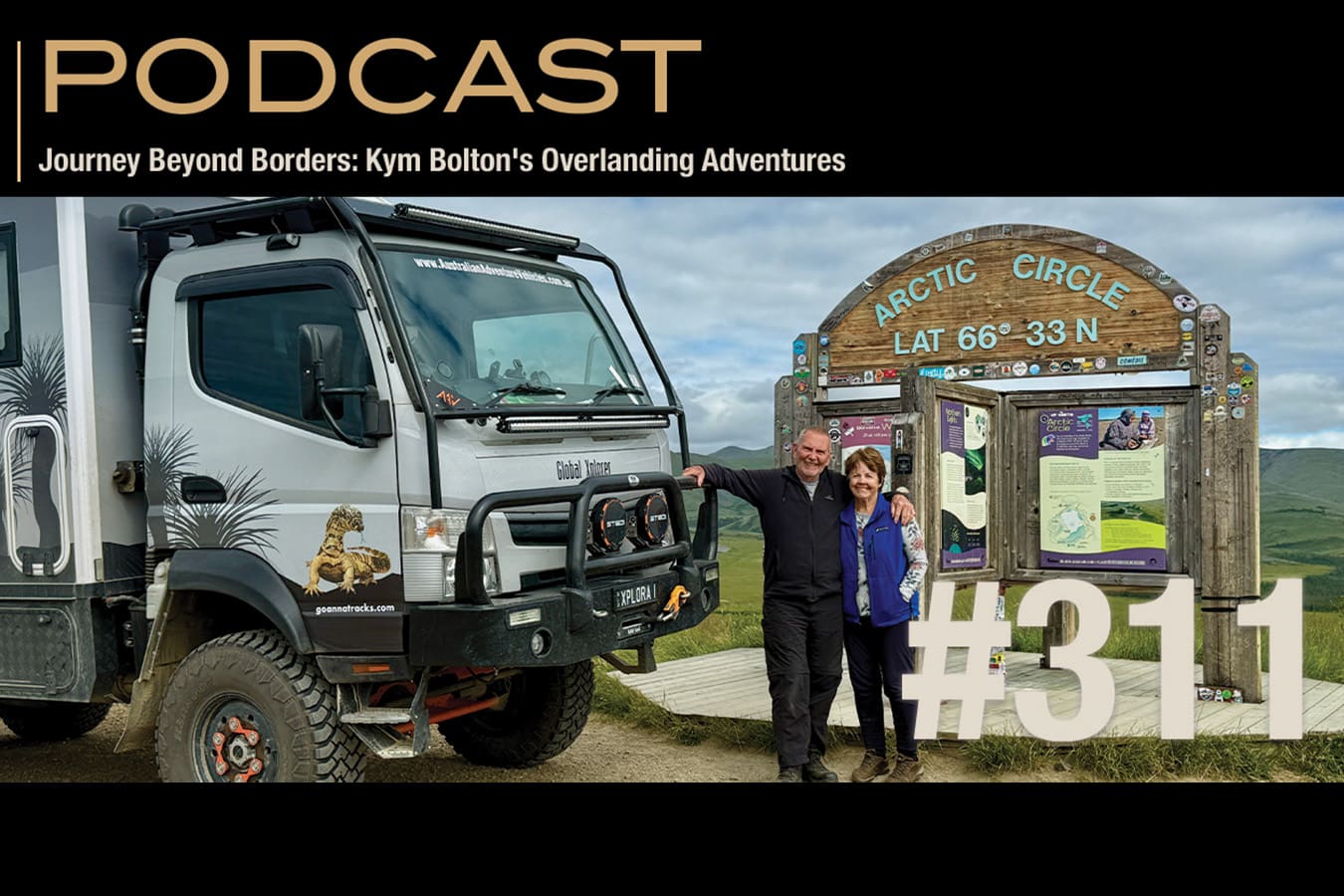
In this episode of the Overland Journal Podcast, Scott interviews overlander Kym Bolton about his decades of global travel in a Mitsubishi Fuso camper, covering over 500,000 kilometers across regions including Russia, Asia, the Americas, Africa, and Australia. Kym discusses why the Fuso is ideal for international trips, citing its reliability, payload capacity, and worldwide serviceability. He emphasizes keeping vehicles light and simple, recommending key upgrades like super-single tires, upgraded suspension, and suspension seats. Kym shares his recovery philosophy, which focuses on assessing hazards and maintaining equipment. They also discuss his background in winch competitions, strategies for vehicle storage, travel rhythms, and his favorite places to travel, Mongolia and South America. Finally, they highlight his current ventures, Australian Adventure Vehicles and goannatracks.com.
Overland Journal Podcast Episode #311
The Overland Journal Podcast is brought to you this week by Nitto Tire, Overland Journal Magazine , Hankook Tire
New to Overland Journal and want to grab a subscription! Visit Overland Journal and enter code: overlandpodcast at checkout for 20% off. We thank you for being a subscriber.
Guest Bio:
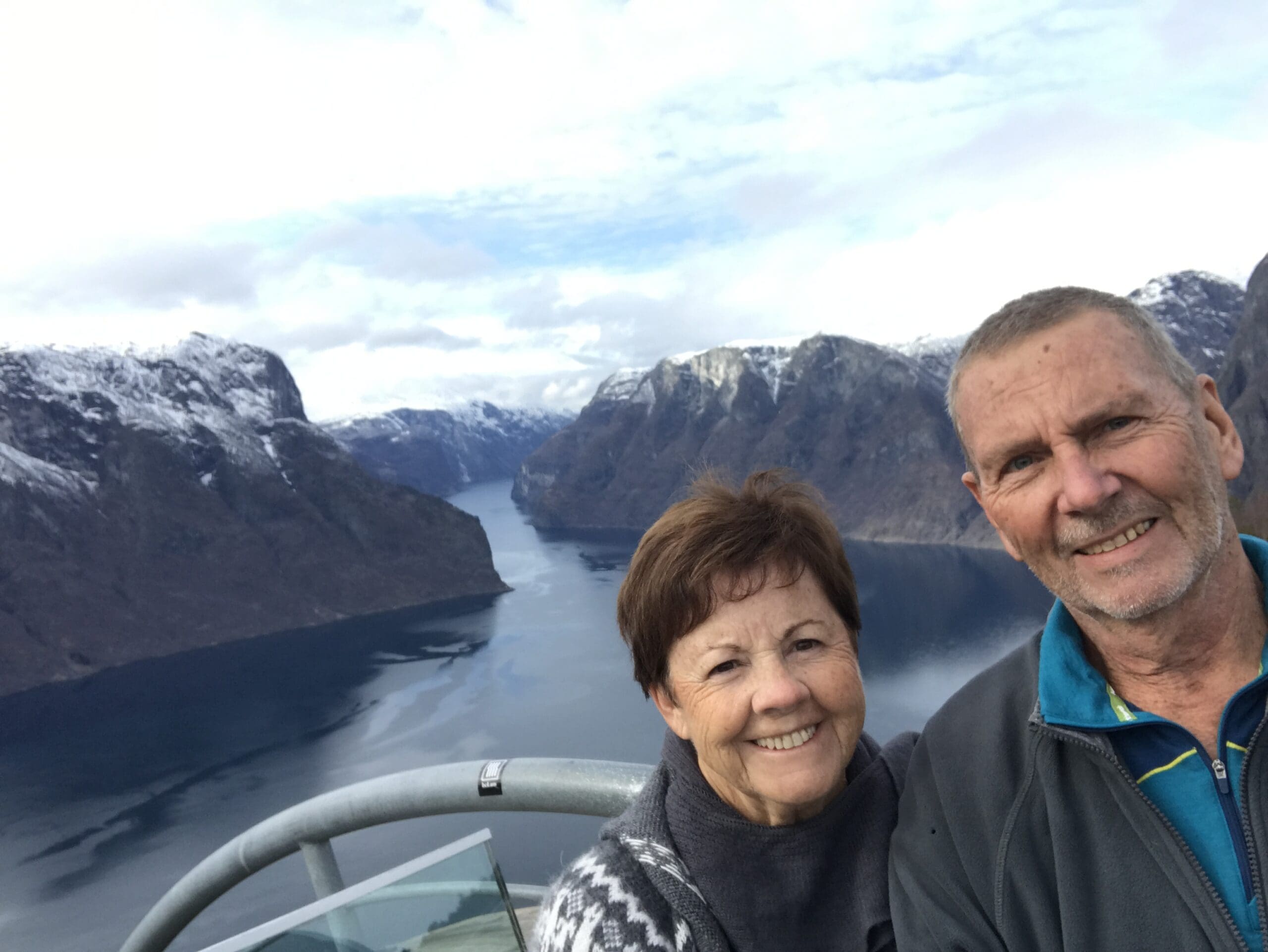
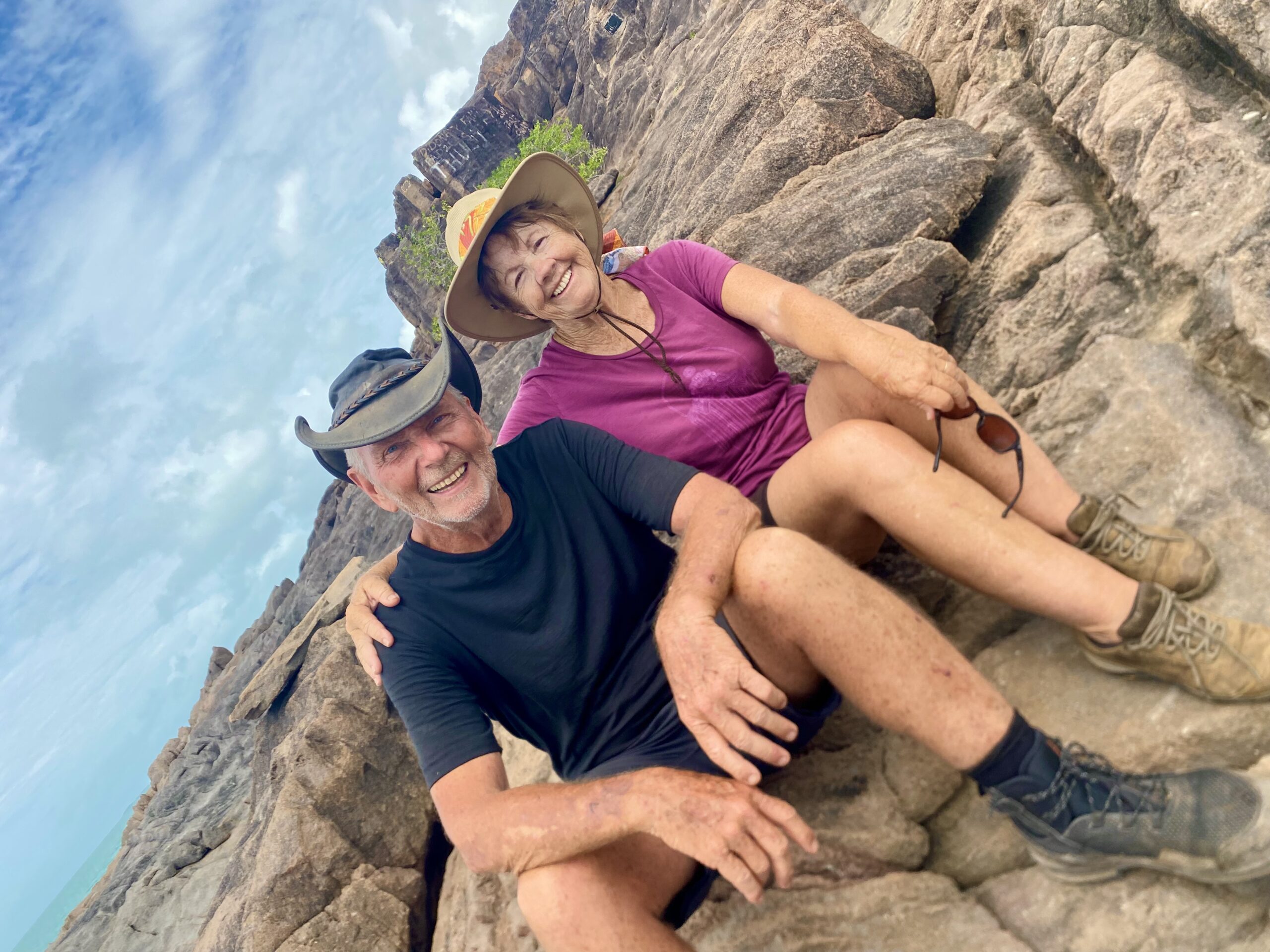
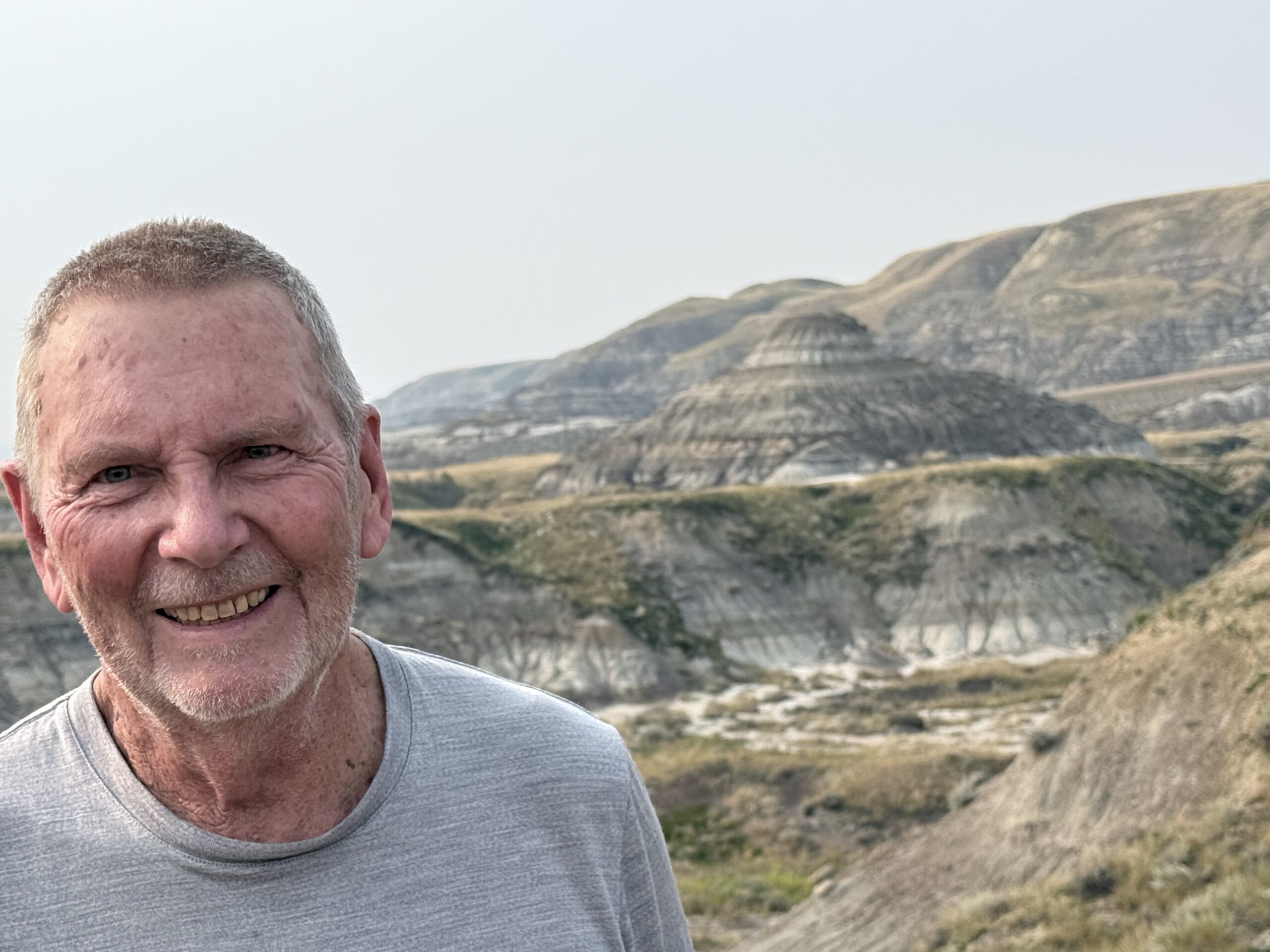
Kym Bolton
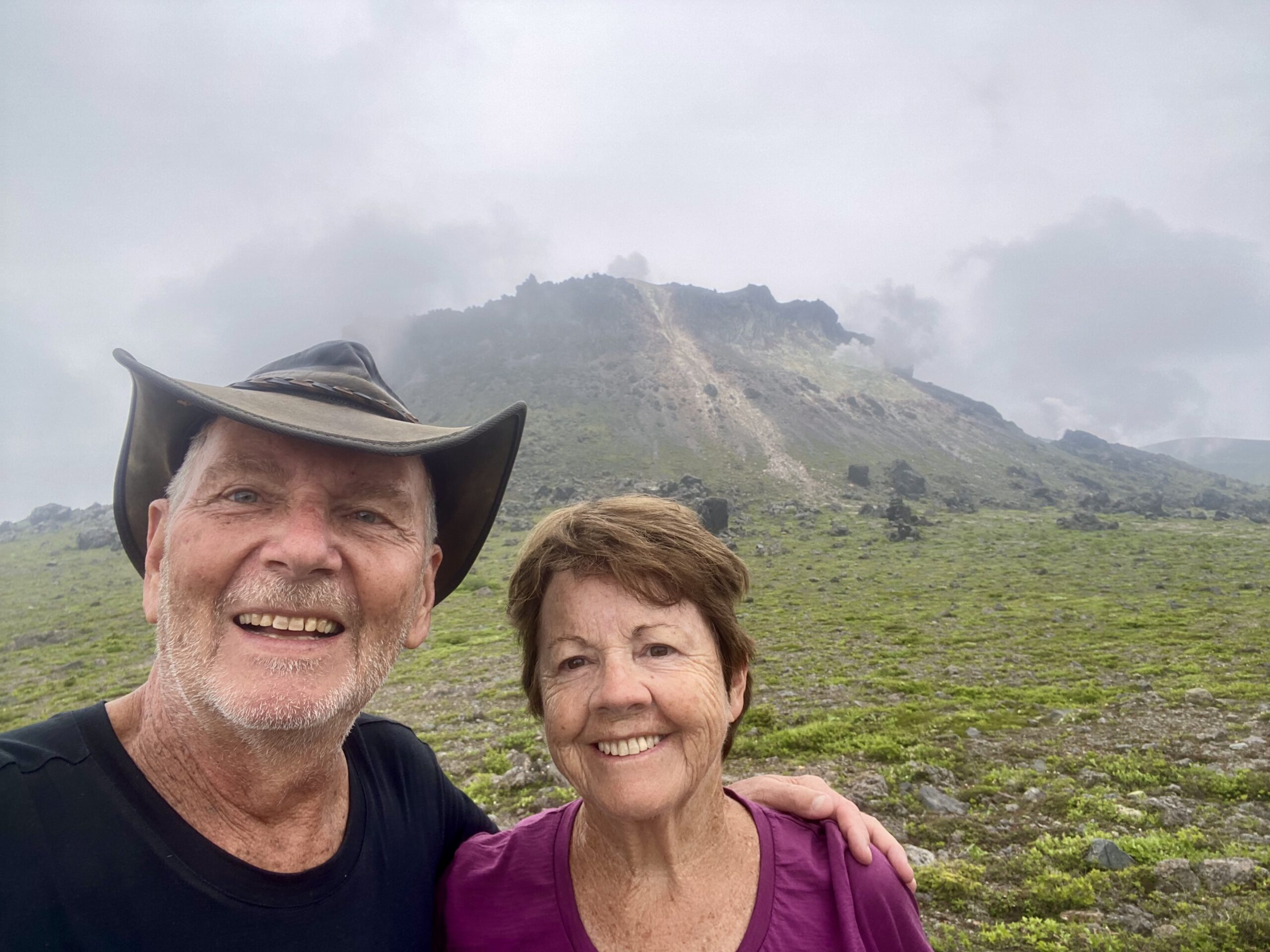
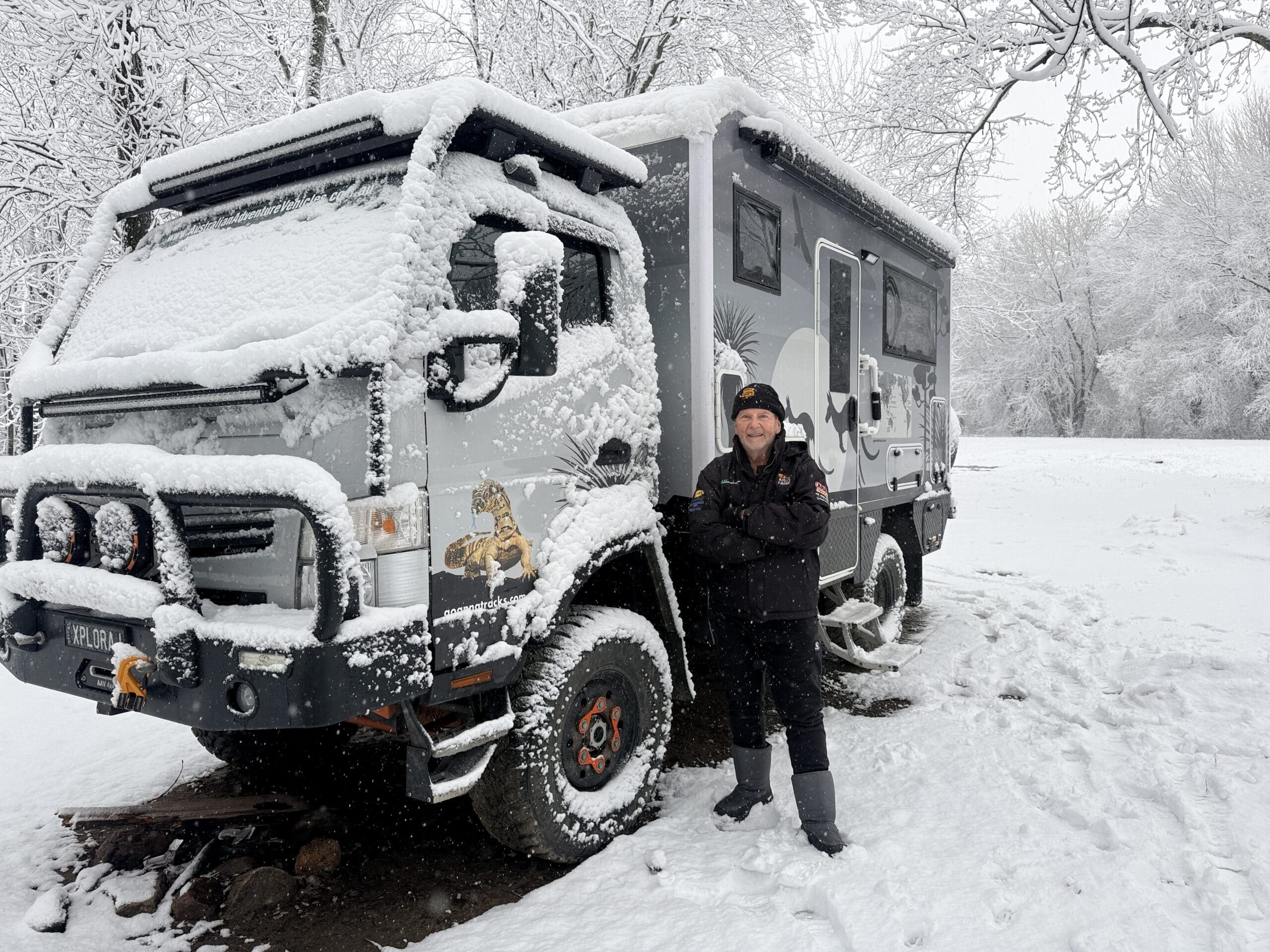
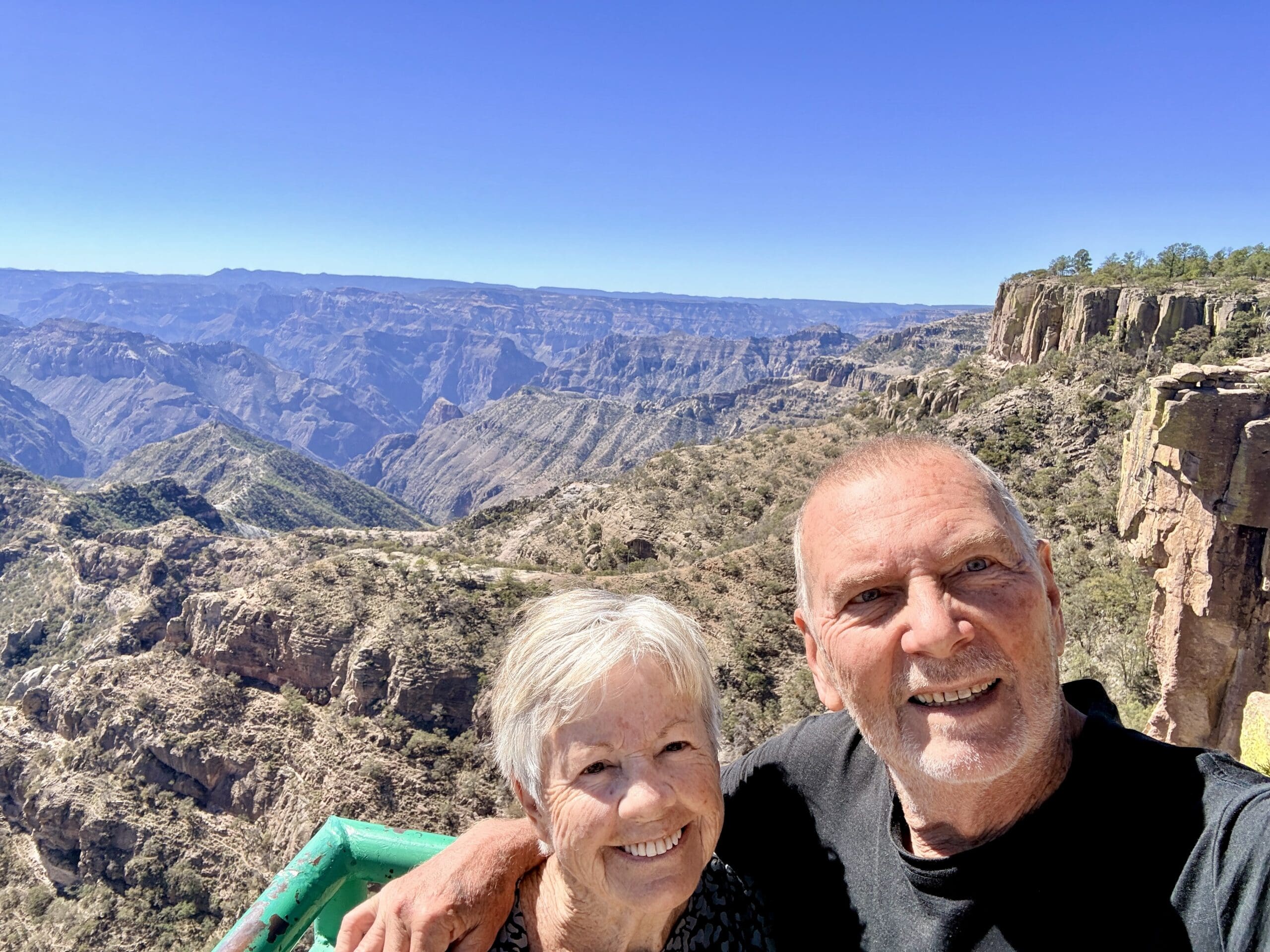
Kym Bolton has traveled over 375,000 kilometers of international overlanding across Russia’s Road of Bones, Mongolia, the Sahara, North America, Central America, South America, Africa, Asia, Scandinavia, and Iceland. He is a former Outback Challenge champion and National Winch Champion, and is the founder of Australian Adventure Vehicles (AAV4x4), a family-owned expedition vehicle company based in North Brisbane. Before founding AAV4x4, Kym designed and launched EarthCruiser in 2009 and later TravelTrucks in 2012, both of which he sold to continue his own global overland travels. He is credited with designing the first 17 x 9-inch Super Single wheel for light trucks – now sold globally. His travels are chronicled on his blog, goannatracks.com.
Host Bios:
Scott Brady
Tune in Apple Podcasts | Spotify | YouTube
Our No Compromise Clause: We carefully screen all contributors to make sure they are independent and impartial. We never have and never will accept advertorial, and we do not allow advertising to influence our product or destination reviews.
Transcript
Scott: [00:00:00] Kym, thank you so much for being on the podcast this morning with me. Thanks, Scott. I think that- You know, it, it’s an honor to finally get the chance to interview you. Your travels around the world, uh, were some of the earliest inspirations to me. Oh. I remember seeing some of the photos of you guys crossing the Road of Bones in Russia with these Mitsubishi FUSOs.
Yeah. Um-
Kym: That’s
Scott: 2007. Yeah. So that’s a- A long time ago … little while back. Yeah. And, but I remember, I mean, this was back when people had blogs and, and they had their own websites that they would… And you guys had this anthology, this story- Mm … of what you guys were going through- Yeah … going across there. And, you know, a, a, truly incredible images.
Very challenging terrain. And I just remember thinking, “That’s what I wanna do.” You know, that’s what I
Kym: wanna go through. Well,
Scott: that’s nice to be inspirational. Thank you. Yeah, of course. Yeah. Absolutely. Yeah. But y- you know, if you look at the map on your FUSO outside here- Yeah … on the side of the camper, it’s incredible what you’ve done.
Kym: And a special thanks to Nitto Tire for [00:01:00] supporting this week’s podcast. The Terrain Grappler G3
Scott: is the third generation of one of overlanding’s most trusted all-terrain tires. A new compound and tread pattern delivers improved wet traction and a three peak mountain snowflake certification. Improved uniformity reduces road noise while still ensuring performance on the road and in the backcountry.
And for even bigger news, the G3 is now available in up to 37-inch sizes. But my personal favorite is the new 255/80R17 that I’m testing on my Quartermaster. This is the first all-terrain available in that size. And since payload matters, the G3 is lighter than most competitive all-terrains. Nitto backs the G3 with their best treadwear warranty ever.
That means 70,000 miles for hard metric [00:02:00] sizes and 55,000 miles for LT and flotation.
Kym: For more information, visit nitto tire.com. Thanks, Nitto.
Scott: You know,
Introduction
Scott: let’s start off a little bit by giving the listener some context around where you’ve traveled around the world. I know you’ve done it in multiple phases- Mm
but let’s kinda give them the-
Kym: We nor- we, we do- … the- … three months on, three months off. It’s always been my family arr- or arrangement with my wife. Kids, grandkids and now great-grandkids. Yeah.
Scott: Sure.
Kym: So go home every three months. But Russia was the first one, and it was about four months across there. I…
During that period of time, I designed another product, which be- finish up becoming EarthCruiser.
Scott: Yep.
Kym: 2010, uh, when I sold EarthCruiser, uh, we shipped it to Malaysia. Malaysia, Thailand, Cambodia, Laos, China, Tibet- Back into Russia.
Scott: Wow.
Kym: Across to the States.
Scott: Yeah.
Kym: Alaska to South America.
Scott: Yeah.
Kym: Then to Africa. From Southern Africa to Northern.
Scott: And you did up the East Coast for that? [00:03:00]
Kym: No, we went up- Halfway across- … the center … the center. The East Coast was problematical as-
Scott: Okay …
Kym: Africa is from time to time. Yeah, sure,
Scott: sure.
Kym: Then we went up through Sudan and-
Scott: Yeah,
Kym: sure … I mean, now Sudan’s problematical now too.
Yeah, that’s right. Um, then Europe, Iceland, Scandinavia.
Scott: Yeah.
Kym: And back into Austra- yeah, like, just-
Scott: And that’s
Kym: ex- Where, where, where, where they-
Scott: Yeah …
Kym: we wanna go, we go. Yeah.
Scott: Well, and that, and that’s excluding the, I mean, I, sure hundreds of thousands of kilometers you’ve traveled around Australia.
Kym: Yeah. So- I mean, externally I know I’ve done a, a number. It’s ext- it’s about a half a million kilometers plus. Yeah.
Scott: Wow.
Kym: Externally of Australia, and then Australia we’ve obviously done lots of the desert tracks. Mm. GPS. A couple of years ago we went out looking for meteorite craters in the- Mm … in the Simpson Desert, and that was all GPS.
No roads, no tracks. There they are on Google Maps, that looks interesting. Yeah. Let’s go there and- Wow … find out what it’s all about.
Scott: Oh, great.
Kym: Yeah. So yeah, cool.
Scott: And, um, you know, just to give some context to the listener
Vehicle Choice: Mitsubishi Fuso
Scott: what brought you to that [00:04:00] decision of using the Mitsubishi Fuso? I think they’re awesome- Mm
but let’s let the listener understand-
Kym: Yeah, well- …
Scott: why you
Kym: choose those trucks … I’ve, I’ve done off-road, um, challenges with the, we’re at 10 years in the Outback Challenge. Yeah. I did three Rainforest Challenge in Malaysia.
Scott: Yeah.
Kym: Couple of New Zealand Winch Challenge Series.
Scott: Sure.
Kym: That was all on Nissan Patrol, but…
And we went through the stage of, as everyone does, swags, and then a, a pop-up top trailer camper- Mm … and then a troop- had a couple of troop carriers with pop-up tops roofs.
Scott: Sure.
Kym: Just, and you ev- it evolves what is ideal for you.
Scott: Yeah.
Kym: And to do true international travel, you really have to have… Well, I have a saying, you don’t wanna buy the biggest one that you can afford, you wanna live in the smallest, get the smallest one you can live in.
Scott: Yeah,
Kym: that makes sense. And, and I guess the Fuso and Isuzu 4×4 NPS series- Yeah … is appropriate for that.
Scott: Yeah.
Kym: It’s 50 mil wider or two inches wider than a Land Cruiser. Yeah. It’s about 100 mil longer than [00:05:00] a Land Cruiser.
Scott: Right.
Kym: So it goes down, every track in the world’s made by a Land Cruiser or a Land Rover.
Scott: Yeah.
Kym: So you need to be able to drive down those roads.
Scott: And that’s so true, and, and the fact that it’s built on a medium to heavy-duty chassis, so you’ve got the payload now to support it.
Kym: Correct. Well, this thing’s actually one and, 1.3 t- Well, 1,300 kilo below the GVM of the vehicle. So your power to weight ratio is important as well too.
Yeah, for
Scott: sure.
Kym: You have a heavy vehicle, you’re deeper in the bog- bog hole. You’re slower uphill. Yeah. Your braking distance is longer.
Scott: Yeah, sure.
Kym: Um, there’s a lot of consideration to, to collect, to select the right vehicle for- Yeah … the application.
Scott: And I think universally, no matter what you end up driving, you want it to be as light as you can make it.
It should be, yeah. ‘Cause it’s just, it’s just gonna perform so much better. It
Kym: has to perform better.
Scott: Yeah. Yeah. That’s right. And you
Kym: guys have learned- And if you wanna push it to long distances- Yeah … and you’re remote- … it needs to be, yeah.
Scott: Yeah. Yeah, and you can only carry so much fuel and when you do get stuck, you know, a vehicle that’s larger like [00:06:00] this, the heavier it gets, the more unlikely it is that a passerby can get you out.
Kym: True, yeah.
Scott: So you wanna be as, you know, as light- Mm-hmm … as you can get. I mean, although there’s plenty of Land Cruisers that get- Heavy … you know, that get up to, you know- That are even heavier
Kym: than
Scott: this thing … yeah, that get up to almost 5,000 kilograms, for sure, you know? Yeah,
Kym: yeah.
Scott: But, uh, they’re they do get heavy, but it’s be- it’s important to not be so heavy that you can’t get pulled out.
That’s why I’ve always, uh, stayed away from things like a Man truck or whatever, is that you- you gotta get some kind of a commercial recovery.
Kym: Yeah. Um- Well, if you’re remote- Yeah … that’s, um-
Scott: Very difficult …
Kym: very difficult, and big dollars if you do-
Scott: Yeah, that’s right … manage to
Kym: find someone.
Scott: Yeah, you read about these guys that get stuck out on these salt, salt pans, and they’re out there for weeks.
Mm-hmm. You know, and they bring out the first tractor, and that’s not enough, and then they bring out the second tractor, and then- Yeah … I mean, it takes- Yeah … it takes the whole village-
Kym: Yeah, that’s
Scott: right … and a whole bunch of money to make that happen. You know, the other thing that I really like about the Mitsubishi Fuso is that they’re sold all around the world as a delivery vehicle.
So when you’re in countries that, that have poor road [00:07:00] conditions commercial entities use these trucks to get goods and services- You’re right.
Kym: It’s a commercial truck. That’s right. It’s half a million kilometers standard lifespan.
Scott: That’s right.
Kym: Well looked after, of course.
Scott: Yeah, of course. So it’s designed to do that.
I mean, the these vehicles oftentimes, you know, when you’re coming into a little village somewhere in Morocco they probably have FUSOs that are coming and delivering goods. Mm. So, you know, the power lines are just the right height. They are high, yeah. You know?
Kym: The agents is pretty much the same universally.
Yeah, yeah.
Scott: Yeah,
Kym: yeah.
Scott: And that makes a huge difference around serviceability, although with a Mitsubishi you don’t tend to need a lot of service and repair. They tend to be incredibly reliable.
Kym: They, that they are,
Scott: yeah. But, you know, things can still go wrong.
Kym: They do,
Scott: yeah. Yeah. Things can absolutely
Kym: go wrong.
Yeah. I mean, we look after it. I grease this every 5,000 Ks religiously.
Scott: Yeah, yeah.
Kym: I change the oil in half the time span that it’s recommended. Yeah, you’ve gotta look after it.
Scott: And what have you found on this platform that generally needs to be upgraded or improved? Are there things that you do need to [00:08:00] modify on the base chassis, or
Kym: is it- Yeah, definitely, yeah
Scott: what do you find?
Kym: So the- f- first thing is just wheels.
Scott: Ah.
Kym: It comes with 32-inch duals on the back, which are useless off-road. Yeah. Um, so we’ve designed 37-inch and 35-inch super singles to do that. Yeah. That changed the dynamics of the vehicle lifts ride height, obviously tracking front to rear is important.
Scott: Sure.
Kym: Improves the ride, which is seriously important.
Scott: Yeah.
Kym: Then suspension, lifted up, the bump stops something like, yeah, so- Yeah … um, we’d have another- So just a couple s-
Scott: couple centimeters for the bump stop,
Kym: yeah … yeah, well, e- e- everything- Okay … sort of hits the bump stop. So- Yeah, sure … add another two inches or 50 mil to that.
That improves the ride Couple of nice suspension seats. Certainly keeps the wife happy on the left-hand side. Yeah, sure. Um, that’s the main things from, from that side. Yeah, that, that makes sense. I remember in, I think it was around 2012 or so, I had the opportunity to borrow an EarthCruiser. Um, this would’ve been shortly after you sold the business.
Scott: And I was able to borrow a EarthCruiser and take it to [00:09:00] Fraser Island. Getting off the ferry and all that- Yeah … to have high flotation tires-
Kym: Perfect,
Scott: yeah … makes such a huge difference. So while I was on the ferry, I mean, nobody tells you, but I knew what was coming. You know, you air those tires down to about 20 psi.
That’s
Kym: it.
Scott: Even on a heavy- Got,
Kym: got the number right.
Scott: Yeah … uh, even on a heavy truck like that, you’d, you, you know, on a Jeep you’d air it down to 12 or whatever, but on a heavy truck you can only go so low. Um, so being able to air down like that, and then it just crawled right off.
Kym: Yeah, right off. Straight into that soft sand.
Scott: Yeah, yeah. That’s
Kym: right. And but you just keep going.
Scott: Yeah. It’s, it’s,
Kym: it’s-
Scott: It did fine … quite
Kym: impressive.
Scott: Of course, the Land Cruiser right behind me got bogged- … because they’d hadn’t aired down. Oh. It was still a stock vehicle. Oh, I think
Kym: it’s all
Scott: okay. You know? Yeah. Yeah, yeah. But, you know, it’s being able to drive around that island, which is…
It’s one of the most incredible places on the planet to overland, because it seems like you’re in another world. I mean, you got dingoes running down, the beach. You’ve got these crystal clear water lakes. And you’ve got this
Kym: heavy rainforest
Scott: inside. Yeah. It’s spectacular. It’s just inc- it, it’s…
And the bird life is incredible. Yeah. And to be able to, to drive on the [00:10:00] beach and to camp on the beach is just awesome.
Kym: And what people don’t realize, it’s 160K long, that beach.
Scott: Yeah. Yeah. It’s a long way.
Kym: Yeah. You gotta go over a couple of headlands and the rocks- Mm-hmm … but yeah, no, it’s a spectacular island.
Scott: Yeah, it’s super cool. And I was impressed by the overall performance of the Mitsubishi. One of the things I think that’s really nice about Australia nobody likes regulations, but because Australia has regulations on tire height and lift height, all of the vehicles are kind of built to the same level of capability.
Yes. Whereas in the US you can put a 37 or a 40-inch tire on something. So if they, if that vehicle goes through a trail and creates a rut- Every other vehicle behind him’s in trouble.
Kym: That’s right. That’s-
Scott: Whereas in Australia, everybody’s got pretty much the same size tire. Yeah. They’ve got pretty much the same lift on them.
Kym: There’s, nothing’s much bigger than a f- a 37-inch tire.
Scott: Exactly. And that would be on a vehicle like this- Yeah, correct … which is much larger. Mm-hmm. So I, what I loved about that is that I could take that Mitsubishi Fuso everywhere that everybody was going with the Land [00:11:00] Cruisers because nothing was overbuilt.
Kym: Correct.
Scott: Now, and that isn’t to say that there aren’t technically challenging trails in Australia- Mm … but they’re just less common.
Kym: Correct.
Scott: Yeah. Um, like all the main overland routes are all driven by basically the same kind of vehicle. That
Kym: is right. Yeah. Whether you do a desert trial- Yeah … or you say Fraser Island or Cape York- Yeah
for that matter too.
Scott: Yeah, even if you’re, if you’re doing the ca- you know, the Canning Stock Route, you we drove them in 70 series Land Cruisers with 33 by 10 inch tall tires and the track wid- width, width- Yeah … was perfect. Um, and we never encountered obstacles that had been really chewed up by a huge overland vehicle.
Kym: Yeah, by put- something with a 42 on
Scott: it. Exactly. Yeah. Which makes it impossible to get through. That’s something that I really like about Australia. Uh, and then you have to be a better driver.
Kym: Yes.
Scott: You know, you gotta learn how to drive the thing. That’s right.
Kym: You gotta pa- pay attention. If it’s an obstacle, you’ve gotta- Tackle it correctly
Scott: Yeah, get a good marshal out there to, to spot you through Yeah Maybe you gotta pull some winch cable, but I think that adds to the fun Of course
Kym: it does
Scott: It adds to the fun, for sure You’re not winching Renan
Kym: again-
it’s not
Scott: an adventure, is it? Well, and you’ve done a lot [00:12:00] of winching in your life. I mean,
Competition & Off-Road Experience
Scott: let’s pivot a little bit towards some of the competition that you’ve done. Um, and I think that all of this kinda comes back to the fact that you’ve learned so much about building overland vehicles and campers because of the fact that you’ve pushed yourself personally-
Kym: Yeah
Scott: not only in competition, but in international travel. So you’ve lear- you’ve made a bunch of mistakes. I know I have.
Kym: Yeah.
Scott: I’ve made a ton of mistakes- Mm … that now inform the decisions that I make.
Kym: Um- Yeah. Well, I can now build this-
Scott: Yeah …
Kym: based on, one, the off-road winch challenge type- Yeah … competitions-
Scott: Yeah
Kym: where powder weight’s critical. Yeah. I mean, with a compe- competition truck, we strip the inside linings out. Yeah. The air conditioning went out. I used to joke with everyone, we used to cut our toothbrushes- … in half to save weight.
Scott: Yeah, sure.
Kym: True story. But that relates back to exactly what we’re doing now.
Yeah. And then of course you’ve got your overland travel backing that up.
Scott: Mm-hmm.
Kym: So Australian Adventure Vehicles, which is the company I have now, with, in conjunction with my son, we can build a vehicle that’s built on the reliability and [00:13:00] the, the structure and the learning curve-
Scott: Yeah …
Kym: that we put in for, yeah, what, the last 30 years, I guess.
Scott: Exactly. Yeah. The things, the mistakes that you make along the way really help us. And y- you’ll see that the pe- the more traveled someone is, the less things that they have on their vehicle, the lighter that they keep ’em, the more- Yeah … closely they keep ’em to stock, especially the drivetrain. You know, it, that idea of that wild supercharger sounds cool-
Kym: Yeah
Scott: but where are you gonna find the pulley for that thing in the middle of Tajikistan? That’s correct. You’re just not. Yeah, it’s a, no. You’re not. I mean, maybe they can machine one up- Yeah … for you, but-
Kym: Yeah, you’ve gotta do it you’ve probably heard of the KISS principle?
Scott: Yeah.
Kym: Keep it simple, stupid. Exactly.
That’s exactly what you gotta do, yeah.
Scott: And Australians get that because Australians get infinitely more remote than we can ever get in the US. We have similar terrain here.
Kym: Yes.
Scott: It’s just very difficult and- But
Kym: it’s just down the road where you’ve got help if you need to That’s
Scott: r- Yeah … that’s right, or you’ve got, even got cell coverage or, and of course with Starlink now and there are, there are people that have a business to go get you in the middle of the backcountry.
You know, in Australia, if you’re in middle, in the [00:14:00] middle of the Simpson, you’re on your own.
Kym: You are.
Scott: You really are. I mean, it, the longest- You know, if you, if you don’t cross pavement in the United States, about the longest that you can go from point to point is 160 miles. So call it 300 kilometers.
Kym: Yeah.
Scott: Which isn’t that long. Whereas the Canning Stock Route is 1,800 kilometers. That’s right. And there’s nothing in between. Yeah. There’s just- I mean, there’s a tiny little village. You have- Kintore, yeah. Yeah. Tiny little spot. It’s an Aboriginal village. Yeah. Yeah. There’s not much there. There’s, yeah.
Fortunately, you can now get fuel there, but I mean, you used to have to order your fuel well in advance. That’s right, yeah. Have it staged in drums- Yeah … and stuff like that. They’d come in 44-gallon drums, yeah. That’s right. Mm-hmm. Exactly. Yeah, cr- unbelievably unbelievable. So let’s talk a little bit about, uh, your competition.
So, where did… What was the competition series that you started in, and then you ended up going and doing the Rainforest Challenge and-
Kym: Yeah, we did… I, I did a local four-drive competitions with clubs, so things like [00:15:00] that. And then in 1999, the Outback Challenge- Right … started, and we entered that first challenge, and we competed in that for the 10 years that it ran for.
I think it ran for a couple of years after that, but we were- Right … on the podium a reasonable number of times out of that- Sure, yeah … which was, uh, rather great. Yeah, of course. Yeah. It’s a- Yeah, that was quite the challenge. Yeah. I did Malaysia Rainforest Challenge three times and New Zealand Winch Challenge.
I won the first one over there- … and got up on stage and said, “Well, this is really great, guys, and this is how you do it. This is why we won.” And of course, went over there the next year and they beat me, didn’t they? Because they, because they learnt really well. Um- But isn’t that good for a competitor? Of course it’s, it’s what it’s all- It’s wonder- wonderful for a competitor
it’s what it’s all about. Yeah. Exactly. No, I love that. Yeah. Exactly. Yeah, totally. And it’s nice. I mean, the Outback Challenge was a great event. Mm-hmm. And I’m s- I have to, pleased to say that after 20 years, um, we’re still mates. You know- Yeah … a lot of those people who you, you camped with and competed with and against-
Scott: Yeah
Kym: um, are some of the best mates we’ve got. So it’s a great fraternity.
Scott: You and I have a little bit of shared [00:16:00] history in that, um, I was invited over to compete in the Outback Challenge that was held in Northern Africa. So I actually raced in that event in 2006. Wow. Mm. So we’ve both raced in
Kym: the- Yeah
Outback Challenge. In that sort of thing.
Scott: Yeah. Which was fun. I mean, of course, being able to race a Land Cruiser in Morocco was awesome.
Kym: Yeah. Wow. So. Yeah, definitely.
Scott: Yeah, it was awesome.
Kym: Yeah. Well, learning from, yeah, that which is effectively a winch challenge type series where they put you through bog holes and vertical cliff faces, gets us out of problems that we feel comfortable traveling in our own right.
Obviously on the Road of Bones, we winched a significant number of times. We’ve been bogged in a sand hollow in the Gobi Desert recovered, self-recovered out of that- Yeah … w- by burying the tire and winching.
Scott: Yeah.
Kym: I guess the other time my wife and I were in Kenya, in the Kerio National Park in Kenya, in a swamp- Yeah
and finished up buried there and not movable. So there was nothing in front of us, so I ran the winch cable underneath the vehicle using a set of D shackles- Mm … and the extension back to a tree- Mm … and [00:17:00] self-recovered from that. Wow. So it gives you, or certainly me, confidence to be able to say, “Yep, we can do that track,” but also confidence to be able to look at that track and say, “No.”
Yeah. “That’s beyond where I’m gonna take- … the module which we’re gonna live in for the next- Yeah … X number of months or years.”
Scott: Yeah. So- Do I really wanna expose my house to that
Kym: obstacle? Yeah, yeah. Do I need that? Yeah. And my wife’s finger f- r- fingernails in my thigh normally says- … “Enough, guys.”
Scott: That’s enough.
Yeah. Yeah. And she’s probably learned a lot through the years, so if she says- Oh, she has … if she says enough is enough, enough i- enough is enough. Yeah.
Kym: When she gets out and takes a photograph that’s her way of saying, “Well, I’m not in here, but you are.” Um, but there’s, there is a limit after that as well too.
So- W-
Scott: what- … we respect both sides. It’s great … yeah, for sure. Well, you have to if you wanna travel well with your partner, so. That’s right.
Not a week goes by that someone doesn’t reach out to ask how, uh, they can help support the podcast. Uh, we are supported entirely by Overland Journal, the magazine.
So when you become a subscriber to the Overland Journal print [00:18:00] magazine, you get this beautiful book, uh, that comes in five times a year. It also gives you access to our digital archive. Uh, and it’s well over 100 pages of gorgeous images and detailed testing and adventures from around the globe. So if you go to overlandjournal.com and you subscribe to the magazine, use the code OVERLANDPODCAST, and that’ll get you 20% off.
It’s only available to our podcast listeners. We don’t advertise it anywhere else. Um, and then you help us to maintain that independent employee-owned journalism, um, that we have been famous for. So it allows us to conduct those tests without any advertorial. Another way you can help out too, I produced a book, uh, last year with Simon & Schuster called Overlanding 101.
You can find it on Amazon or Barnes & Noble, or even your local bookstore. And that encompasses my decades of travel around the world, all of my mistakes and failures and, and the lessons that I’ve learned in traveling around the globe. Um, many of those, [00:19:00] um, that you hear on the podcast have been distilled down into print form with great lists and beautiful imagery.
Uh, so you can find that, uh,
Kym: at your local bookstore. Overlanding 101. And thank you all for listening and for supporting us so much throughout these years.
Scott: Well, um,
Recovery Mindset & Techniques
Scott: let’s talk a little bit about how you, uh, the mindset that you have towards recovery. So you’ve had to do expedient recoveries, of course, under competition conditions, and then you’ve been able to take ver- your time and be methodi- You can come in here and make a cup of tea if you
Kym: need to.
Scott: That’s exactly
Kym: what I s- So- We, we try and do. If we stuff up, let’s say- Yeah … yeah, uh, stop everything Make a coffee, sit down, analyze the situation, and methodically work through it.
Scott: Yeah.
Kym: And analyze what’s gonna go wrong.
Scott: Yeah.
Kym: Yeah. And try and eliminate the issues.
Scott: I think that’s one of the most important things, is to slow down.
You know, in competition you’ve practiced so much with your travel partner or y- with your co-driver that you know what to do, [00:20:00] and oftentimes the cable is already positioned- Bound up and,
Kym: yeah …
Scott: on the, on the front of the bumper. Uh, but when we’re traveling in my mind, the thing that’s the biggest risk is to rush.
Like the number of times that people, the vehicle’s stuck they forget to put it, or they forget when they’re pulling it out, they forget that, “Oh, it could run a- it could run away from you.”
Kym: Yeah.
Scott: People, they tip their car over and it’s in neutral. Mm-hmm. When they get it righted back on the wheels, it’s not in park, or it’s not- It is
in gear. So when it comes back onto the wheels, off it goes. Yeah, yeah. So taking the time to say, “Is the vehicle in the right condition when it gets out?” Which, of course, if you’re winching forward, you’re gonna most likely have a driver in the driver’s seat regardless. Uh, but a lot of times when the vehicle’s on its side, there’s nobody in the vehicle, and you- Sure
here you go, you right the vehicle, and the next thing you know the thing’s running- It’s moving … down the trail. Yeah. Um, so taking that extra few minutes to come up with a plan, assess the situation. [00:21:00] I don’t know if you’ve experienced this- Mm … but the number of times it’s actually just been a log in the bog.
Kym: Yeah. ‘
Scott: Cause a lot of times people will stuff logs in there ’cause somebody got stuck before you.
Kym: Yeah, I don’t like to do that, but it’s, it’s- Somebody’s done it … a natural process. They f-
Scott: A
Kym: local’s done it … fill the slurry place- With, yeah, junk.
Scott: Some local in Russia, they filled it full of a bunch of logs, and so now that log is just pushing against the front diff cover of your-
Kym: Yeah,
Scott: and-
of your axle … and, and,
Kym: and all your breather tubes and electrical wires that are- That’s right … gonna be underneath there, and then you do more harm than good.
Scott: Yeah, so take a look and you might find, “Oh, wait, I just gotta dig out the end of this log and I’ll be able to get out.”
Kym: Yeah.
Scott: So really taking that time to do the assessment, I believe, is critical.
Um, and then using all of the safety and multiplication factors that you can in the recovery. People get, they get in a rush ’cause maybe they’re embarrassed or- Mm … maybe they’re worried or whatever or, or their s- their partner’s worried about what’s happening. So, you know, so they’ll just pull a single line out straight to a tree strap.
The winch line isn’t even fully [00:22:00] extended, so the winch is struggling. It’s struggling already. Yeah. Yeah, so take the time. Put in a- Mm … pulley block. Yep. Run it back. Give a little bit of bridling to the recovery so the load is spread out over- Mm … multiple points. Yeah, you’re right. Taking that time.
Kym: Yeah. Think about it.
Scott: Yeah. Yeah.
Kym: Spend the time. And the other thing you gotta do is obviously prep your vehicle before you start traveling too. Mm-hmm. Make sure your winch is actually still active.
Scott: Mm-hmm.
Kym: Many ti- you haven’t used the winch for 12 months, and then you finish up in a situation that, yeah, the electrics are corroded.
You’ve been- Yeah … on a beach and all this sort of thing. Just pre-check the vehicle before you actually starting head out in the bush there and run the cable out. Make sure it’s not bound up from the last time you winched. Yep. That makes sense. Um, it’s ready to go.
Scott: That makes so much sense, and, uh, a- and with these modern winches, a lot of them have remote controls.
Kym: Mm.
Scott: So it’s not a wired remote. It is a wireless remote control, and those batteries go dead.
Kym: They do go down, yes.
Scott: You know? So you gotta make sure it has a… When’s the last time I charged that thing? Yeah. Do I have the cable to charge it? Yeah. Some of them still come with older versions of [00:23:00] USB-C, USB chargers, and you may not have that cable in your car.
Kym: Well, I’ve had something very similar, just with the remote sitting in the console-
Scott: Mm …
Kym: where- You’ve jammed something else in, and it’s actually pushed the button and turned it on even though the winch is isolated- Mm … so it won’t do anything. But the remote is actually active- Interesting … and flattened the battery of it.
Ah, sure. And you go out there and think, “Hang on, nothing happens.” Right. But then we always carry a positive lead that you can- Yeah … plug in and make sure. Yeah, a backup system is always handy to have.
Scott: I would agree, and fortunately, companies like Warn and others have learned you can’t just provide people with an, only a wireless.
Kym: Mm.
Scott: You know, a, a, you know, where it uses radio frequency to operate the winch. There needs to be a mechanical- It does … wired- Yeah … remote that you can also plug in. I, I would never consider, even consider buy- buying a winch that only had-
Kym: Remote …
Scott: remote. Yeah. Now, of course, those of us that are more mechanically inclined, if that thing totally stuffs up and you can’t get it to pair, there’s ways around it.
There is. Pull that, pull that little solenoid box off-
Kym: That’s
Scott: right … and you start [00:24:00] using a-
Kym: Yeah …
Scott: you know, a jumper. W-
Kym: we were in the remote track on, uh, a track in Tasmania and had to use the winch, and for some reason, one of the solenoids, it wouldn’t pull in, but would pull out.
Scott: Yeah, sure.
Kym: Right? So you just get, pull it all apart and swap the solenoids around and rewire it- There you go
and yes, it’ll pull in. I can pull it out manually myself.
Scott: That’s right.
Kym: So yeah, a little bit of that Outback Challenge knowledge- … sort of comes into play. Yeah.
Scott: You made a- Yeah … you made a plan- Yeah … that made it, that made it work. That’s it. Mm. Uh, what were some other things that you learned in your competitions, like working with others, um, working with your teammate?
Uh, what were some of the things that you did as a team to help you be so successful?
Kym: I think being of the same mindset certainly- Mm … is critically important.
Scott: Yeah.
Kym: And not sort of trying to… You’ve gotta have someone to make the decision. And someone to lead the pro- the process. Yeah. If you are in a situation, someone’s gotta call it, and you’ve gotta trust the other side that if he’s outside and says, “Look, stop,” then- Yeah
that, you gotta take that lead from them- Yeah … as well too.
Scott: Yeah, for sure.
Kym: Yeah. [00:25:00]
Scott: Now, once you get your, uh, spotter out of the vehicle they’re in charge.
Kym: That’s right. Absolutely.
Scott: You’re just- I- I- You’re the m- you’re the monkey- I’m just the- You’re the monkey operating the controls.
Kym: Correct.
Scott: Yes. Uh, and you really have to trust your, your spotter.
And, and w- when we can relate that back to travel for those that are listening, when’s the last time you and your partner worked through a scenario together? So it’s, you know, husband and wife team. Uh, the wife is a great driver. She competes in the Rebelle Rally. She’s got all of this experience with recovery, but her husband, he’s an accountant.
He doesn’t do that stuff. When’s the last time that she taught him how to do that stuff? Hmm. Um, so you really wanna make sure that whoever you’re traveling with is comfortable marshaling you through obstacles, operating the winch. Uh, what happens if the primary driver ends up with a broken leg?
They’ve had a fall- Yes … um, and they can’t operate the vehicle. Can your partner drive the truck? Um, so those are things that I, I think people really need to be thinking about.
Kym: They do. Yeah. Well, I mean, I’ve had the occasion. My wife was never [00:26:00] involved in competition-
Scott: Yeah …
Kym: but we’ve been in situations where we’ve had to winch- Mm
and say, “Right, okay, this is what you’re doing.” You go through the learning process. Yeah. You set it up, and you do a dummy run- Yep … and all these sorts of things. Yeah. Yeah.
Scott: Yeah. And what a neat memory that you guys… Now, I mean, how long have you and your wife been traveling together?
Kym: Oh, basically all our life.
All our married life, certainly. I mean, we were always-
Scott: Incredible …
Kym: camping from, from day one. We were married at 21. I’m, what, 75 now.
Scott: Oh, that’s awesome.
Kym: Yeah.
Scott: That’s
Kym: awesome. So look, our, our honeymoon was camping.
Scott: Yeah. Sure.
Kym: Um, and yes, we had a couple of days in a nice Barrier Reef island- Yeah … but then we went to Carnarvon Gorge and camped, and we went out there with a VW and bogged the VW too- Yeah.
on the way to the campsite. So we spent a lot, y- a married night in the back of the backseat of the VW- … in a swamp.
Scott: Yeah. But- But how cool is that?
Kym: Yeah, I mean,
Scott: it’s great. That’s just ama- Yeah. It’s what it’s all about … what amazing memories. Yeah. And, you know, like, h- how do… What have you guys learned as a couple?
I mean, that’s an incredible feat to, you know, to now [00:27:00] be married for over 50 years. Hmm. And to have had so much- time together. How did you guys learn to work together, and, and what, what advice would you give to a young couple that was about ready to do their own travels around the world?
Kym: Probably listen to your partner and, and ex- yeah, and, and modify your desires- to suit their desires- Mm … as well too.
Scott: A little give and take?
Kym: Yeah, a little bit of give and take. Yeah. I mean, that’s why we travel three months on, three months off. I mean, I’ve s- I’ve read it to go, right? Yeah, sure. Just keep, just keep punching away. But we’ve, I’ve made that arrangement, and- Mm … it works.
Scott: Yeah.
Kym: So yeah.
Scott: You guys found a compromise- We
Kym: have … along the way. It’s a compromise, and that’s a compromise that works for both of us.
Scott: I do like that strategy, though, of… I mean, I think a lot of p- times people will say, “Okay, I’m gonna go take the trip of a lifetime,” and they pack it all into a year or two or whatever, and they’re just so exhausted by the end of it.
I have found for myself personally that I don’t really like to be out for more than about three months. Mm. I, I like to come back and spend time with my dad and my partner and, and you [00:28:00] know, s- spend time, working on the content that I pulled in. Yeah. Spend time with the team. I love my business, so.
And, and
Kym: plan the next part too-
Scott: Yeah,
Kym: for sure … which is just as critical as well, too.
Scott: Yeah.
Kym: Yeah.
Scott: Yeah, go to the doctor, you know, get, go do something fun. Yeah. You know, go out and have a great meal. Well, going
Kym: to the doctor is not so fun.
Scott: Yeah, but yeah. But yeah. It’s good, it’s good to stay on top of it.
Kym: That’s right.
Scott: You need to stay on top of it. You need, you need to
Kym: be healthy. Yeah.
Scott: That’s right. Exactly. Yeah, I like that tempo of, of those couple months off, couple months on. And I, I think more people should consider that. I think that would help them travel for longer. Sometimes you can work out an arrangement with your employer where you can come in and out of projects and do- Mm
those kinds of things. Mm. That, I first started be, to be able to do that ’cause I was a, I was a consultant. I was a software consultant, so I would do a big project, and then the project would finish, and I could go travel. And then I would travel until the next big project started, which sometimes it was a couple weeks, sometimes it was a month.
Kym: Yes.
Scott: And that really gave me the opportunity to get out and start to explore. So you can oftentimes find work, um, that supports that. In [00:29:00] your case because you founded several businesses yourself, you and your family, your son and your team, can operate the business while you’re away.
Kym: That’s right, yeah.
The other thing people ask, “Well, what do you do with the vehicle when you, you- Mm … you fly back home?” Well, I sort of think, I sort of say, “Okay, look, you can pay for storage,” which I’m doing next week. Um, make and create a friend.
Scott: Yep.
Kym: Someone’s got a barn somewhere.
Scott: Yep.
Kym: Um, I’ve run up quite often to a FUSO dealer in the States- Yeah
since when they were operating- Yeah … so it’s time back, and said, “Can I store it here?” And they were delighted to have- Yeah … a FUSO truck sitting in their yard.
Scott: Yeah.
Kym: They’d do a service for me gratis- Yeah, sure … which was wonderful.
Scott: Yeah.
Kym: Um, but they got a benefit and so did I out of it,
Scott: too.
Kym: Yeah.
Scott: Yeah. Yeah, and I think it’s getting more and more, uh, possible to do that.
I mean, you know, you, in Panama there’s, uh, the, uh, Overland… I can’t remember what everything’s Overland something. But- Yeah … you know, there’s a, there’s basically like a, a, a hostel that also will store the vehicles down there. Um, you know, [00:30:00] even, uh, in Prescott, um, you know Matt Scott, who’s my cohost on the podcast, and I, you know, we occupy this c- commercial space and we offer up spaces for people- Yeah
to be able to store their truck ’cause it’s all locked up. Um, and they, people wanna come to Prescott anyways. It’s a nice- They do … nice spot along the journey. Um, so we’re finding more and more people are starting to offer, um, that kind of, uh, storage of vehicles around the world.
Kym: Yeah, yeah.
Scott: Makes a big difference.
And yeah, don’t be afraid to leave it. I remember one time when I was doing Expedition 7, that trip where we took the Land Cruisers to all seven continents we needed to leave them in Mendoza, and I did a bunch of research and there was no limit on how long you could leave it at the airport, and there was no daily fee.
Kym: Wow. Perfect.
Scott: So I pulled it into the airport, tucked it up underneath a sunshade, you know, shut it off- Yeah … disconnected the batteries, left on, left to go home for a month or two, came back- And there it is … connected the batteries back up again, fired right up- Fired up. Off I went. Beautiful. It was fantastic.
I don’t know if that’s still the case, but- [00:31:00] It’s wonderful … but, um, you can definitely find places to leave cars. You can. Yeah. Yeah, mm-hmm. And don’t be afraid to do that. The only limitations, and you gotta know where you’re traveling in the world, sometimes temporary, your TIP, your temporary import process, won’t allow you to leave the country without, without some other process.
Um, or there’s a limited amount of time that you can leave the vehicle in the country, or you’re sometimes limited by the length of your carnet, so- Sure … um, you wanna make sure that you’re paying attention to… And this might-
Kym: That’s where your logistics come into planning-
Scott: That’s right …
Kym: and so forth.
Scott: Yeah.
So make sure you’re paying attention to that and don’t get yourself in trouble. You know, there’s people that have gotten turned back at the airport. They show up to leave and the, and the customs place says, “Hey, you still have… Where’s your vehicle at?”
Kym: Yeah.
Scott: You know, “Why are you flying out? Did you sell it?”
You know, so- Yeah … yeah, that can make it complicated, for sure Um,
Favorite Destinations
Scott: of all the places that you’ve been around the world, I mean, you’ve literally driven around the world many times what’s one of your most favorites?
Kym: Morocco.
Scott: Okay.
Kym: Sorry, sorry, not Morocco. Mongolia.
Scott: Okay.
Kym: Sure. Mongolia is the size of the…
Sort of less than the [00:32:00] US.
Scott: Yeah.
Kym: When we were there, there were 100 kilometers of gazetted roads. Everything else is by direction.
Scott: Yeah.
Kym: If you wanna… You’re in Ulaanbaatar and wanna go to the next town, you log in the GPS direct coordinates-
Scott: Yeah …
Kym: and you drive down that river valley or over that mountain range or out through the forest there.
There’s no fences in Mongolia. Yeah. So it’s true overlanding ’cause you are- Yeah … across country.
Scott: Yeah.
Kym: It’s brilliant. And
Scott: the people are beautiful.
Kym: And, and yeah.
Scott: Yeah. And the, the little families that, you know, in the yurts. One of my favorite stories, I was, when I was driving across the northern- end of Mongolia to Ulaanbaatar from Russia, um, I had stopped and camped out for the night and I was in this little Nemo tent, and I was getting ready in the morning, and this little, little boy just, like, crawls into my tent and just sits there and watches me, ’cause it’s totally normal-
Kym: Yes
Scott: for him, uh, to be able to, because his whole fam- To get- His whole family’s in one tent.
Kym: Yep.
Scott: So it’d feel totally normal. And this little kid just sat in there and he was just adorable. Of course- And they just
Kym: looked, don’t they?
Scott: Yeah. He just- They
Kym: just, yeah. They don’t interrupt, they [00:33:00] just… Yeah.
Scott: He was very respectful.
Yeah. But he was very curious- Yeah … what I was up to, so I’m rolling up my sleeping pad and all that stuff, you know? And then I get to meet his father, and then, then, and we had a fresh apple. Um, I don’t remember where we got it, but um, we had an apple, and I gave him the apple, and next thing you know, his other son’s coming down with a camel.
We had to ride a camel. Oh, fun. Yeah. You know? It was just-
Kym: Yeah …
Scott: wonderful.
Kym: I’ve got stories like that, too, where, in a dune valley and, and the guy comes down on his, on his yak and all his goats and, and herd of, of animals. Mm-hmm. And we’re sitting there and we’re… My wife’s sort of drawing pictures of, of animals- Yeah
and asking him how many he’s got. Yeah. And then, yeah, brings out the vodka and we have a few drinks. And then he invites us back to his family the next morning. And you invite us for breakfast, which was- Yeah … a wonderful experience.
Scott: Yeah.
Kym: I just couldn’t quite h- hack the vodka for break- for breakfast.
They do- That was all … they
Scott: do, they do wash most of the things down with vodka. They
Kym: do, yes.
Scott: That or the fermented- It’s, it’s
Kym: cheaper than water.
Scott: Fermented mare’s milk, right? Oh, yeah, yeah,
Kym: that. Yeah. Yeah.
Scott: That they have in the- The urad … in the doorway. Yes, exactly. That, [00:34:00] that stuff is rough.
Kym: Yeah,
Scott: I, I- That stuff is rough
Kym: couldn’t quite hack
Scott: down
Kym: that. Oh. Yeah.
Scott: I was grateful for the vodka. It washed that down. Yeah. Yeah, totally. Well, yeah, Mongolia’s special.
Kym: The other people on a, the people and you made traveling, it’s just superb. Yeah. It
Scott: is. So Mongolia is one of your favorites. What would be the next one that comes to mind?
Kym: I think you’d have to say just South America generally. Yeah. Um, Australia doesn’t have the mountains that South America has. No. And the scenery is just spectacular. Yeah. The diversity of scenery from your, your deserts in Bolivia and the r- rainforests of, you have the BR-319- Yeah … through the back end of the Amazon jungle, which we drove.
That was brilliant. When did you drive that?
2014 we did that.
Scott: Yeah. I’ve thought about doing… That’s one of the trips in South America I’d love to do, ’cause I’ve never been to Brazil,
Kym: yeah, brilliant place. The bridges are… You… My wife wouldn’t sit in the vehicle when you drove across the bridges, ’cause when you drive on them, and apart from us putting stumps underneath and more logs and more rocks- Yeah
the bridge still sways like this as [00:35:00] you drive- Yeah, sure … the vehicle across.
Scott: Sure.
Kym: So that’s like, take a breath and take up religion, whatever you gotta do. Yeah.
Scott: Oh, yeah. That, that’s supposed to be a really great route, and I know that they’re actively improving it to make it easier to get into the, into the jungle and into the rainforest.
Mm-hmm. So I, I know I need to go sooner than later-
Kym: Yeah, yeah …
Scott: before it becomes paved or something else.
Kym: We met a bike rider coming- Going south we passed him, and he was proudly saying, “I’m gonna be the first bike rider to ever do this 319 trip.” 30Ks further on in our travels, we met a bike rider coming north-
Scott: Yeah
Kym: saying, “I’m gonna be the first one ever to do this.” I really would love to have been on the meeting point when they two met, because I guarantee their speed would’ve increased.
Scott: No question. Yeah. How funny is that?
Kym: Yeah.
Scott: How funny is that? Yeah, it’s, it’s really easy to try to attach ourselves to those, those com- competitive components- Yeah.
of travel. Yeah. You know? Yeah. That’s good. Yeah. Yeah, I think, I think [00:36:00] South America’s really special. The food’s great, roads are great, mountains are beautiful. Yeah. I mean, we’re, we’re-
Kym: And, and free and wild camping- Totally … and people friendly, and not worried about you-
Scott: No, they really
Kym: aren’t … invading their territory.
Scott: And camping is quite, uh, it’s a part of the Argentine culture. They, they do camp down there. Yeah. So they’re used to seeing people out camping out, you know. And you think about even where we’re sitting right now, we’re at over 7,000 feet here in Flagstaff at the Overland Expo, which is already 2,000 feet higher than Kosciuszko.
Kym: Yeah, wow. Yeah. Yeah, you’re looking like that. Yeah. And you and I are just sitting here having a chat. Yeah. And we’re, we’re, you know- Mm … what would that be? S- 5, 600 meters higher than Kosciuszko and-
Which is the highest mountain in Australia. That’s right. Yeah, so that’s incredible.
Yeah. Yeah, yeah.
Scott: Yeah, so the world is- It’s- … highly varied.
Kym: Indeed … right?
Scott: Highly varied.
Kym: I can tell you a quick story about Bolivia and South America.
Scott: Yeah, please do.
Kym: We were w- wife and I alone traveling in a Fuzo. We went out looking for Butch Cassidy and the Sundance Kid’s- Mm … their grave site, ’cause he used to rob coaches or trains- That’s [00:37:00] right
down there.
Scott: Yeah.
Kym: Um, so went out looking for their burial site. Overnight it went minus 15.
Scott: Whoa.
Kym: Diesel froze, water froze. We actually had a flat tire at the same time, and I wouldn’t say we were lost in the desert, but we were certainly remote-
Scott: Yeah …
Kym: and not a soul around. The next morning w- it was cold, right?
Scott: Yeah.
Kym: Wouldn’t start because the diesel had turned to a, like a slushie.
Scott: Bit of a gel, yeah.
Kym: A gel. So I finished up taking the exhaust pipe out of the diesel heater, ran that in the, into the fuel tank. Melted the fuel, which managed to get us started, which then managed to… Oh, we managed to push the vehicle around so the sunshine was also on the fuel tank side.
Scott: Sure.
Kym: And that managed to r- self-recover out of that experience, yeah, so yeah.
Scott: Oh, that’s a great story.
Kym: Yeah.
Scott: And- And then when it was running you could run the air compressor
Kym: and everything else, yeah? Yeah, and the, and, and sh- well, we ch- Fix the tire … actually changed the tire, but yeah. Sure. We would’ve got out of there, but-
just th- just logically thinking, “Well, what’s the next move you, one [00:38:00] should do?”
Scott: Mm. And then did you end up finding Butch Cassidy’s grave?
Kym: No, we didn’t. No. We, it was too cold.
Scott: You said enough of that. That,
Kym: enough, we’re
Scott: out of here. Uh, if people don’t realize how high that Altiplano is, I mean, that is such high- Yeah,
Kym: that’s why it’s so damn
Scott: cold.
Yeah … it is s- you’re driving around at 14,000 feet up there. Yeah. Yeah.
Kym: Mm.
Scott: Very high. Mm. But you made it to Salar de Uyuni. Yes.
Kym: Oh, yes. Yeah.
Scott: Yeah, which I’ve never been- And the old train cemetery … I’ve never been there. What’d you think of the Salar?
Kym: Oh, fantastic. Yeah. Yeah, it looks beautiful.
Yeah.
Hanook: And a special thanks to Hankook Tire for supporting this week’s podcast. With summer underway, head over to expeditionportal.com for Jeep Beach vibe inspiration. Our team spent the weekend with Hankook Dynapro Tire at this year’s 2026 Jeep Beach week in Daytona, Florida, and took a look at their Wrangler 392.
Look for Jeep Beach 2026 when you go to expeditionportal.com.
Kym: It’s a really impressive [00:39:00] country.
Scott: So, uh, what’s, what for your planning going forward, is there a spot on the map you still wanna make it to? Uh,
Kym: we’ve, there’s a couple of holes to fill, fill in.
Scott: Yeah.
Kym: We haven’t done… When I fly home this time, I’ll come back and we’ll do three months Florida Everglades.
Mm. We haven’t been in that area there.
Scott: Nice.
Kym: I’d like to see one of your spaceships sort of go head- … head north. Wouldn’t that be
Scott: neat?
Kym: Yeah, it would be neat. Yeah, I need, I’d like to tick that box. Yeah.
Scott: Yep.
Kym: Either we spend another three months again in, in the eastern part the western parts of the US.
Or more than likely we’ll probably ship to the… Europe. Yeah. We haven’t done Eastern Europe. Oh, yeah. Tiki- Tikopia is one of the places on our- Yeah … on our map I’d like to do. Yeah.
We’ve… I mean, as I said, 75. I’ve probably got another five years of healthy life. I’m hoping a bit more than that.
Hopefully much more, hopefully much more than that. Yeah, that’s right. But I mean, that’s what we’re planning for- Yeah … another five years of travel on and off. And, uh, yeah.
Scott: Eastern Europe would be fantastic in a vehicle like this. Mm. I mean, you know, just some of the back roads in Albania were just awesome.
Kym: Really?
Scott: Great-
Kym: Yeah …
Scott: for driving there. Um, you know, through the Balkans and that eastern [00:40:00] part of Europe, you could still overland for, you know, days at a time-
Kym: Yeah …
Scott: on remote roads. That’s much less the case unless you’re in like Portugal. There’s some longer trips, or in Spain. But for the most part, Europe, there’s just not a lot of…
But there’s so much to see.
Kym: There is.
Scott: Uh, people will say, “Oh, I can’t go in the back country in Europe.” I’m like, “Well, but there’s thousands of years of history to enjoy.”
Kym: That’s right. Yes. Its history and off-roading- Mm-hmm … and the people and, yeah
Scott: And the great food.
Kym: Yeah. Oh, that too. Yes.
Scott: Museums. Yeah. Just go enjoy a different kind of trip. Mm. Yeah, for sure. Every-
Kym: Different society, different culture.
Scott: Yeah.
Kym: Ab- absolutely. That’s, that’s what traveling is all about.
Scott: I would agree. I would agree. What advice would you give, um, if you were to
Travel Philosophy & Advice
Scott: sit down and either chat with your younger self or with a- another couple that was just getting ready to start traveling?
How would you help them make decisions around their vehicle? You know, what, what are the basics that they need to get started? Um, what are some things that you think people need to be considering?
Kym: Certainly we’ve touched base on traveling light- [00:41:00] Mm … is, is critical. Yeah. What you don’t need in two weeks, you don’t need in two months or two years- Mm.
Yeah … apart from medical and recovery gear. Yeah. So- Maybe
Scott: a couple spares.
Kym: Yeah. Yeah, I mean, your spares, yes. But I mean, as far as taking stuff, and I, I’ve got… The biggest problem is people have got space. And they want think, “Oh, what can I put in there?” And they walk around the house and go, “I might need that,” and fill that hole.
Scott: Yeah.
Kym: If you don’t need it… I mean, I remember even when we shipped the first time- As we’re going back each time, I always took stuff back. If I wasn’t using it- … don’t carry it.
Scott: Yeah, fly back with it.
Kym: Yeah, fly back with it. Yeah. Yeah, take it back home again.
Scott: Get it out of there.
Kym: Get it out. Or
Scott: give it, or donate it to
Kym: some- Or
Scott: we, or
Kym: we’ll throw it away or give it away.
Scott: Yeah, sure. Yeah. Absolutely. Mm. No, I think that’s important advice. Keep it light. And also, if you buy fewer things, you have more money for diesel.
Kym: Yeah, that’s right.
Scott: Or you have more money for visas or you can- Mm … stay out a little bit longer- Yeah … maybe continue your journeys. Yeah, being able to budget for that is really important.
Kym: Yeah. We tend not to buy [00:42:00] souvenirs per se. Mm. You know, something nice from each country is always nice- Yeah … but we try and sort of take back home what is important to us. If, you know, you find something on the beach, it just means something and ref- reflects back to that-
Scott: Yeah,
Kym: maybe a- … moment of
Scott: time
Kym: maybe
Scott: a shell or-
Kym: Yeah … a beach stone … just something like that. Yeah. Yeah,
Scott: I do the same thing.
Kym: Yeah.
Scott: Yeah, not much for the trinkets and stuff like that. Mm. But, uh, yeah, certainly the photograph. Most
Kym: of them are not made in the- Yeah … country of origin
Scott: anyway, so. Unfor- unfortunately, that’s very much- Yeah … the case.
Yeah. Well,
Australian Adventure Vehicles
Scott: let’s talk a little bit about your camper business. We’re sitting in your personal camper right now built on a FUSO chassis. What’s the name of your business?
Kym: It’s Australian Adventure Vehicles.
Scott: Okay.
Kym: The name of the product is a Global Explorer. Okay. Obviously, it comes from the background of where we are at.
Scott: Yeah.
Kym: Built for primarily around Australia- Mm … because I guess you’d say 95% of my clients of these vehicles are doing the around Australia loop.
Scott: Yeah.
Kym: There’s probably six or seven trucks that are international at the moment, which- Yeah … I try and encourage.
Scott: [00:43:00] Yeah, that’d
Kym: be- Um, and, and they’re- You’d be proud of that.
Yeah. Well, it’s good. And I’m proud also that two or three people have come here over the Overland Expo show and sort of- Mm … said, “Well, I bought a different vehicle, but it was you who encouraged me to- Yeah … travel the world.” Yeah. So yeah, I think that’s a nice box to tick. I’m sort of proud, rather proud that I’ve encouraged others to get out there and ex- explore more than just their backyards
Scott: You absolutely have.
I mean, I, I shared the story of you inspiring me m- you know, almost 20 years ago now. Mm. I read that first trip- Wow. Yeah … of you doing Russia. So, you know, the, obviously the work that you did with EarthCruiser, built a great brand there. Still, that’s still going in Australia. It’s, it’s
Kym: still going in Australia.
You
Scott: know?
Kym: And- Then there’s another company after that called Travel Trucks- Yeah … which we, I built up with, uh, based on the Iveco Daily.
Scott: Yeah, sure.
Kym: Um, again, I got itchy feet and sold that on- … to my business partner then. Yeah,
Scott: sure.
Kym: Yes. And now, y- I know, couldn’t help myself again. Yeah. Retired five times and-
here we are back again, but-
Scott: But now your son gets
Kym: to run it … my son’s great. Yeah. Yeah. How cool is that? Yeah. How neat is that? He’s got some great [00:44:00] ideas. Yeah. And I come back and say, “Well, we’ll tweak this a little bit here- Yeah … and tweak that there.” Yeah. And we’ve got a new product in production at the moment.
Scott: Ah,
Kym: cool. Uh, along the same, almost exactly the same layout- … but just tweaked. More a- amp hours in there. A bit more s- Yeah, sure … uh, I mean, clients want more and more of everything these days, so- All the solar and everything now, yeah … yeah, 1,000 watts of solar and 800 or 1200 watts of amp- Yeah … amp hours of lithium batteries.
And just improved, again, from my experience- Yeah … being out there and playing with the product.
Scott: Do you still have that website going that has all those stories?
Kym: Go- Goanna Tracks, yes.
Scott: Yeah. Goanna- So spell that, spell that out for the,
Kym: those- Yeah, goanna is an Australian lizard, so G-O-A-N-N-A, one word, T-R-A-C-K-S-
Scott: Yeah
Kym: .com.
Scott: Yeah.
Kym: Yeah. Not AU, just .com.
Scott: Tho- those stories are awesome. Those photos are incredible. Well, thank you. Seeing, seeing a Fuso just, like, crashing out of this hole on the Road of Bones, you know? Oh, yes.
Kym: I know that photograph.
Scott: Just like… Oh, man. Yeah. I mean, I saw that and I was eyes wide. Yeah. Like, that is, that- Yeah
was [00:45:00] so incredible- … uh, that, that kind of ve- wh- We had wheel,
Kym: front wheels off, which is a little bit t- beyond, but- Yeah … sometimes you just gotta-
Scott: No, you don’t need, you don’t need to … you gotta push it
Kym: to to do
Scott: it. Yeah. Well, as Land Rover says, you know, as slow as possible but as fast as necessary.
That’s, that’s- In that case, that was as fast as necessary … that’s what it is. Yeah. That’s right. Yeah. Exactly. And then do you guys have any, uh, social media accounts that you can point people towards? No,
Kym: not really. I
Scott: don’t- How about for the business?
Kym: Y- for the business, yes. Um, www.aav4x4.com.au- Yeah. Okay.
Scott: Okay
Kym: is Australian Adventure Vehicles.
Scott: Okay.
Kym: That’s got a lot of product on there-
Scott: Yeah …
Kym: based for either the Fuso Canter or the Isuzu NPS 4×4 as well too. Yeah. We build on both- platforms.
Scott: Yeah. Kym, it’s been such an honor for me to interview you. You’re an inspiration- Oh, thank you, Scott. Yeah … to so, to so many people.
I’m incredibly proud of what you’ve accomplished in all of your travels. Just looking at that map out there on the side of your camper is just, it’s so humbling to see what you guys have done, and I [00:46:00] just am really grateful that I had the chance to- Oh, thank you … sit down with you, ask you about your life and your incredible journeys.
Um, so those that are listening, please take a look at Kym’s travels. They’re just out of this world. You think Camel Trophy was cool? Wait till you see what Kym did- … with a camper. Yeah. Thank you. Thank you. Well, thank
Kym: you, and, and thank you for your- For
Scott: the book? …
Kym: overly one-on-one
Scott: too. Yeah, you’re welcome.
Truly appreciate that. Yeah. No. Yeah. Well, again, like- Yeah. I
Kym: might even learn something.
Scott: Well, you can give me some updates, so I can add it- Good … to the next version- Good on you … of it. So thank you so much, Kym. Scott, it’s been wonderful. Absolutely. Yeah. And we thank you all for listening, and we’ll talk to you next time.