

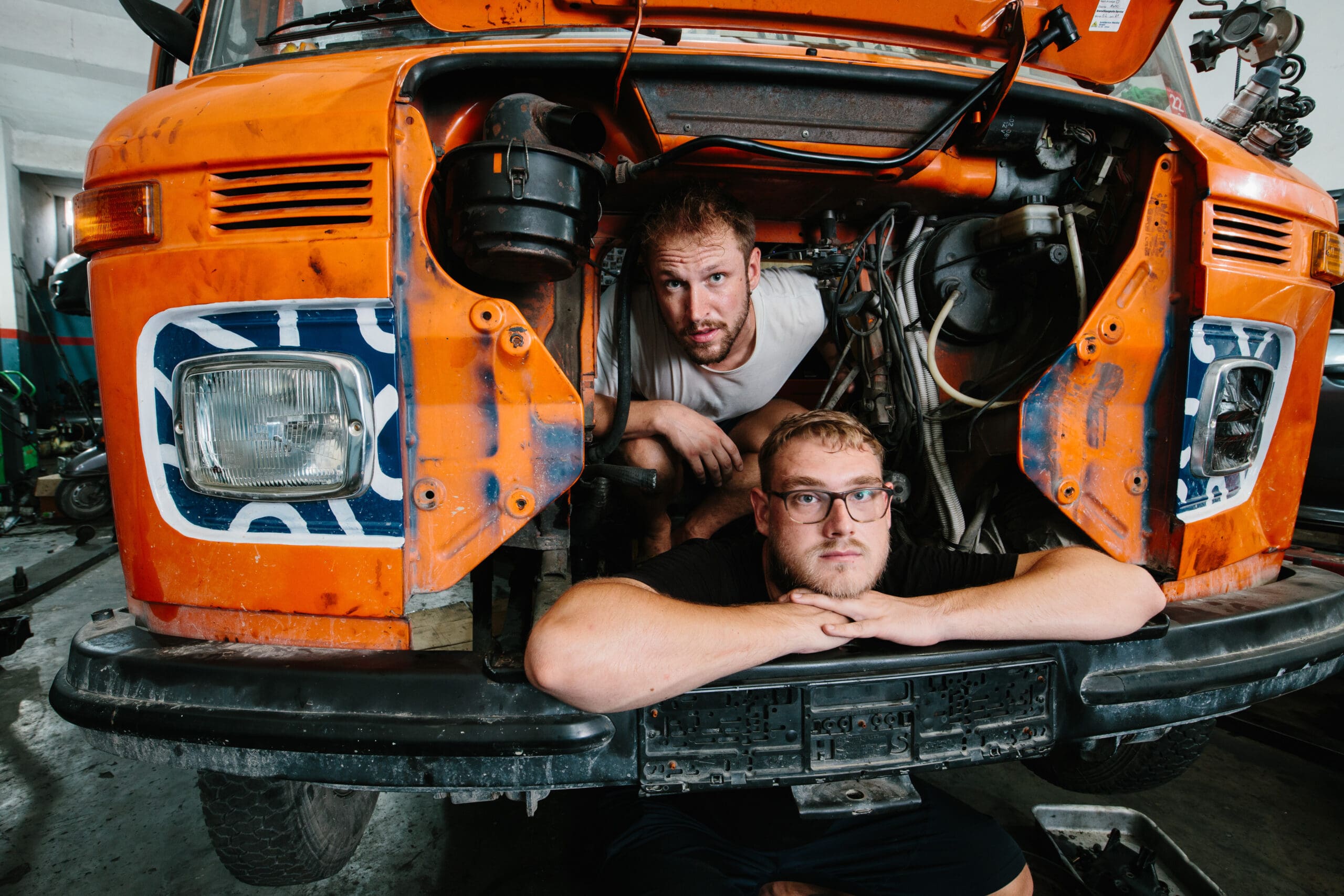
Both engine and lungs struggle for air as we wind our way past overloaded trucks and vertical drop-offs at 5,300 meters. Fingers and face tingle in spurts, and every bathroom break feels like running up the stairs to the fifth floor.
Hospitals respirate below 92% blood oxygen. When a traveling doctor measured mine at 85% a few hours ago, she gave us a cylinder of emergency oxygen, a tin of smelling salts, and wished us good luck—after all, we had 2,000 more meters of elevation to go.
The Leh–Manali Highway is a legendary route that connects the northernmost tip of India to the rest of the subcontinent via five of the world’s highest motorable passes. Of course, you could simply buy a plane ticket and be carried to your destination. But you could also get into an underpowered minibus near Bremen (Germany), take a detour across the Bosphorus, drive through Iraq, Iran, and Pakistan, and simply take matters into your own hands. Phillip and I, best friends since our school days, opted for the latter, although we never really planned it this way.
In 2016, I came back from a semester abroad in India, and while I was trying to explain to Phillip (who, at the time, was lucky if he ever left the sofa, let alone his homeland), what a feverish, dream-like reality slap I had just had, I realized he had to see it for himself. Out of a thirst for adventure, a love of tinkering, and protection from culture shock, we decided to take the overland route: to comfortably convert a bus, roam the wilderness at a snail’s pace, and have a good time. But we hadn’t taken the reality factor into account. Severe earthquakes, armed escorts, suspicion of espionage, and diesel shortages—we slowly came to understand why the hippies had to relax in Goa after this trip.
After exactly six months of traveling through Europe and the Middle East, we find ourselves just over the Pakistani border in Amritsar, India. We drive through the central north for almost four weeks, until we ask ourselves who actually had the stupid idea of traveling to one of the most populous and hottest places in the world in a vehicle without air-conditioning. During the day, the bus heats up to almost 50°C, and the childlike curiosity of the Indian population nips any desire for privacy in the bud. If you manage to fall asleep at night despite the 30°C residual temperature, you can be sure that somewhere out there, a communicative driver is waiting to honk you out of your dreams sooner or later. As we settle down for a few days with a climbing community in rural Delhi and desperately complain about our lack of a plan, we are met with puzzled faces. A short time later, we are heading north. There is a small, handwritten note on the dashboard: Chandigarh – Manali – Leh. High up, in the North Indian Himalayas, we should find what we are looking for.
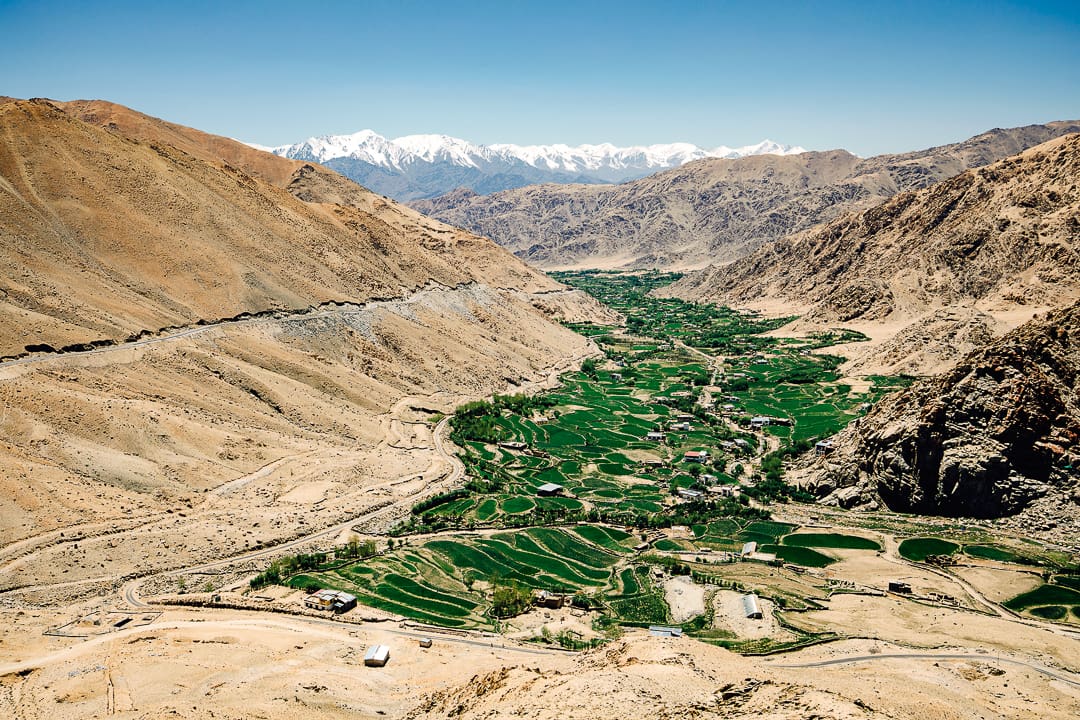
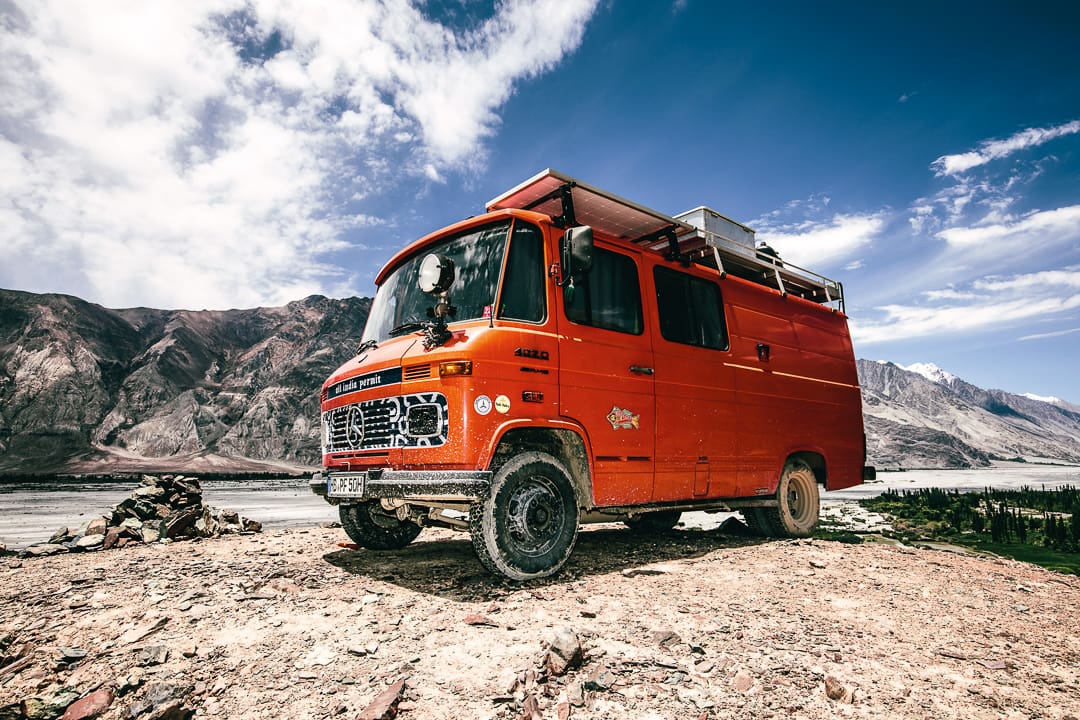
We skip Chandigarh and relax for two weeks in the grass-green Manali before setting off for remote Leh. We have around 450 kilometers ahead of us and some of the highest and most adventurous passes in the world: Baralacha La (4,850 meters), Nakee La (4,739 meters), Lachulung La (5,059 meters), and Taglang La (5,328 meters). Until a few years ago, you also had to cross the Rohtang La for the route. We are not upset that this part of the journey, whose auspicious Hindi name means “mountain of corpses,” has been made redundant by a tunnel since 2020. Although the Atal Tunnel only saves around 45 kilometers of road, it saves up to 10 hours of travel time (and around two to three near-death experiences).
When we wake up after an overnight stop in Jispa, the last village before the first mountain, I look into two puffy eyes. It’s 5 o’clock in the morning, the night was restless, and we’ve hardly slept. “Maybe one to two hours?” says Phillip, who was supposed to drive most of the route so I could take photos. No matter, it’s going to happen now. The mountain is calling. Or what was that? Wee out, coffee in, engine on. The sun rises, and we come up to meet her, closer and closer toward the sky.
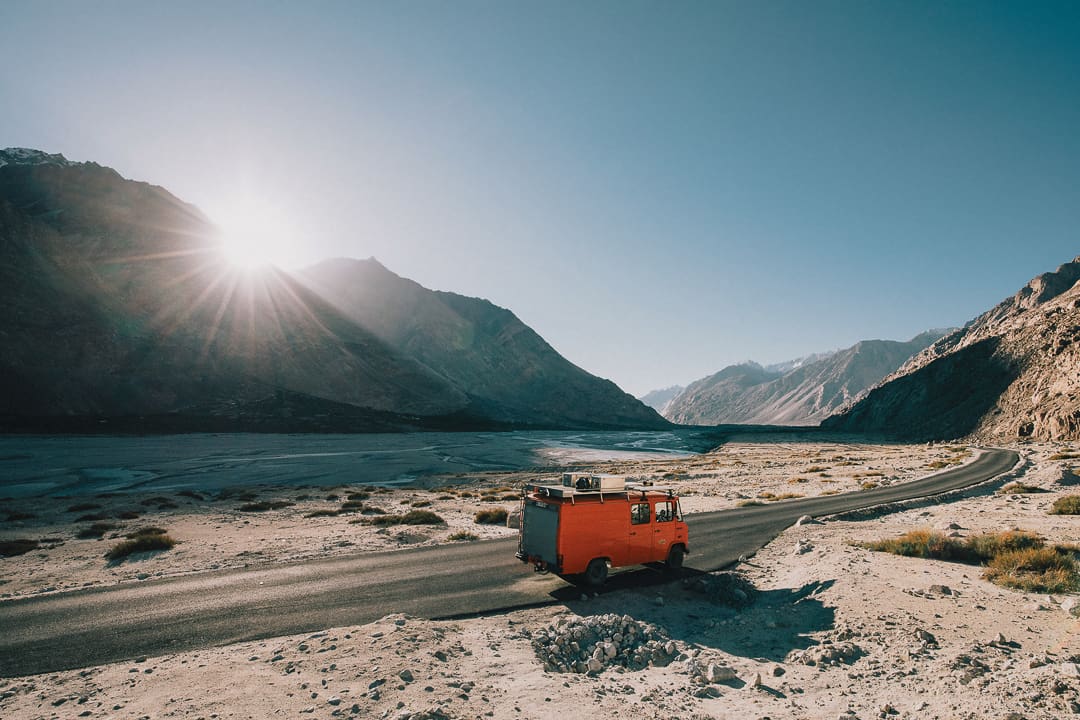
After the first hairpin bends, the elevation becomes noticeable. My hands and face start to tingle, and I feel like I want to breathe in deeper and deeper. A brief hypochondriacal nervous breakdown ensues, then I manage to pull myself together and become fascinated by the phenomenon of oxygen deficiency. Every passport check, and even every word that has to compete with our diesel engine (which is also suffering from the low air pressure and begins to soot more and more), is now a sporting challenge. Slowly, it all starts to be really fun, something that you could almost look back on with a certain pride.
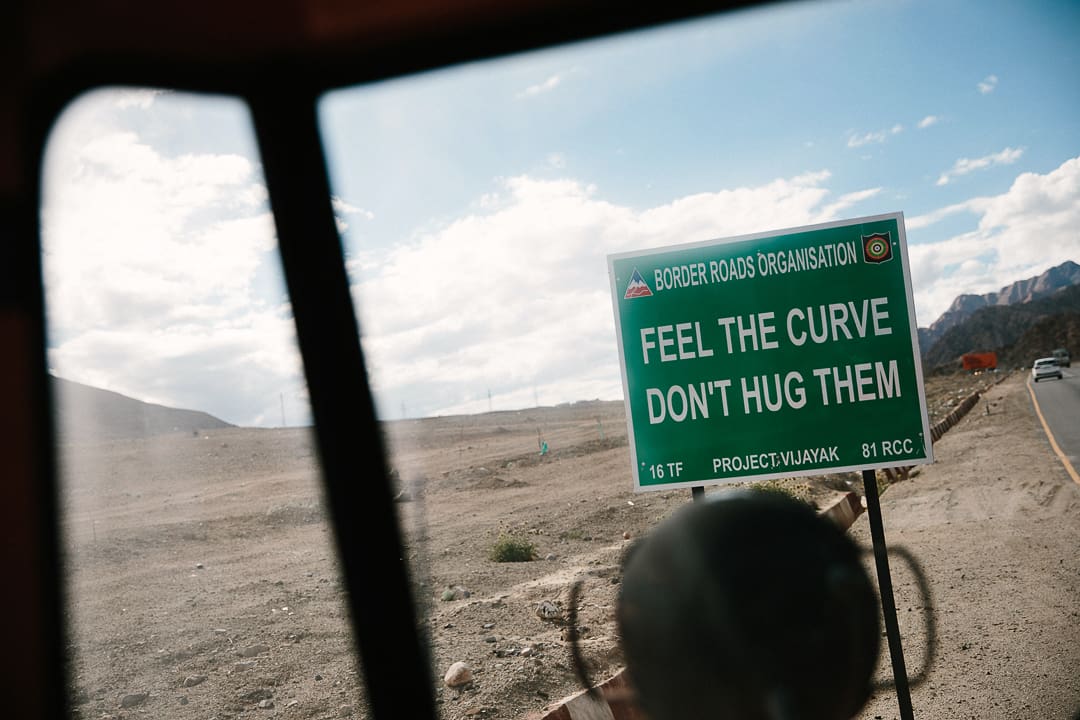
The engine stutters unrythmically, the speedometer needle trembles here and there at best. I keep thinking you have to imagine that someone told the Mercedes-Benz engineers in 1980 to please build this 407 D in such a way that, 40 years later, you could still drive it on the highways of the Himalayas. As improbable as that sounds, that’s exactly what they did. While we crawl up roads that don’t deserve the designation, Indian trucks pass us close by again and again. For them, the route is a necessary supply route to this remote area. It’s first-come, first-served, and everything is at risk. The consequences of the sometimes reckless overtaking maneuvers on the edge of the narrow mountain roads lie in the form of burnt-out heaps of metal on the slopes. It’s a macabre contrast to the otherwise enchantingly beautiful scenery that surrounds us and a permanent reminder that pride comes before a fall. When we stop for a photo on the last and highest pass of the stage after about 17 hours of driving with shallow breath, we are cheered on by passing, colorfully decorated trucks honking their horns. It’s a special club up here, and we’ve just been admitted.
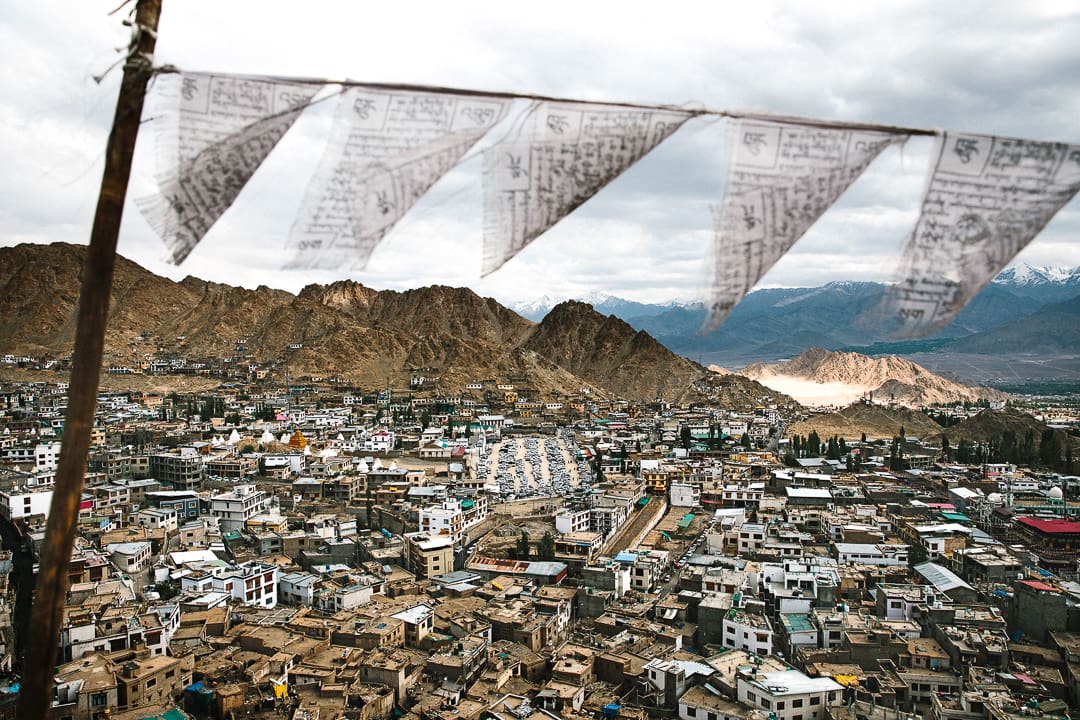
We park the bus overnight in the parking lot of an elevated stupa on the outskirts of the city. The next morning, we wake up in Leh to a quiet and pleasantly cool morning. I make myself a coffee and open the roller shutter. Reality check: We have by far the coolest living room in the world. Surrounded by mountains and lunar landscapes, we look out over the picturesque capital of Ladakh. We have actually managed to swap scorching heat and crowds for paradise.
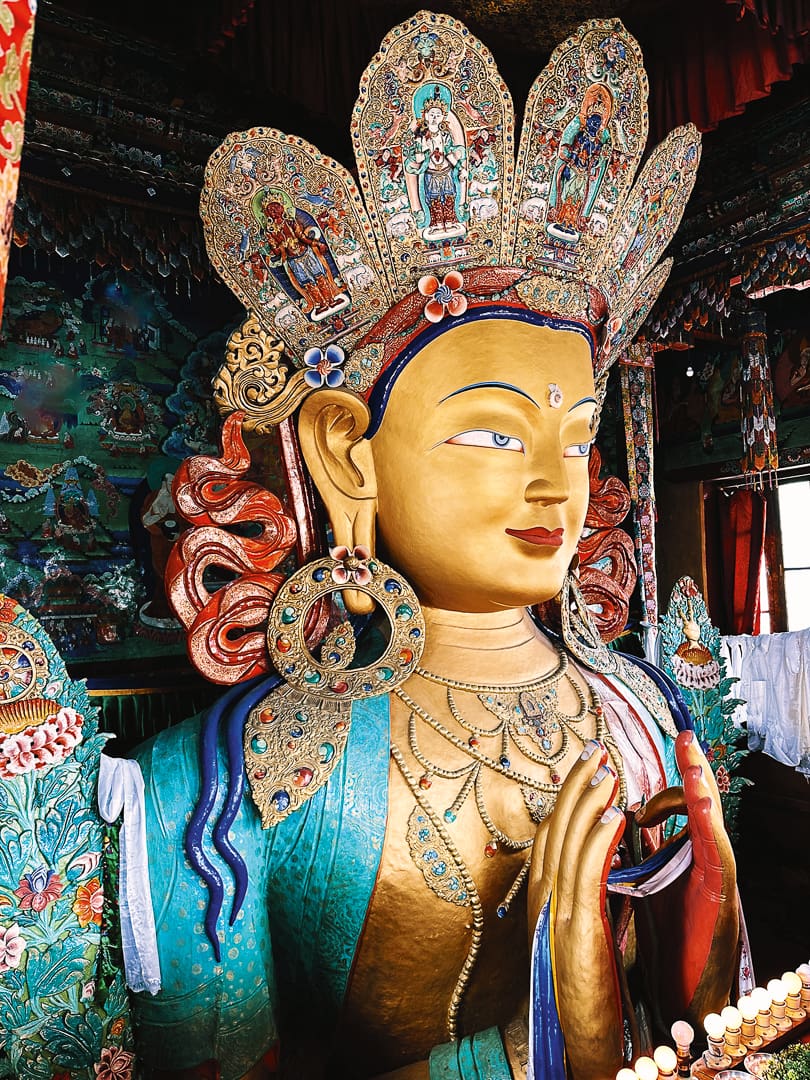
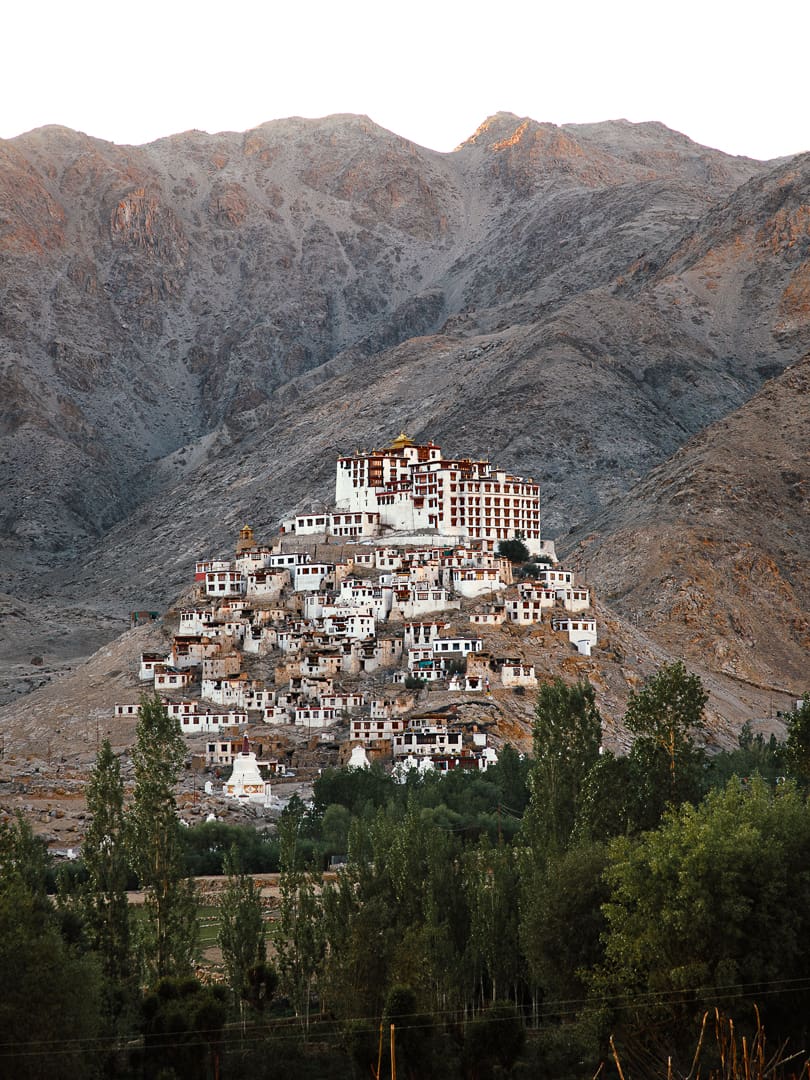
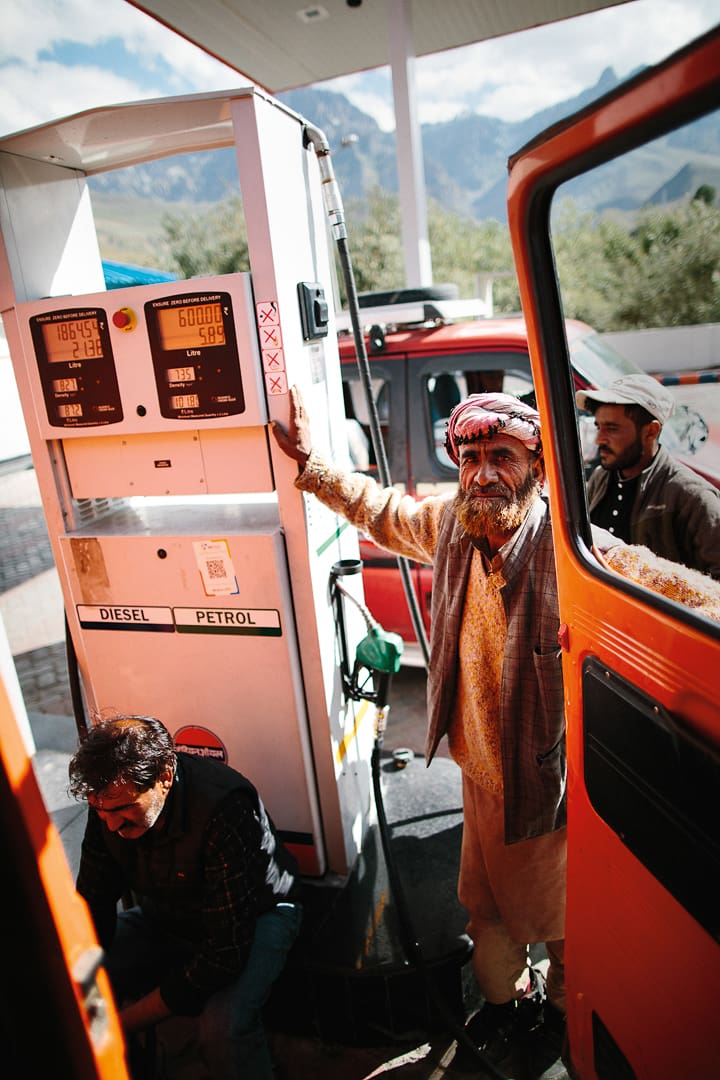
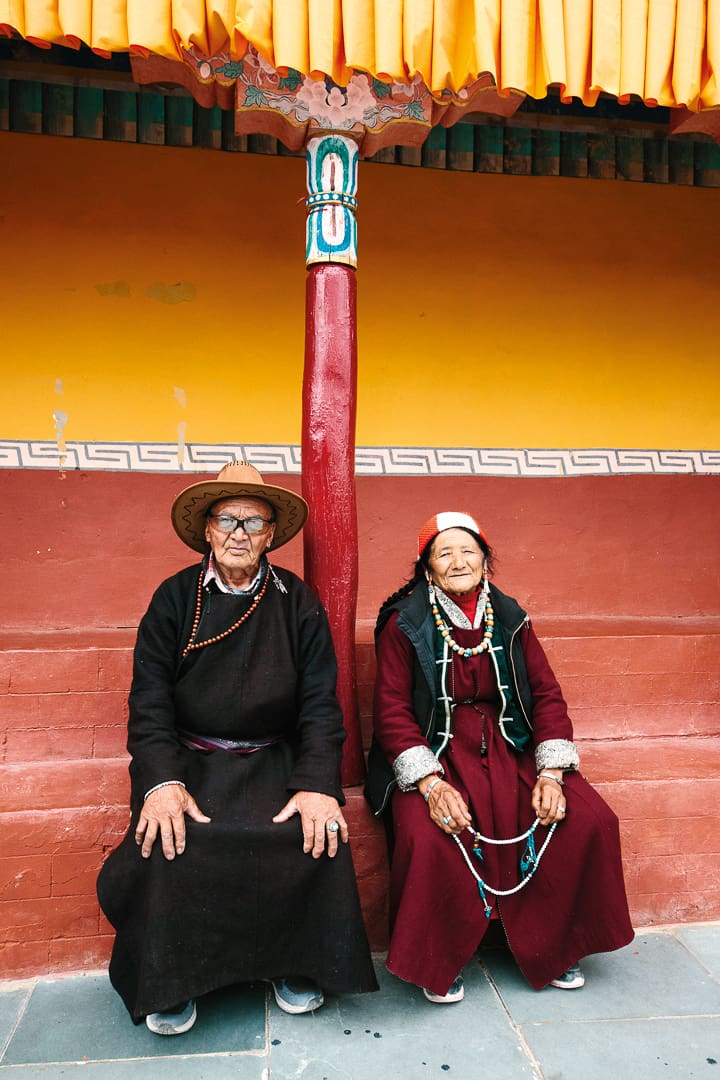
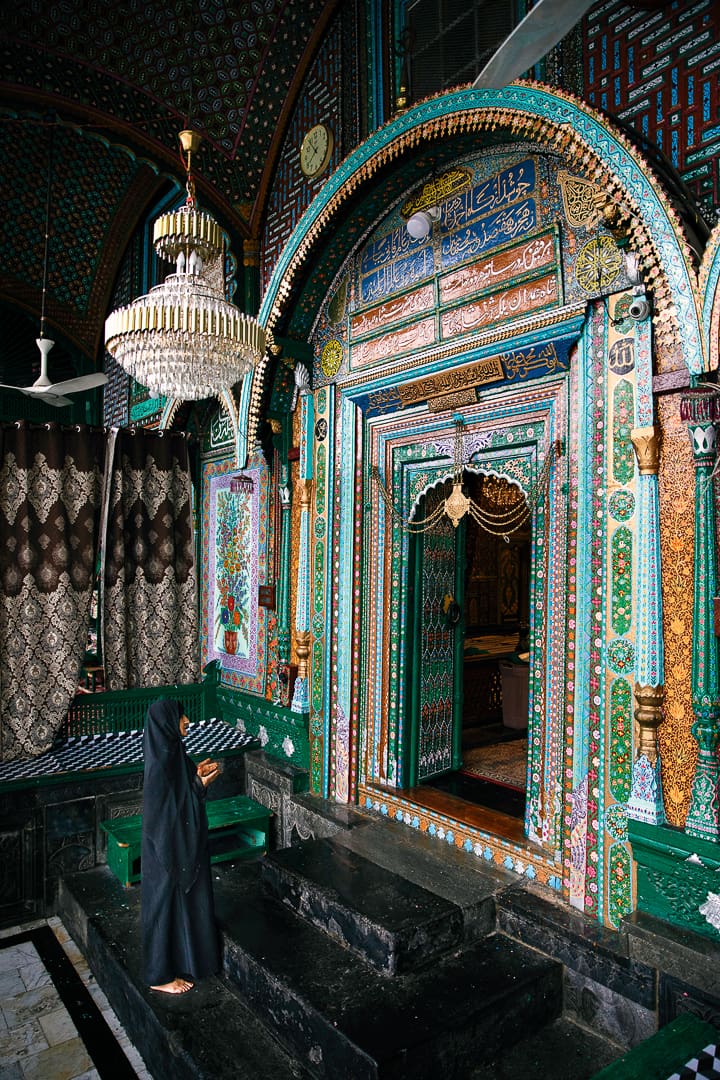
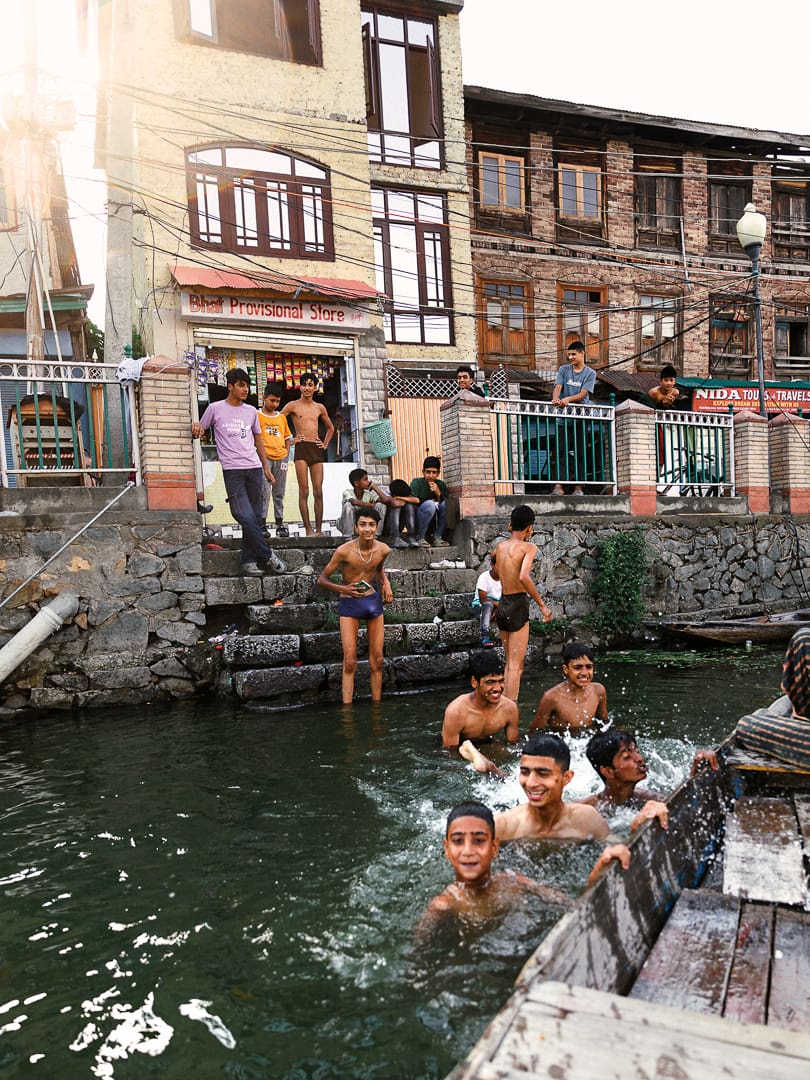
Over the next few weeks, we sleep under a twinkling starry sky, bathe in ice-cold Himalayan water, give left-hand-driving lessons to soldiers, and visit the Dalai Lama together with Buddhist monks. From time to time, we pick up local hitchhikers, who are always completely irritated by the fact that our vehicle is being driven by a passenger. Sometimes we meet international travelers with whom we cover entire stages, such as the Srinagar-Leh Highway that connects Ladakh to the neighboring state of Kashmir, which fascinates us no less.
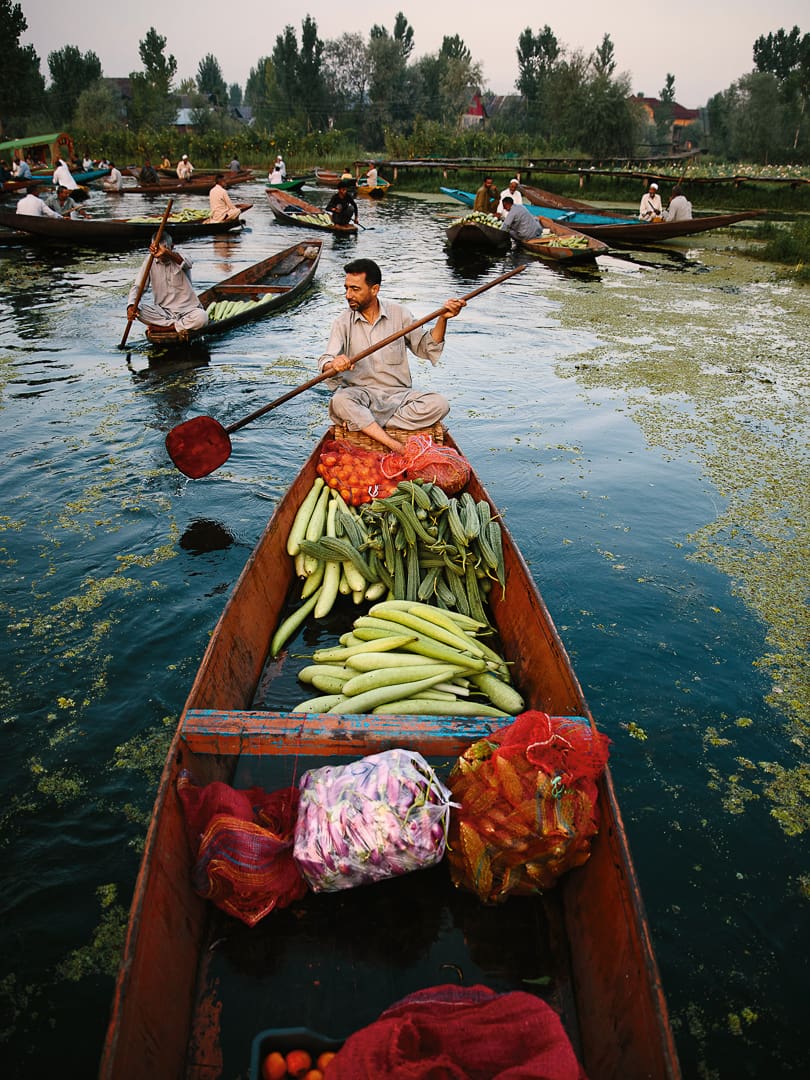
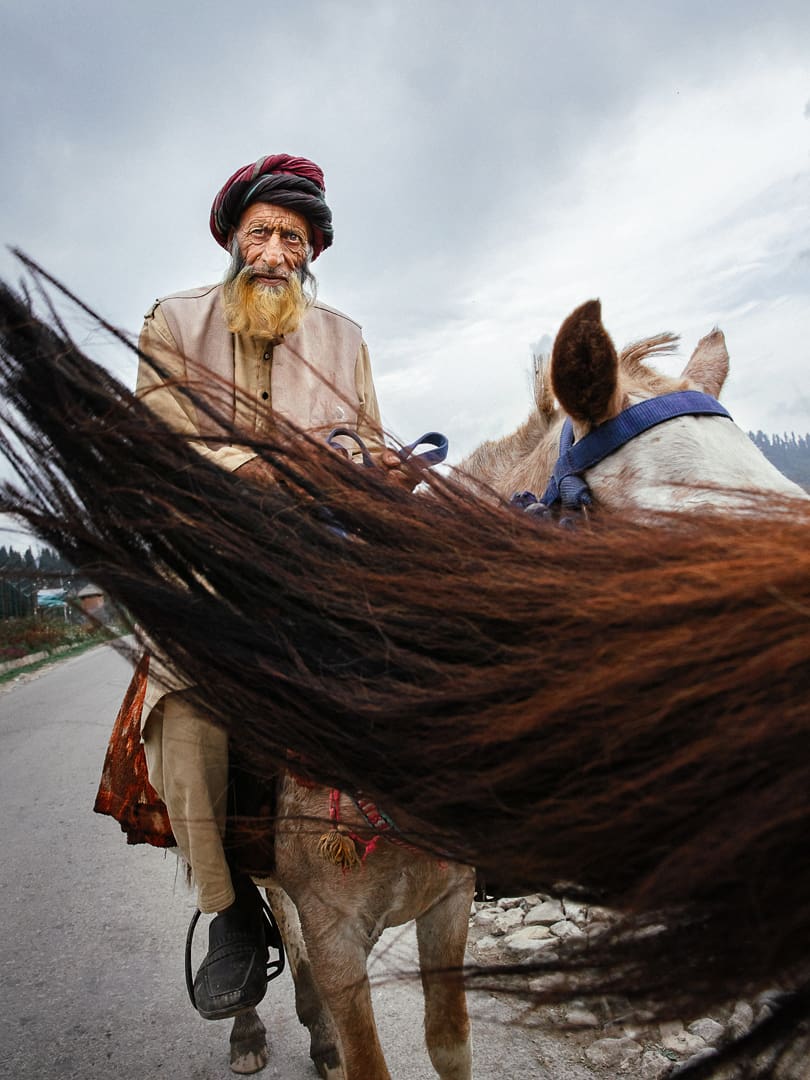
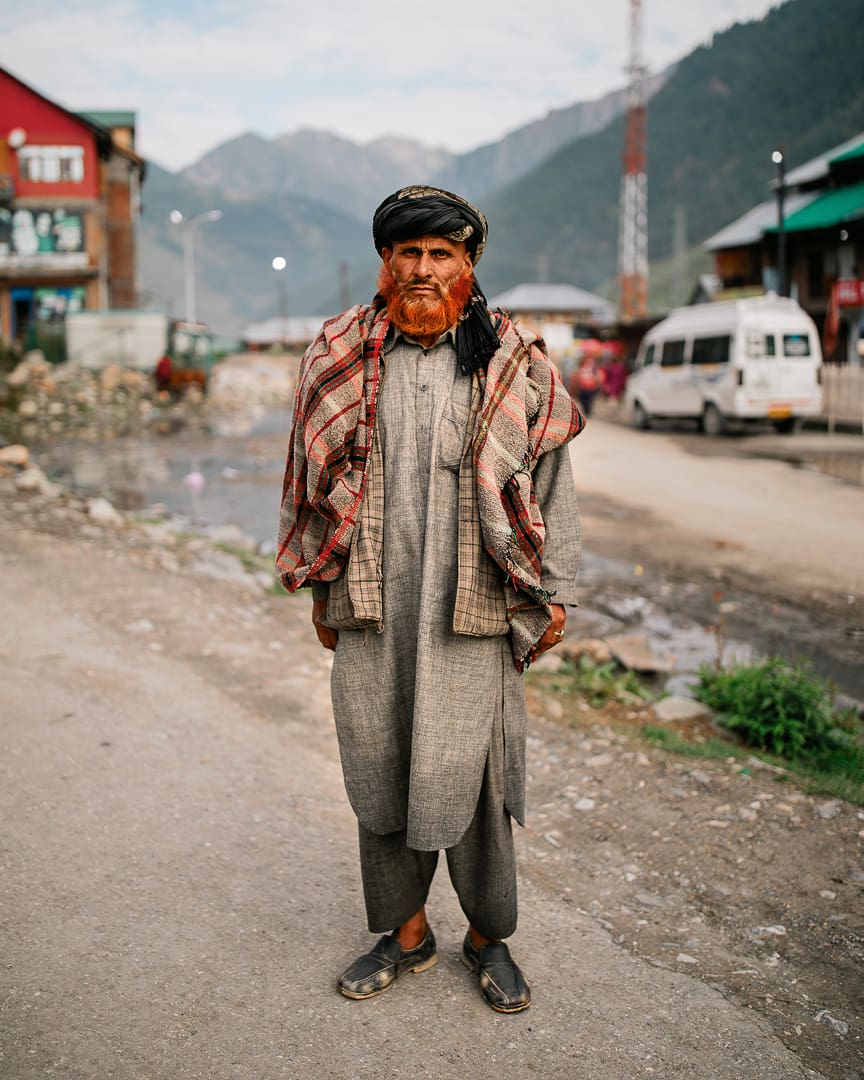
The entire region turns out to be a surreal mixture of Tibet, Tajikistan, Switzerland, and the intoxicating feeling of having reached the end of the world. At the same time, it tells stories of politics, religion, conflict, and identity. Life here oscillates between monk chants and military presence, between Buddhist ceremonies in Leh and Friday prayers in Srinagar. In Kashmir, horses carry travelers across green panoramas, while off-road tires dig into the dusty soil of Ladakh. What was once a single state feels like two worlds, captivating in their own ways.
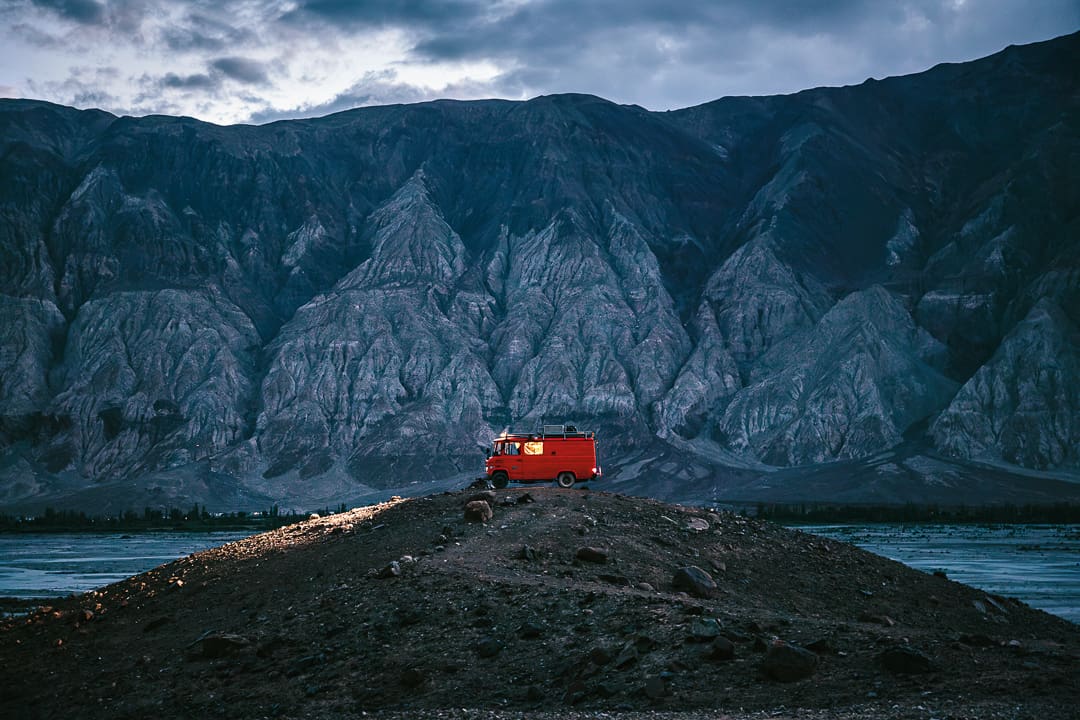
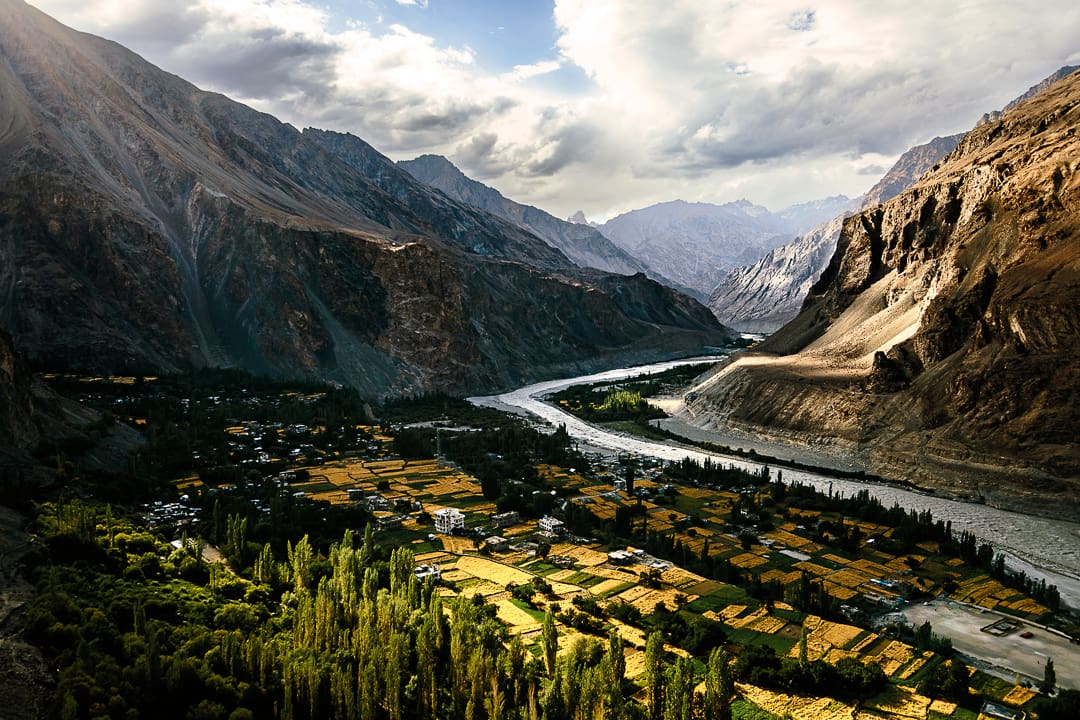
Two months after our arrival in Leh, we are sitting on a houseboat in Srinagar, the capital of Kashmir, planning our way back to ground-level India. We still have a good month before our vehicle has to leave the country, according to customs regulations. It’s enough time to make it to the south, prepare the shipment to Turkey, and hang out with the old hippies in Goa—but India has other plans for us. After an adventurous detour through a riverbed, we take the highway between Jammu and Amritsar when suddenly the engine starts to sputter. It smokes, and all of a sudden, nothing works anymore. I look at the dashboard: the temperature is at 120°C, the end of the scale—we are boned.
Everything screams total loss. Without knowing exactly what was about to happen, we had an idea, and yet a grin on our faces as we were pulled along the Punjabi Highway on a tow rope that soon became far too short.
What occurred just two hours’ drive from the densely populated, workshop-lined capital of Punjab could just as easily have happened anywhere and at any time: At the start of the journey in Europe; in Iran with the Revolutionary Guards breathing down our necks; in Pakistan, with a police escort in Taliban territory; or in the high mountains with daring roads full of potholes and meltwater that we had just crossed. But it happened after we had experienced the most incredible adventures and the highlight of our journey in our brave expedition vehicle for 20,000 kilometers. Only pessimists would have called it bad luck.
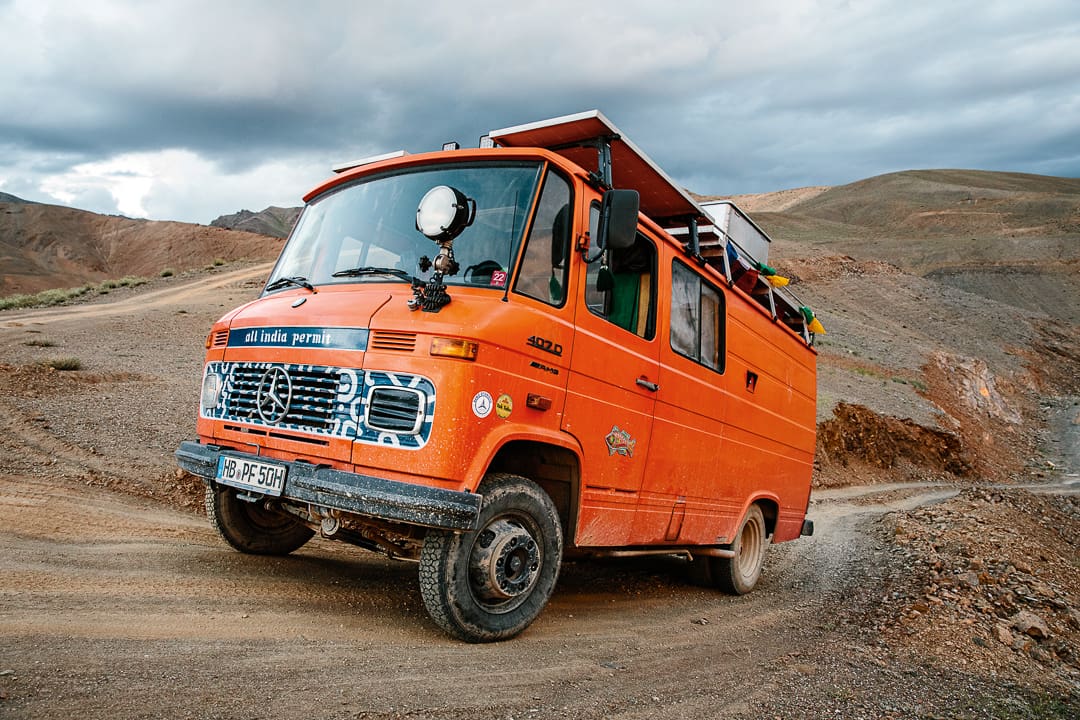
Our 42-year-old OM616 engine is widely regarded as one of the most robust machines ever built. Some are said to manage up to a million kilometers and even more. In the end, our little friend just barely cracked 85,000 because we had to take an official detour that led through a riverbed so deep that the plastic propeller of our cooling system hit the water’s surface, bending and cutting open our radiator. We didn’t hear a thing because we were driving in first gear at high rpm over the rumbling gravel bottom in the water. It took about 20 minutes for the engine to get so hot that oil was spraying out of small slits that had opened between the head and block.
Ahead of us were four hard weeks of sweaty work, grueling uncertainty, astronomical costs, endless bureaucracy, Indian engineering skills, lost screws, and spare parts hanging in customs. And again, we are incredibly lucky: it turns out that Mercedes sold the license to build exactly our engine in the 1980s to an Indian car manufacturer, who still produces it in modified form today. Many spare parts that are now expensive and rare in Germany, such as our fan propeller, are available here for just a few euros—fresh off the production line and 1:1 identical in construction. Others, such as the pistons, have to be flown in from Germany, which is very expensive and time-consuming. When everything threatens to drag on indefinitely and fail due to import regulations, public holidays, and the G20 summit taking place at the Delhi airport, India shows its best side. The top customs authorities get together, change some papers, shift a few dates and facts, and we can officially take our spare parts with us on the same day as private luggage, without import duties. We can hardly believe it.
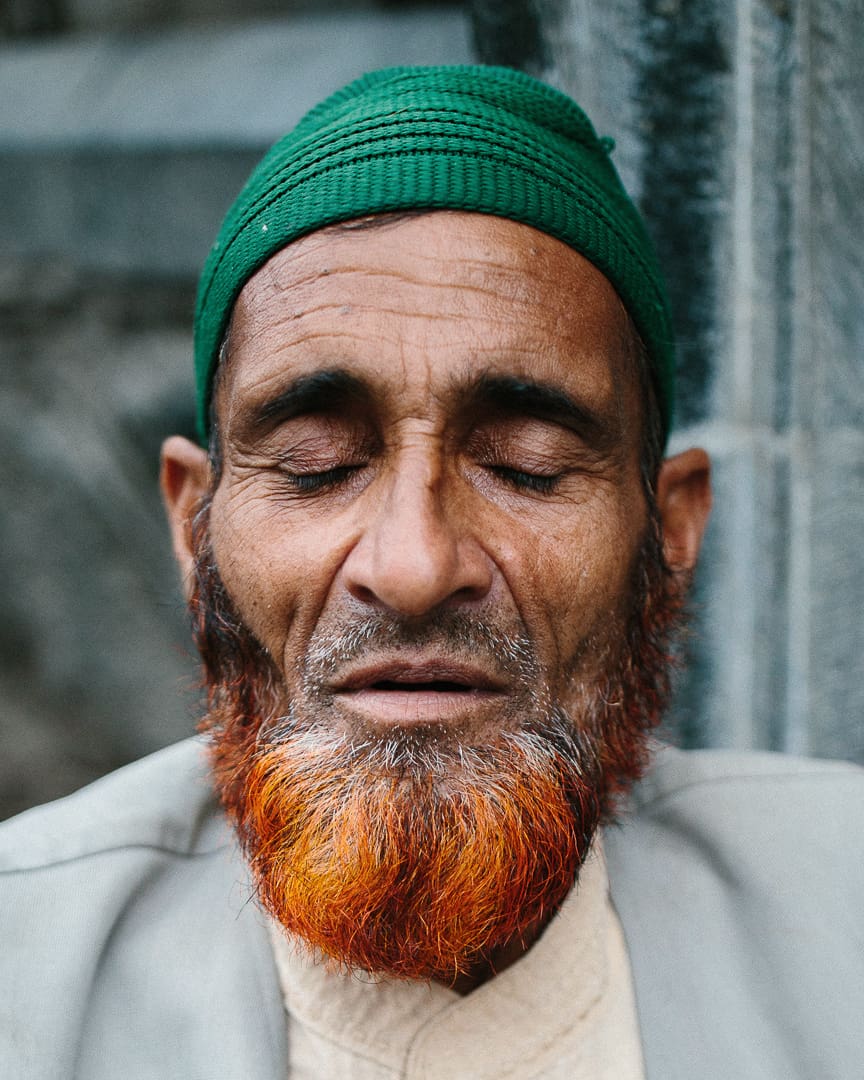
A short time later, the engine is propped up on two car tires on the floor of Judge’s small workshop, with whom we have spent the last intensive month with his mechanics. “Will it run?” I ask him.
“What? The engine?” he asks, puzzled. “Of course it will, don’t worry,” he says coolly, laughing at my question. He holds a frayed wire to the preheating system and pulls the starter. The engine rumbles and spits out thick smoke as if it were a drowned person just brought back to life—it’s alive. The cool and calm Judge jumps up. “Whoooooo! Ha! Perfect,” he says, clapping his hands loudly. I knew it; he didn’t believe it himself.
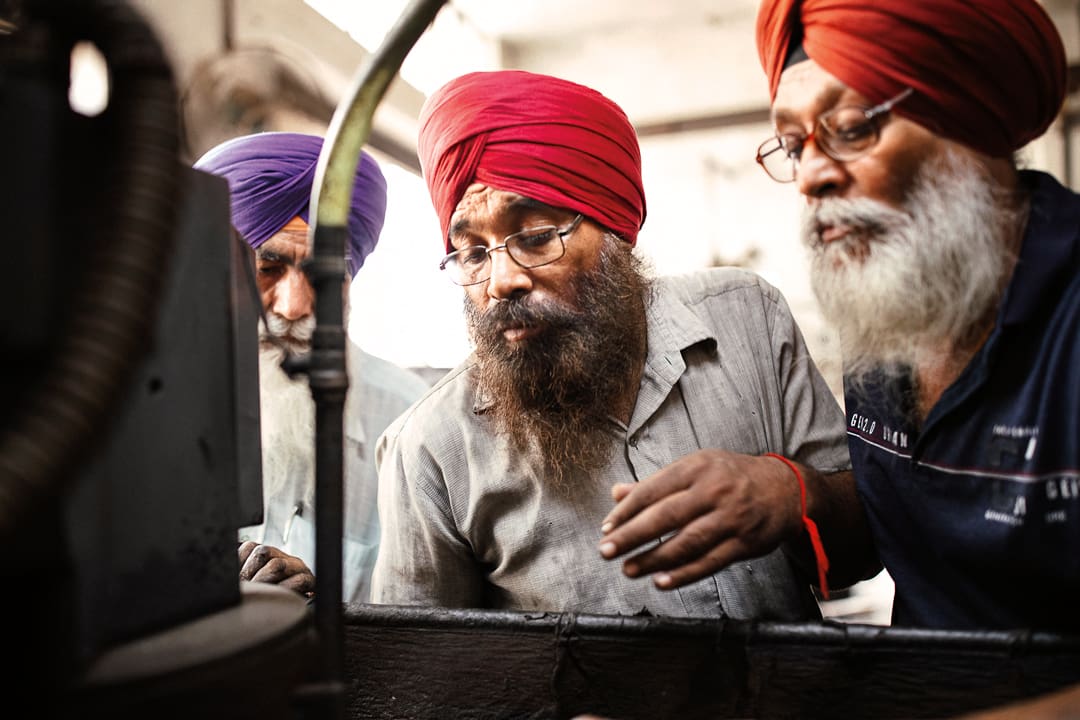
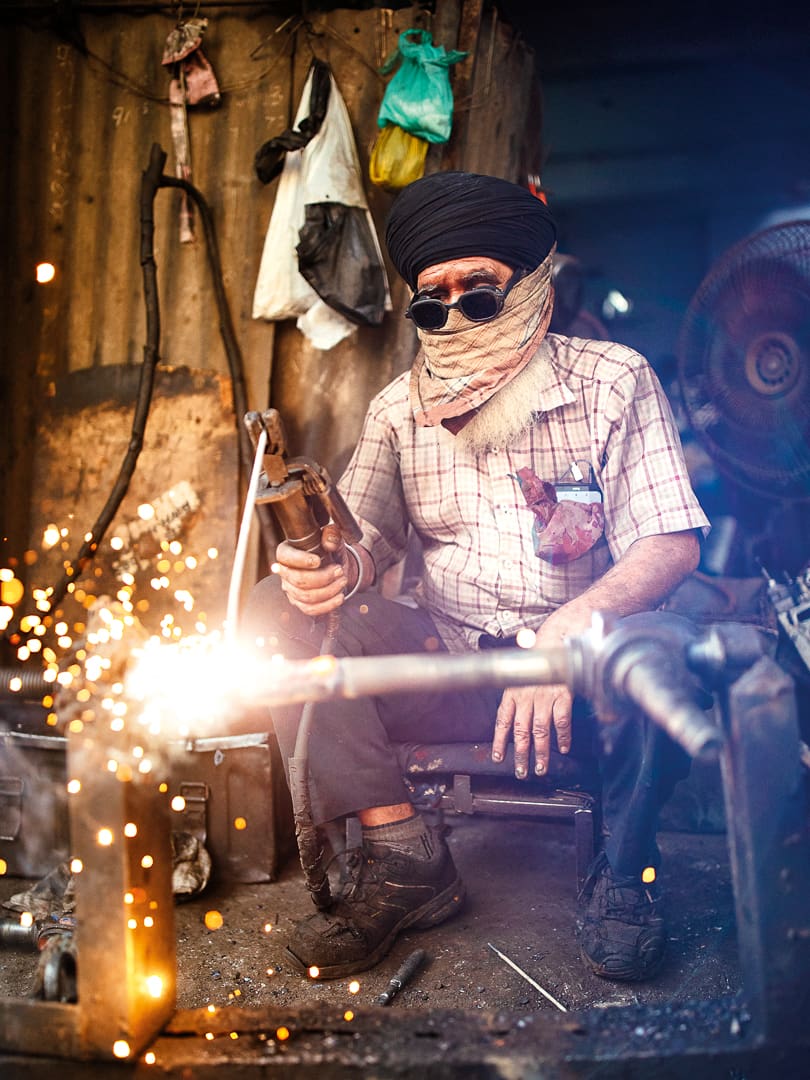
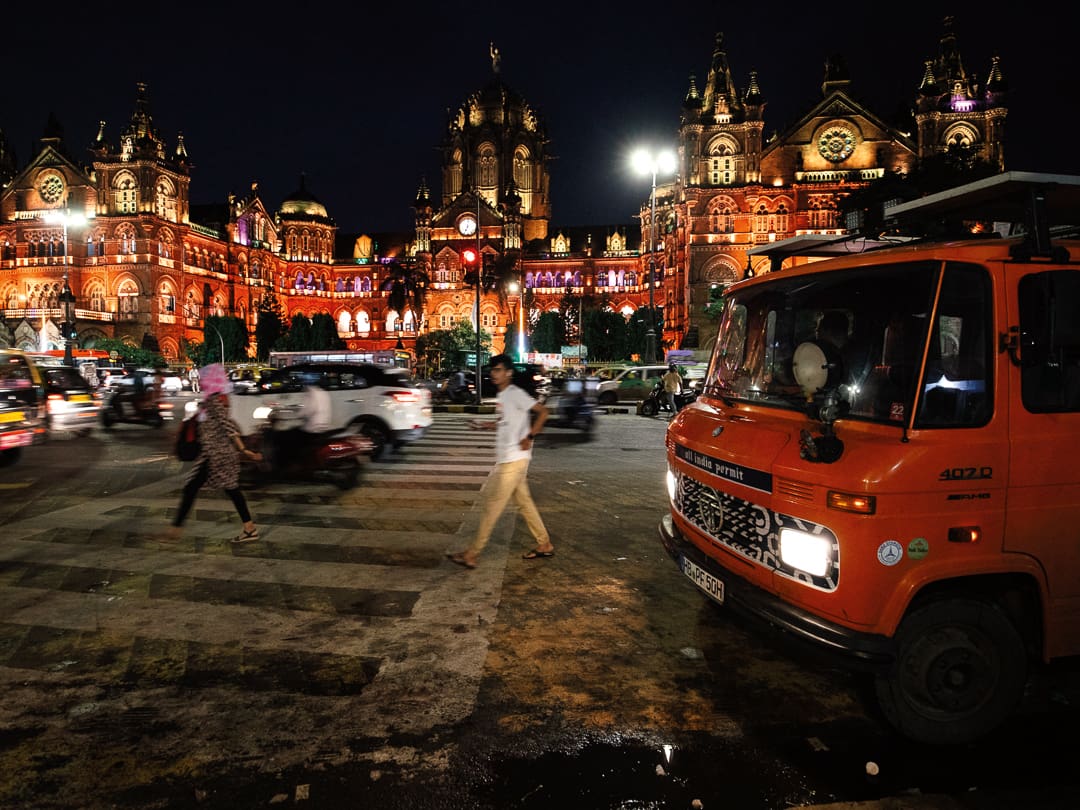
Two days later, we leave Punjab for Mumbai, where the freight forwarder is already waiting with a container to ship the bus to Turkey. We leave behind a small metal tray with screws and washers. In our luggage, we’ve packed full hearts and the most fantastic stories that we would never have dared dream of. And there’s still more to come.
Editor’s Note: This article was originally published in Overland Journal’s Summer 2026 Issue.
Our No Compromise Clause: We do not accept advertorial content or allow advertising to influence our coverage, and our contributors are guaranteed editorial independence. Overland International may earn a small commission from affiliate links included in this article. We appreciate your support.