

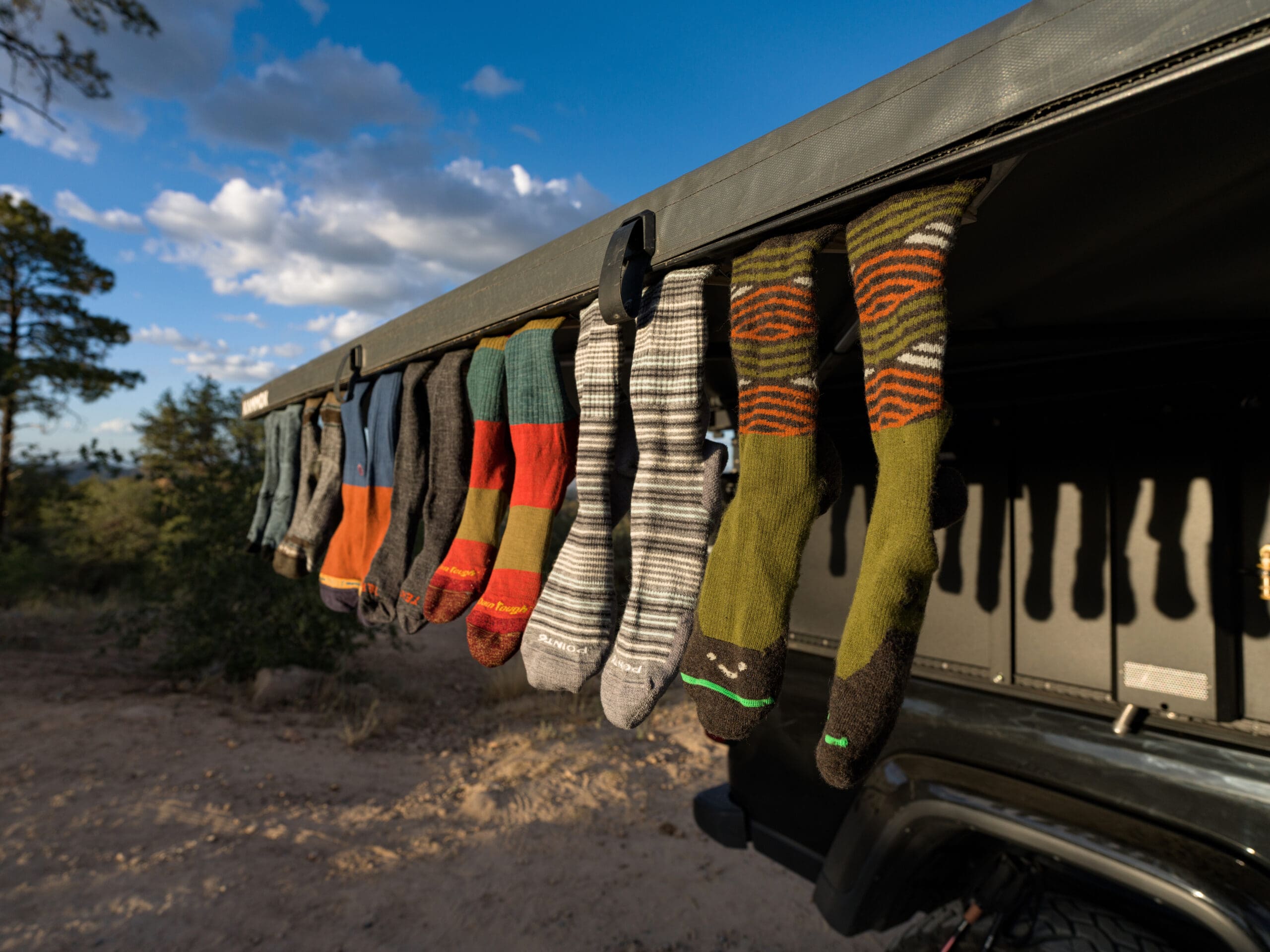
If hiking boots are like the tires on our overland vehicle, then socks are the suspension system. Since you can’t air down your boots to match the terrain, your socks must be ready to absorb every bump on the trail. They’re what protect your feet from friction and pressure, allowing you to go the distance in comfort.
But there’s more to high-performance socks than just cushioning. Durability, temperature regulation, moisture-wicking, odor resistance, and style separate the best from the rest. Trekking with sweaty feet—whether in sub-zero or sub-Saharan conditions—makes for miserable miles. Friction and poorly placed seams can create hot spots and blisters, those devilish tormentors of heels and toes. Saggy socks that have lost their elasticity and arch support can take a little oomph out of your step. And nothing wreaks havoc on the nostrils or relationships worse than a pair of malodorous socks bathing your tent or camper in “Eau de Okefenokee.”
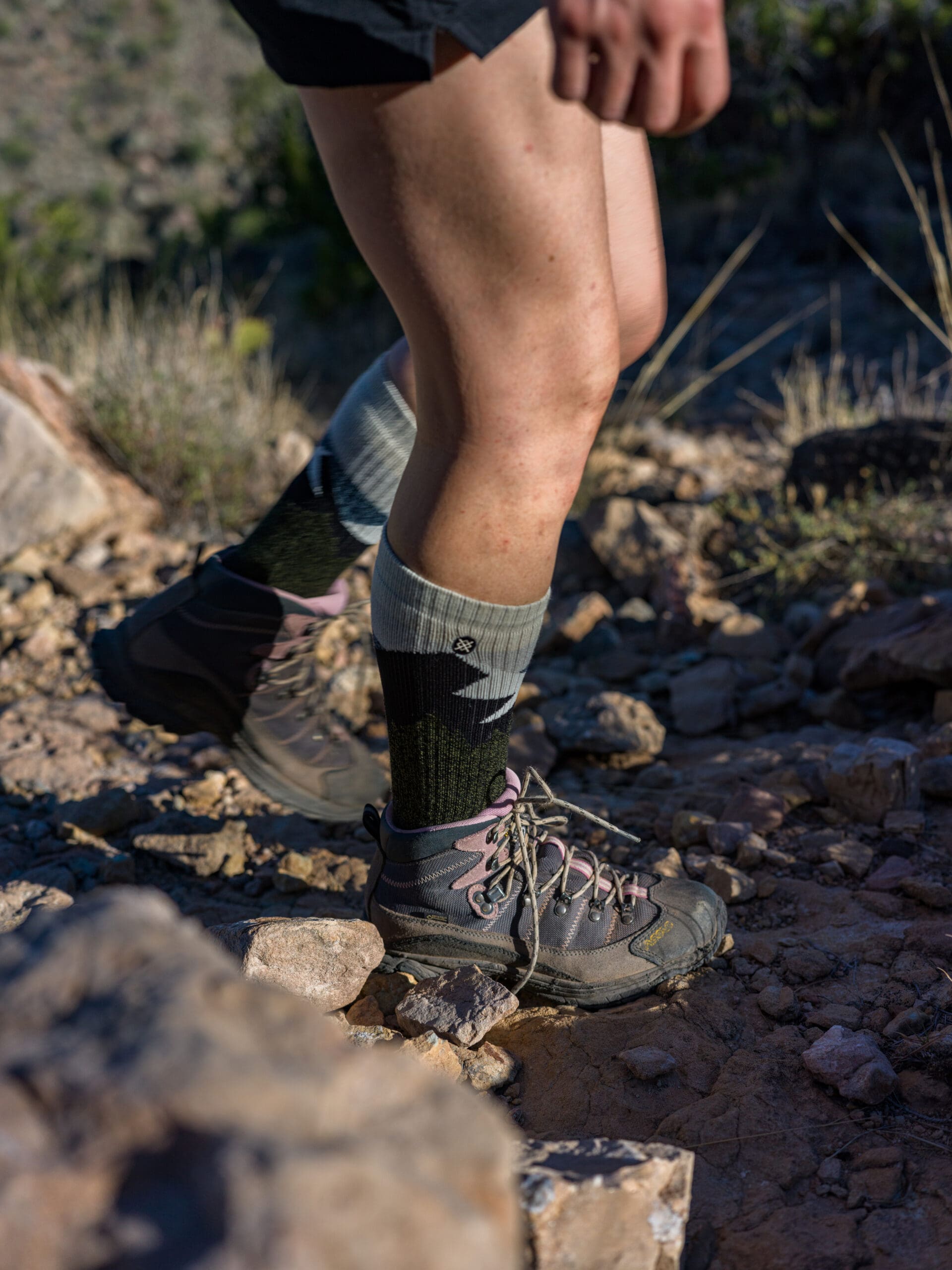
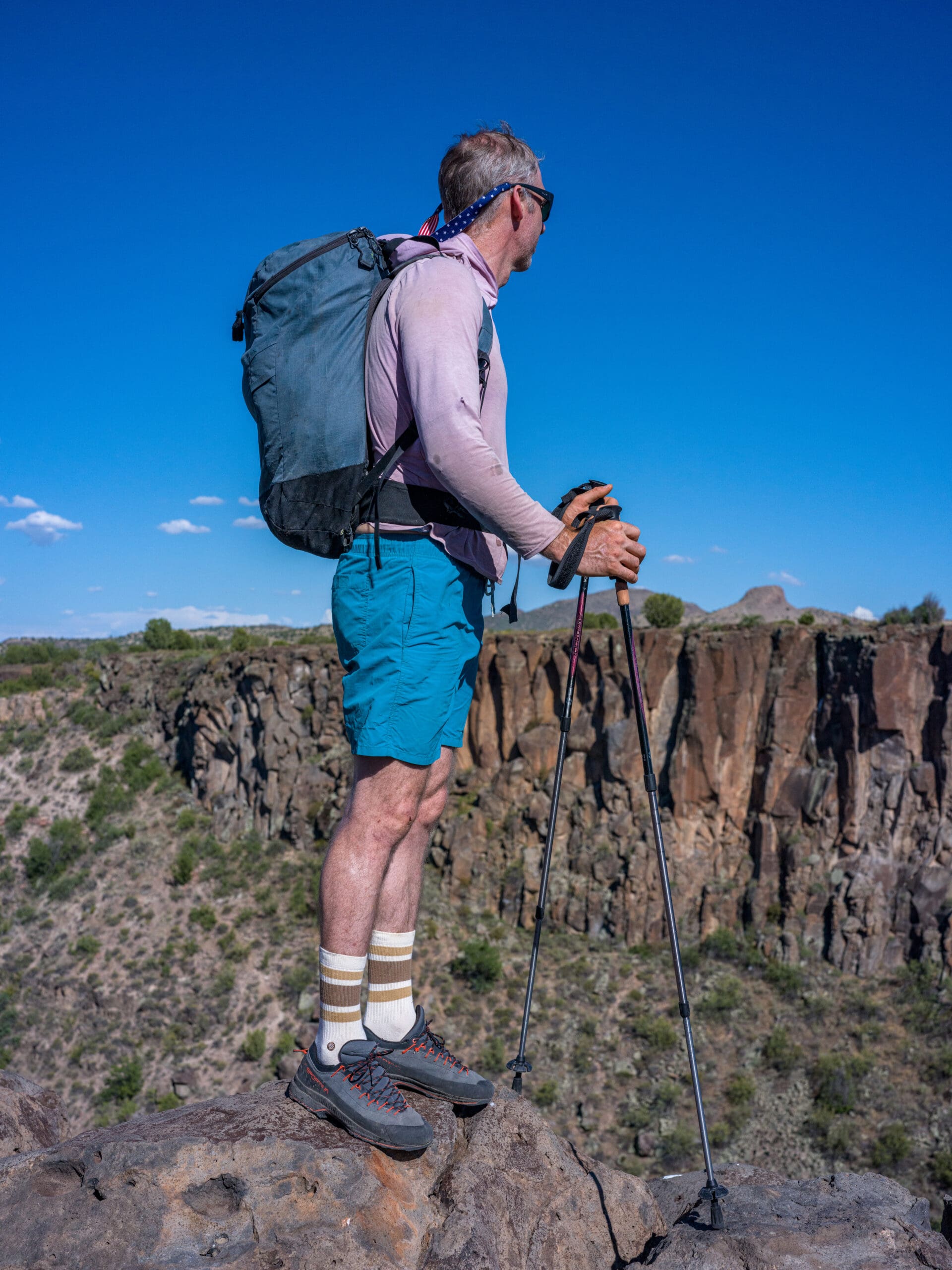
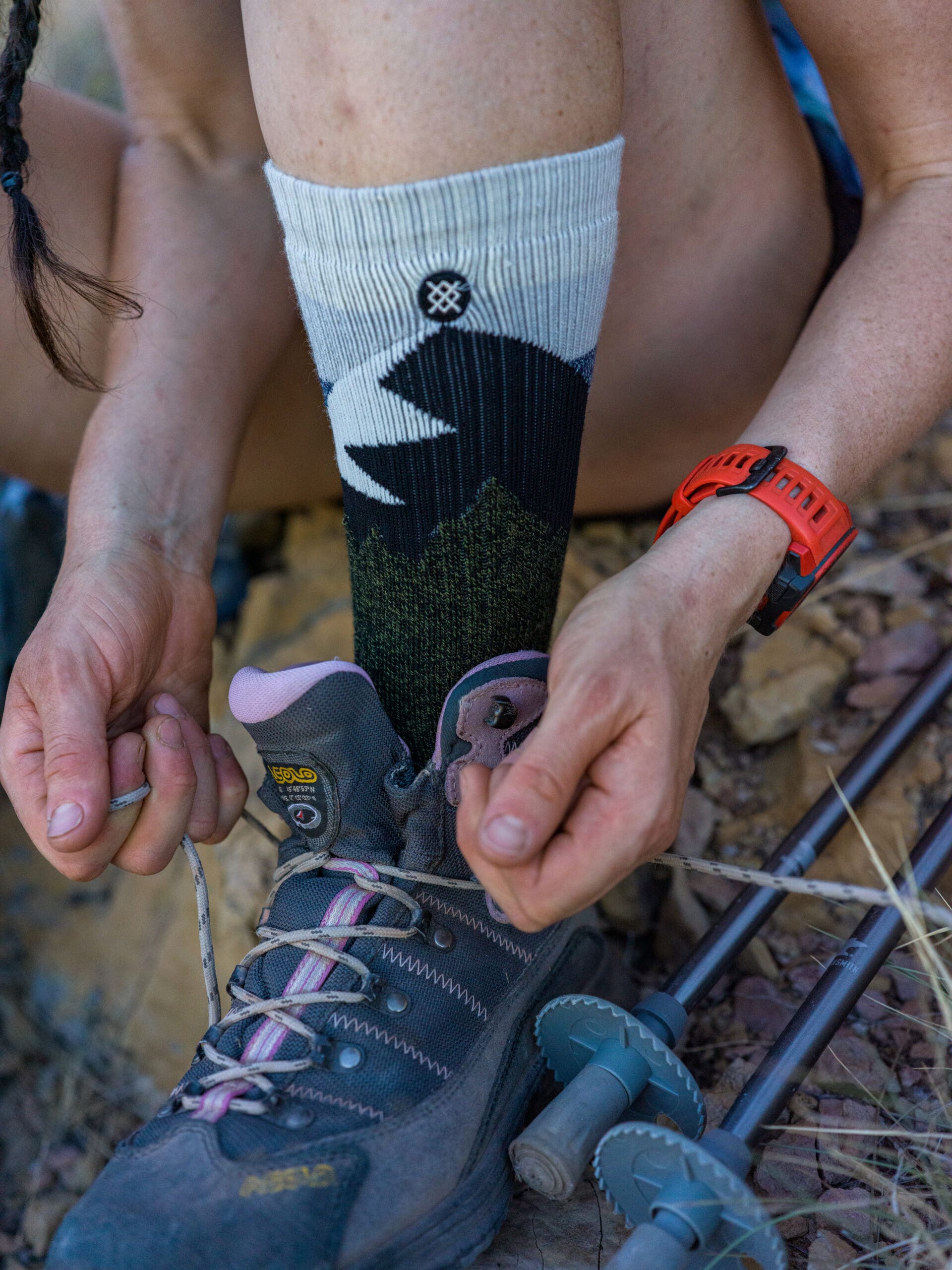
Here are a few points to keep in mind as you consider your options. Avoid cotton. While soft and comfortable, cotton doesn’t insulate when it gets wet and dries very slowly. Choose the cushion level for your activity—light for hot weather and day hikes, medium for long hikes, and heavy for cold weather and backpacking. And lastly, don’t forget to match the sock height to your footwear to prevent rubbing and protect from loose debris.
As no two feet are the same, I recruited a crew of sock testers to put a proliferation of brands claiming superiority through their paces. We pitted well-known ones and newcomers in a head-to-head tournament of “feet feats.” The results are based on real-world applications in the laboratory of not-so-everyday wear and tear.
Blister Free
WrightSock Coolmesh II | $18-20
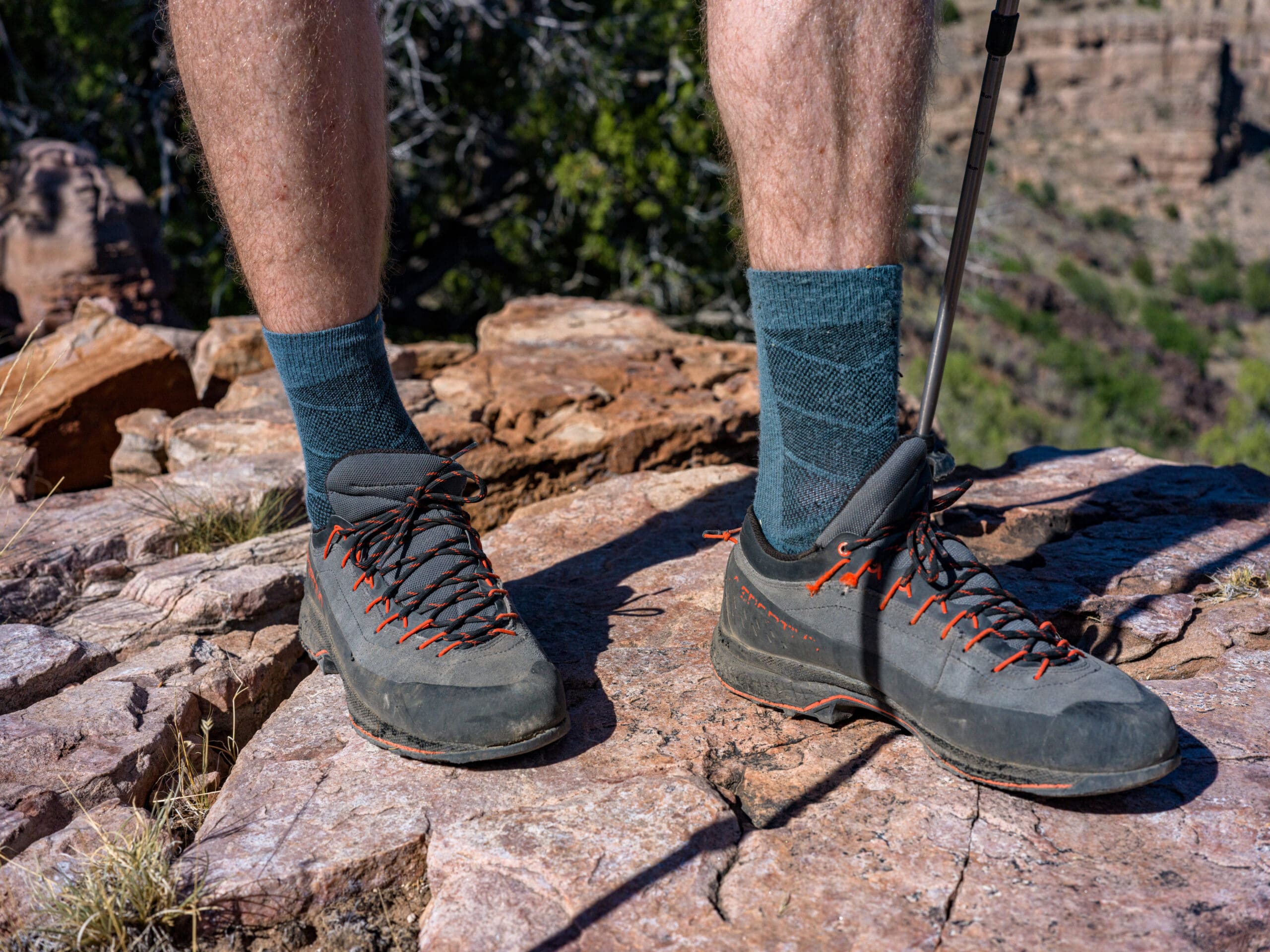
Guarantee is a strong word. But that’s the promise WrightSocks makes. No blisters. Guaranteed. A marketing claim is one thing. The feet of Erin Connery are another. One of my sock-testing recruits, Erin, is a prolific climber and route setter with more than 300 climbing first ascents to his name. He spends four to six days each week on steep, rocky, and often unmarked approaches to new climbing areas. I asked him to test WrightSock’s Blister-Free Guarantee. He agreed.
WrightSock’s defense against blisters is a two-part system. The inner layer is a silky yarn that acts like a second skin, instantly wicking away moisture. The outer layer glides against it, absorbing the friction that would normally shred your foot. Instead of your skin taking the abuse, the two layers rub harmlessly against each other.
After two weeks of route setting, rock climbing, and rappelling, Erin found the double-layer design to be highly effective in preventing friction. “I loved how the cushioning was placed perfectly in the heel and toe. It gave me plenty of comfort for high-impact stuff, but the sock was still slim enough that it didn’t add any bulk inside my snug approach shoes,” he said.
The WrightSock Coolmesh II felt on the thin side compared to our other test socks, but they were proven blister beaters during the most strenuous activities.
Pros: Blister-preventing double-layer, precision-targeted cushioning, yarns made from recycled plastic bottles
Cons: Thin, snug fit, not as fashion-forward
Composition blend: Inner layer: 70% recycled polyester, 26% nylon, 4% Lycra, Outer layer: 71% recycled polyester, 24% nylon, 5% Lycra
Stance Performance Divide Crew | $20
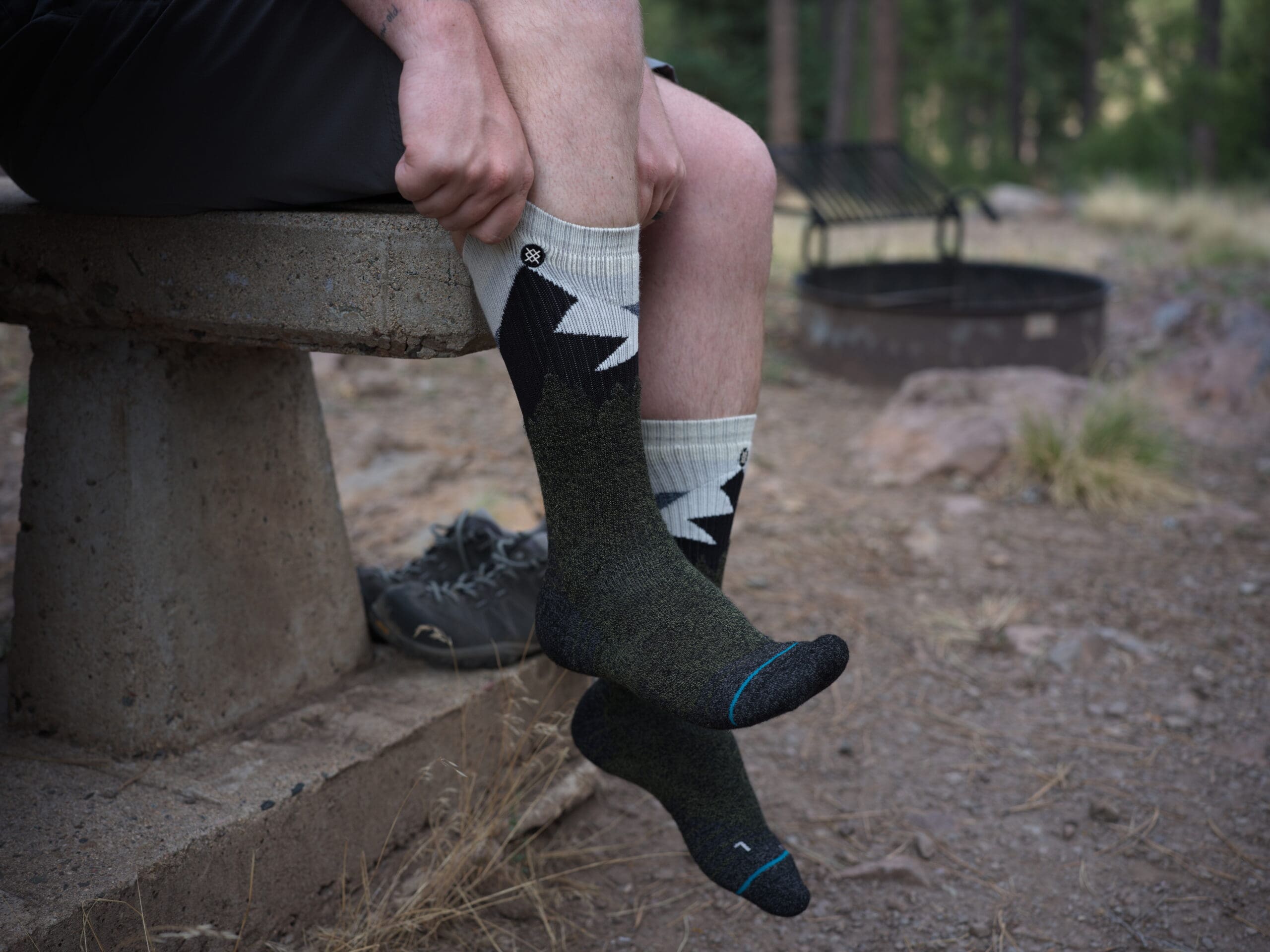
In December 2023, a friend sent me a gift package with several pairs of Stance socks. I could feel the quality of the weave the first time I touched them, and they had a little heft—socks of substance. I began wearing them daily, both in the office and in the field. Now, after three years of trekking and traveling in them, I have yet to experience a hot spot or a blister.
Along with their premium weave, the Divide crew adds an innovative feature: socks made for your specific feet. Just as you have a left and right shoe, these socks have a designated left and right sock with a handy L and R sewn near the toe to keep them straight. The toe box provides extra room, while the padding targets the contour of each foot. During our repeated descents and ascents in Sullivan’s Canyon, we found the contralateral design extremely comfortable, especially for those with big “big toes.” The customized fit reduced bunching and slippage in our boots.
The Freshtek moisture and odor control kept our feet cool and dry, two critical components in moderating the risk of blisters. As a thicker sock, the Divide crew might be better suited for moderate to cooler hiking days, but even in our near-100°F testing environment, they regulated foot temperature quite well.
Pros: Proven durability, left/right foot design, Freshtek moisture and odor control
Cons: Heavier weave, not as cool in warm weather
Composition blend: 34% Merino wool, 34% polyester, 29% nylon, 3% elastane
Odor Resistance
Teren Traveler | $24
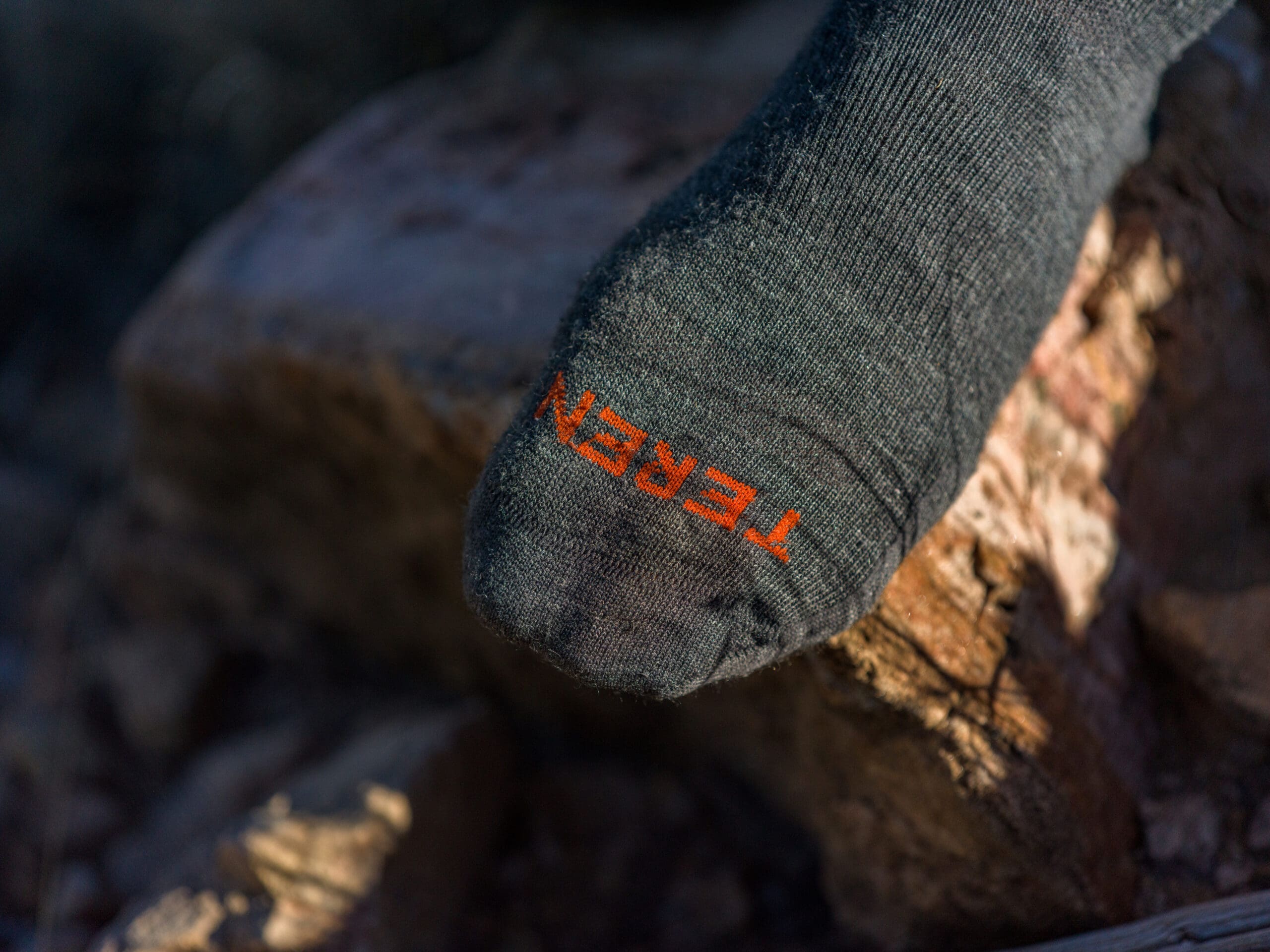
Teren’s recent foray into hiking socks builds on one of its brand pillars: odor resistance. Merino wool’s lanolin content naturally resists odor-causing bacteria. Teren’s Traveler socks combine one of the highest percentages of Merino wool (64%) with ventilation panels above the toes and the bridge of the foot to increase airflow in your shoes. I wanted to see if Teren’s new Traveler sock could pass the ultimate smell test. I wore them for seven straight days and nights: I hiked in them, mountain biked in them, did yard work in them, played pickleball in them, and slept in them. After my 24/7 sock honeymoon, I sealed the Travelers in a plastic bag and let them bake in the hot Arizona sun to see if they would ripen like those bananas I once forgot beneath my car seat.
After the seven-day smell-a-thon, I compared the worn socks with a brand-new pair. I asked my crew of sock testers to donate their nostrils to the cause. Teren Traveler socks lived up remarkably well to their odor resistance claim.
On the downside, Teren falls far short of other sock brands in the fashion department. Currently, they only offer one color, gray, and one style, mid-calf crew. Sizes are limited, too, as they only come in medium (US 8-9.5) and large (US 10-12).
Pros: Excellent odor resistance, sewn-in ventilation panels, compression arch support
Cons: Only one color and style, limited sizes
Composition blend: 64% Merino wool, 32% nylon, 4% Spandex
Darn Tough Heady Stripe Micro Crew Lightweight Hiking | $25
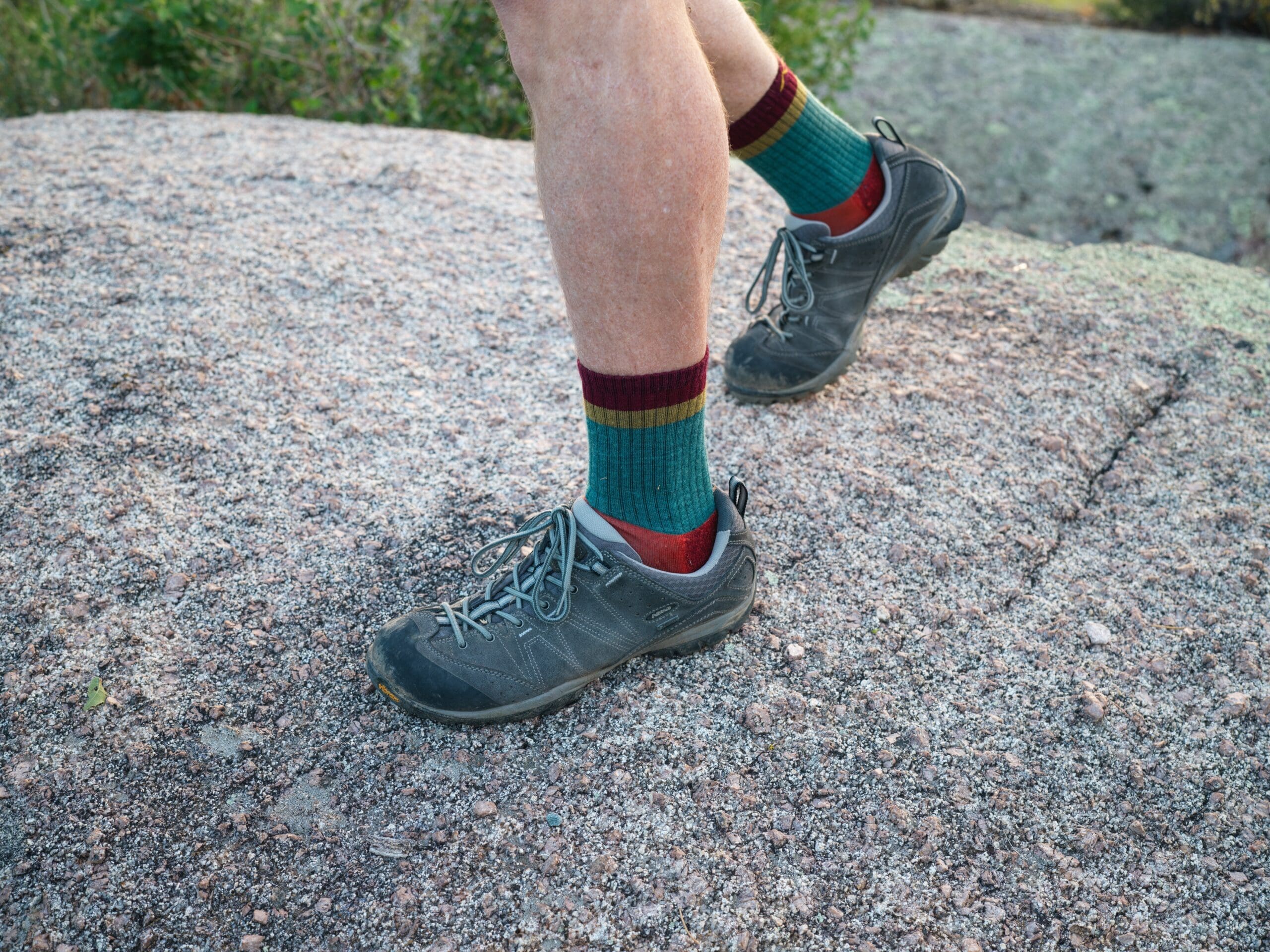
Darn Tough is a well-established brand with a loyal following that swears by its products’ durability and unconditional guarantee for life. But how tough would they be on foot odor? Whether driving across Australia or hiking the Tour du Mont Blanc in Europe, laundering clothes is often inconvenient and infrequent.
Our crew found the Heady Stripe to be an all-around performer that refused to succumb to the sweat and stench of all-day hiking, keeping our feet fresh and dry from dawn to dusk. The socks’ lighter weight made them fast drying even after an accidental slip into the creek. We were impressed at how well they wicked away moisture and maintained their fit. And everyone appreciated the additional cushioning in the Achilles area, especially in such a lightweight sock. The combination of breathability and fine-gauge Merino wool not only made these one of our favorites on the trail, but also when we pulled off our boots.
Some found the fit to be a bit snug, so you might try a size up. But if you’re looking for nose-friendly companions for your feet, these socks should be high on your packing list.
Pros: High breathability, unconditional lifetime warranty, lightweight
Cons:Tighter fit
Composition blend: 47% Merino wool, 48% nylon, 5% Lycra spandex
Lightweight Hiking Socks
Smartwool Hike Mid Crew Light Cushion | $24
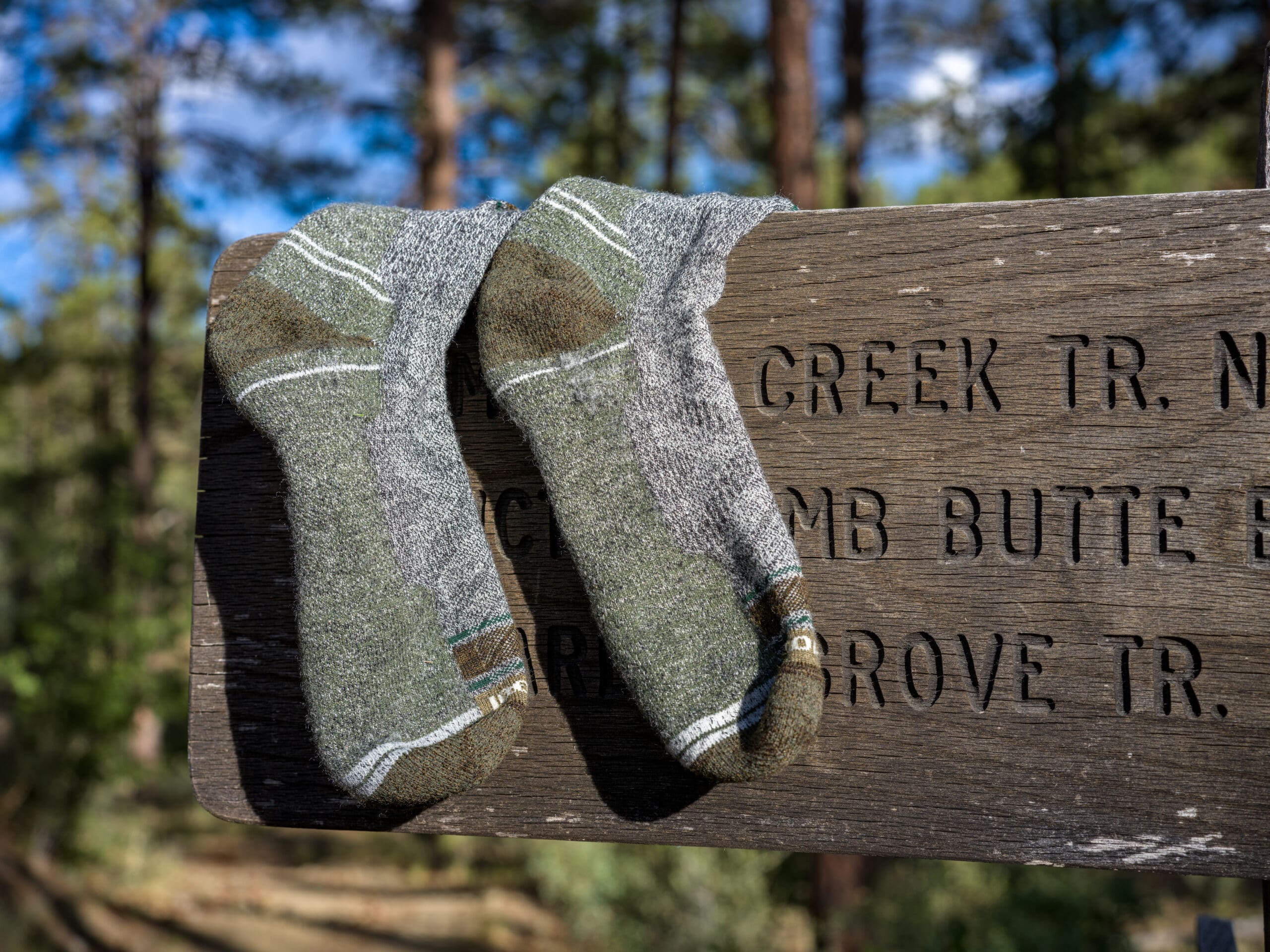
A trail classic since 1994, the Smartwool Hike sock proves that if you find a good thing, stick with it. With its time-tested blend of Merino wool, nylon, and elastane, I wore the mid-crew, light-cushion socks in the extreme conditions of Southern Utah and Northern Arizona.
The first thing I noticed after slipping them on was how snug they fit. For some, this may be problematic, but I found they cupped my heel perfectly and created a seamless seal between my foot and the insole of my boot. Surprisingly, once in shoes, my toes didn’t feel cramped by the socks either. One might assume a snug fit would make them hotter, but I found the opposite to be true. In these socks, my feet never sweat, even in 100°F+ temperatures on sand and basalt. They regulated my foot temperature admirably with their combination of breathability and moisture control.
The ultimate compliment I could pay them was that I didn’t notice them during my hikes. I never stopped once to adjust a seam or pull them up due to sag. Their inconspicuousness was their greatest attribute. You should note that cushioning in the sock is distributed across the entire sole of the foot, so they don’t provide targeted cushioning in the plantar forefront or heel as some other socks do.
Pros: No slippage, well-balanced temperature regulation, proven performance
Cons: Snug fit may not be for everyone, no targeted cushioning
Composition blend: 57% Merino wool, 40% nylon, 3% elastane
Fits Teton Too Light Cushion Crew | $25
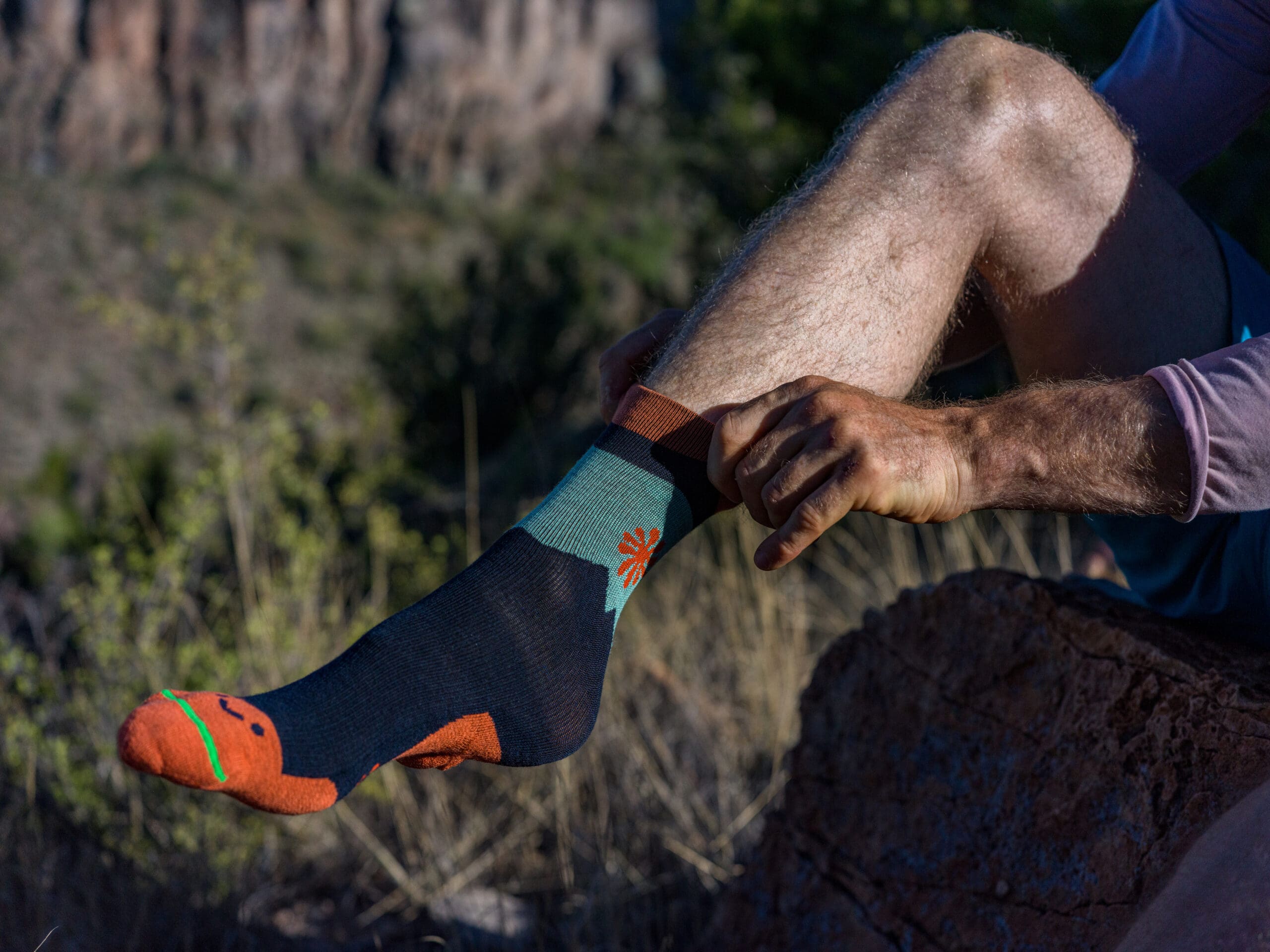
Don’t be misled by the whimsical smile sewn into the toe box of the Fits Teton Too Light cushion crews—these hiking socks take the trail seriously. I asked Leanna DeFere, a 32-year-old all-around outdoorswoman, to put the Fits Teton Toos through their rigors. Leanna knows something about toughness after surviving and recovering from a horrific plunge into a mountain crevasse two years ago that required 18 search and rescue volunteers and more than six hours to extricate her.
Leanna pushed the Teton Too Lights to their limits, descending and ascending the scree-strewn slopes of several Arizona canyons. July temperatures boiled to nearly 100°F. Her assessment? “These are cool performers.” With their Y-Line foot-freeing seam and patented Deep Heel Pocket, she found the Fits provided all-day comfort on the scorching black basalt rock. For such a lightweight hiking sock, she appreciated the targeted cushion zones in the toe, heel, and arch. And with their landscape-inspired designs and bold color schemes, the Fits Teton Toos also brought a smile to Leanna’s face. “Socks should be fun,” she declared.
However, it was the exceptional softness and comfort on the trail that truly made these socks enjoyable for Leanna. By combining function and fashion, they can make an intrepid statement in the wild as well as in the office.
Pros:Stay in place, well-balanced fit, bold designs and colors
Cons:Shorter 30-day return policy, might be too audacious for some
Composition blend: 65% Merino wool, 27% nylon, 6% polyester, 2% Lycra
Cold Weather Performance
Black Diamond/Point6 Merino Performance | $30
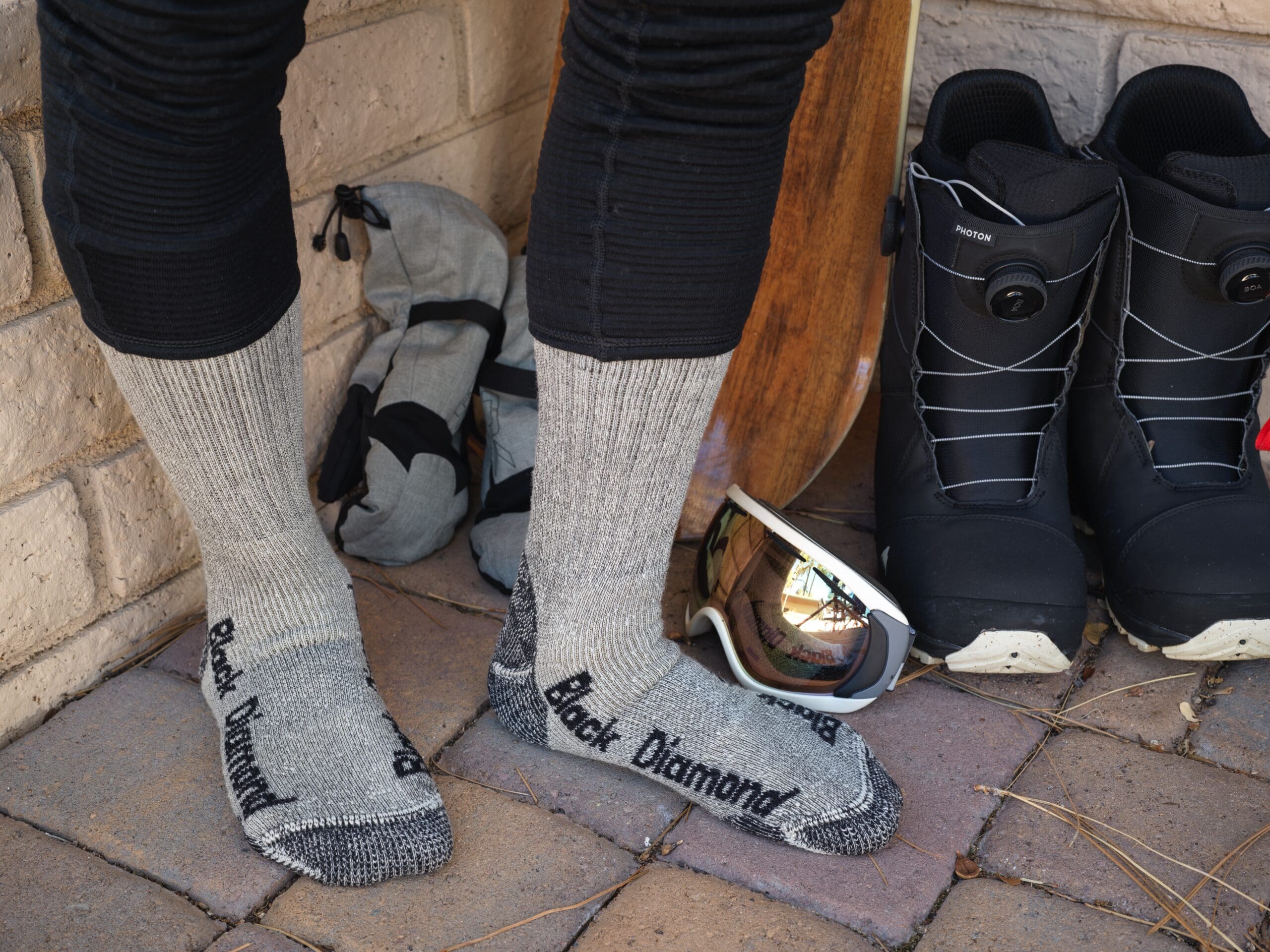
From mountaineering to backcountry skiing, Black Diamond gear thrives in the extremes. Understanding the demands of the most remote and unforgiving environments, Black Diamond partnered with Point6 master sock makers, Peter and Patty Duke, to design socks that could be trusted in the cold anywhere around the globe. So, when I began packing for my 18-day excursion to Antarctica, Black Diamond/Point6’s Merino Performance socks were at the top of my checklist.
Kneeling in a rubber Zodiac to photograph humpback whales and leopard seals along the coasts of Fournier Bay, Neko Harbour, and the Melchior Islands demanded socks that would keep my feet warm and dry even as glacial waters splashed into our motorized inflatable boat. Whether I found myself spending hours on the bay filming gentoo penguins porpoising out of the water or trekking along snow-packed beaches framing up molting Weddell seals, my toes never felt the sub-freezing temperatures.
Black Diamond/Point 6’s Performance socks come in heavy and extra-heavy weights to accommodate different activity levels in the cold. For more passive enterprises such as photography or wildlife spotting, I’d recommend the extra-heavy mid-calf, with its additional loft for trapping air and retaining body heat in and around your stationary feet. For rigorous activities like skiing or snowshoeing, the heavy-weight option would be preferred for a more precise feel and performance in your boots.
Pros: Exceptional protection from the cold, comfort and performance in extreme activities, sustainably produced
Cons: Muted color options
Composition blend: 77% Merino wool, 20% nylon, 3% elastic
Wigwam 40 Below II Heavyweight Outdoor | $19
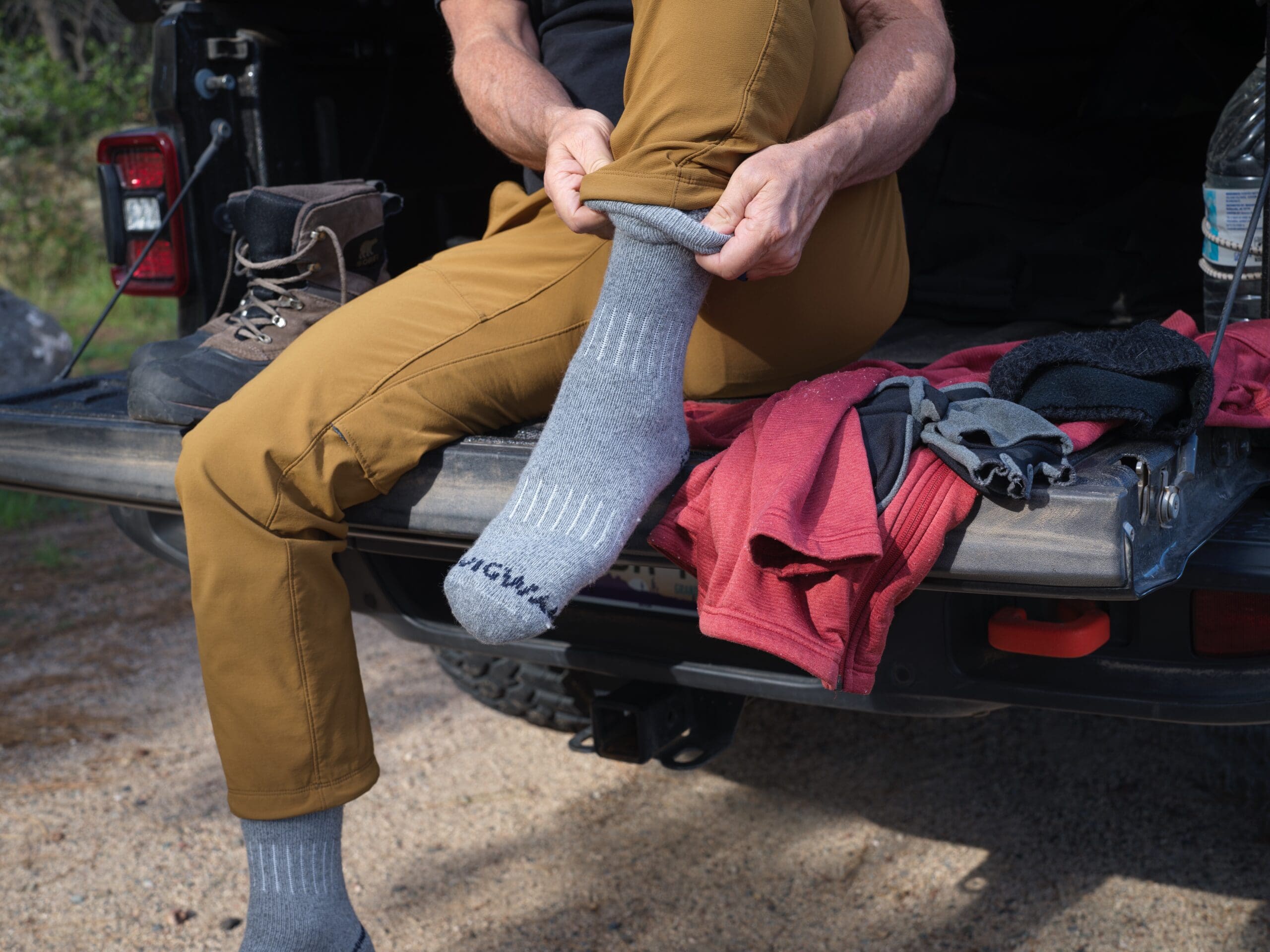
If you want an electric blanket around your feet, Wigwam has the socks for you. The 40 Below II is ultra-thick and super soft, and a vast improvement over its predecessor, the original 40 Below. I found these to be perfect companions with roomy work-style boots or looser pull-on chore boots. On a December trip to Teton National Park, I chose these as I knew I’d be post-holing in 2 to 3 feet of snow. I stood for hours in thigh-deep powder behind a tripod, without concern for frost-bitten toes. The elastic-reinforced arch also helped reduce foot fatigue while standing for long periods, especially for someone with flat feet like me.
The 40 Below II is evenly cushioned throughout with a low-profile toe box for slipping in and out of winter boots with ease. Its thick weave provides comfortable padding along the entire sole of the foot, making these socks just as comfortable to wear without shoes as slippers around the cabin—creature comforts.
While Wigwam is a partner with the US Ski and Snowboard team, the 40 Below II is probably not the ideal weight and cut for steep skiing or strenuous winter activities because its excessive warmth could cause your feet to sweat. But if you enjoy hunting or fishing, the 40 Below II will keep you comfortable on the coldest days.
Pros:Extremely warm, elastic-reinforced arch, low-profile toe
Cons:Bulky, potential sweating
Composition blend: 38% Merino wool, 33% nylon, 26% rayon, 2% polyester, 1% spandex
Editor’s Note: This article was originally published in Overland Journal’s Spring 2026 Issue.
Our No Compromise Clause: We do not accept advertorial content or allow advertising to influence our coverage, and our contributors are guaranteed editorial independence. Overland International may earn a small commission from affiliate links included in this article. We appreciate your support.
