

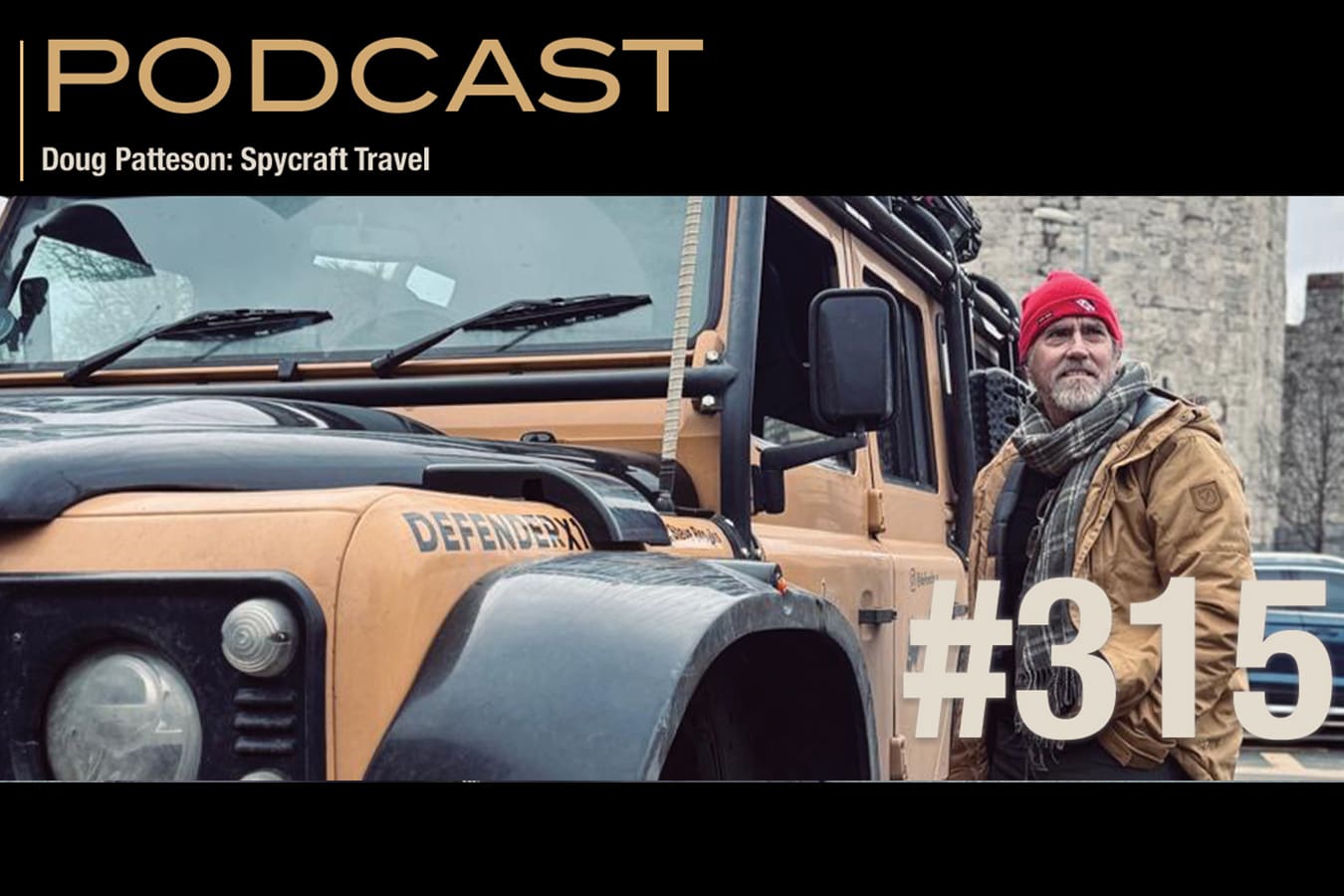
In this Overland Journal Podcast episode, Scott Brady interviews Doug Patteson about his journey from Texas ranching roots to a covert CIA career. Patteson details the intense recruitment process, deployments in Southeast Asia, and the vital intelligence lessons now informing his global travels: flexible planning, rapid decision-making, and the “rule of the stupids.” He highlights essential security resources like GoVigilant and the STEP program. After leaving the CIA to prioritize family, Patteson joined Defender X, an ambitious amphibious Land Rover expedition. He discusses the project’s evolution, from a Yukon River proof-of-concept to the current London-to-Sydney goal. A major upcoming milestone includes a daring 450-mile sea crossing from Timor to Darwin, showcasing the team’s commitment to boundary-pushing exploration and national service values.
Overland Journal Podcast Episode #315
The Overland Journal Podcast is brought to you this week by General Tire
New to Overland Journal and want to grab a subscription! Visit Overland Journal and enter code: overlandpodcast at checkout for 20% off.
We thank you for being a subscriber.
Bios
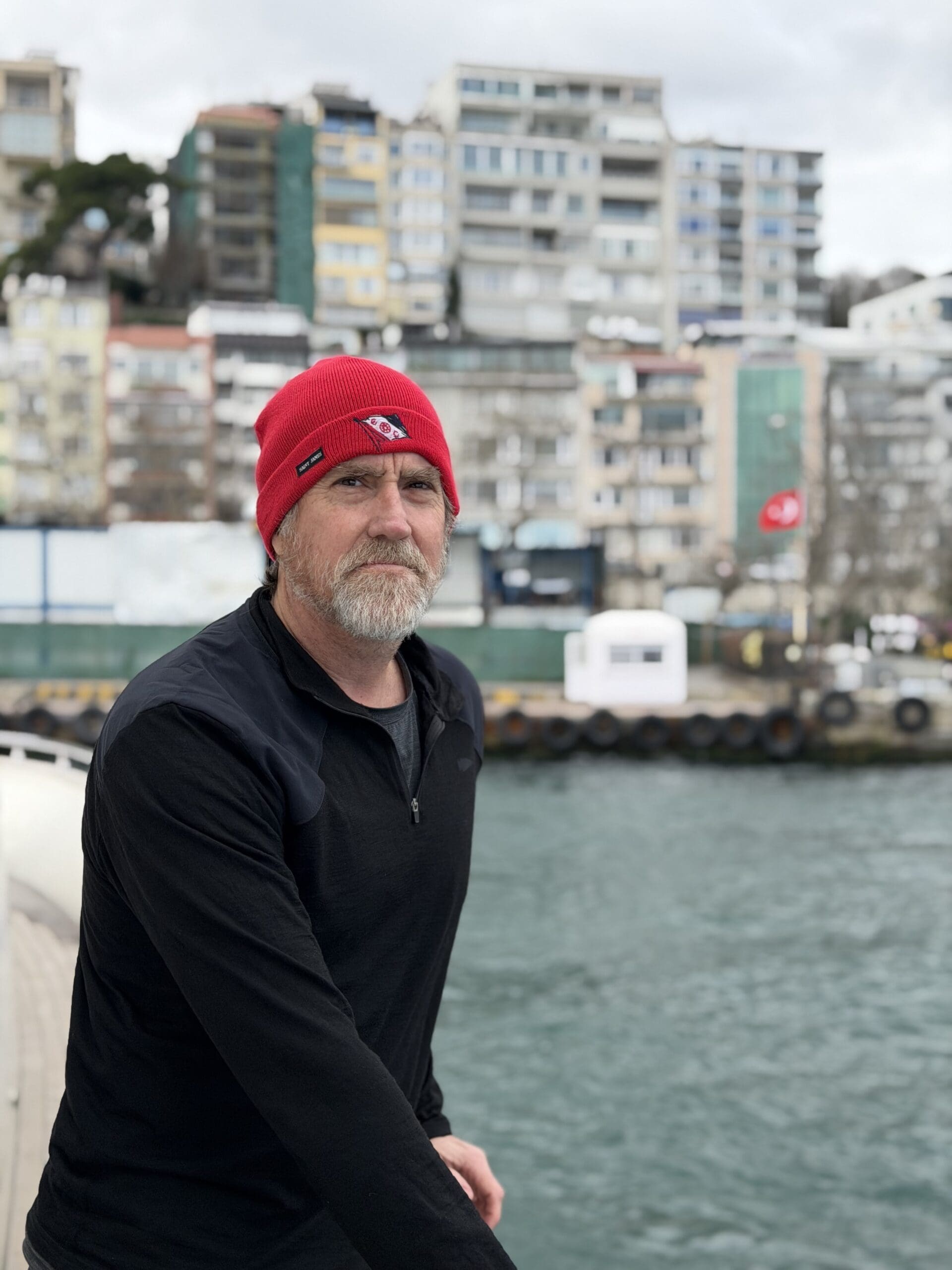
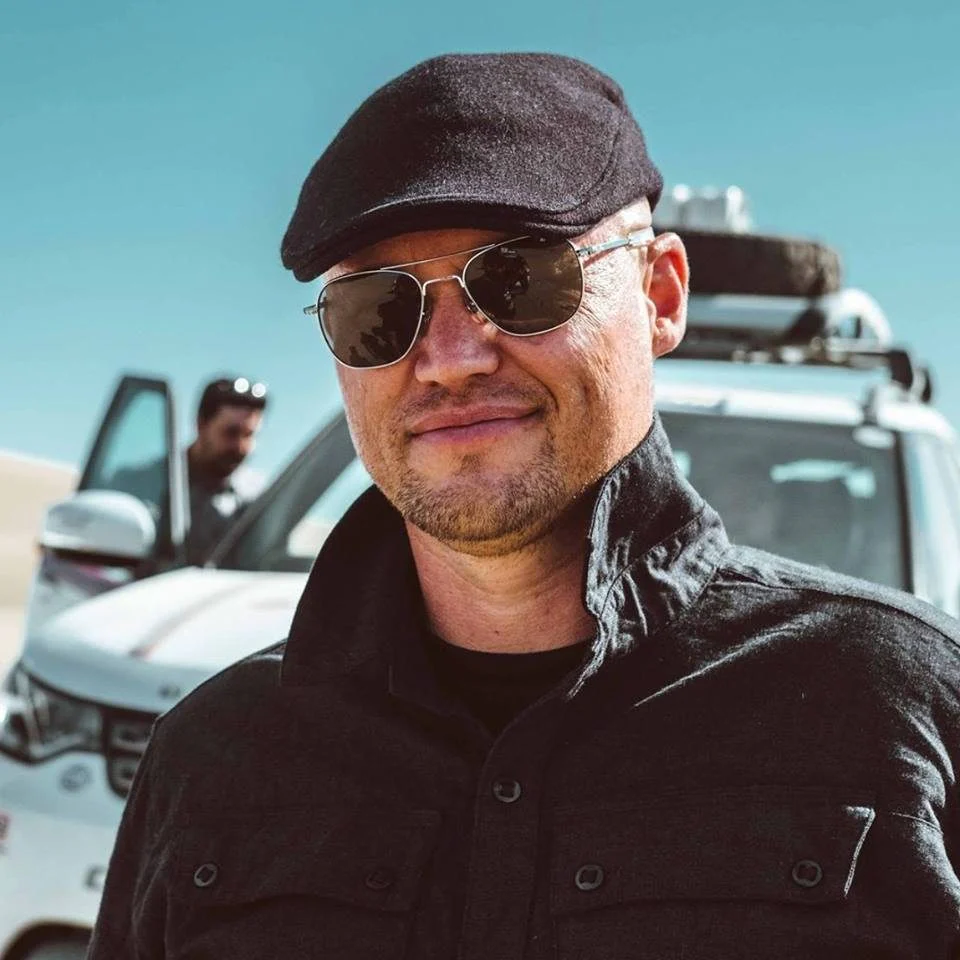
Doug Patteson
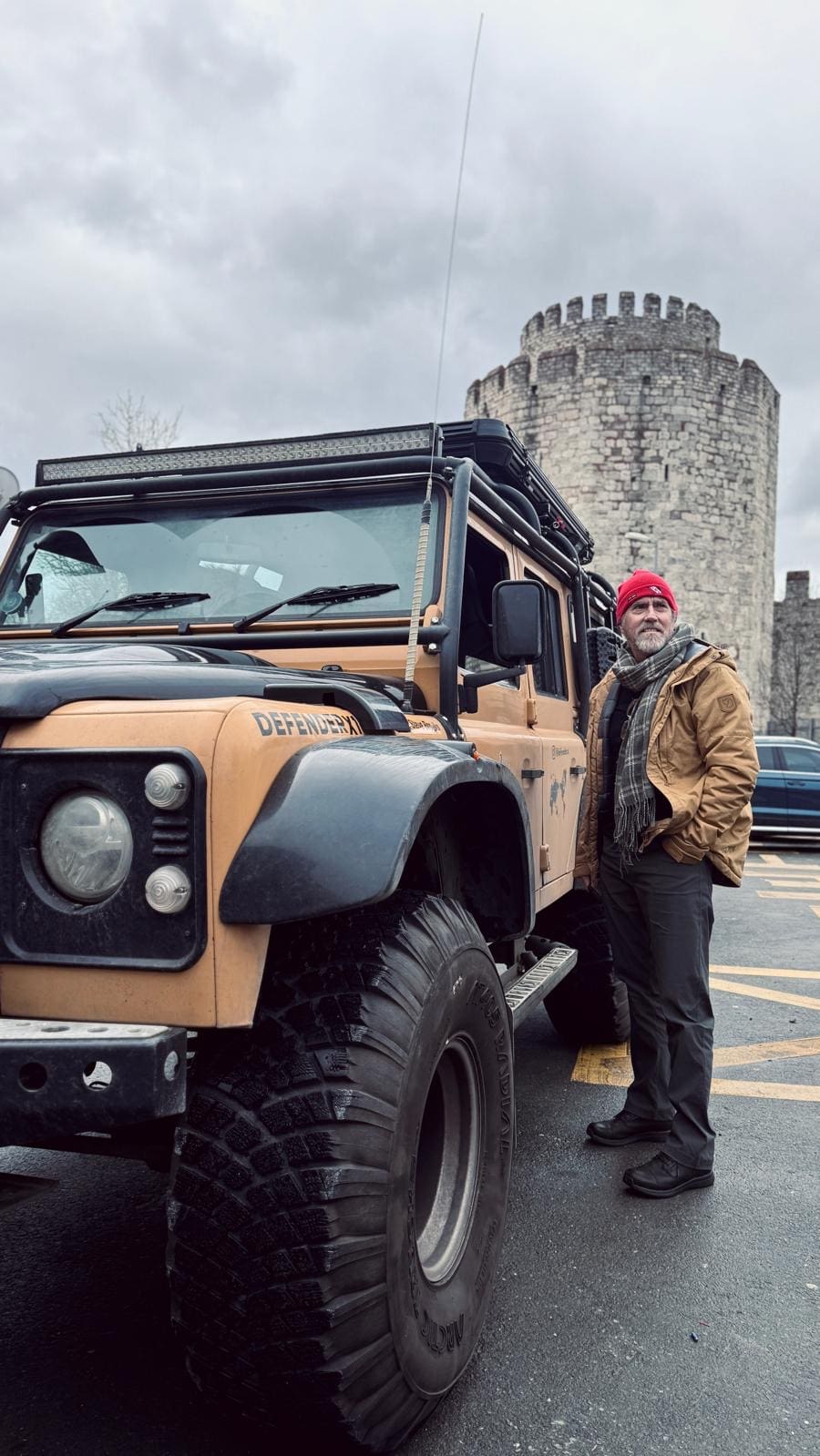
Doug Patteson is a former CIA case officer who spent a decade conducting human intelligence and counterterrorism operations across multiple overseas assignments. Today, he leverages this experience as a security consultant, author, and educator, advising organizations and the entertainment industry on espionage and national security. Committed to public service, Doug serves as President of the Board for the James W. Foley Legacy Foundation, where he advocates for press freedom and supports the families of hostages. His unique career path seamlessly blends intelligence expertise with business leadership and advocacy. Currently, Doug applies the high-stakes skills honed in hostile environments to the world of extreme exploration, driving modified Land Rovers across continents and frozen tundra as part of the audacious Defender X expedition.
Instagram | DefenderX | Defender.X | SPYSCAPE | Atlantic Saints | SPYEX
Scott Brady
Our No Compromise Clause: We do not accept advertorial content or allow advertising to influence our coverage, and our contributors are guaranteed editorial independence. Overland Collective may earn a small commission from affiliate links included in this article. We appreciate your support.
Tune in
Apple Podcasts | Spotify | YouTube
Transcript
Scott : [00:00:00] Hello and welcome to the Overland Journal Podcast. I am your host, Scott Brady, and I’m joined today by Doug Patteson. Now Doug has a fascinating life story, and between his time in the CIA and now his expeditions around the world, we have a lot to learn about his experience and just the joy of hearing the adventures and the stories that has made up his incredible life.
So Doug, thank you so much for being on the podcast with me today.
Doug : Absolutely, Scott. I’m really happy to be here.
General Tire: For over 100 years, General Tire has delivered tires for your lifestyle, your adventure, your anywhere. From the aggressive all-terrain performance of the Grabber ATX to the ultra-high performance Grabber APT, General Tire’s balance excellent on-road performance with off-road capabilities designed for all weather [00:01:00] conditions.
General Tire delivers for whatever you do.
Well, uh, let’s start a little bit with, uh, you grew up in Texas, you grew up in Austin. That, that is a hub of activity right now. Is that a place that you still spend some time, or just that after you- I
Doug : do. So I was, I was born in Austin, grew up in Houston, ended up back in Austin for undergrad, and I still have, you know, a, a lot of family in Austin.
And while I’m currently on the East Coast in, in New England, I’ll be relocating back to Austin most likely, or to T- Central Texas within the next, uh, year, year and a half or so.
Scott : Now, if I remember correctly, looking at your bio, I think it was sixth generation Texan. Is that right? So-
Doug : I think that’s right.
You know what? I go back and count, and my my, uh, great-great-great-grandfather, I think it was, or great-great-great-great, uh, moved to Texas in 1832. So- Wow … three years before Texas won its independence from Mexico. And, uh, he moved there with his mom [00:02:00] and, um, half brother of his, and our family kind of just started from there.
They were in the, what would become the Austin area, and then they expanded out into West Texas, uh, for the latter half of the 1800s into the 1900s.
Scott : And what, what kind of work were they doing? Were they ranchers, or what was their- They were ranchers. Yeah, that makes a lot of sense. They, they,
Doug : they were ranchers.
Uh, eventually there, the seven brothers ultimately all moved out to the Fort Davis area out in West Texas, um, right in, in the Davis Mountains, and they settled out there in, around near what is now the McDonald Observatory and Prude Ranch and that whole area.
Scott : Well, and if you think about that time when they were in Austin, I mean, that was a volatile moment in history for that part of Texas.
Did they have any, interaction with all of the battles that were occurring in that region?
Doug : Absolutely. Quite, quite a few of them were involved, uh, both in the, uh, battles with the Native Americans as well as the battles with the, the Mexicans. And My great, whatever great he was that moved-
Scott : Yeah, [00:03:00] sure
Doug : to, to, to Texas. His, his last name was McCutcheon.
Scott : Oh, okay.
Doug : And he, when he moved here, his mom had gotten remarried, uh, to a gentleman named Gordon Jennings, who was the oldest to, oldest defender of the Alamo. He’d come from Connecticut to fight in the Alamo, and so, uh, he died there. Several others were members of, uh, various, Texas units along the way.
Scott : Yeah, when I joined the Air Force, that’s where I went to basic training was-
Doug : At Lackland or
Scott : Randolph? Yeah, right there in that, in that area. So I mean, wow. I mean, that’s incredible. That whole, that whole region was active at that time. So I’m sure- It was … that your family was wrapped up in that. And also a lot of Western expansion and that ranching, that whole ranching complex, industrial complex that was happening in that area, it still lives on today.
I mean, these are massive ranches.
Doug : No. So the, by, by the time the, um, the Great Depression hit, my great-grandfather had to make a choice about whether to continue to ranch or sell [00:04:00] it and try and make it through the Ga- Great Depression unknowing how long it would be.
Scott : Sure.
Doug : Uh, and so his part of the family ended up getting out of it.
His, a couple of his brothers stayed in it. So I grew up going out there and visiting family on the ranches, but my branch of the family had gotten out of it right around the Great Depression. So we’ve been trying to get back to buying property there.
Scott : That’ll be exciting to do that. I mean, the, that, it marks some of the earliest transitions in my life was, you know, of course, going through basic training and joining the military.
And then when I got out of the military, I lived on my aunt and uncle’s ranch in Arizona. So ranching was a big part of my youth, and nothing but incredible memories and life lessons that occur on a ranch, so.
Doug : Absolutely. Yeah, my, my, the extent of my ranch exposure was either spending time with family or hunting most- Yeah,
Scott : sure
Doug : of my life out there. I never ended up doing much with the cattle or, and, you know, some horseback riding, you know, et cetera. Rode bulls a couple times, but that was it.
Scott : How did
Doug : that go? Not well. Not well. I
Scott : can’t, [00:05:00] I can’t imagine. I can’t imagine.
Doug : As my grandfather told me, there ain’t nothing dumber than a bull rider.
The, the first experience was pretty traumatic, so I, you know, I went back a year later and did it again just to prove to myself that I wasn’t too scared to do it, and then decided I don’t need to do it anymore.
Scott : Okay, you got that T-shirt. Yeah. There’s not many people in the world that can say that, uh…
well, first of all, to say that they were a part of the CIA, but that they actually rode a bull and lived to tell the story, so.
Doug : It was not my brightest, shining moment at college, for sure. There may have been alcohol involved.
Scott : No, I can understand that, for sure. So, uh, when I was reading a little bit about your story, you had this real interest and passion in, uh, spycraft and in the government and in those agencies, and that kind of formed some of your early education and some of your earliest goals in life, was to participate in that part of our government.
Why don’t you give us a little bit of, of background? ‘Cause I think a lot of people have interest in that. Like, how did you get yourself to the point that you could get involved with the CIA? What kind of education [00:06:00] did you get? How did- That’s a very difficult job to get.
Doug : Yeah, I, you know, I think if I’d known that at the time, I might not have gone for it.
But, uh, you know, my… I’d grown up around both my grandfathers who were World War II vets. One was a fighter pilot and one was a naval intelligence officer. And so I knew that there was some degree of national service that I was interested in doing. I love languages. I’d grown up reading about Africa and Latin America, reading the stories of great explorers, and so I, I just was really focused on finding something I could do that was in that space.
And, and, you know, obviously CIA’s a pretty good fit for somebody who’s got a, a heart for national service, who’s good with languages, and has a desire to spend a lot of time overseas. However, nobody tells you how to get into it, or at the time nobody told you how to get into it. And I was just fortunate because they came and do a recruiting, uh, visit on campus along with a lot of other employers, and I had a chance to talk through that with an em- uh, a recruiter.
Fortunately, he saw something in… He saw enough of something in me to put me [00:07:00] through into the process. And so, so that got me started down the, the process of, of the completing the applications and going through all of the exams. You’d have to go through medical exams and psychological exams and polygraph exams, and multiple rounds of interviews, et cetera, uh, in order to get into what was a covert role within the CIA.
Meaning I couldn’t even tell anybody that I was going for this role in the CIA, and I couldn’t, certainly couldn’t tell them what I was gonna be doing.
Scott : Yeah, no, that makes a lot of sense. And, uh, so you finished your degree, and then you get through that process, and now you’re starting your career in the CIA.
How did that feel? I mean, I know a lot of big goals like that in life, you work so hard to get there and then now you’re, you’re in it. Uh, were you just so busy and in the process that you didn’t really get a chance to celebrate that accomplishment, or how did you feel?
Doug : I don’t know that it felt like an accomplishment.
I know that seems weird, but it, it felt like it, it didn’t feel hard to do to get into it, right? You know, at, at some [00:08:00] level I was just applying for this job and following through the steps of the process. Sure. There were… it was a painful process, but it didn’t feel like a hard thing to do. I realize now, obviously looking back, that it, you know, there’s a, a very small funnel opening that a lot of applicants, kinda- Right
have to go through. And so I’m, I’m grateful for that. You know, when I finally got to Washington and got into training, you know, I, I began to process with a har- large degree of imposter syndrome. Yeah,
Scott : sure.
Doug : Did I really deserve to be here? Was I good enough to do this? And as I watched various counterparts of mine wash out of the training, both my degree of confidence grew, but also the imposter syndrome stayed while we went through it.
But it was… You know, I describe those- kind of year and a half of training that I went through prior to, uh, getting certified and deploying overseas as, one and a half, two of the most fun years of my life because it was high-stress, high a- a- activity, but it was high adventure and, and guns and helicopters and [00:09:00] driving and, boats and, all of the, the things that began to prepare you to become a case officer to go overseas and, and do this job of recruiting and running spies.
And so it was outward bound with guns, and it was so much fun.
Scott : Well, I can imagine not only that sense of accomplishment, but, uh, that awareness that you were that you signed up to do something very hard, and that was the point, was to test ourselves. I think as, as I think every young man feels that imposter syndrome.
I know that I did. I know that I did for a great portion of my career traveling around the world of, like, what did I do to deserve even the opportunity to be able to do something that I felt so humbled to have had the opportunity to do? But I spent a significant portion of my career feeling like that I…
Who am I to be talking about this subject when I still have so much to learn? Um, and of course, I still think that I maybe know 1% of what I’d love to learn, but, um, but that’s, I think maybe that awareness gives us [00:10:00] just enough humility to continue to push and to al- And I think those that are superior to us, they see that humility and they, maybe they give us a little bit more grace with that, so.
Doug : Well, I, I hope I was humble. I suspect not as humble as my memory might serve, but I, I was 22 years old when I joined. Sure. I was 23 when I finished training. I had just turned 24 when I, deployed on my first deployment overseas and, they g- gave me a gun, a budget, body armor, and said, “Go do this thing.”
And I kept waiting for somebody to tap me on the shoulder and say, “Yeah, we made a mistake.” And it turned out all right.
Scott : I know that you can’t speak about a lot of these things, but what region of the world did you first get deployed to?
Doug : Yeah, my, my first couple of deployments were actually in Southeast Asia.
Scott : Okay.
Doug : Uh, which was funny because I came into the organization speaking Spanish at a deployable level, and so naturally, government being government, they sent me to a place that, you know, Spanish was not, altogether necessary for. That’s okay. They, they taught me the languages I needed to, [00:11:00] to serve in those locations and- Sure
there wa- there was a lot of interesting work to do both, you know, in, in Asia, uh, that I really appreciated getting a chance to do, and it fit my l- my desire to begin exploring quite well.
Scott : And what do you, when you look back at that, I suspect that a lot of your training was to prepare you to operate in these austere environments in totally foreign cultures to your own, oftentimes completely different religious structures languages are very different.
What were some of the things that you look back on your training that you find applies today for you as a global traveler? What were some of the, those key learnings that you had early on in your career in that training with the CIA that you think helped you be a better traveler?
Doug : Yeah. So a, a couple of key learning points that, that I still carry with me.
They’re… And oftentimes these are self-evident, right? They really are. But the first is, is perception is reality. So you, if you’re living in a world where a [00:12:00] hostile service or a criminal organization or whoever it may be is, is paying attention to you, they… You may never, likely will never get a chance to explain to them the motives behind the decisions or actions you’re taking.
So their perception of those actions, those, those motions, those conversations, is 100% of their reality. And so I learned early on that I could get somebody into trouble very seriously by not recognizing how my interaction with that person might be viewed by a hostile party. So I had to learn to act in a way that I wanted to drive a perception among those who might be paying attention to me Another key learning point for me was rapid decision-making on imperfect information, right?
You- you’re never gonna get perfect information. And so we had to learn to make decisions very, very quickly, whether it was how to get off the X, how to read a, a street scene as it’s developing, how to read a circumstance and decide whether this was enough of a [00:13:00] coincidence to cause you to abort your meeting that you may have spent a week and a half planning.
You know, all those sorts of things. And, you know, they, the organization did a really good job of working us through how to make decisions rapidly, and then giving us the, the confidence to execute on that decision-making, you know, as long as you’re able to get back and, and explain to them your, your process.
Scott : And that is so relevant to travel. If you think about, uh, summit fever comes to mind, but I also know in, in overlanding or any other remote global travel, you can just keep getting yourself deeper and deeper into a situation that’s very difficult to get out of. So you learning early on of like, all right, a cascade of events is developing that may become very difficult for me to get off the X.
What were some of the things that you identify or you look for even now as a traveler on like, okay, this is something that makes me take pause or maybe even pull myself out of that situation? What are some of the, the environmental, the people interactions? What are some of [00:14:00] the, the, even the news or what’s happening in a local?
How do you gather that information, and how do you make an, a decision early enough to ge- keep yourself out of trouble?
Doug : Well, I’m gonna come back to that in just a second, right? Because what I wanted to also touch upon was that in that planning process, when you had to change your plan, summit fever, and you decide I can’t summit because the risk is too high or this route’s too dangerous, it does not invalidate the planning process.
Right? The, in fact, that planning process should facilitate better decision-making once you get further on. You can’t sail over the horizon or drive from, you know, North Africa to South Africa without planning it, but if you’re hidebound to that plan, that’s where the problems begin. And so learning to adjust your plan rapidly based on changes to that is really, really important.
And then the, the kind of the, the last significant lesson I would highlight is catchphrase that I use a lot, “Don’t do stupid shit with stupid people in stupid places at stupid times of the day or night.” We call it the rule of the stupids. Yeah. And it’s directly relates to the question you asked about what do you look for [00:15:00] out there while you’re traveling.
And, you know, uh, I think a great example, you, a protest developing on the street, right? There, I know people who first thing is to go towards the protest and see what’s going on. But if you’re in a culture that’s not your own, if you’re in a country that’s not your own, and you have forgotten the fact that mobs are amorphous They’re difficult to predict, and they’re, they can rapidly spin out of control.
Then you need to remind yourself that those are very dangerous things to go do, to go follow that, that, you know, s- see what it is. So in that protest, so getting off the street and getting out of, you know, the, the way this is coming, because it really is not about getting off the X, it’s about how do you identify where the X is developing before it happens so that you can avoid ever getting on it.
That’s a far better strategy. And so looking at local news, looking at, you know, paying attention to what’s happening on Twitter in advance of your trip, and then live updates while you’re there. Keeping your [00:16:00] nose out of your phone while you’re out and about and on the street, ’cause it’s just a distract-o-matic device sitting in your hands.
Scott : Yeah.
Doug : And it’s gonna erode your situational awareness rapidly. And so it’s being very, very intentional about these things, like learning your route before you leave the facility, the building, the car, so that when you get out on the street, you’re able to use your senses around you to pay attention to what’s happening while you’re out there.
And that, that serves well in a rural environment while overlanding. It serves well in an urban environment while on a, holiday with your family
Scott : Yeah, that makes a lot of sense. Are there, are there tools that you use… I mean, you might still have access to some government insights, but are there tools or apps that you use to get active updates on l- like a situational communications, uh, in these countries?
Doug : Yeah, I mean, I, I… So I, I use a, an app called GoVigilant, which does a really good job of aggregating social media posts as well as official government posts for a given geo or a [00:17:00] given urban location. I’m very active in following the State Department’s updates and the State Department annual crime and safety reports that they put out for, uh, each of their countries that they cover.
I also look at other nationalities, similar things, so the British government’s- I like
Scott : the British one, yeah …
Doug : information they put out for its, its people. I think information informs decision-making. It shouldn’t make you more fearful about where you’re going. More information should actually allay concerns, not, not, um, keep them up.
And then I think it’s useful to, to follow folks like Global Rescue and, and other companies like that are out there that have… You know, they, they sell E&E packages. They sell e- emergency evac insurance, but they also do a good job of keeping their clientele, informed on where they’re going and, and what’s going on.
Scott : Yeah, to help mitigate their insurance risk and mitigate the risk for their clients. Yes. I’m also a big fan of enrolling in the STEP program with the State Department. Yes. Uh, like when we went through Nigeria recently, just a couple months ago you know, it was really important that we maintained active communication with the [00:18:00] State Department, and they actually provided us with a route to drive that kept- Right
us as far away from the X as they could get us, so.
Doug : I, I do the same thing. I recommend STEP to everybody. The STEP is the s- uh, Smart Traveler Enrollment Program for those that don’t know. You can do it on, on Department of State, uh, ‘s website. What’s great about it is, is at its basest level, if you go back to, uh, the Arab Spring in Libya in 2012, what it allowed them to do was reach out to every known American who was registered in the country and begin to provide information on evacuation routes and areas of the city to avoid whenever there’s a warden notice that goes out to Americans that are in town.
So it’s not that the government wants to track you while you’re traveling overseas. They’re not putting your cell phone number into some database that lets them then follow you along, but it does let them give you a warning notice or advance notice when things are developing rapidly, as well as help them, you know, help you through things like evacuations when necessary.
Scott : Yeah, I’ve had nothing but really positive [00:19:00] experiences with that program, and even have developed some lifelong friends that work in the State Department through that interaction, ’cause they think it’s interesting. Like, what you’re doing with this Defender X expedition, like they think that’s cool as hell too.
So you can develop a friendship and then they’re a little more vested in your safety because they’re like, “Oh, these guys are doing really cool stuff,” that they find interesting themselves.
Doug : Right. Exactly
Scott : Yeah, that, all of those are, are really important reminders, and I, and I like your approach in the fact that we never want people to be, feel fearful to travel, but we want them to be as informed as possible
Doug : That’s why I use the rule of the stupids.
It’s not a … It’s a decision rubric more than anything else. Yeah. Right? You know, if it … You can do something stupid, or you can, you know, you can do something with a stupid friend, and we all know I don’t mean intelligence there.
Scott : Right. Sure.
Doug : And, or you can do something at the wrong time of day or night. But as you add more of those stupids together, the risk of [00:20:00] something catastrophic goes up-
Scott : Yeah
Doug : you know, significantly. And so if you sit there and you go, “Okay, let me evaluate my decision matrix on this and figure out what really am I signing up for?” Right? You know, jumping off a, a cliff into a quarry is a relatively high-risk thing, but, you know, if it’s 3:00 on a sunny afternoon and you’re with friends who are smart, capable, physically fit, and trustworthy, that’s radically different than doing it at 2:00 in the morning with friends that are inebriated- Yeah
when the lights, there’s, you know, no moonlight, no light of any sort. And yet it’s the same thing as jumping off a cliff into a quarry. But the risk is significantly higher in the second. And so if you- Sure … think through and own your own decision-making, right, by using whatever, tools you need to use, do that.
And I think the rule of stupids is a helpful way to think through this. And, and I’ve gotten tons of feedback from others that I’ve shared this with that have used it or had their children use it in their own processes, and gotten themselves out of or kept themselves out of trouble.
Scott : Are there guardrails that you continue to [00:21:00] employ in your travels today, like driving at night ex- as an example?
Are there things that you’re, that you kind of have as … they can never be hard rules, ’cause there’s times that you have to drive at night, unfortunately. But are there things like that you are mindful of? Like where you- No, and one of the great- Where you stay, where you stay, things like that?
Doug : One of the great sayings in the intelligence community is the answer to every problem is, it depends.
Scott : Sure.
Doug : And so the, the guardrails for me are really focused on evaluating each situation independently of itself. I generally don’t have hard and fast rules. But, uh, you know, I apply a decision matrix or rubric to each situation, and I make it an active decision rather than a passive decision. If, you know, if I’m with others, we’re gonna talk about it as a group and figure out what’s the right risk profile for us, the right risk tolerance for us so that we can, you know, make the best decision we can in that situation.
There … I mean, there are some hard and fasts for me specifically or for any former intelligence officer or former, really former military, that there’s some countries you probably should never [00:22:00] go to, right? And some of those are, they’re all the, the ones you would know to think of, you know, the, the Russias of the world, where at, given the current state of the world, it’d just literally be foolhardy to go do that and allow yourself to become a pawn in what we term hostage diplomacy.
Scott : Yeah. No, and that’s something that’s seems to be very active, even the number of overlanders that have been detained or are still currently detained or- Yes … imprisoned in Iran, for example. You know, which is, you know, we, we can separate the fact that most Iranian people are wonderful, hospitable kind, loving people.
But it’s, it’s a government that, uh, in its current configuration is quite dangerous
Doug : Yes.
Scott : To go into
Doug : I s- I spent, uh, several years as the board chair of the James W. Foley Legacy Foundation, which was, which was named after Jim Foley, a journalist who was brutally murdered by ISIS, and it was videoed all over the world, uh, in the mid 2010s.
And a big focus of our organization was getting people out of being held unjustly, [00:23:00] detained or hostages abroad. And we will never victim blame, right? But I do think that if you apply the rule of stupids in some of those situations, it may keep you out of those situations as they develop.
If we get into them, we’re gonna do the best we can to get you out of them but, you know, don’t go looking for things where you don’t have to.
Scott : Well, it sounds like, first of all, not putting yourself into that country where you’re within their infrastructure and government. But if you’re in a country like that and w- and one of those things start to develop, do you have any suggestions for travelers, like in that, those first moments, things that they can be doing to hopefully improve the outcome?
Doug : Rapid decision-making on imperfect information. Get out. The trip can be completed at a later date, potentially. You know, and I’ll give you a very specific example of this. Defender X, which we’ll talk about in more detail, one of the very first plans for Defender X was, uh, London to New York across the Bering Strait.
We got a long way on that path when, um… And w- and I was not involved in the expedition at that point in time or not [00:24:00] participating on the expeditions, but the team got halfway through Russia when Russia invaded Ukraine. And so they, they made the decision, I think it was exactly the right decision, to abandon the expedition as currently planned, even though they were halfway through Russia, almost to the Bering Strait, knowing that there was gonna be an, you know, a likelihood of a long-term war that was gonna inhibit a whole bunch of aspects of the travel and added risk.
And so within 24 hours, they made the decision to stop the expedition, get the vehicles out and go, rather than risk being held as part of some plan that, that could unfold later. And so they sacrificed the dream, which was this, east– following the eastern path from London to New York to, t- because it, it didn’t make sense yet.
And so that’s an unfinished aspect of Defender X that with the right timing and right political, uh, situation, we’ll go back and do. But we’ve adjusted, since then.
Scott : Not a week goes by that someone doesn’t reach out to ask how they can help support the podcast. [00:25:00] Uh, we are supported entirely by Overland Journal, the magazine.
So when you become a subscriber to the Overland Journal print magazine, you get this beautiful book, uh, that comes in five times a year. It also gives you access to our digital archive. And it’s well over 100 pages of gorgeous images and detailed testing and adventures from around the globe. So if you go to overlandjournal.com and you subscribe to the magazine Use the code OVERLANDPODCAST, and that’ll get you 20% off.
It’s only available to our podcast listeners. We don’t advertise it anywhere else. Um, and then you help us to maintain that independent employee-owned journalism, um, that we have been famous for. So it allows us to conduct those tests without any advertorial. Another way you can help out too, I produced a book, uh, last year with Simon & Schuster called Overlanding 101.
You can find it on Amazon or Barnes & Noble, or even your local bookstore. And that encompasses [00:26:00] my decades of travel around the world, all of my mistakes and failures, and, and the lessons that I’ve learned in traveling around the globe. Um, many of those, um, that you hear on the podcast have been distilled down into print form with great lists and beautiful imagery.
Uh, so you can find that, uh, at your local bookstore, Overlanding 101. And thank you all for listening and for supporting us so much throughout these years. Yeah. And it’s so fun- When I went across Russia, it was 2012, and it was easy to do that then, you know, all the way to Magadan. So it was But now would be a totally different situation, so.
Doug : Correct. Yes.
Scott : Yeah.
Doug : No- Yeah. Well, and the ice roads … The ice road’s never easy, but yeah.
Scott : Yeah. No, it’s, it’s a, it’s certainly an interesting part of the world and a lot of adventure to be had in Siberia and Eastern Russia, for sure.
Doug : Yes. Yes.
Scott : Absolutely. Let’s– That’s a great, uh, opportunity for us to kind of pivot towards, uh, Defender X a little bit.
But before we, we dive into that, let’s talk a little bit about your own personal passion for [00:27:00] remote international travel. What, what were some of the expeditions and adventures that you did, overlanding or otherwise, before you got involved with Defender X?
Doug : Yeah. So I always have had– Well, as an adult, I’ve always had a passion for exploring kind of lesser-known or, or lesser-experienced places.
And so, you know, I, I had– Living in Asia, I had an old Pajero for a long time, and then I had a, a Jeep Cherokee one time when it was the only Jeep Cherokee in the entire country we were in there. And I, I overlanded that across much of the Golden Triangle area.
Scott : Sure.
Doug : And where it was just me and my wife and exploring these remote mountain villages and, and rice paddies and, and high peaks and opium fields, and really just a, a fun thing.
We did a lot of scuba diving and a lot of surfing across Southeast Asia in that same timeframe. And all of which kind of led me to, uh, supporting a couple of, of climbing expeditions. And then that, I joined the Explorers Club [00:28:00] in 1998 after a particular expedition, uh, that it- I was able to support that folks like Lynn Hill and Todd Skinner and Paul Piana had been on to climb in Ha Long Bay in North Vietnam.
So, so I’ve, I really have always enjoyed that and, and it, there was no way we could’ve gotten to most of the places we went to regularly without having had four-wheel drive vehicles that were capable at getting us in, in and out of these places. So, I’ve always loved the, I would say the, the more robust four-wheel drives, not really into the soccer mom SUV version- Sure
of them, and I don’t mean to be negative in that, it’s just not my thing.
Scott : Yeah, it’s not the tool that you need.
Doug : It’s not the tool that you need.
Scott : Yeah.
Doug : And so I’ve, and had always been a fan of the Land Rover, so when I got involved with Defender X it was really a fun connection of having done some of this stuff on my own and then now connecting it to new ways.
Scott : Well, and, and you mentioned your wife, and in reading your bio, she has an amazing story of her own. She was involved with the team that was monitoring Osama bin Laden. Yes. So what an [00:29:00] incredible career that you both had. And if I understood it correctly, you guys actually made the decision to stop working in the CIA to, to provide a future for your marriage.
That’s something that we all are faced with is these, these passions that we have that take us away from home and in remote areas of the world. What were some things that you learned around that that you could share with the audience about making a decision like that, to give up something that was so critical to both of your lives to preserve what was clearly the most important thing was, which was each other?
Doug : Yeah, it was interesting because, well, a couple things. I married very well. I m- I married a woman who had high expectations for the man who she was gonna be partnered with for the rest of her life. She wasn’t shy about communicating those expectations, nor holding me accountable to them. And in a lot of respects, that’s a gift.
Scott : Yeah, for sure.
Doug : Before I got married, I had a meeting with my first deputy chief of station overseas, and I was leaving, within a few days to go back home to get married and then [00:30:00] return. And the deputy chief said to me, and I’ll never forget it, he goes, “Don’t screw this up.” And I said, “Well, what do you mean, sir?”
He goes, “Well, when you’re 80, none of us will be here for you. No one you’re working with right now is gonna be standing at your bedside when you’re 80 and needing help getting fed or whatever the situation may be.” He goes, “But if you don’t screw it up, she will.” He goes, “And most of us have screwed it up.”
He goes, “Look around carefully and you’ll see most of us are on our second or third or more marriages, or no longer any marriages, and, you know, that’s a significant cost of this service.” So I watched that over the few y- few, you know, first few tours, and recognized that’s very true. And in fact, I’d say probably less than 3% of the class that I joined with in the agency remain married to their first spouse.
It’s absolutely a brutal career choice on families. And so at the, at this mid-career point when we were having to decide do we, do we stay or [00:31:00] not, and both of us were officers at the time and we’d just started having kids, uh, we recognized, you know, the challenges that was gonna bring to us, and we just said, “Yeah, we’re choosing each other over this.”
Now-
Scott : And your family, yeah.
Doug : Yeah. And it, it helped that we had done it for 10 years, and so we weren’t walking away from a, with the question of, “Gosh, I don’t know if I can do this.” Right? We were walking away confident that we had done what we could do and done it well. And so it was time for that new adventure, and we chose each other.
Scott : And w- I mean, but what an incredible thing that you did, both of you, to say… I mean, ’cause I would suspect that being in the CIA was an intoxicating experience.
Doug : Sure. Yeah.
Scott : And addicting in many ways, and it’s hard to let those things go. So that’s, I mean, what a testament to you and your wife.
Doug : Thank you. It w- it, it’s funny it…
I think once you realize what’s most important, decisions like that become easy. And so for us, it, it was an easy decision.
Scott : [00:32:00] Yeah.
Doug : It… we both second-guessed it, you know, later on, but also said, “Nope. We have- are comfortable with what we did. We’re comfortable with our service. We’re glad, you know, that, that we did it, but we’re glad to be doing something different now.”
Scott : And when you got out of the CIA, you went, if I understood you correctly, you went back to school, gained some additional education. Talk us through, like, what happened after you got into the CIA, what kind of work did you start doing, and how did that set you up to be able to be in this role, a, part of a, a significant expedition around the world?
Doug : Well, uh, I think the combination of learning the skills about how to navigate the world around me that the agency taught, the language skills, how to navigate bureaucracies, those are all valuable from an expeditionary perspective. I went back to, to get my master’s degree and go into business for several years.
And both in the agency and in grad school and in business, I, bu- learned how to build and maintain strong networks, and my connection Defender X began in that grad school environment because the [00:33:00] founder of Defender X was one of my grad school classmates. And-
Scott : Cool. That’s
Doug : great … he, he had grown up in Africa and had been a, an avid overlander before the term was really ever even used.
Scott : Sure.
Doug : And he, after graduation, rather than taking a job, decided to drive around the world in his Land Rover. And obviously September 11th had an impact on that initial trip, but he was able to complete that trip and then go on to do other things, such that 20 years later when we came back together to start talking about Defender X you know, it was like putting on an old coat and, and working together to figure out what’s a new challenge to tackle.
Scott : And what a neat thing to do trips like that with people you’ve known for a long time. I, you know, think about the West Africa trip we just did, and I’ve known several of these guys for well over a decade, and it’s, it becomes easier to travel with people that you just trust. You just know ’em and trust that they’ve got your…
You know, you may not agree on everything, but you know that the person’s got your best interest at heart.
Doug : Yes. It’s, you know, I… Sometimes, well, I’d say [00:34:00] most times, the people component is the toughest part of any expedition because whether it’s weather, whether it’s a mechanical failure, whether it’s road washouts or other infrastructure issues related to it, how well or poorly those things go is 100% depending upon the team and the team dynamic.
Scott : Yeah.
Doug : So true. And so finding that right team dynamic of trust and work ethic and I would argue joy-
Scott : Yeah …
Doug : is really, really important
Scott : And a lot of joy comes from doing hard things with people that you love and trust. A lot of joy comes from that. I mean, I, I think that we’re supposed to do hard things.
I think the more that we get on our phones and the more that we make our life… ‘Cause life can be very comfortable if we allow it, and especially in 2026, life can be very virtual, very comfortable. Uh, we can get a lot of dopamine very easily. So the choice to do something difficult like this, most people don’t make that choice.
What led you guys to do that, to say, “Hey, we [00:35:00] wanna drive around the world the really hard way”?
Doug : Well, I mean, all of us on the expedition have a history of doing hard things. So, so, and in fact, that was the way we raised our kids. We actually talked to our children about, the importance of doing hard things because it would be a way to differentiate themselves from their peers and to set out to, to do hard things, you know.
And we’d use the example of George Washington was the surveyor for the entire Commonwealth of Virginia at 16, right? Admiral Farragut, you know, the, the, the US Navy admiral started out as a 12-year-old cabin boy who was put in command of a captured British ship during the War of 1812 and sailed it back to US waters in command of the Brits when they tried to mutiny underneath him twice, and as a 12-year-old, he commanded the ship.
So, you know, we can do hard things from, from early ages, and so being aligned with folks that have that same mindset is amazing. And, the, the masterminds behind Defender X are really, Jeff Welner and, and Steve Brooks, and both are members of the Royal Geographic [00:36:00] Society as well as the Explorers Club.
They’re both, you know, have, have tremendous exploration, history and background. Steve did the first pole-to-pole helicopter flight, which in, you know, included spending way too long in the, um, Drake’s Passage after having ditched their first helicopter when it crashed. You know, and Jeff’s driven around the world several times.
Mikal Strandberg is another one of our team members, and he skied the Greenland ice caps. He cycled from Chile to Alaska. He cycled from, uh, South Africa to Europe. So, you know, s- these guys, these are all folks that just the idea of doing hard things is, um, not foreign to them at all. It’s funny, we- ways to do hard things in comfort on our expeditions-
uh, which is always makes it a little bit interesting. But, you know, eventually y- they sat down and said, “We wanna drive from London to New York and go across the two main bodies of water in– which is, you know, the English Channel and the Bering Strait in the same vehicle that we drove overland.” That was the vision.
And so they created a proprietary [00:37:00] float system as well as the mechanics to raise and lower the floats and went through multiple proprietary systems for the drive system of the propellers, uh, and obviously had to abandon that, that previous trip. So, you know, after that happened, they went back in in 2024, decided, “Well, well, let’s, let’s go to New York, and let’s at least go westward and see if we can’t, you know, see what happens time-wise.”
And so they drove across Canada and then ultimately did 1,200 kilometers down the Yukon River, and that entire 1,200 kilometers down the Yukon River was in the amphibious mode for these Land Rover Defender 110s. Uh, so that was really the longest kinda proof of concept for this amphibious capacity For the, and, you know, once w- those kinks worked out, made some engine and drivetrain changes based on the, the Russia portion of the trip.
What, you know, kept the bodies and swapped out engines to go backwards in time to get rid of some of the sensors and other things- Sure … that create problems in those environments. They said, “Well, let’s, let’s go back and let’s do London to Sydney.” And so they had invited me [00:38:00] on the Yukon River expedition.
I was not able to go. My wife was very ill at the time. Some of the viewers may know, but my wife passed away in 2025, and, uh, for- as a result of that illness. And then after she passed away, they said, “Hey, we think it’d be great if you joined us for this next one, which is London to, to Sydney.” And we’re in the midst of that expedition right now, and it’s very fun, very exciting, and very challenging.
Scott : Incredible.
Doug : And so far we’ve done the first two legs of what will ultimately be about eight or nine legs.
Scott : Well, and, and the Yukon River is, I mean, even doing that in a jet boat or something like, it’s difficult. There, it’s very shallow in places. Yeah. It’s easy to get hung up. So doing it in, in a vehicle that is quite top-heavy on those floats, I mean, that is a very challenging undertaking and they…
Did they take that all the way to the coast?
Doug : They did, yes.
Scott : Incredible. Incredible.
Doug : Yeah. No, they did, they did a great job and, and they learned a lot in the process. They had lots of breakdowns in the process. Sure. Lots of things to fix, as, as won’t [00:39:00] surprise anybody. They also learned a lot about the environment that they were in, right?
The there’s, you know, the Yukon River has almost no fish in it. You know, there, they, this expectation, “Hey, we’ll fish. We’ll catch some salmon while on it.” And, um, you know, there used to be 5,000-person strong salmon fishing villages on the Yukon River, and, uh, those are just abandoned now because there’s no fish population to support.
Interesting. So there’s some interesting environmental things that they learned in that process too.
Scott : And that’s an important part of the story, is that, you know, even when we’re exploring, we have an impact, and how can we give back? And I know that that’s, you and I are both fellows of the Explorers Club, um, and those are important responsibilities that we have as travelers, as expedition leaders and as travelers, is to minimize our impact and to give back to not only the environments that we, that bring us such joy, but the communities and the cultures that we are able to interact with.
What are some ways that you have found to give back when you’re doing these trips?
Doug : Well, uh, one minor correction. [00:40:00] I’m a member of the Explorers Club, not a fellow, so I’ll just note that. Don’t wanna claim something I haven’t, haven’t earned.
Scott : Sure.
Doug : We connect with local communities almost everywhere that we go, whether it’s working with villages in, uh, East Africa where we’ve set up schooling programs or villages we’ve worked with in Nepal.
We try to make sure that, that we understand who we’re with, right? Not just who on the team we’re with, but who we’re with in the areas we’re going through. And so the, many of those connections are for the trip, but some of them end up leading to much longer relationships, and we’ve, we’ve built some of those into the, into the system- Oh, that’s wonderful
wherever we connect with, so it’s good.
Scott : Oh, that’s a, no, that’s an incredible thing to do, and it’s, it’s, uh, honorable that you and your team are mindful of that as you’re traveling such great distances, finding ways to give back because, of course, travel gives us so much.
Doug : It d- it does As individuals And it’s funny ’cause at some level we have to recognize that we’re in a position of incredible privilege.
Like, [00:41:00] we’re doing this trip, it’s hard, it’s challenging, it’s fun, but there’s no reason to do it. In fact, we- Oftentimes, yeah … we call it, we, uh, internally we call it a whole lot of nonsense. Right? It’s, four middle-aged Western white males who’ve decided we wanna drive from London to Sydney-
Scott : Yeah
Doug : because nobody’s done it before. And we’re in the position where we can do it, we have the time, the resources, the experience base, but it’s incumbent upon us to recognize too that it’s a little bit silly.
Scott : Yeah.
Doug : And that’s okay, right?
Scott : It’s- Totally. Yeah, I’ve done a lot of nonsense in my life
Doug : It’s…
And, but I, I will say that the nonsense is part of why we do it, because it’s fun. It’s a throwback to the 1800s explorers who, who sometimes just said, “Hey, let’s just go do this thing.” And so we, we try not to take ourselves too seriously throughout the process. We recognize there’s a non-significant nonsense component to it, which makes it fun, and, but we also wanna make sure that we acknowledge, the folks that we interact with, spend time with, or affect all along the way.
And some of those, roadside conversations have [00:42:00] been one of my, favorite conversations. You know, I’ve been, uh, in Eastern Turkey recently. We stopped at a roadside and ended up sitting down for a long time over tea and cigarettes with local hunters who wanted to sh- pull out their phones and, and just like hunters worldwide, shared photos of their hunting conquests and, and trophies and wanted to see photos of, you know, hunts from the States or Canada or Africa.
And-
Scott : Sure …
Doug : none of us could speak th- any words of the other’s language, but it didn’t matter. A connection was built over the shared exposure to the outdoors and the environment.
Scott : Yeah. Oh, what an incredible experience. And also, it’s important to acknowledge that what you guys are doing is very inspiring.
And if it inspires one person to get off of the couch, get off of their phone, and to have their own version of nonsense, I think is important. It, you know, especially for, for us, you know, men need a purpose. We need to be out doing good in the world and showing that to future generations, [00:43:00] and to be doing difficult things and hard things, and you guys are, uh, doing exactly that.
And, and you’re doing it with cool trucks, and you’re doing things that have never been done before, and that, it, I mean, it inspired me to read about what you guys were accomplishing. I mean, these are things that I’ve looked into, and to see that you guys have accomplished it is just awesome. It’s just awesome.
Doug : Thank you. I really appreciate it. It’s, it’s really fun. It’s a great group of folks. We have a phenomenal, uh, woman who’s, does our logistics for us, Megan Hines, who’s well-known in the outdoors community. Sophie Roordam is a, a filmmaker. She’s an incredibly gifted filmmaker, and we’re thrilled to have her, uh, with us.
She is from the Netherlands. Um, it’s gonna get really sporty when we start crossing the Indonesian islands and we kinda go- Sure … from amphibious to land-based mode a lot. But really the, the- The part that everybody’s anxiously awaiting is gonna be the crossing of the Darwin Strait, right? Yeah, sure. 450 miles of open ocean from Timor to Darwin, Australia.
Scott : Yeah.
Doug : That’s really gonna be the full test of these vehicles. [00:44:00] They are vessels actually. They are registered as boats in addition to registered… So they have dual registrations as boats as well as cars or trucks. But yeah, when we cr- when we cross that, 450 miles where you know it’s 3,500 feet of depth below you you know, that’s where it’s, it’s gonna be interesting.
So- And
Scott : you’re doing it in a car …
Doug : we’re doing it in
Scott : a
Doug : car.
Scott : With some floats.
Doug : We obviously go- That’s fantastic … with the right, right weather windows- Yeah … to make sure we do it. But-
Scott : And is there, is there a shorter distance between, like, to Papua New Guinea, or is that the shortest distance? That
Doug : really is the shortest distance.
Scott : Wow.
Doug : So yeah, sh- uh, the saltwater crocodiles, great white sharks. Yeah. Anything over two-meter seas will be pretty rough for us if it’s anything more than, you know, a few hours. But I think it’s gonna be a great adventure. It’ll be a brutal slog, uh, ’cause we’ll run them 24/7- Yeah
for that crossing. You know, w- when we, when… Most of the rest of the trips, we stop overnight and stay, uh, somewhere along the route.
Scott : Sure.
Doug : We won’t do that on this crossing. We’ll just keep at it till we get over, and we’ll [00:45:00] rotate drivers and, and sleeping.
Scott : Now, you guys are using classic Defenders, and it sounds like they’ve been repowered.
Do you know what engine that they put in ’em?
Doug : They, uh, the two and a half liter TDI.
Scott : Oh, okay, the 300 TDI. Sure, that makes sense. Yeah. Such a reliable motor.
Doug : Yes. And so that’s what’s in ’em now. We, other than a, a clutch issue, we’ve completed London to Istanbul and Istanbul to, uh, Tbilisi, uh, with zero breakdowns, which for anybody that drives Land Rovers, you know to do, a couple thousand miles or several thousand miles like that without a, a breakdown is kind of unheard of.
Scott : Yeah.
Doug : You know, and, and we were able to do that, so that’s been, that’s been really, really good.
Scott : And that’s the right truck to do it in. I mean, those are, they’re so mechanically simple. I mean, s- certainly the turn signals might stop working, but that engine is very reliable for sure.
Doug : So, you know, we, we’ll go back later this, uh, late summer, early fall, and we’ll do the Stans.
Scott : Yeah.
Doug : Up to the China border. That’ll [00:46:00] be leg three, and we’ll see how we do in the heat, that, that desert heat across the Stans, but it’ll be fun nonetheless.
Scott : Oh, it’s such a beautiful part of the world. Hopefully you’ll get a chance to go through the Wakhan Corridor and experience those remote areas.
It, it’s just beautiful, so.
Doug : One of the challenges in this expedition is the trade-off of time versus seeing some of the, the more unique sights.
Scott : Yeah.
Doug : And that’s always a discussion we have while we’re on route. Do you take the extra time to do the route that may be the, the more scenic or more interesting route, or, are you- Trying to finish.
And so-
Scott : Yeah …
Doug : you know, if, if I come back to the, where we started on this, which was what are the things you learned from the intelligence agency, I think the intelligence work, the last thing I’d say is let’s have clarity around your goals, right? And in this case, the, the goal does remain London to Sydney, a thing that nobody’s done, and it’s not about the side quest that might dev- be available along the way.
And so whenever we’re having a, a discussion about it, [00:47:00] we, we gotta remind ourselves of, of what we’re actually here for. So we’re missing some things we’d like to spend some more time on, but we can always go back and do some of those things. We may never be able to do this thing.
Scott : Yeah. I can so appreciate the challenge of that.
It’s been you know, 20 years of my travels of just, like, looking at that road going off to the left or to the right and wishing that you had more time to go see it or missing some significant historical location because you just can’t, you can’t do it all. So I’ve definitely been a stone skipping across the surface of the planet for a long time, so.
Doug : Right. Yes, exactly. I think that’s a great way to put it. But it’s, you know, th- there’s a lot of the planet to see, and so you’re always making tho- those trade-offs.
Scott : Yeah, you absolutely are. So, uh, I know you’re, you’re very well-read. Are there some books that you… I, and actually I sh- I don’t know the answer to this question, are there any books that you’ve written, first off, and then are, or are there books that you have on your shelf that you come back to often that you really have a love for?
Doug : [00:48:00] That’s a, that’s a great question. I mean, so I’ve not written anything, uh, myself. Well, that’s not true. I wrote a book, a, a booklet about travel that’s really about how to encourage people to take ownership of traveling safely. Fairly easy read. You can actually download it for free at the James W.
Foley Legacy Foundation.
Scott : Cool.
Doug : Um, the goal is to give people in- better information for decision-making so that they’re less likely to become unjustly detained. Own, own your decisions. So anybody that wants to can go download that, uh, from that website for free. You know, books, books that I keep coming back to, I have Robert Rorke.
I’m a big fan of some of the Africa-focused writers in the hunting community, so Ro- Robert Rorke wrote a book called The Old Man and the Boy. I love that book. It’s really a, about l- a grandfather and a son building a love for the outdoors. It’s a foundational book for me. What is it? Seven Pillars of Wisdom.
Scott : Yeah.
Doug : T.E. Lawrence is a great, great read as well. Actually, for me, the, the Bible is a really significant book in my life, and it’s one- Sure … that I, I read regularly. The, and then I, a lot of, uh, fiction. [00:49:00] I read a lot of fiction. Mainly because of my, some of my other roles in, uh, the intelligence community and supporting filmmaking about intelligence stories.
I read a lot of fiction in that space, uh, in order to be better informed on it. So yeah.
Scott : That makes sense, yeah, to stay up to speed on that kind of storytelling. But- That makes a lot of sense … so what
Doug : I’ll, what I’ll often do is when I’m on a trip I’ll bring a couple of books. One will be fictional, just fun, kind of pastime book, but I’ll also bring something that’s in the historical front, usually related to an intelligence aspect for that, that timeframe.
So I won’t remember the name of the book right now, but on our Transcaspian portion of it, both through Georgia and Azerbaijan and, and then through Uzbekistan and Kazakhstan, I’ve got a, a book about a late 18, early 19th century British intelligence officer and his travels in that region. Knowing that we’re crossing- I
Scott : think I know who you’re, I think I know who you’re talking about.
He was… Was it the same guy that was the first Westerner to get into Mecca? I think, yeah. I, could be that. His [00:50:00] name escapes, it, his name escapes me, but e- yeah, wonderful book
Doug : Yes. So, you know, I, I try to do that. So when, you know, when I was in Southern Africa and I was going across, uh, you know, the Caprivi Strip and, and, uh, I was on a, a hunt for kudu, I took Green Hills of Africa- Sure
so I could kind of connect in a different way, both with the history and the current landscape in order to better understand the environment I was in. So I try to do that whenever I can.
Scott : Yeah. It provides such context to what you’re about to experience. Exactly. For sure. If you were to give some advice to maybe your younger self or to someone that’s getting ready to begin a life of exploring the world, what would be the, the couple, uh, things that you would share?
If you were sitting down and having coffee with your, uh, a version of yourself at 22, what would you say now that you’ve gotten on the other end of this?
Doug : I’d say two specific things. Know yourself. Know yourself really, really well, what you’re good at, what you’re bad at, right? So self-awareness and emotional intelligence I think are a superpower.
So invest in [00:51:00] that and allow other people to hold you accountable to it, and you will become a better person no matter what. The second piece I would say is no is always an easy answer. No, I don’t have time to do this. No, I can’t help. No, I, I don’t wanna go there. Um, but there’s way more fun in saying yes.
Say yes to adventures and opportunities, and you’ll have a lot more fun. No is easy. Yes can sometimes be hard. I’ll caveat it a little bit with learn to listen to that still, small voice inside you that says when no’s really important. So I’ve had so much unexpected blessing, success, and joy that comes from saying yes until my spirit tells me no.
Scott : Yeah, sure.
Doug : And, and so say yes a lot
Scott : That’s great advice
Doug : And keep saying yes to your kids.
Scott : Yeah, no, that’s so true. Uh, how do people find out more about you? How do they find out more about the Defender X expedition?
Doug : Yeah. I mean, the easiest thing to do is follow both myself and the Defender X team on Instagram.
That’s where we [00:52:00] do most of our, our posting. Uh, so it’s Texas Spy Dad @Instagram for me, and Defender.X on Instagram. Then we also have a, a website, defenderx.com, but we- it’s probably… well, it’s one expedition behind being updated right now, so- Sure … you’ll get far more current information, better videos, better photos on Defender.X on Instagram.
Those are really the, the two most current places to follow what we’re doing.
Scott : Well, Doug, it, it has been an honor to chat with you. You’ve lived an extraordinary life, and the fact that you chose, uh, your wife and your family speaks a lot to your character, and it’s a reminder to all of us to make those hard choices in life, do difficult things, seek a little bit of joy, learn what to say yes to.
And I look forward to hearing more, and maybe we get a chance to chat again when the expedition is all finished. But what an accomplishment.
Doug : Well, thank you, Scott. I really appreciate you having me on, and, and I, I love what you guys do and, and how you encourage folks to go out and do this.
Scott : Yeah. Thank you so much, Doug.[00:53:00]
All right. And we thank you all for listening, and we’ll talk to you next time