

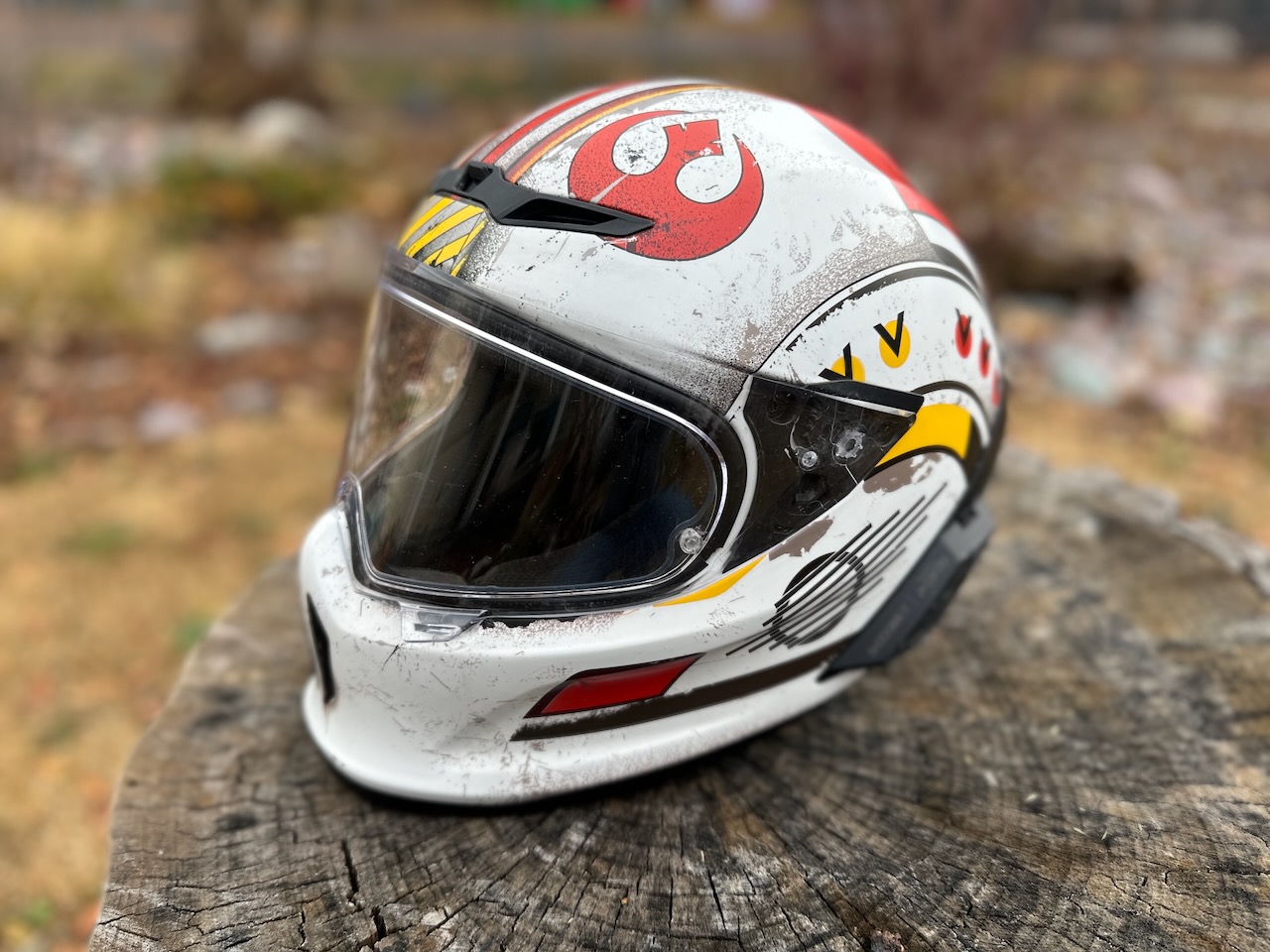
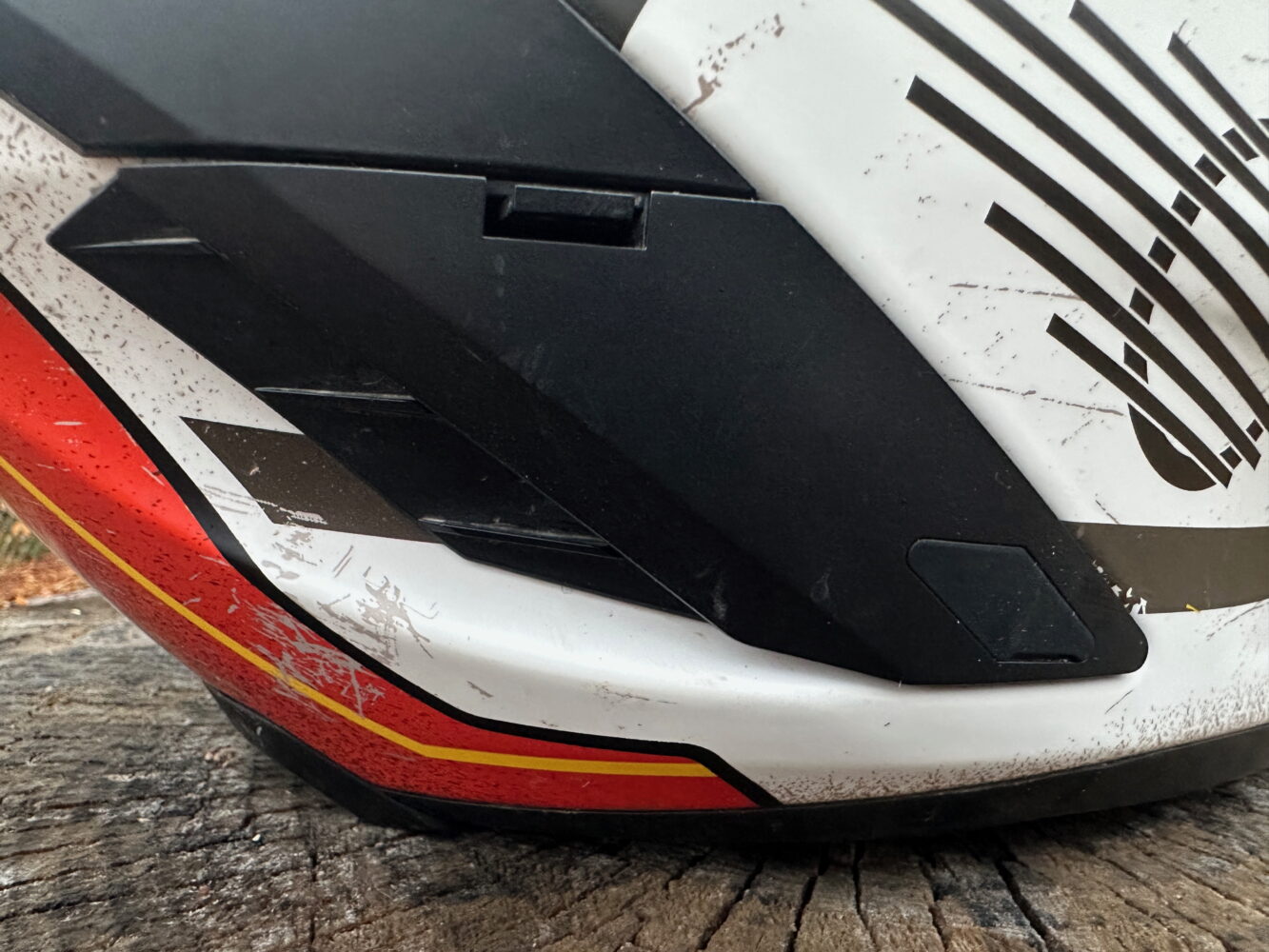
I don’t presume to be a Jedi Knight, but I confess that every time I swing a leg over my BMW and strap on the Ruroc Eox Rebel Pilot helmet, I channel a little bit of the Force. I usually prefer a helmet with solid, bright colors rather than busy graphics, but when Ruroc offered to send me an example from their Eox lineup to test, my deeply Gen-X soul couldn’t pass on the Rebel Pilot version. The matte-finish design package on this DOT and ECE 22.06-certified lid recreates Luke Skywalker’s Red 5 livery from the Battle of Yavin in Star Wars: Episode IV – A New Hope, from the iconic Starbirds, down to the carbon scoring. Other EOX Star Wars-licensed helmets include Resistance Pilot and Mandalorian graphics.
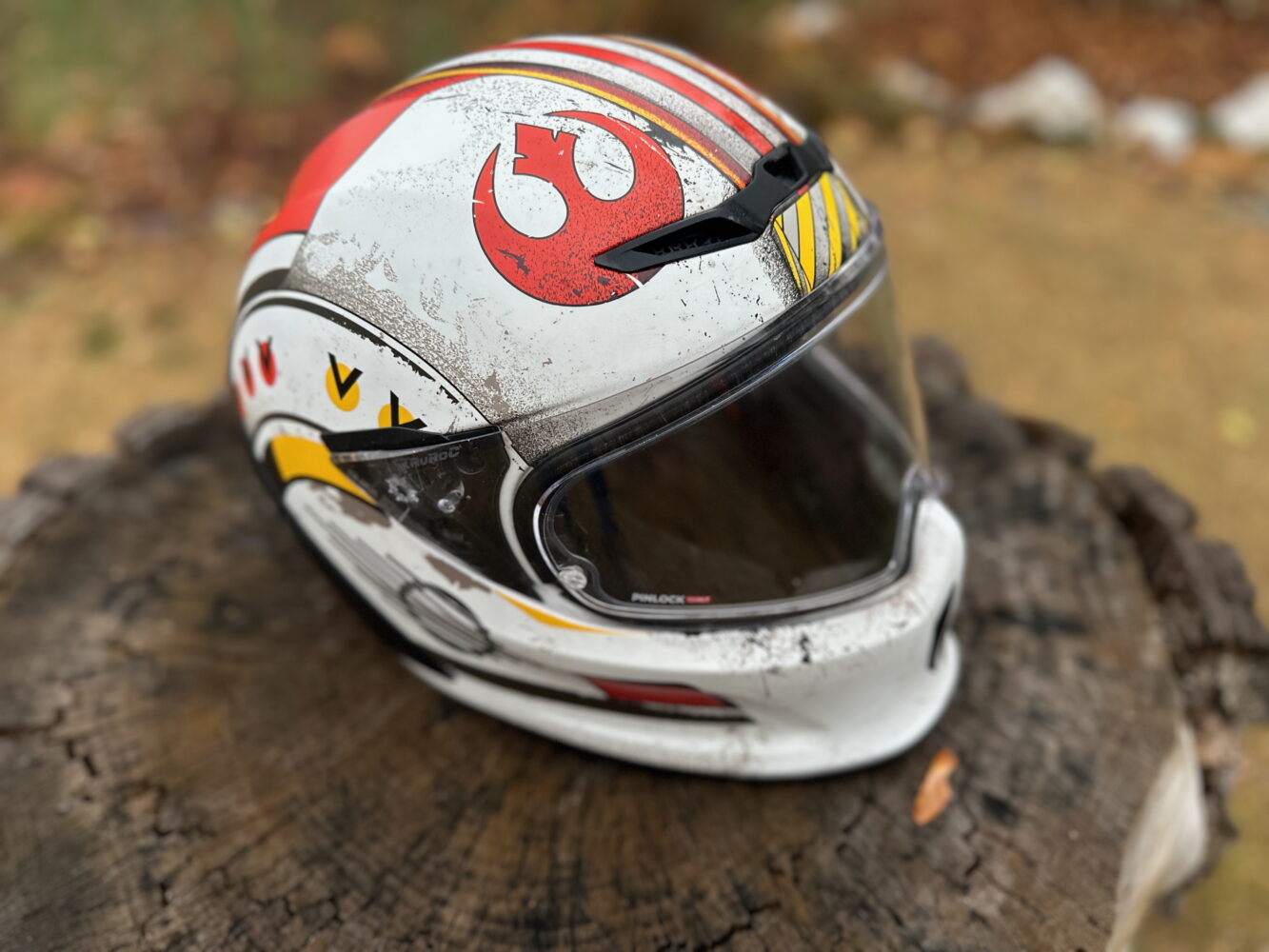
One benefit of rocking attention-grabbing and immediately recognizable images on your noggin is that other road users take notice—I’ve lost count of the number of double-takes, enthusiastic thumbs up, and people just pointing at me with open jaws while wearing the Eox. Jedi mind tricks don’t work on oblivious drivers, and higher visibility means more safety, so I don’t mind the extra attention. Ruroc’s proprietary Quad-Matrix carbon composite shell, which integrates T300 carbon fiber, Kevlar, nylon, and fiberglass, lays the foundation for the Eox. At just 3 pounds, 8.6 ounces for my size-small version, including the Shockwave Mesh Bluetooth comms system (more below), it’s by far the lightest helmet I’ve tested in this mid-range price category. Even Arai’s $4,000 Corsair-X RC carbon helmet weighs 3 pounds 8.8 ounces—so keeping mass down to this level is very impressive on Ruroc’s part. The company claims the 215-degree field of vision from the extra-wide eye port is the best in class, and six high-flow vents and channels keep things cool. Three shell sizes and two cheek pad options (included with the helmet) make dialing in the fit a snap. Pinlock compatibility and a wide range of different visors means the Rebel Pilot is ready for all kinds of flight conditions, from Hoth to Dagobah.
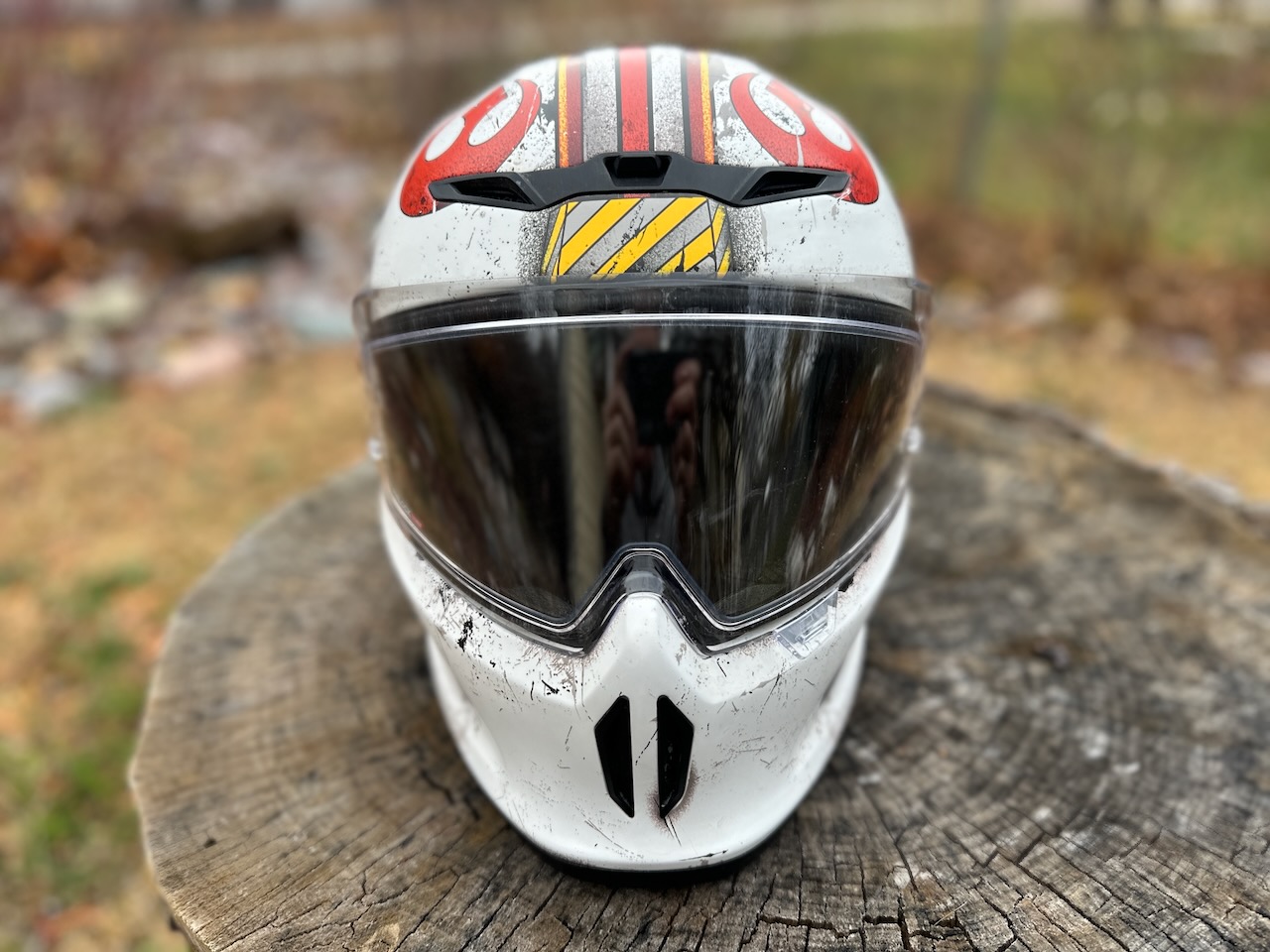

I’ve worn the Eox over thousands of miles and five months of mixed hyperspace travel, both on and off-road, including one four-week 2,300-mile Kessel run across five Western states. The helmet’s feather-weight construction meant very little neck fatigue after long days in the saddle, and I came away impressed with the aerodynamics and ventilation as well (especially the de-misting setting of the 5-position visor). Every once in a blue moon, the magnetic Fidlock chin strap would catch on my jacket’s collar and unhook, but not enough to be troubling, and removal and installation of the cheek pads proved to be a little cumbersome. But overall, this helmet, despite all the attention it garners, fit so well that it faded into the background. What about a peak? The Eox doesn’t offer one, and I don’t mind. I don’t generally like that piece of standard ADV helmet bling—so much long-distance riding requires extended highway stints, and the buffeting of a peak isn’t worth it to me for whatever tradeoffs it might offer in trail riding contexts.
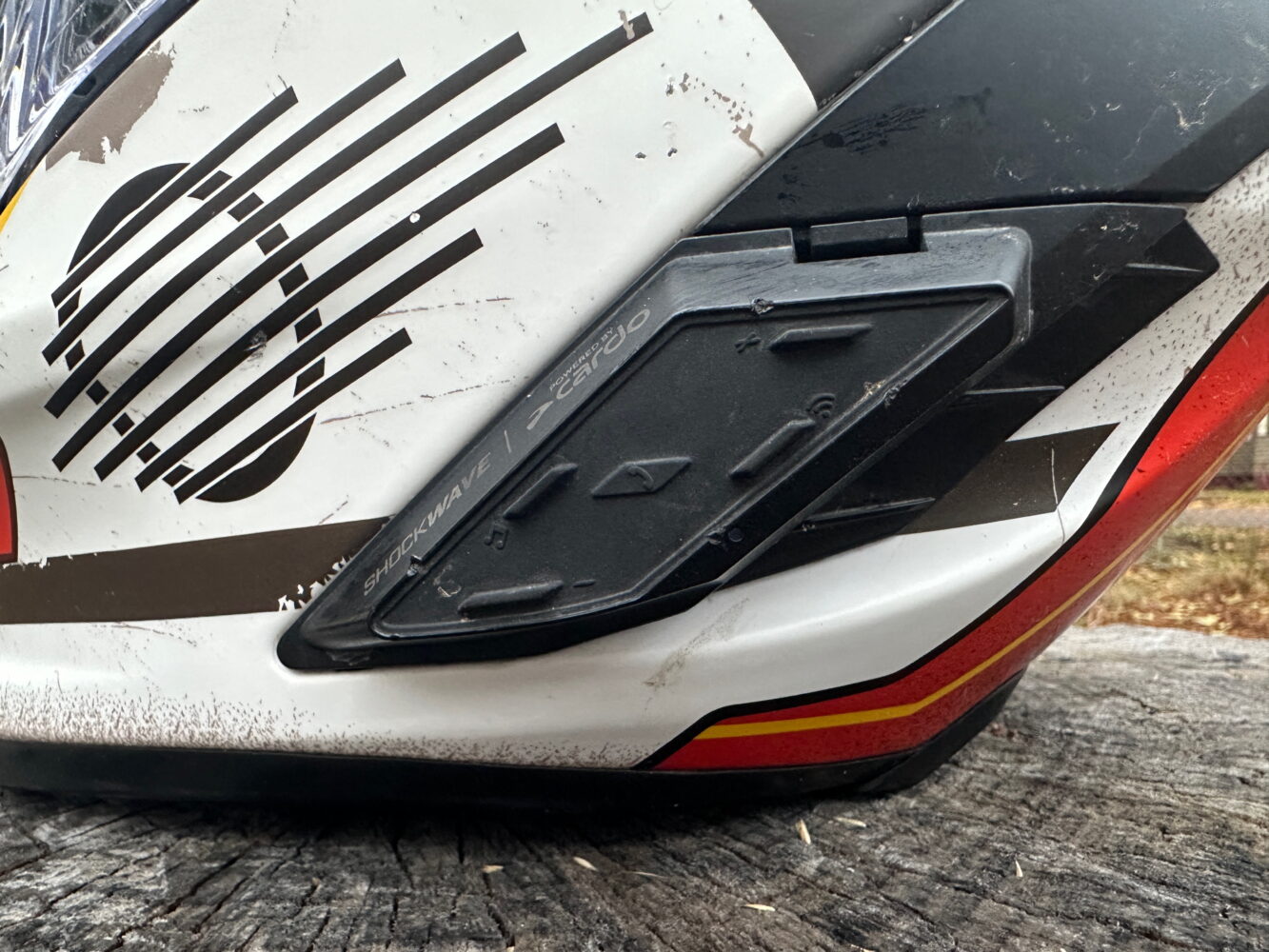
Cardo control unit connects seamlessly to your phone, but the buttons are tiny.
Paired with the Eox was Cardo’s Shockwave Mesh Bluetooth communications system. Designed specifically for the EOX, both the battery and the comm unit itself integrate cleanly into receiving ports on either side of the helmet. Cardo’s Dynamic Mesh Communications technology can link up to 15 riders across a distance of nearly three-quarters of a mile. The componentry weighs next to nothing, which has its advantages and disadvantages. Keeping mass low on the helmet is important, but the unit also felt very fragile (I actually broke the mounting tab off the Bluetooth unit just removing it from the packaging—my thanks to Ruroc for sending me another one). If you’ve got wookie-sized hands, the incredibly tiny buttons that control the operations of the system are barely discernible while wearing summer gloves and nearly impossible to operate with winter gloves on. The claimed 10-hour battery life proved to be very optimistic, especially in colder weather. I often experienced just four hours of use before going flat, so snagging a couple of extra batteries is a worthwhile move for longer hauls.
Cardo Shockwave battery latches in flush with the EOX helmet and weighs next to nothing.
All that said, the sound quality from the Harmon-Kardon-sourced speakers and microphone is second to none, including hitting impressive bass notes. The wide volume range features adaptive sound control to match environmental conditions, saving your hearing, and the Bluetooth antenna never once failed to automatically connect to my phone. Voice controls do mitigate the small button problem, but not always accurately, especially in particularly windy conditions. I put the IP65 waterproof rating for the Shockwave Mesh to the test many times, and moisture ingress never proved to be a problem.
Ruroc is not the biggest name in the helmet game, but a rebellious attitude is part of the company’s ethos. The value proposition for the Eox is also substantial—many versions of the helmet can be had for close to $200 on sale with a little searching. And, if you’re not feeling like taking on the Dark Side of the Force every ride, the Eox comes in dozens of other designs from mild to wild. As for me, you’ll find me flying my X-Wing with the Rebel Alliance in its struggle against the Galactic Empire.
Ruroc EOX Rebel Pilot | $599
Ruroc Cardo Shockwave Mesh | $349
Read more: Kawasaki’s New KLX Flavors :: Sherpa S and DF
Images: Stephan Edwards
Our No Compromise Clause: We do not accept advertorial content or allow advertising to influence our coverage, and our contributors are guaranteed editorial independence. Overland International may earn a small commission from affiliate links included in this article. We appreciate your support.
