

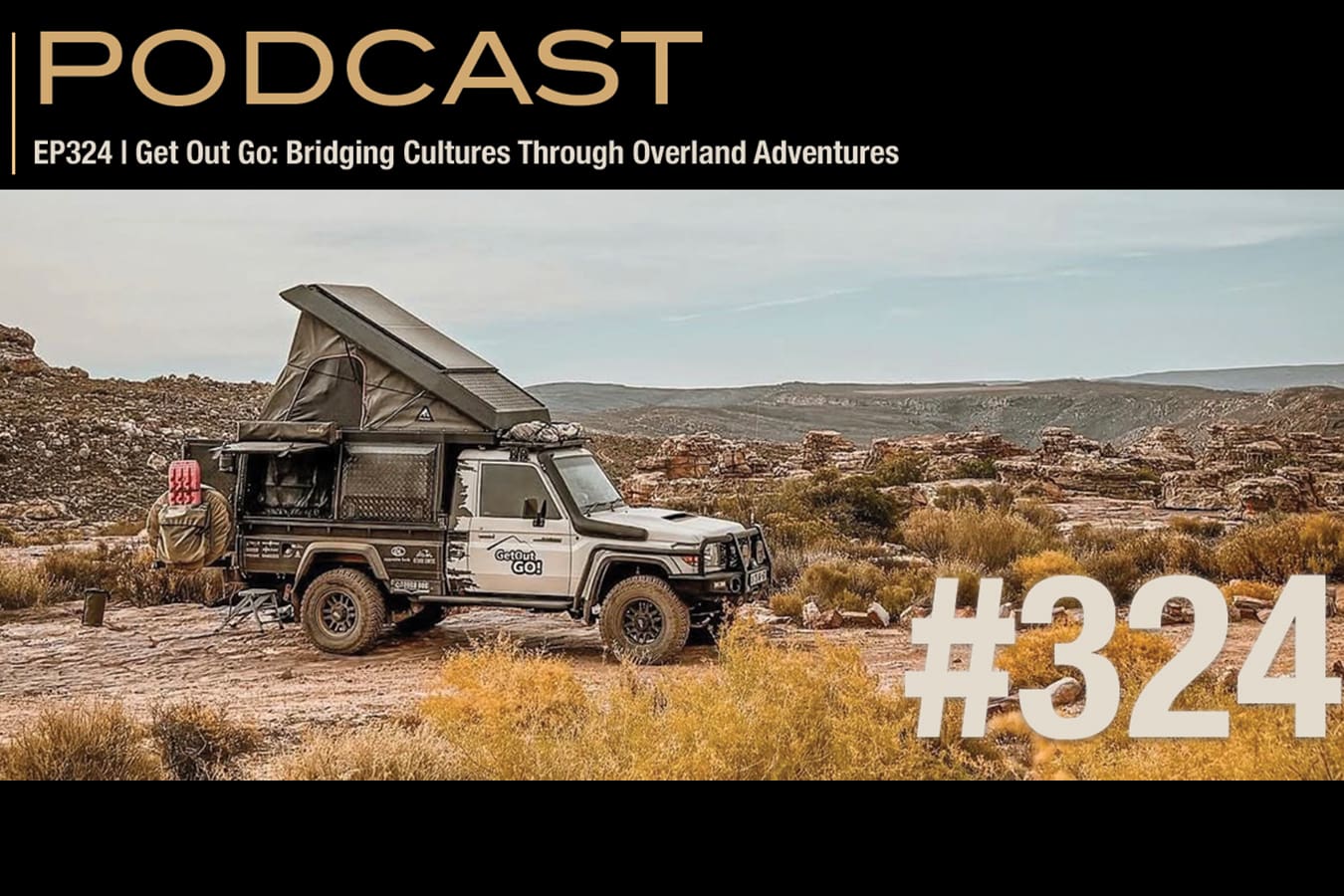
Overland Journal Podcast host Scott Brady speaks with Christoff and Vanessa Ailert of Get Out Go! about overlanding across Southern Africa and the US. They compare community culture, gear needs, and why items like rooftop tents or extra fuel are less essential in North America. Sharing insights from full-time vehicle travel, they emphasize weight management, efficient camp setups, and discuss their 79 Series Land Cruiser with an Alu-Cab camper. Highlights include navigating African corrugations, intense moments on Sani Pass, and a police encounter in Mozambique. Recommending Botswana and “Cry of the Kalahari,” they share how their mission helps inspire outdoor adventure while supporting travel logistics in Africa.
Overland Journal Podcast Episode #324
Tune in Apple Podcasts | Spotify | YouTube
The Overland Journal Podcast is brought to you this week by Hankook Dynapro Tire, Mohab
New to Overland Journal and want to grab a subscription? Visit Overland Journal and enter code: overlandpodcast at checkout for 20% off. We thank you for being a subscriber.
Guest Bio
Christoff and Venessa are adventure filmmakers and the creators of Get Out, Go!, a Southern African overlanding and bush camping show on South African TV and YouTube. Based in Africa, they travel full time, capturing the wild beauty of remote landscapes and authentic outdoor experiences. With a passion for overlanding and bush camping, they share practical insights, trip inspiration, and stories from the road to encourage others to explore the outdoors and live a balanced, adventurous life. New episodes on YouTube every other Friday.
Website | Instagram | YouTube | FaceBook
Host Bios:
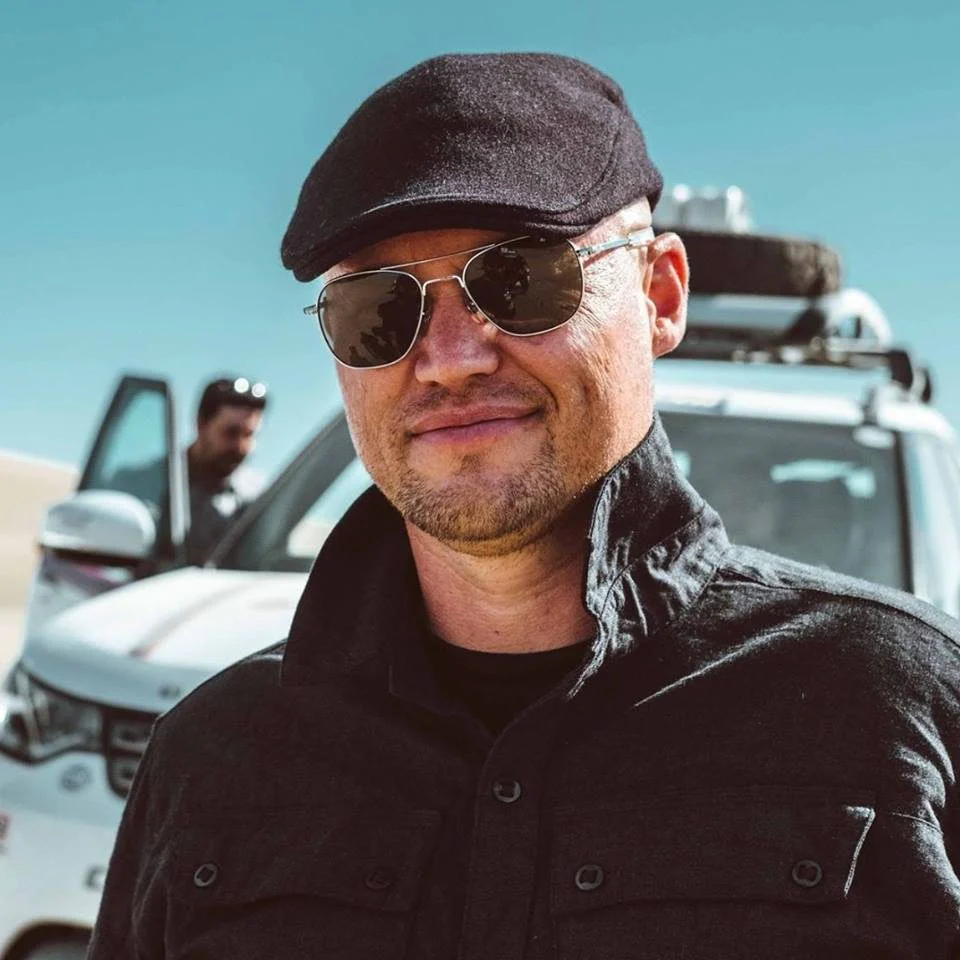
Scott Brady
Scott Brady is an adventurer, author, and publisher, and the first person in history to cross all seven continents. Brady is executive publisher of the Overland Collective, home to Overland Journal, the Overland Journal Podcast, and expeditionportal.com—the world’s largest vehicle-dependent adventure community. Scott wrote Overlanding 101 (Simon & Schuster) and is currently riding around the world on his BMW GS. He also led Expeditions 7, the first expedition to drive the same vehicle on all seven continents. Brady’s polar crossings include Antarctica and a south–north crossing of the Greenland ice sheet. Scott is a fellow of the Explorers Club and lives in Prescott, Arizona.
 Our No Compromise Clause: We do not accept advertorial content or allow advertising to influence our coverage, and our contributors are guaranteed editorial independence. Overland Collective may earn a small commission from affiliate links included in this article. We appreciate your support.
Transcript
Scott: [00:00:00] Hello and welcome to the Overland Journal Podcast. I’m your host, Scott Brady, and I’m here with Christoff and Vanessa Ailert, and they are Get Out Go from Southern Africa. Incredible travelers. They do … They have a fantastic YouTube channel and they have been a huge support to xOverland and our logistics and planning and being able to really enjoy Southern Africa.
And we are gonna talk a little bit about South Africa on this, on this podcast, but you guys have so many travels around the world, and you guys have done such a great job of of documenting your experiences that there’s lots to talk about. Yeah. We could probably do six podcasts to cover everything.
So thank you both so much for being on the podcast with me today. Yeah.
Christoff: Well, thanks for having us.
Vanessa: Yeah. Thank you for having us.
Hankook Dynapro Tires: And a special thanks to Hankook Dynapro Tire for supporting this week’s Overland Journal podcast. [00:01:00] Be sure to visit expeditionportal.com to see our features on the recent Hankook experience at the Fourth Annual Bronco Stampede in Pigeon Forge, Tennessee.
We took a look at the full line of Dynapro tires and some great Ford Broncos from all over the country as they gathered at this community event of enthusiasts and top brands.
Vanessa: Thanks again, Hankook
Scott: Well, you’re, you’re very welcome. And of course those that listen to the Overland Journal podcast know how much I love Southern Africa.
It feels like a second home to me. I, I think if I wasn’t living in Prescott, Arizona, in that little old historic home, I would be living somewhere in Southern Africa and finding a way to, to live there, because there’s, there’s really no place on Earth that I have found that best kind of meets my confluence of interests and loves for travel, and even the cool vehicles you guys get to [00:02:00] have and, and everything else.
But what would you say in… Y- you guys have just spent weeks here in the United States, but what are you seeing as the difference between not only the two countries as travelers, but what are you seeing as the difference between overlanding in the US and overlanding in South Africa, the communities?
Christoff: Yeah. So I think first of all, what we’ve seen is the communities are very similar, if not exactly the same.
Scott: Mm.
Christoff: You might have-
Scott: That’s cool to hear.
Christoff: Yeah. You might have differences in gear and how you approach different things but the community itself is as friendly, as informative. We’ve seen very little of, “Well, I know,” and, “You’re a newbie,” right?
Wow. Folks have been tremendously helpful around us finding camps and, you know, what to do and what not to do.
Scott: Mm.
Christoff: So yeah, that, that’s, I think, very similar. The rigs are a little different.
Scott: Yeah. Sure.
Christoff: So we’ve been using a Tundra, and we used to a 79 series, and it is wide. It’s very wide.
Scott: It’s a big car.
Yeah. [00:03:00] Very powerful, very big car.
Christoff: Yeah. Yeah. And we’ve seen a lot of those, and those get spicy in little forest roads. Sure. So that’s, that’s been a learning curve. So we do see a lot of overlanding gear from simple to complicated, and that’s been good to see as well. It’s not just hardcore overlanders- Mm
or off-roaders. You just see rooftop tents everywhere, and- Yeah … that’s, that’s very encouraging. Yeah.
Scott: Well, and, and Southern Africa, the reason why roof tents really were so successful there is you have lots of tourists coming in that wanna rent a Hilux- Yeah … or a Land Cruiser, and there’s nothing better than a roof tent for that kind of a situation.
It gets you up off the ground, ’cause there are things like- Which is important … black mambas and, and lions- … and things that go bump in the night, and that’s another good reason to be up and off the ground. Yeah. And a lot of people don’t realize that that’s really where roof tents… I mean, if you look at Jack Stuhler from Eezi Awn, I mean- Mm-hmm
he was not the one that invented roof tents. Mm. But they were certainly the first to start to [00:04:00] mass produce them and definitely made them popular in Southern Africa. Yeah, pretty much so.
Christoff: Yep.
Scott: And that’s because it’s such a great solution. So oftentimes I see people using roof tents in the US- ah, when a ground tent would actually be a better choice.
Yeah.
Christoff: Yeah.
Scott: But for sure in Africa what are some other things that you notice that Americans use a lot as overlanders that came from South Africa that maybe we don’t even need here, but that’s because they became so popular- Yeah … in Africa?
Christoff: No, go ahead. Ugh, I think scottles- Yeah … that was an interesting one. Well, that’s- Right … that’s invented and, and we’ll re- really use those in our backyards- Mm … right, for, you know, you know, stir fry and that sort of stuff. Here we see a lot of that being used.
Scott: Yep.
Christoff: Lot of f- extra fuel, like jerry cans or- Yeah
or the, you know, the different systems you got here. But there seems to be a fuel station every 100 miles- It’s- So you, do you really need
Scott: that? That’s a good, that’s a great observation.
Christoff: Yeah.
Scott: I think [00:05:00] sometimes it’s, it does just become automotive restyling. Yeah. It’s like it, there’s nothing cooler than a couple jerry cans on the roof.
Mm-hmm. I mean, it, it is always a good idea to have a fuel can- Yeah … with a little bit of extra fuel. You know, you may come across a motorcyclist that needs- Yeah. Yeah … a little bit of extra fuel or, or a local that could really benefit from that. I mean, I’ve certainly run out of gas on bikes and things like that-
where it’s nice to, nice if somebody had a couple extra gallons. Yeah. Yeah, for
Christoff: sure.
Scott: The scottle is a great point, too, because you know, that’s a bulky item. Yeah. Yeah. Now, of course, they’re indestructible. They l- they’ll last a lifetime. Yeah. But you wonder, like, do you need to bring that much weight- Yeah
and complexity with you?
Christoff: Yeah, correct. So weight and space is at a premium for us. So we always say to people, “It’s different if you’re a weekend warrior- Mm … or go away for, you know, a week at a time.” If you’re on the road full time, you start to look at things very differently. Mm. Mm. And everything that takes up space and adds weight is, do I really need this thing?
Scott: Yeah, sure.
Christoff: Or a lot of [00:06:00] case, we wanna do multipurpose things, that this should do one or two things, not just one, because again, it takes space and it adds weight.
Vanessa: Yeah. And water is an issue as well- Yeah … when you’re out there. So cleaning is a problem if you have big things that you need to clean, and oily things, so you need to keep- Yeah, that makes sense
that
Scott: to a minimum. Oh, that makes a lot of sense. So then what is the reason why South Africans bring potjie pots? Yeah. I still, I have still not received a satisfactory answer- … on this after many years. Oh,
Vanessa: well, I can answer that. Okay,
Scott: please
Vanessa: do. A potjie is easy to clean, funny enough. Okay. You do not over-clean your cast iron pot at all.
Okay. It just gets flavor after flavor after each dish that you make.
Scott: Okay.
Vanessa: So you, you can rinse it out and you, and you can just wipe it out, but you almost don’t wa- use dishwashing liquid in it.
Scott: Mm.
Vanessa: And it’s easy to clean. It just works great. And do you,
Scott: do you put them in the fire? Is that what you typically do?
Vanessa: Yes,
Scott: absolutely. Ah. Yeah. So that, that would be… Okay, that makes a little more sense, ’cause, I mean, they’re heavy.
Christoff: Yeah.
Scott: They are. I [00:07:00] mean, like Front Runner even has, like brackets for the roof rack- Exactly, yeah … to hold those things.
Christoff: So we tend to use a flat bottom- Yes. Yeah … potjie, so it doesn’t take as much space.
Mm,
Scott: so like a cast… Like, what we would call a cast iron pan here.
Christoff: Correct, yeah. Dutch oven.
Scott: Dutch oven.
Christoff: Dutch oven. Yeah, there you go. Yeah. So th- that’s usually what we use, and you can make- potjie in there. We use it to make bread, muffins, pizzas, you name it. So it’s, it’s- What is potjie? Again-
Scott: I thought that was just the name of the pot.
No, no. So that’s a d- is that a dish? That’s a
Christoff: dish. That’s a dish.
Scott: Okay, so what’s the, what is a potjie then?
Christoff: Closest comparison would be a stew. Oh,
Scott: okay.
Christoff: Yeah. All right. So it usually goes for quite a few hours to make, especially the meat fall off the bone. We usually will use something like oxtail- Mm … or chuck- And then you, that gets mixed with veg and it’s over long periods, it’s slow cooked.
Vanessa: Mm.
Christoff: Mm. So it’s very specific spices.
Vanessa: Yeah. Mm. It’s a, it’s a day thing almost- Yeah … where you, y- you’ll fry some onions then put the meat in. A lot of wine, depending on the dish [00:08:00] Sounds great. Yeah. A, yeah, it takes a long time period, and it it’s served with either rice or mash- Pap … pap.
Scott: Okay. Yeah.
So over mashed potatoes.
Vanessa: Yes.
Scott: Yeah. And then I have, I, I know I have had pap, but I don’t remember what it is. Is that like the cornmeal kind- Yeah. Yeah.
Vanessa: That’s correct,
Christoff: yeah. Yeah. Yeah. So it’s maize meal. Maize meal.
Scott: Maize meal. That’s right. Yeah. I like that, though. Yeah. It is- That stuff is really good.
Christoff: It’s like a porridge and, Like
Scott: super sticky, dense- Yeah … porridge.
Christoff: 100%. Yeah. And it’s, it’s similar to grits, but you know, the density is a lot more. It’s- Mm … it’s a lot thicker than grits.
Scott: Yeah, you feel it- Yeah … stick into your ribs, literally.
Vanessa: Yes. But that’s also something you can eat as a breakfast. Mm.
Yeah. And it’s not as thick.
Scott: Oh, okay.
Christoff: Yeah.
Vanessa: So yeah. Dinner or- Su-
Christoff: yeah … breakfast. Sugar and milk, you’ve got breakfast there.
Scott: Yeah. And that’s one of the things that I’ve noticed in your guys’ travels, is that you, you have made cooking healthy meals together- Yeah … a part of your story. Mm-hmm. It’s a part of your channel.
You can [00:09:00] see you guys making these amazing South African meals, and, and a lot of people don’t realize just how good, in general, food, produce, If you go into a, I mean, a South African grocery store, like the average South African grocery store- Mm-hmm … is on par with, like, our premium grocery stores. Yeah,
Christoff: yeah.
Scott: And some of them are just downright luxurious in there. Yeah. I mean, you see the produ- I mean, South Africa is, is like the bread, bread basket of Africa. Yeah, yeah. Certainly South Africa, Zimbabwe, and all of that. Yeah. Hopefully Zimbabwe’s getting back to being- Yeah, yeah … being that bread basket- Yeah, yeah
that it used to be. But when, when you guys plan… ‘Cause you have a smaller camper. Yeah. You’re in, on, in a 70 series. How do you guys plan food and meals when you’re on the road? Yeah.
Vanessa: Oh a menu. I, I literally set a menu- Nice … for every day. So I know… I start off with meat. Mm. That’s a prime Yeah
requirement for every- It’s very South African … every dinner.
Scott: Yeah.
Vanessa: So we try and braai as much as [00:10:00] possible, but I try, because we’re out so often, I try and look at the dishes to make sure it’s homey.
Scott: Mm.
Vanessa: So it doesn’t feel like you’re out in the bush the whole time, but you’ve got- Mm … a bit of home and bush.
Scott: Yeah.
Vanessa: Yeah, we’re out there for two weeks, so I put a whole menu together. I can fit about two weeks worth of meat in our freezer.
Scott: Wow.
Vanessa: Yeah, I pre-pack everything for every meal. And then I decide what side dishes need to go with it- Mm … and what equipment is needed- Yeah …
Scott: to make sure it’s with the- To support the food.
I like that. You know,
Vanessa: a can opener is important.
Scott: Yeah. Yeah, for sure. Yeah. Yeah, I remember when we were all camping out right before we made that kind of final mile to Cape Agulhas, and just seeing how you guys had your camper so well-suited. I, I… It was one of the things that I noticed about you guys, is that you travel enough where you really have learned what works and what doesn’t work.
Mm-hmm. Yeah. And it doesn’t mean that things don’t fail or create problems- Yeah … but it seems like you guys have done a good job of getting as much weight out as you can. Yeah. So what are some of the tricks that you’ve found through the years to keep… ‘Cause a [00:11:00] 70 Series has a big payload.
Christoff: Yep.
Scott: But the downside of getting up to gross vehicle weight with a truck like that is then it struggles off-road-
Christoff: Yeah
Scott: ’cause it’s so heavy. So how have you gotten kind of that balance of weight?
Christoff: Yeah. So, first of all, you want mechanical sympathy as well, ’cause, you know, the more weight you add, the more everything’s working- Yeah … from the engine right down to the suspension and tires- Mm … and so on. So- I think it’s a process of elimination.
We’ve been doing this for a few years, and I always suggest to folks don’t just go and build a thing. Understand what your needs-
Scott: Mm-hmm …
Christoff: and how you camp is, that will determine a lot of it. Is it a daily driver? ‘Cause our 79 with the camper doesn’t make exactly something- Yeah … you’d take into an office parking lot.
Yeah. It doesn’t fit most places, so- Oh,
Scott: and if it got stolen or something, it’d be tragic.
Christoff: Yeah, yeah.
Scott: So you guys need to really keep it safe.
Christoff: And, you know, people forget things like if it has to go for a service and we’re not, you know, in our base [00:12:00] camp that car is now in the service and where do you go?
Yeah. ‘Cause that’s your, that’s your house, that’s your transportation, and you’re kind of there sitting waiting for the service to be completed. Mm. But how we got to it is just trial and error. Mm. I think over the years we’ve sort of, you know, we know what we want, and we’ve gone through different iterations as well.
Mm. I used to do a lot of solo traveling. Then I had a Fortuner, which is very sim- similar to, like, a 4Runner. Yeah,
Scott: sure.
Christoff: And that suited our sort of on and off needs, but the moment we w- went full time, it’s, this is very different.
Scott: Yeah.
Christoff: Yeah, yeah. And-
Scott: And what’s your camper setup right now? ‘Cause you have a, it’s a 79 series.
It’s, it’s a single cab, right? Single
Christoff: cab, yep.
Scott: And then what’s the camper module on the back?
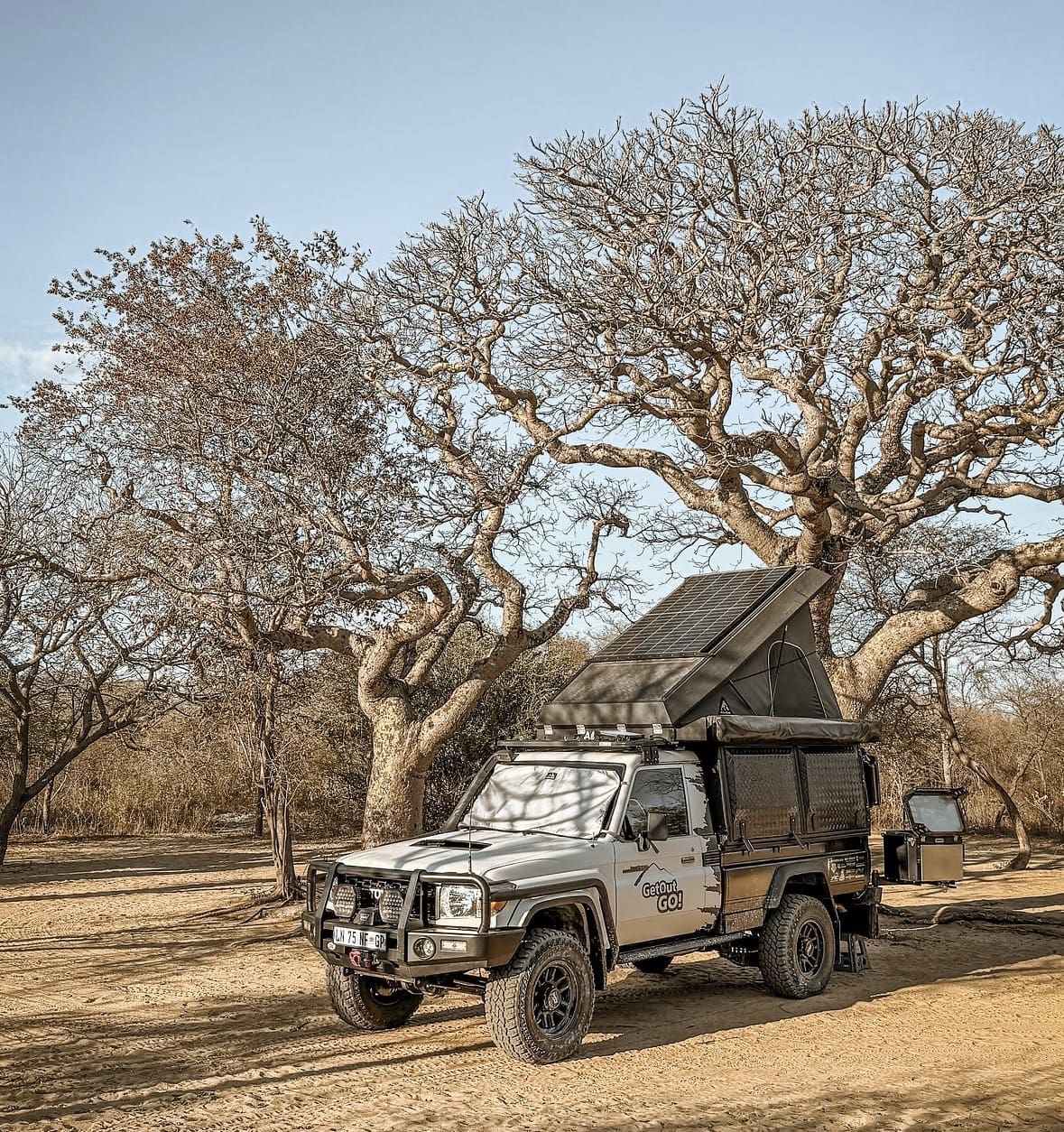
Christoff: So it’s an Alu-Cab canopy camper, and we looked around at a lot of campers. Mm. And that one, again, suited our needs ’cause, A, we’ve got an inside living space. Mm. Because if you’re on the road full time, it’s not like you can go to your couch inside when [00:13:00] the weather’s bad, right?
Right. So you have two options there, really. You have a camper with an inside living space, or you need to tow something. Mm. We have tried towing, and we’ve broken a few things, and the problem is the complexity that goes with that full time. You have, you know, a set of extra wheels and tires, bearings- Yeah
another axle you know, dampener shocks and this and that. So- Yeah … w- we tried that, and that didn’t work. Yeah. So camper was
Scott: the- Most of us have made that-
Christoff: Yeah. …
Scott: made that loop. I mean, the, the idea of a trailer makes so much sense, but in practicality You know, they just… In order to make them hold up, they have to be so expensive
Christoff: Yeah.
Yeah, yeah. It just doesn’t- And also, again, it depends how you camp. So why we picked the Alu-Cab canopy camper is it’s easy to set up.
Vanessa: It’s fast, yeah.
Christoff: It’s, it’s really like a minute- Mm … to set it up or tear it down. Mm. Your bedding stays inside. Yeah. And, and you might think, “Well, you know, I’ve got an iKamper and I’ve gotta move my bedding [00:14:00] in and out.”
Oh, no. It’s, it’s not a big problem, but if you do that three times a day for a month- Yeah … it soon becomes a problem. Very quickly.
Vanessa: And it becomes dirty.
Christoff: Yeah.
Vanessa: You, you’ve got dust in and out, so. Mm-hmm.
Scott: Yeah.
Christoff: Yeah.
Scott: No, that makes so much sense. I mean, I, I remember the first time I had to go in reverse very quickly away from a charging bull elephant- Mm-hmm
in, Where was I at? Uganda. I realized, yeah, a trailer’s not for me. No. ‘Cause like- What are you gonna do?
Christoff: Exactly.
Scott: Yeah. You’re just, you’re in it. You’re… It’s gonna be a big problem. And, and a- again, it’s not to take anything away from trailers. I think if you look at a trailer as an RV-
Christoff: Yeah …
Scott: you’re gonna be fine.
Yeah. If you wanna use it as a backcountry overland vehicle, where you’re going into the parks and you’re going into rough terrain and rough conditions I don’t think it’s a good idea.
Christoff: No. Personally, no. So again, it, it depends on how you camp. Some folks like to stay in one place for two, three weeks.
Scott: Yeah.
Christoff: They might
Scott: have a- That’d be pretty luxurious. Yeah Yeah.
Christoff: They might have a, a family with a couple of kids, and they have a daily that, you know, when they go [00:15:00] back, needs to go to the office and back. Mm-hmm.
Scott: And,
Christoff: you know, s- slug around kids to the school and-
Scott: Yeah …
Christoff: so then that makes, you know, real sense.
But- Yeah … in our case, we, we kinda tried it, and we used to camp when it’s not full-time like that. Stay here two weeks, a week there.
Scott: Yeah.
Christoff: But now it’s like two days, one day. I, I wouldn’t wanna struggle with that, you know?
Vanessa: We’re on the go, and it’s also not a get out go trip if we don’t get lost.
Christoff: Mm.
Vanessa: So it’s easier to turn around with just the Land Cruiser and not just a Land Cruiser- Yeah, yeah
and a trailer. That, that, that’s
Scott: so, that’s so true. I mean, even when we… Where we camped near Cape Agulhas at the end of the trip, you know, there was a couple folks that were there with their trailers. And the- Yep … man, they had them all extended out with all the awnings and all the rooms and everything else like that.
I mean, how nice would that be? Yeah,
Christoff: yeah.
Scott: But it doesn’t… Most Americans don’t tend to stay in one place for a week or two. We do see that a lot in Australia. Yeah. The Australians- Yeah, yeah, yeah … do like trailers, and they also make very heavy duty [00:16:00] trailers. Yeah. Mm. But they’re extremely expensive.
Yeah. They could be twice the price of a Land Cruiser- Yeah,
Christoff: correct …
Scott: just for the trailer. And they do hold up. Yeah. But you have to really pay for that. But they do tend to have a little more ti- a lot more time off than we do here. Mm-hmm. And they will camp out for three, four days- Yeah … five days at a time- Yeah
in one location, and that’s where, yeah, having a hot shower and a, and, you know, a microwave and that’d be- Yeah … probably pretty nice.
Christoff: But I mean, even in our camper, we have a lot of that. So yeah. Mm. We’ve got the luxuries. We can do hot showers every day. Mm.
Scott: Yep.
Christoff: Do have an air fryer.
Vanessa: Nespresso.
Christoff: An Nespresso machine.
And-
Scott: Well done.
Christoff: Well done. Mm … but we say the same token, we’ve done a build on Vanessa’s little Jimny just to show people Don’t let that be your barrier of entry.
Scott: Mm.
Christoff: Or, you know, what’s the best vehicle? Well, it’s the one you have.
Scott: Mm.
Christoff: And you might, you know, if you’ve got a 4×2, you might not go to all the 4×4 trails- Mm
but there’s still lots of places you can go. So, you know, spend that money first on gas [00:17:00] or diesel or whatever you-
Scott: Figure out what you like. Yep. You shouldn’t have told me that Vanessa has a Jimny, ’cause now Vanessa and I are gonna talk about Jimnys- Yeah. … for the rest of the podcast. They are the coolest little trucks.
Yeah.
Vanessa: I love my Jimny.
Scott: They’re ama- they’re they’re truly amazing, and it just breaks my heart that we don’t get them here in the United States. Yeah. Although there is a greater possibility that we might be able to now after some recent changes in regulations. Nice. But yeah, just one of the coolest little rigs.
Yeah. Yeah. I mean, how many… A c- couple hundred thousand rand, right?
Christoff: Yep. So the older model like we’ve got- An example … that you can get for 150,000 rands- Yeah … with little- Yeah … or no kilometers on. The new ones have become a little expensive, so they’re in the sort of 400,000 range, up to 500 for the five-door.
So it’s lost a little appeal- Mm … in the, the pricing range. And it’s a little-
Scott: Yeah, but you spend 2 million on a Discovery.
Christoff: Correct. Yeah. Correct.
Scott: So it just… You know, that’s, that’s a lot of money in South Africa. [00:18:00] And I mean, the, the one… There’s a, a bunch of things that are an advantage in South Africa.
You guys don’t have a lot of corrosion unless you live right on the coast. Yeah. So vehicles do tend to last a long time. You guys also have some of the best shops- Yep … in the country. Yep. I mean, you think about Paul Marsh in- Mm-hmm … in Cape Town, where we stored the vehicles after the Milestones trip, and just having someone with that level of experience to make sure that your overland vehicle is well- Yeah
well taken care of. Yep.
Christoff: Yep.
Scott: So South Africa has incredible infrastructure for overlanding.
Christoff: Yeah. Okay. It’s, we don’t lack for choice- No, you don’t … certainly. You know, just, just have to go to the shows, and every year there’s a new trailer or new accessories- Yeah … and there’s lots of choice.
Mohab Sponsor: For all the adventure seekers out there in search of something new, I wanna introduce you to Mohab.
Mohab isn’t your ordinary rooftop tent company. They have created a complete mobile habitat. That’s where they get the name Mohab, mobile [00:19:00] habitat. Hard wall cabins, rack systems, awnings, portable kitchens, and more. It’s a complete ecosystem of gear designed to work together and engineered for quick, hassle-free deployment so you can spend more time doing what you love.
This is innovation built for the outdoors. Start your discovery at gomohab.com. That’s
Vanessa: G-O-M-O-H-A-B.com. Mohab, discover what’s out there.
Christoff: Yeah.
Scott: Yeah. Yeah, I, I find that the South African overlanders are, they’re very industrious. Yeah. Here we have more of an emphasis on content and creation- Mm-hmm … content creation.
Mm-hmm. Less of an emphasis on something like you would find from Dave at AEV- Yeah … where it’s the highest level of execution. Yeah. Whereas I find it’s almost flipped in South Africa. You know, the South Africans, if they start to enjoy overlanding, then [00:20:00] they make something.
Christoff: Yeah.
Scott: Yeah. They make s- they physically make a product.
Yeah. There are certainly content creators in South Africa like yourselves- Yeah … but that’s gotta be nicer for you guys ’cause then it’s not so much noise. Yeah. Correct. Whereas here everyb- you know, you go walk around here at the Big Thing and everybody’s got an Instagram channel. Yeah. And I’m trying to, I’m trying to keep track of, like, your…
You know, like it’s y- how many different ways can you say overland? And I, yeah, so I lose track.
Christoff: Yeah. So on that, we’ve tried to tell good stories. Mm. Especially we’ve got a mission sort of twofold. One is to get bums off couches.
Scott: Mm-hmm.
Christoff: So it’s, it’s fine consuming overland content on TV and YouTube. At some point you gotta take the leap- Mm-hmm
and whether it’s in a Jimny or a Land Cruiser, just get out there. Mm-hmm. We also say you don’t need to be an overlander for that. You can go hiking, backpacking, just walk your dog- Mm … go to the park. And then the other one is really to show people Africa. There’s a lot of misconceptions and fears around Africa.
And once you get [00:21:00] into Africa, you get those, that sand in your shoes, you’ll always wanna come back. Yeah.
Scott: Yeah. I mean, it, it feels like home to me. I mean, it, like we all came from there. Yeah. So, you know, it’s really neat to see how you guys have shown Africa in such a positive way. I, I did notice in the late ’90s, early 2000s that there had become kind of a- Y- like more of a negative tone- Yeah
from overlanders in South Africa. Yeah. That, “Oh, this has changed, and it’s no longer safe, and you don’t wanna come here.” Yeah. Yeah. And, and people were trying to leave, and I think that that’s come full circle, that every country has its challenges. Yeah.
Christoff: Yep.
Scott: United States included. Every country has its challenges.
But where in the world can you go and buy a brand-new 70 Series- Mm-hmm … buy a home in the mountains for the equivalent of 35,000 US dollars? Yeah. You could be having wine that was made at the winery sitting on the beach for sunset, and the next day you’re hearing lions roar- Yep. Yep … [00:22:00] in the Kruger National Park.
And then you can be up in the snow in Lesotho. Yep. I mean, there, there’s… And the access to the other countries, too. Namibia is so close. Botswana. Botswana is so close. Yeah. Mozambique is like the Baja- Yeah … of Africa and better in some ways. Yeah. So different. I mean, Baja’s also wonderful, but Mozambique just doesn’t get the traffic.
Christoff: Yeah.
Scott: Yeah, and it’s- It’s very quiet there.
Christoff: I think that’s the general thing we’ve seen here that’s also very different, is there’s a lot of traffic. Mm-hmm. There’s just so many more people, and a lot of the, the parks for instance, are very accessible. Hmm. So with a sedan you can get there, which is great in its own way, but we prefer very remote travel, and Africa still has a lot of that.
Vanessa: Yeah. Absolutely. So it’s more of a challenge to camp, I think, in- Yeah … in Africa than it is… Yeah, it’s quite easy to just find a camp and camp here. Yeah. Mm-hmm. It’s great, though.
Scott: Yeah. You can go down about any dirt road- Mm-hmm … and next thing you know, you’re popping camp. Yeah. And sometimes you get a great view, and sometimes there’s a beautiful river coming [00:23:00] through it.
Yep. Yep. Just make sure you pack your food away so the bears don’t- Yeah … come get you.
Christoff: Yep.
Scott: Especially up in this part of the- Yeah … in part of the country. What has been some of the highlights for you guys in your trip here in the US? You guys have had several weeks driving around- Yeah … in cool XOVERLAND trucks.
What’s been… What were your couple of your, your high points? I think people is probably the first one. My goodness. Everybody is so friendly. Mm. It’s almost overwhelming. Mm. Everywhere you go, they ask you, “How are you? Are you okay?”
Mm. And
Vanessa: so much interest in who you are.
Scott: Mm.
Vanessa: The safety aspect is- Mm
amazing.
Scott: Mm.
Vanessa: And the fact that you can just literally almost camp everywhere.
Scott: Yeah.
Vanessa: Everything works well. Mm. Everybody follows rules. Mm. And it’s very clean.
Scott: Mm.
Christoff: Yeah.
Vanessa: That’s great.
Christoff: Yeah, it might lack some of the flavor of, you know, a lot of African countries- Mm … but certainly you can go anywhere very easily.
You know, National Forest, BLM land, there’s- Mm … just so much of it, and that’s… You’re quite fortunate with that. You can, like you say, camp almost just anywhere. It’s [00:24:00] green. There are mountains- Mm-hmm. Big mountains. Yeah … and there’s always a river running through somewhere. Yeah. Big, big mountains. And one of the things that I notice is, like in South Africa w- like your, the equivalent of your Rubicon, which I’m sure you have more difficult trails in, in South Africa, but same here.
Scott: Like, the Rubicon Trail is very challenging. Yep. But certainly not the most difficult trail we have. No. But you guys have Baboon’s Pass. Yeah. And that you could drive in a stock Jeep Rubicon. Yeah. Like, it would be not… So the trails in the US do tend to be more recreation-focused- Mm-hmm … so they can be very difficult.
Yeah. Which is fun in its own way. It is, yeah.
Christoff: Yeah, for sure. So- Which is fun in its own way … yeah,
Scott: we, we
Christoff: really don’t have rock crawling- Yeah … aside from, like you say, Baboon Spurs, Venzels Pass, and, or like a standard Rubicon. Yeah. That wouldn’t even break a sweat.
Scott: No.
Christoff: So in a 79 series, it’s a different story-
because you have wheel lift for days. Yeah,
Scott: sure.
Christoff: But yeah, they’re awesome, but we… It’s not, you won’t find any gunshots or- No … you know, Black Bear Pass and that sort of [00:25:00] stuff, so yeah.
Scott: Yeah, so that’s one of the things that I noticed that’s different too. There’s a bunch of things that I’ve learned from South Africans, and maybe we can expand upon that a little bit more around the travel side.
But you know, the South Africans do a really good job of making sure that the suspension and the vehicle configuration can hold up to long- Yeah … distances of corrugation. Yeah. That’s something that we see here. There’ll be a suspension that is designed to travel at speed, so like a Baja-style suspension.
Yeah. But what a p- lot of people don’t realize when they install something like that is Baja suspensions are meant for one race. Yep. And then they get completely rebuilt and serviced- Right … and you can’t do that. No. So in, in Africa, I’ll see larger diameter shocks- Mm-hmm … but it’ll still have rubber bushings.
Yeah. You’ll see like heavy-duty leaf packs as opposed to swapping out to some fancy five-link or whatever else. Right. Yeah. That’ll just have more wear out points.
Christoff: Yeah. Yeah, I think the biggest car [00:26:00] breaker is corrugations- Mm … so washboard. You can go from Purros in Namibia to Sesfontein and have 3, 400 kilometers of nonstop corrugations.
Yep. And literally as it’s shaking your teeth out and you feel like you need a kidney belt, you know something’s breaking.
Vanessa: Yeah.
Christoff: Or some other bolt’s coming loose in the process. Yep. So that’s probably some of our biggest challenges- Mm … is the, just the, the condition of the roads. Even tar is a very relative term.
Sometimes there’s more potholes than tar, and it’s better to drive off the side.
Scott: Yep.
Christoff: That adds some of this adventure, but you have to be really careful, like I mentioned before, around mechanical sympathy. Mm-hmm. If you just go Baja style there, like you say, you will ruin your shocks for sure. Yep. Yeah, amongst other things.
Yeah,
Scott: you’ll wear, you’ll wear, yeah, you’ll wear the car out. When Tavia and I were going through the Serengeti going from Ngorongoro into the Maasai lands, it was [00:27:00] this really long, very corrugate- but it was corrugated with embed- embedded rocks. Mm. Mm-hmm. So you couldn’t get to the right speed. Yep.
And we had to stop because we were worn out. Yeah. Mm. Like, the, the… Fortunately, that Grenadier never fell apart, but, like, it felt like it was gonna fall apart. Mm-hmm. And it was so stressful for me- Yeah … as the driver that we actually had to stop for 20, 30 minutes just because of the, the banging and the- Yeah
the pounding of the vehicle. It was so stressful. Yeah. It’s, it’s… We do the same, and also to let the shocks cool down. Yeah.
Christoff: But yeah, y- after a while it’s like, “Oh, I f- I’m feeling grumpy,” and there’s nobody to be grumpy at- … so you stop and take a break. Yeah.
Vanessa: Yeah, exactly, and you’re worried about what’s breaking.
Except for the car stuff, are your eggs still
Scott: alive in the… Yeah, totally. Yeah. Yeah, totally. Like, you’re gonna get scram- you’re gonna have scrambled eggs- Scrambled eggs. … by the time, by the time, by the time that you get there. Yeah. So, let’s talk a little bit about your, your guys’ history. So, Christoff, what was the thing that kinda…
I mean, obviously you lived [00:28:00] in, you grew up in South Africa, so there’s lots of reasons to wanna be outside. But what was the thing that kind of really pushed you in towards overlanding? What was the… What was your origin story for becoming-
Christoff: Yeah, so- … who you
Scott: are?
Christoff: We we camped a lot as, as, as kids, and my father especially liked fishing.
Scott: Mm.
Christoff: So we were always outside. So- Especially in the beginning when we moved to a city, it’s like, “Oh, I’m missing a lot of this,” and all these concrete walls and- Mm … artificial lighting. So what’s the easiest way to sort of get off the beaten track the furthest you can? And that’s to have a 4×4. Like I said, you don’t need one, but it just takes you that much further off the beaten track.
Scott: Yeah.
Christoff: We started out with an old Pajero, Montero called here.
Scott: Great choice, yeah.
Christoff: And we put more than 400,000 kilometers on that thing, and we went everywhere. So it had, literally had a roof rack with an easy on-
Scott: Mm-hmm …
Christoff: you know, soft tent.
Scott: Perfect.
Christoff: It had a battery box with a solenoid [00:29:00] to the alternator and a little fridge, and that was us.
Scott: Yeah.
Christoff: Yeah. And we had some of the best times ever. That is great. Yeah. So it’s really, for us it was to To get off the beaten track. Mm-hmm. Just get that little bit farther out of civilization- Mm … and enjoy the outdoors.
Scott: And you guys had, like, regular day jobs that you
Christoff: were
Scott: working-
Christoff: Yeah … so- Yeah. So we were both in corporate.
Mm-hmm. Those days we were just starting out. Vanessa had never camped before.
Vanessa: Yeah. As a family, we never camped, so, no- Yeah And where did
Scott: you grow up in
Vanessa: South Africa? In Woodbank.
Scott: Okay.
Vanessa: And, and then lastly in Rustenburg, and that’s where we met.
Scott: Yeah. Oh, nice.
Vanessa: But yeah, our parents never camped, and then Christoff took me to Botswana.
Where did we go to? Kutsi. Kutsi. And that was my first camping experience in the middle of nowhere. With lions. With a long drop, lions and- And I said to him, “I’ll go camping, but there are three requirements. I’m not sleeping on the ground I want a porta potty, and I wanna be clean when I go to bed at night.”
Scott: Yeah. Sure. And that’s
Vanessa: it.
Scott: That’s- Seems like a fair request. Yeah.
Christoff: Yeah, absolutely. Exactly. [00:30:00] And yeah, it was a case of you’re either gonna love this or you’re gonna hate it- … so let’s find out.
Scott: Yeah. Yeah. Well, it’s always good to know, always good to know early on.
Christoff: Yeah.
Scott: And Vanessa, what were, when you think of back of those early trips what were the aha moments for you?
What were the things that you thought, like, “Wow, I really do love this part of it”? What were the things that you enjoyed? I think it was the
Vanessa: second night I arrived there already. Yeah … so we were sleeping, and I think a few steps away from us there were two lions. Mm. And they started singing, and my heart just pounded.
You literally just feel it in your heart. Mm. It just vibrates through your entire body. Yeah. And that was just amazing. Yeah. And I think there I, I pretty much fell in love.
Scott: Mm.
Vanessa: Oh, it’s funny though because I’m lying in bed hearing these lions, and then Christoff just took the car keys just to get the car open and close so the lights go on.
Mm-hmm. And I grabbed his hand and I said to him, “Don’t move.” He’s like, “They know you’re here already.” And the next morning going to see the tracks-
Scott: Yeah …
Vanessa: and just looking at those paw prints, they were huge. They’re [00:31:00] so
Scott: big. Yeah. They’re so big.
Vanessa: And yeah, and that… Sorry. The second thing I think is when we, in that same trip, we…
It was quite hectic because we had a fi- veld fire-
Scott: Mm …
Vanessa: and we had to rush. Yeah, they can
Scott: be really big. Yep.
Vanessa: That was crazy. Yep. And we had the fire behind us, and the two lions that we heard in the, in the road. So we were stuck between a rock and a hard place, but I got such good shots- … from that.
Scott: Yeah.
Vanessa: Yeah, you can’t beat it.
Yeah. It’s just you, you where you should be, in nature-
Scott: Mm …
Vanessa: where you belong at the end of the day.
Scott: And that has continued to pull you back,
Vanessa: right? Absolutely. Yeah. I love it. I love the sounds. I love the smell.
Scott: Mm.
Vanessa: Going to walk. Mm. Yeah, it’s, it’s the best thing, to be honest. You… There’s nothing else that resets your brain and your body like taking off your shoes and going for a walk and just looking at what’s around you.
Scott: Mm. You know, South Africans do that. They walk around barefoot all the time. Yeah. I do. I, I wouldn’t make it 10 feet. Oh, three feet. I’m such a what do they call that? A, a soft foot or whatever, [00:32:00] you know? Yeah, no, but South Africans do walk around barefoot a lot- Mm-hmm … which, I mean, there, there’s been lots of studies around the benefits of doing that.
Mm. Of course, humans walked barefoot for- Mm-hmm … most, most of our history- Yeah … so it would make sense that it would be, it would work with the brain- Yeah … in a certain, in a certain way, which is really cool. Yeah, I remember the first time that I camped near lions, and you… Like, you hear what would be a lion roar.
You see that in TV and movies- Yeah … and things like that, but it was actually this really strong grunt that I heard. And I don’t have any hair on my head, but what was up there, whatever vestiges of hair was up on- … they, it all stood on end- Yeah … ’cause it was unmistakable to my body what that was. Mm-hmm.
Christoff: Yep.
Scott: It’s
Christoff: primal.
Scott: Yeah, it’s very primal. So I, I thought that was kind of an interesting experience of- Yeah … of j- like, an autonomic response. Mm-hmm. Of course, wonder and awe and excitement- Yeah … and everything else like that- Yeah … but just how physically my body responded of, like, [00:33:00] “That’s a threat.” Yep. It’s probably gonna eat you.
Yeah. You know? Yeah. So yeah, that goes way back in, in the human DNA- Mm-hmm … for sure, for sure. So let’s talk a little bit about what, what made you guys decide that you wanted to, to tell your stories? Talk a little bit about your channel and what kind of content do you have on your… ‘Cause you have a huge variety- Yeah
but what are the things that you guys emphasize?
Christoff: So, right at the beginning, I, I started this part-time. I first started with a blog and then realized very little people read still-
Scott: Mm.
Christoff: Yeah … unfortunately.
Scott: Not anymore, yeah.
Christoff: Yeah. And firstly, just part-time, I wanted to show these places for two reasons: one, for people to have these experiences, and two, a lot of these places do not market themselves- Mm
’cause they just don’t know how, and they’re in the middle of nowhere. So it really started with that, little campsite reviews, and then people were starting to ask, “Well, you know, what is it like?” and all that, and we started literally filming our little trips. And not just to, not really to be filmmakers, but[00:34:00]
to tell good stories- Mm … and show these places and, you know, inspire you to see these places, you know. So that’s pretty much what, where we started. At that stage, I’d been in corporate for a little more over 20 years.
Scott: Yeah.
Christoff: And at that stage, I was really fed up with it.
Scott: Yeah.
Christoff: You know- We were, or I was, you know, living the dream, but I realized it’s not my dream.
Scott: Mm.
Christoff: And took a year off, and then, you know, by starting this part-time, it became full-time- Yeah … fortunately.
Scott: Yeah.
Vanessa: Good. Yeah. And, and I think the one thing is every time you went out and you came back, I’m like, “I wanna see more of it-” Yeah … ’cause I’m not going with necessarily. I was still in corporate.
Christoff: Mm.
Vanessa: So I wanna see more, you know, film more the area and what you’re doing so that I can be part of it, and I think that’s how it also just grew.
Christoff: Yeah, and Vanessa joined full-time, fortunately, about two years ago.
Vanessa: Yeah.
Christoff: She was retrenched, and it was the best [00:35:00] thing ever.
Scott: Mm.
Christoff: Yeah,
Vanessa: it’s scary. But yeah, it was the best thing ever.
Christoff: Yeah. It’s, it’s a lot of times life will throw things at you, and at the time it’s like, “Well, this is terrible.” And but if you connect the dots going back-
Scott: Yeah …
Christoff: say, “Okay, this led to that, that led to this,” and if you let it flow, sometimes you end up where we ended up. Yeah.
Scott: Yeah, I remember when we started Overland Journal, I still worked in software for over another year ’cause I was so afraid- Mm
to, and I just got a great piece of advice from a friend that had been successful in business, and he’s like, “You gotta pick a horse and ride it.” Yep. Mm. ‘Cause you can’t do both. No. Like, you can’t be doing software during the week and trying to run an Overland mag and hope that you’re gonna have an, a good outcome in either- Yep, yep
either location. So, that, yeah, January 1st of 2008- Mm-hmm … like, it was… And but then all of a sudden you find all kinds of motivation . Yeah, yeah. Absolutely. ‘Cause you’re like, “You gotta make it work.”
Christoff: Yep.
Scott: You gotta make it work, so yeah. But
Christoff: it’s also to inspire other people to just… I’m not trying to change your mind, but just [00:36:00] open it.
Scott: Mm.
Christoff: There’s lots of possibilities. I’m not saying everybody needs to be content creators, but, you know, adventure is necessary. Mm. So create a little adventure in your life, at least some balance.
Scott: Mm.
Christoff: Doesn’t cost anything to walk the dog, go to the park.
Scott: Yeah.
Christoff: And we often ask that question to people.
Mm. It’s like, “Well, we’re six months into the year, have you taken a break?” Mm.
Vanessa: Mm.
Christoff: A lot of times, especially if you have kids, you know, you might not take a trip that you planned because this deadline, that project. Mm. And you’ll never remember years down the line what was that deadline and project, but you’ll remember not taking the trip.
Scott: Yeah, for sure.
Christoff: So, that’s sort of the philosophy we live by.
Vanessa: And a different point of view as well- Yeah … to see life a little bit differently- Yeah … than just the normal corporate or have to have a dog, a house, a car- Mm … insurance. What else is out there?
Christoff: Yeah. Travel has taught us to live minimally.
Scott: Mm.
Christoff: And it’s not through… It’s not a negative thing. It’s actually, well, we don’t need [00:37:00] stuff or as much stuff. And I’d rather spend money on experiences than things.
Scott: Mm.
Christoff: Now, overlanding, you know, you need some kit, but don’t go overboard. Mm. Spend that on, you know, gas or diesel. Yeah. That’s your first priority.
Yeah.
Scott: Yeah, I’m on a 20-year-old motorcycle right now. Yeah. Cost me 2,500 bucks. Yeah, there you go. Exactly. You know? It’s like off, off you go. I mean, the price of a, of a new 1300 GS Adventure is the whole cost of the trip. What do you feel was one of the mo- And you c- you guys can both answer. What was one of the most intense moments or experiences that you guys have had in your travels?
Yeah. And what did you learn from that?
Christoff: Yeah. So I think there’s two. I’ll, I’ll take the first one was driving on 31-inch tires, Punsal Pass.
Scott: Mm.
Christoff: That’s listed on the, you know, most dangerous roads of the world. But so you have to be really careful. You have to, you know, trust your spotter implicitly-
Scott: Mm
Christoff: ’cause you cannot see.
Scott: Yeah.
Christoff: Some of it is right up your [00:38:00] nose is in the air, you just see sky. A lot of it, you see vehicles that’s literally rolled off the side, so it’s, it makes it very real very quickly.
Scott: Mm-hmm.
Christoff: And that was incredibly intense, but you know, what gets you through that is just taking it a step at a time.
Scott: Mm.
Christoff: Every moment, be there. And that was the great thing about it, though. You cannot be thinking about, you know, “Oh, this deadline, and I’m worried about that.” ‘Cause that, you know, that could have fatal consequences. Yeah. So it’s, you have to be right there in that moment-
Scott: Mm …
Christoff: trust the guys traveling with you and if you’re calm and do that, you just get through it.
Yeah. Yeah,
Scott: I do remember there was a couple buckies down at the bottom of that ditch.
Christoff: Yeah, yeah. Makes, like I said, makes it very real. Yeah. I think the next one was in Mozambique, which-
Vanessa: Yeah …
Christoff: wasn’t a great experience. This was sort of just after Mozambique opened, after all the war.
Scott: Mm.
Christoff: And we made the mistake of getting in there at night- Yeah
’cause we had a very, very long border crossing, and [00:39:00] especially in those days, guys were taking chances. Mm. So we got stopped by police.
Scott: Mm.
Christoff: The guys were drunk, and they were armed.
Vanessa: Mm. Mm.
Christoff: But basically what got us through there is just being calm and talking our way out
Vanessa: of it. Ab- absolutely. I mean, the guy was standing next to my window, tapping on the window with a AK, so- Yeah.
Yeah … it’s quite real. Yeah. You need to keep calm, and just, you know, you, you in their land- Mm … so you need to just be kind.
Christoff: Mm.
Vanessa: And yeah, we got through it by just keeping cool heads, I think.
Christoff: Yeah. Yeah, it’s, it’s, that’s not a place for temper.
Scott: Yeah.
Christoff: Yeah, or anxiety, a- as much as you might have some of that.
And that’s not the norm. I mean, in the, you know, what is it now? 20, 30 years of travel, that’s been the only incident.
Scott: Mm.
Vanessa: Mm.
Christoff: And, you know, if you take with you a friendly, positive attitude, that’s one of the best g- pieces of gear you- Yeah … can take to Africa. Yeah. As with any place, you will find people that take chances like [00:40:00] that, and usually just, you know, calm and patient Demeanor will get you through that.
Vanessa: Yeah.
Christoff: Yeah.
Scott: Yeah, I remember a story from Kingsley Holgate that they got thrown into a prison cell- Mm-hmm … in Mozambique, and fortunately his wife had tucked a cellphone into her sock. Mm-hmm.
Vanessa: Wow.
Scott: And of course, they’re well-known and loved- Yep. Yeah … in Southern Africa- Yep … and they’re, they’re huge… They do a lot for the community.
Yeah. So as soon as they got word out, a bunch of people with a lot of influence- Mm-hmm … got ahold of that- Yeah … got ahold of that police chief.
Christoff: Yeah, correct. And, and there’s, there’s ways of beating around that, especially nowadays with everything being so connected. Mm. There’s a very good group called Drive Moz-
Scott: Mm
Christoff: where you get some stickers, you put that on your car, and then there’s some infrastructure where you can press a button and somebody from the tourist department is on that line. Mm. And, you know, if you’re getting hassled, you just hand over the phone.
Scott: Have
Christoff: a little conversation. They’ll get some- They’ll have some, a little conversation and off you go.
Scott: Yeah.
Christoff: To the point now where if you have those [00:41:00] stickers they’ll leave you alone.
Scott: Mm.
Christoff: So you do find that in Africa, but the, the message is it’s, it’s not the norm.
Scott: Yeah. You find- Mozambique, geez, what a beautiful country. Yeah. Yeah. Camping on some of those beaches, just unbelievable. Yeah. Yeah, and the food, the f- fresh fish.
It’s lovely. And- If you want fresh fish, that’s the place to go. That’s the place, and it’s cheap. For
Christoff: sure. Yeah, it’s very inexpensive. Yeah. Yeah. I mean, all of Southern Africa is very fairly priced- Yeah. Yep …
Scott: for sure.
And how do you guys feel that… ‘Cause you guys have made a big life change. You, you now… This is your career now- Mm-hmm … and you guys have made the shift out of corporate life. How has this travel changed you guys as people?
Christoff: I think is, the first thing is to live with less. You don’t need all the things.
Scott: Mm.
Christoff: Right? And the next one is, I think, just seeing things differently. Mm. O- opening your perspective of things, ’cause if you stay in your little town, in your house, in your [00:42:00] community, you have this sort of fixed view of life.
Scott: Mm.
Christoff: Going to other cultures, other countries, different way of thinking, doing things that sort of broadens your horizon dramatically.
Scott: Mm.
Christoff: Yeah. And like I said, to do more with less. Yeah.
Vanessa: Yeah. For me, it’s just being calmer, weirdly enough- Mm-hmm … and not worrying so much.
Christoff: Mm. ‘
Vanessa: Cause you, you always panicky in corporate, and you’re planning, and your system is in- Mm … high alert. You calmer now, you can think clearer.
Scott: Mm.
Vanessa: And it’s freedom, basically- Yeah.
Yeah … for your brain and your, and your, and your entire body. So yeah, I mean, we do, we do plan, and you do worry here and there, but it’s not the same.
Scott: Mm.
Vanessa: You can see clearer. Yeah.
Scott: Yeah, that makes a lot of sense. It’s not on this question list, but it is one that I like to ask, you know, couples that travel together, but what are you most proud of Vanessa for in your travels?
Christoff: I think getting out of her shell. We make content and she was always nervous in the beginning and not wanting to be [00:43:00] on camera at all. And now it’s like, you know, out of your shell, she influences a lot of especially female travelers That would be other, o- otherwise, you know, hesitant to do this. We’ve, we’ve had lots of compliments from husbands especially, says, “Oh, since Vanessa’s there, now my wife wants to travel.”
Yeah. So that’s a good thing and some positive influence. And, you know, i- in those nervous situations of driving, for instance, just learning how to do it, yeah, immensely proud of that. Yeah.
Scott: And how about for you? What are you most proud of Christoff for in these last couple years?
Vanessa: Yeah. Just handing over and letting me drive.
Mm. No, I, I think- You
Scott: have to do that. Yeah. What if he- Yeah … you know, twists an ankle or whatever? Yeah. You gotta be able to drive. Yeah.
Vanessa: I think in South Africa, it’s a thing where the men drive- Mm … and they don’t let the women do anything. We just don’t operate that way. Mm. I can literally do everything, and it’s not a competition.
Scott: That’s awesome.
Vanessa: But also he’s much more calmer, and we bring something to each other where [00:44:00] we just… I mean, we’ve been together for 30 years. We just communicate without saying anything. Yeah. So it, it, for me, just I know it’s not just being proud of him, but us being together- Yeah. Yeah … and- Yes … you’re a bit worried because you’re 24/7 together, and you’re not sure if it’s gonna work.
Yeah. I mean, when you were in the corporate world, you had more stress and then this tension. That’s all gone. Yeah. It’s just beautiful to be together all the time. Mm. I, I can’t think of being away for, from him for a week or anything, you know? Yeah.
Christoff: We struggle
Vanessa: with it. Drive me nuts, yeah.
Scott: Well, it’s very clear to me, ’cause I’ve traveled with you guys now- Mm
to see how much you enjoy each other’s company. Mm. And it does seem like it all kind of flows naturally- Yeah … ’cause you guys have spent so much time together. Yeah. Yeah.
Christoff: Exactly.
Scott: You, you probably have your own subconscious language now. We do. Sure. It’s funny. I’m sure sometimes it becomes vocal, but…
Christoff: Yeah, like, like any relationship, but we… That’s one of the… And some of the advice we give to [00:45:00] people that wanna do this full time as well is you gotta like your partner.
Scott: Yeah. That’s so true. Yeah. That’s so true. W- how do you guys help support… I mean, there’s so many incredible cultures in, in South Afri- in all of Africa.
How do you guys help support other travelers, or is there, are there organizations that you guys really believe in, or how do you give back- Yeah … when you’re traveling?
Christoff: So we believe in organizations like Overland Bound, so I volunteer for them as well. Mm-hmm. Just especially getting knowledge out there you know, leaving places better than we find them, leave no trace, all those good principles.
Some of the organizations we like to support is like pangolin- Mm … rehabilitation and,
Scott: Yeah, those animals are really threatened, right?
Christoff: Yeah. That’s true. Yeah. And also the wild dogs. We… The only pack of free, or three packs now, of free-roaming wild dogs in the world is in the Waterberg.
Okay. So we like to give them exposure and thus get them funding.
Scott: Yeah.
Christoff: From [00:46:00] a culture point of view Botswana is where our hearts lie, and, and we would like to think we’ve attributed to the tourism in a big way. So, as much as we do small campsites and all that I think we’ve really helped Botswana from a tourist point of view.
Yeah. Mm. Well, we still try and do that.
Scott: Yeah, and I… It- Y- Just like with Namibia, like it’s, it’s so impressive how Botswana as a government has found ways to make it work. Mm. Where they have very low corruption. It’s not… I mean, every country has corruption- Yeah … but they have very low corruption overall.
Yep. It’s very safe, very low crime. Yeah. People have opportunity. Mm-hmm. Which when people have opportunity, they’re gonna be less likely to be criminals- Yeah, correct … and they’re gonna be less likely to have corruption- Yep … in their government. So yeah, Botswana’s really done… They’re- Yeah … they’re definitely a f- a forerunner of that.
Vanessa: Yep.
Scott: Yeah. Yep.
Vanessa: Yeah, and I think also just something simple as keeping it clean and just making people aware that you like going there, but if you’re not [00:47:00] looking after it, it’s gonna be gone tomorrow.
Scott: Mm.
Vanessa: And you won’t be able to go back, and that’s one of the messages when we’re just talking to people on one-on-one basis is to remind them of, you know, keep it clean, look after it, leave it better.
Scott: Yeah.
Vanessa: Yeah.
Christoff: Yeah, it’s, it’s… At the very least- … it should be self-serving.
Scott: Yeah.
Christoff: You wanna keep using this place, look after it. Otherwise, like you say, it’s going to be closed, and then you can’t use it. And
Vanessa: I- Yeah … yeah, think what’s important is if we don’t do that now, it’s gonna… You know, we’re the ones that can make the impact- Yeah
and the change, so that’s-
Scott: And we really need to be clear about that in our communications, in our cr- in our content- Mm-hmm … because there are a lot of second and third world countries that are becoming more affluent, which means people are starting to travel. But maybe in their country, it’s completely common- Mm
to just throw a wrapper on the ground. Mm-hmm. Yep. But that wrapper will stay in the Kalahari for 20, 30 years. Correct. So, we have to have the courage to say, “I understand that that’s what you may [00:48:00] do where you live, but that’s not appropriate here.”
Christoff: Correct.
Scott: An animal may pick that up. Yep. It could cause the animal to die.
A lot of impact, so. Yeah, or similarly, what we’ve seen a lot is even first world, you know, travelers where they think, “Oh, well if I just put my garbage back here- Mm … somebody will collect it.”
Vanessa: Mm, mm-hmm.
Christoff: You know, you’re 14 hours from anybody- Yeah … so no, they don’t collect it, then as you say, animals get in there- Yeah
So it creates a mess, so it’s just really educating people. It’s, it’s not calling them out, it’s calling them in. Yeah. This, this, this is how we look after these places and it’s, it’s not that difficult.
Vanessa: Yeah, simple things like feeding animals. Mm. People just… I mean, we’re feeders. We wanna look after everything- Yeah
but it’s, it’s bad to do that.
Scott: Yeah, it really is. They start to be habituated- Yep … and then they can become quite dangerous- Yep, yep … actually. So if you could only own one brand-new overland vehicle, what would you pick?
Christoff: The one we have.
Scott: Yeah. The one you have. And how about you, Vanessa? Same one?
Vanessa: 79 Series.
The 79 Series. Perfect. I love that car so much. I wouldn’t change it for anything else, so.
Scott: Yeah. Well, [00:49:00] y- it, it’s like of, of any car in the world that you can just have a deep respect for- Yes … it’s a 70 Series Land Cruiser.
Vanessa: Yeah, it is. It has a lot of personality.
Scott: Yep. Yeah, they do. They do. And they, they’re, they’re the right tool for the job.
Christoff: Yep. Yes. For what we need that’s, that’s the best choice.
Scott: Absolutely. Yeah, for sure. That’s good. And the fact that you guys can actually buy them still- Yeah. … new off, new off the Toyota lot- That helps. That helps … you know, that makes a lot of Americans very, very jealous. Although there’s… I’ve heard that there’s been some recent changes in regulations- Mm-hmm
in South Africa, where foreigners can now purchase- Yeah … vehicles- Correct … in Africa and store them there- Yes … et cetera. There’s some folks that are helping to make that possible. So if you’ve always wanted to own a 70 Series, why not keep it in Africa- Yeah … which is the best place in the world, in my opinion, to use a 70 Series.
Yeah, correct. So, yeah. That’s something to consider. I know you guys are both big readers. What, what are some of your favorite books that you guys have, A- and it can be about any subject. Yeah.
Vanessa: Oh, yes. I, I actually don’t read that much. I audiobook, weirdly enough. Yeah.
Scott: That’s
Vanessa: okay. Me too. My hands are al- Me too
my hands are always busy- Yeah … [00:50:00] so it’s the best way to get some content in my head. Yeah. Cry of the Kalahari- Oh … the first time I listened to that was just overwhelming because we’d visited, Mm … the Kalahari before I actually read the book. Mm. And now reading the book, you’re thinking, “Oh, wow, I’ve been there- Mm-hmm
and what these guys have done and what they’ve achieved.”
Scott: Mm.
Vanessa: And the fact that they actually survived and- Mm … they weren’t eaten- Yeah … was quite a miracle. Barely. But yes, that is quite inspiring book.
Scott: That is a great book.
Christoff: Yeah.
Scott: And how about for you, Christoff?
Christoff: The same, same one. Same one. We actually made an episode about it- Mm
to show this is what it looks like today and what was it like when they were there. Oh, that’s fascinating. We have a hold of some archival footage, so that was great fun.
Scott: What’s the name of that episode?
Christoff: So- People are gonna search on YouTube. Yeah, if they search for it, just search for Get Out Go, that’ll bring it up.
Or we’ve got, you know, we’ve had to YouTube it a little bit, so it’ll say A week without any backup in the Kalaharis and like that. Oh, sure. Yeah. Gotcha. Yeah. Cool. Awesome. And of every place that you visited in all of your travels, what’s your favorite place? You don’t have to give the exact campsite [00:51:00] location- Yeah
Scott: but what’s your favorite general area in the world that you’ve visited? Botswana. Botswana,
Christoff: and but
Vanessa: we do have a favorite campsite. Mm. I don’t mind-
Christoff: Yeah …
Vanessa: giving it out. Of course. It’s Botsalano. Oh,
Scott: okay.
Vanessa: And yeah, there’s, there’s a few… There’s five campsites actually, and they’re very far away from each other.
Mm. But we try and get there at least once a year.
Scott: Wonderful.
Vanessa: And then that’s almost like a holiday spot for us- Mm … to just relax and-
Christoff: Yeah, it’s three
Vanessa: and a- … not film anything …
Christoff: correct, it’s three and a half hours from Johannesburg, so it’s close.
Scott: That’s amazing.
Christoff: That’s just on the South African side of the Botswana border.
Scott: Mm.
Christoff: And I, I just have a love for the Kalahari. Mm. So the Kalahari actually spans, you know, a lot of South Africa a lot of Botswana- Mm … and even into Namibia. Mm. And we always say, “If that red sand gets into your shoes- … you won’t get back.”
Scott: Yeah. It’s gonna, yeah, get into your soul. Yeah. I mean, another spot that a lot of people don’t even know exists is that Khama Rhino Reserve.
Yeah. Mm-hmm. And I was there in 2013, and it, wow. Yeah.
Christoff: Incredible. Mm. [00:52:00] And not far from that you have Kubu Island, which is absolutely mystical.
Scott: Mm.
Christoff: The list goes on and on and on, so… Mm.
Scott: Yeah, Botswana’s very special. Yeah,
Christoff: yeah.
Scott: So how do people find out more about you guys? What are your… You know, what’s your Instagram?
Yep. Give them your… It sounds like Get Out Go! is pretty much how they find you on anything? That’s
Christoff: it on any of it, so our YouTube channel is Get Out Go!, same on Instagram. We’ve got a website, getoutgo.co.za. Mm-hmm. And we are now on local South, Southern African television as well- Mm … so you can find us there too.
Oh,
Scott: that’s fantastic. Yeah. And one of the things that we’ve worked with you on, Christoff, is because you have so much specific knowledge, experience in Southern Africa you’ve helped us with some of our logistics- Yeah … and planning. So if you do reach out to Christoff, just know that that is part of their profession.
Yeah. So, you know, it would be appropriate for you to be compensated for that time. Yeah. But you were very affordable, very knowledgeable. Yeah. So if someone’s looking for a [00:53:00] team of people that have been there and done it and know the regulations and know how much time it takes to get from this point to the next, maybe the best campsites, GPS tracks, and everything else like that, you guys have been incredibly helpful.
Christoff: Yeah. Yeah, that’s something we do more and more lately. Purely because, again, we want people to see Africa. Mm-hmm. And that should be as simple as possible, especially for overlanders- Mm … because like you say, we’ve d- we’ve, we’ve done it all.
Scott: Yep.
Christoff: So yeah, certainly we’ve started helping people build vehicles-
Scott: Mm
Christoff: or ship them or rent them.
Scott: Yeah.
Vanessa: And it’s just great to share the experience- Mm … and the learnings from it so you don’t have to necessarily go through all that.
Scott: Yeah.
Vanessa: We can help with it.
Christoff: Yeah.
Scott: Well, and it, and it wasn’t that you guys started off with like, “That’s gonna be our business”- No … but you guys have developed so much specific knowledge- Yeah
that even for XOVERLAND, for us, it was the very best choice. Yep. Instead of me trying to spend two weeks, which I’ve been to a fraction of the places that you’ve been- Yep … so I’d have to do a whole bunch more research, whereas you guys were able to very [00:54:00] specifically say, “Hey, let’s go there. Let’s go here.”
And it saved us a bunch of time. And again, your, your fees are very… They’re appropriate and reasonable. Yep. So, make sure you reach out to Vanessa and Christoff if you’re thinking about getting some logistics support- Yep … when you go to Africa. And then watch their content ’cause it’s very inspiring, so.
Christoff: Appreciate it.
Scott: Yeah. Awesome. Well, I thank you both for being on the podcast. It’s been wonderful to get to know you both and become friends, travel together in Africa, now see you again here in the United States, and really appreciate your time this morning.
Christoff: Well, thanks for having us, and we hope to travel with you some more.
Scott: Yeah. We’ll make that happen, for sure.
Vanessa: Yeah. Likewise. Thank you, Scott, for all
Scott: your time and- Yeah, you’re welcome. Yeah. And we thank you all for listening, and we’ll talk to you next time.