

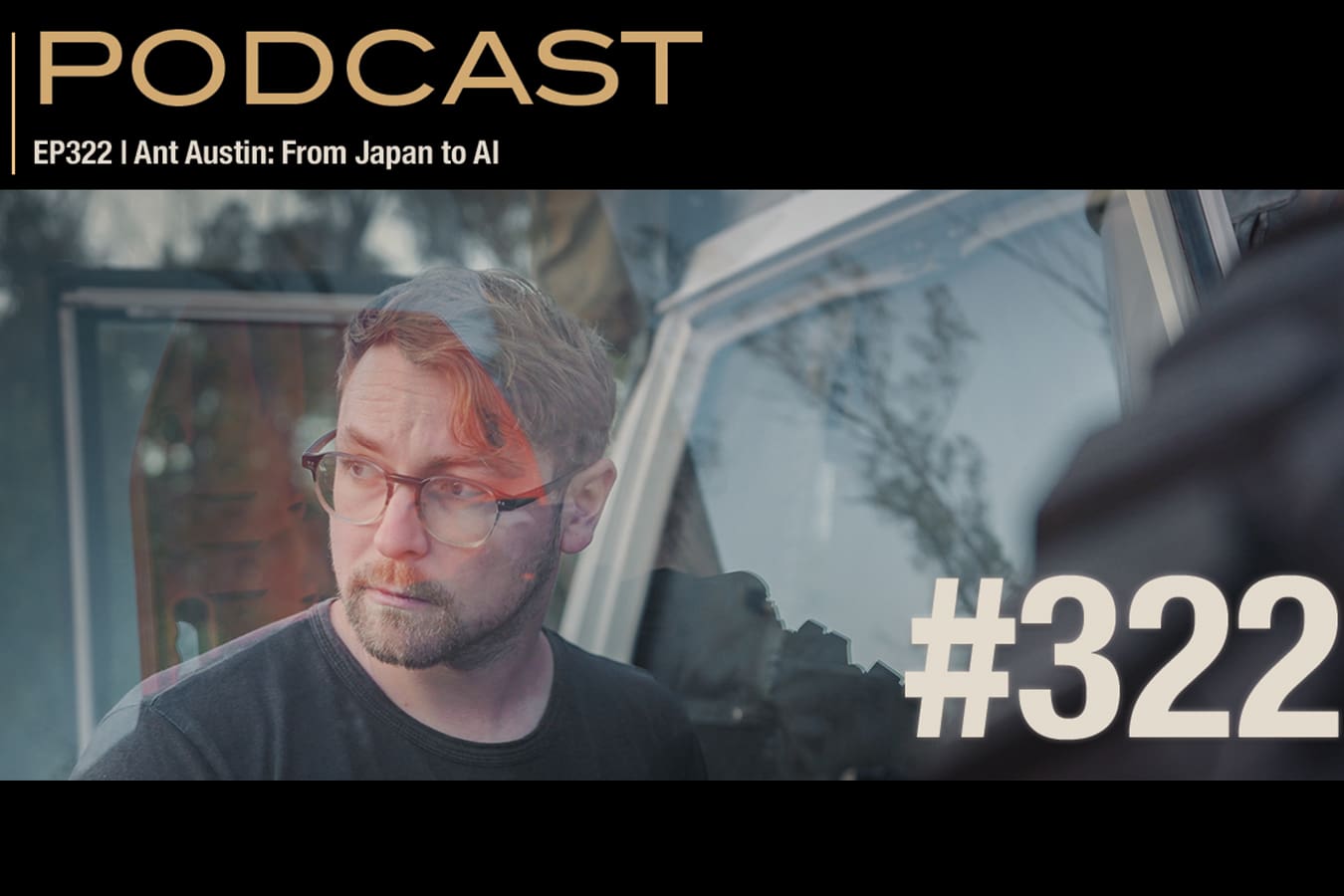
Overland Journal Podcast host Scott Brady interviews Ant Austin of We Will Roam in Montana about balancing a tech career with long-term overland travel using remote work and contracting. They explore storytelling as the connection between tech, AI, and adventure, highlighting practical AI applications for creative organization while noting concerns over disclosure, scams, and Overland Collective’s stance against AI-generated editorial. Ant shares memories from a three-month Japanese journey in his 2011 VDJ78 Troopy, including a Land Cruiser community barbecue near Nagoya and Japan’s unique soundscape. He also reflects on pivotal Australian travels like the Telegraph Track, offering key lessons on slowing down, navigating high-stress encounters, and prioritizing clear communication and mental health during extended journeys.
Overland Journal Podcast Episode #322
Tune in Apple Podcasts | Spotify | YouTube
The Overland Journal Podcast is brought to you this week by General Tire
New to Overland Journal and want to grab a subscription? Visit Overland Journal and enter code: overlandpodcast at checkout for 20% off. We thank you for being a subscriber.
Guest Bio
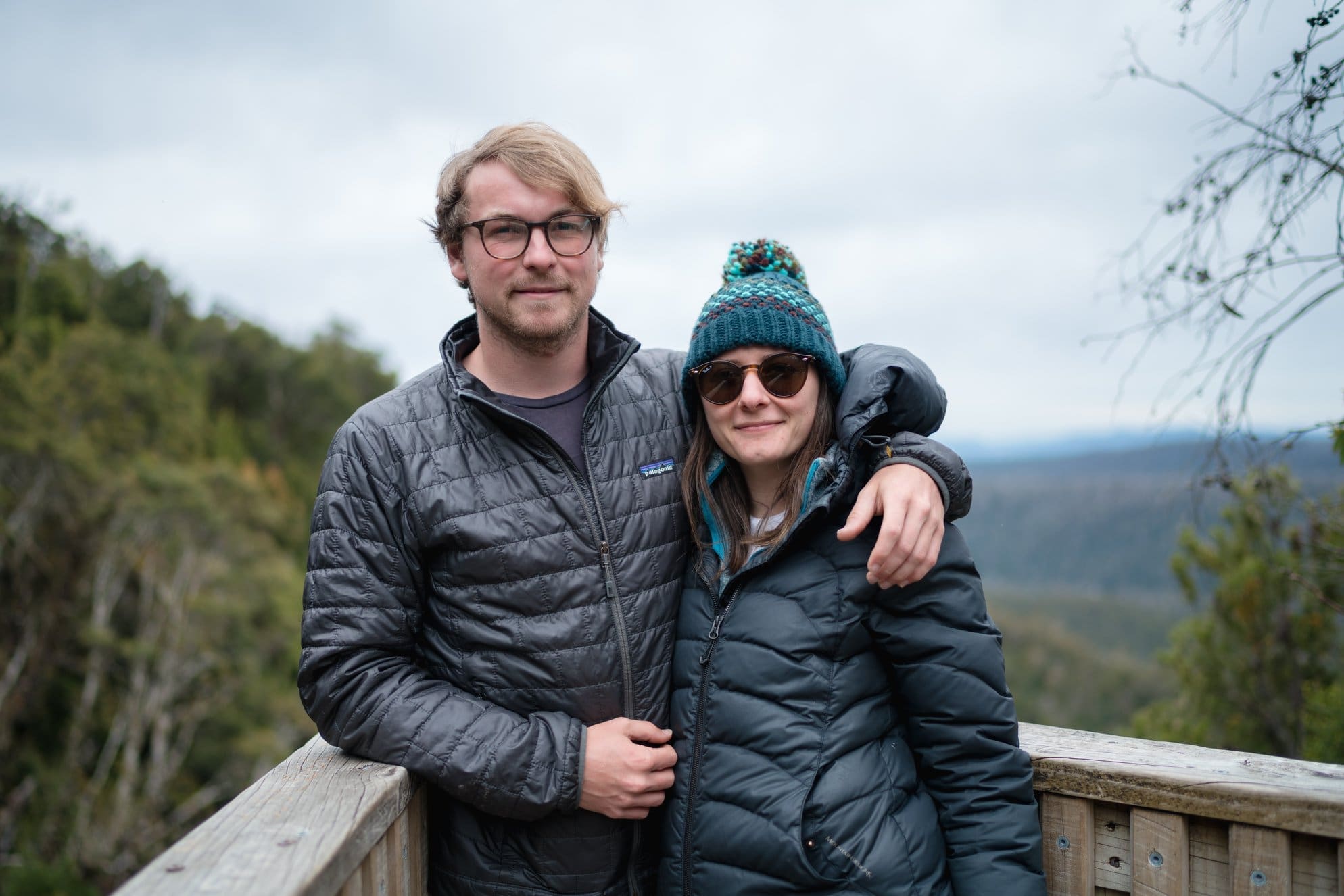
Ant Austin is a musician, composer, and director of photography who co-founded WE WILL ROAM, a creative studio specializing in film, photography, and music production. Known as a “gear nerd and a thinker,” he integrates musical composition with cinematography, leading visual direction, editing, and original scoring. Alongside his co-founder Emma—a photographer and producer managing logistics—he serves as the primary contact for brand collaborations. The duo often creates while traveling in remote locations and is currently overlanding across Japan in a Land Cruiser producing their next major project.
We Will Roam | Instagram | YouTube | FaceBook | Spotify
We Will Roam Launches 5-part Australia Overland Series
Host Bios:
Scott Brady
Scott Brady is an adventurer, author, and publisher, and the first person in history to cross all seven continents. Brady is executive publisher of the Overland Collective, home to Overland Journal, the Overland Journal Podcast, and expeditionportal.com—the world’s largest vehicle-dependent adventure community. Scott wrote Overlanding 101 (Simon & Schuster) and is currently riding around the world on his BMW GS. He also led Expeditions 7, the first expedition to drive the same vehicle on all seven continents. Brady’s polar crossings include Antarctica and a south–north crossing of the Greenland ice sheet. Scott is a fellow of the Explorers Club and lives in Prescott, Arizona.
 Our No Compromise Clause: We do not accept advertorial content or allow advertising to influence our coverage, and our contributors are guaranteed editorial independence. Overland Collective may earn a small commission from affiliate links included in this article. We appreciate your support.
Transcript
Scott: [00:00:00] Hello, and welcome to the Overland Journal Podcast. I am your host, Scott Brady, and I’m here with Ant Austin from We Will Roam. Ant and I have become good buddies over the last few years working together and talking about travels around the world, and I’ve always wanted to have you on the podcast, so thanks for spending the time with me today.
Ant: No, thanks, man. I’m stoked. Yeah. Stoked to be here.
Scott: And where are we, in the world? You could be anywhere in the world. Yeah. I guess I could be, too. So the fact that we’re… Where are we at?
Ant: We’re at the big thing-
Scott: Yeah. … at
Ant: the ranch in Montana, and it’s hot.
Scott: It is. Yeah, it’s surprisingly hot. It’s much hotter than where I live in Prescott, Arizona today.
Ant: No way.
Scott: By four or five degrees. Yeah.
Ant: It’s spicy outside, so- … I’m happy to take a minute to be inside.
General Tire: For over 100 years, General Tire has delivered tires for your lifestyle, your adventure, your anywhere. From the aggressive all-terrain performance of the Grabber ATX to the ultra-high-performance [00:01:00] Grabber APT, General Tire’s balance excellent on-road performance with off-road capabilities designed for all weather conditions.
General Tire delivers for whatever you do. Now, where do you live in Australia when you’re living there?
Ant: We live in Northern Rivers area. So far north New South Wales.
Scott: Okay.
Ant: We’re about- Does that get
Scott: that, this hot?
Ant: Nah, not really, ’cause we always get the ocean breeze- … which puffs it out a bit, but-
Scott: Yeah
Ant: we’re about two hours south of Brisbane, so it can get humid- … but it doesn’t get this bloody hot.
Scott: Yeah, it doesn’t get this hot.
Ant: Yeah.
Scott: I do remember it being pretty hot up in Cape York when I was doing the Telegraph Track. Oh, yeah. It’s you pretty mu- that’s why everybody’s got… And I learned the hard way about the difference between a single and a double plugger.
So maybe we make that be the first piece of information that we share with our audience. If you go to Australia, why should they have a double plugger, and what is a double plugger?
Ant: A double plugger is basically required footwear. It’s some people call them flip-flops. Some people call them [00:02:00] thongs.
But double plugger is, There is nothing worse than having a plugger blow out on you.
Scott: Yep.
Ant: So if a flip-flop breaks-
Scott: Yep …
Ant: and then it’s just flapping around and you’re barefoot- Yep … you don’t know what you’re gonna tread on.
Scott: Yep.
Ant: It’s just bad times all around, so-
Scott: And I did. I had a single plugger blow out- Oh
on the Telegraph Track. Sorry
Ant: to hear that.
Scott: It was… Yeah. It was a bit of mud, and my foot went in the mud, and my foot tried to extract the single plugger, and all that came out was the strap.
Ant: Yeah.
Scott: The… Yeah. So the double plugger actually has two- plugs that go- Yeah … the, the strap goes through the rubber and then comes back up the other side.
Yeah. It’s like a… What do you call it? Like a you could air down your tire. Like you have- That’s it, yeah. You’ve got redundancy … you got double red-
Ant: Oh, actually, one of it, one of it is it w-
Scott: Run flats. Run flats. That’s what I’m thinking of. Yeah, that’s
Ant: it.
And if you’re in a real pinch, you can actually get an 8-mil wood screw or something, and if y- if only one of the plugs blows out, you can actually screw it back together just to get you home.
Scott: Ah, okay. A
Ant: little bit like plugging a tire,
Scott: see, yeah. Leave it up to the Australians. They’re always thinking of stuff.
They’re always thinking of stuff. One of the [00:03:00] first things I wanted to chat with you about is I really like the fact that you guys have figured out a way to stay connected with the bleeding edge of technology. You’ve kept yourself as a technologist. You’ve been at the highest levels of several organizations, working on really interesting technology problems, but you’ve f- you have found a way to also be able to travel.
So let’s kinda walk the audience through how are you doing that? Are you doing it as a consultant? Are people giving you, some sabbaticals? How are you making that work?
Ant: Yeah. Oh, good question. Little bit of all the above, really. For a long time, the two were actually very separate in life and within myself, and within Emma and I as a couple.
The travel was almost like a little secret side quest- … a little secret side project. And, the full-time career, as it was, priority number one, as, as you often feel compelled to make it that way. Post-COVID, I think remote work opened up a few possibilities- … around being able [00:04:00] to Either position yourself in certain spots for eight to 12 weeks, which we, we did for a little while.
And then to be able to go further afield- … and spend a little bit of time there. After that, yep, little bit of contract work every now and then, have some gaps in the middle. And then, for our biggest trips, both Emma and I actually, resigned from full-time work altogether to just have the space to go full send-
Scott: Yeah
Ant: And to travel full time. So I’ve run the whole gamut. Little bit of full time, little bit of both, and then a little bit of trying to make both work at the same time. Which sounds idyllic, but comes with its own challenges.
Scott: Yeah, I’ve definitely had challenges around that. I’m, and I’m gonna, on my next trip, I’m gonna try to set aside three full days at an Airbnb, run three 12s so that way I can get into a routine.
Get laundry done- Yeah … and stuff, and then start moving again after that. We’ll see if that works. I hope it does work, ’cause that would be pretty ideal. Yeah. But based on all of those different ways that you have tried to [00:05:00] combine your professional life and travel, which one do you find has worked the best so far for you?
Ant: I’m still looking, mate- Yeah … if I’m honest. Yeah. It’s all about balance. And I used to be of the head space that there was one solution to this. And when you find it, everything will be sweet. But I have found that’s just not the case. It’s a slider. Sometimes it’s further up the adventure end.
Sometimes it’s a little more of a home base type of attitude. And so where we’re at now is, really focusing on home, focusing on friends, family, community- Amazing … at home. Yeah. So we’re building out a nice anchor that we can always come back to. And I think the next chapter for us and certainly for me, is it might be a week or two here, it might be a four-week adventure.
Scott: Yeah.
Ant: I selfishly would love to have a truck-
Scott: Yeah …
Ant: on this continent.
Scott: Sure
Ant: sure. And then, come over here and for eight weeks and be able to work from the road and- … so it’s constantly moving the slider up and down and trying to find what balance fits where you’re at that specific point in time.
Scott: I also found it, I, in the [00:06:00] conversations that we’ve had around your technology career, I found that it was interesting because you have been involved with these very bleeding, leading edge solutions. That probably feels a lot like adventure in and of itself.
Ant: Yeah, a little
Scott: bit. So how are you, in negotiations with yourself of “I’m gonna dive into…”
Like right now, you’re gonna dive into AI. Which is, it’s an adventure.
Ant: Yeah. Yeah.
Scott: It’s like crossing a continent. You’re at the very, you’re like Lewis and Clark. This is the new thing. It’s the new disruptor. And you’re at the very edge of that. How are you finding that compares to your love of travel?
Ant: Storytelling is the common thread. I wish I’d learnt that way sooner. And then I think that would have helped me bridged the two selves that I had, that I referred to earlier on, my adventure self and my career self. Storytelling is what weaves everything together. It’s how we understand the world around us.
It’s how AI understands data that’s being fed to it. It’s all about the story you tell yourself, the story you tell the world- … and the story you tell an [00:07:00] enterprise customer to buy your product. Yeah. That like, it’s what brings it all together. And I am finding that being the grounding anchor that helps me- bring my whole self all the time now Yeah
whether it’s in the workplace or it’s on the road … whether it’s with Emma or whether it’s by myself.
Scott: Sure.
Ant: It’s… Like I said, it’s a sliding scale again. But it’s an exciting thing to have learnt about myself.
Scott: That- Yeah, I would say so.
Ant: Yeah.
Scott: And g- given the fact that you’re in the AI space, what are you most excited about that technology?
What are you seeing for yourself personally, and where are you seeing the big levers turning as far as solutions for people? Yeah. For professionals and… I wanna share a couple things that I’ve learned using AI for travel that have been very effective, but I thought it would be, because you’re, you do work in that space, and we haven’t really talked about it on the podcast I think it would be interesting to give some people some insights on what is [00:08:00] coming down the pipe and how you’re using AI personally.
Ant: Yeah. There’s two sides to this. The space that I work in is in the developer space … so with code, and a huge emphasis is on reducing developer toil. The s- the, the stuff that nobody wants to do- … that just takes forever. That same premise can apply in the creative world. There’s a lot of noise out there. There’s a lot of, whether it’s social media, or whether it’s just keeping up with newsletters, whether it’s keeping up with, even your own curated list of inspiration- keeping up with what’s going on there. I feel like there’s a ton of repeatable processes and tools that AI can help consolidate and curate that for you- … as long as you’re self-aware and not building a little echo chamber around yourself.
Scott: Yep.
Ant: But I think that’s, I think that’s one way- … ease the burden of modern existence.
And then the second way is I have been dabbling, as a musician, I also… I have conflicting opinions about AI, [00:09:00] which we can get into at a whole other conversation. But I have been dabbling with it to try and- Almost prompt myself into a creative head space.
Scott: Yeah.
Ant: Like- Makes
Scott: sense
Ant: how do, how can I leverage it to help me get my thoughts down, help me construct them in a way that keeps an idea moving forward? And then challenge it, say, “Poke holes in this.”
Scott: Yeah.
Ant: It’s nice- What am I missing? What are my blind spots? Almost like a writing partner. Yeah. Yeah,
Scott: sure.
Ant: So yeah, there’s like the tasks and the admin of daily life- … and then there’s the leveraging it as a writing partner- … as an editor, a creative tool. I would never rely on it to actually make anything for me. But using it in those two ways is, in a creative capacity, is funnily enough like exactly the way it’s used in a professional capacity in the development space too.
Scott: And it’s a powerful tool for that. I think at least as far as regulations go, the only thing we all need to be advocating for is just clarity around where the content is generated. Totally. And we need to hold [00:10:00] Meta and the other outlets accountable to if it’s AI generated content, it just needs to be flagged that way.
One of my favorite music platforms that I listen to is called Tidal. And they just released their policies around AI generated music. I have definitely been duped. There was a music, a song I was listening to, I’m like, “Man, this guy’s got a great voice.” Yeah. This raspy- Yeah … awesome voice and I was really enjoying the song, and then I found, I did some research on the artist ’cause I wanted to get some more of their music.
And it was all AI generated, so that, that didn’t feel good to me.
Ant: Yeah.
Scott: It didn’t mean that the, the song wasn’t great or that the person who even put it together didn’t have creative input, ’cause of course they did. I’m sure that painters were super pissed about photography.
Think about if you were a portrait artist in the early 1800s- … and you are coming into the height of your career. Now this new- Yeah … thing called photography takes what would require a week or more of work on your part- Yeah … can be done in a couple minutes. So these are very disruptive things.
But [00:11:00] I think people want to be, they want disclosure around it. Yeah. They just wanna know that what I’m consuming was AI generated. Yeah. So at least you have the option to say- Totally … “This isn’t what I want today,” or whatever.
Ant: Yeah.
Scott: And I- I think that’s really important …
Ant: and I think just to expand on that a little bit the artist side of me is also like- It helps you ask yourself the question “Why am I engaging with this in the first place?”
What is it that speaks to me- … from this thing that I’ve just listened to, whether it was made by a machine or a human? Clearly something registered within me, so what is that? And then you can follow that wormhole, and again, curate yourself back towards maybe more of a human-led experience.
But yeah it’s an interesting time to be alive, hey?
Scott: And it’s happening whether we want it to or not the worst thing that someone can do is just sit there and be upset-
Ant: Totally …
Scott: that these disruptive things are happening. You have to take initiative now. Y- you figure if you were part of the Pony Express team, and here’s the railroad coming down- Yeah
you could be [00:12:00] like, “I’m gonna blow up the railroad.” The railroad’s gonna get built whether you blow it up or not. Exactly. And eventually they’re not gonna need guys on horseback- Right … riding 24 miles at a time. Totally. They’re gonna handle it with a railroad. And so these huge disruptors have occurred throughout human history.
I’m sure that the wheel was e- equally disruptive in its own way. But for me, I find as a creative what it helps me do… ‘Cause I am a creative person, and as a result I’ve got the ADD and the distraction and everything else that- Yeah … comes with that. Not every creative is that way, but I am. And I find that AI is an incredibly powerful organizing tool for me.
I’ve used Evernote and other things like that for many years to help me collect ideas and gather ideas into organized fashions. And I now use a s- a tool called Little Bird, which integrates across all of the Apple platforms and it connects to my Gmail, and it connects to my calendar, and it…
What it does is it helps me stay on track. It helps r- remind me of the important [00:13:00] things that I might be missing. It helps me to consolidate what is a huge volume of input. Communication, email, Slacks, Asana-
Ant: Yeah …
Scott: all the things that you know about what we do- Yeah … as a business. And it helps me to parse that out into priorities.
So that in and of itself is worth- it’s $100 a month, but it would be worth $1,000 a month to me ’cause it saves me- Yeah … so much time. Exactly. So that, that’s hugely powerful. But what I have learned recently as I’m planning this motorcycle trip around the world is it is a very powerful planning tool.
So like I’ll feed it in what I, my planned route is, and I’ll, to your point, poke holes in that. What am I missing? Yeah. Is there something really cool- Yeah … along the way? And here’s the thing is that these LLMs begin, these learning models begin to learn about who we are- Yeah … and our interests. It’s got all of this information.
It’s got all of my emails. It’s got everything. Yeah. So it knows what I’m into, and it’s like, [00:14:00] “Hey, actually, what about if you went over here to this new museum in North Dakota?” And I was like, “What?” So it’s super powerful. I think it will be very helpful for overlanders, especially people who are doing larger, more complex trips.
You can ask it about the visa requirements. What are the, what’s the latest on temporary vehicle importation? Are there any regulations on the vehicles that I n- need to be aware of? Yeah. And this is, these are the modifications to my car.
Ant: Yeah.
Scott: Do I fall outside the scope on that? So I believe that AI will be incredibly powerful, and someone’s gonna come up with a great LLM that has a lot of that information in it that’s gonna allow for travelers to make good choices.
Yeah.
Ant: Yeah. I’ve got one more example for you too. Yeah, please do. Bring it. From a creative context. Bring it. I use voice notes all the time. I could be… I use Shazam all the time. Okay. Like I might pick up a piano thing or whatever or it might be a live band, particularly when I’m in a foreign country.
It’s like I don’t understand this sound or this music, so I’ll just record it. I make voice notes to [00:15:00] myself all the time of like ideas I may have had. Again, throw all of that into a tool of your choice, ChatGPT, Claude, whatever. Is
Scott: there one that you prefer or do you use them all to validate against each other?
Ant: I’ve found myself orienting around Claude at the moment because of how much you can tinker with it. Okay.
And I essentially have a sonic pipeline. I’m currently writing the score for our next series, the Japan series, and, week on week- It can help me focus on these are the sounds, these are the themes, this is the feel that you’ve been tapping into recently based on what you’re taking notes on.
So follow that rabbit hole.
Scott: Yeah. Cool.
Ant: It’s cool. It’s cool to just have an accountability buddy in some ways. Yeah, it’s a machine, but it’s at least curated enough to make- allow me to hold space to just dive down whatever creative wormhole it is that I’ve clearly been tapping into recently.
Scott: And the pace at which it’s changing, re- in recent weeks it’s become funny.
Ant: Yeah.
Scott: And I’m [00:16:00] like … I found myself laughing and I’m like, “Oh, you just laughed at the machine.” But it w- but it was funny.
Ant: Yeah.
Scott: It was funny. It like, it gave me a little bit of grief. It was like, “Dude,” “What about all this other stuff?”
Yeah. It was really funny.
Ant: Yeah.
Scott: And so the reality is that it’s here. We can use it to help us be better travelers. We can use it to help us reduce the mistakes that we make as travelers, or the routes that may be closed, or the, that one incredible library or campsite or whatever that we may have missed.
So I do think that it’s gonna be an interesting opportunity, and I’m excited for you. For you to be connected in with what is the next great disruptor could give you that chance to really be traveling full time.
Ant: Yeah. Yeah. Thanks,
Scott: man. So that’s-
Ant: with a bit of luck and some tailwinds, yeah.
Scott: Yeah, you never know. You never know. You never know. So that’s … And obviously that’s a really big deal. Let’s pivot away from that. I did wanna chat about that with you ’cause y- it is something that you’re living and breathing every day and I don’t want people to feel afraid of AI. I want them to consider how it can help them solve problems.
[00:17:00] Yeah. And one thing I’ll- other thing I wanted to say around AI is that the Overland Collective has a policy against creating any editorial, any opinion piece, any new content, editorial content using AI. We don’t allow it. We don’t allow our, any of our contributors to do that. We do some copy edit using AI s- tools like Grammarly but we do not allow our contributors to produce any original content using- Yeah
AI tools. Because it’s really important that the content reflects the opinion of the individual- Yeah … editor. So-
Ant: I th- I think that’s the critical thing. There’s so much noise and inertia out there about how AI is a solution to everything. And it isn’t. It’s a tool. It’s a tool. It needs context.
It needs instructions. Yeah. And so having a healthy relationship with that, think critically, have a measured approach to it, and use it for what it is.
Scott: Yeah.
Ant: I think that’s, I think that’s key.
Scott: Yeah. And we have to remind ourselves it’s [00:18:00] coming whether we want it to or not, so you’ve got to begin to understand the technology.
And also, there’s downsides where we need to be protecting our elderly parents sometimes against AI-generated content. There’s a lot of very advanced scams that are coming out around that. So we need to be really careful, and we need to protect those that are at risk- Yeah … from these, from people that have, are bad actors in the AI space.
Which any time there’s a new technology, There’s always someone … there’s gonna be, there’s gonna be bad actors that are gonna use it for bad things.
Ant: Yeah.
Scott: Let- I’d love to talk next about one of your mo- more recent trips, because I find Japan so fascinating to me. How long were you there?
Talk about how you lived and engaged with the culture. What did, what were your takeaways about traveling to Japan?
Ant: Yeah. Yeah, for sure. Japan is incredible. We were there for three months. ‘Cause as Australians we get 90-day visas and then you have to leave and you can come back and do another 90 days.
The car was on a carne- … so it can be there for up to a year.
Scott: [00:19:00] Wow.
Ant: And we had the grand ambition of going from the furthest south to the furthest north, but- … turns out Japan’s massive.
Scott: It’s wild. It runs a lot of latitude. Yeah.
Ant: It really does. With the help of some ferries we did make some distance and did manage to go, from the fur- the most southerly point on the all the way up to the most northerly point.
But-
Scott: What is the most southerly point that you can access by ferries? Is that Okinawa?
Ant: Yes. By ferry, Okinawa’s the furthest you can get a car, I believe.
Scott: Yeah, I think so. And then Hokkaido in the north?
Ant: Hokkaido in the north, yeah. Yeah. So we got as far as Kagoshima in the south which is the furthest south of the, the home islands.
And then I think it’s Wakkanai on the most northerly part of, Wow … Hokkaido. And it’s a cool space, man. You start seeing Russian on the signs. On the road signs. There’s a little temple that f- that, that opens for an hour on New Year’s Eve, you know- … New Year’s Day where they celebrate and bring in the new year.
And there’s actually a guy that we met in [00:20:00] Nagoya just camping who gave us a little I can’t remember what it’s called, but it’s like a, it’s like a good luck charm- … from that specific temple, ’cause he knew we were going all the way back so he’s like, “Take this with you. It’ll ward off the evil spirits all the way up to that temple.
You’ll be right.” How cool is that? So
Scott: it’s
Ant: pretty special. It’s a very cool space.
Scott: As you look into Japan or as I’ve researched the culture, it- it’s, to me it is, it’s very first world, very advanced incredible creators and manufacturing and everything else like that, but it’s y- it’s yo- it’s its own unique culture.
Yeah. And that is what is u- what I find very unique about Japan. There’s lots of first world countries that seem very similar. Yeah. We all wear the same Lululemon or whatever. But in Japan it’s very different. And I also loved, i- if you look into their history, someone would be a samurai, but the samurai would also, they were very much about balance yin and yang, where they would sit down and they would create art or write poetry.
Ant: Yeah.
Scott: And that still seems to exist. So what were some, as [00:21:00] a creative and as a musician, what were some of the things that you really find, found that you loved about the art scene, the, and the music scene in Japan? Oh,
Ant: so it was- It was almost overwhelming-
Scott: Oh,
Ant: wow … the amount of st- in the cities the lights, the sounds.
The crosswalks have different bird sounds whether you’re going north, south, or east, west. Got it. Each konbini, like little convenience store, has its own jingle. Every single train station in the whole of Japan has its own unique jingle of a, of different train approaching. There’s actually a guy whose job it is to write those things.
Scott: Wow.
Ant: The sonic palette as a musician is nuts. It’s insane. That’s
Scott: cool.
Ant: As well as instrumentation that is unique to Japan. And the colors, the, the neon lights, the classic sort of retro, neo-retroism- … of, or future retroism of Tokyo and Kyoto- Yeah … is-
Scott: The Blade Runner vibe … it’s
Ant: immense.
It’s such a thing to look at. It’s a really fun thing to then try and capture. So we [00:22:00] had a lot of fun with that.
Scott: What was a moment in the Japan trip that you found as most defining? Like, where you really felt y- you had experienced something and very novel or entirely new?
Ant: We bumped into a guy in Nagoya- …
who happened to work in the material section of the Land Cruiser factory. Oh,
Scott: sweet. Yeah, right there in Nagoya.
Ant: Right there in Nagoya.
Scott: Yeah.
Ant: Didn’t speak a word of English. Our Japanese is rudimentary at best. Long story short, he invited us round to what I thought was a barbecue at his house, and it turns out what he had done is he’d put the word out and he got a bunch of Land Cruiser enthusiasts together, took us to…
Someone had a plot of land an hour and a half out of town. And we’d all crammed into this plot of land and put on a barbecue. And again, no one spoke any English. There was no signal, so Goo- Google Translate or any translate- Yeah … tools wouldn’t work, and yet we were still able to share stories about where we’d been- what we loved about our travel so far. There [00:23:00] was one guy Namba-san, who did photography for Toyota, and he’d- Oh, wow … been to Australia a number of times. Wow. In fact, he had an Australian HJ47 Troopy.
Scott: Oh, wow.
Ant: And so it, like- That’s the Japanese culture. So welcoming- … so lovely, and there’s just a way of doing things.
And the way of doing this barbecue thing was, bring everybody together, everyone brings something, you stick it on communally, and I think I had cow intestines and a bunch of other stuff
Scott: that- You just didn’t ask …
Ant: yeah, sh- don’t ask just say, “Arigatou gozaimasu,” and- Thank you. Thank you very much
Scott: thank you very much. Yeah, totally. In fact, that’s the only place that I’ve been to in Japan was Nagoya when we took delivery of the Expedition 7 Land Cruisers.
Ant: Yeah.
Scott: But what an incredible factory, ’cause you’d see, here comes a s- 78 Troopy that’s being sent off to an NGO in Africa, and the very next car is a w- at the time, was a 200 series Land Cruiser- yeah
With all the leather and all the fancy stuff that’s going to Dubai. Yeah.
So it’s a very [00:24:00] cool factory. And the thing that was shocking to me when we did the factory tour, and this is why Land Cruisers are what they are- we went outside and this guy was, he was super proud of the fact they had three parking spots in the front of the factory, and he said, “These are the three spots that we set aside for a vehicle that needs rework or quality control.”
And of course, there was no cars in the spots. And I have been to other manufacturers’ factories, and I will not say their names because it would be… And they had parking lots full of- Yeah … vehicles that needed to be rewor- re- reworked. And what the guy said was if you have one car that ends up in the lot it’s an embarrassment.
Ant: Yeah.
Scott: If you have a second one end up they stop the entire line- Yeah … until they solve the problem because they just won’t let it continue. But the fact that they can produce all of those Land Cruisers and th- there was not a single vehicle that was set aside for r- rework- Crazy, hey … that’s insane.
Ant: Yeah. I [00:25:00] think one 70 series every 10 minutes was the number that they were currently- That sounds
Scott: about right …
Ant: cranking out.
Scott: Sounds about right, yeah.
Ant: And it was just so cool seeing a bottomless- Did you get
Scott: to go to the-
Ant: We didn’t get to do a tour- … ’cause they weren’t running them at the time.
But we skirt around the edges. Oh, nice. And they took us on a tour around the, the complex ’cause it’s a huge complex. It’s
Scott: a huge complex.
Ant: Yeah. And it was… we got to go to the staff shop- … in the canteen and just hang out, and it was cool to be welcomed as, like- Very much so
somebody on the line, rather than go through the a curated tour experience. It was really cool.
Scott: Yeah. What a vehicle. And that’s what you guys drive. You guys have a Troopy. What made you decide on a Land Cruiser? Let’s talk a little bit about your build. W- what kind of a camping setup do you have?
How did you set up your truck for driving around the world?
Ant: Yeah. So we do have a, we got a 20- 2011 VDJ78, so it’s the Troopy with the V8, the one VD. I was drawn to it when we moved to Australia because I wanted something to travel in, and it seemed to be a good balance between a four-wheel drive- and a van. It [00:26:00] had space in the back that you could at least- True … lie down in. Ours is actually an ex-fleet rental truck, so it was high mileage but looked after, and it was- Yeah … super, super clean. And so- That I think that’s what primarily drew me to it. The child within me was also very happy that it was a V8.
I probably should say that out loud because it sounds nice.
Scott: Yeah, that, that… that’s what we had in the Expedition Seven trucks. Yeah. And those things m- they make way more power than you think. They almost make more power than it should- … for that chassis, ’cause the engine starts writing checks- that the drivetrain and the, vehicle dynamics has no business trying to catch. Yeah. So
Ant: Yeah.
Scott: But she’s- the brakes and everything else.
Ant: Where’s she up to now? I wanna say 367,000 kilometers on the clock now. I
Scott: believe it.
Ant: And no dramas. We’ve had a- we had an alternator die on us just as we left Cooktown to do Cape York.
Scott: Yeah. And and that’s it. And that’s it.
Yeah, and that i- that has been an issue with those in the deep water crossings. They can- Yeah … you can lose [00:27:00] alternators and starters- Yeah … and stuff like that, but-
Ant: it had a good innings and so fair enough.
Scott: I wasn’t gonna complain. And do you guys have a little camper set up, or you sleep just inside on-
Ant: we’ve got a pop top.
Scott: Pop top, nice.
Ant: Yeah. So we’ve got a Fr- a Mulgo pop top from e- the guys at Expedition Center in Sydney.
Scott: Okay.
Ant: Daniel and crew. It’s like an aluminum subframe- Sweet … an aluminum top. Got a little Starlink mount and solar panels on the top. It can take weight even though- … we don’t really put that much up there.
And then down below we’ve got a little drawer system for when we’re outside, and then just a basic sort of bench- Yeah, sure … to sit on To sit. Fridge behind the passenger seat to try and keep the weight central. And that’s about it really.
Scott: There’s a lot to be said around those little campers because they tend to do a good job of keeping the dust out.
Ant: Yeah.
Scott: If you’ve got a roof tent on top of your vehicle, it’s usually just, no matter how hard you try with sealing and covers and everything else, they end up- Yeah … getting packed full of dust. And it’s nice to be able to, no matter what the weather is outside, you’ve got a little bit of a-
Ant: Yeah
Scott: retreat. A
Ant: little bit of respite.
Scott: Yeah.
Ant: It is funny actually, [00:28:00] the… When we stripped it apart to revamp it for this Japan trip, there’s still red dust from previous- … trapped on the in- inside quarter panels and stuff like that. It- I believe it … it will always find a way.
Scott: I believe it. And that can be a real challenge when you try to bring a vehicle back to Australia.
Because Australia, in my experience, has some of the most restrictive agricultural and other quarantine requirements around vehicles. Yeah. So yeah, you definitely have to clean them out really well before- Yeah … you bring them back in. So in addition to the Japan trip, let’s talk about some of your other journeys that you felt were really transformative for you guys.
Ant: Yeah. We… This all started, We left home in November 2019 with the, the truck fully dialed as we thought it was at the time. And we had this grand ambition of driving all the way around the world really. Starting with Australia.
Scott: Sure.
Ant: It’s quite a, it’s quite a thing. It’s almost like a, a rite of passage to do a lap of Aus now.
Yeah. And and so we were really keen to do that, and then see where the winds took us. Yeah. I’ve always wanted to do the Americas. Sure. I’ve always wanted [00:29:00] to do the Americas. The length
Scott: of the Pan-American-
Ant: Yeah …
Scott: kind of a thing. Sure.
Ant: Plus I… Fun fact about me, I was born in the States, and so I’ve got this some of my childhood memories are all, nostalgic-
Scott: Sure
Y-
Ant: US things like Chuck E. Cheese. And-
Scott: Chuck E. Cheese is awesome. I loved that when I was growing up.
Ant: So I always wanted to come back as an a- as an adult and experience traveling through. Let alone the great outdoors and- … what overlanding had become and all of that.
Of course, we all know what happened in 2020. Yep. And so that grand ambition- You hardly got started. Yeah, we got as far as Coffs Harbour, so a good, as the crow flies, like 18-hour drive away from where we were living at the time. So- Yeah … we didn’t get that far.
Scott: Yeah.
Ant: But that whole experience was pretty formative, all said and done.
It was the let go of what you can’t control, be where you are, where you’re at- … and just celebrate the little wins. Yeah. Which for us at the time was we were stuck in Queensland when everything was locked down, happy to be there.
Scott: Yeah. W- worse pl- many worse places- Many worse places to be
in the world, yeah, other than…
Ant: Yeah And [00:30:00] honestly, being able to experience Australia when the international borders were shut, we got to watch the sunrise at Uluru- Yeah … three days in a row with not a single other soul there with us.
Scott: Wow.
Ant: I don’t think that’ll ever happen again- Probably not … in my life.
Scott: Not in our lifetime, no.
Ant: We went to Fraser Island or K’gari, and we were there for 10 days, and we saw seven other cars. That’s it. And that’s a beautiful little- Two of those were rangers.
Scott: That’s a beautiful little spot.
Ant: Amazing little spot, and of course it’s very popular. And so again, will we ever be able to see Fraser when it’s had a bit of a rest?
Probably not. Probably not in my lifetime. Did you notice any differences in the wildlife? ‘Cause there’s a pretty significant dingo population on Fraser, and some incredible bird life. Yeah. What were you… Did you notice a difference?
The rangers told us “Be on higher than usual alert,” ’cause the dingoes have had free roam of their own space- for a long time now- Yeah … without any human interaction, and so they’re pretty bold. And I do have this one memory I was filming Emma. We’d parked the [00:31:00] Troopy in a beautiful picturesque spot, and I’d hopped out, grabbed the camera, and I was gonna film Emma popping the roof. And as I bring the camera up to my eye, I then see this dingo that’s almost the size of Emma, just, like about- Five meters behind her, and so I just shout “Emma,” just, “Turn around.”
And so she’s like slowly got up into the car and just shut the doors. Yeah. And I didn’t think the dingo was a threat, but it was just, it was curious and it was bold. But they’ve
Scott: def- they have definitely taken children.
Ant: Yeah.
Scott: Which is not the dingo’s fault. It literally looks like a nice slow-moving- Yeah
prey.
Ant: Yeah. So-
Scott: and
Ant: they’re dogs, right? Yeah, exactly. And so they do the playful thing where they- Yeah … get down on their- Yeah … and the- and you wanna pet it. Yeah. You shouldn’t, but yeah. So the dingoes were pretty, pretty feisty that time around.
Scott: That’s cool.
Ant: Yeah.
Scott: And, because you’ve had a chance to explore so much of Australia and for the, for those that are listening, give them kind of the top, your top spots, the, the spots that you really think people need to experience in Australia.
Ant: That’s, ooh, that’s a good one. There is [00:32:00] nothing like an Outback sunset. So-
Scott: Yeah, that red dust hanging in the air- For days … just makes you, yeah.
Ant: So we, the Simpson Desert is pretty special. That has a real special place in my heart. And when we were there, again, didn’t see anyone for five days- not a single other track. And it had been quite a wet year, so the desert was green.
Scott: Oh, wow.
Ant: And there were birds, there were butterflies, there were cam- we saw a few feral camels. The desert sprung to life.
Scott: Yeah. Wow.
Ant: And that, that’s pretty magic.
Scott: Yeah.
Ant: At the moment, Lake Eyre huge salt lake in the middle of the country- Yeah
is is actually full ’cause of all the rainfall from-
Scott: Is the Lake Eyre Sailing Club at it?
Ant: Yeah, they’re at it. Boats are out.
Scott: That’s so funny. I love that, though.
Ant: Yeah.
Scott: They just let the boats sit there until the water comes back.
Ant: But it’s mad how the migratory birds just somehow know.
Scott: Yeah.
Ant: And so just huge populations of pelican.
Scott: Yeah.
Ant: It’s pretty magic to see.
Scott: And it is way in the middle of nowhere in that country.
Ant: Very in the middle of nowhere.
Scott: It would… I would think that for the Australian explorers, it would probably be like the American [00:33:00] explorers when they came across the Grand Canyon. It’s like, “What do we do with this?”
Wow. Yeah. When you, when they would’ve come across Lake Eyre, and as long, as far as you can see the curvature of the earth across that salt pan.
Ant: Yeah. And you get so easily disoriented ’cause of the, the, the haze on the horizon. Yeah. And you’ve no idea which way is left or up, down.
Scott: And the animals die out there. Yeah. As soon as they get away from being able to see the horizon, they’re done.
Ant: Yeah.
Scott: Yeah. They’ll walk in giant circles.
Ant: It’s definitely special. Yeah. Flinders Ranges in South Australia- Yeah … is probably number two.
Scott: One of my favorites.
Ant: Again, it’s just red. The… There’s also unique wildlife specifically to that area.
Like yellow-footed wa- rock wallabies. And, radioactive rock, and there’s dinosaur fossils, like- … all over the place ’cause of, it’s on a fault line. And so you can just see thousands and thousands of Earth’s history- Yeah … just by staring at a wall, as well as indigenous rock art.
Yeah. As well as animals you can’t find anywhere else, in this little spot in South Australia. It’s, it’s-
Scott: It’s an ancient continent one of the things that I experienced was, like, [00:34:00] in the south it’s the southernmost point of Australia, there’s this giant chunk of granite.
And it is the same rock that’s, that matches Antarctica, like- No way … way south. It just went and got torn apart and moved- Yeah … over the millennia. It, yeah, just incredible. And y- I thought that Canning Stock would be my highlight of Australia, but the Telegraph Track was one of the coolest overland r- routes that I’ve ever done in my life.
It absolutely shocked me with how beautiful it was. Challenging, deep-water crossings. There’s not a lot of people. You… I don’t know why it isn’t more popular. Maybe because it’s so difficult, but- Yeah … there was not that many people on that track.
Ant: Yeah. And it’s, Emma drove the Tele Track when we did it.
She’s a much better driver, like technical driver, than I am. And there was this real sense of achievement when we both got to the other side.
Scott: Heck
Ant: yeah. It was like, “Go team.” It’s legit. It’s legit. It was a lot of fun.
Scott: Yeah.
Ant: And, we’d nev- w- I wouldn’t say we’re hardcore, like- Yeah
off-road drive. And also we were [00:35:00] living in the Troopy. It’s our house. Yeah. And so I don’t really wanna put it on its side. That would, that’d be less than ideal. But we did. And it just felt so good to get to the other side, and then you watch the sunset over the ocean. You’ve got as far north as you can possibly go.
Scott: It’s a very cool spot in Australia, and so different from the desert. Yeah. Just, dense jungles and cassowary, and, like- Yeah … these g- close to dinosaurs as you’ll see in anyone’s lifetime- Yeah … is those birds. Wow!
Ant: Totally.
Scott: A cassowary is no joke.
Ant: It’s a dinosaur. It’s legit.
Scott: Yeah, it looks like a dinosaur. Yeah, it’s like, if you ever wanna get as close to a velociraptor as you can as a living creature- Yeah … that’s the one.
Ant: Wearing a bright blue coat.
Scott: Yeah, it’s a- Yeah. They are so- … it’s a strange
Ant: animal …
Scott: they are so cool.
Ant: Yeah.
Scott: They are so cool. Let’s talk a little bit about in, in your experience in the ways that you’ve been able to travel, what are, your couple takeaways?
What are some things that you would recommend to a new traveler or someone who’s trying to work from the road or maybe trying to be a creative? What are some of your key learnings that you’ve had over the last, five, six years?
Ant: Oh, [00:36:00] yeah. That’s a good one. I used to measure success in miles.
I thought miles was the measure where I was going for. That was, I that, I think that drove so many behaviors that put a lot of pressure on us to just keep going and keep getting to the next spot. And in some circumstances, like almost be distracted from just enjoying where we are. And s- it sounds cliché, but slow down and just enjoy where you are.
Most of this, most of why we do this is to meet people. Is to build community, is to make friends, and to have shared moments with people that care about the same stuff you do, or even have different opinions about the same stuff you do. That’s what you take home. It’s not how many thousands of Ks you drove.
It’s not how many liters of diesel you, you burned through.
Scott: Yeah.
Ant: It’s not how many countries you visited. It’s how many memories did you take away from these things?
Scott: Yeah.
Ant: And memories come from human interaction. When we were traveling during COVID, human interaction wasn’t allowed. And we had this weird almost disconnect between the adventure we thought we were gonna be [00:37:00] going on- and the one that we actually had and experienced, and that took a little bit for us to reconcile.
Scott: Yeah, that was a challenging time, for sure.
Ant: Yeah. So I think, I think- It sounds old man wisdom. And I know that younger me would take this advice and go, “Yeah, what do you know?”
But no, seriously, slow down.
Scott: Yeah.
Ant: It’s not about the miles you drive, it’s about the memories you make, and they come from meeting people and getting stuck into local experiences on the way.
Scott: Yeah. Yeah, I’ve wasted a lot of energy trying to check a box- … when I didn’t get much out of that experience.
Ant: Same.
Scott: Same. Whereas you’re right, doing things you love with people you love is the thing that gives us our greatest reward.
Ant: Yeah.
Scott: So I’ve got some cool questions. We’re we’ve been incorporating our seven questions into the more recent episodes. What do you think is the most intense moment you’ve had as a traveler?
It doesn’t have to be that somebody stuck an AK to your forehead- … but what was the one thing, like maybe it was a vehicle accident or a breakdown or- … or what was that really intense moment, and what did you learn about yourself, and [00:38:00] how did you learn to proceed as a traveler after that?
Ant: I’ve got a couple layers to this. I’d say, like a physical experience that comes to mind was Emma and I were in Judburra National Park- … far north ter- Northern Territory, really in the middle of nowhere. Utterly beautiful landscape. And it’s an old cattle station. And so there are still a few feral cows and bulls running around.
Scott: Sure.
Ant: We came across a feral bull-
Scott: Oh …
Ant: that was the size of our car. It was huge and it was angry. And we’re in this real tight scrub with nowhere to go. I’m in low range, so not going very fast. I stick it in reverse thinking I’m gonna give it some space, but I’m only doing a few k an hour. Yeah. And this bull’s throwing its head around and, I…
That was the only moment of all the moments we had, being almost on our side at Cape York- … being, down to the axles in sand, Being up to the windshield in water None of those moments did I ever have this [00:39:00] sense of fragility when faced with an angry feral bull- … in the middle of nowhere that could tear a hole in the side of the car-
Scott: Yeah
Ant: that’s when I was like, “Ooh, we are a long way from anywhere-“
Scott: Yeah … “
Ant: and we are actually pretty fragile out here.” And so we ended up having to tuck into some bush, put a few trees between us and the bull, allow it to settle down for a bit. I put it in high range and got ready to, drop it into second and actually get some pace going- quick sharp to get away from it because it was not happy we were there. So that’s like a, a physical experience,
Scott: yeah, cows can be dangerous.
Ant: And, yeah.
Scott: I’ve been out on the motorcycles with Tavia a couple times. She calls them murder cows.
Ant: Murder cows.
Scott: Which I don’t think she’s wrong.
I don’t… we were looking at the statistics earlier and how many people died last year from cows. There was way more- Right? … way more than should have died- Yeah … from cows last year. Yeah. And I was like, “Okay, maybe I’ll give them a little more respect.”
Ant: You don’t wanna come across one of those on a bike, for sure.
Scott: Yeah. Sure. Yeah. Yeah. Anything else that comes to mind around those- … intense moments?
Ant: I’d say the recent one was actually Japan, and this one’s more of a [00:40:00] kind of ethereal, thoughtful, emotional one. But, we’ve been- planning and we had these grand travel ambitions for over a decade.
Scott: Yeah.
Ant: Japan was our first international trip, and it was potentially the start of something big.
Shipping the car not just to Japan, but maybe to the States, maybe to Malaysia, and then drive home. We had all these options and all these plans. Three or four months in, a really intense experience for both of us was sitting back and going, “Wait a minute, why doesn’t this feel the way that I thought it was?”
Like how is this not feeling… the reality that I’m living is not the, the idea that I had in my head. Why is that? What is that? And that threw a loop. That threw a real loop, ’cause it was like I’ve been gunning for this ambition for years and years, and now I’m finally here and it…
Something doesn’t feel right. What does that mean and why? And, we’d… Doing this sort of thing was so much of our identity and who we were and who we were gonna be, who I wanted to be. [00:41:00]
Scott: Yeah.
Ant: And I properly struggled with a moment of “Wait a minute, this doesn’t feel right.” Why is that and what do I do?
I didn’t know.
Scott: What did you, What was the conclusion that you came to? What do you f- believe made it not feel right, and how did you remedy that?
Ant: That’s a good question. I think we’re still working through it, really. Both as individuals, Emma and I, and then also as a couple. Emma, I I think we had been doing this for so long, and we had been almost so co-dependent on each other- living in such a small space Yeah, sure … doing something so stressful as driving around in a foreign country, putting up with all that discomfort, and I think- Where we are at in life, I, I think she thought, “There’s other things that I want to achieve that are maybe uniquely Emma- that aren’t related to this.”
Scott: Yeah, that makes sense.
Ant: How do I articulate that out loud? How do I articulate that in a way that doesn’t sound like I don’t wanna do this [00:42:00] anymore? ‘Cause that wasn’t true either. It was just like, what do we, how can we facilitate something that’s fulfilling for both of us?
And maybe this format is not doing that job. And same for me. I, there was a lot of pressure on it. I didn’t I, I didn’t cope well with us not coping well. And so the pressure builds. I’m supposed to be having fun. I’m supposed to be enjoying making this creation, and I was, but I think just the pressure sort of weighed on the whole experience- when it’s supposed to be liberating. It’s supposed to feel light. It’s supposed to be amazing, and it was in so many ways. But I think, we realized, “Wait a minute,” “is this actually meeting our needs as individuals- … and as a couple?” And the answer was no. I didn’t really wanna hear that.
But the answer was no. And maybe that was the liberating moment, is when we can allow ourselves to be vulnerable enough-
Yeah …
Scott: to listen to that still, small voice that’s starting to get [00:43:00] louder and louder.
Ant: Yeah.
Scott: So- Exactly … ’cause otherwise it can really undo us if we’re not prepared for that.
Ant: Yeah. And I think as well, maybe it’s just me- But back to my comment earlier about it’s not about how many miles you do.
My natural response to these things is to just work a little harder- Yeah … just drive a little further- Sure … just make a little extra effort. And, that just exacerbated the whole thing. I think a real learning is, listen to your feelings, listen to what they’re telling you, even if you don’t really understand, just at least give them the time of day.
And it’s okay to change. It’s okay to, acknowledge that maybe the path you’re on isn’t where you’re at anymore. And at the end of the day, you’ve only got yourself. You’ve only got yourself to be with and live with and-
Scott: Yeah …
Ant: and make the most of it, whether it involves giant change and uncomfortable change or not,
Scott: yeah. Were there some things that you guys worked on as a couple that began to [00:44:00] make it easier to talk through those feelings? Did you do a weekly check-in? What were some of the ways that you found that you began to change in the way that you were communicating with each other that opened some of that up?
Ant: Yeah. It’s been a work in progress.
Scott: Yeah.
Ant: And it’s all about communication. It’s about being able to articulate something almost like, “Hey, I wanna stick my hand up and I just wanna share something.”
Scott: Yeah.
Ant: There’s no unintended consequences here. There’s no implication. There’s no implied language.
I just have something I need to say.
Scott: Sure.
Ant: That’s thing number one. Thing number two is then being able to listen to that and receive it without trying to fix it. My, how I’m feeling, how I’m doing- Yes,
Scott: guys are bad. We’re bad about that. We always wanna fix everything … I
Ant: always wanna fix it.
It’s always “Oh, there’s a problem. I need to jump into solution mode and fix it.” Yeah. And it turns out that’s actually not very helpful.
Scott: Yeah.
Ant: I wish I knew that. I wish I was better equipped to cope with that in Japan, ’cause would that experience have gone differently had I had those tools?
Totally.
Scott: Yeah,
Ant: that makes sense. ‘Cause I would’ve been a better partner. I would’ve been- [00:45:00] Yeah … a better… I would’ve been better able to receive Emma’s experience and then work through it- … rather than just work a little harder to try and fix it. So they’re the two things. Be able to articulate out loud without fear of consequence, but then also be able to listen and receive and know that it’s not my responsibility to look after how Emma’s doing, or it’s not Emma’s responsibility to look after how I’m doing. We’re responsible for our own emotions and- Yep … communicate them. And you’re in this together. So it’s not you versus each other, it’s you versus the challenge you’re facing.
And- In that, when you’re living within two meters of each other- Sure. … in the back of a Land Cruiser-
Scott: Yeah …
Ant: space is tight, and it pressurized the whole thing. And little moments like in Japan, you really do stick out like a sore thumb.
Scott: Sure.
Ant: We didn’t see a single other foreign license plate.
We got stopped by police nine times just ’cause “What are you doing here?”
Scott: Yeah. “
Ant: How [00:46:00]
Scott: did you
Ant: get here?” Yeah, sure. Little things like that. They just, depending on where you’re at in your own head space, it can either be an amazing experience that we find funny, as we often did. Sometimes it can feel like, man, this is just one thing after the other.
This isn’t fun. Yeah.
And yeah, that was hard. That was
Scott: hard. It is difficult, and it’s difficult… I see that on trips where it’s, people get to the point where maybe it’s that pressure cooker, and they start to project what they’re feeling on others.
Ant: Yeah.
Scott: And I think that’s one of the most difficult things for us as humans to do, is to recognize that I’m having a reaction-
Ant: Yeah
Scott: and I’m allowed to sit with it, I’m allowed to think about it, I’m allowed to feel all of those things. But what’s not okay is to say, is to then take that out on someone else. Yeah. And that’s very difficult, especially when you’re working as a team to get across something really challenging- Yeah
like a, South Pole or whatever. It’s, you have to find ways to not project- Yeah … how you’re feeling ’cause w- everybody gets frustrated.
Ant: Totally. And, hats off to Clay, to be [00:47:00] honest, ’cause I remember him coaching me on that when we went on the Spirit of Adventure trip to Alaska. Yeah. And I imagine you guys faced that. Yeah. West coast of Africa, that’s no joke.
Scott: Yeah.
Ant: I imagine there were times it was pretty pressured, and-
Scott: We did a pretty good job.
Ant: Yeah.
Scott: And we were really… And we had tr- a lot of us had traveled together, which was good.
Ant: Yeah.
Scott: And Richard’s a, even though I had not…
I’ve known Richard a long time, but I haven’t traveled with him a lot, and he has a real stoic way about him that made it really easy- Yeah … for him to also make sure he wasn’t projecting and- Yeah … all of that. But there was definitely times that I had bad days, for sure. And I just worked really hard to make sure that I wasn’t taking it out on anybody else.
It’s really a, it’s a difficult thing to develop- Yeah … for sure.
Ant: Yeah. So I think I… Yeah, long-winded answer.
Scott: No, I like that. But that
Ant: was-
Scott: that’s what podcasts are for, long-winded answers.
Ant: Most definitely an intense experience, I’ll tell you that.
Scott: Yeah I am sure. We did touch a little bit on this in this last question, but re- really it’s about understanding how it’s, how travel [00:48:00] has changed you as a person.
So what would you say are the couple things that have, that’s really shaped you differently traveling? I think- It’s definitely put being present front and center- … of my day-to-day. I have for a very long time always lived in the future. I’ve always lived for, like I’m working towards some goal or some ambition.
Ant: I’m a very goal-oriented- Yeah … process-driven person. I hear you.
Yeah. Not
Scott: the process part- Yeah. … but definitely the driven part.
Ant: And almost to a fault, like- Yeah … to my detriment, and as per the Japan example. And so it’s like travel is not an answer, but it is a fantastic facilitator- to give you that space to think and experience just as, as Emma had to like suddenly she was faced with this whole expanse of time, no roles, no responsibilities, no, nothing to look after other than herself and she was allowed the time and [00:49:00] space to be like, “Wait a minute, what do I really wanna do?”
“Where am I at in life and what do I wanna do next?” “And is it this?” So I think travel has, has really helped with putting presence front and center and, listening to that.
Scott: Yeah it’s such an interesting human behavior. I don’t… i’m sure that a psychologist could let us know why it is that way, but the amount of time in my head that is spent thinking about the future- Right
I don’t really think about the past too much. I don’t tend to ruminate very much on the past, but I really struggle being in the now. Yeah. Maybe that’s why I like the podcast ’cause we’re literally, we’re in it together- Yeah. Yeah … for an hour, which I think is good, but it is hard to be present and not think about the next trip while you’re enjoying the current one.
Ant: Yeah.
Scott: I do that all the time. How stupid is that? Totally. Yeah. It’s such a weird human behavior of like I’m… Okay, I’m in the Grand Teton National Park, and I’m thinking about getting up, what I’m gonna do when I’m up in Jasper or Banff or whatever. Totally. That’s so silly.
Ant: Yeah.
Scott: Yeah, so silly.
Ant: Particularly and on international [00:50:00] trips when if you’ve only got a certain amount of time, but you already need to be thinking about visas and logistics- … and shipping lead times and customs lead times and paperwork- True … and certain visa windows, sometimes the process dictates that happening to you.
Scott: Yeah. And yeah, I learned that about myself. I don’t cope with that well. I just don’t.
Yeah. I need to keep doing a better job of that, trying to be more present.
Ant: Yeah.
Scott: One of the things that we think is really important in the OVERLAND JOURNAL podcast is to give back to these communities and these beautiful places that we get to experience.
What are some ways that Emma and you give back? And or or and/or if there are organizations that you guys really believe in that- Yeah … help to support these places.
Ant: Yeah. Yeah, no, for sure. We try and shop local and stay local as best we can. This day and age, there’s a, a rising industry in curated experiences and I think that’s okay, but there’s a little bit of a commodification of what makes a place special.
And I got [00:51:00] funny feelings about that. And so wherever we go, we always try and shop local and stay local. Particularly in Australia when, recently huge communities have been severely impacted by not just COVID, but then terrible bushfire season.
Scott: Yeah.
Ant: Like Australia runs on small businesses, family-run businesses, and they haven’t got huge balance sheets to lay back on.
And so go through the small town, go get a beer at the local hotel.
Scott: Yeah.
Ant: Like you don’t really know how they’re doing.
Scott: Yeah.
Ant: And so that’s just like a daily habit. Organization-wise Em is big into surf. She’s, she definitely diving into the world of the ocean, and so reef conservation charities-
Scott: Oh, sure.
Especially in Australia …
Ant: yeah is something that she’s really leaning into. She’s actually working on her own business and her own product line, which I’m super pumped for her about. And she wants to include a donation amount to an Indonesian, reef conservation group as [00:52:00] part of every sale.
Take some of that social accountability and social responsibility, bake it into the product that you bring into market. How cool is that?
So she’s super passionate about that. And myself if you couldn’t tell or hear it I’m a big advocate for mental health. Beyond Blue is a, is an organization in Australia that s- can step in when people find themselves in crisis.
Scott: Yeah,
Ant: sure. And it does people the world of good.
Scott: Wow, that’s
Ant: great. So I’m a huge believer and contributor to organizations like that.
Scott: Yeah. And, our… your veterans in Australia obviously need support. Our veterans here in the US, so find ways to help support these communities that make our freedom possible too.
Yeah. So-
Ant: Totally …
Scott: that’s certainly an important one. If you could only own one brand-new overland vehicle, it needs to be a 20- Brand new … ’26, which one would it be?
Ant: Have I got a budget or?
Scott: No, you can have whatever… it needs to be an overland vehicle. Which I guess anything really could be an overland vehicle, but- I mean- You’re like 9/11.[00:53:00]
Yeah. Yeah. Which is… that’s an okay answer- Yeah … ’cause they make off-road versions of those now too.
Ant: What’s that dude called? The Campoghini or
Scott: whatever.
Ant: Yeah.
Scott: Yeah, he’s funny to watch …
Ant: mate, who… Would I be a good Aussie if I didn’t say if… they’re still making the 78, right?
Yeah, of course. I, it would be a Troopy.
Scott: Yeah, there you go.
Ant: Yeah. And I, yeah, there’s a whole drama around they don’t do it with the V8 anymore. But you know what? The 2.8 single turbo-
Scott: It’s just fine …
Ant: six-speed auto.
Scott: That’s what I, that’s what I drove up to Cape York in. But it was a manual thankfully.
Yeah. Because that was f- not that a manual is better than an automatic. It’s not. It’s just more fun. Yeah. It’s just harder- Yeah … which I liked.
Ant: Yeah.
Scott: How you trippy man. More challenging.
Ant: It’s a trippy.
Scott: Yeah.
Ant: She’s a majestic steed.
Scott: Yeah. That’s so true. Oh, that’s cool. I know that you do a lot of reading yourself, but are there a couple books, any subject matter but are there some books that have really made a difference in your life or that you recommend often to others?
Ant: Oh, yeah. Four Thousand Weeks-
Scott: That’s a good one …
Ant: by Oliver Burkeman.
Scott: Great book.
Ant: Yeah. I… That [00:54:00] really threw my head out for a bit. Just saying out loud that on average, we have 4,000 weeks on Earth, and that’s it, so how do you use each one of them? That takes a minute to digest. But the book is a fascinating dismantling of how we have perceived times as, or w- time as a concept, as cultures, as civilizations, and as individuals, and the modern relentless push on optimizing it.
Making the most of every minute. Like- Yeah, he disassembles that big time. Yeah. And it’s amazing. And I think it was, I think it was impactful for me because as I’ve shared earlier I’ve always had this, I’ve always put way too much pressure on myself directly related to time.
Gotta keep moving, gotta keep driving- … gotta keep fixing. And so that book really helped me take a step back and go, “The amount of pressure you’re feeling, most of this is coming from yourself.”
Scott: Yeah. “
Ant: So these are some things to unlearn.” And I was not expecting that out of that book at all.
Scott: It’s a great book.
In fact, we even had it in Overland Journal as part of one of our recommended reads because it, it really [00:55:00] does help you reframe, especially this relentless obsession with productivity. He basically is “Yeah, none of that stuff works.” Humans aren’t meant to do that. Yeah. Like- We will always find- So think of it in a different, think of it in a different way.
Totally. Yeah. Okay. I’m gonna do the bonus question instead ’cause we talked about some of your favorite places, but what is one of the inexpensive things that you’ve got along with you, either in your truck or… ‘Cause you travel a lot- Yeah … and b- for business, too, but what’s one of those small, little things that cost almost nothing that you’re like, “Man, I can’t leave home without it”?
Ant: A teabag.
Scott: Okay, I like that.
Ant: Teabag. Always have a couple of spare teabags.
Scott: Yeah.
Ant: I know that I’ve, we’ve been in Australia for a long time but my family’s have a chapter of growing up in the UK. There’s nothing a good cup of tea can’t solve.
Scott: Yeah.
Ant: If you’re stuck in the airport, if you’ve broken down, if you’ve popped an alternator- put the kettle on, have a good cup of tea, and it costs 50
Scott: pence. Nothing. Yeah, it costs nothing.
Ant: So-
Scott: Yeah, I think it does, for a lot of people, comes back to, if I can [00:56:00] have coffee,” you’re solving 90% of the world’s problems.
Ant: Totally.
Scott: At least my problems. And I think, like- 90% of
Ant: my problems
a huge amount of it is just because you’ve just taken a beat. You’ve just- Yeah, that’s so true … you’ve taken a step back, put the kettle on, decompress.
Scott: Gain some perspective.
Ant: It’s a cup of tea is magic. So always
Scott: have a good one on you. That’s a good one. There you go A cup of tea. So how do people find out more about you and Emma and your travels?
You guys have a series coming up-
Ant: Yeah. Yeah,
Scott: we do … with the Overland Collective. So let’s talk a little bit about your serie that’s laun- series that’s launching. Let’s talk about how people find you.
Ant: Yeah. @Wewillroam, all one word. In all the usual places, the Instagrams, the YouTubes. That’s the go.
We’ve taken a bit of a hiatus- … I’d say, for the last little bit. Just working through everything I just shared.
Scott: Yeah.
Ant: But we’re coming back. Yeah we’re launching a series with the Overland Collective. It’s about Japan. It is- Can’t
Scott: wait to watch that.
Ant: It is- That’s awesome … such a beautiful country, such a beautiful culture.
We had such an amazing time on so many levels. [00:57:00] And, unique to this sort of environment that we work with- … the series explores a little bit about what I ran through around, like- Not everything is sunshine and rainbows-
Scott: Yeah …
Ant: and that’s okay.
Scott: Yeah.
Ant: It’s okay that it’s not, a big life altering, life changing, center of your identity- thing that you’re doing now. Seated in, Japanese concepts, one called ittekimasu, which is that’s gonna be the name of the series, and the Japanese have… The Japanese language has all these words that contain so much within them. Ittekimasu is like what you say when you’re about to leave, and it’s not just, “See you later.”
It’s, “I’m gonna leave. Don’t worry about me. I’ll be fine, and I will come back, I promise.” Like, all of that consolidated into this one word. And the, the cultural response to that is itterasshai, which means “I will think about you. Thank you for letting me know you’ll be safe.” “I look forward to your return.”
Scott: Yeah, nice. I
Ant: like that. And yeah, there’s… It we explore a few of those things. All, of [00:58:00] course, seated in the beautiful landscapes of Japan from south to north.
Scott: Yeah, what an incredible culture, and you hope that they can find ways to continue to allow their culture to grow and th- they’re not making enough Japanese anymore, so- Right
Which is a weird thing to say. But you it’s how… what’s the impact to this planet when that incredible culture- Yeah … is now a fraction of its size and influence? Yeah. I think it’s a very positive influence on the world. I hope that they can find ways to continue to be- I-
healthy and grow as a culture …
Ant: very much i- it is a very strange fact, but I’ll share it. A lot of our campsites that we found were empty towns. Yeah. Empty schools, empty shopping mall car parks- Yeah … ’cause towns have shrunk. And some towns that we drove through, particularly in the very regional areas far north, you know- We must have brought the average age down by half- Right
just by being there. And it’s [00:59:00] fascinating and terrifying- … all at the same time. It is terrifying. Yeah. I thought we’d be camping in nature, in rainforests,
Scott: and- …
Ant: not so much. It was car parks of- Yeah … towns that had no people in them anymore.
Scott: Yeah, isn’t that wild?
Ant: Yeah.
Scott: And thank you for everything that you’ve shared.
One of our responsibilities as cr- content creators, as leaders in the space, is to remind others that it’s really important to be vulnerable. It’s important to share what you’re feeling. As men, we need to be able to learn how to communicate what we feel, otherwise it can manifest in ways that are really unhealthy.
I do believe that mental health is something that we all need to be aware of. We all need to give, especially men need to give themsel- gives e- give each other a space to talk about what’s going on in our life so that we c- we can work through it, and we can be better, and we can be healthier because of that.
And those are things that we hope we can continue to break down in these conversations, is that it’s part of being human, not just part of being a man or a woman. It’s part of being human, is to [01:00:00] feel emotion- … and to have these really profound experiences, and we have to have a way to be able to talk about it.
Ant: Yeah. Totally. Totally. Awesome. Reach, reach out to a mate. Just ask-
Scott: Yeah,
Ant: exactly … “How you going? You doing all right?”
Scott: Yeah.
Ant: Yeah.
Scott: Exactly. Have a conversation. Thank you so much for spending the time with me on the podcast today. I’ve been wanting to have you on this show forever. I loved working with you at the Overland Collective, and I know we’re working hard to reel you back in the ways that we can.
But- Yeah, man … I don’t… Maybe after you make your squillions in- … AI and you got extra time, we can reel you back in. Yeah. But really appreciate you being on the podcast today.
Ant: No, thanks, man. I appreciate it. I love the team. I love this community.
Scott: Yeah.
Ant: I love doing what we do. And I’m… it’s been a journey the last 12 months.
Yeah. Not gonna lie.
Scott: Yeah.
Ant: But I’m leaving the big thing really grounded and stoked to pick up the camera again and do what brings us joy.
Scott: Yeah.
Ant: And some of that will be Emma and I. Some of that might just be me.
Scott: Yeah.
Ant: And that’s okay. Like- Yeah … just get stuck into it. So thanks for having me on, man.
Scott: Find [01:01:00] new adventures.
Ant: I’m pumped, yeah.
Scott: Thanks for being on, Ant. I appreciate it. And we thank you all for listening, and we’ll talk to you next time.