

Scott Brady and Matt Scott host the Overland Journal Podcast with guest Simon Turner, Land Rover product manager, to discuss the upcoming 50th anniversary of the Range Rover and its role in pioneering the luxury SUV segment. Turner recounts the clandestine “Velar” prototype era, why capability and breadth of use—from city driving to serious off-road travel—remain central to Range Rover design, and how luxury, refinement, and lineage have evolved while keeping recognizable styling. They compare key generations, especially the L322’s step forward in luxury and build quality, and note historical expeditions and motorsport milestones. Turner explains how Range Rover family expansion (Sport, Evoque, Velar) supports the broader business, including Defender development, and outlines future themes like sustainability, electrification, driver assistance, and lightweight materials, plus ongoing efforts to improve quality and reliability. He says he’d choose a Defender trip to Namibia.
Overland Journal Podcast Episode #23
New to Overland Journal and want to grab a subscription! Visit Overland Journal and enter code: overlandpodcast at checkout for 20% off. We thank you for being a subscriber.
As the Range Rover reaches its 50-year milestone, it’s a perfect moment to celebrate the legacy of this iconic SUV. Known for being the only car displayed in the Louvre, the Range Rover has left a significant mark on the automotive landscape. In a recent episode of the Overland Journal Podcast, hosts Scott Brady and Matt Scott were joined by Simon Turner, the Land Rover product manager, to delve into the history, evolution, and future of the Range Rover.
A Journey Through History
The journey of the Range Rover began with a mysterious start, much like a plot from a James Bond movie. Its prototype, known as Velar—a name that means “to veil” in Italian—helped cloak the Range Rover’s identity until its grand reveal. This intriguing start set the stage for the Range Rover to become an adventurer’s vehicle, a notion supported by its historical involvement in expeditions such as the 1972 Trans Americas expedition and the 1979 Paris Dakar race.
Simon Turner’s Insights
Simon Turner shared fascinating insights into the Range Rover’s history and the passionate community that has supported its evolution. He noted that the Range Rover, since its inception, has consistently balanced luxury with remarkable off-road capability. Turner emphasized that the Range Rover’s ability to tackle both everyday tasks and extraordinary adventures remains integral to its design philosophy.
The Evolution of an Icon
Over the decades, the Range Rover has seen significant advancements, especially with the release of the L322 model. This iteration marked a major step forward in terms of luxury and reliability, demonstrating Land Rover’s commitment to creating resilient and refined vehicles. Hosts Scott Brady and Matt Scott both acknowledge the improvements in Range Rover’s reliability and the dedication to maintaining a high standard.
Future Prospects
As the conversation shifted to the future, Simon Turner highlighted key areas like electrification, sustainability, and advanced driver assistance technologies as critical for the next decade. These developments aim to enhance the Range Rover’s legendary breadth of capability, ensuring it remains a go-to choice for adventurers and daily drivers alike.
Celebrating a Complete Family
With the recent launch of the new Defender, Land Rover’s product lineup feels complete. The Defender, along with the diverse Range Rover models—including the Sport, Evoque, and Velar—caters to a wide spectrum of customers. Each model offers a unique take on luxury and capability, further cementing Range Rover’s place as a leader in the luxury SUV market.
An Invitation to Adventure
Simon Turner’s enthusiasm for the Range Rover heritage is palpable, and it’s clear that Range Rover is here to stay. For those who crave adventure, the Range Rover continues to inspire confidence, offering the freedom to explore the world. Whether it’s traversing the rugged landscapes of Namibia or navigating city streets, the Range Rover provides an experience unlike any other.
Guest Bio:
Simon Turner is a long-standing automotive product expert who served as the Product Manager and Portfolio Manager for Jaguar Land Rover North America. He has been a primary corporate voice and enthusiast representative for major vehicle launches, model updates, and brand milestones across North America.
Host Bios:
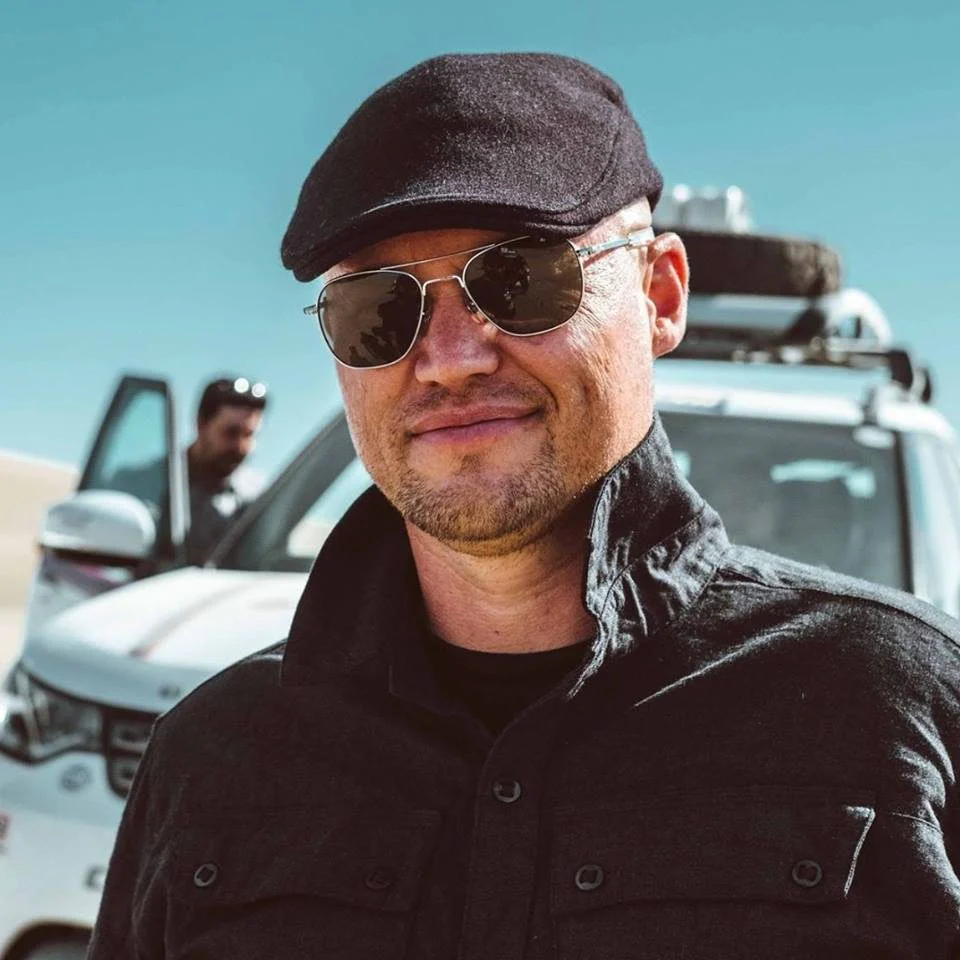
Scott Brady
Scott Brady is an adventurer, author, and publisher, and the first person in history to cross all seven continents. Brady is executive publisher of the Overland Collective, home to Overland Journal, the Overland Journal Podcast, and expeditionportal.com—the world’s largest vehicle-dependent adventure community. Scott wrote Overlanding 101 (Simon & Schuster) and is currently riding around the world on his BMW GS. He also led Expeditions 7, the first expedition to drive the same vehicle on all seven continents. Brady’s polar crossings include Antarctica and a south–north crossing of the Greenland ice sheet. Scott is a fellow of the Explorers Club and lives in Prescott, Arizona.
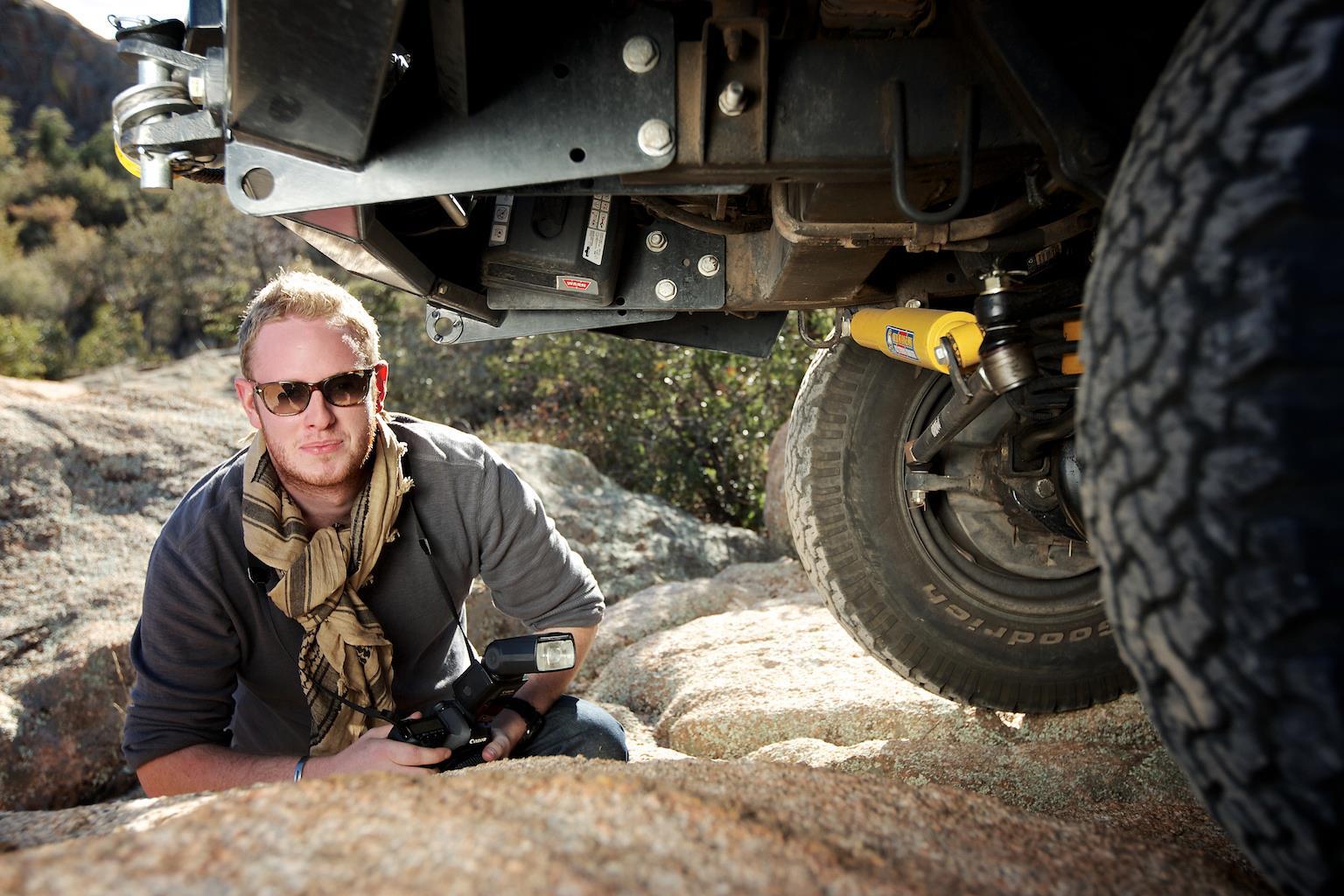
Matt Scott
Matt is a leading expert in automotive adventure. He has extensively explored the world’s most remote places by 4WD and is considered an industry authority on overland travel. He is the only American to ever become an editor of a major Australian 4WD publication and has over 15 years of competitive auto racing experience. @mattexplore
Tune in Apple Podcasts | Spotify | YouTube
Our No Compromise Clause: We do not accept advertorial content or allow advertising to influence our coverage, and our contributors are guaranteed editorial independence. Overland Collective may earn a small commission from affiliate links included in this article. We appreciate your support.
Transcript
Scott Brady: [00:00:00] Hello and welcome to the Overland Journal Podcast. I’m your host, Scott Brady, and I’m here with my co-host, Matt Scott, and w- we’re gonna talk today about-
Matt Scott: The coolest car- Yeah. … ever made, and the only one to ever be displayed in the Louvre.
Scott Brady: That’s right. So- I
Matt Scott: think …
Scott Brady: w- yeah, I believe so. Yeah. And we are, we are coming up on the 50th anniversary of the Range Rover, and this is a vehicle that I’ve, that I’ve owned several of the models and enjoyed personally, and traveled- Yeah
traveled on various continents with, and, and certainly have a lot of wonderful memories associated with. And that goes well beyond my memories associated with Land Rover in general. But we’re very fortunate today to have Simon Turner with us. Simon Turner is the, the Land Rover product manager for the entire Land Rover family, and he has been extremely gracious with his time [00:01:00] today with Matt and I talking about the, the Range Rover.
And, uh, thank you so much, Simon, for being on the call.
Simon : It’s a pleasure to be here. Glad to do it.
Scott Brady: Well, one, one of the first things that comes to mind for me is just how clandestine and cool the launch of the original Range Rover was. I mean, it was, it was nearly in the spirit of James Bond with this disguised model as the Velar.
Can, can you share a little bit about what was the excitement internally, and what was some of… some, what were some of the emotions that were happening- Yeah … within Land Rover when this new model came out? I mean,
Matt Scott: did, did you know that you had something that would kind of change the automotive landscape?
I mean, think of the luxury SUV, you know, space right now. I mean, it, it’s huge. There’s so many… I mean, it really started this vehicle and an entire genre of the automotive industry.
Simon : Yes, uh, and, and in some ways we like to think of it, um, [00:02:00] commencing the, um, era of the SUV in, in the sense we know it today. So, um, way back in the ’40s where, when the original Land Rover products were, uh, conceived, uh, I don’t think we had any idea, uh, what it might lead to.
But, um, during that period from the ’40s to 1970 when the Range Rover was, uh, really born, uh, that was a, a period after the Second World War where there was just a lot of excitement and growth in many areas of the, uh, auto industry. And I think, um, prior to 1970 when the product, um, did come to life, there was a couple of times when, um, some of the, um, management team and senior executives actually did realize that there probably was a really good opportunity there for something that was more luxurious, had, uh, certainly a similar level of capability, but just was presented in a, in a more upmarket way.[00:03:00]
And although those ideas didn’t come to light, uh, initially when they were conceived, uh, six to 10 years later, eight to 10 years later, early ’70s was when we saw this, uh, tremendously exciting time. And then, um, the Range Rover was born. And, um- It really did, uh, come around in the marketplace that really what was seen to be the start of that SUV era.
Uh, so in many ways we think of it, uh, you know, from that perspective, we were one of the early pioneers, um, in that segment, in the SUV segment, and really set the scene for what, uh, what the segment and the SUV market would become. So, uh, influential, really exciting time, and, um, hats off to the guys who originated the idea because, uh, they were, they were, I think, well ahead of their time.
Matt Scott: Yeah, and it- I think one of the coolest things is that 50 years later, you know, as, as we kind of [00:04:00] spoke, we’re coming on that, that big anniversary, you’re still kind of defining the segment, and I think that that’s, that’s really… I don’t know. I, I find that fascinating. 50 years of endurance of a product still being class-leading and still being defining.
Um, yeah, I mean, it’s, it’s an interesting vehicle.
Scott Brady: It really is, and, and it leads to, in my mind, when, when the Range Rover first came out, it was a solution to the Country Wagon. It was a high-clearance vehicle that you could drive to church, you could drive it to the store, you could drive it to a business meeting.
You could pull the horse trailer with it, and then you could also get out into the field if you needed to. And I think it’s, in my mind, having owned many Range Rovers, it’s that breadth of capability that was always most endearing to me. Do you, do you feel like that that is, that was the original intent, was that breadth of capability, and do you feel like that is still an emphasis in new product [00:05:00] design for Range Rover today?
Simon : Uh, yes, it’s absolutely key for us, and, uh, it underpins everything we do as a, as a business, um, not just on Range Rover, but on the span of Land Rover products as well. Um, every Land Rover is designed and developed with capability at its heart. And, uh, it is just one of the things that we will not sacrifice.
Um, we, we put lots of time and energy into making sure that our, um, products compete effectively in the marketplace. And one of the things that really appeals particularly, uh, with Range Rover to the customers and the clientele we sell to is that, um, mindset of confidence and inspiring confidence for them to attack their lives, uh, in whatever way they deem appropriate for them.
Matt Scott: Yeah. Excellent.
Simon : So, [00:06:00] uh, without the capability, without that breadth of capability, uh, we just not would, would not have the recipe that we’ve got and, uh, the resonance we have with the clientele and customers we, we, we’ve built, uh, relationships with
Matt Scott: You know, one of the things I always think of with the Range Rover is that it’s, it’s such a stable platform.
It’s, it’s… It excels in almost everything that it does. I’ve, I’ve had these vehicles on everything from twisty roads where it’s a pleasurable vehicle to drive. It’s a nice experience. It’s quiet, it’s comfortable, and I’ve had these things driving up the waterfall and, you know, Poison Spider in Moab. And, and everything that they do within their limit is just, it’s kinda effortless, and I think that that’s a really, really cool, um, aspect of that vehicle.
‘Cause there are, you know, competitive vehicles, but I, I feel like there’s nobody that has that massive breadth of capability. I mean, they can be more comfortable than a traditional touring sedan, and then they can be as capable as, you know,
Simon : a- I, I think that’s [00:07:00] absolutely right, and, uh, we focus on that front and foremost.
There are many, many great SUVs out there in the marketplace, but we view what we do with Range Rover as having just an exceptional level of capability, and that breadth of capability that you mentioned. But couple that with an exquisite interior and the luxury appointments and the refinement that we engineer into the product as well.
That’s just, we believe, a winning recipe, uh, and part of the reason of… significant part of the reason Range Rover has been, uh, so successful over the years.
Scott Brady: A- and with, with it all starting with the name Velar, which ultimately came back into the lineup, uh, many decades later. When I was doing some research on the history, Velar just means to veil or to hide in Italian, I believe.
And is… Are there any fun stories that you’ve got from the archives or from your, the folks that you’ve met through the years in your [00:08:00] 17 years with Land Rover, where they talk a little bit about that history with the Velar?
Simon : Oh, well, I think it’s pretty much exactly as you, you laid it out, and it was, uh, a little bit of a play, uh, obviously, uh, a clever, a clever play when we actually did launch a product that was named Velar in later years.
But certainly, uh, the early prototypes of Range Rover did, you know, drive around with the name Velar on them. So, um, I can well imagine… Oh, I wasn’t around at the time and involved, but I can well imagine that, uh, uh, there were several, uh, people, uh, senior within the business had some fun with that. Um, keeping it behind closed doors as it were, and trying to make it fit in.
Uh imagining that you can make a Range Rover fit in during that timeframe is, is kind of amusing as well, but that’s nevertheless the, the story. So I don’t have anything really more [00:09:00] unique than that to share with you, but I, I think the selection of the name and the use of it back in that time was, uh, clever and, um, you know, kind of underpins, um, some of the, um, uh, advertising, uh, that we adopt with Range Rover, which is, uh, uniquely quite clever sometimes in the way some of the products are named.
For sure. I, I love some of those, some of those Range Rover ads. Yeah. There’s that- Try to present it like that … there’s that iconic
one
Matt Scott: with the white Range Rover with the mud on the, the mud on the side that I wanna say you guys redid a few years ago. Um, you know, so, so here’s a question for you. Maybe this is a little bit more, more oddball, but we’re all Land Rover enthusiasts here. If you could pick one Range Rover throughout the entire history of, of, of the, of the model, what would it be for you?
Simon : Uh, I’d have to flip a coin. It would even b- either be the first one or the last one. Uh, either the classic or the current car. [00:10:00]
Matt Scott: Yeah.
Simon : And, you know, there’s, there’s so many ways you could, uh, you could make that decision, but I, I, I’m right on the fence.
Matt Scott: I think
Simon : one of the
Matt Scott: cool things is that you can actually go buy one of the first Range Rovers-
Scott Brady: Yeah
Matt Scott: as new through your, the classic vehicles program, or you can go buy the old one. Sorry, I mixed that one up there. But yeah, the classic vehicle program that you guys do is also really fascinating. I remember being over there, um- Yeah,
Scott Brady: beautiful cars.
Matt Scott: Yeah, I remember actually seeing the first Velar in that facility.
Yeah. Not the first, but, but one of them.
Simon : Uh, you were talking about the classic, um, SV facility in the UK, I, I think there.
Scott Brady: Yes.
Simon : Um, which, you know, um, I was referring to the classic, um, as the first Range Rover and, and, and yes, there’s several ways to use classic within the context of Range Rover. When we transitioned from, um, the class- what we know to be the classic Range Rover now, [00:11:00] so the first generation to the, the P38A, um, there was a period of time, uh, about, I think it was a model year, if I’m remembering correctly, where both of those, the first generation and the second generation existed or coexisted in the marketplace at, at the same time.
So clearly, uh, we needed a way to, uh, differentiate the old from the new- Sure … or the previous from the new, and the original model then became known as the classic, and that just happened to resonate well with, uh, the conversation we started there on SV, which is a leg of the organization called Classic, that actually, um, has built its business around restoring many of the old products that maybe customers come across, uh, enthusiasts come across in their life and are interested in having it restored on a, you know, professional manufacturer-led basis.
So that business is [00:12:00] known as SV Classic, and, um, it’s, um, it’s a really interesting place to go, as you pointed out, and full of, uh, interesting, um, older products which just, for me, capture my imagination whenever I go there. They’re fantastic.
Scott Brady: Yeah, I, I couldn’t agree more. I remember walking through those halls and seeing Range Rover Classics, Series Land Rovers, beautiful, stunning Jaguars.
I just, I just remember wanting to buy every single one- Everything.
Matt Scott: Absolutely …
Scott Brady: every single one of them. Absolutely everything. Every single one of them. Yeah, you’re right. The, from 1994 to 1996, the P38 was, uh, was available at the same time as, as the Range Rover Classic, and, and it, it’s certainly interesting to see that transition.
It shows the pa- the passion that the consumers had for the original model, and then the excitement that they had for the, for [00:13:00] the new one that was coming on the market
Simon : One of the things that we see, uh, around those transition points is there’s generally a, an uplift in the interest in the outgoing model.
Um, I mean, I guess you see that on occasions in the industry with other products, but we, we see that, uh, with Range Rover very clearly that, uh, you know, during the, the last year or so, um, before a new product is phased in, there’s usually strong interest in the last one because of the, I guess, the allegiance and the fact that, uh, many people get to like that particular style over the, over the life cycle of it.
And sometimes it’s not clear and apparent to a lot of those customers that they’ll actually grow to like the new one. So the interest in the older one or the outgoing one is often heightened.
Scott Brady: Sure.
Simon : Um, so it’s a, a little interesting phenomena.
Scott Brady: No, that certainly makes sense. I, I think [00:14:00] about, uh, one of the Range Rovers that, that personally I appreciated the most.
I, I, I owned a, a Mark 3 Range Rover, the L322, for many years, and it, it was literally one of the finest automobiles that I’ve ever owned. And it was the first Land Rover that began to give me genuine confidence behind the reliability of the brand and, and that the reliability had shifted so much since, since the 2001 Discovery that I owned and since the Range Rover Classic that I owned and, and, and some of the other models that, uh, maybe I struggled with a little bit more.
But you could really see the evolution of the platform with the Mark 3 Range Rover. You can really see where the L322 was this culmination of all of that legacy with now the combination of, of the next level of engineering and reliability. Yeah. How do you see the, the L322? Do you see that in the same way internally, that it was really this [00:15:00] transition and this highly defining transition for the model?
Simon : Oh, absolutely, and I think you nailed it. Um, that was probably the most significant step forward, uh, we took with Range Rover at the time when we, when we conceived and developed the, uh, L322. Um, just the levels of, uh, not just capability, but the, the recognition that if we were to be successful in the Range Rover market, what we really needed to do was master the fundamentals, make the, uh, vehicle perform as a luxury vehicle, because that’s where we positioned it, and also drive the levels of refinement, uh, and composure that come with, uh, a luxury vehicle, drive those in forward significantly without losing that winning recipe, which was always about the [00:16:00] design, but also as importantly, capability side of, of what 322 was.
It was a tre- tremendously capable vehicle, but the m- things that moved the most for that product were the levels of luxury and refinement and, you know, just the general build quality of that product. Very, very solid and very well built.
Matt Scott: Yeah. I mean, to go from the, the P38, which maybe for our listeners that aren’t super huge into Land Rovers, that ran from, I wanna say ’94 to 2002- 2000
in the US. Um, to go from- That’s right … that vehicle to go to the, the L322, which was 2002, 2003 to 2012, I mean, it was, it was the same vehicle. You knew that it was a Range Rover. You knew when you drove it what you were driving, but it was drastically different.
Scott Brady: Yeah. Yeah, there were some significant changes.
It went from solid axle to independent, which of course people were suspicious of in the beginning, but the independent [00:17:00] suspension had so much articulation- Yeah … and wheel travel. I believe it was well over 12 inches
Matt Scott: of arch- It- it’s always been the future and, and you see that on the new Defender as well, just how far evolved that really has become.
And I guess it, I guess that technology all really started with, with the Range Rover. I mean, you always see that, I guess, in the Land Rover product line is Range Rover is up top, and then it kind of all trickles down to there. The technology, yeah. And, and that’s quite cool. I, I, I love, I love… You know, I always call it the Mark 3- Yep
Range Rover. You know, r- uh, we just asked Simon what his favorite, his favorite Range Rover was. That’s actually my favorite, an L322 or Mark 3- Yeah … in Tangiers Orange. They did that, I, I wanna say in the United States we got eight of the G4 Edition Range Rovers, and that’s always been on my bucket list to own one of those.
They’re such fascinating vehicles. I mean, that was the first car that we really saw that had, you know, terrain response, and it had that-
Scott Brady: Rear locking differential as
Matt Scott: well, yep … rear locking diffs, and the little levers for the adjustable suspension. It [00:18:00] was just, I mean, it was, it was like being on a different planet.
It was so far advanced. It was. And now you’re just seeing manufacturers, other manufacturers really start to catch up, and it’s cool because that car came out-
Scott Brady: 2002. …
Matt Scott: 2002. Yeah. So it was designed over 20 years ago now-
Scott Brady: Yeah …
Matt Scott: I guess.
Scott Brady: Yeah, it’s unbel- it’s unbelievable. And, and for those that are listening, just to, to g- do a quick punch list of some of the significant historical elements of the Range Rover.
It, you know, in 1972, John Blashford Snell led a, a team of adventurers on their Trans Americas expedition, and they drove from, um, up in the northern part of North America all the way through the Darien Gap into South America, and they took Range Rovers through there. And, and at, and at great personal cost and effort, uh, to achieve that.
That was one of the first trips through the Darien Gap, and a very notable one. And, and in 1979, the Range Rover competed in the Paris [00:19:00] Dakar race. Even in the, in the early 20- 2011, 2012 timeframe, uh, Land Rover did a Silk Road expedition with their new hybrid model Range Rover. The Camel Trophy featured the Range Rover as well in the late ’80s.
So the Range Rover was not just a luxury vehicle. Land Rover at the time very much positioned it as an adventurer’s vehicle. And Simon, are you… I know that you have such passion for the brand, but are you seeing that the goals for, for Range Rover today is also representing that goal towards the adventurer, the affluent adventurer, the well-traveled individual?
Simon : Yes, I, I think so. Um, certainly we have products in the, in the portfolio that appeal more directly to the adventurer. But adventure is to some degree relative to us all, right? Where we sit in our lives, what we [00:20:00] like to do, uh, what our interests are, and what our pastimes are. So I think the way we like to look at it is we, we provide a vehicle that will enable adventure, whatever that might mean to you.
And I, I think that Range Rover clearly, um, has got the heritage, it’s got the capability, it’s got the historical elements to its past that certainly build that. Um- You know, is it the, is it the best off-road vehicle in the world? Probably not, but it delivers, like, a balance in the breadth of capability and the type of environment to drive in that we have found our customers love, uh, the folks who actually buy Range Rovers.
So, um, I think it comes down again to what adventure means to you, and, um, confidence while you’re driving [00:21:00] is key. And the Range Rover, just like it always has, instills confidence to those who drive it. So whether you’re bouncing over a curb or you’re doing some really extreme stuff in Moab, um, you know, both of those things could be viewed as adventuresome, I guess.
Scott Brady: Yeah. Yeah, no question. No question.
Matt Scott: I think one of my favorite things that, you know, you just touched on is the confidence, and I think a lot of that comes from the driving position that a Range Rover has, has always maintained that, and I guess I’ll call it the command position, I wanna say was Land Rover’s term for it a while ago.
You know, you kind of s- I don’t wanna say you sit on top of a Range Rover. You have very good visibility always in a Range Rover. I find whether you are, like you said, in Moab or you’re in Los Angeles or New York, like, they’re very easy vehicles to drive.
Scott Brady: Yeah, despite their size. Yeah. They always had the v- the very nar- very narrow A pillars and the very narrow B pillars that gave- Yeah
this very open glass feel.
Matt Scott: And that clamshell hood just allows you to see exactly where the front end is. On so many modern [00:22:00] vehicles, you know, they have this kind of sloping hood that’s really aerodynamic and works its way down, and you just don’t really know where the car is. And, and I think just the position and the form factor of the Range Rover is…
I mean, I’ve always said it’s, it’s the best sized car. Like, you sit in a new Range Rover and you’re like, “Oh, this is, this is kind of perfect.” Like, a Tahoe is way too big.
Scott Brady: Especially for North America. I mean, it- there’s definitely times in London I think that a Range Rover might feel a little large. But, but it’s amazing for, certainly for the North American consumer.
It is a, it is a right sized SUV. And I also, I like the fact that Land Rover has never overdone the window tint. They’ve never made it a, a seven passenger. They’ve always kept it very pure to the original design. And, uh, as… This leads to another question, Simon. At… It appears to me, and this is just an, a s- an assumption that I have, that the goal was always to maintain that purity of the big body Range Rover and then fill out the Range Rover [00:23:00] models with the other interests of your clients.
So for example, the Sport appeals to someone who wants something that’s more athletic, or the v- maybe the, the Evoque is something that’s more affordable. Is that the goal right now, is to make sure that you’re able to offer a Range Rover to a wider range of customers?
Simon : Yes. I, I think that’s probably– Well, that’s fair and, and, and, and correct.
I, I view that from the standpoint of just a, a business and a maturing business. As you become more successful, you have the ability to reach out to different parts of the market that you maybe weren’t operating in. And it’s always been, you know, our ambition to, to grow the Range Rover market and to deliver products into different segments of the, of the marketplace that are relevant to those segments.
Um, so, you know, over the last eight to ten years, we’ve been very active with the Range Rover family in doing just that. Um, you know, at the time we [00:24:00] had the P38 or the L322, there was basically just a single Range Rover in the family, and it wasn’t until, uh, twenty eleven when the Vogue arrived, uh, which was completely unexpected to many people.
They did not conceive of, uh, a Range Rover product, you know, on that sort of scale, smaller scale, uh, resonating or being successful. But, uh, it was absolutely the right recipe for, you know, developing into other areas of the marketplace. Uh, and certainly in Europe, some of the cities in Europe, uh, et cetera, where space is a premium, it was, you know, urban chic.
It has carried the Range Rover brand badge, and it’s, uh, very, very appealing to, um, customers in those markets for different reasons to the big one being appealing, you know, maybe to us here in America where we’ve got more wider open spaces. So, um, [00:25:00] the, the movement in and development in the Range Rover brand has been very, uh, considered, I think it’s fair to say.
And where we’ve grown, the directions we’ve taken have been following, you know, market research, understanding where we believe there’s an opportunity to expand the range and then working rigorously to, uh, deliver, offer, design, build and deliver something that meets the Range Rover requirements in terms of capability and breadth of capability, but do it in a very unique design and capability-led way.
Um, and following on from, um- Vogue, we had obviously the Velar, um, arriving in 2018. I skipped over Sport, ’cause Sport actually, I guess generation one Sport dates back to [00:26:00] ’94, ’95. Um, I think is, uh, sorry, 2004, 2005. Got me decades mixed up there. Um, but Sport really, uh, came about at a time when there were certainly people, uh, within the organization who did not think there was a place for two full-size Range Rovers in, in the portfolio.
They thought one would be more successful than the other, and there just weren’t the buyers around for a second Range Rover. And while, um, I guess we’ve disproved that one pretty clearly right now with, you know, the EPS for both of those products, uh, for Range Rover Sport being in the 25,000 range in terms of volume for North America, and Range Rover’s been touching 20,000.
So-
Scott Brady: Is Range Rover Sport the best-
Simon : Yeah …
Scott Brady: selling vehicle that Land Rover North America offers?
Simon : I guess it is, yeah
Scott Brady: Impressive
Simon : Yeah. It sells, um, the [00:27:00] highest volume of anything we have in the portfolio
Scott Brady: We spent some time with the Range Rover Sport, uh, at Eisner, uh, when we, when we were there under our own Velar of disguise during the, during the Defender reveal that Matt and I were fortunate to be able to go to.
But I was, I was so impressed with how capable the Range Rover Sport was. A- and y- for those that are listening, obviously this audience is very much focused on overland travel and global travel, but we also recognize that many of our listeners also own daily drivers, and they own vehicles like Range Rovers in addition to the Defender that they may own or, or, or, uh, a Land Cruiser that they may own.
They, they oftentimes buy vehicles like Range Rovers. And, uh, when, when we’re talking to our audience, we often remind them that it is models like the Velar and it’s models like the Evoque, the success of those [00:28:00] models, the success of the Range Rover Sport is what allows for a company like Land Rover to invest with some confidence in a product like the Defender.
So it’s very easy to say, “Oh, I don’t like that vehicle.” Well, it’s maybe not the right vehicle for you, but because Land Rover does so well with these other models, it allows them to take some risk with something that has over 11 inches of ground clearance and excellent, you know, locking differentials and, and almost 33-inch tall tires with the Defender.
So as an, uh, a passionate enthusiast of the Land Rover brand, I wanna thank you, uh, Simon, obviously for the, the fact that you guys have chosen to take some risk with Defender. Um, now would you kind of reflect that, that it’s the overall success of the brand that’s allowed you guys to take some risks with some more capable models?
Simon : Yes, uh, absolutely. And, um, you know, Defender, Defender in some ways, I use that word risk, um, [00:29:00] Defender in some ways was- Um, the engineers and the designers would shoot me for saying this, but probably the easiest, uh, to visualize in terms of what you need it to be because of what the old one was and what it did.
Um, ’cause there’s no… There’s just no way we could have got away with doing anything less than what we’ve done with Defender, um, because of, again, what came before it. The Defender model, um, it’s where it all started for Land Rover. It had that unique design, and it also had the capability designed in right from the get-go, and it was more capable than anything, well, almost anything around at the time in terms of a, you know, a, a, an auto, uh, a car or, uh, you know, we didn’t have SUVs back then, but in terms of the auto marketplace.
So, um, I think the interesting thing with the latest Defender [00:30:00] is that the emphasis has, has really been put into making it rugged, durable, and, um, let’s say able to absorb, uh, abuse or daily usage cycle that be- might, may be, uh, outside of what the way we would treat our cars on a day-to-day basis. So it is designed to be what we need it to be on a daily basis, but also to be able to deliver, you know, uh, in situations that might be life and death, that might be extreme, that might be in different remote parts of the world when you actually need to get back or you need to be able to do the job you went there for.
Um, so I think that’s the tough bit for Defender, actually being able to deliver that in, in a, an authentic way, um, that’s [00:31:00] relevant today, today’s time with, you know, the levels and standards of capability that has evolved, you know, over the, the past 20, 30, 40, 50 years and, and, and be able to do that in a, in a relevant way today that, that gives the product appeal for you and me who might not…
Well, maybe we do. I don’t, certainly don’t do it every weekend. But for you and me who are using the vehicle maybe for a daily driver, but more so for those who would come to rely on it to get the job done in, you know, the most difficult of situations or terrains or environments in the world. I think that’s the biggest challenge that, um, I hope we’ve achieved, uh, for Defender.
Matt Scott: And, and with the Defender, um, obviously, you know, changing a lot from the previous generation to the new generation, I mean, will that, will that change how the Range Rover evolves as well now that there’s just more options in the marketplace? I know Gerry McGovern has said that, [00:32:00] you know, the presence of the Defender will kind of cause some changes, you know, to the Discovery product line.
But I mean, and, and I understand it’s a future product if you, if you can’t talk about it, but do you think that will kind of change the presence of it, will change Range Rover and where it’s going?
Simon : I think without, without being specific about anything, I think there’s always, um, learning from a new product that you evolve with a certain mindset that can benefit other products in the range.
Um, I’d– I, I think that’s just a healthy part of doing something new, fresh, and different, and challenging the business, challenging itself. So there’ll be learning from Defender that will have benefit to both Range Rover and Discovery. But what I would say, just, um, to be clear, is that Range Rover occupies a place in the market that is very much towards the luxury end.
Well, it is the luxury end, and the delivery or the priorities or the [00:33:00] attribute priorities that we have for Range Rover are very clear and set in the wrong light. They have, you know, lots of design, um- Strength, but also this capability aspect. But they’ve got to be able to deliver the experience that we want in a, you know, very luxury composed and refined way.
Now, those compromises for a Discovery product and a Defender may be a little different. Um, you know, in terms of nobody would really necessarily think of Defender as being luxurious, uh, it doesn’t really need to be. That’s its mission in life is to be durable, dual purpose, rugged, and to be able to do all of the things that we need a Defender to do.
If we wanted it to be luxurious, then it probably we’d have to make some compromises to it to allow it to, to do that or to deliver on that level. So just going full circle here, [00:34:00] certainly elements of learning from Defender that will benefit the other products in the line, but certainly, you know, are we going to make our Range Rover products like Defenders?
Uh, no, I don’t think so. I think you’ll see a continuation of the very successful theme pro- that Range Rover’s carried for, for many years, and that will be to keep designing, delivering highly capable, exquisitely designed exteriors and interiors, and have the Range Rover deliver the type of, uh, luxury and refinement that people buying a, a luxury vehicle expect.
Matt Scott: And I think what’s so fascinating about the new Range Rover, um, it hasn’t really changed much. You know, it’s, it’s almost kind of become a bit more iconic than maybe previous models have while it’s still a current- … a current vehicle, and I think that that’s quite cool. I think that’s kind of a testament to, to the original design of the vehicle.
Um, you really can’t tell much of a difference between a [00:35:00] 2013 and a new one. I know there’s been some grill changes and light changes and obviously upgrades, but yeah, I, I, I think that that’s… It’s, it’s really fascinating.
Simon : I, I think if you, uh, if you trace the lines back of the current product to the original classic, fact I’ve got some, uh, really good graphics that show this when we were getting ready to launch the current car.
You can see the design lines, uh, have carried through from the original classic through to the, the current generation. And the reason I emphasize that is, is because it shows that lineage that I think you’re referring to.
Matt Scott: Yeah.
Simon : Uh, the connectedness of the models that we’ve delivered, but it also is very– it’s a very, uh, considered position that we’ve taken.
We do, uh, periods of market research, obviously through the life cycle of products and, um, you know, whenever we’re conceiving and [00:36:00] finalize– or conceive and finalize a design, we, we check back with the marketplace and we check back with the customers, uh, that we, we know will be interested in the, in the new car, we hope will be interested in the new car And we look for feedback.
And, you know, one of the consistent, um, lines of feedback that we receive from, from our customers is… You might have heard this, and I apologize if, if you have, but the, the common, the common phrase is, “Don’t change it, just make it better.” So-
Scott Brady: Yeah …
Simon : what that says to us is the underlying themes of Range Rover are solid and resonate perfectly with the clientele that buy them and, and the c- customers who buy them.
But they want to see, in the new product, they want to see how their new Range Rover or the new Range Rover connects with the past, and they want to see that lineage, and they want to be able to [00:37:00] express that, you know, maybe, uh, in the, in the world that they live in. They’ve got the Range Rover. The Range Rover is consistent through its generations.
Okay, it’s changed. There’s technology added. There’s capability added. The scale and size may have grown a little bit, but there are consistent elements of the design that have just stayed true and carried through, uh, the generations of Range Rover that we have, uh, uh, conceived and, and delivered.
Matt Scott: Yeah, I mean, they’re one of the few vehicles out there that y- you can almost point anybody towards any generation, and they just, they look like a Range Rover.
Scott Brady: They’re dis- yeah, they’re distinguishable as that. And, and I think that luxury itself has continued to evolve. Uh, luxury in the 1980s is very different from the luxuries of today. And more and more often we’re hearing that, that freedom really is the ultimate luxury. And if… And freedom, in [00:38:00] my mind, is often the ability to have the time to travel and the, to have the right equipment and the right vehicle and the right, the right, uh, experience to be able to go see the world, and that’s why we see travel expanding.
I mean, not, not currently in the moment that we’re in. Uh, we’re recording this during the COVID crisis. But, uh, we do recognize that overall, that, that freedom, that ability to travel, and I think that when you look at the luxury of Range Rover, I think part of the reason why it has had such staying power and, and models that are similar to that, like the, like the, the G-Wagon, et cetera, have had such staying power is because they do give the owner that idea that they have the freedom to explore, that they can go up and, and explore the mountains in Colorado or go to that remote fly fishing location or pull their Airstream trailer with it, uh, to go camp.
Whatever that may be, it seems as if That [00:39:00] luxury is being redefined as, as automobiles become more commoditized and as, as, as transportation in general becomes more commoditized. I think that the direction that Land Rover has had from the beginning will actually allow you guys to fare well into the future.
And, and that certainly brings up the question of, uh, as you are looking over the whole model line, things like having diesel available, which you did in recent model years, which we- Matt and I both thank you very much for that. That car drove beautifully. What are some other things that you guys are thinking about that you can share that lends towards that freedom and that ability to travel as it relates to our audience as travelers?
Simon : Yeah. So that’s a really interesting topic. Um, but some of the, some of the themes that you see in the marketplace today, I think will be, um, you know, where the direction future-wise will [00:40:00] go. Um, so, you know, I’m thinking sustainability, I’m thinking electrification, I’m thinking enhanced driver assistance. Um, those types of technologies, uh, it’s inevitable, I think will, will come.
It’s just a question of how quickly and, you know, how… in some ways, how quickly the market can adjust and react. So, you know, that would be, you know, for the next few years, decade, I would say that’s where probably the, the industry as a whole and certainly, uh, will be looking. Um, you know, if you take the example of some of the cities in Europe that are actually moving now towards banning, uh, gasoline and, uh, diesel engines in the, in the city centers.
They’re, they’re just not going to be allowing it in a few years. Well, you know, [00:41:00] just imagine the implications of that in terms of automobile choice.
Scott Brady: Sure.
Simon : You wanna go into a city job, um, you know, every day. You commute every day now. You’re not gonna be able to do that in a traditional, traditional Range Rover or whatever SUV you might drive.
You’re gonna need to adapt to the times, and you’ll be looking for vehicles that deliver your ability to live your life how you want to live it, and the vehicles that allow you to do that will be the ones that are on your shopping list. So, um, those are the general directions I would say. I think, you know, longer term, um- Developments in lightweight technology, I think there’s still a, a, a long way to play out in that, in that side of vehicle manufacturing and technology.
Stripping weight out of the vehicle, um, is, is key. Uh, but maintaining the strength [00:42:00] and rigidity and, um, you know, allowing it to meet all of the requirements that we, um, need a, a Land Rover or a Range Rover product to meet, um, still critically important for our buyers. They want that. That’s what they buy into, that confidence factor.
So linking all of those aspects together, materials, lightweight technology, electrification, um, and driver assistance features, um, I think where if you look tr- 10, 15 years ahead, I think you’ll see, um, you know, products in the marketplace that are, that are becoming, um, or have become capable in those fields and, um, are delivering things in a different way for consumers as they, as they…
V- versus today.
Matt Scott: I’m so excited for electric. Yeah. You know, a, a few years ago, I, I thought electric was the devil. I thought it was- Yeah … I thought it was where automotive [00:43:00] enthusiasm, enthusiasm was gonna go to die. And after driving the E-Pace, I, I’m, I’m so sold on it. And, and to… I, I’m, I’m daydreaming over here because I’m thinking, okay, Range Rover luxury, the power of electric motors, how you’re gonna be able to integrate that with autonomous technology.
That’s gonna be so cool. I mean, that, I mean, that’s gonna be the ultimate Car. I mean, the ultimate vehicle in a lot of ways. To be able to charge it at home, to be able to charge it at your hotel, not have to worry about really getting gas. I think I, I, I’m just so fascinated by, by, by the concept of electrification of, of these classic platforms.
Um-
Scott Brady: And it seems like it lends toward, it lends towards exactly what you’ve spoken about this whole conversation, Simon, is that breadth of capability. These are new capabilities that your consumers, your customers are expecting, and you’re just adding it to the repertoire of what a Range Rover can do. If you, if you need to drive into London, no [00:44:00] problem, you have a plug-in hybrid that will run on electrification only to get you into the city center.
Uh, but then you can still go out into, to your farm in, in the countryside and tow a horse trailer or go to a fly fishing location or go camping with your family. And I, I think that the expectation of the consumer continues to expand. So Range Rover, it seems uniquely capable of providing that breadth that you speak of.
Matt Scott: Yeah, I was thinking, I was thinking earlier this week how great an electric car would be during this crisis, and not having to go to a gas station and touch a dirty gas pump. You could just- Yeah … charge it at your house. I… So fascinated, so excited for, for where the technology’s gonna take us.
Simon : Yeah, I think the industry as a whole has, you know, some, some technical challenges to work through in terms of delivering on the, the range aspect that people expect and what they, what they’re comfortable with.
I think that’s probably one of the biggest challenges for [00:45:00] electrification right now. So- I think that’s interesting … you know, I don’t think anybody has the answer at this point. Yeah, so it’s interesting to, to see where that evolves to and how the scientists can move that forward. Um, there’s pent-up demand, I’m sure, in the marketplace for electrified vehicles.
It’s just delivering on the combination of product range and charging infrastructure that everybody will become come to expect.
Matt Scott: We’ll, we’ll definitely get there. I mean, I, I, I remember paying hundreds of dollars for 128 megabyte, you know, flash drive, you know, 10 years ago and maybe more than 10 years ago.
But- Yeah … you know, the, the, the same thing will ha- happens with all technology is the more it gets adopted, the faster it gets adopted, the more prices go down. So, you know, the future will be really interesting for the, for the- Yeah … Range Rover product line.
Scott Brady: I think it’s exciting. I think that once you plug in the concept of technology into any consumer segment, [00:46:00] the evolution happens very, very quickly.
If you could see the, I mean, just the implementation rate of an iPhone across the consumer space was-
Matt Scott: Overnight
Scott Brady: everybody had an iPhone … so, so rap- so rapid. The
Matt Scott: same will happen with electric cars.
Scott Brady: Yeah, we suspect it will happen in that way. And we’re encouraged that Land Rover identifies that as an opportunity because you’ll bring with it those other attributes that we find important, like being able to get remote and being able to travel to a unique location in Iceland or wherever else you may go in the world.
And, um, you know, I think one of the questions that, that I have, that I, I shared with you before the conversation, um, is I think it would be important for our listeners to hear a little more about what Land Rover has done over the last few decades to continue to improve reliability and durability from within their platforms.
I believe that our audience, our readers, our [00:47:00] listeners, uh, those that go to our websites, they all have an appreciation and a respect for the Land Rover brand and the Range Rover in particular. But I think this is maybe an opportunity for you to share with them what Land Rover has done to address, uh, reliability and improve upon it, um, if you’re able to speak to that.
Simon : Yes, uh, um, absolutely. And I guess I would start by saying that there is no silver bullet. Um, the progress that’s made is made on the basis of hard work, uh, people with the right disposition, and a, a mindset to keep pushing the envelope and improving. Uh, and it’s a, a long-term endeavor. It doesn’t start and stop.
It’s something that, as a manufacturer, we are, uh- Extremely focused on right up to the, uh, [00:48:00] top level management within the business and, and including our, you know, our CEO in Europe. Um, it’s a prerequisite, we believe, to success in the marketplace that we play in. And, um, we’re taking ongoing actions to bolster the resources we put onto, uh, improving quality, uh, on a, on an ongoing basis.
So I can just talk a little bit specifically about, um, what we do in North America and the approach we have. Um, and it, it revolves around, uh, a team of, uh, people in the service and engineering side of the business who are resourced to basically do the, the day-to-day diligence of assisting in the resolution of problems on vehicles, but also understanding at a root cause level why things don’t operate sometimes how our customers might expect them to.[00:49:00]
And those individuals have counterparts in all manner of facets of places in the European manufacturing plants and, uh, headquarter engineering teams who they’re liaising with on a, on a daily, daily basis, um, you know, whatever the issue might be. So, you know, at a high level, you need to create a culture and an environment where people are allowed to put that quality performance of the product as job one.
You know, that needs to be a non-negotiable, and you need to have… you need to lead your people to understand and, and support that. And then let them get on with the job that they’re qualified to do, which is, you know, the relentless task of never letting something, uh, that isn’t unclear slip away, understanding why a problem might have occurred, what [00:50:00] failed, why it failed, and, you know, at a detail level, carrying that back into the engineering teams and plants that we work with in, in Europe.
So, um, there isn’t a simple answer to the question, but what I hopefully have articulated is that, first of all, we take it extremely seriously. Um, we don’t believe there is, um, any excuse for not delivering high quality vehicles, and we are committed to doing that. And we use local and, uh, international resources, engineers, teams, plants, um, to actually work relentlessly at eliminating problems, um- And, you know, are we, are we where we need to be?
No, we’re never where we need to be. There’s always improvements can be made no matter what it is you’re looking at. No matter what problem you’re, you’re scoping, there’s always a [00:51:00] way to make it better. And the mindset that we have is to consider that first and foremost, and con- keep pushing the boundaries back and, and trying to make the products that we build as, as good as we can make them.
Scott Brady: Simon, thank you so much for speaking to that. And I can speak from my own personal experience for the audience to hear is, um, I’ve owned, um, uh, probably- A few … probably 10, probably 10, 10 Land Rovers by now. Uh, currently have a, a, a 1986 Defender 110 with a diesel that it starts every time and it runs great.
It does leave its marks here and there, but my earlier Land Rovers required a lot more attention. And, and by the time I bought the Mark 3 Range Rover, I drove that vehicle for nearly 100,000 miles with the m- the most minimal of issues. And then I had a 2012 LR4 that I had zero warranty claims on, and [00:52:00] then I had a 2015 Range Rover that I had zero warranty claims on.
So my own experience and evolution in the reliability of the product line, um… Now, of course, I’m not saying that anyone who buys a new vehicle is gonna have zero issues. I’m m- just simply expressing my experience, which was a very noticeable and continuous improvement in the reliability of the platform, which is, I think, very difficult to do- Yeah
because the cars are getting more complex than they ever were before.
Matt Scott: You know, I, I’ve always thought that Land Rovers were a lot more reliable than people gave them credit for. I, I think that you had, in the enthusiast side, a lot of second, third, fourth owners that were buying vehicles that, you know, maybe weren’t properly maintained.
And, you know, going, going back in time, going back to the ’90s, going back to early 2000s where, you know, imported cars were… I mean, they were obviously here, and they were large, but maybe we were used to more Chevys and more Fords that were just different to work on. And, um, and Land Rover has always been a pioneer [00:53:00] of technology.
They have always been the one pushing, you know, pushing the evolution of the four-wheel drive. So yeah, like, the r- you know, the air suspension in the Range Rover Classic wasn’t that great, ’cause it was like the first air suspension- It was the first one … in, in a car, you know ? Like, you know, uh, any of the issues, you know, they’ve…
I don’t, I don’t, I don’t wanna say that I don’t give them too much credit, but- I, I’ve always thought that they were, you know, pe- they just had a more, a, a bad rap, let’s say.
Scott Brady: Yeah, and I, I think that it’s important to acknowledge it because it’s something that people look at as a, a part of their decision set with looking at a, a Land Rover, and that’s why, Simon, I appreciate you speaking to it.
And also my own experience with seeing it re- improve so, so greatly. And then to see things like a diesel motor being available for a short period of time in the, in the lineup, um, was something that brought a, a big smile to my face. And then of course Matt and I being able to spend time in the Defender recently in Namibia, that brought a lot of smiles to [00:54:00] my face.
So Matt and I both have tremendous love for the brand that you are stewarding, Simon, and, and, uh, we’re grateful that the newest Defender, it, it isn’t a city vehicle. This is a vehicle that is designed to go very challenging and very remote areas in the world, and that is an exciting thing to see. It’s exciting to see the whole Land Rover lineup now fill out.
I remember a few years ago at the Discovery launch, the, your team talking about these categories of, of luxury and utility and capability and durability, and to now see all of those pillars of your organization reflected in products that are available today is, is very exciting and, and we’re grateful to see that breadth of, of, of lineup as well.
Simon : Yeah, I l- I like to say the family’s complete now with Defender. ‘Cause we’ve been talking about a fragmented family
for a couple of years, right? Well, the [00:55:00] family’s complete.
Matt Scott: It’s just, I’m so excited. I mean, for the first time in my adult life, I will actually be able to walk in as an adult and see a Defender on the showroom floor at Land Rover, and I think that that’s a fantastic thing.
Scott Brady: Yeah, that’s ver- that’s very exciting.
I, I re- I still remember in the early ’90s going into a Land Rover dealership and seeing a Defender 90 on display in the showroom and being completely wi- wide-eyed. I mean, here’s, this was the camel tr- this was it- Yeah … right there and, and available to purchase. So th- these are very exciting times for Land Rover.
I know that all of you are very excited for this next chapter, and it, and it kind of leads me to my final question. Uh, and Matt may have something to follow up with, but we wanna be sensitive to your time. Um, I know that we’ve all, we’ve all been kept inside, and we’ve all not been able to go experience the world in the ways that we want to.
If you could, if you could leave tomorrow in any of the new Land Rover products, uh, what vehicle would it be, and where would you wanna go? If you had an unlimited amount of time, [00:56:00] and you and your family could go explore somewhere in the world, Simon, where would you wanna go?
Simon : Wow. I think I’d like to go to Namibia where you, you guys went in the Defender.
Scott Brady: Yeah.
Simon : I’m really glad he carried Matt. That sounds like an awesome trip.
Scott Brady: It was amazing. It
Simon : was amazing. And I saw, uh, a lot of the images and videos that came out, uh, following that, and I just thought the combination of terrain, environment, animals, the climate were just, um, really, really interesting overall.
And I’m sure you got to, to experience Defender in its, in its true habitat there or the habitat it excelled in. So that would be what I think would choose. I’d like to choose to do that if, if I had that chance.
Scott Brady: Yeah. Well, it, it would be great if your version of social distancing right now was in the middle of the Namib Desert.
We can all, we can all dream of that at the moment. [00:57:00] Uh, Matt, do you have any more questions for Simon?
Matt Scott: No, I think I’m good.
Scott Brady: Uh, Simon, thank you so much for your time. You were very gracious with it today. I know you’re very busy, and this is a very challenging time for organizations around the world, including automotive, and I can see that there is such a bright future for Land Rover because of so much of the emphasis on the heritage and the legacy of the brand.
As overlanders, we are e- we are excited about the products that you’re bringing to market, and, uh, I want to thank you again for being with us today.
Simon : It was an absolute pleasure, uh, to be here with you, and I appreciate all of the, the questions that you asked and, uh, the opportunity to answer those as, as fully as I could.
So, um, great. Thank you.
Scott Brady: You’re very welcome, Simon, and we’re gonna have some additional information in the show notes, including some of the historical references that we made throughout the podcast. And Matt and I want to thank you all for listening today.