

Overland Journal Podcast host Scott Brady and co-host Matt Scott discuss how electric vehicles are rapidly reshaping overlanding, citing EV advantages like instant torque, precise control, fewer mechanical failure points, and future innovations such as structural solid-state batteries and wheel-mounted motors. They note growing industry momentum, including Tesla’s market value, Infiniti’s upcoming EV-heavy lineup, and investments in Rivian by Ford and Amazon, while arguing many common overland routes are already feasible with today’s ranges. They acknowledge current limitations for multi-day remote travel due to charging needs, insufficient solar, and reliance on generators, but emphasize most drivers’ daily mileage and typical travel pace make EVs practical. The episode also covers Rivian, Cybertruck, Bollinger, Long Way Up’s electric travel, and the importance of keeping an open mind toward new technology.
Overland Journal Podcast Episode #08
The Overland Journal Podcast is brought to you this week by Overland Journal Magazine
New to Overland Journal and want to grab a subscription! Visit Overland Journal and enter code: overlandpodcast at checkout for 20% off. We thank you for being a subscriber.
Driving Dynamics and Technological Innovations
One of the highlights of electric vehicles is the unique driving experience they provide. As Matt recounts his first encounter with the Jaguar I-PACE, he emphasizes the sheer thrill of instant torque and the smooth, linear delivery of power. These driving dynamics could redefine off-road adventures through innovations like torque vectoring and solid-state batteries. The potential to integrate the battery as a structural component within the chassis promises a future where bulky batteries won’t encumber design and performance.
The Reliability and Simplicity of EVs
Electric vehicles eliminate many mechanical components that are prone to fail in traditional internal combustion engines. With no need for starters, alternators, or fuel pumps, EVs offer simplicity and reliability, essential traits for any overlander. Scott and Matt also point out how the streamlined technology of EVs is similar to the advent of fuel injection systems in four-wheel-drive vehicles, which, despite initial skepticism, now symbolically stand for reliability.
Challenging the Vehicle Infrastructure
The conversation transitions to practicalities such as the current limitations in charging infrastructure which could pose challenges for long expeditions, especially in remote areas. However, for the traditional North American overlander, the EV range of 300 miles or more can sufficiently cover most trips. As Scott puts it, the adventure isn’t about racing; it’s about experiencing the journey, making stops, and truly immersing oneself in the environment.
Rivian’s Impact: A Case Study
Rivian emerges as a significant player in this transition. Highlighting their approach to design and innovation, Rivian challenges the skepticism surrounding electric vehicles with their cutting-edge solutions tailored for overlanders. Their vehicles are equipped with roof tents and camping amenities, capturing the spirit of adventure while aligning with the demands of the modern traveler.
Cultural Shift and Innovation
Why, then, the resistance to electric cars, Matt asks? It may reside in America’s deep-seated car culture. Yet, companies like Tesla are changing perceptions by making electric vehicles synonymous with excitement, speed, and innovation. As Scott reflects, technological advancements often reshape our lives, leading to more streamlined, efficient, and exciting ways to interact with the world around us.
Looking Ahead
Electric vehicles, while not the sole future, are undeniably a part of it. The conversation reminds us to keep an open mind about the role of technology in overlanding. As electric vehicles continue to evolve, the possibilities for new adventures expand. Whether it’s tracing old routes with a new perspective or blazing trails with newfound capabilities, EVs offer a compelling case for the future of exploration.
Host Bios:
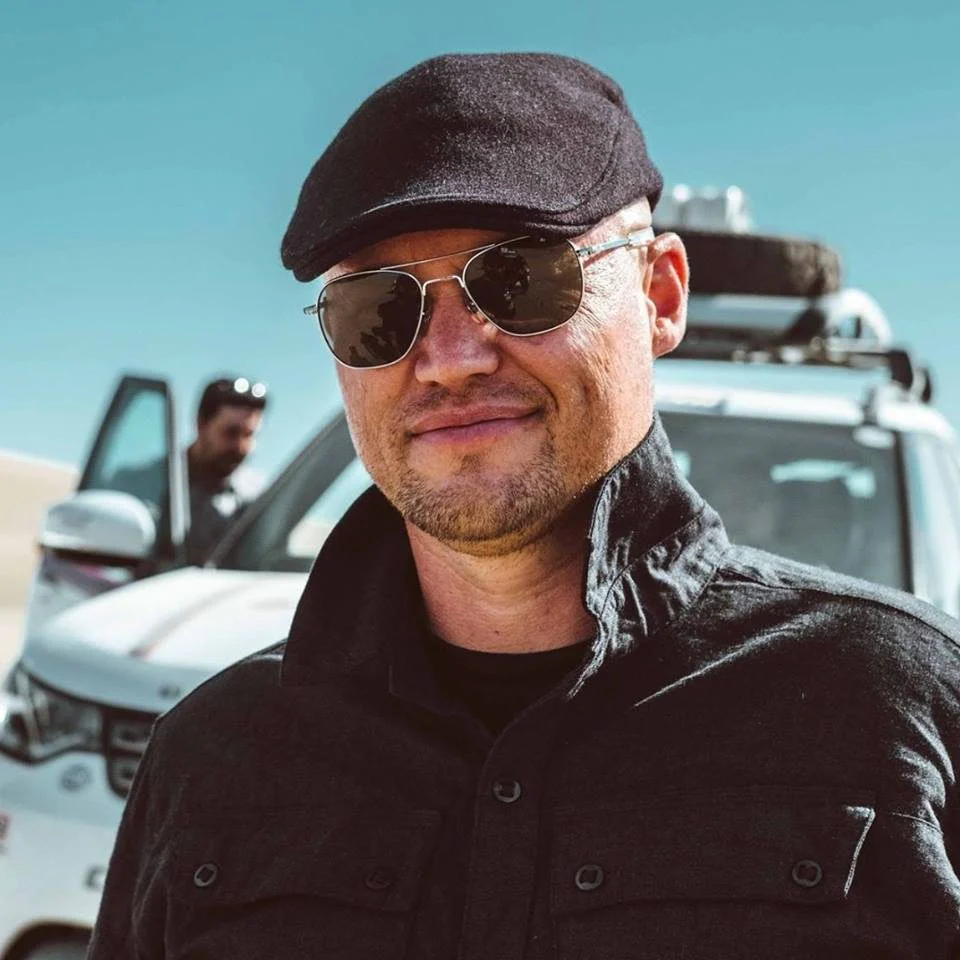
Scott Brady
Scott Brady is an adventurer, author, and publisher, and the first person in history to cross all seven continents. Brady is executive publisher of the Overland Collective, home to Overland Journal, the Overland Journal Podcast, and expeditionportal.com—the world’s largest vehicle-dependent adventure community. Scott wrote Overlanding 101 (Simon & Schuster) and is currently riding around the world on his BMW GS. He also led Expeditions 7, the first expedition to drive the same vehicle on all seven continents. Brady’s polar crossings include Antarctica and a south–north crossing of the Greenland ice sheet. Scott is a fellow of the Explorers Club and lives in Prescott, Arizona.
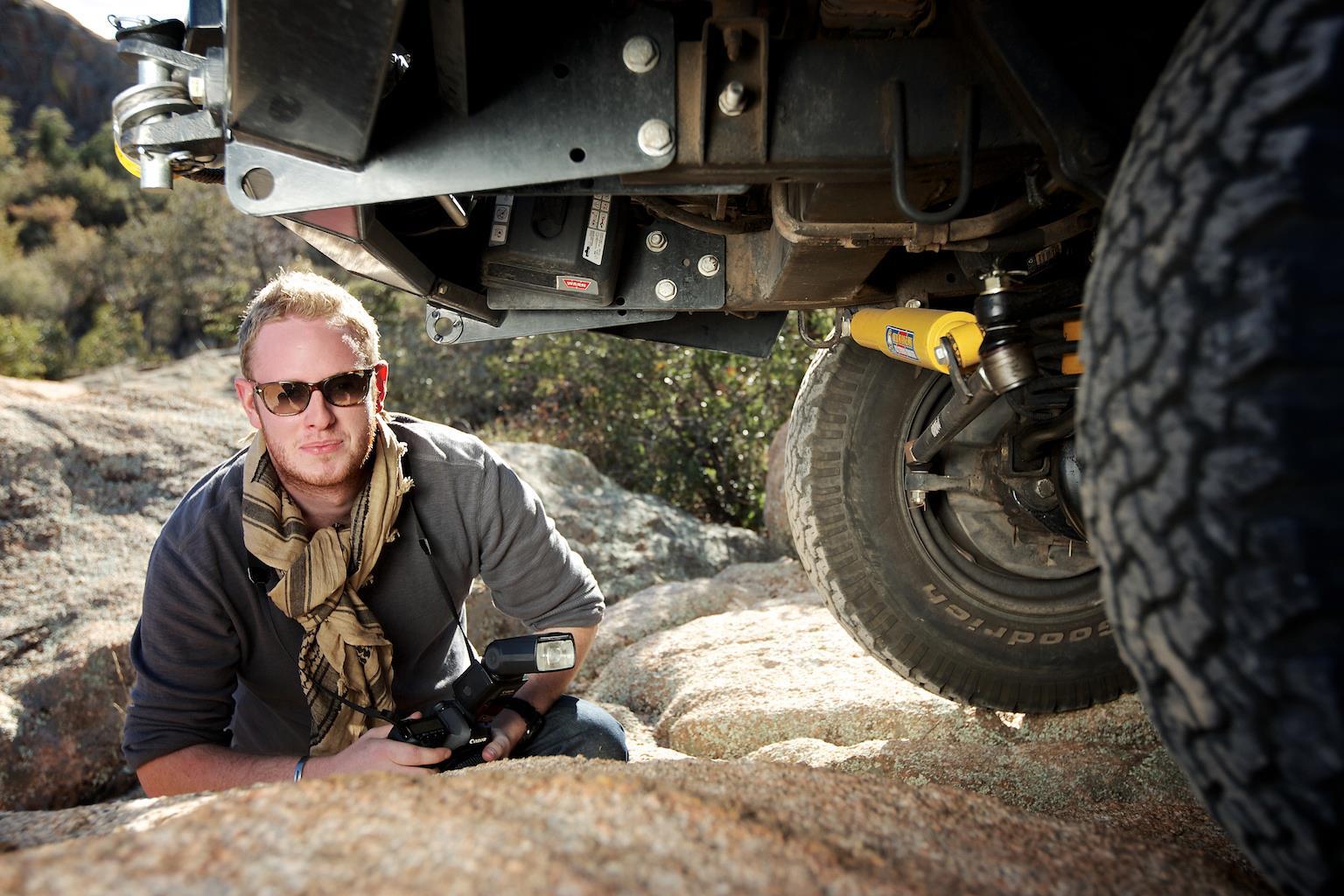
Matt Scott
Matt is a leading expert in automotive adventure. He has extensively explored the world’s most remote places by 4WD and is considered an industry authority on overland travel. He is the only American to ever become an editor of a major Australian 4WD publication and has over 15 years of competitive auto racing experience. @mattexplore
Tune in Apple Podcasts | Spotify | YouTube
Our No Compromise Clause: We do not accept advertorial content or allow advertising to influence our coverage, and our contributors are guaranteed editorial independence. Overland Collective may earn a small commission from affiliate links included in this article. We appreciate your support.
Transcript
#08 Are_Electric_Vehicles_the_Future_of_Overlanding
[00:00:00] Hello and welcome to the Overland Journal Podcast. I am your host, Scott Brady, and I am here with my co-host, Matt Scott. What are we gonna talk about today, Matt? We’re talking about electricity. We’re talking about the future of overlanding by default electric vehicles. I know there’s gonna be a lot of people that don’t want to hear that.
Well, I don’t think anybody really wants to hear it ’cause we wanna hear the clatter of diesels off into the future, but the change is happening, right? Yeah. And, and it’s gonna happen so much faster than you expect. Now I, I remember the first time I, I drove an electric car I was, I was actually, and this sounds relatively exotic and pretentious, but it was on the Portimao circuit in, in, in Portugal with the new Jaguar I-PACE.
And- They sent us out in the Jaguar F-Type little, you know, two-door sports car, purpose-built vehicle, and did some laps, and got, got, got some feedback on it. And it’s like, “Oh, wow. Well, this Jaguar’s nice.” And then they throw us in the electric car, which is [00:01:00] just a Jaguar I-PACE. It’s a crossover, relatively pedestrian-looking.
Right … attractive, but you didn’t expect much of it. And it was a hoot to drive. I mean, instant torque, people, is, is a huge thing. I want to say it had around a 300-mile range, which people for some reason, you know, they can have a, a, a, you know, a gas vehicle that has 175-mile range by the time they put their bumpers and winches and things on it, and that’s totally acceptable.
But 300 and, you know, 300 miles in an electric car is, is a no-go. But anyways, where I’m getting at this, with this is electric car is the future. It, it dawned on me right there. Um, the things they’re able to do with torque vectoring, where they can send the power, the things that they’re gonna be able to do with, you know, solid state batteries being structural components in the chassis, um, so you don’t have this big box just sitting somewhere taking up space.
Um- Even the way that torque just works with an electric motor is, is not only- It’s perfect for off-road … yeah, it’s perfect for off-road. And the, and the infinite control over that- Yeah … that you have, it, it… There’s no [00:02:00] turbo lag. There’s, there’s no weight. There’s nothing … you know, not building horsepower in a unique curve.
Uh, it’s all very linear, and especially on the torque side, and that provides a lot better driver control, I think. Yeah. And it’s just like any other disruptive technology. It was just this last week that Tesla became the most valuable automotive manufacturer in the United States. So these disruptions are coming whether we want them to or not.
Exactly. And, uh, I was just recently on the Infiniti 30th anniversary launch, and they were talking about future planning for vehicles, and they’ve got five new vehicles coming out over the next three years, and three of the five vehicles are electric. It has to be. I mean, you know, the internal combustion engine has really…
It should have hit its peak by now. I mean, we’re going on, what, over 100 years of, of the internal combustion engine in, in mass production. And, and they’re finally actually getting reliable. I mean, you look even 10, 15, 20 years ago with marks like Toyota, they s- they were still [00:03:00] having failures. I don’t know.
As an overlander, one of the things I look at is reliability and simplicity. Well, I don’t have to have a starter. I don’t have to have an alternator. I don’t… There, there’s so many- You don’t need a fuel pump. You don’t- There’s no fuel pump to fail. Yeah. And a lot of these components can be solid state now.
Certainly with the adoption of any new technology, there’s going to be a reliability curve, and there’s gonna be an adjustment on the part of the consumer. I remember when fuel injection even first started becoming popular- Yeah … for four-wheel drive vehicles, and there was a lot of pushback from- people that would say, “I can fix my carburetor out in the field.”
Mm-hmm. Well, it turns out now with a, with a new Toyota Tacoma, you never even think about the- Yeah, you- … fuel injection system because it always works. Maybe every once in a while you gotta change out a fuel pump or, or an injector goes bad, but that, again, that is very rare. So manufacturers have really learned that reliability is a key towards future sales, and it’s a key towards consumer impression towards their brand.
Yeah. So even when they [00:04:00] make electric vehicles, they’re gonna be very mindful of the fact that these things need to be reliable. I saw a Tesla Model 3 a few weeks ago in Bay of LA in Baja, so I’m just gonna go ahead and leave it there. It, it can be done. The future is happening now. It is. And, and didn’t you say that there was a, a trip maybe in a Volkswagen that’s already gone- Yeah, I wanna say-
halfway around the world … it was like a Volkswagen Passat or Jetta or something like that. It was definitely a European spec, spec vehicle. Yeah, that from, from recollection drove all the way from Amsterdam or somewhere in the Netherlands all the way to Sydney. That’s incredible. And the guy, it- again, if I remember correctly, unfortunately we couldn’t pull up the, pull up the story on it, but the guy just kinda traveled around and met people and charged his vehicle at people’s houses.
And I don’t know, I think that’s, that’s a huge part of travel is that, you know, that, that connection. You know, y- y- you- Right … you have to, you have to stop in cities, and you have to charge your car. You do. Um, you know, i- in the same way, but you have to get food, and you have to get groceries, and you have to get [00:05:00] all that kind of stuff when you’re traveling.
Um- And I’m thinking back, I think it was eight years ago that I did a trip with Brian McVickers and, and Austin Andrews. Yeah. And we went out with the Jeep J8, and we took along a Zero dual sport motorcycle, and it was certainly one of the first long distance electric motorcycle rides. We put baggage on the, on the bike, all the camping gear, everything that you needed to travel.
Yeah. And the only thing that we did was we brought the Jeep along to charge it every night, uh, because the, at that time, the battery capacities were much less, and they hadn’t really optimized the range. But I was shocked how we could get 45 to 50 miles off-road, uh, with a motorcycle like that, and it actually did really well.
The only thing that’s the most disconcerting on a motorcycle is you totally lose engine braking. So Yeah, and you don’t have a clutch- You gotta have really- … uh, on a lot of them … you gotta have really you gotta have really good brakes, really good brakes on the thing. So it’s, it’s, it’s important [00:06:00] to recognize that driving habits do change.
Yeah. Uh, and I think that left-foot braking becomes even more critical for the driver because of that on-demand torque. Yeah, I mean, I… Th- things are gonna be different, but things are supposed to be different. We’re supposed to, I don’t know, as Americans, we’re supposed to embrace change. We’re supposed to embrace progress.
And I, you know, I, I really hope that the overland community doesn’t just, you know, kind of stonewall the idea of electric cars. I mean, you know, there’s been a lot of positive mentions of Rivian. Um, I think they’re… They’ve really, they’ve really hit the nail on the head. I mean, do you know how many miles they’re claiming on a- 300 miles out of the vehicle.
And if you looked at, if you looked at the Overland Expo last year in Flagstaff when they had the vehicle on display, the response to it was overwhelmingly positive, and it kind of makes sense. Overlanders in general are… They like the idea of things that are new. They like the idea of exploration. Many of them tend to come from technology ’cause it facilitates [00:07:00] traveling- Yeah, yeah
and life on the road. So I was really impressed with the size of the crowd that developed around that vehicle- Oh, yeah … and the very positive communications that happened. Uh, uh, obviously, there’s a, there’s a fear behind the idea of running out of gas, and the reason why we don’t tend to run out of gas is that we can bring extra fuel along with us, and then the gas infrastructure around the country is massive.
Yes. Um, it’s extensive. So when you go a- across the Canning Stock Route in, in Australia, there’s only one place to refuel, and that’s about 1,100 kilometers into the trip. So that’s a very long distance to try to drive an electric vehicle. So for the current timeframe, it doesn’t… It’s not possible to do every form of overlanding- Yeah
with an electric vehicle. But if you think about North American overlanders in general, how long of a trip are they really doing between fuel stops? Yeah, yeah, that’s the thing is, is, is, you know, people are always driving to the max. I mean, if you’re driving, you know, i- [00:08:00] if you’re on an overland trip, which to me is, is, is also a cultural thing- Sure
you know, you’re supposed to be stopping. You’re supposed to be going on hikes. You’re supposed to be seeing things. If you’re, if you’re consistently driving 500 miles a day- What are you seeing? What’s the point? Not, not much. Not much. Like, it’s become popular to hate electric cars in America, and I don’t know why.
It’s popular to hate Tesla. Sure. Like, why is it popular to hate Tesla? The GM and Ford and c- you know, Chrysler products they’ve been giving you are, are so superior. No, they’re, they’re giving you the minimum for the most they can charge you. That’s right. All of them are. Yeah. All of them are. And, and yeah, I’m sure to an extent Tesla’s doing the same thing.
Um- And, and For- Ford is obviously recognizing electric vehicles. They’ve done some big investments into Rivian. Yeah. And we’re gonna see… And a- so is Amazon. So when you, when you end up with that kind of capital behind your, your new venture, it’s pretty exciting. I think it’s, I think it certainly has its place.
I think the biggest challenge for electric vehicles around overland [00:09:00] travel is when you like to go shorter distances off-road and you like to camp a lot. So a good example of that would be, like, in southern Utah if you were doing the, the route through Canyonlands and you were going through Beef Basin and all of that, that takes days to cross all of that.
Yeah. And it is a long enough distance that it would be difficult, uh, to charge the vehicle. So… And obviously solar is not anywhere near sufficient to ch- We like the idea of being able to put out- 3,000 watts worth of solar and Until you realize what 3,000 watts of solar- It is not enough … encompasses. It’s still not- You know, that’s a lot of space And it’s still not even possible to charge the vehicle properly off of that.
No, it is not. So you end up bringing along, the only real solution is you bring along a generator that consumes gasoline and you charge it that way. And that may be the way to do it on trips like that. That might be the solution around it, is that you have some form of a generator that you bring along.
But those are the only real scenarios where you end [00:10:00] up wanting to camp for multiple days. You’re, you’re using air conditioning, you’re charging components off of the vehicle, you’re running a fridge off of the vehicle- Yeah … which all those things are pulling electricity. Uh, and those are the scenarios where an electric vehicle becomes less ideal.
But the vast majority of overland routes, including the Mojave Road and everything else, can be done with an electric vehicle easily today. Yeah. Uh, but I’m, I’m, I’m not worried about today. This is, this is not a purchase that people are making today, right? Unless it’s you. What did you just buy last week?
Well, yeah, yeah. You know, I, I have a pre-order on one of those, uh… Well, I, yeah, I put $100 down on a Tesla Cybertruck, you know. I, uh, mainly just to piss people off. Like i- if you wanna, if you wanna piss off a baby boomer, buy a Tesla. If you look at the cost of, you know, the cost per kilowatt hour of, of, of battery storage, it, you know, it’s a, it’s a graph line that goes straight down.
It’s impressive. You showed that to me. Yeah. And there were years where the cost from just one year [00:11:00] to the next dropped as much as 23%. The last year being one of the smallest amount of drop, which makes sense. Once you start to distill down to its- Yeah … basic components, uh, and demand goes up for some of the raw materials, that will start to level off.
But to see, uh, a multi-fold reduction- Mm-hmm … in the cost of a battery that it takes to, to power these units, that’s, that’s very exciting. Yeah. I mean, I mean, that’s how technology works, right? I mean, I, I remember my first digital camera. I, I wanna say it was something about a dollar per megabyte for the little Sony memory stick, right?
Right. Being around kind of film people and, and, and really being into photography, everybody told me, “Oh, digital ph- it’s not going anywhere. It’s too expensive. It’s a niche thing.” Right. Like, okay, well, how do y- how do you feel now? You know, that criticism never comes back. But, uh, w- what’s 128 gigabytes of solid state cost now?
N- next to nothing. You get it in a thumb dr- Next to nothing … you get it in a thumb drive. Yeah, I [00:12:00] mean, what’s a terabyte cost? Yeah. You know, the, the same thing- A couple hundred bucks … the same thing will, can and will happen. May not be as extreme, but you can’t tell what the future is gonna unfold. And the fact that we already have vehicles at, you know, we’re at, like, push rod, you know, straight eight technology in terms of what electricity can do.
Right. Um, you know, it’s, it’s, it’s gonna get better. It- It’s gonna get cooler. And, but they already meet- And rapidly, I think … they already meet demands. I mean, most people drive 40 miles a day or less So when people tell me that, you know, “Oh, well, 300 miles or 350 miles doesn’t work for me,” well, you’re just being- people generally are just being obtuse.
And I think it comes back to your point that you’ve made in previous podcasts, which is the difference between want and need. Yeah. I think people need electric vehicles oftentimes, and I think that the current range or the current mileage of an electric vehicle meets all of their current needs, even their camping and backcountry travel needs.
What they want is this [00:13:00] idea that they could go travel across the Simpson Desert, or they could cross the Sahara in their vehicle. Yeah. And that… And I think it’s part of our identity, is this idea of being independent and this idea of being able to leave at a moment’s notice and go on a long adventure.
Yeah. I think that that’s still very much a part of the ethos of overlanding. It’s this being prepared idea and this, this idea of, of sta- sticking with the current technology, ’cause it does afford the ability to do something like cross the Simpson Desert. I think that appeals to a lot of people. I know people that have crossed the Simpson Desert in an EV.
Yeah. There you go. Literally. W- It had a lot of solar panels on it. It was a little Jimny. Um, Denny French, I wanna say. That’s awesome. Um, the Piranha, Piranha guy. Yeah. Um- But isn’t that exciting, though- Yeah, like- … that, that kind of thing is coming along? And I, I think even more important than that is that as these, as this technology continues to develop and as people continue to consume it, consumer demand will drive even more innovation.
It’ll [00:14:00] rapidly change the way that we see an electric vehicle, and you’re gonna have something as capable that we see as the Rivian today, but imagine something many times more capable that has a, a fully adjustable suspension that isn’t dependent upon CV angles. Mm-hmm. And you can gain 10 inches of additional ground clearance.
I mean, it kind of blows the mind to consider what’s possible- Yeah … once you put the wheels, uh, the motors at the wheels, or you put the motors where they’re not dependent upon CV joints. And you have one moving component then. Yeah. It becomes- I mean, it might be more than that, really … the point being- It’s much, it’s much more simple- Yeah
for sure. I mean, the, the, the Cybertruck, 35-inch tires is what they’re claiming. And you have a CEO that’s actually listening to people. Right. You know? Uh, some people were tweeting at, at, at Musk, “Oh, is the, is the camping thing that you’re showing in the back actually gonna be a- is it gonna happen?” And he’s like, “Yeah, sure.”
But he actually has a, he has a track record of following up on that kind of stuff. Eventually, yeah. You know- If the guy can make flamethrowers, he can make camping stuff, yeah. Yeah, don’t, don’t bet [00:15:00] against, don’t bet against Musk. Yeah. ‘Cause if you, if you’re betting against Tesla, I think what people don’t realize is you’re betting against American innovation.
Right. It’s the only car company in the world right now that is pushing boundaries. But for whatever reason, people are believing the, uh, you know, the, the lobbyist stuff, the, the lobbyist opinion that wants you to stick to, you know, internal combustion engines, wants you to stick to buying crossovers. And, uh, yeah, I, I don’t know.
But- Yeah, that’s absolutely happening. Although we’re seeing that shift occurring. The, the success of the current model Teslas as it drove the CEO of BMW out of his job- Yeah, exactly … because he did not respond quickly enough to the demand that consumers have for electric vehicles. If you think about it, so much of our life is related tech- to technology now.
Isn’t it cool that our vehicle can now be that extension of technology? Yeah. And certainly some of us either want to be Luddites or we enjoy, uh, escaping from technology, and maybe, maybe you’ll always have your diesel Land Cruiser- Yeah … [00:16:00] so that you have a way- It doesn’t even have a computer. Yeah, exactly.
So I, I think that that’s a great example of where that older technology will never go away. The horse didn’t go away with the internal combustion engine. There’ll always be cool old Land Cruisers that you can find diesel for. Totally. Um, but I think that for daily duties and for shorter trips, these electric vehicles are really compelling.
Well, maybe let’s look at some of the models that are out now. What, what do you think about the Rivian? What’s your thoughts on that? I, I love the idea of the Rivian, but Rivian, to me, is a technology company. They’re, they’re, they’re a VC-backed, you know, IP play. Until they make a, an actual vehicle, until they start producing vehicles that people can actually buy.
You know, why I got so excited about the Tesla is Tesla’s a car company that’s coming out with a new model. They’ve figured out how to make cars. They’ve gone through those growing pains. You know, the Jaguar I-PACE. A lot of pains. A lot of pain. What happens when Ford makes an electric pickup truck? I mean, Ford knows how to make a pickup truck.
Chevy knows how to make a pickup truck. A lot of these components, the batteries, you know, they, they come from [00:17:00] LG or they come from Panasonic. I mean, you know, Tesla likes to claim they have their own battery factory. Well, when you look at who’s actually s- you know, financing that, it’s Panasonic. Um, I wanna say it’s American AC, and 100% don’t quote me on that, is the largest electric motor manufacturer.
It’s the same thing that happens with most car companies is they design a package that accepts components. So yeah, so with Rivian, 100% all for it. I think that they’re really listening to- They are … to the overland community, and, and I think that that’s great. You know, they’re outfitting their vehicles with the right products.
Bill Burke is training most of their staff a- and their engineers. I used to live in Fruita where Bill lives, um, and every week, you know, they’re sending people to get proper four-wheel drive training. That’s something that Tesla’s not doing. That’s something that nobody else is doing. They understand w- how the vehicle needs to respond to a certain driver input.
Yeah. I think that that’s really valuable. And you’re probably right. Wouldn’t it, wouldn’t it be interesting, and I think th- this’ll probably be the outcome, is that Rivian develops such a compelling vehicle and they have so much compelling technology behind it- Yeah … that they get acquired by a [00:18:00] much larger OEM, and th- and they e- never end up actually making a single vehicle.
That would be, that would be really interesting. It’s possible, and, and, and that isn’t, that isn’t a bad thing, ’cause Rivian is driving- No, it’s not … Rivian is driving innovation right now. Seeing their camping system slide out of that small cubby in the, in the truck- Totally … was very cool. Totally. Um- Um, seeing the, this low center of gravity is extremely cool.
Seeing them at, at Overland Expo with roof tents and roof racks, all of that is, is very, very interesting. I frequently hear, “Oh, I hate electric cars, except for Rivian.” Yeah. And that’s cool. Yeah. Like, that’s what’s so great about Rivian, but I don’t know, like, Ford has a larger, a large stake in them. They do.
Why would Ford- So does Amazon. Yeah. Yeah, I mean, the Amazon thing is the one to watch because, you know, Jeff Bezos is another guy like, like Musk. Don’t bet against him. Yeah. Generally, don’t bet against people that have, you know- That many squillions … that many, that many squillions. Yeah, Rivian, I think, is really cool.
I- I think it’s one of the more handsome models. It’s beautiful. I, I really, I personally find it s- it’s attractive, and it, and it [00:19:00] also looks rugged. It looks like an- off-road vehicle, but it also looks very modern at the same time, and I think that that was difficult to pull off. A lot of the electric vehicles, like the new, the new Audi, what’s that one called?
The AI Trail. It, it- Oh, their, their concept car … their concept vehicle, it looks like something that just came off the moon. Which, which I like. I mean- I get it. I get it … like, dude, why, why are people criticizing… Th- that, that’s what I just don’t understand about electric cars is why are they criticizing visionary design?
Like, I mean- ‘Cause you’re right, all the, all of the constraints change. You don’t need a radi- Aren’t they happy with Buicks? You don’t need a radiator at the front of it or at the back of it, right? Yeah, it’s not like a 4Runner or a Tacoma is an inherently beautiful or cool car. It’s just vehicle that suits the purpose- Right
and, and, and has to fit the packaging of the internal combustion engine. And maybe that’s the thing that changes. Maybe, maybe for me is I want an electric vehicle that captures this visual representation of adventure, which has been set by the past. Yeah. Whereas if you look at something like this Audi, it, [00:20:00] it’s really maybe the future of what adv- adventure looks like.
Well, Mercedes did just say they’re gonna make an electric G-Wagon, Scott, so there you go. Perfect. Perfect. So- Yeah, there’s, there’s, there’s a lot of interesting ones. I mean, the, one of the ones that we’ve seen for a long time, and, and I hope that they are able to pull it off, is Bollinger. Uh, they’ve been around now for five or six years actively pursuing this project, and they, they do have functional prototypes now.
They have a lot of interesting technology. It looks, it looks a lot like a Defender. It looks a lot like a Defender 130 and a 110, uh, very squared off. Looks a lot like a car that was designed with an angle grinder. Yeah, it does. It does, and, and I’m just afraid that it took too long to come to market. Yeah, I mean, the idea of a very boxy, bed liner-coated electric car is cool, but again, five years Or give or take, right, that they’ve been out, and you can still reserve one, but you can’t actually buy one.
Right. So, you know. And I can see their passion [00:21:00] in the vehicle. I’ve talked with some of the principals and met them at different events and had some email exchanges, and you can tell how passionate they are about their product and how much they want this thing to come to market. But with the release of the Cybertruck, it already has better technology.
Yeah. The Rivian, the Rivian conceptually has better technology. Um, I think the advantage of the, of the Bollinger’s is the ultimate simplicity and the, the massive payload. So maybe it, maybe it’ll end up having some good commercial applications with a few, a few- Yeah, if, if they actually get certified at that, right?
Um, that’s the thing, is this is essentially vaporware. No disrespect to Bollinger, but bring your product to market and I will treat it as a, as an actual car. Sure. Great, great specifications we’re looking at right now. 614 horsepower. It has the same- 668 foot-pounds of torque. Right. I mean, that’s- It was the 5,000 pound payload that shocked me.
Yeah. But- That’s an incredible number But- That’s Dodge Ram one ton territory. That’s dually. Yeah. Yeah, that’s, that’s, that’s awesome. You know, but then you’re looking at a 200-mile range. [00:22:00] Sure. Um, a- again, I support innovation, I support small business. I, I wanna see these guys succeed, but yeah, I, I don’t know.
Yeah, their moment in the sun, it’s, it’s difficult. And, and because this is a rapidly evolving technology space, we’re gonna see this kind of leapfrogging occur, where there are early adopters and there’s early innovators, and maybe some of their ideas are reflected in new products. But if you’re not up and running now, and you’re not selling vehicles, and you’re not gaining market share like Tesla did, I think you’re in a lot of trouble.
I mean, so here’s a question for you, and this is a little bit off the cuff, but what happens to all of these companies, a- and I’m gonna exclude Tesla from this ’cause they’re established- What happens when Ford and Chevy and, you know, Ram just put an electric drivetrain in their vehicles? Well, I suspect that what will happen that, like we’ve seen with Rivian, is Ford has a stake in Rivian.
Yeah. So Ford is helping to incubate these ideas and bring them to market in a very safe way so that Rivian, for example, can fail, and they can make mistakes, and they can have missteps, and they can have delayed deliveries, and it doesn’t reflect negatively [00:23:00] on Ford. Yeah. That’s smart. Uh, but Ford has such a significant…
This is just purely my opinion. Ford has such a significant stake in them that if they are successful, and they do build a product that’s viable, and they do get enough orders, then Ford’s just gonna sweep in and make- Yeah … that full acquisition, and then you’ll see it reflected in their product lines. Uh, they certainly need a electric Ford F-150, I think.
If you wanna keep it as being the best-selling truck in America, you better start thinking today about what that electric Ford F-150 looks like. Exactly. Exactly. And here’s a contrary to it, though. You see GM is doubling down on diesel, which is kind of interesting. You can see that their new Suburbans and Tahoes and, uh, they’ve got these AT4 high clearance off-road capable SUVs that have small displacement turbo diesels in them, and they’re getting really good gas mileage in them, out of them.
That’s really interesting. They’re almost bridging the gap successfully- Yeah … between the two. But what you’ve gotta hope is that GM is also innovating electric at the same time. Yeah. I mean, they, they have to, right? I mean- They have to. Let’s [00:24:00] change the, let’s change the topic to, I guess, more to, more to traveling with these things.
Um, I don’t know how publicly known this is. I know there’s been a lot of, a lot of websites, but Charlie Boorman and Ewan McGregor of Long Way Up. Well, this is called Long Way Up. Yep. They’ve done Long Way Down, and they’ve done Long Way Round. Um, I wanna say they were on Harley-Davidson Livewires.
Livewires, that’s correct. Um- And they, and I believe they had a Rivian with them. I believe they had a one or two Rivians with them- Correct … which is cool. And, you know, I saw some, some of the interviews with them that said they were kinda, you know, that, yeah, they did have a, you know- Mm … a F-150 or, or some kind of vehicle that did for emergencies.
Have the ability to charge these bikes. I think it’s cool that people like this are pushing the boundaries. I mean, think of the way they changed the adventure motorcycling- Big time … landscape. We need people like this to put the idea in people’s heads that you can do this. I mean, you- you’re, y- you’re way more experienced in touring on a motorcycle than I am.
I mean, how many miles do you actually ride a day? Not that much. You think you’re gonna ride a [00:25:00] lot more than you will because the body, when you- especially when you’re riding dynamically, off-road in particular- Yeah … it, it’s, it’s very physical. It’s much different than driving a four-wheel drive. So since I’m not a Baja racer, I don’t have the conditioning level of a Baja racer.
Uh, off-road in a day I’m looking at about 150 to, uh, to 200 miles. When I’m riding in developing countries because traffic is slower and the roads are less developed and you’re being far more cautious as a rider, I’m still barely getting 150 to 250 miles a day- Yeah … in on the pavement. So the, the distances really are not that far when you’re on a motorcycle.
Your, your butt can only take so much- Yeah. … in that saddle. It’s the truth of it. And, and also whoever said that travel was a race, it’s not. There’s people who do race Overland, which is fine, and I think it’s, it can be an inspiration. You can learn a lot from it, and people do that as a, uh, as a sport or they do it a- as a trick.
And I think that when it comes to, to motorcycle travel, you really aren’t traveling more than about 150 to 250 miles a day. I certainly wouldn’t want to. [00:26:00] No. But- And, and not on a, on a motorcycle with the ergonomics of a Livewire, which is not a touring bike. So that would be even more brutal- Mm … to ride for really long distances.
An upright, very comfortable BMW with a lot of wind protection is very, very different- Yeah … from what the Livewire is. But I think it’s extremely cool that they did it. I, uh, huge props to them, and to your point, they did re- redefine the adventure motorfi- motorcycling space and made it more popular. I think telling this story to a huge audience on network television or on high distribution cable is gonna get people more excited about this.
Yeah, I mean, I, I don’t know. I think, I think electric motorcycles are, are incredibly exciting. I was, I was really into the Alta, uh, Enduros and motocross- Sure … bikes before they had financial problems, however that went down. But, you know, you’re starting to see electric motorcycles in competition now. KTM and Husqvarna are starting off kinda with the youth models.
You know, the what would normally be a 50 or 65cc bike are now going electric, and you think like there’s no, [00:27:00] there’s no motor to, you know, burn the kid. There’s no hot exhaust or something. Sure. You’re starting at that young generation, and these guys are gonna, they’re gonna work their way up. I mean, when I…
People my age probably would’ve started on two strokes and then went to four strokes, and that was a big progression, and you still see that two-stroke/four-stroke rivalry. Are we gonna see four-stroke and electric rivalry? For sure. I mean, there’s gonna be a- The new Cake motorcycle is beautiful. We got a couple of the UBCO two wheel drive bikes- Yeah, yeah
here at the office, and they were super fun to ride. I mean, and they had plenty of capacity to load them up ’cause they were designed to be used on farms. Yeah. And so they, it has, the rear wheel has a motor, and the front wheel has a motor, and they’re surprisingly capable, par- particularly in snow and mud and wet conditions where you really benefit from a front wheel drive motorcycle con- you know, configuration.
And I know that they’ve got some new developments coming out that’s gonna increase the power of the rear motor, which I think will make a huge difference. But they were really fun, and they were easy for people to ride. I, I put my, my dad on [00:28:00] one, and within minutes- Yeah … he was grinning from ear to ear.
Never ridden a motorcycle in his life. Within minutes, he was grinning from ear to ear. It, it’s- It was great … it’s cool. I mean, electric can be fun. Um, you know, I feel like people get caught up in the minutia of being so serious. Electric’s fun, man. It, it is, it is actually really fun. Um, you know, and it, it, it, I guess, does shame me a little bit.
You know, Scott, we, we obviously, we both travel internationally a lot. We’re, we’re behind in America, you know? Yeah. I, I know that this is a global podcast, this is Overland Journal, but a lot of our listeners are in North America. And, like, we’re, not only in terms of opinion, but in terms of execution, we are way behind on, on this, this new wave of technology.
And- Right … you know, I was in China maybe a year or so ago, and they have electric garbage trucks, they have electric buses. Everybody’s running around on little electric bicycles and scooters. And I, I wonder how much of that is the car culture that we have. I suspect that some of that is, because we have driven so much technology innovation in other areas.
I think that because it is a car culture, if you just think about us two and the number of cars that we’ve owned, and the- Yeah … and the obscurity [00:29:00] of them, we’re attracted to that. Either that idea of, like, you had a, a Corvette, a very fast car. You’ve owned sports cars. I guess that’s public now. Thanks, Scott.
Yeah. You know, uh- But, but- I’ve had a bunch of stuff … right. And those kinds of vehicles are exciting, and I think that that’s part of the American culture. It’s part of the American innovation culture. It’s part of the American pop culture, is cars. Yeah. And until, as soon as they start to make electric vehicles exciting, which is what Tesla has done- Yeah
make them super, super fast So yeah, so think, think about that. So yeah, I, I had a Corvette Z06 for a, a hot minute. LT4 supercharged, 650 horsepower, 650 foot-pounds of torque. Tires in the back as wide as, I don’t know, a desk. Right. But guess what’s faster than that? With four doors, air conditioning, a- autonomous driving capability.
Like a Tesla Model S is already faster. Like- Yeah, they’re insane … the Tesla Cybertruck is faster zero to 60. Yeah, it’s insane. Like, the internal combustion engine is, is outdated. There’s a [00:30:00] reason why Porsche is doing the 918 hybrid. It has electric motors. Like, that’s the only way that they could actually physically get the vehicle to go faster.
And we’re also not saying, I guess kind of to wrap the, this whole concept up, we’re not saying that electric vehicle is the only way in the future. No. And we’re not saying that someone who drives a internal combustion diesel Land Cruiser 20 years from now is somehow a Luddite. I think that they’ll still have their place.
I think it’s more about adopting the excitement around new technology. Yeah. Because what that allows for us to do then is, is hopefully to go explore more. Yeah. It allows us to use the same vehicle every day that we use for the backcountry because it has such a breadth of capability, uh, which is what a lot of this new i- innovation and technology will do.
I just recently got a, an iPhone Pro, 11 Pro Max, and it has three cameras on it. It has far more computing power than a, a computer of even a decade or so ago. Yeah. A, a lot more solid-state memory, and it’s [00:31:00] amazing the amount of work that I can do on that device. It’s amazing the amount of imagery and content that I can capture and share on that device, which didn’t even exist- Yeah, that phone’s-
15 years ago … game changer. It’s a game changer. That wide-angle lens- It’s insane … the ability to change perspective is unreal. I used to always bring a r- a wide-angle lens with me. I don’t bring a wide-angle lens anymore because it was only for very specific applic- like the inside of a vehicle. Oh, yeah.
Inside of a car, inside of a tent. I can now take all of those photos with, with the phone. So I, I think it, electric, electric vehicles are exciting. I cannot wait to see what Rivian comes out with next- I’m, I’m, I’m all for it … what Tesla comes out with next. I’m all for it. I mean, and again, you know- You, you’re totally right.
This doesn’t have to be for everybody. Nobody’s trying to shove this down your throat. Nobody’s saying you have to have an electric car. I just think it’s important to keep an open mind. It is. You know, one of the, one of the few places America is really excelling right now is electric cars, and- Well, we need that.
We need it. We need that innovation. We need it because the car companies that you’re defending are send- you know, they’re, they’re sending the jobs [00:32:00] overseas. So the, the same people that are seem to be hating electric cars and are waving the American flag are supporting companies that… I mean, do they really care?
You know- Yeah … you have Tesla that’s making cars in America. Making cars in California. That’s pretty shocking. Yeah. Like, that’s awesome. That’s, yeah. But you can… I don’t know. I mean, it’s an interesting world. It, and it’s an exciting time, and there’s been a lot of innovation in the overland space, and this is just one of them.
And we wanna touch on these topics in the future. So look for more technology discussions from the Overland Journal podcast as we continue down the trail. Thanks for listening. See you, guys.