

Overland Journal Podcast host Scott Brady interviews overlander and author Graeme Bell of A2A Expedition, speaking from South Africa while sheltered in place and preparing for a new journey. Bell describes traveling long-term with his wife Luisa and their two children, how they homeschool using an American syllabus, and how constant family togetherness builds strong relationships and communication. He recounts choosing and building their Land Rover Defender 130 TD5 (“Mafuta”), its reliability across 25,000-kilometer Africa routes and the Americas, key failures like a broken clutch in Morocco, and a “Little Black Box” engine monitor that helped prevent overheating. Bell highlights converting the truck into a hard-side pop-top camper as a major quality-of-life upgrade, discusses cautious hitchhiking, argues overlanding should prioritize the journey over gear, explains living on about $2,000/month through minimalism and writing, outlines his books, and shares future plans to drive Cape Town to Vladivostok.
Overland Journal Podcast Episode #17
The Overland Journal Podcast is brought to you this week by Overland Journal Magazine
New to Overland Journal and want to grab a subscription! Visit Overland Journal and enter code: overlandpodcast at checkout for 20% off. We thank you for being a subscriber.
Guest Bio:
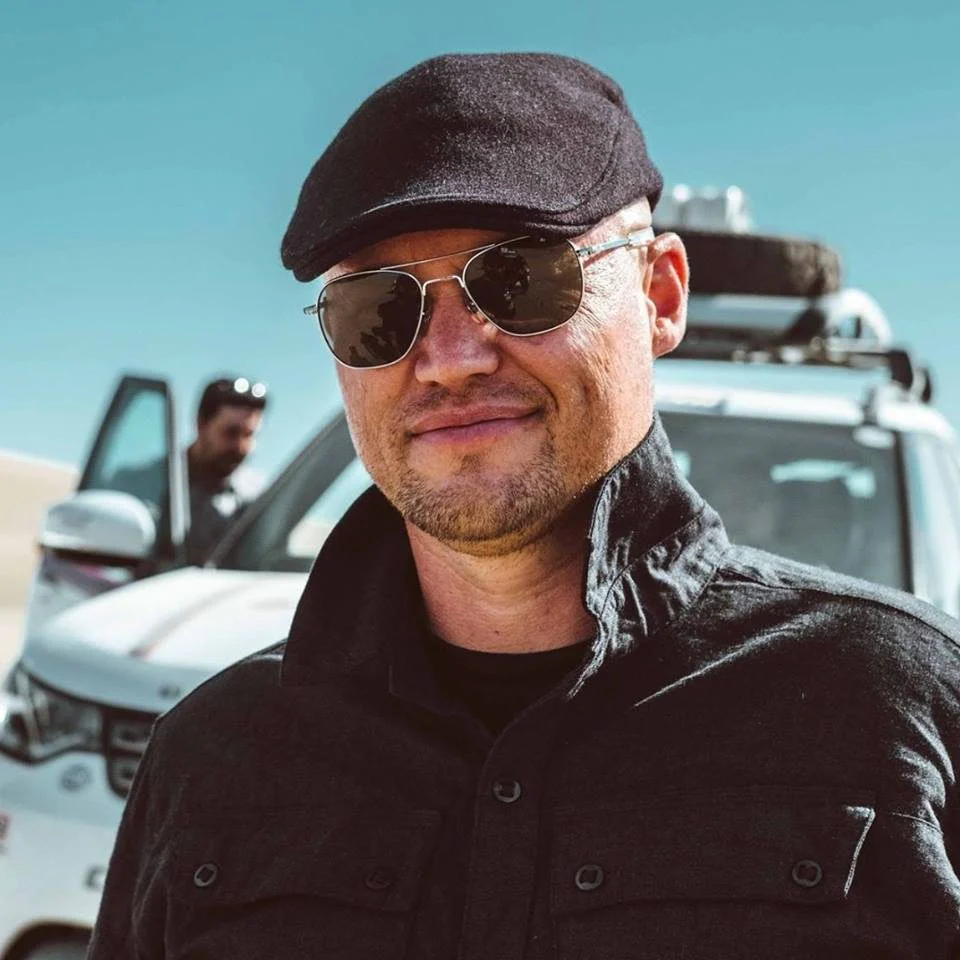
Graeme Bell and his family are the faces behind A2A Expedition, a journey that has taken them across continents, living out of their Land Rover Defender TD5. Their adventures span from the Americas to the vast reaches of Africa, all while sharing unforgettable experiences and learning from the diverse cultures they encounter.
A Family Affair: Experiencing the World Together
The Bells’ overlanding journey is as much about family as it is about exploration. Graeme credits his wife, Louisa, and their children, Keelan and Jessica, as integral parts of their travel lifestyle. He emphasizes the unique educational opportunities this lifestyle provides, where his children have grown up with the world as their classroom. Through their travels, they’ve learned languages, experienced diverse cultures, and developed strong family bonds.
The Philosophy: Adventure and Minimalism
For the Bells, overlanding is not just about reaching the next destination. It’s about embracing minimalism and experiencing life with less. Graeme talks candidly about how this lifestyle is a choice, one that comes with sacrifices but is filled with rewards beyond material possessions. Living on the road requires adaptability, resourcefulness, and a commitment to experiencing life to the fullest.
The Vehicle and the Journey: Choosing the Defender TD5
Graeme shares the unique story of how they chose their Land Rover Defender TD5, affectionately named Mafuta. Their vehicle is more than just a mode of transport; it’s their home and a symbol of the lifestyle they’ve embraced. Graeme discusses the modifications they’ve made to accommodate their long-term travel, including converting it into a hard-side camper to improve comfort and livability.
Challenges on the Road: Lessons from the Journey
The conversation delves into the inevitable challenges that come with overlanding. From unexpected breakdowns in remote locations to navigating cultural differences, Graeme provides insights into how they handle adversity. He shares a particularly memorable experience in the Republic of Congo, turning a breakdown into a testament to their family’s strength and cooperation.
Advice for Aspiring Overlanders
For those inspired by the Bells’ journey, Graeme offers valuable advice: find your unique style of travel. Overlanding is a personal experience, and each family or individual must discover what works best for them, whether it’s remote wilderness travel or cultural exploration in new countries.
Conclusion: The Journey Continues
Graeme Bell’s story is a profound reminder of the joys and challenges of living life on the road. It’s a testament to how overlanding can deepen family bonds, offer unimaginable experiences, and teach valuable life lessons about resilience, adaptability, and minimalism.
The Bells’ adventures are far from over. With aspirations to tackle paths from Cape Town to Vladivostok, their journey continues to inspire overlanders worldwide. To follow their ongoing adventures, you can visit their website at A2A Expedition or follow them on social media.
Scott Brady
Scott Brady is an adventurer, author, and publisher, and the first person in history to cross all seven continents. Brady is executive publisher of the Overland Collective, home to Overland Journal, the Overland Journal Podcast, and expeditionportal.com—the world’s largest vehicle-dependent adventure community. Scott wrote Overlanding 101 (Simon & Schuster) and is currently riding around the world on his BMW GS. He also led Expeditions 7, the first expedition to drive the same vehicle on all seven continents. Brady’s polar crossings include Antarctica and a south–north crossing of the Greenland ice sheet. Scott is a fellow of the Explorers Club and lives in Prescott, Arizona.
Tune in Apple Podcasts | Spotify | YouTube
Our No Compromise Clause: We do not accept advertorial content or allow advertising to influence our coverage, and our contributors are guaranteed editorial independence. Overland Collective may earn a small commission from affiliate links included in this article. We appreciate your support.
#17 A2A Expedition’s Graeme Bell on Family Overlanding, the Defender TD5, and Traveling the World Long-Term
Scott Brady: [00:00:00] Hello and welcome to the Overland Journal Podcast. I am your host, Scott Brady. My co-host Matt Scott is not available today for this interview because as all of us, we are- we’re dealing with challenges and opportunities that are coming from being sheltered in place. But I have a distinguished guest today and, and I say that personally because Graeme Bell and his wife Luisa and their family, uh, they have been an inspiration to me in their travels.
They run a website, A2A Expedition. It’s also the kind of the name of their journey, and I have watched them for the last six or seven years as they have traveled throughout the Americas and then ultimately traveling all the way down the length of Africa. For us as Overland Journal, the people that we associate with the publication, I believe is critical to our audience.
It’s, it’s a service that we provide to our reader, and having someone that is as [00:01:00] entertaining a writer as Graeme is, plus his depth of experience and genuine knowledge around the subject, uh, is very rare. So we try to, as much as possible, surround ourselves with journalists and travelers that have that experience that they can share from a genuine place of knowledge, and I’m, I’m really proud to have Graeme on the, on the call today.
Thank you for being with us.
Graeme: Uh, thank you, uh, so much for having me, Scott. It’s really an honor. I appreciate it.
Scott Brady: Well, and, and tell m- tell us where you are right now in the world.
Graeme: Uh, we are in South Africa. We’re preparing for our next, uh, big journey. And, uh, yeah, you know, the troubles came along, so we had to find our good, ourselves a, a, a good situation.
So we found ourselves a little place in the forest, and we’re just, yeah, waiting it all out.
Scott Brady: Yeah, we were, we were actually trying to do this podcast together in person in South Africa. It just so happened that your journey, your trip north on, on the eastern side of Africa was gonna [00:02:00] correspond with a trip that I had planned up to either Zambia or possibly even ending in Kenya, and we were gonna try to, try to connect along the way and have the podcast there, but we’re gonna take advantage of technology- Maybe we still can.
Yeah, I know. I, I hope we, we still can as well because I do plan on getting back to Africa as soon as, as soon as possible to, to do that trip. Yeah. And tell me a little bit about your family. Tell me a little bit about your wife and your kids and, and how long you guys have been on the road.
Graeme: All right. So my wife, uh, Louisa, she’s the Ginger Ninja.
She’s the driving force behind everything. We all fear her. There’s my son Keelan, who is now 20, and my daughter Jessica, who is 15. Uh, when we started traveling, they were… She was seven years old and he was 12, and they’ve, uh, grown up, uh, traveling the world in a, living in a Land Rover. So they, they’re pretty tough kids, but they, they’re super sweet.
They’re great hearts, [00:03:00] really wonderful people. I love my family very much.
Scott Brady: Uh, it, it seems like such a blessing and, and travel can be such a blessing for families and for children in particular because they’re not just hearing about a place like Morocco in a textbook or from a teacher. They’re actu- Your kids are actually experiencing Morocco.
They know where Casablanca is on a map because they’ve been there, and that’s one of the questions that I- Yeah … that’s one of the questions that I had for you is, is how do you engage your kids in the travel experience and educate them as they’re going around the globe?
Graeme: It’s an interesting question because, you know, for many people, they look at our lifestyle and they, they think it’s, uh, it’s difficult to describe what, how other people feel.
But, um, what we do seems like a, a permanent adventure and it’s so exciting and, and so amazing. But the kids have been doing it for so long that it’s just become a way of life. For them, crossing a border and going to a new country is, it’s, [00:04:00] it’s like, uh, normal kids going on a school outing. You know? It’s, it’s- I’m not saying they don’t love it and they don’t enjoy it, but it, it’s not, it’s not exceptional to them anymore.
And to me, that’s a fantastic thing because the world is their oyster. It, it really is. Uh, they’ve met so many different people from different cultures. They’ve been to five continents. Um, they can communicate in a bunch of languages. It’s just, I think, been the most amazing experience that we could give our children and, and ourselves because we got to spend almost every day together through their childhood.
Uh, we got to learn together, grow together. We know how to communicate with each other. Um, and, uh, we’re learning as they learn and, and we teach them and they teach us. It, it’s pretty amazing. Uh, from a textbook academic point of view, they do the American, uh, syllabus. My son has just, uh, graduated. He, he finished his, uh, his studies, his high school, and he got an average of, what, [00:05:00] 75, 76%.
Um, and we’re now looking at his future, where he’s gonna go study maybe in Norway, maybe in Germany, but we’ll see how it goes. And my daughter is fighting mathematics with her heart and soul. Um- I did that … but luckily, luckily… Yeah, me too. But she, she’s really, really good at, um, at, at, uh, sh- working with, with people and working with animals, and her English comprehension is fantastic, and she has a great vocabulary, and she’s got a huge heart.
And what we try and do is, is work to our children’s strengths.
Scott Brady: It’s very, very- Now, what a, what a beautiful experience, and if you think about it, it’s only been in very recent history that families haven’t done exactly what you guys do. Y- if you think about families even 60 to 100 years ago, they spent so much more time together.
Um, they may have had a farm or they may have worked. Yeah. Um, and, and they, everybody grew up together, everybody worked together, [00:06:00] everybody learned from each other. And I believe that what you’re doing is giving, as parents, it’s giving you the opportunity to genuinely experience your childrens growing up, and then for your kids, they’re able to genuinely know and understand their parents.
And I believe that so few- Yeah … so few people in the modern world have that opportunity to have that depth of connection with their kids, because we can all be so- Yeah … we can all be so busy, and we all work so hard to make ourselves even busier that it’s, it’s amazing that we have- Agreed … that we have connections at all because of, of how much we have to work.
Graeme: Yeah. Well, that’s the thing is that you hit the nail on the head there. It’s this urbanization that’s been in the last 100 years. Uh, before that, people lived pretty much, um, in isolation, small towns, small farms, plots. Uh, they did their thing. They were agricultural and families were together. Um, they spent most of their [00:07:00] days together and they worked together.
And this is what we do. Everyone has their role in the, in the, in the, the family. Uh, we all are busy. We take care of each other and everyone pulls their weight. And that’s so important, I think, not only in terms of us getting along as a family, but also for the children’s future that they learn these very basic but very important lessons about how to live a good life and how to have good, solid relationships.
Uh, there’s nothing temporary about our relationships. We’re very strong together. We’re very solid together. Um, and that can only be good for them, you know, going into the future.
Scott Brady: Yeah, no, no question. Yeah, it’s such an inspiration what, what you guys have done with your kids. I remember being, uh, I think in Belize and I came across a, a French family and, and I actually don’t remember how many kids they had, but they started coming out- Yeah
they started coming out of this RV and, uh, there was many, many, again, an entire gaggle of children. And talking with- [00:08:00] Yeah … talking with the wife a little bit about it, she said, “I didn’t want my kids to grow up as strangers.” She says, “I wanted them to all-” Yeah … “know each other and to know us.” And I thought that that was really- Yeah
beautiful and so different in today’s time.
Graeme: The French are really good at traveling as families. They don’t tend to do it long term. Uh, I mean, when obviously when I talk about long term, I talk about, you know, almost decades. Um, but, and that, they’re so well-behaved, those kids.
Scott Brady: Yeah.
Graeme: They got a very good diet and they, they, you know, they, they help to set everything up and they feed each other and the older takes one of the, takes care of the younger and, and I, I was astonished when I first came across these French families and, uh, it’s really, it’s a good example for us.
You know, there’s, there’s little bits of every culture that you can take to improve yourself. Um, and that’s, yeah, one thing we learned from the French
Scott Brady: Yeah, no, I agree, and I, yeah, I’ve learned so much from different cultures, and mostly how bad I am at so many things. Um, so that’s why it’s nice- … that’s why it’s [00:09:00] nice to s- to, to run across people as we travel because then we recognize, like, that’s a better way to live, whereas when we’re isolated- Yeah
when we’re isolated within our own culture… And it’s not to say that any culture is bad. E- obviously, growing up as an American, there’s many things that I’m proud of, but there’s also things that I have learned in my travels that, oh, maybe I wanna live my life a little bit different than the norm within my- Yeah
within my own country. And, and that’s… Those have been really powerful lessons for me. And, and one thing that’s also kind of unique, just to segue a little bit, is you guys are traveling in a Land Rover Defender. Tell me, tell me a little bit about your vehicle and what made you decide on a Land Rover to begin with.
Graeme: Well, the Land Rover, her name’s Mafuta- … which is, uh, Swahili. It means oil. Which is, uh, very fitting for, uh, a Land Rover. Um, well, we started out, um, I, I think to tell the story of the Defender o- or the Land Rover, I have to tell the story of how we got i- into overlanding. Uh, can I do that?
Scott Brady: Yeah, of course.
[00:10:00] Please, we’d love to hear it.
Graeme: All right. So, um, I’d, I’d always been a traveler, uh, in my heart. Uh, growing up in isolated apartheid South Africa, I listened to American music and, and, uh, listened to European music and watched movies, and I’s always had this just burning desire to get out of my little conservative town and, and see what’s, uh, over the horizon.
So I used to hitchhike around South Africa a lot, and then, uh, eventually saved up enough money, got a flight over to Israel, lived on a kibbutz for, uh, a bit too long with, uh, 17 Scandinavian girls, but that’s another story for another day. And returning to South Africa, uh, I met Louisa, and then we’d take our little whatever car we had, first little pickup, and we’d just, you know, go camping.
Just throw a couple, like a tent or whatever in the back, cooler box, and go off and have a good time, and just explore the country. The, at first, like close to where we were, like we were in Johannesburg, so just close to [00:11:00] Mahalesberg and there was a lot of exploring that you could do out there. And then we started looking, “Hey, you know, I really wanna go there,” but my little pickup couldn’t get up the hill or through the water or whatever, so then we got an old Series Land Rover.
And then that’s, you know, you know how it goes with Land Rovers. It’s a little bit of an addiction. It doesn’t make sense always, but man, that, that first little Series was just phenomenal. Taught me how to, uh, do mechanical work. I had to fix the gearbox on it. We were like pretty broke at the time. Um, fixed her up and flipped her.
That actually paid for my wedding, and then as soon as I could afford it again, we got a, another Series. Then we got a Range Rover Classic, which was a terrible idea. Then we got a South African, called the R6. It’s a Series III, uh, station wagon, long wheelbase with a flat nose, and that became our first proper overland vehicle.
We threw… Got a roof tent for that, started kitting it out. This is in 2000 and 2005, [00:12:00] somewhere like that. Uh, drove all the way around South Africa with that, had a really, really good time. Um, and then this idea came of, “Hey, let’s do something crazy. Let’s, let’s drive to Kilimanjaro.” And the, the Series III, the, she was okay.
She was all right. She had a 4.1 Chevy engine in her- But she was, she was not exactly reliable. So we, we started looking at, uh, other options, and, and to be honest, we looked at a lot of vehicles that are available. And you know South Africa, I mean, it’s, uh, in terms of overland vehicles, we’re spoiled for choice.
Scott Brady: For sure.
Graeme: So we looked at a Unimog. We looked at a Toyota Land Cruiser, the, the double cab pickup, which would have been very good for us, a very good fit, but it was very expensive. There was Nissan Patrols, but then we had problems with space, uh, for storage, uh, and then eventually we, we stumbled across this, uh, Defender.
It was [00:13:00] a Defender 130 double cab, the Storm Edition they call it in South Africa, with a TD5 engine, which wasn’t desirable. Apparently, the TDI would’ve been a better choice. Uh, but it was available. It was, at the time, $20,000, and the rand was eight rand, uh, to a dollar back then.
Scott Brady: Yeah.
Graeme: Yeah, so she was gorgeous, man.
And, and I specifically looked for a vehicle that wasn’t previously used as an overland vehicle. Now what I was looking for was a, uh, more of a commercial vehicle and, uh, or an agricultural vehicle, and this Defender was a ex-farm truck, which to me was perfect. It had a snorkel, it had a bull bar on it That, that’s about it.
Those were the mods. And, uh, the body was in great condition, but the b- the, the load area was pretty dented from them throwing rocks and cows and stuff in the back. But that wasn’t a big deal for us. So I kitted her out, rooftop tent, uh, some, uh, jerry cans on the roof, built a drawer system, and yeah, we drove her up [00:14:00] to Kilimanjaro.
Scott Brady: What a neat vehicle. I, you know, I think that the TD5 is actually a bit underrated by folks. I, I had a Defender 110 that a friend of mine owned in, in Guatemala that we were, uh, we were storing here in, in Arizona for a while, and I got a chance to drive it all over. And it, it not only had much better drivability than the 300TDI, uh, but it, it also proved to be very reliable.
There are certainly some issues with the motor and the wiring harness, et cetera, that need to be addressed, but it was v- it was extremely reliable. Yeah. Uh, the 110 that I have now is… has the 200TDI in it, and it has been 100% reliable. I, I have lots of leaks, as everyone does. Yeah. But no, no other- Yeah … no other issues with the vehicle, I mean, even y- after years- Yeah
years of ownership. I mean, I, I’ve changed a lot of fuses, and I’ve I’ve cha- I’ve changed, uh, a [00:15:00] lot of seals and filled a lot of oil, but it’s lit- it’s literally never failed to start or do its job on any one day. But, um, yeah, y- so y- what’s your experience been with the TD5? Has it, has it been reliable?
Graeme: Well, excuse me. Um, absolutely. The, um, the Kilimanjaro trip was Cape Town up Mozambique, Malawi, Tanzania, up to the border of Kenya, then back down across Zambia, Botswana, Namibia, and back to South Africa. I didn’t touch my toolbox, and that was 25,000 kilometers.
Scott Brady: Yeah.
Graeme: South America, we drove all the way– We shipped her to Uruguay, drove all the way up to the top of Brazil to Jericoacoara, then all the way back down, down to Ushuaia.
The only problems we had was tires because we made some rookie mistakes, but she was perfect. But we only really started having problems with her when we hit extreme altitude, uh, driving at 5,000 meters, and then we started to have little problems. Okay. And then the little [00:16:00] problems became bigger problems.
Um, but excuse me, with-without that, the extremes of, of, of altitude, um, yeah, she was absolutely reliable, absolutely perfect. But I’ve got this great little engine management system called the Little Black Box, and people… I always get questions like, “What is the one accessory you can’t leave home without, you, you, you have to have?”
And I say to them, “It’s this. It’s this Little Black Box.” And I don’t have shares in the company or any of that.
Scott Brady: Sure.
Graeme: It’s just saved, it’s saved me so many times because it gives me that warning when the coolant is low, which is long before the engine gets too hot- Yeah … and overheats, and that’s when you start losing head gasket Um, and that saved our bacon up in the, up in the Andes.
I think in all the years we’ve had her now, it’s 11 years, touch wood, the gearbox went after 200,000 kilometers of heavy overlanding. The, uh… We had never had that problem with the oil in the [00:17:00] loom, but we did have the loom cook on top of the gearbox, which caused all kinds of electric interesting stuff.
Yeah.
Scott Brady: Right.
Graeme: Um, a couple of fuel pumps have gone. You know, par for the course, standard stuff, but nothing… She’s never left us stranded. Okay. I mean, I lie, she did. She did. She did.
Scott Brady: Oh, yeah?
Graeme: Yeah, that was in the, the mountains in Morocco. We decided to take on this 4×4 trail on the Rif mountains, and that’s where they produce all the hashish.
Um, and we were coming out… And we’d, we’d, we’d tackled the worst part of the trail up climbing up the mountain, and it got smooth sailing, and I thought, “Yeah, okay, I’ll get out of low range.” And then I went through this little drift and up to the little hill, and I accelerated, and boom, the clutch just, uh, broke, and we were stuck there for…
Couldn’t even get it into one gear, which is strange, but the whole pressure plate had just sheared. Uh, and we were stuck up there for four days trying to fix the thing, and eventually we got towed, but that’s the first time she’d been towed, uh, in many years.
Scott Brady: Yeah, and that, and that, that is an experience that you’ll, you’ll never forget.
I always find it interesting. It seems like [00:18:00] the less that someone travels, the more that they obsess about reliability. But it seems like that the more someone- Mm … travels, the more that they recognize that reliability is very important, but y- ultimately, even the best vehicles will break down. So if you just embrace that as part of the adventure and the reason why you left your home was to go have an adventure, I think it puts a different perspective on it.
Yeah. I I remember, um, I was ag- I was in South America too. I was driving a 110, uh, 300 TDI, and, and that, that engine only needs one wire to work, and that’s to open the fuel solenoid. And I, I remember I remember- Yeah … I, I was stopped someplace along the side of the road and, you know, of course the engine will run forever until you turn it off.
So I shut it off and, and it, I go to re- Yeah … restart it, and it would turn over, but it wouldn’t run. And I’m like, “You know, I think there’s only one wire that it needs.” And I, sure enough, I traced down the one wire, and it had… The one wire had failed. It’d broken. And so I put on a new clip and- Right … re- reattached it, and, and it was connected back to [00:19:00] the fuel solenoid, and the engine fired back up again.
So I think those are, those are fun memories. I, I mean, I think about the times that I’ve broken- Sure … broken down or gotten stuck and, and in the very first moments of it, it feels, it can feel terrifying, right? It can feel like, “Oh, no, what’s happening?” Yeah. “Is, is my trip over?” Or, “How bad is it?” But n- normally- Mm-hmm
within a very short period of time, you start to come up with a plan. You realize how resourceful and kind the locals are, and the next thing you know, you’re towed over to somebody’s shop and, and they’re helping you out. I remember being in the middle of Turkey and, and this entire town came to to our aid and got us to the right- Yeah
to the right shop. I remember I was in the right shop, and it was the Trabzon four-wheel drive club shop, and they have stickers- Right … they had Expedition Exchange stickers on their, on their windows. I mean, it- it’s a such a small- No … it’s such a small world, and those are beautiful experiences when you get to have them.
Graeme: Yeah. Yeah. And the Turks are such wonderful people. If I were to get [00:20:00] breaking down… Actually, I did break down in Turkey. Um, but that’s another story. But
Scott Brady: yeah, Oh, that’s great. Yeah, that’s great. Uh- Yeah … absolutely, absolutely. What’s your… And what’s your, other than your, your black box, what’s the favorite thing that you’ve done to the vehicle?
The one modification that really changed the overall travel experience for you?
Graeme: Well, that would be the conversion into a hard-side camper. It’s a big modification. Yeah, sure. But it’s, it’s been a game changer for us. We, we lived in a, uh, in a Harley Moon roof tent. It was a 2.4 by 2.4 meter. That’s when it’s open.
We lived as a family in that tent, camping almost every single night for four years. And then we got up to the States and we went camping up in the Alvord Desert there in Eastern Oregon with a guy called Good Guy Steve. And Good Guy Steve had a ambulance. It was a Defender 110, and he had put the old Marshall’s 109 ambulance body on the back.
And w- uh, that [00:21:00] night there was a sandstorm up on the, on the playa, and, uh, we all went and sat in his ambulance and had a little party, and we just realized, man, this is, this is, this is it. This is just the way to go. And I realized in terms of longevity for us, ’cause we- we’re, we’re addicted to the overland lifestyle, you know.
We’re gonna do this until our hearts stop beating probably. Um- Ah, good for you. Yeah. If, if, if we can, if we can swing it. And, um, we just, we just looked at this and we just thought, well, this is the way to go. Uh, so we put a lot of time and resources into it and between myself, my wife, and my son, uh, we stripped the old Landy down from a double cab, uh, pickup, and built the camper on the back.
And it, it hasn’t all been s- uh, smooth sailing. We, we, we’ve made some mistakes that we’ve had to repair along the road. You, you know, there’s always something to do.
Scott Brady: Yeah.
Graeme: But structurally fantastic. It’s comfortable. We’ve got space. We’re safe. We can go from the front into the back [00:22:00] without getting out the vehicle.
We’ve got a pop top, uh, which, uh, fits me perfectly. I’m, I’m quite tall. And it, it’s really been a game changer for us.
Scott Brady: Yeah, I, I can see how that would be such a, an im- important modification for living on the road. I mean, you literally are in your home. And, and I hear that often. Yeah. I mean, uh, Dan Grech said something similar after his trip around Africa, that the next time he’d wanna do it in something that had a little more interior space, and he talked about the benefits of the Sportsmobile that he had been traveling with.
And, and it, it also seems that you, you s- you try to strike the balance, which is something that I- I recognize in myself, you try to strike the balance between livability and remote travel capability because it seems like you like to really get- Yeah … into remote areas, challenging tracks, you know, challenge yourself as a driver, challenge the vehicle.
Is that kind of why you s- have stayed with a Defender in, in, in a [00:23:00] sense?
Graeme: Yes, absolutely. And I’m, I’m in love with this vehicle.
Scott Brady: Yeah.
Graeme: Uh, the, the things we have done with this, uh… I mean, we did a 700-kilometer beach drive in Brazil.
Scott Brady: Wow.
Graeme: Uh, you couldn’t do that with most vehicles. We’ve crossed the Amazon.
We’ve crossed West Africa. And, and then now with, with the way it’s set up, uh, and I’ve added an awning now, which has got walls that you could put on, and it, it is getting a little bit over the top. I’m, um, I always joke that when the kids leave, I’m gonna put it in the hot tub in the pub. Um, but it’s, it’s…
at the end of a, a grueling day, you know, you pop the top, you cook some food, you lie back and relax, you read a book. It’s, it’s a completely different lifestyle to traveling long-term with, say, a roof tent. Um, and we also work as we travel. We write. We do, uh, videos, et cetera. And, you know, we’ve got the solar.
We’ve got everything we need in a space which is essentially the size of a king-size bed, and we’ve got two [00:24:00] children in there
Scott Brady: as well. Yeah, sure. And I, I remember when, I think the first time I met you in person, I believe you had come to Prescott, right? Yeah,
Graeme: yeah, yeah. Yeah, yeah,
Scott Brady: yeah. Yeah. And you guys were- Uh, we were at the Sedona and- You guys were still…
Yeah. You guys were still sleeping in, in the roof tent at that time and, and I was so impr- impressed by, uh, your fortitude and, and I, I think it’s that it probably takes a little bit of time to get used to it, and then you get used to it like you would anything else. But then I think more importantly- Yeah
it shows your commitment to wanting to see the world, that you, you decided that the most important thing was to see the world, and then you just figured everything else out, or you let everything else be what it was gonna be
Graeme: Yeah, pretty much. Pretty much. I mean, I’m not a spiritual person, but it’s strange.
There’s the, the road gods and the karma gods and all those guys and, and, you know, if you kind of do the right thing and, and, and, and plan the right way and have your heart in the right place, things, things do tend to kind of work out. I’m, I’m very good– Louisa’s not [00:25:00] that patient, but I’m really good at being patient and just saying, “Well, let’s just see how this plays out.”
You know? Yeah. “Let’s see where we can go with this and let’s see how it works out.” But yeah, I mean, converting the– into the camper was– half of that was I, I wanted my family to be comfortable.
Scott Brady: Yeah.
Graeme: Um, yeah. It’s, it’s one thing for us adults to have this burning desire and this dream, um, but then to expect kids to live in a tent, it’s, it’s not right.
I, I don’t think it’s not– it’s not fair to ask them to do that.
Scott Brady: Yeah.
Graeme: Um, so that really where this whole idea came about of changing it to the camper was I wanted to make it more comfortable, um, for the family. And with that, and still be capable, still be able to go wherever we could before- Uh, in terms of, uh, off-road driving and, and a- and ability.
But with that comfort comes possibility. Yeah. And, and it opens up the future and we say, “You know what? We’re comfortable. We’ve got everything we need. Um, we- where are we gonna go now? W- let’s go.” You know? And it, and it [00:26:00] really, it frees us up, uh, to achieve these dreams.
Scott Brady: And you talk a little bit about your wife, and you talk about her personality being a little bit different than yours.
Talk about the roles that everybody has within the team. So what is everybody’s jobs in general, and then, um, with this difference in personality between your wife and you, how would you describe how you guys stay healthy as, as a couple and you work through those challenges despite having, uh, different temperaments, let’s call it?
Graeme: Yeah, yeah. Well, you know, yin and yang. Yeah. Uh, it- it’s- you gotta have a, well, 50% of that and 50% of that. It can’t be too similar, otherwise it doesn’t work. So she drives me a lot. But I know it, it kind of goes back to before we started traveling, is we ran an immigration firm together. And that was our business.
We were immigration specialists, and that’s served us very well later in life. But we worked together in a little office. We had a huge house, but we had a tiny office. And [00:27:00] so we, we worked side by side every single day for, for quite a few years. So to then be side by side working together in a Land Rover, it wasn’t a difficult, uh, uh, transition for us.
It was, it was quite natural. But at the same time, you have to figure out a way to communicate with each other, um, give each other space, um, to turn… T- to, to make light of problems, I think. To let, to let people vent their anger and to use humor a lot. Yeah. Humor’s incredibly important for us.
Scott Brady: Sure.
Graeme: Um, we’re very good at that as a family, is we use humor as a way of venting frustration, but we, we also have very clear lines in the sand.
You can use your humor, but you can’t go past that point- Yeah … ’cause that’s not funny. Then now we have a confrontation.
Scott Brady: Yeah, you
Graeme: won’t be hurtful. Um, so it… Yeah, yeah, yeah. And it’s easy to get frustrated when you’re in terrible situations. And I’ll give you an example. Um, when we’re staying in a little apartment or a cottage or a house, we tend to have a lot more problems with each [00:28:00] other.
That sounds terrible, but, uh, you know what I mean. Yeah. Um, but when we’re traveling, it’s different. Like, I’ll give you an example. We were driving through the Republic of Congo- Um, and we had a problem with the CPS, the crank position sensor on the, the bell housing. It, it, it works off the clutch, and without it, the TD5 won’t, won’t, won’t move.
And the wiring– we suspected the wiring was going, but the problem was we were driving this terrible track. Uh, the locals were all drunk. It was a Sunday afternoon, and they were hitting the Land Rover. My daughter had malaria in the back. Um, we had a Japanese hitchhiker sitting on the floor eating all our bananas.
Um, it was, it was just like one of those days, extremely hot, and the Land Rover was stuttering and, and just, like, really struggled going up hills. The sun was setting and You know, it, it was just one of those days where you kind of go, “Man, why do we do this?” You know? But we found a, a quiet place to park off the road, uh, hidden away from everyone, and straight away [00:29:00] we parked, uh, my son got the fire going.
We gave Jessica her, uh, Coartem, her ma- her malaria meds, and Louisa and I got the tools out and got stuck in, and we fixed the thing. We didn’t shout at each other, we didn’t give each other a hard time, we didn’t get aggressive or angry or frustrated. We know by now that the best way to deal with it is to just deal with it.
Scott Brady: Yeah, hit
Graeme: it head on. Uh, just work together as a team. Yeah. Find a solution, and then sit down, have a cold beer, have a piece of meat, and, and just chill. Yeah. You know, and that’s, that’s what we’ve become really, really good at, is working together through, through really hard times.
Scott Brady: I, I’ve picked up a few hitchhikers in my travels, and it’s almost always worked out really well.
How often do you do that? And tell me how you decided to pick up a Japanese hitchhiker in the middle of the Congo.
Graeme: Um, his name was Yuki, and apparently he’s a bit of a legend. Um, he’s been all around the world, hardly speaks any English, and wears this white tunic thing. And we’d met him in the [00:30:00] Ivory Coast.
Now, generally I don’t take hitchhikers, especially when we’re gonna cross border. Um, I won’t cross a border with a hitchhiker in the vehicle. I just refuse to take that risk. And, you know, there’s a lot of public transport. If I’m in the middle of nowhere and there’s someone in trouble and they’re hitchhiking and obviously I’ll, I’ll, you know, I’ll pick them up.
But we’ve got our family dynamic, we’ve got our space. It’s not, it’s not always a good idea. And, and yours Yuki, he had gotten to the Gabon, uh, Congo border and crossed it, and then we came later and I saw him sitting under a tree, and I was like, “Okay, well, you know, I’m gonna take this guy with me.” So that’s why we picked him up then.
But yeah, I’m a little bit paranoid when it comes to hitchhiking.
Scott Brady: Well, it’s a … Then that’s g- a good piece of advice and something that the listeners can, can benefit from. One of the main reasons why I don’t pick up hitchhikers, um, when I’m gonna be leaving a country is that they could accidentally leave something in the vehicle or intentionally leave something in the vehicle, um, like drugs or other para- Yeah
paraphernalia that could really get you into a lot of trouble. But I, uh, I picked up a Russian hitchhiker [00:31:00] after the Uzbekistan border going into T- Tajikistan, and that worked out really well ’cause she spoke Russian and, and was able to actually help facilitate travel for a short period of time, so that was a benefit I remember picking up some Tarahumaran Indians in the Copper Canyon area of Mexico, and I was driving a Sportsmobile at the time, and I let them into the back.
And, and they’re… These two guys are looking around like, “What in the world is this machine?” And then I, I remember that the, uh, the fridge was accessible to the driver, so I kind of like rotate the seat around and I, I open up the door of the fridge and I hand them both an ice cold Coca-Cola. ‘Cause they… I mean, they knew what a Coca-Cola was, for sure.
But then- Yeah … for them to put it in their hand, you could see that they were like, “This thing is ice cold.” And for them, they just sat back there silent. ‘Cause we couldn’t communicate. They didn’t even speak Spanish really. And, uh, to, to watch them- Yeah … look around in this van and drink these ice cold Coca-Colas, and then we dropped them off at the [00:32:00] next little village.
I think it was Batopilas or something like that. But it was such a neat ex- Mm … it was such a neat experience to do that and, uh, to bring them into the vehicle. Yeah. But you’re, you’re right, you have to be, you have to be very careful. It seems like the more of a local that they are, the better off you are.
It seems like when it’s, when it gets near cities or maybe even people that are traveling, you probably have more issues.
Graeme: Yeah. Well, th- that’s the thing. I mean, when we’ve got four seats, it’s not really adequate space for… I mean, little Yuki could sit on the floor. Uh, he was okay. He actually slept for, I don’t know, man, he could sleep.
Um, but, you know, for me, it’s more crossing the borders. You, you just don’t know… You know, you don’t wanna put yourself… And, and because I have a family, I, I have to be careful with the family and I have to think, “Okay, what, what’s in the best interest of the family versus what’s the best interest of, of someone else?”
Scott Brady: Sure.
Graeme: So they were always the, the priority.
Scott Brady: Yeah. No, and that makes, that makes a lot of sense. It, um, obviously, when someone is in, in real trouble, [00:33:00] we always want to do whatever we can to help. But if it’s just someone that’s looking for transportation, um, then we do gotta put the needs of safety and our families first, for sure.
Yeah. And with you having done overlanding now for nearly a decade, you, you were doing this, and even before that when you were in South Africa, you’ve been doing this long enough that you were well ahead of the curve on the popularity of overlanding. So you’ve seen a lot change in the last decade. Yeah.
What are some of the things that you like most about how overlanding changes, has changed? And what are the things that you have concerns around as you see the, not only the communities grow, but also the size of the audience and the, the, the scope of overlanding change?
Graeme: Yeah. The thing, I think because we’ve been doing it internationally or we’ve been on the road, it’s, it’s kinda like this, this, this growth has happened kind of without us.
I- it’s difficult to describe, but, [00:34:00] um, we cross borders. We, we, we go across continents, and a lot of what the, I see these days is, and, and obviously the growth of it has been, it’s all, it’s localized overlanding, where people are mostly staying in their countries, um, and, and maybe poking into the neighboring countries and, and, and I, I get that.
I understand that’s exactly what we used to do. I just wish people would, would, would go a little bit further and, and, and just take it to the level where what I consider overlanding to be in its purest form, I suppose, is international overlanding. That’s where I think… But that’s what it is to me. It’s obviously, it doesn’t have to be that for everyone.
And, and I think that’s so important in, in so many different ways, not just about what, how a person can grow through overlanding, but also the, the communities they meet and, and how it can change people’s perspectives of, of the people they meet. I mean, the one thing is too many people focus on the vehicle, on the modifications, on the suspension, on the engine upgrades, on, on all [00:35:00] the add-ons and all the, the stuff Uh, that goes with, with the rig instead of focusing on the journey.
Yeah. And I think perhaps… I- I’ve always said it’s about style of travel. It, it’s what you wanna do. Nobody should give you rules about how you should overland or where you should go and how you should do it. Um, I’ve got as much respect for someone who, who overlands in a Toyota Corolla with a, with a ground tent as I do for someone who pulls up in a Unimog.
Scott Brady: Yeah.
Graeme: Actually, I’ve got a bit more respect sometimes- … for the guy in the Corolla because, you know-
Scott Brady: Yeah He’s just making it- He’s making it happen … he’s just making it happen. Yeah, I think- Yeah, yeah, yeah … I, I think for me, for me it, it definitely is an… it’s an interesting thing. We, we’ve been defining o- overlanding as, as vehicle-based adventure travel since, uh, 2008 or 2009.
We- that’s the definition that we kind of came up with it in the easiest form for people to remember. But- Yeah … one of the things that I think is important to ask ourselves is are we going [00:36:00] someplace remote or are we going someplace foreign? And I think that those are kind of the mo- Yeah … the modifiers that I like to use to differentiate overlanding from just camping or, or some other form of travel, and there’s nothing wrong with any of it.
It’s all worthwhile and- Yeah … and healthy. But i- for me, once I start to get remote, which means very far away from help, then I feel like I’m overlanding. And if, if I get to someplace that’s foreign to me, and it doesn’t necessarily even have to be another country, but it most often is- Yeah … it most often is for me.
Once I get someplace unknown, un- where I’m uncertain, I’m not familiar with the local cultures or I’m not familiar with the language or I’m- I don’t even know where to go because I’ve never been there before, then it starts to feel more like overlanding- Yeah … overland travel to me. And certainly it’s been traditionally defined much more towards- Mm
longer distances and longer periods of time, and I think as it’s become more popular, those things have- Yeah … those things have [00:37:00] reduced a little bit. But I do think that what you, what you speak to as the most important thing is that when we first start doing this stuff, because we haven’t traveled a- and the journey hasn’t even necessarily occurred yet because it’s all been either so fractal or so local, that we do focus a lot on the vehicle and we focus a lot on the stuff because that’s the thing that we can- Yeah
that’s the thing we can actually interact with in that moment. When we, when we first start getting involved with any hobby, it’s- Yeah … a lot, it’s a lot about the gear because we haven’t actually done enough of the real thing to know the difference yet. So the gear is, is very exciting and attractive and, and it allows us to research and to buy things and, and to feel like we start to become a member of the tribe.
Graeme: Yeah. I like to, I like to compare overlanding to surfing. You know, when you, you start out surfing, you can have a basic board, then you’re gonna struggle and you’re gonna learn a little bit, and then you’ll get generally better and better. But the important thing is the stoke- Yeah … the buzz. Yeah. Um, and as [00:38:00] you get better at it, you’re gonna get better waves, bigger waves.
You’re gonna travel further to find those big waves and, and, and you’re just gonna get into it and, and, and it makes you feel alive. And that’s what I love about the way we travel is, man, it’s challenging. It’s been m- the most difficult thing we’ve ever done by far, but it’s so rewarding. You know? I go back to that breakdown, semi-breakdown we had in the Bronco, the, the, the feeling of, of…
it’s just the buzz, the stoke, the, the, the feeling of, of achievement. When I got my family through that, we rolled out the other side, we made it back to civilization and, and we did it ourselves, it was an immense feeling. It was so good for us. Um, and, and it’s those kind of things that if, if, if you’re pushing yourself, not pushing yourself too far, you take it in steps, um, but you get, you get a little bit further and you get a little bit less comfortable and, and you just…
you see what you’re capable of and see what your ve- what, what are the limitations of your [00:39:00] vehicle and, and how you can improve it, and it’ll gradually progress into, um, into the perfect setup. And obviously it’s perfect for you-
Scott Brady: Yeah …
Graeme: not perfect for everyone else. Uh, but I, I think that’s a great goal with overlanding.
That’s something I think people should, should try to achieve, is start small and then grow big.
Scott Brady: Yeah. Travel, travel is such a wonderful teacher, and it keeps us humble because I make mistakes all the time when I travel because I’m not familiar with where I’m at. I, I make much fewer mistakes when I’m in Prescott, Arizona, because this is where I live and, and all of it is familiar to me.
Yeah. So I, I really, I really appreciate being in places that are unfamiliar because I do make mistakes and I do learn, and I get, I get stuck because it’s a new kind of mud than, than what I’ve experienced before, or I’m in a different vehicle than what I’ve driven before. Yeah. I do really appreciate that.
I, I think that most people deal with fear and, and [00:40:00] fear is really only overcome with, with, uh, experience. So the more that we have experiences, the more confident we feel. And the more confident that we feel in unfamiliar places, the less fear that we’re gonna experience. And I think that that helps people start to break out of that comfort zone and realize that they don’t have to have as much money in the bank as they think they do.
They don’t have to keep the job that they’ve been in for 20 years necessarily, that they can go and have an experience of a lifetime and come back and still get another job and s- but then they’ve had, they’ve been better- Yeah … they’ve been better for it. They, they’ve really experienced, um, the world.
Graeme: Yeah. And I, I think, uh, something that goes beautifully hand-in-hand with overlanding is minimalism.
Scott Brady: Yeah.
Graeme: Um, you know, th- this idea of less is more. And if, and the lessons that you learn when you’re traveling, when you’re on the road translate that back in- into your everyday life. Um, I mean, yeah, it’s, it’s a fantastic [00:41:00] opportunity.
It’s a great learning experience. It doesn’t matter how you’re doing it, but yeah, you just gotta do it, I suppose.
Scott Brady: Yeah, you’re right. And, and the longer that you do it, the more you realize that you don’t need that big of a tire, you don’t need all of those gadgets, you don’t need all those extra pieces of equipment.
You think about y- the Japanese hitchhiker that you picked up, how few things he owned, and he was seeing the world.
Graeme: Man, yeah. It… Well, but that’s the thing, it’s the art of traveling. What suits you and what do you wanna achieve? What can you afford? Uh, but yeah, you, you’re absolutely right.
Scott Brady: And, uh, that kind of leads to a, a couple more questions for me.
Um, when you’re traveling on the road, I mean, a lot of people ask, “How do I possibly travel full time? How can I make a living?” Can you kind of describe in general terms how you guys make a living while you’re traveling to afford to go see the world?
Graeme: Yeah. I think the, the first thing to, to bear [00:42:00] in mind is that, again, coming back to this idea of minimalism, um, when, when people are looking at travelers like us and they’re looking at how long we’ve traveled and how far we’ve traveled, uh, I, I know that everyone assumes that we’re just wealthy and we’re lucky.
We’re lucky and we’re wealthy. Um, but the reality is we’ve made a lot of sacrifices, uh, because we realized that this is pretty much how we want to live our life. This is more important to us than having new gear, new clothes, nice watches, big houses, swimming pools, and ocean views. Um, this- is important to us and where we, we, we’re willing to sacrifice for it.
So we could get by, uh, on obviously depending on the continent, uh, so and country, some countries are more expensive, but we can get by on $2,000 a month. Um, so when people are looking at it from, from an outside perspective, they imagine how much they have to earn to afford the way they live. Well, the way we live, [00:43:00] we only have to earn $2,000 a month to be comfortable.
Obviously, there’s future savings and all that comes as, as well. Um, but essentially that’s it. So we repair everything we have. We reuse everything we have. I’ll wear the same pair of boots until they can’t boot anymore. Um, we’ll, we fix everything. We, you know, we recycle. We, we, we don’t own anything we don’t need.
Um, and I think that’s very important for us. We don’t have expenses. We don’t have to pay for, uh, school’s tuition or, um, you know, satellite TV and, and mobile to, um, phone connection and, and all the, the stuff that people usually have to pay for. We don’t have that. So I think that’s the first thing that people have to understand is that if you live, if you’re only spending so much, you only really have to earn so much.
Scott Brady: Yeah.
Graeme: And I don’t plan to retire. I’ve got no plans to retire ever [00:44:00] because my work has become my life. It’s become my passion. Um, and it’s… I love doing it, and I enjoy doing it, and I get great satisfaction out of doing it and doing as, as well as I can. Yeah. That, I hope that answers your question.
Scott Brady: Oh, no, ab- absolutely, it does, and it’s a reminder that we have to just continually reassess as people what is most important.
But if what we really want is to see the world, then we have to find a way to make that work, and it’s… I’m really proud of you guys for how you have made living on the road full-time possible, and that’s, I think that inspires- Yeah … inspires a lot of people that you don’t have a, a huge trust fund that’s allowing you to go around the world.
You, you earn it every single day. You work, you work for magazines like mine, Overland Journal, and you have your own outlets, and you have your own, um, companies that you work with that allows you to live on the road, and that’s, that’s definitely an inspiration. Um, eh, just a couple- Yeah … couple minor things that I’ve got some questions on.[00:45:00]
You write your own books. Right. Can you give us the, what’s the breakdown of the books that you’ve written yourself?
Graeme: The first one, uh, it was, it’s the, um, you know, like the rock band comes out with like Pearl Jam Ten was their best album. Um, I, I don’t know if We Will Be Free was the best book, uh, so far. I think it’s the raw- the rawest book.
It’s, it’s, it’s, it’s full of emotion. It’s that starting out traveling, selling it all up, giving up the South African version of the American dream to go and pursue a dream and, and, and not knowing where this is all gonna end up. So that, that book is, is about exactly that. It’s starting out, it’s driving up to Kilimanjaro, it’s getting back and realizing, man, there’s, there’s not much else that we’d rather do with our lives, because we were so happy and fulfilled as a family when we were out on the road as opposed to sitting in our mansion by the seaside just working 16 hours a day and just being miserable.
So it was getting out of life, you know, just, just, just [00:46:00] extracting ourselves from the matrix. Well, that’s a horrible, uh, term to use, but you know what I mean.
Scott Brady: Yeah. Well, it- Extracting ourselves … it, it paints, it paints a very clear picture that oftentimes we’re plugged in to a matrix of either our own design or of our own beliefs of, or of our circumstances, and we have to remember that ultimately we do have the choice to say, “No, I’d like to do something different with my life.”
Now, not everyone has that, either that privilege or that opportunity, and I recognize that, and that’s not to minimize- Yeah … minimize those that cannot make different choices. But if you have the opportunity or if there is a way- Yeah … people should, people should really look into how do they, how do they start to do that?
What are the small steps that allow us to have a- Yeah … a different experience? So, and then what y- uh, that’s a great book. I remember reading that one myself. Uh, and then what was the next one that you wrote?
Graeme: The next one was Travel the Planet Overland. That was basically… It’s a beautiful book, hard cover.
I know you’ve got a couple copies there at the office. It’s, yeah, it’s [00:47:00] beautiful. Um, and that was, you know, I think my writing style surprises people sometimes, and it surprises me as well, but there’s a lot of tongue in cheek in there, and there’s a lot of good advice, uh, s- surrounding… I mean, surrounded by bad humor.
Um, but Travel the Planet Overland for me was how to do what we’ve done. By then we’d already been on the road three years. We’d had a lot of experience. We’d made our mistakes. We’d learned from those mistakes. And that book is basically how to do what we do and how to understand the overlanding community, how to understand long-term overlanders, the different types, how they afford to do what they do, and it breaks it down how to motivate your significant other, how to, uh, take care of health issues, medical issues, how to braai like a South African.
Um, I, I really like that book. That’s important. That’s important. It’s good stuff, you know? Yeah, really good stuff. It’s an important thing. I’d sand a piece of beef. There is nothing better I’ve done in my life than travel the planet over. Even if it was just going camping, getting away, getting out in nature, it’s the [00:48:00] healthiest thing you can do for your mind and for your spouse’s mind and for your relationship.
So I’ve, I have no reservations, um, using neuro-linguistic programming to, to, to get someone to do what’s right for them. Anyway, that’s tongue in cheek as
Scott Brady: well. Yeah, ab- absolutely. Yeah, and then it looks like you’ve got- Yeah, um … you’ve got, uh, Overlanding the Americas, which has got a fantastic cover. I love the cover artwork on that one.
It’s so good from the Dia de los Muertos. Yeah. Yeah. And then you’ve got… And then you’ve got Europe Overland, which, um, was from your time after you were in the Americas, right?
Graeme: Yeah. La Lucha, I mean, Overlanding the Americas, la lucha means the fight. And, and basically we arrived in the States pretty much penniless, and we were kind of at a juncture in our lives.
But through hard work and having opportunities like writing for you guys, we managed to turn the tide of that, and we turned it from, “Well, this could be the end,” to, “Okay, now where are we gonna go?” It, it really was that we, we arrived in the States with nothing, [00:49:00] and, and we left, we had rebuilt the camper in Florida.
We had published Travel the Planet Overland. We were selling a lot of copies of We’ll Be Free. Um, and it was very… The, the time that we had in the States was fantastic because we learned from the Americans, and if you wanna learn business, you learn from an American. If you wanna learn how to cook, you learn from the French.
Um, but yeah, so, uh, that was La Lucha. So Overlanding the Americas, that was, that was a tough book to write because we went through some really, really hard times. But at the end of it, I think we, we came through with, with, with great love and, and humor and hard work, and, and we proved that we could do it.
Um, and then Europe Overland, for me, Europe doesn’t seem like an overland destination, does it?
Scott Brady: Yeah, right. Yeah. D- to most people, people don’t think it is. Yeah. Yeah.
Graeme: Yeah, but it can be. I mean, and it’s a great starting point because it’s so beautiful. There’s a lot of nature. You can get off into the mountains.
Uh, Spain and Portugal, there’s a lot of opportunities to go off and explore and, um, and it’s so close to Turkey, Morocco, [00:50:00] Scandinavia. We obviously… we unfortunately didn’t get to Scandinavia, but I know it’s absolutely fantastic up there. So that was my point is like with Overlanding Europe was, uh, seeking the unique.
We were trying to find like can this be, uh, an overland destination? ‘Cause a lot of people, people… a lot of times people dream about what’s over there and what’s over there, but they don’t spend that much time looking at their, their own backyard. Um, and it was very interesting as well to spend a lot of time with the Europeans because man, those guys, the, the, the serious overlanders in, in Europe, they’ve, they’ve been everywhere and they’ve been doing it for decades.
So there was a great learning experience meeting some of these guys. Yeah, it was, it was fantastic.
Scott Brady: The Europeans are prolific overlanders. I, I would say that between the, the Germans and the Dutch, I mean, they, they’re certainly some of the most prolific overlanders in the world. And, and I did really enjoy traveling around Europe.
And you mentioned Portugal, and that one’s high on my list, and I would love to go explore [00:51:00] there because as I understand it, there’s a lot of remote tracks and four-wheel drive roads and everything to see.
Graeme: Yeah. Um, Portugal’s a great experience. The, the people are wonderful. It’s affordable. It’s really quite cheap.
The weather’s great. Nice beaches, lots of places where you can just kind of head off and go here and there. Yeah, Portugal’s, Portugal’s nice. It’s really nice. I think Spain for, from an overlanding point of view, especially up there, Galicia, the Pyrenees, the Picos de Europa, the mountains, there’s, uh, that app, uh, Wikiloc.
I mean, you can just disappear up into the Pyrenees for days- Yeah … and then pop out into this beautiful little village with the… And you can buy this inch thick steak, which is perfectly matured- Ah … and wine and then, and then it’s a different experience. It’s fantastic. I really enjoyed it up there. Yeah.
So yeah, Spain’s, Spain’s very high on my list.
Scott Brady: Yeah. I, I really enjoyed Spain as well. I remember I did a, a route from Andorra. It was an old smuggler’s route between the countries before the Schengen- Yeah … before the Schengen Agreement. [00:52:00] And, uh, you’re right, I came down into this little, you know, it looked like 16th century v- village.
The church steeple was barely standing and, and there was one little inn. Mm. One little inn, the only place to eat, and they brought out, you’re right, they brought out these thick pork steaks and, uh, yeah. Yeah. And, and, and a bottle of wine where the bottle had probably been reused for the last 50 years.
Just- Yeah … absol- absolutely wonderful and, and, uh, it is such a great- Yeah … destination for sure.
Graeme: Yeah. And it’s the culture and history as well. So that little town you’re talking about, uh, it’s the one by the river. I’m struggling to remember the name. I think it was not Man or Mon or something like that, but there’s a book written about that town.
It’s called, um- 13 houses and 13 murders. And, um, basically there was a, uh, if I could just tell you a little bit about it, there was a, a conflict that the government, local government had changed the, the borders and, and, and some municipal lines had been drawn incorrectly, [00:53:00] and it became this conflict about, um, real estate.
And in that tiny little town there are a whole bunch of murders, which is, yeah, very, very interesting.
Scott Brady: Yeah.
Graeme: For me anyway.
Scott Brady: Your books are great and, and those that are listening, we’ll, we’ll have a link to all of the books in the show notes, but Travel the Planet Overland is one that I highly recommend and then I would start reading about Graeme’s travels with We Will Be Free.
Uh, it, it does get into a lot of the challenges and emotion that comes from separating yourself from the life that you’ve lived for so long into an entirely new way of living, and I think that it’s a powerful inspiration. I think it’ll give you a lot of sense behind what Graeme and his family have done.
And, and then obviously get all of his books ultimately, but those are the great ones to start with. And speaking of books, Graeme- Yeah … is there… W- what’s some of your favorite books? It can be about overlanding, anything. Uh, what, what would you say your top three favorite books that you’ve read in [00:54:00] your lifetime have been?
Graeme: I think one of the… One of my favorite books which, which taught me a lot about life was The Prophet by, uh, K- Kiril Jabra. I don’t know if you’ve read it, but- I, I haven’t … it’s a simple… Okay. Fantastic book. You’ll love it. It’s just a really great little life lesson. And then there’s Sebastian Junger.
Scott Brady: Yeah.
Graeme: I picked up a copy of Tribe while we were taking care of Villa in Italy.
You know, it’s not all, it’s not all suffering and hardship and Yeah But yeah, we were taking care of Villa in Italy and then, uh, house-sitting is actually a great thing to talk about another time, but, but T- uh, Tribe. Uh, have you read it? Sebastian Junger?
Scott Brady: I haven’t, but I, I am familiar with Sebastian Junger.
He’s a very well traveled, yeah
Graeme: Yeah. And he directed the Restrepo about, uh, the guys fighting in Afghanistan, and he wrote this book about tribes. And it’s going… When we started this conversation, you were saying how people used to live together on farms and, and how we’ve changed, uh, over the last [00:55:00] century, and people are more urbanized.
And he’s saying in this book that there’s something that we have lost over these years, where we’re no longer the tribe that we used to be. And he describes guys returning from Afghanistan, they’ve got PTSD, and he’s saying one of the things that’s really difficult for, for soldiers returning from, from conflict is that they go from being in very tight, um, camaraderie, like, situations where they’re with their brothers-in-arms, they, they’re out there together and they’re fighting, and then they come back to the States and then they disperse, and they’re out there on their own, on their own.
And another thing that’s very interesting to me is, like, there’s nowhere in the world that I would rather sleep than in my Land Rover with my family, with… Because it is the most safe and secure place. No matter where we are on the planet, everything that’s important to me is right there with me.
Scott Brady: Yeah.
Graeme: And that’s one of the takeaways I got that I related back to overlanding. But he, he speaks about, um, families that used to be, or people who were kidnapped back, back in the days where you had the frontier wars and they’d be kid- kidnapped by [00:56:00] the, the Cherokee or the Native Americans, and how these people would…
The, the, the Native Americans were very brutal with their, with their, with their prisoners, and they would torture them and beat them and this, that, and the other. But once that was over, a lot of them were actually integrated into the tribes, and after a couple of years of living with the tribe, they said they had the opportunity to return to civilization, and most of them refused to do it.
They couldn’t go back to the civilized way of living because the tribal way of living was just so much rewarding, much more rewarding, and, and it was just better suited to the human soul. So that, that, that book to me was, was a very, a very good book to read.
Scott Brady: Yeah. What a wonderful suggestion. That’s a, that, that’s a great one.
Um, so- Yeah … we’re getting, we’re getting closer to the end here, but I’ve got a… I do have a couple more questions for you. What, what would you say was your best experience that you’ve had as a family traveling around the world, where it just lit your soul up, uh, so profoundly that you, you, you remember it as if it happened yesterday?
Graeme: That’s so [00:57:00] difficult actually, ’cause I’ve, we’ve had a lot of those moments. We’ve had a lot of those moments. Actually, do you know what? I was talking about that breakdown in the Congo.
Scott Brady: Yeah.
Graeme: That was, that was a highlight for me.
Scott Brady: Yeah.
Graeme: It was also one of the worst moments. But at the same time, it was the fact that the whole family, after all these years together, we, we worked together as a well-oiled machine.
There was no selfishness. It wasn’t about me, it was about us. And that, that… I would actually go back to that. Yeah. That, that horrible, terrible situation we were in, because the family just pulled together so well-
Scott Brady: Mm …
Graeme: um, in that moment. Um, and of course there’s things like, uh, finding ourselves on the beach alone in Turkey, on the most beautiful pristine beach, and we’ve got the whole place to ourselves, and it’s just absolutely peaceful.
And there’s Greece in the, on the horizon, and, and you’re just looking at your life and saying, “Yeah, it’s difficult, but man, what a, what experiences we’re having.” It-
Scott Brady: Yeah …
Graeme: it’s exceptional. It really is.
Scott Brady: If [00:58:00] someone was to come up to you and they were, they had maybe done some local overlanding and they wanted to go see the world, what, what would be the first piece of advice that you would give them?
Graeme: For me, it’s, it’s about identifying a person’s style of travel. What, what do they like? It’s, it’s one thing watching YouTube videos and you see guys like us, which are flying through Africa or, or South America or, you know, other guys who are doing extreme stuff, going into the, the outback and, and that’s als- awesome.
That’s fantastic. I mean, that’s, that’s the pinnacle. That’s the, the big wave surfing of the overlanding world. But at the same time, you can get a fantastic… have a fantastic experience just getting in your car, throwing a bit of camping gear in the back and just going out and, and, and seeing what suits you.
How do you wanna travel? You can’t just mimic that guy ’cause this is how he does it, it looks great. You wanna find out what’s best for you, what suits you, um, and, and, and kind of grow from there. So it’s first, it’s [00:59:00] really establishing your style of travel. What turns you on? Do you wanna go s- be really remote, or do you wanna spend some time in the country, going, go see some beautiful sights and get to some cities, have some good food, l- have a look at the culture, go to museums?
People do it differently, and it’s most important for me is, is, you know, somebody needs to establish what works for them, and that’s the point from where they can jump off and start going further to, to make it a reality.
Scott Brady: Well, that’s, that’s a great piece of advice, and Graeme, I’m so thankful for you spending the time with me this morning.
It’s your evening in, in South Africa, and you’re taking time away from your family, and, uh, thank you for being an inspiration to me as well and showing me another facet of travel throughout y- your time working with us. You’ve been a, a pleasure to work with as a contributor as well and, and for those that are listening, Expedition Portal and Overland Journal regularly feature Graeme’s, uh, excellent [01:00:00] writing and photography.
And how do, how do people find out more about you? So if someone wanted to follow you on Instagram or get your website- All right … just let’s share that with the folks today
Graeme: Okay. And first I just wanna say thank you to you, Scott, um, for the opportunity to write for Overland Journal and Expedition Portal.
You guys have been a very, very important part of our journey, and I’ve had to grow as a person. I’ve had to write th- things that people don’t write and think, like, uh, out of the box and be exceptional and, and it’s, and it’s really been working with a class act like you guys that’s kind of pushed me to the next level.
I really hope that I’m gonna get there. And so thank you to you.
Scott Brady: You’re welcome.
Graeme: Um, I appreciate it. Yeah, so on Instagram it’s Graeme.r.bell, and on Facebook we’re A2A Expedition.
Scott Brady: Got it. And your website?
Graeme: Is www.a2aexpedition.com. Uh, what we’re gonna do in the future is we’ve planned now to drive from Cape Town [01:01:00] to Vladivostok in Russia, and that’s one, pretty much one of the longest overland drives you can do.
We’d have to jump over the, uh, Suez Canal, and if we can get through Syria, then we can do it. So that, that’s our, our big mission now is, yeah, to drive from Cape Town to, to Vladivostok.
Scott Brady: Yeah. You, you will, you will so enjoy that journey. I’ve not done it in its entirety, but the, uh, the Silk Road for me was one of the most enjoyable adventures I’ve been on.
Going through the ‘Stans, uh, going through the Middle East- Mm … and, uh, all of that. Mongolia, absolutely incredible. Yeah, that, that’s, that sounds like such an amazing journey, and we’re gonna look forward to following you along the way. And, and we’ll have all of those links in the show notes as well, as well as links to Graeme’s excellent books, and, uh, we’re gonna look forward to following your journeys.
This is not gonna be the last time you and I are gonna talk because I… there’s so many sub- I hope not … so many [01:02:00] subjects that we g- could go into in detail. Hopefully Matt can join us for that. And thank you again- Yeah … Graeme, so much appreciated, and for those that are listening, thank you for your ongoing support and for listening to the Overland Journal podcast, and we will talk to you next time.