

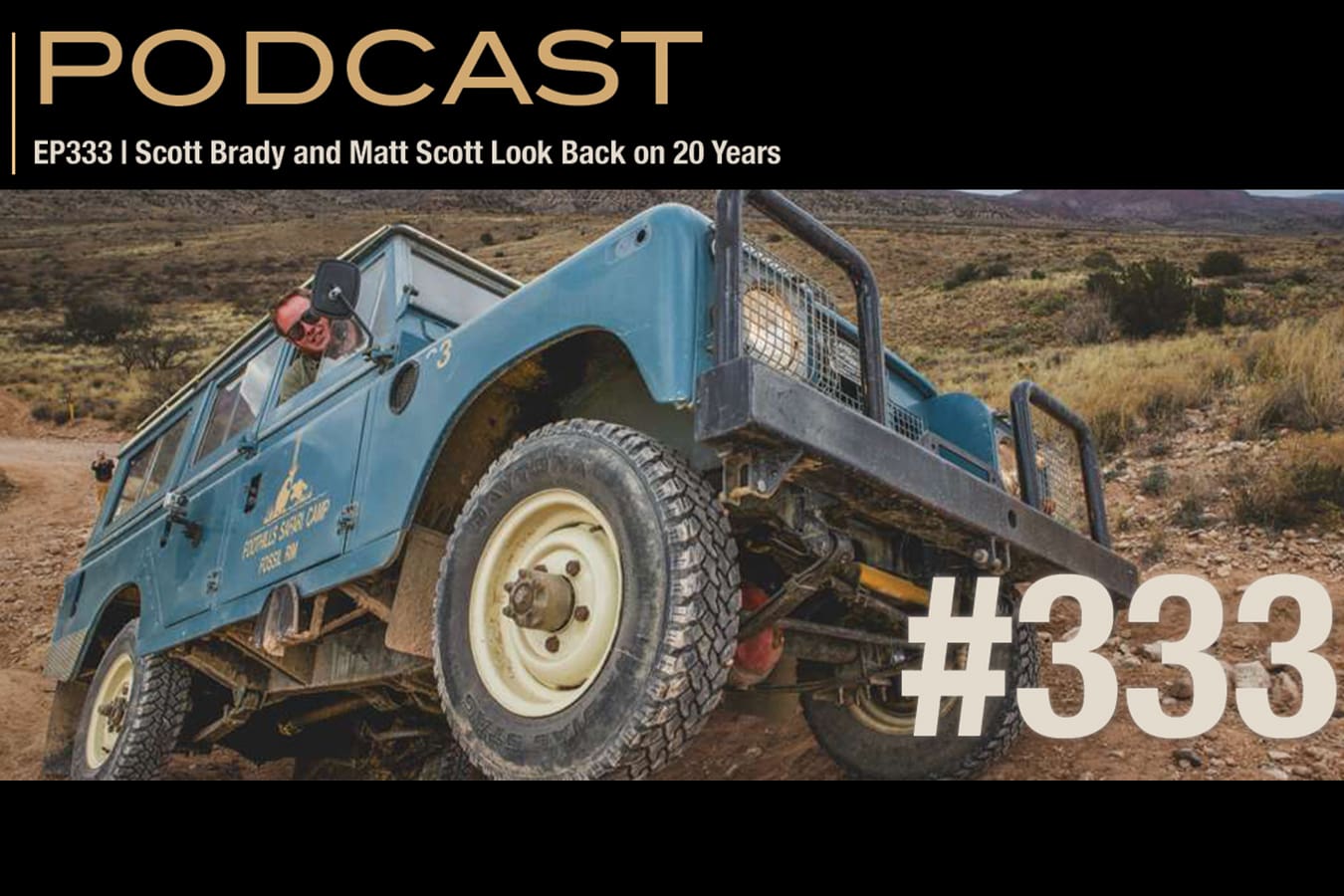
Overland Journal Podcast hosts Matt Scott and Scott Brady celebrate 20 years of Overland Journal, tracing its growth from early Expeditions West blogs and Expedition Portal (2005) to the magazine’s 2007 launch. Influenced by legends like Tom Sheppard and Jonathan Hanson, they discuss surviving the financial crisis, merging into Overland International in 2012, and upholding strict editorial integrity without advertorial content. The discussion highlights industry milestones like the 2009 Overland Expo launch, the rise of remote work and OEM support, and Scott’s Expedition 7 journey with Greg Miller to all seven continents in one Land Cruiser. Looking ahead, they preview the 20th-anniversary issue and renewed focus on deep equipment testing, technical skills, global routes, and reader gratitude.
Overland Journal Podcast Episode #333
Tune in Apple Podcasts | Spotify | YouTube
The Overland Journal Podcast is brought to you this week by Hankook Tire and Adrenalin Industries
For additional heritage content and news, sign up for Overland Journal’s Weekly Dispatch: overlandjournal.com.
New to Overland Journal and want to grab a subscription? Visit Overland Journal and enter code: overlandpodcast at checkout for 20% off. We thank you for being a subscriber.
https://www.youtube.com/watch?v=LrX2sBKHh1Y
Matt Scott
Matthew Scott is a Fellow of the Royal Geographical Society and a leading authority on automotive adventure. He is the only American to have served as editor of a major Australian 4WD publication and has over 15 years of competitive auto racing experience. His overland travels span six continents and decades of remote-area driving. @mattexplore
Scott Brady
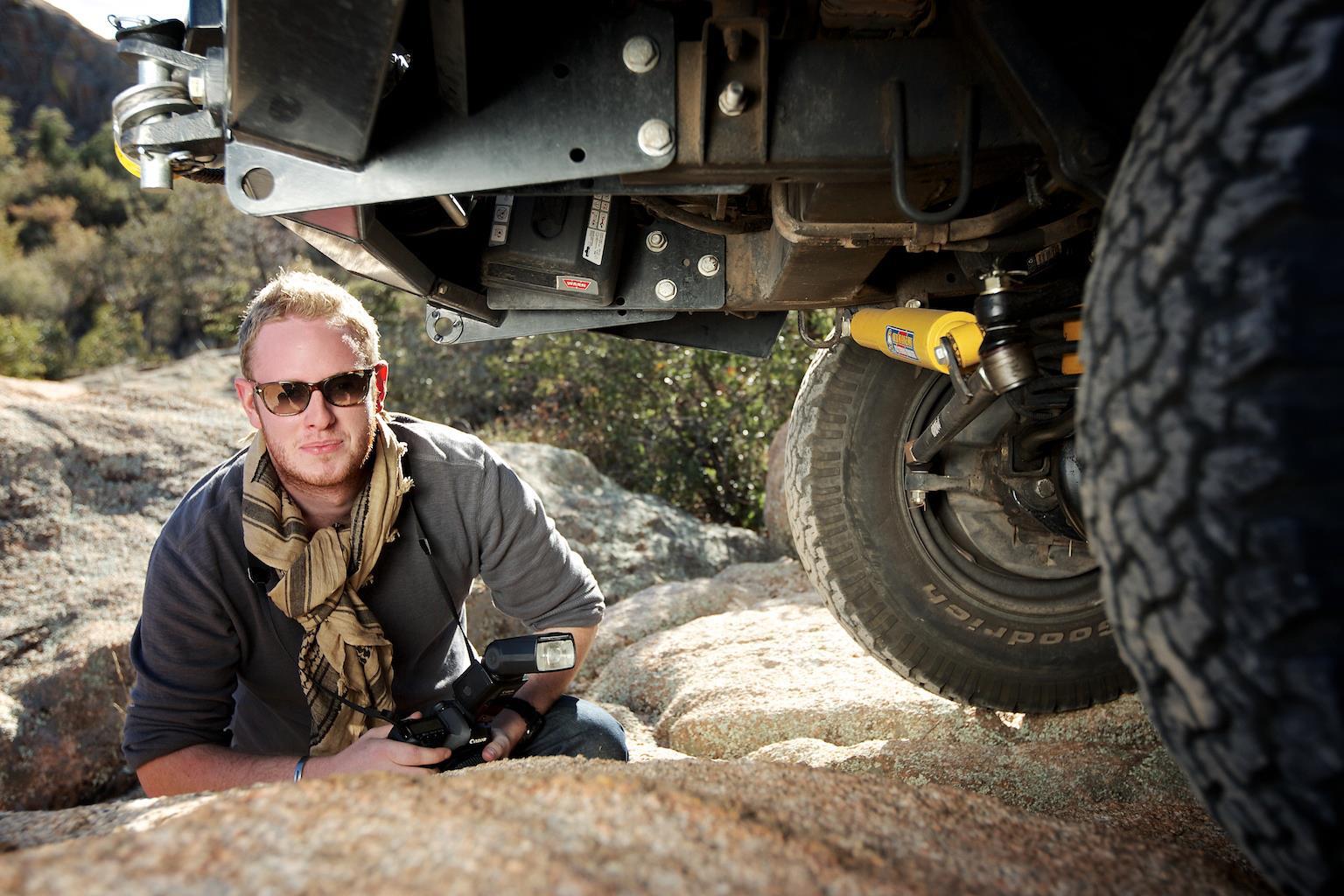
Scott Brady is an adventurer, author, and publisher, and the first person in history to cross all seven continents. Brady is executive publisher of the Overland Collective, home to Overland Journal, the Overland Journal Podcast, and expeditionportal.com—the world’s largest vehicle-dependent adventure community. Scott wrote Overlanding 101 (Simon & Schuster) and is currently riding around the world on his BMW GS. He also led Expeditions 7, the first expedition to drive the same vehicle on all seven continents. Brady’s polar crossings include Antarctica and a south–north crossing of the Greenland ice sheet. Scott is a fellow of the Explorers Club and lives in Prescott, Arizona.
Our No Compromise Clause: We do not accept advertorial content or allow advertising to influence our coverage, and our contributors are guaranteed editorial independence. Overland Collective may earn a small commission from affiliate links included in this article. We appreciate your support.
Transcript
EP333 | Scott Brady and Matt Scott Look Back on 20 Years
Matt: [00:00:00] Hello, and welcome to the Overland Journal podcast. I’m your host, Matt Scott, and I’m with my other host, Scott Brady.
Scott: That’s right.
Matt: This is an interesting podcast. So today we’re talking about 20 years of Overland Journal. It’s a magazine, a publication, a community that I have effectively grown up in.
Literally. Like the little runt Padawan. And we’re, I guess, gonna start from the beginning-
Scott: Yeah.
Matt: Let’s do it … as, as to where all this came from. I think that Overland Journal, to me, is synonymous with overlanding in the United States. That and Expedition Portal, which I guess came first.
Scott: It did.
Yeah. Yeah, about a year and a half before the magazine.
Matt: Yeah. I remember I joined Expedition Portal when I was, like, 16, and I think I started lurking when I was 15.
Scott: I love
Matt: that though. That was 2005.
Scott: I love that. Yeah, that’s when it started.
Matt: Yeah.
Scott: It’s a long time ago.
Matt: Yeah. It’s crazy, but I’ve seen this magazine [00:01:00] grow from incredibly niche…
I think it’s still niche, to be fair, but something that didn’t exist, and this, this publication has really inspired thousands, tens of thousands of people to get out and explore the world around them, whether that is the trail or the campsite down the street- um, or driving around the world.
This led to Expedition 7 for you and crossing all the continents. It’s crazy how far it’s really come.
Hankook Tire: And a special thanks to Hankook Dynapro Tire for supporting this week’s podcast. Hankook was recently at the Off-Road Expo in Costa Mesa, California, showcasing some interesting trucks and their tire lineup.
And Expedition Portal was along for the ride. Check out our video and story online as we hang out with Joel DeLauk and learn about his King of the Hammers [00:02:00] experience racing his 1989 Suzuki Samurai. How cool is that? They were on Hankook Dynapro MT2 tires. Thanks again, Hankook
Matt: Yeah,
Scott: even I’m getting ready to go to SEMA and, like they have, they call it now the Off-Road/Overland Hall.
Matt: Yeah.
Scott: So it’s certainly permeated the industry, but I think that in general, travelers are much more aware of it. It’s becoming more and more popular. In addition to even traveling by sailboat, you’re seeing more and more people getting out. I think people are looking for ways to have a deeper connection with the people in their life, with the places that they visit, and overlanding allows you to go at a slower pl- pace and see a lot of the stuff, um, along the way.
Matt: Well, it’s a little, it’s a little harder way to travel. These days it’s so easy to travel. You can literally go on your phone in the parking lot of the airport [00:03:00] and be anywhere in the world you want-
Scott: True …
Matt: within a day or so, which
Scott: also sounds fun.
Matt: Yeah, which sounds fun.
But it’s so easy, it’s relatively comfortable, and it’s… But it’s also isolating, though. You’re going to a lot of the same places, and overlanding allows you to see what’s in between, and that’s always, I think, what I don’t know, has been the appeal of it to me
Scott: And practically, I have found in my international travels, it’ll– it gives you a lot of optionality that you don’t have when you fly in, ’cause you typically book your hotels well in advance.
You’re- You’re stuck
Matt: to an itinerary …
Scott: Or you’re kind of isolated to a region. Whereas if that region’s having a bunch of problems, like you think about those that went to Spain when they were having like these the locals were really frustrated with t-tourism. So if you were in Barcelona and you had spent $15,000 to go there, you were just having to endure that.
Whereas if you had your own vehicle, you can say, “Yeah, let’s– I’m gonna go to Portugal.” [00:04:00]
Matt: Yeah.
Scott: And have a diff- totally different experience. So I, I do… I’ve always really enjoyed the fact that the traveling is something that’s unfolding based upon your own efforts and decisions, and you do have a lot of flexibility.
Matt: Yeah. So I’d like to talk about– let’s go to that 2003, 2004 because I guess what comes before Overland Journal is Expedition Portal.
Scott: True. And- And even before that was Expeditions West.
Matt: Yeah.
Scott: Which was just a personal blog. I was in technology at the time, so I had enough experience with websites and HTML and, um back then there was even Flash.
I remember my first- … my first website was like a Flash site, and it felt so, so cool. But
Matt: it really was like the start of it. Like I I haven’t even thought about Expeditions West in like-
Scott: Yeah …
Matt: I do have an Expeditions West business card.
Scott: I believe it. Yeah, ’cause that was…
Expeditions West [00:05:00] was the LLC, and that’s what owned Expedition Portal.
Matt: Yeah.
Scott: And then when Stephanie and Jonathan and I started Overland Journal, that became its own LLC as well. So they were actually two different businesses for a long time. I remember
Matt: they merged, and that’s where-
Scott: They did …
Matt: Overland International came from.
Yeah.
Scott: That’s right, in 2012.
Matt: So what was really the impetus for starting that? I know that you kinda had this Tacoma build. Well, no, it was before that. It was the Trooper.
Scott: Yeah, I had a Trooper, and before that I had a s- Discovery 2, which was not a positive experience.
Um- It’s, it’s– I love the fact that I still love Land Rovers despite that car, but I think everybody that knows a D2 knows that.
Matt: Brian McVickers got that one.
Scott: No, well, he had his own, so we had the- Oh, he had his own. That’s how Brian and I met. Um, he was buying a welder from me, and we both had D2s, and he bought this, like my grandpa’s welder.
Matt: That’s crazy.
Scott: So, [00:06:00] and that was… And that was probably 2003. Yeah. A long time ago.
Matt: Brian’s been here from the beginning.
Scott: For sure. Yeah, for sure. We were both members of the Arizona Land Rover Owners Club. Um, and then there was, um, a website called 4 Wheel Drive Trips, which I think is a it’s really worth acknowledging the guys that were involved with that because I knew nothing.
I still know a fraction of what I would like to know, but then I really knew nothing. And we all just kinda went out and did the Mojave Road together, or we went into Baja, or we did a, a trip who knows where. But they were short three, four, five-day trips, and those were really formative to me.
It made me realize, like, I really do love doing this.
Matt: Yeah, ’cause that was, I guess you could call that kinda your start.
Scott: Mm-hmm.
Matt: I know you have talked to me in the past before of you didn’t walk into this being, like, an expert necessarily. Not at all. When [00:07:00] Overland Journal started, I guess that expert was more Jonathan Hanson.
Like he had- For sure … had been doing this and has been doing this for, I mean- Longer than you’ve been alive.
Scott: Yeah. And Jonathan there was a lot that he brought to the table. He had worked with Outside Magazine. He had published many books by then. He’s one of the finest writers that I’ve ever encountered- Yeah
in our space. And he just had a great voice, and we had very similar taste. So I brought some business acumen. I’d been in business. I was able to source some funding to get the magazine off of the ground. So my job was very much to, like, figure out the business side of it, how to make the business side of it work.
Yeah. And Jonathan was very much about executing on what was a very clean vision from the beginning of it being the magazine that both of us would want to buy off of the bookshelf. Yeah. Like, the thing that would inspire both of us. So we– And we also didn’t [00:08:00] know what not to do. We had no idea as far as, like, how to start a magazine, so we built the magazine that we wanted to buy.
And I’m sure we made many mistakes in that, but I think the fact that it was so different and unique to our-
Matt: Yeah …
Scott: needs, that I think that’s why it resonated with more people.
Matt: Well, it was just… It was so different. Like, I remember being a child when this thing kinda launched and I grew up in the Midwest and I liked off-road vehicles.
I always had an a, a, a desire to travel, but I was… I was a kid, I grew up racing and traveling all over with that. But, um this– I remember this issue coming out. Yeah. For, for those not on YouTube right now, I’m holding the first issue. It’s a spring 2007 issue of Overland Journal.
Um, a collectible in my opinion. And there’s Graham Jackson’s Defender 110- Totally … on the front. And I remember [00:09:00] seeing that and I was like, “Oh, I have to get out of here.”
Scott: Yeah.
Matt: Like, like, ” I have to leave.” Like it was one of those moments in my life where it kind of inspired me to- And showed me that there was more out there.
Scott: And I think back on the things that really inspired me, it was certainly Gary and Monica Wescott with the Turtle Expedition. Yeah. You read the Four Wheeler magazines, and it would go through their builds, and then they’d be crossing Siberia or whatever. That, that was probably the strongest, and it also showed me, like, that was possible for that to be a job.
That was their job- Yeah … was to try- drive around the world. Um, and then the Camel Trophy, because I was, at the time I was a multi-sport athlete, triathlons and things like that, and that resonated deeply with me. Like, these guys were orient- a- and ladies were orienteering and running long distances and kayaking and it looked just incredibly challenging.
Matt: Yeah.
Scott: So that was a huge inspiration to me. But also about that [00:10:00] time was when there were a couple other businesses that were starting to get going. I don’t know if you remember Pangea Expeditions. I do. So that was started by Nathan Hinman, and actually Nathan and I raced the Outback Challenge together.
He was my navigator, and I wouldn’t have won the race. We wouldn’t have run- won the race without him. Um, I, I think I just did- Yeah,
Matt: you were his Uber driver.
Scott: Yeah, I was. Exac- exactly. I n- was a good enough driver to not damage the truck, and I knew enough about recovery that we could be efficient, but we would’ve never won without Nathan’s navigation.
Um, and Graham Jackson was all part of that, and I remember looking at what Graham and Connie were doing crossing West Africa, and I was wide-eyed. I was like, “That is insane.”
Like, I wanted that so badly, to experience things like that the way that they were doing it. And I think Graham and Connie just inspired a whole bunch of people.
And Nathan did a good job with Pangea of kind of setting a [00:11:00] standard for overlanding visually-
Matt: Yeah …
Scott: that made it look very different from off-roading. And that was, I believe… ‘Cause off-roading is fun. I do it all the time. I enjoy it. But we’ve talked about that before. Off- off-road driving is sport, and overlanding is travel, and Nathan did a great job of kind of setting that tone of it feeling very exotic, feeling very- Yeah
travel-oriented, not overly modified vehicles, all about the trip.
Matt: I remember those trips that they’d do in Central America. Totally. And they had they had, like, these gray Defenders that looked- So sick … I think, like, orange lettering. So sick. And then just the visual. Cause you weren’t- bombarded with content every day- Mm-hmm
back then. Like, it’s easy to forget. I guess for me, most of my life has had social media. Sure. We’re constantly seeing stuff, but people– There were only a couple people that were sharing their adventures. Yes. Now it’s like with Instagram and everything, [00:12:00] YouTube there’s thousands of content creators out there to give it to you.
Yeah,
Scott: it’s commoditized it, which has advantages and disadvantages. I love the fact that it allows people to tell their stories. It’s how we find a lot of our great contributors. But back then, you’re right, the– everything was at a very high level, lot of authenticity. It didn’t have that influencer vibe around it.
And I remember going into the Land Rover dealership for service on that Discovery 2, and they had a in the service area, they had a vehicle-dependent expedition guide by Tom Sheppard. That’s
Matt: so cool.
Scott: I picked that thing up, and I still have that original one that I got over 20 years ago. Um, and it’s this perfect bound, big, thick book about how to do serious vehicle expeditions, and I f- I literally I felt myself, like, trembling, like, “Are they- gonna let me buy this thing? I want this so badly.” Yeah. Um, [00:13:00] and I read every single page of it, and I think when you look back on someone like Tom Sheppard Jonathan Hanson, they set the standard of excellence so high-
Matt: Yeah …
Scott: that it really did allow and the Wescotts as well, it allowed for us to begin to amplify that and grow a market from it.
So it was those early folks that set the tone that allowed us to begin to figure out from a business perspective, like, how do we make this viable?
Matt: Yeah.
Scott: How do we give people a job? We’ve got employees that… Brian’s been with us from the first day. Tina’s been our editor and been involved on the editorial side for 15 years.
That’s crazy. Stephanie’s been involved, of course, from the very first day.
Matt: Yeah.
Scott: So we’ve ha- been able to have these long-term employees and provide people with a life because of making it a business.
Matt: And there’s been other things that have kinda started from this as well. Overland Expo was born out of [00:14:00] Overland Journal and Expedition Portal.
Scott: Totally.
Yeah, and Jonathan and Roseanne recognized an opportunity in the marketplace. We really needed an event like that. We had the Expedition Trophy, and we had a symposium that went along with that, that probably demonstrated that was, that it was financially viable, but I had no interest in trying to build that.
We were- Yeah … very busy doing the magazine. So they identified a, an opportunity, and they crushed it, and they re- it really, that really was the extra piece that was necessary for the industry to grow. ‘Cause until you have events, they call, it’s this concept of 1,000 true fans, and you don’t really know that you have 1,000 true fans until you can gather them together.
Matt: Yeah.
Scott: So, and the first Overland Expo in 2009 was just under 1,000 people.
Matt: It was in Prescott,
Scott: right? It was. It was in Prescott at the fairgrounds outside of town. I think they
Matt: turned that into a motocross track now- I, which is the most
PV thing I’ve
Scott: ever heard. Very much PV thing to do. Yeah. So [00:15:00] gathering 1,000 people and all those vendors, it gave it this physical tone.
Matt: It was real.
Scott: It was very real.
Matt: Yeah. It w-
Scott: and- And things really took off after that.
Matt: Yeah. I mean You know, going back, overlanding yes, there was the travel aspect of it, and that was always kinda core to it. But I always kinda told people, like, “What’s the difference between overlanding and off-road?”
Well, it’s kinda like think of it as off-roading with a college degree. It was a little bit more- Yeah. Maybe. There was a lot coming from Land Rover people. There’s a lot of the Land Cruiser thing where It’s kind of all merged in today’s world of off-roading and overlanding. Like it’s the off-road stuff seems to be more like the Ultra4, the, um, the UTV- Yeah
that kind of thing. And now it’s like almost what we would’ve considered over- or off-roading to be is blurring with overlanding.
Scott: Yeah, very much motorsports now on the [00:16:00] off-road side, which is really fun to watch. Like you go- Yeah … to a King of the Hammers and you watch those vehicles and drivers, it’s incredibly impressive.
I actually really like the fact that it’s been a little more clearly delineated. Off-roading 40 years ago was like a version of car camping. People did take their four- Yeah … wheel drive out, they camped out during the night. Um, and when off-roading became more extreme in the ’90s and into the early 2000s, it just left this opportunity for us.
Yeah,
Matt: kind of that pirate 4×4 era. Yep. Like I, I had always had this idea from conversations with people that overland was also built out of this kind of economic and gas crisis that we went through-
2007, 2008, 2009 when fuel shot up.
Scott: Yep.
Matt: And all of a sudden, okay, well you couldn’t justify the tow rig and the trailer and the car that was breaking the axles and all of this kind of stuff, so it got fairly extreme.
Scott: Yeah.
Matt: And then [00:17:00] overlanding started to present this concept of, “Oh, well I could drive this car to work.” it’s a little bit more modestly modified. It was back then the two-inch Old Man Emu lift.
Scott: Yeah, for
Matt: sure. The tall, skinny tire. It was a little more understated.
Scott: And it allowed for families to reconnect with the hobby.
Um I don’t think most kids wanna be bounced around in an Ultra4 car, but they certainly wanna get out, walk around, find wildflowers- Yeah … look at the cool rocks go camping. So I think that was one of the opportunities was it reconnected the entire family unit with the pastime, and I think that was really helpful.
Um, and y- we need all of that. A lot of technology comes out of those motorsports that- Mm-hmm … that we then benefit from in the travel side of things. Um, in 2016, it’s interesting if you do a, a Google keyword search, [00:18:00] um, in 2016 is when, um, overlanding eclipsed off-road as a search term.
Matt: Oh, I didn’t know
Scott: that.
Um, and now it’s it off-road is it’s a fraction of the traffic.
Matt: I remember when I started working for you and Alexa rating was like the thing. Sure. And I’d be constantly checking this, but I would I would Google Overland Alexa-
Scott: Yeah …
Matt: and it would be, like, people named Alexa in Overland Park, Kansas.
And if you Googled Overland, the only thing that came up was Overland Park, Kansas. I’ve never been to Overland Park, Kansas. Yeah. But there was a period of several years where when you Googled Overland
Scott: Yeah …
Matt: it was Overland Park, Kansas. But now you Google Overland, and it is what we know it as.
Scott: That’s right.
Exactly. It’s certainly become part of the vernacular, and that was what the term essentially started as, was these overland cattle drives in Australia. It’s cool the office that we’re sitting [00:19:00] in recording this podcast, the road that goes behind it is Highway 89, but that road was originally called the Overland Road.
And I didn’t know that when we moved into this office. I found that out- many years later. So in… It starts in Prescott, Arizona. The Overland Road goes all the way to Flagstaff, and we ended up doing a cool trip where we retraced that. That- Oh, that’s
Matt: the one you did with your dad.
Scott: That’s right.
Exactly. Yeah. We did s- a bunch of it on horses ’cause you couldn’t drive sec- sections of it.
Matt: Okay.
Scott: So.
Matt: Okay.
Scott: Which the horse is probably the original overland vehicle.
Matt: Yeah. And a special thanks to Adrenaline Industries for supporting this week’s podcast. Judd and his team at Adrenaline are passionate overland enthusiasts and have built some of the coolest concept vehicles our industry has seen, from their AWOL expedition campers to their Overkill super trucks and off-grid toy haulers.
Adrenaline Sponsor: I recently used their Overkill truck and toy hauler on a trip with my dad to Wyoming and could [00:20:00] not have been more impressed. Their campers are made in Utah and tested around the world. Check them out at adrenaline.industries. Thanks again, Adrenaline.
Matt: So there’s kind of this, like, first wave of Overland Journal that’s the i- involving the Hansens- Mm-hmm
and there’s a lot of other people that were involved. Some of them I haven’t met- Yeah … I know. Um but then we kinda get into the second wave of Overland Journal where, you know- Overland Journal and Expedition Portal kind of merge.
Scott: Yeah, that was definitely the timing.
Matt: The Hansons make their exit.
Scott: Yep.
Matt: And that was, when was that? 2010, 2011?
Scott: About that same time. Yeah. Right before we became a corporation, um, I purchased Jonathan’s shares in the business and they went off and just, and killed it with the Overland Expo. And then we merged Expedition Portal and Overland Journal in [00:21:00] 2012, and that was also when Expedition 7 started.
Matt: Yeah.
Scott: So it was… If you look at the– If you look back at the timeline, if I look back at my life, there were these moments that were so defining. I think back when I was in the Air Force and I first got to go to Italy, it sparked this idea of travel and this love for it or this desire to do it. And then you look at, um, those early days and Tom Sheppard and Graham Jackson and all Camel Trophy, whatever, that really lit a fire in me to think that this was- Mm-hmm
possible. And then 2012, you- things were gaining momentum. We were making money as a business. I didn’t fear for my financial future every day. Yeah. Um, which I did for a long time ’cause Overland Journal started right before the financial crisis.
Matt: Yeah.
Scott: So even the building that we’re sitting in Stephanie and I purchased the building with a [00:22:00] friend of ours, and we literally put every last dollar, other than what we needed for the expenses for that month, into buying the building.
And it– I never felt more all in my life. Yeah. And it’s incredible that Stephanie was so supportive of that. I- she could see the vision. Um-
Matt: She was a big part of the vision.
Scott: Oh, yeah. We wouldn’t have the magazine without her. But the fact that she was willing to take that risk with me and go take all of our financial resources and put it into buying a building, ’cause we we got told, I think we had like a, a 72-hour notice from the HOA that we had to- Oh, yeah
we had to move the business out of the house, ’cause I was doing like winch testing in the driveway and working on cars and, you know- I
Matt: remember having to move the, like, magazine boxes from your-
Scott: Oh, yeah … from
Matt: your garage- Yeah … to this building.
Scott: That was all around that time, ’cause we moved into this building in 2009.
So financial crisis [00:23:00] is happening. We go all in financially. And of course, these are life-changing decisions that worked out well. Yeah. And it doesn’t work out well for everybody. It’s easy for me to sit here with some survivorship bias and be like, “Oh, I, I had some wisdom,” or, “I was smart,” or something like that.
A lot of times it’s timing.
Matt: Well I remember even then, there was like a, an Expedition Portal thread on the start of Overland Journal, and a- as I recall, like half of it was, “Oh, you’re stupid to start a magazine. Magazine’s dying. Print’s dying.” Yeah. “Print’s dying. Print’s dying.” And people have been saying, “Print’s dying”- Yeah
well, here we are at the 20th anniversary- Yeah … and print’s still not dead. In some ways it’s thriving.
Scott: It is actually… It, this is the one of the things that’s most encouraging, and we’ll talk a little bit about the future of Overland Journal towards the end of the podcast. But one of the things that’s very encouraging right now is the resurgence of print, and it totally makes sense.
People are bombarded with continuous feed. They’re on their phones. There is [00:24:00] something that is very joyful, very hu- uniquely human around sitting on your couch or sitting in, around a campfire and taking out a print publication- Yeah … that doesn’t have any advertorial. We don’t sell any pages of the magazine that are editorial related, and we never have.
So we uphold the very highest editorial standards that we can, and we’ve never sold any of our opinions or anything like that. So I think people are looking for that, ’cause it’s difficult to find-
Matt: It’s really rare. I mean- It’s
Scott: difficult to
Matt: find … I had a brief period where I worked and ran some other magazines in Australia and worked with other publications, and it’s so common.
Scott: Mm-hmm.
Matt: Like, so much of what you read is advertorial. Yeah. And I’m not saying this to create a narrative that Overland Journal is just so much superior or anything, but-
Scott: A different approach, yeah …
Matt: like there’s magazines that I’ve stopped writing for because it’s, this person’s not advertising.
We’re not [00:25:00] talking about that- Mm-hmm … product, or we need to… Or the the ad guy’s kind of, “Hey, yeah, say something bad about that. I wanna show them and listen.” Like it’s so common.
Scott: Yeah.
Matt: But those magazines, I think, are going away because you’re bombarded with that. The, the influencer thing on social media is even changing because people see through it.
Scott: Yeah they’re getting a lot more discerning. And, like, Field & Stream just relaunched-
Matt: Yeah …
Scott: as a beautiful quarterly perfect bound publication. You look at magazines like Surfer’s Journal and Modern Huntsman, Field Ethos. Take
Matt: your pick. That’s another one that I like. I’ve done some writing with Field Ethos- Yeah
and they kind of have that same, like, we don’t really, how do you say it? They’re irreverent, they- Yeah … They understand the mission. Yeah. That’s more of a hunting adventure magazine. It’s a little bit different, but- Yeah … it’s nice to see that, that concept kinda I don’t know, [00:26:00] surviving?
Scott: It is,
Matt: and- ‘Cause it’s so easy… It’s so hard to run a magazine.
Scott: It is very- Like- It’s very difficult. And it’s expensive to print, and without going into details, the thing that’s really encouraging for all of us is that the magazine is growing. Our subscribership is growing, our sales are growing, and that is very encouraging in 2026.
And I think it is because analog is becoming desirable. If you look at the, this cool jacket that you’re wearing, it’s not fast fashion. Like, that jacket was cool 20 years ago, it will be cool in 20 years because- Hopefully
Matt: I’m cool in 20
Scott: years. Yeah. Yeah. But it- I don’t know … I think it’s the time when people are getting away from some of the electronic or the fast fashion.
Matt: Yeah, and I think the concept of Overland Journal was always timeless. [00:27:00] One of the things we were talking about earlier is, like, we have this spring 2007 issue.
Scott: Mm-hmm.
Matt: And there’s… You can still get value from it.
Scott: Yeah.
Matt: If I picked up a spring 2007 issue or March 2007 issue of a four-wheel drive magazine one half of it would be advertorial, the other half would be outdated ads, which would just make me depressed ’cause they’d show you the prices of what things used to cost.
Um but it was never about, like, that breaking news, and I think that’s,
Scott: that-
Matt: That helped
Scott: us.
Matt: Yeah, that helped us for sure … that’s really where things changed. I- Yeah … I… And what helped Overland Journal survive- Mm-hmm … in the long run was it was always more timeless content. It was always that coffee table quality.
Like, people save their Overland Journals. They don’t save their four-wheeler.
Scott: Yeah.
Matt: Like- I don’t know. I actually had to recently unfollow Four Wheeler on social media ’cause whatever private equity has bought it [00:28:00] is just reposting old stories as if they were new.
Scott: Oh, interesting.
Matt: So about a, a month or two ago, there was a story, “AV announces last run of TJ, LJ Highline fender kits,” and I’m like, “What?”
And then I realize it’s like, the story’s 15 years old.
Scott: Oh, wow.
Matt: Interesting. Like, but again, you could do that with Overland Journal. You could repost content from 15 years ago. And we
Scott: do. Yeah, we do.
Matt: Cause it tells us… It captures a place and an adventure in a time. Like I’m looking at this this Graham Jackson Trans Africa- Yeah
Expedition, and it immediately makes me think, wow, like how challenging that would have been compared to today. Like you just did West Africa.
Scott: Yeah, totally different.
Matt: But there was no smartphone. We had-
Scott: Yeah, we had Starlink and smartphones and apps and all this other stuff that made it so much easier, and eVisas.
Graham and Connie would’ve [00:29:00] had 10 times more challenge.
Matt: It would’ve been, I’m not gonna say nearly impossible, but it is just so much easier now. Yeah. So to be able to read about a adventure that took place, you know- in a time and place-
Scott: Mm-hmm …
Matt: right? That is still pretty sweet
Scott: Even them crossing the Congo not the DRC, the Republic of Congo, back then it would’ve been a really challenging- dirt road the entire time. It probably would’ve taken a week if you were pushing, and you can now do it in a day because you could ride a skateboard on this highway. Yeah. The Chinese built it, and it is, like, it’s a beautiful, smooth highway the whole time. So, like, you can drive through the Congo in a day now- if you wanted to. We didn’t, but you know. It’s a very different world, which is it makes it more accessible for people, too, and things change, and that’s part of the deal. Things do change. But we tried really hard, and we still try really hard. I hear Tina reinforce it all the [00:30:00] time of, like, staying focused on our values, the mission of the magazine, continuing to elevate the content.
One of our hardest challenges is finding the combination of a good storyteller and a good photographer.
Matt: Yeah.
Scott: Um, so if anyone’s listening, and you’ve done an amazing overland journey, and you’ve got some great photos… And this is how you know that you have great photos. I- and I don’t mean to be negative towards anyone that’s listening.
You don’t have great photos if you think you have great photos. When you know you have good photos is when other people tell you that- they’re great photos. So if people have been telling- That are
Matt: related to you.
Scott: Yeah, that aren’t related. That isn’t your mo- that isn’t your mom or whatever. Yeah, if people are commenting on your photography as being exceptional, then that’s the kind of c- photography that we are really looking for in the magazine.
So please reach out. You can send an email to [email protected]. You’ll get a form that you can fill out and submit. So if you’ve done something cool, even if it was a long [00:31:00] time ago, and you’ve got some great images, and you had an amazing ad- adventure, um, we’d love to hear about it.
Matt: Yeah.
So let’s go into this kind of second era of Overland Journal, which begins with me. No.
Scott: Yes, it does. It does. That was that time, 2011.
Matt: 2011.
Scott: See? It was actually the arrival of Matt Scott-
Matt: Yeah. Yes …
Scott: in his TJ.
Matt: In my clapped-out TJ- … From the suburbs of Chicago, having never really traveled. Thank you for the opportunity.
I did something with it. Um, but then there’s this you- we kinda walk into this growth phase of overlanding, right?
Scott: Yeah, very much so.
Matt: Um people started to think, “Oh, that’s kinda cool.” I think technology had progressed to the point where we started to have some cool do- dual battery systems, and lighting, and refrigeration, and there was a lot of products that were coming in from overseas.
It’s… It’s always so important to recognize that we’re talking about kind of overlanding from this American perspective. Mm-hmm. This has [00:32:00] been a… Think of the Australians. They’ve been doing this-
Scott: A
Matt: long time, yeah … in this way where we’ve kinda, as Americans, been mudding pickup trucks, rock crawling, whatever.
Overlanding to them is just- what it is.
Scott: Yeah
And people do that when they retire. They buy their Land Cruiser and they go drive around Australia. It’s cool.
Matt: Yeah. So you started to see roof tents.
Scott: Mm-hmm.
Matt: I still remember the first time I saw a roof tent, I was like, “Oh my God.”
What is that? What is that? Or like the first time you saw a snorkel.
Scott: Yeah.
Matt: But I remember going to SEMA and there was a couple of these things peppered around with ARB. And then the next year, 2012, there’s more. 2013, there’s more. Mm-hmm. 2014, there’s more. And it just kinda… It was just this growth, this little snowball.
Some of it it’s like, some of it, to be frank, is and always was automotive restyling.
Scott: Mm-hmm.
Matt: Overlanding became popular enough eventually, let’s say [00:33:00] 2018, 2019, going into COVID, that it became a part of the style. We went from Fast and the Furious and Euro cars and imports being what the focus of the automotive aftermarket was, to overlanding starting to be this thing.
Scott: Mm-hmm.
Matt: Cause think about it it’s like the it’s the ultimate consumerist thing in so many ways, right? That’s
Scott: true. There’s a
Matt: lot- there’s a lot
to it. It’s so easy. And then the JK comes out.
Scott: Mm-hmm.
Matt: And then the JK starts to become a little bit more affordable, so it’s not just brand new JKs.
And there’s so many parts for these things. It’s the roof tent, it’s the roof rack, it’s the lights, it’s the light bars, it’s the-
Scott: The drawer systems … the
Matt: drawers-
Scott: Yeah …
Matt: everything, right? Take your pick. Like, there’s a solution to any and every problem that you can have in the aftermarket. Mm-hmm. And it really starts to take off.
Um-
Scott: Another thing I think that happened around that time, which we still see the effects of today with [00:34:00] Starlink, was remote work. Lots of people in our industry are in technology, or they’re in businesses, or they’re consultants that allow them to work remotely, and by then we were starting to get these cellphone boosters.
You were able to do data from your phone onto- Yeah … your computer. You were starting to see early things like BGAN coming out, where people could be very remote and still send and receive emails, and that made it possible, I think, of a lot of people that I… When I look back, these business owners that I interacted with, that was why they got into it, ’cause they could actually still check in on the office-
Matt: Yeah
Scott: um, when they were remote. And now I believe most of the momentum that we’ve maintained is because people can live and work remotely.
Matt: Yeah this van life thing, again, that starts to be around this two- early- Totally … 2010s, right? Mm-hmm. Like, for me, a lot of that started with the dream of it started with Foster Huntington.
Totally. He had the-
Scott: Yeah, he owned that.
Matt: [00:35:00] He owned the va- the van life hashtag, yeah. Um, and that was fascinating, it started to bring a little bit of a younger crowd into it. It was, “Oh, well, maybe I’m not gonna get screwed on the rent, and I’m not gonna- Yeah … just kinda spin my wheels. I’m gonna buy this cheap old Volkswagen or this cheap van, and I’m gonna go travel,” it’s- And
Scott: then COVID just sent that into the moon.
Matt: Yeah.
Hankook Tire: And a special thanks to Hankook Tire for supporting this week’s podcast. What’s it like when over 20,000 Jeeps and more than 50,000 people get together in Pigeon Forge, Tennessee? We joined Hankook Dynapro Tire to capture the awesome energy of the 2026 14th Annual Jeep Invasion.
Keep an eye on expeditionportal.com for our upcoming event recap, and get inspired. Thanks again, Hankook.
Matt: And then for the magazine itself I think Expedition 7 was a huge thing.
[00:36:00] I think it was something that no other publication had attempted or done. Mm-hmm. Like, it was really shooting for the moon.
You and Greg Miller- That’s right … on, on this. Greg, um, was obviously the dude, but, Talk to me about that. I– That started at, like, a, at Paul May’s house at Outdoor Retailer or something, right?
Scott: Yeah, that’s right. Yeah, we were having a barbecue at Paul’s house, and I had known Greg, but we were just sitting, chatting, and I was asking him, “What’s next?”
And he’s like, “I’d really like to drive my Land Cruiser.” He had a 100 series Land Cruiser. He like– He said, “I’d really like to drive that around the world.” And I said, “Well, I’ve got an idea if you would like to chat about it, um, to take the same vehicle to all seven continents.” And actually The idea was to go to all seven continents, and then Greg and I helped evolve that to taking the same [00:37:00] vehicle to all seven continents.
And then Greg was like, “I really wanna do it in a Land Cruiser,” which of course is the perfect choice- Yeah … for that. Um, so yeah, we had breakfast the next day, and we were both super excited, and it wouldn’t– We complemented each other perfectly. We both… Greg had… He was a great, he is a great driver, and he had a r- a passion for it, and he had the- Yeah
resources to help make that possible. Um, and then I had n- by then just enough of a team where I could leave for big chunks of time. And I think back onto that time, I I struggled a lot with, like, that feeling of imposter syndrome. I had done some trips like the Silk Road, and I had done things like Central America, but I just felt like I hadn’t had that really big defining- and novel expedition that would help me learn a lot, um, just like living by the fire hose. So that was also a huge, um, outcome from Expedition 7 ’cause it was the hardest thing I’d ever done, and it [00:38:00] re- I was the only one doing 100% of the logistics. Yeah. I definitely had support, um, y- like Toby that worked with Greg would help with a lot of the s- some of the travel arrangements and things like that.
But all of every mile of that expedition was me figuring out where- Yeah … to go and not get lost and keep the vehicles serviced and shipped and everything else.
Matt: The one thing that sticks out for me for the logistical planning of that trip was you walking out of your office one day saying, “I just put an Anatov on my American Express.”
‘Cause you had to get these vehicles from- That’s right … South Africa to Antarctica.
Scott: That’s right. We shipped we shipped the the Land Cruiser and the Hilux, um, on an Il-76.
Matt: Yeah.
Scott: A Russian cargo plane massive- Ukrainian,
Matt: I think, but-
Scott: Yeah, could be. Yeah. Yeah. Um, and that was, yeah. That, that was definitely a defining moment, to land on an ice runway [00:39:00] in Antarctica, getting ready to cross the most remote and inhospitable continent on the planet.
Um, the fact that Greg was willing to take the risk the physical risk and the challenge of that, the physical challenge of it, um, yeah, I look back and that was certainly the most defining single moment- Yeah … was to roll up to the South Pole and I got to call my family on the sat phone and everything else like that, and I just had this feeling of overwhelm.
And then we had been so efficient getting across the continent to the South Pole that we actually had more fuel and time, so we decided to complete the crossing of Antarctica. So we went all the way, um, down to the ice shelf on the other side, and then we had to turn around and drive all the way back.
But when that happened, when we got to the ice shelf, is the first time I realized that I might be able to [00:40:00] cross all seven continents by vehicle, which had never been done, because Antarctica’s the most difficult. Lots of people have crossed six of the seven. But no one had ever crossed all seven. So that’s when I realized, like if I stay at it, I might be able to be the first in history to ever do that.
Matt: It’s just kind of being on the outside of it, the, the progression of you, the progression of the publication, um, has just been fascinating to watch ’cause it’s it’s definitely… There’s no imposter syndrome anymore d- some days there’s lots of things that I don’t know, and I think that’s the part of my job that you and I have a little bit of ADD.
Scott: Yeah. So it’s… I actually love the fact that, like, I’m getting ready to do an ice chest test, and I’m spending the majority of my time right now learning everything that I can about how they’re engineered, which type of manufacturing is better than another. Um, does the cooler stay colder if you leave the water [00:41:00] in the ice, or does it s- all of these things, and there’s engineering and physics and everything else that goes around that.
So I’m constantly learning. So I do feel that there’s a lot of times that I don’t know enough, but I like that now. It doesn’t feel uncomfortable anymore. It’s just- Yeah … part of being a lifelong learner now.
Matt: I’m glad that “Overland Journal” is going back to these comprehensive tests- Yeah … because that was, to me, something that separated “Overland Journal” from the rest- Yep
was this near scientific level empirical testing of- Yep … products. I remember the winch test-
Scott: Totally …
Matt: was a huge thing to actually have a load cell and to put them into real world conditions to see when they would fail, how they would break to bring in a professional drivers for- Yep … shock testing.
Scott: Yep.
Matt: Um the guys that OEMs are using-
Scott: That’s right …
Matt: for this kind of thing.
Scott: Or when Chris Collier did the, the driving light test and we were using these very advanced spheres that collect, so we can actually [00:42:00] determine is the manufacturer’s ratings accurate or not. Yeah. So re- really cool tests, and that is definitely a goal for us, is to get back to that in every single issue of the magazine.
W- there’s been a lot of wonderful things that have come out of, um, the acquisition with Clay and Richelle taking XOVERLAND and Overland International, and taking all of those media outlets and combining them under one roof, is that now they’re, there’s a really great CFO. Like, we have an amazing CEO in Richelle.
We… Like, Clay is responsible for the creative vision of the organization. We have a marketing team. Like, these are things that I had to do almost all of that extra stuff. Um, and so I didn’t have as much time, and that certainly, we b- we all become time-constrained. But to now look at the fact that we’ve got over 20 employees [00:43:00] and we have these people that are the some of the best in the world at what they do, it allows me to focus on what I’m uniquely skilled at doing, which it feels like a huge relief to me.
And it’s something that I’m so excited for going forward because I don’t feel like I’ve done as good enough of a job in, in recent years ’cause I was so busy. And I w- and I felt like I was letting the charter of the magazine down by not being able to spend as much time on that. And that, and to have that support from Clay and Richelle, and for us to all be working as a team to make it better.
Our goal is to make the magazine that comes out for our 20th anniversary and the magazines that come out after that, the best magazines we’ve ever produced, and we have the resources to do that.
Matt: I mean You know you talk about, “Oh, I could have done this better,” or whatever, but you’re still here, right?
Yeah. Print isn’t easy. It’s not an- Yeah … easy business model, right? Yeah. Like, there [00:44:00] are all kinds of headwinds to that, so don’t be too hard on yourself. Like- … Sur- survival when- Yeah … nearly every one of the, I’ll call them competitive magazines that- Yeah … are out there, like, they’re just not there anymore.
Scott: And I think a lot of it, you’ve experienced this, Matt. I’ve watched you be so successful in your business, and I also remember the days that you had given it everything that you had.
Like, you were hanging on by a thread.
Matt: Yeah.
Scott: And if we look at whatever someone embarks on in their life, whether it be a big expedition or running a business, being an entrepreneur, it’s most businesses fail because the founder runs out of energy.
Matt: Yeah.
Scott: That is the most common reason why a great idea doesn’t last, is that you give… That last thread breaks. And I can’t even tell you the number of days that I felt that way or Stephanie felt that way, where [00:45:00] I was literally like, I would rather go flip burgers at McDonald’s than to endure another day like that, or sleeping for another three hours, or waking up in the middle of the night ’cause I’m stressed out of my mind.
Um, so there’s also a lot of… What I don’t want is, like, that founder book where they some dude talks about it all, how amazing he is, it- Yeah … It’s really just I was dumb enough to keep punching myself in the face.
Matt: Yeah.
Scott: Um, and then eventually you get through that and we never compromised the values of the magazine, and that’s the part that I’m most proud of, um, when it comes to the business.
Um, but again, none of that is possible without other people. If you think about Jonathan Hanson, Chris Collard, Tina, that’s been with us for so long, Stephanie’s tireless efforts in making this, I believe, one of the most beautiful magazines in the world.
Matt: Classic, [00:46:00] yeah.
Scott: Um, and you can’t do it without Clay and Rachelle and Jake and, Even this podcast, it doesn’t exist without all of Paula’s efforts. She spends hours every single day trying to make this the very best podcast that we can make. She
Matt: spends hours every day bleeping out my swear words.
Scott: We- She has gotten really good- … at editing, um, I mean-
Matt: And my Grenadier
Scott: rants. Yeah, I’m gonna avoid the trigger.
Oh, no. I’m gonna avoid the- Oh, God. I do have a, I do have a gift for you to celebrate the 20th anniversary. This is a sticker that says, “Sir Jim is my co-pilot.” So you can you can enjoy that. Thank you. I
Matt: really- You
Scott: can
Matt: put that
Scott: on your
Matt: Prospector … I’m gonna put this on my Prospector Which has a better turning radius.
Scott: Yeah. But, um it does- none of it-
Matt: Look at how mature I’m being with this
Scott: But n- none of it happens without a lot of people, and everybody sacrificed as much as I did. Um, but I think that’s the realization, is that there… It comes at a cost. There’s [00:47:00] lots of things that in my life didn’t go exact- I never got to be a dad.
Those kinds of things, because I focused so much entirely on, um, on my business that none of those things even came to mind. And then time passes by.
Matt: Yeah. I think- With entrepreneurism. I think that’s a word.
Scott: Yeah.
Matt: It’s just about not moving backwards.
Scott: Yeah.
Matt: You can have periods where you only move forward an inch every day- or a millimeter a day. The, the biggest thing is, like, you never went back. You never compromised on the e- on the editorial. You never compromised on the ethics of the magazine, I think that saved us. If we had just chased the money I’m glad there was times that I just didn’t pay myself so that way we could-
Yeah
Scott: I didn’t pay myself for a long time.
Matt: Well, and it’s also cool, I think, that the Crofts are on the same page-
Scott: Very much so … with
Matt: that.
Scott: And they get it. Clay tells the [00:48:00] story of, like, what got him into overlanding was going into the Toyota dealership and picking up an Overland Journal.
Matt: Yeah.
Scott: And I’ve known Clay and Richelle for 15-plus years, a long time. They’ve been involved with this industry from the beginning, and they built an incredible brand in xOverland, and now we get to take all of those skills together. Um, and I think it was really good that throughout that entire process, we never tried to compete directly with each other or get nasty about trying to take market share from each other.
We were really complementary in what we- Yeah, always … in what we did. Um, and I think that’s something that if I look back on, that’s one of the things that I’m a little bit proud of, is the fact that we never tried to, even if we were in a position of authority, um, we never tried to, like, squash anybody else.
It… I really do believe in that rising tide raising all ships, and we spent a lot of energy trying to support new businesses, even new magazines. Um [00:49:00] like if you look at Jonathan’s got a new magazine. I think it’s The Explorers Journal, something like that, or, or-
Matt: Exploration
Scott: Quarterly
Exploration Quarterly. There you go. Exploration Quarterly. It’s
Matt: actually really nice. It’s kind of- It’s beautiful … you know- It’s beautiful … I think that it’s almost like living in a universe where Jonathan stayed with Overland Journal. Yeah. It’s a little more old school.
Scott: Yeah.
Matt: They’ve got some some deep dives into some classic kit, which is pretty neat.
Yeah. It’s worth checking out.
Scott: And it’s their, all of their passions. Yeah. It’s the things that they love, the naturalists that they are, their love for the environment and for the desert and for- Africa and it, th- they’re able to reflect that in a really exceptional way. So it, to me, you end up with a really healthy industry when everybody’s working together- Yeah
trying to make each other win, help each other win.
Matt: Mm-hmm. Yeah, ’cause it’s all, it is all kind of fun at the end of the day.
Scott: Yeah, if you, and if you forget that-
Matt: We were talking about this when we were camping this weekend, like, well, air quotes, “camping” in Earth Roamer. Um- [00:50:00]
Scott: I was camping. I was in the tent.
Matt: You were actually camping. I was having my sleepy time tea. Um, no, but this idea that, like, like, if you’re not having fun, why are you doing it?
Scott: Yeah.
Matt: We’re n- this isn’t life or death. This isn’t heart surgery. Right. This isn’t medical device engineering or anything. Mm-hmm. This is, this is- This is camping in cars and traveling Yeah if that isn’t fun, stop doing it
Scott: Yeah or really dig into why
Matt: Yeah
Scott: Like help… ‘Cause I definitely have had trips where I wasn’t having a lot of fun, and I needed to have a minute with myself to say, um, “This is a privilege to do what you do.” Yeah. I know and I know that you’re s- light on sleep. It’s one of the things I think that’s been most defining for me in the last, call it, 10 years is, it’s a bit of a stoic philosophy, which I think it’s…
I think we have to be careful about getting too far into [00:51:00] stoicism. But it’s this idea that we do have, um, control over our attitude. Mm-hmm. It’s the- it’s actually the only thing. Um, and I actually, I read that originally in Man’s Search for Meaning, which is this incredible book, um, written about a Holocaust survivor’s experience, and the recognition that he had that the only thing he could control in that moment was his response, his attitude.
He had no other control in his life. And that has been very helpful for me, and it’s helped me begin to evolve that, where I don’t take myself so dang seriously sometimes. Yeah. Where I can just be like, “It’s okay to have fun. Let… Give people lots of grace. Give yourself some grace.” Um, and we can have some joy, and we can be happy, and we can, you know-
Matt: Yeah
Scott: make fun of ourselves.
Matt: Mm-hmm. So we’re kind of in this third era-
Scott: Yeah …
Matt: of Overland Journal. If the first was Graham Jackson’s classic, well, now it’s [00:52:00] a classic Defender, I guess. Then it wasn’t a classic.
Scott: Yeah.
Matt: The second era is maybe this Expedition 7 Land Cruiser in my mind.
Mm-hmm. And now we’re kind of in this third era, which is very much the, like the, the XOVERLAND Tacoma Tundra, that kind of thing. Yep Like this modern overlander. It’s interesting. It will be interesting to see where the publication goes in its next 20 years, where this industry grows.
A lot of things are changing in overlanding. I think it’s getting better. I think we’re getting- Yeah,
Scott: especially the OEM support. It’s incredible- Yeah … these trucks they’re building right now.
Matt: Like, you can go… Think about this. Like- When you first started, or my perspective comes into this from when I first started doing all this stuff.
If you, again, if you saw a snorkel on somebody on the highway with a snorkel, you’d like flip a U-ey and chase them down- Yeah … and it was crazy. And now you can get a Toyota Land Cruiser in America with a snorkel from the factory. We have [00:53:00] AEV transitioning from like an OE-level aftermarket to being OEM.
Yeah, for
Scott: sure. Like some of the new vehicles that are out there, like they’re absolutely insane. The amount of vehicles that you can buy, throw a tent in the back or on top or whatever, and drive around the world now is crazy. So to see-
Yeah, we could easily list 12 of them. And I, and if I look back at 2004, if we think of the w- year 2004, there was really only-
Matt: Discovery 2- No
Land Cruiser.
Scott: Yeah, I wouldn’t even put the Discovery 2 as an option ’cause it w- just wasn’t reliable enough. You’d have a Land Cruiser to pick from. Um the Troopers were pretty good back then but a little bit obscure. So you’d e- either be in a Tacoma or maybe like a Ford diesel or something like that.
Yeah. But there just wasn’t options.
Matt: But all of these vehicles would require significant modification- For sure … to them, for sure. Um it’s [00:54:00] just to be able to have watched the Overland Journal grow the industry. Mm-hmm. ‘Cause maybe it’s a bias, but for me it all kinda comes back to a group of people pushing this idea in unison, um-
Scott: And never doing it for, just for profit. That was the thing that I think makes… You can’t start a business with the goal of, “Hey, I wanna make a bunch of money.” You have to start a business about something that you’re passionate about.
Matt: Yeah.
Scott: Um-
Matt: Well,
Scott: also- If you really want to endure for the long haul
Matt: you know, that’s maybe been a critique, “Oh, these people are doing it for the money.” It’s like no, these are all incredibly capable people, like very capable people that could be making considerably more money applying their skills and dedication to something else, right? Like, if you wanted to be a CEO of a large business or an entrepreneur to start their own, you could do that.
Scott: Yeah.
Matt: Clay and Richelle they did that, but they [00:55:00] could have a production company in Hollywood if they wanted. Totally. There, there’s a, there was always a, a choice that was made around enthusiasm, passion, and dedication, and I think that’s really cool.
Scott: And that’s key for any business. Um, I believe that you gotta be all in.
You gotta really, you gotta, like, love it to your core. Otherwise you’re f- you’re trying to fool yourself, and we’re the easiest to fool. Um, but it ends up, you just don’t end up with the endurance. At the end of the day, you kinda give up too soon before you actually hit your stride. But I am excited about the next stage.
You think about, you go buy a a Trailhunter Tacoma. It’s got 33s, rear locker, great traction control in the front, Old Man Emu suspension, ARB rear bumper, snorkel. Like, th- like how rad is that?
Matt: The Grenadier it annoys the heck out of me, but, like, that is the most purpose-built vehicle- Yeah
for… It’s an entire car [00:56:00] company with billions and billions of investment And it’s
Scott: They make an overland vehicle
Matt: They make an overland vehicle Yeah.
Scott: Yeah that’s obviously the car that I think to me made me so excited was to see obviously it’s Sir Jim’s passion, overlanding, but, um, the fact that he was willing to take that risk
Huge risk I think that’s, it’s where we’re at as an industry. It’s the fact that you can go get these vehicles right off- right out- right outside. We’ve got this brand-new diesel Power Wagon
Matt: Yeah
Scott: Double locked, front sway bar disconnect, 2,700 pounds of payload. Like, throw a four-wheel camper in the back of that thing and leave- Just go
tomorrow.
Matt: Yeah
Scott: Like, go around the world. Like, don’t change anything about it. Yeah, and that’s, I think that’s very exciting, and I love to see also the industry growing and people finding new ways to travel. Some people travel [00:57:00] very minimalist. Some people travel in million-dollar campers, and I think it’s cool that all of that exists, and people get to make a living, and people get to see the world in the way that they want to.
Um, we definitely wanna make sure that people don’t feel like that there’s some gatekeeping that has to happen. Like, you don’t have to be in a a bone stock Defender sleeping in the dirt to be a, an overlander at all
Matt: So what’s next for Overland Journal?
Scott: We’re really looking forward to, um, bringing out our anniversary issue.
It’s gonna be the very best of Overland Journal over 20 years, a bunch of interviews with all of these luminaries that were a part of the magazine. We’ve got a whole section in there where I have a little bit about my 2004 Tacoma, and then I have a, like a nice feature on the Quartermaster, which is, it sh- it shows like that evolution of my own vehicle builds.
The fact that Tacoma was probably 1,800 pounds [00:58:00] over gross vehicle weight- … and that this Quartermaster, even with a camper, comes in just under gross vehicle weight, um, that, it just shows that you can do it now. Like, it’s possible- Yeah … to do that. Um, and then with issue number 101, we’re gonna continue to evolve and refine the magazine.
We’re diving really deep into these tests again. Every single volume of the magazine will have a detailed equipment test in it, and we’re working really hard to find great new stories of adventure around the world. We’re gonna double down on the stuff that’s important, like skills, and we’re gonna double down on things like overland routes and, um destinations pieces- Mm-hmm
to help people find their own version of adventure. So I’m excited for what the magazine looks like, and I’m grateful that the entire team is behind it, that they’re pushing hard to make it exceptional.
Matt: Yeah. Well, I’m excited, for whatever that’s worth.
Scott: Well, and you’re a big part of it, Matt. Y- [00:59:00] everything that I have wouldn’t have existed without people like you committing yourself to the business and to the values of it.
I remember how fought, how hard you fought for editorial integrity in the things that you did. Um, and you knew that was important, and you still fight for that. Yeah. In the writing that you do, you make sure that you’re coming at it with that integrity e- even if you’re writing for another publication.
And the fact that we get to sit two buddies-
Matt: Yeah. …
Scott: That’s a long time ago. That’s 15 years ago, um, that you started here at the same address, and the fact that we get to sit across the table- Yeah … from each other and record a podcast together that’s a real joy.
Matt: Yeah. It’s, well, it’s one of my greatest joys, so.
Well, 20 years of
Scott: Overland
Matt: Journal.
Scott: I know. Yeah. It’s
Matt: crazy.
Scott: And I just, I think I probably would wanna close with just a, a, a deep gratitude for the subscribers of the magazine. Um, I look back at the [01:00:00] charter subscribers that are still with us, and we’ve got so many people that were from the very first issue to today.
And something that’s sad too is we’ve been around for 20 years, so a lot of them have passed away too. Yeah. Um, so it’s this recognition that people have made Overland Journal a part of their life for decades. Um, and the magazine would absolute- advertisers are always important but they don’t dictate what goes in the magazine.
They have no influence over editorial. But we don’t get to do that stuff without the subscribers. So we go- we don’t get to do these great tests, we don’t get to ha- maintain that in- editorial integrity without the subscribers to the magazine. So, um, yeah, it just, we wouldn’t be here without you. Yeah. So thanks everyone who subscribes.
Matt: Well, here’s to the next 20 years.
Scott: Yeah, man. It’ll be fun to see where we end up. Yep. Mars is not… I like Sinway’s quote, “Mars is for quitters.” I think we gotta find, we gotta find ways to- I
Matt: don’t know, man. I wanna go to Mars.
Scott: I definitely don’t wanna go [01:01:00] to Mars. The, our planet’s
Matt: pretty, pretty rad.
It is. I, actually, maybe I should rethink that. I don’t even like going to Phoenix in the summer.
Scott: Yeah, exactly. Oh, thanks Matt. Appreciate you.
Matt: Well, cool. Thanks for listening to this episode of the Overland Journal podcast, celebrating 20 years of the Overland Journal, and have a good one.
Scott: Yeah, we’ll talk to you next time.