

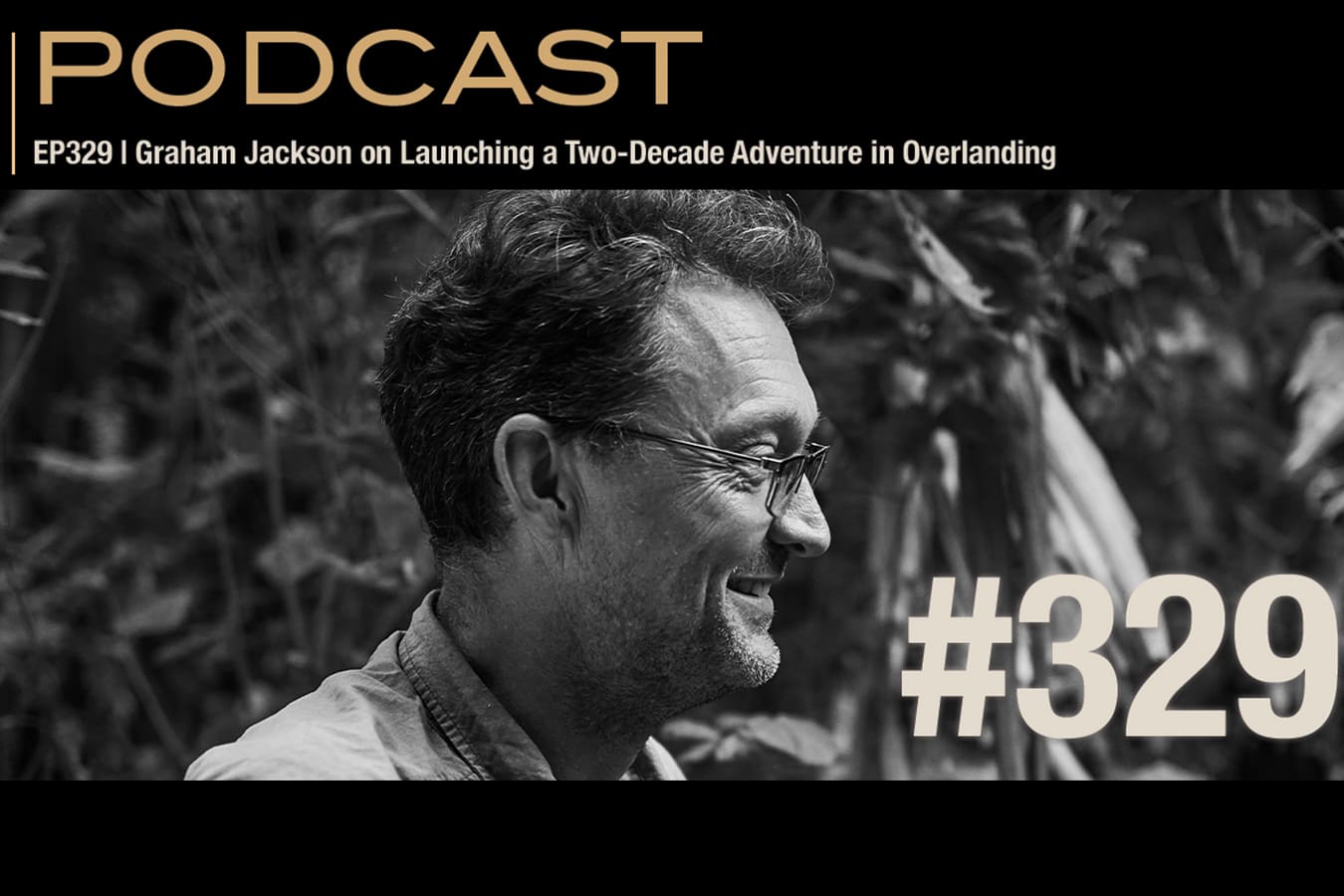
Overland Journal Podcast host Ashley Giordano welcomes back longtime contributor and former gear editor Graham Jackson as Overland Journal approaches its 20-year anniversary. Jackson recounts writing a major Issue 1 feature on nine months traveling in Africa, sharing how he compressed the journey into a story and persuaded his wife to join. He reflects on conducting data-driven gear reviews—including tie-down crash tests and rigorous water-filter evaluations—and discusses Overland Expo training, the founding of 7P, and producing a self-funded 2023 Belize conservation documentary. Defining overlanding versus expeditions, Jackson advocates minimal vehicle modifications and reliable recovery gear while sharing insights on stewardship.
Overland Journal Podcast Episode #329
Tune in Apple Podcasts | Spotify | YouTube
The Overland Journal Podcast is brought to you this week by Hankook Tire and MOHAB
For additional heritage content and news, sign up for Overland Journal’s Weekly Dispatch: overlandjournal.com.
New to Overland Journal and want to grab a subscription? Visit Overland Journal and enter code: overlandpodcast at checkout for 20% off. We thank you for being a subscriber.
Guest Bio:
Born in Lesotho, Graham Jackson began racing motocross at age six, sparking a lifelong passion for vehicle-dependent exploration. A scientist and explorer, he has spent over three decades guiding expeditions across Africa, Australia, South America, Mexico, and the American West. A pioneer in overlanding, Graham co-led a 30,000-mile London-to-Cape Town journey in 2004. He has served as gear editor for Overland Journal, co-owned 7P Overland, and worked for a decade as director of training for Overland Expo. Today, Graham is a world-renowned overland instructor and expedition filmmaker. Through Overland Passage, he creates media focused on wilderness conservation and developed the Overland Glovebox Guide app, putting 40 years of field-tested expertise into explorers’ hands.
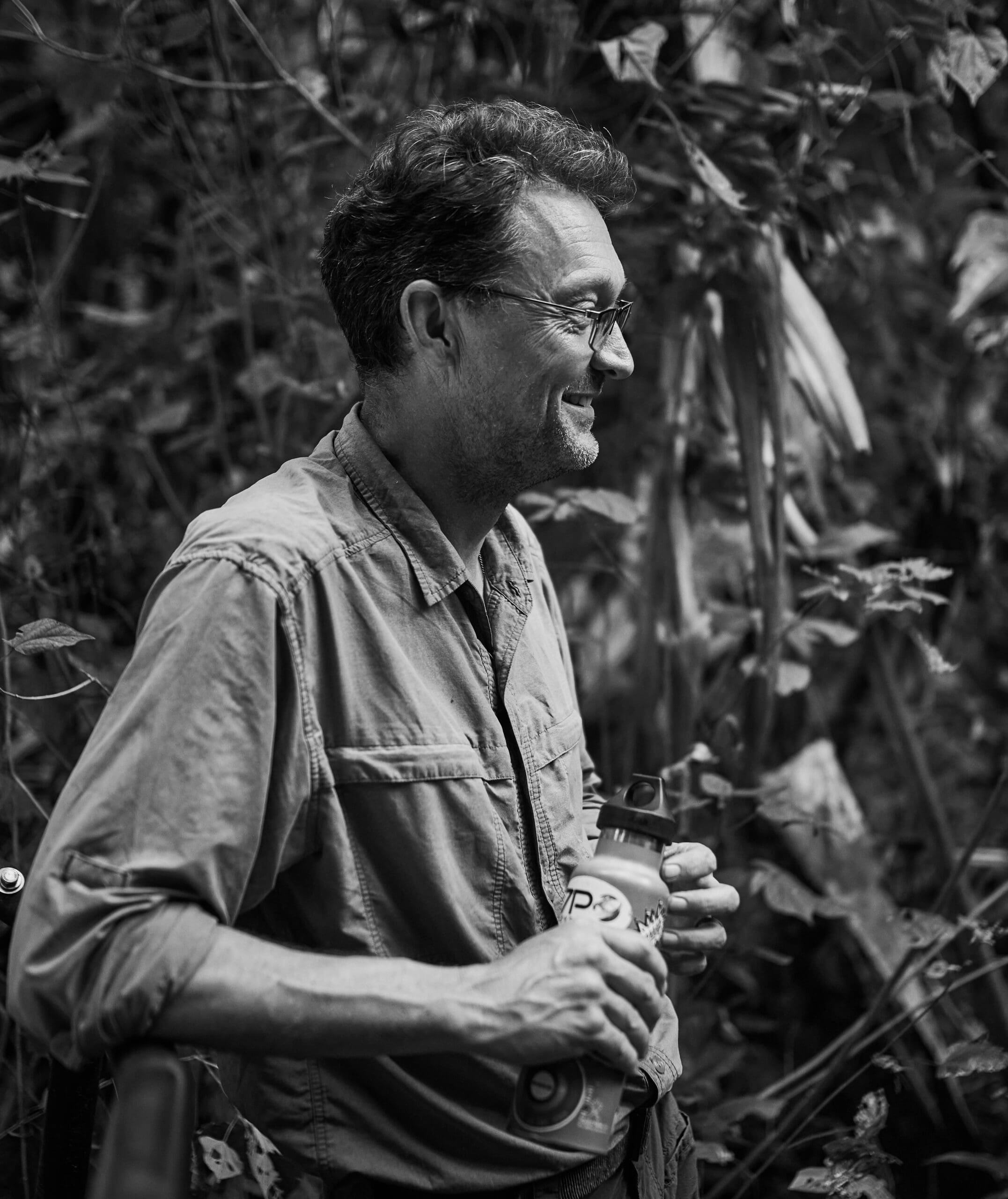
Graham Jackson: Website | Instagram | Facebook
Graham Jackson
Overland Glovebox Guide — the app for Overlanding
Barefoot Productions
See the Camp 6 film trailer here
Overland Journal Podcast: Graham Jackson: At the Beginning of American Overland
Host Bio:
Ashley Giordano
Ashley Giordano’s first foray into overland travel involved a 48,800-kilometer journey from Canada to Argentina with her husband, Richard, in their well-loved but antiquated 1990 Toyota Pickup. Currently cruising along the iconic Silk Road in a 2008 Toyota Tundra, her full-time navigator duties are rewarded with bowls of plov and lagman noodles, hikes in the Tian Shan, and countless cups of fragrant Tashkent tea. As senior editor at Overland Journal, you can usually find Ashley buried in a pile of travel books, poring over maps, or writing about the unsung women of overlanding history, including her enduring inspiration, Barbara Toy. @desktoglory_ash

Our No Compromise Clause: We do not accept advertorial content or allow advertising to influence our coverage, and our contributors are guaranteed editorial independence. Overland Collective may earn a small commission from affiliate links included in this article. We appreciate your support.
Transcript
EP329 | Graham Jackson on How One Article Launched a Two-Decade Adventure in Overlanding
Ashley: [00:00:00] Hello and welcome to the Overland Journal Podcast. I’m your host Ashley Giordano, and as Overland Journal approaches its 20-year anniversary, we’re catching up with some of the people who have helped shape this community, sharing the stories, lessons, and adventures that brought us here. With that said, my guest today is Graham Jackson, and he’s been on this podcast before.
Hello, welcome back.
Graham: Well, thank you very much, Ashley. A pleasure to be here. And yeah, I’m happy to celebrate 20 year- wow, 20 years. It actually is that long. Um, yeah, it seems like yesterday that I, I was writing for issue number one, but here we are.
Hankook: And a special thanks to Hankook Tire for supporting this week’s podcast.
What’s it like when over 20,000 Jeeps and more than 50,000 people get together in Pigeon Forge, Tennessee? We joined Hankook Dynapro Tire to capture the awesome energy of [00:01:00] the 2026 14th Annual Jeep Invasion. Keep an eye on expeditionportal.com for our upcoming event recap and get inspired. Thanks again, Hankook.
Ashley: Here we are. Yeah, let’s talk about that. Okay. Also, I will, before we go forward, mention that I will include the last podcast episode that you did with Scott and Matt in the show notes so people can listen to that episode as well, ’cause it’s quite great too.
Graham: Awesome. Well, thank you.
Ashley: But yeah. Yes. And yeah, first issue.
Can you believe it?
Graham: Yeah. The first issue, that was a surprise to me ’cause Jonathan, I think, just reached out to me and said, “Hey, we’re looking for a, for the lead article for the issue number one, and we’re Overland Journal.” And I don’t think I’d even met him at that point. And, uh, yeah, we started talking. I flew down to Phoenix.
We met in Phoenix and then, uh, yeah, from there… It was my first experience at working with an editor, which was great ’cause he’s an awesome [00:02:00] editor, but also scary. And, uh, yeah, I tried to put the thing together and he’s like, “You can have as much space as you want, up to 8,000 words,” or something like that.
And so I used all of them
Ashley: Wow. 8,000 words. That’s long.
Graham: It was, it was big. Was it that? I mean, I, I’m gonna have to probably eat my words on that one. I’m not sure if it was actually that long, but it’s been 20 years, so I’ll g- I’ll, yeah, I’ll, I’ll ask for some forgiveness if that was a big, if that was a big number.
Maybe it was 4,000 words. It was long. I think- It’s longer than your average article, right? So…
Ashley: Sure. But it covered a big, big trip. So I feel like every time I say, “Oh, the first issue,” they’re like, “Oh, Graham Jackson’s article about-“
Graham: About nine months in Africa. Yeah,
Ashley: yeah.
Graham: Yeah. So, and that was opening up the West Coast route, which at the time was very unknown.
We had planned to go down the East Coast, but, um, that’s right when the Darfur conflict started and we had to divert to the west and yeah, it was, it was very unknown. It was, uh, it was an exciting trip, but yeah, a lot of fun to write about. [00:03:00]
Ashley: Yeah. Tell me about the writing experience. Like, had you been writing for quite a bit before that?
Was that kind of one of your first pieces? How did you put it all together?
Graham: So I started writing when I was a teenager. I wrote two novels when I was in high school. So writing wasn’t foreign to me. My mom edited them, uh, ’cause she was an English teacher, so that wasn’t foreign to me either. But, uh, the trying to compress nine months into, you know, a s- a magazine article, I thought was, that was challenging, so I just decided to sort of take snippets from different places and like tell a story about this one place and then another story about this one place and so it ended up being series of, of short stories about various things that happened in various countries, which I think worked well.
But yeah, that was my perspective. Jonathan seemed to like it, so I guess it was okay.
Ashley: As long as your editor’s happy-
Graham: Absolutely … you’re, you’re good. That’s all you have to do, right? Is keep your editor happy.
Ashley: Yeah.
Graham: Hopefully- I read that- I haven’t s- he, he was [00:04:00] just on this podcast, right? And we haven’t seen his- Yeah
his, his drop yet, so you’re the only one who knows what he said.
Ashley: Mm. All good things. I read that you had to convince your wife to go on that trip to Africa. What was the conversation like surrounding that trip?
Graham: I suggested it. She said, “Hell no.” So that was the conversation. So then I made up this sneaky plan that I would, if she took care of wedding plans, I would take care of honeymoon plans.
And so honeymoon plans became a five-week trip in Southern Africa so that I could introduce her to Africa. And so we went and we did five weeks in Africa. And, uh, when she came back, I didn’t broach the subject for a little while, and then we’re driving down the road one day and she said, “Yeah, okay, we can do that.”
I was like, “Well, do what?” She said, “Go through Africa.” So yeah, it’s more a matter of getting her… Her insecurity about Africa was just that she’d never been there, [00:05:00] and you hear a lot of stuff on the news, and it sounds like a really scary place, and then you go and visit it, and you’re like, “Wow, there are amazing people here.
It’s actually really cool. There’s a lot of stuff to see. It’s not, you know, you’re not gonna die every 30 seconds.” And so yeah, getting her into that comfort zone was great and, and that’s what, that’s what sort of kicked it off to be able to do the whole trip. And then it was five years of planning after that before we got to actually go and do it.
But yeah
Ashley: It’s good
Graham: to have a team of people, yeah
Ashley: Yeah, for sure. Yeah, it was a lot different-
Graham: And actually she, weir- weirdly enough, she now teaches a class at Overland Expo about how to get your partner to go with you.
Ashley: Ooh. Yeah, we need to get her on the podcast too. I’m curious, like through the grapevine, what are a couple of things that you’ve overheard that she’s said?
Graham: How to, how to get people to go?
Ashley: Yeah, how to get your partner to go.
Graham: Don’t discount their fears, because fears are oftentimes irrational and if you just say, “Oh, that’s not gonna happen,” that doesn’t help at all, right? So what you do [00:06:00] is you, you kind of address them and say, “Well, okay, I mean that’s, that’s a legitimate fear and, and this is how we might deal with that.”
A, like, let’s go and visit that country for a f- short trip and, you know, see if we can get comfortable with it or something like that if it’s that extreme. So, or if, you know, I, I can’t travel without a shower. Well, let’s go and travel and let’s have a shower, right? And let’s see how that all works. And yes, you can have a shower while you’re traveling and, and, or, you know, all of that sort of thing.
So it’s more finding out what the fears are and the resistances are, and then actually addressing them instead of saying, “That’s stupid. You can’t… Yeah, that’s, yeah, don’t worry about that,” because that never works. Funny
Ashley: how that works, huh?
Graham: Yeah. Communication- Nice … and, you know, sort of being, being, I don’t know, sort of nice about, you know, people’s, people’s irrational fears, so you know, I think.
Yeah. That’s what I’ve heard through the grapevine.
Ashley: Cool. Thank you, yeah.
Graham: Yeah.
Ashley: We’ll have to, have to get her on and do a deep dive, but that’s great. For
Graham: sure, yeah.
Ashley: Yeah. [00:07:00] I love that. So you shifted from, you had that big article in the first issue- Mm-hmm … and eventually turned into gear editor at Overland Journal.
Graham: Yes. Yes.
Ashley: What were some of the challenges and some of the big wins during that time period for you?
Graham: So the challenges were trying to figure out how to make it… So Jonathan and I both decided let’s make this really science-y. Let’s geek out on this stuff, right? Let’s make it as science-y as we possibly can.
And so then the challenge becomes, well, how do you do that with sleeping bags, right? How do we, how do we make sleeping bags science-y? And so then I had to come up with, uh, sort of ideas on how we would do that, and what’s important about sleeping bags while keeping warmth in. So let’s see if we can get an infrared camera and, and shoot the sleeping bags and see where all the heat’s leaking out, and see which ones are better.
So it was a lot of trying to figure out how to actually review something in a [00:08:00] way that I think was meaningful from a data perspective to people, which they may not have even wanted, but they were gonna get it anyway. And then some of the wins were just the fun things that we did. Like, uh, we decided to, on the fridge review, see how many…
Do fridge volume by number of beer cans, right? So how many beers can you put in your fridge? That’s super important, and that’s how we measured how m- how many… how big the fridge was. And then the, uh… One of my favorites was actually the tie-down review, because I decided, okay, the best way to do this is crash testing, but I d- I’m not gonna crash test my vehicle.
So recently got a welder, so I’m like, I’m gonna weld up a frame, and we’re gonna put two Pelican cases on it, and we’re gonna use all the s- each set of straps that we were reviewing to hold these Pelican cases down. And then we’re going to toss it out of the back of a pickup truck while driving down the road at 30 miles an hour.
And we’re gonna put an iPhone in there, ’cause iPhones had, were actually recently out, and they recently had the G force meter that you could put on the iPhone. And so [00:09:00] we’d stick the iPhone in the Pelican case as well, and then toss it out of the back of the pickup truck and see what happened. And that was intri- that was…
Well, it was a lot of fun to toss things out of the back of a pickup truck while you’re driving down the road, but it was really cool. Yeah, it was, it was a, a surprising winner. I mean, I still talk to the people at Rollocam today because they were like, “That, that worked really well.” ‘Cause it, it did. It, it beat all of the ratchet straps and all sorts of things.
So it was getting surprising results, I think was actually a, a lot of the fun about it.
Ashley: Oh, that’s awesome. I like
Graham: that. The getting sick, the getting sick on the toilet from the water review, not so much. That was- No So we decided we were gonna… Yeah, we were actually going to test the filters, ’cause no other magazine review that we knew of had actually independently tested all of these filters for getting rid of bugs.
So we- I happened to work at a lab at the time that did bio testing, which was super convenient. So I went to the lab, the guy who was my boss, and said, “Can we, can we do this? Can we [00:10:00] inoculate water with E. coli, then run it through all these filters, and then test it afterwards to see if it came out?” And he’s like, “Yeah, sure.
That’d be great.” I’m like, “So what do you want for that?” He’s like, “Well, just give me a couple of issues of the magazine or something. That’s fine.” Anyway, so I had the whole staff of the lab on call, and we went there, we inoculated all of this stuff with all this water, clean lab water with E. coli, stuck it into the tank of my truck, and then pumped it through various filters, and then put it into little jars, and then went and tested it.
And I’m disconnecting, I can’t remember, there were two filters, and I, I forgot to s- depressurize the system between… Had these little quick connects. And I was pulling one f- one line out to swap filters. I pulled it out and it just shot water right into my mouth. Well, all over my face. And yeah, I spent miserable probably eight hours on the toilet, ’cause that was pure E.
coli just going straight into you. And yeah, that was- No … It, it’s a, it’s a painful thing. You don’t want that.
Ashley: I’m so [00:11:00] sorry that I’m laughing this hard. It’s not funny.
Graham: It, I think it’s funny now. At the time, yeah, not so much.
Ashley: Gosh, oh my gosh. See, this
is-
Graham: Of course, all my friends and all the people at the lab were like, “Oh, that’s great.”
So I was the laughing stock for at least several months after that.
Ashley: That is the seriousness with which Overland Journal reviews have happened.
Graham: Yes, indeed. Yeah.
Ashley: Oh my gosh. What other shenanigans and fun moments do you remember?
Graham: Other shenanigans and fu- Those were two top tier ones. The… I’ve gotta even remember what other reviews I did, ’cause I did quite a few of them.
Uh, we did, the sleeping bag one was fun. It was a bit weird, like wrapping people up in a sleeping bag and then shooting them with a, uh, with a thermal camera. My photographer friend was not too happy, ’cause we did it in the summer, to be wrapped up in like down sleeping bags in the front lawn somewhere while people were walking by, being, having pictures taken of him while he’s, you know, sweating like a pig inside a, inside a down-
Ashley: A pig in a [00:12:00] blanket?
Graham: Yeah, and pig in a blanket, yeah, yeah. The, I gotta say, the rooftop tent one was weird because I came home one day and there were like three, three rooftop tents in boxes on our front porch, and they’re not small. So like the entire door was covered with, yeah, all of these boxes of rooftop tents. So we had to sort of like jockey them out of the way to get back into the house.
Yeah, all sorts of weird things. The fridge one was a lot of fun, I thought. But more from a, you know, a sort of let’s put a lot of beer bottles in a, in a, in a fridge and see what we can do with it. We did the power draw stuff, but yeah. I don’t know. It was, to be fair, there was a lot of drinking after we finish- finished a review because we had to go and buy a whole lot of beer.
Ashley: Right. You need to-
Graham: Yeah. You,
Ashley: you
Graham: need
Ashley: testing stuff … what else is gonna happen with it? Yeah.
Graham: Right. Exactly. You can’t just put water in there. I mean, who does that? No.
Ashley: Oh, that’s fun. Good times. Good times. So after that, where did you go from there after Overland Journal? Or were [00:13:00] you kind of still writing a little bit and doing other things?
I know you’re at 7P and doing overland training and a lot of other things, so.
Graham: Yeah. So when Jonathan left and, uh, Chris Collard came on as editor, I still wrote a few things, but mostly stories. So I did a couple of stories on, like, the, uh, Hole in the Rock Trail and things like that. And then I also gave…
just gave him some ideas on how to review certain things ’cause he was doing some reviews as well. But mostly what I was doing at that point was working with Rosanne and Jonathan at Overland Expo, running the troni- the, the whole training thing at Overland Expo. And that’s where I’d first run into people like Andy Dacy and Jim West from C- ex-Camel Trophy members, and that’s where we started the…
That was the germination of the team that became 7P when we were sort of in the latter ends of Rosanne and Jonathan owning Overland Expo. And we put 7P together and, you know, they say don’t go into [00:14:00] business with your friends, and you probably shouldn’t. Nick Taylor and myself were sort of running the, running the show, and unfortunately, it was a side gig for, like, six people- Yeah
which made it very challenging to do, and we all realized that at the end. So even though we, we had a good brand, we had a good, good, m- incredible number of really, really good trainers, um, yeah, it was just sort of it wasn’t a sustainable business by itself just because everyone… It was a side gig for everybody, and nobody was in, in, in the weeds all the time, so.
Ashley: Yes. Yeah
Graham: So that sort of fell by the wayside, and I decided after that went down that I should do something else but training. There’s several tr… You know, Jim West still does training. Other people still do training. I, I was sort of done with training at that point from a emotional standpoint. So I decided, well, I’ll take my skills and I’ll go and do something else with it.
So I decided to go and make a film, a documentary in Belize, 2023. Um, and I was dumb. I’ve often been dumb, but I was particularly dumb, I [00:15:00] think, as a… I thought to get into the film industry, you had to prove yourself by making a film, so I self-funded making a film. So we went down there. We did this, uh, really awesome track that we opened up for conservation.
It’s an old Mayan route between two temples, and it was, uh… And we were working with the Forestry Commission of Belize to open this road up, and they were very excited because their rangers could then use it for, uh, anti-poaching for the Scarlet Macaw. And there were, you know, there’s an archeologist who was on board who wanted to get a, a map of the rail line that went up that same route.
So we did, had all these kind of cool conservation ideas about it. And, um, yeah, went and made the film and still have the film, still trying to sell it. But, uh, that kind of pushed me into a whole different world of things, and that was that I have done 40 years of overlanding all over the world, and all of these awesome remote places that we go to being impacted because we’re telling people they should go there, and so you end up with all these people going to these wild places, right?
And so from my [00:16:00] perspective, and this is super selfish because I have been to places that were, you know, very unimpacted, which I think is magical, and I was thinking, well, people need to have that experience as well. So I sort of went down this rabbit hole of trying to promote conservation of those places.
Like all the wild places that we go to, the most remote places, keep them wild. Keep it so that when you go there it is the experience of, wow, this is a truly wild place. And over the years, I’m, I’m kind of stuck in the habit of going back to the same place often. So over the years I just see things, you know, I see more impact and more impact and more impact.
So I want to… My sort of future project, my dream project, is to put together some documentaries about remote places, but with an eye to the conservation of those places. Like either the film helps with some funding or it, you know, it actually does some science work there for conservation or something like that.
So that’s sort of my, that’s sort of my dream project at the moment, and I’ve got 25 expeditions [00:17:00] floating around in my head-
Ashley: Wow … to
Graham: go and do that, so.
Ashley: Oh my gosh. That’s amazing. I know you’ve talked about this a little bit before about different apps that you can use in order to give back, uh, when you’re overlanding in terms of like submitting te- like information and data.
How do you go from overlanding to expedition? with conservation involved? Like how do you take it to that next level?
Graham: So my, my definition, and this is just me, I, I did do, do the Wikipedia entry for the definition of overlanding back in 2006. So that was the first one. Anyway, yeah, the overlanding to me is just enjoying the travel, right?
It’s traveling to remote places, it’s traveling through countries, it’s doing that sort of thing. But the goal of the whole thing is the actual travel itself, and there’s nothing wrong with that at all. I think where it turns into being an expedition is when it has [00:18:00] some other focus, like there’s some science to it or there’s some specific conservation to it, or you’ve got a mission to deliver something to people or something like that.
So that’s, that’s for me, the difference between a overland trip and an expedition. Expeditions tend to be a lot shorter and a little more intense ’cause you’ve got some sort of, you know, overriding principle that you’ve gotta go and complete. So from a selfish perspective, that’s just my… That’s how I define them.
And so yeah, my, all of the films that I wanna make are more sort of expedi- just sort of like two-week expedition type of thing to go to a place with a specific goal of doing some science, doing some conservation, helping local communities, that sort of thing. So
MOHAB: For all the adventure seekers out there in search of something new, I wanna introduce you to MOHAB.
MOHAB isn’t your ordinary rooftop tent company. They have created a complete mobile habitat. That’s where they get the name MOHAB, mobile habitat, [00:19:00] hard wall cabins, rack systems, awnings, portable kitchens, and more. It’s a complete ecosystem of gear designed to work together and engineered for quick hassle-free deployment so you can spend more time doing what you love.
This is innovation built for the outdoors Start your discovery at gomohab.com. That’s G-O-M-O-H-A-B.com. Mohab, discover what’s out there
Ashley: You figure out more ideas or you come up with more ideas by revisiting the same areas- Yeah … or re- re-researching other areas because you get to know the place more deeply and you kind of understand a little bit more maybe the details of it.
Graham: More, more of the impacts that are happening. So the whole, the whole impetus to go and do the one in Belize, which was the first film, was that they were [00:20:00] building a massive big highway down to Caracol, which is one of the major, uh, Mayan ruin sites in southern Belize. And before it had always been this dirt road, so, you know, tourist buses, the big tourist buses wouldn’t go down it.
The little tourist buses would often get stuck. And so it was just l- it’s this beautiful massive city and, and Belize realized that a small percentage of their total tourist population who visits were actually going to this site. So they decided to build this big two-lane highway down there. And so when we saw that happening, we’re like, “Well, that’s gonna impact down by Caracol.
It’s — there’s gonna be more people. There’s gonna be more impact. They’re, they’re bulldozing through the jungle.” And so yeah, it was basically to go back and actually do this expedition before all of that happened, before the road finally got built.
Ashley: Right.
Graham: And again, super selfish because the — it’s good for Belize.
It’s, it’s awesome for the people of Belize, right? It’s gonna bring a lot of [00:21:00] people, you know, a lot more income and stuff like that. But again, wild places are important too, and, and being in remote wild places has got its own amazing magic about it. And I think that’s one of the great things about overlanding is you can go to these…
We’re all self-sufficient, right? We can — we take our rigs with all of our stuff, and we can just drive off into the sunset and just go into super remote places and, and experience it. And I think that’s, that’s something that we know, but I’m, I’m not sure we always appreciate as much as we should.
Ashley: Yeah. And it becomes normal or a little more normal I guess.
Like, the more you do it, the more you’re like, “What is remoteness?” Like re- Right.
Graham: Exactly.
Ashley: Yeah. It’s a subjective concept because it depends on s- your experience and where you are and yeah. Or, or, or the f- the way it makes you feel. It can feel very remote- Yeah … but you could be very close to
Graham: Yeah …
Ashley: a city.
Graham: Right.
Ashley: So yeah, it’s an interesting thing to think about, isn’t it? Like what is remoteness-
Graham: It [00:22:00] absolutely is …
Ashley: to you?
Graham: What is r- Mm-hmm … what is remoteness, right? And how important is it, right? And, and that’s one of the stumbling blocks you find at Overland Expo and, and like a lot of people who go to training, is that they’re nervous because they feel like to go very remote, you have to be very capable.
You have to be well-trained. And I don’t disagree with that, but I just learned by doing it, I suppose, to a certain extent. But yeah, it’s, there, there is a little edge to the, to the, to the remoteness, which I think is part of the magic of the world we live in. I mean, it’s such a… Yeah, there’s, there’s still a lot of remote out there that you can go and experience, so.
Ashley: Yes. And that doesn’t mean there aren’t people there. 100%. I think that’s the other thing.
Graham: Absolutely. Yeah. Absolutely. Yeah, remote isn’t removed from everything. Remote is just removed from your comfort zone, if you think of it like that, right? Like you can be in the middle of the Sahara with nobody’s within 500 miles of you, that’s remote.
Or you can be in- You know, the middle of downtown Barcelona and not [00:23:00] speak a, a, a word of Spanish and feel like that’s remote . So there are different ways you can, you can experience remote as well, but mine is, is mostly sort of environmental remoteness.
Ashley: For sure. For sure. Nice.
Graham: And also I feel that there’s a filter.
So Scott Brady and I talked about that a long, long time ago going to, like, parts of Utah. There’s, like, this distance filter. Like, the further away you get from, like, a main road or a McDonald’s, you know, the less impact there’ll be because fewer people are comfortable going that far. And so, like, places like…
Well, I’m very reticent to mention my favorite places, but, like, you know, parts of Canyonlands, the signs aren’t shot, right? Oftentimes you’ll go to national parks and there’ll be bullet holes in signs and things like that, but, like, you go to parts of Canyonlands and the roads are nice. There’s no bullet holes in the signs.
There are very few people there, and that’s its own cool remoteness.
Ashley: Also, time I think is another interesting aspect because the… It’s like the road, [00:24:00] the distance, sorry, could be short- Mm. … but the length of time it takes you to get somewhere could be long. And so that, like, definitely adds to- Absolutely
the feeling of remoteness because it’s taking you forever to get there, right? Right.
Graham: Yeah, yeah. Or
Ashley: it’s, it’s tough or whatever, but yeah.
Graham: Right. If you put, have to put a lot of effort into it to go for these 20 miles, by the time you get to the end of it, to your campsite, you feel, “Holy crap, we’re in the middle of nowhere,” right?
And there might just be a s- a town right over there.
Ashley: Yeah, yeah. Yeah. Or safety-wise. I mean- … hel- you get, like- Yep … a, any helido or something. Yep. Yeah. All those things. I
Graham: actually had that in the Petén in Guatemala. There’s this long route that takes you about two days to get into this one ruin site, and you get there and you feel like you’re in the middle of the deepest jungle in the world.
Like, there’s, it’s Indiana Jones stuff, right? There’s, there’s temples and there’s vines growing and trees growing all over them, and there are, like, two rangers who’ve been there for six months and are really bored and, and, um, [00:25:00] their last, like, measure of sanity. And you get up on top of one of these, uh, temples and you look across the border into Mexico, and there’s a town there and you can hear the music, and you’re like, “Wow, that’s just like-
Ashley: What?
Graham: two miles, that’s like two miles away, and I just spent, like, two days of driving through the jungle to get to this place and yeah, yeah, just over there.” Also remote can be an illusion.
Ashley: Yeah. I like what you were saying about preparing yourself for those experiences, and I think maybe if you haven’t gone yet, you think of Going into this journey, like there’s not gonna be anybody around, or maybe there’s not gonna be any fuel or food or whatever, but actually the reality is there’s so much population density- Yeah
so many places in the world now that it’s like that. But the preparing yourself for all sorts of things from a four-wheel drive perspective or a driving perspective is obviously very important.
Graham: Yes.
Ashley: What are some of the common misconceptions that have [00:26:00] filtered your way as a trainer that you still feel like you’re kinda trying to explain?
Graham: Just what you said, like how remote… Like preparation is key, but from that filters out like all of the stuff. So a lot of people think, “Well, you’ve gotta take everything,” right? I- I’m going out in the middle of nowhere. I need two high-lift jacks, ’cause what if the car falls on one side and I can’t get to my high-lift jack, I need the other high-lift jack, you know?
I need all of this gear And you don’t actually need that much gear. I mean, people live in the Sahara with, you know, a, a less than a bed roll and a bottle of water sort of thing, and you can survive almost anywhere. And people are great everywhere, but you don’t need all of this technology with you. So yeah, that’s one of the things that is a sort of a constant fight, I think, especially in, I think in the US because we’re very gear-oriented, right?
So people build up their truck and they throw all their stuff in their truck and they need like, everything has to have two, two purposes, right? So this thing has to do something else. And, you know, my coffee maker also [00:27:00] has to, you know, make donuts or, or whatever it is.
Ashley: Oh, sweet.
Graham: But you don’t need all of that, right?
All you, all you generally need is like a, a comfortable bed and, you know, something to make coffee in.
Ashley: Yeah, yeah. And a fridge that
Graham: can hold- And a fr- and a fridge …
Ashley: all that beer.
Graham: And a-
Ashley: Yeah.
Graham: Yes, exactly. Exactly.
Ashley: Mm-hmm.
Graham: Yeah, I keep telling people, like the first, the number one modification you need to make to any vehicle to make it an overlanding vehicle is put a fridge in it.
That’s it. You don’t need- tires and a fridge, and then go and explore the world and then discover how you want to travel, and then maybe make some modifications based on that. But the reason I’m big on a fridge is ’cause I’m a diabetic, so I need to have my insulin cold and my beer cold and have enough fresh food because camping should never be MREs and freeze-dried meals, ’cause you can only just, you can only do that so long.
So yeah, actually having real food with you, um, I think is very important. Yeah, we- Yeah … we get into this, these weird arguments in, in some of my classes about the definitions of things, so the definition of overlanding, the definition [00:28:00] of expedition stuff, right? And then, and then people are like, “Well, it’s just car camping.”
And I’m like, “Eh.” So to me, car camping is like you throw your stuff in a car and you have some freeze-dried meals, everything’s pre-prepared. You drive out there, you eat for a few days, and then you drive back, right? You’re not actually living. You’re not taking, you know, you’re not actually doing personal hygiene.
You’re not actually eating good food necessarily, right? That’s sort of the difference between car camping and overlanding to me. But I’m, again, I’m a bit pedantic, so.
Ashley: It’s fun to talk about. It’s fun to talk about. Yeah, absolutely. It’s a good campfire- Absolutely … story time fodder. I love it. That actually- That’s true
segues nicely into, uh, what are some modifications that should be avoided for long-term travel? I asked Jonathan Anson this in his episode as well, so I’m curious to see where there’s some overlap or not.
Graham: Ooh, interesting. Um, don’t do too much to your car. You don’t need suspension. You don’t need, like, engine modifications.
You probably don’t need a winch. I think the most dangerous ones are, [00:29:00] like, engine upgrades and, like, suspension upgrades. And not, I’m not saying anything bad about people who make suspension upgrades and stuff like that, but a lot of those things aren’t necessarily tested for, you know, hundreds of thousands of miles.
And I had that experience in Africa, where I’d put, like, this fancy suspension on the Defender, and it failed in two countries in, and then we had to deal with that as an ongoing thing all the way through Africa. And I think vehicle manufacturers do a good job with reliability, and if you want reliability, you should just kinda keep it, keep it the way it is.
Maybe put some better tires on it, but nothing, nothing crazy. That being said, I do think the Australians do a very good job of suspension systems, ’cause they have to engineering test them. They actually have to test them just like vehicle manufacturers have to test them. But Joe down the street who’s just welding some stuff together and throwing it on a truck doesn’t have to do that.
And it might look cool. Doesn’t mean it’ll last, so.
Ashley: So some of… It’s interesting you say that, because some of the, like, suspension components that are really [00:30:00] great for, like, say, the Southern US- Mm-hmm … you know, like Utah, Arizona, California, it doesn’t translate up here because it’s snowing, and there’s lots of salt on the road.
Right. And all of those- Yep … factors damage the components, which you wouldn’t actually- Right,
Graham: and they, and they- …
Ashley: expect.
Graham: Yeah, they may not be coated the same way, like they coat them at a, you know, at a… Like Ford coats them at the factory and stuff like that, you know, make them weatherproof. And, and a lot of the stuff is sort of more geared to, you know, off-road racing.
Which is great, but- Yeah … the cool thing about off-road racing is usually you’ve got a chase truck with a whole bunch of parts in it. Yeah. So when you break something, you can fix it. And on your typical overland trip, if you’re in the middle of Kazakhstan, right, you’ve… Do you have a chase truck with a whole bunch of stuff on it?
Ashley: We didn’t.
Graham: Probably not. Yeah.
Ashley: Yeah. I’m curious, from all of your training experience and as a trainer, what have been, like, the biggest takeaways? [00:31:00] For you, like teaching and training other people in this way and yeah
Graham: I think people tend to underestimate what they can do.
Ashley: Mm.
Graham: Okay. They’re, the, the… I can go down a whole slew of things, and some of them are gonna be a, a, a lot more controversial than others.
But, uh, people tend to underestimate their own abilities, right? Because they feel like they’re afraid of going into remote places, or they’ve got a fear of water crossings or something like that. So, so helping people to actually go out and do it and try it in a controlled environment, just it’s all about confidence, right?
So once their confidence is up, then they’re able to tackle those things. So I guess it’s a, it’s a, it’s a lack of confidence is the biggest thing.
Ashley: Is that for driving or using the vehicle in a specific way or both?
Graham: Both. And recovery- Both … and stuff like that, right. Recovery, yeah. So it’s, it’s, yeah. Tr- recovery needs a bit of training.
You don’t, you know. But so does driving. You’re not born with the knowledge of how to drive, and unfortunately, we develop some [00:32:00] really, really, really bad habits driving on the roads. And I usually try and beat those out of people at training.
Ashley: Ooh, what are they? What are they typically?
Graham: You know, just you, you have your seat way back, you’re just driving, you’re holding just the bottom of the steering wheel.
You, you got your latte over here. You’re reading your text messages. Paying attention, like sitting up, you know, you know, 10 and two on the steering wheel, actually paying attention to where you’re driving on the road to make it smoother for everything. Tips like that. Those are just habits that people have to kind of get into.
I’ve also learned that women are a lot better at driving than men are, ’cause men usually come with some ego involved, and women are a lot better at like putting that by the side and just saying, “Okay, I’m gonna listen to what you’re saying and I’m actually gonna do it.” Um, while… whereas men are much more apt to be like, “Oh, I’ve, I, I’ve been doing this for years.
I know how to do that.” So anyway, that’s, that’s, that’s been one of the big takeaways is, is trying to convince people that [00:33:00] they are doing something that they probably shouldn’t be doing when they have a prescr- Hmm … preconceived notion that that’s how they do it, right?
Ashley: Mm-hmm. Mm-hmm.
Graham: And then other- Where-
other battles with people like when to switch into four-wheel drive, you know? When, when do you do that? And I’ll ask that question in a class and people are like, “Well, when you get stuck,” or, you know, stuff like that. And I, I, I’m always trying to instill in them the thought process that you’re, you have to be predictive.
You’re driving in a predictive way. You have to look ahead, so you’re always gonna be in four-wheel drive when you’re on dirt. That’s it. That’s the flat rule. Once you do that, things will become easier because when you get to the little bit of mud or something, you’re not even gonna worry about it ’cause you’re already in four-wheel drive.
So yeah, I think I can go down the rabbit hole of cars and, and modifications, but, uh, I think car companies are doing us a massive disservice by, like, making a bunch of reactive things in cars, you know, like traction control and, you know, ABS and DSC, dynamic stability control, all these [00:34:00] things that reacts to a situation that you probably shouldn’t have got into in the first place ’cause you should have been looking ahead.
Hankook: Hmm.
Graham: And it just kind of gives us this weird comfort zone that we think the technology’s gonna take care of us, and it can only do that up to a certain point, and then beyond that point it’s all gonna be a disaster, so yeah.
Ashley: Hmm. Mm-hmm.
Graham: Anyway, that’s my rabbit hole of vehicle technology.
Ashley: It’s
Graham: fun to pick your brain on.
Which is why I only drive really old cars that have none of that stuff.
Ashley: What’s really old to you?
Graham: 19- 1985.
Ashley: Yeah. 40.
Graham: So okay, that’s not old, yeah, but hey.
Ashley: It’s pretty… It’s getting there.
Graham: It’s pretty
Ashley: old. Yeah,
Graham: yeah. Yeah,
Ashley: yeah. Yeah. Yes.
Hankook: And a special thanks to Hankook Dynapro Tire for supporting this week’s OVERLAND JOURNAL podcast.
Be sure to visit expeditionportal.com to see our features on the recent Hankook experience at the fourth [00:35:00] annual Bronco Stampede in Pigeon Forge, Tennessee. We took a look at the full line of Dynapro tires and some great Ford Broncos from all over the country as they gathered at this community event of enthusiasts and top brands.
Thanks again, Hankook
Ashley: Nice. What are your top, let’s say, three sort of like recovery tips?
Graham: Stop and have a cup of tea. So I get railed on this online all the time ’cause people are like, “Oh, having a cup of tea is…” Anyway. The, the principle is when you get stuck, don’t just jump out and start throwing things at the problem.
Just stop, think, have, have a glass of water, have a cup of tea. If you move on to beer or wine, then probably camp there- Yeah … and then recover tomorrow. So that’s that. But yeah, stop and think about things for 10 minutes and you’ll come up with 55 different ways that is gonna be a lot easier than had you just thrown in there and like thrown the max tracks around and started winching to the rock [00:36:00] and doing all this stuff.
So slowing down, thinking about it. Getting training I think is very, very, very important. Like actually go to a reputable trainer. And by training, I mean not trained by manufacturers. And I, I don’t wanna throw people under the bus, but, you know, people have a impetus to sell things. Get trained by Jim West or Chris Walker or, you know, somebody who…
Or Nina Barlow, who’s amazing, right? Somebody who, who is doing it for the how to train you how to do it, not to how to sell you something. And then finally, I would say third one would be always take rated equipment. Take the, buy the best recovery gear you possibly can. Because when you get stuck, it’s gonna be wet, it’s gonna be cold, it’s gonna be dark.
People are gonna be upset, they’re tired, and the last thing you want to have happen when all of that happens is for your, you know, cheap piece of whatever rope you got, that it breaks and now everyone’s even more pissed off, and now, you know, things go down a rabbit [00:37:00] hole really quickly. So buy rated gear that’s high quality and it won’t fail you, so, and when you need it.
‘Cause something’s already gone wrong. You got stu- you know, you’re stuck. So you’re already- Yeah … step one into a problem, so don’t make the problem worse for yourself as you go on.
Ashley: I think this is such an interesting point because This is gonna make me sound so, like, not hard- hardcore, but we’re very consciously trying not to get in those situations as overlanders, which I think is different.
There is a different mindset than, like, an off-roader or, like, more intense overlanders than us, I guess. I don’t know. We’re always like, “Let’s try not to.” No. That’s not what we’re here for, but I respect the fact that, that in some situations that’s what you’re there for, and that’s experience, and that’s testing your equipment and testing your c- capacity to problem solve and- Right
all of those things, and I 100% think that’s [00:38:00] super valuable. But, like, on a day-to-day- I would- … basis when we’re gone, we’re trying actively to, like, avoid those situations altogether.
Graham: Oh, 100%. I would absolutely say that getting stuck on an overland trip is, like, the last thing you ever want to do. I mean, I’ve done tons and tons of miles on our overland trip and on trips all over the place, and, like, we didn’t…
We got stuck once in Africa, and that was just because the road had deteriorated to the point that it was very muddy. But typically on an overland trip, I will turn around. Like, I come to a, a washout and I’m like, “Not sure about that.” If you say, “Not sure about that,” probably a good time to just turn around and go someplace else, right?
Mm. And absolutely do that. On an expedition, which is a little bit different, you’re mission focused, right? Yes. And, like, we’ve go- we- our whole plan is to get from this point in the jungle to that point in the jungle. So then when we come across downed trees, yeah, we’re gonna chop them up, we’re gonna winch them out of the way, we’re gonna use our recovery gear, we’re gonna do all that sort of stuff and be a, a little bit more mission-driven about it.
Whereas on an overland trip, I mean, there’s a [00:39:00] road that goes there. There’s another road that goes there someplace else. You can turn around and go a different way, or you can stop for a while, have a camp, think about it. You know? Yeah, I would say being a lot more leisurely about it is kind of your living on the road, right?
You don’t wanna … Yeah, you’re not trying to get in… It’s like when you’re driving down the highway, you’re not looking to get in an accident. You shouldn’t be looking- Yeah … to get stuck. You shouldn’t be looking to get stuck. It’s just gonna make-
Ashley: And then
Graham: there’s the
Ashley: reference point- … your day worse. Yes.
There’s the reference point of, like, going recreationally closer to home, and I think there’s- Mm-hmm … a greater… Your- the access oftentimes, maybe not all the time, is that you can find parts or you can get it fixed or you can, you know- Right … do all those things sometimes more easily. I feel
Graham: that’s more, like, sort
Ashley: of- For,
Graham: yeah
that’s more sort of four-wheeling.
Ashley: Yeah. Four-wheeling.
Graham: Yes. Yeah. Yeah.
Ashley: I mean- Agree … ‘
Graham: cause I, I did that for years in the Land Rover club, and I, I got very bored of it because it was go up a trail and then turn around and come back down the trail, and I hate doing that. But yeah, a lot of people, the, the sort of the impetus behind it was to sort of conquer nature, right?
It was to conquer the trail. [00:40:00] Like, we’ve gotta … This thing’s really hard. We’ve gotta get up it, and then we’ve gotta do it by… And then things break and stuff happens, and it’s like 10:00 at night and you’re cold and tired and wanna go home. At 10 o’clock at night, I’d prefer to be in bed after having had a nice meal and a, and a good drink and having watched a beautiful sunset.
So that’s, yeah, that’s my taste. Different
Ashley: strokes for different folks. Yeah. But
Graham: yeah, there’s nothing wrong with that. Like, you can go and do the Rubicon. No. But, but know that that’s what you’re doing, right? Don’t call that necessarily overlanding. That’s doing the Rubicon Trail. And yes, absolutely, it’s tough and you go and do it and have fun while you’re doing it, but it’s not the same thing.
The training’s similar, but yeah.
Ashley: Right. Right. So yeah, all those things. Yeah. I’m gonna take you through a s- series of rapid fire questions next. Okay. So get ready. Okay. Okay. Manual or automatic?
Graham: Manual.
Ashley: Diesel or gasoline?
Graham: Diesel.
Ashley: Roof tent or ground tent?
Graham: Pop top. [00:41:00]
Ashley: Ooh, yeah. I like that. Favorite road snack?
Graham: Biltong.
Ashley: Nice. Most reliable vehicle you’ve ever owned?
Graham: Land Rover Defender.
Ashley: One country you’d return to tomorrow?
Graham: Botswana.
Ashley: One vehicle you’d buy with no budget limit?
Graham: I didn’t get that. One item I’d buy?
Ashley: One, one vehicle that you would buy with no budget limit.
Graham: Land Rover Defender.
Ashley: Yeah. And most overrated, most overrated off-road trend?
Graham: Most overrated off-road trend. Ooh, that’s hard, ’cause I try to ignore those as much as I possibly can
Ashley: That’s,
Graham: that
Ashley: could be your answer
Graham: Weird wheels Weird wheels. Fun- funky wheels That concludes our- I mean, stock steel wheels are fine …
Ashley: rapid fire. Stock wheels.
Graham: Glo-
Ashley: Awesome. Before we wrap- So recently … I’m curious what you’ve been up to.
Graham: I released a, an app called the XOVERLAND Glovebox Guide, which is basically 40 [00:42:00] years of my overland experience stuck in an app for r- It’s got recovery calculators and checklists and all that sort of stuff in it. Uh, I would say it’s struggling to be successful, so that’s where we are with that. But, uh, I think these things have a sort of a long run on them.
I’ve been doing that. I’ve been trying to sell my film series, and I started another technology company, which I think was possibly a little overreach. But yeah, I feel if you don’t have, like, five side gigs, you’re not really doing anything properly.
Ashley: Yeah. Side gigs. It’s a thing. Yeah.
Graham: Well, everything for me is a side gig, so…
Ashley: Right. And you’ve got your 25 expedition ideas going on.
Graham: Yeah. Yes. So that’s gonna be the film series type of stuff, so we’ll see what happens with that.
Ashley: Exciting.
Graham: Unfortunately, I can’t… Yeah, the, the first one sort of depleted my bank account, so I can’t do the rest of them self-funded. I have to find somebody who’s willing to at least think it’s an exciting project and front up some, some dollars.[00:43:00]
Ashley: Maybe
Graham: somebody- We’re on HBO …
Ashley: who’s listening right now will hear.
Graham: You never know. Yeah, absolutely. You never know. It, it’s really cool. It’s remote expeditions all over the world with a s- each one has its own conservation mission, so every episode will be its own standalone thing. It’s not like you’re trying to find the buried somebody under a pyramid and every episode you fail, and you eventually, maybe at the end of the series do something.
No, this is every, every single episode has one s- one mission, and the mission will… There’s probably a 95% chance you’ll complete the mission no matter what. So it take
Ashley: people along. I’m looking forward to hearing more. Yeah, that sounds awesome. You did a talk, I think we spoke about this A while back when I was asking you about public speaking and you did a talk where you were talking about how overlanding or expeditioning in vehicles, four-wheel drive vehicles, and conservation can exist together.
Mm-hmm. And I was wondering if you could share a little bit about that talk and how it [00:44:00] was received. Was this at the J- Royal Geographical Society?
Graham: Yeah. So this is- Yeah … when I, I’d first finished the film and, uh, I… This was at the Royal Geo- Geographical Society’s Explore event, which happens right at the beginning of November, and I’m speaking at it this coming November.
So it’s- Oh, great … something I go to every year. But, uh, this was a couple of years ago when I’d just finished the film and I’d had a, I had a preview for the film, like a trailer, and they agreed to let me show the trailer. Uh, kind of this, they had these rapid fire like expedition talks, and it was like a 10-minute talk and that was it.
So I showed the, I showed the trailer and I got up and I was talking about it and, like, I u- usually when I show the trailer and I get up, people, you know, there- there’ll be some applause or, or whatever, and it was dead silent Absolute dead silent. Everyone’s just sort of staring at me like I’m a green goblin.
And one of the people from the RGS sort of looked a bit, looked a bit shocked, right? And, and, and, and she kind of whispered to me, “You know, a lot of these people are here to [00:45:00] protest, like, oil and gas and stuff like that, and they actually chained themselves to the parliament building, and they, they did that, and now they’re here.”
And so I had to sort of divert off this thing and try and say, “Okay, so yeah, we’re taking vehicles into remote areas, but we can still help conservation as well.” And I’m not sure it was super well, I mean, received at the time, but people did come up to me afterwards and say, “Well, you know, that was actually a pretty good argument.”
And the argument was, we’re going into remote areas. We’ve gotta take equipment in there for science. It’s, right now, electric vehicles are awesome, but we– they don’t have the range, they don’t have the ability to do what we need them to do. So we’re kind of reliant on this technology that we’re using, and we can still…
We have, you know, very efficient vehicles, and we can actually, you know, be very careful and be very cognizant, and very important to stay on the trail. Don’t go off the trail, you know? Don’t make new roads, all of that sort of thing. Um, and I, I gave probably, I don’t know, three or four minutes [00:46:00] of actually telling people how you could be a responsible person driving off-road in remote areas.
And by the end of it, I think I’d convinced at least three of them that it was okay. Out of an audience of 50, but you know.
Ashley: Right. So I– that’s why I asked you about that, because I think that face-to-face conversation that you had is, like, s- so important and so great to be coming together like that- Yeah, yeah
on both sides and being- On both sides, yeah … able to have those conversations. Yeah. Super important. I
Graham: think they are very, very important. And then people will yell at you for driving a diesel vehicle, right? But my ve- my, my vehicles all pass emissions. They’re all legal. They’re all actually better than passing emissions in Colorado.
So or, or they’re, they’re lowest… You know, they pass emissions at a much lower level than they’re required to. And, you know, I don’t… I, I try and be very cognizant of the places I’m going and, and what resources I’m using So how much water I’m using from the local areas, what resources I’m using for the people from local areas, like using guides [00:47:00] from local areas and actually giving money back to local areas and things like that.
Staying on the roads, respecting their signs. Like if there’s a sign that says don’t enter, then don’t enter, or go and find somebody and ask permission and see if you can. And, you know, just be very cognizant of that sort of thing. Don’t leave your trash around. You know, there are all sorts of things that we probably all know about fairly intuitively as overlanding people, but I’ve seen overlanders who’ve left garbage in places.
Like I’ve been in Australia and, you know, they’ve, they, back in the day, they used to be taught to just bury their garbage. So you’d come into campsites in the middle of the Simpson Desert and there’d be a trash bag sort of coming out of the ground, and you dig it up and it’s like somebody just buried this trash full of, you know, cans and plastic and stuff like that.
So it’s, it is education and it is showing that we can be, you know, good stewards of the land and also drive a vehicle ’cause, you know, we can.
Ashley: Yeah. Yes, we can. Um, I got into a conversation with an overlander who we were camped with in [00:48:00] Turkey, and I was cleaning up garbage and, uh, he was like, “Why are you doing that?
It’s just gonna be bad tomorrow. Like, why are you doing that for them?” And I’m like, “Well, it’s not actually for them, it’s for all of us.”
Graham: Yeah. Yeah. Exactly.
Ashley: It’s
Graham: not actually- ‘Cause you don’t wanna see that, right? You go out someplace and you just see garbage. That’s, uh, that’s crap.
Ashley: Yeah, yeah.
Graham: Yeah, I went to a- So it’s
Ashley: important
Graham: there was a place in… Yeah, it’s very important. There’s a place in Morocco, Dakhla Beach, and a lot of overlanders stop over there, and there’s toilet paper and poo all over the place. Like there’s this whole plateau that’s just covered with it, and you’re like, “What, what is going on?” Yeah. And it’s a desert, so it doesn’t go away.
It just sits there and-
Ashley: Yeah. And that’s when things get shut down and g- you get- Right … moved along to camp- Absolutely … somewhere else and yeah.
Graham: And here in the US I’ve actually started to see people leave like wet wipes behind. So they go to the toilet- They are- … and they use wet wipes instead- Everywhere
of toilet paper.
Ashley: Yeah.
Graham: And that’s plastic, and it’s never gonna go away. I mean, it’s hard enough to get toilet paper to go [00:49:00] away, but to get a wet wipe to go away is never gonna happen. So that’s even worse. Yeah, it’s
Ashley: terrible. I will say I’ve seen wet wipes pretty much all through parts of Europe, the Balkans, Turkey, Georgia, into Central Asia, and usually the, one of the number one things that I’ve picked up, well, with gloves on-
Graham: Yeah.
Yeah. Yeah …
Ashley: are, are wet wipes. Yeah.
Graham: Yeah.
Ashley: So.
Graham: It sucks.
Ashley: Good to know. Good to know. Yeah. Pack it out. So thank you for speaking with me about this. This is great, like overland stewardship and conservation, so important, um, if we wanna continue to travel in the way that we do and enjoy beautiful places. So thank you for that.
Keep
Graham: them open.
Ashley: Yep.
Graham: Yeah. Especially in the US- And- … because public lands are amazing, right?
Ashley: So yeah. Yes. Yes. Uh, my last question for you. Yeah. You’ve been doing this a long time, much has changed, but some things have- Yeah … stayed the same. What surprises- Yeah … or fascinates you about overland travel in 2026?
Graham: It’s still an adventure. Like [00:50:00] even after 40 or 50 years of doing this, it’s like even if I go back to the same places, because they’ve changed, there’s something different. There’s something to, there’s something new to discover everywhere, I think. It’s just the world is just such an amazing place, and it’s a such a great way to travel through it ’cause you’re on the ground.
Yeah. You’re, it’s… Yeah. I love it
Ashley: Me too. Well, thank you. Thanks, Graham Yeah. Well,
Graham: thank you. Thank
Ashley: you, Ashley. Thanks, uh, for celebrating with us. And, uh-
Graham: Absolutely …
Ashley: it’s always incredible to speak with the folks who came before and laid the foundation and told stories You’re making
Graham: me sound really old now.
Ashley: No. No.
Graham: Yeah.
Ashley: But yeah, all of that I find, yeah, it’s very important. So thanks for taking- Awesome … the time and where can- Yes … the Overland Journal podcast listeners find you?
Graham: So I’m at overlandpassage.com. I’m also on Instagram @overlandpassage. Uh, my YouTube channel is Overland Passage, and if anybody’s interested in [00:51:00] the app, it’s at overlandgloveboxguide.com.
Fantastic. And also on Instagram at that, so.
Ashley: Awesome. Awesome. As usual, we will include the links so folks- Awesome. Thank you so much … can check that out. Yeah. It was great speaking with you. And to honor the 20-year anniversary of Overland Journal, we’re revisiting special heritage content, including pieces written by Graham in the 100th episode.
Stay in the loop, sign up for the new Overland Journal newsletter. We’ll put the link in the show notes and head to expeditionportal.com for more bonus heritage content. And again- Awesome … thank you. Thanks to the Overland Journal- Thank you … podcast listeners too for tuning in today’s episode. We’ll catch you later