

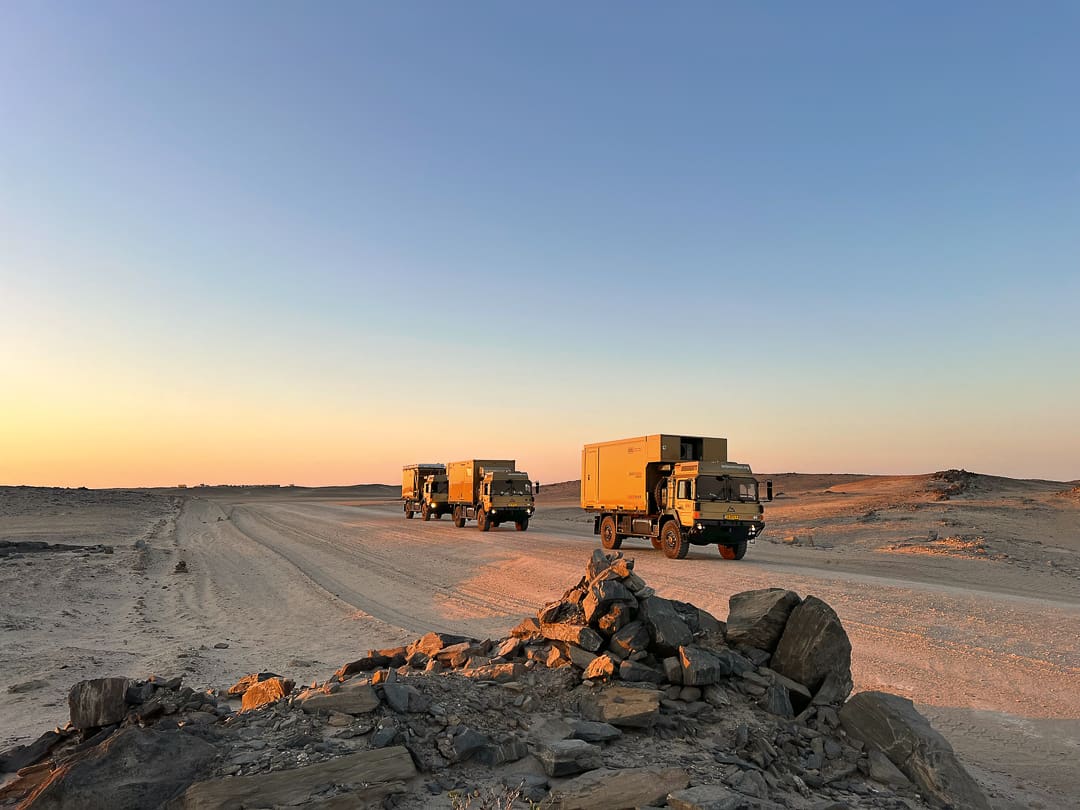
Burundi is a small country in the heart of Africa. There is a lovely road that runs from the largest city, Bujumbura, into the hills. “These hills are grass-covered and rolling, and [with continued apologies to Alan Paton] they are lovely beyond any singing of it.” Burundi is also the second poorest country in the world and the most densely populated country in Africa. It fools you in more ways than one. A visitor might expect to see children with distended bellies or adults thin and frail. Instead, she would find generally well-fed people who are happy, selfless, and beautiful. But the observer should not turn away, for Burundi is facing a looming crisis.
Historically, Burundi, with its fertile valleys and long rainy season, has been able to feed its population, with subsistence farming providing sufficient food for centuries. But in the last decades, the population has boomed from 3 million to 13 million. In the near future, the food system will be strained, as will all other systems: education, transportation, the economy, and, to our concern, healthcare.
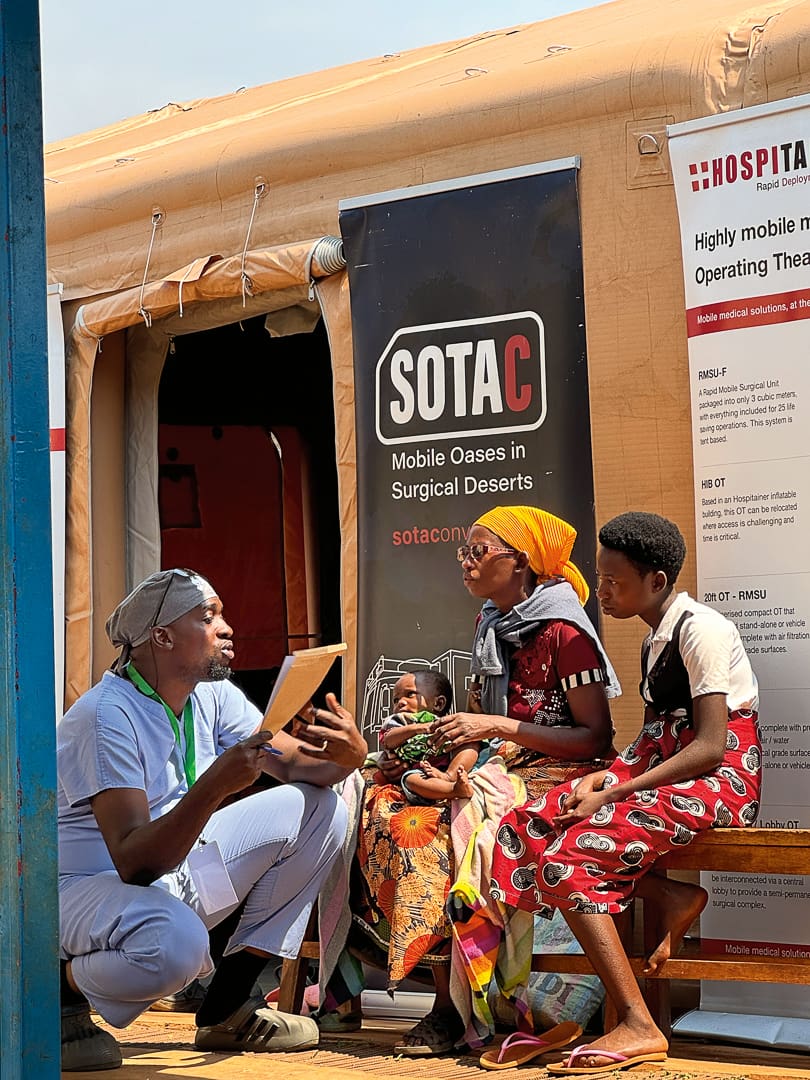
SOTA Convoys (SOTAC for short) is developing a model to improve healthcare in low and middle-income countries (LMICs). Specifically, SOTAC seeks to provide surgical care for those too poor, too remote, or too debilitated to access it themselves. Worldwide, two-thirds of humanity have no access to surgical care. Eighteen percent of the global disease burden can be treated through surgical procedures, and three times more people die from surgical need than AIDS, tuberculosis, and malaria combined. In sub-Saharan Africa, 9 out of 10 cannot access surgical care when they need it. Eighty-five percent of Burundi’s 13 million people live in rural areas, served mainly by eight surgeons.
Surgery, obstetrics, trauma, and anesthesia (SOTA) is an acronym widely used in global healthcare, from local medical agencies to the UN and the World Health Organization. Since 2015, much effort has gone into advocating for SOTA care, but not much progress has been made in providing it. SOTA Convoys is demonstrating that a three-truck convoy can accomplish what makes complete sense: bring the operating theater to the patient.
Why has such an obvious solution not been implemented before? Most people, surgeons included, expect surgery to be performed in a modern, Western, capital-intensive setting, which is out of reach for many LMICs. Well-intentioned donors have built hospitals with expensive equipment in places such as Africa, only to find them, months or years later, mostly empty or abandoned because staffing, supplies, or repairs are beyond the capacity of the local healthcare system. The result is “surgical deserts,” places limited by poverty, distance, terrain, or infrastructure that can never be a source for much-needed SOTA care.
SOTAC’s strategy utilizes self-sufficient, all-terrain overlanding vehicles to bring care to patients, made possible by recent developments, three of the most important being listed below.
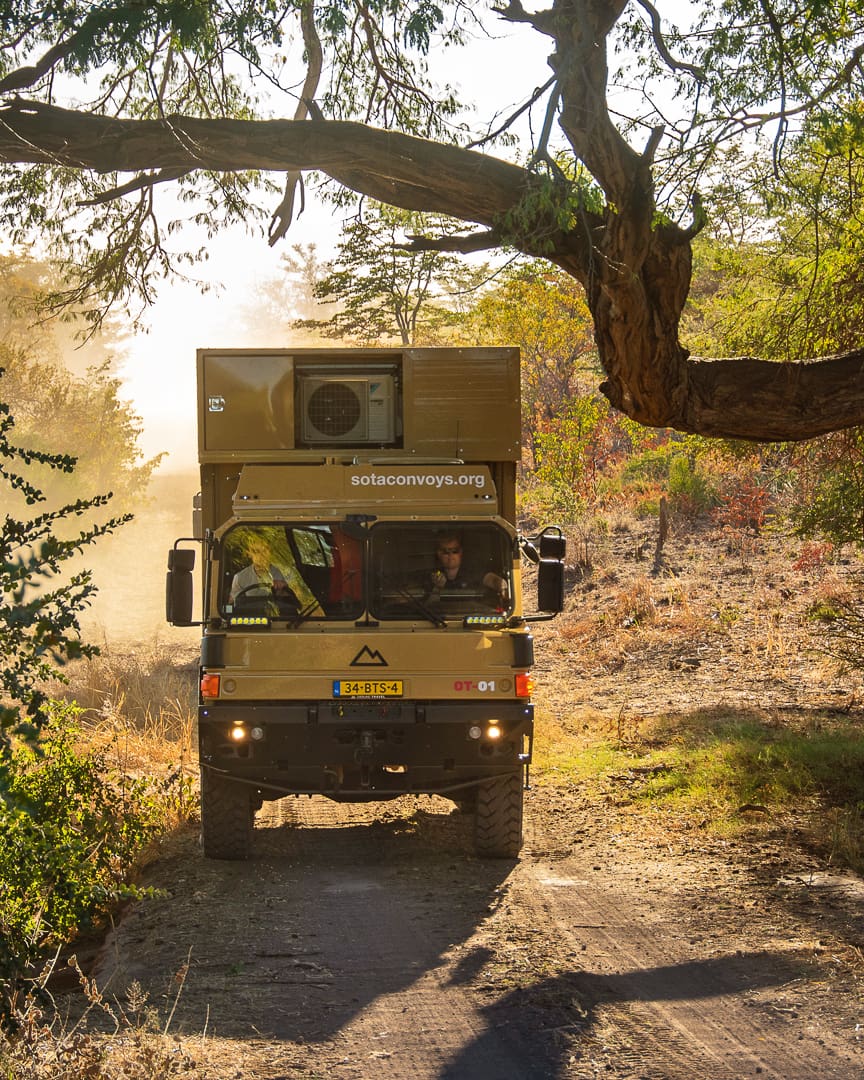
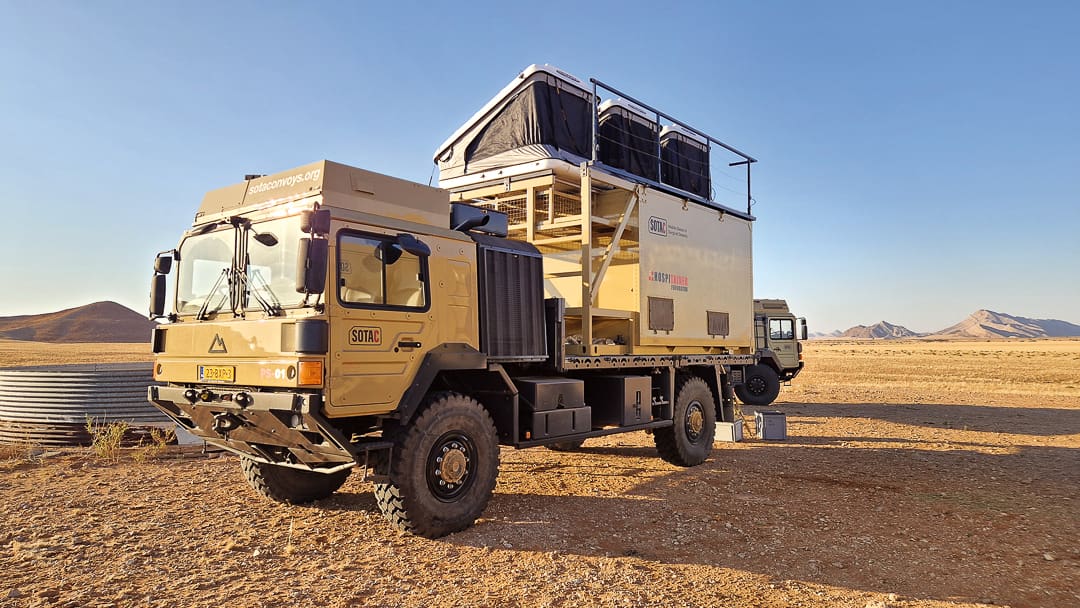
- Overlanding vehicles have come a long way in the last 10 years. SOTAC has taken three former British Army MAN HX60 trucks and formed a convoy with staff quarters (SQ), an operating theater (OT), and pharmacy/storage (PS). Both the SQ and the OT trucks have solar panels and a sophisticated battery system providing energy independence.
- Medical technology is smaller, lighter, more durable, and cheaper. An X-ray machine was once the size and weight of a refrigerator. Today, models are the size and weight of a carry-on, with better resolution and at a fraction of the cost. SOTAC’s OT is outfitted with small but durable equipment, from the anesthesia tower to the sterilizer.
- Communication technology provides inexpensive connections almost anywhere in the world. Cell phones are ubiquitous. Satellite-based Starlink, which SOTAC just installed, gives reliable connections in the world’s most remote areas. Telemedicine can put local practitioners in touch with any expert in the world.
The MAN HX60 vehicles are very capable as standard, with the only modification being long-range fuel tanks. Mounted on the HX60, the operating theater has a side door but also a hydraulic lift at the back, allowing a gurney to be raised and pushed into the theatre. The other two trucks are for support. One carries all the medical equipment and spare parts, and its roof has three clamshell rooftop tents for staff use. The other is a high-end motorhome built by Bliss Mobil, with more sleeping arrangements, a kitchen and bathroom, and a large table for dining and workspace. The fourth piece of the SOTAC setup, built by Hospitainer, is a 6 x 9-meter inflatable building that provides additional storage and space for pre- and post-op care.
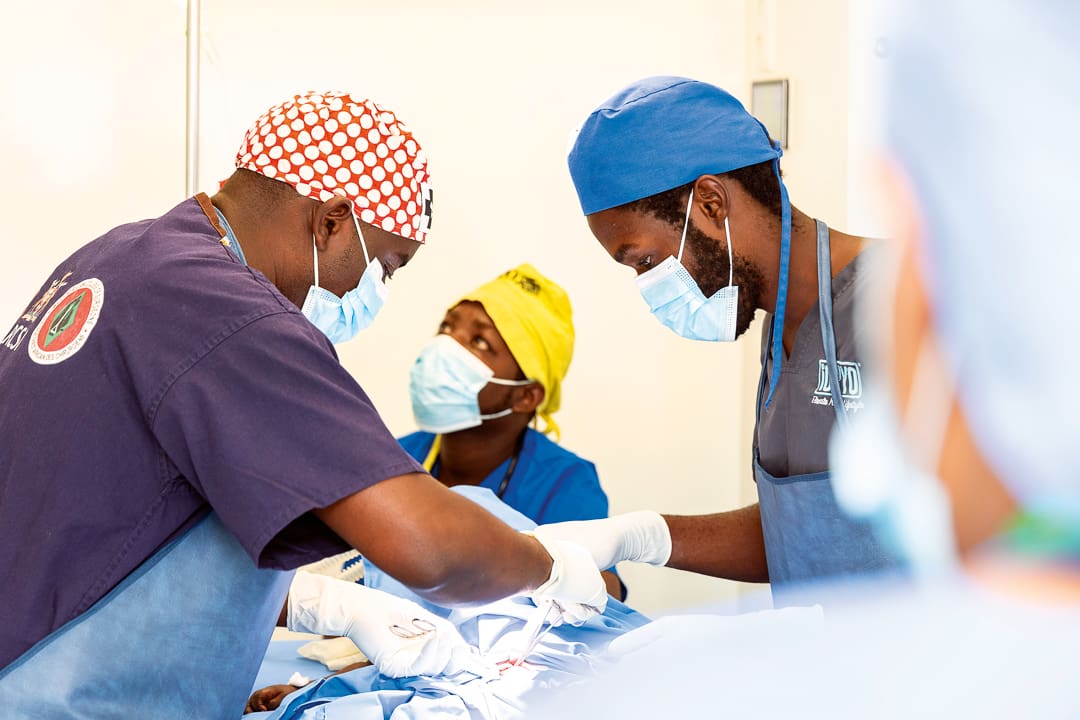
The OT features air-conditioning and a three-step air filtration system, including HEPA and UV lights, that creates a sterile environment. Besides the operating table and light, the provided medical equipment includes an anesthesia system that produces its own oxygen and medical air. There is also a backup power supply, making it perfect for low-resource environments, as well as a patient monitor, aspirating pump, ultrasound and electrosurgical units, a defibrillator, sterilizer, and a host of additional diagnostic tools and surgical instruments—and the result is a mobile oasis in a surgical desert.
Setting up a SOTAC surgical camp requires the cooperation of multiple partners. SOTAC policy intentionally seeks top-down approval from the country’s leader and its minister of health. As for staffing, rather than the neo-colonial model of Westerners coming in for fly-in, fly-out “parachute drops,” SOTAC empowers local healthcare workers to enhance and extend their outreach, leaving behind sustainable improvements. The local healthcare partner also tends to the licensing of staff and the transport of medicines, two bureaucratic hassles SOTAC tries to avoid. Contributions are encouraged from all organizations interested in promoting mobile surgical solutions. The Hospitainer Foundation, for example, often donates the funds for consumables, such as sterile gowns, sponges, and bandages, which local providers often lack.
The most recent SOTAC surgical camp was set up in Gisuru, a commune on the eastern edge of Burundi, near the border with Tanzania. SOTAC’s medical partner was Mercy Surgeons, a group of Burundian surgeons dedicated to providing surgical care to those with no access, especially children and rural populations. Dr. Alliance Niyukuri, the first certified and the only pediatric surgeon in Burundi and the team leader, remembers: “The moment our teams began setting up, word spread quickly that the surgeons had arrived naza camions [“with trucks” in Kirundi, the local language]. Within minutes, crowds of patients gathered, eager to be seen by and helped by a surgeon.” The team reviewed 164 patients in the clinic, and 35 surgical procedures were completed. Priorities were children’s hernia repairs and cases suitable for the surgical technique WALANT (wide awake local anesthesia no tourniquet), a simpler, less-invasive method perfect for low-resource settings. Volunteers engaged in management and coordination, communication and triage, data collection, and biomedical support are critical to the Mercy Surgeons and SOTAC model.
On the last day of surgery for the SOTAC-Mercy Surgeons collaboration, Dr. Alliance was pleased that so many in Gisuru were helped, yet saddened by the many who were turned away. The mother of a three-year-old boy, who could not be scheduled for surgery, came near the OT in a last attempt to have her child operated on. Expecting a last-minute plea or a guilt-trip, the doctor worried he would have to explain again why it was not possible. But the woman said, “Muganga, muganga, nukuri naho umwana wanje atashikiriwe, ndabashimiye cane gose. Komwanje twari tubakeneye kandi hari benshi mwafashije (Doctor, doctor, truly, even if you could not treat my son, I thank you for coming. We needed you, and you have helped many).” This snapshot, a mother looking beyond her disappointment to rejoice with those who were helped, is typical of the selfless hearts of the Burundi people. SOTAC and its partners will return soon.
Get Involved
Overlanders can play a vital role in supporting SOTAC in its efforts to bring surgical care to remote regions. Follow our journey on Instagram and the website. Note the convoy’s current location and upcoming deployments, spread the word, and visit one of our surgical camps if you’re in the area. For those who want to be more hands-on, we will soon welcome experienced overlanders to volunteer as drivers, helping us move the convoy safely between camps and across borders. Supporters can also donate via the website to help cover our deployment costs. And medical organizations, local to international, can contact us with ways they can assist, from supplies and equipment to advice and staffing. Visit us at sotaconvoys.org, and contact us at [email protected].
Editor’s Note: This article was originally published in Overland Journal’s Fall 2026 Issue.
