

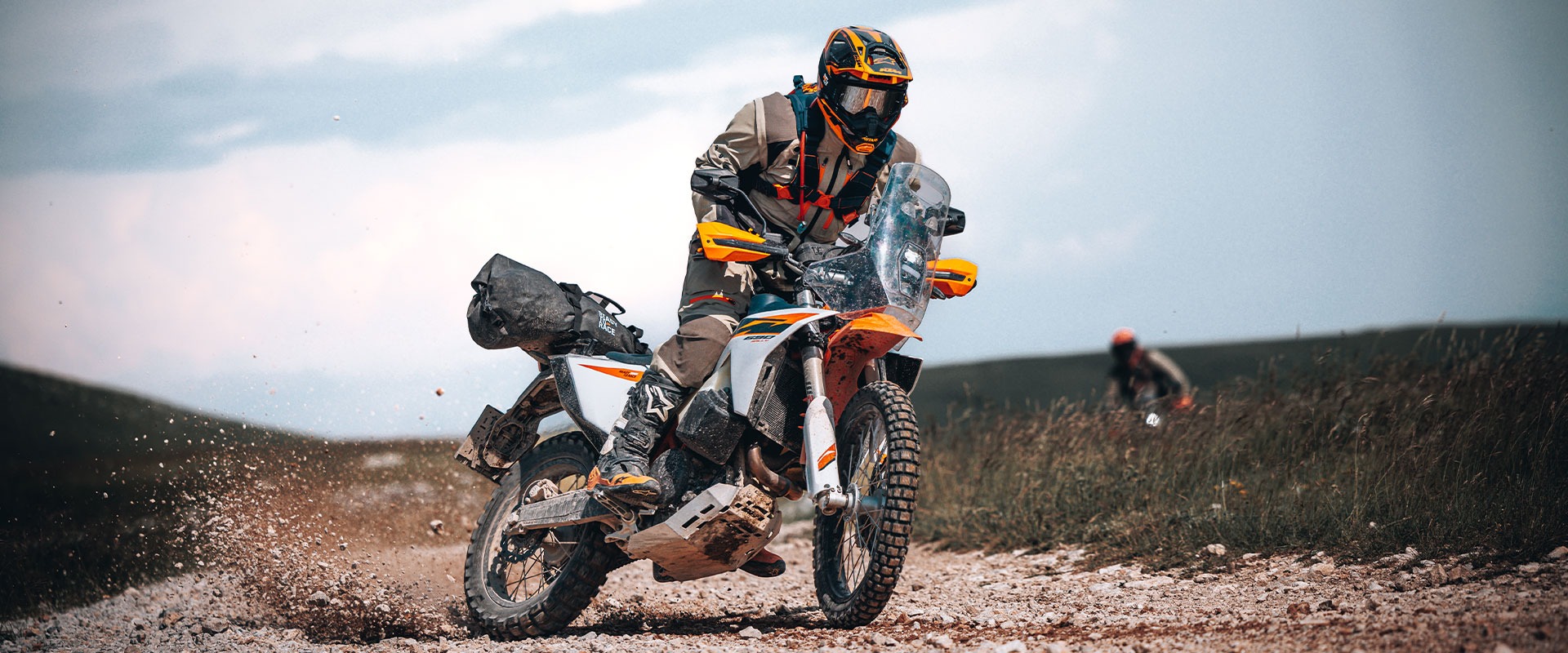
KTM has introduced the 2027 KTM 690 Rally, a single-cylinder adventure motorcycle developed for long-distance travel and technical off-road riding. Drawing visual and functional inspiration from the company’s rally-raid competition machines, the 690 Rally combines substantial fuel capacity, adjustable suspension, off-road electronics, and narrow bodywork intended to improve rider control. However, questions remain about how well this rally-inspired platform will accommodate the practical demands of extended adventure travel.
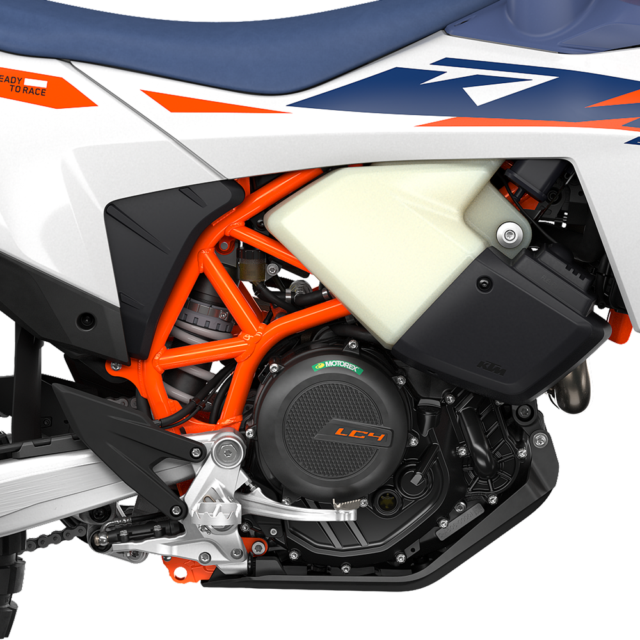
At its center is the latest generation of KTM’s liquid-cooled LC4 single-cylinder engine. The 692.7cc four-stroke produces a claimed 79 PS, approximately 78 horsepower, and 73 newton-meters of torque. Power is delivered through a 6-speed transmission, while a Braktec hydraulic clutch is fitted as standard. KTM also offers Quickshifter+ as an option, allowing clutchless upshifts and downshifts.
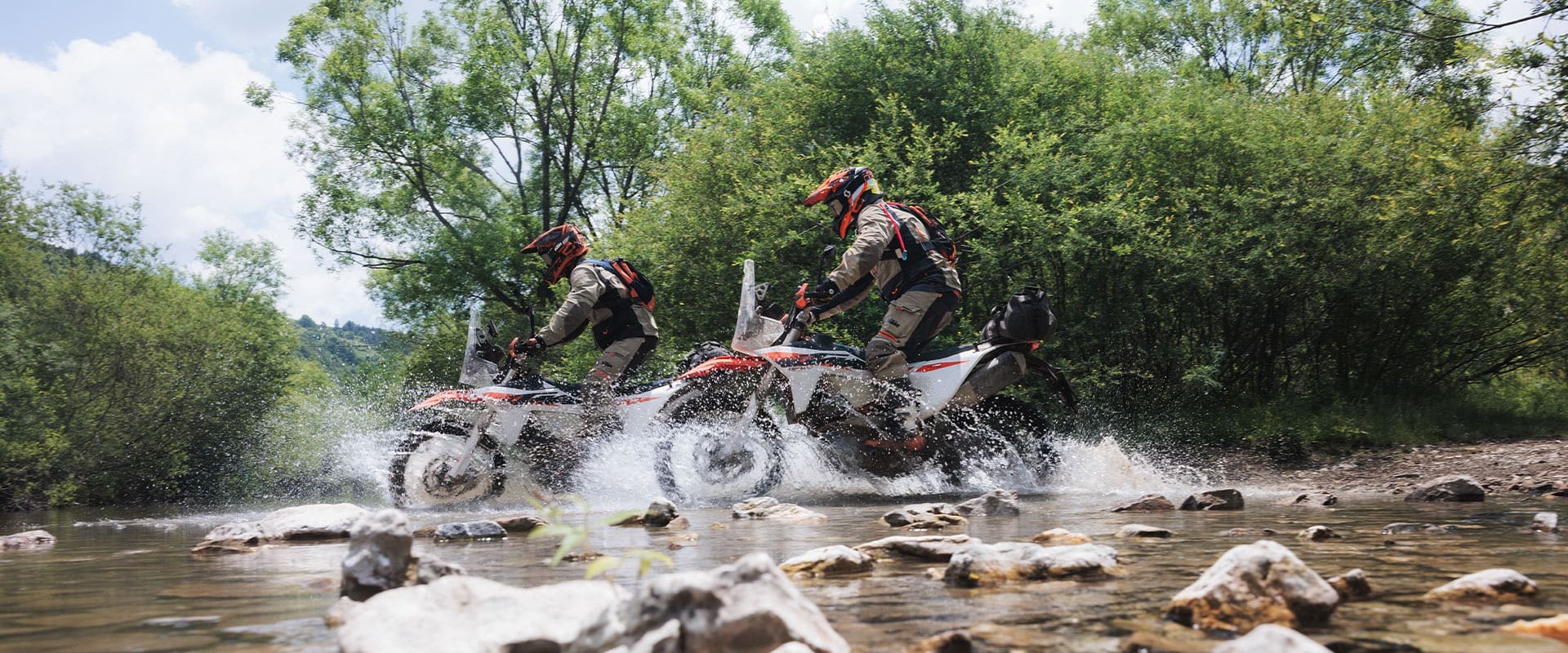
The engine has been configured to support demanding off-road use while remaining suitable for longer journeys. KTM specifies an oil-change interval of 15,000 kilometers, or about 9,300 miles, which should reduce servicing needs on extended trips. The company has not published a claimed riding range, but the motorcycle carries 5.28 gallons, or 20 liters, of fuel.
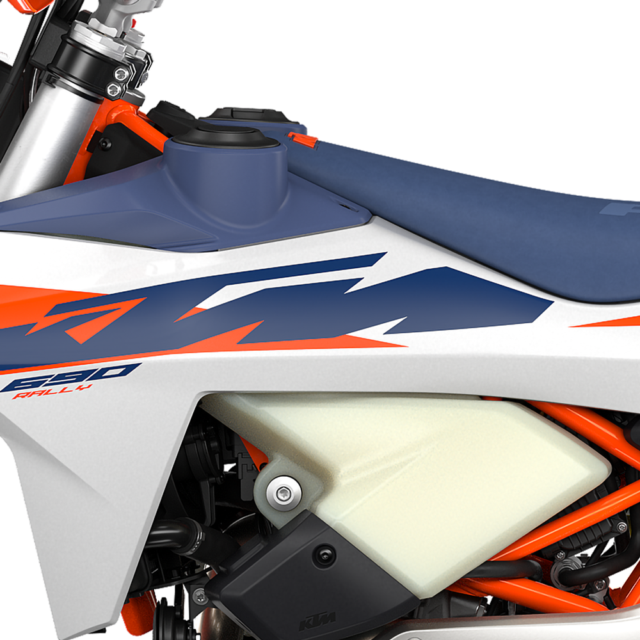
Rather than relying on a single enlarged tank, the 690 Rally supplements its rear tank with two front-mounted tanks. These contribute 1.84 gallons, or 7 liters, to the motorcycle’s total capacity. A dedicated fuel-management system lets the rider switch between the front and rear tanks with a handlebar-mounted control. The low-fuel warning light monitors whichever tank is selected, giving the rider greater control over fuel distribution and reserves.

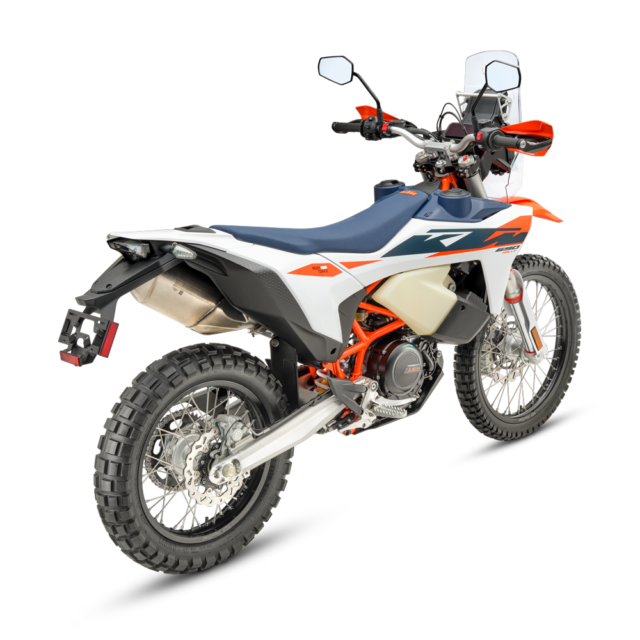
However, the fuel arrangement may pose challenges when the motorcycle is set up for long-distance travel. The rear filler cap sits on the tail section, where a tail bag or rackless luggage system could block access. Riders may therefore need to loosen or remove their luggage whenever they refuel the rear tank.
The structural plastic rear fuel tank also serves as the motorcycle’s subframe. This helps reduce weight, but travelers carrying substantial luggage over rough terrain may want to consider how the tank, mounting points, and associated hardware will cope with repeated loads. Reinforced luggage supports or pannier racks may prove necessary, although these would add weight and increase the motorcycle’s overall width.
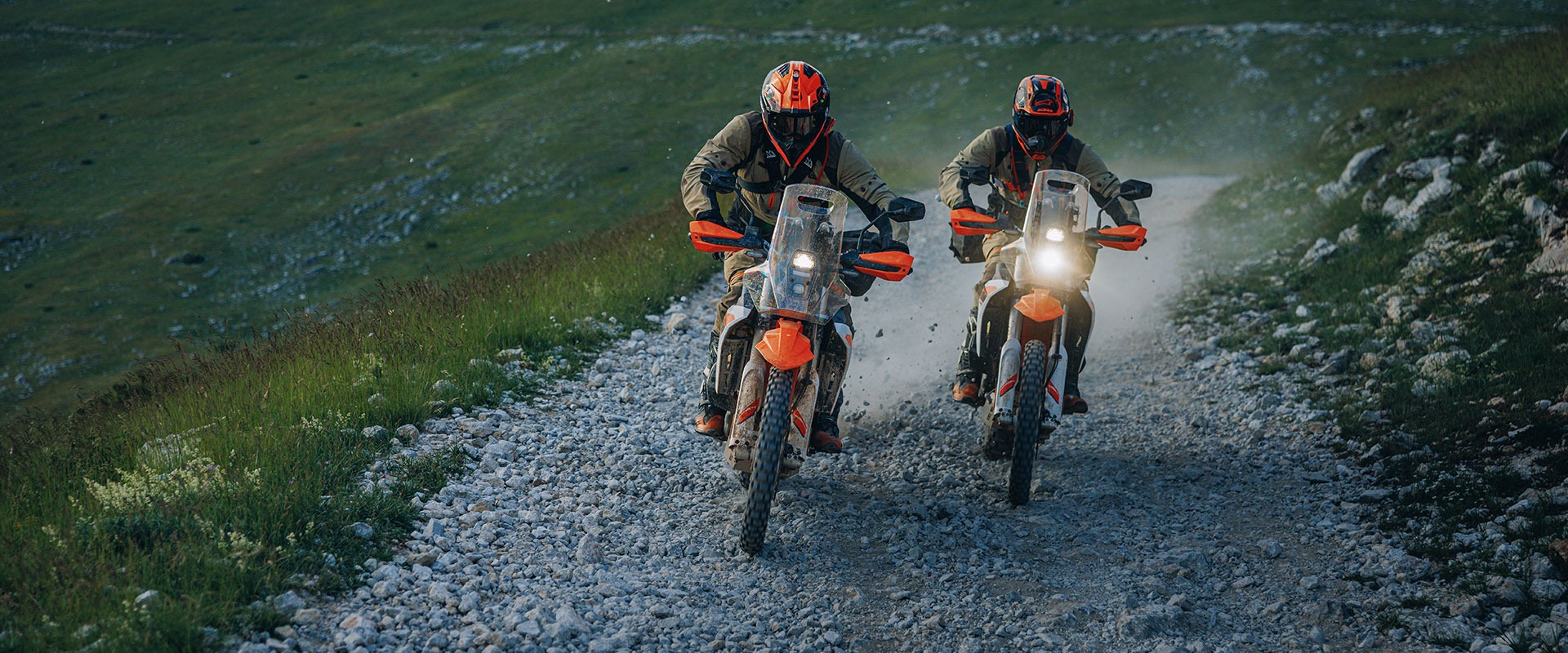
Fuel distribution will also require some attention. Heavy luggage placed toward the rear, combined with fuel being consumed from either the front or rear tanks, could noticeably alter the motorcycle’s balance. Riders may need to manage tank selection carefully to maintain predictable handling, particularly on loose or technical terrain.
The high-mounted exhaust presents another consideration for soft luggage. Rackless systems will require suitable spacing or heat shielding to prevent contact with the exhaust. Hard panniers could address that issue, but they would also compromise the narrow profile that gives a rally-style motorcycle much of its agility.
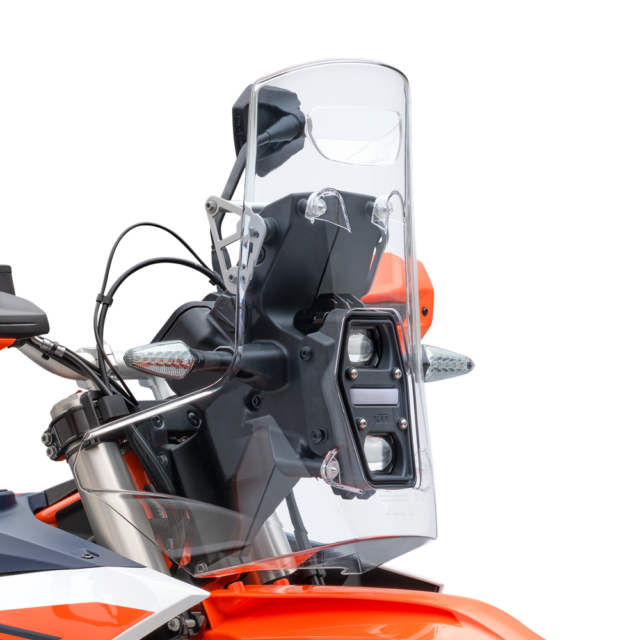
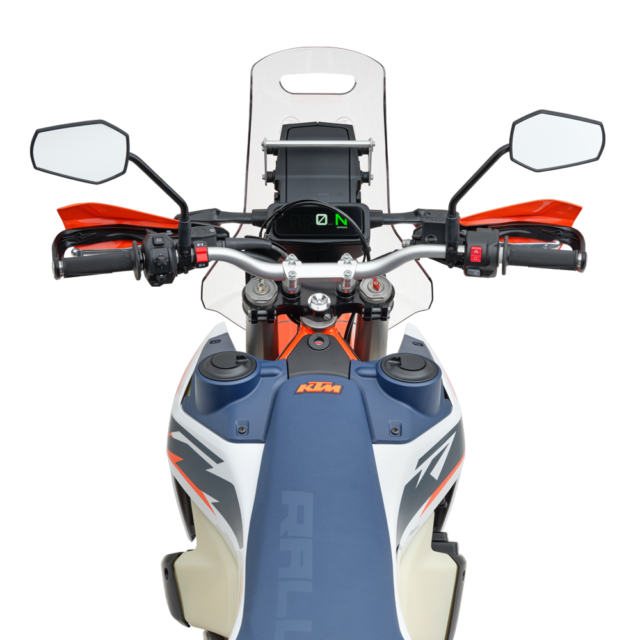
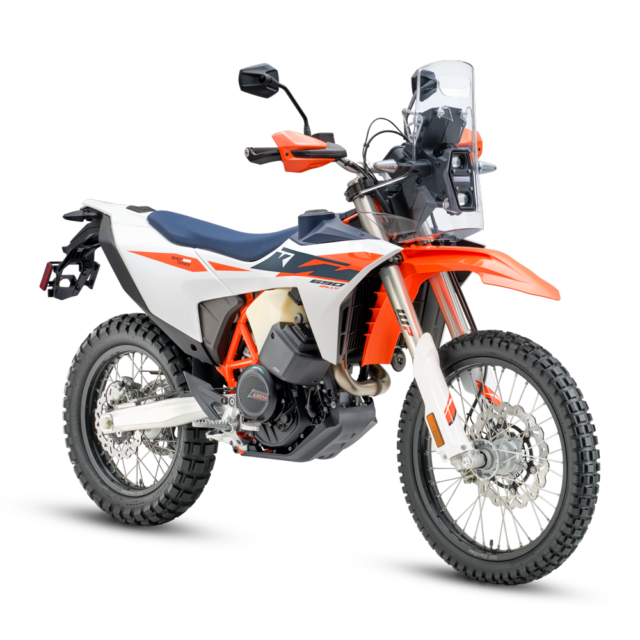
A purpose-built rally tower and windshield provide wind protection during faster road sections and long days in the saddle. The tower incorporates LED lighting derived from the KTM 450 Rally Replica, while a 4.2-inch TFT display presents vehicle information, riding settings, and navigation. Slim bodywork leaves room for movement as the rider transitions between seated and standing positions. Depending on the rider’s height and intended use, the windshield and navigation arrangement may still require modification for extended touring.
The electronics package includes street and off-road riding modes, with rally mode available as an option. Rally mode provides additional adjustment of throttle response and traction control. The motorcycle also features cornering ABS and motorcycle traction control, both of which use data from a six-axis sensor to respond to lean angle and vehicle movement.
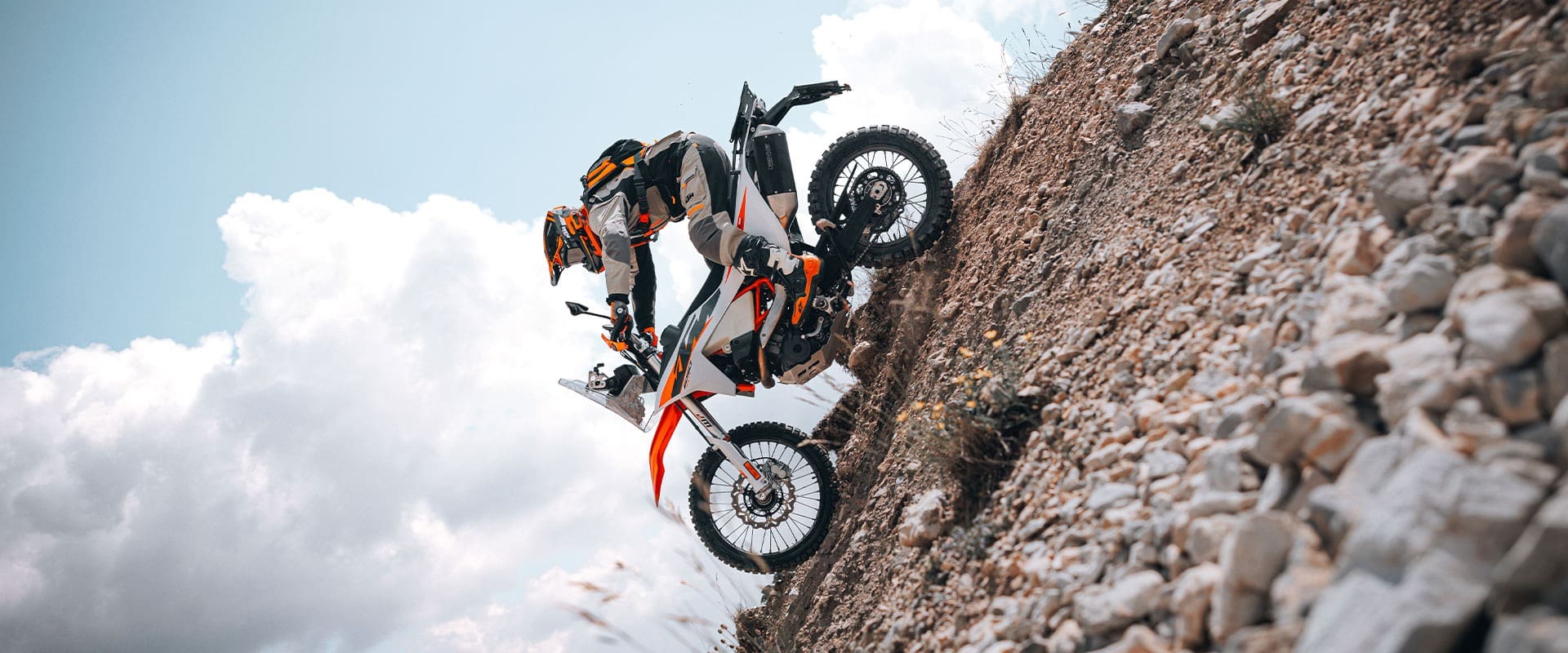
KTM’s Dynamic Slip Adjust function is available through the optional rally mode. The system can temporarily allow additional rear-wheel slip when more drive is needed, then returns traction control to the rider’s selected setting. Off-road ABS allows the rear-wheel system to be disabled while retaining ABS assistance at the front. Riders can also deactivate ABS completely when conditions or personal preference require it.
The chassis is supported by WP Xplor suspension. The fork offers separate compression and rebound damping adjustments, while the rear shock can be adjusted for rebound, preload, and high- and low-speed compression damping. This range of adjustment should help owners account for different terrain, riding styles, fuel loads, and luggage configurations.
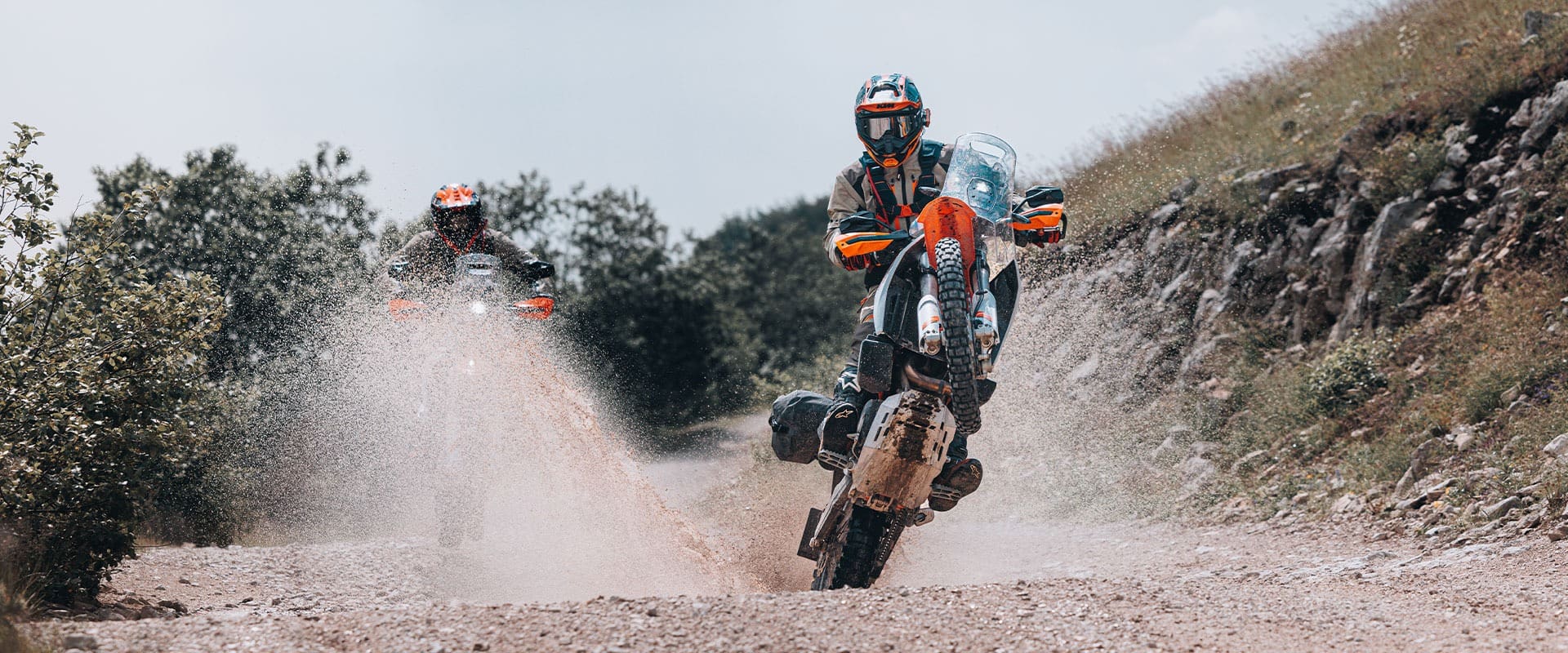
A conventional off-road wheel arrangement pairs a 21-inch front wheel with an 18-inch rear. KTM has selected the excellent Continental TKC 80 tires, which are intended for mixed use across pavement, gravel, and dirt. Brembo braking components include a 300-millimeter front disc and a 240-millimeter rear disc.
The 690 Rally has a seat height of 36.8 inches, or 935 millimeters, reflecting its off-road focus and long-travel suspension. That height will limit accessibility for some riders, but the seat itself may prove the greater concern during extended journeys. KTM has retained the narrow, firm enduro-style design associated with the 690 Enduro R. Although this shape lets the rider move freely off-road, it is unlikely to provide the comfort expected during consecutive full days in the saddle. Many owners may need to budget for an aftermarket comfort seat or replacement foam.
The rider triangle is intended to support both seated and standing control, while wide “no-dirt” footpegs are designed to limit mud accumulation. Optional rubber footpeg inserts should reduce vibration and improve comfort during extended paved-road travel.
The 2027 KTM 690 Rally occupies a focused position between lightweight dual-sport motorcycles and larger, multi-cylinder adventure bikes. Its single-cylinder engine, 20-liter fuel capacity, rally bodywork, adjustable suspension, and modern electronics should appeal to riders who prioritize off-road performance but still need sufficient range for multi-day travel.
However, fuel access, luggage support, exhaust clearance, seat comfort, and the motorcycle’s considerable height complicate its credentials as a ready-made long-distance platform. Each issue can likely be addressed through careful packing or aftermarket components, but those solutions will add weight and expense while potentially compromising the motorcycle’s narrow proportions.
KTM has not announced United States pricing or confirmed when the motorcycle will reach American dealerships. Early estimates place its price between $14,000 and $15,000, before any modifications required to prepare it for extended travel.
So, who is the 690 Rally for? It appears best suited to riders with long legs, resilient backsides, and a willingness to travel considerable distances to reach the technical tracks where this motorcycle should shine. It may not arrive as a complete long-distance adventure machine, but for riders prepared to address its practical shortcomings, it could provide a capable foundation.
Read More: Overland News of the Week, September 11, 2026
Our No Compromise Clause: We do not accept advertorial content or allow advertising to influence our coverage, and our contributors are guaranteed editorial independence. Overland Collective may earn a small commission from affiliate links included in this article. We appreciate your support.
