

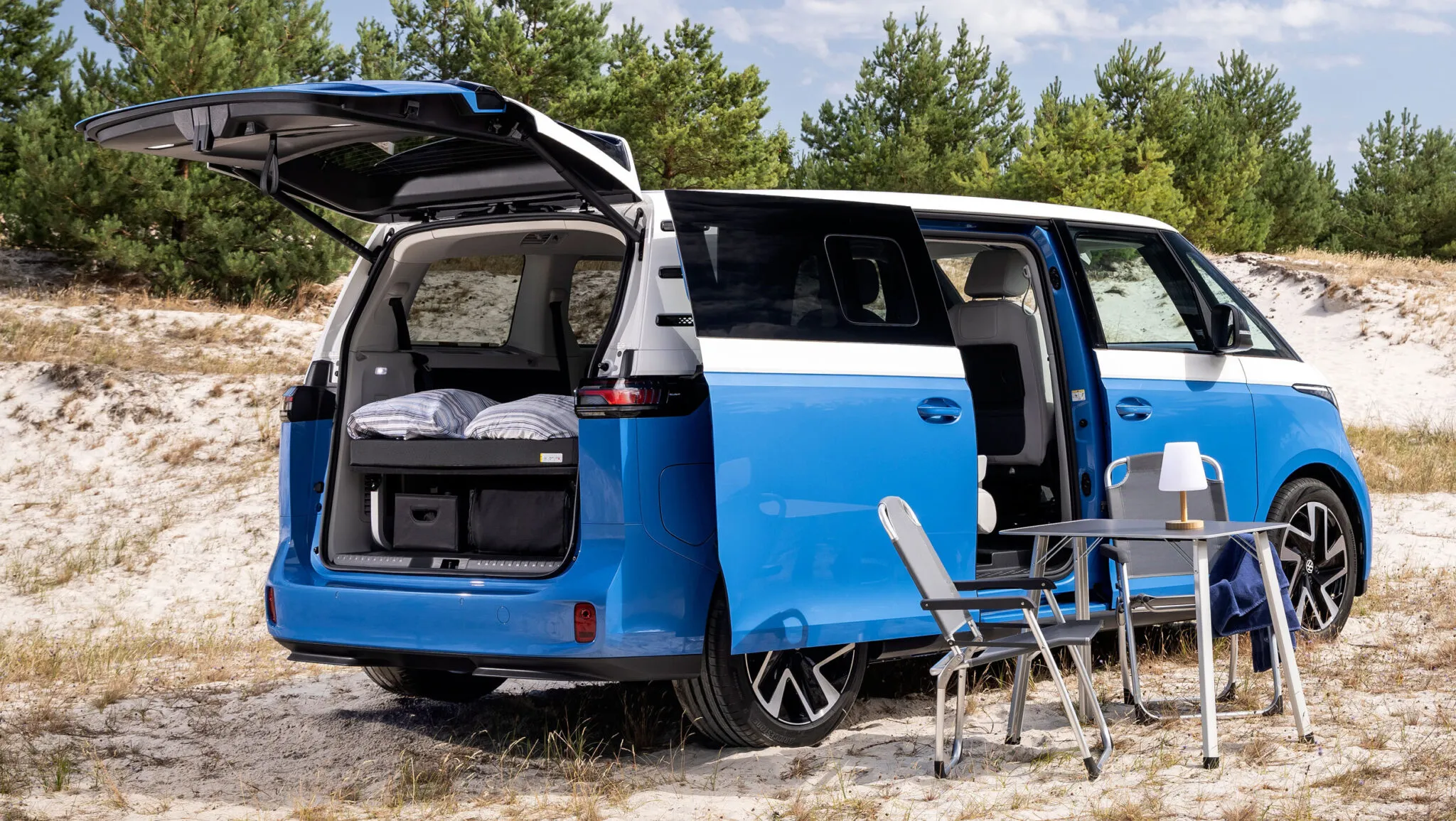
Volkswagen has finally turned the fully electric ID Buzz into the camper van many people expected from the beginning. The new ID California Cruise is the first fully electric member of Volkswagen’s upcoming California family of adventure EVs, and it brings some genuinely clever ideas to the campsite.
It also raises a much harder question for anyone who spends more time on dirt than pavement: How far can you realistically take an electric overlander, and how close are we to the mythical “electric future”?
The What
The ID California Cruise is based on the ID Buzz Pro and will be offered in short- and long-wheelbase configurations. The short-wheelbase version uses a 79-kilowatt-hour usable battery and is rated for roughly 286 miles of WLTP range. The long-wheelbase version gets an 86-kilowatt-hour battery and reaches approximately 302 miles. Those figures sound respectable until you start adding passengers, camping gear, cold weather, elevation changes, and sustained highway speeds.
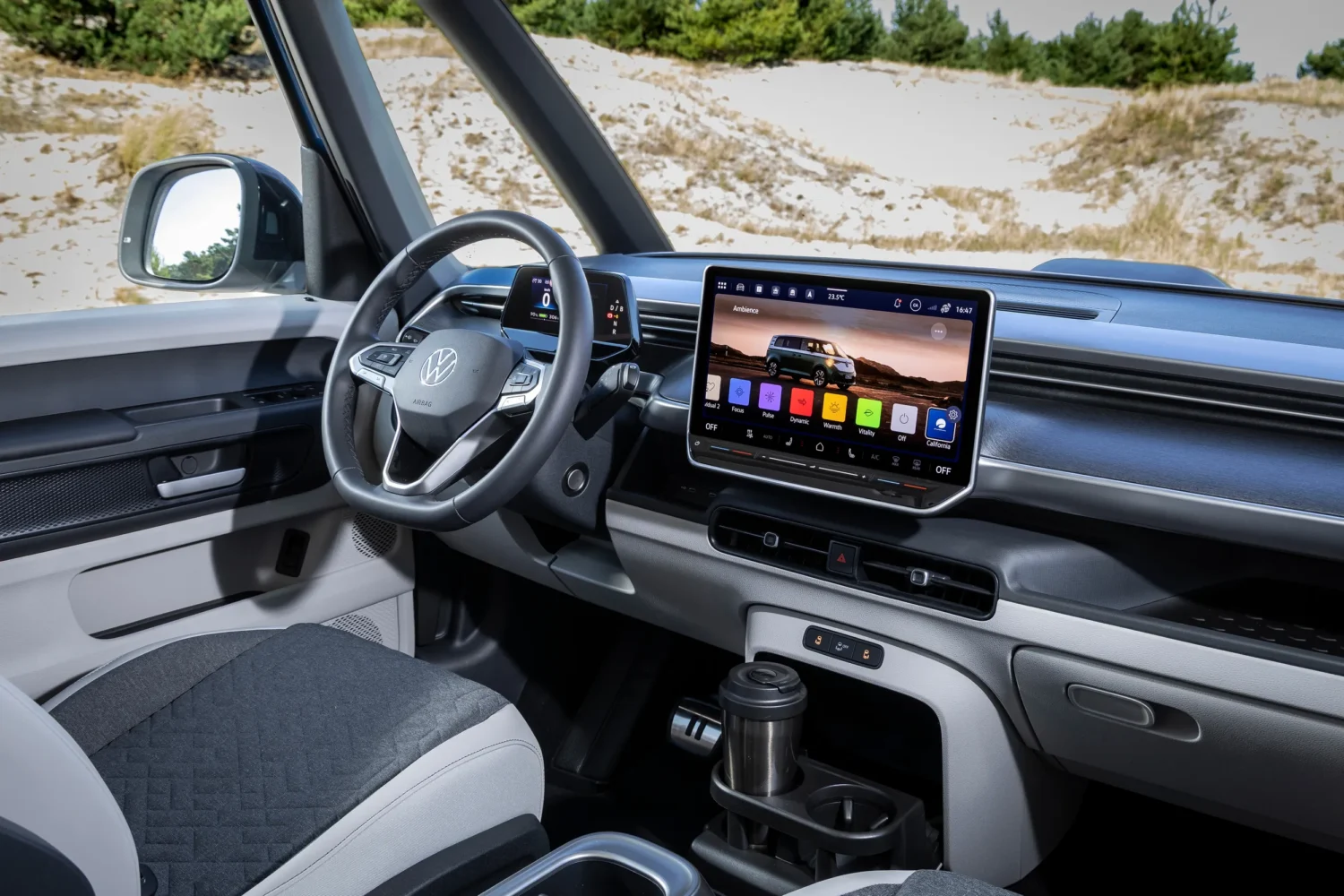
For normal road trips on interstates or major highways, charging should be relatively painless. The California Cruise supports DC fast charging, with the long-wheelbase version accepting up to 200 kilowatts. Volkswagen has also integrated charging stops into its California trip-planning system and supports Plug and Charge at compatible stations.
Ground clearance is another factor to consider if you plan on leaving major roads. The ID California Cruise is fundamentally a road-going electric van, with its battery mounted beneath the floor. Volkswagen has not positioned it as a dedicated off-road vehicle, and there is no indication that the California Cruise receives the kind of suspension, underbody protection, or terrain-focused hardware found on a purpose-built four-wheel-drive vehicle.
Creature Comforts
The camping equipment itself is impressive for a relatively compact van, and we should expect no less from a company that began manufacturing the benchmark of #vanlife a few decades before hashtags were even invented.
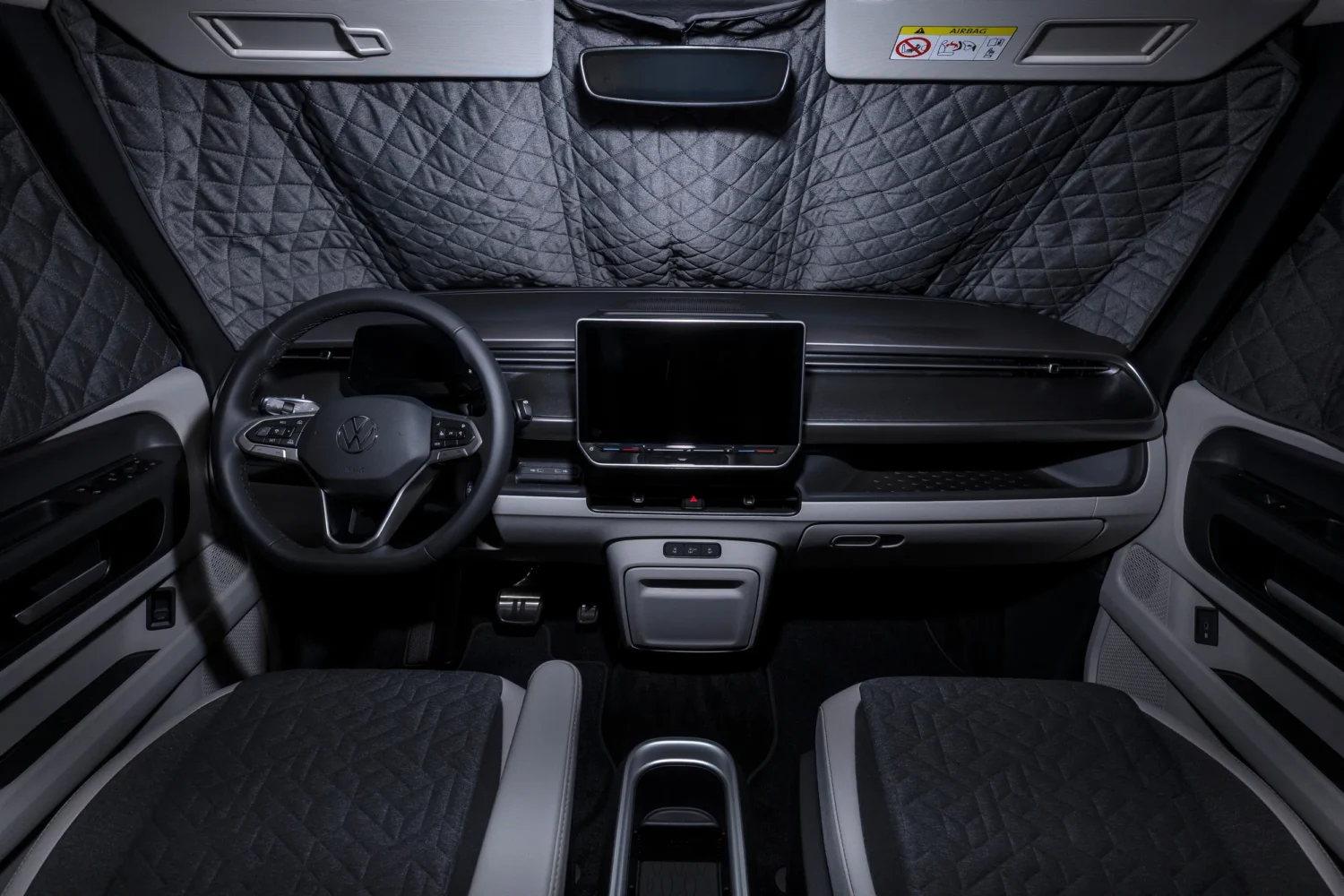
The folding bed measures just over 6.5 feet long, and the van comes with blackout blinds, ventilation panels for the front windows, camping furniture, and a dedicated system for maintaining cabin temperature while parked. Volkswagen also offers vehicle-to-load capability, allowing the van to supply up to 3.6 kilowatts of electricity to external equipment. This is ideal for induction cooking, running a fridge, charging batteries, or powering other electrical gear without the need for a conventional generator.
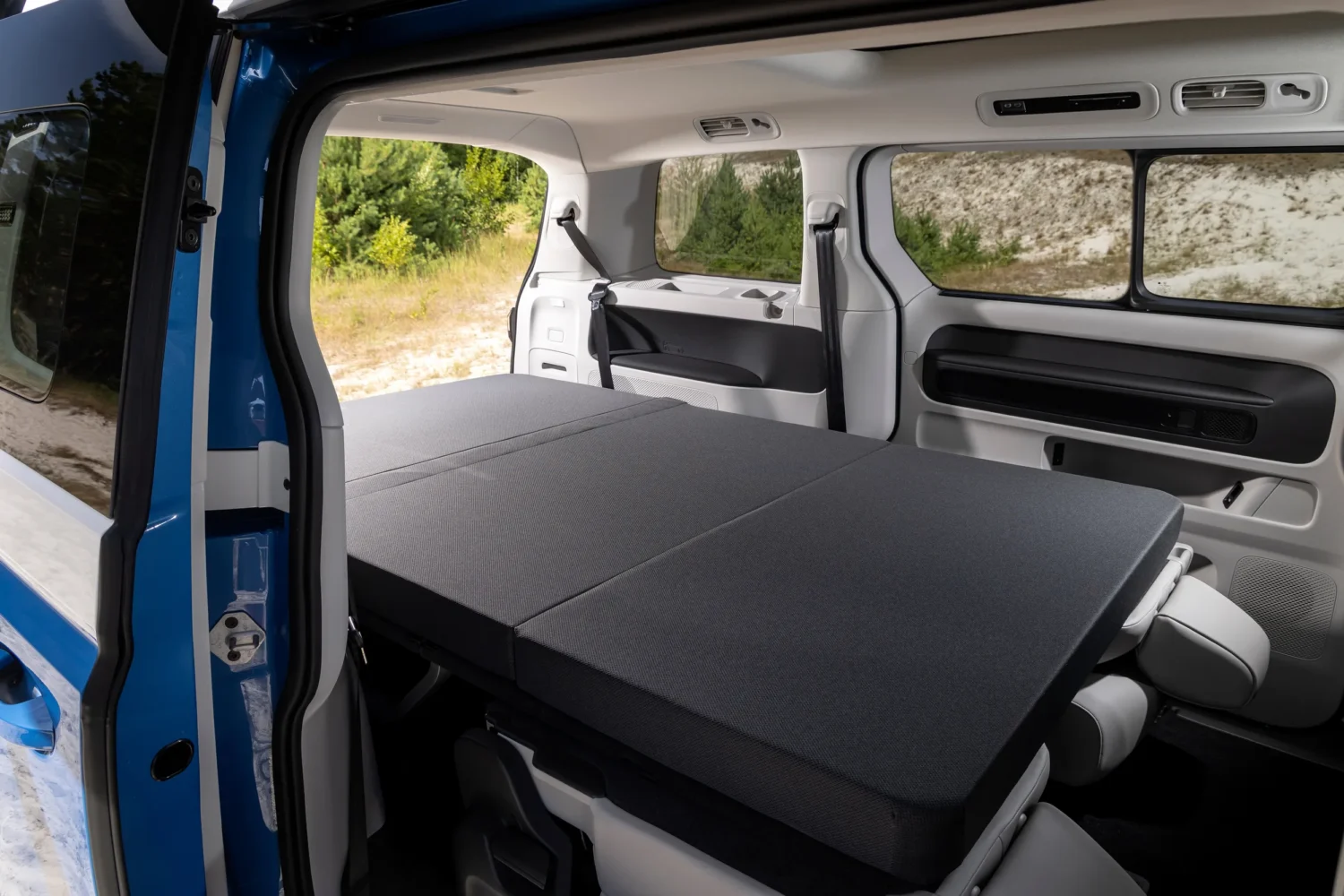
Sadly, this first iteration of the California Cruise does not have the traditional pop-top roof or built-in kitchen that helped make the California and Westfalia world famous. Volkswagen is treating this as the beginning of a new electric California family, with additional models planned through 2028. A more fully equipped version with a kitchen and sleeping roof is expected as the lineup expands, though a timeline has not been provided.
Price starts at €60,761 ($70,500) in Germany, before options. That puts it firmly into expensive camper territory, although the factory integration and electric drivetrain provide advantages that conventional conversions cannot easily duplicate.
U.S. Market
Volkswagen has confirmed that it is bringing the ID Buzz back for the 2027 model year with a new Tourer 4Motion model. It gets a folding sleeping platform, window shades, ventilation panels, an outdoor table and chairs, and an overnight climate function.
There is currently no confirmed North American launch date for the full California Cruise camper, though it seems kind of inevitable given that the ID Buzz itself is coming back.
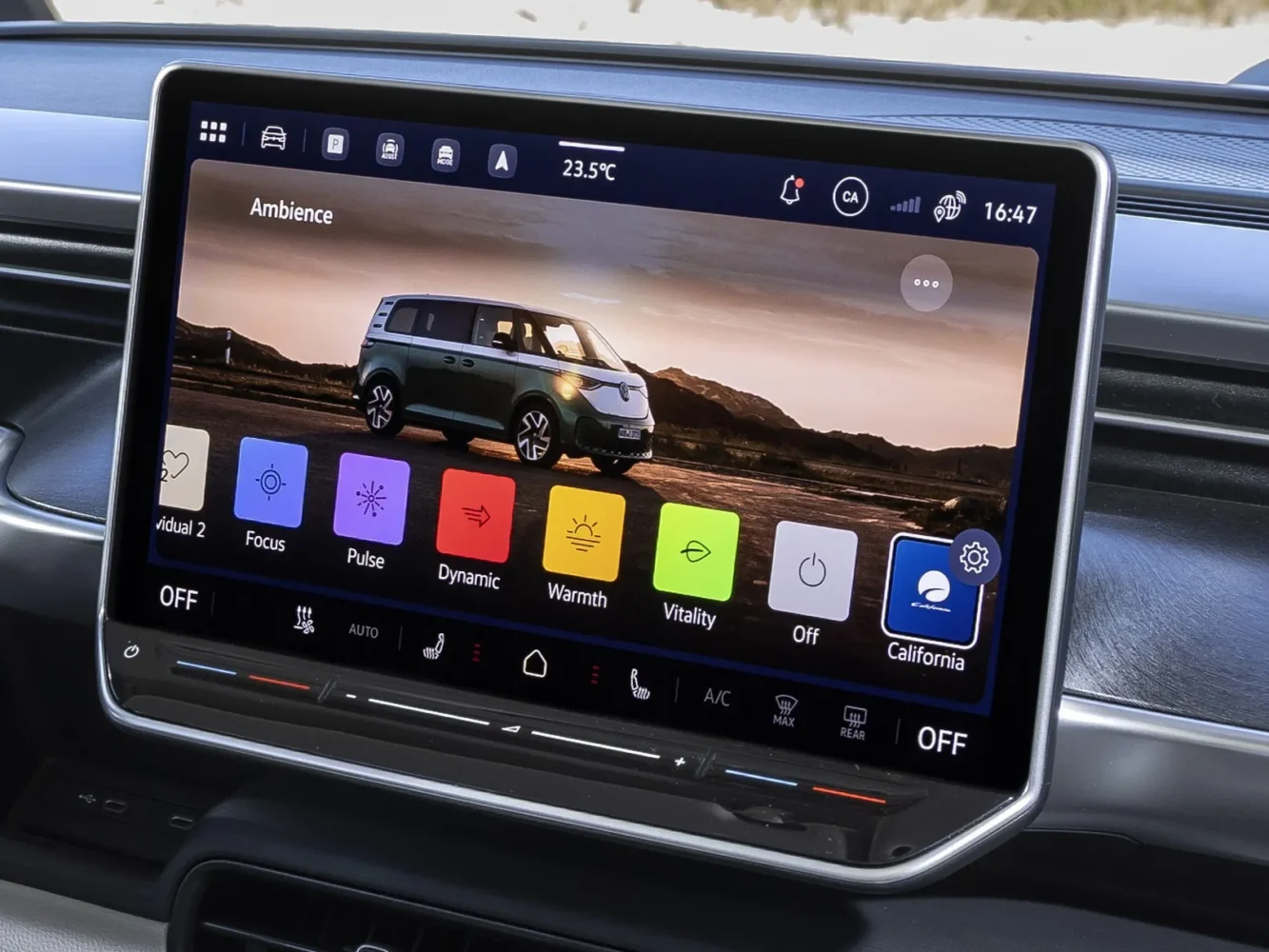
An electric California would be an excellent platform for established routes where charging is plentiful. I’m certain it would be very comfortable for weekend camping, national parks, and long highway trips. Quiet electric propulsion and the ability to use the vehicle itself as a campsite power source are nice-to-haves, and with current gas and diesel prices, a cross-country road trip would cost half as much using electrons.
While the van is rated for 300 miles, when fully loaded in the real world, that range would likely be less. Throw in some cold weather and nasty roads, and it could be a lot less. I have no doubt that will change as charging infrastructure improves, and Volkswagen develops the rest of the California EV family. For now, the ID California Cruise is a first serious attempt to figure out what an electric camper should actually be.
Read more: VW Considers Pickup for US Market
Images: VW
Our No Compromise Clause: We do not accept advertorial content or allow advertising to influence our coverage, and our contributors are guaranteed editorial independence. Overland Collective may earn a small commission from affiliate links included in this article. We appreciate your support.
