

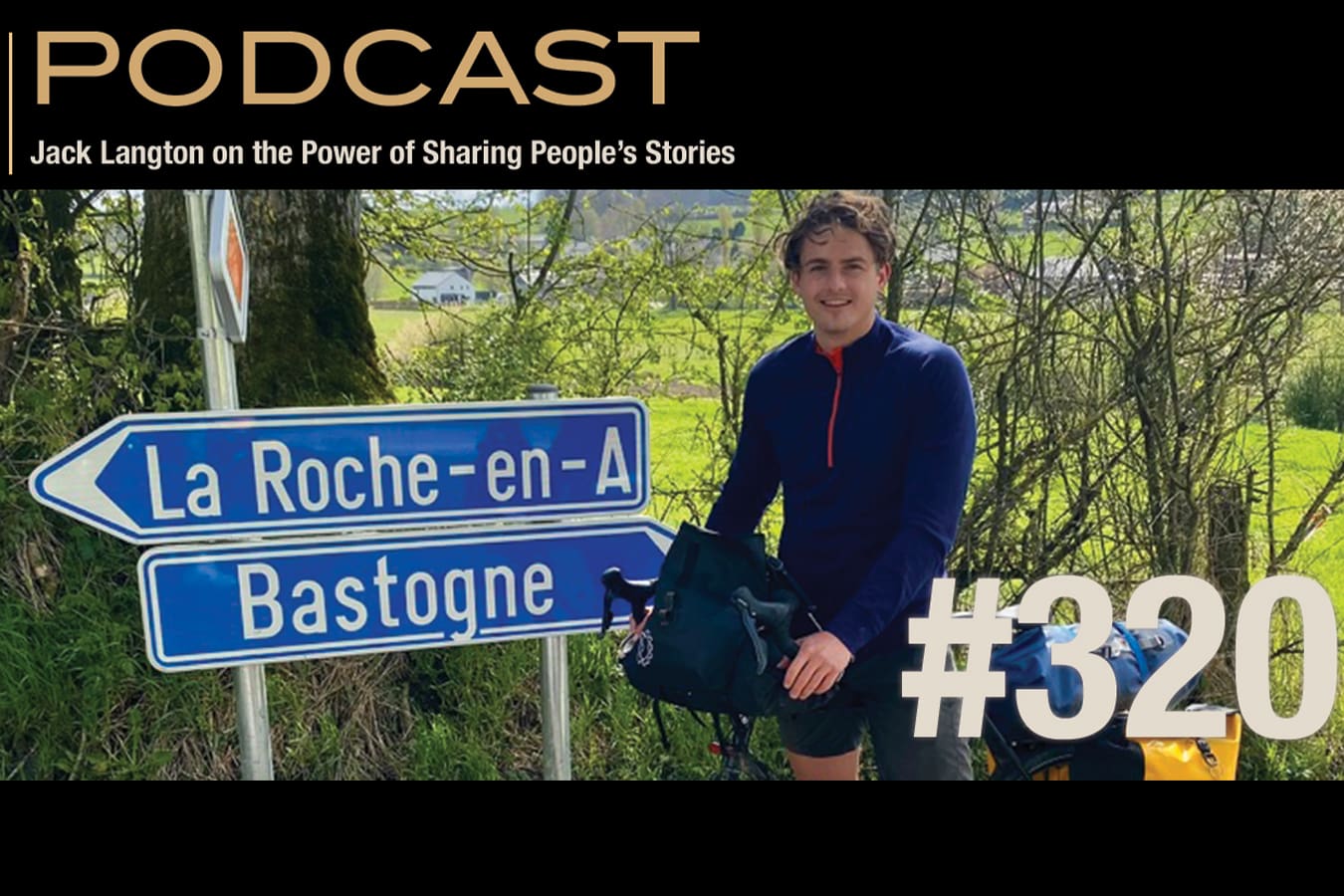
Overland Journal Podcast host Ashley Giordano interviews Jack Langton, who cycled 8,000 miles from London to Singapore. Over 150 days, Langton trained on the road, braved solo camping, and navigated intense environments like India and Turkey. He emphasizes the overwhelming generosity he encountered, especially throughout Central Asia. After returning to his consulting career, Langton launched “The Human Project,” creating mini-documentaries that capture diverse global stories. His filmmaking journey has taken him across the U.S., East Africa, and Europe. Jack discusses building trust with subjects ranging from traveling circus performers to NGOs tackling social issues like FGM and albinism-related threats in Kenya and Uganda. Through these short films, he highlights resilient communities, including Nairobi’s street kids and Ugandan skate culture, bridging human experiences through digital storytelling.
Overland Journal Podcast Episode #320
Tune in Apple Podcasts | Spotify | YouTube
The Overland Journal Podcast is brought to you this week by Hankook Dynapro Tire and Mohab
New to Overland Journal and want to grab a subscription! Visit Overland Journal and enter code: overlandpodcast at checkout for 20% off. We thank you for being a subscriber.
Guest Bio
Jack Langton is the founder of HUMN Project – a media brand built around a simple belief: everyone has a story worth sharing. HUMN tells the stories of people and communities that are extraordinary, unique, overlooked, or simply worth knowing about. Since inception in August 2025, HUMN videos have seen nearly 50 million views. Jack has spent the past three months filming solo across East Africa – embedding himself with a wide variety of groups. He is currently in Kampala, Uganda.
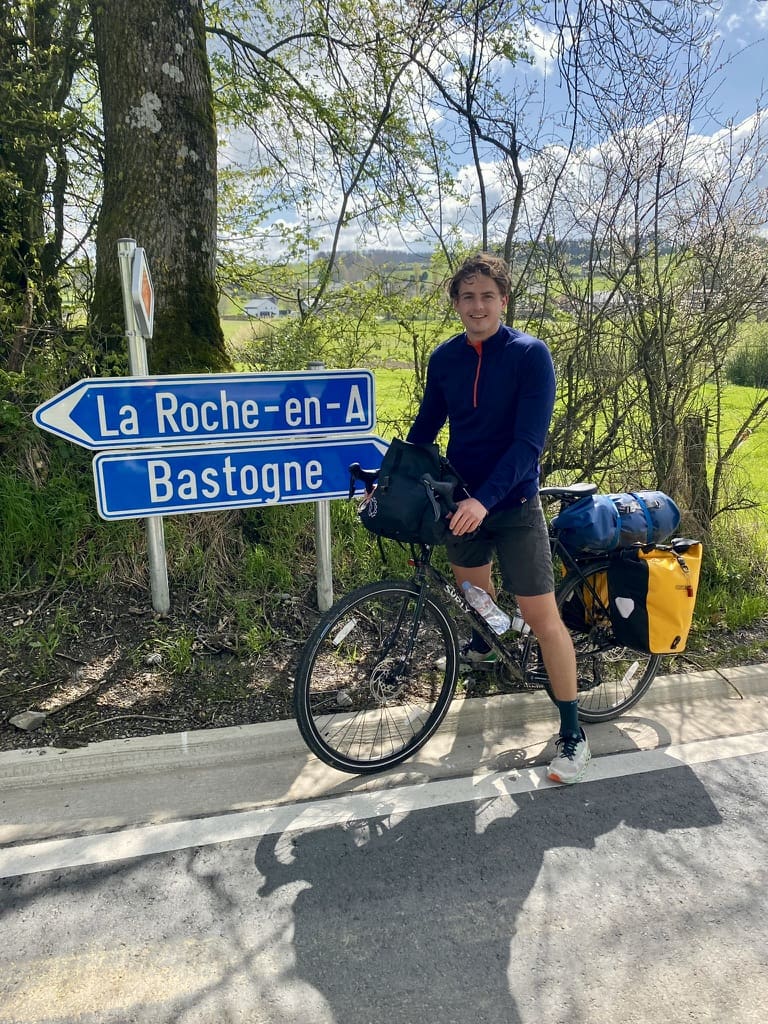
Before HUMN, Jack spent five months cycling from London to Singapore – roughly 8,100 miles through Europe, Central Asia and Southeast Asia. That journey, and specifically the people met along the way, is what led to HUMN being created.
HUMN: Instagram | Facebook | YouTube | TikTok
Host Bio
Ashley Giordano
Ashley Giordano’s first foray into overland travel involved a 48,800-kilometer journey from Canada to Argentina with her husband, Richard, in their well-loved but antiquated 1990 Toyota Pickup. Currently cruising along the iconic Silk Road in a 2008 Toyota Tundra, her full-time navigator duties are rewarded with bowls of plov and lagman noodles, hikes in the Tian Shan, and countless cups of fragrant Tashkent tea. As senior editor at Overland Journal, you can usually find Ashley buried in a pile of travel books, poring over maps, or writing about the unsung women of overlanding history, including her enduring inspiration, Barbara Toy. @desktoglory_ash

Our No Compromise Clause: We do not accept advertorial content or allow advertising to influence our coverage, and our contributors are guaranteed editorial independence. Overland Collective may earn a small commission from affiliate links included in this article. We appreciate your support.
Transcript
Ashley: [00:00:00] Hello, and welcome to the Overland Journal Podcast. I’m your host, Ashley Giordano, and today I’m joined by Jack Langdon, who cycled more than 8,000 miles through Europe, Central and Southeast Asia. And he didn’t stop there. From there, he built The Human Project, a media brand built around the fact that everyone has a story worth sharing.
Welcome to the podcast, Jack. I’m so, so excited to speak with you.
Jack: Yeah, thanks for having me on, Ashley. Excited, uh, excited to talk about it here.
Hankook Dynapro Tire: And a special thanks to Hankook Dynapro Tire for supporting this week’s Overland Journal podcast Be sure to visit expeditionportal.com to see our features on the recent Hankook experience at the fourth annual Bronco Stampede in Pigeon Forge, Tennessee.
We took a look at the full line of Dynapro tires and some great [00:01:00] Ford Broncos from all over the country as they gathered at this community event of enthusiasts and top brands. Thanks again, Hankook
Ashley: So let’s dive into your cycling trip first, because that ultimately led to the Human Project, uh, where I am assuming some lessons were learned, or you felt that there was, uh, something missing in the world that you’d like to contribute about people’s stories, um, especially ones that are extraor- extraordinary, unique, overlooked, or simply worth knowing about.
I love that so much. So,
Jack: um-
Ashley: Yeah … yeah, let’s back it up and tell me how it all began.
Jack: Yeah, so I would say, I don’t… Human Project, when I first left on the bike trip, which was about two years ago, August or April 2024, Human Project was definitely not an idea. I knew I had this opportunity to take off six months from my job then, which was, uh, as a consultant for, for PricewaterhouseCoopers, and I just kinda wanted…
I, [00:02:00] I was searching for something that kind of gave me an adventure and an activity to do every day and a way to see a lot of kind of off the beaten path places and travel in a different way. And one way or another, I landed on, on cycling and somehow kind of just decided that it was best to start in London and see how far I could get.
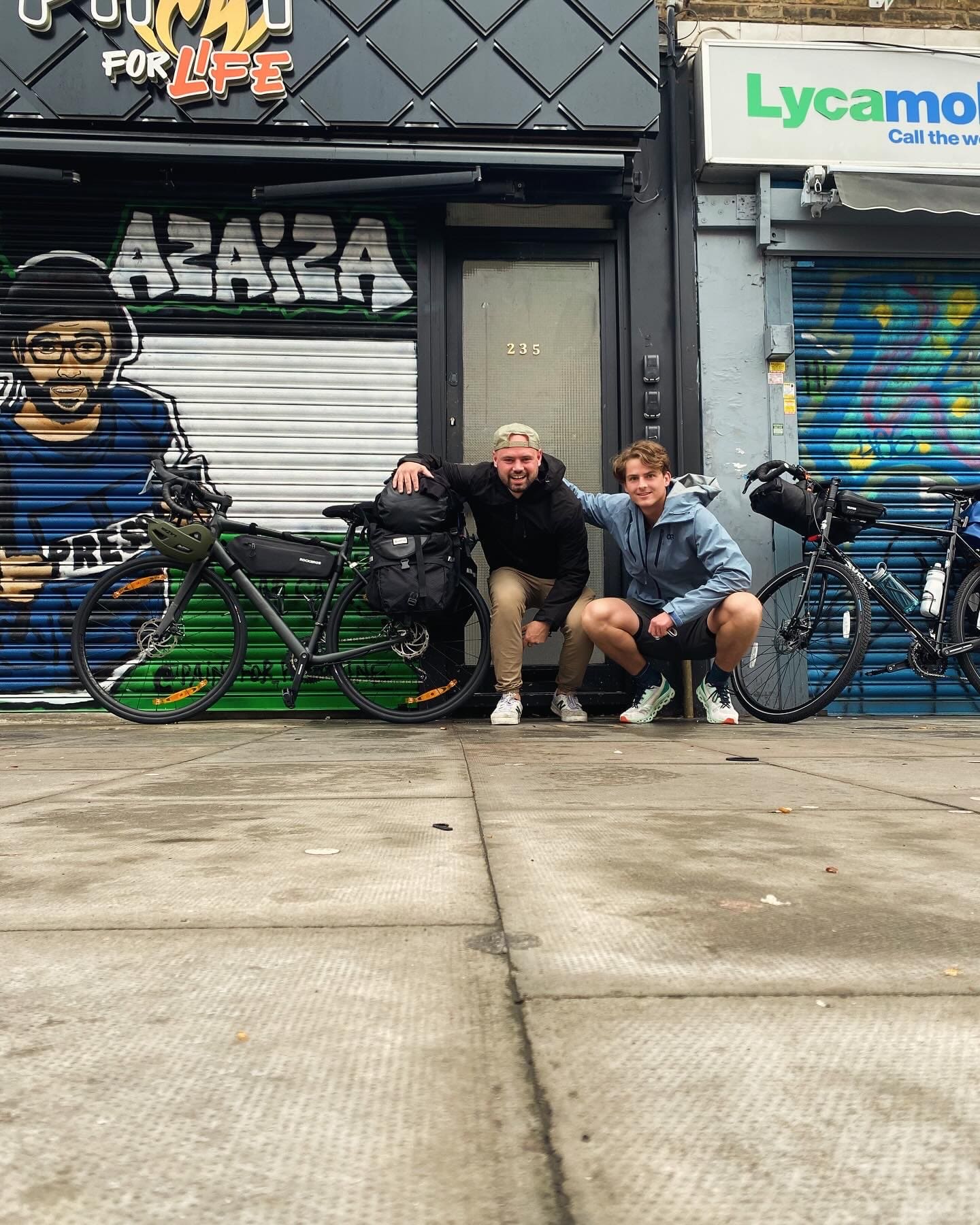
Ultimately made it to Singapore, but I would say when I left London, um, that I, I wasn’t sure how far I was gonna actually get. I knew I had this amount of time, and I was just gonna keep going east until, until I had to fly back to the US. So yeah, me and my, me and my buddy left from… There was two of us from London to Istanbul, so we basically crossed Europe together, which was about the first, I would say, month and a half of the five months actually biking.
And then the next three and a half months were spent crossing Asia, which was, which kind of was where I feel like was the unique part of the journey. Europe was awesome and incredible, and it had some amazing people and [00:03:00] views, but it was, it was more kind of like what I know, I guess, ’cause it’s closer, probably closer to growing up in the US, especially Western Europe.
As we got into more Eastern Europe, that was definitely starting to change kind of the people and the places and what you saw. But yeah, the, the Asian chunk of it I think was the most unique experiences and wide variety of, of terrain and types of people interacted with and just kind of that whole experience.
Everything felt new, uh, as I was crossing the Asian piece of it. So it was an amazing journey. I think it ended up being about- 150 days total, actually 120 days cycling. I believe about 80 of those were spent sleeping in the tent throughout the journey, and the rest were, uh, either in, in larger cities where there was a hotel or a hostel, or actually we used this, especially in Europe, there was this awesome thing called, uh, Warm Showers, which is kinda like CouchSurfing, but for people that have done cycling trips.
So it, uh, these people, like, it was amazing. People would open up their house for you, and sometimes they wouldn’t even be home. It’d be [00:04:00] like the, “Oh, hey. I left my key in the backyard. You can use the spare bedroom, but I won’t be home till tomorrow morning.” And so there’s this kind of, I found through- in the cycling community, community, there’s kind of this awesome, like, there’s just a good feel to it, and people are really trustworthy of each other.
So it was cool, it was cool to experience the, the cycling community, ’cause it had been, not been something I’d been part of before. So yeah, it was an amazing journey with a lot of interesting moments, and e- even better people met along the way, I’d say.
Ashley: Very nice. And had you… You were saying that you hadn’t been part of the cycling community before.
Was this something that you just got your bike and you’re like, “I’m gonna go,” or was there- Yeah … more preparation? How did you embark?
Jack: So I think growing up, I had, me and, like me and my dad had obvious- had done a little biking, like would maybe I would mountain bike on the weekend with friends, but it was mostly mountain biking, and there was no, there was never really a desire to road bike.
About five years ago, I randomly [00:05:00] decided to go to Spain, and I cycled the Camino de Santiago instead of, instead of walking it. So I think maybe that was the entry, entry to biking, but that was a totally different thing. Like, I, I rented a bike when I got there. I was not prepared at all. I didn’t even have bike shorts.
It was just two weeks. But that was probably kinda where the idea first started that I could do a much larger bike trip, was those first two weeks. Yeah, but so then the, for the, for the larger one, I, I bought the bicycle in the US. I think I brought it to a bike shop to get set up. They put it together for me.
I tested it out for about, like, one mile around the block just with all the weight on it, and then took it apart and put it in a box to fly to London. And the first time I really rode it was when I touched down, uh, in London, and we rode around the city. So I would say there was definitely about a month period of getting the legs in shape, which you could definitely feel in the beginning.
But- After that first month, the legs started to feel pretty good, but y- you [00:06:00] had to get used to kind of just the daily mileage every day. And then obviously the weight of the bike was something I wasn’t used to at all. So it was, it was a month I kind of, I kind of in my head knew I would, I would ride myself into getting in shape for it, and I think that’s what I did.
And it worked out, but it’s not always the best strategy because it leads to some obvious growing pains in the beginning. But luckily, that Europe piece was, I think… In the s- in Europe, we were doing much shorter segments, uh, kind of going from major city to major city, not doing too long of days, maybe about 50, 60 miles.
And then once I got to Asia, I started to pick up the distance as the legs were feeling better. Like Turkey was probably doing 80 to 90 miles a day, and then the ‘Stans and India was probably more in the range of like 95 to 110 miles a day. So as the legs kind of got into better shape, I think I picked up the mileage, which was nice as well.
Ashley: What were the toughest moments for you on that journey?
Jack: Mm, I think I [00:07:00] found… So in terms of like when I was most nervous, it was never really when I was biking except for a couple odd situations. But I did find, I think the tenting alone in ran- kind of a tent, being in a tent alone in foreign countries when you don’t know the area at all that you’re stopping in because you just stopped when it got dark, I always found to be a bit nerve-wracking because in my opinion, like while I would try to find the safest place to set up the tent, once that tent was set up, whether it was a park or a beach or just kind of in a city center, like that’s the tent and I’m getting in it and I don’t really know what’s happening around me.
So if someone were to ever come up to the tent, that’s when I felt like the most vulnerable. But fortunately, nothing really ever happened. Like I, I kinda was just like, “If someone comes up, I’m gonna deal with it.” But somehow, some way, nothing really ever, uh, no one ever bothered me too much in the tent at night, so that was good.
The most nerve-wracking I felt actually cycling, I remember there was this one day [00:08:00] in, in Turkey. I had just gone through Istanbul. I was probably maybe a couple hundred miles past Istanbul along the Black Sea, and I was trying to take… Uh, it was so hilly. I was trying to take a shortcut to avoid one of the big hills, and it ended up being like this dirt kind of mud road through the woods, which was a horrible idea because it turned into me having to…
Like where the, the mud got so stuck on the back tire that you couldn’t pedal. So I remember I had the bike up on my shoulder at one point, and I’m walking up this hill in the middle of the woods, and one, I’m concerned about bears ’cause I do believe there was bears in that part of Turkey. Uh, so I remember I’m kinda like trying to sing out loud, make as much noise as possible because now I’m in the middle of the woods alone in Turkey, and that felt vulnerable as well.
But I, I was just… It was… I was going down this path forever in the woods, and there was no cars in sight and, and then I stumbled onto like this makeshift hut with smoke coming out of it and a couple trucks. Probably was doing something illegal, if I had to guess, making drugs, and I was just like, [00:09:00] “I gotta get by this as quick as possible.”
So I kept going down the dirt road. Turns out why that was set up there is because that road had been wiped out by a mudsl- like a landslide. So it was, I think everyone else in that area knew there was no point in going down it. I just happened to stumbled on it and tried to go down it and then I had to do this…
I had to… I tried to go through the landslide, could not get through it, and I had to go back past this kind of this, this hut in the woods. And I just remember thinking like, “This, this is, they found me alone in the woods. This is where it’s gonna get sketchy.” Uh, but somehow made it through that. So that, those are kinda the moments that stand out.
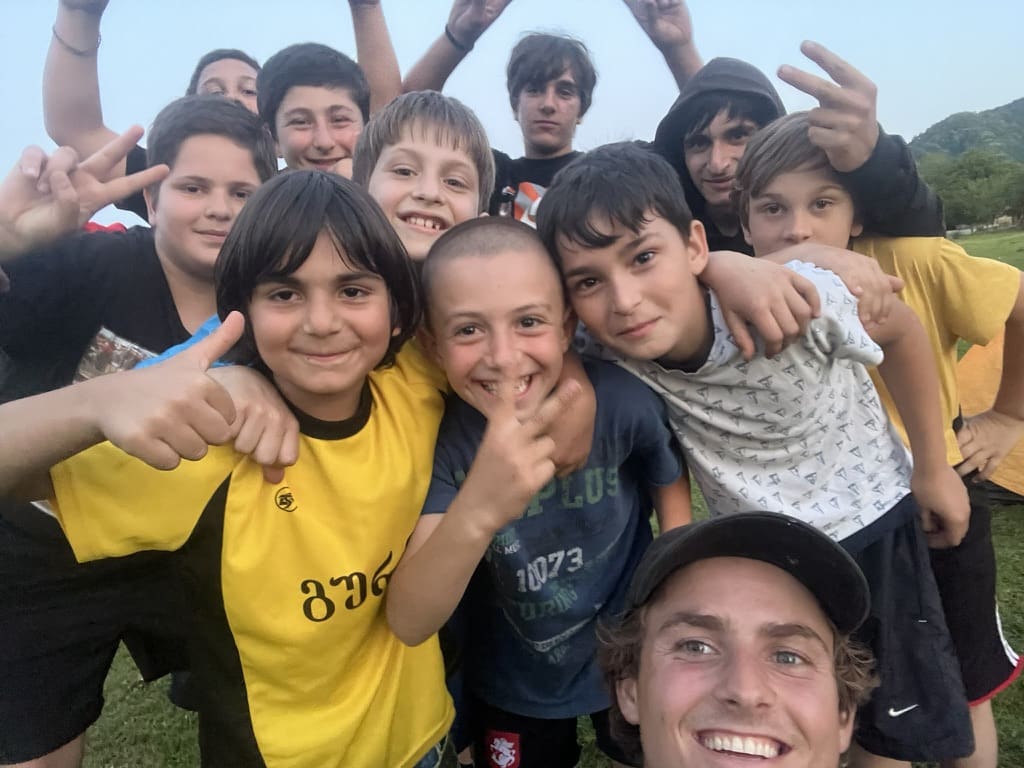
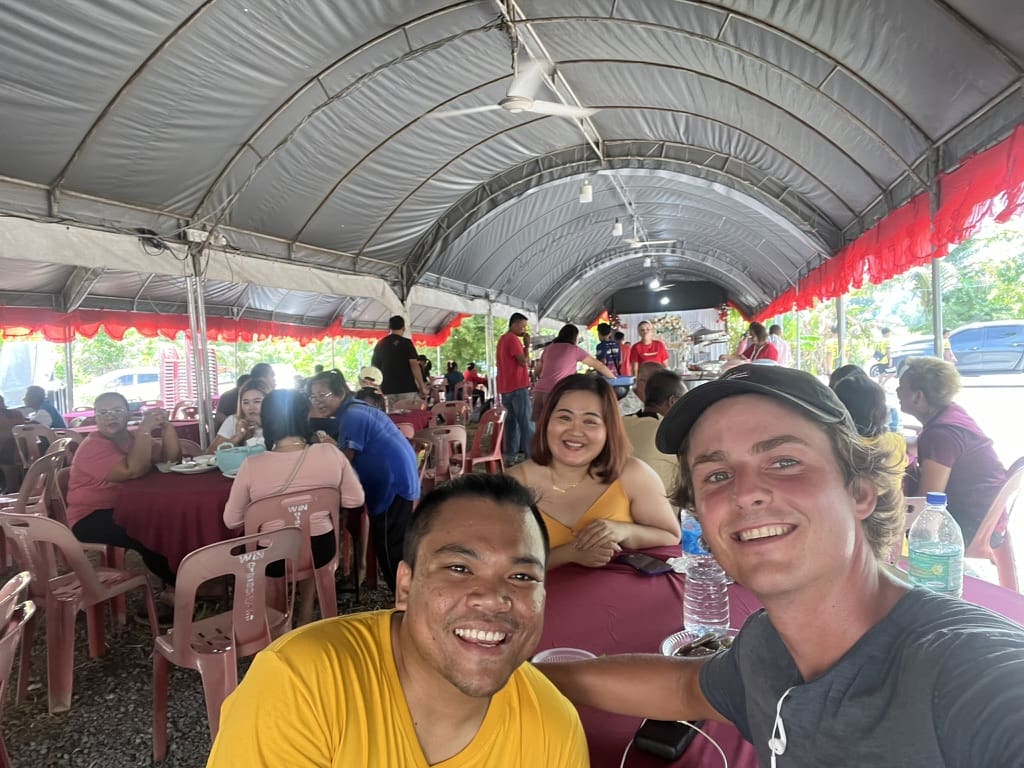
But Honestly, people ask all the time, they’re like, “Did you get robbed? Did you get hit by a car? Did people, like, try to fight you?” And, and nothing happened. 99.9% of the people that I interacted with were amazing and only wanted to either talk, have a picture together, give me food, give me drinks, uh, or even offer to sleep in their house.
So it was just, like, [00:10:00] amazing experience after amazing experience, and I couldn’t be, like It was just such a fulfilling thing to kind of meet these people along the way that, that really just wanted to go out of their way and, and talk to you and help you out. Uh, so that was an awesome part of it.
Ashley: Absolutely. I was thinking about the psychology of overlanding or traveling, and over time you’re getting used to sleeping in places that are very different almost every single night. And did you find that throughout the journey you got more and more comfortable because you had that experience where, “Oh no, everything’s gonna be okay because I have
Everything has been okay so far”? Or did you find that you were still nervous along the way?
Jack: Yeah, I’d say, like, from the beginning to the end of the trip, you definitely get more comfortable with the tent, and I think you learn where’s maybe a safe spot to set it up and where’s not a safe spot. Try to have it a little hidden.
Try not to make it where people can see you off the road. Try to not, you know, have a bunch of people watch you go out where they know you’re setting up a tent. I think you learn these little things. Uh, you learn how to set up the [00:11:00] gear so you’re not as vulnerable in the tent. But yeah, I think with anything, with anything, right, as you’re doing it more and more, it, it becomes more second nature and becomes more comfortable.
And yeah, by the time I think I got to, like, Kazakhstan and Uzbekistan and, and I slept in ni- the, the tent for many nights in a row, like, really there was not too much concern. But out of everything on the bike trip where you’re kinda going through all these foreign places and meeting all these people, sleeping in the tent was the only thing that really stood out to me as like, this feels, this feels a little, a little sketchy, while everything else did not.
But at the end of the day, I don’t think it was actually, like … Yeah, it was … It, it, it was a minor thing really, I think.
Ashley: Yes. Very good. So how did it feel moving through Central Asia and Southeast Asia? You were talking earlier about the change- Yeah … change in culture and people. What were the things that you noticed along the way there?
Jack: Uh, it was … I think the, the people that were [00:12:00] nicest to me were probably Kazakhstan, Uzbekistan, Tajikistan, Kyrgyzstan. That, I th- both … First of all, the first kinda nine, 10 days from the Caspian Sea to kind of reach the first major city on the Silk Road, which I don’t know off the top of my head, but was about, was all desert, essentially just kinda cycling down this one road in the desert, which was fairly busy for being in the middle of, of, of the desert really.
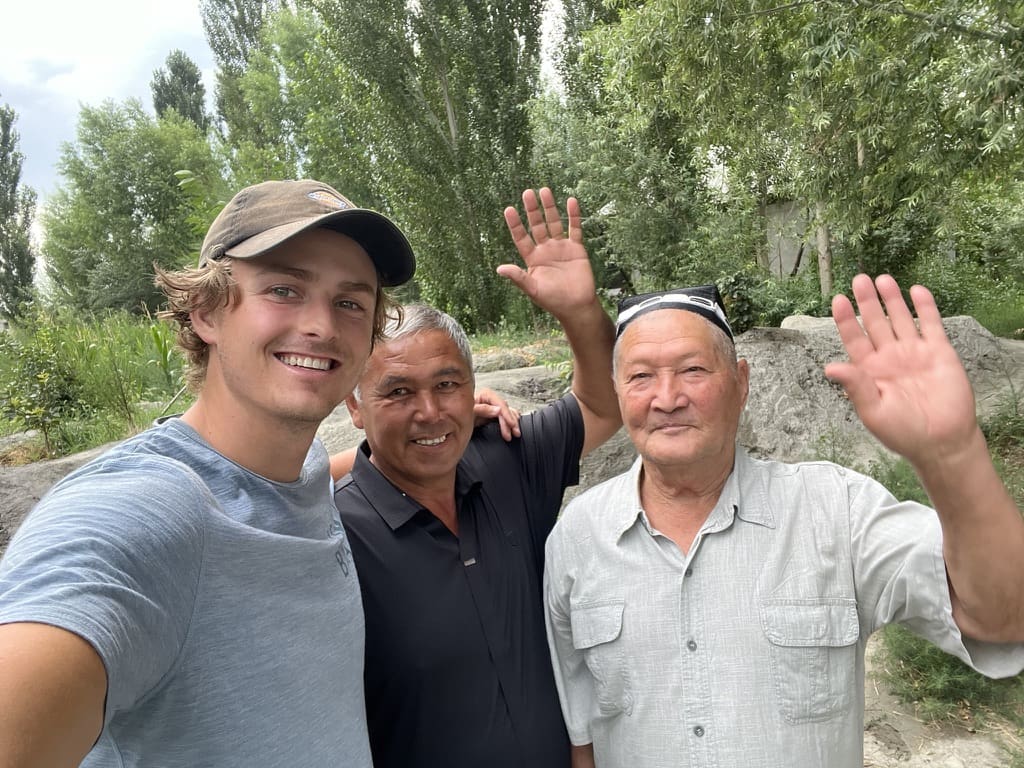
But constantly people were stopping to hand me water, hand me food, ask how I was doing, ’cause it was June, July at this point, so it was about 105 out in the desert. So people wanted to, wanted to give you water for that. But then in Uzbekistan was kind of these, the two different times where, where people Not from like the Warmshowers app that I was talking about before.
People just opened up their homes for me to sleep in. So I remember I met one, one group of guys at a restaurant that I was at in Uzbekistan after I’d gotten out of the [00:13:00] desert. Met up with these guys, started having a few drinks with them actually, and then we went back to his house and we did this kind of makeshift celebration.
Uh, they were just kind of throwing food at me all over the place, which was incredible. The son was a mechanic. I had a, I had a flat tire at this point that I could not find the needle in, so I did the… This, I was consistently kind of st- getting this, uh, my tube was popping in the tire. And I just remember like the son, we’re in the living room of this house in Uzbekistan, and the son has my bike all torn apart and is kind of going through my tire kinda inch by inch trying to find exactly where the needle was for me after this massive celebration they did at the house.
And then a couple days later in another town in Uzbekistan, I was looking for a place to sleep, and I’m kind of going off the side of the road. I see a guy sitting there in his, uh, in his front yard, and I’m just kind of making signs at him to ask him if he has a place to sleep ’cause there was not a lot of English being spoke there.
It was all either, uh, Russian or the local language, and then so I couldn’t speak either, so it was through Google Translate. [00:14:00] But I was asking him, kind of making a symbol for a tent, and what I- what ended up happening is, uh, he let me actually sleep, I think, in his bed, and he slept on this kind of makeshift porch outside.
And then in the morning, I… He woke me up at about 5:00 AM, which was quite unexpected, but uh, woke me up at 5:00 AM, brought me around town to show me his like, he had, I think it was grapes for a vineyard, like a very small vineyard. And then I went to, into town with him for this kind of, this breakfast they ha- they must’ve been doing.
Uh, it was about 70 guys from the town, and none of them spoke English, but we were just, uh, he had me shaking hands with everyone. And then by 7:00 AM, I was on my way again biking. So it was, those are extremes I think, where people let me sleep in their house. But over and over and over again, it was food being given to me.
It was stopping to try to have a conversation. It was sitting with me as I’m eating to, to kind of try to have that, that, those small interactions with you. And it was just nothing but like really friendly, really incredible people [00:15:00] all through that. I call it the ‘Stans region, but I didn’t go through Pakistan or Afghanistan.
And then I think the, the… Going south in Asia to India is, I think India was The hardest part of the trip, but also the most unique. I, I tell people there’s every country I bike through, and then India kinda stands alone just for how, how different it was, in my opinion, to everywhere else. It has a couple things going that I think make it stand out.
One, there is just so many people there, and the roads are crazy to bike on. Uh, there was really nothing else like it. Every city had that kinda constant theme. I think they use honking as, like, a language there, so you’re constantly hearing the honking there, which, which was, which was a bit interesting.
But, like, the colors and the kinda the just how everything looked and even just the smells of India, it was… There was nothing else like it, in my opinion. It was incredibly challenging to bike through. And the [00:16:00] people, I think, were a little more demanding than every country, kinda wanting your time and attention and pictures.
But also the most interesting and unique and rewarding just because of how different it was and how much, like, you could see the culture physically, visually changing in front of you as you passed through the different provinces or states of each of, of, of Northern India. And it was just… I, it stood out as this, like, kinda just on its own of, of a little different from everywhere else, in good ways and in bad ways.
But yeah, India was, India was interesting, for sure.
Ashley: Very nice. I was gonna ask you, and we’ll get to the Human Project shortly because I think that’ll probably be part of your answer here, but how, as travelers, do we give back along the way?
Jack: Yeah. I think it’s just being respectful of their culture to start.
I think you, you should never go somewhere trying to put your own views of life or kind of your perspectives and push that down to someone. Like, people all over the world have grown up differently and [00:17:00] have their own perspectives and own views and own ways of doing things, and I think you should always be respectful of that.
And you should, you should try to learn from that and kind of, you know, it, it, you don’t have to agree with everything they’re doing, but I do think there’s something important to being mindful of other cultures and other places and just respecting, respecting that as you go there and not trying to push your own narratives on them.
And I think, uh, if you interact with everyone like that, it’s the best way to go about it, really.
Mohab Sponsor: For all the adventure seekers out there in search of something new, I wanna introduce you to Mohab. Mohab isn’t your ordinary rooftop tent company. They have created a complete mobile habitat. That’s where they get the name Mohab, mobile habitat.
Hard wall cabins- Rack systems, awnings, portable kitchens, and more. It’s a complete ecosystem of gear designed to work together and engineered for quick, hassle-free [00:18:00] deployment so you can spend more time doing what you love. This is innovation built for the outdoors. Start your discovery at gomohab.com.
That’s G-O-M-O-H-A-B.com. Mohab, discover what’s out there.
Ashley: Yeah. Have an open self
Jack: Yeah, exactly
Ashley: Be open, open-minded. And, um, I think we’ve talked about this on the podcast before, but, uh, do your research and, yeah, ask questions, all of those things.
Jack: Yeah.
Ashley: And I’m curious about your experiences on the cycling trip and how it led to The Human Project.
So you can talk a little bit about how that came to be.
Jack: Yeah, I think really it was just, I’m, I was real- I wasn’t filming any of it. I was taking pictures here and there, a couple of videos on my phone. But for the most part, my objective was to wake up and bike as far as possible, and I did that. [00:19:00] But I missed out on kind of…
I didn’t miss out. That was the objective, and I did that. But along the way I had, I met so many unique and interesting people. I saw so many really kind of amazing things. And at the end of the trip, I don’t even think Human Project was an idea yet right at the end. I think when the, when the trip ended, I was probably happy to decompress for a little bit.
But I got back to work, and probably about a month and a half later, I started thinking like, w- it would be really cool if I could f- if I could kind of try to merge this love for adventure and travel, and all the different kind of unique people I met along the way into an actual more of a business and, and my life, and not just something that I get to do when I have vacation or time off.
So that, that idea led to Human Project, where the goal, the idea was that, you know, so many people around the world have amazing, unique stories. Um, they’re doing incredible things. They’re doing incredible work. There’s, there’s communities doing stuff that I know nothing about, [00:20:00] that we know nothing about.
And I thought it’d be really cool to try to, to try to travel around and, and make short kind of like mini documentaries about them and interview them. And so that’s why that was kind of the thesis for Human Project and how it started. So yeah, that started about nine months ago in August 2025, I started that.
I did the first six months in the US. I drove back and forth across the US twice. I was sleeping in my car, trying to find stories along the way as I was traveling along the US. But the goal was always to eventually go abroad. So after the US part, I went to East Africa for three months. I was in Kenya, uh, Uganda, and, uh, Tanzania, and then now I’m back in Europe filming more stuff in Paris right now.
I will say like my background, and this is maybe another thing kind of you, you heard me talking about how I bought the bike, and really the first time I rode it was in London. Maybe this has a similar start, which I again think is probably not the best way to do [00:21:00] it. But my background, like I was doing M&A consulting.
I was work- I was not in any way in media, but my thesis was that I don’t know how to use a camera well, and I don’t probably know how to interview people well, but I can talk to people, and I’ve had conversations with people all over the world, and I have an ability, I think, to find, find these different stories and unique people.
And as long as I continue to do that, I will figure out the other parts of it. So I kinda jumped right into it, and there’s been some growing pains. It’s definitely Harder than I thought to edit and film and ask the right questions and make a compelling story. And the initial idea was to make these longer form videos on YouTube and kinda tell long form documentary stories, five, 10, 15 minutes.
And yeah, honestly, I just found that that was… I just wasn’t good enough at what I was doing yet to make that really like a, a format that worked for Human Project. So through going through learning that, I, where- where I’ve landed now is kind of more [00:22:00] these 60-second mini documentaries. I think it allows me to focus on more variety of stories and meeting more people than just one big story at a time, which, which for me works.
Um, so, so yeah, that’s kind of… It’s, it’s definitely still a, a work in process, and there’s growing pains every day as I go through it. But it, there’s been some good progress, so I’m, I’m glad with, with how it’s gone so far.
Ashley: I’m curious about the first part of the trip, first of all, in the US. Were there some stories that were particularly compelling to you or that were surprising that you learned from or, or, you know, changed the way you look at life?
Jack: Yeah. So when I left and was in the US, the goal, the goal then was to kinda try to fi- It wasn’t to always find, like, really serious stories. I, I enjoy light-hearted stuff, to be completely honest, and if it makes me laugh, then I would love to make a video about it. So that was [00:23:00] kind of the mindset I initially set out with.
In the US, I stumbled upon these really cool… So in the US, there’s actually something that you, it’s hard to find anywhere else, and it’s, like, these real-life superheroes. It’s actually all over the US. A- a- any major city, I think, it probably has a real-life superhero. Essentially, it’s someone that they usually dress up in a costume because that brings awareness to what they’re doing, and I would say 90% of their time is spent handing out care packages to the homeless in their cities, and maybe 10% of the time is used to help break up a fight or, like, some kind of disturbance going on.
But, like, if you’re walking around a city, y- I mean, how many fights do you really see? Like, y- that’s not something that’s that common. So really what they’re doing is dressing up like superheroes to help out the homeless, and they’re giving all their own, like, I mean, it’s all their own money, essentially.
And it’s not cheap. They’re giving socks, care pack- like toiletries, uh, food, water. Like, it, it adds up quickly when you think about… [00:24:00] The cities I saw was San Diego, which has a ton of homeless people, unfortunately, and, and Albuquerque, which also has a big population of unhoused. So I, I met up with, yeah, Skyline in Albuquerque, who does that, and then the Xtreme Justice League in Southern California, who, who helps out the, with the community there.
So, uh, it was just, it was really cool to see ’cause of course, you know, you’re walking around the streets and you have, you see a group of people dressed up in, like superheroes It’s gonna get some weird reactions, but at the end of the day, they’re just, they’re really trying to help out the homeless. So I found what they were doing awesome, and it’s shocking, I think, how many there are just around the US, groups like that.
Some other cool, really interesting things. I, I think it was December, I went with a community. They rented out an old, uh, Mormon polygamous house in Utah and did an ayahuasca retreat. And they gave me actually access to film most of it, which was incredible. And an ayahuasca retreat, uh, I mean, people go for all different [00:25:00] reasons, right?
You have… There’s a lot of reasons, some trauma related, some not. But just amazing stories about kind of the different things people had gone through, um, and why they’re there using the, using the medicine, and kinda seeing what that retreat is up like close and personal throughout a weekend was an incredible experience.
Personally, don’t know if I really did it justice ’cause I was only a couple months into Human Projects at that point, so I wish I could have made them a better video, to be honest, but it was, that was really interesting to see and just kind of… Like, the theme I’ve realized throughout all this is the camera gives you access to things maybe you wouldn’t have normally, and a way to kind of view things in a different way.
So it’s really cool sometimes to be behind the camera. Like, I would never have access to be sitting in an ayahuasca ceremony as a group of 30 people are doing it, but I was able to do it for this, and that was just, it was awesome to see that. I think one of the other things that stands out from the US leg was traveling circus.
I ra- I ran [00:26:00] into a traveling circus in Georgia. Uh, they had been on tour all over the US, and kinda just hearing… Like, you, you, you hear about you, that lifestyle of someone that’s in a traveling circus, and they’re always on the road. It sounds demanding, right? But then you actually see it, like how many RVs there are and how much goes into, like, you’re probably at a fair for two days, and there is so much to set up for a big circus tent and so much that goes into it.
And kinda getting to see that and, and the people that work there, which were mostly… A lot of the performers had actually come from Mexico for the group I met, and this was kind of their way of following their dream in the US, was to join this traveling circus. To getting to talk to them and hear their experiences, that was, that was a really cool one from the US as well.
Ashley: How do you find the stories and gain people’s trust?
Jack: Yeah, so when I first started, I thought, like, “Oh, I’m just gonna walk around a city, I’ll find people, I’ll be able to pitch the idea, [00:27:00] and boom, it’s gonna be all kind of done by word of mouth and me finding people.” And I maybe have found one person like that.
It has not worked at all. I’ve spent, wasted way too much time walking around cities trying to find people to interview and tell stories about. So I would say, yeah, 99.9% of it is, is me reaching out to people online. I think the way I view it is I’m just constantly searching the internet for stuff that I– unique people, unique communities, engaging content that I think could make an interesting story that’s not maybe as, uh, uh, that talked about right now or has maybe a smaller following.
So I’m just constantly reaching out to people online, and I think I gain their trust by two ways. The initial email is, is pretty barren. It’s just kind of outlining the idea and giving them my links. But then a lot of times we’ll hop on a call. I think depending where I’ve been, it’s been a little different.
Like when I was in Africa, East Africa, I met up with a t- almost everyone before filming, uh, grabbed a coffee with them. So I think [00:28:00] there they were more comfortable meeting in person. When I was in the US, people were more comfortable with doing a phone call first. So it’s, it usually takes kind of that initial interaction, sending an outline of exactly what I have in mind, and then they’ll be good, good to film.
But yeah, it is, it is been… That was an adjustment when I got to Africa ’cause I was like, “Now I have to, now I have to spend another couple hours getting ready, like in- putting into this video, uh, that I didn’t have to do in the US where it was just a quick phone call.” So I think it changes everywhere actually.
Ashley: Yeah. And that, I bet that is such an important part of it, is gaining their trust and doing the face-to-face so you can really hone in when you’re doing the actual filming on like the deeper part- Yeah … of the story. So that’s great. In Africa, you were in East Africa, which countries did you go to, and what are some of the highlights and stories from that region?
Jack: Yeah. So I started in Kenya for a month, went to Tanzania for a month, and then Uganda for a month. Fortunately, I think there was a lot of English being spoken there, which [00:29:00] helped me a lot. Uh, a little more difficult actually, I think, in Paris to find an English speaker always than it was even in Nairobi or Kampala, which is the capital of Uganda, which is interesting.
But, but yeah. There was, I– Like I mentioned before, I, I was… In my head, this was always kind of like- either underground communities or lighthearted stuff. When I got to Africa, that stuff was either harder to find or I couldn’t find it, or maybe didn’t exist as much. So it took a little bit of a different route and started doing stuff a little more serious, I would say.
A lot of the times it was maybe partnering with different NGOs in the cities because they had a good website set up, they were easy to find online, and they wanted their, their, to kind of… NGOs are happy to share their story. So I think it went, it went down that route. And well, the first story that comes to mind from the Africa time is in Tanzania, [00:30:00] outside of Arusha, there’s a group called H-I-M-D, HIMD.
Essentially it’s a ho- In, in rural Tanzania, but also a lot of rural Africa and, and more than just Africa, kind of young teenage girls face two things. One, uh, arranged marriage, which usually ha- can happen at any age, but is probably before they’re 15 or 14. And then two, es- in rural, in rural parts of Tanzania, they go through female genital mutilation, FGM.
So they’re often cut, yeah, prior to the arranged marriage. It makes them in th- in the eyes of those cultures, kind of more worthy to be married. Really what it does is it kind of removes any sensation from sexual activities, and then in their minds, it like, really there’s less of a lust to maybe cheat on your husband is, is probably why it’s done, if you dig into it more.
But the, the girls, as kind of, you know, access to information has [00:31:00] become more available in those areas, the girls are learning that n- n- yeah, I shouldn’t probably go through this. So they’ve started to run away more and I was… I, I jo- I met up with a group, uh, outside of Arusha, Tanzania, that is a kind of a home for these, for these young girls that have run away, uh, whether it was from the arranged marriage or from the mutilation or from both.
And I got to talk to the woman that runs it and a few of the girls as well about their stories, and it’s just like Yeah, I mean, it’s tough stuff. They think over 200 million girls, pr- women in probably have, living today around the world have gone through FGM, which I think is just a staggering number.
But like you’re… I was in this, I was in this facility and let’s say there was probably, there’s probably about 15 girls there that had run away when I was there. I think there’s more, but all of them had kids that were probab- they were all between the ages of like 13 to 16 and had kids that were like two to five years old.
So you, so it’s just a, yeah, it’s, it’s a tough, it’s a different way of life there. [00:32:00] And I think the hard part is, and what I learned by working with this group, uh, a lot of the girls, the young girls think like they wanna be cut because they’ve been told their whole life that’s what makes them an eligible bride when they get older, and they don’t know any better.
So half the battle is even just getting the younger women to, and girls to understand that like, this isn’t good for you. You don’t need to go through this. Because at the end of the day, it’s very different than the male circumcision, uh, would, because the, once, once the girls there are cut, they a l- along from having no interest in like sexual desires, it also makes childbirth, what I was told is childbirth is way more dangerous because, uh, yeah, the, it just can’t contract as, as normal.
So a lot of the girls that get cut end up dying in childbirth. So When I started Human Project, I didn’t think I’d get into t- hearing these stories and interviewing these types of people, but, but it was real- I’m glad I did. Like it was, it was, it was awesome to learn about, and I’m happy I was able to share their story, and [00:33:00] I hope someone that watched it learned something new.
For me, I didn’t know that much about FGM, and I hope some of the other people that follow Human Project maybe, maybe learned a little bit about FGM by watching those, those videos. But I think if you make one more person aware, that’s maybe you’re one more person closer to finding someone that’s actually gonna be willing to put in the time and effort.
So it’s just continuing to try to make more m- more and more people aware until it gets in front of the right person that has the ability and capacity to help an organization like that, that’s helping these girls that run away. And at the end of the day, it all comes back to, like, these groups usually need money, really.
That’s the most helpful thing for them. They need better facilities for the girls. They’re, they’re trying to like, you know, run a school for the kids. They need food to shelter the people. They need to pay rent. They need money to try to go out and, and teach educational things. So I don’t, I don’t think it’s a clear path from [00:34:00] awareness to actually making change happen, but I think for someone like me, like, uh, part of the time the best thing I can do is try to help spread the message.
And I, and I think if I look at it as like… If I look at it in too big of picture, like, oh, no change is happening, like, you’re not getting in front of people, it, it becomes, you start to spiral. But if I look at it as one person at a time, if I make one more person aware, that’s one more person than one is awa- that was aware than yesterday, and I think that’s, that’s important, and you just never know what could happen.
It could snowball into something way bigger. So, um, yeah, I just try to look at it like that.
Ashley: Absolutely. And then being on the ground, like you said, asking- Yeah … the local people from there what, what is the best thing, and yeah, they’ll, they know their, their country, region, city better than we do, and so they can, they know what they need.
Yeah. Uh, it’s always asking. But yeah, the spreading of the word.
Jack: Yeah.
Ashley: Tell me some more, some more [00:35:00] stories about-
Jack: Yeah …
Ashley: East
Jack: Africa. The, so that’s the first one that comes to mind. Another one was Albinos are kind of treated a little weirdly in East, in, I’m gonna assume all of Africa, but I only can speak to East Africa really.
Especially, I mean, you just, they just stand out a lot. But especially in the border region of Kenya and Tanzania. I think more about 10 years ago, there was a big issue with people from Tanzania crossing the border into… Well, not only happening in Tanzania, but they also crossed the border into Kenya and were abducting albinos in the area because they thought that if they cut off their hands or just killed them in general, that it would either, one, bring them riches, or two, help the politicians they wanted to win, win the election.
So I, I was able to… I actually talked to an albino that, albino guy that lived in the, uh, border area between Kenya and Tanzania, and we were just kinda chatting about, yeah, some of the dangers they face. They have to always be aware. [00:36:00] They have to be especially careful if they’re crossing over to the Tanzania area, and kinda what’s that like.
But then also There’s just a lack of… And this is probably a constant theme with, uh, outside of just someone that deals with albinism, but they just don’t have the right care facility set up in a country like Kenya to, to help anyone outside of Nairobi, which is the capital, that, that has to deal with albinism.
So like where me or where if you’re in the US or some other countries, you could easily go to a dermatologist. Like they can’t… There’s no dermatologist w- in the border region of Kenya and Tanzania. They have to take a six-hour train to Nairobi if they need to see a dermatologist. And for someone that deals with albinism, like they need to go to a dermatologist.
The, that’s like melanoma’s the number one risk for them. Um, so getting the right care was something he re- they really struggled with in that area. Yeah, and just kind of that, what it’s like to deal with kinda that constant threat of people wanting to like [00:37:00] cut your hands off or kill you because they think you’re, because you’re albino, that your body’s worth helped win a political election, election was just really interesting to hear.
Um, and then when I was in Kampala, I linked up with this really cool, uh, skateboarding group. They… So they used to have this little skate park right outside the… There was a one big garbage dump outside of Kampala. It, it was called Kanzeze. I might be saying that village slightly wrong. The dump actually closed a couple years ago because it was so piled up that the trash collapsed in on itself and at least 50 people died.
It was like a landslide of trash. Uh, but they had this skate park right outside the dump, and it was becoming this skate village where like everyone in the community was going to this little skate park. But so recently, actually in the last like couple months, organization, I think it’s called Make Life Skate Life, something like that, built them this new incredible skate park like in this random, in this smaller [00:38:00] village outside of Kampala.
It’s like the ni- by far the nicest skate park probably around. I would assume it might be the nicest skate park, like it would be up there for all of East Africa. It’s got what they call international standards, which means it meets all the regulations of like what a skate park would be in a real international competition.
So that’s very unique for a pl- village outside of Kampala, Uganda. But there’s h– n- now they have like hundreds of kids from the village that are skating and staying outta trouble and kind of, they, they teach them stuff about climate change and whatnot at, uh, through the woman that runs the skate park, Cynthia.
And so it was just kinda really cool. It was just really, yeah, it was really interesting to talk to this, this, this, these kids in this village about skating and what it means to them, and then kind of just see like how happy they are at the skate park. It was awesome. So yeah, I think… Oh, the one other one that stands out is back to Kenya.
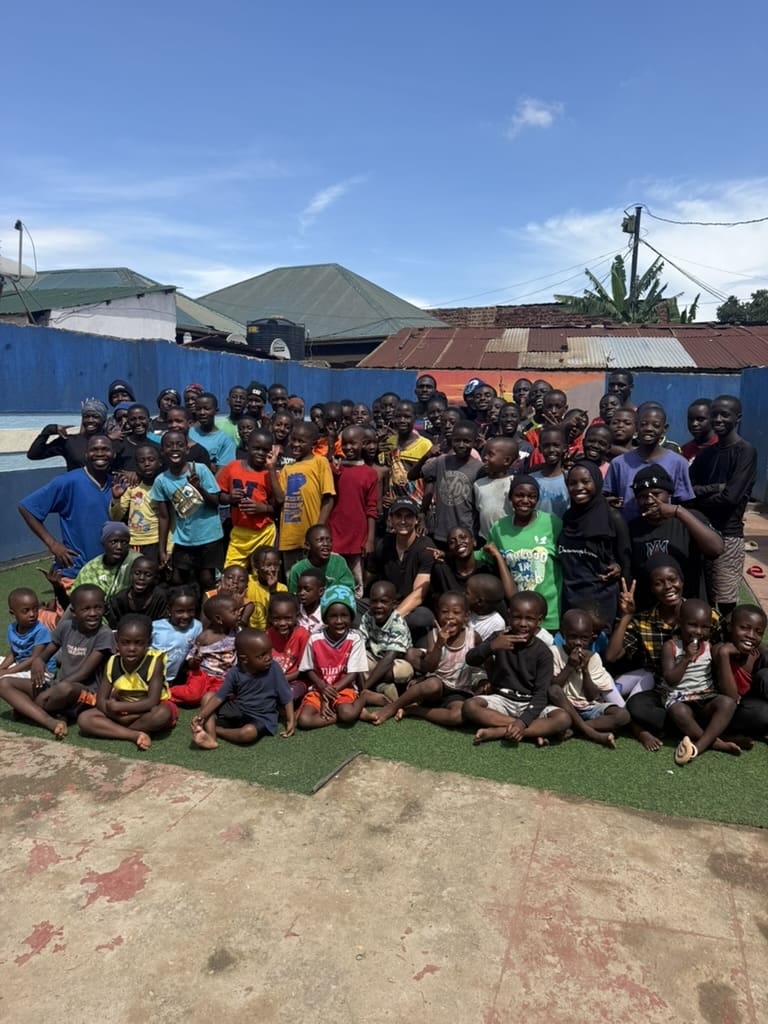
There’s, I linked up with an organization that helps [00:39:00] There’s a lot of homeless street kids, i- homeless, like young children without any parents in Nairobi. A couple different reasons. One, they might like w- their parents often kick them out, and it could be like they stole something, or they simply just have too many kids and they can’t feed them all.
And so sometimes they’ll just kick s- one of the kids out and say, “Go, go to the city, try to make money.” But these kids are any- usually like maybe seven, eight, nine, 10 years old, then they grow up, so there’s some older ones there. But, uh, there’s a lot of kids in that seven to 15 range living on the streets of Nairobi, making money by begging and other ways, and they all have become Mm, for the most part hooked on drugs.
Specifically, one of the major ones is they, they have, they hold a towel in their hand that’s covered in gasoline, and they’ll constantly be sniffing it throughout the day because it helps keep off the hunger and also helps them sleep at night. So you can imagine it’s [00:40:00] like eight-year-old kids are essentially sniffing gasoline all day, which is quite a sad sight to see.
But this, I linked up with this organization that is doing amazing things, uh, helping. It’s called Street Kids of Nairobi, and he is essentially, he does a… He feeds them a lot. He has feeding programs throughout the week, but he also will help relocate them to their parents. So the one day I was there, we were taking this, this, I think he was about a nine-year-old boy.
They were getting him cleaned up to bring him back to his family. So they brought him to get new clothes, they got a haircut, they fed him a proper meal, and the next day they were gonna drive out to his parents’ village and demand his parents that they have to take his kid back no matter what he did.
Because at the end of the day, it’s still le- like, it is illegal in Kenya to just kick a little kid out to the streets. So he goes and demands the parents take the kid back, and if they say no, he’ll get the cops involved, and he’ll get the, the cops to make, make them parents take the kids back. So he’s kind of fighting that fight against the street kids in Nairobi, and it…
Which was just like, you [00:41:00] see homeless people in a lot of cities, but you just don’t see the number of homeless children that I think you see in East Africa and Nairobi. So it was quite something to see, see that, but also an organization that was, that was working to help them out.
Ashley: I also some, saw some videos of yours highlighting some artistry and artists.
Jack: Mm-hmm. Yeah. They’re what, uh, I think the people there are incredibly creative, uh, and they find ways to do it in maybe they find more unconventional ways to do it, unique ways to do it that maybe aren’t done as much in a place where there’s more available resources. So yeah, I went… Actually, one of the guys from the skate park on the side worked at an art shop outside of Kampala.
So they had created an art studio. They were making all this different incredible artwork, um, and it’s just like you, you would… It’s, I think the, it’s always funny, like, with a place like that. You h- you can walk by, and if the front door is closed, it just looks like this small s- tin shack, uh, in a village.
And then if you go inside, it’s [00:42:00] amazing artwork all over the place, and, like, they’re just making these incredible things inside. So it was really cool. It was really cool, yeah, to, to interview them, and, uh, yeah, they were at, right outside Kampala as well, so that was a good one
Ashley: I also loved the skating video that just went out recently on Instagram.
Yeah. And it was a man… Yeah, the skate, skate, long distance skating or- Yeah, he’s a pro- … uh, street skating. He’s a, he’s a professional inline
Jack: rollerblader from Uganda. He’s like, I’d say there’s only two or three in the whole country, so not many. But yeah, you can… I was talking to him, so especially when he started in 2016, there was almost no one that was really doing it. Uh, he was one of the first people to be a professional skater. And so you can imagine like even still today, the looks he gets from people are like, a lot of people weren’t, were not that supportive of him, obviously, to start.
Uh, so he’s, he’s made a lot of progress for just how people look at inline skating. But he’s, yeah, he’s, I think he’s… [00:43:00] It’s not an Olympic sport yet, inline rollerblading, but he’s in the biggest competitions. He’s won, I think, some gold medals, and he’s won quite a few international competitions and skated all over the world, whether it be in track or in, they do actually like half marathon and marathon road races on rollerblades, which I didn’t know.
Uh, I was like, “Oh, I guess that makes sense.” But, so he’s won a few of those as well. He actually, I don’t know when he did this, but he rollerbladed from Uga- uh, Kampala to Rwanda’s capital. I’m spacing on the name of it, and just to kinda bring awareness to rollerblading in the area, um, and to kinda get more people involved in it.
But he also, uh, aside from just being a professional roller, roller skater himself, has started, uh, a club to help all these different young kids in the area that wanna skate. It, one, gives them a safe place to do it. I think he said he has about five different safe locations set up because a lot of the times, I think the biggest problem in a place [00:44:00] like Kampala is just finding a place to safely rollerblade.
Not that, like one, you have to find a paved road, which is, there’s plenty of paved roads, but they’re so, so busy, and it would just be like, as a little kid learning how to rollerblade, it’d be too dangerous to try to skate on most of those roads there. There is so many motorcycles going by and kind of right on the edge of the road that one maybe wrong turn by a kid trying to learn how to skate would be, would be bad.
So he has found these, uh, different places for the kids to learn how to skate. He provides them with, with coaching and is kinda giving them a path for, for kids that wanna be professional skaters to learn from someone that’s done it, to get access to international competitions, and giving them that opportunity to do that.
Because even if the… Like, it’s tough, I think, there just to get, well, get access to those international competitions, then also the funding for it, and so he’s been amazing helping these kids figure out a way to, to go through that. And I think he said, yeah, four of them, four of the [00:45:00] best ones are going to Singapore later this year for, for a competition.
So yeah, it’s really cool what he’s doing there. But even him as the kinda like he’s the best skater in Uganda, he’s still skating on, like, roads that have speed bumps and cars and, like, not, it’s not a track, it’s a road, and he has to deal with speed bumps and go up. I was watching him practice. He goes up on the sidewalk or he goes around the speed bump or he slows down.
Like, even for the best skater in Uganda, it’s the f- they don’t have the facilities for something like that. So you can imagine even just that disadvantage versus someo- someone from a country where there’s, like, a actual skating track or, like, a professional facility to do it in. Um, so yeah, he, what he’s doing is awesome there though.
Ashley: I love it. Yeah.
Jack: Yeah. It really is cool.
Ashley: So throughout the journey, you have encountered stories that range greatly from hardships to grief to joy and community. Mm. What’s next for you?
Jack: Yeah. So in Paris now, trying to find stories [00:46:00] here. I think it’s slightly skewing back to maybe stuff that’s more lighted heart- and light-hearted or kind of not as serious as the street kids or the women running away from FGM.
I do still wanna do that, and I think that’s awesome story to tell, and I loved working with those people, and that’s probably the most fulfilling. But I don’t think it will be the only thing Human Project does. I think it will, at the end of the day, be a, be a little bit of a combination of, of both serious stories and more fun, lighthearted stories.
So yeah, I’m working on scheduling a lot of things here. The first– The only thing I’ve filmed so far is actually, uh, it’s called Buhurt. It’s the, the, the, the guys dress up as, uh, knights, full knight gear, and fight each other with real swords. The… Yeah, it’s crazy. So the, the, the gear, the metal gear weighs, like, 60 pounds.
The helmet alone is about 30 pounds. I couldn’t believe it. They smash the crap out of each other, like, as hard as you can swing a sword, any part of the [00:47:00] body, and then they’ll get on top of each other, and they headbutt each other. They’re hitting each other with shields in the face. It’s crazy. It was crazy to see.
So that’s, I think, the lighter-hearted one. But yeah, fo- starting to line stuff up here in Paris, and TBD exactly like where I go. But I do know the goal longer term for Human Project. While I enjoy traveling and I like being on the road, the goal one day would be to have, like, a proper home base headquarters in one city.
And then if… as I’m able to grow it out into an actual company with other people, um, and not just me, it would be sending people to all different places around the world to find these kind of awesome, amazing people, communities, and stories, and telling them all through the Human brand. And then, and then it wouldn’t all be dependent on me trying to be in different cities, different countries all the time, and there’d be, there’d be a real team doing it, capturing these stories.
And that’s the place I hope to, hope to get Human Project to one day. But yeah, it’s 10 months [00:48:00] in so that, that– If, if we get there, which, which I will one day, that’s, that’s way down the road. So for now, it’s me and a camera on the road, doing the interviews, doing the editing, finding the stories, and, uh, just making this work until I’m able to grow it into something more.
Ashley: What is it about sharing people’s stories that fulfills you so much and lights you up?
Jack: You know, I think it, especially for the groups that maybe haven’t had a, a way to tell their story before, and just giving someone that opportunity, I- that’s exciting. Like yeah, it’s, it’s if for someone that wants to share what they’re doing or wants to share their story, and I give them the platform to do that, whether it be for one, 10, or 100 people to see, it doesn’t matter.
It’s, I think, just seeing that, the joy someone gets out of sharing their story in a unique way and, or just kind of seeing the joy someone gets out of someone being interested in their story, it’s, yeah, it feels good, and it’s nice to do, and I, and I really love it. So that’s probably where I get the f- fulfillment from [00:49:00] it.
Ashley: And I bet people are excited, like you said.
Jack: Yeah. Yeah,
Ashley: like- Um, or shy. Maybe some are shy and they don’t want to as much, but I, I think it, it’s so wonderful to be heard and to share your story with other people, and it’s a form of connection for all of us.
Jack: Yeah. Yeah, there’s definitely a shyness, but I think I try…
Well, like I always tell them, it’s like, “Look, this isn’t running. It’s not one running loop. Like, do you need to say it again? Say it again. We, we need to cut it up into pieces. I’m gonna cut it up into pieces and take the best part of what you say anyways.” So I think I’m getting better at that as well, and kind of h- like just learning how to coach, ’cause it’s their story, and I don’t know how to tell their story, but I do know how to tell them in a way that comes across better for a 60-second video.
And it’s, I’m getting better at coaching people on how to do that. Like for example, right? ‘Cause you, it’s not like you don’t, if I, “My name is Jack,” verse just saying Jack. Like, I want the person to say the full thing to give context to the [00:50:00] story. So it’s, it’s, yeah, I’m just constantly trying to work on coaching people and getting, getting the best out of them, because it can be nerve-wracking if you’ve never had a camera in your face before.
Like, it is new, and talking to a camera verse talking to a person, it’s different, and sometimes it takes a couple tries. But people wanna get the story out and, and it’s, it’s exciting to work with them for that, for sure.
Ashley: Well, congratulations on the project. Thanks, yeah. And I’m really looking forward to seeing where it goes, and I’m sure as it builds, people will continue to reach out and you’ll find more and more stories, and yeah.
Best of luck with it all.
Jack: Awesome. I appreciate you having me on. This was, this was great to talk about, so thank you. Thank you for doing it.
Ashley: Yeah. Thank you for taking the time. Yeah. Where can we find you online? Where can we learn about people’s stories and watch and see these videos?
Jack: Yeah, I think the best place would be Instagram.
It’s … So you’ve heard me say Human 100 times, but it’s H-U-M-N, there’s no A, and then _project. So H-U-M-N_project. [00:51:00] You’ll see the blue U on the Instagram, and, and yeah, that’s me. So that’s the best place to find it.
Ashley: Perfect. We will include the links below.
Jack: Awesome.
Ashley: Thank you so much, Jack, for joining the podcast today.
It’s been a pleasure.
Jack: Thank you so much for having me on. It was a m- it was a great time.
Ashley: Shout out to the Overland Journal podcast listeners for tuning in to today’s episode. We hope you enjoyed it, and we’ll see you next time.