

Recording from a rainy Nairobi after completing segment two of a Grenadier trip across Africa, Overland Journal Podcast host Scott Brady centers the episode on gratitude for Africa, listeners, family, and the Overland International team. He shares a Black Friday offer for podcast listeners—code PODCAST2023 for 50% off Overland Journal subscriptions and 2023 back issues—while emphasizing the magazine’s independent, veteran-, women-, and employee-owned journalism. Scott recaps highlights from Tanzania and Kenya, including remote routes, Kilimanjaro’s northern slopes, Mount Meru, Ngorongoro and the Serengeti (special campsites), Lake Victoria, and a Mount Kenya camp near Lake Ellis with local Grenadier owner Abid. He reviews communications gear (Garmin inReach, Rocky Talkies, Starlink, Iridium GO Exec) and notes satellite regulations, plus lessons on a small Dometic 25L fridge, a lightweight load platform, Redarc solar charging, and 20,000 km with zero Grenadier failures. He also reflects on traveling with his girlfriend Tavia and the habits that helped them travel well together. This episode was recorded as a monologue.
Overland Journal Podcast Episode #171
The Overland Journal Podcast is brought to you this week by Overland Journal Magazine
New to Overland Journal and want to grab a subscription! Visit Overland Journal and enter code: overlandpodcast at checkout for 20% off. We thank you for being a subscriber.
Host Bios:
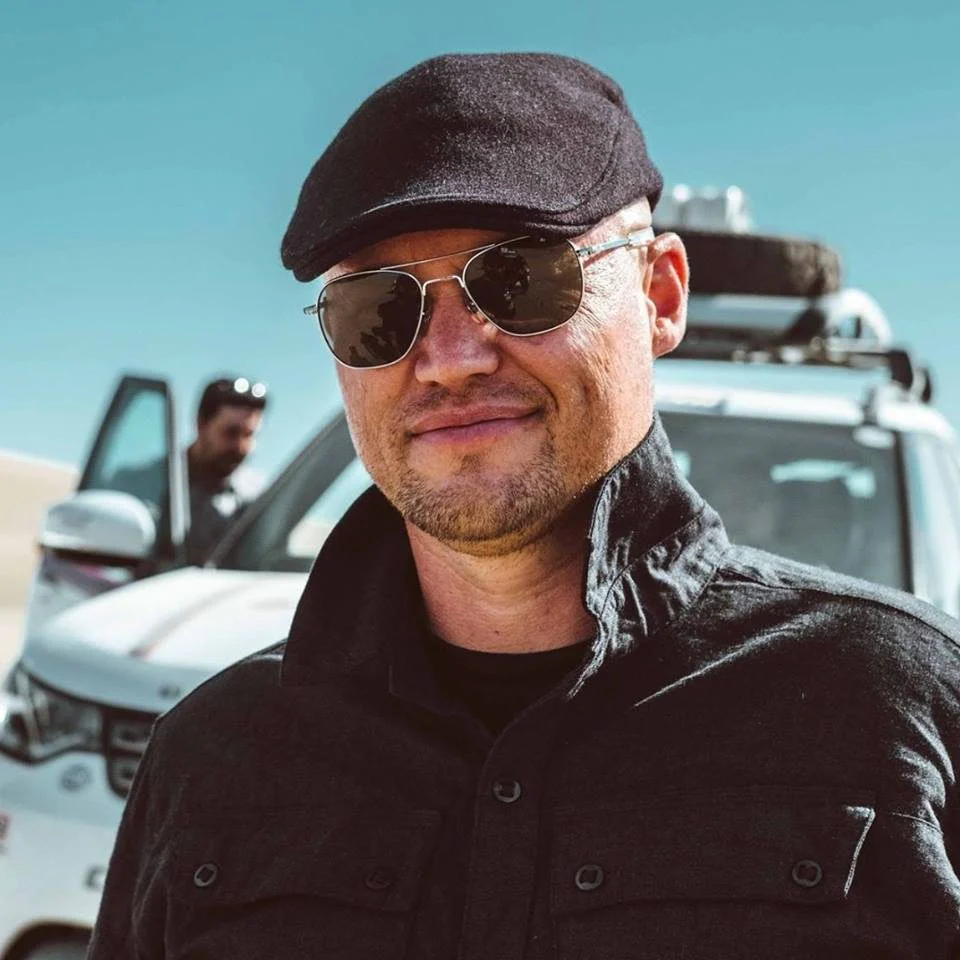
Scott Brady
Scott Brady is an adventurer, author, and publisher, and the first person in history to cross all seven continents. Brady is executive publisher of the Overland Collective, home to Overland Journal, the Overland Journal Podcast, and expeditionportal.com—the world’s largest vehicle-dependent adventure community. Scott wrote Overlanding 101 (Simon & Schuster) and is currently riding around the world on his BMW GS. He also led Expeditions 7, the first expedition to drive the same vehicle on all seven continents. Brady’s polar crossings include Antarctica and a south–north crossing of the Greenland ice sheet. Scott is a fellow of the Explorers Club and lives in Prescott, Arizona.
Tune in Apple Podcasts | Spotify | YouTube
Our No Compromise Clause: We do not accept advertorial content or allow advertising to influence our coverage, and our contributors are guaranteed editorial independence. Overland Collective may earn a small commission from affiliate links included in this article. We appreciate your support.
Transcript
Scott Brady: [00:00:00] Hello and welcome to the Overland Journal Podcast. I am your host, Scott Brady, and I’m recording this podcast today on a very rainy day in Nairobi, Kenya, having just completed segment two of our trip across the continent of Africa in the Grenadier And I have so much to be grateful for. This podcast is gonna go live, um, just about a week before Thanksgiving in the United States, and I know that not everyone in the world celebrates Thanksgiving in the same way that Americans do, but I know that it’s a day that so many in the world can, can connect with, can relate to, and they have their own holidays around gratitude.
But I really wanna focus in this particular podcast about gratitude. The, the gratitude that I have to be in a place as special as the continent of Africa, uh, the gratitude that I have for all of you that listen to and support this podcast, and the people in my life, my [00:01:00] family, my loved ones, uh, the team back in Arizona that makes all of this possible.
So I just really want to focus on gratitude today when I share all of our updates and some other information about, uh, traveling in Africa and the equipment that we’ve been using. And a special thanks to Kuat Racks for their support of this week’s podcast. Their new IBEX has landed. It’s actually over-landed.
This groundbreaking bed rack is effortlessly handling substantial loads both on and off the grid. Constructed from lightweight yet durable aluminum, it boasts a ballistic black powder coat made for all the nature you can throw at it. It’s available in six different frame sizes to accommodate most truck models, and it’s equipped with telescoping crossbars, numerous T-channels, and a versatile full and half-height configuration right out of the box.
This is the IBEX from [00:02:00] Kuat. It is engineered for adventure. For more details, please visit kuat.com. Kuat, because you will absolutely love this bed rack. So I just wanna bring it all back to this whole idea of gratitude. And for me personally, it really does come down to after having been in this industry for over two decades and having seen so much change, so much growth, and so many new companies and so many people coming into this space, uh, that to be able to, 20-plus years later, be able to be sitting in a vehicle as exciting as the Grenadier and crossing one of my favorite continents on the planet, um, I just am overwhelmed by, by thankfulness for the fact that this is even possible, the fact that I have my health to be able to do it, the fact that my family and loved ones have been so supportive of my journey, the fact that the, the [00:03:00] team, the Overland International team has made all of this possible.
And then most important to all of you that are listening, our listeners and our readers that, that make not only Overland Journal magazine possible, but the Overland Journal podcast possible And it really does come down to the subscribers. We’ve been producing Overland Journal since 2007 was our first issue.
We started the business in 2006, so we are, are well on our way towards our second decade just with the magazine And as a gratitude to all of you that subscribe and support the magazine around what is traditionally a very consumer-focused day on Black Friday, we wanna offer, um, a big discount to those of you that are listening to the podcast.
This is only for podcast listeners, those are, that are paying attention to the podcast and listening right now. Um, we’re gonna put out a code here, and it’s [00:04:00] PODCAST2023. That’s just all spelled out, PODCAST2023, no space, when you go to overlandjournal.com, and you’re gonna get 50% off of any subscription to Overland Journal.
You’re gonna get also 50% off of any of our back issues from the year 2023. Uh, so that way if you’ve missed a couple issues and you wanna get caught back up again, um, this is the biggest discount we’ve ever done, and I really wanna focus on that, uh, for our subscribers to the magazines, those, those that have been subscribers, those that are currently subscribers, and those that listen to and subscribe to the podcast.
So it’ll be, um, our biggest discount we’ve ever offered on, on the subscription to the magazine, um, that we care so much about. And we’re, uh, an independent publication. We’re veteran-owned, women-owned, we’re employee-owned publication, and we focus all of our energy on, on, uh, good journalism, [00:05:00] on not doing any advertorial.
We’ve never done any advertorial in Overland Journal. Uh, and continuing to test the products that all of you really, uh, do rely on. Sometimes your life relies on our recommendations, so it’s really important to us. And you can hear the rain starting right now. And I’m also so thankful to my family. I’m so thankful to, uh, to my dad.
I lost my mom a few years ago, and it was devastating for our entire family, and it was particularly devastating to my father. They had been married for almost 54 years. Um, they were teenage sweethearts, um, that met at a Christian camp up in Big Bear, California. And, um, it was just a real devastating loss for our family.
But I’m so thankful that I have my father in my life, and that we get to spend the time together that we do. He’s just recently had some medical issues that he’s working through, and it makes me all the more grateful, um, that I have him with me. The, the loss of my mom is beyond devastating, [00:06:00] but the fact that I still have my dad means so much to me, and I’m so grateful for him and all of his support, and my mom’s support, throughout my entire life.
Um, I just think it’s important to remind kids that they can do what they have their heart set out to do, that they can dream big, and it’s just really important to not tell them that you can’t Um, ’cause a lot of times that’s our own insecurities being projected onto those kids. And, and when a kid says, “Hey, I wanna be an astronaut,” just say, “That sounds amazing.
How can I help?” Um, and they may find out on their own that that’s not something that they wanna do, but you certainly don’t wanna discourage them, especially when they’re young. So I’m so grateful for my parents for always encouraging me to like, “Hey, I wanna drive around the world. I wanna travel around the world.”
And my dad says, you know, “It’s not something that I would wanna do, but tell me what I can do to help, and, and I love you and I support ya.” And that has made all the difference for me And I’m also just grateful to my girlfriend, Tavia. She has recently joined me on this trip. We haven’t been [00:07:00] together all that long, and we decided to go spend a month in Africa together, and I’ll share a little bit more about that in, in a few minutes about our experience having traveled together.
Her passport, um, it was brand new, and the first stamp that she received in it was South Africa, so there’s a lot to share around, around traveling with someone that you really care about. And then also to the Overland International team, Paula Burr, our producer, who works so tirelessly to put all of these podcasts together.
She’s recovering from a minor surgery, and so we can all wish her the best, um, and a rapid recovery because we need her. Uh, she does some amazing work around the podcast and all of the videos that you see on our YouTube channel. And then to the broader Overland International team, uh, it’s just been such a joy to work with these incredible individuals now for almost 20 years.
Most of our staff is still with us from the very beginning, so just very grateful [00:08:00] for that and grateful for, for their continued support of, of this adventure. So let’s talk a little bit about, uh, the Africa trip. So the trip is now coming to a close, the second segment. Uh, we were able to cross the equator, so traveled from the Southern Hemisphere into the Northern Hemisphere in Kenya, and actually able to tie up with some previous trips that I had done through Kenya and Uganda and into South Sudan, uh, with a Mercedes G-Wagen Entdecker, which is a really interesting vehicle if no one’s ever, uh, looked one up.
They’re, they were built by Unicat, uh, by Stanley Illman and his friend Alex Becerra, um, to a very unique overland spec. And in 2016, I drove through Kenya and Uganda into South Sudan with those vehicles, so being able to kind of tie into that, that original r- route was, uh, it felt like a real milestone for the trip.
And to be able to cross into the Northern Hemisphere with a [00:09:00] Grenadier also felt like a real joy. Um, we were able to, to leave Dar es Salaam and travel up the coast of Tanzania through a new national park called Sadani. Um, very hot. Rains have come early, so things got pretty spicy with the mud. Uh, and I was just so grateful that we didn’t get stuck in the middle of a park filled with lion and hyena and everything else like that.
Uh, um, of course, we would’ve figured it out, but it would’ve been a little bit– it would’ve been slightly d- terrifying. But, um, it was just a beautiful part of the country. And from there, we went into what’s called the Usambara Mountains, and it’s not a very well-known area for overlanders. And you go into a little town called Lushoto, um- Go, uh, there’s some, there’s some really neat places to stay, but the one place that we did stay, um, it’s called The Paradise.
Um, it’s a eco-farm, and it’s just run by a guy that’s… He’s an [00:10:00] overlander too, and he’s making, making a go of it, and it’s really neat place to camp. Super inexpensive. But it’s actually, like, a proper four-wheel drive road to get up there, so it makes it kind of fun. Um, and then we went on a very remote route north from there, uh, through one of the most incredible open markets.
We actually drove through this market ’cause it was the main road. Uh, people swarming everywhere, and it probably took us 30 minutes to get through, um, about 400, 500 meters of the road. But it was absolutely incredible, the vibrancy of it, the excitement, and, uh, it was really fun, uh, to see, uh, them excited about the fact that we were, we were there and, and experiencing a, a, a really cool market And then, uh, we continued through there and, uh, headed north.
And this, this route gets really remote, and you need to have plenty of fuel, and you need to kind of have your wits about you because when the rain comes in, it can get really challenging. And there’s some really [00:11:00] steep switchbacks and some heavily eroded areas, and they get in what’s called black cotton soil on the northern slope as well.
So that can be very, very challenging in the mud. Uh, but we made it through and then continued on from there. I really, I really wanted to be able to go and drive a route that’s always been on my bucket list to go around the northern slopes of Kilimanjaro. And I think it’s a great overland route. It takes a couple days.
It’s something you could start in Dar es Salaam with a rented vehicle and, and do a big loop. Uh, but it’s just very beautiful, and it’s, and it’s really, it’s really powerful to be on the foothills, on the slopes of the largest mountain, the tallest mountain in, in the continent of Africa at over 19,000 feet.
It’s one of the seven summits, and it looms large in the background. And I– we were driving along and through the, the, the clouds, uh, Octavia says, “Look, [00:12:00] you can see the summit.” And we hadn’t been able to see the summit up till that point, and I was able to pull the Grenadier over and, and, and get that classic photograph with the mountain in the background.
Uh, still some glacier up there on the top, but they’re melting rapidly. But it is just a beautiful route. We continued on from there towards a mountain called Meru, Mount Meru. And, um, Mount Meru is — it’s one of the most beautiful mountains in Africa. It is this classic peak. And there is Arusha National Park, which we decided not to go into the park because there is an overland route that goes right along the border of the park.
And it is also very remote, uh, low range at times, got a lot more technical, uh, and we didn’t see another overland vehicle the entire time. In fact, we didn’t see anything other than motorcycles and locals, and there was a couple of, of the national park rangers that were moving around [00:13:00] the northern part of the park.
Uh, so it was a very, very interesting area. It’s, it’s part of the Maasai lands, so you get to engage with the Maasai people. And, um, it’s also very arid. It’s kind of in a rain shadow from the mountains, and it makes it a very unique place to visit. And then from there, we finally got to go into Ngorongoro, uh, which is, it’s basically like Disneyland of the, of the safari parks in the world.
Uh, they’ve got the big five. It is packed with wildlife and they really are in this little ecosystem down in this massive crater. And you have to pay a, a separate fee to travel with your vehicle down into the crater. But it is very, very cool to experience and within minutes we were face to face with lions and then saw rhino and, and massive herds of zebra and wildebeest and [00:14:00] hippo, all of it.
So it was just an incredible thing and, and that was actually the, one of the first times that I had been able to just remove these safari windows. The rain’s really coming down now.
Okay, the, uh, the rain’s slowed down a little bit, uh, so we’re gonna try to keep recording here. But in Ngorongoro was one of the first times that I was actually to take, able to take kinda full use of these safari windows because they remove completely. I’m not gonna demonstrate right now because of the rain, but, uh, they remove completely, uh, from, from the roof, and then you can store them in the back of the vehicle And what that allows for you to do then is you can stand on the seats and actually put your whole body up through the window and really get that chance to observe the animals from an elevated position.
You’re not allowed to get out of the vehicle in the national [00:15:00] parks, so it- it’s kind of like in a safari vehicle where you can, where you can be, um, at an elevated position and, and really see the animals. And I, I, I really loved it. It was fun to, to drive around and just be standing on the seat and taking a m- million photographs of all of, all of the animals.
But Ngorongoro is just really special and I highly recommend it. Then from Ngorongoro, it was time to get into the Serengeti, and the road between Ngorongoro Crater and, um, the Serengeti National Park, uh, is one of the most rough roads that I’ve encountered in my travels. It would be on par with some of the worst corrugations that you would see in Australia, but it’s fairly rare in Australia to encounter that degree also of embedded rock at the same time.
You can get really bad corrugations in Australia, but it’s rare to have really [00:16:00] bad, really deep corrugations and embedded rock interspersed throughout the route. And it’s also, I think, a real, a real challenge in Africa because so much of the traffic is done with the same vehicle, being a 70 Series safari vehicle.
So it is… it’s literally the same frequency of suspension that’s going over and really causing very, very deep corrugations. If, even if there was some bigger variety of vehicles that were traveling it, it would start to help, uh, with some of that frequency that’s created from the suspension to cause those corrugations.
But talk about putting the Grenadier to the test. I mean, we, we’ve done thousands of kilometers now of corrugations throughout the trip in Africa, but, uh, that was hundreds and hundreds of kilometers of some of the worst corrugations I’ve encountered, uh, in my travels, and the vehicle fortunately didn’t have any failures.
So if anything was to come loose, um, on a new vehicle, it was gonna be on that [00:17:00] road, and nothing did, so I’m really grateful for that. And then the Serengeti was incredible and there’s a way, this is another little travel tip, but there’s a way to book a, a campsite, uh, they’re called special campsites, um, within the Serengeti, and you actually get to book them entirely for yourself.
There’s nothing there. There’s no bathrooms. There’s no fences. Uh, a lot of times they’re booked in advance by, uh, tour operators. But Since we were there in the shoulder season, um, there was nobody there really in the park or very few people in the park and we were able to get one of those special campsites.
And it was amazing to just roll in under a- an acacia tree and you look around and all you hear is the hyena and you see… I mean, we went through like a, a whole, a whole herd of, of wildebeest just to get to the campsite. And so the whole night we heard hyena and a- any variety of, of [00:18:00] animal that our imagination could, could muster.
Um, and of course that early morning pee is always exciting. When it’s dark out, you literally don’t know what’s just beyond the scope of the flashlight. So, uh, that was a very special experience and I’d highly recommend that. And it’s not terribly expensive to camp in the park that way. It’s about $60 a night.
So that was really neat to, to experience. Uh, and then from then, uh, we got to finally see Lake Victoria, never been there before, and then continue north through Tanzania to the border of Kenya where we crossed into Kenya. Uh, and then really just took our time. We slowed the pace of the trip down since we had reached that milestone and worked our way up to a place called Nanyuki which is famous for being on, uh, the equator and an incredible view of Mount Kenya.
We took a couple days to kind of, uh, refresh and download content and, uh, catch up on some emails. Uh, but then we [00:19:00] were able to, to hook up with another Grenadier owner, Abid, who is here in, in, uh, Kenya, in Nairobi. And Abid is an- one of the first… In fact, he’s the very first owner of a Grenadier in Africa, and one of the earliest Grenadier owners outside of Europe.
And he’s passionate about the brand, and he has a, a similar spec Grenadier to this one, and he’s got it lightly modified with some front runner gear and some larger mud terrain tires on some Rhino wheels And it was fun to kind of have, like, the first meeting or the first club meeting of the, uh, Africa Grenadier Owner Society uh, which was a total of two.
But it was really fun to travel with another Grenadier. It was super fun to travel with Habib. Uh, amazing guy, and really knowledgeable about his country and passionate about the vehicle. And we went [00:20:00] to a very remote route up Mount Kenya, uh, to a place called Lake Ellis, and we tried to get there from a very obscure ba- gate that had– it’s been closed for about three years, and we were able to get special permission to go in there.
But there was just too many downed trees, and, uh, it took us hours just to go a few kilometers, and then we decided to turn around, and then head in from another direction. And just as the sun was setting, we arrived at over 11,000 feet, 3,000– almost 300 meters, and able to camp up at elevation right on the, on the side of Mount Kenya.
A beautiful high mountain lake. It’s a natural lake. It’s a hanging valley, um, and it’s just a beautiful spot, and another really neat place to have a campsite. Uh, and then from there, moved down to Nairobi, where I’m scheduling the vehicle for some service, and I’m organizing my equipment, and I’m getting ready for the last segment of Africa, which will be to continue, most likely, [00:21:00] to continue north into Ethiopia, and then if Sudan opens, Sudan and Egypt, and if it does not, then I will head into Djibouti, which will get me north of the Horn of Africa, uh, and I’ll complete the crossing in Djibouti.
Um, otherwise, hopefully, fingers crossed, things get better over the next few months in Sudan, and I’m able to continue through Sudan and into Egypt. Not likely, but certainly hopeful. Given that it’s Thanksgiving, I’m gonna be, um, show a lot of gratitude for the possibility that might s- still be a thing.
Let’s talk about the, the things that I’ve learned, uh, on the trip around, around some of the equipment that I’ve used. And I thought it would be helpful to talk a little bit about communications because I know that that’s something that people are always very mindful of, of, um, because o- one of the n- understandable anxieties of travel is what happens if there’s an emergency or what happens if I need help or what happens if I just need, uh, a tow or some fuel or spare [00:22:00] parts or whatever.
And there’s a lot of different solutions for that, uh, and I have many solutions in the vehicle. Um, n- normally when I travel solo, I don’t carry quite as many things, but I have precious cargo, uh, with having Tavia with me. So I really wanted to make sure that I had multiple means of communication. And I also wanted to try out some new tools, uh, including the Starlink with the unique componentry conversion that flat mounts to the roof.
Um, and then I also wanted to try out the new Iridium GO Executive. Um, but then I always have with me Uh, Garmin inReach, many of you know what that is, and you use them. This is about as compact and discreet of a satellite communer- communicator as you could possibly have. And it actually works as also a battery backup for your phone, so you can actually charge your phone from this [00:23:00] through its U- USB-C port.
It allows for two-way power transfer. Uh, so it’s really easy to kinda throw it in your bag and have it with you. Um, I do like to actively track with a Garmin i- inReach, so I just leave it running all the time in tracking mode. Um, I’m not doing that now because I’m, I’m in the city, but any time that I’m moving…
And the reason for that is I have people, like family and, and some of my team me- team members that are, are monitoring our progress, and that way if we were to have– if the vehicle was to, let’s say, catch on fire, and we had limited time to get out, or we got– the vehicle got swept away in, um, you know, rising waters or any number of things that can happen, those are the most likely scenarios.
But then there’s, of course, things that cross the mind, like the vehicle getting stolen or whatever, banditry, which really doesn’t happen, but, um, certainly not very often. But it– there’s a way that the vehicle can always be tracked. And our last known location, um, even if th- [00:24:00] that device was to get burned in a fire, uh, somebody would know where we last were, um, when that, when that, uh, track point was sent.
So I leave the inReach running all the time. It’s also a great way to stay in touch with family and friends when you’re outside of cell coverage. Uh, my primary method of communication is, of course, just, um, a standard iPhone and, and that’s just because the, the f- the camera’s great. And I use it as a backup camera to kind of get those impromptu photographs when you don’t have another camera with you.
Uh, and I use, I use a SmallRig case with it, uh, because it’s got quarter-twenty holes in the side of it that you can use to mount to a tripod. I can mount it to, like, what the camera’s mounted to on the windscreen of the vehicle. Uh, just provides other methods of, of doc- documenting, um, you know, the experience [00:25:00] Locally around the vehicle, simplex style communications, uh, we use these Rocky Talkies.
They’ve got a new five-watt unit, and during the trip with Abid, we– he had one of the, the lower wattage output units, and then I had the new five-watt, and he was really impressed with how strong the signal came through even, uh, through some of the, some of the more heavy foliaged areas and a lot of change in, in elevation.
So, uh, really good communications from those. Uh, but any GMRS, um, is a good solution. Midland makes good radios too. I just like the fact that the, that the Rocky Talkies are charged with USB-C, and they’re super durable. Uh, the screen is also behind a protective cover. So when it, when it starts up, you can see this screen is just behind a super durable cover.
So [00:26:00] scratches, drops, things, it’s a really, really durable unit. And then for, for doing work, for uploading content, um, and then the ability to even, um, you know, run a service book on the vehicle or to do a backup of, of video and photos, and really to be able to do, you know, uh, voice meetings with my team or to do, um, video calls with my family.
Uh, we did bring the Starlink around, um, a-along with us with that unique componentry flat conversion. Converts it to twelve volts, so it cuts the amperage draw about in half. So I’m seeing around two amp hour draw, so similar to a fridge, um, out of the Starlink. And the Starlink works incredible. I have it on the global mobile plan, which gives me about 10 megabits a second of data rate, and I didn’t see quite that fast but [00:27:00] saw very close to it.
Um, in fact, this whole episode will be uploaded on Starlink ’cause Starlink is faster than the internet at the place that I’m staying here in Nairobi, and I’ve used it for the last couple podcasts to upload the content. It works, it works so well. Was even able to live stream, uh, with Brian on the last podcast using the Starlink.
So a really effective tool. I just plug it into a Dometic, uh, power, power supply, small battery pack, and, and it works great. Even going down the road, it works in motion. And then there’s a lot of questions around, um, can you bring a Starlink with you, um, to other countries? Uh, and that’s a really easy thing to answer.
If you go to starlink.com, um, and you look at their availability map, it’ll show you all of the countries where, um, Starlink is currently available or when it will be available in those co-countries. If there’s any questions, then you can [00:28:00] actually look up the regulations for those particular countries that you’re traveling through.
Uh, currently there’s no restriction on using Starlink in South Africa. Uh, Starlink is currently available and can be purchased in Mozambique. It can be used– It’s approved for all uses, including by the citizen, citizenry in Malawi, a-in Zambia, and in Kenya, where I’m at currently. In Tanzania, there’s no restriction on the importing of a Starlink, and, um, that’s gonna be available for Tanzanians to purchase and use, um, within weeks.
I mean, it’s, it is the final decisions are pending, um, but at the latest it would be in the first quarter or so of next year. So it’s cur– you’re currently able to use Starlink without restrictions. It’s not illegal. It’s ab– you’re able to cross borders with it. Um, in the entire route that we’ve done in sub-Saharan Africa on the eastern side Anywhere else, you need to really make sure you know what the regulations are around satellite communications.
Like [00:29:00] for example, in the continent of Africa, um, it is very restricted in Nigeria, in Chad, and in Sudan. So you would have to have approval ahead of time in order to use a Starlink or any other satellite communicator in those countries. And most of the time, they’re not gonna give you approval, and there is really good documentation of, of, um, units being inspected, uh, in Sudan, um, and really never coming out of inspection.
So even if you have approval, it doesn’t necessarily mean that you get to travel with it. So you just don’t bring it into those countries. Um, you can ship it back or take it back in an airplane or give it to someone to hold t- for you until you, till you come back through the airport. And that applies to the s- the same way to any other satellite communicator.
So you just need to know the regulations of the countries that you’re traveling in. Um, but the easiest one, obviously, to travel with is a Garmin [00:30:00] inReach, uh, because it’s, it’s also, um, the least nefarious looking, uh, to the officials when they’re inspecting your equipment. And it’s also common to have all of your bags X-rayed when you go through a border, so just be aware that, um, anything that you’ve got with you can be X-rayed, uh, and, and found out by the government.
And as another test, because I’m just– I’m really interested in a lot of this new technology that’s available for communication, um, is the new Iridium GO Executive. Um, this is a really small satellite communicator. It works in 100% of the globe So it works at both poles. It works, I mean, it’s the type of communicator that we use when we cross Greenland.
We use the Iridium Go, not the new exec model. And, but it’s very, very compact when you think of it compared [00:31:00] to a Starlink. This thing is very, very small and it’s also more durable. It’s more weather resistant, dust resistant. It has a higher specification for those very rugged environments. You can, a Starlink antenna, you can absolutely leave out in the rain and in the weather.
But think of those of us that are traveling by motorcycle, having this Iridium Go with us in a pannier is just an easy thing. Whereas the Starlink is much larger and it requires a lot more power and it doesn’t have its own battery power. So this, this will run for hours of communication and it runs at 88 kilobits per second.
So that is much slower than a Starlink, but it’s fast enough to be able to do most forms of communication email. You can do even light web browsing if you’re trying to find out information. You can [00:32:00] also do two lines of phone calls. So whoever’s paired with it on their smartphone, you can actually have two phone calls going at the same time.
You can even get that Instagram update uploaded and it’s available with unlimited plans for around $200 a month. The unit itself costs about 1500 bucks. This is a pretty hardcore tool for communication and it’s something that I plan to have along with me for as many of my travels as it’s allowed because it’s, it’s a great backup.
And that covers the communication that we’ve used on the trip. And a special thanks to O3 Outdoors for their support of this week’s podcast. The world is messy. That’s the price every outdoorsman pays for adventure. So when we need to keep things fresh, well, we at O3 Outdoors don’t just do things halfway.[00:33:00]
We turn to the same technology NASA uses to clean the space station, and we bring it down to our own frontier. You know the smells, the sweat, smoke, and fuel, the smells of a proper adventure, the stuff of a true outdoorsman knows firsthand. Our technology here at O3 Outdoors eliminates bacteria and odors on gear or in your homes and on your vehicles.
Our trekker bags allow you to pack, store, and carry your gear, cleaning it the entire time. Our portable Overlander units fit in any vehicle, home, or RV. It’s the highest tech brought to you to the outdoor experience, keeping your gear fresh from one frontier to another. For more information, visit o-threeoutdoors.com.
O3 Outdoors. Go explore.
Uh, some of the other [00:34:00] things that I found really interesting that I’ve learned a lot more about is, one of them is the fridge. So a fridge is so nice to have along, and then I actually considered not bringing a fridge at all through Africa, but I’m so, so glad I did because having a cold drink at the end of the day Can be just such a, a joyful luxury.
But what I did decide to do is go with the smallest fridge that I could find in South Africa, which is a Dometic 25 liter. Uh, because I’ve really come to the realization that fridges are the perfect example of Parkinson’s law, which is that you’re gonna fill whatever it is to the available space. Um, it was originally a law around governments and bureaucracies, but it also applies to everything from motorcycle panniers to fridges, to the inside of your vehicle, um, to your messenger bag, to your carry-on luggage, all of that.
You’re gonna just fill up, uh, the available space. So [00:35:00] surprisingly, with two people, uh, the 25 liter was more than enough for us to have all the cold food, um, meat, veggies. Uh, I have a lot of chocolate in there, uh, milk, stuff for making coffee, creamer. Um, we were able to have fruit inside there. Plenty of space.
And one of the keys to that is to actually feed items into the fridge. So you try to buy s- shelf stable milk that then you feed into the fridge, um, when you need to… W- when you’re planning to open and use it, or when you want it cold. Uh, the same thing applies to shelf s- stable juices and sodas and, and, and those kind…
Water, for example, you have just a small water container that you use, um, to carry with you, but then you don’t carry a ton of water inside the fridge. And that results in a much lighter fridge overall, and then a significantly lighter fridge when it’s full. Uh, one of the things that people don’t realize is a, a 70 or an 80 liter fridge, [00:36:00] um, is heavy to begin with, but once you fill it full of food, it can be well over 100 pounds.
So by putting that kind of, uh, self-constrained space in place, I think makes a lot of difference. So I was really glad to have the 25 liter. And when we sleep in the back, I just remove the fridge and a couple other items go into the front seats, and then that flat load floor has just been awesome. I, I hope that Front Runner comes out with some products around this design that they came up with.
Um, I, I told them what I wanted to achieve, and Rob, one of their engineers, just went to town and he came up with a better solution than I would’ve ever thought of. But it can… You can use all five seats in the vehicle. When the back seats fold down, the deck is high enough that when the load platform flips forward, it rests on the top of the back seats, and I have a [00:37:00] full length sleeping surface.
When I was traveling with Joe, he’s six foot seven, and was able to sleep inside the Grenadier. You just push the seats forward, stuff some soft bags and, and personal effects down into the empty space, and then it’s a very comfortable, uh, sleeping surface. And it was funny because I was trying to get another Melville and Moon sleeping pad, and I wasn’t able to get it in time.
So I actually just bought a mattress off the side of the road. In fact, it was a… within the first couple of days of traveling with Tavia, and here I pull down this little side street in this open air market, and I hop, hop out to go, to go buy us a, a mattress that we could fit in the back, and it ended up being very comfortable.
And now that I’m in Nairobi and that part of the trip is finished, I was able to donate it, uh, to someone in the area that can use it for their family. So it, it worked out really well. Uh, it’s very easy to find the things that you need, as long as it’s not something super obscure. So I really love this load [00:38:00] platform.
I also love the fact that it doesn’t use regular drawers. It uses just a standard Front Runner box, uh, that l- that they sell, and it fits four of them under the platform. And what I like about that is when I’m storing the vehicle, I can remove it all. When I’m in an accommodation and I wanna have my cooking supplies, or I wanna have the food that I keep in the dry box, I can put that in there.
If the vehicle was to get stuck or I need to remove weight from it, uh, it’s very easy just to remove those boxes. Uh, there’s a great story of a couple that was in the Sahara in their Defender, and they got stuck down in what’s called a witch’s eye. It’s a very difficult bowl configuration, um, to get out of in a vehicle, especially in a heavy, uh, lightly powered vehicle like a Defender, diesel Defender.
And they, they actually removed everything. They removed all of the doors. They removed all of the contents of the [00:39:00] vehicle. They removed everything but the driver’s seat, and they were finally able to get it light enough that they were able to get out of the sand dune. So it’s good to be able to remove these items from the vehicle.
Uh, you just never know when you wanna be able to do that, and I really like that configuration. I find that it works out really well to be able to remove those boxes. So I like, I like that load deck, and I’m hoping that that Front Runner comes out with a product like that because it’s so lightweight.
The frame itself is only eight kilograms. There’s a little bit of weight obviously in the deck itself, but, um… And it’s carpeted, so it’s really comfortable and lightweight, simple to execute. So it’s a product that I’ve really enjoyed on this, on this trip. For this last segment, I also brought a Redarc solar panel.
So it’s a hundred and sixty watt unit. I wanted to be able to have solar power on the trip, uh, because I found that was a limitation on the last leg, uh, between the auxiliary battery and the main battery. If I was camped for a couple [00:40:00] days between, uh, communications, battery charging of cameras, and, uh, the fridge, I was already tight on power and I knew with the two amp hour draw of the Starlink that I would be exceeding my available, uh, system without- overtaxing the starting battery of the, of the Grenadier.
So I brought along this 160-watt solar panel. It uses Anderson connections. It has a 20-amp solar charge controller, and I would just alligator clip it to the, the jumping post underneath, uh, the, uh, the bonnet of the Grenadier, underneath the hood of the Grenadier, and that would keep the main battery charged.
And then there’s actually a very clever solution in the Grenadier where you can turn on this power button up here, and that actually powers all of the auxiliary sockets in the vehicle. So it turns on all the 12-volt sockets, all the USB sockets, allows you to keep the lights on. Um, and [00:41:00] what that would do then is when I’m charging the main battery off of the solar, then that would open up one of the 12 volts that would then charge my auxiliary battery.
And it was just a very, very simple solution that I found to be 100% reliable, and it’s also because the charge controller, um, is not set up for lithium. So by charging the main battery and then having the main vehicle battery then charge the lithium through the charge controller of the battery pack, um, it worked out really well and it’s been super simple, not a lot of complexity, and 100% reliable.
The solar blanket that I use from Redarc is just big enough where it covers the windscreen of the Grenadier, and the Grenadier actually has this very unique kind of scoop where the, where the windshield wipers are and the, and the solar blanket just fits perfectly down into that scoop and rests up [00:42:00] against the windshield so it puts a little bit of, bit of an angle.
And I just position the vehicle facing the sun, and I have gotten plenty of power ’cause you’re getting 160 watts so, you know, I would see six, seven, eight amps coming into the battery, uh, no problem, um, out of that panel, um, when the conditions were right. And then let’s talk a little bit about the Grenadier.
I’m getting a lot of questions around how the Grenadier is doing. Um, I’ve got a lot of information out there around my impressions of driving it, like technical side of, of driving it and off-road, et cetera. But the most important thing is, is to date we have had zero failures out of the vehicle. I’ve just approaching 20,000 kilometers in the Grenadier, and I have been driving it for long periods of time on heavily corrugated roads, a lot more technical terrain than they’re typically used for.
And we’re not overly loaded. We’re [00:43:00] at– running at about 85% of gross vehicle weight. Uh, there are times that I’m a little bit heavier when I’m full up on fuel, but the vehicle, uh, I’ve kept under gross vehicle weight because that’s an important thing for me to try to do and to recommend others to do. Um, but other than that, the vehicle has had just no issues at all Every once in a while, I’ll get a tire pressure monitoring system light come on.
Like for example, up at Lake Ellis at 11,000 feet, um, it’s cooler and the atmospheric pressure is different, so when I started the vehicle up, it sh- it threw the, uh, the tire pressure monitoring light on. But they’ve got a really clever solution in, in the, in the, in the panel display, is you can go into vehicle settings, vehicle information, and you go into tire pressure, and then you can actually reset the cold pressure of the system so it then recalibrates it to a new threshold.
It doesn’t allow you to go [00:44:00] much lower than 30 PSI or so, but it allows you to go also much higher, uh, because some of the, some of the tire pressures at full gross vehicle weight or if you’re towing or really heavily biased weight in the rear, you can get much higher pressures in the rear tires, and that allows you to then reset the cold tire pressures, uh, based upon those new loads.
So it’s actually fairly clever, and then that shuts off the tire pressure monitoring system lights. Um, but again, nothing else. It’s started every single time, um, that we’ve turned the key, and we’ve not had any, any failures out of the vehicle. Nothing… No hard failures, no hardware failures, um, no software failures that have kept, kept us, um, any trouble.
No check engine lights have come on. So really, really grateful that the vehicle has performed so well, especially given that it’s such an early production unit. Um, this is in the 370 range on production, so very, very early production [00:45:00] vehicle and so far, no issues. I know that they have some software updates coming out, um, and some other things that they’re working on, which will just make it better.
Um, but we promise to let you know if there’s any is- any issues that do come up, um, so that way we can be aware of that. And around the Grenadier too, also some exciting news. I know that within the next few weeks they’re gonna be, um, doing customer deliveries in North America, which is so exciting. Um, I cannot wait to hear the stories and the photos, uh, from the first customers that are gonna get, uh, get that vehicle, kind of get a sense for the joy that I’ve had with it, uh, for the past few months.
And I’ve mentioned this on the podcast before, but it’s important to note, uh, we’re not being compensated by INEOS in any way. I’m paying all of my own expenses. Um, they’re, they’re not, uh, paying me a salary. Um, we’re not receiving any advertising from INEOS. Uh, we were just loaned a vehicle for this particular trip, and then we’ll be giving it back at the other end of it.[00:46:00]
Um, so, and we have no restriction on sharing our information that we’ve learned about the vehicle with you. Um, so it’s a really important vehicle, we believe, coming into the market, which is why we were so excited to use it on this trip. It’s the first time in my memory that a car company was started specifically for vehicle-based travelers, and that the models that they produce are made specifically for the things that, that you and I do.
So we’re really excited about the Grenadier. We think it’s a really important new model in the space. We think that, um, a lot of people are gonna like it, so that’s why it was so important for us to test it thoroughly in the way, like 20,000 kilometers across Africa. And I think one of the last things that I wanna talk about is, uh, traveling, uh, with, with a partner.
Uh, I was traveling with my girlfriend, Tavia. Uh, we’d not been together all that long, um, and she had not traveled internationally before. In fact, she had just [00:47:00] gotten her passport, um, a few months ago, and the first passport stamp that she received was when we arrived in South Africa And it was just absolutely incredible how well she did on the trip.
And I think it’s an important reminder that I, I’ve traveled with people with lots of international travel experience that did, that struggled way more than Tavia did. Uh, and she had never traveled internationally before. So it’s important to not, uh, put any expectations on either a seasoned or a new traveler until you get a chance to really, uh, get out on the road with them.
And I think a lot of it has to do with the fact that she’s an RN, so she deals with a lot of stressful environments. Uh, she runs a, a group home for medically fragile children, so she deals with very extreme situations, far more extreme than I deal with in my day-to-day [00:48:00] life. Um, life-threatening situations where her ability to stay calm and to make decisions quickly.
So she just fit right into it. And, um, I don’t talk a lot about my personal life on the podcast, but, um, it was just such a joy for me to travel with her and for us to get along so well. We’ve… The whole time we’ve been together, we’ve never had an argument, and the arguments didn’t start traveling through Africa and some really new and unique situations for her.
Uh, so I think the keys that I learned in that process was to make sure that you’re always communicating, checking in on each other, uh, seeing how everybody’s doing. Um, one of the things that, that we do is actively track our sleep, uh, because I know that when I get low on sleep after a couple days, it really does start to affect, um, how I feel.
Uh, I, I don’t ever… I’m never not happy, but, um, it starts to affect how I feel. So I [00:49:00] think being able to keep an eye on how each other is doing with their sleep is really important We also paid really close attention to nutrition. Uh, Octavia has some things that she doesn’t like to eat, and we just made sure that to communicate that with the places that we were gonna stay ahead of time, um, and then go out of our way to find fresh food, good food at, uh, local groceries that we could prepare ourselves.
Um, and I think being well-fed and well-rested, well-hydrated, uh, makes such a good difference, um, in how people feel. And then also because you’re traveling with your partner, just making sure that you’re always checking in on each other, seeing how the other person’s doing, um, reinforcing your gratitude that they’re with you, um, asking them what they’re enjoying about their day or what they felt was a challenge in their day.
So that way, as travel partners, we can be more mindful of how the person’s doing and find ways to, to [00:50:00] improve the situations for them. Uh, and for those of you who are listening, if you found things that work for you and your partner, I’d love to hear about it. Um, I’m, I’m gonna give my Instagram handle at the end of the podcast so you can reach out.
Um, but I’d really like to know other things that you guys have done to be able to travel well together. Um, I also was able to kinda do on the job training, driver training, and she ended up just being an amazing driver and adapted very quickly to, um, the dynamic driving environment that is Africa. And it was so, it was a total joy for me, uh, to travel someone– with someone that I care so much about, and for us to do that so well together, um, certainly makes it exciting to consider what the next stage of the relationship could be.
So another thing that I’m grateful for on this Thanksgiving Day. And the, I think the last thing for me overall is to thank you again as listeners. It, it’s such a joy to [00:51:00] do this podcast. Um, it has b- it’s a very intense time of year for us as a business and for me traveling. Uh, it’s also been, um, difficult for Matt to get on the podcast as much recently, Paula having that minor surgery as well.
So, um, there are things that are making it more challenging for us to do the podcast over this few week period. Um, but I decided that I was going to mount the camera to the windshield of the Grenadier and sit here and have a conversation. Um, I know that this is a little bit different format than we normally have, so I apologize if it didn’t meet your expectations, but I’d love to get your feedback on the ways that I could improve it.
Um, but I really wanted to share the things that I learned on the trip so far, the things that are working well on the trip, and also just to, to thank all of you for your support and for listening. And remember, we’ve got that 50% off of the Overland Journal subscription going on right now. Again, that’s PODCAST2023, [00:52:00] um, when you go into the overlandjournal.com store.
So to reach me on Instagram, you can find me at scott.a.brady, and please reach out. Send me a, a DM if you’re getting a Grenadier and you’re excited about it, if you have questions about the trip, if you’ve learned skills and tools to help you travel better with your partner, I’d love to talk to you about that ’cause that’s something we’d like to expand on in the podcast.
Um, if you got any other feedback for us, if there’s something that you’re particularly grateful for, um, about the industry or about a trip that you’ve been on or an experience that you’ve had, please share that because we’d love to, uh, with your permission, put that out to the audience as well. Have a wonderful Thanksgiving, and for those of you who are not celebrating Thanksgiving, have a wonderful day of gratitude regardless, and we will talk to you all next time.