

Host Scott Brady and co-host Matt Scott welcome photographer/filmmaker Bruce Dorn to the Overland Journal Podcast, joking about gadgets and travel before discussing portable Light & Motion Stella LED lights and Scott’s Honda Africa Twin DCT impressions. Bruce shares practical advice for overland photography: prioritize making images, shoot in prime light, keep the camera ready, understand changing light, and simplify gear to avoid missing shots, citing lost moose, wolf, and bear-cub photo opportunities. They talk lenses and bodies (notably Canon 28–300 and 24–105), weather sealing, compactness, battery capacity, and Canon Pro Service, along with Bruce’s Canon Explorer of Light role and prototype testing history. Bruce reflects on his career path, regrets about not directing features, favorite places (Norway, Okavango/Botswana, New Zealand), the value of open, respectful travel, and critiques narcissistic imagery. They close with upcoming shoots and events and share Instagram handles.
Overland Journal Podcast Episode #14
The Overland Journal Podcast is brought to you this week by Overland Journal Magazine
New to Overland Journal and want to grab a subscription! Visit Overland Journal and enter code: overlandpodcast at checkout for 20% off. We thank you for being a subscriber.
Guest Bio:
“In Relentless Pursuit of Beauty” – Yeah, that about sums up my life story…
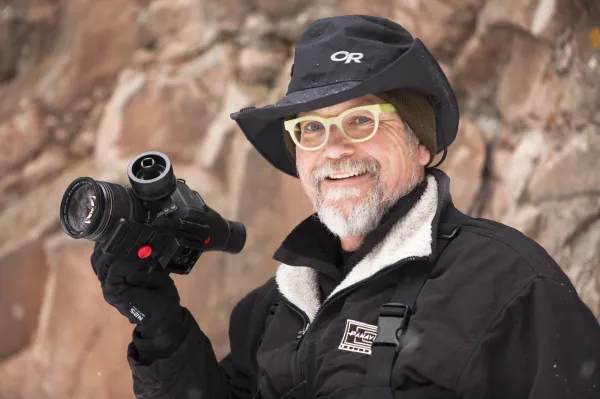
My name is Bruce Dorn. Since being discovered by Conde Nast in 1973 while still a college student, I’ve spent my career as a professional image-maker. I transitioned from a “grease monkey” at a local station to shooting fashion spreads in New York and Paris, eventually moving into advertising and directing television commercials for Fortune 500 companies. As a Hollywood Director and Cameraman, I’ve specialized in everything from automotive to digital effects, earning numerous industry awards. The core of my success has always been a commitment to creating compelling, attractive imagery that celebrates subtle beauty. Now, I’m paying it forward by sharing the lessons of my fruitful career on this blog. I look forward to interacting with visitors and generously sharing my insights as I continue my relentless pursuit of beauty. Please join me on this journey.
Host Bios:
Scott Brady
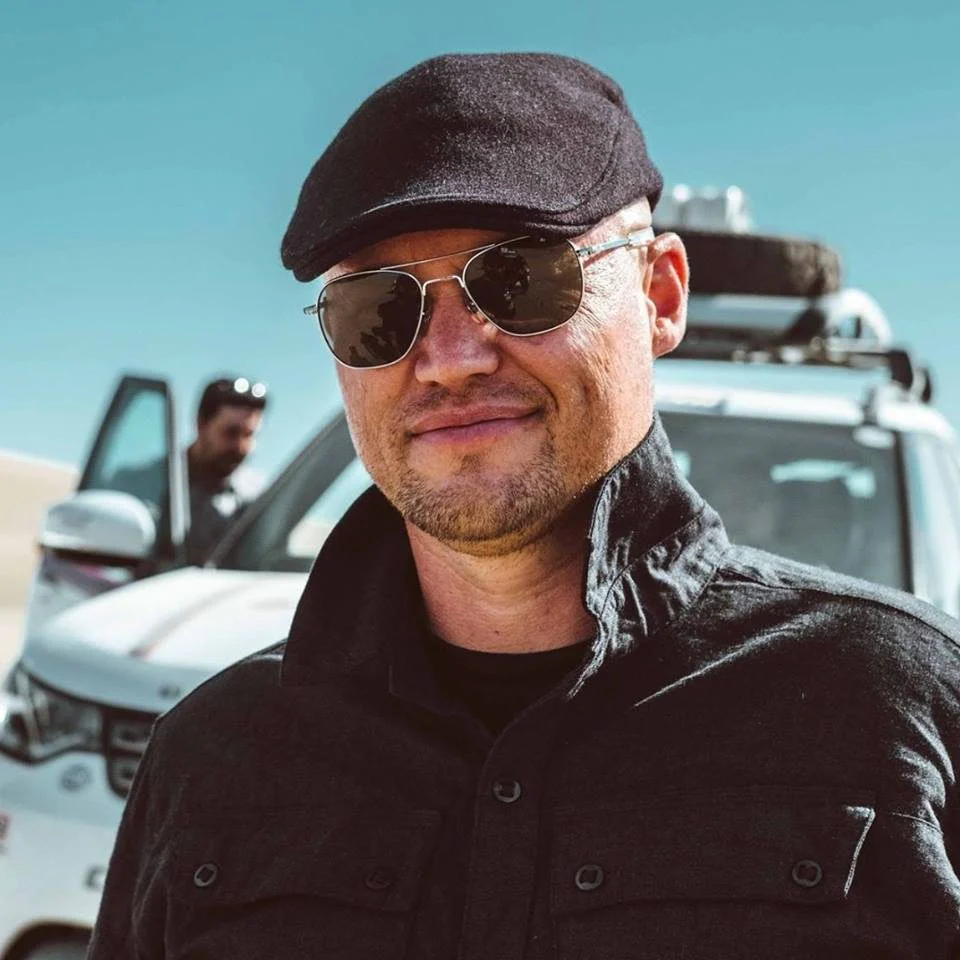
Scott Brady is an adventurer, author, and publisher, and the first person in history to cross all seven continents. Brady is executive publisher of the Overland Collective, home to Overland Journal, the Overland Journal Podcast, and expeditionportal.com—the world’s largest vehicle-dependent adventure community. Scott wrote Overlanding 101 (Simon & Schuster) and is currently riding around the world on his BMW GS. He also led Expeditions 7, the first expedition to drive the same vehicle on all seven continents. Brady’s polar crossings include Antarctica and a south–north crossing of the Greenland ice sheet. Scott is a fellow of the Explorers Club and lives in Prescott, Arizona.
Matt Scott
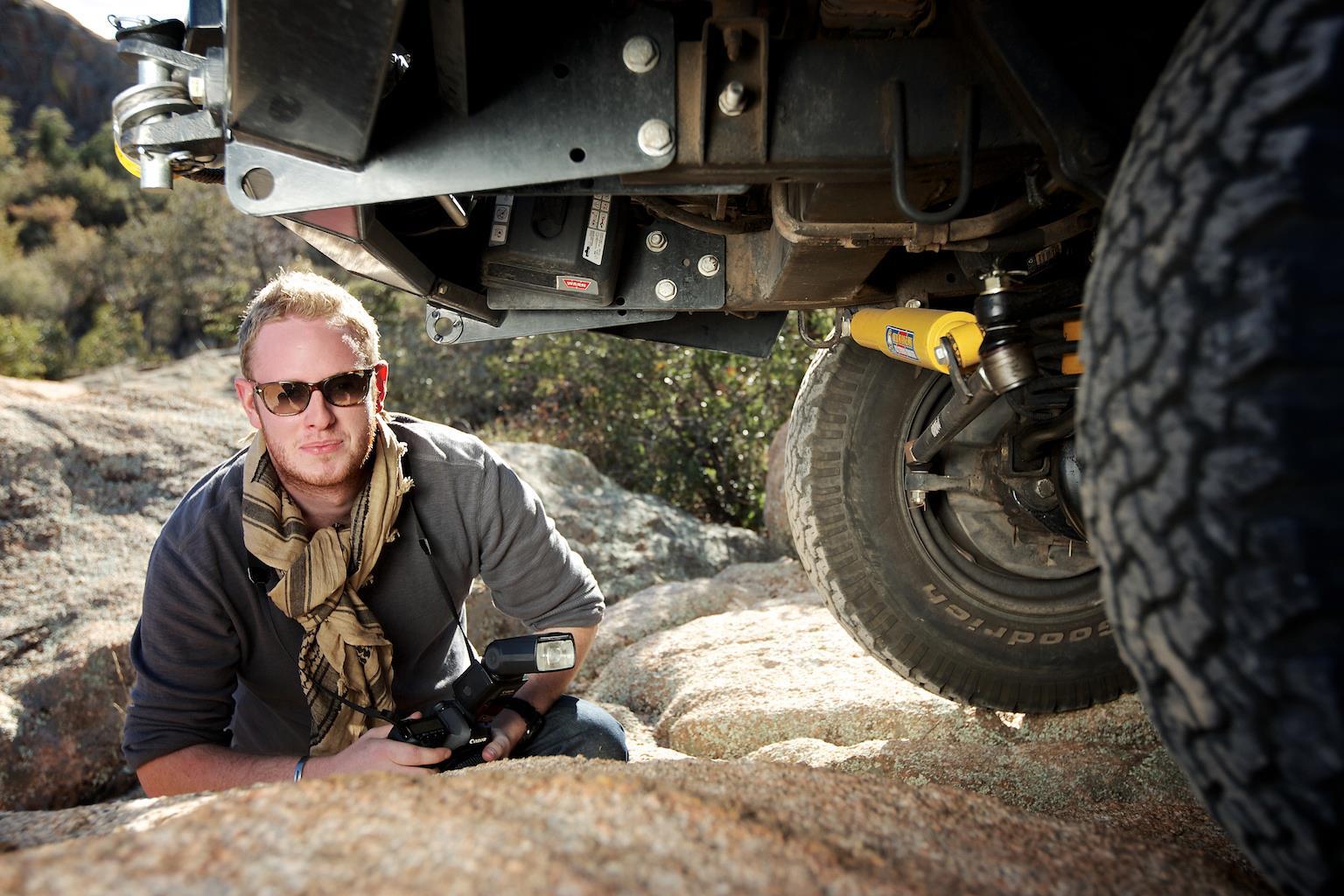
Matt is a leading expert in automotive adventure. He has extensively explored the world’s most remote places by 4WD and is considered an industry authority on overland travel. He is the only American to ever become an editor of a major Australian 4WD publication and has over 15 years of competitive auto racing experience. @mattexplore
Tune in Apple Podcasts | Spotify | YouTube
Our No Compromise Clause: We do not accept advertorial content or allow advertising to influence our coverage, and our contributors are guaranteed editorial independence. Overland Collective may earn a small commission from affiliate links included in this article. We appreciate your support.
Transcript
Scott Brady: [00:00:00] Hello and welcome to the Overland Journal podcast. I am your host, Scott Brady, and I’m here with my co-host, Matt Scott. What’s going on, Matt?
Matt Scott: You know, not much is going on except for the fact that we have a really good friend of mine, mentor, and all around cool cat, Bruce Dorn, with us in the, uh, in the studio today.
So Bruce, how do we even describe you? I mean, so photographer, filmmaker, commercial director, uh, somebody who’s never really worked in their life but seems to always be working
Bruce Dorn: Yeah, I would say, um, baby boomer layabout.
Matt Scott: Baby boomer layabout.
Bruce Dorn: Yeah, I’m trying to coast on, uh, past achievements- … and make it to the final checkered flag without ever doing an honest day’s work.
Matt Scott: Hmm. A role model-
Scott Brady: Yeah … to all of us. Exactly, although I’ve seen Bruce work harder than anybody else on many days. I, I like the one description that you give for yourself, [00:01:00] raconteur. I think that works real- I think that works well for you.
Bruce Dorn: You know, a- a- any story worth telling is worth telling well, and as you pointed out, having had, had to listen to a number of my stories over, over the years, the details remain consistent.
Scott Brady: They do. Yeah, they do. And, and my, my history with Bruce goes way back, uh, close to 10 years now, and we, we did a trip called Expedition 7, and Bruce was on four of the seven continents with me. We spent about four years together traveling around the world. He endured my snoring, um, and I endured his storytelling, and we, we really did learn a lot about each other, and I learned a lot about photography from Bruce.
Bruce is certainly a, a consummate professional, but more importantly, he is a mentor. He, he will take the time to share his knowledge with others, and, and I learned so much from him in my, my own personal photography. But before we get too much into Bruce, Matt, what, what’s, like, the most recent cool thing that you got going on?
Matt Scott: [00:02:00] Oh, man. Well, you know I’m all into the gadgets. I found this thing at AutoZone from Griot’s Garage. It’s this synthetic clay bar, and, uh, it has completely changed my outlook on life. I mean, I mean, down to the core of civilization- … it has just, it has rocked my world. So e- essentially, it’s a magic eraser for your car.
Some of you may know, some of you may not, I have this, um, relatively old Japanese imported diesel ’80 series Land Cruiser that I’m in love with and have spent far too much money on. Anyways, pretty bad paint on it. You know, it was sitting, I, I wanna say it came from Kobe, Japan. Everything that you associate with living in a city, pollution, whatever, has just built up on this car, and now the paint looks, I mean, uh, pret- pretty darn good for a, a vehicle that’s almost 30 years old.
I think it’s 28 years old now. And the thing’s 24.99. Like, I, I, I like it. I mean, they didn’t send me this. Like, I, I, I’m on my second one. I love it. I don’t know. I like getting excited about- Any, any- … little things that make a big difference … anything that
Scott Brady: makes a Toyota paint job look [00:03:00] good- Yeah … is worth liking.
Matt Scott: Yeah, ’cause that’s really hard to do.
Scott Brady: Yeah.
Matt Scott: It’s really hard to do. They
Scott Brady: didn’t- they never really focus on paint.
Matt Scott: Yeah. I mean, they just focus on things like reliability- Yeah … and functionality. And stuff that works,
Scott Brady: right. Totally.
Matt Scott: Not paint.
Bruce Dorn: Are you using it on your face too? Because you’re, you’re glowing today.
Matt Scott: You know, that’s, that’s … Oh, geez, you’re making me blush. It must be your green glasses, Bruce.
Scott Brady: It’s just the fact you’re a ginger.
Matt Scott: I’m not. I’m gonna hold my tongue there. I am only slightly- Of a slightly ginger-ish tinge
Scott Brady: Bruce, um, um, I think this might be something we need to ask everyone on our show, but it- does Matt look like a ginger to you?
Bruce Dorn: Absolutely.
Matt Scott: I, I’m not even… Like, Clay Croft is a, is a ginger.
Scott Brady: Yeah.
Bruce Dorn: Yeah, but, yeah, but y- you know, you walked from the car to the room where we’re recording, and you’re, you’re beet red- … you know, from, from the sun.
Scott Brady: 30 seconds of sun exposure. Yeah.
Matt Scott: I mean,
Bruce Dorn: I think you must have to use SPF one squillion.
Matt Scott: It, it’s one squillion, yeah, yeah.
No, that’s just ’cause I’m Swedish. Oh. I like to say I’m so Swedish I came flat-packed at birth. [00:04:00]
Scott Brady: How about you, Bruce? Like, what’s, what’s the recent cool thing that you, you’re digging on?
Bruce Dorn: I’ve been working with some really cool lights. Um, part of my career as a photographer and a filmmaker has been defined by working with light from the very beginning.
Had one camera, one lens. The next accessory I bought was a light. I think I still own that light. But, uh, lately I’ve been working with some portable LED lights from, believe it or not, an American manufacturer. There’s still American manufacturers. Light and Motion is a company out of Marina, California, just, uh, a stone’s throw above Monterey.
And, uh, they’re at a hangar up there on the old, uh, military base, and they’re building… They- they manufacture, uh, lights for bicycles, uh, headlamps like we use around camps, and underwater lighting. I was doing, uh, a dive with a buddy. We were looking for megalodon teeth down in the Flor- uh, Florida Keys area, and, uh, this guy had this, uh, really wacky small LED light.
We were in a [00:05:00] hotel room way up above the beach, and he goes, “Check out how bright this is.” He turns it on, lights up the beach, and of course there were many people down there doing all kinds of interesting things- … in what had moments before been total darkness. Um, uh, the light was spectacular, but it was extremely blue in color, which was by design.
About 8,000 Kelvin, which is really high on the, on the blue side of the scale.
Scott Brady: And is that for underwater use? Yep,
Bruce Dorn: yep. Okay, got it. Because as the light comes through, you, you lose red and yellow in the first 11 or 12 feet, and then it gets to be sort of bluish and greenish. You add your fill light with a blue light, and then you put a bunch of magenta or red into it in post, and now you get your color back.
I, I was thinking to myself, “If these guys could make this in a legitimate Kelvin temperature for surface use, I would buy a ton of these things.” So I actually approached the company and have been grinding on them for a couple of years, and, uh, now they offer the same units in, uh, 3,200 Kelvin, which is classically called tungsten, uh, temperature, and then [00:06:00] 5,600 Kelvin.
It’s high-impact plastic. It’s got a very tight little LED array in it, modifiers that you can put on it from Elinchrom and some of their own proprietary modifiers. I think you can drop this thing from a couple of feet on the concrete and it’ll bounce.
Matt Scott: Yeah, they feel super solid.
Bruce Dorn: It’s- Nice … waterproof to 300 feet.
Waterproof, not water resistant. I recently shot a little project for the local college. Uh, the theme was drowning, drowning under student debt. And I, I sunk a, a p- or young lady, uh, in the pool with, uh, her cap and gown, and then shot some pictures of her struggling with her student debt. For those of us who travel a lot, traveling with lithium ion batteries i- is a very difficult thing because of all the
Scott Brady: issues.
Yeah, to carry- you have to carry them on, yeah.
Bruce Dorn: So because these lithium ions are internal to the lamp, they sidestep all of those issues. You can put them in the cargo hold.
Scott Brady: Oh, interesting.
Bruce Dorn: And it’s, and it’s cool. Pretty amazing, uh- Sounds
Scott Brady: awesome …
Bruce Dorn: unit. Yeah. And- And
Scott Brady: what, what’s the name of the company again?
Bruce Dorn: Light & Motion.
Scott Brady: And then the product that you’re talking about?
Bruce Dorn: Is the Stella [00:07:00] brand.
Scott Brady: Oh, Stella. Nice.
Bruce Dorn: So you’ll see them in Gold Rush Bering Sea. You’ll see them on Whale Wars. Uh, they are the light of choice for extreme conditions. I’ve got a couple that are on quick release, uh, super clamps on the wing mirrors on my F-250 so I can spotlight deer.
I’m sorry, look for camp sites along the side of the road. And uh, then I can grab them off of the mirrors, go caving, go snorkeling, use them to light a scene around a campfire.
Scott Brady: Wow.
Bruce Dorn: So they’re true cinema grade in a very small package, and the, the ru- ruggedized aspect is what really turns me on about them.
Scott Brady: Oh, that’s cool. Oh, that’s a nice little pr- and an unexpected choice. That’s nice. I like that.
Bruce Dorn: Yeah, yeah.
Scott Brady: You’ve got so many gadgets that it’s cool that
Bruce Dorn: that’s the one you picked. So many gadgets. I got- …
Matt Scott: almost as many gadgets as you.
Scott Brady: And me. What’s your
Bruce Dorn: thing?
Scott Brady: You know, I’ve been riding this Honda Africa Twin, and I really…
It’s, it’s been an interesting bike to ride ’cause it has the DCT, which is like a semi-automatic transmission.
Bruce Dorn: Now, you dissed that initially. You said it was too heavy and you couldn’t bump start it.
Scott Brady: It w- the, it’s the bump starting that’s [00:08:00] the problem, and it’s still a concern. So but I’ve been ri- it’s been nice to ride a motorcycle every day.
Bruce Dorn: Yeah.
Scott Brady: So that’s been, that’s been my thing. And I, you know, I, I realized the other day that it’s a, it’s a great bike overall. Yeah. Like, for, for someone who wants to buy their first adventure bike, it’s a great bike. But I think I would still want the six-speed manual.
Bruce Dorn: You know, I went and test rode one, and I like the automatic.
And I, I found it to be, what do they call it? Deep learning. If not AI, deep learning. Because when I was riding it casually, it, it short shifted, was u- using the torque. But as soon as you got aggressive with it, it went, “Oh, this is how it’s gonna be.” Yeah. Kind of like, uh, the tranny in that, that little German Corvair that I recently bought.
A Manumatic. It’s got a clutch- Sure … but it’s controlled by a computer. I found it to be, uh, really enjoyable to ride.
Scott Brady: Well, and, and at low speeds off-road, which people that are getting new to adventure bikes, they need to be riding slow in technical terrain so they don’t hurt themselves or the bike. Yeah.
Um, this, this bike really [00:09:00] allows that. It’s kinda like a Rekluse clutch. Oh, okay, okay. So excellent low speed control. So you can be dragging the rear brake and feathering the throttle and moving through terrain, um, really competently. So like low speed stuff, super good. I don’t know that I would be in for the extra, I think, six to eight pounds that it adds, and the fact that you can’t bump start it in the middle of nowhere.
But I guess if you’re riding with other people, it’s not a big deal, so.
Matt Scott: Yeah, and they make those little lithium jump packs and that kinda thing these days.
Scott Brady: They do, yeah. So there’s other way- there are other ways around it. And they’ve got a new model that just came out that I’m excited to check out. But, uh, enjoying being on the bike.
Bruce Dorn: I just wanna point out to the listeners, since you don’t have the visual, that when Scott was talking about riding through technical terrain, he was doing that handlebar thing that you do. And his, both his pinkies were in the air- They were panting … as he was riding. He
Matt Scott: was prancing.
Bruce Dorn: He was. I was. He, he, he- My feet were going
he was being very delicate with his controls. I was. Yeah, very,
Matt Scott: yeah. But, but that is a big thing for, uh, somebody that’s getting into adventure bike riding. I mean, these things are, they’re, they’re heavy machines, right? They are. [00:10:00] Like, I mean, the kinda correlation to that Rekluse, I mean, I know a lot of enduro guys, I mean, top enduro riders that use those things because it’s just easier.
I mean-
Scott Brady: It is easier to ride, for sure. And it’s still, I mean, this is the Adventure Sport model, so it’s got over six gallons of fuel. Cool. Has nearly nine inches of suspension travel. So it actually, it performs great. I mean, it’s, it’s something that a lot of people don’t, don’t look at, ’cause it misses a couple of those key points like cruise control and stuff that it matters, but it also doesn’t matter.
But this new model’s got all that. It’s got all the whizzbang gadgets that everybody wants. So it still
Matt Scott: has less travel than a KTM 950.
Scott Brady: Yeah, it does.
Matt Scott: More weight than a KTM
Scott Brady: 950. It does, yeah.
Matt Scott: And less horsepower than a KTM 950.
Scott Brady: The one that I’ve got is still less horsepower, yeah. Okay. The new one is a little more.
Bruce Dorn: But does it have this- I rest my case. But does it have this, the sex appeal of a, an electric e-bike? Because that’s, that’s my, that’s my weapon of choice now.
Scott Brady: That’s your new jam, your new jam?
Bruce Dorn: Oh, yeah.
Scott Brady: Although you, you ha- You, this, that’s a very cool story. You, you had this [00:11:00] Harley Davidson that you built 30 something years ago
Bruce Dorn: Still have, yeah.
She’s 31 years old this year
Scott Brady: Yeah, and it was in, like, Mikuni carburetor ads and everything else, and then you sold it, and it, and it went, it went away. You didn’t, you didn’t know where it went, you didn’t know who had it, and then somebody of your… Uh, what was the story?
Bruce Dorn: Yeah, I f- built it in ’88, sold it for a massive profit.
It was in Easy Rider, and Hot Bike, and calendars, and all that stuff. I… You know how it is, you feel like you build one good one, that the next one will be better.
Scott Brady: Yeah.
Bruce Dorn: Sold it for a good piece of change. It showed up on Craigslist out in New Jersey about three or four years ago. I bought it back from the guy for nothing.
He had put, uh, 5,000 miles on it-
Scott Brady: Wow …
Bruce Dorn: since I sold it to him, but he had screwed it up with a bunch of weird, uh, changes. So I put it back to the original condition, just like meeting an old girlfriend that you should never have dumped, uh- Yeah. … and she, for some reason, still likes you, and, and you’re back together again.
So [00:12:00] yeah, no, I love that, that old thing.
Scott Brady: In fact, that was the first Harley Davidson I ever rode, was your bike, and it w- and it didn’t suck as bad as I thought it would.
Bruce Dorn: Aw, that’s, that’s so sweet, Scott.
Scott Brady: No, it was actually, it was super charming Yeah,
Bruce Dorn: that’s right. Yeah, keep talking. I remember coming down the hill from, uh, Jerome.
We left together, and I was taking a nap here at the shop by the time you finally rolled in. I, I, you know, and I think Martin will, uh, attest to that. I mean, it, it was probably those psycho passes I was making, but I still- … I’ll still take it.
Scott Brady: I do remember that. I do remember that. So you’re not only a photographer, but you are a world traveler.
You have seen a lot of the world, and, you know, one of the things that we, we like to talk about on this podcast is, is help people relate back to how they improve their own journey. You have done photography professionally, but what are some things, initial things that you would recommend someone that is new to overland travel, or they’ve been a longtime overland traveler, and they want to [00:13:00] just do a slightly better job or do an improved job of capturing their own memories?
Uh, what are some basics that you like to tell people when they ask you that question?
Matt Scott: Yeah, I mean, how can we be as good as Bruce Dorn in three minutes?
Bruce Dorn: This is where the cricket sound effects come in. You know, I think the, the number one thing is taking the time. We, we struggled, uh, on E7 to a certain extent because we were busy getting going during the early prime light, and we were busy trying to find a campsite and making those last few miles during the afternoon prime light.
Scott Brady: Totally.
Bruce Dorn: So i- if you go with the intention, uh, of making imagery as one of the priorities, then it will automatically improve, no matter what tools you’re using. Obviously, magic hour is a great time to shoot. Having the camera ready at all times. I remember a few occasions of shots that I, that I missed, and I will kick myself forever, uh, because the camera was just out of reach.
Um, [00:14:00] you know, you can, you can put a camera in P for professional mode, and it’s gonna work well for you for about 92% of the time. You can go in AV, you know, some kind of aperture priority or s- shutter speed priority. I tend to work in a manual mode, and I’m constantly aware of light. I like the fact that I need to be aware of what’s going on with the light, and so- I- i- if you’re traveling along, if you’re in Arizona, it’s sunny, it’s, you know, the sunny 16 rule on the front side and two stops open from that on the backside.
You never need to use a meter. Um, when you’re in scattered clouds or overcast conditions, high cirrus kind of stuff, it’s gonna be different. If you’re moving in and out of open shade, it’s gonna be different. But if you’re aware of what’s going on and you’re sort of… It, there’s nothing to photograph at the moment, but you see it, the cloud cover’s rolled in and the light has changed, color temperature’s changed, make the adjustment to the camera on the, on the, uh, console next to you.
Have the camera ready so that when something happens, you’re prepared for it. You
Scott Brady: can still capture it.
Bruce Dorn: Yeah, I was, uh, [00:15:00] dragging a trailer full of snowmobiles up to Togwotee Pass in, uh, uh, Jackson Hole, heading over toward Kelly. No, toward Dubois, Wyoming. And we were crossing, uh, a tributary to the Snake, and I’m driving, trying to keep the trailer behind me on an icy road, and we saw a line of bull moose walking single file down one bank, across the frozen stream, and up the other bank.
I think there were, like, 15.
Scott Brady: Wow.
Bruce Dorn: And they all had these massive racks. It was a spectacular shot. I, of course, jackknifed the trailer trying to get it stopped and get the camera in my hands fast enough, and all I got was, you know, the, the last moose’s derriere as they disappeared into the forest. Had another occasion where I was driving and, uh, I saw…
We were back in some backcountry on a snowy road, and I saw a little flicker of movement in my side mirror, and I looked back and there were three wolves bounding through the snow, two grays and a black. And the snow was very deep, so [00:16:00] they were porpoising through it. Again, camera was just a little too far away, so that can only be a neurochrome.
I’ll remember it. I’ve got it, you know, in my head. I remember both of those shots distinctly. And you’d think, at this point, after almost, almost 50 years as a pro, that it would never happen. But I was just up in Jackson, and I went over, looking for some, uh, black bears in a berry patch that I know is productive.
I had my 200 to 400 zoom on my 1DX Mark II in my lap, because I knew up the hillside there were some berry patches. Serviceberries, I think they were. As I come around the corner, there are two bear cubs not 10 feet away from me on a tree branch. There was a tree growing up the downhill side of the road’s slope, and they were no more than 10 feet away, posing, backlit, and perfectly framed, and I had so much lens on the camera that I could have shot a nice image of the pupil of one of their eyes.
But no way I could get the shot. By the time I fumbled [00:17:00] around, got everything changed, they were gone, so. Wow. But I came back the next day and got a couple of good shots, because I knew they would be in the area. But I, I think being prepared, being in the mindset of, of capturing images is number one.
Familiarity with tools. There’s a, there’s an old saying from the Old West, “Beware of the one-gun shooter.” You know that rancher who’s got a lever action 30-30, and he uses it to get his dinner and to chase off scoundrels? I’d be nervous about that guy because he knows that tool. If you are working with too many cameras, too many lenses, you can actually create obstacles to your capacity to capture.
So sometimes less is truly more.
Scott Brady: So, well, that leads to a question. If you were to have one body and one lens, what would it be?
Bruce Dorn: Well, you and I came to the same conclusion, I think, when we were out on E7. Right. That 28 to 300, something that’s got a really long range, uh, from fairly [00:18:00] wide to some tele, uh, is gonna be a good choice.
So that, uh, 28 to 300 L lens. You were on this Mark
Scott Brady: III- 5D Mark III, yeah.
Bruce Dorn: Three. Yeah, Mark III. And so, uh, that kind of combination’s good. There’s some really neat little cameras that have, uh, what they call zoom lens reflexes, where the, uh, it’s a, a fixed zoom. A number of different brands make them, and I think that would be a, a really good way to go.
But-
Scott Brady: Yeah, that was a truly special lens. In fact, when, when I migrated to Sony, it was the greatest loss, for sure.
Bruce Dorn: You know, the only thing, uh, that I found problematic with it is on the 28 end. Uh, wide angles are, are most interesting when you use them close. When you, you, you get up close to something, it, it really increases the, the scale of the foreground object, pushes the background back, and it, it’s an easy way to add a lot of drama.
That, that particular lens, I think the closest focus on the 28, uh, millimeter end was pushing 4 1/2 feet, something like that. Yeah, that’s, that’s
Matt Scott: quite a while.
Bruce Dorn: Yeah. And you, and you wanna be able to have [00:19:00] it so that you can get 12 inches from the front element or something like that. So I, I, I went back to my old school roots and got a, what’s called a Barlow lens, not named after Nina.
And it’s a, uh, single element lens that you spin on on the front like a filter, and it pulls infinity in so that, you know, your furthest the lens will focus is maybe 10 feet.
Scott Brady: Oh, interesting.
Bruce Dorn: But then it brings it in to about 18 inches on the front. So- Oh, wow … having one of those, and if you can spin it on quick enough, then, then you can make that work.
But y-
Scott Brady: And what body would you put it on?
Bruce Dorn: Well, um- Bodies come and go. It’s always about the lenses for me. Yeah. I haven’t seen a bad camera in a while. Yeah, pretty good stuff. I was working this, working this summer with a young, uh, Hopi girl who I’m mentoring as a photographer, and I put her on, uh, the little Canon M50 and with the little, uh, 18-135.
And we were shooting… I dragged her along on some concept fashion shoots that I was doing, and I’ll tell you what, it’s hard to discern the differences between what was coming out of the APS-C [00:20:00] sensor on that and the EOS R that I was, uh, test driving, EOS R and EOS RP. At 16 by 20, I defy you to tell the difference.
Sure. You know? And, and of course you can make stupidly large enlargements from the bigger stuff, and sensor size is not just about pixel volume, it’s more about the way that the image is rendered. The larger the final capture format, the shallower the depth of field at any given F-stop. So there are ways that it paints the image that feels different.
But camera bodies, I just have something that has good weather sealing. You know, we, we learned about that. That’s so bad, yeah. And, and good temperature resilience. When we started out E7, I remember I’ve got a shot somewhere of the backseat, and I, we had so much stuff, and then by the end it was down to a body and a couple of lenses- It, it was, yeah
and a camcorder. By the way, those camcorders were disposable. I had to throw those out after it got home because there’s not a service center around that will work on a camera that’s been sandblasted- … [00:21:00] because it destroys their workspace. They go- Yeah … “Has that been in the sand? Don’t even come in the door.”
Scott Brady: Oh, interesting.
Bruce Dorn: Yeah. So there, there’s just no future in it if you get them in the sand. And I like to, I like to, you know, flashback on when you guys dumped me out there in the sandstorm. Uh, was, um-
Scott Brady: Was that in Namibia, or…?
Bruce Dorn: Yeah, yeah, that little- I
Scott Brady: remember that. …
Bruce Dorn: that little German village. Yeah, picture this: “Oh, Brucey,” you know, “get some shots of us coming from, you know, a quarter mile away.”
And they said, “Dump me out.” And then they go by, and they go another quarter mile so that I, you know, I can get the going away shot, and then they sit there, you know, lounging while I jog, uh- … jo- jog through the sandstorm down there, you know. But, um, weatherizing, you know, toughness. Generally, I’d look for toughness.
That- And redundancy … that Canon
Matt Scott: R that you’ve been playing with is pretty, pretty nifty.
Bruce Dorn: Oh, I love that thing. Yeah, well, it’s gen one, you know. Of course Canon is, uh, arriving at the mirrorless party with the party, you know, well underway, and the- First offering the EOS [00:22:00] R, I would consider to be about the equivalent of a 6D versus, like, a 5D Mark IV.
It’s not got all of the pro content that I think everyone would have liked, but the price point would have been much higher. What a, what a terrific camera. Yeah. It just works
Matt Scott: wonderfully. That little 24-105, I shouldn’t say little, I mean, it’s a significant lens. I mean, I know you guys are talking about the 28-300 as that’s kind of your money maker.
It was, yeah. For me, the 24-105, I mean, I’ve shot that my entire career. Yeah, I- There’s so much muscle memory with it …
Bruce Dorn: yeah, if that was, if you had to, you know, the desert island one lens, that 24-105 L would be the way to go. The n- the new mount that Canon has come up with, this R mount, is the mount for the next 30 years.
I mean, they introduced the, uh, EF mount about 30 years ago, and rode that pony, uh, for a long time. The engineers are saying that they can invent, they can now offer lenses that they never thought were possible before because of the diameter and the, uh, distance from [00:23:00] flange to sensor, and we’re starting to see it.
I, I sold, I’ve sold my beloved 70-200 F2.8 IS to Mercedes, who’s- Yeah, sure … who, who’s rocking that thing, uh, in anticipation that the RF version of it would follow quickly. That lens is so short it actually trombones when it changes focal length. So it’s about the length of an 85.
Matt Scott: Wow.
Bruce Dorn: So it’s a t- gonna be a tiny little thing.
Matt Scott: Yeah, that’s really handy.
Bruce Dorn: And then they’re getting super speeds on a lot of the primes. So I’m slowly moving over to RF mounts, but of course they gave us some really interesting mount adapters to be able to put the EF lenses on the RF bodies, and I’m using those. So-
Scott Brady: Plenty of options … plenty
Matt Scott: of options, yeah.
I j- I just love the compact thing. I mean, you know, s- something that I always look for, I, I exclusively reserve the center console of all my trucks for cameras, ’cause it’s just, it’s easy, it’s protected. You don’t have to worry about it really rocking around. And, I mean, to be able to have a 70-200 that potentially [00:24:00] fits in a center console, for travelers where space is a- I think it’s always a concern for travelers,
Scott Brady: right?
It’s always a concern, especially when you’re off of a motorcycle. If I can’t fit it into a tank bag, it just can’t go.
Matt Scott: Yeah.
Scott Brady: Yeah,
Bruce Dorn: I think the, the s- the new RF 70-200’s about the size of a soda can. More diameter, but about that- Yeah, yeah … about, about that long. Uh, and y- you know, uh, I like the idea of compactness in, in the tools as well.
And, um, one thing I won’t give up for small size is battery capacity. You can carry- Right … a lot of batteries, and, uh, uh, that’s pretty easy. But, um-
Matt Scott: Yeah, that was the thing that always killed me with Sony, i- is I, I switched to it- Yeah, the previous generations were terrible. Yeah, I, and you have the new one.
I, I switched to it because you could charge it by USB, they had all these small lenses. Yeah. And, you know, again, it’s just the muscle memory of Canon that I guess won out for me, but-
Bruce Dorn: Color science. Yeah. Um, one of the other guys, well, you know, Fuji does some pretty good work and, and of course Sony is out there swinging for the fences all the time.
Fuji. But, [00:25:00] but I’ve never, uh, I, I’ve never regretted making the move to Canon. One of the big things was Canon Pro Service. I mean, it’s just ridiculous how well they treat you.
Scott Brady: Yeah, they
Bruce Dorn: do. They turn the stuff around quickly. A- as, as a pro, if it comes in, the amateur stuff gets broomed and your stuff gets worked on.
I, generally when I send something out, it gets fixed the day they receive it. Or at worst, by lunchtime the next day. So, you know, if you have to mail order the stuff away, it’s, it’s still not gone for very long.
Scott Brady: Well, you’re literally counting on it, not only for your living, but to meet your clients’ needs.
And yeah, when you’re, when you’re needing to make money, it’s just the same thing like when you’re crossing Antarctica. There’s a reason why you drive a Hilux, ’cause it’s the best tool to take across a continent like that.
Bruce Dorn: And I don’t mind the resale values being consistently high. Yeah. That’s a, that’s a good thing too.
Scott Brady: Yeah, no, absolutely.
Matt Scott: So I guess while we’re talking about Canon, so you’re a Canon Explorer of Light.
Bruce Dorn: Yeah. That’s, uh, eh, the [00:26:00] program started, ooh, geez, I’m gonna say could be 25 years ago by now. And, um, I’m not one of the OG, but I’ve been in it for 15 years. Um, and it’s, it’s not something where… Well, in trad- It was originally, uh, these are the best guys in their category, period, and they use Canons.
I know that some of the companies will go, “Oh, you’re really good. Come and we’ll give you some free cameras if you use ours and endorse them.” Canon’s policy was to find people that were Canon users. Like, they just find you. You know, if you happen to be the best air-to-air airplane shooter or the best guy shooting blue water sailing, they, and, and then they note that you’re using their equipment.
They, they might reach out to you. And that’s sort of what happened to me. And, um, uh, enjoy the relationship. It’s, it’s been really cool because I’ve gotten to introduce quite a few of the products that, uh, went on to, to do great things. Hiding in plain sight. There’s been more [00:27:00] than one occasion where I’ve been walking around shooting a prototype that everybody was still, you know, talking about on Canon Rumors or something like that, and I’ve got it in my hands at that moment, uh, actually beta testing it.
Got to shoot the 800, 5.6 and the 200 F2 in Africa. Went down there and did, uh, portraiture with the 200 F2 and some bird work with the 800, 5.6. And then I helped introduce- I was the second guy to use the 5D Mark II after Vincent Laforet’s, uh, famous weekend with the, the camera. And gosh, uh, C300, original C300.
Yeah. And, um-
Scott Brady: You spent a lot of time with those cameras.
Bruce Dorn: Yeah. And the EOS R, the Mark IV. Um, I appreciate the trust that Canon has put in me. Yeah. You know, I’m kind of their general practitioner. I described how it’s mostly specialists, and I would say I’m kind of the country doctor of Explorers of Light.
I do a little bit of everything.
Matt Scott: Yeah. You know? And people can see some of your work on Instagram. I mean, you don’t really take it that seriously [00:28:00] because it, you know.
Bruce Dorn: You know, I, I was aware of social media as a coming thing, but I didn’t take it seriously early enough, so I didn’t really stake out that much ground in it.
I was more busy, uh, uh, shooting than crowing about shooting.
Scott Brady: Well, and I, I remember you, I mean, talking about the breadth of your career, I remember you telling me about a Arnold Schwarzenegger movie you were working on. I mean, you, you have done so many, uh, interesting things, whi- which leads me to the question of, do you have any regrets from that?
Is, are there, are, is there one thing that you wish you had done different?
Bruce Dorn: Well, I got, um … I’ll, I’ll back up in time a little bit. I almost … My career has almost been defined by falling into things rather than seeking them. You know, I kind of have, have always done my own thing. I just, uh, the goal is to get up and entertain myself and, and have some fun.
And then on a regular basis, somebody notices that and hands me some dough. So I got to Hollywood by dumb luck. Uh, I was a stills shooter in Phoenix back in the really early ’80s. A phone call came in. Somebody asked [00:29:00] me if I shot film. I Of course I shoot film, I’m a photographer. By the end of the conversation, I realized they’re asking me if I was a motion picture camera operator, and I had gotten so far down the path that I just said, “Yeah, sure.”
And, and then I read up on it and- … went to the shoot and was able to- Fake
Scott Brady: it till you make it, right?
Bruce Dorn: Yeah. Yeah. A, a little bit of that. And then, uh, that project or the one that followed, uh, got me to some big awards thing, I think, uh, in the Clios, and, uh, that got me an invitation to Hollywood. And next thing you knew, I was creative director at a, a special effects house that was, at that time, the biggest effects house in the world.
And out of that came, uh, Pixar people, and Industrial Light & Magic people, and, uh, Rhythm & Hues. Uh, all the… We in- we really did all the groundwork, along with another sister company called Digital Productions. We invented computer graphics there. So that was the ’80s, and it was very fruitful. So I was living large, and, uh, [00:30:00] getting the projects that you dream about instantly.
Now, the regret. I was, uh… The, uh, CAA and some other places started sending me scripts, because that was the time of Tony Scott, and Ridley Scott, and Adrian Lyne, and the British invasion of all the commercial filmmakers. You know, Top Gun, Miami Vice, all these real glitzy-looking… where visuals were a really strong part of the, the, uh, project.
And I started seeing scripts, and I started reading scripts. And I started going, “I’m gonna have to take a big cut in pay to do this movie,” because you, as a first-time director on features, you basically get DGA minimums and maybe a piece of the backside. But I was gonna take a massive pay cut to do features, and I just decided not to.
And, you know, I, I did that for 20, 25 years, and I was, I would say, in, like, A category. N- n- not the top, top, top guy, [00:31:00] but I was certainly in the top 10, you know? And if you watch TV from 1980-ish to, well, not that long ago, I was… th- there’ve been a lot of com- commercials of mine still in the last five years.
You saw my work every night.
Scott Brady: Yeah.
Bruce Dorn: You know, because I did every soft drink company, every car company, every beer company-
Scott Brady: Yeah …
Bruce Dorn: every airline, every hotel. We, we… It was, it was a f- good ride, you know? You were
Scott Brady: busy.
Bruce Dorn: Yeah. But would I, would I like to have a resume of, uh, a half a dozen movies?
Scott Brady: Yeah.
Bruce Dorn: Yeah, that would be cool.
And I suppose it’s, it’s… I always… I, I was recently over in Hollywood and went to a, a sketch comedy show to see some friends of mine, uh, who are in an improv group. And I was going, “You know, you could pull these kids together and do something.” So who knows, you know?
Scott Brady: Anything’s possible. Yeah. So Matt, question for you on photography.
What’s the current setup? What are you, what are you shooting? Oh, yeah You got a couple of them, [00:32:00] I know,
Matt Scott: but Yeah. You know, I, I, I like to say I have two setups. When I’m shooting for Overland Journal or Outside Magazine or something like that, it’s always my Canon stuff. If I actually have to work and make money from, from those images, I don’t hesitate.
I, I, I go to my 5D Mark IV. I have a 24-105, and I have Bruce to borrow lenses from if I need anything- … past that.
Bruce Dorn: Later.
Matt Scott: Don’t look in your garage. Um-
Bruce Dorn: It
Matt Scott: all becomes
Bruce Dorn: clear …
Matt Scott: you know, the, the thing that’s really passionate to me, um, is my Leica rangefinders. Um, they are, you know, probably the worst camera bodies you could think of shooting with.
You don’t actually look through the lens. You look through a When you look through a rangefinder, you’re, you’re looking off to the side and, and you’re, uh, essentially making a- Gu-
Scott Brady: guessing at everything …
Matt Scott: yeah, you’re make, you’re, you’re, you’re making a measurement based on, on, on the, the parallax between the lens and the, the rangefinder.
But they’re, you know, fantastic, uh, full-frame cameras. They’re very small. I spend a lot of time in, in, [00:33:00] in Southeast Asia. I spend a lot of time in cities, and, and my personal passion is, is the, you know, the street photography. You know, so I have a Leica M10 and a Leica Summicron 50, which is… I mean, I guess Bruce, you could chime in, but Summicron 50 millimeter Leica, it’s probably the best lens you can buy.
There are more expensive lenses, but I mean.
Bruce Dorn: Yeah, it’s, uh, Summiluxes are 1.4, Summicrons are f, f2s.
Matt Scott: Yep.
Bruce Dorn: Elmarits are 2.8s, as I recall. I started back in the day, um, you carried a Leica rangefinder for wide angles, and you carried basically a Nikon F for, uh, telephotos.
Matt Scott: Yeah.
Bruce Dorn: And, uh, that would’ve been the package for a Vietnam-era photojournalist.
Matt Scott: Mm.
Bruce Dorn: You know? And, uh, because it was really hard to focus a… And I’m not talking autofocus, this contemporary generation. A ground glass optical SLR focusing a 21 millimeter lens is, is [00:34:00] more of a guess than working with a rangefinder. So rangefinders were actually technically more accurate.
Matt Scott: But very precise.
And,
Bruce Dorn: and, uh, you know, like everybody should own a Leica at some point. They’re just… They’re, they’re… It’s, I guess it’s like owning a Land Rover, a Land Cruiser, one of the classics. It really is. You just… Y- y- you know, you just go, “Yeah, that kind of feels right,” you know? I
Matt Scott: mean, they’re pricey, but I’ve never, I’ve never lost my, my backside on one.
You know, I, I- They
Scott Brady: hold their value.
Matt Scott: They hold their value. I mean, I, I… I’ll buy kind of more obscure lenses, ’cause I just, I, I, I enjoy the, the, the pursuit of, of, of making those images with, with different lenses, I guess. And, and they appreciate. I mean, Leica this year is raising their prices 25%, and it’s predicted the used market will, will, will shoot up- Follow suit
just like that. So, you know, I’ve had my, my M10 for two years, and I always buy, I always buy everything used from Leica, because there are, there are collectors that just buy these things, and they never use them.
Bruce Dorn: Fetish [00:35:00] objects.
Matt Scott: Yeah, yeah. They’re, they’re just objects to them. So I always buy used. And, and honestly, I’ll, I’ll, I’ll get paid to use this camera.
Yeah. You know? It, it’s what it costs you, not what the purchase price is. Yeah, to- totally.
Bruce Dorn: I remember, um- I guess it would have been in the ’70s. I, I was m- in a camera shop and a guy came in with a, I think it was an M3.
Matt Scott: Mm.
Bruce Dorn: Um, and, uh, it looked kind of rough. And, uh, “What happened to that?” And he, he goes, “Well, I was in a, my buddy’s Piper Cub and I dropped it out the window.”
“And, and, uh, it’s fine.” You know, they went and found it out in some Indiana cornfield. Yeah. And it was, you know, well down in the, the recently tilled earth, but, uh- Incredible … you know, blow it off and it was fine. I mean, they, they had one moving part, basically, you know,
Matt Scott: the shutter. Yeah. If you need to bludgeon someone to death in your travels in self-defense and you want a camera you can use afterwards, highly suggest Leica.
Scott Brady: Yeah, I’ve been, I’ve been shooting that monochrome recently. Yeah. And I, and I like that.[00:36:00]
It’s with the 75 millimeter 1.4.
Matt Scott: And, and, and for those who don’t know, the monochrome is actually, it’s a digital camera, but it is natively black and white, so there is no color filter on it.
Bruce Dorn: Yeah. Yeah, they aren’t- No OLPF filter. Yeah … th- well, they aren’t RGB. They’re all luminance, uh- Yeah … uh, photo sites. So yeah, it’s got dynamic range.
Scott Brady: It’s really beautiful, the dynamic range, I think so. Yeah. Yeah, it’s been fun to shoot. Yeah, absolutely. All right, we’re gonna do a little lightning round, Bruce. Oh, gosh. We’re gonna
Bruce Dorn: ask you a bunch of questions. Okay.
Scott Brady: All right. What’s, what’s the weirdest thing that you’ve ever experienced in your travels?
Bruce Dorn: Oh my gosh.
Scott Brady: The list is, the list is so long.
Bruce Dorn: Oh, okay. It was, uh, being at Nordkapp- Yeah, I re- … with you … I was hoping you’d
Scott Brady: say that one. It was at, we were at Nordkapp.
Bruce Dorn: We drove to the th- I, I’m gonna go out on a limb and say that’s as far north as you can drive on the planet. That
Scott Brady: is on a mo- it’s as far as north as you can drive on a road in the world, yeah.
On,
Bruce Dorn: on a legitimate road. Yeah. And we were out on one of the fjords. I prefer Chevys, but we were out on the end of one of the fjords- … at Nordkapp. And there’s, uh, [00:37:00] according to all the images we had viewed going up there, there was some Atlas kind of guy or something holding up a big sculpture of the planet.
We arrive, and it’s extremely foggy.
Scott Brady: Totally.
Bruce Dorn: And I, I put you and Greg up underneath the, the big sculpture, take a couple of pictures, and we’re getting ready to leave, and I go, “Oh, wait a minute. Scotty, grab one of me.” And I go up there, and I’m posing, and out of the, out of the mist came a female who came up and, and, and kissed me, and then disappeared into the mist.
Yeah,
Scott Brady: she, she ran up onto the sculpture, grabbed you, kissed you, turned, smiled, and then ran away into the fog.
Bruce Dorn: It’s my personal curse, you know? This is the kind of thing. So I guess that’s not really that weird. That’s more standard.
Scott Brady: Yeah, no, that was… I mean, I remember throughout the travels, and, and this is one of the things that I wanted to bring up and talk about, is, um, not only are you a great photographer, but you, you have this, this ability to be not only charming, but disarming at the same [00:38:00] time.
You, you wear these bright green glasses. Um, you, you’re, you smile easily. You, you’re very open with people. Talk about that a little bit so that people that are maybe traveling for the first time or worried about traveling, how does that change the experience when you- When you come in with that perspective
Bruce Dorn: Yeah, I think just assuming the best of a situation rather than the worst.
You know, there were many places that we went where we could easily have been mistaken for off-duty special ops, you know, everybody wearing tactical pants and, and yada ya. But, uh, a- and I, I think y- you’re cut from- You love
Matt Scott: those pants
Bruce Dorn: I do. You’re, you’re cut from the same cloth. You’re still wearing those
Matt Scott: pants.
Bruce Dorn: You know, we, uh, we both approach everything, uh, with a smile. Yeah. And, and, uh, there was maybe one slightly uncomfortable border crossing where they kind of separated us, were talking to us a little bit, and, and one of the guys was going, “Boy, I’d sure like to come to America.” Yeah. “But it sure sounds scary.”
You know, I think, I think, um, the, the world is, is… There, [00:39:00] and not to say there aren’t dangers out there, you know? I, I’ve… There’s a story I’m working on that does, definitely addresses the fact that it, it is a place where you have to have your, your tactical awareness on at all times, but I also feel like the, the more you give, the more you get.
Right. So when you, when you’re approaching people, uh, and especially if you’re a photographer, you, you know, in some cultures that can be considered a rude intrusion, and in others, uh, not so much. But you gotta be able to read the, the people, read the, the local customs and everything quickly and, and react and, and be ready to, uh, adjust, you know?
But yeah, I, I think, uh, for anyone that’s gonna do any international travel, you’re representing all of us in the community.
Scott Brady: Yeah,
Bruce Dorn: for sure. So I, I say be appreciative of the, this, this great opportunity that you have and don’t screw it up for everybody by being a, a, you know, ugly traveler.
Scott Brady: Yeah, for sure.
All right, what was- what’s been your favorite car of all [00:40:00] time?
Bruce Dorn: Favorite car of
Scott Brady: all time. All the way back. All the way back to the, to the one with the wing that you, you beat up the bully with or whatever.
Bruce Dorn: Oh, that was-
Scott Brady: That story, that was another story …
Bruce Dorn: oh, that was the, with the Cadillac that I used as a weapon.
The one with the fins.
Scott Brady: Yeah.
Bruce Dorn: No, there’s probably still… I, I’m not sure that’s beyond the, uh, what is that thing? A statute of limitations. Yeah.
Scott Brady: I think it’s well beyond the statute of limitations.
Bruce Dorn: Well, that was, uh, there yeah, that was a huge gang- There were
Scott Brady: a few class
Bruce Dorn: action lawsuits, of course. There was a, there was a huge- Maybe we should
Scott Brady: move on
Bruce Dorn: a huge gang brawl that was taking place around my car, and I managed to get in the car and start it and crank the wheel all the way to the left and then bury the gas pedal. And it kind of cleaned out the neighborhood. You know, it was, it was entertaining. Gosh, favorite car. It, it, uh- It might’ve been a race car
Scott Brady: Huh?
What was your favorite race car? Race
Bruce Dorn: car. Well, I had a little race car that I built that I… It was a dwarf car. It was a super bike engine. Car weighed 995 pounds and had 220 horsepower. [00:41:00] I came in second at a Run What You Brung triathlon, uh, up at Las Vegas. Lowest, uh, aggregate time of drag strip, paved oval, and road course, and I beat everything.
Everything. Panteras, Ferraris, Porsches. Beat everything in a home-built car that I probably spent 7,000 bucks on. And, uh, i- it made it street legal, and then, uh- Oh,
Matt Scott: was this the manure spreader?
Bruce Dorn: Yeah, I licensed it as a manure spreader in Wyoming. I had a, I had a cabin in Wyoming, and I, I, I got it licensed as a manure spreader and got a plate for it, and then, uh, brought it back down to California.
And I used to lie in wait for super bike riders on the Angeles Crest- … and run them down while they’re dragging their adorable little knee pucks around the corners. I’d come up behind them and honk, and then pass on- … on the outside or through a scenic o- o- overlook, uh, parking lot.
Scott Brady: Sideways.
Bruce Dorn: Yes. Yes. [00:42:00] Uh, so, uh, you know,
Scott Brady: it’s- What’s, what’s y- the, the most favorite place you’ve ever been?
Like, in the world, the one place you wanna go back to. I think I know what the answer to this one is, but if you could tomorrow, if you could- Hop on a plane anywhere in the world, where would you go? What’s your most favorite place?
Bruce Dorn: Well, I sure, I sure love Norway. Yeah, Norway. I sure love Norway. Norway. And of course I love, uh, Botswana.
Scott Brady: Yeah.
Bruce Dorn: Uh, and the Okavango. And, uh, I’ve, uh, I, I love New Zealand. What were you gonna guess? Which one?
Scott Brady: I was gonna say Maun. Fly into Maun-
Bruce Dorn: Oh, yeah …
Scott Brady: for Okavango.
Bruce Dorn: Oh, yeah. Yeah. Yeah, yeah.
Scott Brady: You talk about it a lot.
Bruce Dorn: Well, you know, I guided there quite a bit. Our mutual friend, Andy Biggs, uh, I got into guiding safaris when Andy
Uh, whenever Andy forgot that his wife was pregnant and was about to give birth, he’d go, “Fuck.” He’d go, “Oh, darn, uh- … my wife’s about to give birth and I’ve got a safari. Bruce, can you cover it?” I covered a couple safaris for him that way. And then I got into guiding and, uh, I would say [00:43:00] that Okavango is, is probably, well, it’s as close to Eden as you’re gonna get.
Scott Brady: That one shot you’ve got of the, of the, uh- Oh … I think it was a lion coming through the water was unbelievable. Lion’s like one of my
Matt Scott: favorite
Scott Brady: photographs ever. In, in the world, yeah. In the world.
Bruce Dorn: Yeah, another fellow that was on the trip, uh, I was guiding a group and another fellow was with me, uh, was on the same lens and same body, and I said, “This, she’s gonna come, you know, she’s coming.”
Uh, ’cause we could see that she was getting ready to sort of charge towards us. And, uh, we were both smoking pixels. He won the, uh- uh, Smithsonian Wildlife Photographer of the Year for that. And then I have the, the same image, but from a little lower and to the right, and Canon used it quite a bit and, and people were accusing both of us of having ripped the other guy off.
Yeah. But, uh, yeah, that was a pretty special moment, for sure. And, uh- Yeah,
Scott Brady: incredible …
Bruce Dorn: one in that series that I didn’t publish was that same cat coming through the, the, the water crossing, uh, submerged to the point that only her nostrils were sticking out and the [00:44:00] tip of her tail.
Scott Brady: Wow.
Bruce Dorn: And then that one that, uh, that I, I published so widely was a pretty special moment.
But, you know, it, it, the world is filled with special moments. The trick is to, uh, be alert and be open to receiving them.
Scott Brady: And that brings up something that I thought we would talk about briefly is this, it’s this whole idea that imagery is now this form of narcissism. And I think that people have forgotten that these moments are occurring that we should be capturing.
Yeah. It doesn’t need to be the camera turned towards ourself. In 90% of the cases like you see, uh, with so many people, even travelers today, maybe turning that camera around or shutting the camera off and actually experiencing that moment, something that you can remember, and maybe changes you a little bit.
Bruce Dorn: You can’t be a good image maker without being someone who is very aware and in touch with what’s going on around you. So if, if all of your senses are turned inwards and it’s a n- narcissistic moment, how, how, how am I in this moment? What do [00:45:00] I think? Uh, y- you miss all the good stuff.
Scott Brady: You
Bruce Dorn: do. It, it’s a variation.
Yeah, I mean, you can miss a lot of stuff by chimping, that is looking at the images on the back of your camera when the action is still going on, but you can miss a lot of stuff by just thinking about how cool will I look in this situation. Mm. Image capture in its purest form is about being able to share experiences with people that weren’t able to be there.
Yeah. And I, I don’t think that necessarily has to include us to prove that we were there and that- Yeah, selfies
Matt Scott: are awkward, you know?
Scott Brady: They become so commonplace- Yeah, yeah … that now they, now they don’t feel… They, they should feel way more awkward than they do.
Matt Scott: I mean, I, I, I guess I feel if I’m gonna take the time to look at somebody’s body of work, I want to be inspired by that, especially, you know, travel photography.
I don’t really care about somebody’s face that’s blocking Angel Falls or, or wherever that person is. I mean, I, I, I want to see a, a, a thoughtful image of of that place, not, not of them.
Scott Brady: In fact, I, I think the first photo I [00:46:00] saw that was a, an image of you in years was you sitting inside the new Defender.
Yeah,
Matt Scott: yeah.
Scott Brady: And, and that was because that moment, like at least for you and I-
Matt Scott: It was super special …
Scott Brady: it was super special- Yeah … to be at Land Rover in the UK and seeing the new Defender, being some of the first in the world to see the new Defender. Uh, that was, that was a very special moment. Um, and those are the kinds of things we do wanna share, because you can see- That was a
Matt Scott: proof of life photo.
It was. I was like, “You know what? Nobody is gonna believe me- … that Land Rover flew me and Scott out here to see this Defender months before everybody else. I should probably get- Probably grab a photo of that … a photo with that.” And it wasn’t a selfie, actually. It
Scott Brady: wasn’t a selfie,
Matt Scott: you’re right. It wasn’t a selfie.
Yeah. Taken by- ‘Cause we weren’t, we weren’t allowed to have- … taken by a friend of ours …
Scott Brady: we weren’t allowed to have our-
Matt Scott: Yeah, they bagged our phones … phones.
Scott Brady: They did bag our phones.
Matt Scott: So.
Scott Brady: Yeah.
Bruce Dorn: Did the, did they, when they had your, your phones, did they come out on Facebook, uh, in your behalf?
Scott Brady: Oh, yeah. So-
Matt Scott: I like Land Rovers.
Toyotas suck.
Bruce Dorn: Yeah.
Scott Brady: Yeah. Well, what’s next, Bruce? What, what, uh, what’s the next big adventure for you? [00:47:00]
Bruce Dorn: Well, I’m waiting to hear if I get a camera to play with, um, soon, which would be nice. I’m going to be working with my young mentee in a couple of weeks. We’re gonna, uh, been working with a little Hopi gal who, uh- And
Scott Brady: does she have an Instagram that we can check out?
Bruce Dorn: Yeah. Uh, s- I think it’s sarah.honanie, H-O-N-A-N-I-E. Awesome. Um, and there’s an article that I wrote about us working together in the October 2019 Outdoor Photographer Magazine, and she and I are gonna be shooting some, uh, a native rodeo, uh, in a week or two. And then I’ve got a young concept model that I’d like to work with, and we’re trying to sort out doing a concept shoot in the White Sands- Oh, fun
uh, down in New Mexico now that the weather has cooled down a little bit.
Scott Brady: And, and Matt, what’s next for you? You’re, you’re, uh, you got some stuff coming up.
Matt Scott: Yeah, going to the Royal Geographical Society in London for their annual Explore event. I’m gonna be helping with the, uh, vehicle-based expeditions [00:48:00] section of that.
And, uh-
Scott Brady: Yeah, anyone who’s not been to the Explore event in London, uh, I’d highly r- highly recommend it. Just walking those hallowed halls of the RGS.
Matt Scott: Yeah, yeah. I mean- Yeah … it’s- I don’t know, I think for a, for a traveler or an explorer, um, going to that, going to that place is-
Bruce Dorn: Selfie-worthy
Matt Scott: Selfie-worthy, yeah.
Yeah, maybe we’ll take a selfie.
Scott Brady: Yeah. It, it’s such a reminder of how insignificant all of my travels have been compared to those people that have done that before me.
Matt Scott: Yeah, I mean, it’ll be cool to, you know, to, to work with some young explorers and to work with some legitimate scientists that, um, just need a little bit of help on the, on the vehicle side.
Yeah, I’m really, I’m really looking forward to that. It’s cool to, you know, I guess, try and pass a little bit of knowledge on, so.
Scott Brady: Yeah, nice.
Matt Scott: Yeah. What about you? I mean-
Scott Brady: I’m, I’m, uh, hopping on the Honda. I’m gonna ride down to Phoenix and, and, uh, Infiniti’s launching a couple new-
Matt Scott: Oh,
Scott Brady: cool … SUVs, so we’re gonna go to New Mexico, and the f- it’s the first designed [00:49:00] and built space station.
It’s a space port is what they call it. Um, so we’re gonna go- Oh, yeah, that’s by Roswell or something. Yeah, so we’re gonna go, we’re gonna go check out the, uh, Virgin Galactic space port and, uh, drift various vehicles and drive off-road with SUVs, and that’ll be fun.
Bruce Dorn: Is, is, is that over near the Very Large Array in New Mexico?
I
Scott Brady: think so. I think they’re in- I’m gonna- … the same basic area.
Matt Scott: Another selfie-worthy
Bruce Dorn: thing. Cou- couple of weeks from now is the, uh, Festival of the Cranes there at Bosque del Apache, and I think- Oh, nice … I’m gonna be down there as well. Uh, but yeah, that’s, that’s a beautiful time to be there.
Matt Scott: New Mexico is so crazy.
Yeah. I, I, I feel it’s probably one of the most underrated Southwest states. It really is. Um-
Bruce Dorn: It’s gorgeous. Yeah,
Matt Scott: I mean, there’s some of the … I, I wanna say it’s the oldest continuously habited city in North America is Santa Fe. Could be.
Bruce Dorn: Well, the oldest continuously occupied village is Moenkopi on the res north of Flagstaff.
Matt Scott: Okay.
Bruce Dorn: It goes back thousand years.
Matt Scott: Yeah. But,
Bruce Dorn: uh, as a, [00:50:00] as a town-
Matt Scott: I mean, there’s a lot of history in- Yeah, yeah … in, in New Mexico. Um, I was reminded, we were just out for Overland Expo East, and everybody on the East Coast is, “Oh, well there’s no history on the West Coast.” I’m like, “Oh, okay.”
Scott Brady: Yeah. “
Matt Scott: Have fun with the traffic.”
Yeah,
Scott Brady: exactly. Oh, so we got some good stuff coming up. Thanks so much, Bruce, for being on the podcast with us. Uh, you have been an inspiration- My pleasure … to me. It’s amazing that you live here in Prescott. That’s how we, we first connected all those years ago, got to see the world together. And, uh, make sure, everybody, check out Bruce’s work.
Uh, he does contribute to Overland Journal on a regular basis. Uh, what’s your Instagram again,
Bruce Dorn: Bruce? @dorn.bruce, D-O-R-N.B-R-U-C-E.
Scott Brady: Yeah, he’s the real deal. And thank you all for listening. Matt, you got anything for us before we go?
Matt Scott: No. No, I’m great.
Scott Brady: All right, man.
Bruce Dorn: So will you Clay Bar my back?
Scott Brady: Please? $27.
Bruce Dorn: Okay, sold.
Scott Brady: All right, everybody, we’ll see you next time.
Bruce Dorn: Bye-bye.