

With a little bit of historical hindsight, we can safely say that the 1995 Subaru Legacy Outback was one of the truly revolutionary cars from the final years of the twentieth century. Not only did this lifted wagon finally bring the quirky Japanese brand into the mainstream, but it also became the archetype for many future iterations of the crossover SUV. The Legacy on stilts was such a runaway cultural and sales success that even mighty Ford sat up and took notice. The Blue Oval developed two Subaru-inspired concept cars in 1997 that were featured at the Tokyo Auto Salon—the Ford Santa Fe and Mercury L’Attitude—Outback slayers that never were.
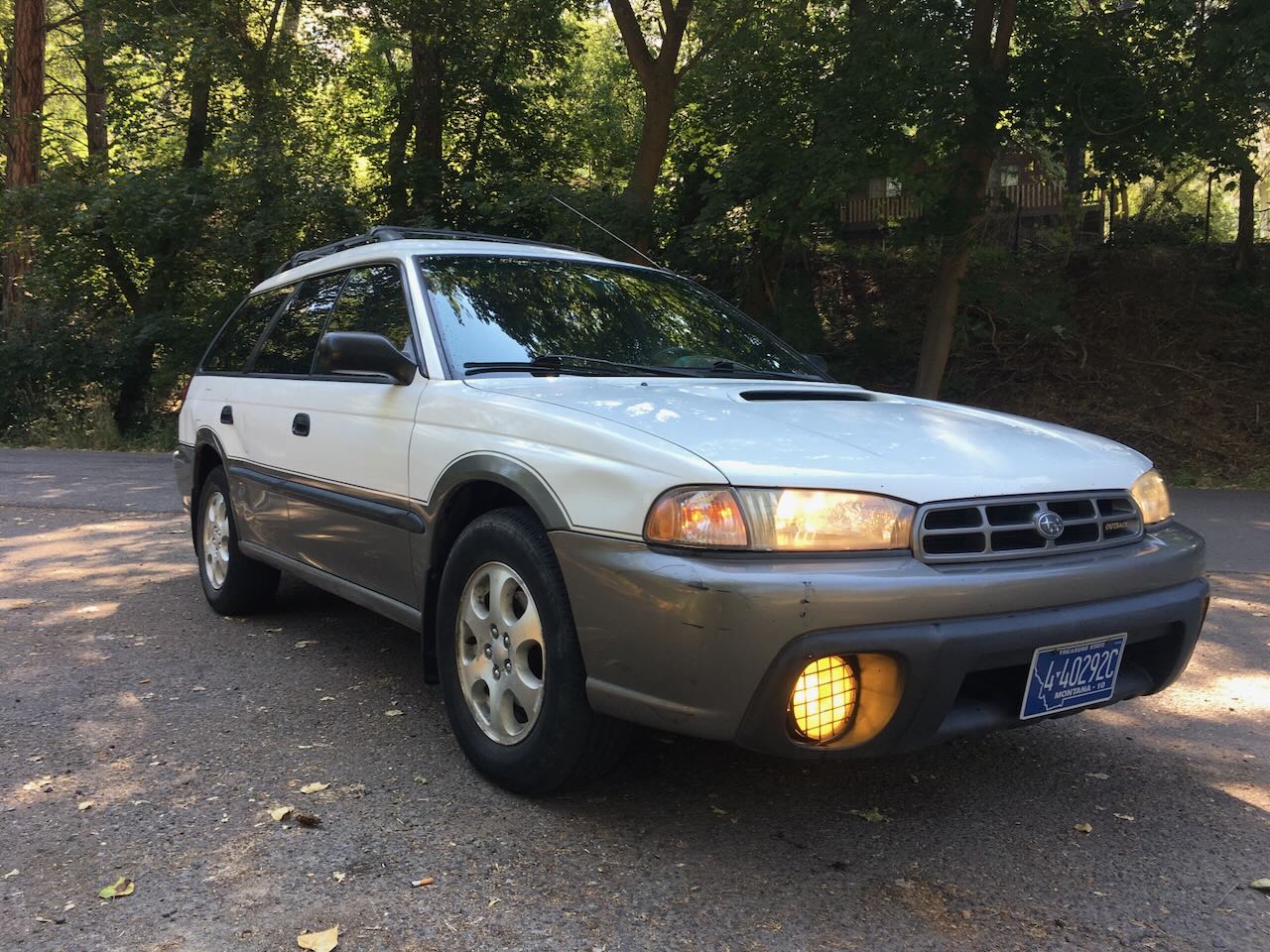
The first-generation Subaru Legacy Outback changed the landscape of sporty, adventure-oriented driving.
Taking the Wagon to New Heights
Concept cars generally fall into two categories. First, there are engineering and aesthetic exercises that showcase the future of a brand’s design language. These are the wild, reach-for-the-stars vehicles that the manufacturer never intends to see the production line, but hint at features or technology to come in future models. Second, there are the concept cars that, with a few practical tweaks, look ready for dealer lots right off the stand. The adventure-ready Ford Santa Fe and Mercury L’Attitude certainly looked to fall into the second column.
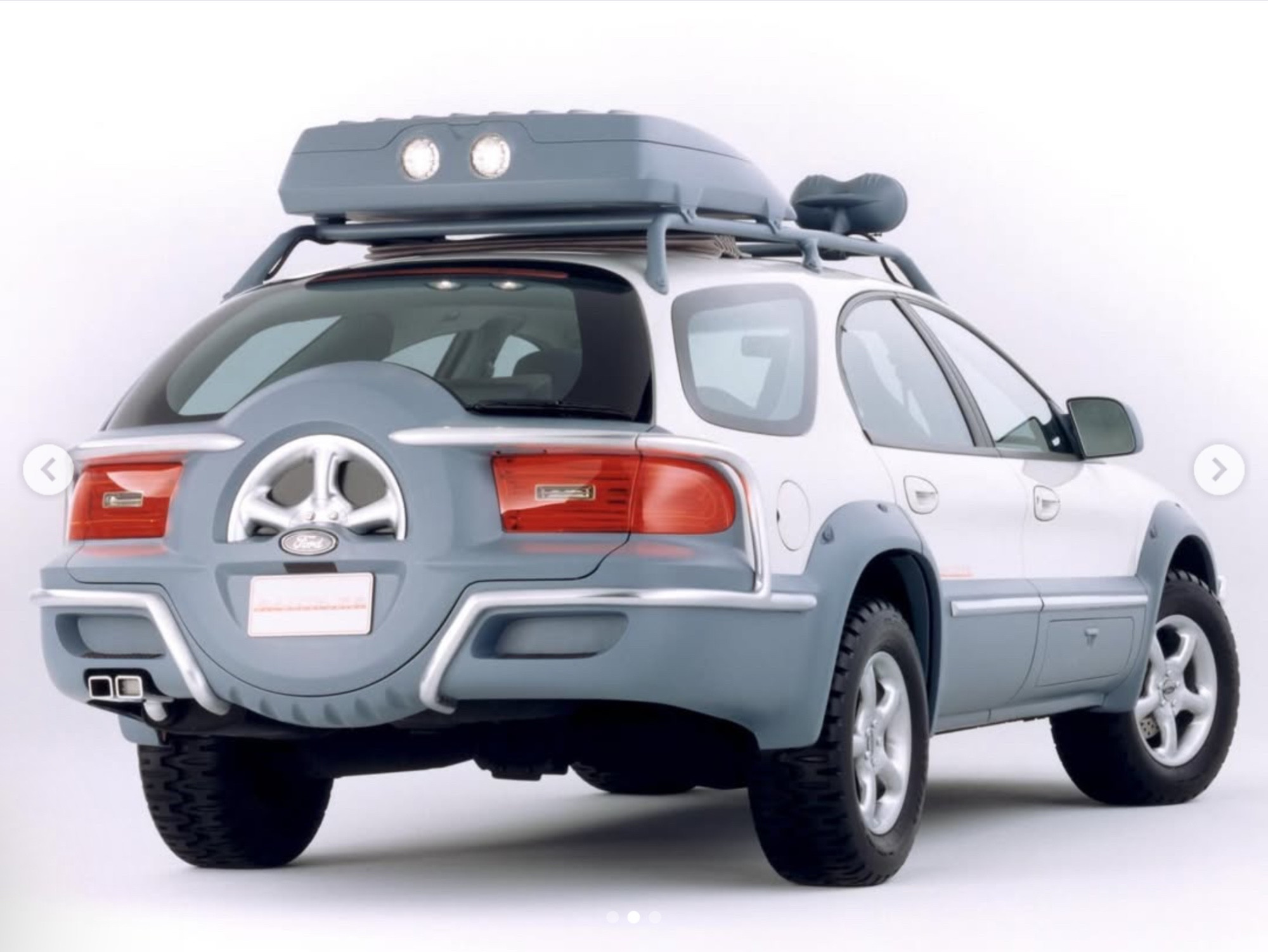
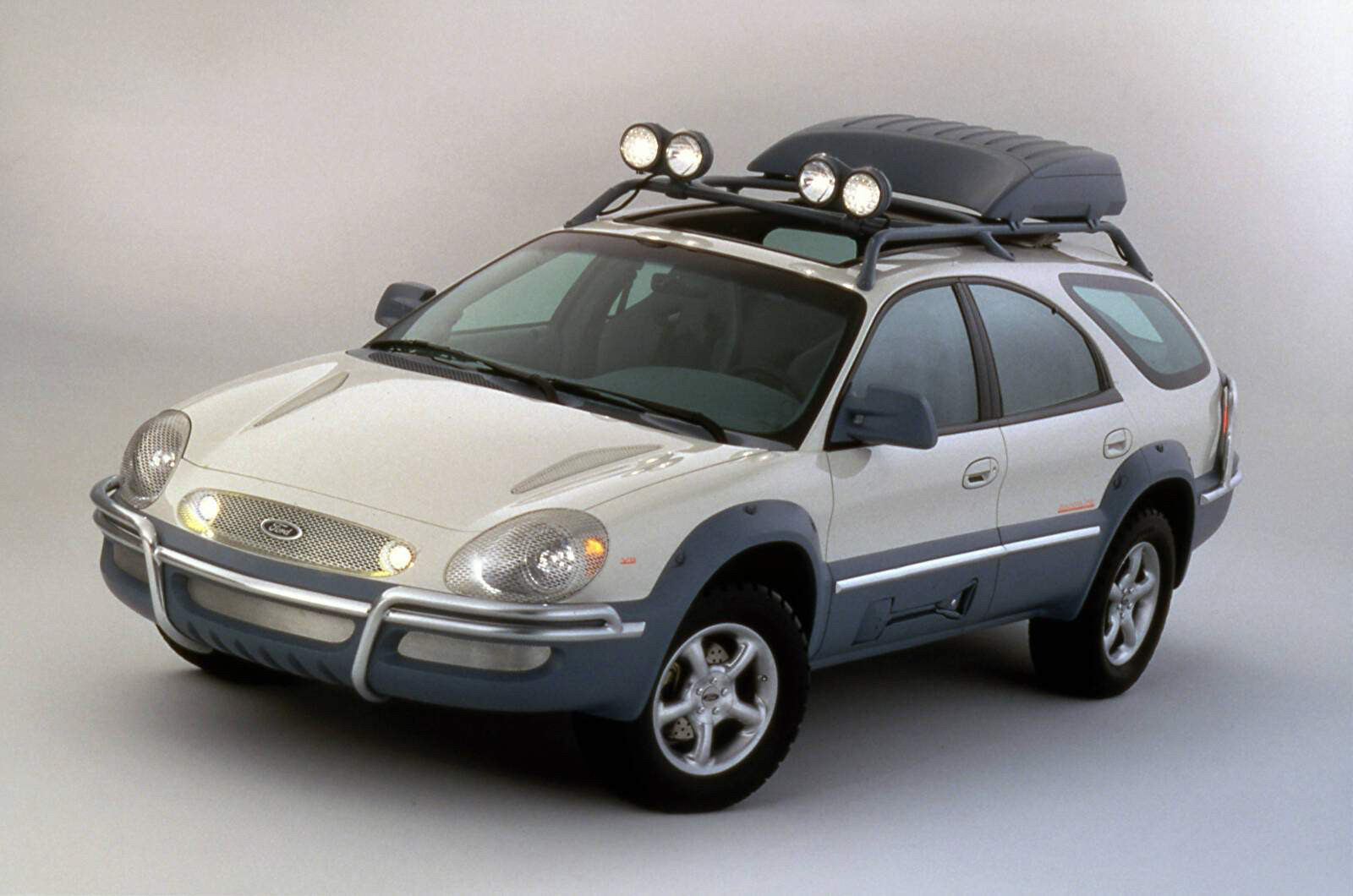
The 1997 Ford Santa Fe concept car rocked a steel protection cage, boosted ride height, extensive auxiliary lighting, and a tailgate-mounted spare wheel.
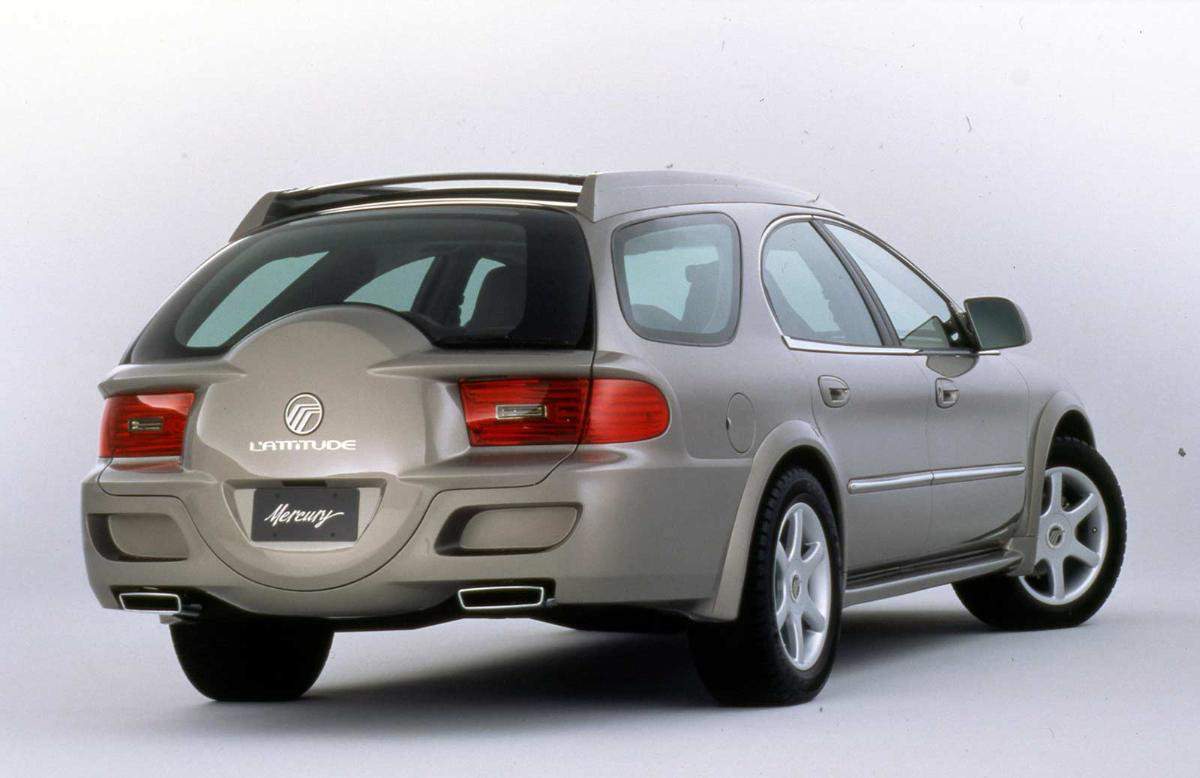
Based on Ford’s popular everyday family haulers, the Taurus and Mercury Sable wagons, the two concepts drew obvious design inspiration from the Legacy Outback. With extra ride height, all-wheel drive, contrasting color body cladding, and proto-overland touches like roof racks, auxiliary lighting, and integrated body protection, the Santa Fe and L’Attitude looked ready for the trail and potentially even the showroom. Ford’s official press release said, “The Santa Fe will particularly appeal to lovers of nature and nature photographers who travel off the beaten path in search of National Geographic-type adventure.” While the Santa Fe was the more flamboyantly sporty concept, the L’Attitude showed off a little extra polish and a more subtle execution of the theme, befitting Mercury’s position as a luxury brand.
In fact, Ford went all in with the accessories on both cars, some of which seem like no-brainer add-ons from the perspective of twenty-first-century overlanders, but many that even today feel quite innovative. Each had integrated camera mounts featuring Nikon cameras, and both concepts featured sliding canvas sunroofs and lay-flat load floors so photography enthusiasts could stand up through the opening to capture those perfect shots. The interior of the Santa Fe Sport sported hose-out floor coverings, and “bucket seats [that] are designed with a fabric similar to lightweight hiking shoes.” Tailgate-mounted spare wheels and a full-length roof rack and roof box on the Santa Fe freed up interior storage, and the Ford even included a sliding tray with a 12-volt “refrigerated storage unit.”
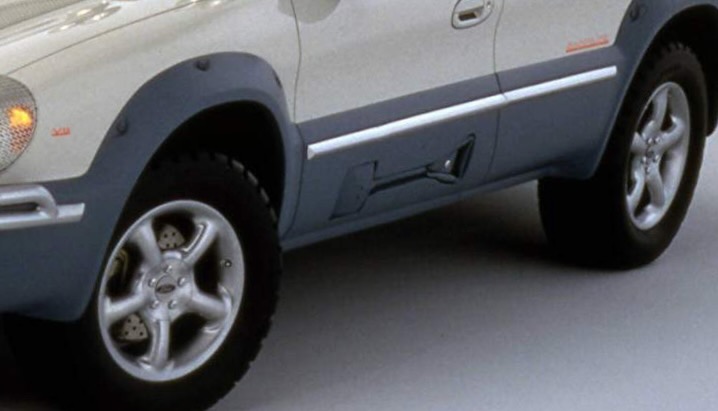
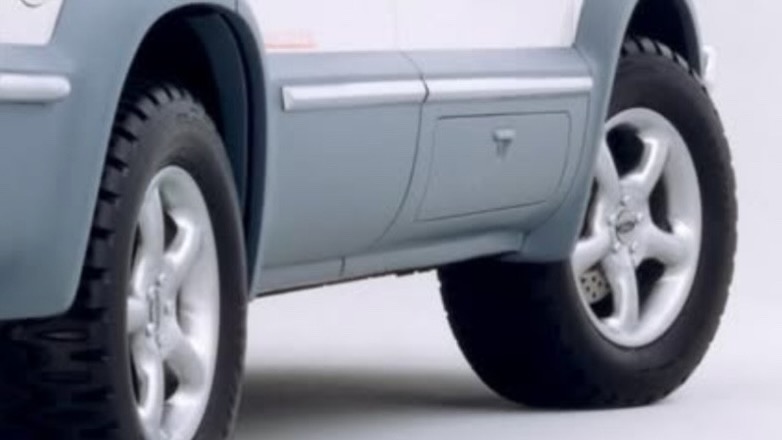
Two of my favorite details from the Santa Fe are the shovel and external storage integrated into the front door above the rocker panels. The shovel, in particular, is perfectly placed for quick access in a recovery situation, and snatch straps and shackles could fit easily into the storage compartment—ingenious use of otherwise wasted empty space.
As with many concept cars, some of the more prosaic but nonetheless important aspects of the Santa Fe and L’Attitude were not revealed. The L’Attitude press release highlights its 235- horsepower 3.4-liter SHO V8 and automatic transmission, also bolted into the Santa Fe. This engine, we can assume, was the high-revving powerplant from the third-generation (1996-1999) Ford Taurus SHO, jointly developed with Yamaha and Cosworth. While both concepts had all-wheel drive, the system’s function and origin were not laid out in detail. Ford had one AWD drivetrain in its lineup in 1997, the E-AWD system from the higher trim Aerostar vans. It operated via a Dana TC28 transfer case and an electronically controlled center differential with a magnetic clutch, but no low range—very Subaru-like.
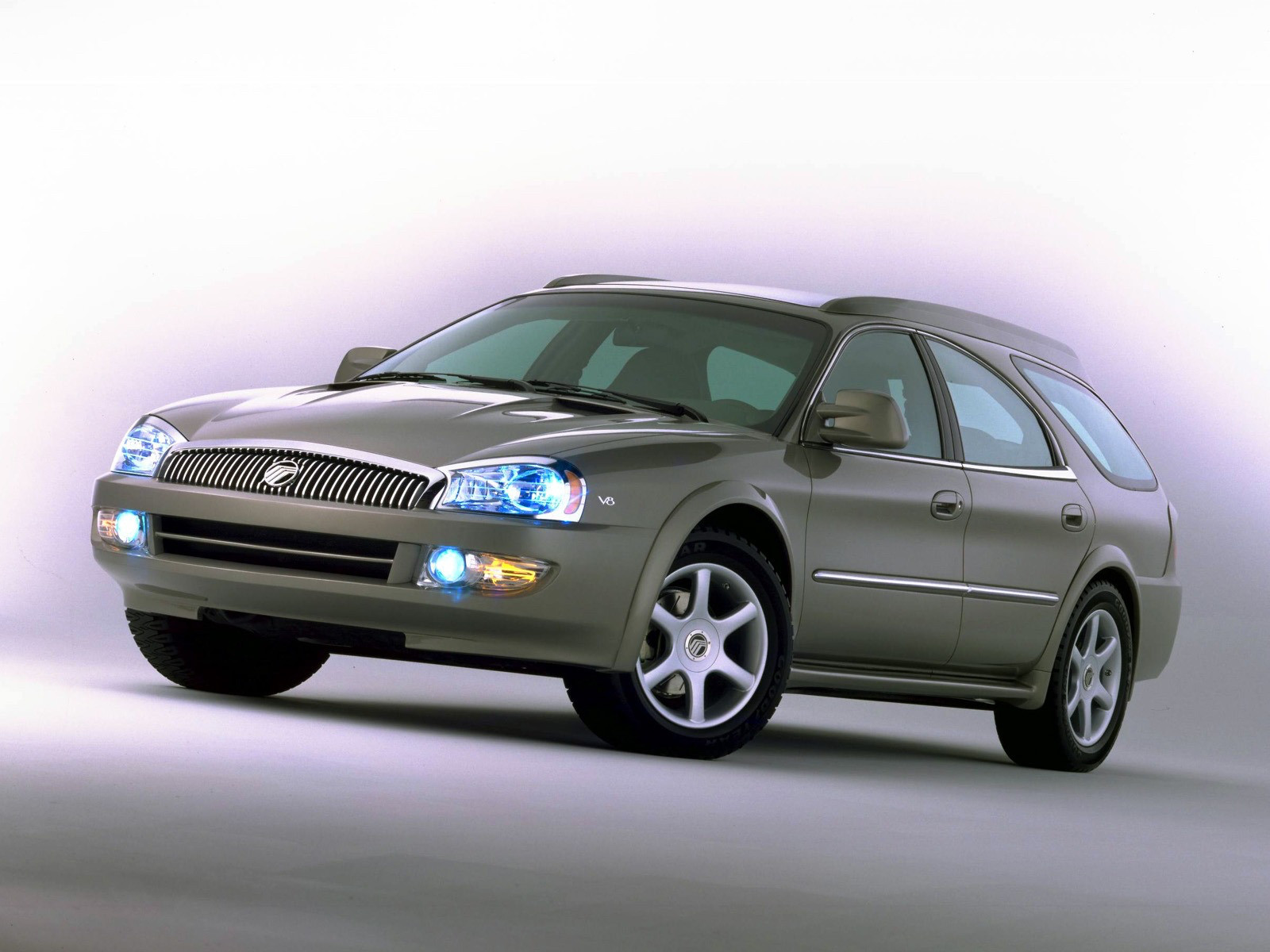
The Mercury L’Attitude concept looked more mature than the Santa Fe, but still had an integrated roof rack, special Goodyear A/Ts, and off-road chops.
Into the Ether
The internet gives up only a few grainy images of these cars (nearly all of which are included in this article) and no interior shots. So, where did these concepts go? Why didn’t Ford run with the basic idea behind the Santa Fe and L’Attitude, even if it didn’t include some of the more outlandish accessories for production? The basic platforms and technology involved, the Taurus and Sable wagons, and the underlying AWD system, were already in Ford’s lineup. In retrospect, the Outback approach—add four-wheel drive, a mild lift, and some plastic cladding to an already-existing model and launch the vehicle with a clever marketing campaign—seems like an obvious and easy way to print money. I think the answer lies in the SUV revolution that was on the horizon in 1997.
In the closing years of the 1990s, station wagons were old news. Most manufacturers were phasing them out, with only a few low-volume oddballs, like Subaru, Saab, Volvo, and Audi, still clinging to them. Ford was already going all-in on its large SUVs, the segment-defining Explorer and the super-sized Expedition. The small unibody AWD Escape was nearly ready for production, bowing in 2000. Within a few years, SUVs would rocket far past sedans and wagons as the top-selling vehicle category for nearly every automaker. Both the Taurus and Sable were zombies by 2000 and fully killed off by 2003. Investment was needed in SUVs and light trucks, and Ford probably felt that competing with tiny Subaru wasn’t its top priority. Who needed 4WD in a wagon when SUVs already had it?
It is interesting to speculate about what could have been had Ford, with its size and influence, pursued the Santa Fe and L’Attitude concepts further. Would the landscape of adventure-focused vehicles have gone more mainstream almost two decades before the trend really hit its stride?
Images: Ford, ford-taurus.org, stationwagon.com
Thanks to Dennie Edwards on Bluesky for the tip.
Read more: Overland All the Things! :: From the Showroom to the Trail
Our No Compromise Clause: We do not accept advertorial content or allow advertising to influence our coverage, and our contributors are guaranteed editorial independence. Overland International may earn a small commission from affiliate links included in this article. We appreciate your support.
