

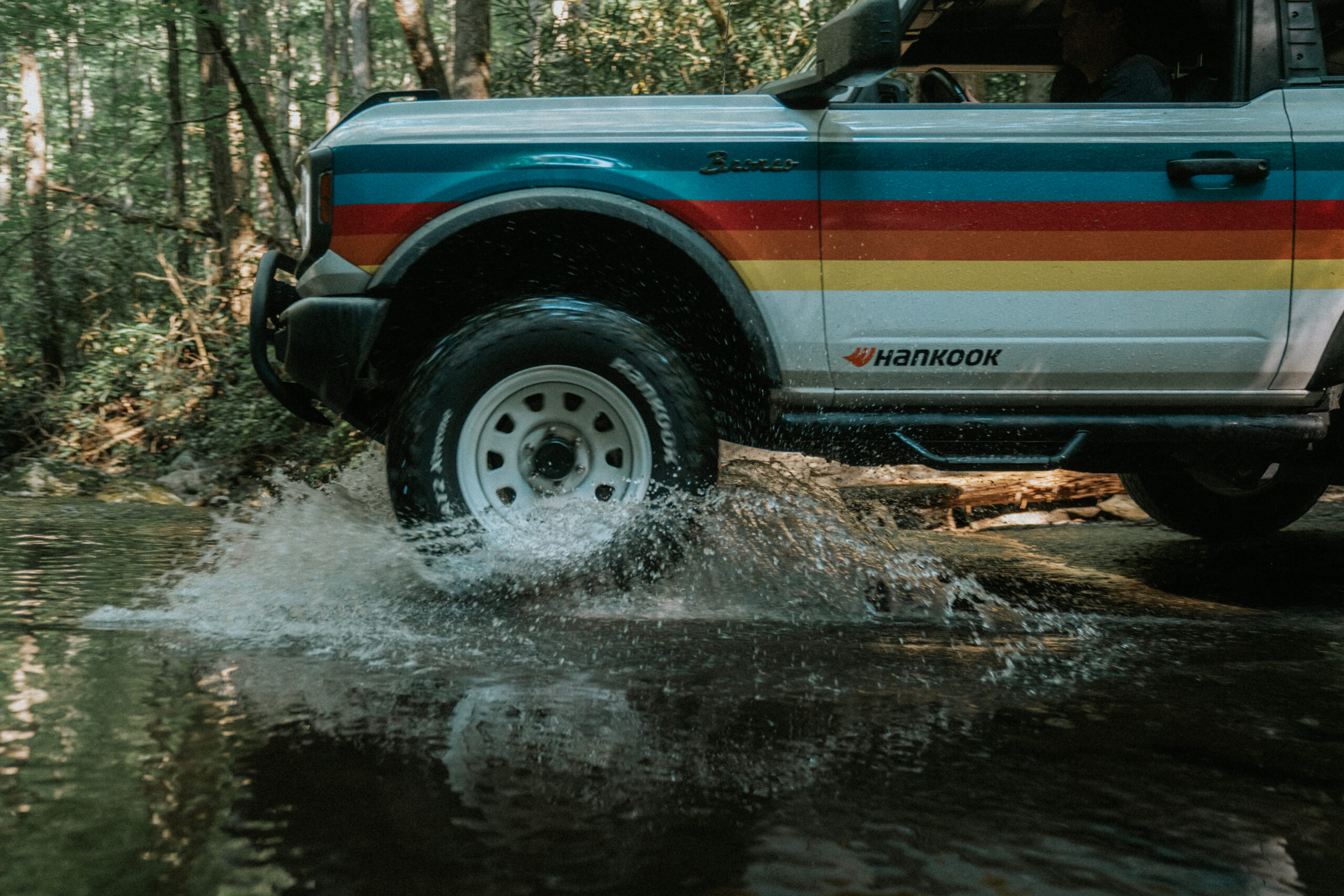
One of the things we like best about events and annual gatherings like the 2025 Great Smoky Mountain Bronco Stampede in Pigeon Forge, Tennessee, is the engagement between attendees and the supporting sponsors and vendors. At this year’s 3rd annual Bronco Stampede, we had the opportunity to catch up with the Hankook Dynapro team and one of their product education experts. We took a deep dive into the all-terrain tire category using the Dynapro AT2 Xtreme tires on display as an example.
Tires for overlanding and all-around adventure fall into three main categories: all-terrain, rugged-terrain, and mud-terrain. As we move across the list, the design attributes tend to become more aggressive and more durable in accordance with their operating environments. Those intended-use environments are an important consideration for tire buyers to be honest about when making their purchase decision, as the tires are purposefully engineered to perform best within each use-case range. There’s a lot more to tires than just looking cool on your rig.
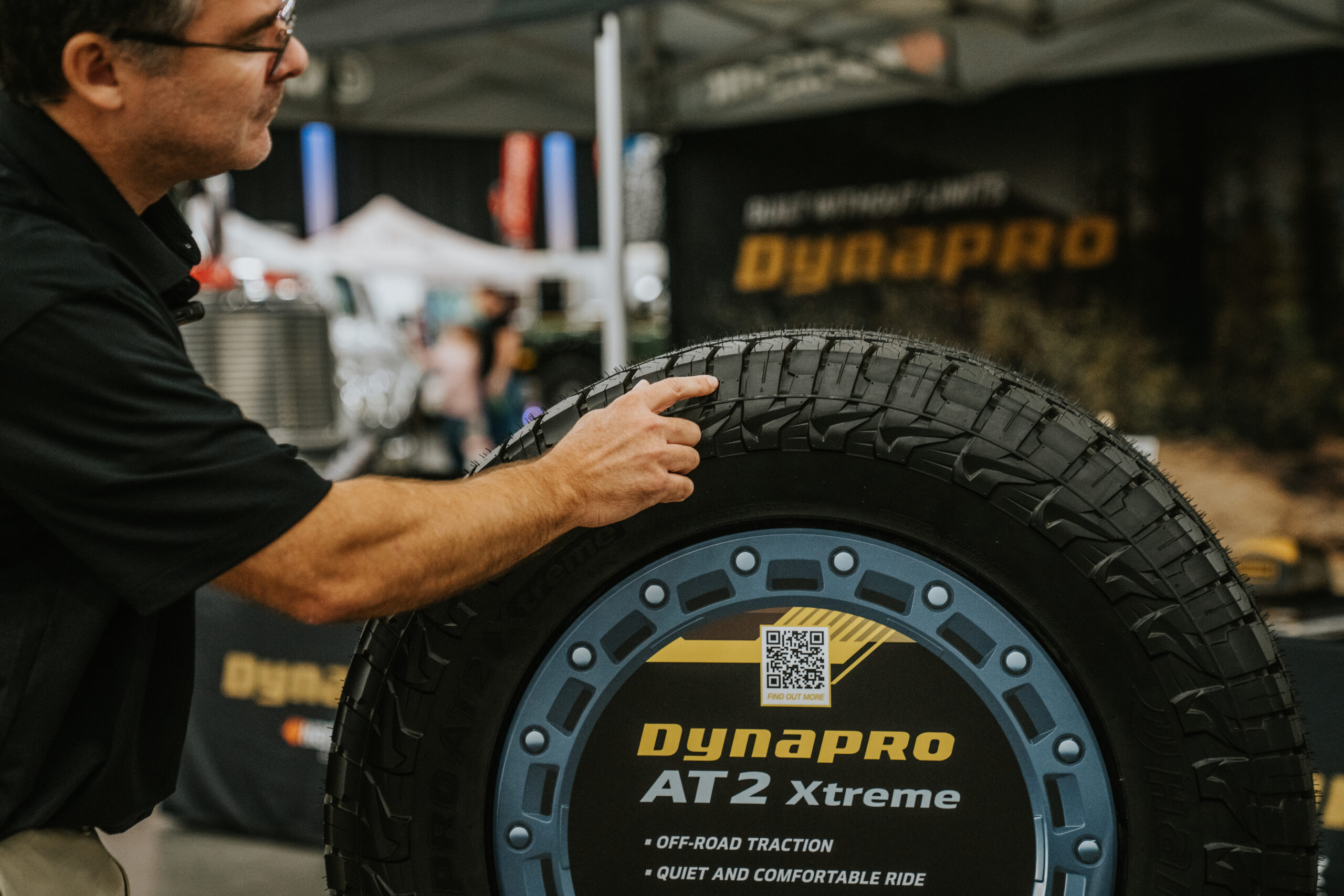
All-terrain tires have become the go-to all-around adventure tire. You’ll find them as an OEM stock offering on many 4×4 models, and they are a comfortable and more than capable graduation from general light truck street tires for anyone spending more time on the dirt or in the snow.
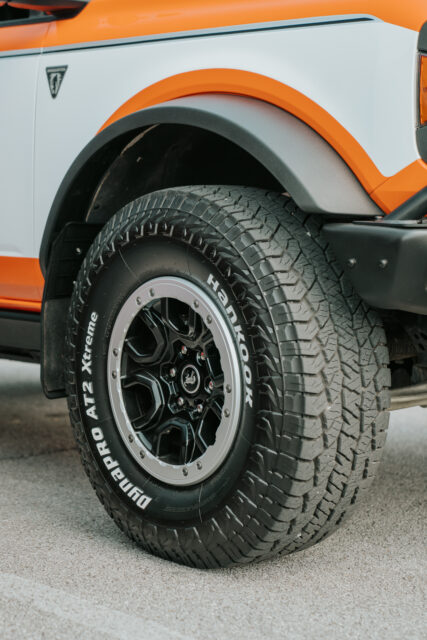
Which came first, the all-terrain or the mud-terrain? It’s clear to see the similar attributes shared by both designs. The AT2 Xtreme showcases robust shoulder lugs that move from the main tread pattern to wrap around the tire body. These provide resistance to sidewall damage, some additional traction for clawing through soft surfaces like sand or snow, and a unique styling to complement the vehicle.
On the face of the all-terrain tire, a chunky tread pattern provides multiple angles and opportunities for the tire to engage with the surface for traction. The lugs are not as far apart from one another as a rugged-terrain tire or even a mud-terrain pattern. However, the spacing allows for the sides, edges, and primary surface of each lug to interact with the terrain in a way that provides traction. The spacing and pattern are also designed to help eject rocks, mud, sand, and snow that may otherwise become packed into the tread and reduce traction.

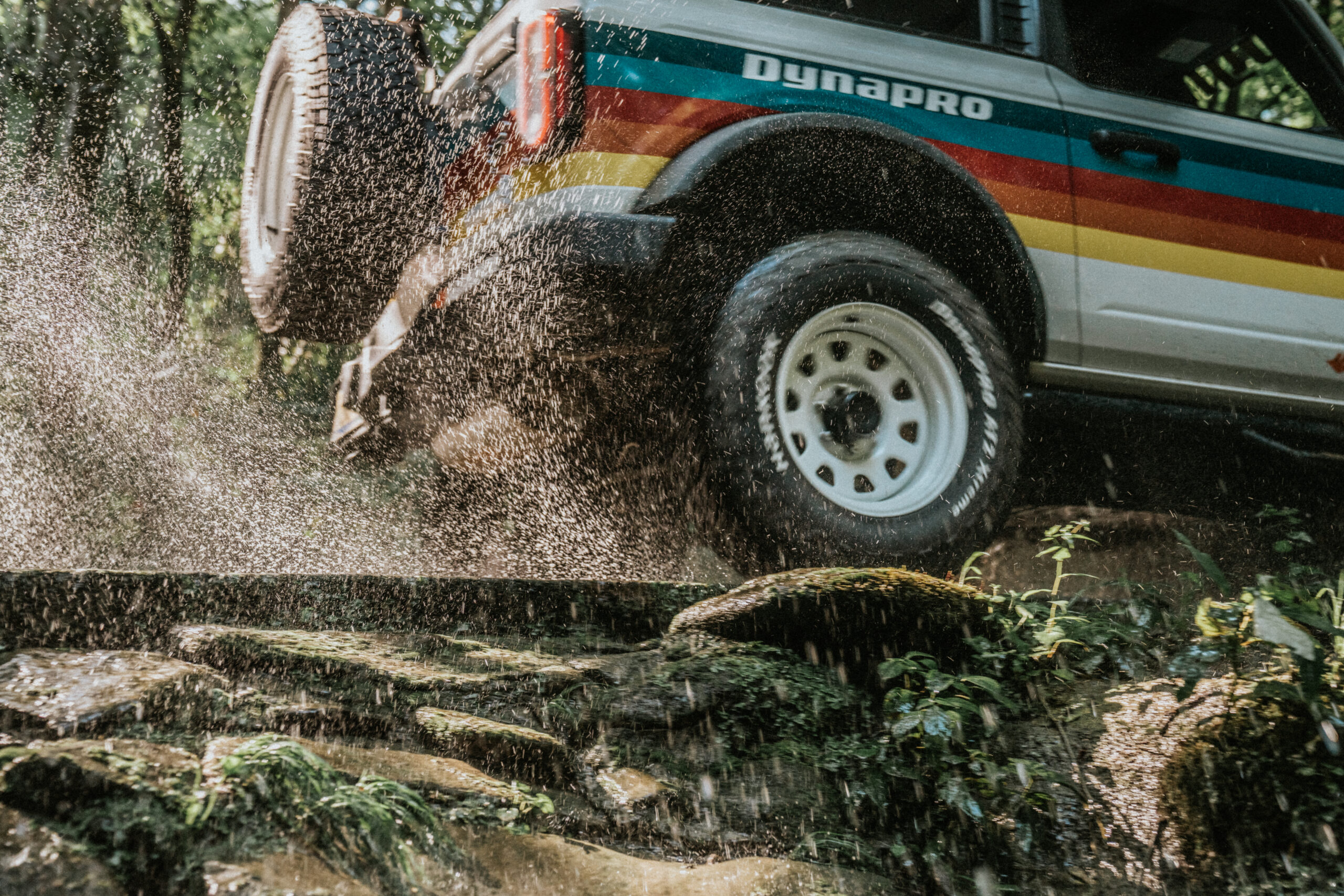
Lastly, we consider the materials and composition of the tire’s compound as an all-terrain tire. The AT2 Xtreme, for example, showcases a silica-to-carbon black mixture with higher levels of carbon black. This allows the tire to resist chipping, chunking, and cutting, while also providing traction in softer surfaces and enhanced responsiveness on pavement and harder surfaces. We took our sample AT2 Xtreme through mud, sand, water, and wet, hard-packed dirt in the forest, where traction was key, to twisty paved mountain roads where we needed additional stiffness and snappy performance for tight corners.
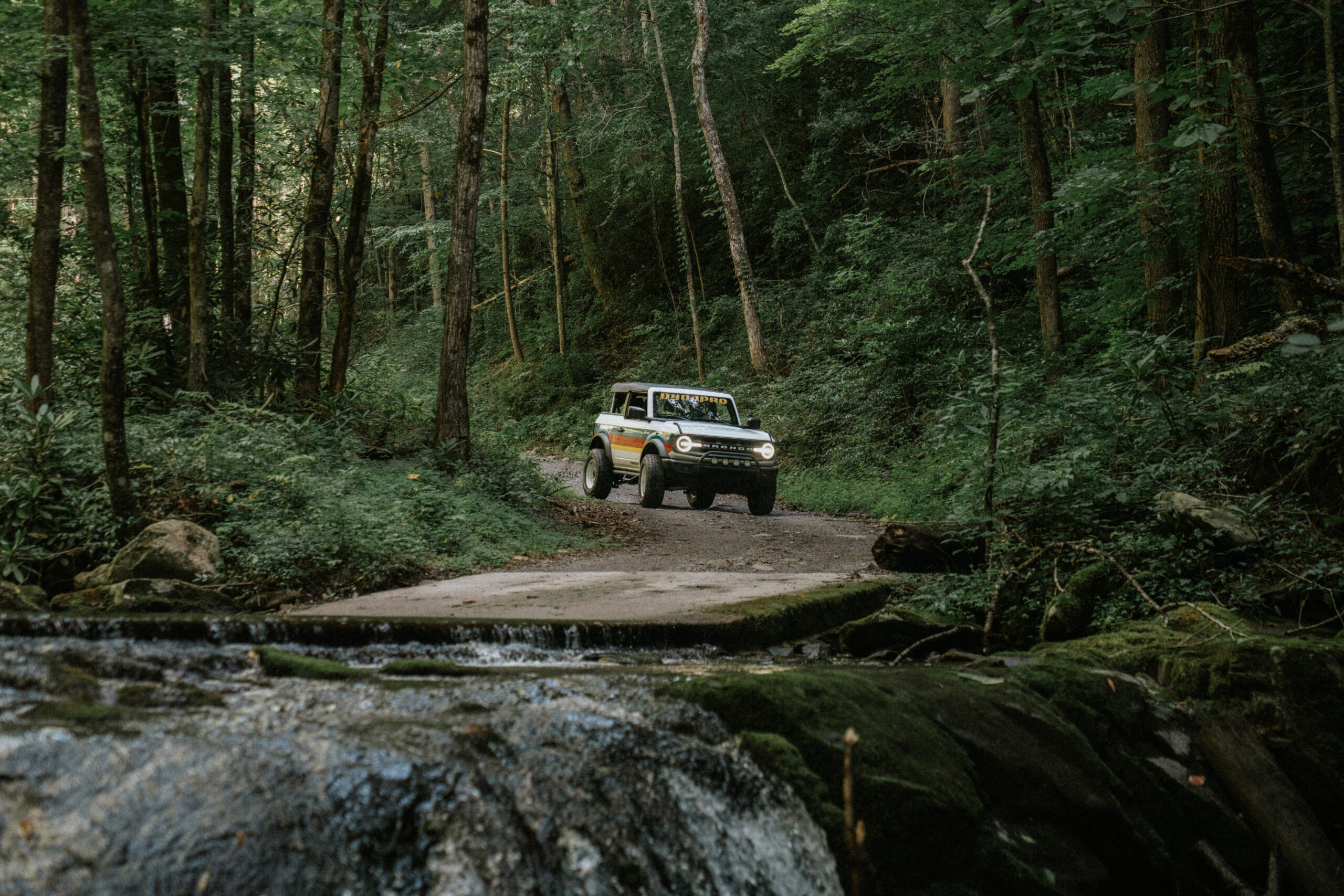
The all-terrain category of tires has a reputation for being a do-it-all solution for good reason. Look for trustworthy traction in soft, slick, rocky, and loose terrain, combined with responsive performance on pavement.
