

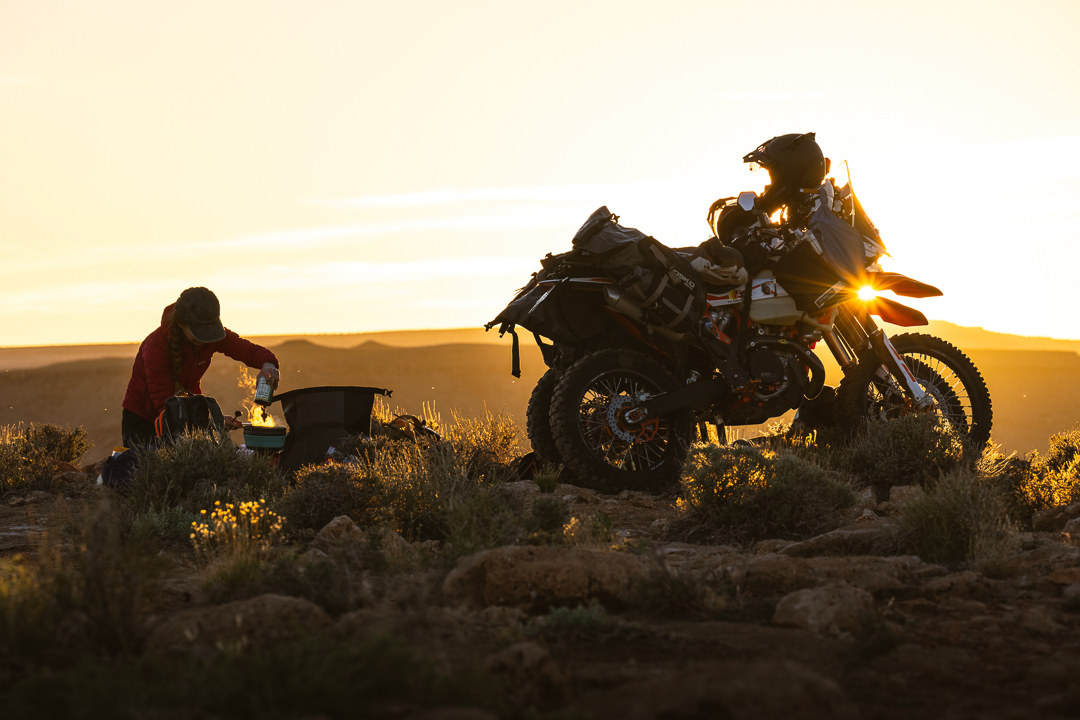
Photography by Jason Spafford
“I wish my bike were heavier,” said no one ever. Perhaps that was the hardest lesson learned from our four-and-a-year Argentina-to-Alaska ride. For this trip, we are determined to heed that wisdom. Embarking on our second dalliance with motorcycles after a five-year hiatus feels like a reunion with an old flame. After bidding adieu to our stalwart BMW GSs, we’ve come to appreciate the maxim that less is more.
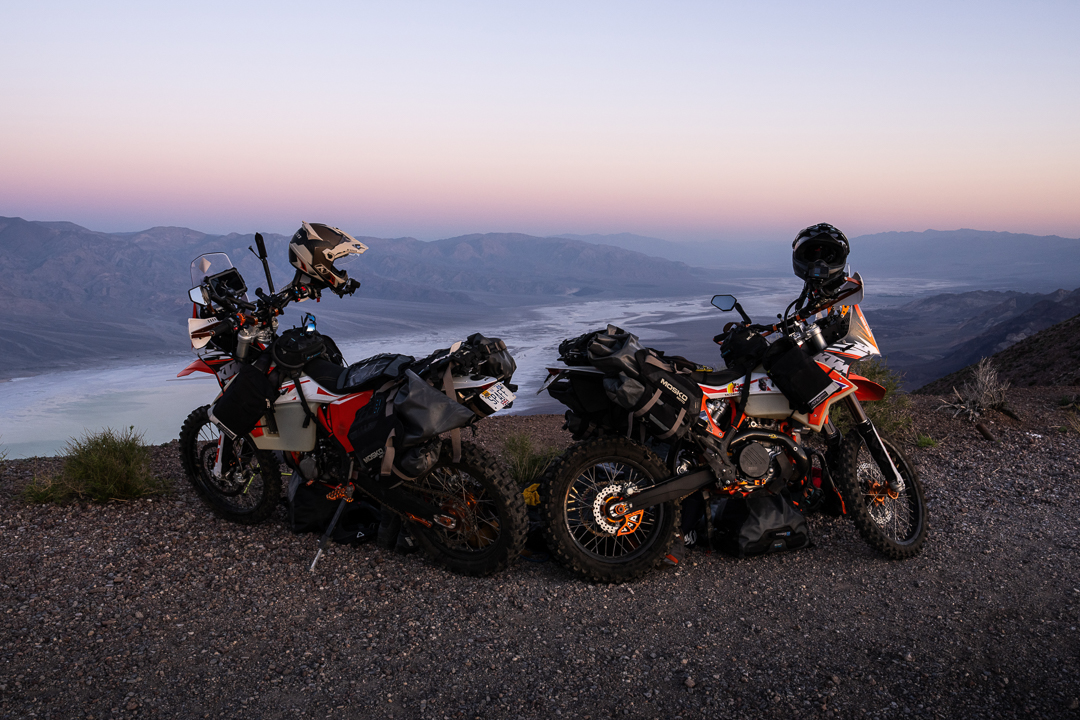
Upon unleashing the tale of transforming a pair of 2023 KTM 500 EXC-Fs into off-road titans, we’re set to conquer the American West’s Goliath wilds and beyond, dispelling the myth that these enduro machines are confined to tracks, turning them into globe-trotting adventurers.
The Chosen Ones
Venturing into the world of motorcycle ownership in the US as a British rider always seemed like a distant fantasy. That is, until I stumbled upon an unexpected revelation: the practical ease and affordability of buying a bike in Virginia. (Arizona and Florida, for instance, also provide accessible routes for foreigners buying motorbikes.)
With visions of DMV-induced bureaucratic nightmares, I was surprised to find that, with the expertise of Chelsea Lahmers, Moto Richmond’s dealership owner, we navigated the titling and registration processes without a hitch. Buying the KTMs stateside delivered substantial savings versus exporting them from across the pond.
There’s No Unicorn Bike
Opting for the 500 EXC-F model for an extended unpaved journey showcases its superiority over our former 800cc and 650cc dual-sport counterparts. Weighing a mere 255 pounds when wet, just over double my weight, the street-legal dirt bike offers exceptional agility, fostering top-notch responsiveness and control on the spicier trails.
With its enduro racing lineage and included upgrades, the 500 boasts an enviable power-to-weight ratio for acceleration that could orbit me into space, outstanding maneuverability, and adaptability across diverse terrains, the latter characteristics of which are crucial for the two-wheeled roaming in mind. Indeed, it amplifies the thrill—hopping onto a bike that ignites a rush of excitement each morning.
Admittedly, the service intervals are no joke. Made for intense enduro races, per the KTM manual, the machine demands meticulous care every 465 miles—this means frequent oil changes, filter swaps, and valve checks every 930 miles. It’s far from feasible for a long trek.
Seeking advice from seasoned 500 EXC-F riders and a Dakar mechanic revealed that these intervals are suited to competitive racing rather than our intended riding application. By increasing the intervals to 1,500 to 2,000 miles, contingent on conditions, we’ve found that the oil quality holds up well (always invest in quality oil), providing reassurance for prolonged riding.
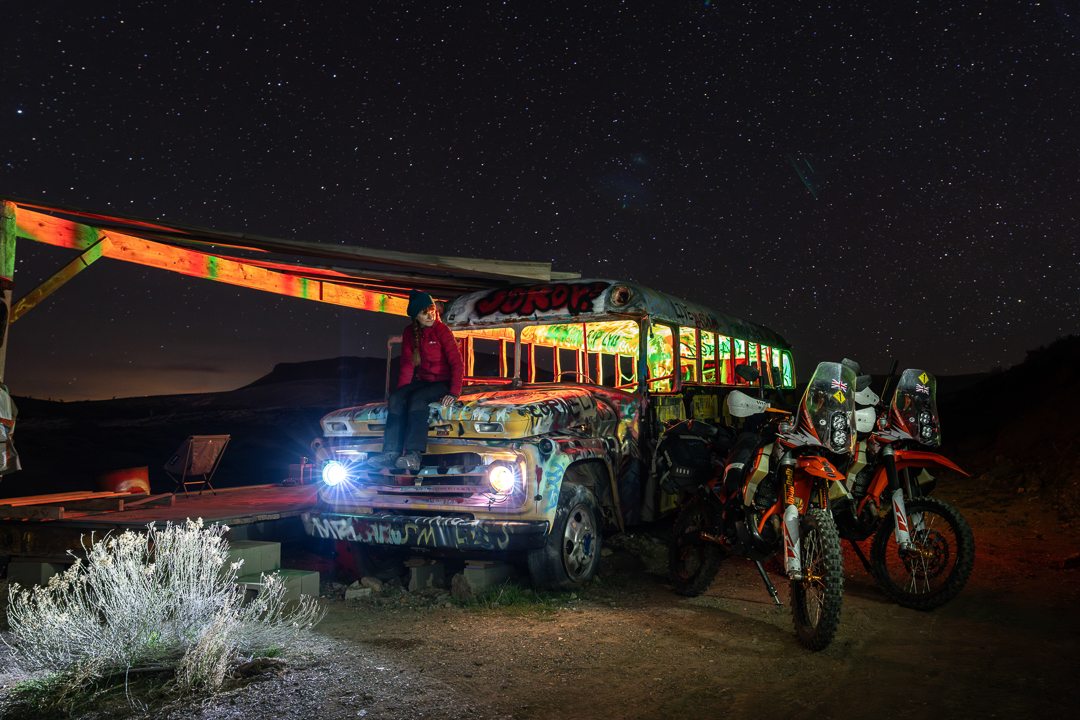
The Build
Embarking on the buildout in North Carolina, the top of the essential upgrades saw Jason install a 4.5-gallon fuel tank, expanding fuel capacity by 80 percent. It facilitated our readiness to roam further into the wilderness without concerns about gas. Forged from robust polyethylene crosslink, this requisite addition lengthens our riding range to 200 miles—an invaluable asset when traversing Baja’s rugged trails and tackling forthcoming Backcountry Discovery routes.
After the buildout in the Smoky Mountains, we noticed the aftermarket skid plate’s built-in tools compartment chafing against the larger fuel tank. While low-profile tool storage was attractive, practicality took precedence. We opted for a more conventional, lighter skid plate made from billet UHMW (ultra-high molecular weight polyethylene plastic, longer-wearing than carbon steel) to mitigate friction, prioritising compatibility with the larger fuel tank.
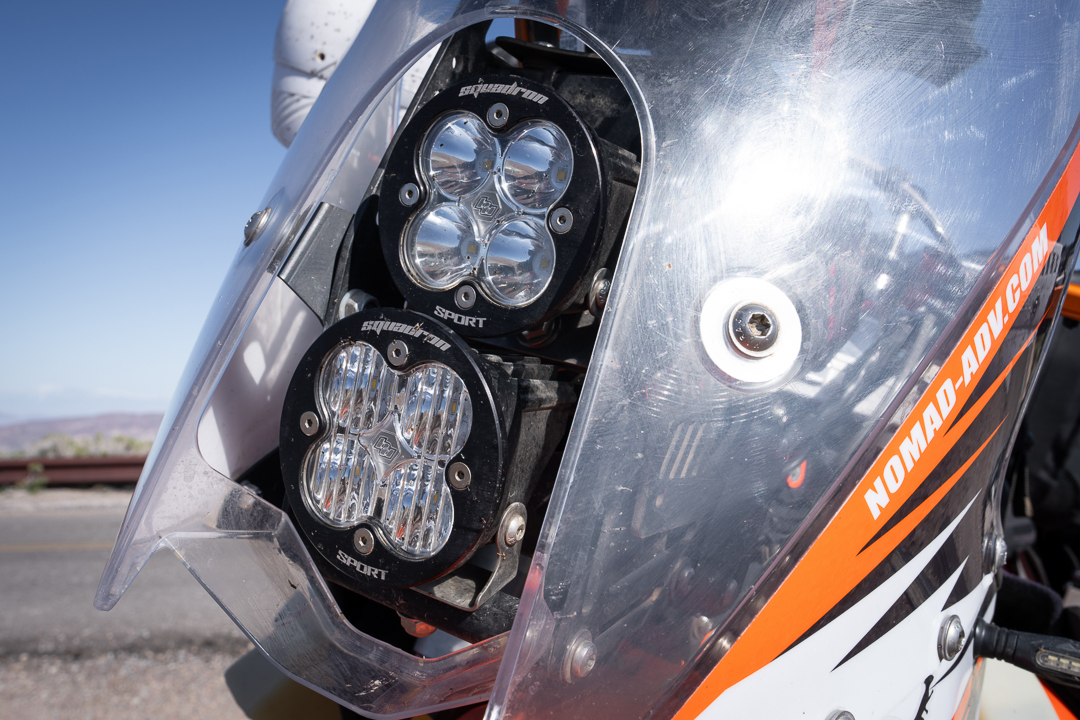
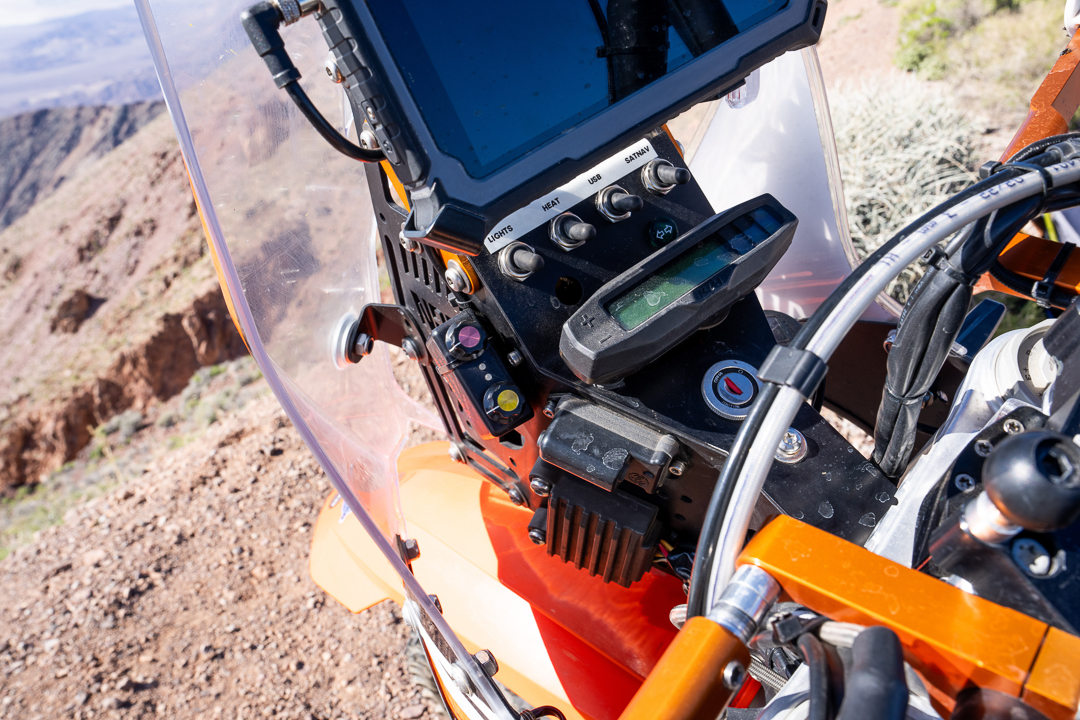
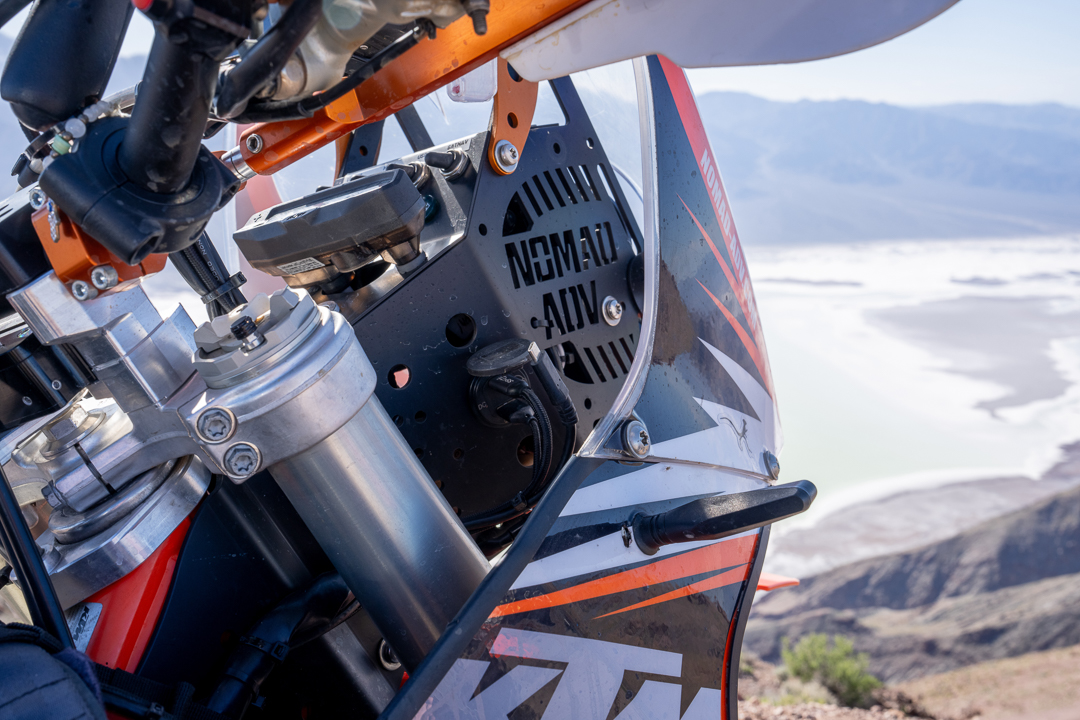
Beyond gassing up, the Nomad-ADV Rally Tower, equipped with Baja Designs headlights, illuminates our path in low-light conditions and provides superb wind protection—an upgrade we appreciate wholeheartedly during long stretches in the saddle while battling the elements.
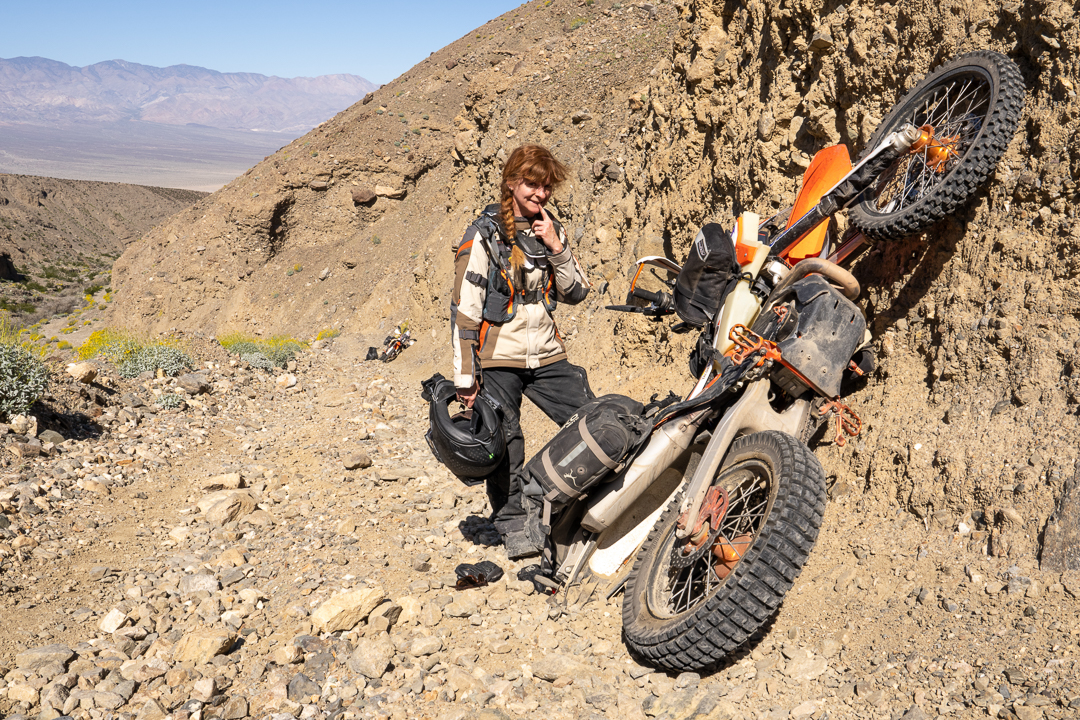
Candidly, though, on steep, gnarly ascents, we find ourselves grappling with leaning far enough over the windshield, manifesting it never makes sudden contact with our necks in the event of a forward-flying “offy.” Thankfully, after a spirited “whiskey throttle” I executed near Panamint Springs, California, my rally tower endured, sustaining only superficial damage to the bike’s backend.
Pack Smarter, Not Harder
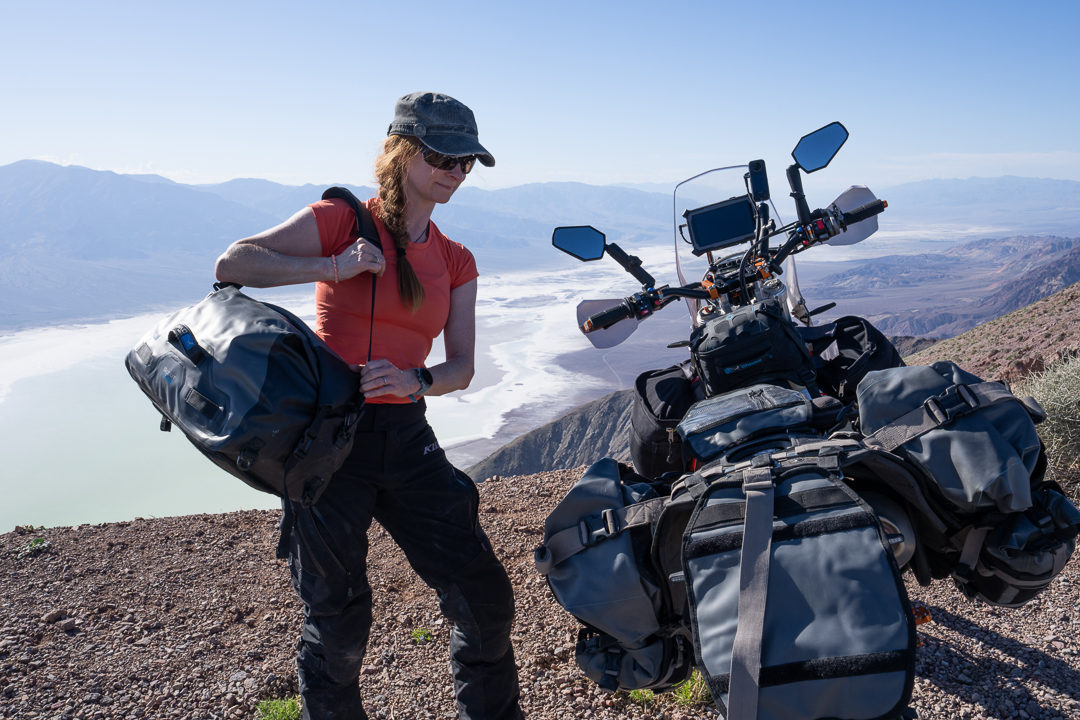
The 80-liter rackless system’s promise of longevity and agile exploration has been delivered to date. However, we still added a rear rack to lighten the load on the aluminum subframe, which is paramount for long-term durability.
Jason’s mishap of destroying his top roll bag on a shakedown ride was a warning, narrowly avoiding wiping out his camera equipment. It emphasized the need for methodical securing of the Reckless 80 setup to prevent lateral bag movement.
Now, we diligently secure all buckles and straps for the leg panniers, beavertail, and tail bag. Employing industrial-strength Velcro under the top bag enhances stability, while zip ties secure lengthier straps near the chain to prevent snags.
What rings especially true here is that when we’re transporting our precious cargo, particularly the heavy top loads of tech and valuables, situated on the rear luggage rack rather than in a leg pannier, it’s vulnerable to impacts. While necessary, this strategic placement can disrupt balance off-road, making us top-heavy and less agile in the dirt.
Indeed, outfitting the motos with a round-the-world luggage system has sacrificed some of the cherished weight advantage inherent in riding these smaller bikes. So, when we can unload the bikes and ride unencumbered—especially in convoy with a 4×4 rig—the 500s are phenomenal on rough ground, getting us deeper into the backcountry.
Memorably, we joined our friends in their Sprinter van, our vital support network, to ride the sandy El Camino del Diablo, the Devil’s Highway. This historic 130-mile trail, traversing the Sonoran and Yuma Deserts, links Ajo to Yuma in Arizona, winding through the rugged topography between the Gila and Tinajas Altas Mountains. Thanks to Ken and Beth, we shed our cargo, relishing three unburdened days of feeling as light as dandelion seeds.
Tread Talks
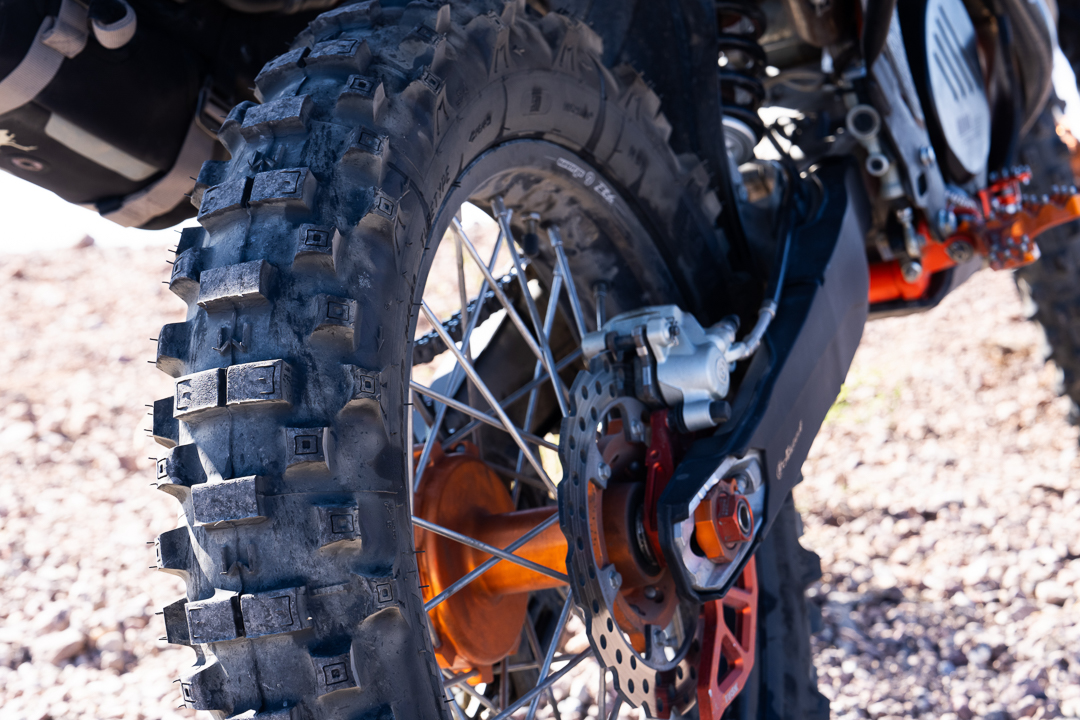
More reinforced than stock, Warp 9 wheels with a cush drive hub elongate gearbox performance on pavement. With thicker spokes and sturdier rims than the OEM equivalents, they bolster wheel durability and resilience against the rigors of off-road riding.
The fortified wheels proved their worth as we welcomed the rugged terrain of Saline Valley Road in Death Valley. Following the harsh winter of 2023, the road deteriorated more than usual, presenting demanding trail conditions. Amidst a barrage of rocks flying below the footpegs, their durability proved indispensable, ensuring our ride remained uninterrupted.
Combined with premium, dirt-dominant tire combinations from Motoz and Michelin, we’ve enjoyed decent traction and performance across varied territories with some slab. Paired with Bib Mousse to navigate cactus-strewn landscapes, such as the rugged back trails we encountered in unison with a Jeep couple departing from San Francisco Mission in Baja California, we covered 3,000 miles on each set before the rears needed replacement.
Nice-to-Haves
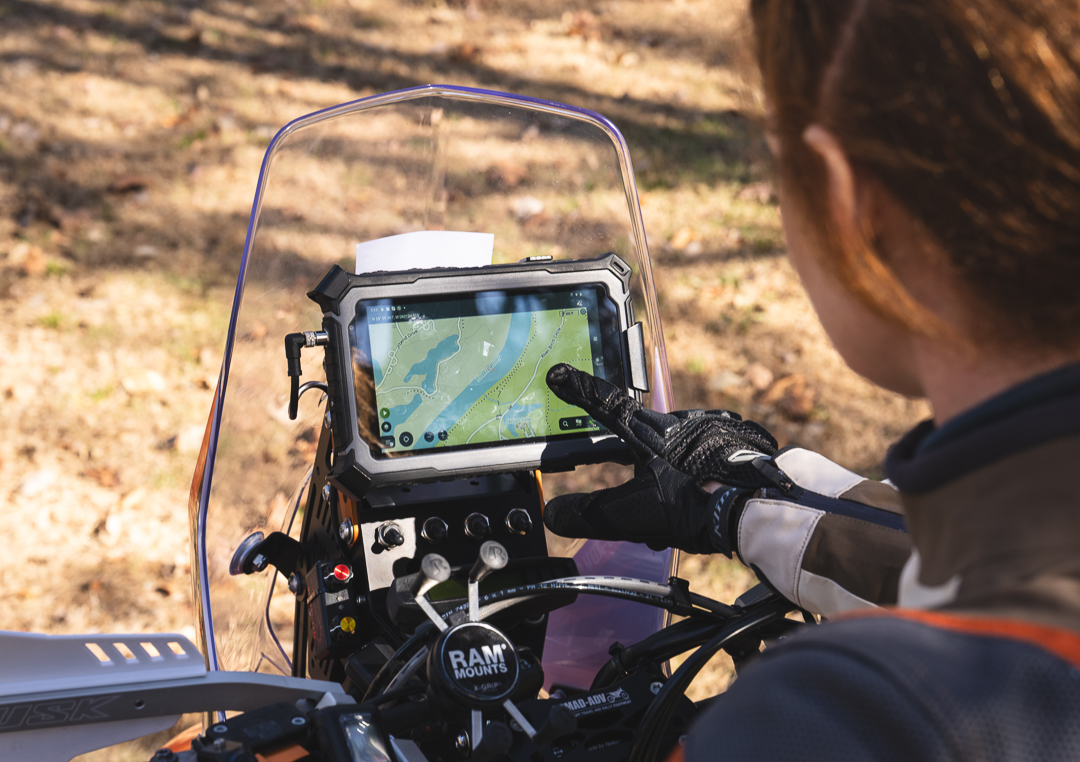
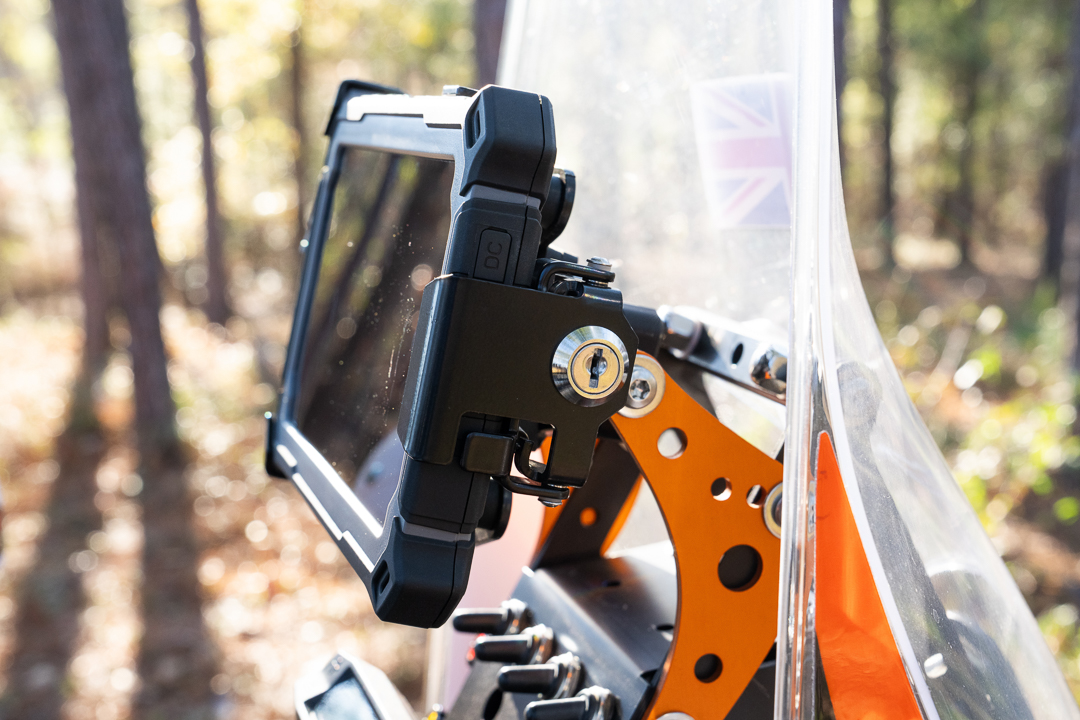
We addressed our navigation and communication requirements with the Carpe Iter Pad, a sturdy 7-inch tablet designed to modernise our riding application needs. Essentially an Android device, it gives us access to all our favorite apps, keeping us connected. In areas without Wi-Fi, Google Maps and Maps.me, it has become our go-to for offline navigation.
In the necessary pursuit of comfort, refinements like lowered seats better manage our handling as inseam-challenged riders. With a bike load of gratitude, air gel cushions come to the daily rescue, providing indescribable pressure relief for our backsides—one of the most beloved enhancements on our bikes.
Another unsung hero is the Atlas throttle lock, our cruise control companion. These miracle workers alleviate the vibration build-up in our hands and wrists (Field Tested, Gear 2025).
Contemplating our journey at the outset across the east-west interstate from North Carolina to North Las Vegas, a realization dawned upon us with surprising swiftness: these smaller dirt bikes are not built for pavement rides that stretch to infinity—yet here we are, occasionally unable to avoid them. The 500s struggle on fast roads, where our presence feels dwarfed. Despite the above modifications, plus thicker handlebar grips, the relentless vibration from the hum of the asphalt after 200 miles leaves us spent, with tuning forks for hands. Alas, it’s sub-optimal.
The Setup
Turning to Taco Moto for help was all about unlocking the potential of these adventure-ready dirt bikes for our long-haul expedition. It was either that or swap them out for our converted Toyota Hilux, currently in storage back in the UK. As we flirted casually with the latter, the notion of towing the KTMs in a trailer to solely indulge them on the trails materialized as a possibility.
Taco Moto’s owner, Mike Spurgin, agreed that we exceeded the general ride parameters of these KTMs to accommodate our loads and the extensive miles ahead, which led to rebuilding and tuning the stock suspensions. With upgraded, heavy-duty springs and precise re-valving, we received a plush baseline setting for silky comfort and performance over uneven terrain, calibrated to our individual riding styles.
Mike scrutinized other pivotal elements of our bikes to tailor the overall rider experience. Power upgrades included installing a custom engine control unit on Jason’s machine to optimize engine performance beyond stock capabilities by fine-tuning fuel injection, ignition timing, and other parameters. Plus, high-performance lithium batteries and rugged front and rear sprockets were added for both bikes.
Gloriously, wheel balancing banished the bone-jarring vibrations caused by tire imbalance, enabling our jackhammer bikes to feel more like joy bombs of smoothness on the road.
Treasured by Jason, who handles all bike upkeep, Taco Moto’s secret sauce lies in inclusions like the Mother of All Oil Filters—a paperless design with earth magnet disks within a stainless-steel tube. Namely, this item removes the necessity for paper filters and streamlines maintenance.
Similarly, an upgraded fuel pump replacement, tested to withstand a whopping 3,000 hours of operation, has kept us rolling much further. Other improvements, such as carbon heat shields, fork seal protectors, and mud gators, protect vital bike components from damage and impacts while maintaining the bike’s performance.
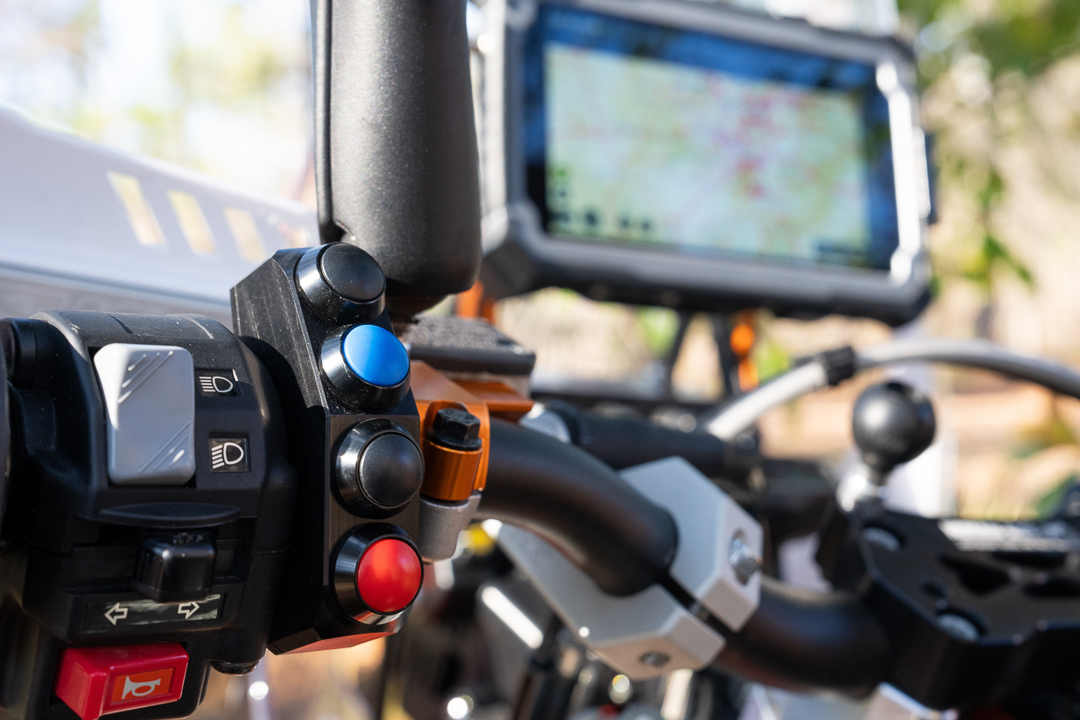
After installing turning signals akin to Christmas tree fairy lights on the East Coast, upgrading to front and rear LED flashing turn signals has overhauled our road presence. Gratefully, everyone sees us coming and going from miles away. Adding a starting capacitor aids engine performance, which granted seamless starts on those cold mornings in the Blue Ridge Mountains last winter and throughout the northern Baja leg this spring.
Finally, the supplanted footpegs integrate ankle-saving technology to prevent hyperextension injuries and provide customizable height, traction, and camber adjustability. It’s pure genius in theory, although the larger real estate of the footpegs sporadically catches my trouser leg when mounting or dismounting. Nonetheless, they’ll prove invaluable when needed.
Finally, while the Trail Tech Kickstand was perfectly serviceable, its ability to let me alight anywhere fell short. Substituted for a Swiftkicker extendable one permits dismounting on any uneven surface without grabbing a stone—another standout upgrade that elevates my rider experience each time I park on dirt.
Ready to Roll
Despite lengthy days stretching until midnight, the demanding nature of the build, setup, and upgrades proved an intense endeavor. Jason, in particular, found himself laboring over tools, leaning into a problem until a solution percolated, learning a build procedure in the wee hours, if not ordering components. As double passion projects often go, the core lessons gleaned from constructing Jason’s bike initially led to a more polished build on mine.
After making continued iterations based on real-world testing, where rubber meets the road, the 500 EXC-Fs emerge as a world-ready, adventurized duo. Shattering personal expectations, our culminating journey with the KTMs is a bike manifesto that challenges conventional wisdom, proving that even motorcycles born for enduro can metamorphose into bespoke global companions.
As the trails await, this isn’t a conclusion—it’s an invitation for riders to embrace the challenge of crafting their dream machines. Because in the end, the open road beckons, the heart wants what the heart wants, and adventure awaits those who answer its call.
Specifications
2023 KTM 500 EXC-F
Power
Transmission/final drive: 6-speed/chain
Dirt rider measured horsepower: 40.5 horsepower at 8,200 rpm
Dirt rider measured torque: 28.6 pound-feet @ 7,000 rpm
Fuel System: EFI w/ 42mm throttle body
Suspension
Taco Moto rebuilt and tuned the stock suspensions
Wheels and Tires
Elite Warp 9 Wheels with cush drive hub
Michelin Enduro mediums paired with Bib Mousse or Motoz Mountain hybrids/RallZ tractionators
Performance Upgrades
MSC Moto steering damper
Molecule Motorsports skid plate
Nomad-ADV Travel Tower (Baja Designs headlights)
Accessories
Aerostich tank panniers
IMS Products 4.5-gallon fuel tank
Mosko Moto Reckless 80-liter Revolver (V3.0)
Taco Moto 3,000-hour fuel pump
Taco Moto Athena GET high-performance lithium battery
True North Motos XABR rack
Atlas throttle lock
Carpe Iter tablet
P3 Carbon heat shield, max coverage
Wild Ass Sport Classic motorcycle cushion
Motohansa tool kit
Editor’s Note: This article was originally published in Overland Journal’s Winter 2025 Issue.
Our No Compromise Clause: We do not accept advertorial content or allow advertising to influence our coverage, and our contributors are guaranteed editorial independence. Overland International may earn a small commission from affiliate links included in this article. We appreciate your support.
